Complete Guide to Soviet Tanks, Armored Cars & Military Vehicles of WWII
100+ Soviet WW2 tanks and military vehicles in one complete guide.
This collection covers Soviet light, medium and heavy tanks, experimental vehicles, armored cars, artillery tractors and other military vehicles developed and used by the USSR.
From famous machines such as the T-34 and KV series to rare prototypes and lesser-known Soviet armored vehicles, each section includes photos, history, specifications, armor, weapons, crew and technical details.
Use the Quick Navigation to find a specific Soviet tank or vehicle, or simply scroll through the complete collection.
More WW2 articles:
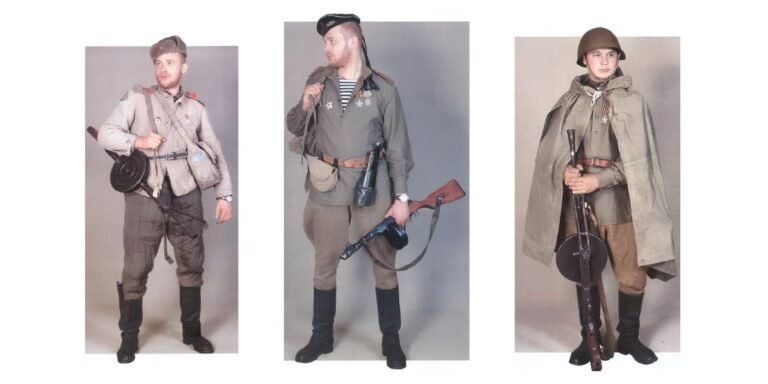
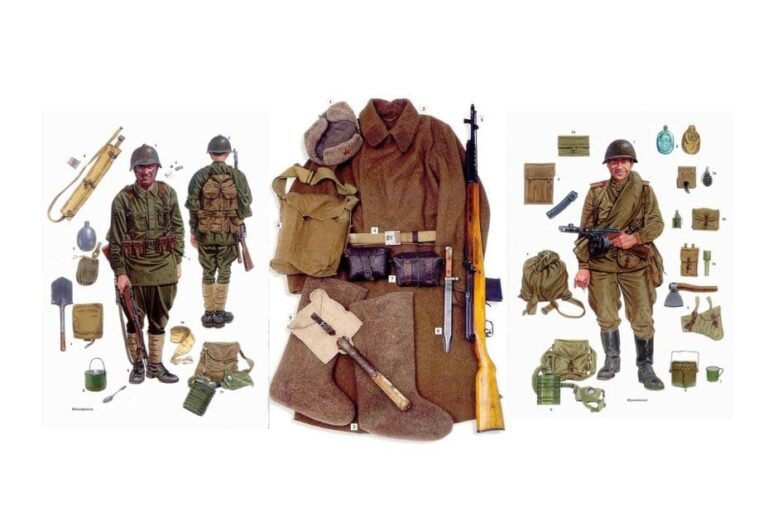
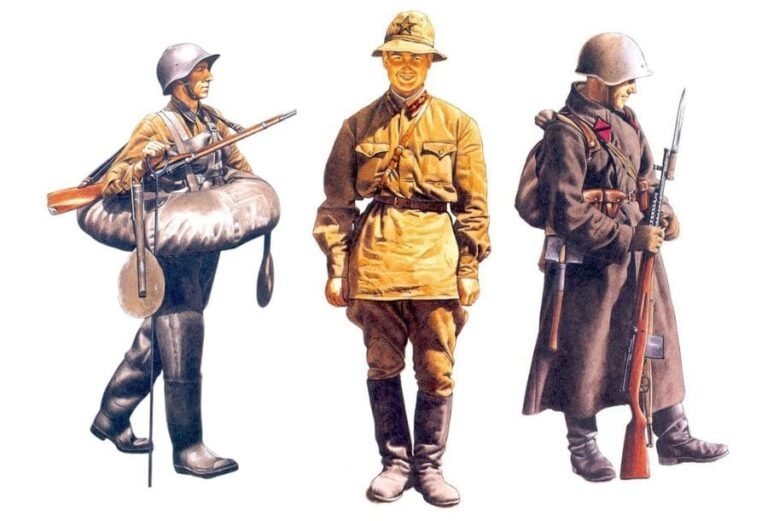
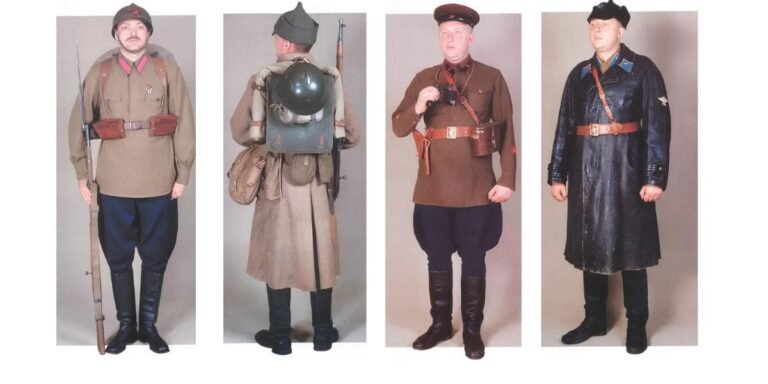
Soviet Army Uniforms 1936–1941 – Pre-WWII Red Army Clothing Guide
Soviet WW2 Uniforms 1941-1943 – Red Army, Navy & Aviation Guide
Soviet WW2 Uniforms 1943-1945 (Red Army, NKVD, Navy, Aviation) – Photo Guide
|
Quick
Navigation A-20 |
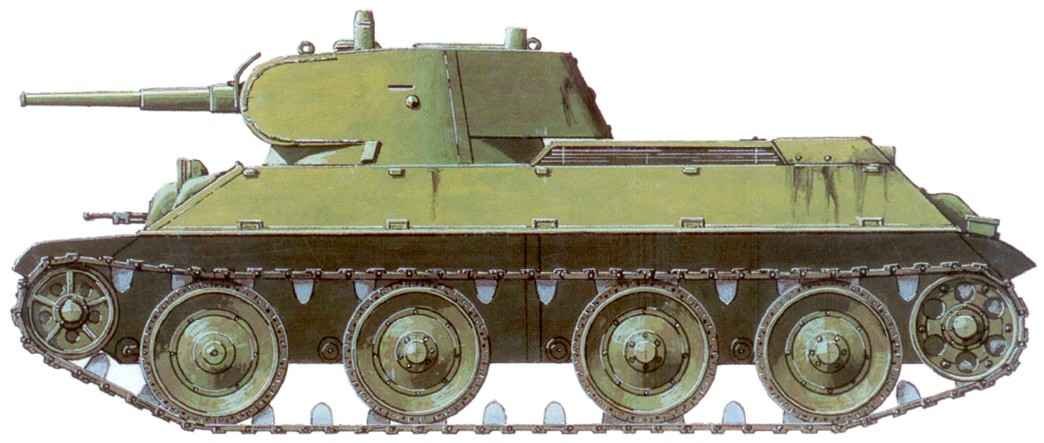
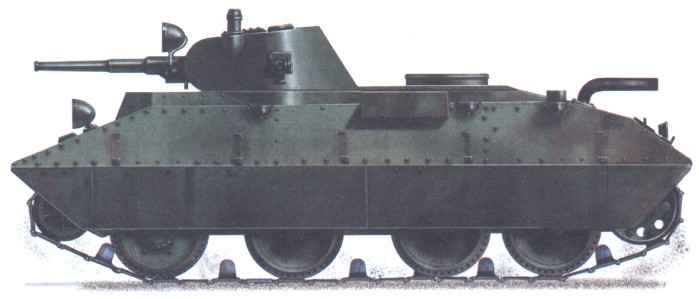
A-20 Light TankIn October 1937, after new anti-tank weapons began to appear, Factory No. 183 received an order to develop a new wheeled-tracked tank with stronger armor. The new tank had to protect its crew from heavy machine gun fire, including the large-caliber DK machine gun.
The A-20 was an experimental Soviet wheeled-tracked tank developed before World War 2. 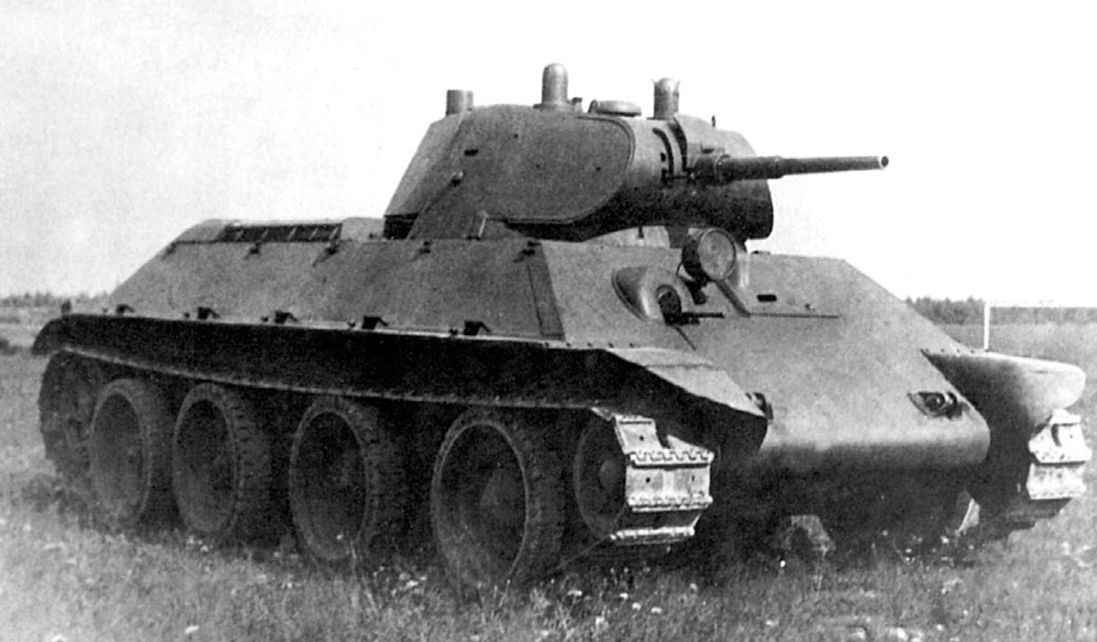 AT-1 Self-Propelled GunProduction of the T-26A artillery tank was stopped in favor of the new AT-1 vehicle. Even though it had problems during development, it was already officially called an artillery tank. 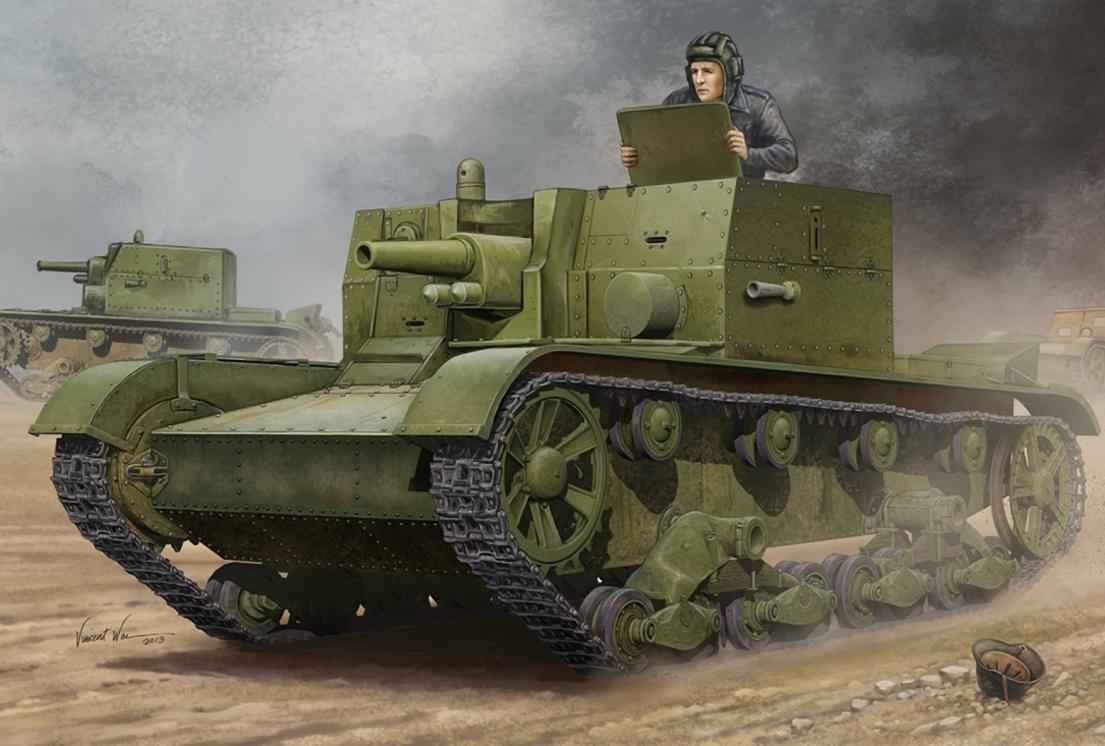
The AT-1 was a Soviet self-propelled artillery vehicle based on the T-26 tank chassis. 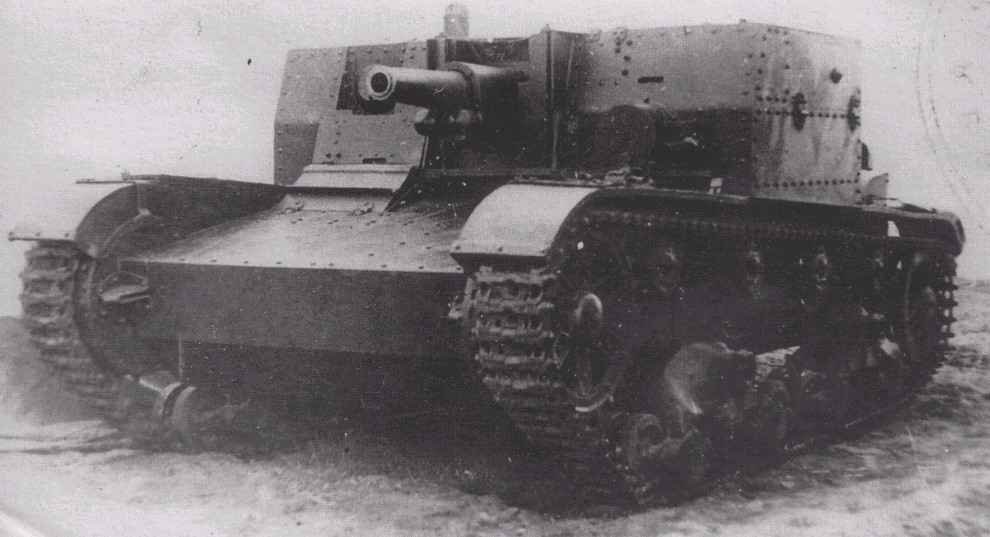 BA-10 Armored CarThe BA-10 was a widely used Soviet armored car. 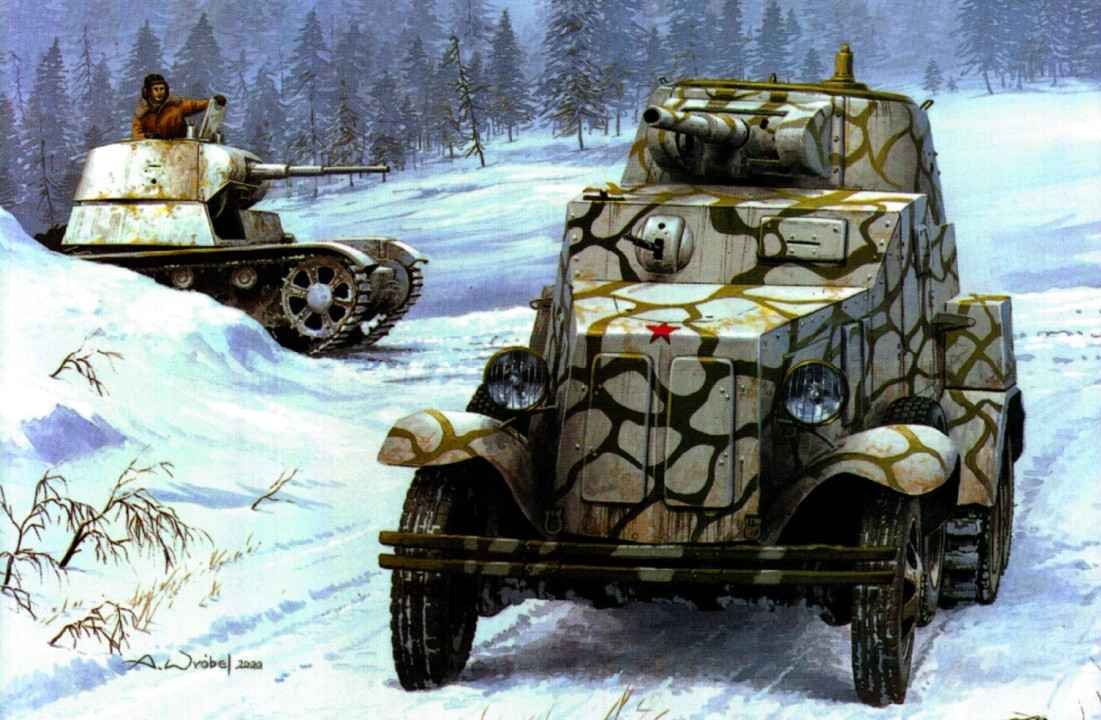
The BA-10 was one of the most common Soviet armored cars before and during World War 2. 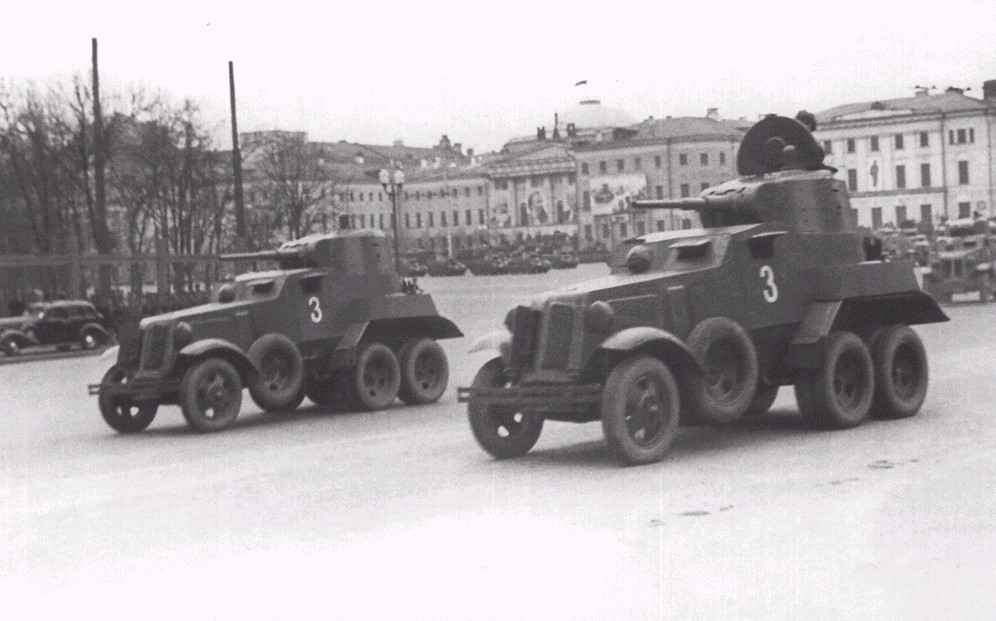
Red Army used low boots early in the war
Soviet WW2 Combat Boots (RKKA)
Authentic style Soviet Red Army combat boots with lace-up design, used during WW2 for mobility and versatility.
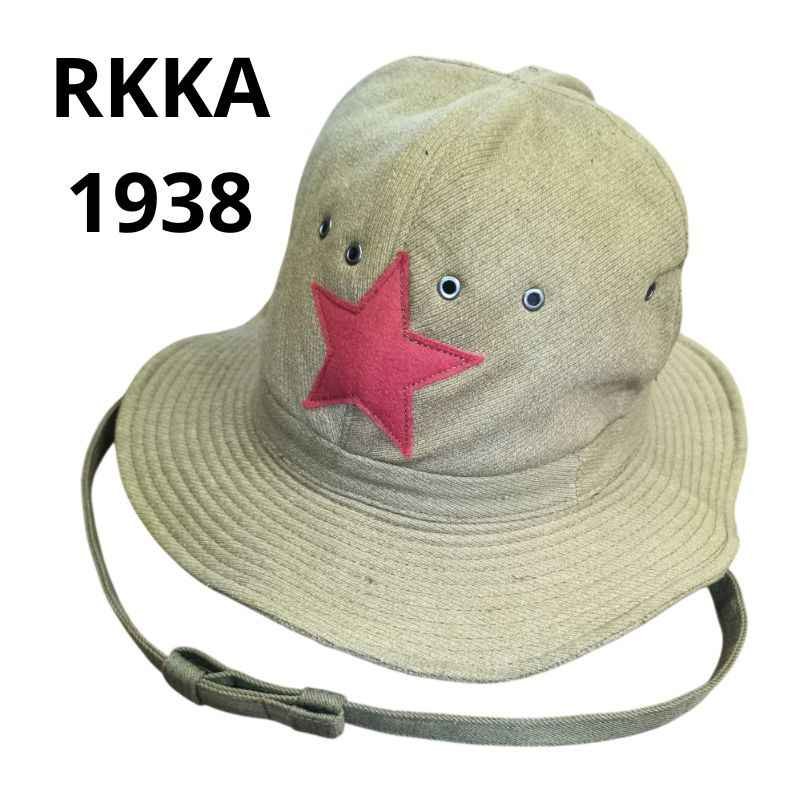 Soviet RKKA M1938 Panama HatSoviet-style M1938 summer Panama hat with red star, khaki canvas and classic Red Army design. |
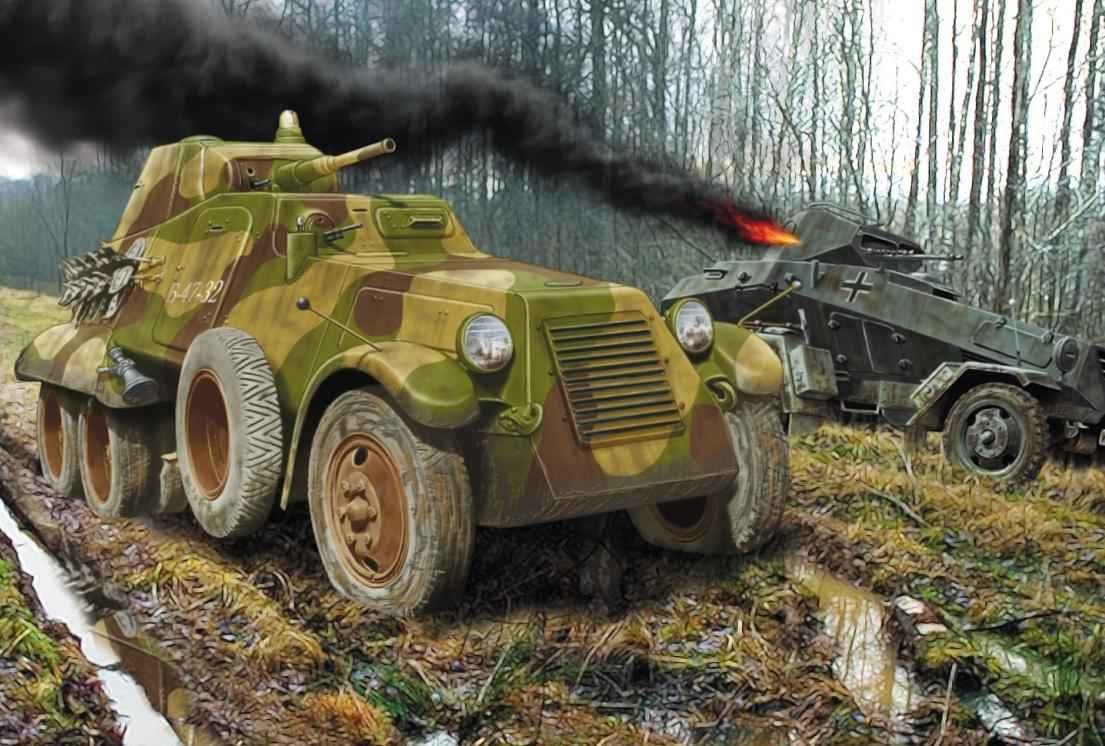
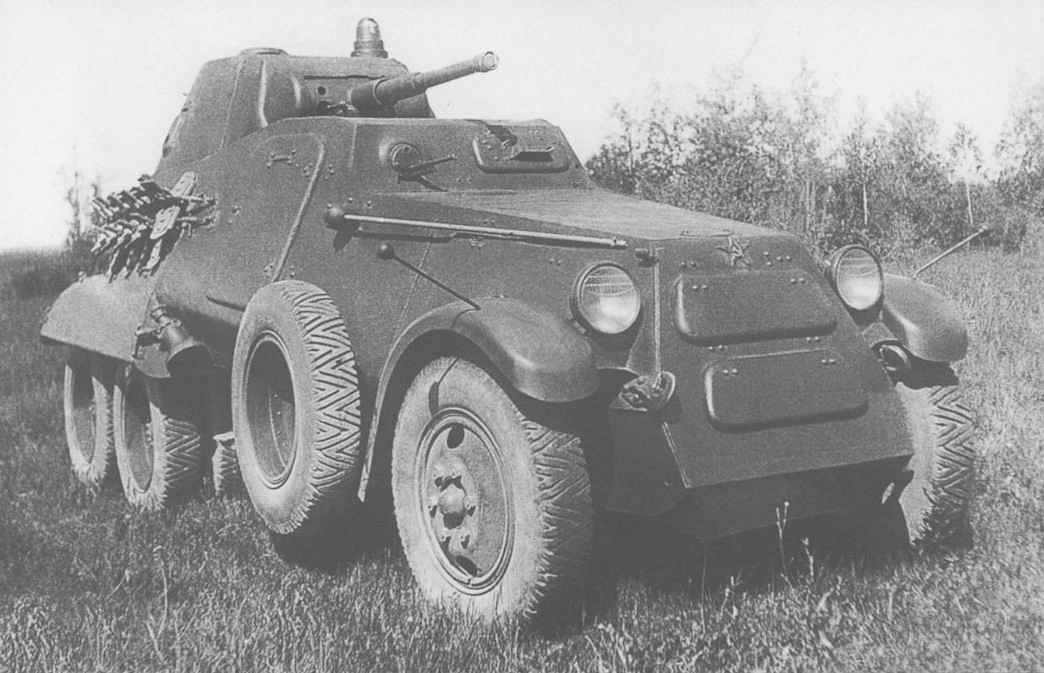
BA-11 Armored Car
The BA-11 was a heavy Soviet armored car.
It had a front-mounted engine, two rear driving axles, and two driving positions for forward and reverse movement.
| Type | Soviet heavy armored car |
| Year | 1939 |
| Weight | 8.13 tons |
| Crew | 4 men |
| Main Gun | 45 mm 20K cannon |
| Machine Guns | 2 × 7.62 mm DT machine guns |
| Armor | Up to 13 mm |
| Engine | ZIS-16 gasoline engine |
| Speed | 64 km/h |
| Range | 316 km |
The BA-11 was a heavy Soviet armored car with a 45 mm cannon and two machine guns.
It was built for fast fire support, but only a small number were produced before the war.
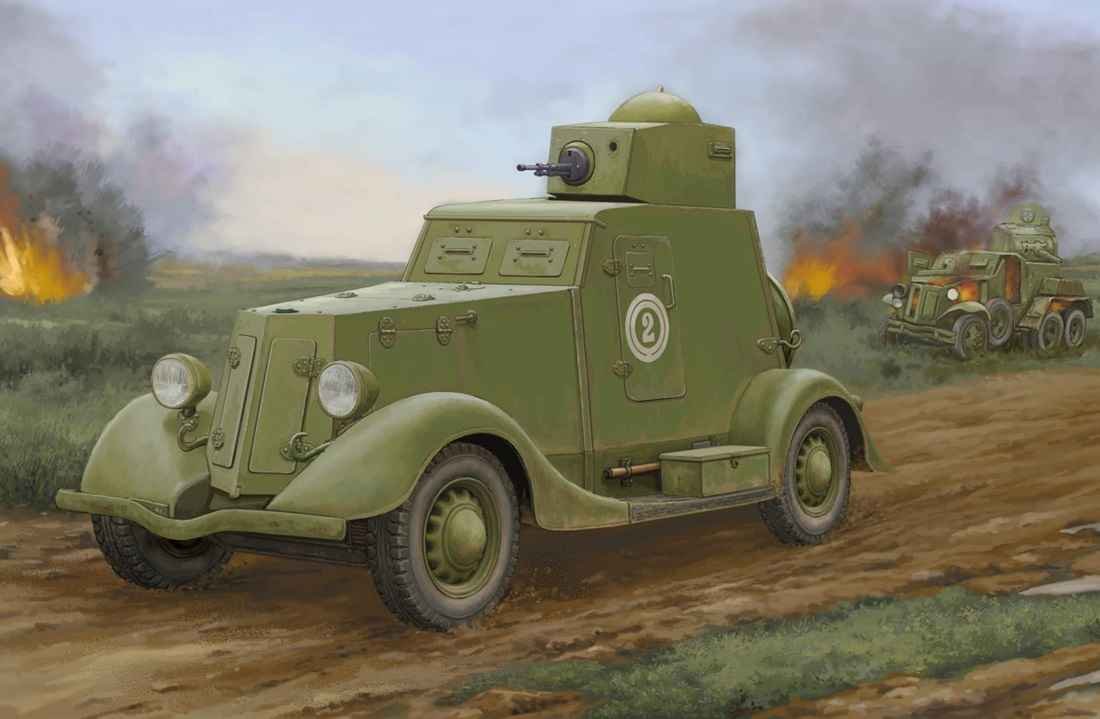
BA-20 Armored Car
The BA-20 was a light Soviet armored car created in 1936.
It was used for reconnaissance, communication, and security duties, and was produced in large numbers.
| Type | Soviet light armored car |
| Year | 1936 |
| Weight | 2.3 tons |
| Crew | 2–3 men |
| Main Weapon | 7.62 mm DT machine gun |
| Armor | Up to 6 mm |
| Engine | 50 hp gasoline engine |
| Speed | 90 km/h |
| Range | 350 km |
The BA-20 was a light Soviet armored car used for reconnaissance, communication, and patrol missions.
It was based on the civilian GAZ-M1 car chassis.
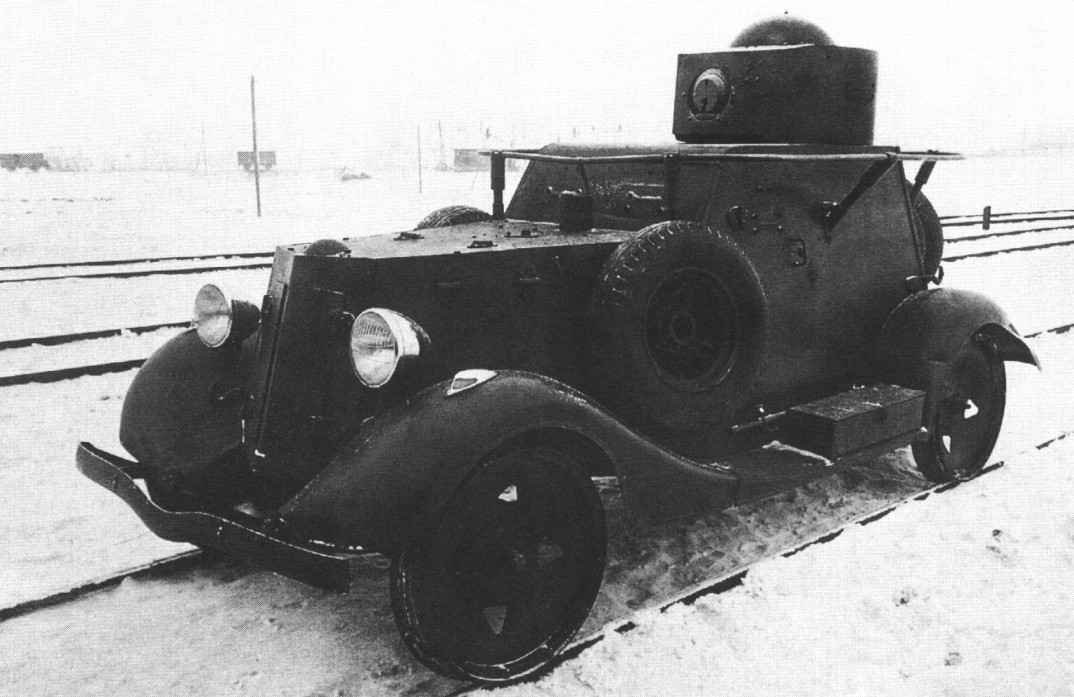
BA-21 Armored Car
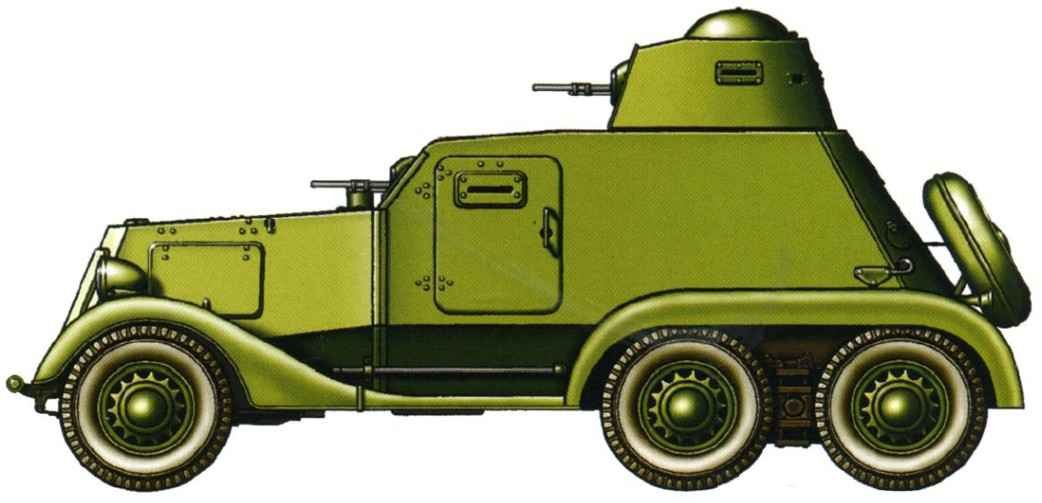
The BA-21 was a Soviet armored car created in 1939.
It was built at the Vyksa factory on the chassis of the three-axle GAZ-21 truck.
| Type | Soviet armored car |
| Year | 1939 |
| Weight | 3.24 tons |
| Crew | 3 men |
| Main Weapon | 2 × 7.62 mm DT machine guns |
| Armor | Up to 11 mm |
| Engine | GAZ-M1 gasoline engine |
| Power | 50 hp |
| Speed | 52.5 km/h |
| Range | 340–400 km |
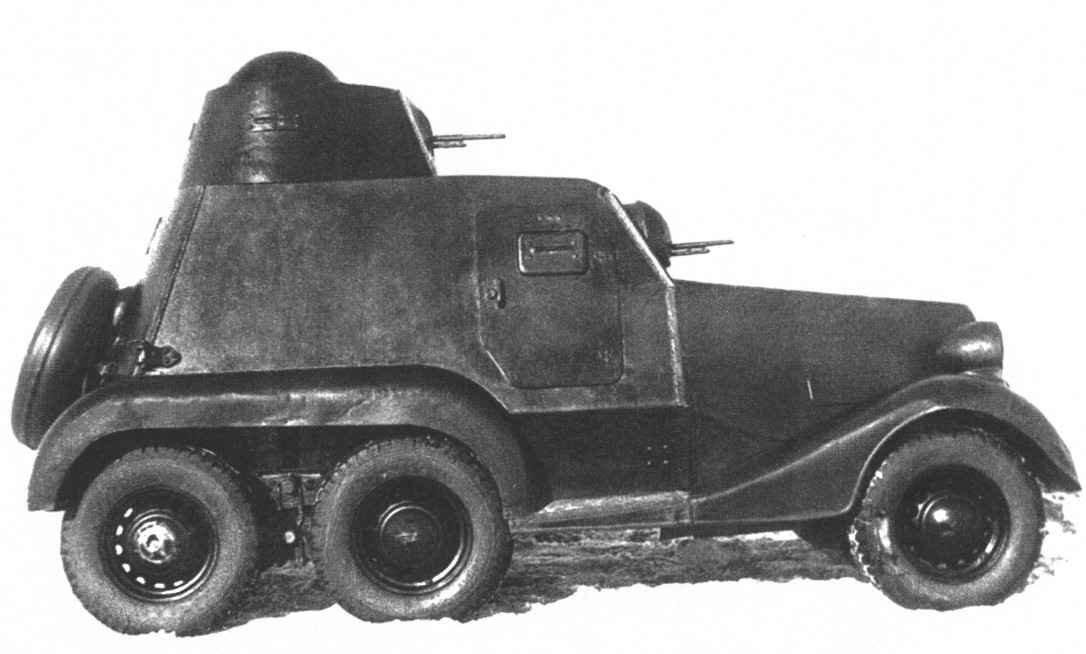
The BA-21 was an experimental Soviet armored car with improved armor and off-road performance.
It was built on the three-axle GAZ-21 truck chassis.
BA-22 Armored Car
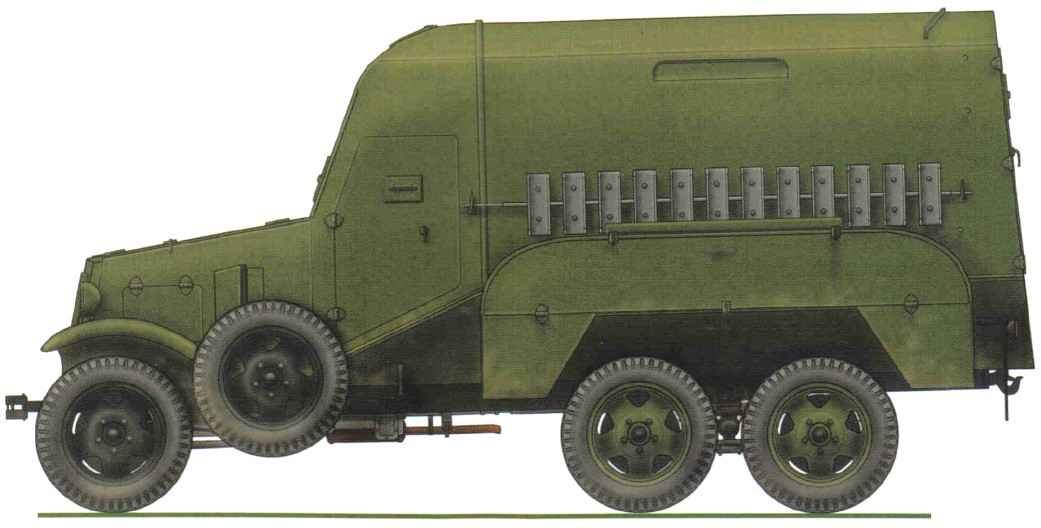
The BA-22 was a Soviet armored car with a front-mounted engine, front steering wheels, and two rear driving axles.
| Type | Soviet armored personnel carrier |
| Year | 1939 |
| Weight | 5.24 tons |
| Crew | 2 + 10 troops |
| Weapon | None |
| Armor | 6 mm |
| Engine | GAZ-AA gasoline engine |
| Power | 40 hp |
| Speed | 40 km/h |
| Range | 250 km |
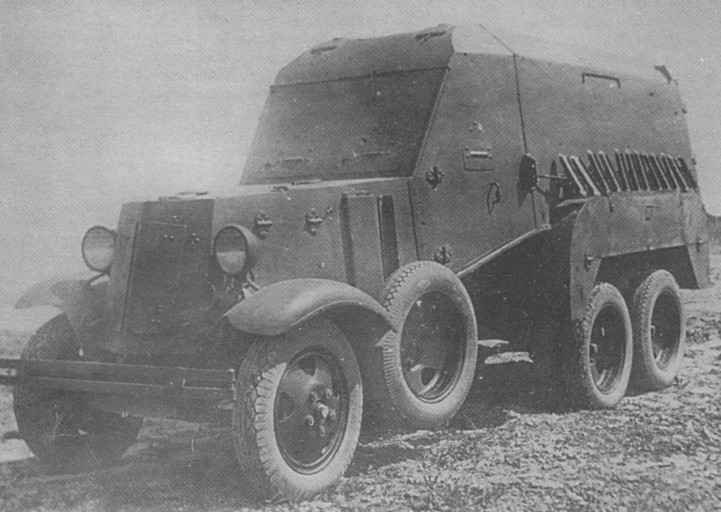
The BA-22 was an experimental Soviet armored transport vehicle designed to carry infantry and wounded soldiers.
It was based on the GAZ-AAA truck chassis.
BA-27 Armored Car
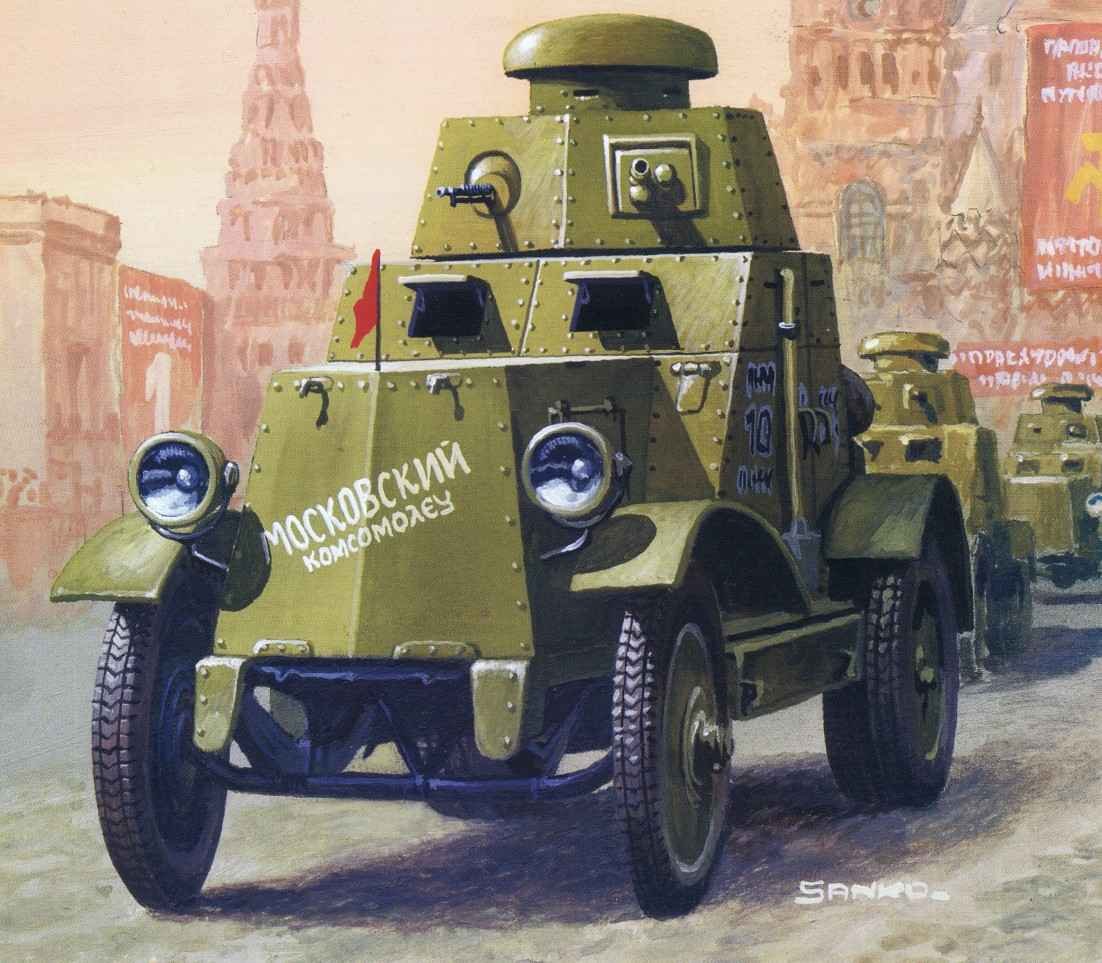
The BA-27 was the first Soviet mass-produced armored car.
Development began in 1927 under the leadership of chief designer E. I. Vazhinsky.
| Type | Soviet armored car |
| Year | 1928 |
| Weight | 4.4 tons |
| Crew | 3–4 men |
| Main Gun | 37 mm Hotchkiss cannon |
| Machine Gun | 7.62 mm DT machine gun |
| Armor | 4–7 mm |
| Engine | 35 hp gasoline engine |
| Speed | 40 km/h |
| Range | 270–300 km |
The BA-27 was the first mass-produced Soviet armored car.
It entered service with the Red Army in 1928.
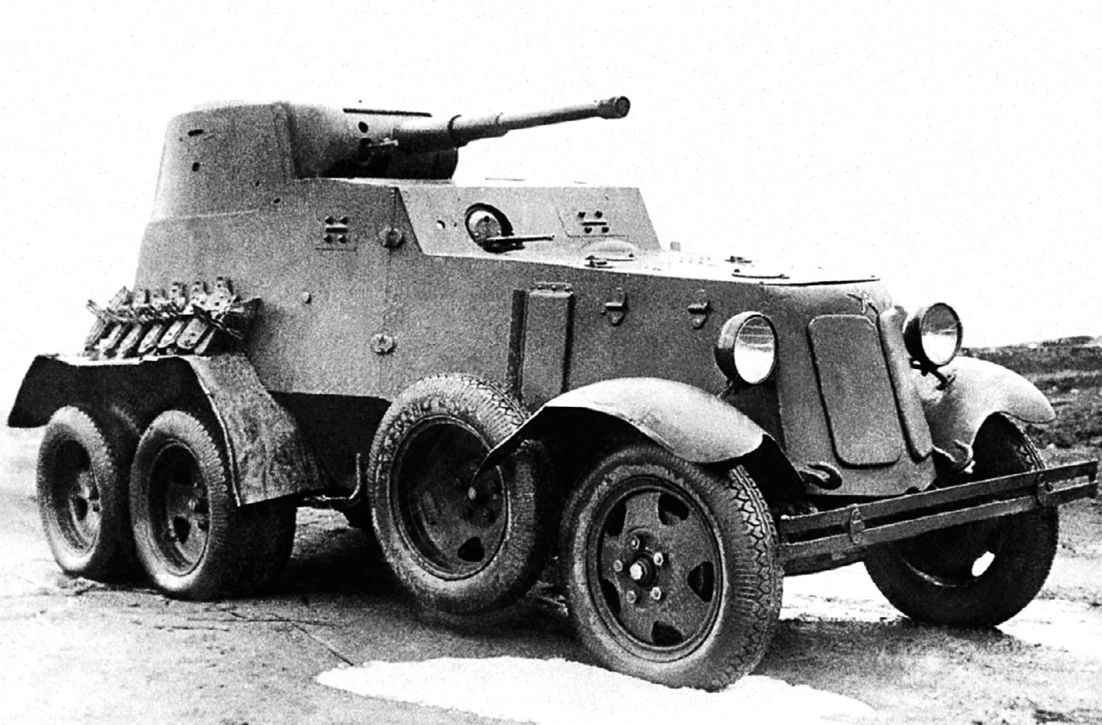
BA-3 / BA-6 / BA-9 Armored Cars
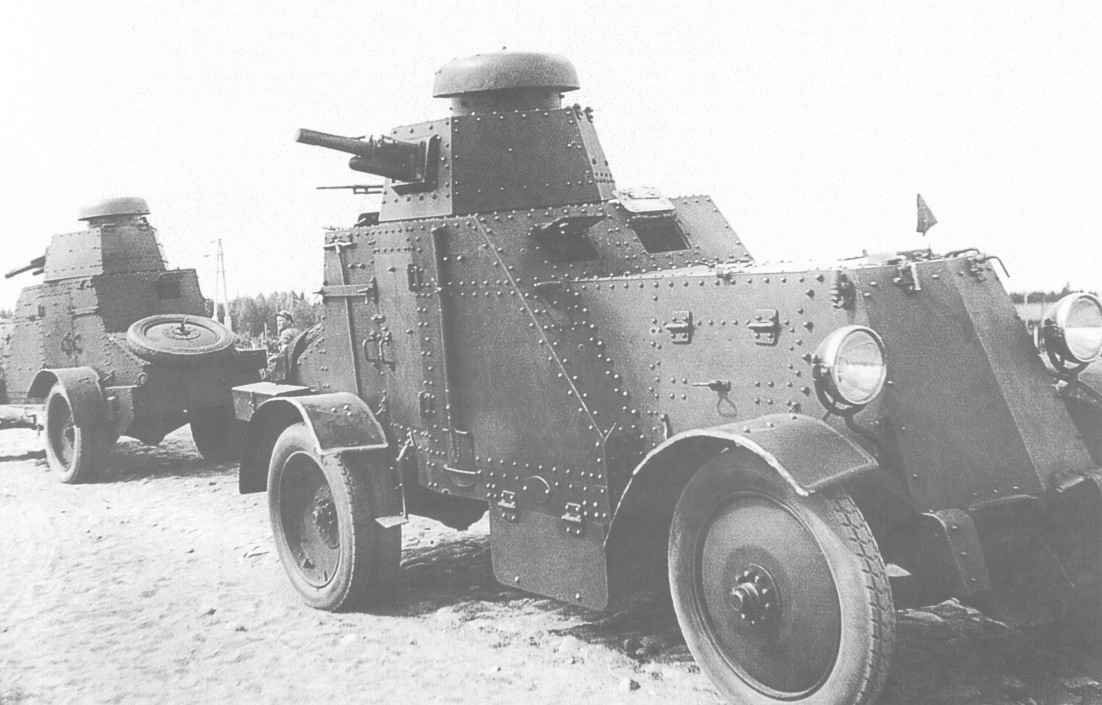
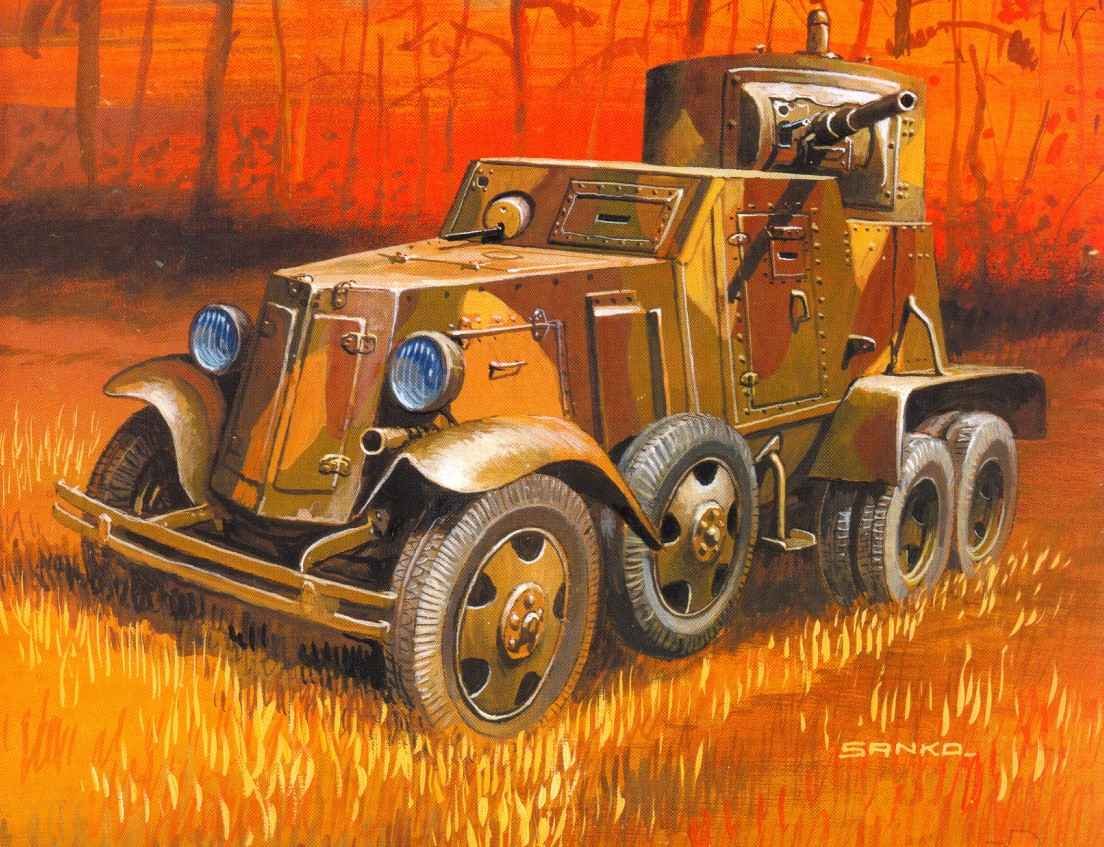
The BA-3, BA-6, and BA-9 were the first mass-produced medium cannon armored cars of the Red Army.
They were developed from the earlier BA-I armored car and received more powerful weapons. The vehicles were designed at the Izhora factory in 1934.
| Type | Soviet medium armored car |
| Years | 1934–1938 |
| Weight | 5.82 tons |
| Crew | 4 men |
| Main Gun | 45 mm 20K cannon |
| Machine Guns | 2 × 7.62 mm DT machine guns |
| Armor | Up to 9 mm |
| Speed | 70 km/h |
| Range | 248 km |
| Production | 554 vehicles built |
The BA-3, BA-6, and BA-9 were Soviet medium armored cars armed with a powerful 45 mm cannon.
They served in reconnaissance units and were also exported to several countries.
BA-30 Armored Car
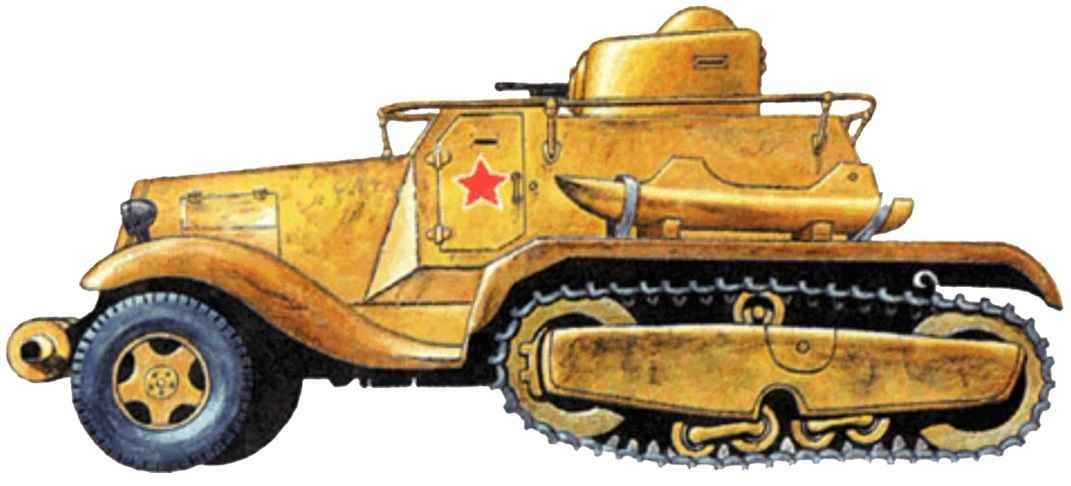
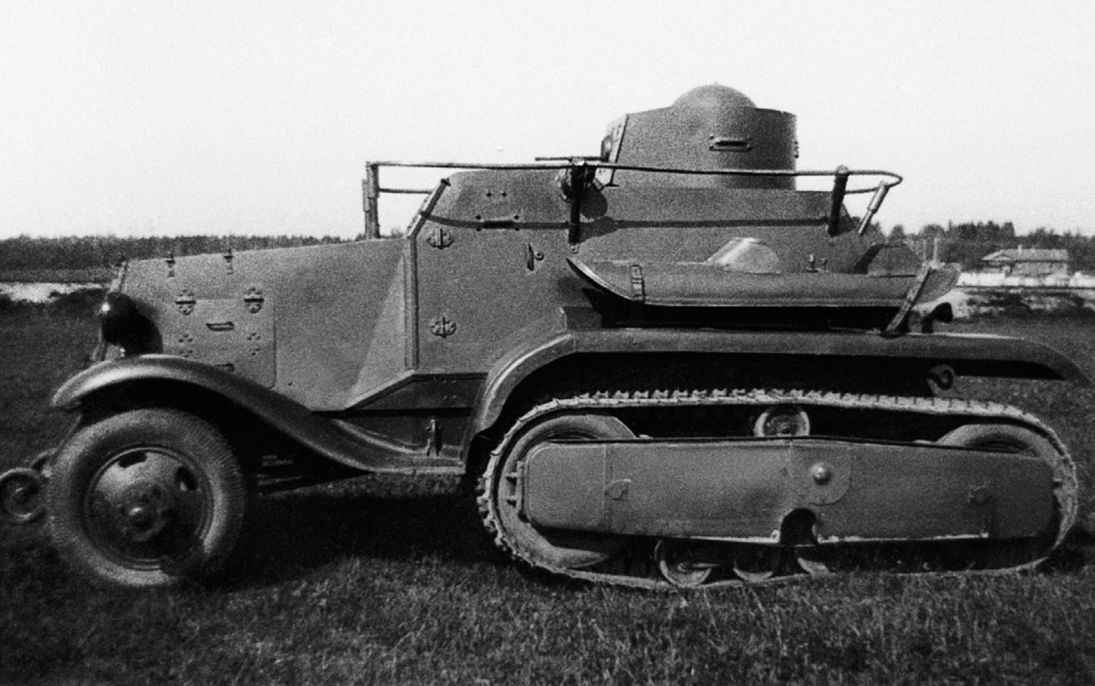
The experimental BA-30 armored car was built in 1937 and tested at the Kubinka proving ground near Moscow.
It used an M1 engine and a transmission based on GAZ-AA truck parts.
| Type | Soviet half-track armored car |
| Year | 1937 |
| Weight | 4.6 tons |
| Crew | 3 men |
| Main Weapon | 7.62 mm DT machine gun |
| Armor | 6 mm |
| Engine | 50 hp gasoline engine |
| Speed | 37 km/h |
| Range | 253 km |
| Suspension | Half-track system |
The BA-30 was an experimental Soviet half-track armored car designed for better off-road mobility.
It was tested near Moscow in 1937 but never entered mass production.
BA-5 Armored Car
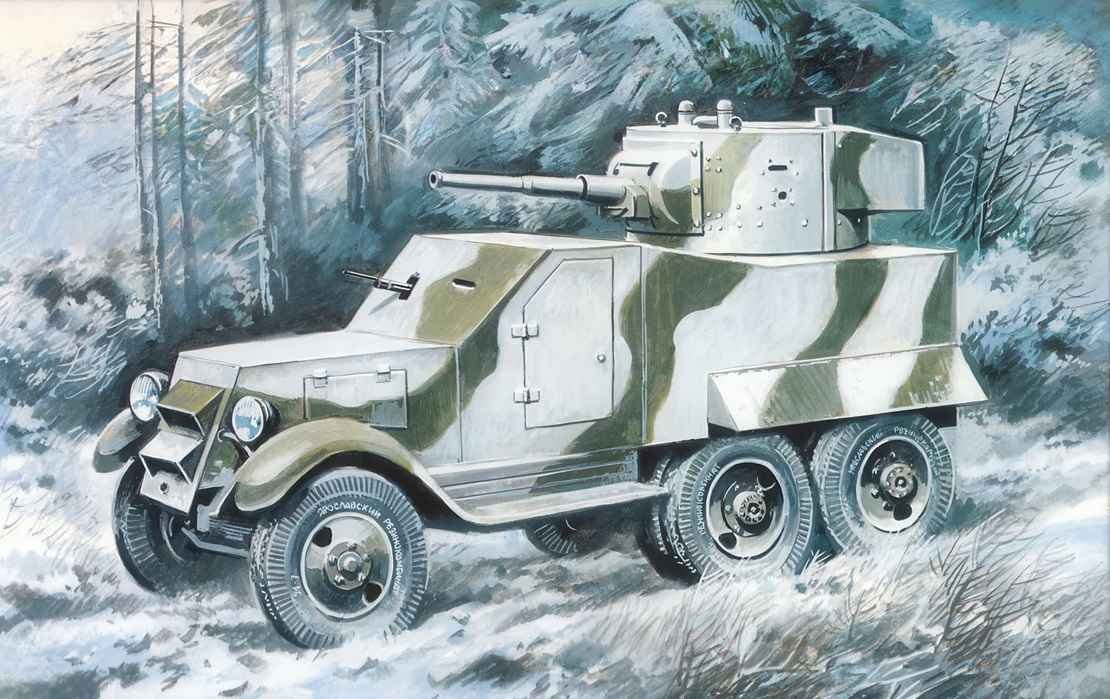
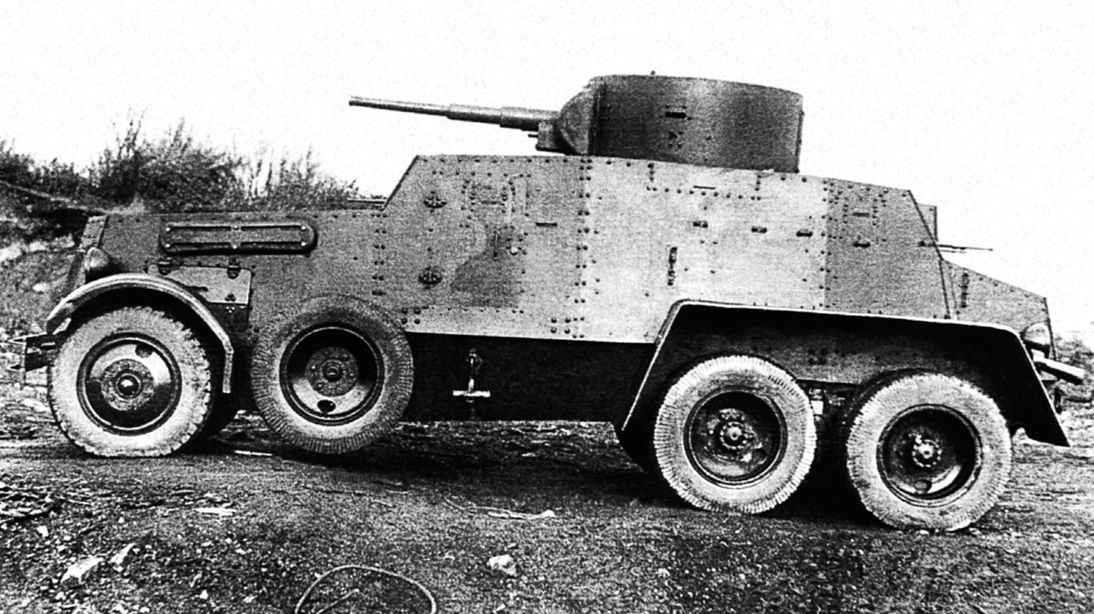
In 1935, the Moscow automobile factory built an experimental heavy armored car called the BA-5.
It was based on the three-axle ZIS-6 truck, which entered production in 1934.
| Type | Soviet heavy armored car |
| Year | 1935 |
| Weight | 8 tons |
| Crew | 5 men |
| Main Gun | 45 mm cannon |
| Machine Guns | 3 × 7.62 mm DT machine guns |
| Armor | 4–9 mm |
| Engine | ZIS-5 gasoline engine, 73 hp |
| Speed | 50 km/h |
| Range | 260 km |
The BA-5 was an experimental Soviet heavy armored car armed with a 45 mm cannon.
It used the chassis of the three-axle ZIS-6 truck.
BA-64 Armored Car
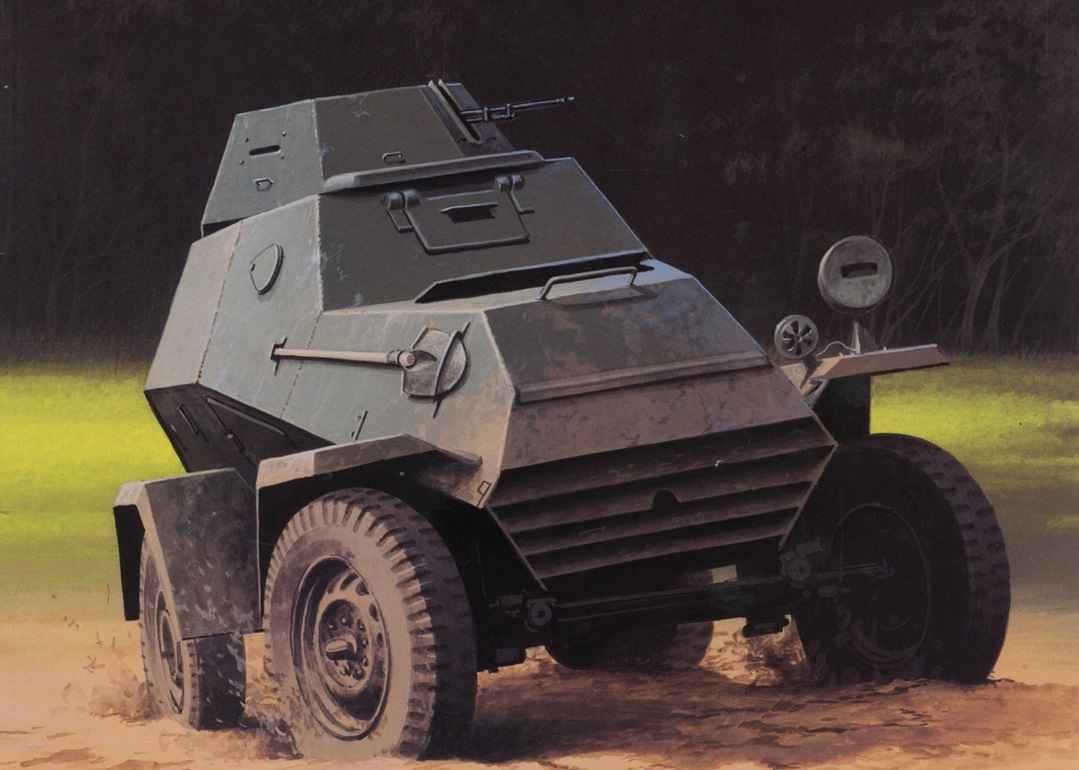
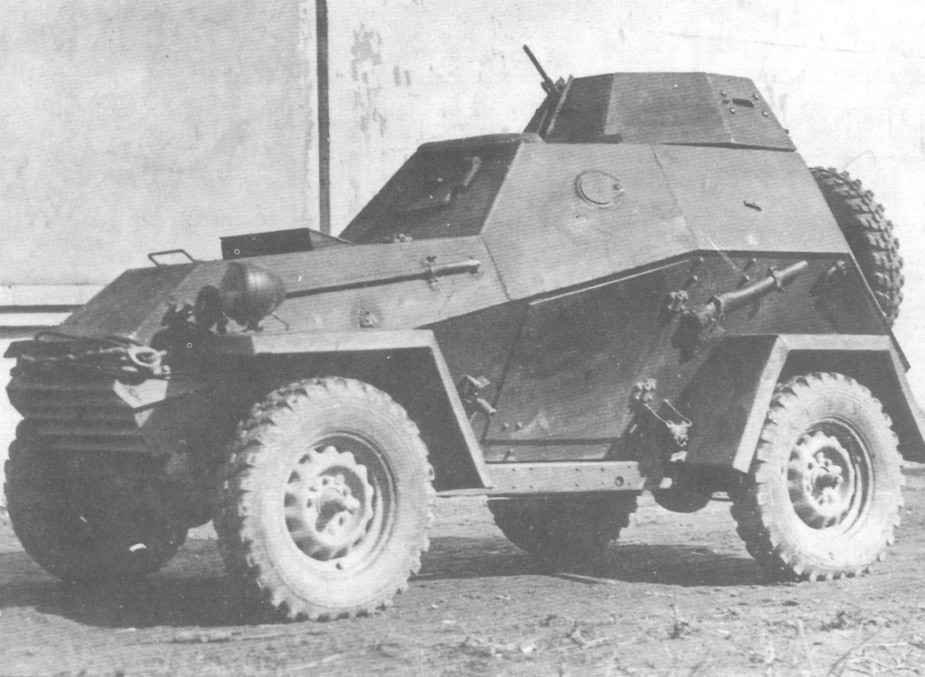
The BA-64 was the first Soviet mass-produced all-wheel-drive armored car.
It was a light reconnaissance vehicle used during World War 2.
| Type | Soviet light armored car |
| Year | 1942 |
| Weight | 2.4 tons |
| Crew | 2 men |
| Main Weapon | 7.62 mm DT machine gun |
| Armor | 7–15 mm |
| Engine | 50 hp gasoline engine |
| Drive | 4×4 all-wheel drive |
| Speed | 80 km/h |
| Range | 500 km |
The BA-64 was a Soviet light reconnaissance armored car used during World War 2.
It became the first mass-produced Soviet all-wheel-drive armored vehicle.
BAD-1 / BAD-2 Armored Cars
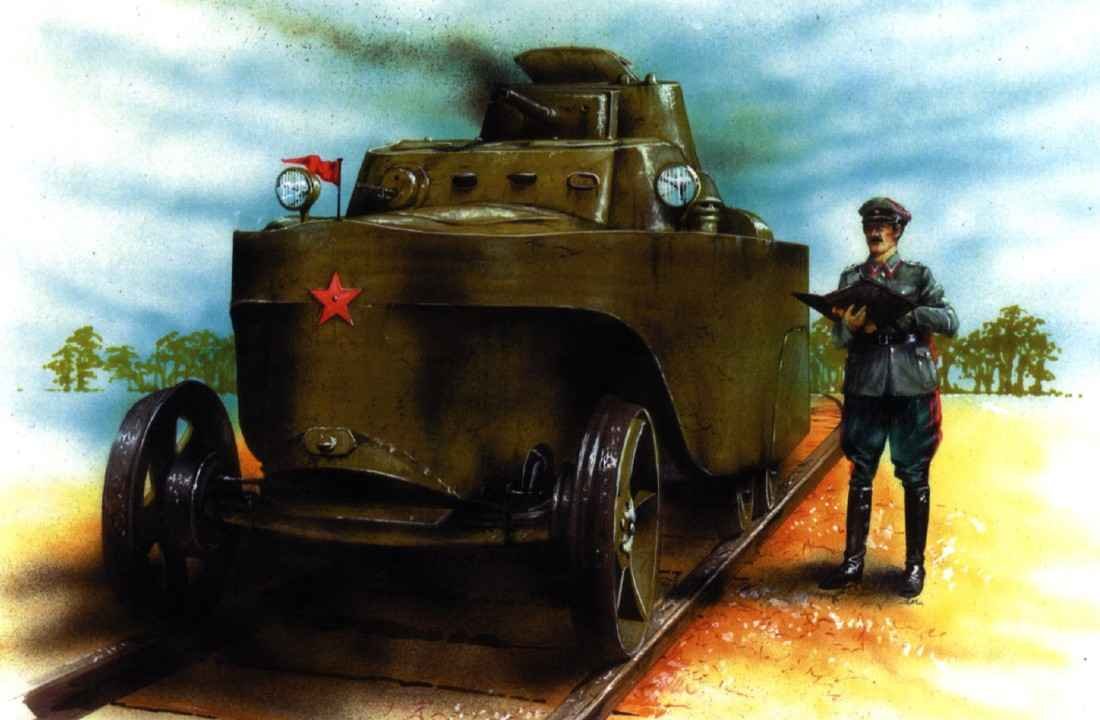
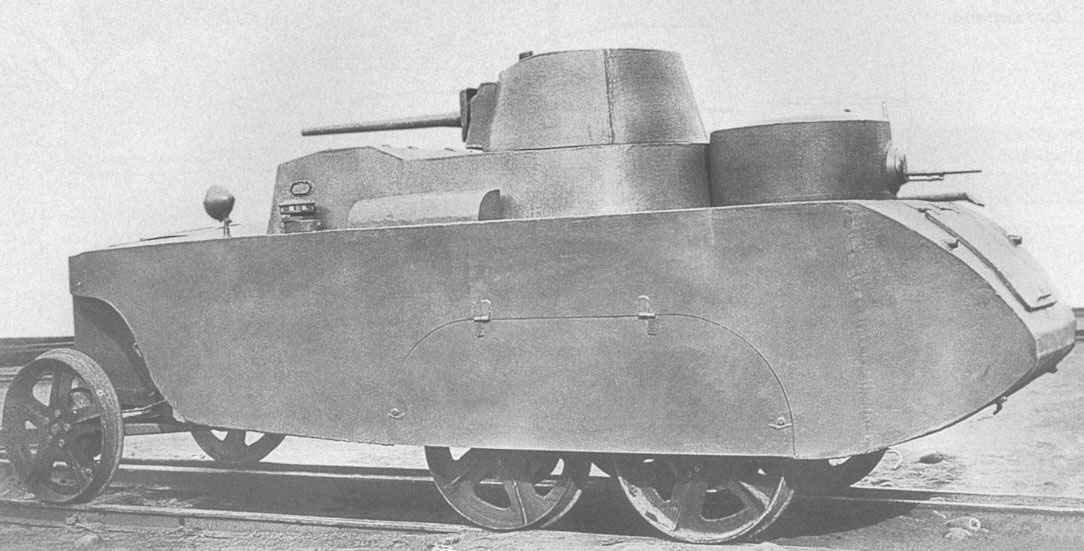
In 1932, a group of engineers from the Izhora factory led by N. Ya. Obukhov developed the BAD-2 amphibious armored car project.
It was based on the chassis of the three-axle Ford-Timken truck.
| Type | Soviet amphibious armored car |
| Year | 1932 |
| Weight | 7.11 tons |
| Crew | 4 men |
| Main Gun | 37 mm cannon |
| Machine Guns | 2 × 7.62 mm DT machine guns |
| Armor | 6 mm |
| Engine | Ford gasoline engine, 40 hp |
| Speed | 70 km/h on road, 6 km/h on water |
| Special Feature | Amphibious and rail-capable |
The BAD-2 was an experimental Soviet amphibious armored car that could drive on roads, rails, and water.
It was one of the most unusual Soviet armored vehicle projects of the early 1930s.
BAI Armored Car
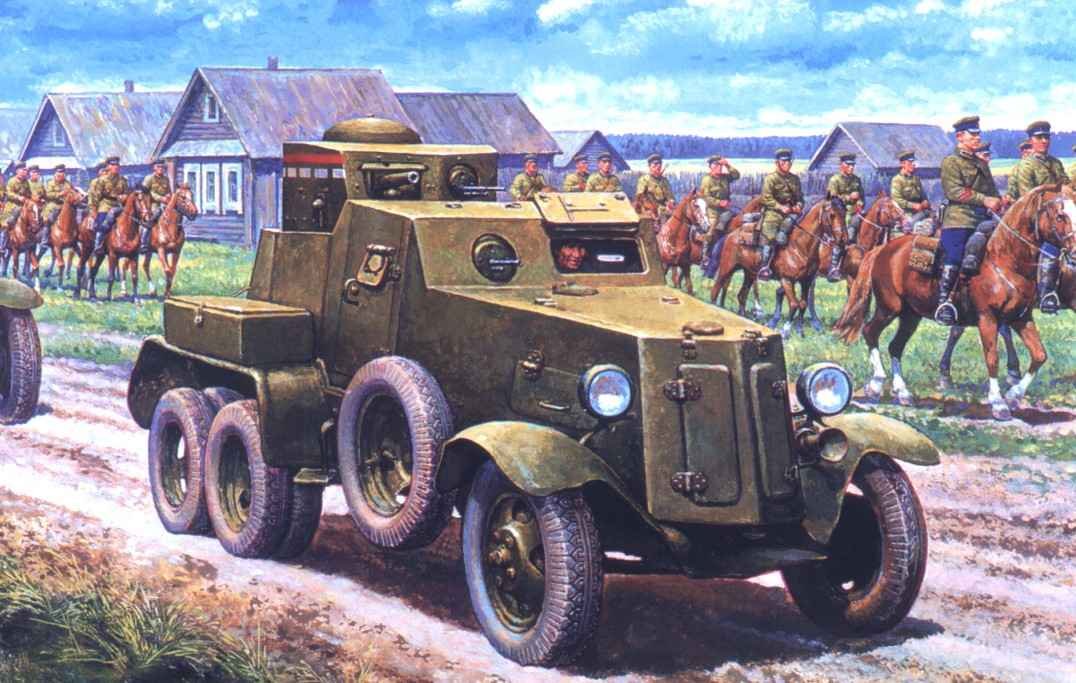
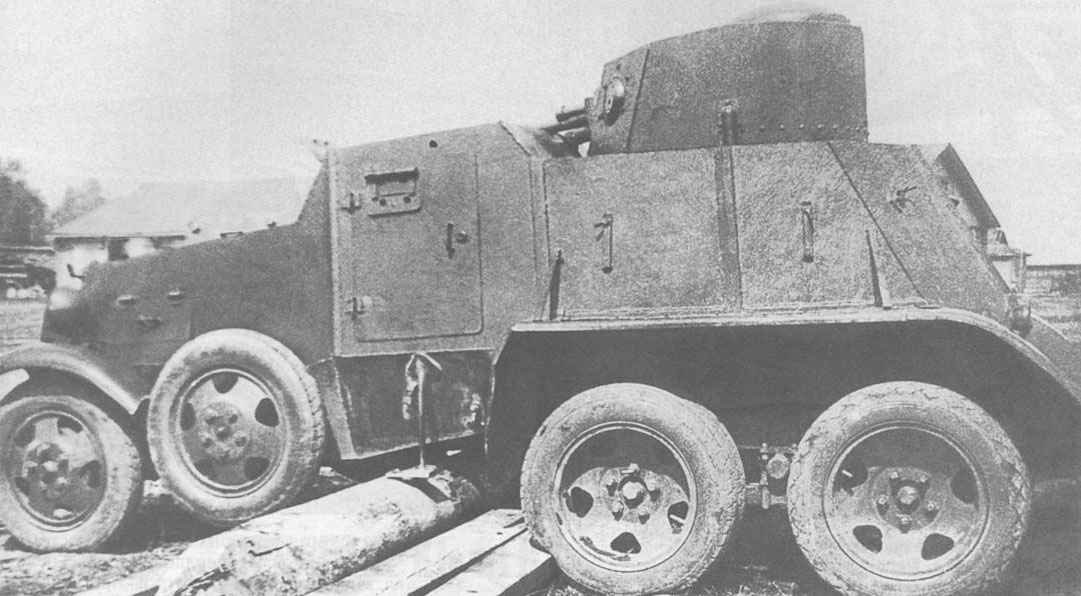
Using experience from earlier armored vehicle projects based on the Ford-Timken chassis, the design bureau of the Izhora factory created a new armored car in early 1932.
The vehicle received the name BAI – “Broneavtomobil Izhorskiy” (Izhora Armored Car).
| Type | Soviet medium armored car |
| Year | 1933 |
| Weight | 3.86 tons |
| Crew | 3 men |
| Main Gun | 37 mm PS-1 cannon |
| Machine Guns | 2 × 7.62 mm DT machine guns |
| Armor | Up to 8 mm |
| Engine | GAZ-AA engine, 40 hp |
| Speed | 63 km/h |
| Range | 150 km |
| Production | 109 vehicles built |
The BAI was an early Soviet medium armored car armed with a 37 mm cannon.
It became the basis for later Soviet armored car designs of the 1930s.
BT-2 Light Tank
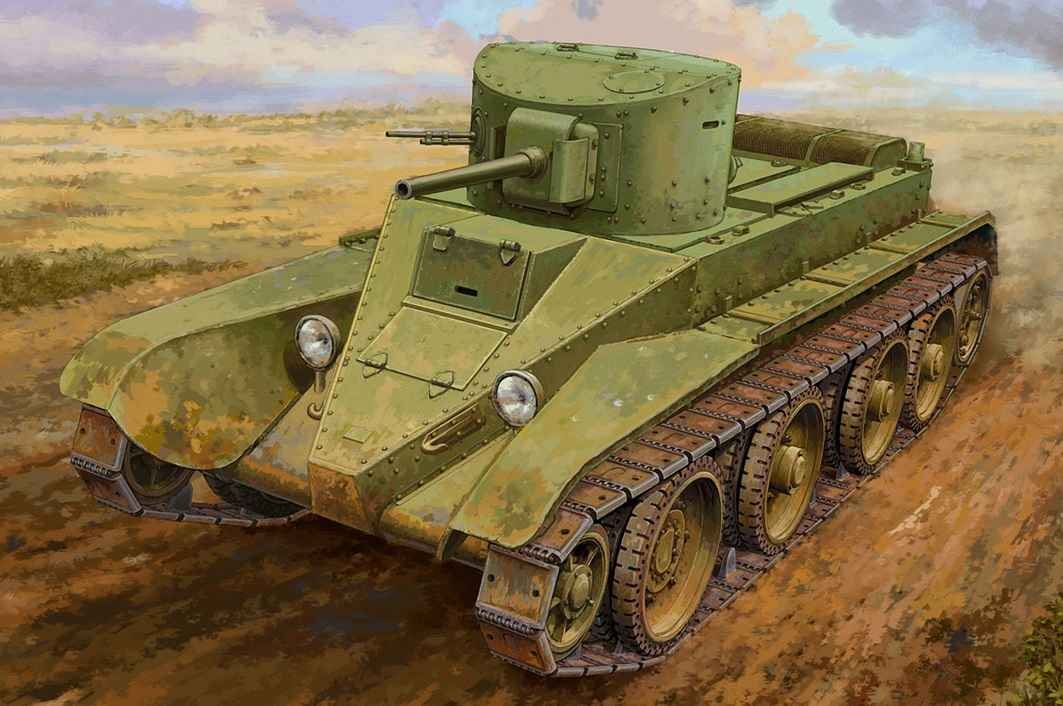
The BT-2 was the first mass-produced Soviet wheeled-tracked tank.
It was based on an American prototype but included many Soviet design changes.
| Type | Soviet light wheeled-tracked tank |
| Year | 1932 |
| Weight | 11.3 tons |
| Crew | 3 men |
| Main Gun | 37 mm cannon |
| Machine Gun | 7.62 mm DT machine gun |
| Armor | 6–13 mm |
| Engine | M-5 engine, 400 hp |
| Speed | 72 km/h on wheels, 52 km/h on tracks |
| Range | 200–300 km |
The BT-2 was the first mass-produced Soviet wheeled-tracked tank.
It became the starting point for the famous BT fast tank series.
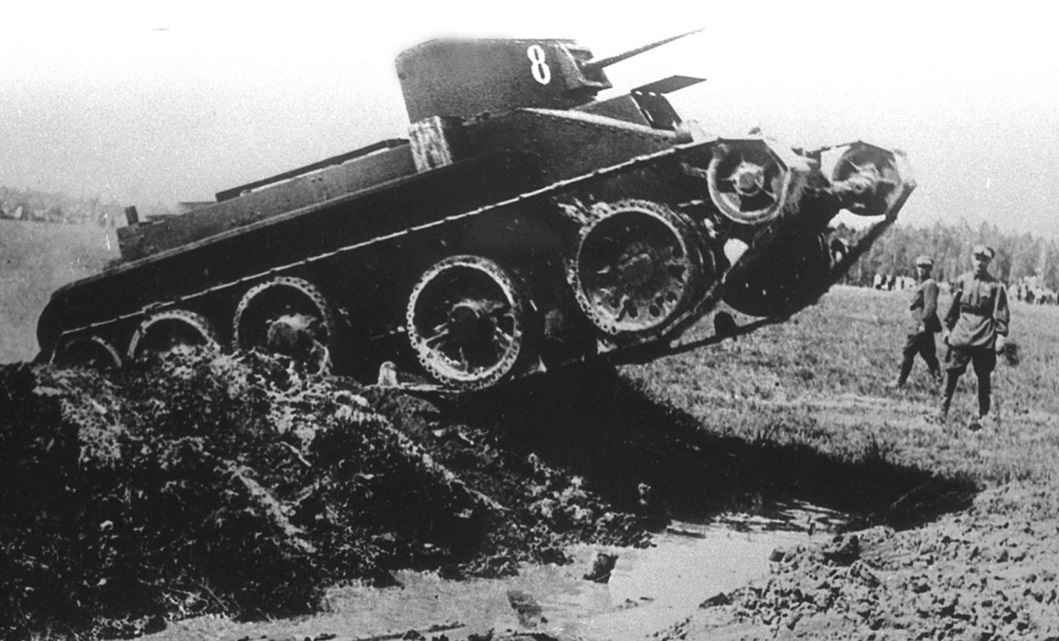
BT-5 Light Tank
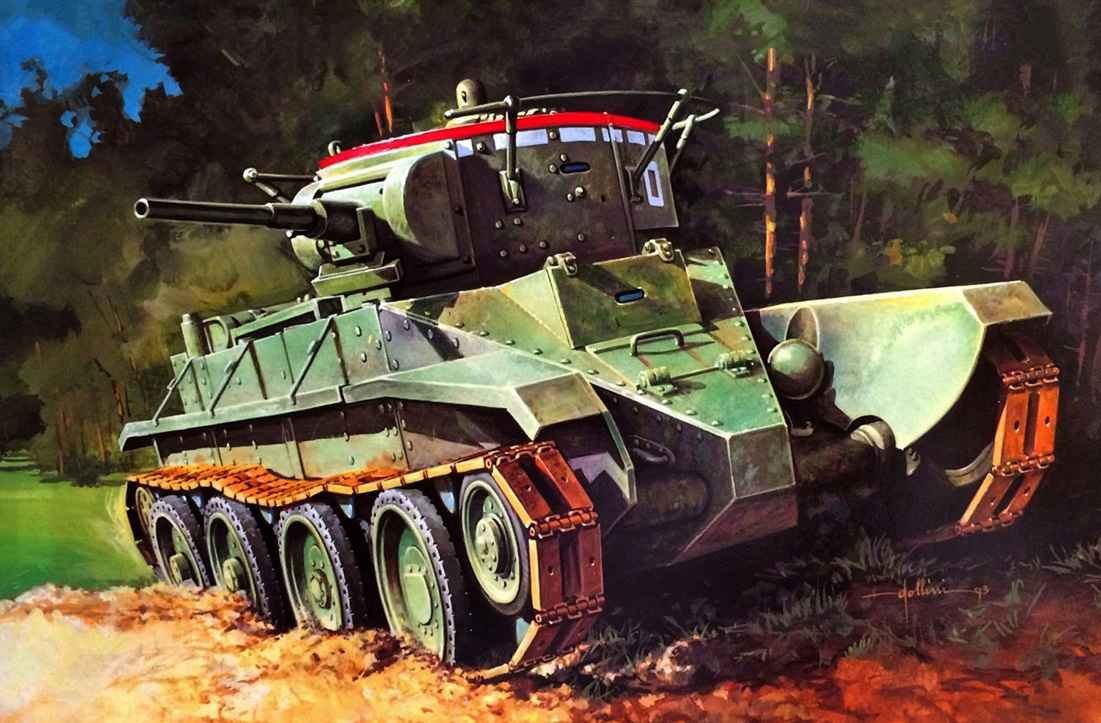
In the second half of 1933, the Kharkov factory switched from production of the BT-2 to the BT-5.
Early BT-5 tanks were almost the same as the BT-2, but used a new turret.
| Type | Soviet light wheeled-tracked tank |
| Years | 1933–1934 |
| Weight | 11.5 tons |
| Crew | 3 men |
| Main Gun | 45 mm cannon |
| Machine Gun | 7.62 mm DT machine gun |
| Armor | 6–13 mm |
| Engine | M-5 engine, 400 hp |
| Speed | 72 km/h on wheels, 52 km/h on tracks |
| Range | 120–300 km |
The BT-5 was a Soviet fast light tank armed with a 45 mm cannon.
It became one of the main Soviet cavalry tanks of the 1930s.
BT-6 Light Tank
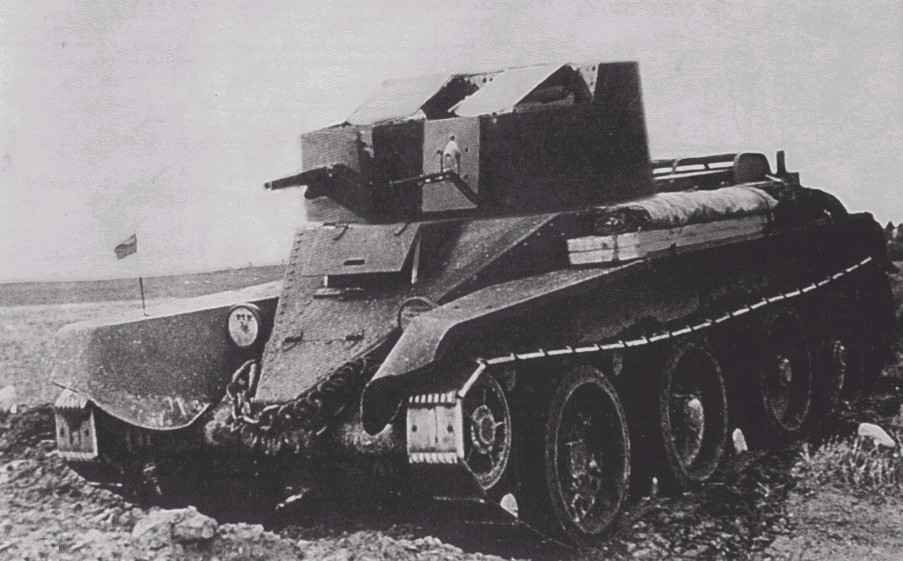
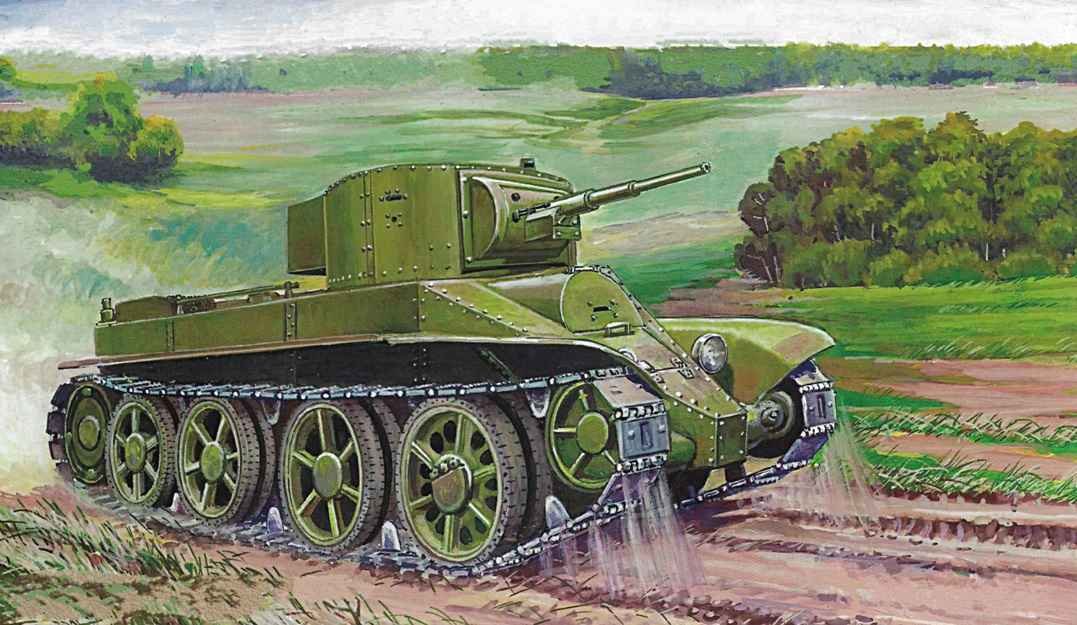
The BT-6 was designed in the middle of 1932 by a design bureau led by A. O. Firsov in Kharkov.
| Type | Soviet experimental light tank |
| Year | 1932 |
| Weight | 11.5 tons |
| Crew | 3 men |
| Main Gun | 45 mm 20K cannon |
| Machine Gun | 7.62 mm DT machine gun |
| Armor | Up to 13 mm |
| Engine | M-5-400 engine, 400 hp |
| Speed | 70 km/h on wheels, 50 km/h on tracks |
| Status | Prototype only |
The BT-6 was an experimental Soviet fast tank developed from the BT-5 project.
Work on the tank was stopped before the prototype was completed.
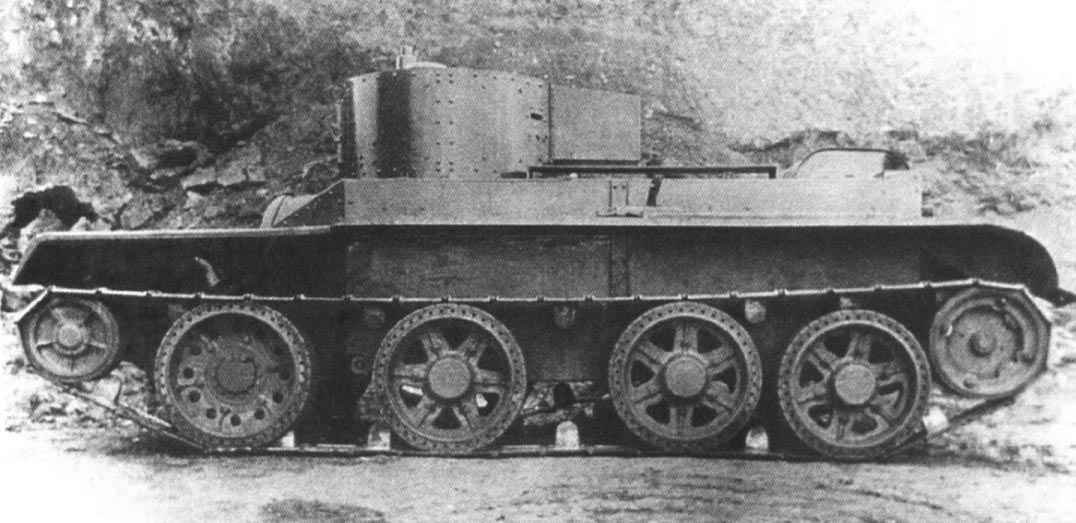
The history of the BT-7 began after the Soviet Union bought two Christie wheeled-tracked tanks from the United States in 1930.
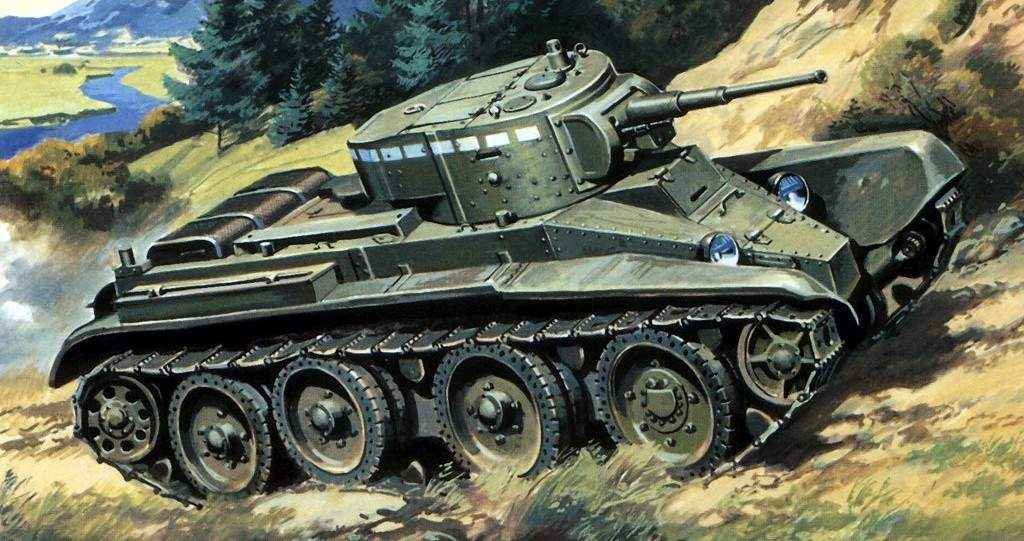
| Type | Soviet fast light tank |
| Years | 1935–1940 |
| Weight | 13.9 tons |
| Crew | 3 men |
| Main Gun | 45 mm 20K cannon |
| Machine Guns | 2 × 7.62 mm DT machine guns |
| Armor | 6–22 mm |
| Engine | M-17T engine, 400 hp |
| Speed | 73 km/h on wheels, 53 km/h on tracks |
| Range | 375–460 km |
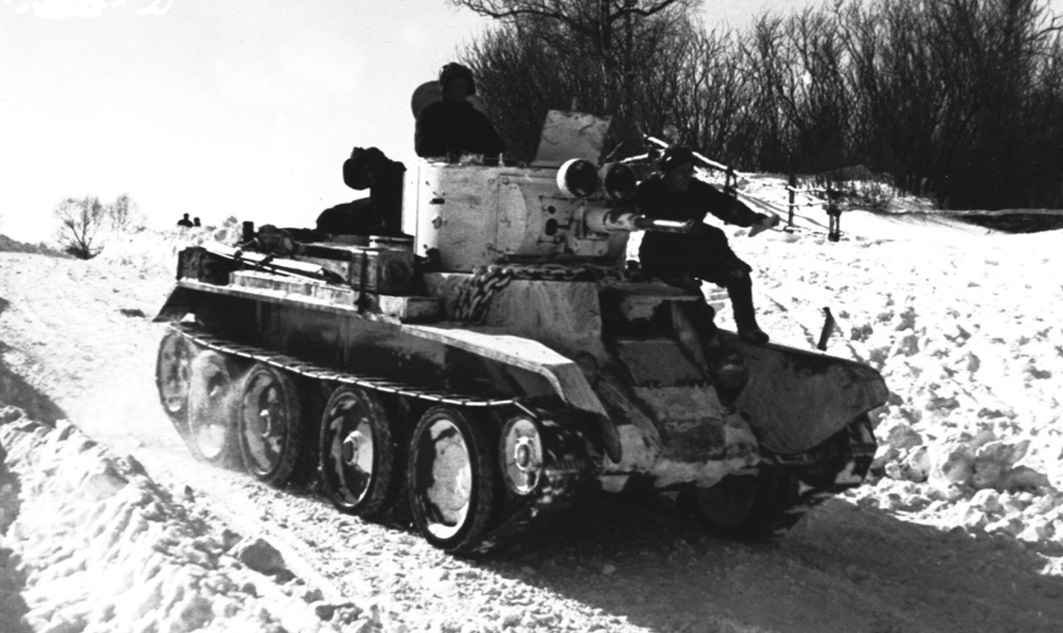
The BT-7 was one of the most famous Soviet fast tanks of the 1930s.
It was used in many conflicts before and during World War 2.
BT-SV-2 Light Tank
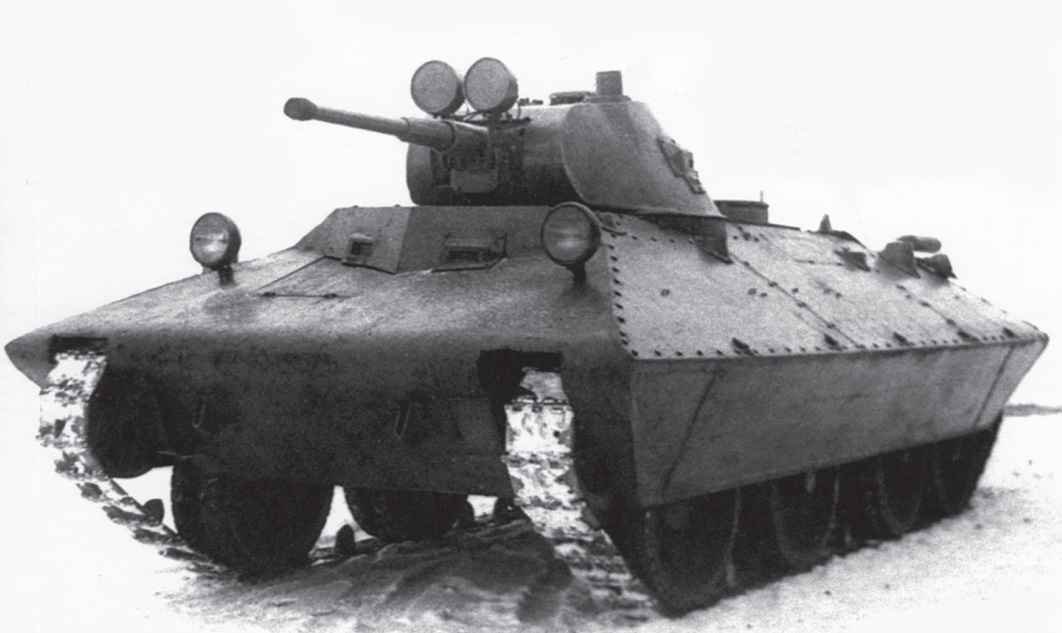
The BT-SV-2 was created as a simplified version of the BT-5 tank and received the designation BT-SV.
The tank never entered mass production.
| Type | Soviet experimental light tank |
| Year | 1937 |
| Weight | 13.11 tons |
| Crew | 4 men |
| Main Gun | 45 mm cannon |
| Machine Gun | 7.62 mm DT machine gun |
| Armor | Up to 25 mm |
| Engine | M-17T gasoline engine, 500 hp |
| Speed | 86 km/h on wheels, 62 km/h on tracks |
| Status | Prototype only |
The BT-SV-2 was an experimental Soviet fast tank with improved sloped armor protection.
It was developed from the BT tank series but never entered production.
GAZ-64 / GAZ-67 Vehicle
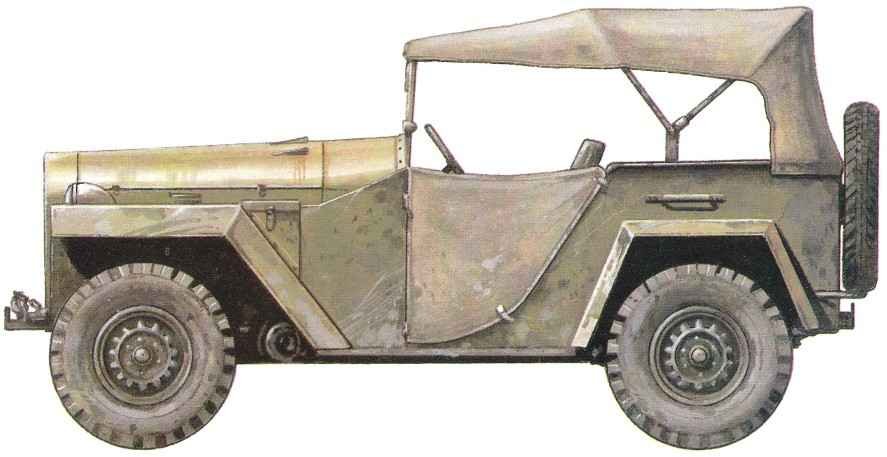
During the Soviet-Finnish War of 1939–1940, the Red Army realized the need for a very simple, reliable, and mobile off-road vehicle for difficult winter conditions.
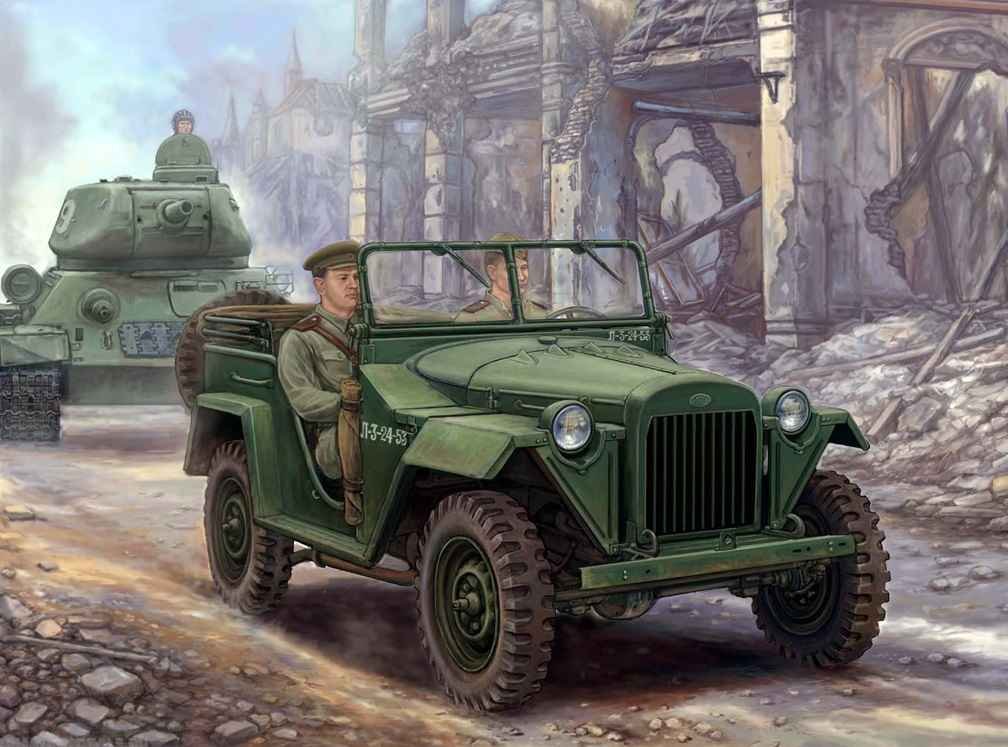
| Type | Soviet military off-road vehicle |
| Years | 1941–1953 |
| Weight | 1320 kg |
| Crew | 1 driver + 3 passengers |
| Drive | 4×4 all-wheel drive |
| Engine | 54 hp gasoline engine |
| Speed | 90 km/h |
| Range | 500 km |
| Role | Reconnaissance, command, towing |
| Production | Over 100,000 vehicles |
The GAZ-64 and GAZ-67 were Soviet military off-road vehicles used during World War 2.
They served as command cars, reconnaissance vehicles, and light artillery tractors.
GAZ-MM / GAZ-AA Truck
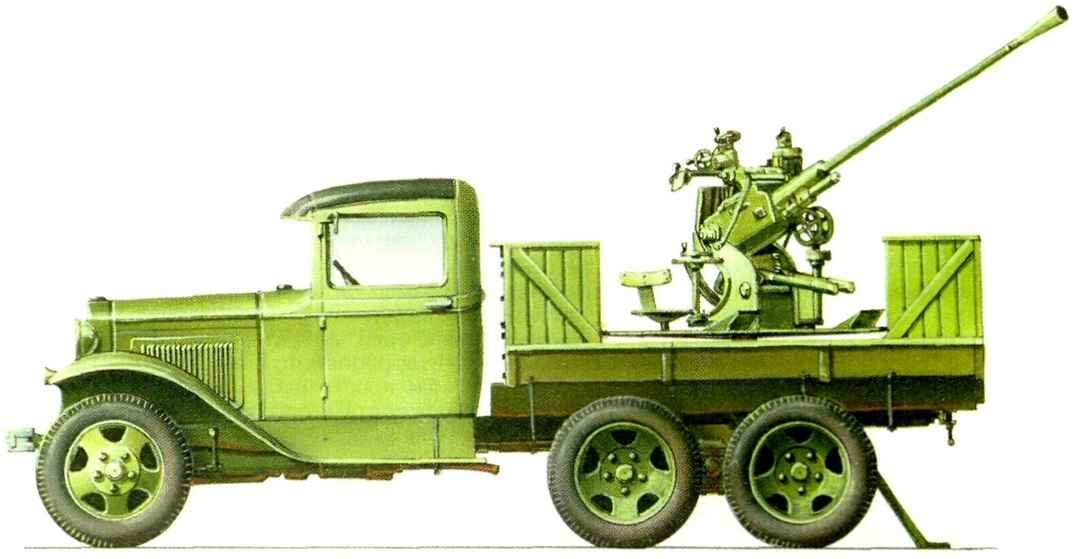
The GAZ-MM was a truck produced by the Gorky Automobile Plant.
People called it the “Polutorka” because of its 1.5-ton carrying capacity. The vehicle was an improved version of the GAZ-AA.
| Type | Soviet military truck |
| Years | 1937–1956 |
| Weight | 1.75 tons |
| Crew | 1 driver + passengers |
| Drive | 4×2 |
| Engine | 50 hp gasoline engine |
| Speed | 70 km/h |
| Range | Not specified |
| Payload | 1.5 tons |
| Production | About 200,000 vehicles |
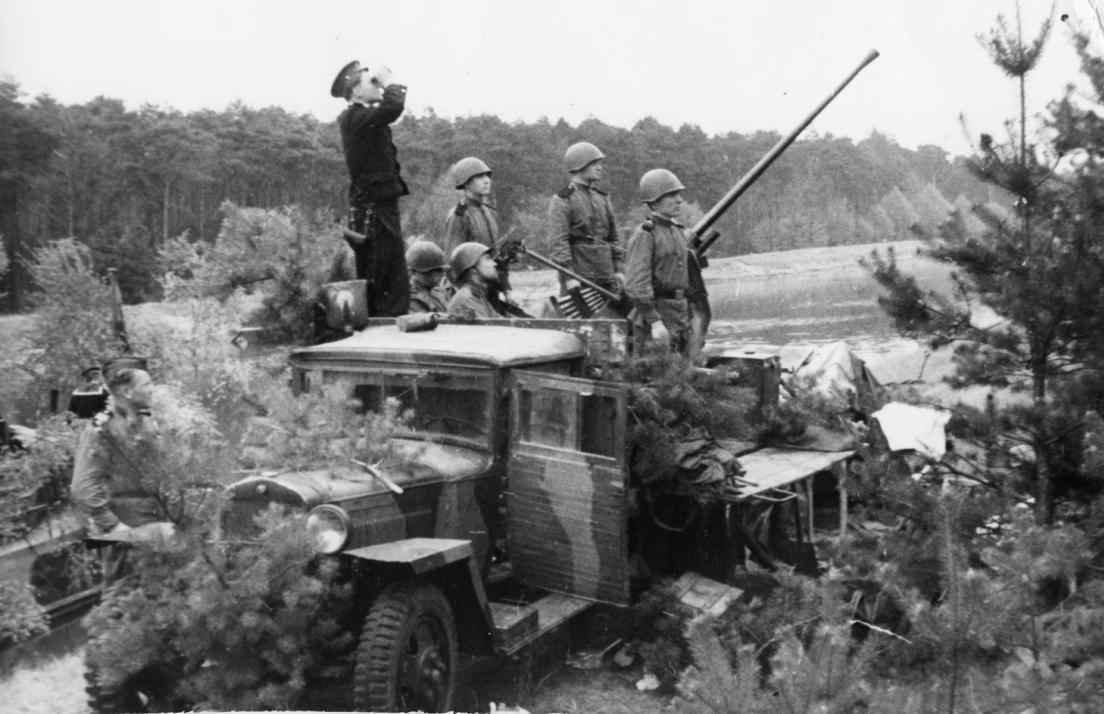
The GAZ-MM and GAZ-AA were famous Soviet military trucks known as the “Polutorka.”
They became some of the most widely used transport vehicles of the Red Army during World War 2.
GAZ-TK Armored Vehicle
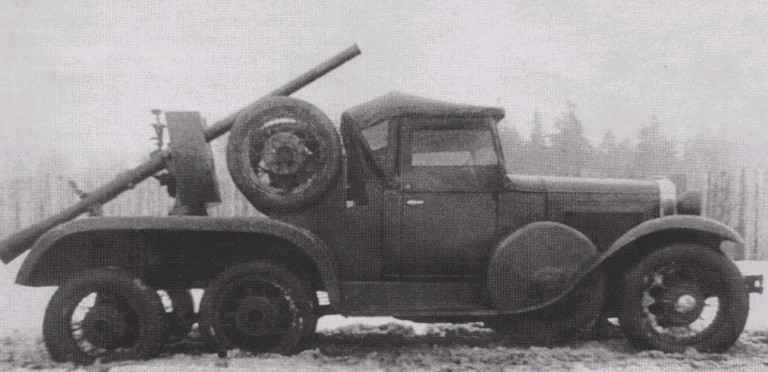
In 1933–1934, the Gorky Automobile Plant built several hundred three-axle vehicles based on the GAZ-A passenger car.
They were designed to carry recoilless guns created by L. V. Kurchevsky and received the name GAZ-TK.
| Type | Soviet light armored car |
| Year | 1935 |
| Weight | 2.62 tons |
| Crew | 3 men |
| Main Weapon | 7.62 mm DT machine gun |
| Armor | 6 mm |
| Engine | GAZ-A gasoline engine, 40 hp |
| Drive | 6×4 |
| Speed | 63.2 km/h |
| Range | 188–230 km |
The GAZ-TK was an experimental Soviet light armored car based on a three-axle vehicle chassis.
Testing showed poor reliability, so the vehicle never entered mass production.
D-12 Armored Car
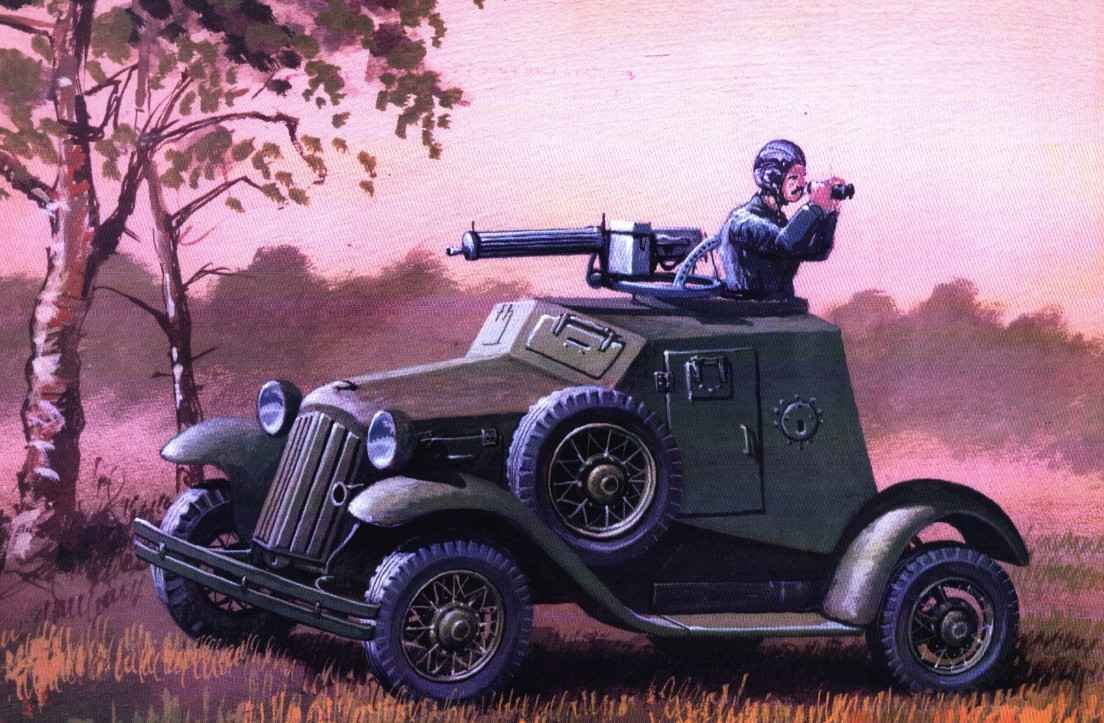
At the same time as the light D-8 armored car, a heavier version called the D-12 was also built.
It was additionally armed with an anti-aircraft Maxim machine gun mounted on the roof.
| Type | Soviet light armored car |
| Year | 1931 |
| Weight | 2.28 tons |
| Crew | 2 men |
| Weapons | 7.62 mm Maxim and 7.62 mm DT machine guns |
| Armor | Up to 7 mm |
| Engine | 40 hp gasoline engine |
| Drive | 4×2 |
| Speed | 85 km/h |
| Range | 190–225 km |
The D-12 was a Soviet light armored car armed with DT and Maxim machine guns.
It was an improved and heavier version of the D-8 armored car.
D-8 Armored Car
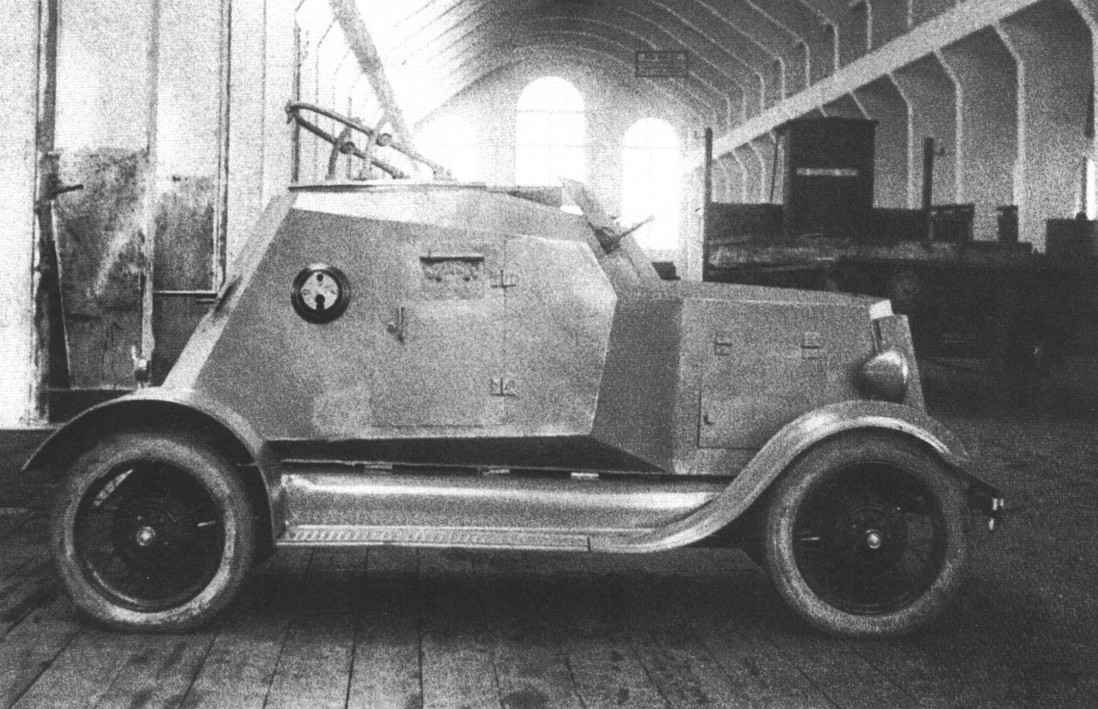
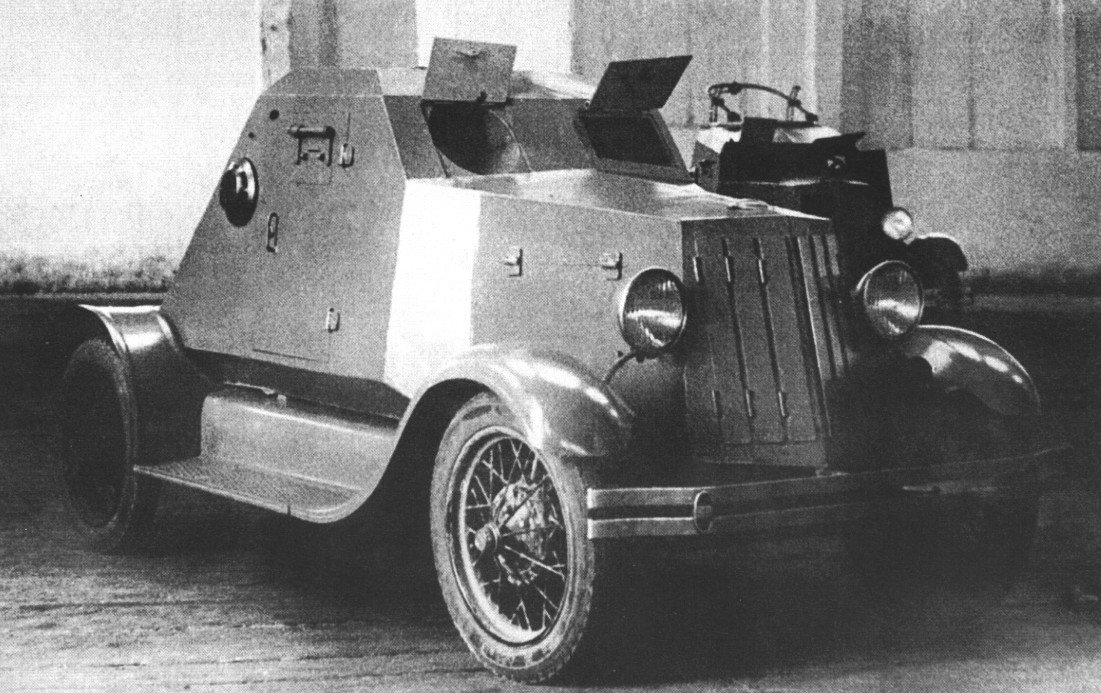
The D-8 was the first Soviet light armored car produced from 1931 and used by the Red Army.
Its main feature was the absence of a rotating turret.
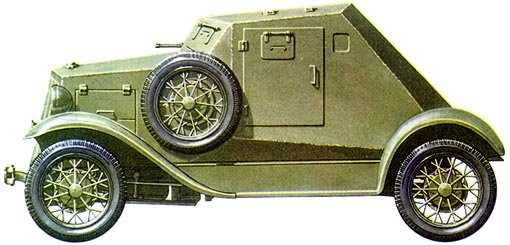
| Type | Soviet light armored car |
| Year | 1931 |
| Weight | 1.6 tons |
| Crew | 2 men |
| Main Weapon | 7.62 mm DT machine gun |
| Armor | Light bulletproof armor |
| Engine | 40 hp gasoline engine |
| Drive | 4×2 |
| Speed | 85 km/h |
| Range | 225 km |
The D-8 was the first Soviet light armored car used by the Red Army.
Unlike later armored cars, it had no rotating turret.
D-9 / D-13 Armored Car
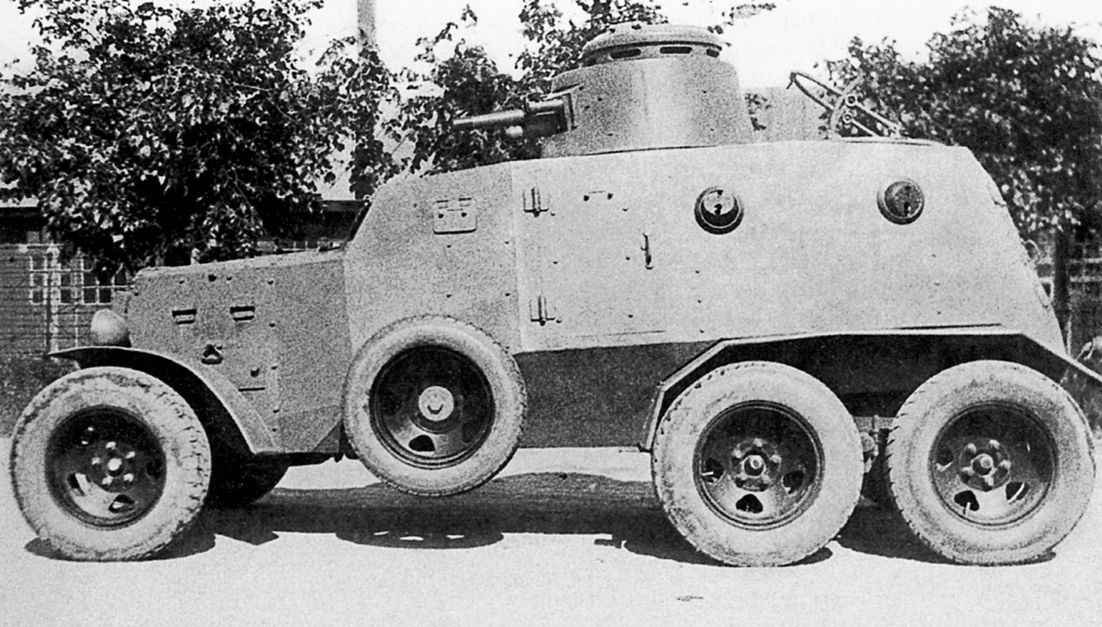
In 1931, the D-13 three-axle armored car was developed at the Izhora Plant under the direction of chief designer N. I. Dyrenkov.
The vehicle was based on the chassis of the Ford-Timken three-axle truck and used a 6×4 drivetrain, meaning that only two of its three axles were driven.
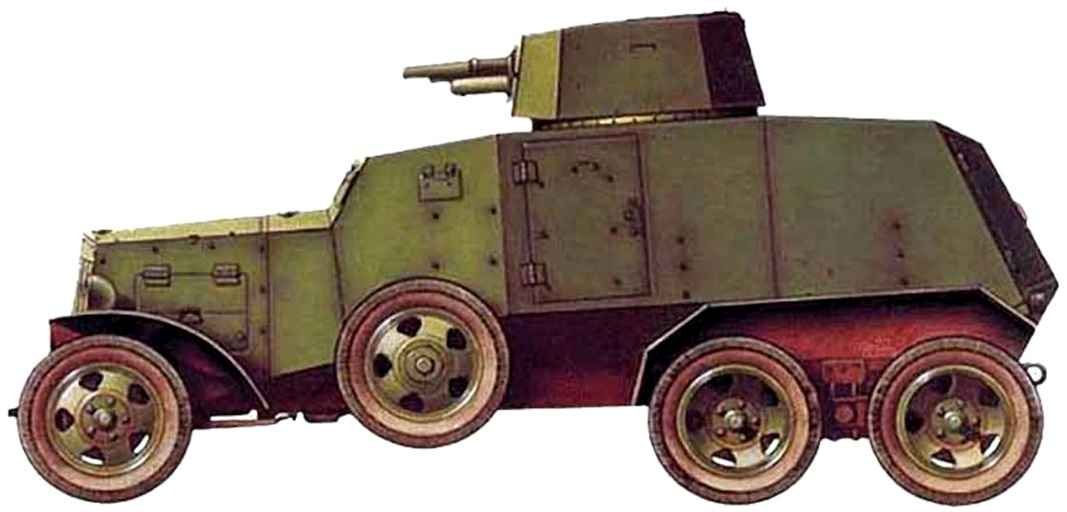
| Type | Soviet medium armored car |
| Year | 1931 |
| Weight | 4.1 tons |
| Crew | 3 men |
| Main Weapon | 37 mm Hotchkiss gun |
| Secondary Weapons | 2 × 7.62 mm DT machine guns |
| Armor | Up to 8 mm, bulletproof armor |
| Engine | 40 hp 4-cylinder gasoline engine |
| Drive | 6×4 |
| Speed | 55 km/h |
| Range | 130 km |
The D-13 was a Soviet armored car developed in 1931 by designer N. I. Dyrenkov. It was built on the three-axle Ford-Timken truck chassis and used a 6×4 drivetrain.
Its main armament consisted of a 37 mm Hotchkiss gun and two 7.62 mm DT machine guns. The rotating turret was based on the turret of the Soviet MS-1 light tank.
ZiS-30 Self-Propelled Artillery Gun
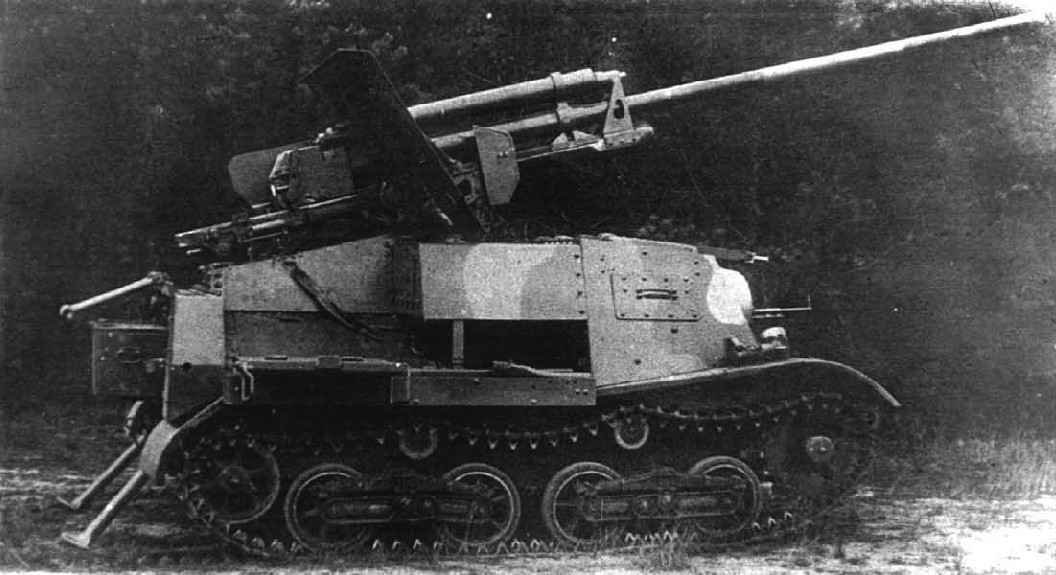
The ZiS-30 was a light, open-top self-propelled anti-tank gun.
It was based on the T-20 Komsomolets artillery tractor. The rotating part of the 57 mm ZiS-2 anti-tank gun, together with its standard gun shield, was mounted on the rear section of the vehicle.
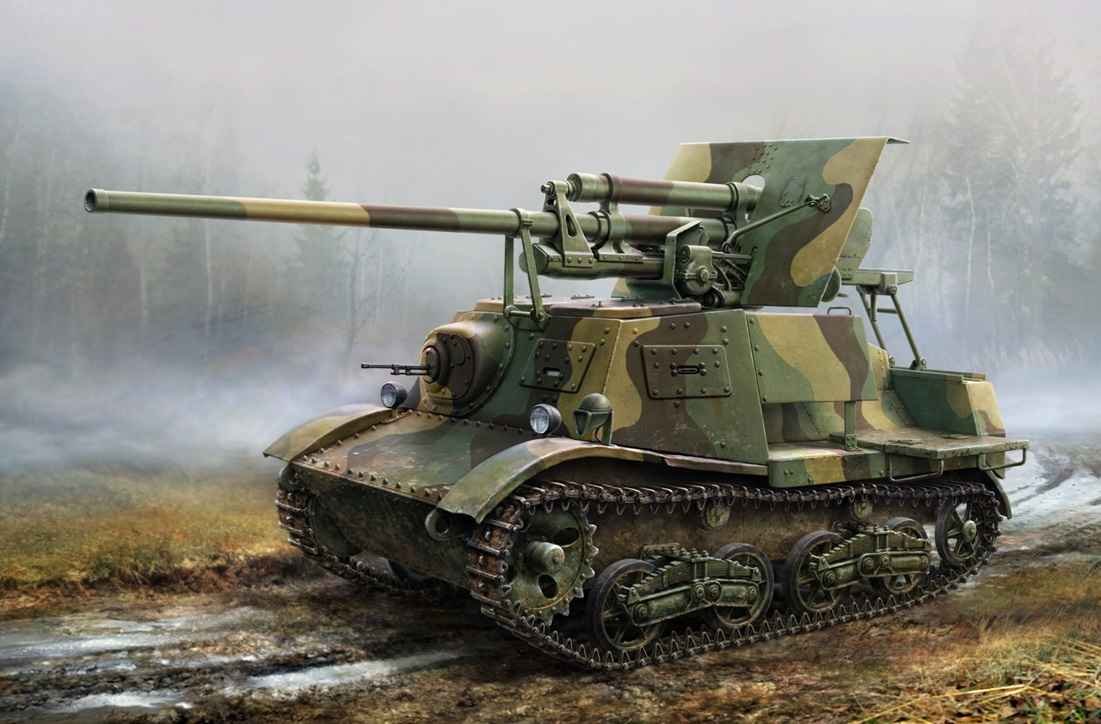
| Type | Soviet light self-propelled anti-tank gun |
| Year | 1941 |
| Weight | 4 tons |
| Crew | 4–5 men |
| Main Weapon | 57 mm ZiS-2 anti-tank gun |
| Armor | 7–10 mm |
| Engine | 50 hp M-1 gasoline engine |
| Speed | 45 km/h |
| Range | 200 km |
The ZiS-30 was a Soviet light self-propelled anti-tank gun developed in 1941. It combined the tracked chassis of the T-20 Komsomolets artillery tractor with the powerful 57 mm ZiS-2 anti-tank gun.
Only about 100 ZiS-30 vehicles were produced in 1941. Despite its small size, its 57 mm gun was capable of penetrating the armor of German tanks encountered during the early stages of World War II.
ZSU-37 Self-Propelled Anti-Aircraft Gun
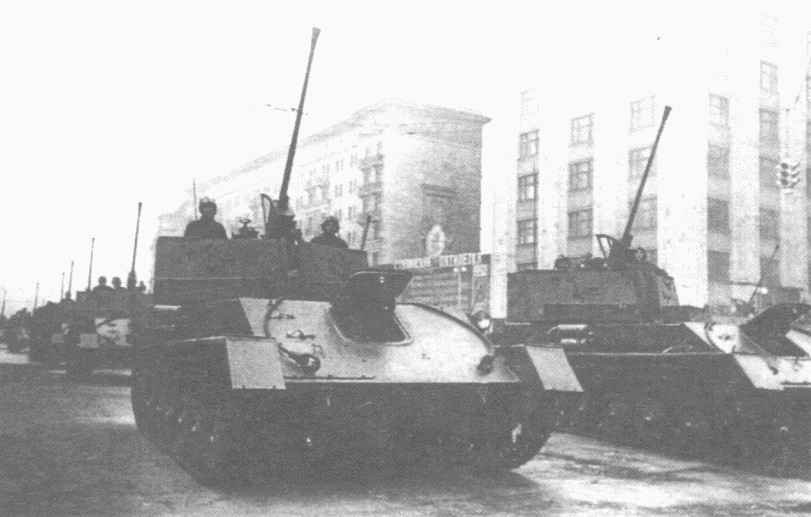
The ZSU-37 was adopted by the Soviet Army in 1944. It was designed primarily to protect tank and mechanized units from enemy air attacks.
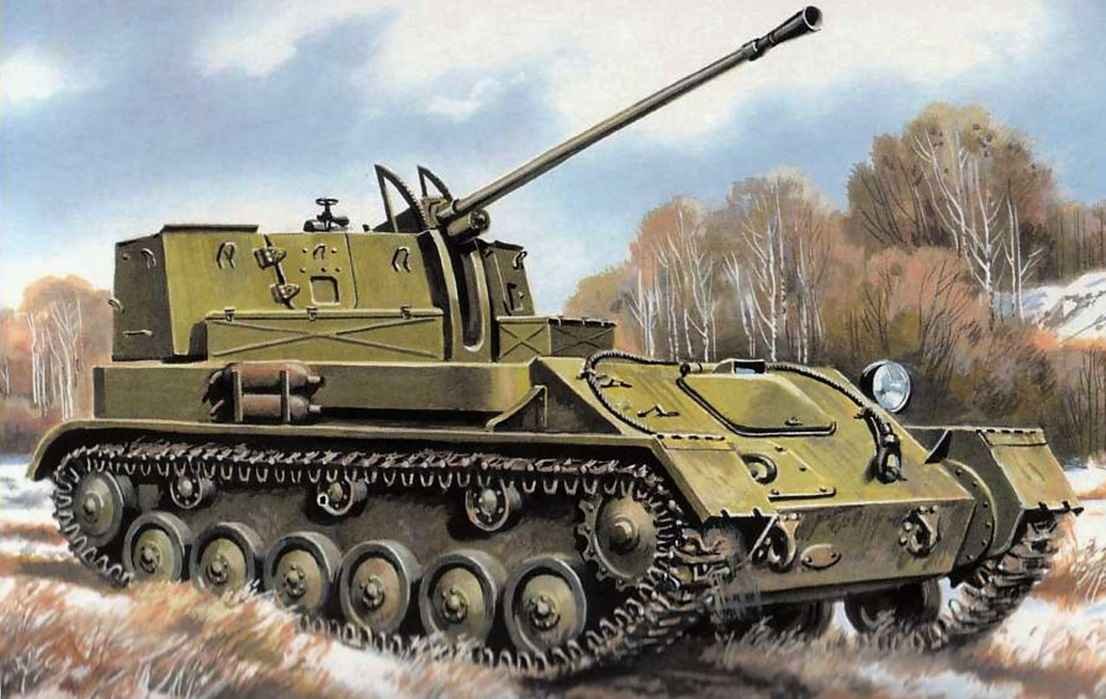
| Type | Soviet self-propelled anti-aircraft gun |
| Year | 1944 |
| Weight | 11.5 tons |
| Crew | 6 men |
| Main Weapon | 37 mm automatic anti-aircraft gun M1939 |
| Ammunition | 290 rounds |
| Armor | Up to 35 mm |
| Engine | GAZ-203, 2 × 70 hp |
| Speed | 45 km/h |
| Range | 190 km |
The ZSU-37 was a Soviet self-propelled anti-aircraft gun adopted in 1944. It was based on the T-70M tank chassis and was designed to protect Soviet tank and mechanized units from enemy aircraft.
Its main weapon was a 37 mm automatic anti-aircraft gun mounted in an open-top rotating turret. The ZSU-37 carried 290 rounds of ammunition and was produced from 1945 to 1948.
IS-1 (IS-85) Heavy Tank
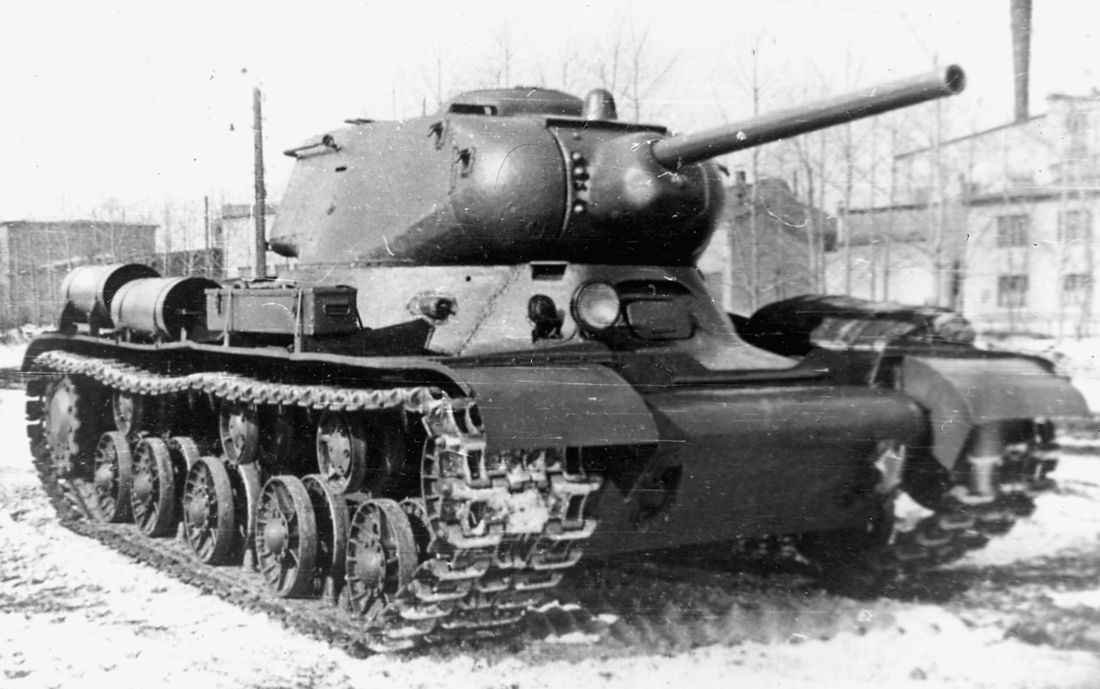
The IS-1 was a Soviet heavy tank used during the second half of World War II. The abbreviation “IS” stands for “Joseph Stalin” and was used for a series of Soviet heavy tanks named after him.
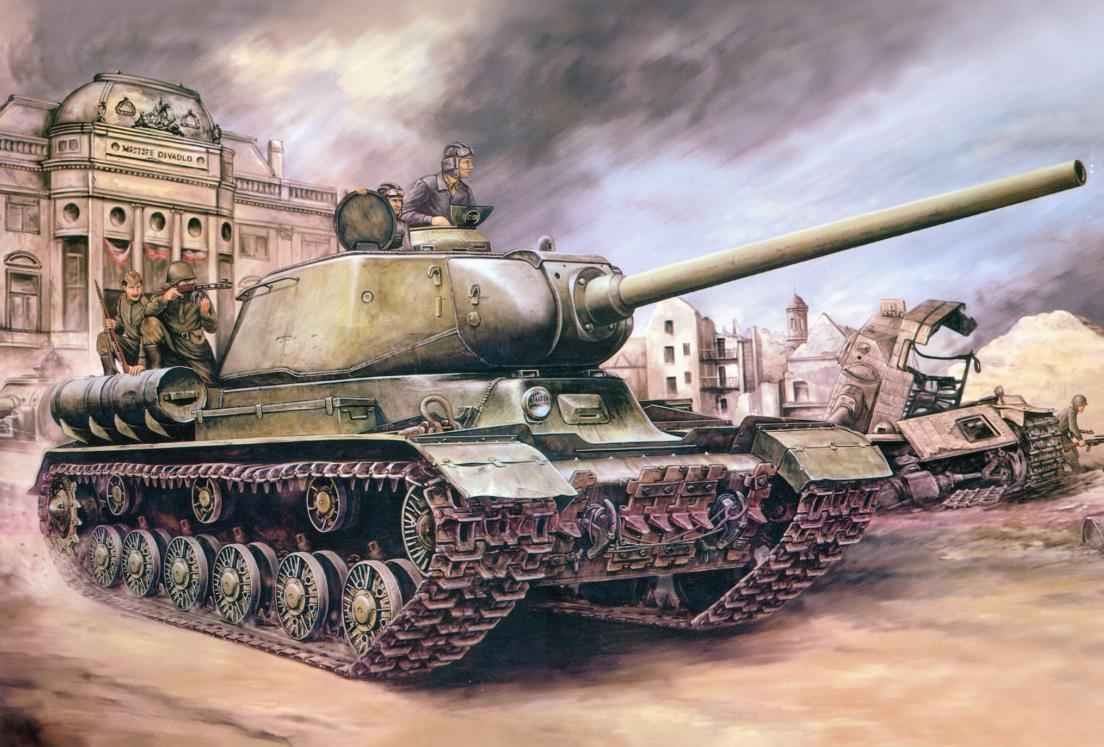
| Type | Soviet heavy tank |
| Year | 1943 |
| Weight | 44 tons |
| Crew | 4 men |
| Main Weapon | 85 mm D-5T tank gun |
| Secondary Weapons | 3 × 7.62 mm DT machine guns |
| Armor | Up to 120 mm |
| Engine | 520 hp V-2-IS diesel engine |
| Speed | 40 km/h |
| Range | 150 km |
The IS-1, also known as the IS-85, was a Soviet heavy tank introduced in 1943. It was developed as a successor to the KV series and was designed to fight the new generation of heavily armored German tanks.
The IS-1 was armed with an 85 mm D-5T gun and three 7.62 mm DT machine guns. Only about 130 tanks were produced before production switched to the more powerful IS-2.
IS-2 (IS-122) Heavy Tank
Almost at the same time as the IS-1 entered production, a more heavily armed version, the IS-2 (Object 240), also began production.
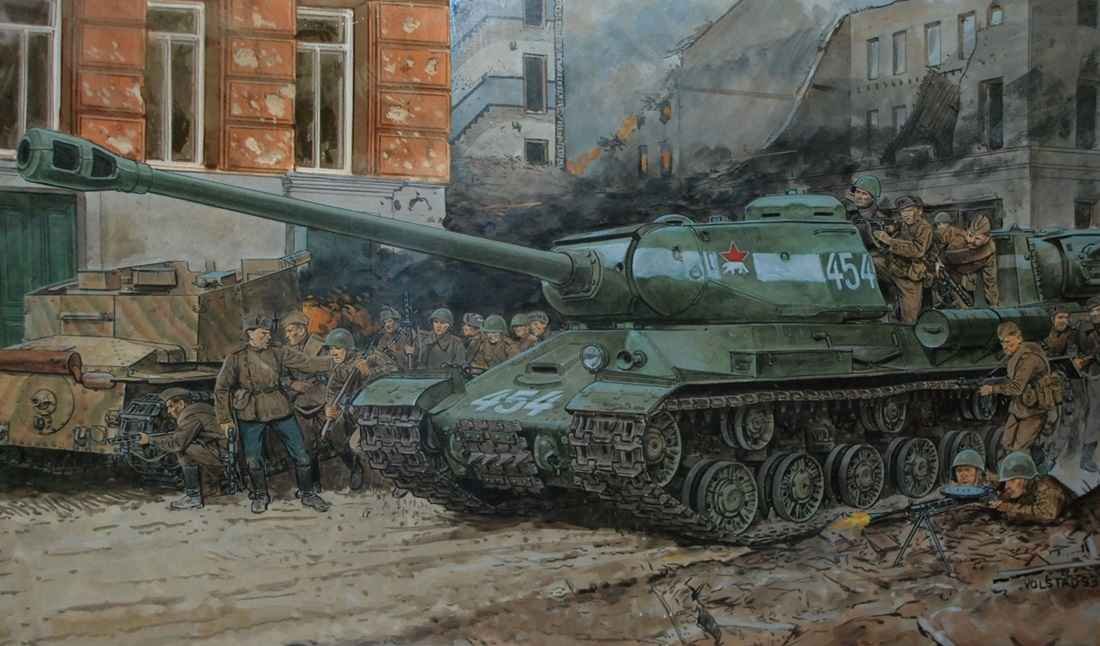
| Type | Soviet heavy tank |
| Year | 1943 |
| Weight | 46 tons |
| Crew | 4 men |
| Main Weapon | 122 mm D-25T tank gun |
| Secondary Weapons | 3 × 7.62 mm DT machine guns, 1 × 12.7 mm DShK machine gun (not on all tanks) |
| Armor | Up to 120 mm hull armor, up to 160 mm turret armor |
| Engine | 520 hp V-2-IS diesel engine |
| Speed | 37 km/h |
| Range | 240 km |
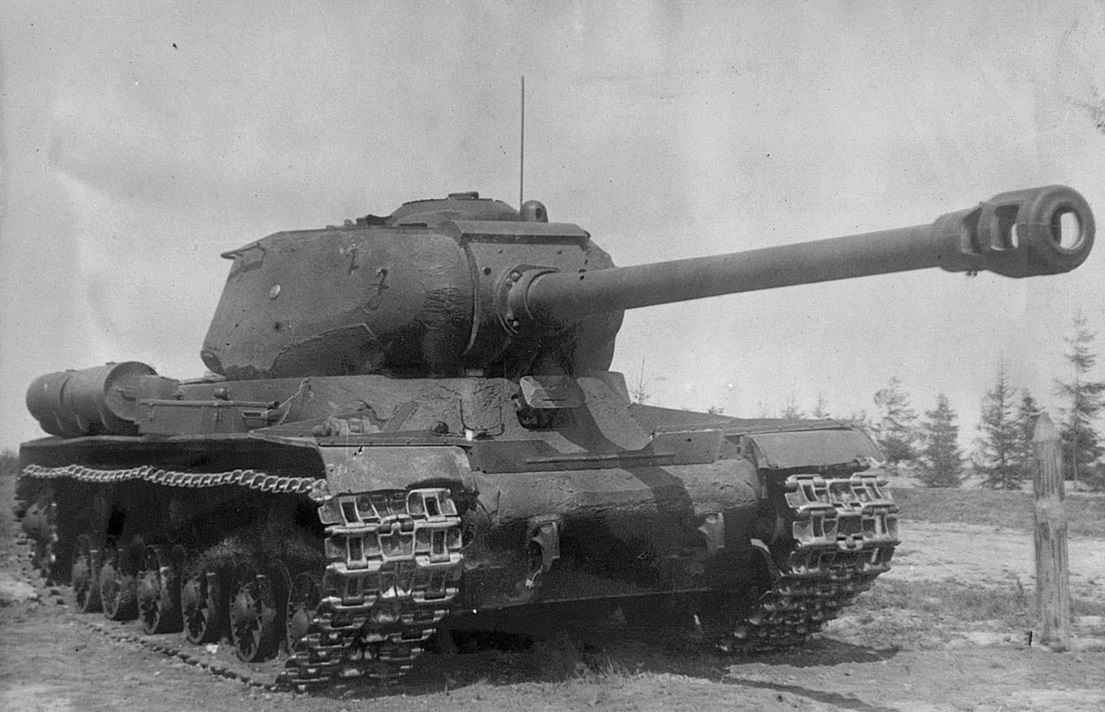
The IS-2, also known as the IS-122, was a Soviet heavy tank developed during World War II. It was a more heavily armed development of the IS-1 and entered production in late 1943.
Its main weapon was the powerful 122 mm D-25T gun, capable of fighting heavily armored German tanks. The IS-2 became one of the most important Soviet heavy tanks of the final years of World War II, with 3,483 vehicles produced.
ISU-122 Self-Propelled Artillery Gun
By early 1944, production of the ISU-152 self-propelled gun began to be limited by a shortage of ML-20 guns.
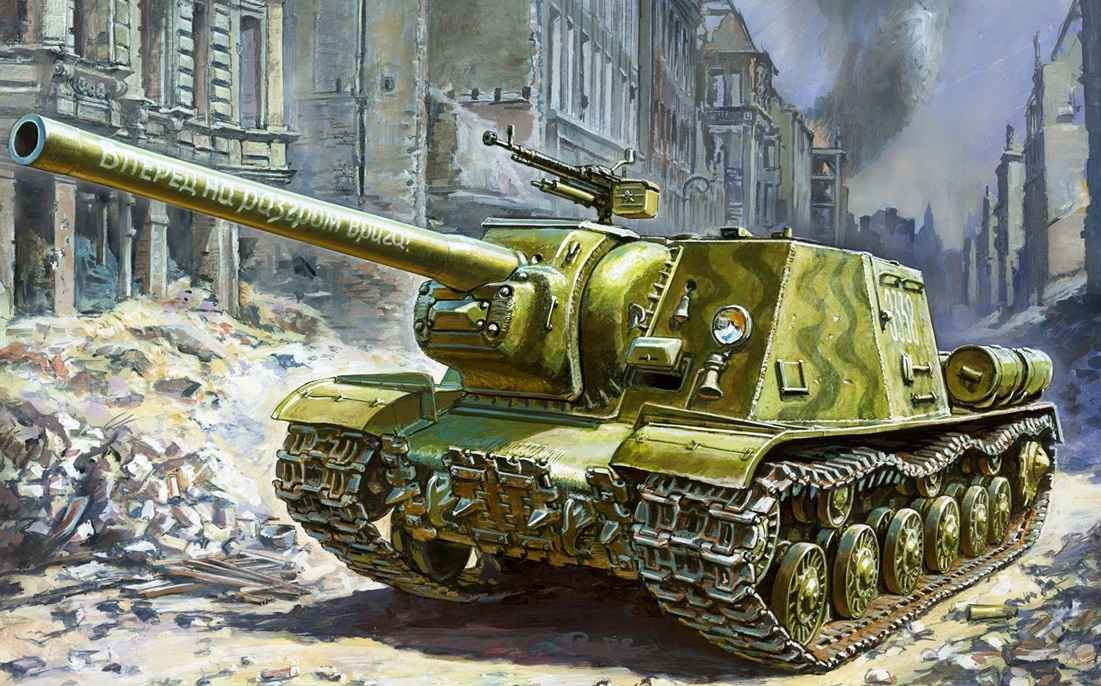
| Type | Soviet heavy self-propelled artillery gun |
| Year | 1944 |
| Weight | 46 tons |
| Crew | 5 men |
| Main Weapon | 122 mm A-19 gun |
| Ammunition | 30 rounds |
| Armor | 60–90 mm |
| Engine | 500 hp V-2IS diesel engine |
| Speed | 35 km/h |
| Range | 145 km |
The ISU-122 was a Soviet heavy self-propelled artillery gun developed during World War II. It was created on the IS heavy tank chassis and entered production in 1944.
Its main weapon was the powerful 122 mm A-19 gun. The ISU-122 was especially effective against enemy tanks and fortifications and remained in service with the Soviet Army long after World War II.
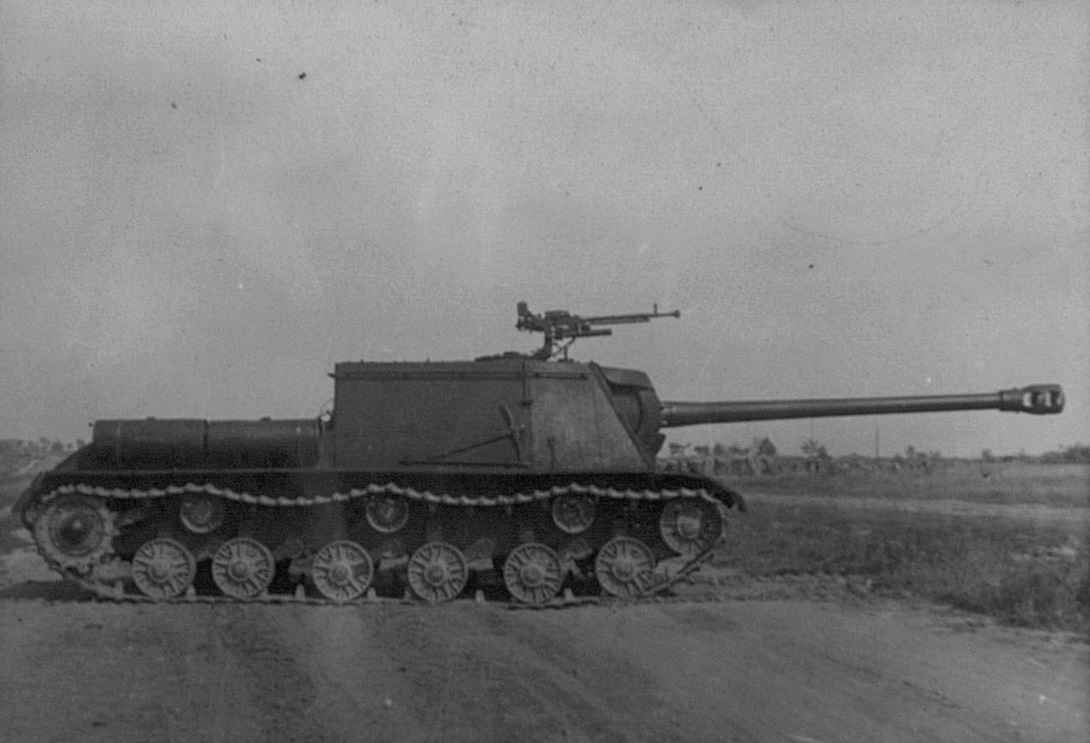
ISU-130 Self-Propelled Artillery Gun
The ISU-130 and ISU-122-1 shared several disadvantages, many of which were also found on the ISU-122. These included a low rate of fire, a long gun barrel extending far beyond the hull that reduced maneuverability, limited visibility for the driver, and a narrow horizontal firing arc.
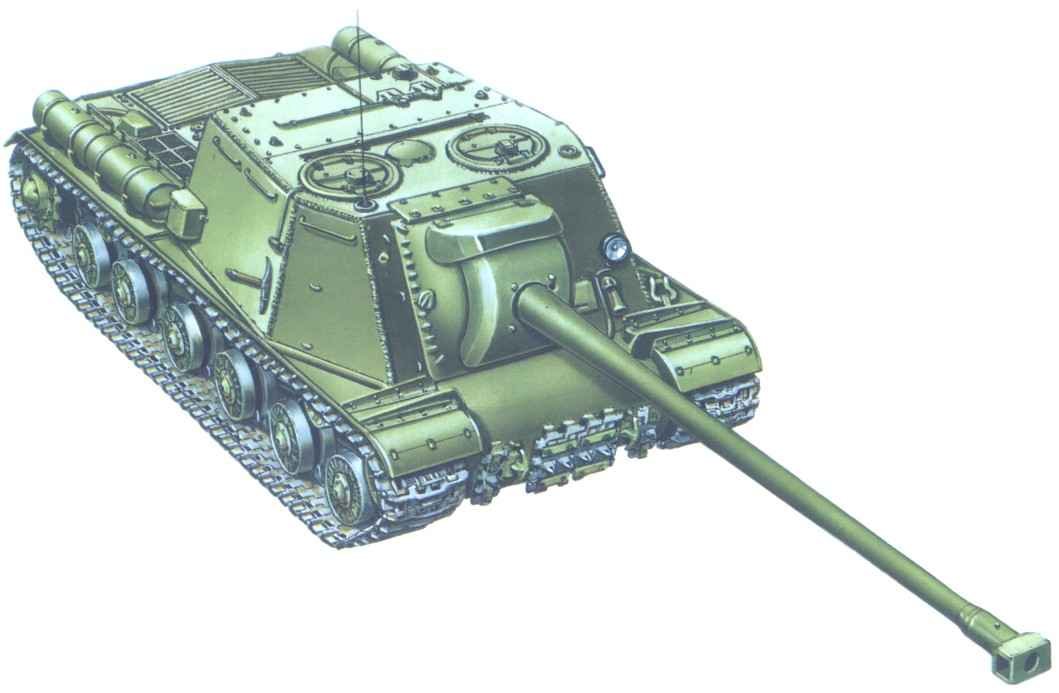
| Type | Soviet experimental heavy self-propelled artillery gun |
| Year | 1945 |
| Weight | 47 tons |
| Crew | 4 men |
| Main Weapon | 130 mm S-26 gun |
| Ammunition | 25 rounds |
| Armor | Up to 100 mm |
| Engine | V-2IS diesel engine, 520 hp |
| Speed | 40 km/h |
| Range | 150 km |
The ISU-130 was a Soviet experimental heavy self-propelled artillery gun developed during World War II. It was based on the IS heavy tank chassis and armed with the powerful 130 mm S-26 gun.
The ISU-130 had a crew of four and carried 25 rounds. Despite its powerful armament, the vehicle remained experimental and was never accepted for service or mass production.
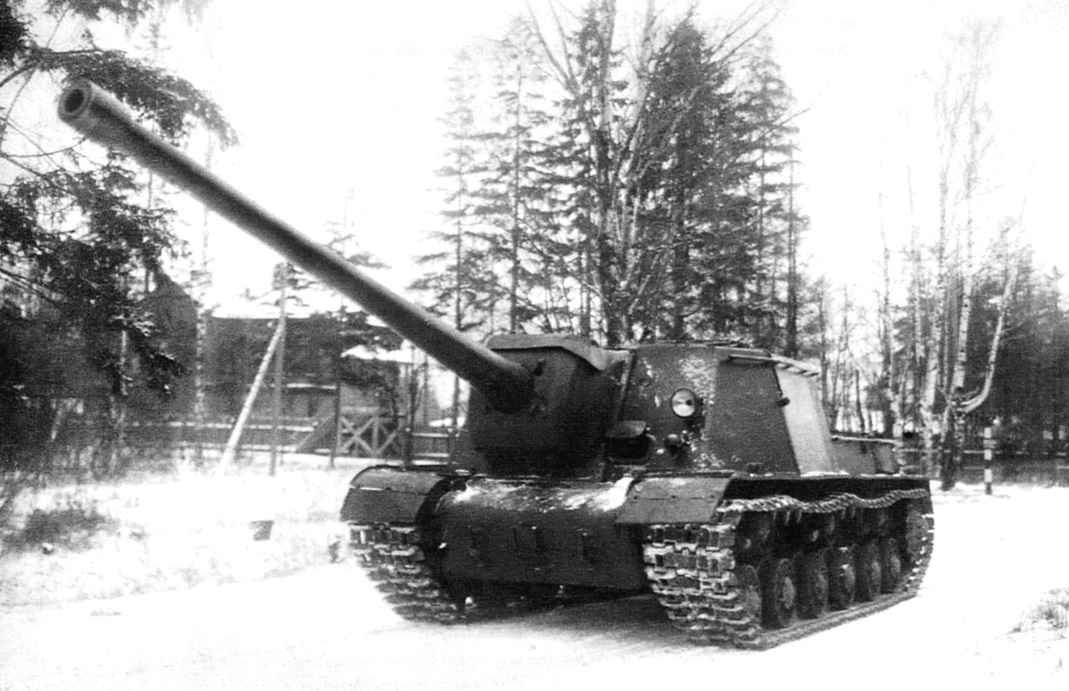
ISU-152 Self-Propelled Artillery Gun
By State Defense Committee Decree No. 4043ss of September 4, 1943, Experimental Plant No. 100 was ordered to design, build, and test the IS-152 self-propelled artillery gun based on the IS heavy tank by November 1, 1943.
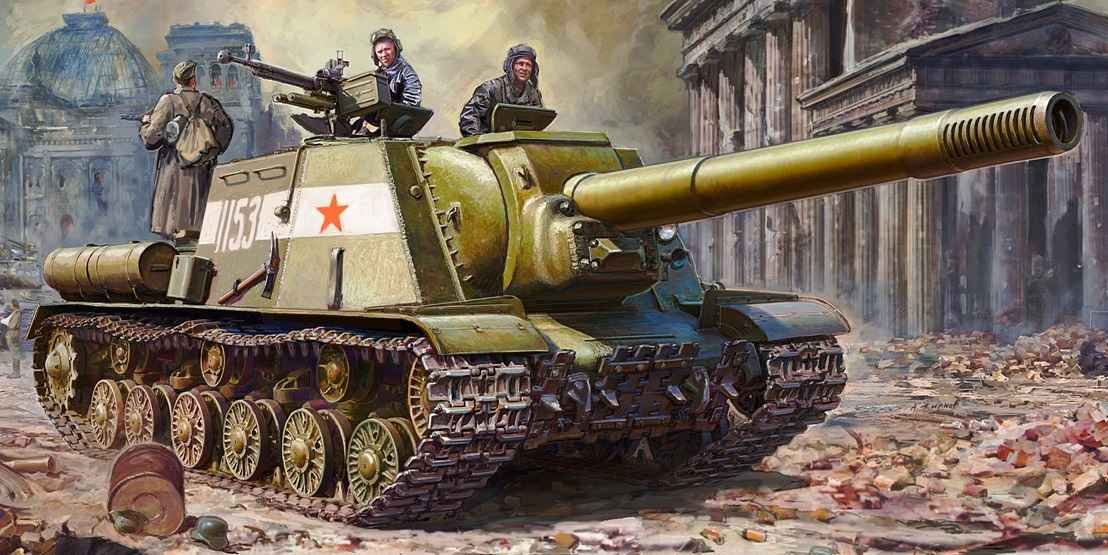
| Type | Soviet heavy self-propelled artillery gun |
| Year | 1943 |
| Weight | 46 tons |
| Crew | 5 men |
| Main Weapon | 152 mm ML-20S gun-howitzer |
| Ammunition | 20 rounds |
| Armor | 60–90 mm |
| Engine | V-2IS diesel engine, 520 hp |
| Speed | 35 km/h |
| Range | 145 km |
The ISU-152 was a Soviet heavy self-propelled artillery gun developed in 1943 on the chassis of the IS heavy tank. It was armed with the powerful 152 mm ML-20S gun-howitzer.
The ISU-152 was used to support Soviet infantry and tanks, destroy enemy fortifications and engage heavily armored vehicles. Around 2,800 ISU-152 vehicles were produced.
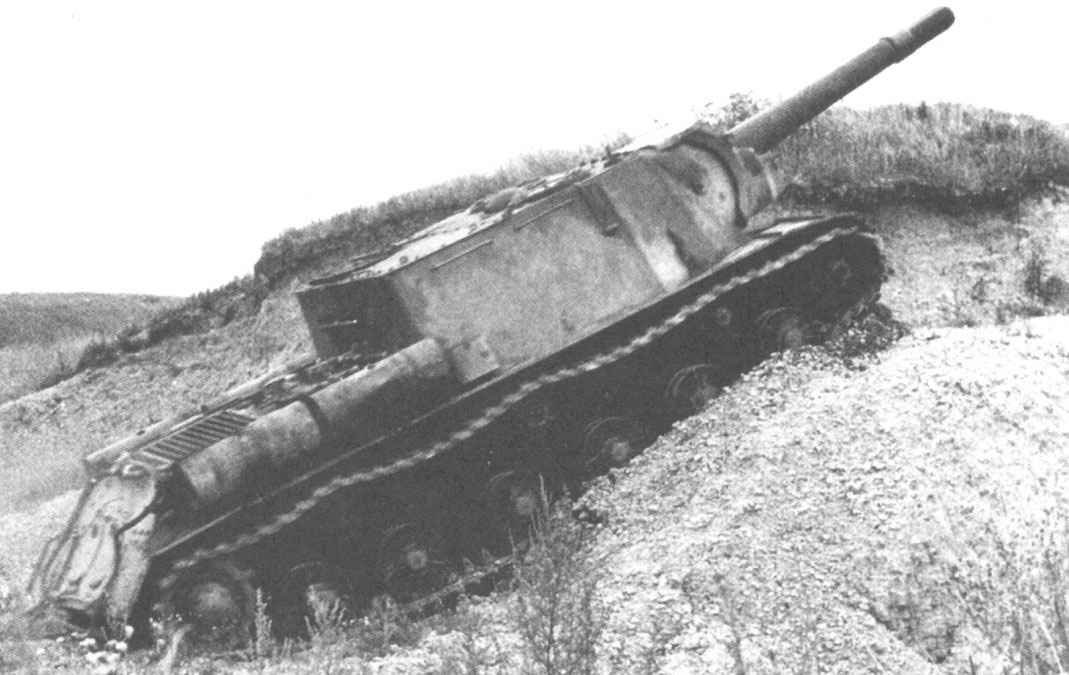
KV-1 Heavy Tank
The KV-1 heavy tank proved to be a successful design. However, it soon became clear that its 76 mm L-11 gun was not powerful enough to effectively destroy fortified bunkers.
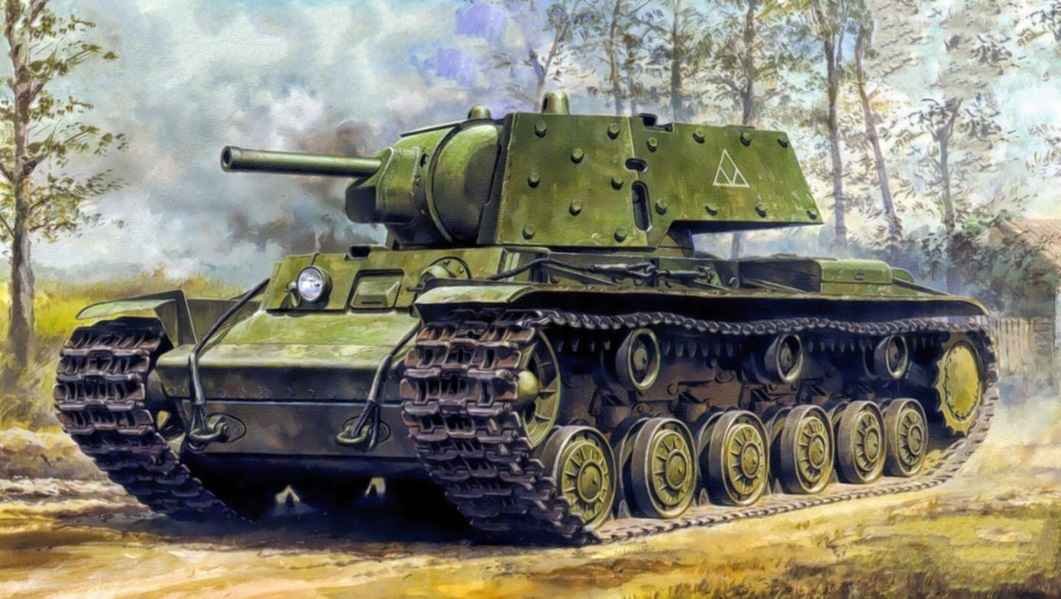
| Type | Soviet heavy tank |
| Year | 1941 |
| Weight | 47.5 tons |
| Crew | 5 men |
| Main Weapon | 76 mm L-11 or F-32 tank gun |
| Secondary Weapons | 4 × 7.62 mm DT machine guns |
| Armor | Up to 75 mm |
| Engine | 500 hp V-2K diesel engine |
| Speed | 34 km/h |
| Range | 250 km |
The KV-1 was a Soviet heavy tank that became one of the most heavily armored tanks of the early years of World War II. The 1941 model weighed 47.5 tons and was protected by armor up to 75 mm thick.
It was armed with a 76 mm L-11 or F-32 gun and several DT machine guns. The KV-1 was especially notable for its strong armor protection, which made it difficult for many German anti-tank weapons to defeat during the early stages of the war.
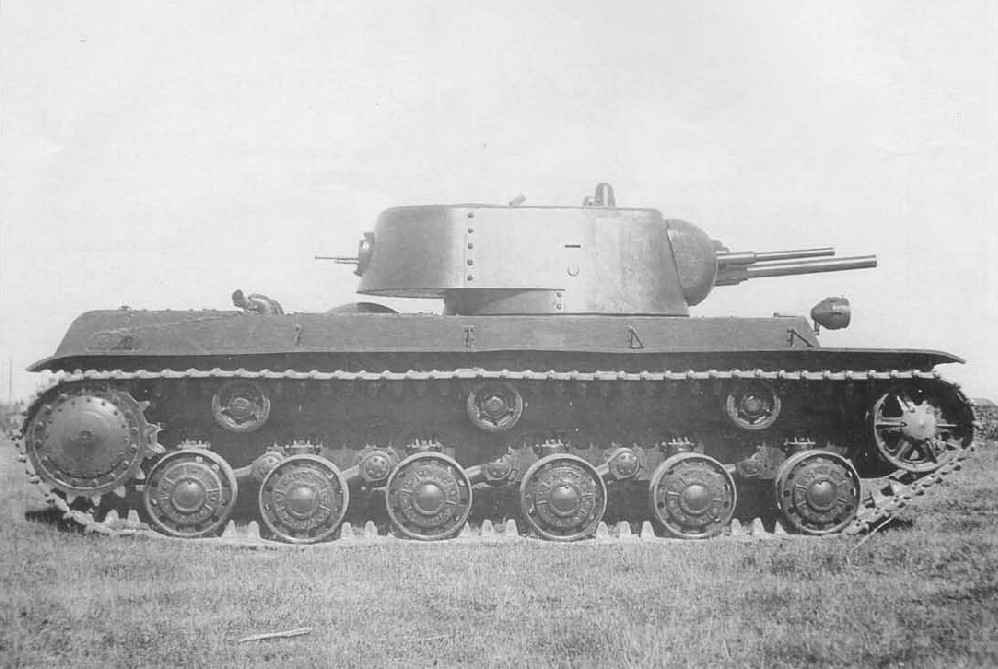
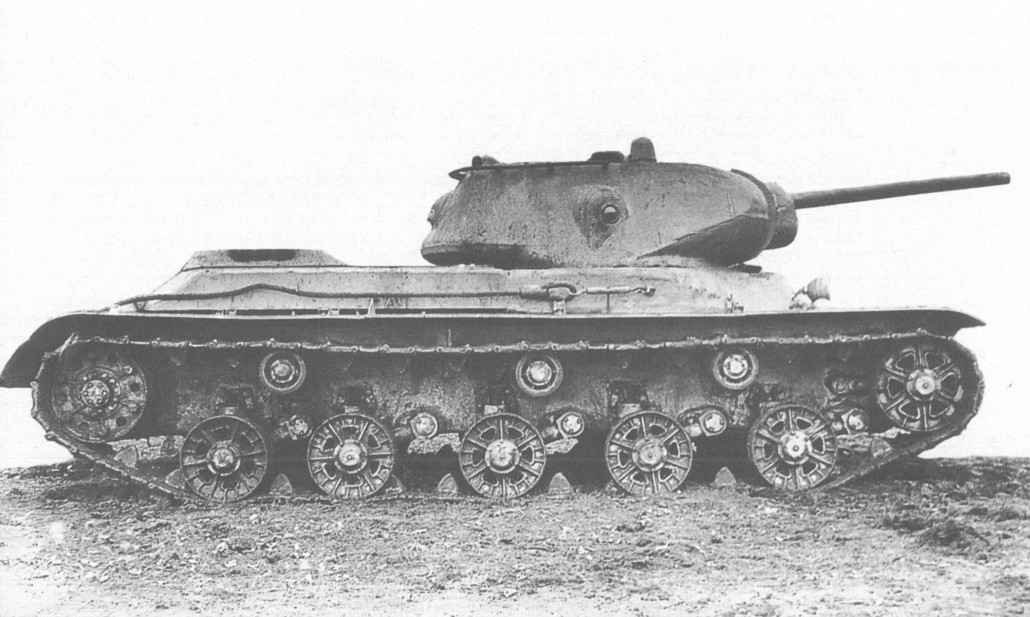
KV-13 Medium Tank
The KV-13 was a Soviet medium tank developed using components and assemblies from the KV series of heavy tanks. The turret, front and rear sections of the hull, and the turret box were made from cast armor.
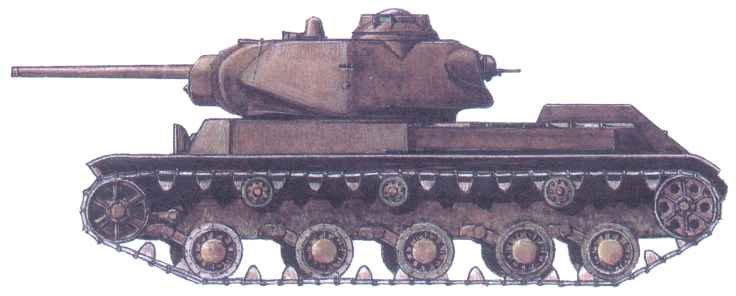
| Type | Soviet experimental medium tank |
| Year | 1942 |
| Weight | 31 tons |
| Crew | 3 men |
| Main Weapon | 76.2 mm ZiS-5 tank gun |
| Secondary Weapons | 2 × 7.62 mm DT machine guns |
| Armor | Up to 120 mm |
| Engine | 600 hp V-2K diesel engine |
| Speed | 55 km/h |
| Range | 300–400 km |
The KV-13 was an experimental Soviet medium tank developed in 1942 using components and assemblies from the KV series of heavy tanks. It combined heavy armor protection with relatively high speed and a weight of 31 tons.
The KV-13 was armed with a 76.2 mm ZiS-5 gun and two 7.62 mm DT machine guns. Only a prototype was built, and testing revealed reliability problems with the road wheels and tracks.
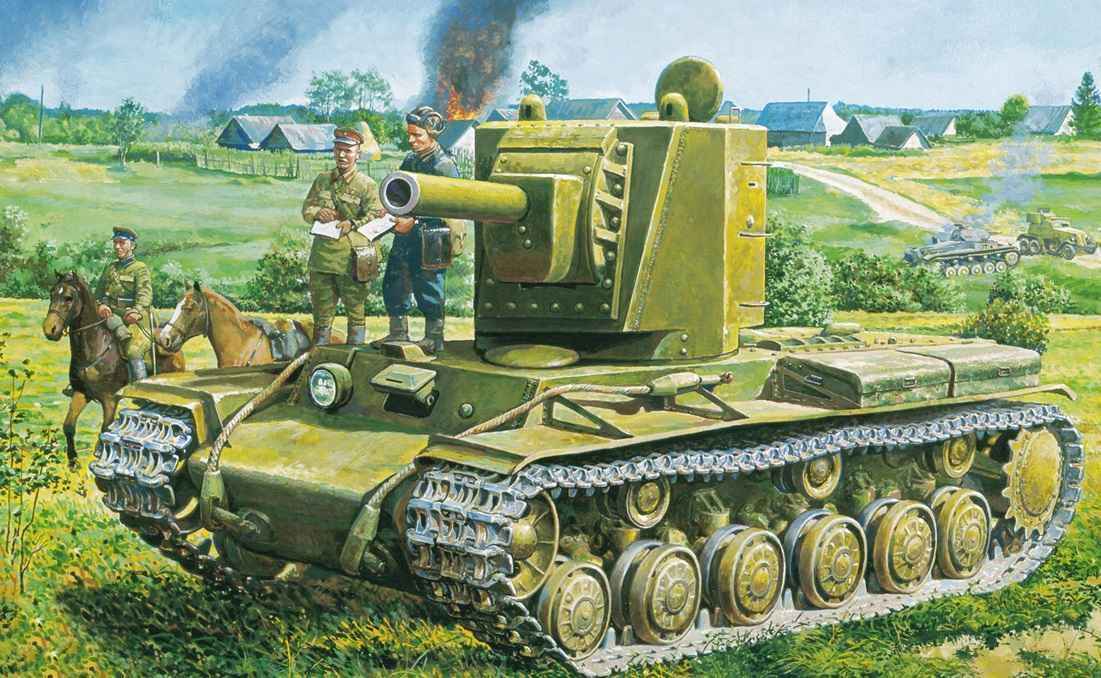
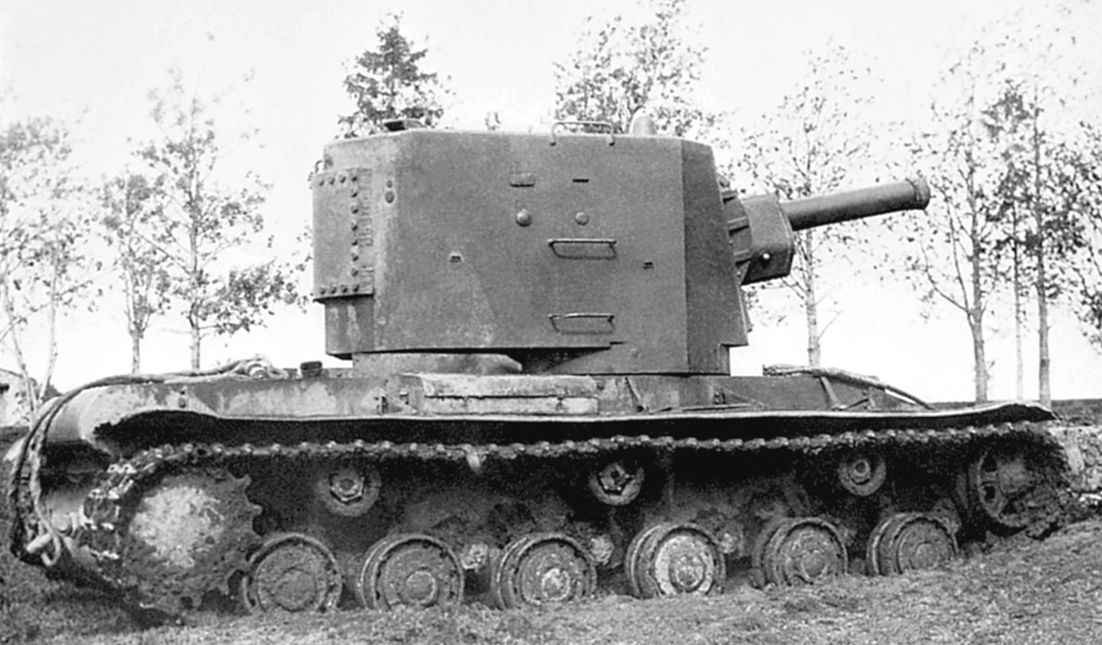
KV-2 Heavy Tank
The KV-2 was a Soviet heavy tank with extremely powerful armor for its time. One of the few weapons the Germans could effectively use against these Soviet giants was the 88 mm anti-aircraft gun.
However, many KV-2 tanks were lost not to enemy fire, but because of mechanical failures and technical problems.
| Type | Soviet heavy tank |
| Year | 1940 |
| Weight | 54 tons |
| Crew | 6 men |
| Main Weapon | 152 mm M-10 howitzer |
| Secondary Weapons | 7.62 mm DT machine guns |
| Ammunition | 36 rounds |
| Engine | 500 hp V-2 diesel engine |
| Speed | 32 km/h |
| Range | 180 km |
The KV-2 was a Soviet heavy tank developed to destroy bunkers and other fortified positions. Its most distinctive feature was its enormous turret carrying a powerful 152 mm M-10 howitzer.
The KV-2 had extremely strong armor and firepower for its time, but suffered from poor mobility and mechanical reliability. A total of 334 KV-2 tanks were produced.
KV-220 Heavy Tank
The KV-220 was an experimental Soviet heavy tank built as a single prototype. It was also classified as an assault tank and a breakthrough tank.
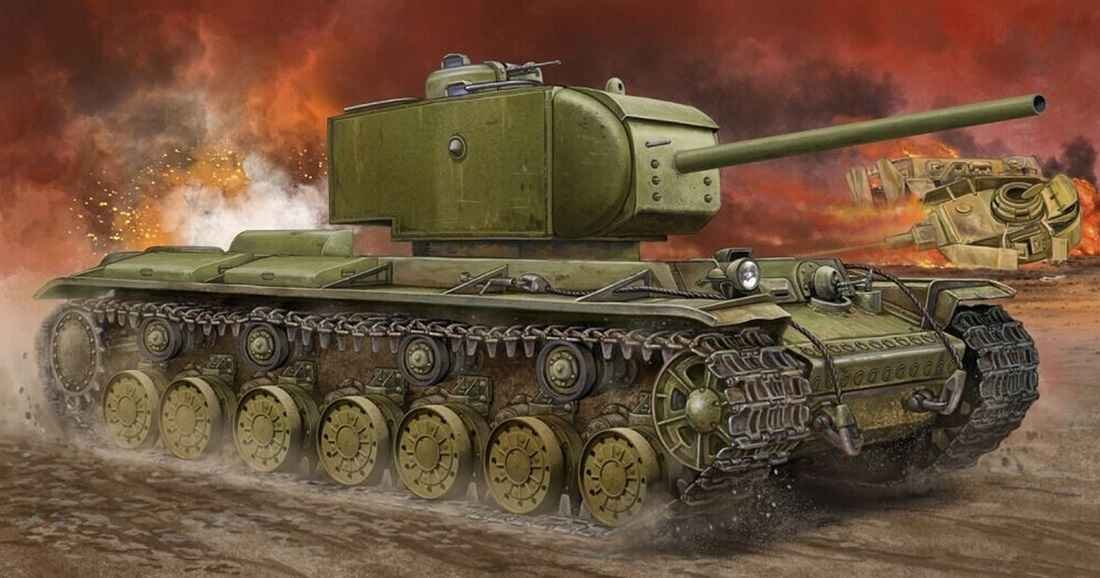
| Type | Soviet experimental heavy tank |
| Year | 1940 |
| Weight | 62.7 tons |
| Crew | 6 men |
| Main Weapon | 85 mm F-30 tank gun |
| Secondary Weapons | 3 × 7.62 mm DT machine guns |
| Armor | Up to 100 mm |
| Engine | 700 hp V-5 or 850 hp V-2SN diesel engine |
| Speed | 33 km/h |
| Range | 200 km |
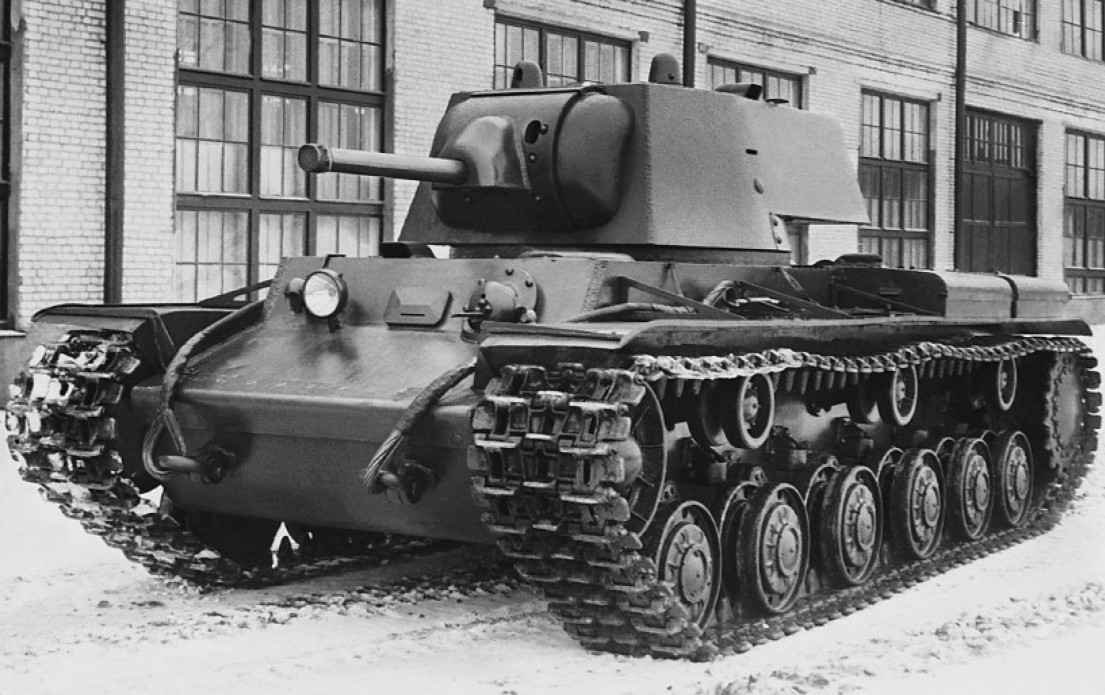
The KV-220, also known as the T-220, was an experimental Soviet heavy tank developed in 1940. It was designed as a heavily armored breakthrough and assault tank and was armed with a long-barreled 85 mm F-30 gun.
Only one KV-220 was built. After the beginning of World War II, the prototype was fitted with a standard KV turret and a 76.2 mm gun and sent into combat in 1941.
KV-3 Heavy Tank
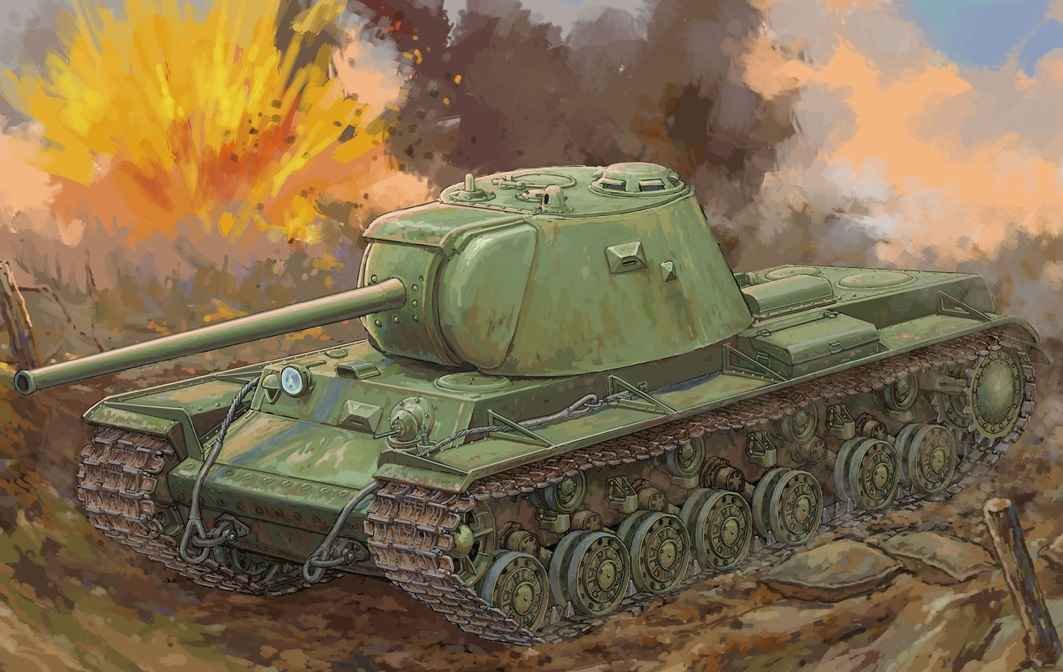
The KV-3 was another attempt by Soviet designers to increase the combat power of heavy tanks by using thicker armor and a more powerful gun.
| Type | Soviet experimental heavy tank |
| Year | 1941 |
| Weight | 51 tons |
| Crew | 5 men |
| Main Weapon | 76.2 mm F-32 tank gun |
| Secondary Weapons | 4 × 7.62 mm DT machine guns |
| Armor | Up to 90 mm |
| Engine | 700 hp V-5 diesel engine |
| Speed | 36 km/h |
The KV-3 (Object 223) was an experimental Soviet heavy tank developed in 1941. It was designed as a more powerful development of the KV series, with increased armor protection and plans for heavier armament.
The prototype weighed 51 tons and was powered by a 700 hp V-5 diesel engine. The KV-3 never entered mass production, and development was stopped after the beginning of the German invasion of the Soviet Union.
KV-5 Heavy Tank
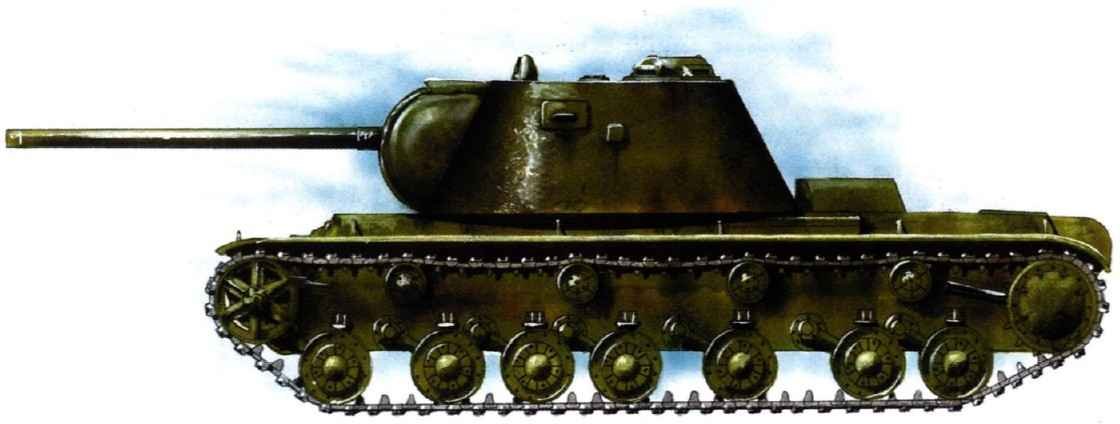
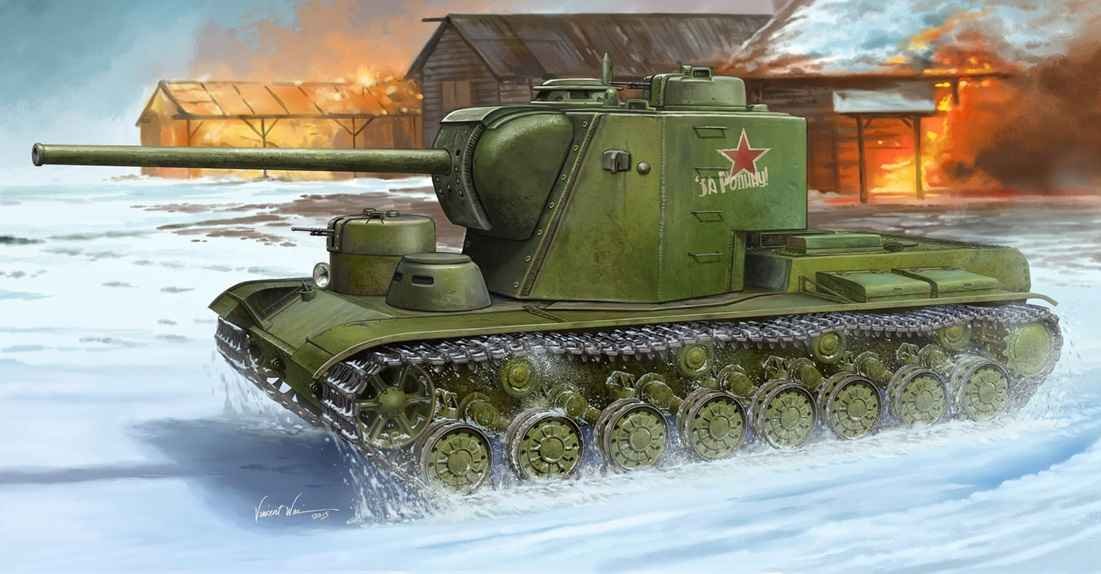
Just a few weeks before the beginning of the war, the Leningrad Kirov Plant began designing a new heavy tank known as Object 225, or the KV-5.
| Type | Soviet super-heavy tank project |
| Year | 1941 |
| Weight | 40 tons (project specification) |
| Crew | 4 men |
| Main Weapon | 107 mm ZiS-6 (F-42) gun |
| Secondary Weapons | 3 × 7.62 mm DT machine guns |
| Armor | Up to 170 mm |
| Engine | 2 × 600 hp V-2K diesel engines |
| Radio | 71-TK-3 |
| Production | Project only |
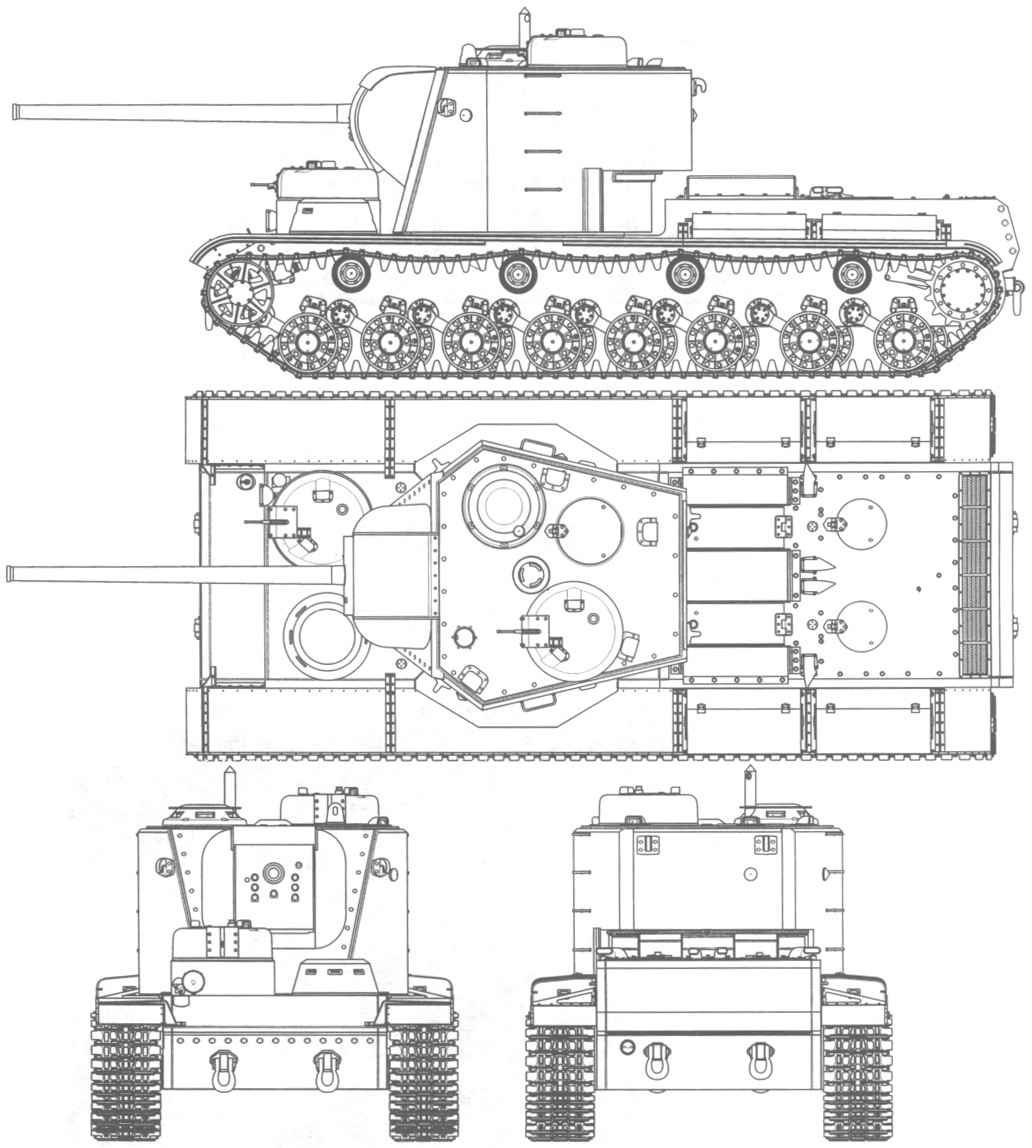
The KV-5 (Object 225) was a Soviet super-heavy tank project developed at the Leningrad Kirov Plant in 1941. It was designed with extremely heavy armor and a powerful 107 mm ZiS-6 gun.
The planned KV-5 used two 600 hp V-2K diesel engines and armor up to 170 mm thick. Development was stopped after the German invasion of the Soviet Union, and the tank was never completed.
KV-7 Self-Propelled Artillery Gun
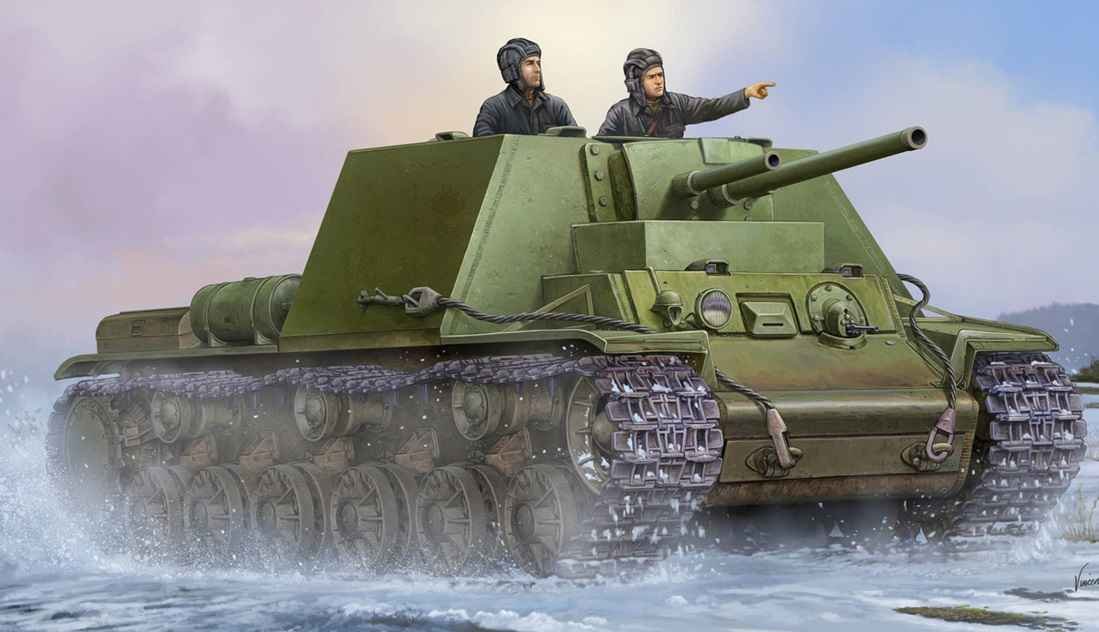
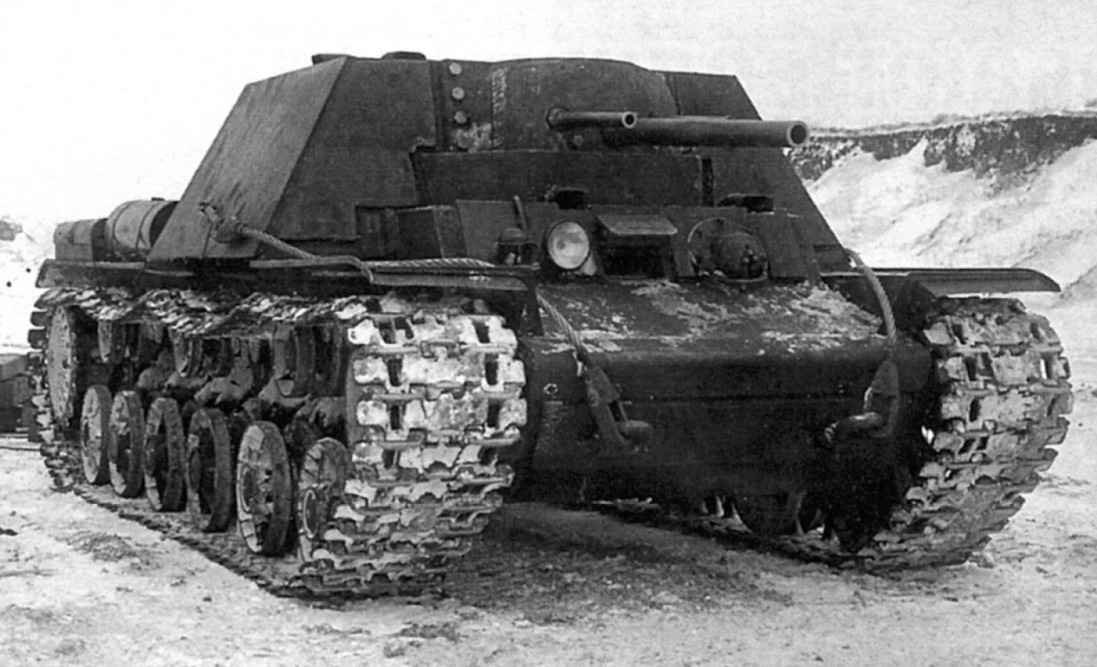
The KV-7 self-propelled artillery gun was designed in November 1941 on the initiative of the Chelyabinsk Kirov Plant (ChKZ) design bureau and the UZTM design bureau in Sverdlovsk, under the general direction of Zh. Ya. Kotin.
| Type | Soviet experimental heavy self-propelled artillery gun |
| Year | 1941–1942 |
| Weight | 47.5 tons |
| Crew | 6 men |
| Main Weapon | 1 × 76.2 mm F-34 gun + 2 × 45 mm guns (first version) |
| Alternative Armament | 2 × 76.2 mm ZiS-5 guns (second version) |
| Armor | Up to 100 mm |
| Engine | 600 hp V-2K diesel engine |
| Speed | 35 km/h |
| Range | 225 km |
The KV-7 was an experimental Soviet heavy self-propelled artillery gun developed on the chassis of the KV-1 heavy tank in 1941. The first version carried three guns: one 76.2 mm F-34 and two 45 mm guns.
A second version was later tested with two 76.2 mm ZiS-5 guns. Only one KV-7 vehicle was built, and the design was never accepted for service or mass production.
KV-8 Heavy Flamethrower Tank
Flamethrower tanks were originally designed to break through enemy defensive lines reinforced with bunkers. Thanks to the powerful psychological effect of flamethrowers on enemy infantry, these tanks were widely used on all fronts of the Great Patriotic War.
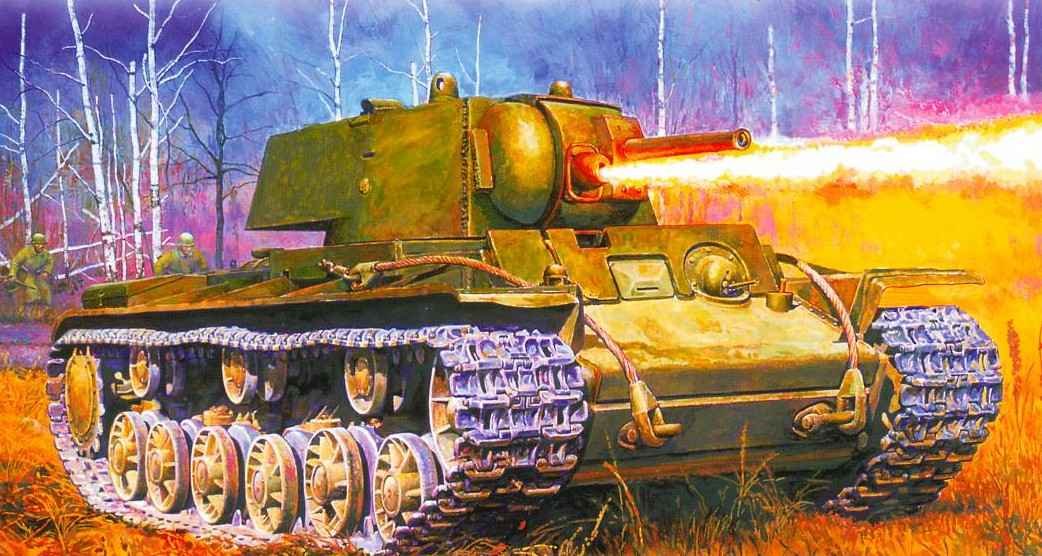
| Type | Soviet heavy flamethrower tank |
| Year | 1942 |
| Weight | 46 tons |
| Crew | 5 men |
| Main Weapon | 45 mm tank gun |
| Secondary Weapons | 4 × 7.62 mm DT machine guns |
| Flamethrower | ATO-41 |
| Armor | 30–90 mm |
| Engine | 600 hp V-2K diesel engine |
| Speed | 35 km/h |
| Range | 160 km |
The KV-8 was a Soviet heavy flamethrower tank developed on the basis of the KV-1. It combined heavy armor with an ATO-41 flamethrower, a 45 mm gun and DT machine guns.
Production of the KV-8 began in 1942. Its large flamethrower fuel capacity was a major advantage over lighter Soviet flamethrower tanks, and KV-8 tanks were used in specialized flamethrower tank battalions.
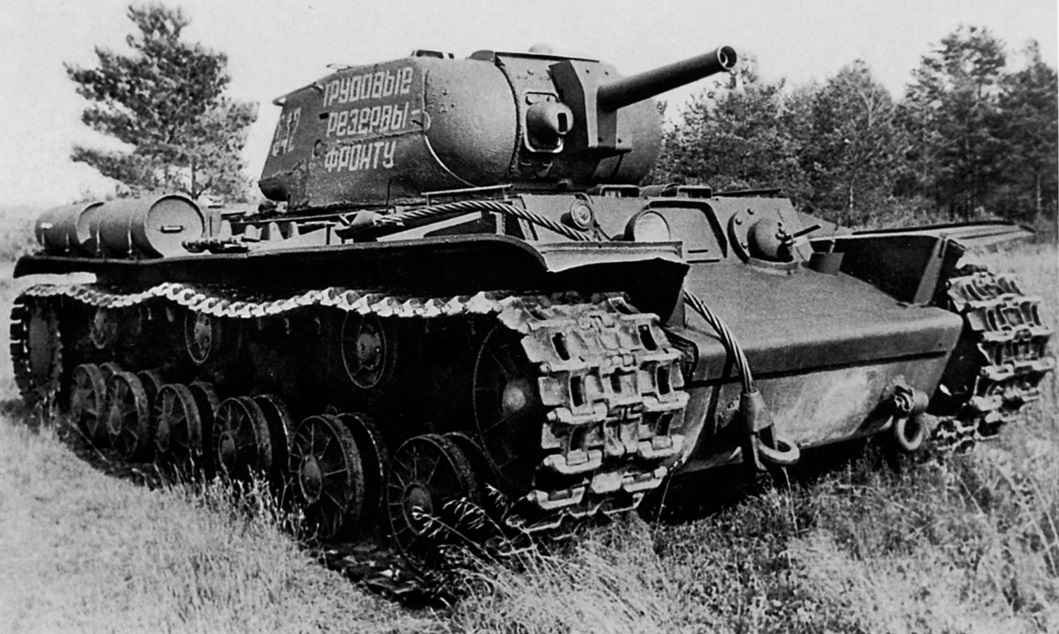
KV-85 Heavy Tank
The KV-85 was developed on the basis of the KV-1S because of delays in the development of the IS-1 heavy tank. It was fitted with a turret originally designed for the IS-1, featuring a larger turret ring, improved armor protection, and an 85 mm D-5 gun.
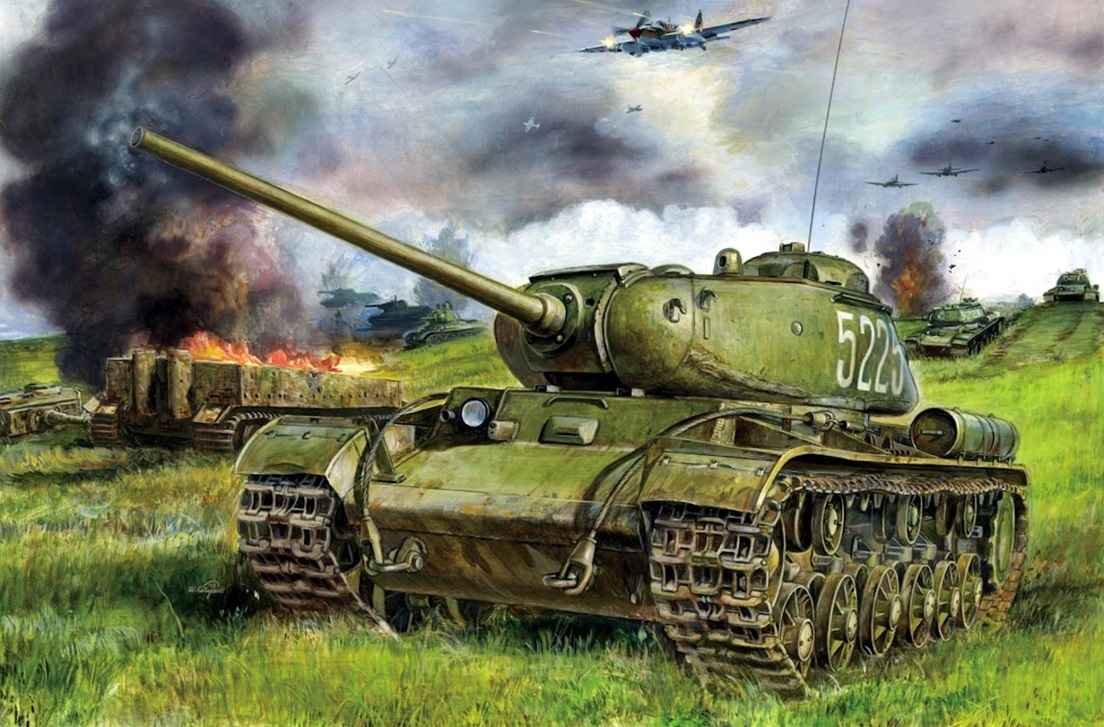
| Type | Soviet heavy tank |
| Year | 1943 |
| Weight | 46 tons |
| Crew | 4 men |
| Main Weapon | 85 mm D-5T85 tank gun |
| Secondary Weapons | 3 × 7.62 mm DT machine guns |
| Ammunition | 70 rounds |
| Armor | Up to 100 mm |
| Engine | 600 hp V-2K diesel engine |
| Speed | 41 km/h |
| Range | 230 km |
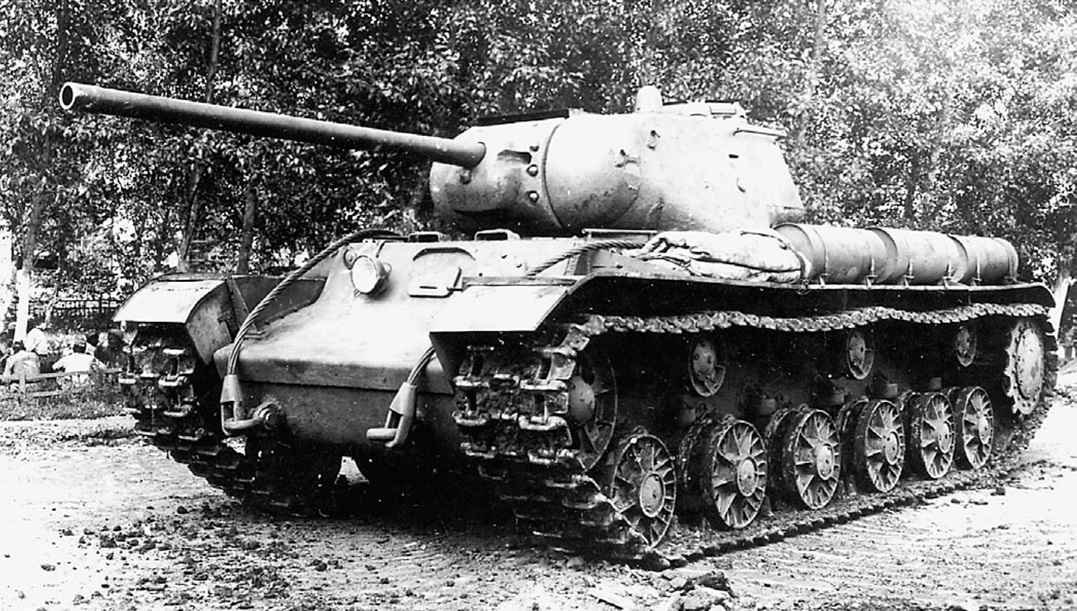
The KV-85 was a Soviet heavy tank developed as a transitional model between the KV series and the new IS heavy tanks. It combined the KV-1S chassis with a new turret designed for the IS-1 and an 85 mm D-5T85 gun.
Production of the KV-85 was relatively short. Only 130 tanks were built before Soviet heavy tank production moved to the more advanced IS series.
KV-9 Heavy Assault Tank
In the autumn of 1941, the Soviet People’s Commissariat of Defense once again raised the question of improving the armament and armor protection of the KV heavy tanks.
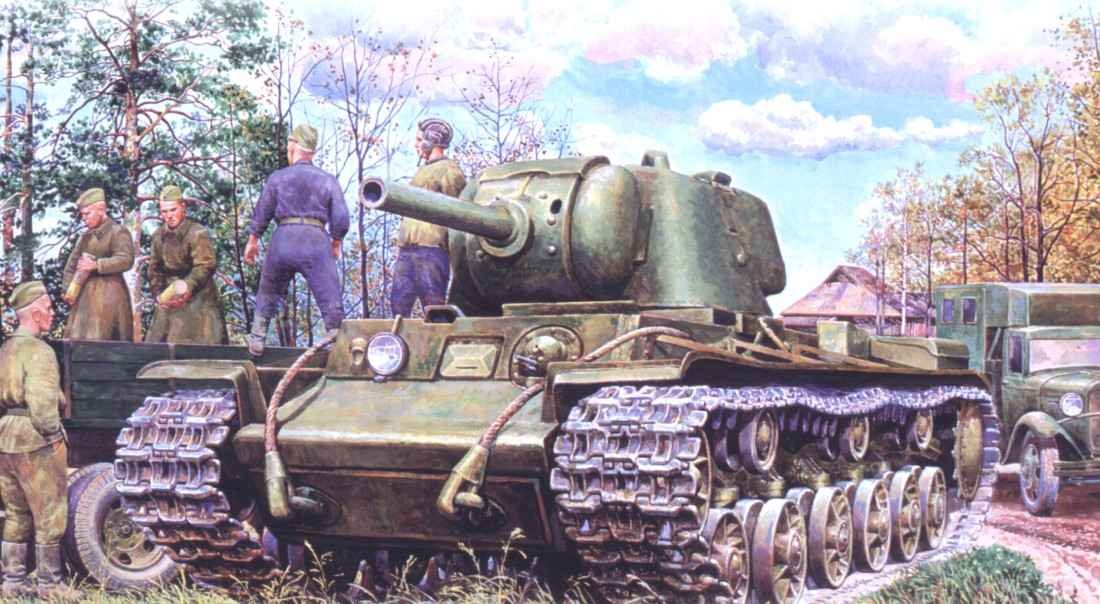
| Type | Soviet experimental heavy assault tank |
| Year | 1942 |
| Weight | 48.1 tons |
| Crew | 5 men |
| Main Weapon | 121.9 mm U-11 howitzer |
| Secondary Weapons | 3 × 7.62 mm DT machine guns |
| Ammunition | 36 rounds |
| Armor | Up to 135 mm |
| Engine | 600 hp V-2K diesel engine |
| Speed | 35 km/h |
| Range | 225 km |
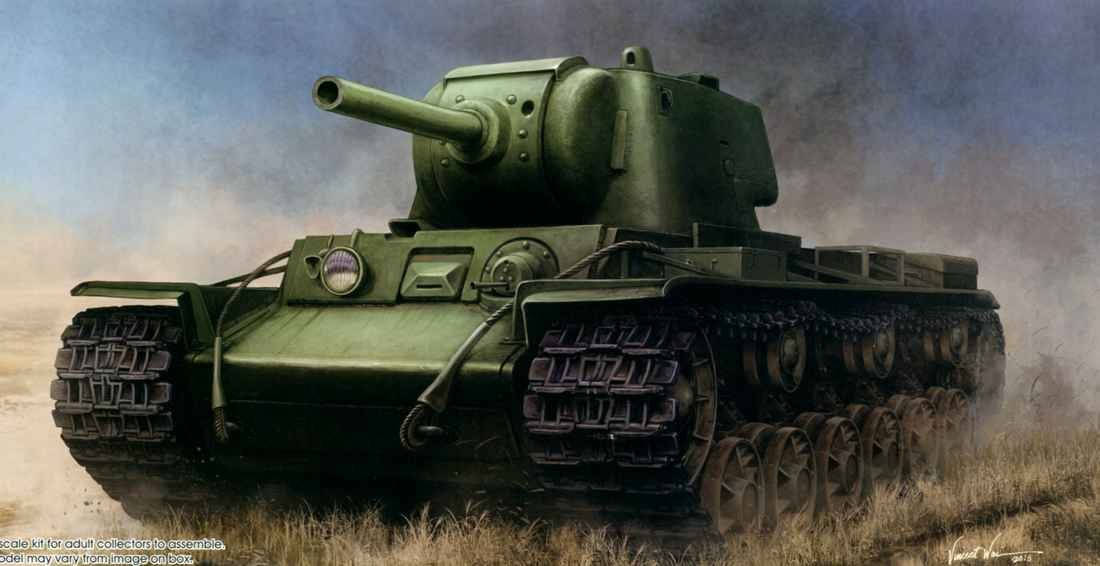
The KV-9 was an experimental Soviet heavy assault tank developed during World War II. It was based on the KV series and armed with a powerful 121.9 mm U-11 howitzer designed from the M-30 field howitzer.
The KV-9 featured very heavy frontal armor of up to 135 mm. Despite successful testing, the tank was never accepted for mass production, and only experimental vehicles were built.
KSP-76 Self-Propelled Artillery Gun
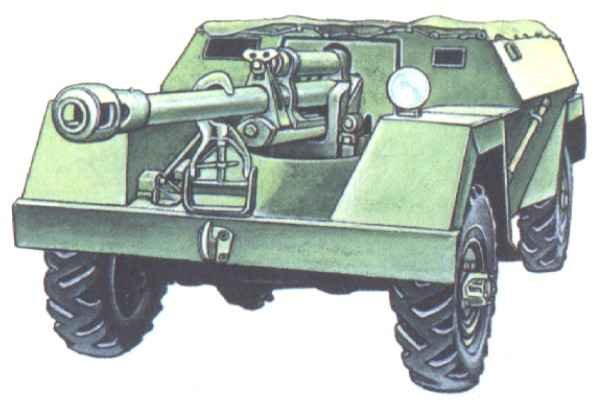
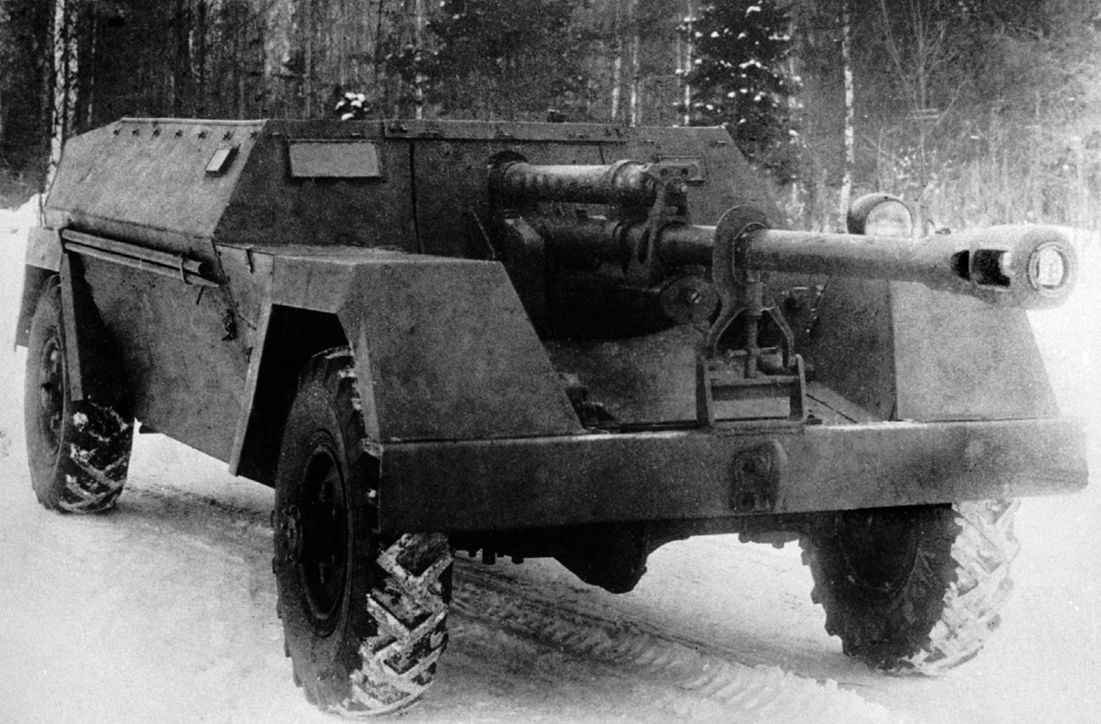
Shortly after the end of the Battle of Kursk, designers at the Gorky Automobile Plant proposed the development of a new self-propelled artillery gun. The new vehicle was designed to provide greater mobility by using a wheeled chassis instead of tracks.
| Type | Soviet experimental wheeled self-propelled artillery gun |
| Year | 1944 |
| Weight | 5.34 tons |
| Crew | 3 men |
| Main Weapon | 76 mm ZiS-3 gun |
| Ammunition | 58 rounds |
| Armor | Up to 16.5 mm |
| Engine | 85 hp gasoline engine |
| Drive | 4×4 |
| Speed | 77 km/h |
| Range | 580 km |
The KSP-76, also known as the GAZ-68, was an experimental Soviet wheeled self-propelled artillery gun developed during World War II. It combined a 4×4 wheeled chassis with the 76 mm ZiS-3 gun.
The KSP-76 was very fast and low-profile, reaching 77 km/h on roads. However, its cross-country performance was inferior to tracked self-propelled guns. Only one prototype was built, and the vehicle never entered mass production.
LB-23 Armored Car
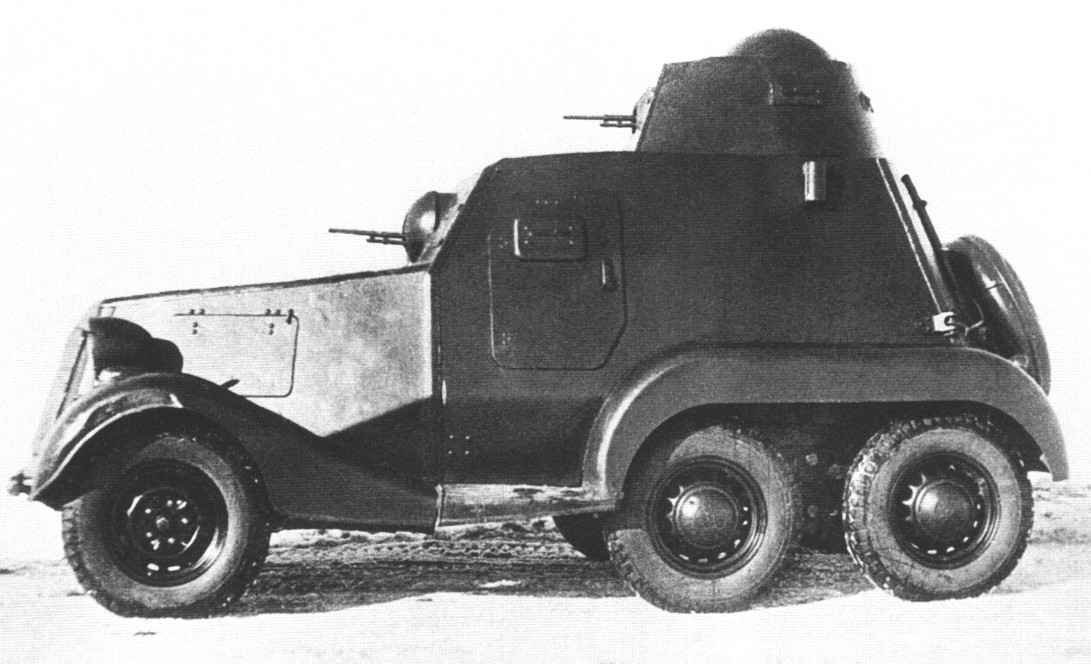
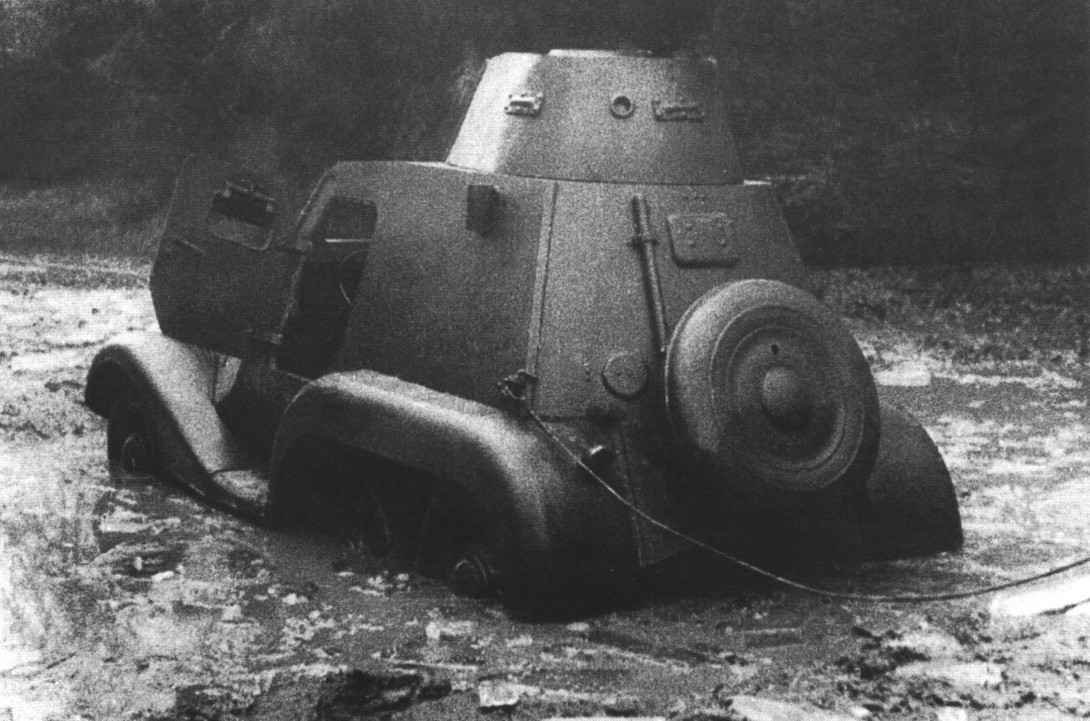
The LB-23 was a Soviet experimental armored car. Its fully enclosed hull was welded from rolled steel armor plates of varying thickness. The armor plates were positioned at sloped angles wherever possible to improve protection.
| Type | Soviet light armored car |
| Year | 1939 |
| Weight | 3.5 tons |
| Crew | 3 men |
| Armament | 2 × 7.62 mm DT machine guns |
| Armor | Up to 11 mm |
| Engine | 72 hp Dodge gasoline engine |
| Drive | 6×4 |
| Speed | 72 km/h |
| Range | 200–238 km |
The LB-23 was a Soviet experimental light armored car developed in 1939 as a possible replacement for the BA-20. It was based on the GAZ-22 three-axle 6×4 chassis and carried a crew of three.
The LB-23 was armed with two 7.62 mm DT machine guns and protected by armor up to 11 mm thick. Its 72 hp Dodge engine allowed it to reach a maximum road speed of 72 km/h.
LB-62 Armored Car
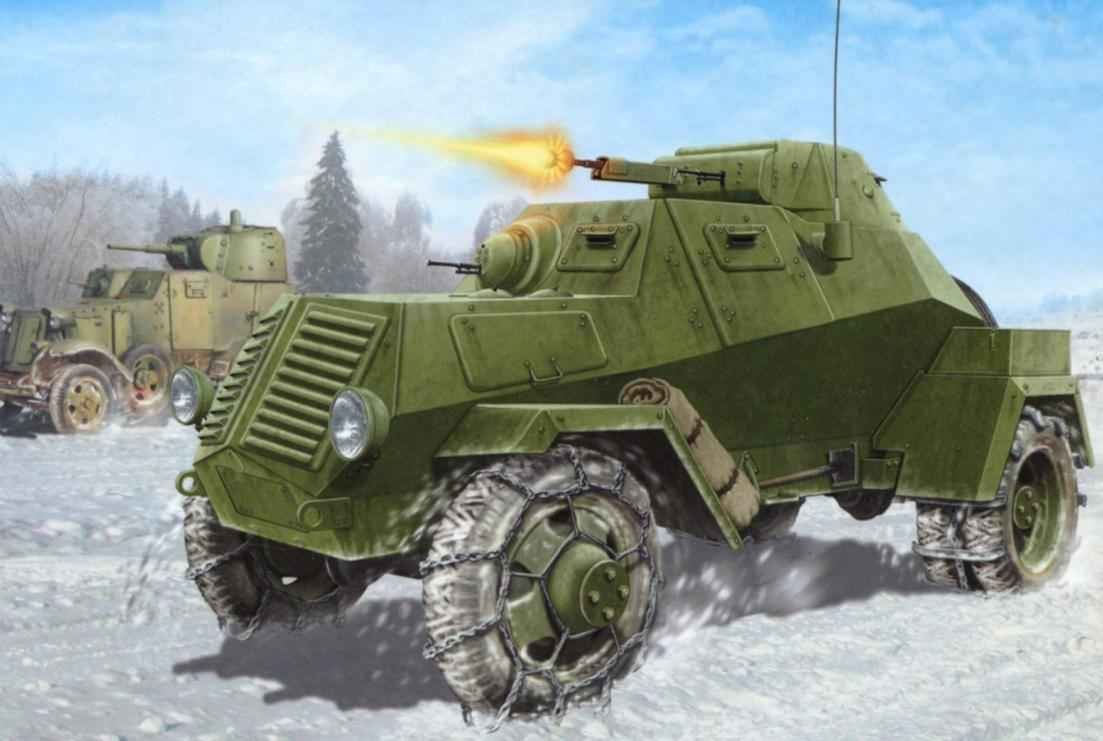
Overall, the LB-62 proved to be a successful Soviet armored car. A total of 60 armored vehicles of this type were produced.
| Type | Soviet light armored car |
| Year | 1940 |
| Weight | 5.15 tons |
| Crew | 3 men |
| Main Weapon | 12.7 mm DShK machine gun |
| Secondary Weapons | 2 × 7.62 mm DT machine guns |
| Armor | Up to 13 mm |
| Engine | 85 hp GAZ-202 gasoline engine |
| Drive | 4×4 |
| Speed | 70 km/h |
| Range | 360–500 km |
The LB-62 was a Soviet light armored car developed in 1940 on the chassis of the experimental GAZ-62 four-wheel-drive truck. It combined a fully welded armored hull with a 4×4 drivetrain and a powerful armament for a light armored vehicle.
The LB-62 was armed with a 12.7 mm DShK heavy machine gun and two 7.62 mm DT machine guns. Its 85 hp GAZ-202 engine provided a maximum road speed of 70 km/h and a range of up to 500 km. According to the source, 60 vehicles were produced.
LB-NATI Armored Car
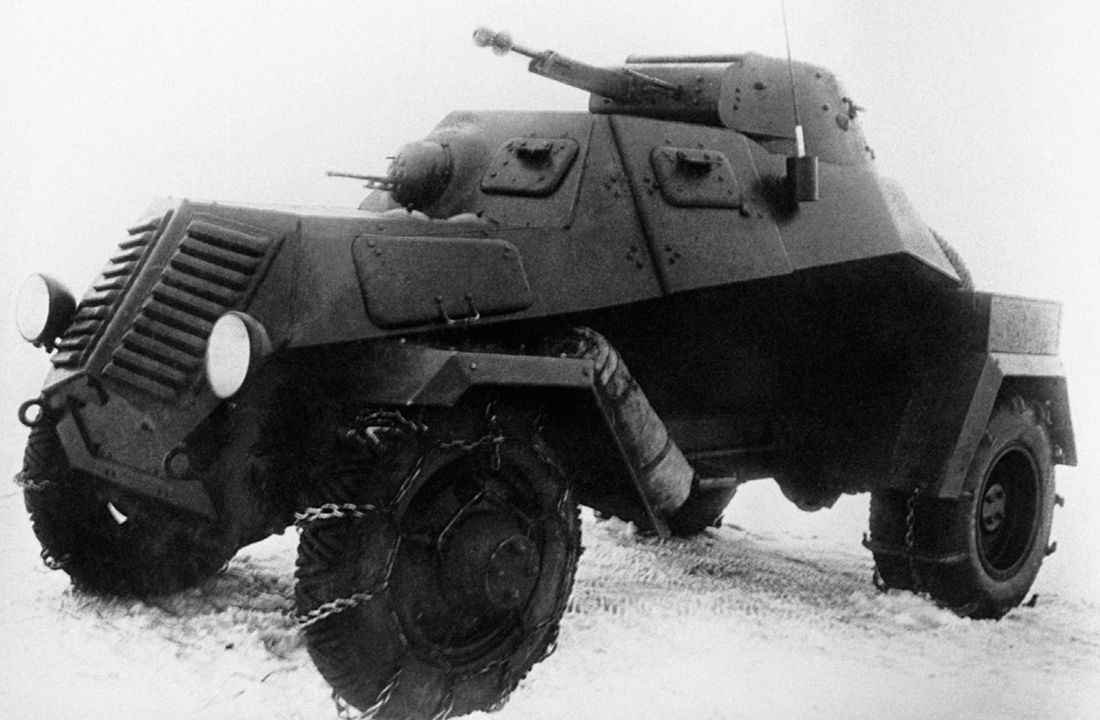
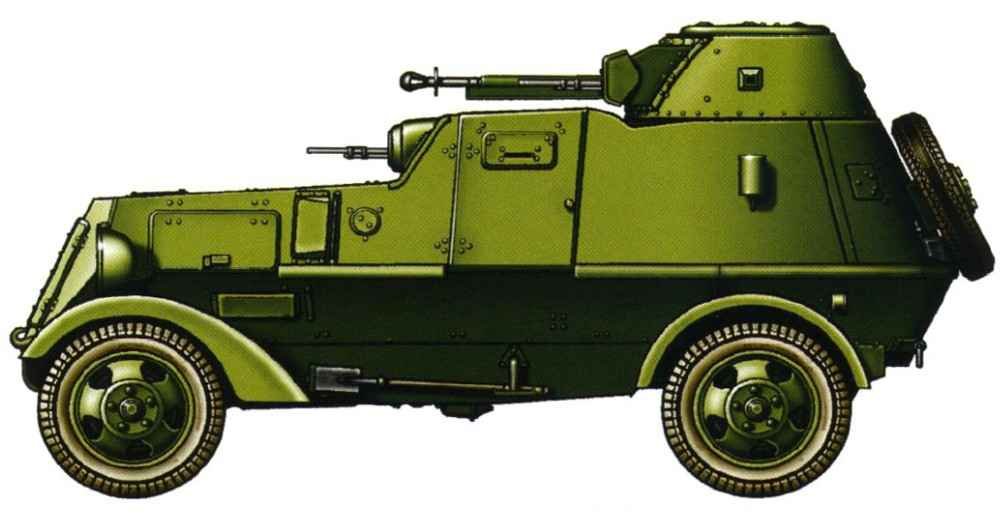
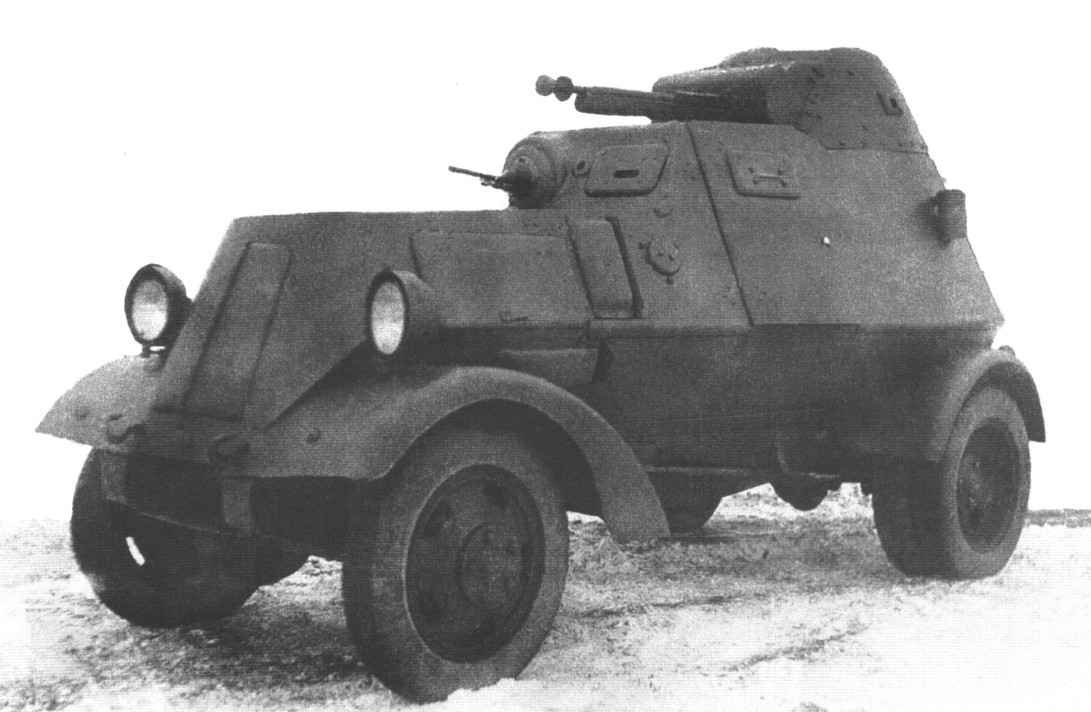
The LB-NATI combined a number of innovative design features and was the first Soviet domestically developed all-wheel-drive armored car.
| Type | Soviet experimental light armored car |
| Year | 1939 |
| Weight | 4.58 tons |
| Crew | 3 men |
| Main Weapon | 12.7 mm DShK machine gun |
| Secondary Weapons | 2 × 7.62 mm DT machine guns |
| Armor | Up to 10 mm |
| Engine | 72 hp 6-cylinder gasoline engine |
| Drive | 4×4 |
| Speed | 57 km/h |
| Range | 288 km |
The LB-NATI was an experimental Soviet light armored car developed between 1937 and 1939. Only one prototype was built. The vehicle featured an all-wheel-drive 4×4 chassis and sloped armor protection.
The LB-NATI was armed with a 12.7 mm DShK heavy machine gun and two 7.62 mm DT machine guns. Tests showed advantages over the BA-20 in mobility, protection and armament, but technical problems prevented the vehicle from entering production.
M / KS (Krasnoye Sormovo) Light Tank
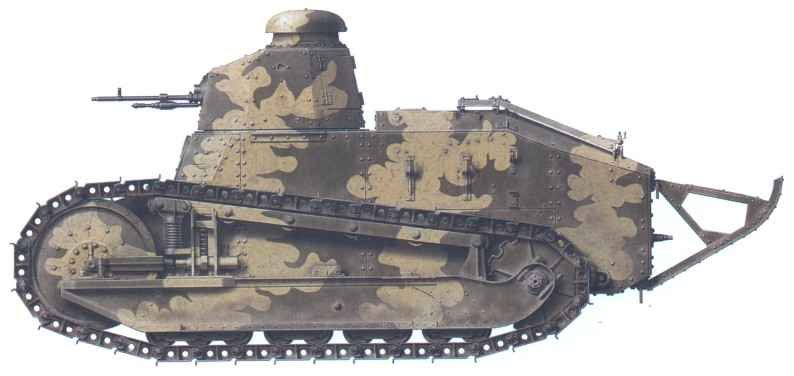
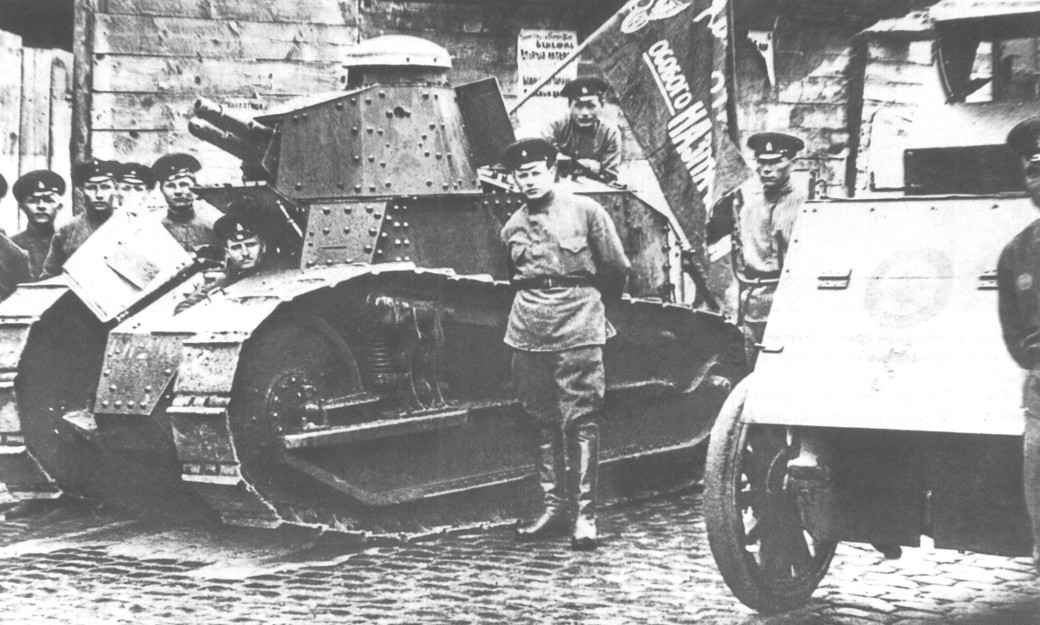
The M / KS, also known as the Russian Renault, entered service in 1920. It was based on the French Renault FT and was produced at the Krasnoye Sormovo factory. The tank used a Fiat-type engine.
| Type | Soviet light tank |
| Year | 1920 |
| Weight | 7 tons |
| Crew | 2 men |
| Main Weapon | 37 mm Hotchkiss gun |
| Secondary Weapon | 7.62 mm DT machine gun |
| Armor | Up to 16 mm |
| Engine | 33.5 hp AMO gasoline engine |
| Speed | 8–8.5 km/h |
| Range | 60 km |
The M (KS), also known as the Krasnoye Sormovo or Russian Renault, was an early Soviet light tank that entered service in 1920. Its design was based on a captured French tank, and production continued from 1920 to 1922.
Some tanks were armed with a 37 mm Hotchkiss gun, others with a machine gun, while later vehicles carried both weapons. A total of 15 tanks were built, and several received individual names such as Paris Commune, Proletariat, Storm, Victory and Comrade Lenin, Fighter for Freedom.
OSA-76 / OSU-76 Self-Propelled Artillery Gun
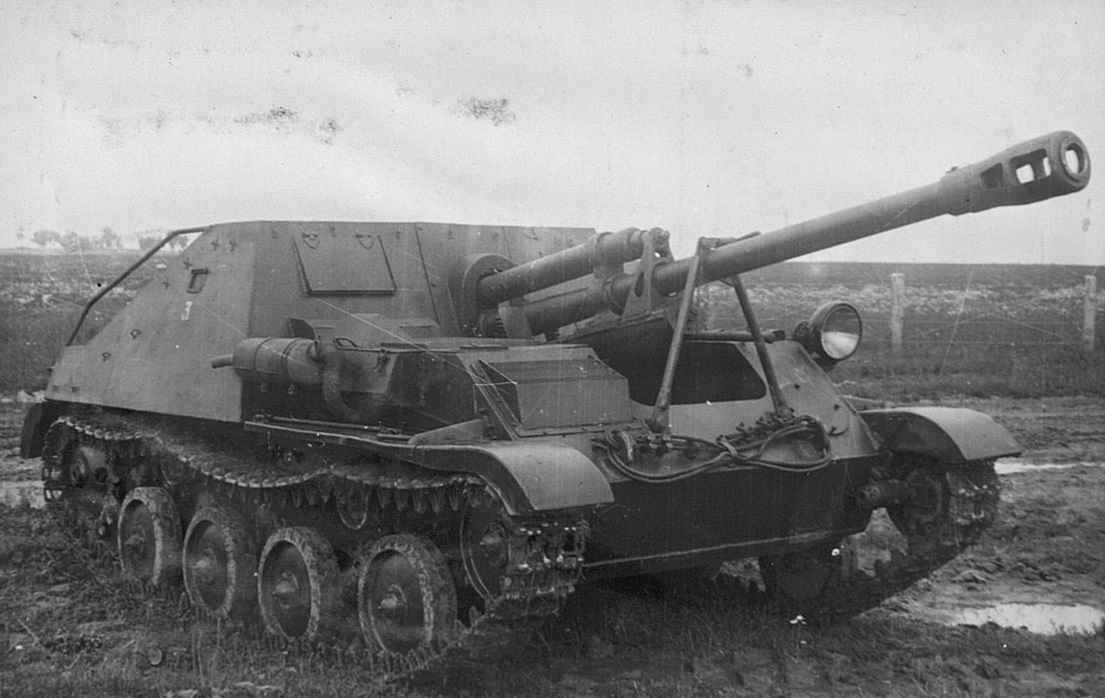
“OSA” was the name of a parallel Soviet self-propelled artillery development program. The abbreviation stood for “General-Purpose Self-Propelled Artillery.”
PB-4 Armored Car
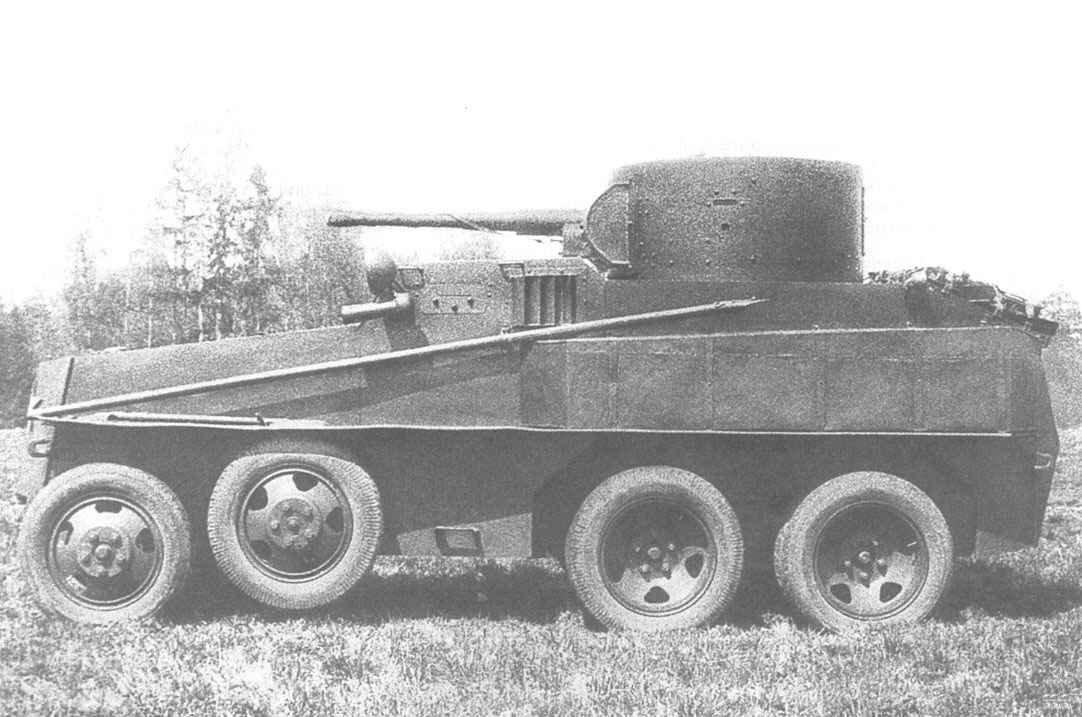
Following the unsuccessful BAD-2 amphibious armored car project, KBS designers Emmanuilov, Grigoriev, and Pomerantsev began developing a significantly improved vehicle that became known as the PB-4.
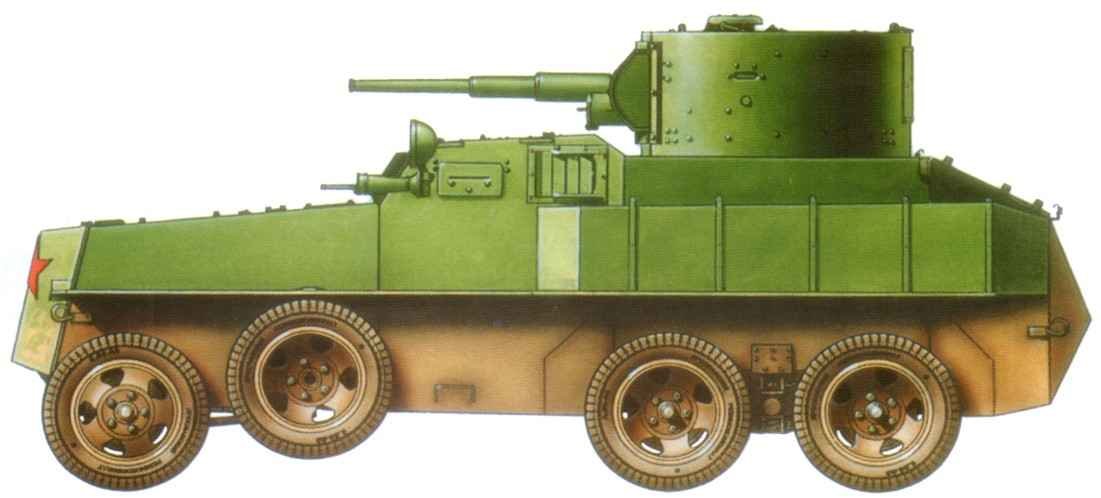
| Combat Weight | 5.28 tons |
| Crew | 3 men |
| Armament | 1 × 45 mm 20-K gun, 2 × 7.62 mm DT machine guns |
| Ammunition | 52 shells, 2,268 machine-gun rounds |
| Armor | 4–7 mm |
| Engine | GAZ-AA gasoline engine, 40 hp |
| Maximum Speed | 50 km/h on road, 20 km/h off-road, 2.8 km/h on water |
| Range | 197 km on road, 138 km off-road |
| Drive | 6×4 |
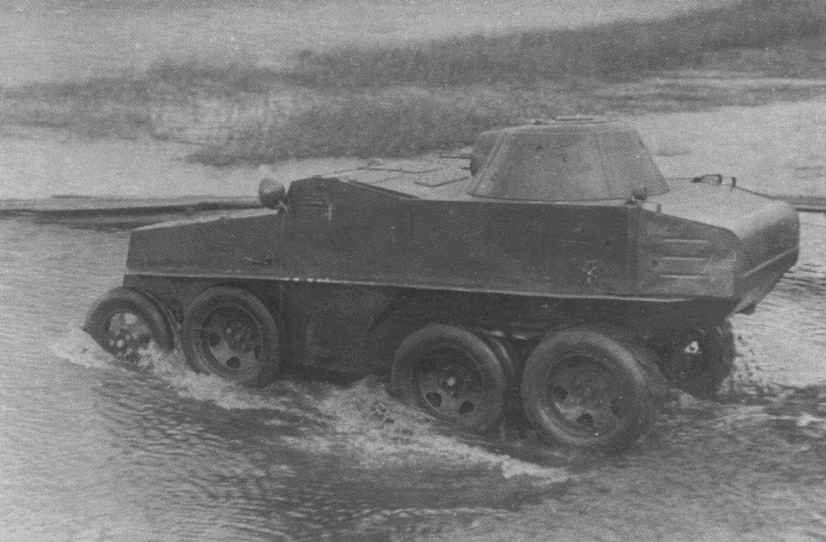
PB-7 Armored Car
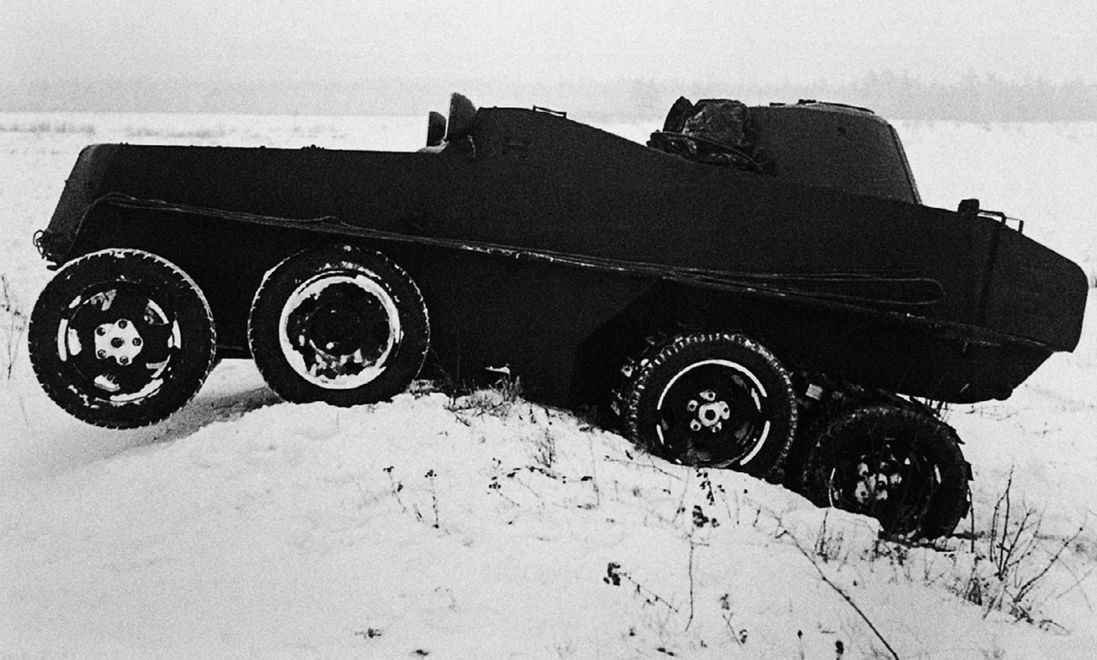
The development of the new armored car, designated PB-7, was carried out under the direction of Ilyichev, head of the KBM design bureau, and Drabkin, chief designer for special production at the Izhora Plant.
| Type | Soviet experimental amphibious armored car |
| Year | 1936 |
| Combat Weight | 4.6 tons |
| Crew | 3 men |
| Armament | 2 × 7.62 mm DT machine guns |
| Armor | 4–8 mm |
| Engine | GAZ-M-1, 4-cylinder gasoline engine, 50 hp |
| Maximum Road Speed | 60 km/h |
| Maximum Speed on Water | 4.55 km/h |
| Length | 5.08 m |
| Width | 2.15 m |
| Height | 2.073 m |
| Ground Clearance | 0.24 m |
The PB-7 was an experimental Soviet amphibious armored car developed in 1936 on the GAZ-AAA chassis. It was created as a further development of the PB-4 and featured a watertight armored hull, a propeller for movement on water and a crew of three.
During testing, the PB-7 demonstrated a maximum road speed of 60 km/h and reached 4.55 km/h on water. The vehicle successfully transitioned between land and water, but its weak armament and several design limitations prevented further development. After testing, work on Soviet amphibious armored cars of this type was discontinued.
PPG (Mobile Machine-Gun Nest) Tankette
The 1930s were a period of active development for tankettes. For a time, vehicles of this class offered acceptable performance and met military requirements. However, as armored fighting vehicles continued to evolve, tankettes gradually became obsolete and were eventually abandoned.
| Type | Soviet experimental tankette |
| Year | 1940 |
| Combat Weight | 1.73 tons |
| Crew | 2 men |
| Armament | 2 × 7.62 mm DT machine guns |
| Ammunition | 1,575 rounds |
| Armor | 8–20 mm |
| Engine | PMZ 2-cylinder gasoline engine, 16 hp |
| Maximum Speed | 18 km/h |
| Range | Up to 100 km |
| Length | 2.5 m |
| Width | 1.72 m |
| Height | 0.86 m |
| Ground Clearance | 300 mm |
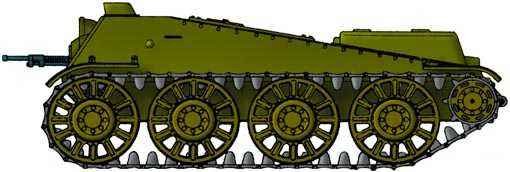
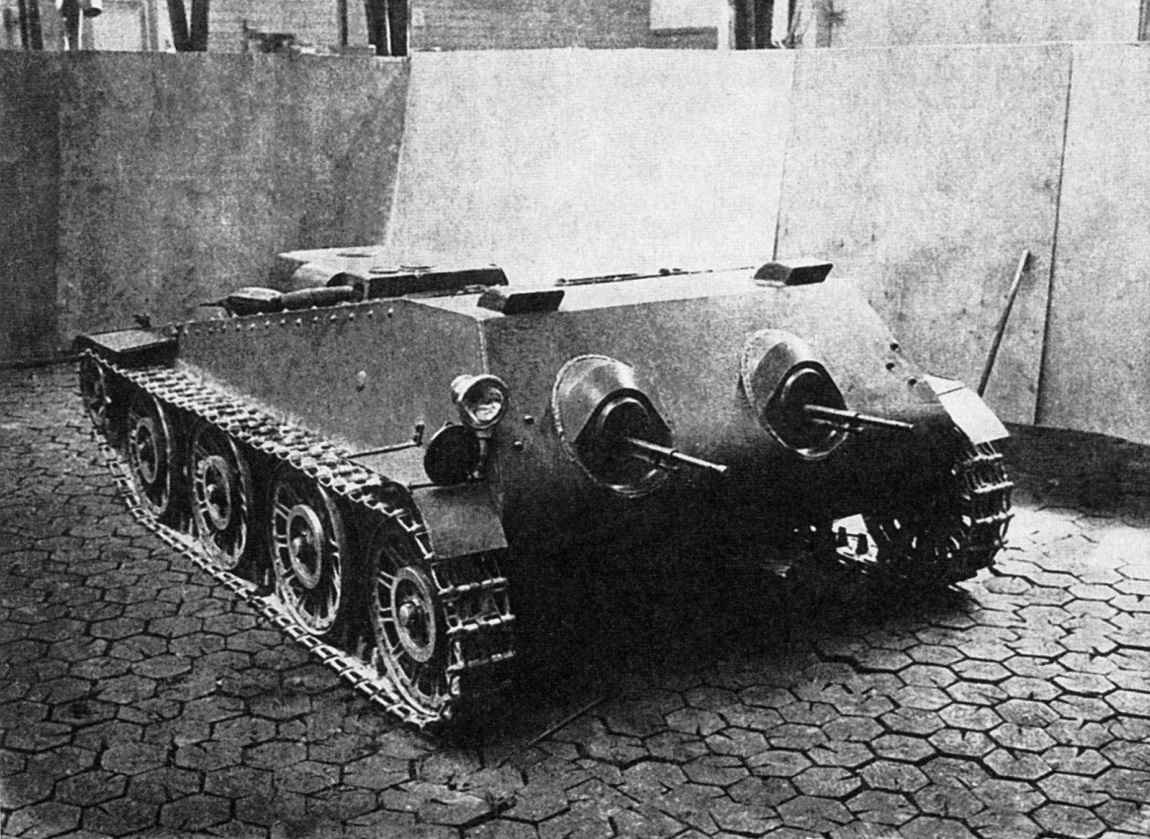
The PPG-1, also known as Object 217 or the “Mobile Machine-Gun Nest,” was an experimental Soviet tankette developed in early 1940 by SKB-2 of the Leningrad Kirov Plant. It was designed as a small and inexpensive armored vehicle capable of supporting infantry with machine-gun fire. :contentReference[oaicite:0]{index=0}
The vehicle had an extremely low profile and weighed only 1.73 tons. Its two-man crew operated the vehicle while lying inside the armored hull during combat. The PPG-1 was armed with two 7.62 mm DT machine guns carrying a total of 1,575 rounds. :contentReference[oaicite:1]{index=1}
Only one prototype was built. Tests revealed poor mobility, uncomfortable crew conditions and limited combat potential, and further development was cancelled. The Object 217 became the last Soviet attempt to develop a conventional tankette. :contentReference[oaicite:2]{index=2}
PT-1 Amphibious Medium Tank
Work on the new tank began almost immediately after the Christie tank was sent to the Soviet Union. The project was developed by the KB-T design bureau at the Krasny Proletary factory.
| Type | Soviet experimental amphibious medium tank |
| Year | 1932 |
| Combat Weight | 14.2 tons |
| Crew | 4 men |
| Armament | 1 × 45 mm 20-K gun, 4 × 7.62 mm DT machine guns |
| Ammunition | 93 shells, 3,402 machine-gun rounds |
| Armor | 5–15 mm |
| Engine | M-17, 12-cylinder gasoline engine, 500 hp |
| Maximum Speed on Wheels | 90 km/h |
| Maximum Speed on Tracks | 62 km/h |
| Maximum Speed on Water | 11.5 km/h |
| Range | 183 km on tracks / 230 km on wheels |
| Length | 7.1 m |
| Width | 2.9 m |
| Height | 2.645 m |
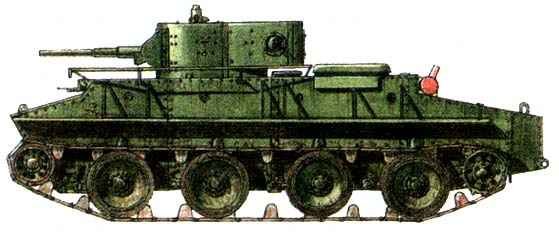
The PT-1 was an experimental Soviet amphibious medium tank developed in 1932. It combined several unusual features, including amphibious capability and a convertible wheel-and-track system. The tank was armed with a 45 mm 20-K gun and four 7.62 mm DT machine guns.
The PT-1 could reach 90 km/h on wheels and 62 km/h on tracks. It was propelled through water by two propellers and could also operate as an amphibious vehicle. Despite its advanced design and impressive mobility, the complicated drivetrain made the tank expensive and difficult to maintain. The PT-1 and improved PT-1A were never adopted for mass production.
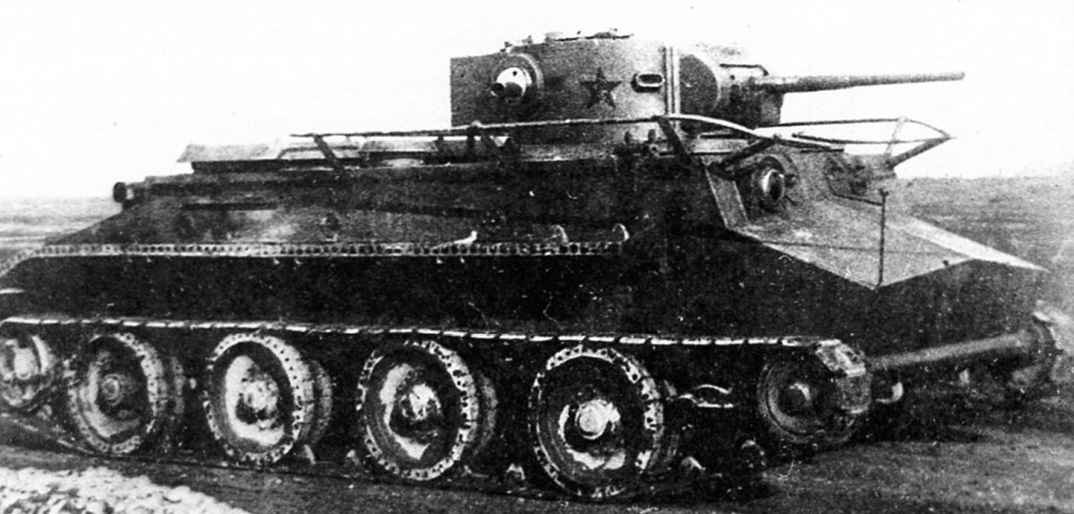
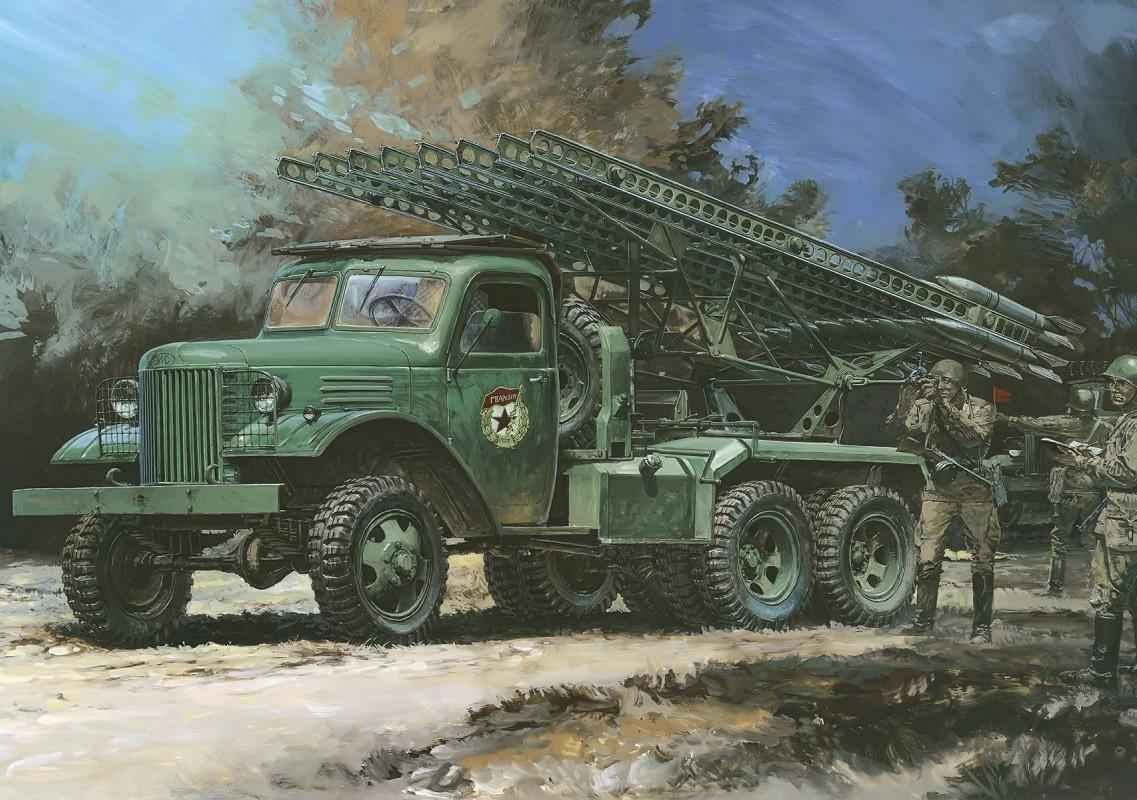
M-13 Katyusha Multiple Rocket Launcher
The Soviet BM-13 Katyusha multiple rocket launcher became one of the most recognizable symbols of the Great Patriotic War.
| Type | Soviet multiple rocket launcher |
| Chassis | ZiS-6 |
| Combat Weight | 7.2 tons |
| Crew | 5–7 men |
| Number of Launch Rails | 16 |
| Length of Launch Rails | 5 m |
| Rocket | M-13 |
| Rocket Caliber | 132 mm |
| Maximum Firing Range | 8,470 m |
| Full Salvo Time | 8–10 seconds |
| Vertical Traverse | +4° to +45° |
| Horizontal Traverse | −10° to +10° |
| Length | 6.7 m |
| Width | 2.3 m |
| Height | 2.8 m |
The BM-13 Katyusha was one of the most famous Soviet multiple rocket launchers of World War II. The system was officially adopted in 1940, and on June 21, 1941, the Soviet government approved its serial production and the formation of special units equipped with the new weapon. :contentReference
The BM-13 used sixteen launch rails and could fire a complete salvo in approximately 8–10 seconds. Its standard M-13 rocket had a caliber of 132 mm and a maximum firing range of 8,470 meters.
The Katyusha combined powerful concentrated fire with a simple and highly mobile design. After firing a salvo, the vehicle could quickly leave its position before enemy artillery could respond. Its main disadvantages were relatively low accuracy, wide rocket dispersion and heavy smoke produced during firing. :
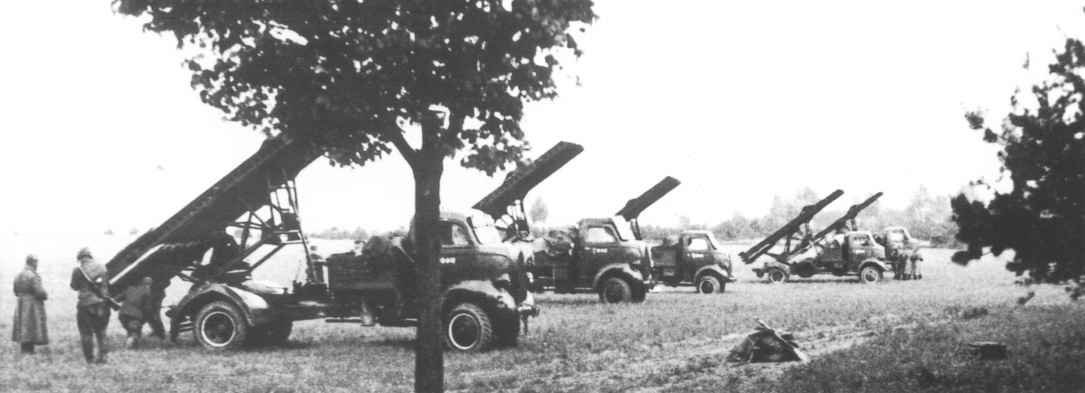
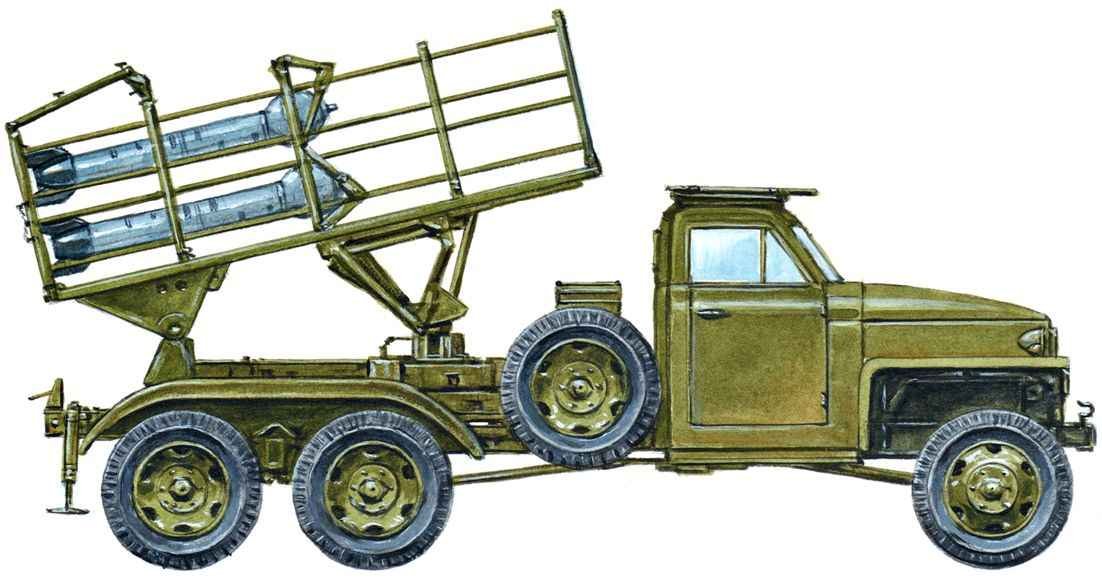
BM-31 Andryusha Heavy Multiple Rocket Launcher
Understanding the military’s need for a more powerful rocket artillery system, the Moscow Kompressor factory began developing a new self-propelled launcher for the heavy M-30 and M-31 rockets in early 1943.
| Type | Soviet heavy multiple rocket launcher |
| Chassis | Studebaker US6 |
| Combat Weight | 5.31 tons unloaded / 6.4 tons loaded |
| Number of Launch Rails | 12 |
| Rocket | M-31 high-explosive rocket |
| Maximum Firing Range | 4 km |
| Full Salvo Time | 15–30 seconds |
| Reloading Time | 15 minutes |
| Vertical Traverse | +10° to +50° |
| Horizontal Traverse | 10° |
| Engine Power | 95 hp |
| Maximum Speed | 65 km/h |
| Length | 6.2 m |
| Width | 2.4 m |
| Height | 3.2 m |
The BM-31-12 Andryusha was a Soviet heavy multiple rocket launcher developed to provide greater mobility and firepower than the earlier ground-based M-30 and M-31 launchers. The new system used a vehicle chassis and twelve tubular launch guides for heavy M-31 rockets. :contentReference[oaicite:0]{index=0}
The first BM-31-12 prototype with the new launch system was built in April 1944. Following successful trials, the BM-31-12 was officially adopted by the Red Army on June 9, 1944, and was actively used by Guards mortar units until the end of World War II. :contentReference[oaicite:1]{index=1}
The launcher could fire twelve M-31 rockets in a complete salvo within 15–30 seconds. Its maximum firing range was 4 km, reloading required approximately 15 minutes, and the Studebaker-based vehicle could reach a maximum speed of 65 km/h. :contentReference[oaicite:2]{index=2} :contentReference[oaicite:3]{index=3}
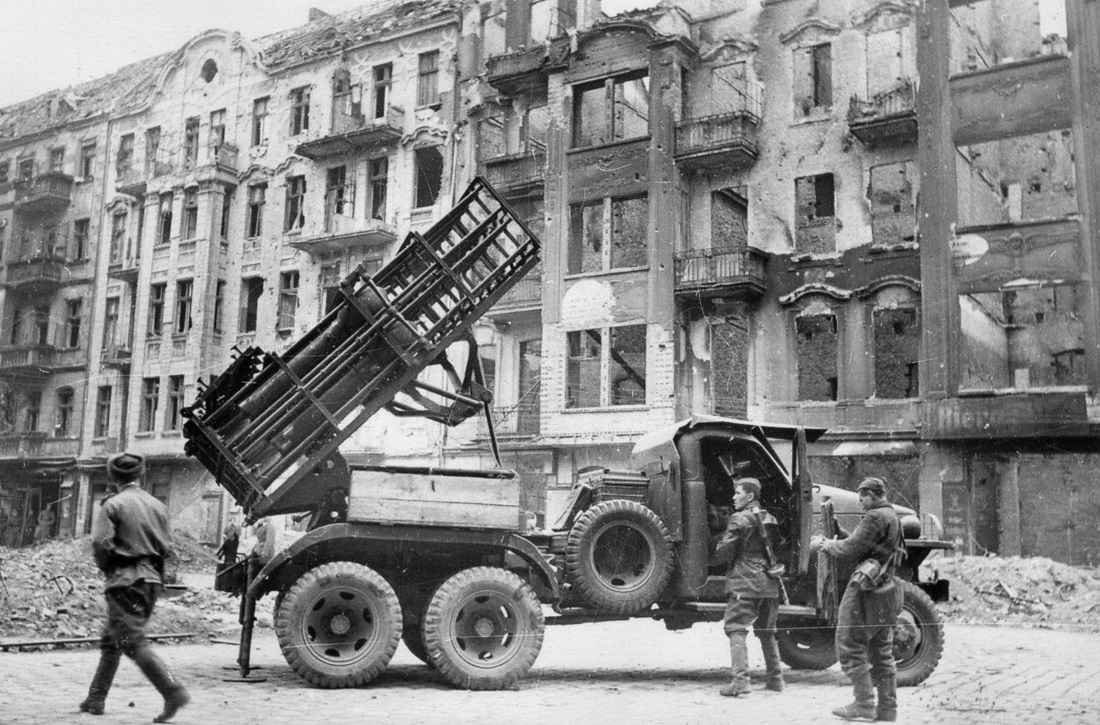
BM-8 Multiple Rocket Launcher
According to some sources, early versions of the project considered using as many as 38 launch rails. The BM-13 was not the only Soviet multiple rocket launcher used during World War II. The Red Army operated several other systems of this type, and one of the earliest was the BM-8-36.
| Combat Weight | 3.2 tons |
| Crew | 6 men |
| Chassis | GAZ-AAA, 6×4 |
| Number of Launch Rails | 36 |
| Rocket | M-8 unguided rocket |
| Rocket Caliber | 82 mm |
| Ammunition | 36 rockets |
| Maximum Firing Range | 5,515 m |
| Full Salvo Time | 15–20 seconds |
| Maximum Road Speed | Up to 65 km/h |
| Length | Approx. 5.4 m |
| Width | Just over 2 m |
| Height | Approx. 2.5 m |
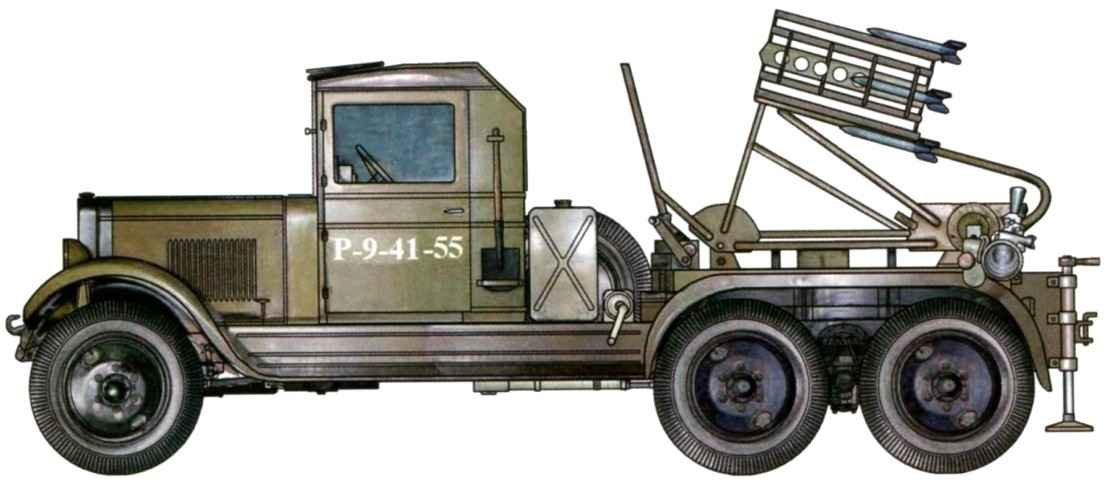
The BM-8-36 was one of the early Soviet multiple rocket launchers developed for 82 mm rockets. Work on the system followed the successful use of RS-82 rockets, which were subsequently modified for ground-based use and redesignated M-8. The first prototype began assembly in June 1941, and the BM-8-36 was adopted by the Red Army in August 1941. :contentReference[oaicite:0]{index=0}
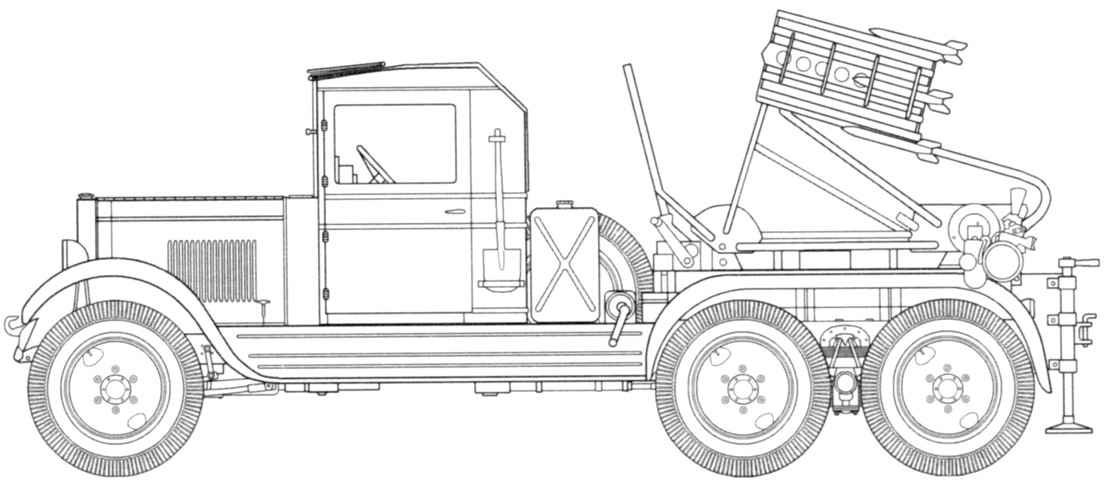
The launcher was mounted on the widely produced GAZ-AAA 6×4 truck chassis. Its launcher carried 36 rails arranged in three rows: 14 in the upper row, 14 in the middle row and eight in the lower row. Early versions reportedly considered 38 rails, but this arrangement was abandoned because rockets from the two central lower rails could strike parts of the vehicle during launch. :contentReference[oaicite:1]{index=1}
The BM-8-36 fired M-8 unguided rockets with a maximum range of 5,515 meters. A complete salvo could be launched in approximately 15–20 seconds. Despite being less powerful than the larger BM-13 Katyusha, the BM-8-36 provided valuable mobile rocket artillery support during the early stages of World War II. :contentReference[oaicite:2]{index=2}
S-51 Self-Propelled Artillery Gun
Development of this self-propelled artillery vehicle was carried out by TsAKB (Central Artillery Design Bureau) under the designation S-51, and the project was completed relatively quickly. However, already during the design calculations it became clear that the chosen solution, based on a single KV-1S tank chassis, had insufficient track contact length, a problem similar to that encountered with the U-19 project
| Type | Soviet experimental heavy self-propelled artillery gun |
| Combat Weight | 49.75 tons |
| Crew | 9 men |
| Armament | 1 × 203.2 mm B-4 howitzer |
| Ammunition | 12 rounds |
| Barrel Length | 25 calibers |
| Muzzle Velocity | 550–600 m/s |
| Horizontal Traverse | ±30° |
| Vertical Traverse | 0° to +60° |
| Armor | Up to 60 mm |
| Engine Power | 600 hp |
| Maximum Speed | 30 km/h |
| Range | 100 km |
| Length | 9.35 m |
| Width | 3.38 m |
| Height | 3.07 m |
| Ground Clearance | 500 mm |
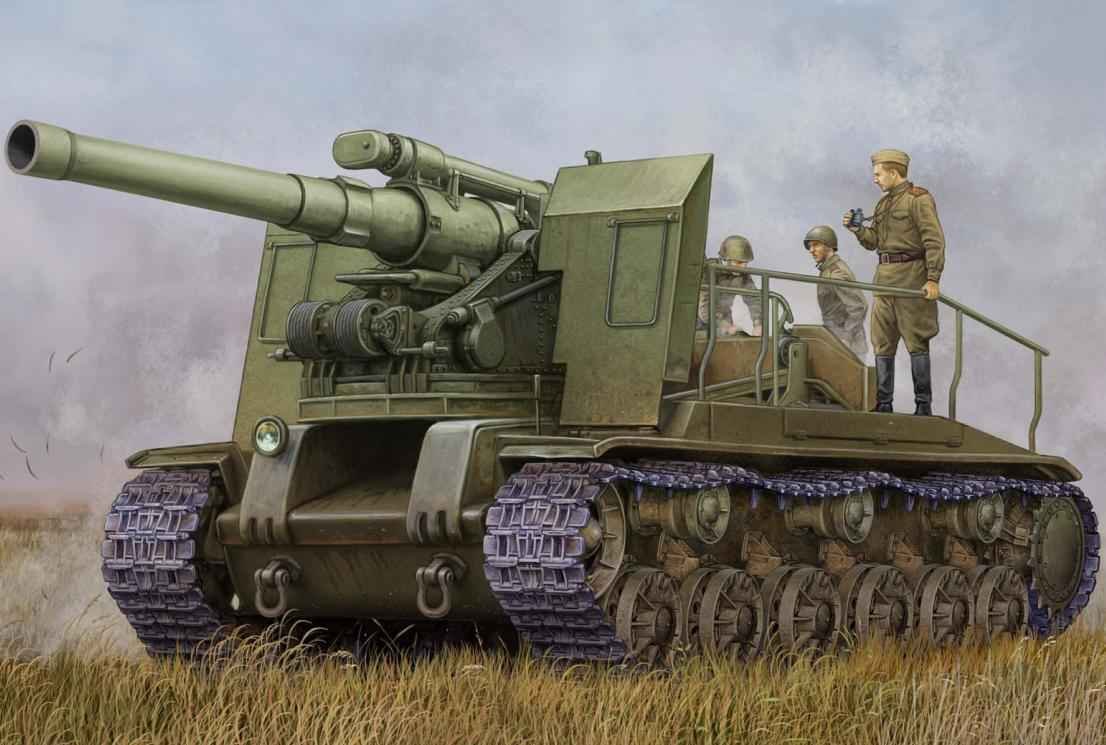
The S-51 was an experimental Soviet heavy self-propelled artillery gun developed by the Central Artillery Design Bureau (TsAKB) under the direction of V.G. Grabin. The project was created in response to a 1943 requirement for self-propelled artillery systems of high and special power. It was based on the KV-1S heavy tank chassis and armed with the powerful 203.2 mm B-4 howitzer.
Factory trials of the S-51 prototype began in February 1944. The enormous artillery system proved difficult to combine with the relatively compact KV-1S chassis. During movement, the vehicle was unstable and showed a tendency to overturn because of the poor balance of the artillery system.
Firing tests revealed further problems. The high position of the gun caused the vehicle to rock violently and move backward, often with considerable sideways displacement. At low elevation angles, recoil was so powerful that members of the gun crew had difficulty remaining in their positions. Despite these problems, the S-51 was recommended for adoption provided that the identified shortcomings were corrected. The vehicle ultimately remained an experimental design and did not enter mass production.
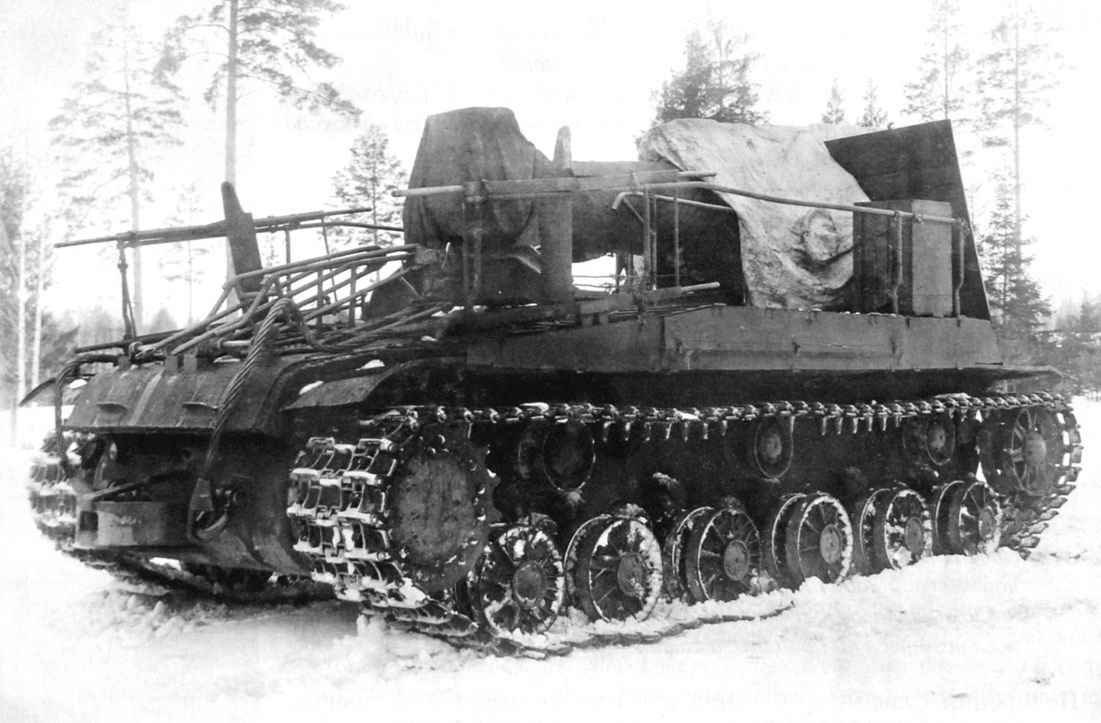
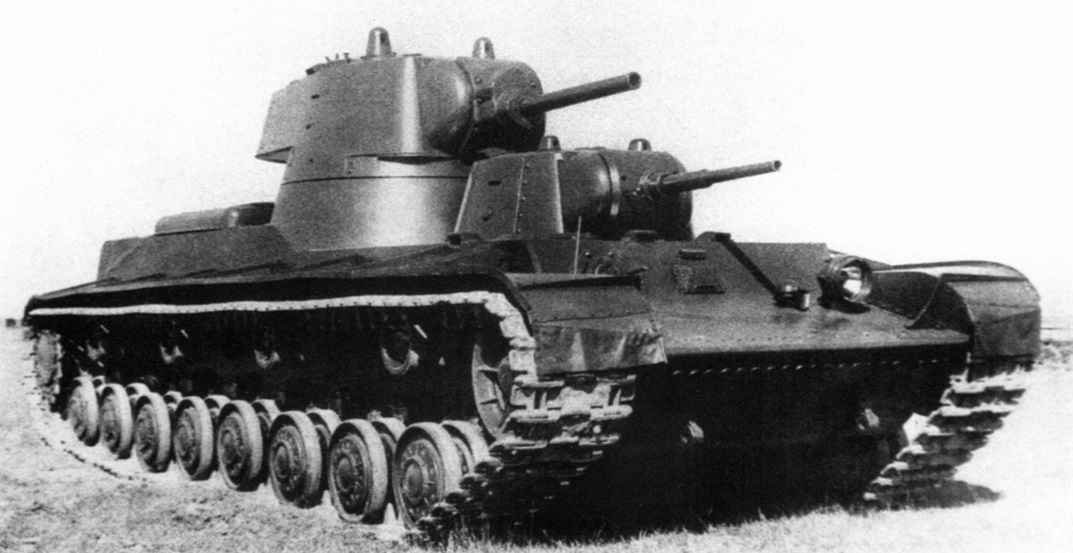
SMK (Sergei Mironovich Kirov) Heavy Tank
The tank incorporated several advanced technical solutions for its time, including torsion-bar suspension and road wheels with internal shock absorption. The experimental prototype took part in combat during the Soviet-Finnish War of 1939–1940.
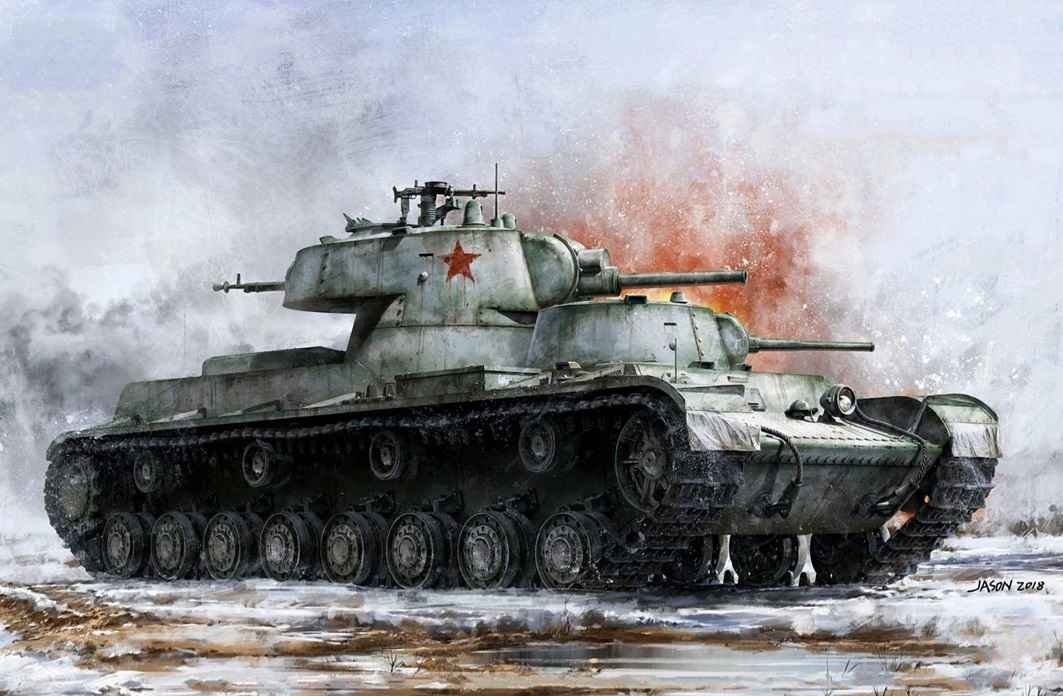
| Type | Soviet experimental heavy tank |
| Combat Weight | 55 tons |
| Crew | 7 men |
| Armament | 1 × 76.2 mm L-11 gun, 1 × 45 mm gun Model 1932, 3 × 7.62 mm DT machine guns |
| Ammunition | 150 × 76.2 mm rounds, 300 × 45 mm rounds, 3,969 machine-gun rounds |
| Armor | Up to 60 mm |
| Engine | GAM-34-BT gasoline engine, 850 hp |
| Maximum Speed | 35 km/h |
| Range | 160–220 km |
| Length | 8.75 m |
| Width | 3.36 m |
| Height | 3.35 m |
| Ground Clearance | 500 mm |
The SMK, named after Sergei Mironovich Kirov, was an experimental Soviet heavy tank developed by SKB-2 at the Leningrad Kirov Plant. The prototype was completed in the summer of 1939. Although the project was initially conceived as a three-turret tank, the final vehicle featured two turrets.
The 55-ton SMK was armed with a 76.2 mm L-11 gun, a 45 mm Model 1932 gun and three 7.62 mm DT machine guns. Its GAM-34-BT gasoline engine produced 850 hp, allowing the heavy vehicle to reach a maximum speed of 35 km/h and giving it a range of approximately 160–220 km.
The SMK incorporated several advanced engineering solutions, including torsion-bar suspension and road wheels with internal shock absorption. The prototype participated in combat during the Soviet-Finnish War of 1939–1940. The experience and engineering solutions developed for the SMK subsequently contributed to the creation of the KV heavy tank.
SU-1 Self-Propelled Artillery Gun
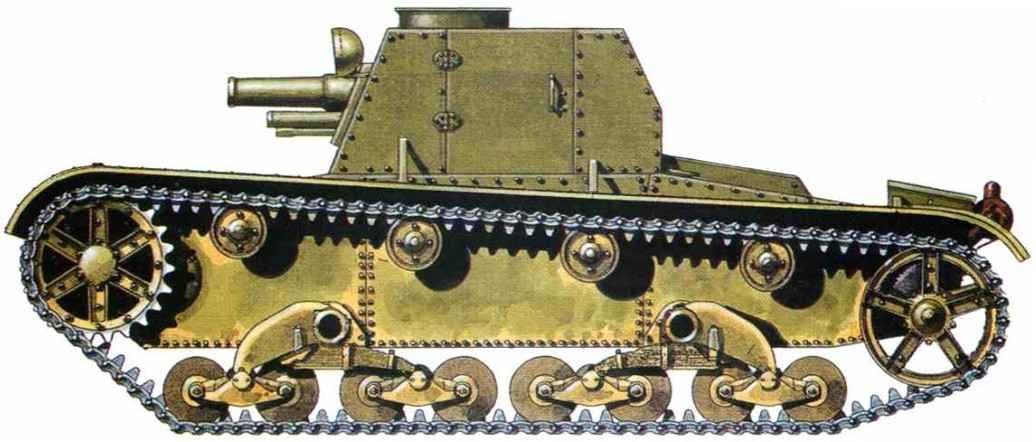
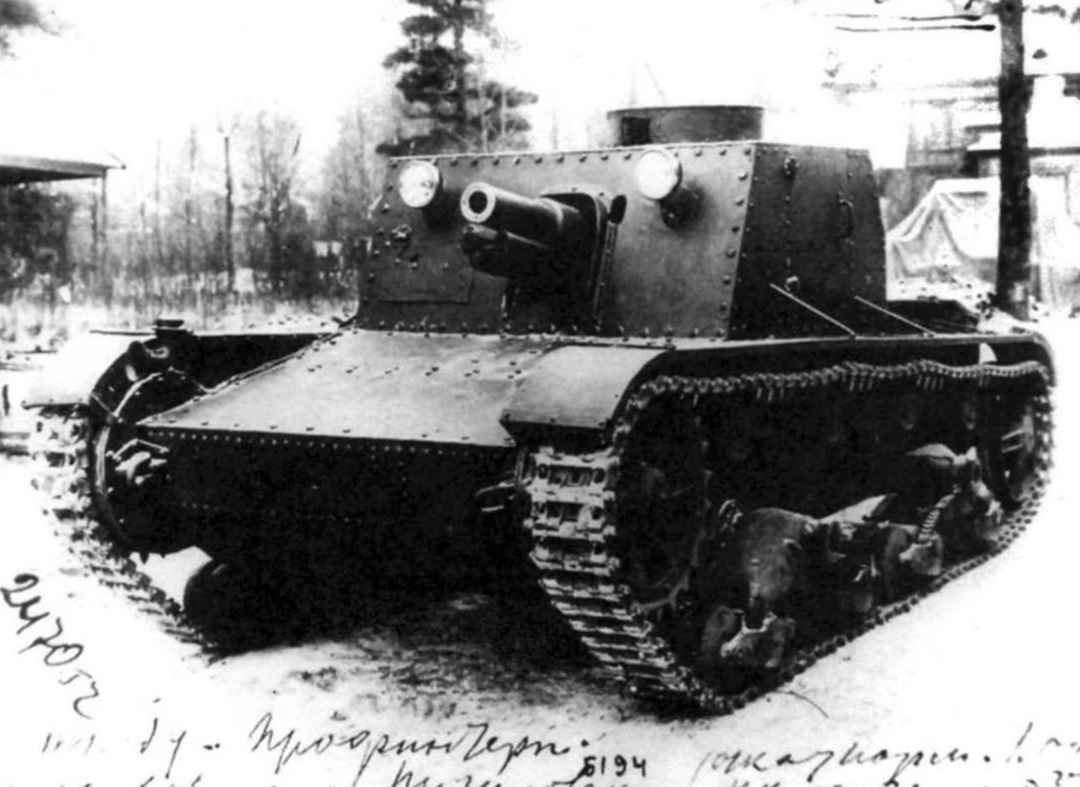
The SU-1 was a Soviet closed-type self-propelled artillery gun developed on the chassis of the T-26 light tank.
The SU-1 was a closed-type self-propelled artillery gun built on the chassis of the T-26 light tank.
The hull and fighting compartment of the SU-1 were constructed by riveting armor plates to a frame. The driver’s compartment was located at the front on the right side. Behind it was the fighting compartment with the armored superstructure, while the engine and transmission compartment was located at the rear and housed the T-26 four-cylinder gasoline engine.
| Type | Soviet experimental self-propelled artillery gun |
| Combat Weight | 8 tons |
| Crew | 4 men |
| Armament | 1 × 76 mm PS-3 gun, 2 × 7.62 mm DT machine guns |
| Ammunition | 35 × 76 mm rounds |
| Maximum Firing Range | 12,900 m |
| Armor | 13–15 mm vertical, 6 mm horizontal |
| Engine | T-26 4-cylinder gasoline engine, 85 hp |
| Maximum Speed | 30 km/h |
| Range | 150 km |
| Length | 4.62 m |
| Width | 2.44 m |
| Height | 2.2 m |
| Ground Clearance | 380 mm |
The SU-1 was a Soviet experimental closed-type self-propelled artillery gun built on the chassis of the T-26 light tank. Its hull and armored fighting compartment were constructed by riveting armor plates to a frame.
The driver was positioned at the front on the right side, with the fighting compartment located behind him and the engine and transmission compartment at the rear. The four-man crew entered and exited through doors in the sides of the armored superstructure. A commander’s cupola was installed on its roof.
The main armament consisted of a 76 mm PS-3 gun mounted in the fighting compartment. It carried 35 fragmentation and armor-piercing rounds and had a maximum firing range of 12,900 meters. Two 7.62 mm DT machine guns provided additional armament.
The SU-1 retained the running gear and transmission of the T-26. It was powered by an 85 hp four-cylinder gasoline engine and could reach a maximum speed of 30 km/h, with a range of approximately 150 km. The SU-1 remained an experimental vehicle and did not enter serial production.
SU-100 Self-Propelled Artillery Gun
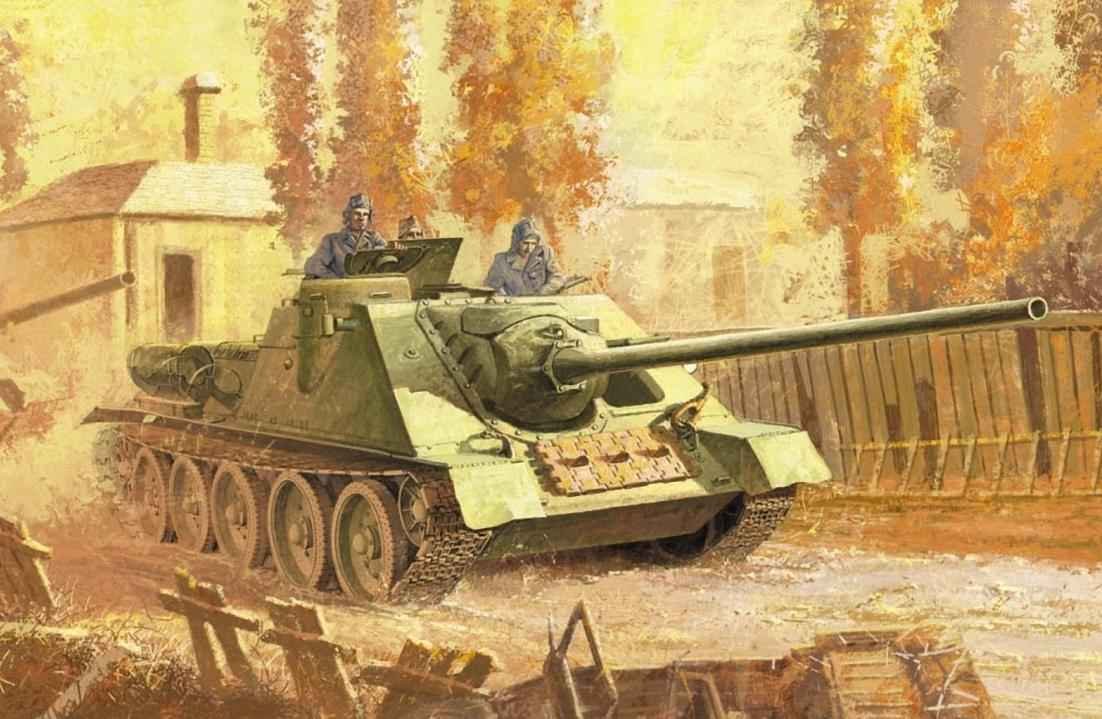
By mid-1944, it had become clear that the existing weapons available to counter the latest German tanks were no longer sufficient. The Red Army needed a significant increase in the firepower of its armored units.
| Type | Soviet self-propelled artillery gun |
| Combat Weight | 31.6 tons |
| Crew | 4 men |
| Armament | 1 × 100 mm D-10S gun |
| Ammunition | 34 rounds |
| Armor | 45–75 mm |
| Engine | V-2-34M 12-cylinder diesel engine, 520 hp |
| Maximum Speed | 50 km/h |
| Range | 310 km |
| Length | 9.45 m |
| Width | 3.00 m |
| Height | 2.25 m |
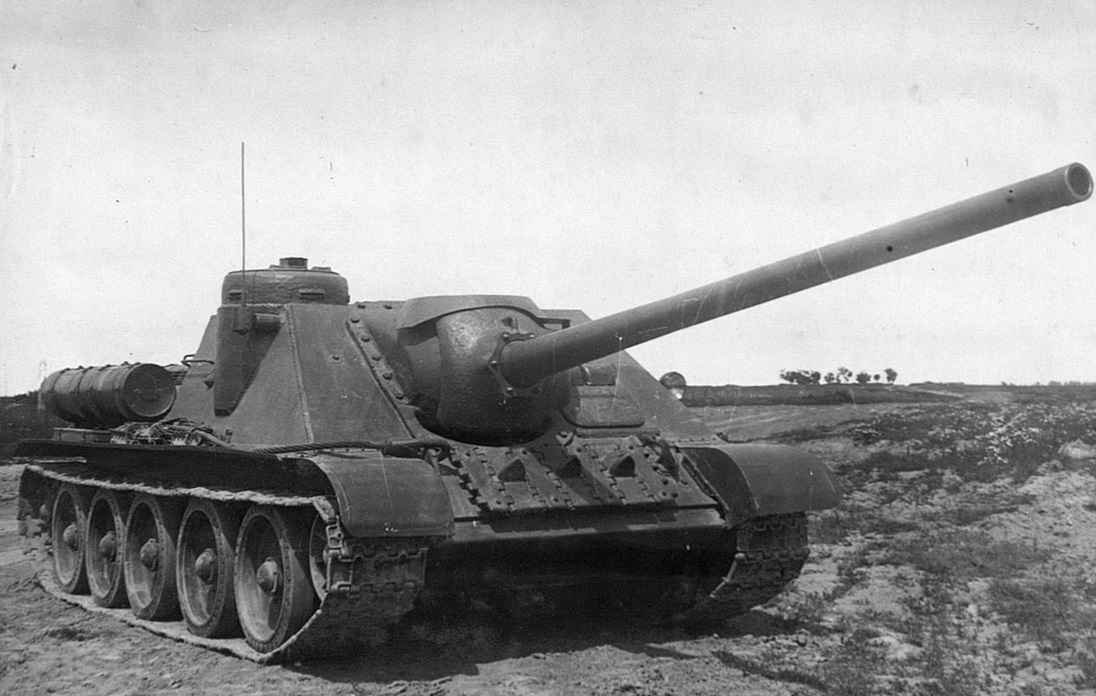
The SU-100 was a Soviet self-propelled artillery gun developed to provide the Red Army with greater firepower against the latest German armored vehicles. It was based on components of the T-34/85 tank and SU-85 self-propelled gun and was armed with the powerful 100 mm D-10S gun. :contentReference
The D-10S gave the SU-100 excellent anti-tank capabilities. Its armor-piercing projectile had a muzzle velocity of 895 m/s, while the vehicle carried 33 unitary rounds according to the detailed technical description. The frontal armor was increased from 45 to 75 mm compared with the SU-85. :
The SU-100 was officially adopted by the Red Army on July 3, 1944, and serial production began in September. From September 1944 through the third quarter of 1945, Uralmash produced 2,495 vehicles. Production continued until March 1946, with the source giving a total of 3,037 self-propelled guns produced during this period.
SU-100 units participated in the final battles of World War II. They were used in particularly large numbers against the German counteroffensive near Lake Balaton in Hungary in March 1945. After the war, the SU-100 remained in Soviet service until the late 1970s and was also operated by numerous countries in Europe, Asia, Africa and Latin America. :
SU-100Y, Self-Propelled Artillery Gun
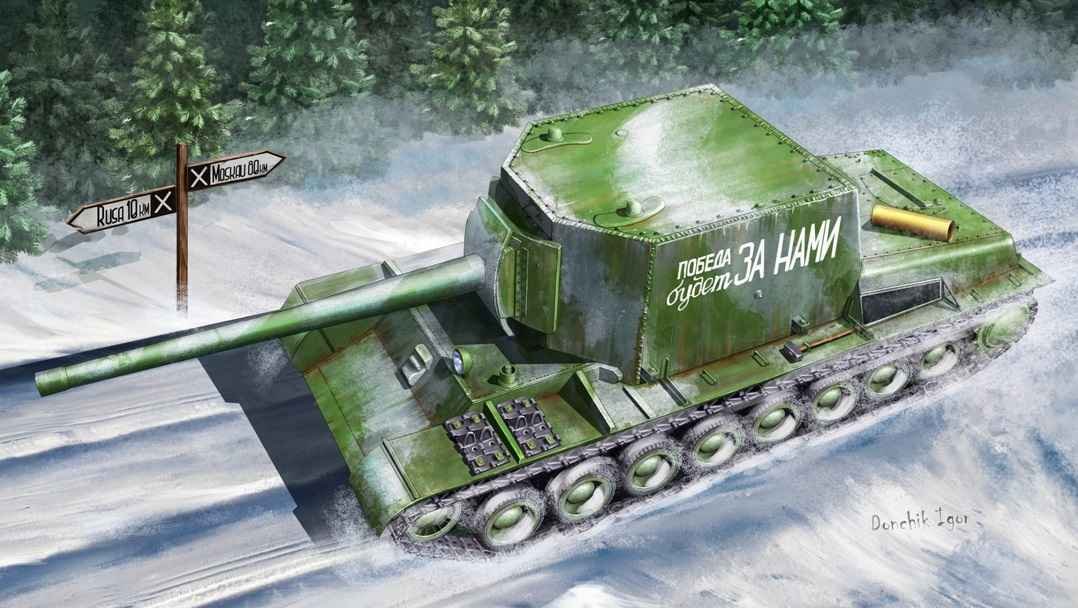
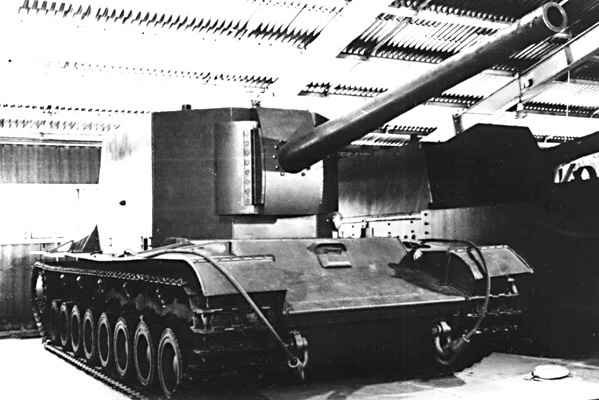
The SU-100Y was a Soviet enclosed self-propelled artillery gun developed on the chassis of the experimental T-100 heavy tank. Its armored hull and fighting compartment were welded from 60 mm armor plates and featured vertical walls.
| Type | Soviet experimental heavy self-propelled artillery gun |
| Combat Weight | 64 tons |
| Crew | 6 men |
| Armament | 1 × 130 mm B-13 gun, 3 × 7.62 mm DT machine guns |
| Ammunition | 30 × 130 mm rounds, 1,800 machine-gun rounds |
| Armor | 60 mm hull and superstructure, 20 mm roof and floor |
| Engine | GAM-34-BS 12-cylinder gasoline engine, 655 kW |
| Maximum Speed | 32 km/h |
| Range | 120 km |
| Length | 10.9 m |
| Width | 3.4 m |
| Height | 3.29 m |
| Ground Clearance | 455 mm |
The SU-100Y was a Soviet experimental heavy self-propelled artillery gun developed on the chassis of the T-100 heavy tank. Its hull and enclosed fighting compartment were welded from 60 mm armor plates. The vehicle had a combat weight of 64 tons and a crew of six.
Its main armament was a powerful 130 mm B-13 naval gun with an ammunition capacity of 30 rounds. Three 7.62 mm DT machine guns provided additional protection, with 1,800 rounds carried for them.
The SU-100Y was powered by a GAM-34-BS four-stroke, 12-cylinder V-type gasoline engine producing 655 kW. It could reach a maximum speed of 32 km/h on paved roads and approximately 12 km/h on secondary roads, with a range of about 120 km.
The vehicle was designed to destroy fortified firing positions and armored targets. Its combination of powerful armament, heavy armor and satisfactory mobility gave it considerable combat potential. However, its enormous weight and dimensions, as well as the configuration of its fighting compartment, negatively affected its overall combat characteristics.
The SU-100Y was used during the Soviet-Finnish War and, according to the source, later participated in fighting near Moscow in late 1941 and early 1942 together with two experimental SU-14 self-propelled guns as part of a separate heavy special-purpose unit.
SU-101 Self-Propelled Artillery Gun
Uralmash began work on solving this problem in the summer of 1944. By the end of the year, designer N.V. Kurin had developed a large number of preliminary designs for new self-propelled artillery vehicles using the chassis of all Soviet tanks that existed at the time.
| Type | Soviet experimental self-propelled artillery gun |
| Combat Weight | 34.1 tons |
| Crew | 4 men |
| Armament | 1 × 100 mm D-10S gun, 1 × 12.7 mm DShK machine gun, 1 × 7.62 mm DT machine gun |
| Ammunition | 35 rounds, 450 machine-gun rounds |
| Armor | Up to 120 mm |
| Engine | 500 hp diesel engine |
| Maximum Speed | 54 km/h |
| Range | 350 km |
| Length | 6.1 m |
| Width | 3.0 m |
| Height | 2.1 m |
| Ground Clearance | 400 mm |
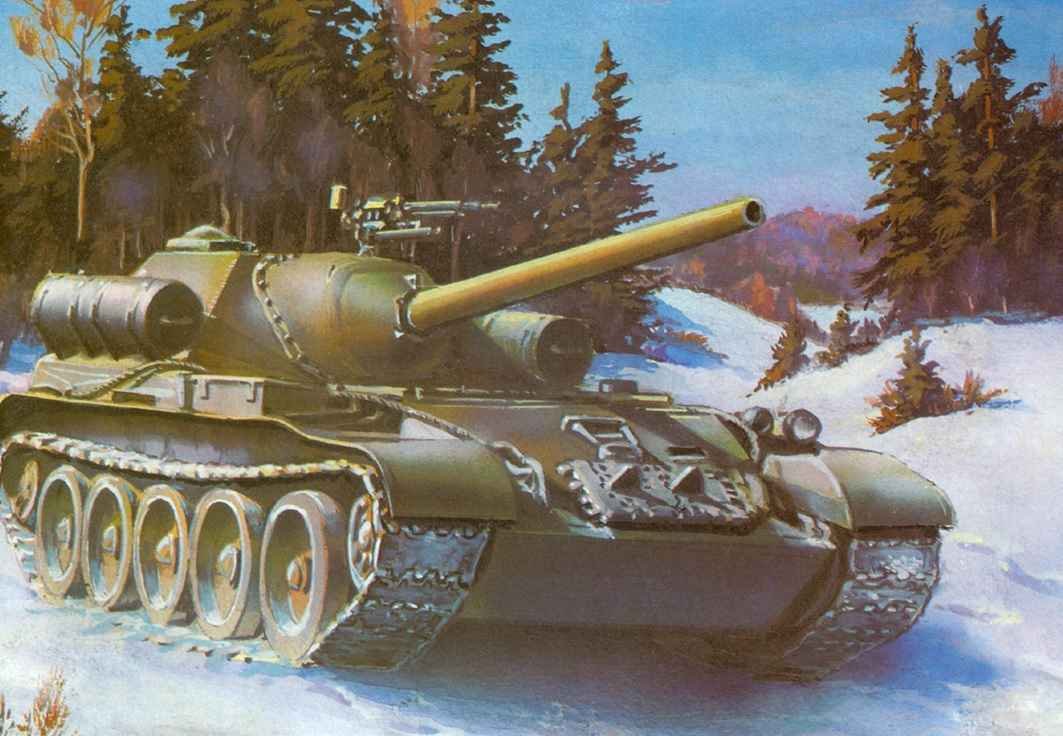
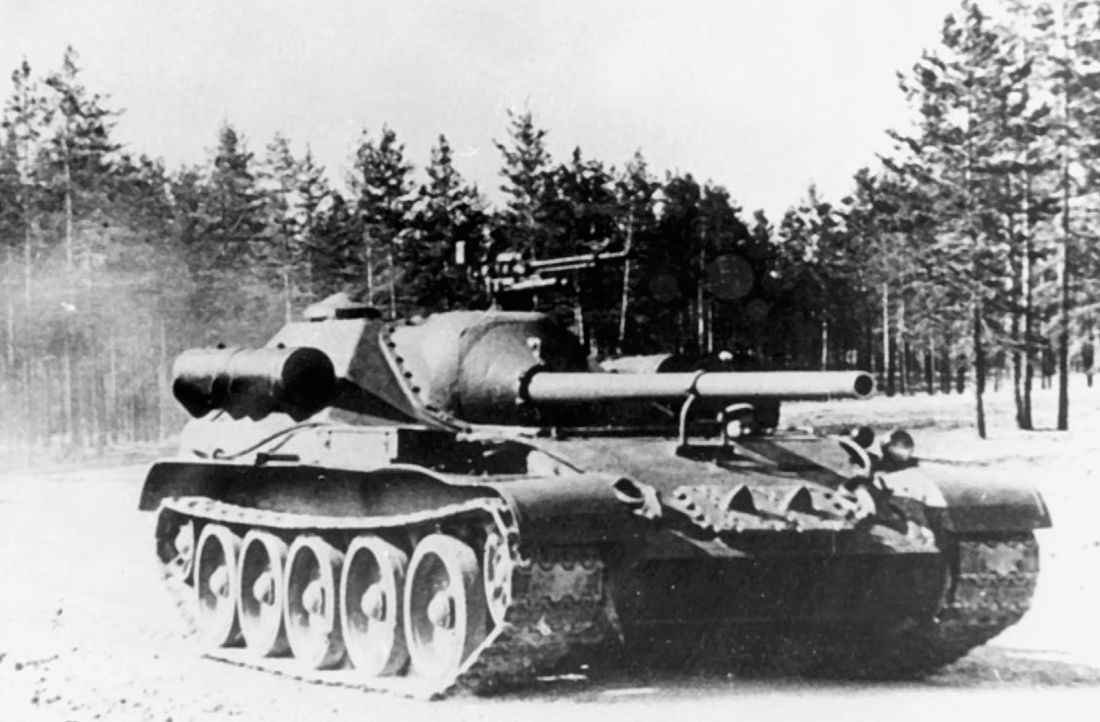
The SU-101 was an experimental Soviet self-propelled artillery gun developed by Uralmash during the final stage of World War II. The project was intended to overcome the limitations of earlier Soviet self-propelled guns with front-mounted fighting compartments. The new layout placed the fighting compartment at the rear and the engine and transmission at the front. :content
In March and April 1945, two prototypes were built. The SU-101 was armed with the 100 mm D-10S gun, while the related SU-102 carried a 122 mm D-25S gun. The SU-101 used components from the T-34-85 and T-44 medium tanks and was designed primarily as an anti-tank vehicle. :content
The SU-101 had a four-man crew and powerful armor protection. Its welded hull and superstructure used armor plates ranging from 15 to 120 mm in thickness. The front of the superstructure reached 120 mm and was strongly sloped, providing excellent protection for a vehicle with a combat weight of approximately 34 tons. :
Its main weapon was the 100 mm D-10S rifled gun, supplemented by a 12.7 mm DShK anti-aircraft machine gun. The gun had a muzzle velocity of 895 m/s and a rate of fire of approximately three rounds per minute. :
Factory testing of the SU-101 and SU-102 continued through the summer and autumn of 1945. The rear fighting-compartment layout made the vehicle more compact and improved maneuverability, while its armor protection was considered superior to that of other Soviet tanks and self-propelled guns tested at the time. However, the fighting compartment was cramped and excessive heat made conditions particularly difficult for the driver. :
With World War II over, the Soviet Army reducing in size, large numbers of existing self-propelled guns already available, and the new T-54 tank entering service with a 100 mm gun, further development of the SU-101 was discontinued. :
SU-12 Self-Propelled Artillery Gun
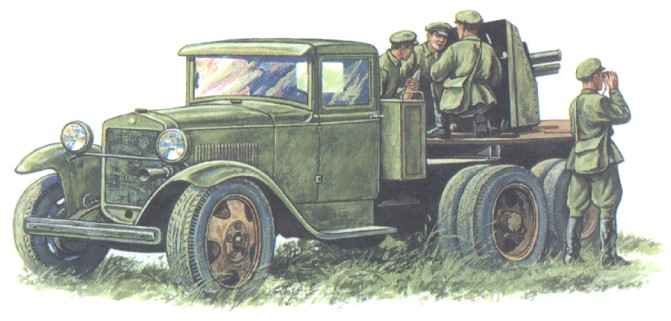
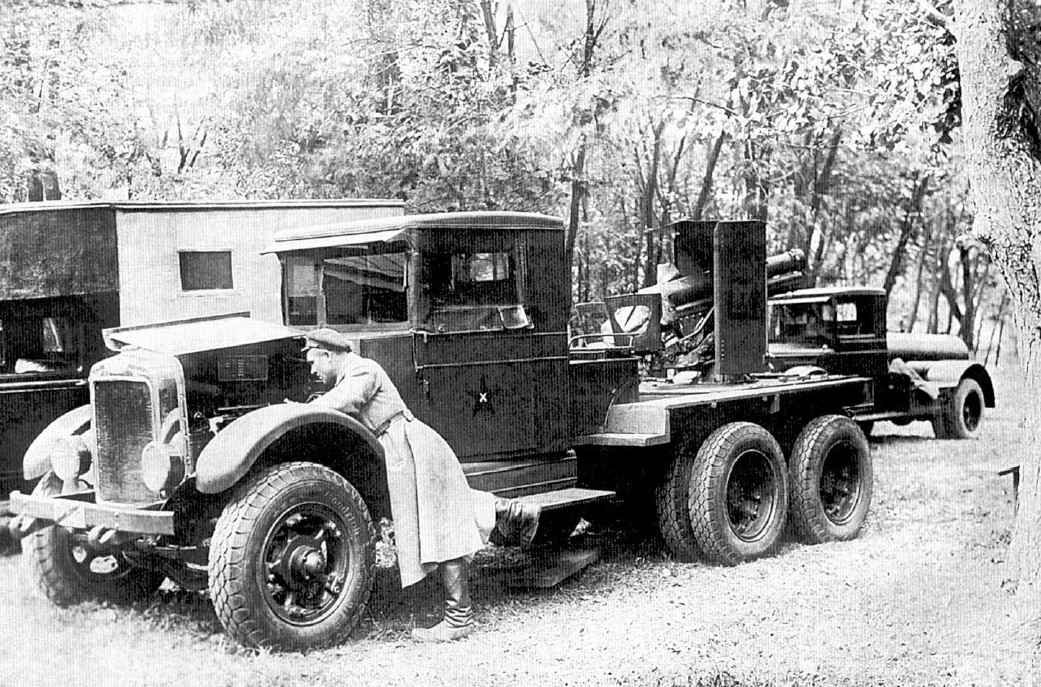
To convert the GAZ-AAA truck into the SU-12 self-propelled artillery gun, the designers had to make extensive modifications. These included installing a pedestal-mounted gun, an armored shield, a firing platform, a towing device, a spare-wheel mounting frame, a front deck, a deflector with a flap, ammunition boxes, and storage for tools and spare parts.
| Type | Soviet self-propelled artillery gun |
| Combat Weight | 3.7 tons |
| Crew | 4 men |
| Armament | 1 × 76.2 mm gun |
| Ammunition | 36 rounds |
| Muzzle Velocity | 380 m/s |
| Maximum Elevation | +25° |
| Maximum Depression | −5° |
| Maximum Speed | About 60 km/h |
| Length | 5.61 m |
| Width | 1.90 m |
| Height | 2.325 m |
The SU-12 was a Soviet self-propelled artillery gun based on the GAZ-AAA truck chassis. Converting the truck into an artillery vehicle required extensive modifications, including the installation of a pedestal-mounted gun, armored shield, firing platform, towing equipment, ammunition boxes and storage for tools and spare parts.
The gun crew was protected by a box-shaped shield welded from 4 mm steel plates. The front plate had a main opening for the moving part of the gun as well as two smaller observation openings. An additional 4 mm shield protected the main gun opening without restricting recoil or vertical aiming.
A reinforced platform served as the foundation for the gun mounting and also strengthened and extended the vehicle’s frame. A 2 mm steel deflector protected the rear wall of the driver’s cab from propellant gases during firing.
Two ammunition boxes were mounted near the deflector. Each carried 18 rounds, giving the SU-12 a total ammunition capacity of 36 rounds. The vehicle had a crew of four, including the driver.
The SU-12 proved to be a relatively mobile and effective means of providing fire support to mechanized units. However, operational experience demonstrated that tracked chassis were better suited for self-propelled artillery intended to accompany mechanized forces.
SU-122 Self-Propelled Artillery Gun
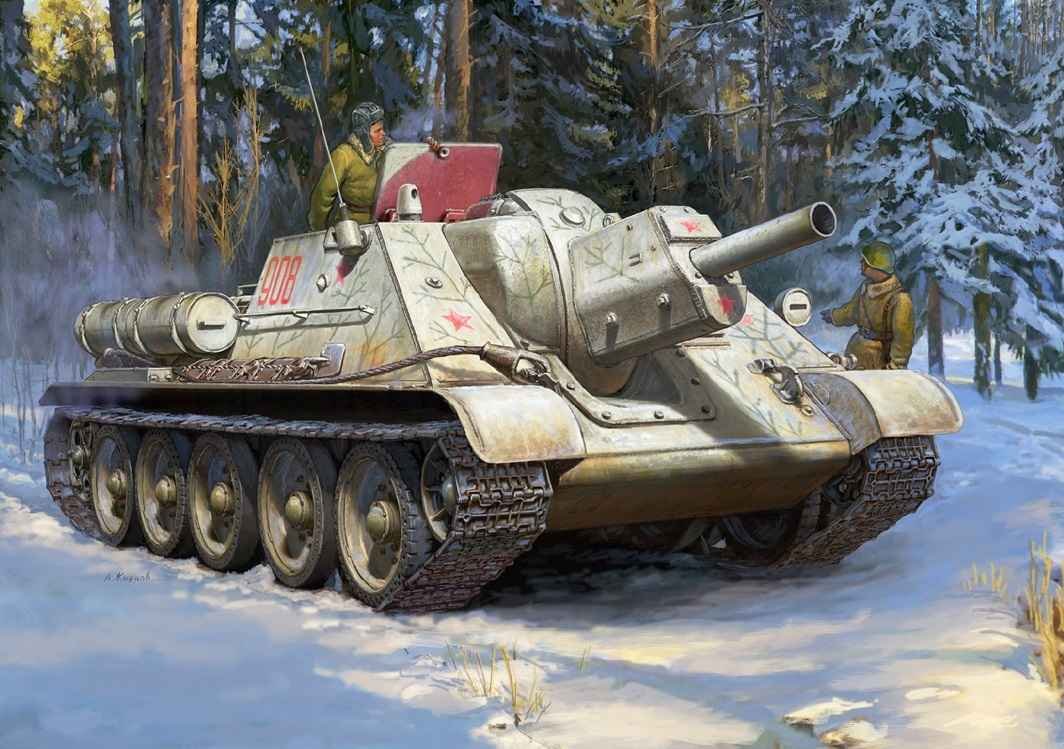
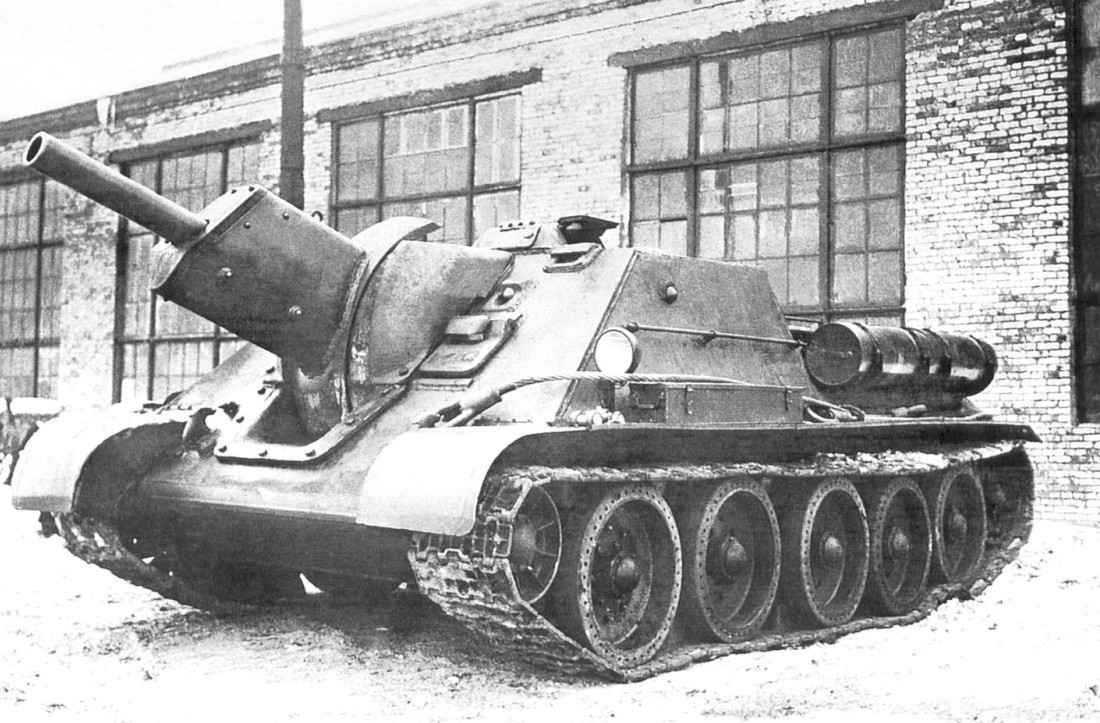
In October 1942, the State Defense Committee ordered the chassis of the T-34 medium tank to be used for the development of a new self-propelled artillery gun. The project was assigned to the design bureau of the Uralmash plant in Sverdlovsk.
| Type | Soviet self-propelled artillery gun |
| Combat Weight | 30.9 tons |
| Crew | 5 men |
| Armament | 1 × 122 mm M-30 howitzer |
| Ammunition | 40 rounds |
| Armor | Up to 75 mm |
| Engine | V-2 12-cylinder diesel engine, 500 hp |
| Maximum Speed | 55 km/h |
| Range | 150 km |
| Length | 6.95 m |
| Width | 3.0 m |
| Height | 2.24 m |
The success of German Sturmgeschütz assault guns attracted considerable interest from the Red Army. Assault guns were cheaper to manufacture than tanks because they did not require a rotating turret, while their design also made it possible to mount more powerful artillery weapons.
In October 1942, the State Defense Committee ordered the development of a new self-propelled artillery vehicle using the chassis of the T-34 medium tank. The project was assigned to the Uralmash design bureau in Sverdlovsk under the direction of designers L. Gorlitsky and E. Silnishchikov.
The new vehicle was initially designated SU-35. It combined the T-34 chassis with a 122 mm M-30 Model 1939 howitzer installed inside a fully enclosed armored fighting compartment. The engine, transmission and running gear were largely retained from the T-34.
The SU-122 had a crew of five. The driver was positioned at the front to the left of the howitzer. Inside the fighting compartment, the commander was positioned to the right of the gun, the gunner to the left, and two loaders occupied the rear section.
Following successful field trials, limited production was authorized in December 1942 and the SU-35 was soon redesignated SU-122. The first vehicles reached combat units in early 1943 and were used primarily to provide powerful artillery support during offensive operations.
The combination of good armor protection and the powerful 122 mm howitzer made the SU-122 a valuable fire-support vehicle. It was capable of engaging enemy fortifications, defensive positions and armored vehicles while maintaining mobility comparable to the T-34 on which it was based.
SU-14 Self-Propelled Artillery Gun
On September 17, 1931, Spetsmashtrest was tasked with developing mechanized systems for heavy and special-power artillery. In particular, it was ordered to submit designs for the chassis of a “self-propelled corps triplex” to the Artillery Directorate by May 1, 1932
| Type | Soviet heavy self-propelled artillery gun |
| Combat Weight | 47.06 tons |
| Crew | 7 men |
| Armament | 1 × 203 mm B-4 Model 1931 howitzer, 3 × 7.62 mm DT machine guns |
| Ammunition | 8 rounds, 1,800 machine-gun cartridges |
| Armor | 10–20 mm |
| Engine | M-17 gasoline engine, 500 kW |
| Maximum Speed | 27.3 km/h |
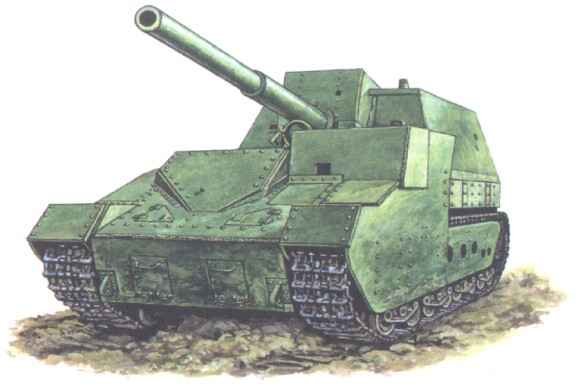
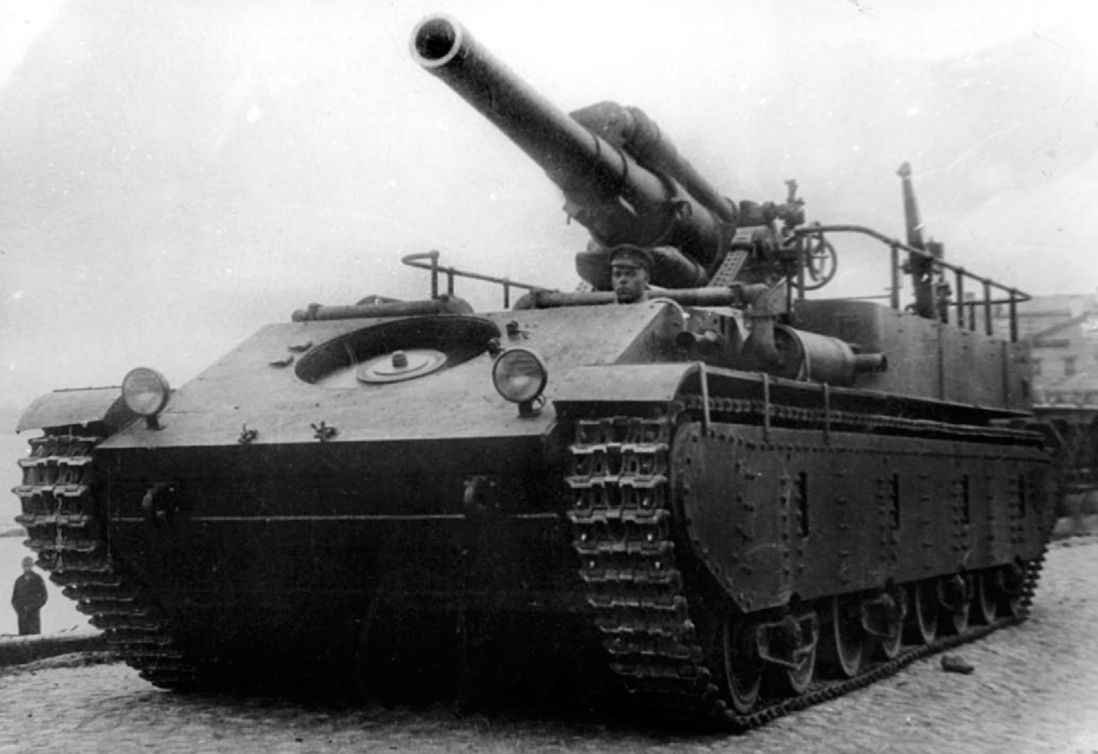
The development of the SU-14 began as part of an ambitious Soviet program to mechanize heavy and special-power artillery. On September 17, 1931, Spetsmashtrest was instructed to develop self-propelled chassis capable of carrying some of the heaviest artillery weapons then available to the Red Army.
In 1933, under the direction of P.I. Syachintov, work began on a self-propelled artillery vehicle intended for Heavy Artillery of Special Purpose. The first prototype, designated SU-14, was completed in July 1934.
The SU-14 was a massive tracked vehicle with a combat weight of more than 47 tons. Its hull was constructed from rolled armor plates between 10 and 20 mm thick. The engine and transmission were located at the front, while the main artillery weapon and most of the crew were positioned on the large rear fighting platform.
The original SU-14 was armed with the powerful 203 mm B-4 Model 1931 howitzer. The weapon had a maximum firing range of approximately 18 km and a rate of fire of about one round every three to four minutes. Three 7.62 mm DT machine guns provided additional protection.
Because a 203 mm projectile weighed approximately 114 kg, loading the gun manually was extremely difficult. Two 200 kg capacity winches were therefore installed at the rear of the vehicle to assist the crew in handling ammunition. Only eight artillery rounds were carried aboard the vehicle.
During firing, the SU-14 rested on two large stabilizing spades. These could be lowered using hydraulic cylinders powered by an electric pump or operated manually. Despite these measures, tests showed that the vehicle rocked considerably when the main gun was fired.
Trials also revealed numerous mechanical problems. Track failures, transmission problems and engine overheating repeatedly interrupted testing. The ammunition loading system was cumbersome, while the low rate of fire further reduced the vehicle’s combat effectiveness.
Experience gained from the original SU-14 resulted in the improved SU-14-1 prototype, completed in early 1936. It received improvements to the transmission, main clutch, brakes and final drives, as well as a more powerful M-17F engine. The improved vehicle could reach approximately 30 km/h.
Following firing trials, the original 203 mm B-4 howitzers were replaced by more powerful long-range 152 mm guns. The SU-14-1 eventually received the 152 mm Br-2 gun and became known as the SU-14-Br-2.
Plans existed to manufacture an initial batch of five SU-14-Br-2 vehicles in 1937, followed by serial production from 1938. However, development was discontinued after the arrest of chief designer P.I. Syachintov in 1937.
The two existing vehicles were returned to attention during the Soviet-Finnish War. In early 1940 they received substantial additional armor intended to allow them to approach fortified positions and destroy bunkers with direct fire. The additional armor increased their weight to approximately 64 tons and significantly reduced mobility.
In the autumn of 1941, during the defense of Moscow, the two SU-14 vehicles were used together with the experimental SU-100Y as part of a separate heavy special-purpose unit, firing from concealed positions against advancing German forces.
One armored SU-14-1 armed with the 152 mm Br-2 gun survived, while the original SU-14 was scrapped during the 1960s.
SU-152 Self-Propelled Artillery Gun
In 1942, work began in the Soviet Union on the development of a heavy self-propelled artillery gun intended primarily for destroying fortified positions and bunkers. However, the early projects failed to provide a satisfactory solution.
| Type | Soviet heavy self-propelled artillery gun |
| Combat Weight | 45.5 tons |
| Crew | 5 men |
| Armament | 1 × 152 mm ML-20S gun-howitzer |
| Ammunition | 20 rounds |
| Rate of Fire | 2 rounds per minute |
| Projectile Weight | 43.5 kg |
| Muzzle Velocity | 600 m/s |
| Front Armor | 70 mm |
| Gun Mantlet Armor | 120 mm |
| Side Armor | 60 mm |
| Engine Power | 600 hp |
| Maximum Speed | 43 km/h |
| Range | 330 km |
| Overall Length | 8.95 m |
| Hull Length | 6.75 m |
| Width | 3.25 m |
| Height | 2.45 m |
| Ground Clearance | 440 mm |
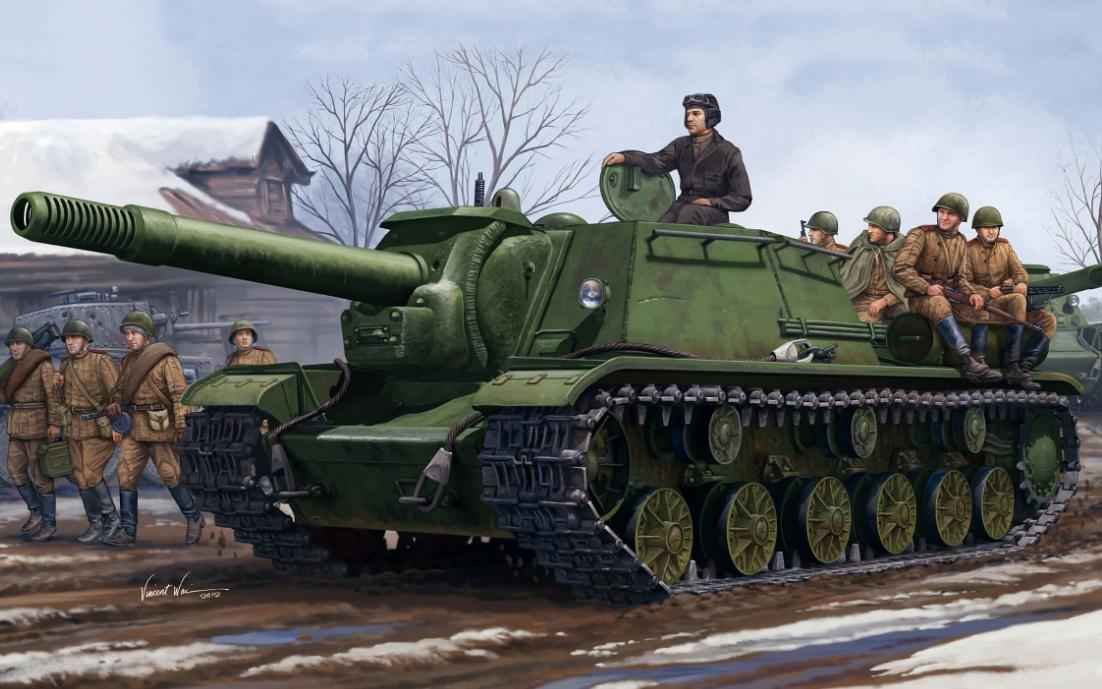
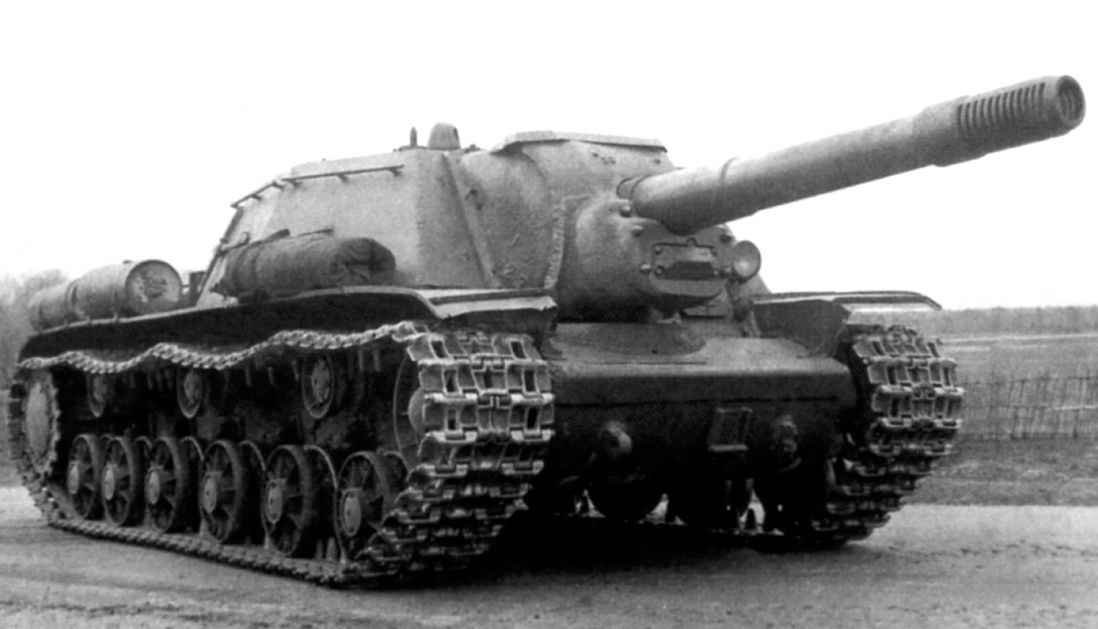
Work on a Soviet heavy self-propelled artillery gun intended primarily for destroying fortified positions began in 1942. Early attempts failed to produce a satisfactory vehicle. In the winter of 1942–1943, information about the appearance of the new German Tiger heavy tank added urgency to the project.
On January 4, 1943, the State Defense Committee ordered the rapid development and production of a 152 mm self-propelled artillery vehicle at the Chelyabinsk “Tankograd” plant. The chassis of the KV-1S heavy tank was selected as its basis, and only 25 days were allocated for development.
The design team was officially headed by L.S. Troyanov. Other prominent Soviet designers, including Zh.Ya. Kotin, N.L. Dukhov and F.F. Petrov, also participated in the project under the general supervision of People’s Commissar of Armaments D.F. Ustinov.
Development proceeded extremely quickly. The first prototype was completed on January 25, 1943. Trials were conducted at the Chebarkul proving ground and completed on February 7. On February 14, 1943, the State Defense Committee officially accepted the SU-152 for service.
The SU-152 was based on the KV-1S chassis and armed with the powerful 152 mm ML-20S gun-howitzer. Its projectile weighed approximately 43.5 kg and had a muzzle velocity of about 600 m/s. The vehicle carried 20 rounds and had a practical rate of fire of approximately two rounds per minute.
The first SU-152s entered combat during the Battle of Kursk in July 1943, where they encountered German Tiger heavy tanks and Ferdinand self-propelled guns. The enormous destructive power of the 152 mm ammunition made the SU-152 a dangerous opponent even for heavily armored vehicles.
A direct hit from a large 152 mm projectile could cause severe structural damage to an enemy tank, while high-explosive shells were also highly effective against vehicles, fortifications and defensive positions.
The SU-152 consequently acquired the unofficial nickname “Zveroboy” (“Beast Killer”), associated with its ability to fight German armored vehicles such as the Tiger and Panther.
Despite its powerful armament, the SU-152 remained primarily a heavy assault gun designed to provide direct artillery support and destroy fortified positions. Its combination of heavy armor and a large-caliber weapon made it one of the most formidable Soviet self-propelled artillery vehicles of 1943.
Production continued until December 1943, when the SU-152 was replaced by a newer design based on the IS heavy tank chassis. More than 650 SU-152 self-propelled guns were produced.
SU-26 Self-Propelled Artillery Gun
In an effort to develop a vehicle with more powerful artillery armament, by the mid-1930s Soviet designers had implemented several concepts for mounting a 76.2 mm gun on the chassis of the T-26 light tank.
| Type | Soviet self-propelled artillery gun |
| Combat Weight | 12 tons |
| Crew | 4 men |
| Armament | 1 × 76.2 mm Model 1927 gun |
| Ammunition | 35 rounds |
| Front Hull Armor | 16 mm |
| Side Armor | 10 mm |
| Rear Armor | 10 mm |
| Gun Shield Armor | 20 mm |
| Engine | T-26 4-cylinder gasoline engine, 90 hp |
| Fuel Capacity | 192 liters |
| Range | 100 km |
| Length | 4.62 m |
| Ground Clearance | 380 mm |
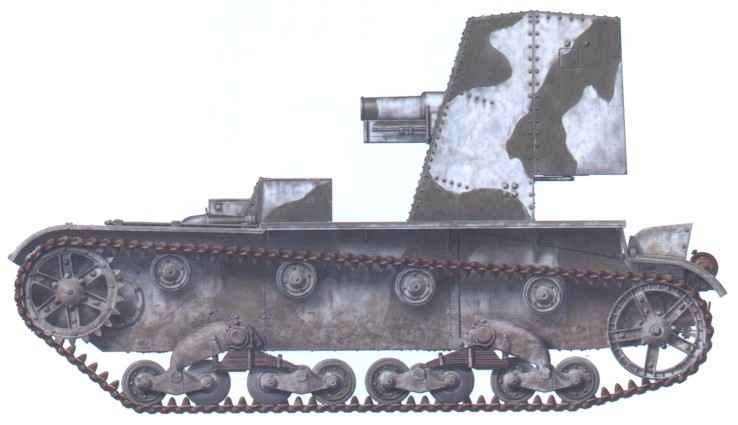
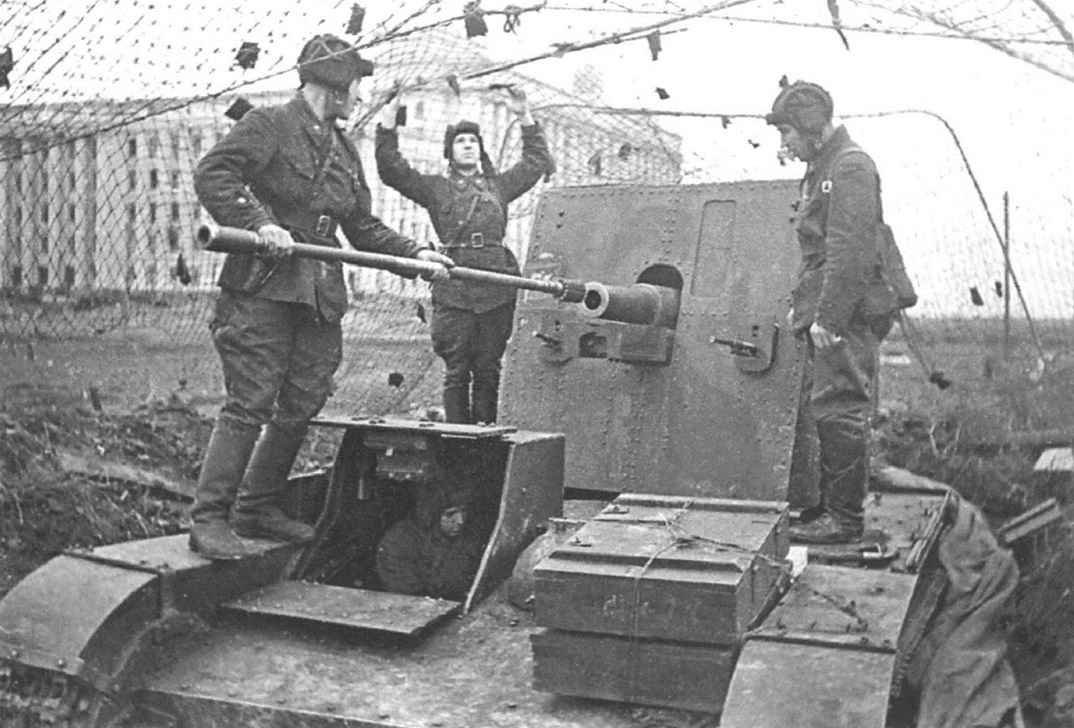
Soon after the introduction of the Soviet T-26 light tank, the military recognized the limitations of its armament and protection. By the mid-1930s, Soviet designers were experimenting with mounting more powerful 76.2 mm artillery weapons on the T-26 chassis. These experiments resulted in several self-propelled artillery projects, including the SU-1, AT-1, SU-5 and SU-6, although none entered large-scale production.
When the German invasion of the Soviet Union began in 1941, large numbers of damaged T-26 tanks were recovered from the battlefield and sent to repair facilities. The T-26 was already considered obsolete as a frontline tank, so surviving and repairable chassis offered a useful basis for specialized vehicles, including self-propelled artillery guns.
In the autumn of 1941, self-propelled guns based on repaired T-26 chassis were produced in besieged Leningrad. The tank turret was removed and replaced by an artillery mounting protected by an armored shield. Vehicles could be fitted with either a 76.2 mm Model 1927 gun or a 37 mm anti-tank gun.
The 76.2 mm weapon was installed on a mounting that provided a wide field of fire, while the gun crew received limited protection from the armored shield. Different historical sources refer to these vehicles by several designations, including SU-26, SU-76P, T-26-SU and SU-T-26.
The SU-26 retained much of the original T-26 running gear. Its suspension consisted of eight road wheels, four return rollers and a steel track on each side. Power was provided by a four-cylinder T-26 gasoline engine producing approximately 90 hp.
The vehicle carried 35 rounds for its 76.2 mm gun and had a crew of four. Armor protection remained relatively light, with 16 mm on the front of the hull, 10 mm on the sides and rear, and approximately 20 mm protecting the gun position.
Only a small number of these improvised self-propelled guns were produced. According to the available information, approximately 14 vehicles were converted, with most believed to have been armed with 76.2 mm guns and a smaller number with 37 mm weapons.
SU-26 self-propelled guns saw combat on the Leningrad Front. On February 20, 1942, vehicles serving with the 124th Tank Brigade fought German forces near Vinyagolovo, where two SU-26s were lost.
T-26-based self-propelled guns also served with the 220th Tank Brigade. Several remained in service for an unusually long period and reportedly continued to participate in combat operations until the winter of 1944.
In early 1943, the designation SU-76P (“Regimental”) began to be used for these vehicles to avoid confusion with the new mass-produced SU-76 self-propelled gun.
SU-31 / SU-32 Self-Propelled Anti-Aircraft Gun
The first SU-31 prototype was completed in June 1942, and initial running trials were conducted shortly afterward. However, the proposed use of the 76 mm ZiS-5 tank gun was not approved, and development continued in a different direction.
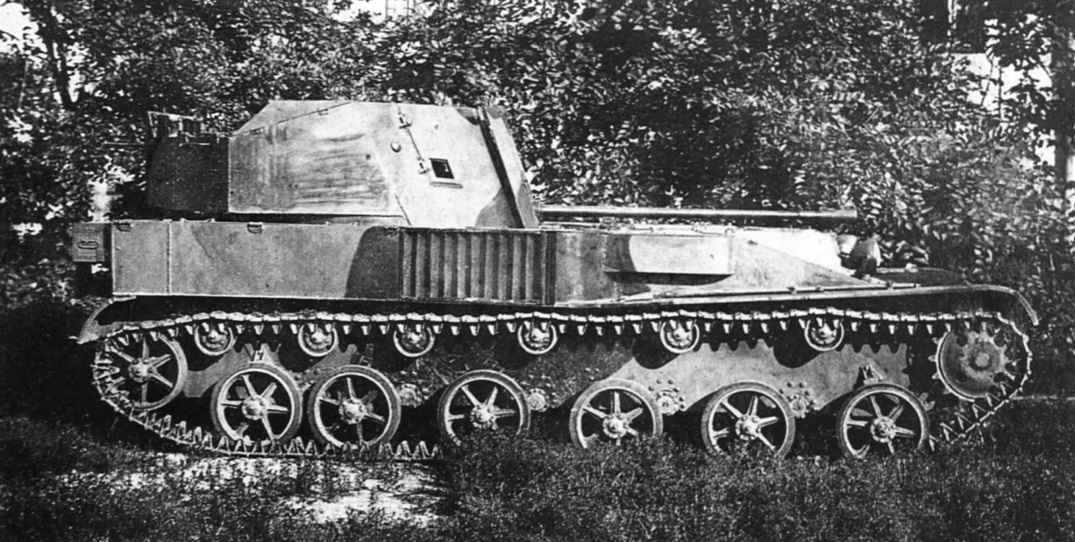
| Type | Soviet experimental self-propelled anti-aircraft gun |
| Development Year | 1942 |
| SU-31 Armament | 1 × 37 mm 61-K Model 1939 anti-aircraft gun, 1 × 7.62 mm DT machine gun |
| SU-32 Armament | 1 × 76.2 mm ZiS-3 gun, 1 × 7.62 mm DT machine gun |
| SU-32 Ammunition | 60 rounds |
| SU-31 Chassis | Modified T-60 components, 6 road wheels per side |
| SU-32 Chassis | T-70 components |
| SU-31 Powerplant | 2 × GAZ-202 engines |
| SU-32 Powerplant | GAZ-203 engine |
| SU-31 Estimated Combat Weight | 9.7 tons |
| SU-32 Estimated Combat Weight | 10.5 tons |
| Prototype Construction | 15 mm non-armored steel |
Development of Soviet light self-propelled artillery vehicles at Factory No. 37 officially began in April 1942. The program included both assault guns and self-propelled anti-aircraft vehicles. Two anti-aircraft armament options were considered: the 25 mm 72-K Model 1940 automatic gun and the 37 mm 61-K Model 1939 automatic anti-aircraft gun.
The first design, known as “Chassis 31” or “Object 31,” was developed under engineer K.E. Istomin. It was largely based on components of the T-60 light tank and used two GAZ-202 engines mounted in parallel. The cooling system, transmissions and final drives were also derived from the T-60.
The running gear was modified considerably. The number of road wheels was increased from four to six per side, while longer torsion bars were installed. The vehicle was designed so that it could continue moving even if only one of its two engines remained operational.
Several armament configurations were considered for Object 31. The anti-aircraft versions could carry either the 25 mm 72-K or 37 mm 61-K automatic gun, while an assault-gun version with the 76.2 mm ZiS-3 was also proposed. A 7.62 mm DT machine gun was intended to provide additional defensive armament.
A second design, “Chassis 32” or “Object 32,” was developed under engineer N.N. Efimov using components of the T-70 light tank. It was intended to use the GAZ-203 powerplant together with the T-70 transmission, cooling system, final drives and running gear.
The SU-31 prototype was completed in June 1942 and soon began its first running trials. Its weapon installation was developed by UZTM under the direction of L.I. Gorlitsky. The SU-31 ultimately became an experimental self-propelled anti-aircraft vehicle armed with the 37 mm 61-K automatic anti-aircraft gun.
The SU-32 prototype followed in July 1942. It was constructed from 15 mm non-armored steel and incorporated running gear from the T-70. Its fighting compartment was enlarged compared with the earlier design, allowing the ammunition supply to be increased to 60 rounds.
The SU-32 was armed with a 76.2 mm ZiS-3 gun mounted on a pedestal together with elements of its original carriage. A 7.62 mm DT machine gun was installed in a ball mounting to the right of the main gun.
Official trials of the SU-31 and SU-32 began at the NIBT proving ground in Kubinka on August 21, 1942. Demonstration firing had already taken place at the Sofrino artillery range on August 18.
Between August 21 and September 3, the SU-31 covered 630 km while the SU-32 completed 524 km. A total of 490 rounds were fired from the SU-31’s 37 mm 61-K gun, while the SU-32 fired 205 rounds from its ZiS-3.
Testing revealed several problems. Both vehicles suffered frequent track failures, while the SU-32 experienced serious engine cooling problems. The ammunition arrangement of the SU-32 was also inconvenient and reduced its practical rate of fire. At an elevation of 25 degrees, the gun shield obstructed the panoramic sight, making aiming impossible.
Further development at Factory No. 37 ended after the plant was reorganized as a branch of Uralmash and ordered to begin production of the T-34. Development work on light self-propelled artillery was transferred to Factory No. 38.
The SU-32 trials were subsequently discontinued, but development experience gained from the SU-31 remained important. Comparative mobility tests between the SU-31 and T-70 were conducted in September 1942 over swampy terrain. Their cross-country performance proved approximately equal, and the SU-31 layout was selected as the basis for further development of Soviet light self-propelled artillery vehicles.
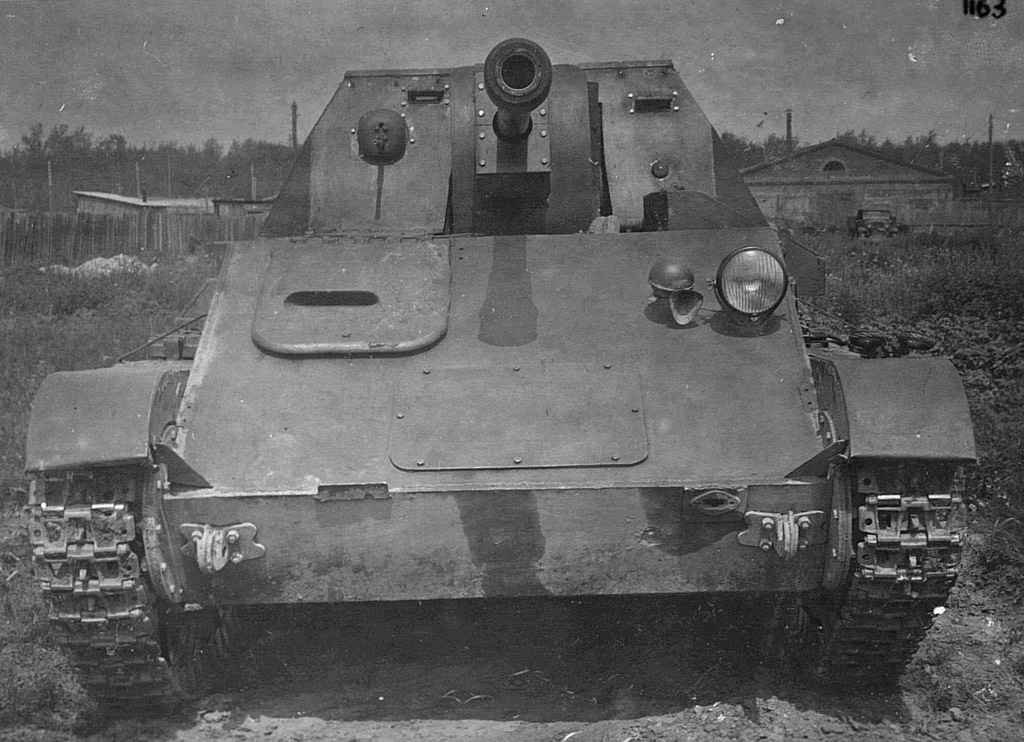
SU-37, Self-Propelled Artillery Gun
In 1933, the Soviet Union began serial production of the T-37 amphibious tank, which was armed with a single machine gun. Naturally, the military wanted to increase its firepower by installing a 45 mm gun.
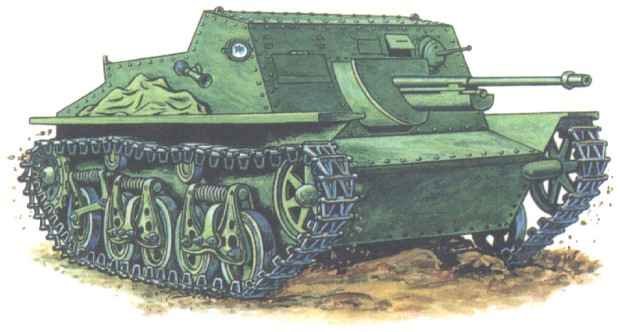
| Type | Soviet experimental self-propelled artillery gun |
| Combat Weight | 4.6 tons |
| Crew | 3 men |
| Armament | 1 × 45 mm Model 1932 gun, 2 × 7.62 mm DT machine guns |
| Armor | 4–8 mm |
| Engine | GAZ-AA, 4-cylinder gasoline engine |
| Engine Power | 40 hp at 2,200 rpm |
| Maximum Road Speed | 40 km/h |
| Maximum Speed on Water | Up to 6 km/h |
| Operational Range | 230 km |
| Ground Pressure | 0.55 kg/cm² |
| Maximum Gradient | 35° |
| Maximum Side Slope | 35° |
| Trench Crossing | 1.4 m |
| Vertical Obstacle | 0.5 m |
The SU-37 was an experimental Soviet self-propelled artillery vehicle developed after the introduction of the T-37 amphibious tank. The standard T-37 was armed with only a machine gun, leading to attempts to substantially increase i
ufficient space for the gun and its crew.
The additional weight required modifications to the running gear. An extra road wheel was added on each side, while the transmission was moved to the rear of the vehicle. A 7.62 mm DT machine gun was installed in the frontal armor for protection against enemy infantry and was operated by the vehicle commander.
The resulting prototype received the designation SU-37. It had a combat weight of 4.6 tons and a crew of three. Power was provided by a 40 hp GAZ-AA gasoline engine, giving the vehicle a maximum road speed of 40 km/h. As an amphibious vehicle, it could also reach speeds of up to 6 km/h on water.
A similar self-propelled artillery vehicle designated SU-45 was later developed using the T-38 amphibious tank chassis. However, self-propelled guns with fixed fighting compartments were not highly regarded by the Red Army at the time, and further development of the SU-37 and SU-45 was eventually discontinued.
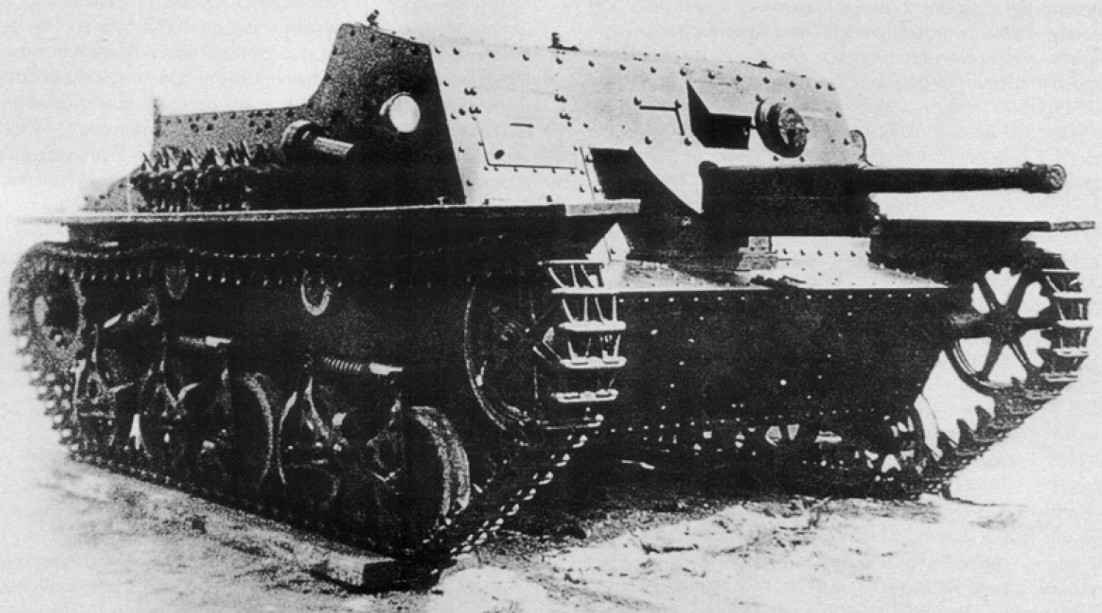
SU-5, Self-Propelled Artillery Gun
Following the trials of the AT-1 infantry self-propelled gun, which demonstrated the combat effectiveness of this new type of artillery, work began in the Soviet Union on the so-called “small triplex.”
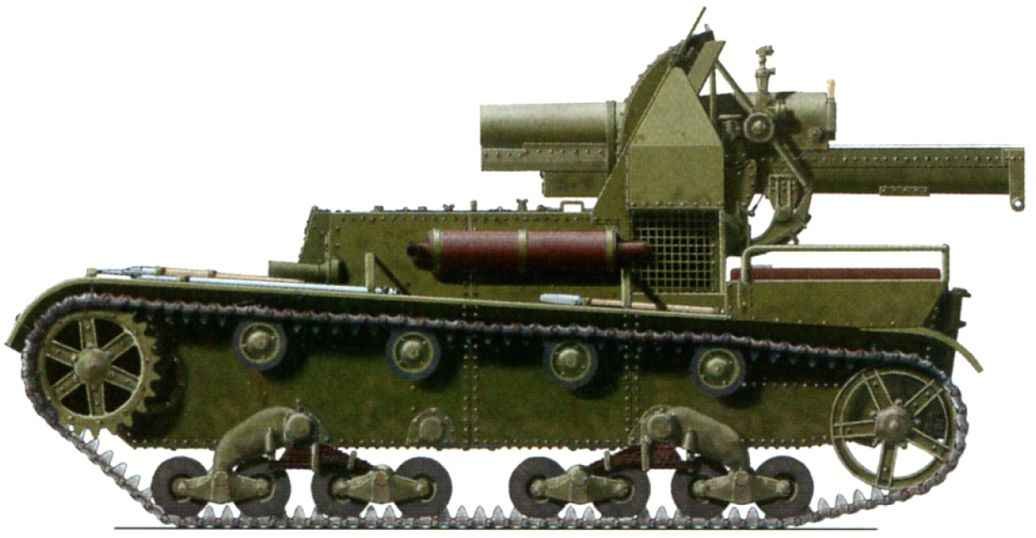
| Type | Soviet self-propelled artillery gun |
| Combat Weight | 10.2 tons |
| Crew | 5 men |
| Armament | 1 × 122 mm Model 1910/1930 howitzer |
| Ammunition | 8 rounds |
| Engine | T-26 gasoline engine |
| Engine Power | 90 hp |
| Maximum Speed | 30 km/h |
| Operational Range | 170 km |
| Length | 4.84 m |
| Height | 2.35–2.56 m |
| Ground Clearance | 380 mm |
| Frontal Armor | 15 mm |
| Side Armor | 15 mm |
Following the trials of the AT-1 infantry self-propelled gun, work began in the Soviet Union on the so-called “small triplex.” The concept used a universal gun mounting with folding supports based on the T-26 infantry tank chassis.
Three different artillery systems were developed for this chassis: the SU-5-1 with a 76 mm Model 1902/30 gun, the SU-5-2 with a 122 mm Model 1910/30 howitzer, and the SU-5-3 with a 152 mm Model 1931 mortar.
The highly mobile vehicles of the “small triplex” were intended to significantly increase the firepower of advancing Soviet forces. Since they were expected to operate some distance behind the first line of tanks, defensive machine-gun armament was not provided.
The SU-5 differed considerably from the earlier AT-1. Its fighting compartment was moved from the center to the rear of the vehicle, while a fully enclosed armored superstructure was abandoned to provide the artillery crew with better visibility and working conditions.
The SU-5-2 was armed with a 122 mm Model 1910/1930 howitzer and carried eight rounds. The vehicle had a crew of five and was powered by a 90 hp T-26 gasoline engine, giving it a maximum road speed of 30 km/h and an operational range of approximately 170 km.
An experimental batch of 15 SU-5 vehicles successfully completed proving-ground and military trials. However, the program did not progress to large-scale serial production, and the Red Army did not receive a mass-produced self-propelled artillery system of this type before the Second World War.
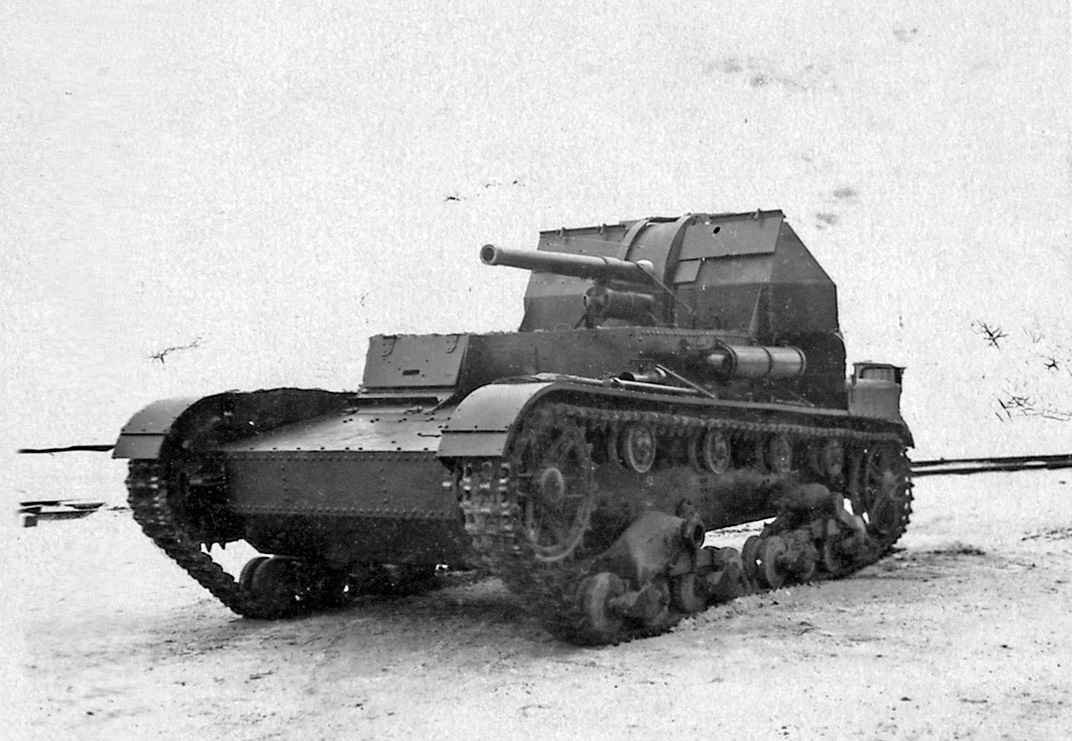
SU-6, Self-Propelled Anti-Aircraft Gun
One of the first Soviet self-propelled anti-aircraft guns developed during the pre-war period. The SU-6 was developed alongside the “Small Triplex” self-propelled artillery program.
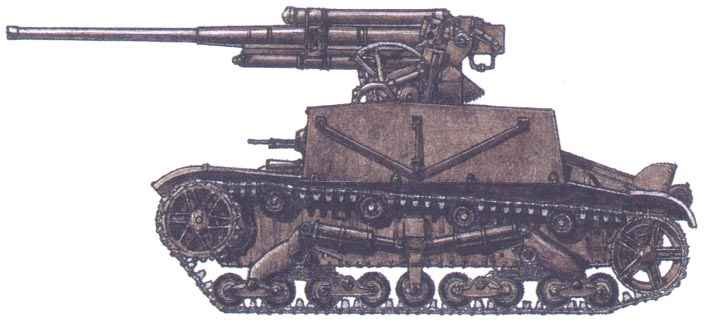
| Type | Soviet experimental self-propelled anti-aircraft gun |
| Combat Weight | 11 tons |
| Crew | 7 men |
| Armament | 1 × 76 mm Model 1931 anti-aircraft gun |
| Ammunition | 48 rounds |
| Rate of Fire | 20 rounds/min |
| Projectile Weight | 6.23 kg |
| Muzzle Velocity | 820 m/s |
| Maximum Vertical Range | 10 km |
| Maximum Horizontal Range | 16 km |
The SU-6 was an experimental Soviet light self-propelled anti-aircraft gun developed in 1935. It was one of the first Soviet self-propelled anti-aircraft systems created during the pre-war period and was developed alongside the “Small Triplex” artillery program.
The vehicle was intended primarily to provide mobile anti-aircraft protection for mechanized troops. It was also considered for use with cavalry and other combined-arms formations.
The SU-6 was armed with a 76 mm Model 1931 anti-aircraft gun. Its ammunition capacity was 48 rounds, while the gun could achieve a rate of fire of approximately 20 rounds per minute. The 6.23 kg projectile had a muzzle velocity of 820 m/s.
The anti-aircraft gun had a vertical firing range of approximately 10 km and a maximum horizontal range of 16 km. The vehicle had a combat weight of 11 tons and was operated by a crew of seven.
To improve firing accuracy, the suspension was equipped with a special mechanism that could disable its elastic elements and provide a more stable firing platform. However, the vehicle placed excessive loads on its running gear, and the SU-6 was ultimately not accepted for service.
In 1937, another self-propelled anti-aircraft gun was developed on the T-26 tank chassis, this time armed with a 37 mm Model 1937 automatic anti-aircraft gun. This vehicle was also not accepted for service.
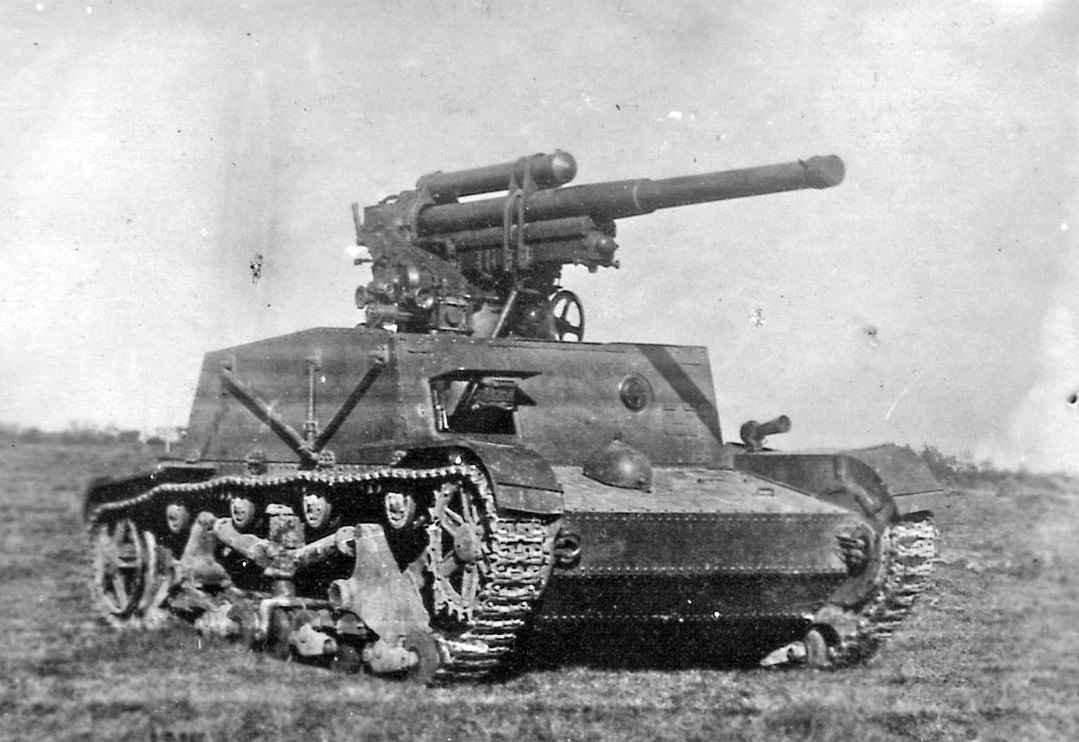
SU-76, Self-Propelled Artillery Gun
The first batch of 25 SU-76 self-propelled guns was completed by January 1, 1943, and sent to the self-propelled artillery training center.
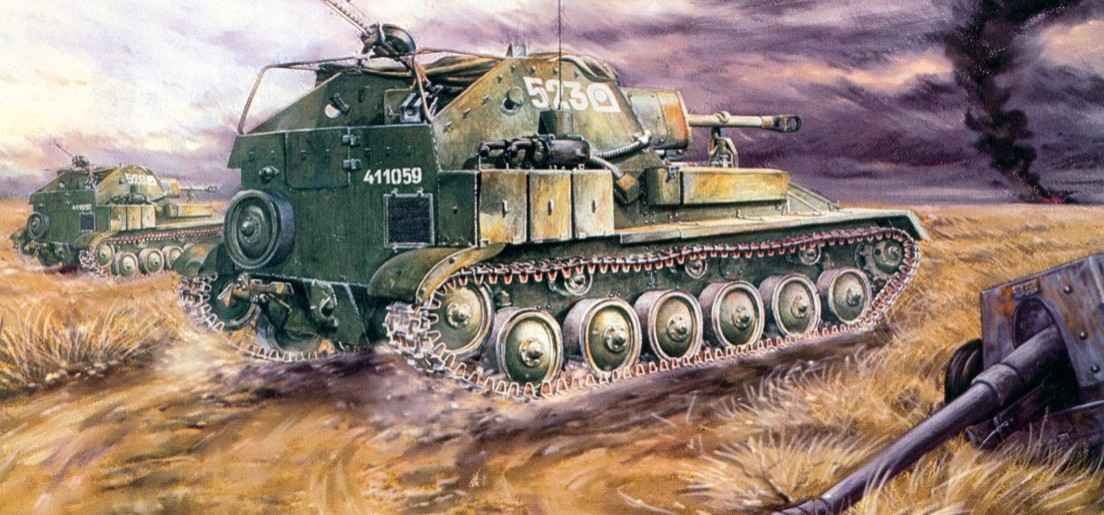
| Type | Soviet light self-propelled artillery gun |
| Combat Weight | 10.6 tons |
| Crew | 5 men |
| Armament | 1 × 76.2 mm ZIS-3 gun |
| Ammunition | 60 rounds |
| Engine | GAZ-203, 6-cylinder gasoline engine |
| Engine Power | 2 × 70 hp |
| Maximum Speed | 45 km/h |
| Operational Range | 190 km |
| Length | 4.97 m |
| Width | 2.71 m |
| Height | 2.10 m |
| Ground Pressure | 0.545 kg/cm² |
The SU-76 was a Soviet light self-propelled artillery gun developed during World War II to provide direct fire support for infantry and engage enemy armored vehicles. Its development used components from the T-60 and T-70 light tanks and centered around the powerful and widely produced 76.2 mm ZIS-3 divisional gun.
The original SU-76 used two GAZ-202 gasoline engines mounted in parallel and connected to a common output shaft. The fully enclosed armored hull had the driver’s compartment at the front and the fighting compartment with the ZIS-3 gun at the rear. Early combat experience revealed serious transmission problems caused by torsional vibrations, and production of this version was stopped in March 1943 after approximately 350 vehicles had been built.
The design was subsequently improved, eventually resulting in the SU-76M. The revised vehicle used a more reliable powertrain arrangement and had a partially open fighting compartment, which provided the gun crew with more working space and improved ventilation.
The first batch of 25 SU-76 self-propelled guns was completed by January 1, 1943 and sent to the self-propelled artillery training center. Later that month, the first two self-propelled artillery regiments equipped with the vehicles were sent to the Volkhov Front.
The SU-76M became an effective infantry-support weapon. Its compact dimensions, good maneuverability and low ground pressure allowed it to operate in forests, marshland and on soft terrain while accompanying infantry. Its 76.2 mm ZIS-3 gun was particularly useful against field fortifications, bunkers, buildings and lightly armored vehicles.
Production of all SU-76 variants reached 14,292 vehicles by June 1945, making the SU-76 family one of the most widely produced Soviet self-propelled artillery systems of World War II. The vehicles remained in Soviet service after the war and were also supplied to allied armies.
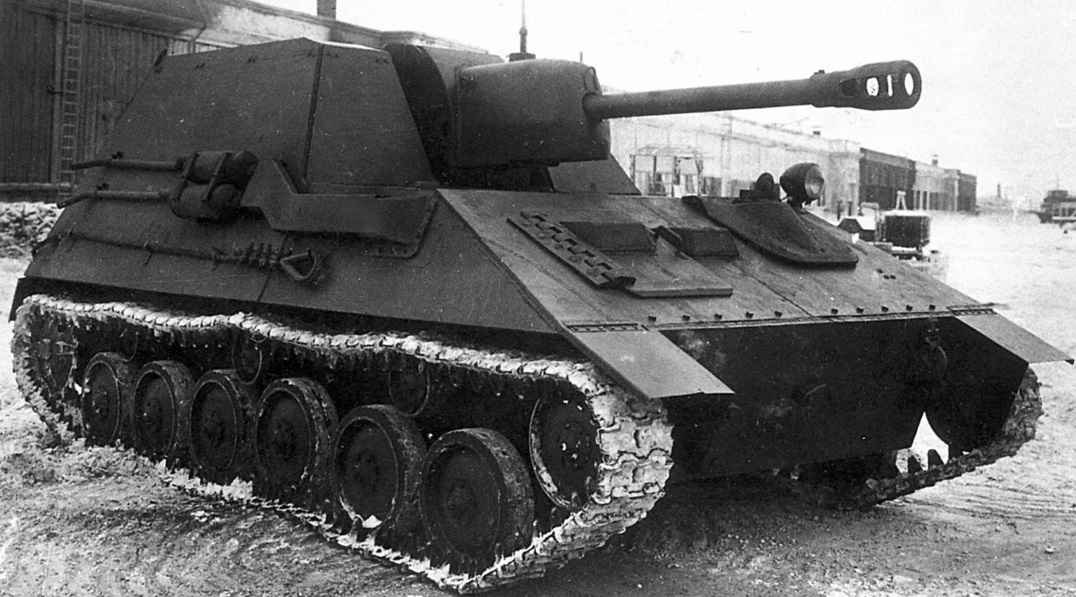
SU-76D / SU-57B, Self-Propelled Artillery Gun
The GAZ-74B self-propelled gun was built as a prototype and successfully completed a series of factory trials. Overall, the vehicle was approved by the military and, under the designation SU-76-I or SU-74, was accepted for state trials.
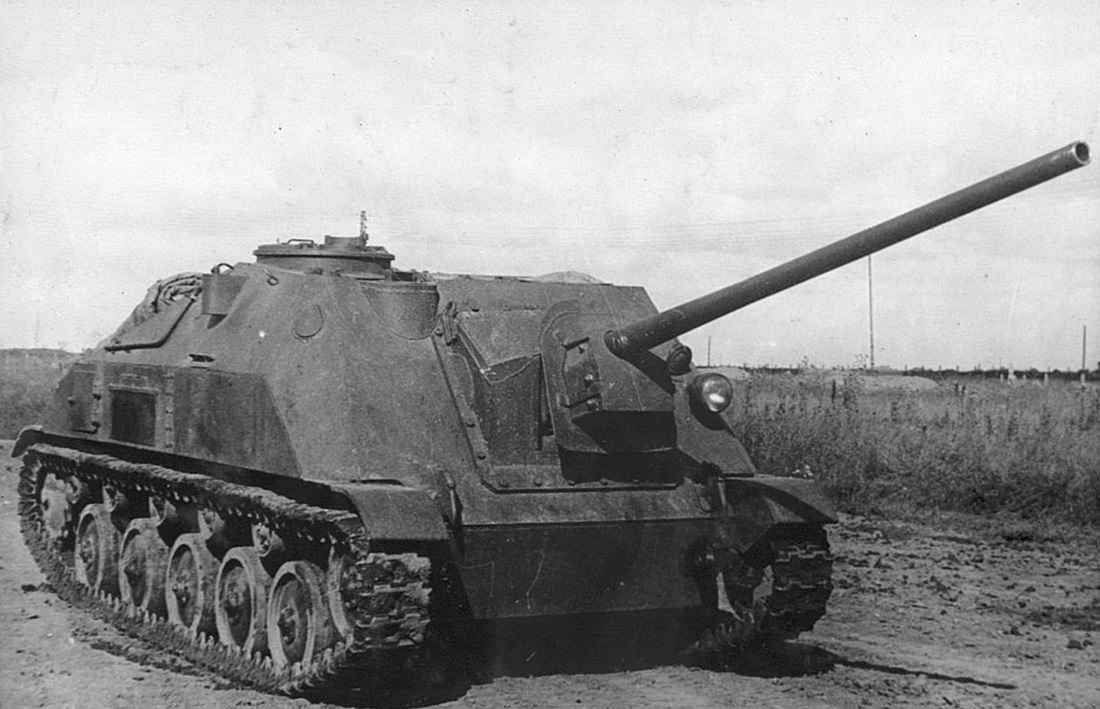
| Type | Soviet experimental tank destroyer / self-propelled artillery gun |
| Combat Weight | 9.5 tons |
| Crew | 4 men |
| Armament | 1 × 57 mm ZIS-4 tank gun |
| Ammunition | 72 rounds |
| Rate of Fire | Maximum 20 rounds/min, combat 15 rounds/min |
| Muzzle Velocity | 990 m/s |
| Engine | GMC diesel, 110 hp or ZIS-16 gasoline engine, 100 hp |
| Maximum Speed | 40 km/h |
| Operational Range | About 150 km |
| Length | 4.885 m (7.44 m with gun) |
| Width | 2.24 m |
| Height | 1.91 m |
| Ground Clearance | 330 mm |
| Frontal Armor | 25 mm |
| Side Armor | 15 mm |
The SU-76D and SU-57B were experimental Soviet self-propelled artillery vehicles developed by the Gorky Automobile Plant during World War II. In the summer of 1943, designers led by N. A. Astrov, working together with NATI, developed several new light tank destroyer concepts known as the GAZ-74 series.
The GAZ-74B combined components of the T-70 light tank with an original armored hull and an American GMC diesel engine. The vehicle featured a low silhouette and a fully enclosed fighting compartment. Its frontal armor reached up to 45 mm in the early design, while the engine and transmission were located at the rear.
The first GAZ-74B prototype was armed with a 76.2 mm S-1 gun. It successfully completed factory and state trials, but by 1943 the weapon was considered insufficiently powerful against the latest German tanks. As a result, serial production of the 76 mm version was abandoned.
Development continued and eventually produced the improved SU-76D. Its frontal armor was increased to 60 mm, but the vehicle was again rejected because it offered no decisive advantage over the mass-produced SU-76 and depended on an imported diesel engine that Soviet industry had been unable to put into production. :contentReference[oaicite:0]{index=0}
A more powerful tank destroyer version, the SU-57B, was armed with the long-barreled 57 mm ZIS-4 gun. The weapon offered excellent armor penetration, making the vehicle considerably more capable against enemy tanks. The SU-57B had a fully enclosed welded armored hull and was based on components of the T-70M light tank. :contentReference[oaicite:1]{index=1}
Despite successfully completing trials, the SU-57B was not accepted for service. Its long gun barrel created problems when crossing difficult terrain and narrow passages, while the vehicle’s relatively high cost and dependence on imported engines were considered unacceptable for mass production. :contentReference[oaicite:2]{index=2}
The experimental SU-57B weighed 9.5 tons and carried 72 rounds for its 57 mm gun. Its crew consisted of four men, and the vehicle could reach approximately 40 km/h with an operational range of around 150 km. :contentReference[oaicite:3]{index=3}
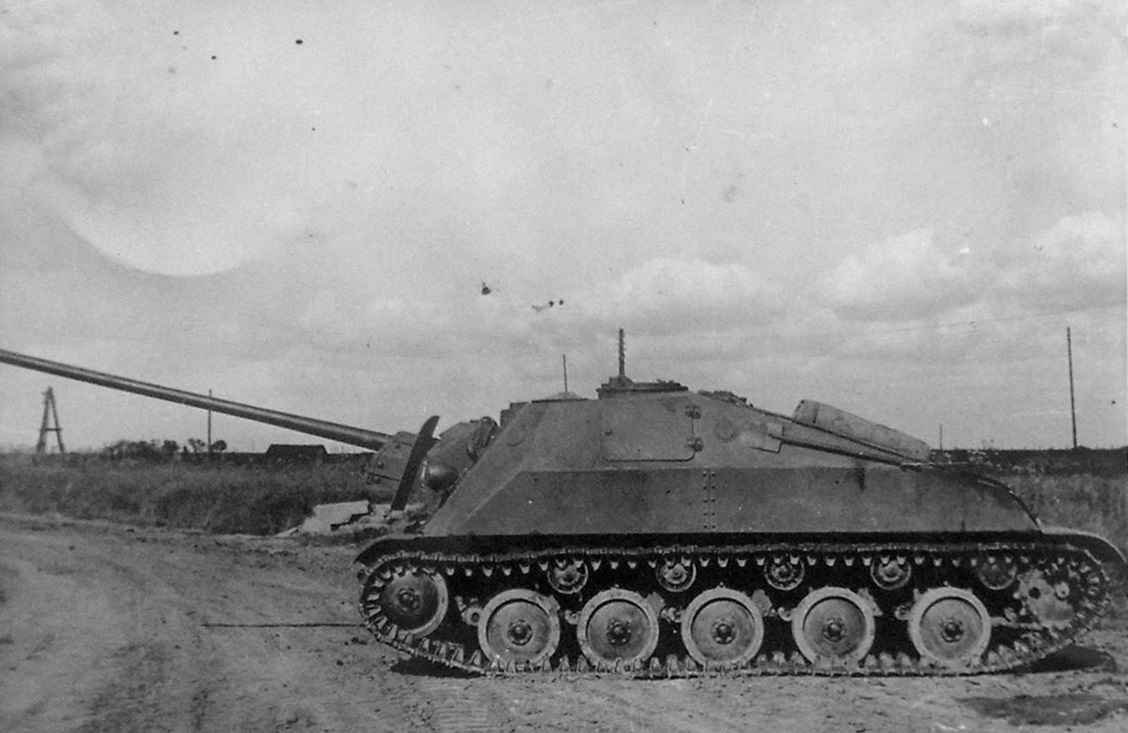
SU-76I, Self-Propelled Artillery Gun
Among the equipment captured by the Red Army were significant numbers of serviceable and combat-ready German Panzer III and Panzer IV tanks. In 1942, a decision was made to develop self-propelled artillery vehicles using these captured tank chassis.
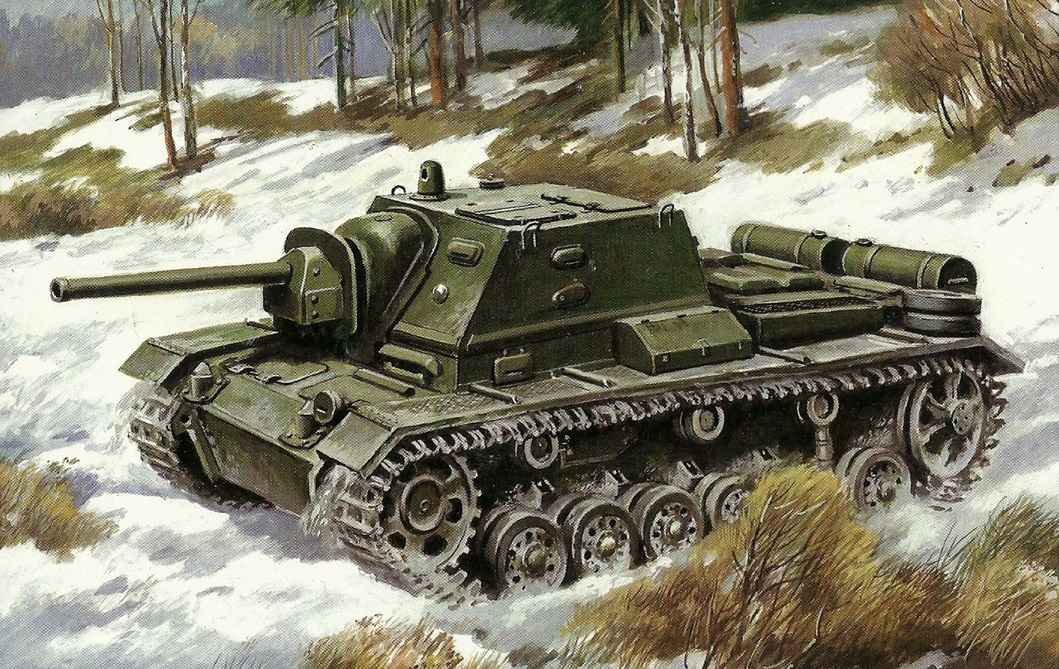
| Type | Soviet self-propelled artillery gun |
| Combat Weight | 22.5 tons |
| Crew | 4 men |
| Armament | 1 × 76.2 mm ZIS-3 gun |
| Ammunition | 98 rounds |
| Engine | Gasoline engine |
| Engine Power | 300 hp |
| Maximum Speed | 40 km/h |
| Operational Range | 175 km |
| Length | 5.38 m |
| Width | 2.91 m |
| Height | 2.38 m |
| Frontal Armor | 50 mm |
The SU-76I was a Soviet self-propelled artillery gun developed during World War II using the chassis of captured German Panzer III tanks. The Red Army had accumulated a significant number of serviceable captured Panzer III and Panzer IV tanks, leading to a decision in 1942 to convert some of these vehicles into self-propelled artillery guns.
Two main concepts were considered: the SU-76I armed with a Soviet 76.2 mm gun and the SU-122I armed with a 122 mm M-30 howitzer. The SU-76I was based on the Panzer III chassis and received a completely new enclosed armored fighting compartment.
The vehicle retained the rear-mounted engine and transmission arrangement of the German tank, while the armored fighting compartment and main gun were installed at the front. The driver was positioned to the left of the gun.
The SU-76I was armed with a 76.2 mm gun and carried 98 rounds of ammunition. The frontal armor of the hull and fighting compartment reached 50 mm, providing substantially better protection than many Soviet light self-propelled guns of the period.
The commander was provided with a commander’s cupola equipped with observation devices for improved battlefield visibility. The vehicle was also equipped with telescopic and panoramic sights, a radio station and an internal tank communication system.
With a combat weight of 22.5 tons and a 300 hp gasoline engine, the SU-76I could reach a maximum speed of 40 km/h and had an operational range of approximately 175 km.
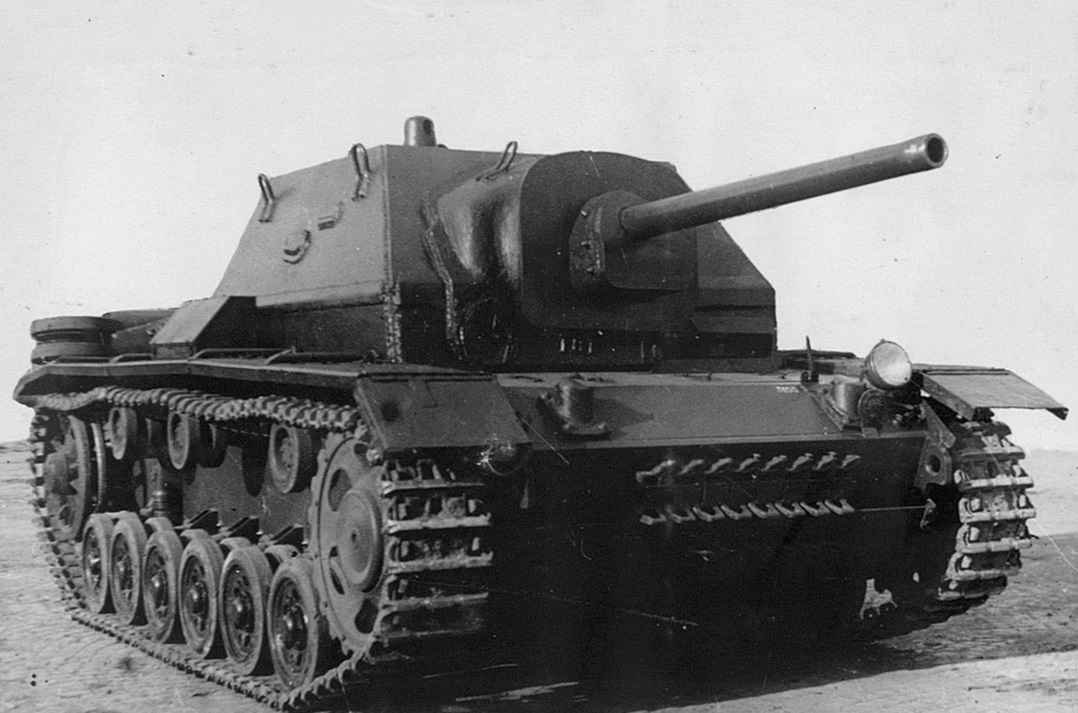
SU-85, Self-Propelled Artillery Gun
The design bureau headed by General F. F. Petrov began work on mounting an 85 mm anti-aircraft gun on the chassis of the SU-122, which had been developed by L. Gorlitsky.
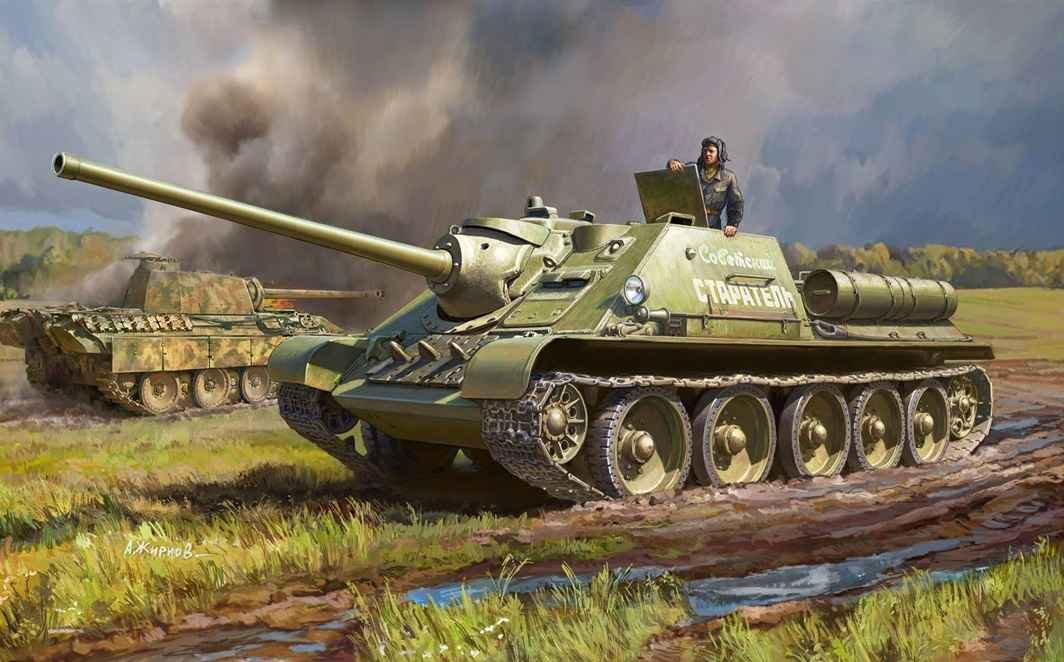
| Type | Soviet tank destroyer / self-propelled artillery gun |
| Combat Weight | 29.6 tons |
| Crew | 4 men |
| Armament | 1 × 85 mm D-5S-85 gun |
| Ammunition | 49 rounds |
| Armor | 45–75 mm |
| Engine | V-2-34, 12-cylinder diesel engine |
| Engine Power | 500 hp |
| Maximum Speed | 55 km/h |
| Operational Range | 150 km |
The SU-85 was a Soviet self-propelled artillery gun developed during World War II in response to the appearance of heavily armored German tanks. The capture of a German Panzer VI Tiger near Leningrad in January 1943 demonstrated that existing Soviet tank guns had serious difficulty penetrating its frontal armor at normal combat ranges.
Tests against the captured Tiger showed that the 122 mm M-30 howitzer used by the SU-122 had insufficient rate of fire and a trajectory poorly suited to engaging fast-moving armored targets. Tests indicated that the 85 mm anti-aircraft gun and the 122 mm A-19 gun were among the weapons capable of effectively engaging the Tiger’s frontal armor.
The design bureau headed by General F. F. Petrov began work on mounting an 85 mm gun on the SU-122 chassis developed by L. Gorlitsky. The resulting D-5S gun could penetrate more than 100 mm of armor at a distance of 1,000 meters.
The general layout of the SU-85 remained similar to that of the SU-122. The driver’s compartment, engine and transmission were largely based on the T-34, simplifying production and allowing crews familiar with the tank to adapt to the new self-propelled gun with relatively little additional training.
The SU-85 had a crew of four and was powered by a 500 hp V-2-34 12-cylinder diesel engine. With a combat weight of 29.6 tons, it could reach a maximum speed of 55 km/h and had an operational range of approximately 150 km. Its main armament was the 85 mm D-5S-85 gun with 49 rounds of ammunition.
The SU-85 became an important Soviet tank destroyer and was one of the vehicles capable of effectively fighting German Panther and Tiger tanks. Its combination of mobility, armor protection and firepower made it useful both for supporting advancing Soviet forces and for anti-tank defense.
Production of the SU-85 ended in September 1944 after the 85 mm gun had been introduced on the T-34-85 and the more powerful SU-100 was entering production. A total of 2,329 SU-85 vehicles and 315 SU-85M vehicles with the SU-100-style hull were manufactured.
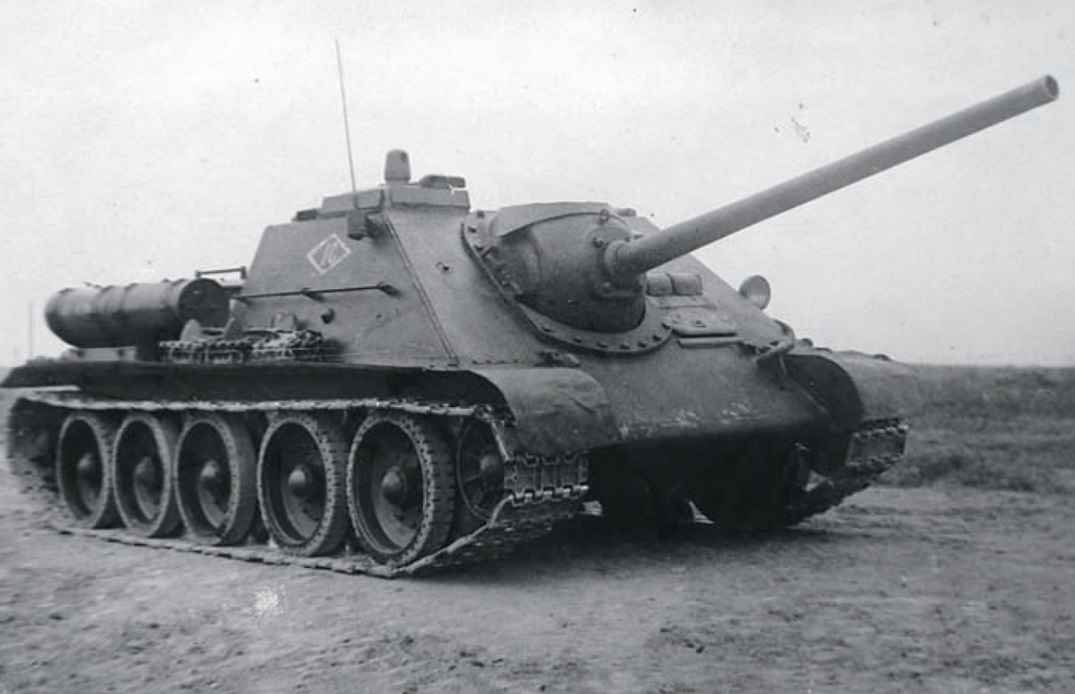
T-100, Heavy Tank
The T-100 was a Soviet twin-turret breakthrough tank designed beginning in the summer of 1938. The chief designer was I. V. Gavalov. The prototype took part in combat during the Soviet-Finnish War of 1939–1940.
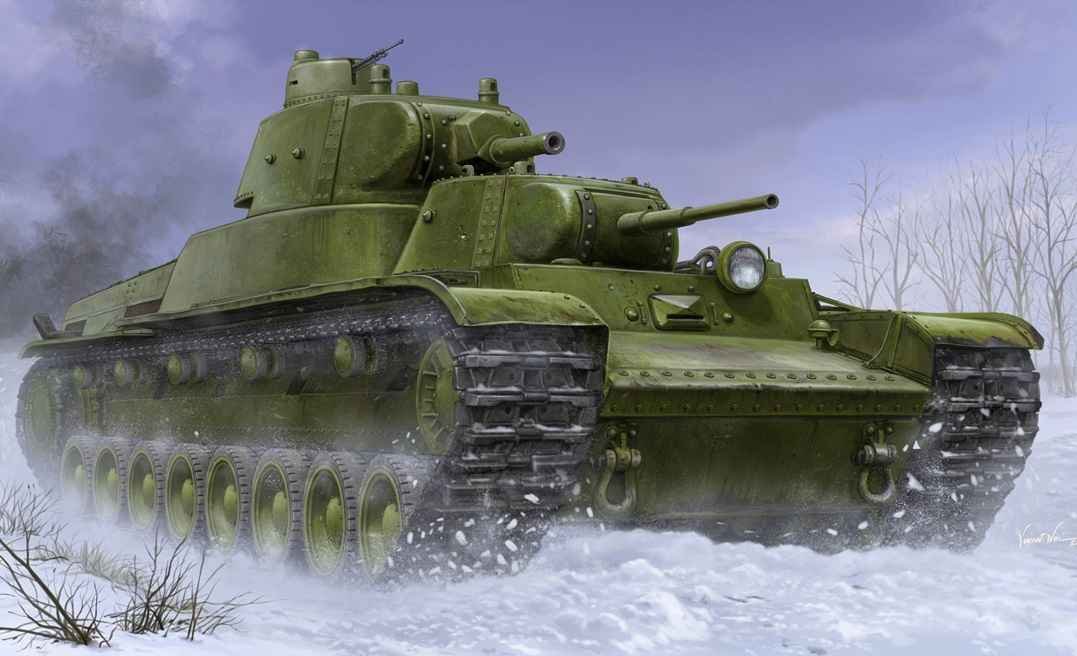
| Type | Soviet experimental heavy breakthrough tank |
| Combat Weight | 58 tons |
| Crew | 6 men |
| Armament | 1 × 76.2 mm L-11 gun, 1 × 45 mm gun, 3 × 7.62 mm DT machine guns |
| Main Gun Ammunition | 150 rounds |
| 45 mm Gun Ammunition | 300 rounds |
| Machine Gun Ammunition | 3,528 rounds |
| Armor | Up to 60 mm |
| Engine | GAM-34-BT gasoline engine |
| Engine Power | 850 hp |
| Maximum Speed | 38 km/h |
| Operational Range | 200 km |
| Length | About 9.0 m |
| Width | 3.40 m |
| Ground Clearance | 455 mm |
The T-100 was a Soviet experimental heavy breakthrough tank developed beginning in the summer of 1938. The project was created by the design bureau of Factory No. 174 under chief designer I. V. Gavalov. A prototype was completed in May 1939, but the tank never entered serial production.
The T-100 was a massive 58-ton vehicle featuring two turrets. Its main armament consisted of a 76.2 mm L-11 gun with 150 rounds and a 45 mm gun with 300 rounds. Three 7.62 mm DT machine guns provided additional firepower, with 3,528 rounds carried for them.
Protection was substantial for its time, with frontal hull and turret armor reaching 60 mm. The tank’s turrets were cast and had a distinctive conical shape.
Power was provided by an 850 hp GAM-34-BT gasoline engine. Despite its considerable weight, the T-100 could reach a maximum speed of 38 km/h and had an operational range of approximately 200 km.
The experimental T-100 prototype saw combat service during the Soviet-Finnish War of 1939–1940, providing practical experience with heavily armored breakthrough tanks.
The T-100 chassis also served as the basis for experimental self-propelled artillery projects. These included the SU-100Y armed with a 130 mm B-13 naval gun, while another proposed variant, the SU-100Z, was designed to carry a 152 mm gun.
Although the T-100 itself did not enter mass production, it represented an important stage in the Soviet development of heavily armored breakthrough vehicles before World War II.
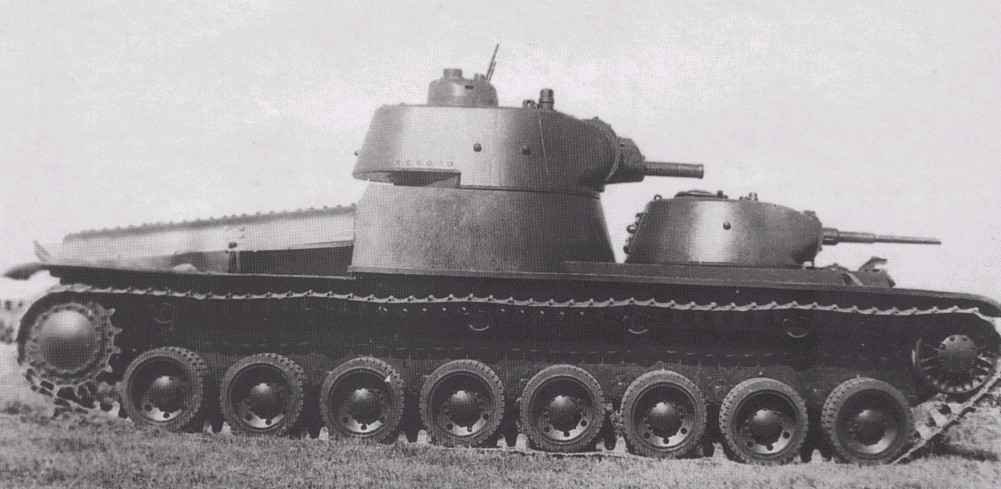
T-12, Medium Tank
On December 20, 1927, the Directorate of Mechanization and Motorization of the Red Army formulated requirements for a new “maneuver tank,” which was required to have both cannon and machine-gun armament mounted in rotating turrets.
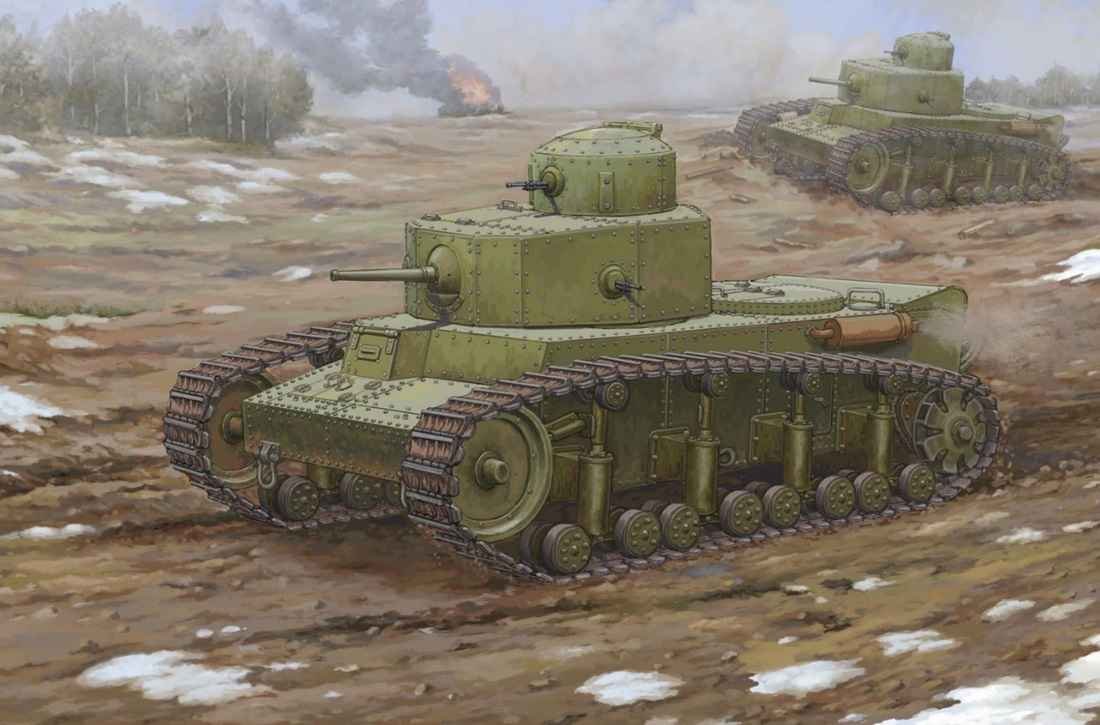
| Type | Soviet experimental medium tank |
| Combat Weight | 14.7 tons |
| Crew | 4 men |
| Armament | 1 × 45 mm Model 1930 gun, 3 × 7.62 mm DT machine guns |
| Ammunition | 98 shells, 7,200 machine-gun rounds |
| Armor | 12–22 mm |
| Engine | M-6, 8-cylinder gasoline engine |
| Engine Power | 180 hp |
| Maximum Speed | 26 km/h |
| Operational Range | 80 km |
| Length | 6.282 m |
| Width | 2.81 m |
| Height | 2.95 m |
| Ground Clearance | 500 mm |
The T-12 was an experimental Soviet medium tank developed in response to requirements issued by the Directorate of Mechanization and Motorization of the Red Army on December 20, 1927. The new “maneuver tank” was required to carry both cannon and machine-gun armament in rotating turrets.
The design was influenced by contemporary American experiments with multi-level turret arrangements. A small machine-gun turret was mounted on top of the main turret, saving internal space but increasing the overall height of the vehicle and making working conditions more difficult for the crew.
The T-12 used a conventional layout, with the driver’s compartment at the front, the fighting compartment in the center and the engine and transmission at the rear. Three crew members were positioned inside the large main turret: the commander, loader and machine gunner.
Early plans called for either a 45 mm gun or a 57/60 mm howitzer in the main turret, together with machine guns. During development, the original nine-sided turret was replaced by a cylindrical design with a flat frontal plate.
The prototype was built between October 1928 and October 1929, although additional work and installation of equipment continued for another two months. The tank was officially accepted in February 1930 and entered trials in April.
Initial testing revealed numerous mechanical problems. The transmission overheated, cooling water boiled in the radiator, second gear failed and the right track frequently came off during turns on soft ground. Despite these problems, the T-12 demonstrated very good ride characteristics.
During later trials, the tank performed considerably better. It climbed slopes of 35–36 degrees and reached approximately 26 km/h on hard ground, with speeds of up to 30 km/h recorded at higher engine revolutions. It also successfully crossed a two-meter-wide trench on sandy terrain.
The completed T-12 was armed with a 45 mm Model 1930 gun and three 7.62 mm DT machine guns. Its full ammunition load consisted of 98 artillery shells and 7,200 machine-gun rounds. Frontal hull and turret armor was 22 mm thick, while the side armor was 12 mm.
Power was provided by an M-6 eight-cylinder gasoline engine producing 180 hp. With a combat weight of 14.7 tons, the T-12 had a highway speed of approximately 26 km/h and an operational range of around 80 km.
Although the state commission was generally satisfied with the experimental tank, several shortcomings required further development, particularly its limited operational range and mechanical reliability. Some of these problems were subsequently addressed in the improved T-24 medium tank.
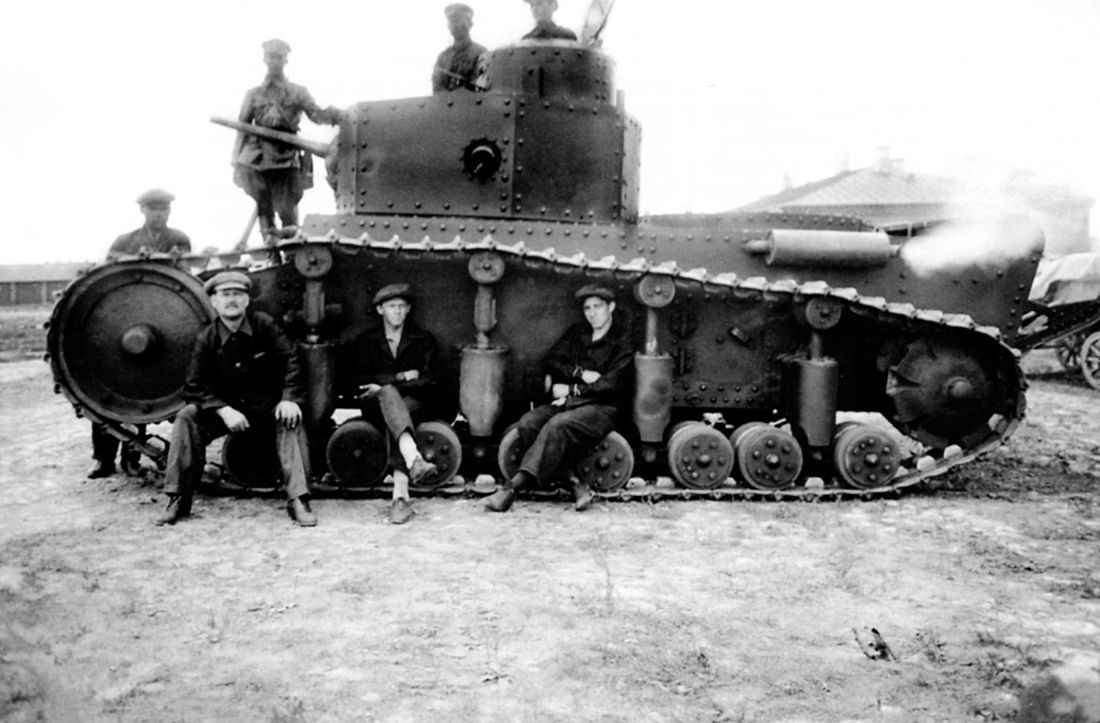
T-126, Light Tank
A new specification for an infantry support tank was developed by the Soviet military in March–April 1940. The requirements for the new tank became considerably more demanding.
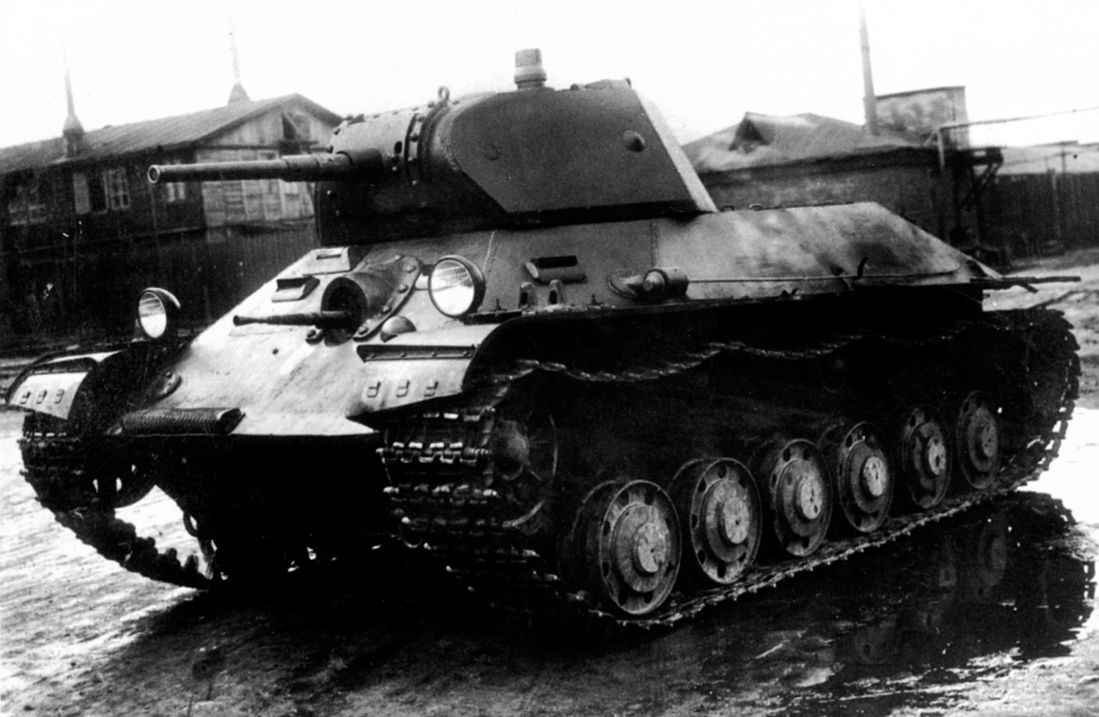
| Type | Soviet experimental light infantry support tank |
| Combat Weight | 17 tons |
| Crew | 4 men |
| Armament | 1 × 45 mm 20K gun, 7.62 mm machine gun |
| Ammunition | 150 gun rounds, 4,250 machine-gun rounds |
| Armor | Up to 45–55 mm |
| Engine | V-3, 6-cylinder diesel engine |
| Engine Power | 250 hp |
| Maximum Speed | 35 km/h |
| Operational Range | 270 km on road, 200 km cross-country |
| Length | 4.70 m |
| Width | 2.765 m |
| Height | 2.33 m |
| Ground Clearance | 380 mm |
The T-126SP was an experimental Soviet light infantry support tank developed in 1940 as a potential replacement for the aging T-26. Experience from the Spanish Civil War and the Soviet-Finnish War demonstrated that the T-26’s relatively thin armor left it highly vulnerable to modern anti-tank artillery. :contentReference[oaicite:0]{index=0}
New requirements issued in early 1940 called for a substantially better protected infantry support tank. Armor protection was initially specified at 40 mm and was later increased to 45 mm. The vehicle was also required to use torsion-bar suspension and a diesel engine while retaining a 45 mm gun as its primary weapon.
The first T-126SP prototype was completed in the summer of 1940. Its welded hull was constructed primarily from 45 mm armor plates, giving the light tank protection comparable to that of the T-34 medium tank. The frontal, upper side and rear armor plates were installed at angles of approximately 40–57 degrees. :contentReference[oaicite:1]{index=1}
The tank had a crew of four. The driver sat in the front right side of the hull, while the radio operator was positioned to his left. The welded hexagonal turret contained the main armament and was equipped with several observation devices to improve battlefield visibility.
The T-126SP was armed with a 45 mm 20K Model 1932/1938 gun. Its ammunition supply consisted of 150 rounds for the main gun and 4,250 machine-gun rounds. :contentReference[oaicite:2]{index=2}
Power was provided by a V-3 six-cylinder diesel engine producing 250 hp. The engine was essentially a smaller development related to the V-2 tank diesel. It allowed the approximately 17-ton tank to reach a maximum road speed of 35 km/h. With 340 liters of fuel, the vehicle could travel approximately 270 km on roads. :contentReference[oaicite:3]{index=3}
Factory trials began on August 31, 1940. During the first phase, the prototype covered 195 km on roads, 95 km across rough terrain and approximately 22 km over a special obstacle course. After repairs and further testing, the vehicle had covered another 973 km by the end of September. :contentReference[oaicite:4]{index=4}
The T-126SP offered excellent armor protection for a light tank, exceeding that of many contemporary foreign medium tanks. However, its cramped interior, transmission reliability problems and high production cost were considered serious disadvantages. :contentReference[oaicite:5]{index=5}
Further development of the concept eventually led to the T-50 light tank. Only two T-126SP prototypes were built. One was eventually scrapped, while the other survived and was preserved at Kubinka. :contentReference[oaicite:6]{index=6}
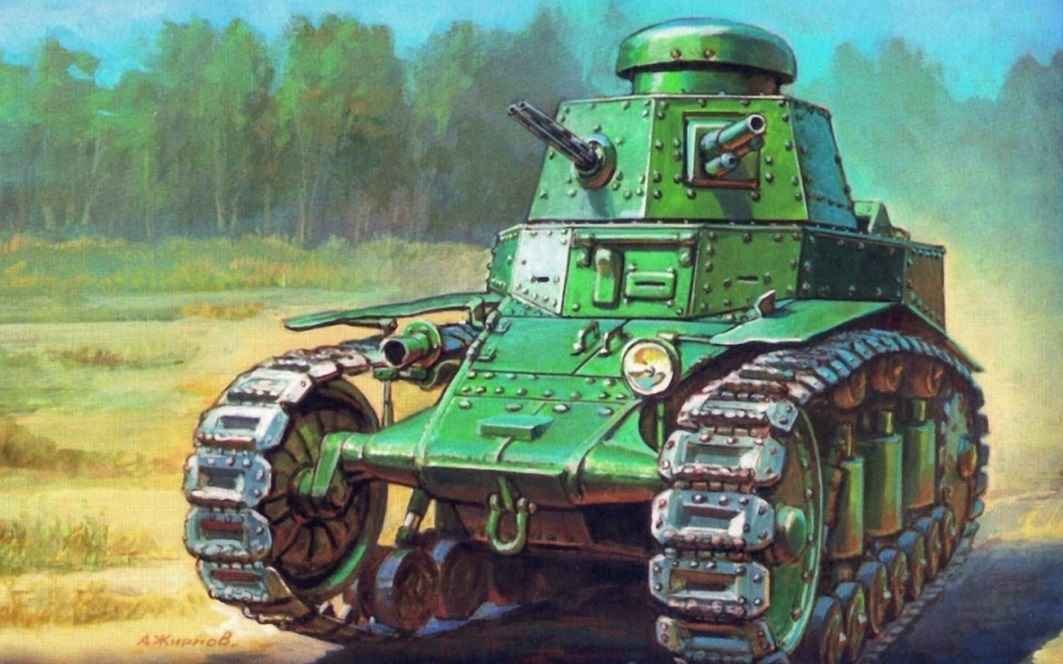
| Type | Soviet light infantry support tank |
| Combat Weight | 5.3 tons |
| Crew | 2 men |
| Armament | 1 × 37 mm gun, 2 × 6.5 mm Fedorov machine guns |
| Ammunition | 96 gun rounds |
| Armor | Up to 16 mm |
| Engine Power | 25 hp |
| Maximum Speed | 16 km/h |
| Operational Range | 100 km |
| Length | 3.50 m |
| Width | 1.76 m |
| Height | 2.03 m |
| Maximum Gun Elevation | +30° |
| Maximum Gun Depression | −8° |
The MS-1, also known as the T-18, was a Soviet light infantry support tank. Its designation stood for “Small Support Tank” (Maliy Soprovozhdeniya). During the 1920s, Soviet tanks were classified differently from the later familiar light, medium and heavy categories, with the MS-1 belonging to the “small” tank class.
During this period, the Soviet Union urgently needed domestically produced tanks but lacked both an established industrial base and sufficient experience in tank design. Earlier attempts, including the Russian Renault tank developed during the Civil War period, were considered unsatisfactory.
Soviet designers initially examined the French Renault FT-17, but its weight, low speed and limited armament were considered disadvantages. Attention then turned to the Italian Fiat 3000, one example of which was purchased and sent to the Bolshevik Factory for study.
In March 1927, an experimental vehicle designated T-16 was completed. Trials revealed several problems with the running gear. After modifications, the improved vehicle received the designation T-18. The tank was officially accepted for service on July 6, 1927, and remained in production until 1931.
The T-18 was armed with a 37 mm gun carrying 96 rounds. Two 6.5 mm Fedorov machine guns provided additional armament, with one mounted alongside the main gun and another positioned in the right front section of the turret.
The tank had a crew of only two. The commander also served as gunner and loader, while the second crew member was the driver. Armor protection reached 16 mm on the front, sides and rear of both the hull and turret, while the roof and bottom were protected by 8 mm armor.
The original T-18 was powered by a 25 hp engine and could reach a maximum speed of approximately 16 km/h. Its highway operational range was about 100 km.
Several improved versions were developed. The T-18 Model 1929 increased the ammunition capacity to 104 rounds. The T-18 Model 1930 received a more powerful 40 hp engine and a Degtyarev machine gun, increasing maximum speed to 22 km/h. The later T-18M received a 50 hp engine and could reach approximately 24 km/h.
The MS-1 chassis was also used for several experimental vehicles, including the SU-18 self-propelled gun, TT-18 remotely controlled tank and KhT-18 chemical tank. MS-1 vehicles were additionally adapted as ammunition carriers and engineering vehicles.
The T-18 saw combat during the 1929 conflict over the Chinese Eastern Railway. Although Soviet tank units experienced coordination problems, damaged vehicles were recovered and repaired. A number of surviving MS-1 tanks and fortified firing positions based on their components were still available at the beginning of World War II, with some T-18 tanks reportedly participating in the Battle of Moscow in 1941–1942.
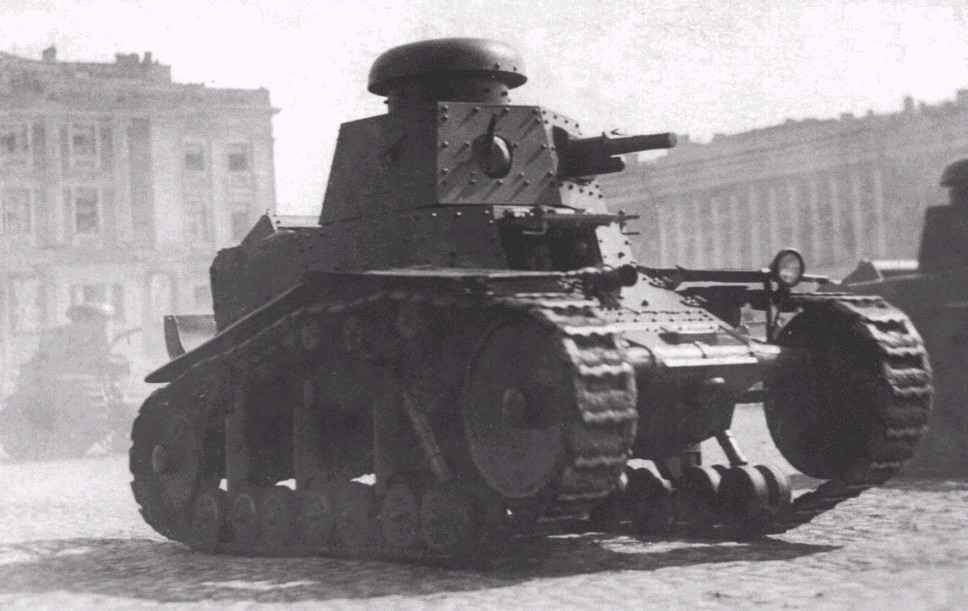
T-17 “Liliput”, Tankette
The hull of the T-17 tankette, despite its apparent simplicity, was designed taking into account experience gained from previous wars. It was assembled by riveting rolled armor plates ranging in thickness from 7 mm on the roof and bottom to 14 mm on the front and sides.
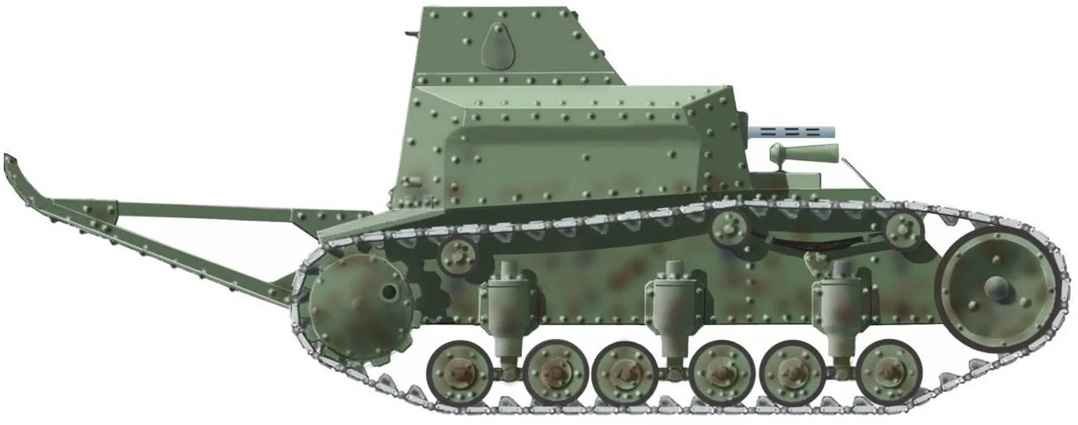
| Type | Soviet experimental reconnaissance tankette |
| Combat Weight | 1.95 tons |
| Crew | 1 man |
| Armament | 1 × 6.5 mm Fedorov machine gun or 1 × 7.62 mm DA machine gun |
| Ammunition | 900 rounds |
| Armor | 7–14 mm |
| Engine | MS, 4-cylinder gasoline engine |
| Engine Power | 34 hp |
| Operational Range | 100 km |
| Length | 2.70 m without tail, 3.60 m with tail |
| Width | 1.80 m |
| Height | 1.37 m |
| Ground Clearance | 275 mm |
The T-17 “Liliput” was an experimental Soviet reconnaissance tankette developed during the late 1920s as part of an effort to create a new generation of domestically designed armored vehicles.
In June 1926, the Soviet tank development program called for two main types of tracked combat vehicles: an infantry support tank and a very light machine-gun-armed support vehicle, essentially a tankette. The latter was intended to provide mobile support for infantry formations while remaining significantly cheaper and lighter than a conventional tank.
One of the first projects developed under this program was known as “Liliput.” Although the original design was not built because of technological difficulties and limited design experience, some of its concepts were later combined with components from the T-18 light tank. The resulting vehicle was approved by military specialists in March 1928 and received the designation T-17.
Construction of the prototype began shortly afterward, although technical difficulties delayed its completion until the autumn of 1929. The running gear incorporated elements derived from the T-18 and consisted of six road wheels on each side arranged in three two-wheel bogies, three return rollers and a rear-mounted drive wheel.
The T-17’s compact riveted hull was constructed from rolled armor plates. Armor thickness ranged from 7 mm on the roof and bottom to 14 mm on the front, sides and rear. A single crew member occupied the center of the vehicle and simultaneously served as driver, gunner and observer.
Access to the tankette was provided through a roof hatch, while battlefield observation was possible through a vision slit in the folding frontal armor plate. A rear “tail” increased the overall length from 2.7 to 3.6 meters and helped the vehicle cross trenches up to approximately 1.4 meters wide.
The original armament consisted of a 6.5 mm Fedorov machine gun positioned to the right of the vehicle’s longitudinal axis. It was later replaced by a 7.62 mm DA machine gun. The ammunition supply consisted of 900 rounds. A version armed with a short-barreled 37 mm gun was also proposed but remained only a project.
Trials of the T-17 prototype began in January 1930. Its low combat weight of only 1.95 tons gave it better mobility than the heavier T-18 light tank, but testing also revealed several significant shortcomings.
Further trials were conducted in June 1930 using different types of tracks. Although mobility improved, the single-man crew arrangement and restricted machine-gun firing angles were considered major disadvantages. Three additional prototypes were initially ordered, including a proposed two-man version with separate positions for the driver and gunner.
An improved two-man design designated T-21 was also developed, but its projected speed and mobility were considered inadequate. Further T-17 development was ultimately abandoned as other Soviet tankette projects received higher priority.
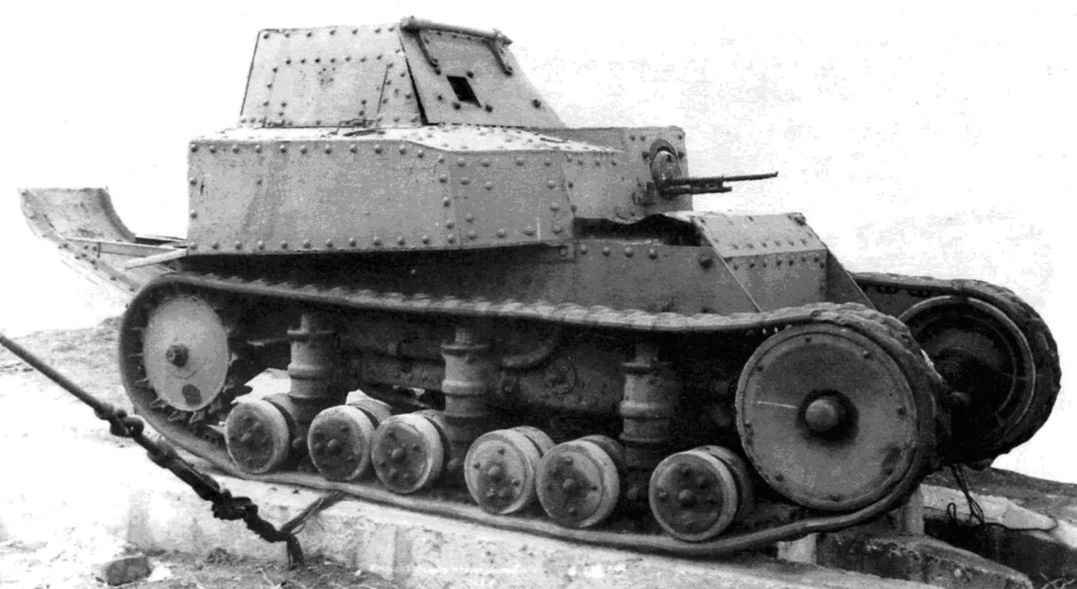
T-19, Light Tank
The T-19 was the first Soviet tank specifically designed for operations under chemical warfare conditions. For this purpose, it was equipped with a forced ventilation system capable of delivering 180 m³ of air per hour through a protective gas filter.
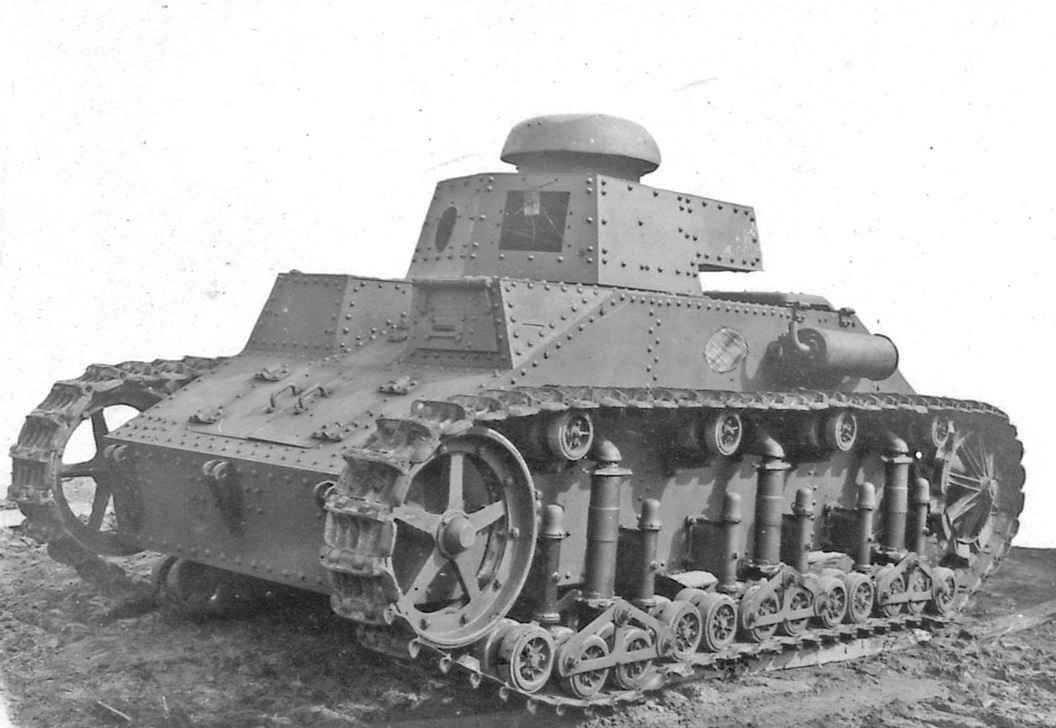
| Type | Soviet experimental infantry support tank |
| Combat Weight | 9 tons |
| Crew | 3 men |
| Armament | 1 × 37 mm Hotchkiss gun, 2 × 7.62 mm DT machine guns |
| Ammunition | 104 gun rounds, 2,016 machine-gun rounds |
| Armor | Up to 16 mm |
| Engine | Gasoline engine |
| Engine Power | 60 hp |
| Maximum Speed | 17 km/h |
| Operational Range | 80–100 km |
| Length | 3.80 m |
| Width | 1.80 m |
| Height | 2.25 m |
| Ground Clearance | 320 mm |
The T-19 was an experimental Soviet infantry support tank developed at the end of the 1920s. The decision to create the new vehicle was made by the Revolutionary Military Council in July 1929, with the T-19 intended to become the Red Army’s new main infantry support tank.
The design requirements called for a vehicle capable of crossing field fortifications and wire obstacles without the rear “tail” used on earlier Soviet tanks. It was also expected to provide superior firepower compared with other vehicles of similar weight and sufficient armor protection against rifle and machine-gun fire.
The original specification called for a combat weight of no more than 7.3 tons, a maximum speed of at least 30 km/h, a 100 hp engine, a 40 mm tank gun, two machine guns and armor approximately 18–20 mm thick. S. A. Ginzburg was appointed as the engineer responsible for the T-19 project.
The suspension was developed from the system used on the French Renault NC Model 1927. The T-19 was longer than the earlier T-18, improving its ability to cross trenches without requiring a rear tail and reducing longitudinal movement of the hull while traveling.
As the projected weight exceeded the original specification, the designers could not use the initially planned armor thickness. Instead, protection was improved by carefully shaping and angling the armor plates to increase the likelihood of bullets and projectiles ricocheting from the hull.
The planned armament consisted of a 37 mm semi-automatic tank gun and two 7.62 mm DT machine guns. One machine gun was positioned in the frontal hull near the radio operator, while the second was installed in the turret. Both independent and coaxial arrangements for the turret gun and machine gun were considered.
The T-19 was notable for being the first Soviet tank specifically designed for operations under chemical warfare conditions. It featured a forced ventilation system capable of supplying approximately 180 m³ of filtered air per hour. Its protective filter was intended to neutralize several types of chemical agents and toxic fumes, allowing the crew to continue operating in contaminated environments.
The design also included provisions for making the tank amphibious using inflatable or framed flotation devices. Early plans even considered removable propellers, although the idea was later replaced by a proposal for a separate device intended to move the tank through water.
The T-19 could cross trenches and narrow ditches up to approximately two meters wide using its own hull length. For wider anti-tank ditches, the designers proposed connecting two T-19 tanks together using special coupling structures mounted at the front and rear of the vehicles.
Construction of the first T-19 began in June 1931. By the end of August, most of the vehicle’s major components had been completed. However, the finished tank proved heavier than planned, its performance fell below the original requirements, and its construction was extremely complicated and expensive.
Development was further complicated by problems with the planned engine, armament and other components. The prototype ultimately received a turret derived from the production T-18 Model 1930, while the intended domestic 100 hp engine was not successfully completed.
The Soviet Union’s acquisition of the British Vickers 6-ton tank ultimately made continued development of the T-19 less attractive. The British vehicle offered better performance at a lower cost, and in 1931 work on the T-19 was discontinued in favor of preparing the Vickers design for Soviet mass production as the T-26.
By the end of the program, two T-19 tanks had been completely assembled, while an additional hull and several auxiliary components had also been manufactured.
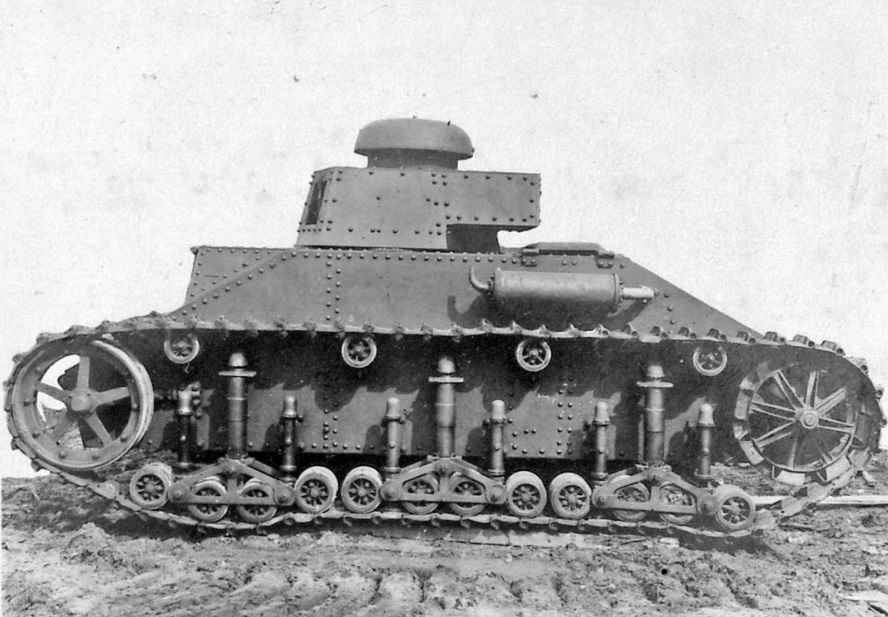
T-20 “Komsomolets”, Artillery Tractor
Production of the T-20 “Komsomolets” began in 1937 at Factory No. 37, with additional production organized at the specialized facilities of STZ and GAZ
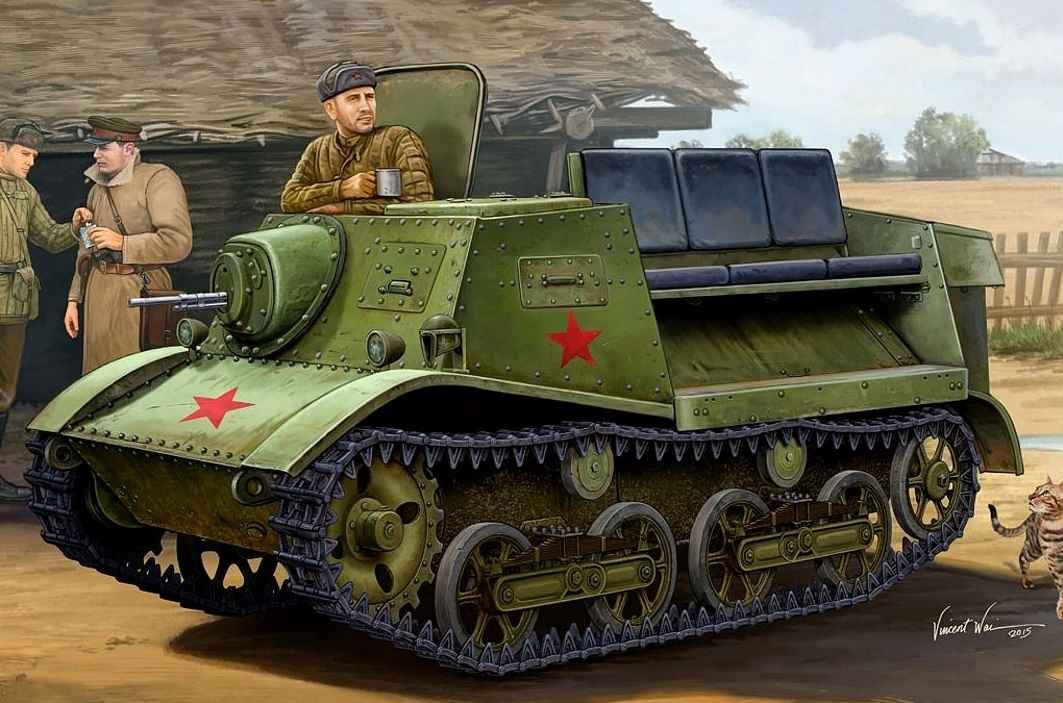
| Type | Soviet armored artillery tractor |
| Combat Weight | 3.46 tons |
| Crew | 2 men |
| Passenger Capacity | 6 men |
| Armament | 1 × 7.62 mm DT machine gun |
| Armor | 7–10 mm |
| Engine | GAZ-M gasoline engine |
| Engine Power | 50–52 hp |
| Maximum Speed | 50 km/h |
| Operational Range | 250 km |
| Towing Capacity | 2,000 kg |
| Payload Capacity | 500 kg |
| Length | 3.45 m |
| Width | 1.859 m |
| Height | 1.58 m |
| Ground Clearance | 300 mm |
The T-20 “Komsomolets” was a Soviet light armored artillery tractor developed during the 1930s primarily to provide mobility for anti-tank artillery units. The Red Army required a compact tracked vehicle capable of moving guns and their crews quickly between firing positions, including under enemy small-arms fire. :contentReference[oaicite:0]{index=0}
An earlier vehicle known as the “Pioneer” had been developed in 1935, but operational experience revealed serious problems with stability, towing performance and crew capacity. These shortcomings demonstrated the need for a more capable vehicle with armor protection for the driver, engine, radiator and fuel tank. :contentReference[oaicite:1]{index=1}
The resulting T-20 “Komsomolets” was developed at Factory No. 37 under the direction of chief designer N. A. Astrov. It featured a riveted and welded armored hull with protection ranging from 7 to 10 mm, sufficient to protect the driver and commander-gunner against rifle-caliber bullets and small shell fragments.
The two-man crew occupied a fully armored forward compartment. The commander also operated a 7.62 mm DT machine gun mounted in a movable frontal mount, giving the tractor a degree of defensive capability when operating near the front line.
Behind the armored crew compartment was the engine compartment, while the rear section contained two longitudinal three-man benches. These provided seating for six members of the artillery crew. The seats could also be arranged to form the sides of a cargo platform used for carrying ammunition and artillery equipment. :contentReference[oaicite:2]{index=2}
The T-20 was powered by a GAZ-M gasoline engine producing approximately 50–52 hp. Its transmission provided separate towing and transport ranges, allowing the tractor to move at very low speeds when pulling heavy loads while reaching approximately 50 km/h on roads without a trailer. :contentReference[oaicite:3]{index=3}
The tractor could tow a trailer or artillery piece weighing up to 2,000 kg and carry approximately 500 kg of cargo on its rear platform. Its highway operational range without a trailer was approximately 250 km. :contentReference[oaicite:4]{index=4} :contentReference[oaicite:5]{index=5}
Army trials conducted from August to November 1937 demonstrated good mobility. With a trailer, the T-20 could maintain average speeds of approximately 15–20 km/h on roads and 8–11 km/h over dirt roads and rough terrain. It could cross a 1.4-meter trench and a 0.6-meter ford.
Production of the “Komsomolets” began in 1937 at Factory No. 37, with additional production at STZ and GAZ facilities. Several related light tractor projects were subsequently developed, although none replaced the T-20 in large-scale Red Army service.
Production ended in July 1941 as Soviet industry increasingly concentrated on light tank production. A total of 7,780 T-20 tractors were manufactured in three production series. By the beginning of the German invasion of the Soviet Union, approximately 6,700 were in military service.
During World War II, the T-20 was sometimes used as a machine-gun tankette and also served as the basis for the ZIS-30 self-propelled anti-tank gun, which combined the Komsomolets chassis with the powerful 57 mm ZIS-2 anti-tank gun. T-20 tractors continued to serve throughout the war, often towing artillery heavier than originally intended.
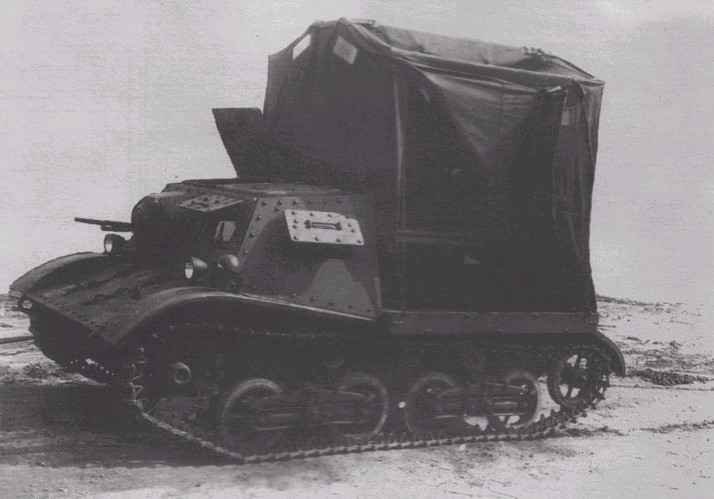
T-23 Tankette
The T-23 tankette was designed in 1930 by the OAT Technical Design Bureau under the direction of S. P. Shukalov, using components from the MS-1 tank and the T-17 tankette.
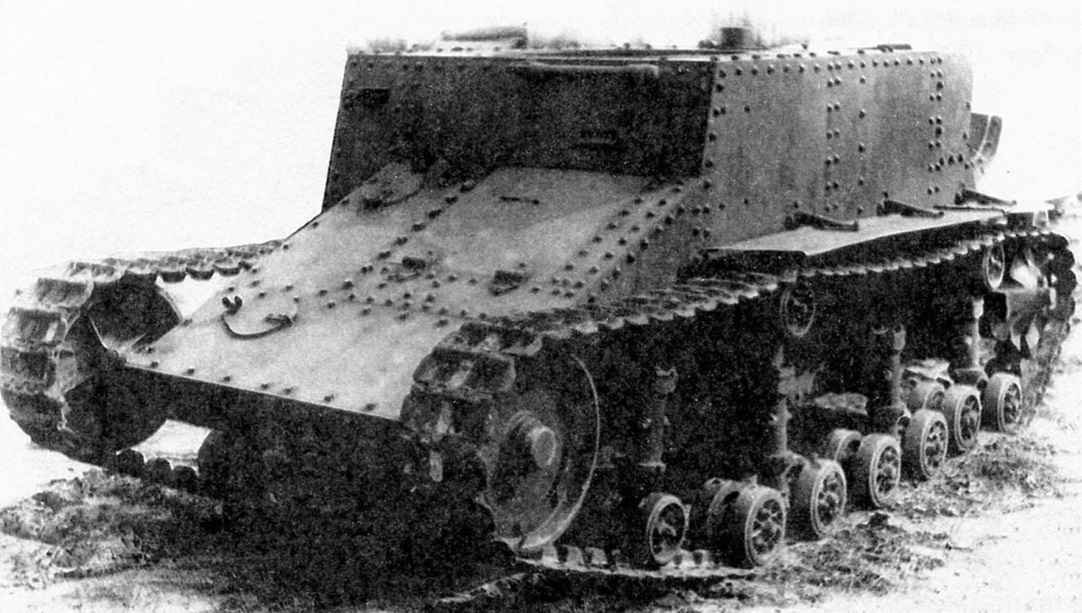
| Type | Soviet experimental tankette |
| Combat Weight | 3.5 tons |
| Crew | 2 men |
| Armament | 1 × 7.62 mm DT machine gun |
| Ammunition | 2,079 rounds |
| Armor | 6–10 mm |
| Engine | 4-cylinder gasoline engine |
| Engine Power | 60 hp (planned) |
| Maximum Speed | 35 km/h |
| Range | 100 km |
| Length | 3.70 m |
| Width | 1.80 m |
| Ground Clearance | 310 mm |
| Maximum Gradient | 35° |
| Fording Depth | 0.8 m |
T-23 Tankette
The T-23 tankette was designed in 1930 by the OAT Technical Design Bureau under the direction of S. P. Shukalov, using components from the MS-1 tank and the T-17 tankette.
In 1929–1930, the Tank Bureau began developing several new tankettes based on the T-17 design. These included the T-21 “small reconnaissance” tankette and the larger two-man T-22 and T-23 tankettes. The T-21 project was rejected because of insufficient mobility and performance.
The T-22 and T-23 differed primarily in their engines and crew arrangement. The T-23 was ultimately selected because it used components from the T-18 tank and was expected to be cheaper to manufacture. In 1931, construction of two T-23 tankettes began at the Bolshevik Plant in Leningrad, although only one was completed. Development was discontinued after the Soviet Union acquired a license for the British Carden-Loyd Mk.VI tankette.
The T-23 followed a conventional tankette layout. The fighting and control compartments occupied the front and center of the hull, while the engine and transmission were located at the rear. The two-man crew consisted of the commander on the right and the driver on the left.
The hull used a frame construction with riveted armor plates between 6 and 10 mm thick. The planned armament consisted of a single 7.62 mm DT machine gun mounted in a ball mount on the right side of the frontal armor plate. Ammunition capacity was 2,079 rounds. The experimental vehicle itself was not fitted with the planned armament.
The power unit was mounted transversely in the engine compartment. The prototype used a 35 hp four-cylinder air-cooled gasoline engine from the T-18. The original design called for a more powerful 60 hp engine from the T-20, but this engine was not ready in time.
The running gear consisted of seven twin road wheels on each side, six of which were grouped into three suspension bogies, two return rollers, a front-mounted idler and a rear drive sprocket. The suspension used vertical coil springs.
With a combat weight of 3.5 tons, the planned T-23 had a maximum speed of 35 km/h and a range of approximately 100 km. The project remained experimental and never entered series production.
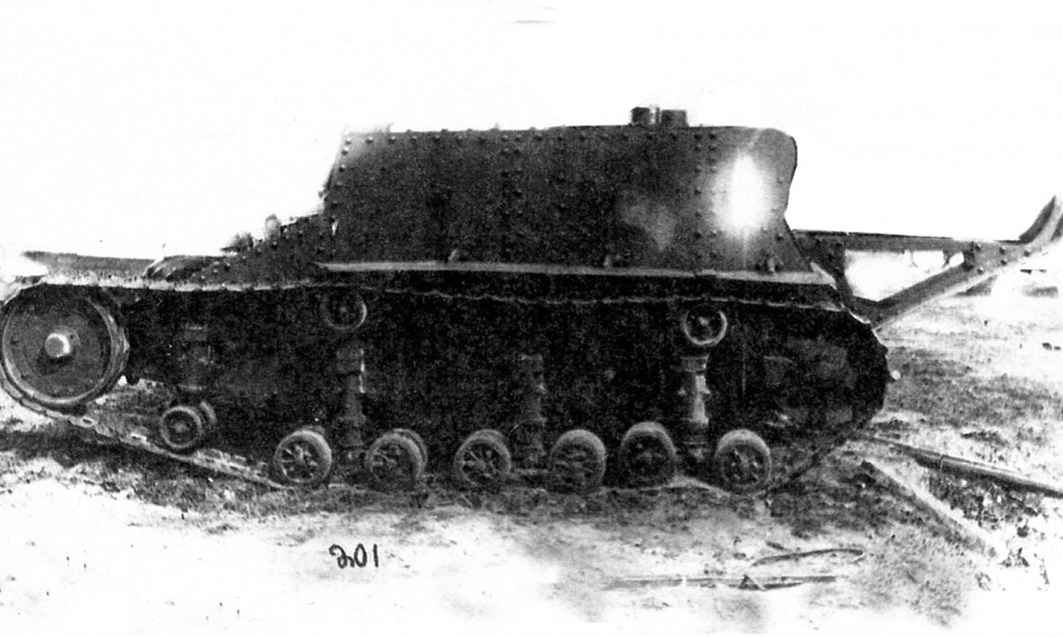
T-24, Medium Tank
The T-24 was developed in parallel with the T-12. It quickly became clear that the T-12 would remain only an experimental vehicle, while much greater hopes were placed on the T-24.
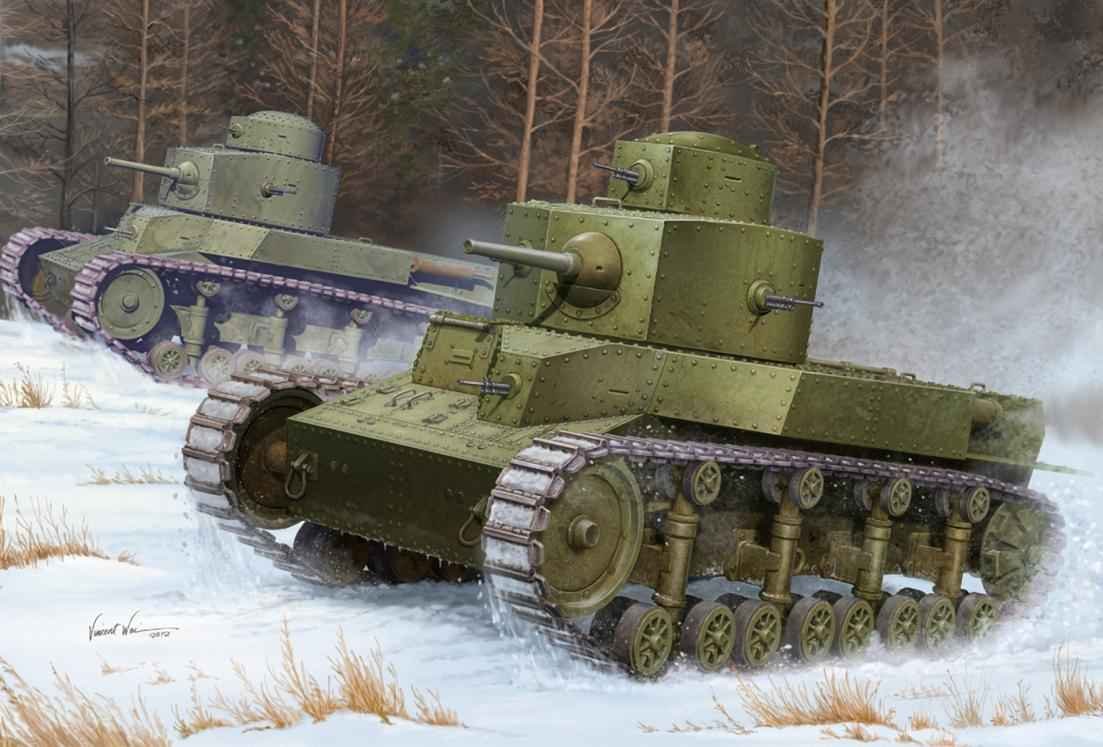
| Type | Soviet medium tank |
| Combat Weight | 18.2 tons |
| Crew | 4 men |
| Armament | 1 × 45 mm gun, 4 × 7.7 mm machine guns |
| Armor | 20 mm |
| Engine Power | 300 hp |
| Power-to-Weight Ratio | 16.5 hp/ton |
| Maximum Speed | 22 km/h |
| Range | 140 km |
| Production | 25 tanks |
T-24 Medium Tank
The T-24 was developed in parallel with the T-12. It quickly became clear that the T-12 would remain only an experimental vehicle, while much greater hopes were placed on the T-24. Essentially, the T-24 was an improved development of the T-12, offering slightly better characteristics in almost every respect.
The tank generally satisfied the military, and serial production had already begun when new information arrived from the Soviet purchasing commission abroad. It became apparent that tanks similar to the British Vickers 6-Ton and the American Christie high-speed tanks were better suited to the future requirements of Soviet armored forces.
Another competitor was the tank being developed in the USSR by German designer Edward Grote. Its projected capabilities made the T-24 appear considerably less promising. Finally, the development of the T-28 medium tank effectively ended the T-24’s prospects for large-scale production. Nevertheless, 25 T-24 tanks were completed.
These 25 tanks were originally expected to spend their service lives in training units before eventually being scrapped. However, the approach of war changed their fate.
Twenty-two surviving T-24 tanks were intended to follow a path similar to that of the older MS-1. They began to be converted into fixed armored firing positions. The proposed conversion involved fitting a 76 mm gun, removing unnecessary equipment including the engine, and burying the tank at a strategically important defensive position.
The later history of these vehicles is difficult to trace. It is known that some were rearmed with the new gun but had not yet been stripped of their remaining equipment or installed as fixed defensive positions.
One T-24 also remained at a research and testing facility near Moscow. In the autumn of 1941, it was most likely sent to the front, after which its fate is unknown.
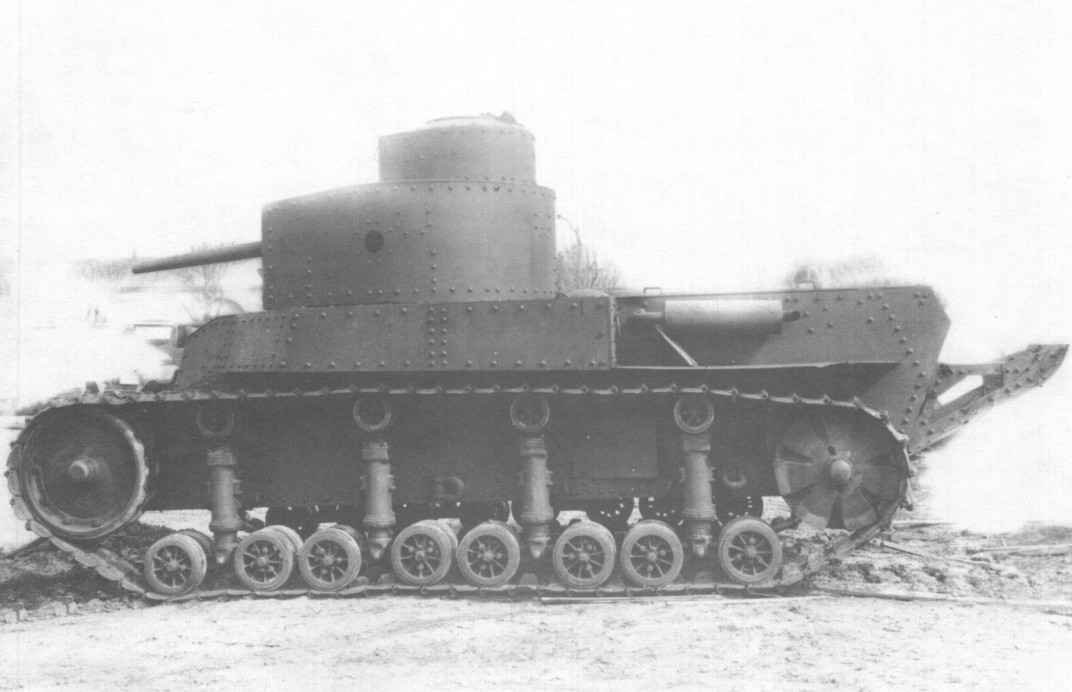
T-25 / STZ-25, Light Tank
The STZ-25 tank followed a layout similar to the production T-26 light tank. Its crew consisted of three men positioned in the same general arrangement as in the T-26.
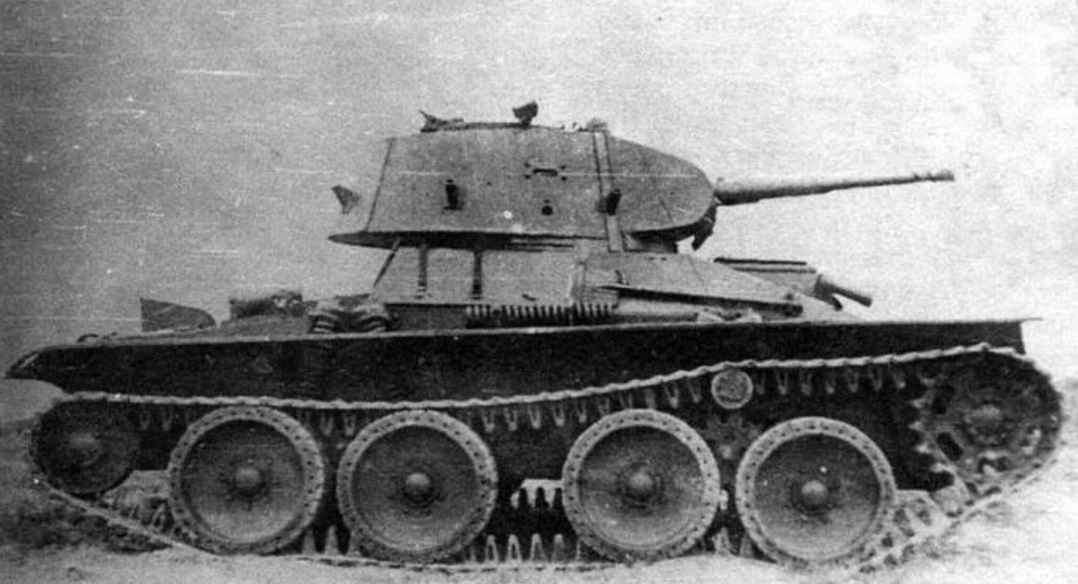
| Type | Soviet experimental light wheeled-tracked tank |
| Combat Weight | 11.7 tons |
| Crew | 3 men |
| Armament | 1 × 45 mm gun Model 1934, 2 × 7.62 mm DT machine guns |
| Ammunition | 108 rounds, 1,953 machine-gun rounds |
| Armor | Up to 24 mm |
| Engine | T-26 gasoline engine |
| Engine Power | 90 hp |
| Maximum Speed | 28 km/h |
| Range | 400/200 km |
| Length | 4.85 m |
| Width | 2.68 m |
| Height | 2.37 m |
| Ground Clearance | 370 mm |
The T-25, also known as the STZ-25, was an experimental Soviet light wheeled-tracked tank designed at the Stalingrad Tractor Plant in 1938–1939 under the direction of N. D. Verner. It was developed from the experimental STZ-24 (6TK) and followed a general layout similar to the production T-26.
The tank had a three-man crew and was designed with a welded hull and conical turret. Its planned armament included a 45 mm or 76.2 mm gun together with two 7.62 mm DT machine guns. The running prototype used a T-26 turret with its standard armament.
A special 300 hp diesel engine was originally planned, but the prototype was instead fitted with a modified T-26 engine. The STZ-25 used a convertible wheeled-tracked running gear, allowing it to operate either on tracks or on its road wheels.
A running prototype made from structural steel was completed in February 1939 and underwent factory trials during the spring. The STZ-25 did not enter series production, but experience gained during its development was later used in the STZ-35 project.
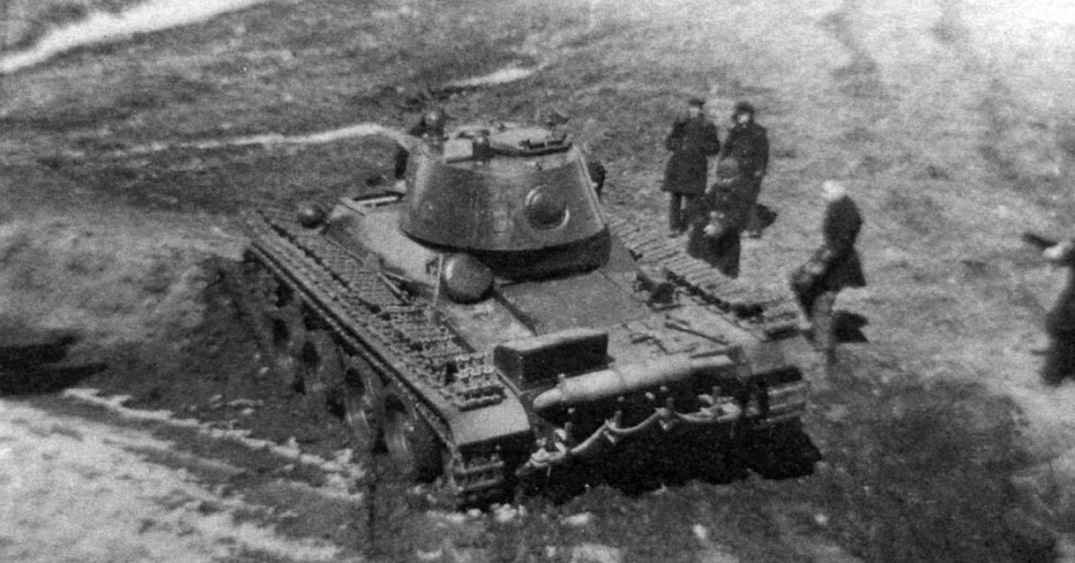
T-26, Light Tank
On February 13, 1931, by a resolution of the Revolutionary Military Council of the USSR, the Vickers tank was officially adopted for service with the Red Army under the designation T-26.
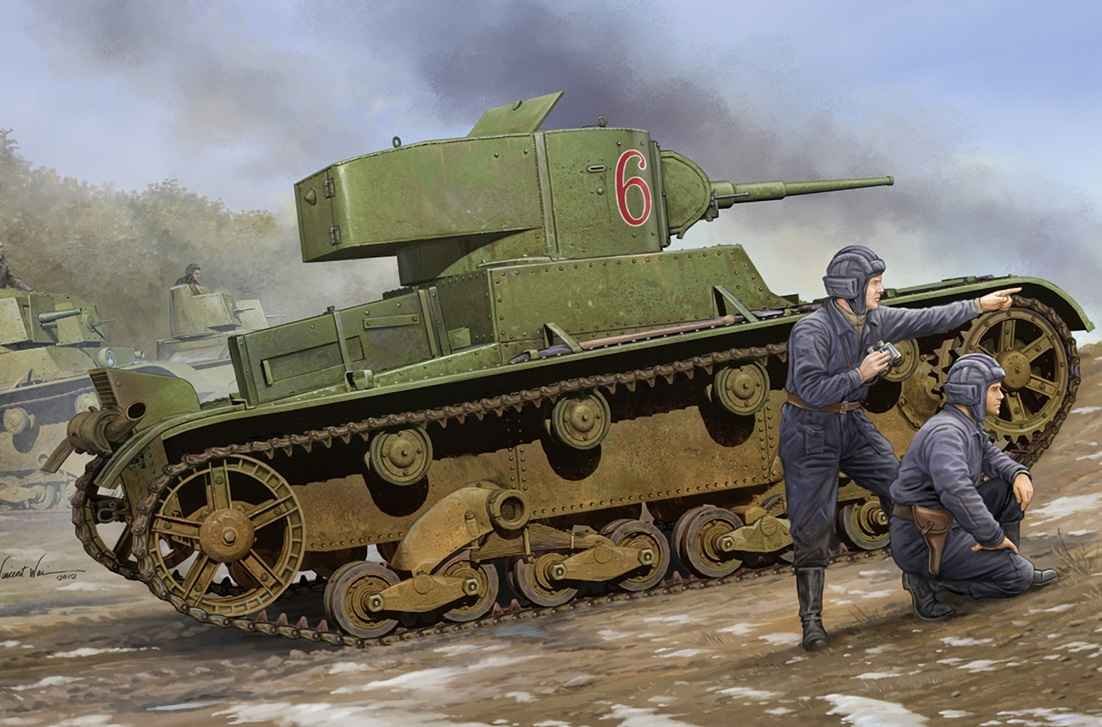
| Type | Soviet light infantry tank |
| Combat Weight | 10.28 tons |
| Crew | 3 men |
| Armament | 1 × 45 mm 20-K gun, up to 3 × 7.62 mm DT machine guns |
| Ammunition | 165–205 gun rounds, 3,212–3,654 machine-gun rounds |
| Armor | Up to 15 mm |
| Engine | T-26 4-cylinder gasoline engine |
| Engine Power | 75 hp |
| Maximum Speed | 30 km/h |
| Range | 225 km |
| Length | 4.62 m |
| Width | 2.445 m |
| Height | 2.33 m |
| Ground Clearance | 380 mm |
| Production | 11,208 tanks of all types |
The T-26 was one of the most important Soviet light tanks of the 1930s. It was developed from the British Vickers 6-Ton tank and officially adopted by the Red Army on February 13, 1931.
Early T-26 tanks had two turrets armed primarily with machine guns, while later versions received a single turret with a 45 mm gun. The single-turret configuration became the most numerous and underwent several upgrades throughout the 1930s.
The 1939 model featured a conical turret, improved armor layout and a 45 mm 20-K gun. Various versions could also carry coaxial, rear and anti-aircraft DT machine guns.
The T-26 chassis was used for numerous specialized vehicles, including flamethrower tanks, self-propelled guns, bridge layers, artillery tractors and other experimental vehicles.
More than 11,000 T-26 tanks of various types were produced between 1931 and 1941. They saw extensive combat service and remained in use during the Second World War, with their final Soviet combat deployment taking place in the Far East in 1945.
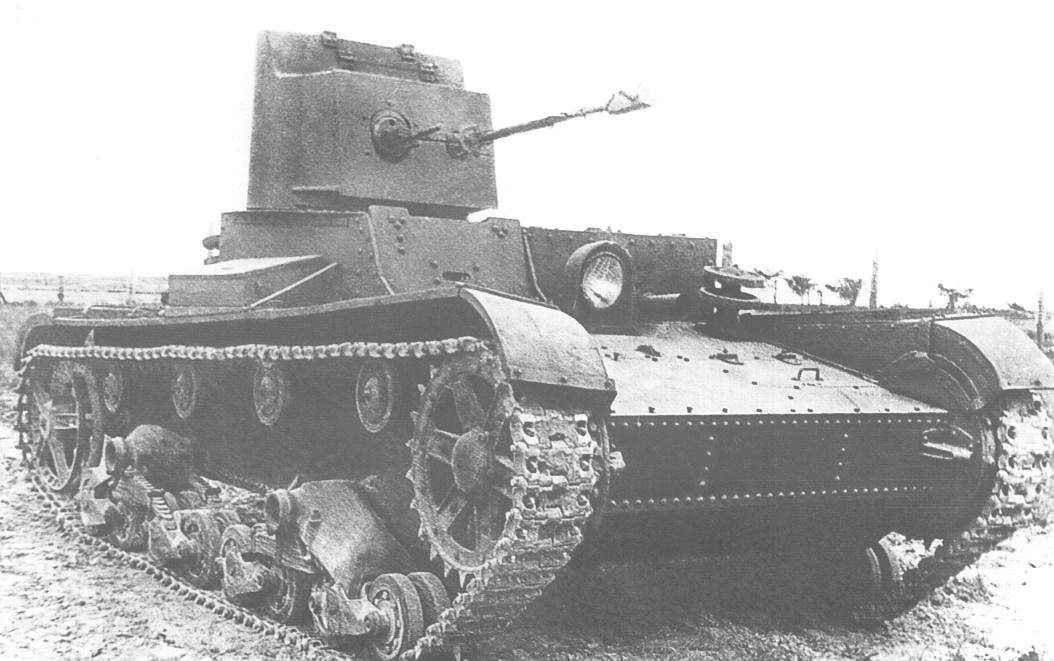
T-27, Tankette
The T-27 tankette was developed from the British Carden-Loyd Mk VI tankette and was officially adopted by the Red Army in February 1931.
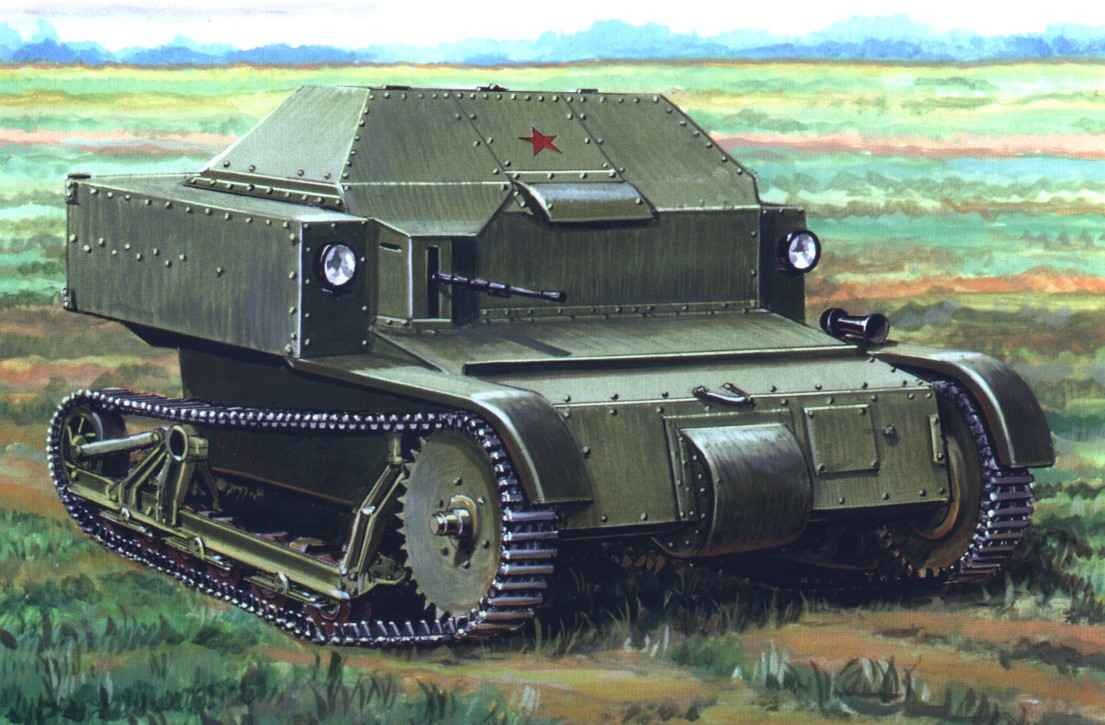
| Type | Soviet tankette |
| Combat Weight | 2.1 tons |
| Crew | 2 men |
| Armament | 1 × 7.62 mm DT machine gun |
| Ammunition | 2,500 rounds |
| Armor | Up to 10 mm |
| Engine | Ford-AA gasoline engine |
| Engine Power | 40 hp |
| Maximum Speed | 40–42 km/h |
| Range | 110–120 km |
| Length | 2.60 m |
| Width | 1.825 m |
| Height | 1.443 m |
| Production | More than 3,300 tankettes |
The T-27 was a Soviet tankette developed from the British Carden-Loyd Mk VI and adopted by the Red Army in February 1931. Its compact riveted hull placed the engine between the driver and machine gunner, helping reduce the overall length of the vehicle.
The T-27 made extensive use of components from mass-produced automobiles, making it relatively inexpensive and simple to manufacture. It was armed with a single 7.62 mm DT machine gun and carried a crew of two.
More than 3,300 T-27 tankettes were produced during approximately two years of production. They served with reconnaissance units, armored formations and airborne brigades, where experiments were conducted with both parachute and landing deployment.
The T-27 chassis was also used for experimental vehicles, including an early Soviet flamethrower tank and a light self-propelled artillery vehicle armed with a 76 mm recoilless gun.
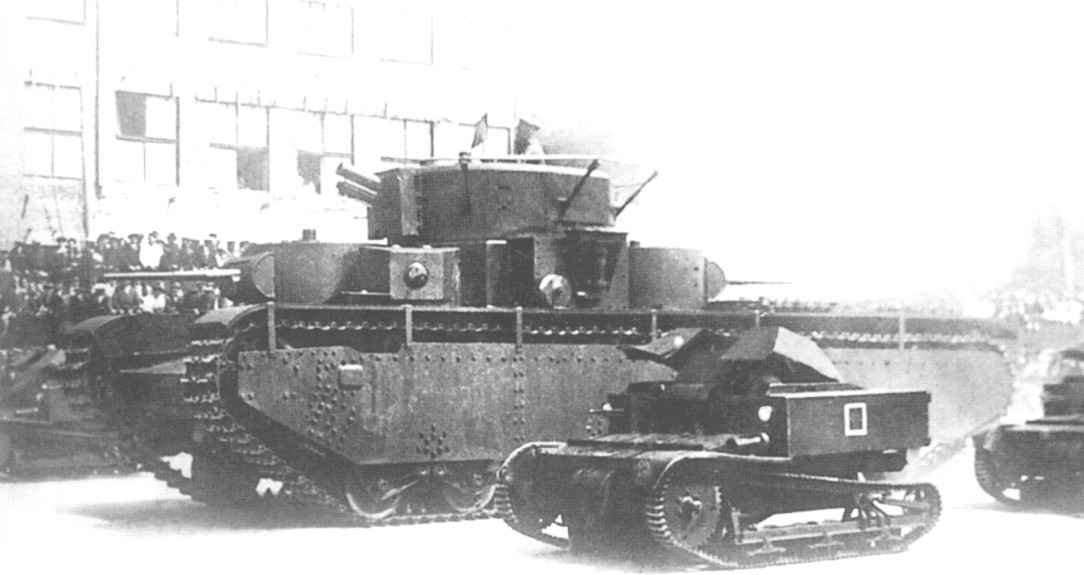
T-28, Medium Tank
During the 1930s, T-28 medium tanks entered service with the heavy tank brigades of the Red Army High Command Reserve. When mechanized corps were formed shortly before the war, the T-28s were distributed among several tank divisions.
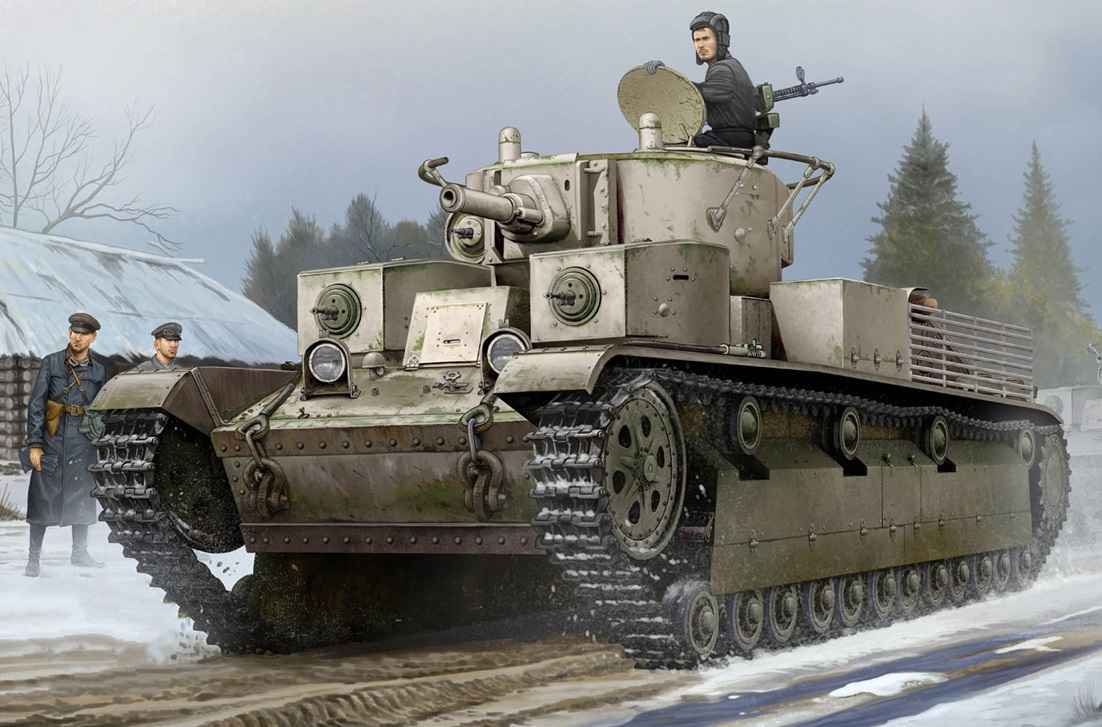
| Type | Soviet medium tank |
| Combat Weight | 25.2 tons |
| Crew | 6 men |
| Armament | 1 × 76 mm KT-28 gun, 4 × 7.62 mm DT machine guns |
| Ammunition | 69 shells, 7,938 machine-gun rounds |
| Armor | Up to 30 mm |
| Engine | M-17L 12-cylinder gasoline engine |
| Engine Power | 450 hp |
| Maximum Speed | 40 km/h |
| Range | 180 km |
| Length | 7.36 m |
| Width | 2.87 m |
| Height | 2.62 m |
| Ground Clearance | 0.50 m |
The T-28 was a Soviet multi-turreted medium tank developed in the early 1930s and officially adopted by the Red Army in 1933. Its armament consisted of a 76 mm KT-28 gun in the main turret and four 7.62 mm DT machine guns, including weapons mounted in two smaller turrets.
The T-28 was produced from 1933 to 1940 and underwent numerous improvements during its production life. From 1938, tanks began receiving the more powerful 76 mm L-10 gun, while a small batch produced in 1940 featured conical main turrets.
During the 1930s, T-28 tanks served primarily with heavy tank brigades of the Red Army High Command Reserve. Shortly before World War II they were distributed among several mechanized and tank formations.
The T-28 saw extensive combat during the early stages of the German invasion of the Soviet Union in 1941. Most were lost during the fighting that summer, although several vehicles continued to serve on the Leningrad Front until 1943.
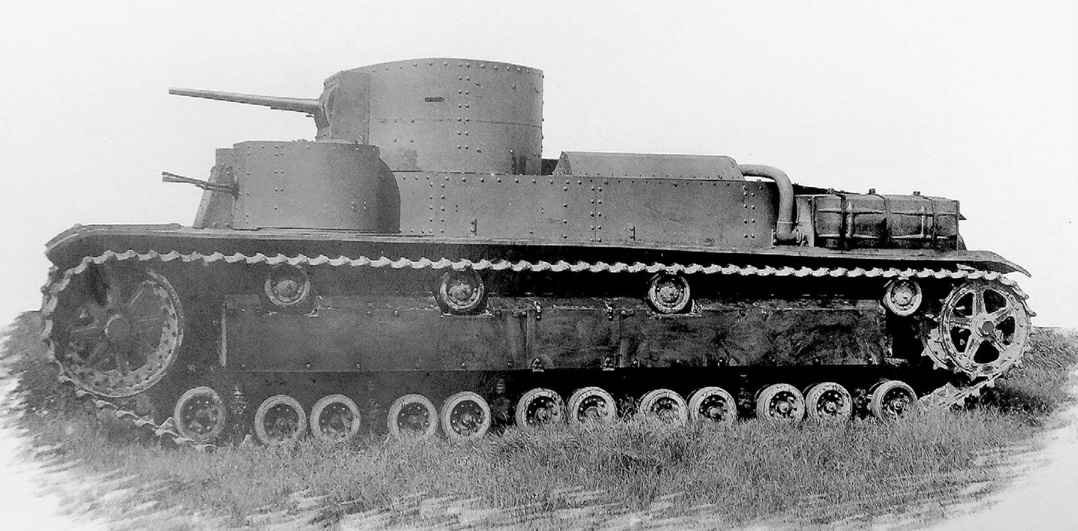
T-29, Medium Tank
In its overall appearance and turret configuration, the T-29 resembled the T-28 medium tank. It featured three turrets, with a 76.2 mm gun mounted in the central main turret and machine guns installed in ball mounts in the two smaller turrets.
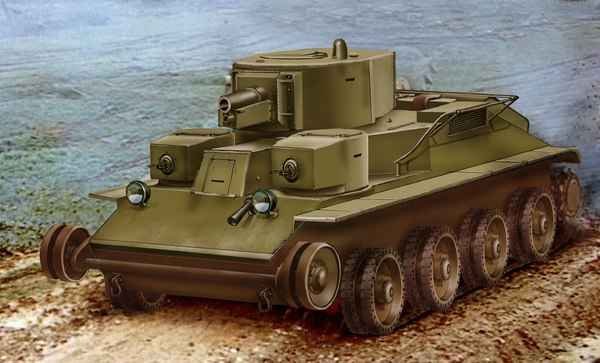
| Type | Soviet medium wheeled-tracked tank |
| Combat Weight | 28.8 tons |
| Crew | 5 men |
| Armament | 1 × 76.2 mm L-10 or PS-3 gun, 5 × 7.62 mm DT machine guns |
| Ammunition | 67 shells, 6,930 machine-gun rounds |
| Armor | Up to 30 mm |
| Engine | M-17F gasoline engine |
| Engine Power | 500 hp |
| Maximum Speed | 55 km/h |
| Range | 230–330 km |
| Length | 7.374 m |
| Width | 2.18–3.22 m |
| Height | 2.82–2.85 m |
The T-29 was a Soviet experimental medium tank that closely resembled the T-28 in its overall appearance and three-turret configuration. Its main turret carried a 76.2 mm gun, while two smaller turrets were equipped with machine guns.
Unlike the T-28, the T-29 used a convertible wheeled-tracked suspension. When operating on wheels, the three rear pairs of road wheels provided propulsion, while the front pair was used for steering. This system was intended to improve the operational mobility of Soviet armored forces without relying heavily on railway transport or tank trailers.
Trials revealed that the wheeled-tracked system was mechanically complex and difficult to operate. The Red Army increasingly required simpler armored vehicles with stronger protection that could be manufactured in very large numbers.
Although the T-29 was officially accepted for service in 1936, it never entered mass production and remained
imental design.
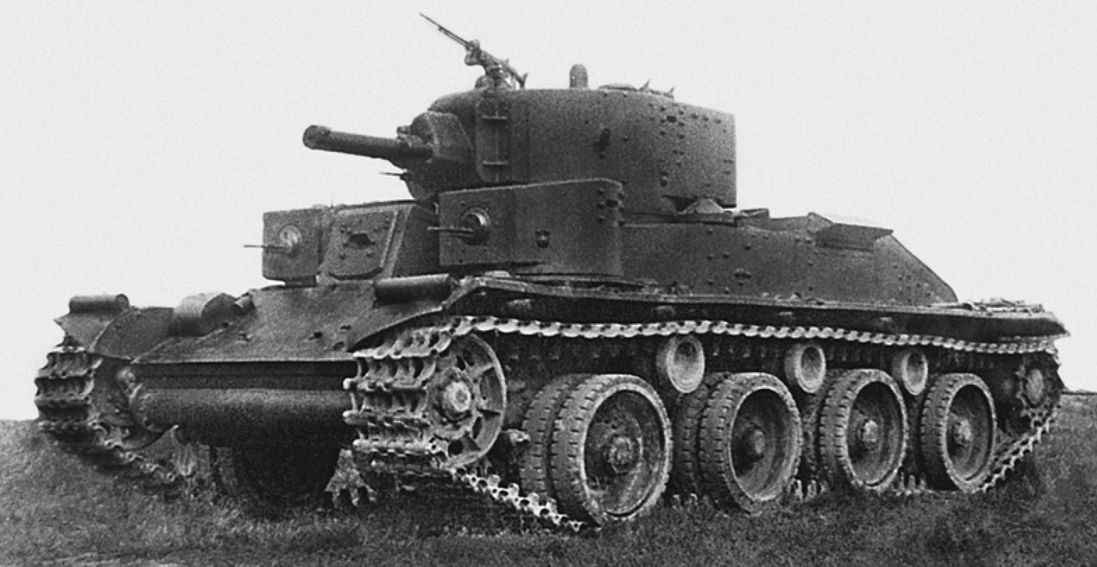
T-30, Light Tank
Since this version carried the factory designation “030” during development, the tank received the designation T-30. However, the T-30 name did not become widely established, and both in military service and statistical reports the vehicle continued to be referred to as the T-40.
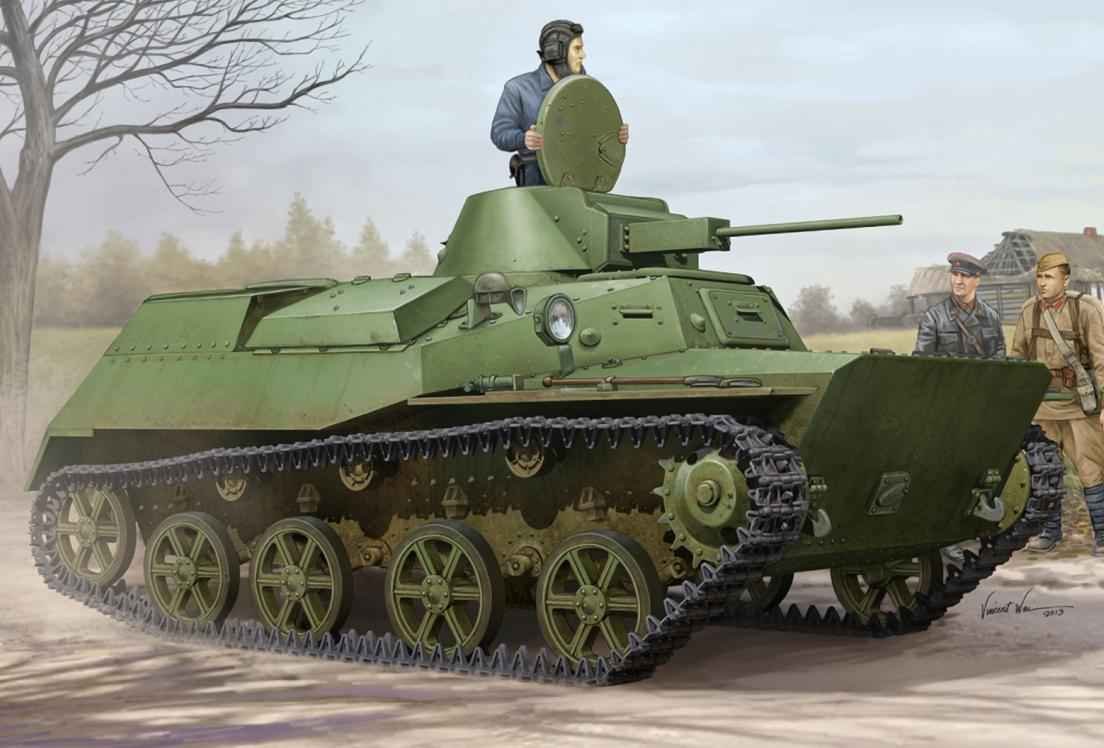
| Type | Soviet light tank |
| Combat Weight | 5.5 tons |
| Crew | 2 men |
| Armament | 1 × 12.7 mm DShK machine gun, 1 × 7.62 mm DT machine gun |
| Ammunition | 550 × 12.7 mm rounds, 2,016 × 7.62 mm rounds |
| Armor | Up to 20 mm |
| Engine | GAZ-11 4-cylinder gasoline engine |
| Engine Power | 85 hp |
| Maximum Speed | 45 km/h |
| Range | 300 km |
| Length | 4.11 m |
| Width | 2.33 m |
| Height | 1.95 m |
| Ground Clearance | 0.34 m |
The T-30 was a simplified wartime version of the Soviet T-40 light tank, developed in 1941. Beginning in August, several changes were introduced to simplify production, including the removal of amphibious equipment and modifications to the hull design.
The weight saved by eliminating the water-propulsion equipment allowed the armor protection to be increased. The frontal and side hull armor was strengthened from 12 to 15 mm, while the turret, turret box sides and gun mantlet received armor up to 20 mm thick.
The vehicle was armed with a 12.7 mm DShK heavy machine gun and a 7.62 mm DT machine gun. Beginning in September 1941, some T-30 tanks were equipped with the 20 mm TNSh-20 automatic cannon with an ammunition supply of 750 rounds.
The designation T-30 originated from the factory index “030.” However, the name was not widely adopted, and in military units and official statistical reports these vehicles continued to be referred to as T-40 tanks.
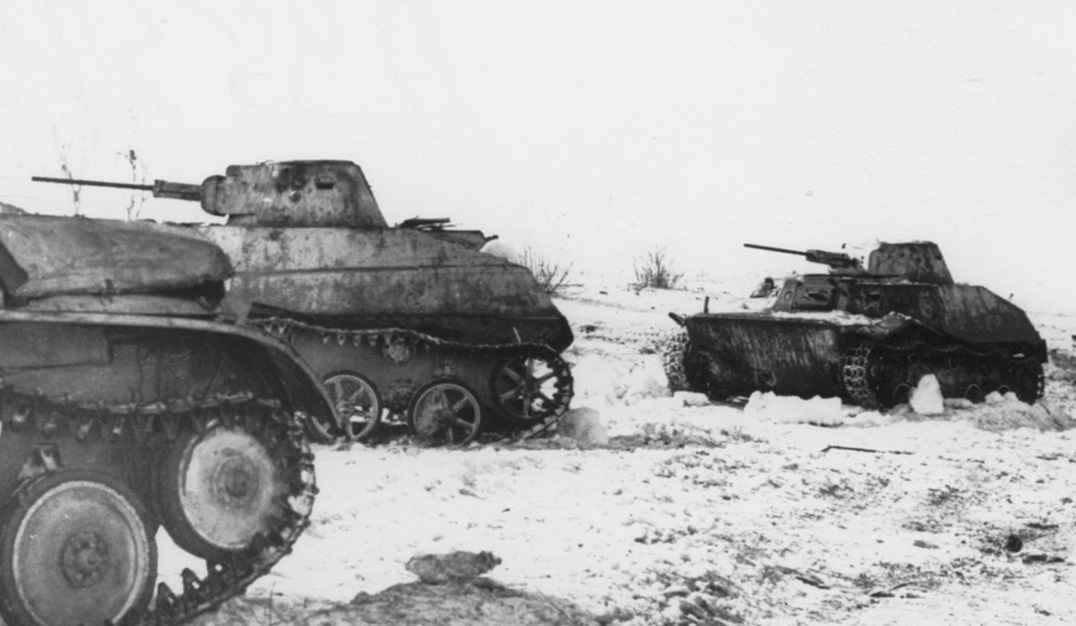
T-33, Light Tank
Developed on the basis of the British Vickers-Carden-Loyd tank purchased by the Soviet Union.
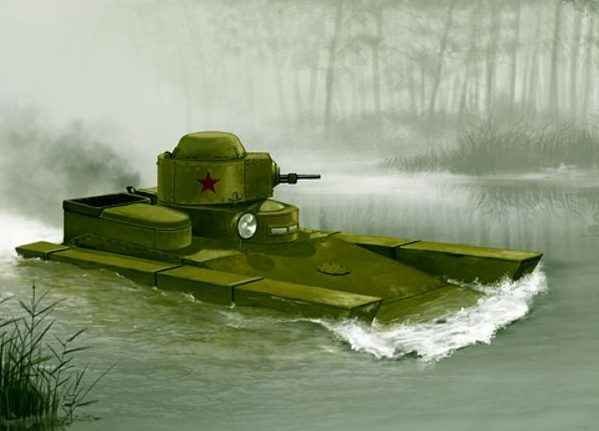
| Type | Soviet light amphibious tank |
| Combat Weight | 3.0 tons |
| Crew | 2 men |
| Armament | 1 × 7.62 mm DT machine gun |
| Ammunition | 2,140 rounds |
| Armor | Up to 10 mm |
| Engine | Ford-AA gasoline engine |
| Engine Power | 40 hp |
| Maximum Speed | 45 km/h |
| Speed on Water | 5–6 km/h |
| Range | 230 km |
| Length | 3.75 m |
| Width | 1.84 m |
| Height | 1.84 m |
| Ground Clearance | 0.26 m |
The T-33 was a Soviet experimental light amphibious tank developed in 1932 by the OKMO design bureau at the Bolshevik Plant under chief designer N. A. Astrov. It was based on the British Vickers-Carden-Loyd tank purchased by the Soviet Union.
The T-33 had a riveted watertight hull. To increase buoyancy, floats filled with cork or similar lightweight material were attached to the fenders on both sides of the vehicle. The manually rotated armored turret carried a single 7.62 mm DT machine gun in a ball mount.
The tank was powered by a 40 hp Ford-AA gasoline engine, although some vehicles were reportedly fitted with the GAZ-AA engine. It could reach 45 km/h on land and approximately 5–6 km/h in water.
The T-33 was one of the Soviet Union’s earliest experimental amphibious tanks and was produced only in small numbers. Experience gained from the project contributed to later Soviet amphibious tank development, and the T-33 was eventually succeeded by the T-37 and T-37A.
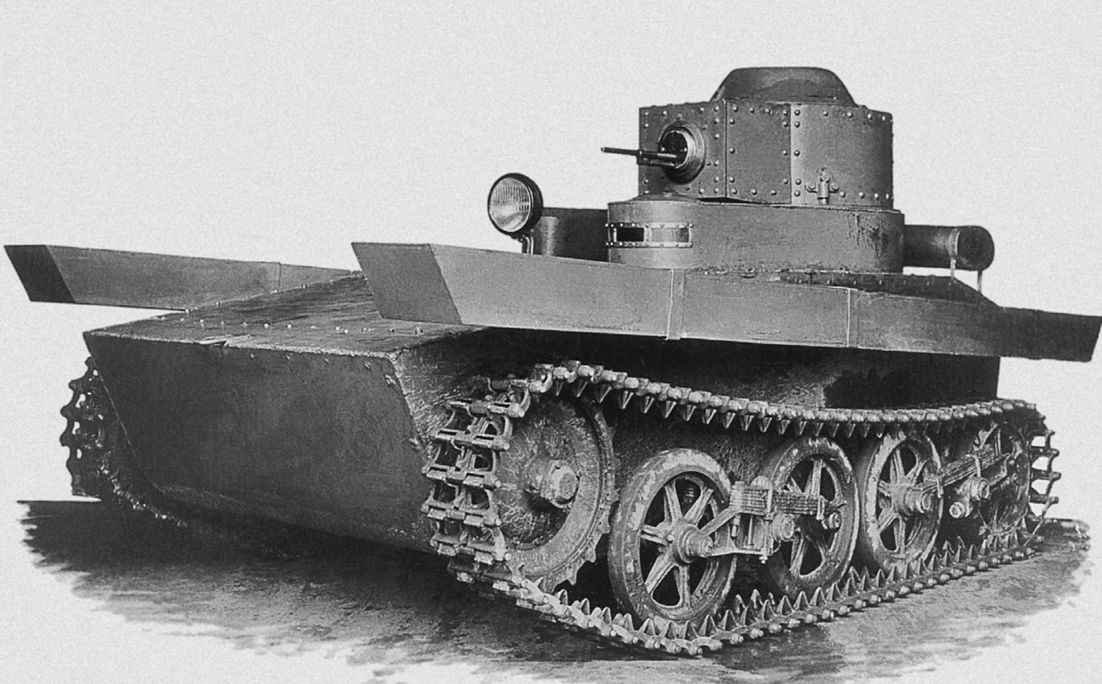
T-34-76 Model 1940/41, Medium Tank
Since the T-34 was produced at several different factories, there were differences between the various models and production versions
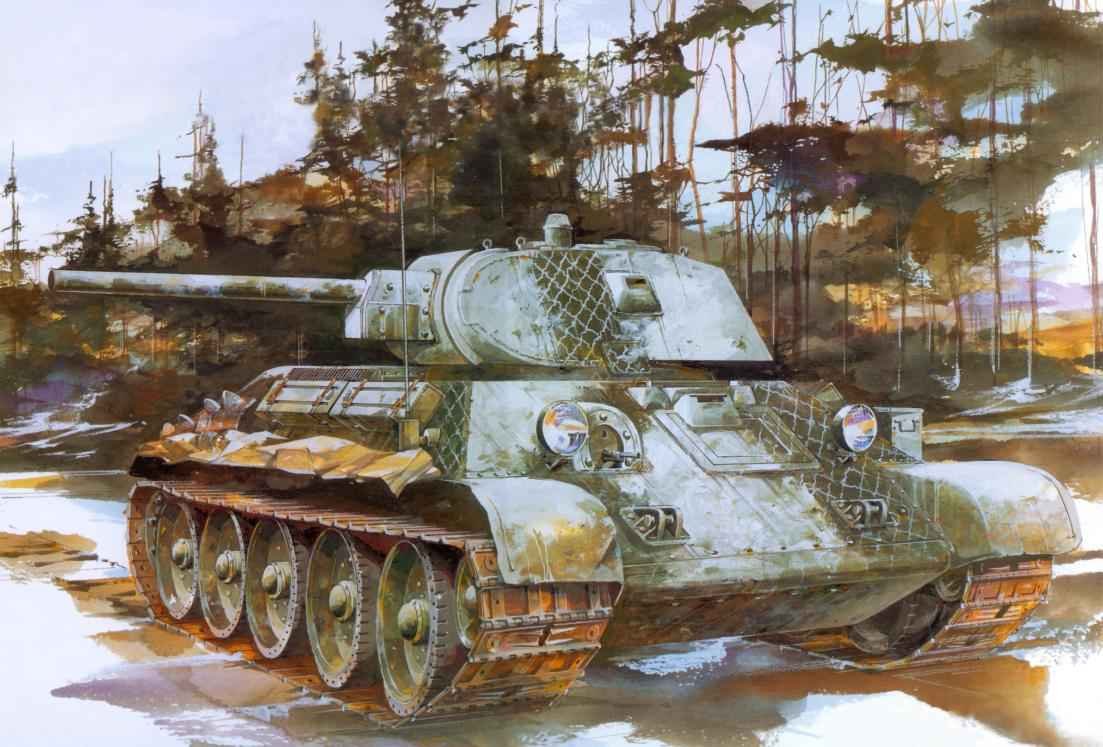
Full Specifications
| Combat weight, t: | 26.8 |
| Range, km: | 300 |
| Armament: | 1 × 76 mm F-34 gun, 2 × 7.62 mm DT machine guns |
| Maximum road speed, km/h: | 54 |
| Crew: | 4 |
The T-34-76 Model 1940/41 was an early version of the famous Soviet medium tank. Since the T-34 was produced at several factories, individual models differed in construction and equipment. The Model 1941 received the powerful 76 mm F-34 gun and combined sloped armor, good mobility and strong firepower. It had a crew of four, a maximum road speed of 54 km/h and a range of 300 km.
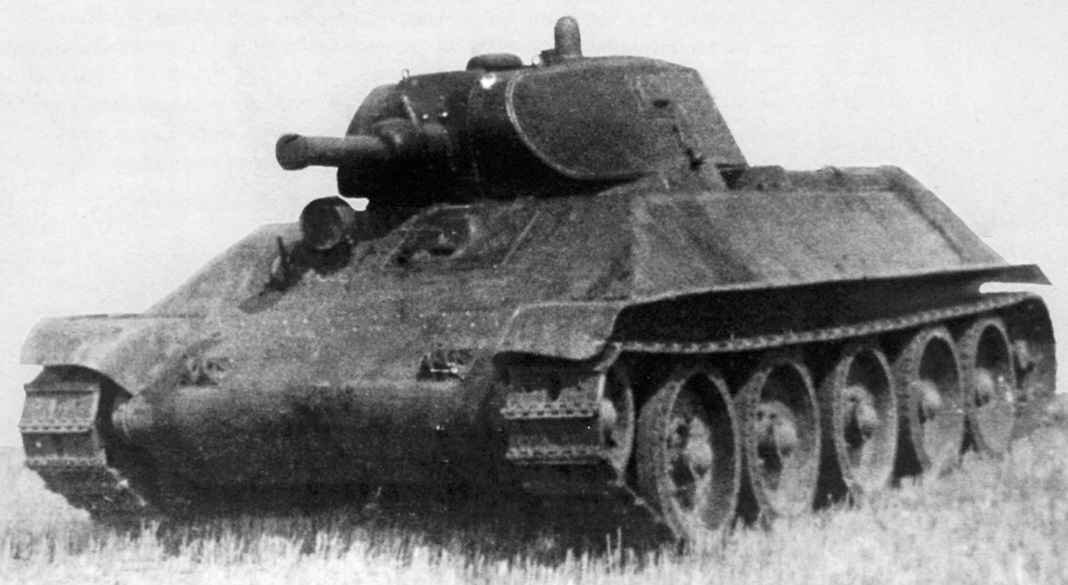
T-34-76 Model 1942, Medium Tank
Since the T-34 tank was produced at several different factories, there were differences between the various models and production versions.
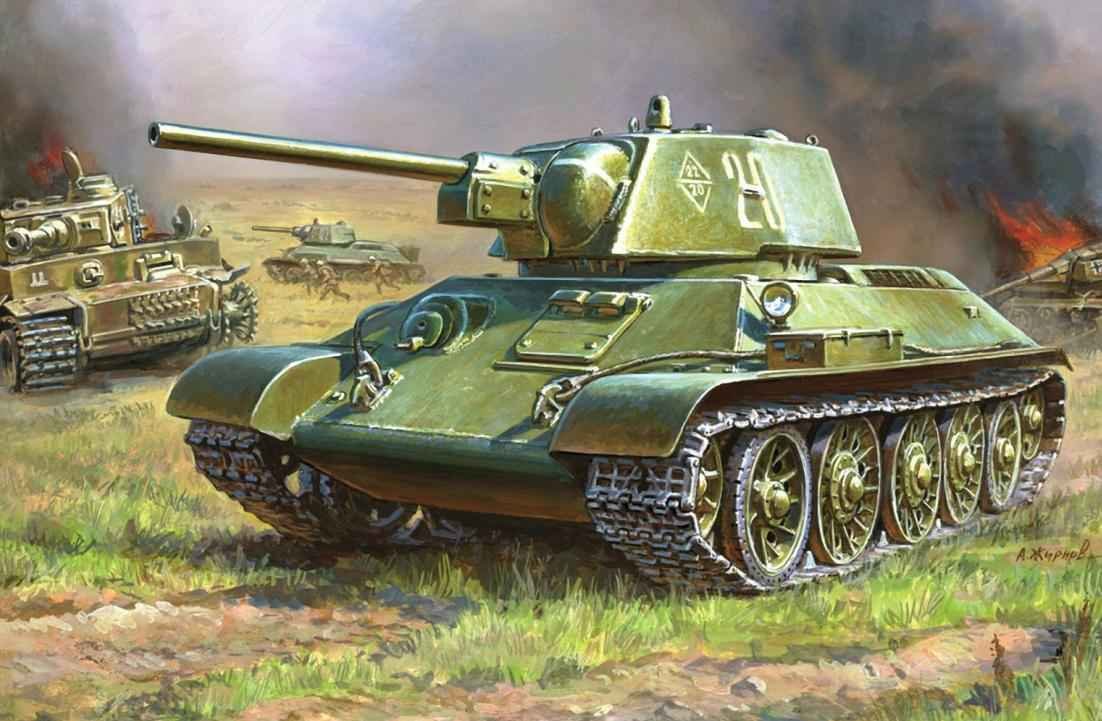
Full Specifications
| Combat Weight | 26.8 tons |
| Crew | 4 men |
| Armament | 1 × 76 mm F-34 gun, 2 × 7.62 mm DT machine guns |
| Maximum Road Speed | 54 km/h |
| Range | 300 km |
| Length | 5.92 m |
| Length with Gun | 6.62 m |
| Width | 3.0 m |
| Hull Front Armor | 45 mm |
| Hull Side and Rear Armor | 40–45 mm |
| Turret Front Armor | 40–45 mm |
| Turret Side and Rear Armor | 45–52 mm |
| Roof Armor | 15–20 mm |
The T-34-76 Model 1942 was a wartime development of the famous Soviet T-34 medium tank. Since T-34s were manufactured at several factories, differences existed between individual production versions. The 1942 model standardized the cast turret and incorporated improvements based on combat experience. The commander and loader received separate hatches, while a new 7.62 mm DT hull machine gun improved close-range defense. The tank retained the powerful 76 mm F-34 main gun, excellent mobility and characteristic sloped armor.
Why the T-34-76 Model 1942 Was Important
The T-34-76 Model 1942 represented an important stage in the wartime evolution of the T-34. Its design incorporated lessons learned during the first year of fighting against Germany while remaining suitable for large-scale production. The combination of a 76 mm F-34 gun, sloped armor, wide tracks and high mobility made the T-34 one of the Soviet Union’s most important armored vehicles of World War II.
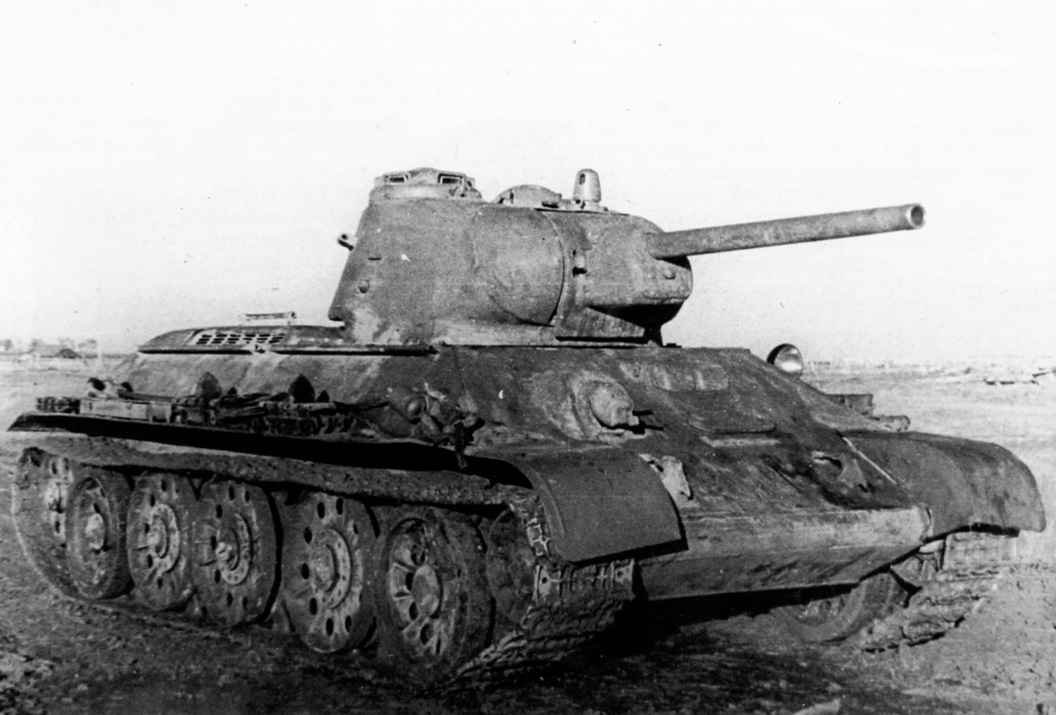
T-34, Light Tank
The T-34 light tank was designed in the Design Bureau of the Experimental Plant of the Spetsmashtrest (Factory No. 185) under the direction of S.A. Ginzburg in 1931–1932. The first prototype, armed with machine guns, was built in 1932.
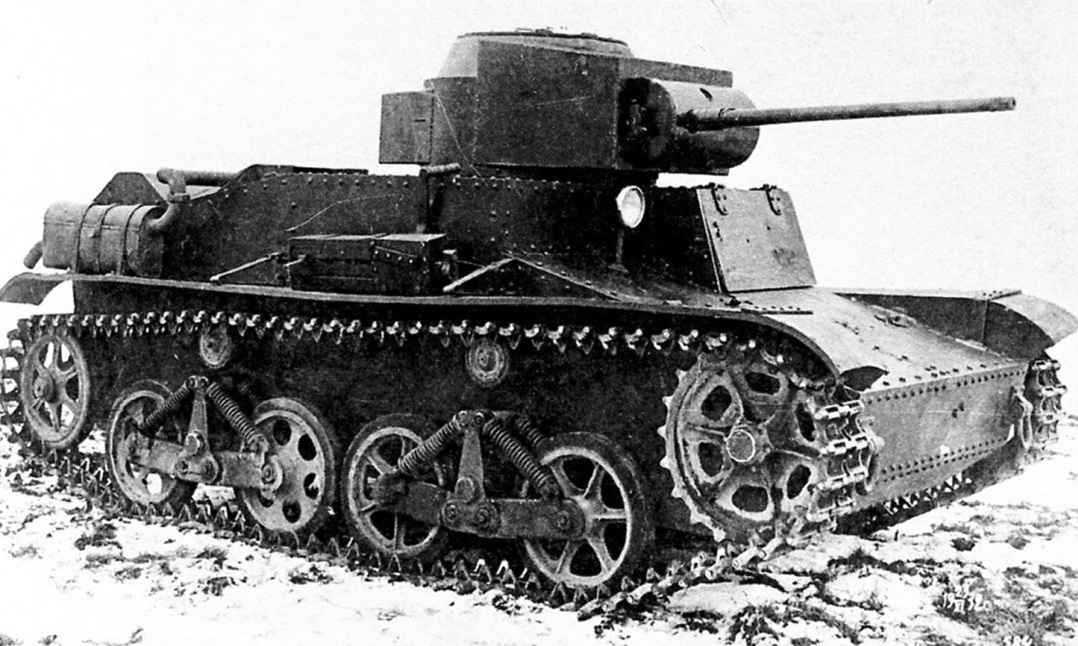
Full Specifications
| Combat Weight | 4.3–4.8 tons |
| Crew | 2 men |
| Armament | 1 × 20 mm automatic gun, 1 × 7.62 mm DT machine gun |
| Ammunition | 330 rounds, 2,600 machine gun cartridges |
| Maximum Road Speed | 45 km/h |
| Road Range | 180 km |
| Cross-Country Range | 110 km |
| Length | 3.68 m |
| Width | 1.98 m |
| Height | 1.81 m |
| Ground Clearance | 270 mm |
| Hull Front Armor | 10 mm |
| Hull Side Armor | 10 mm |
| Turret Armor | 10 mm |
| Engine | 6-cylinder gasoline engine, 73 hp |
The T-34 light tank was an experimental Soviet tank designed at Factory No. 185 under the direction of S.A. Ginzburg in 1931–1932. The first machine-gun-armed prototype was completed in 1932, followed by a second prototype fitted with a mock-up of a 20 mm automatic gun in 1933. The compact two-man tank combined light armor with relatively high mobility and was intended as a simple vehicle suitable for large-scale production.
Why the T-34 Light Tank Was Important
The experimental T-34 represented an early Soviet attempt to develop a small, inexpensive and mobile tank suitable for mass production. It successfully passed trials in 1934, but its armament was considered too weak. Development ended after the planned 20 mm Shpitalny automatic tank gun could not be successfully completed. Despite sharing the famous T-34 designation, this experimental light tank was an entirely separate project from the later T-34 medium tank.
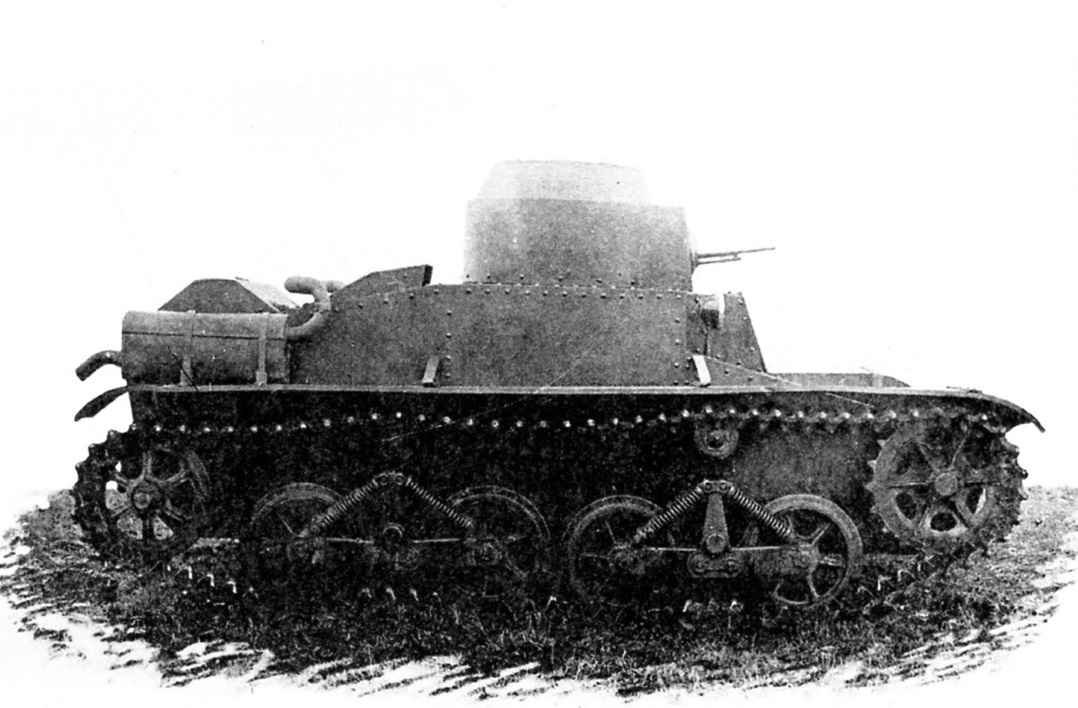
T-34/85 Model 1944, Medium Tank
Since the T-34 was produced at several different factories, there were differences between individual models and production versions.
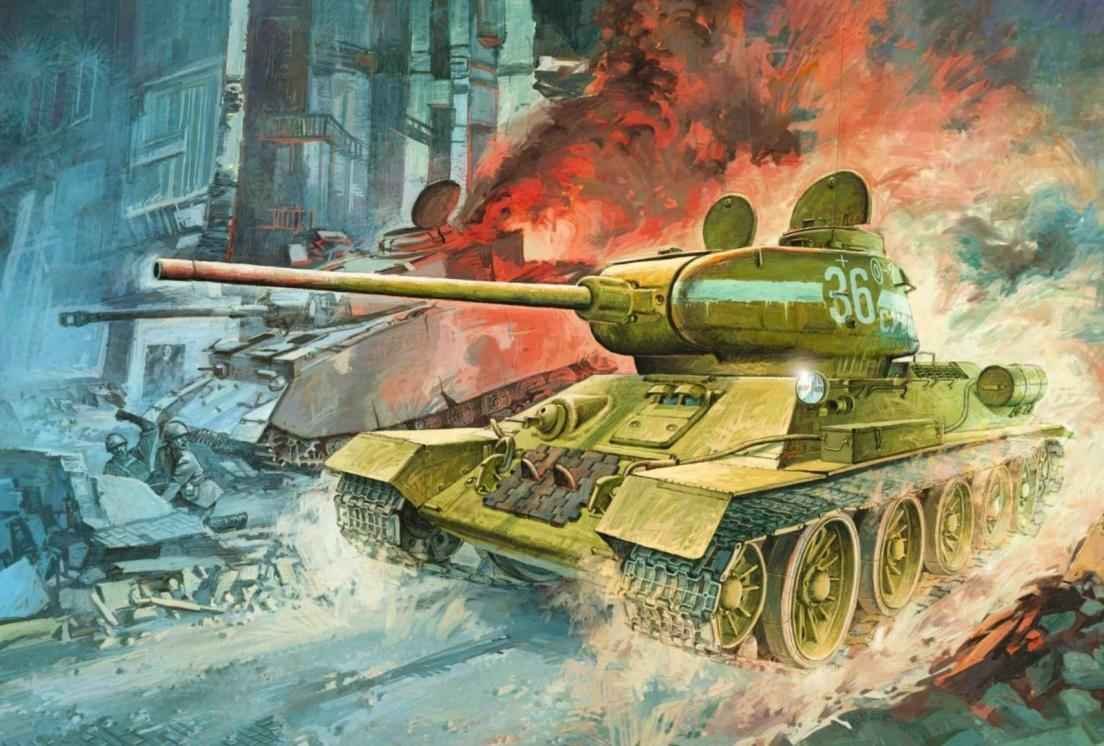
Full Specifications
| Combat Weight | 32.0 tons |
| Crew | 5 men |
| Armament | 1 × 85 mm S-53 gun, 2 × 7.62 mm DT machine guns |
| Maximum Road Speed | 54 km/h |
| Range | 300–400 km |
| Length | 5.92 m |
| Length with Gun | 8.1 m |
| Width | 3.0 m |
| Height | 2.72 m |
| Hull Front Armor | 45 mm |
| Hull Side and Rear Armor | 45 mm |
| Turret Front Armor | 40–90 mm |
| Turret Side and Rear Armor | 52–75 mm |
| Roof Armor | 16–20 mm |
| Bottom Armor | 13–20 mm |
The T-34/85 Model 1944 was one of the most important Soviet medium tanks of World War II. It combined the proven mobility and sloped armor of the T-34 chassis with a larger turret and the more powerful 85 mm S-53 gun. The enlarged turret allowed a five-man crew and improved the commander’s ability to concentrate on battlefield observation and command.
The T-34/85 Model 1944 was one of the most important Soviet medium tanks of World War II and the final major wartime development of the famous T-34 series.
The original T-34 entered service with the Red Army in 1939–1940. Early versions were armed with 76.2 mm guns and combined sloped armor, wide tracks, Christie suspension and a powerful V-2 diesel engine. The design was continuously improved during the war, including stronger armament, better transmissions, improved observation equipment and new turret designs. :contentReference[oaicite:0]{index=0}
By 1943, the 76.2 mm gun was becoming less effective against newer German tanks such as the Tiger and Panther. This led to the development of the T-34/85 with a much more powerful 85 mm gun. :contentReference[oaicite:1]{index=1}
The T-34/85 also received a larger three-man turret. This was an important improvement because the commander no longer had to operate the main gun and could concentrate on commanding the tank and observing the battlefield. :contentReference[oaicite:2]{index=2}
The T-34 used a welded hull with sloped armor and wide tracks that provided good mobility on mud, snow and rough terrain. Its V-2 diesel engine gave the tank a strong combination of mobility, range and battlefield performance. :contentReference[oaicite:3]{index=3}
The T-34/85 Model 1944 became one of the best-known Soviet tanks of World War II, combining the proven T-34 chassis with improved firepower and a more effective crew layout.
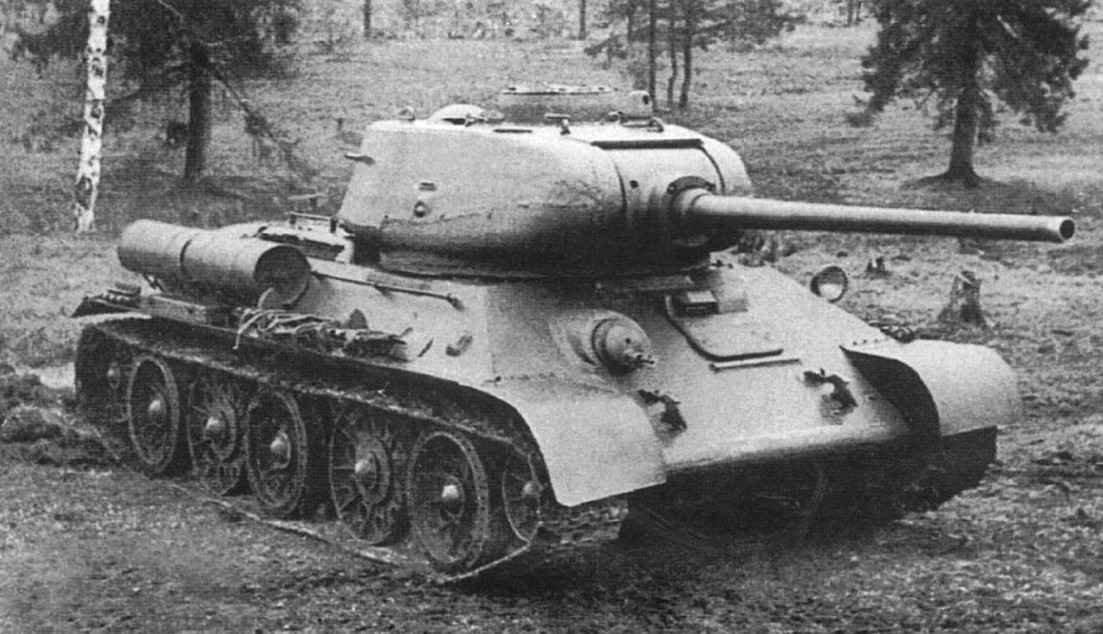
T-34M (A-43), Medium Tank
The new tank was designed to surpass the T-34 in every way, but its innovative design features ultimately worked against it and prevented the project from succeeding.
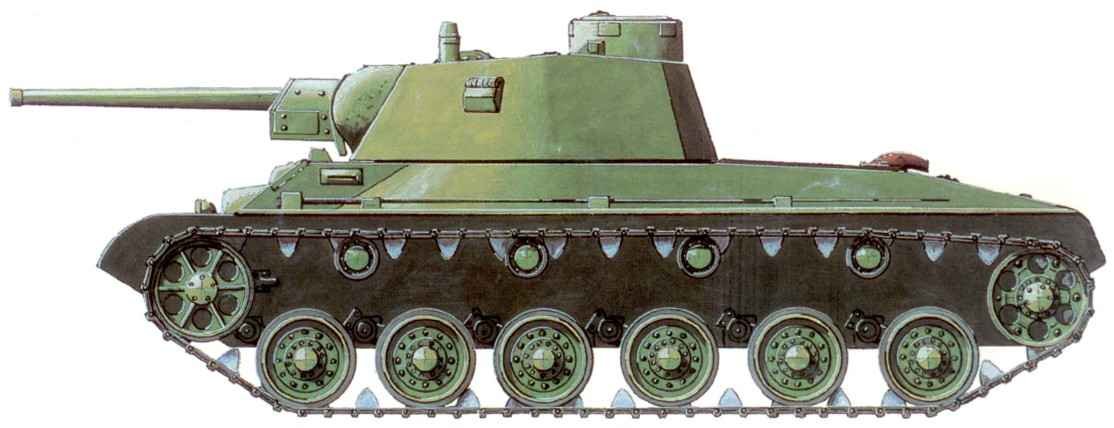
T-34M (A-43) Experimental Soviet Medium Tank
The T-34M, also known as the A-43, was an experimental Soviet medium tank developed in 1941 as an improved successor to the T-34. It featured a redesigned hull, torsion-bar suspension, a new turret with a commander’s cupola, and a planned 600 hp V-5 diesel engine. Armed with a 76 mm F-34 gun, the T-34M was designed to improve protection, mobility, crew conditions, and ammunition capacity. Several hulls and turrets were produced, but the German invasion of the Soviet Union prevented the tank from entering mass production.
| Combat weight | 27.5 t |
| Crew | 5 |
| Main armament | 1 × 76 mm F-34 gun |
| Secondary armament | 2 × 7.62 mm DT machine guns or 1 × DT + flamethrower |
| Gun ammunition | 100 rounds |
| Engine | V-5 diesel, 600 hp |
| Front hull armor | 60 mm |
| Turret armor | up to 50 mm |
| Suspension | Individual torsion bar |
| Ground clearance | 450 mm |
Brief History of the T-34M (A-43)
The T-34M was approved in early 1941 and was intended to overcome several weaknesses of the original T-34. One of its most important changes was the replacement of the Christie suspension with torsion bars. The tank also received a redesigned turret with a commander’s cupola and increased ammunition capacity of 100 rounds.
Production preparations were already underway when Germany invaded the Soviet Union in June 1941. The planned V-5 engine was not ready, and wartime priorities forced Soviet industry to concentrate on mass production of the existing T-34. As a result, the T-34M never entered series production.
Why the T-34M Was Important
Although the T-34M never reached mass production, it represented an important attempt to improve the Soviet medium tank before the German invasion. Its torsion-bar suspension, improved crew layout, stronger frontal armor, larger ammunition capacity, and redesigned turret showed the direction Soviet engineers were considering for the next generation of medium tanks.
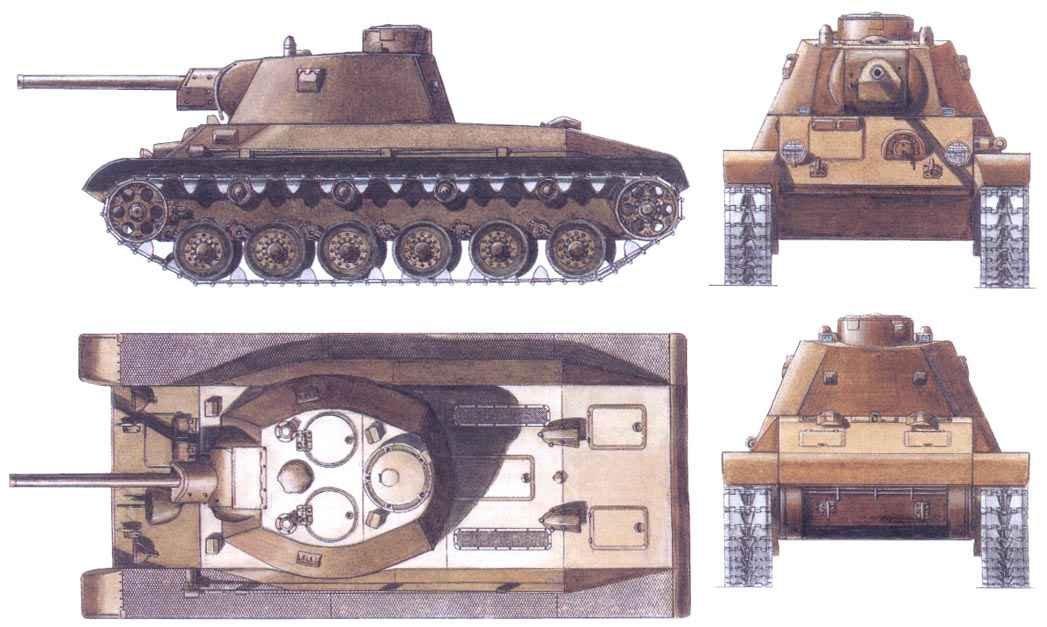
T-35, Heavy Tank
Development of Soviet heavy tanks began in 1929, when a team of OKMO designers led by N.V. Barykov developed a new combat vehicle designated the T-35.
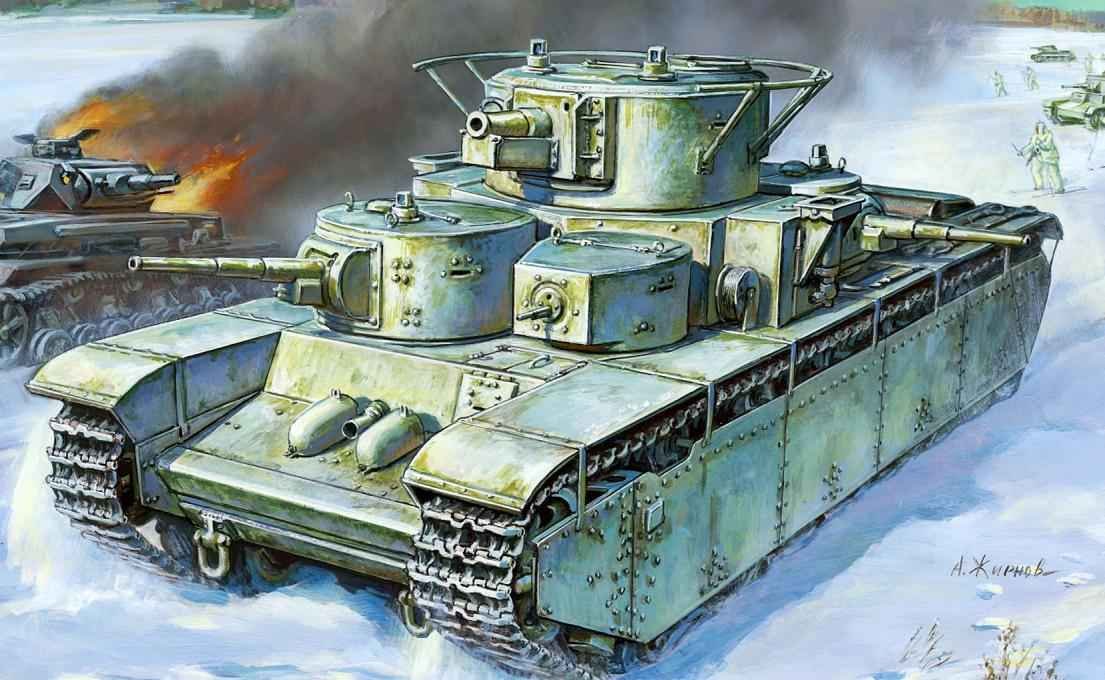
Full Specifications
| Combat Weight | 52 t |
| Crew | 11 |
| Main Armament | 1 × 76 mm KT-28 gun |
| Secondary Armament | 2 × 45 mm 20K guns, 6 × 7.62 mm DT machine guns |
| Ammunition | 96 × 76 mm rounds, 220 × 45 mm rounds, 9,230–10,000 machine-gun rounds |
| Engine | M-17M gasoline engine, 450 hp |
| Maximum Speed | 30 km/h |
| Range | 150 km |
| Length | 9.72 m |
| Width | 3.20 m |
| Height | 3.43 m |
| Front Armor | 30 mm |
Brief History of the T-35 Heavy Tank
The T-35 was a Soviet five-turret heavy tank developed in the early 1930s. Its unusual design combined a 76 mm main gun, two 45 mm guns and several machine guns, giving it exceptionally heavy armament for its time. Serial production began in 1933, and only 61 T-35 tanks were built by 1939.
Why the T-35 Was Important
The T-35 became one of the most recognizable Soviet tanks of the pre-war period and a rare example of a production five-turret heavy tank. Despite its impressive firepower, the vehicle was large, heavy and complex. Most T-35 tanks were lost during the early stages of the German invasion of the Soviet Union in 1941.
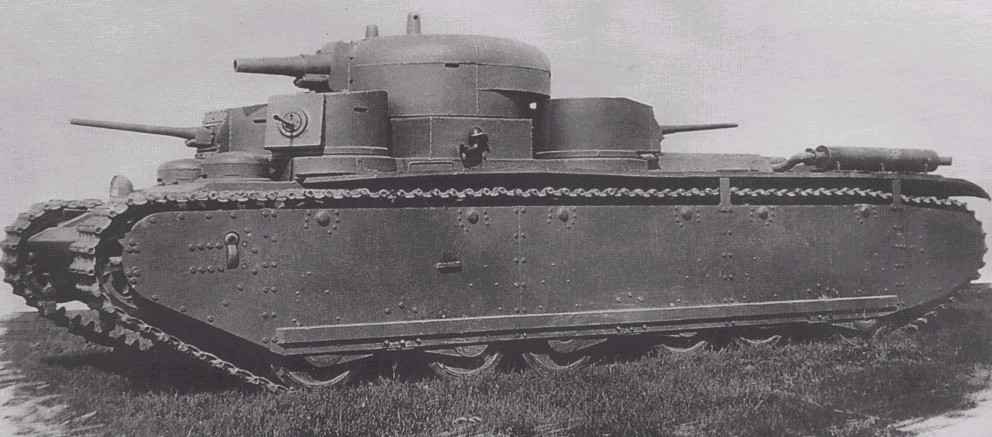
T-37, Light Tank
The T-37 was produced from 1933 to 1936. During this period, a total of 2,627 tanks were built.
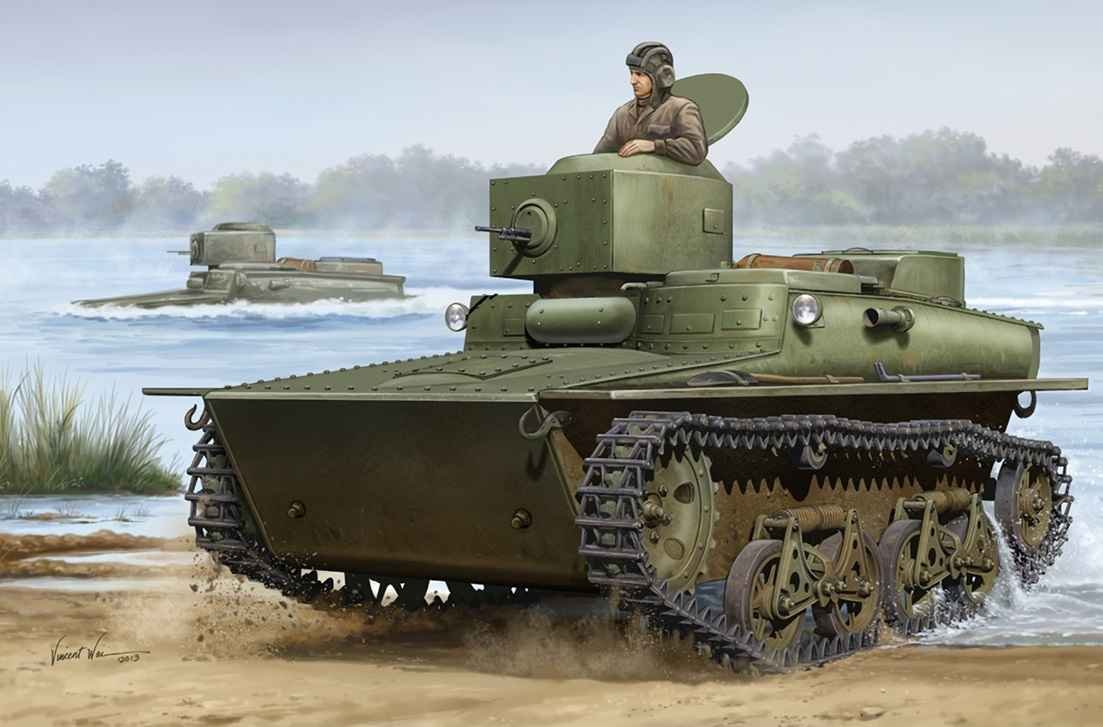
Full Specifications
| Combat Weight | 3.2 t |
| Number Produced | 2,627 |
| Crew | 2 |
| Armament | 1 × 7.62 mm DT machine gun |
| Ammunition | 2,142 rounds |
| Engine | GAZ-AA gasoline engine, 40 hp |
| Maximum Speed | 35 km/h on land, 6 km/h in water |
| Range | 185 km |
| Length | 3.73 m |
| Width | 1.94 m |
| Height | 1.84 m |
| Armor | Up to 9 mm |
T-37A Soviet Amphibious Light Tank
The T-37A was a Soviet light amphibious tank developed in the early 1930s. It was designed for reconnaissance and could operate both on land and in water. The tank was armed with a 7.62 mm DT machine gun and had a crew of two.
The T-37A used a GAZ-AA 40 hp engine and a propeller for movement in water. Its compact size and amphibious capability made it useful for reconnaissance units. Some tanks were also equipped with 71-TK-1 radio stations.
Production and Service
The T-37A was produced from 1933 to 1936, with 2,627 tanks built. It was also tested for airborne operations, including transportation under TB-3 aircraft and experimental drops into water. T-37A tanks later served with Soviet reconnaissance units and saw combat during the early stages of World War II.
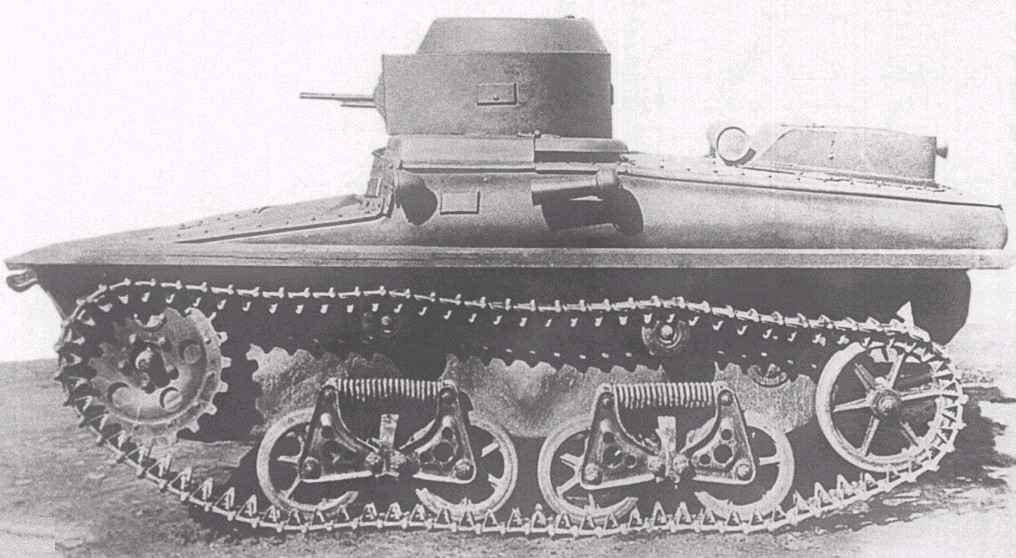
T-38, Light Tank
The T-38 had a hull that was partly welded and partly riveted. Unlike the T-37A, it did not use additional side floats
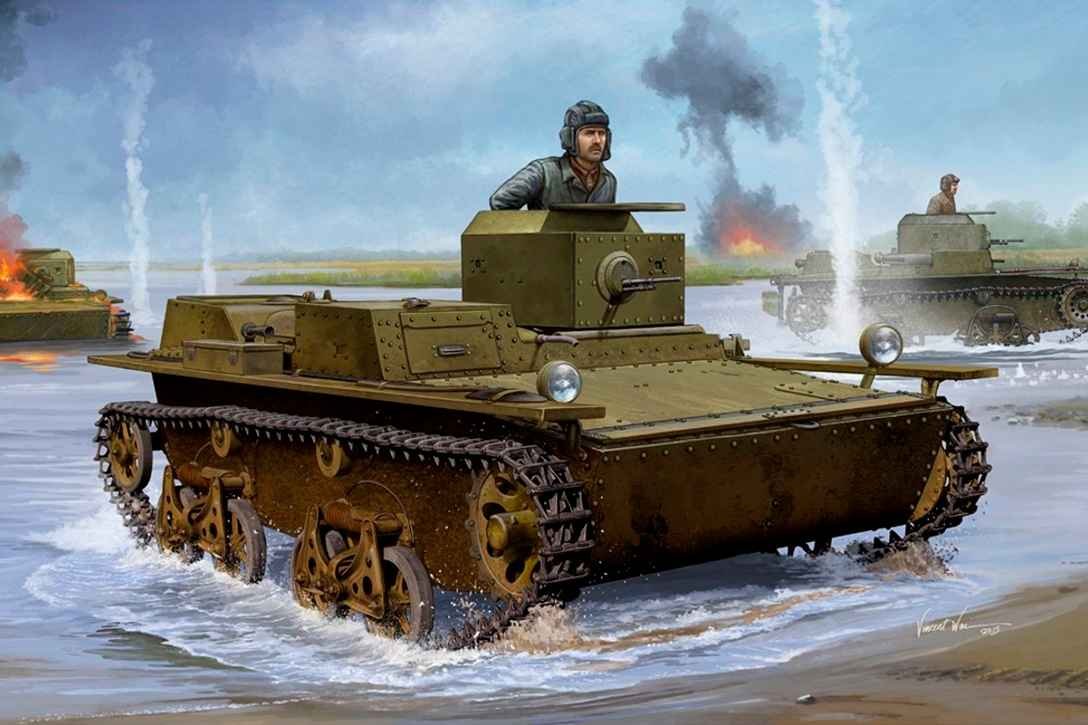
Full Specifications
| Combat Weight | 3.3 t |
| Crew | 2 |
| Armament | 1 × 7.62 mm DT machine gun |
| Ammunition | 1,512 rounds |
| Engine | GAZ-AA gasoline engine, 40 hp |
| Maximum Speed | 40 km/h on land, 6 km/h in water |
| Range | 220 km |
| Length | 3.78 m |
| Width | 2.33 m |
| Height | 1.63 m |
| Armor | Up to 9 mm |
| Production | 1,340 tanks |
T-38 Soviet Amphibious Light Tank
The T-38 was a Soviet light amphibious tank developed in 1936 as an improved successor to the T-37A. It had a two-man crew and was armed with one 7.62 mm DT machine gun. Unlike the T-37A, the T-38 did not require additional side floats.
The tank was powered by a 40 hp GAZ-AA engine and could reach 40 km/h on land and 6 km/h in water. A three-blade propeller provided movement in water. Its small size and amphibious ability made the T-38 mainly suitable for reconnaissance.
Production and Combat Use
A total of 1,340 T-38 tanks were produced from 1936 to 1939. Several experimental versions were developed, including radio-controlled and flamethrower tanks. The T-38 served mainly with Soviet reconnaissance units and saw combat during World War II. One of its last known combat uses was during the crossing of the Svir River in 1944.
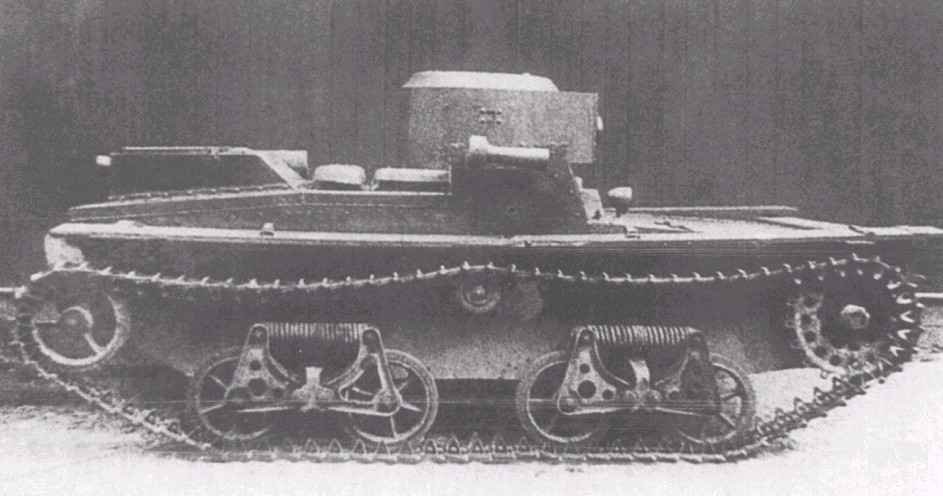
T-40, Light Tank
The T-40 light amphibious tank was developed in 1939 at Factory No. 37 under the direction of N. A. Astrov. It was designed to replace the T-37A and T-38 tanks in Soviet service.
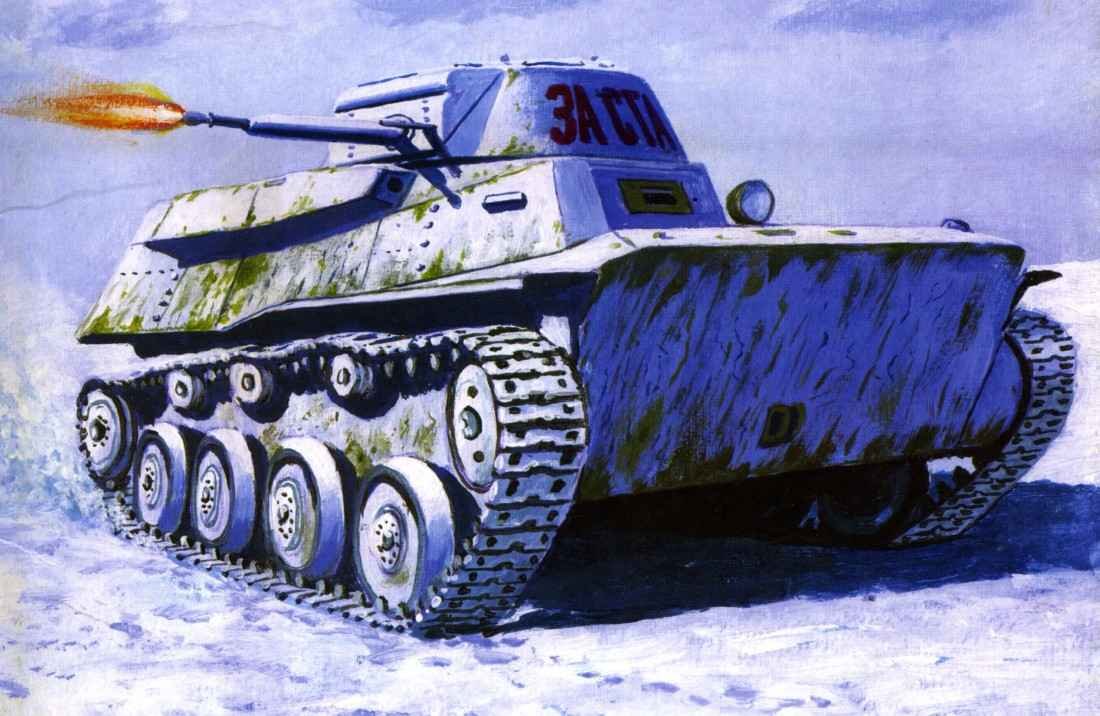
Full Specifications
| Combat Weight | 5.5 t |
| Crew | 2 |
| Armament | 1 × 12.7 mm DShK machine gun, 1 × 7.62 mm DT machine gun |
| Ammunition | 500 × 12.7 mm rounds, 2,016 × 7.62 mm rounds |
| Engine | GAZ-11 Model 202 gasoline engine, 70 hp |
| Maximum Speed | 45 km/h on land, 6 km/h in water |
| Range | 300 km |
| Length | 4.04 m |
| Width | 2.23 m |
| Height | 1.91 m |
| Armor | Up to 13 mm |
| Production | 709 tanks |
T-40 Soviet Amphibious Light Tank
The T-40 was a Soviet light amphibious tank developed in 1939 at Factory No. 37 under N. A. Astrov. It was designed to replace the earlier T-37A and T-38 amphibious tanks. The T-40 had a two-man crew and was armed with a 12.7 mm DShK heavy machine gun and a 7.62 mm DT machine gun.
The tank could travel both on land and in water without additional side floats. It used a four-blade propeller and two water rudders for movement and steering in water. Powered by a 70 hp GAZ-11 engine, the T-40 could reach 45 km/h on land and 6 km/h in water.
Production and Combat Use
The T-40 entered service in December 1940. During World War II, its weak armament led to the development of improved land versions, including the T-40S and T-30. A total of 709 T-40 series tanks were produced. They served alongside the T-60 and were used mainly during the early years of the war.
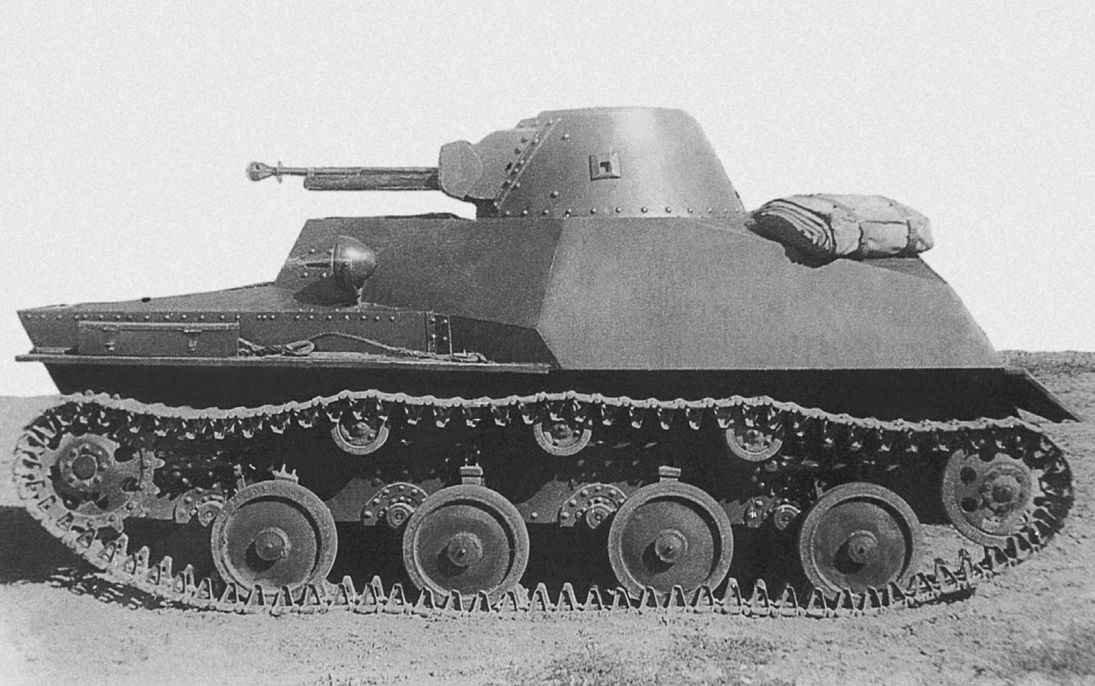
T-41, Light Tank
Two T-41 prototypes were built. The first had good buoyancy but suffered from a high silhouette.
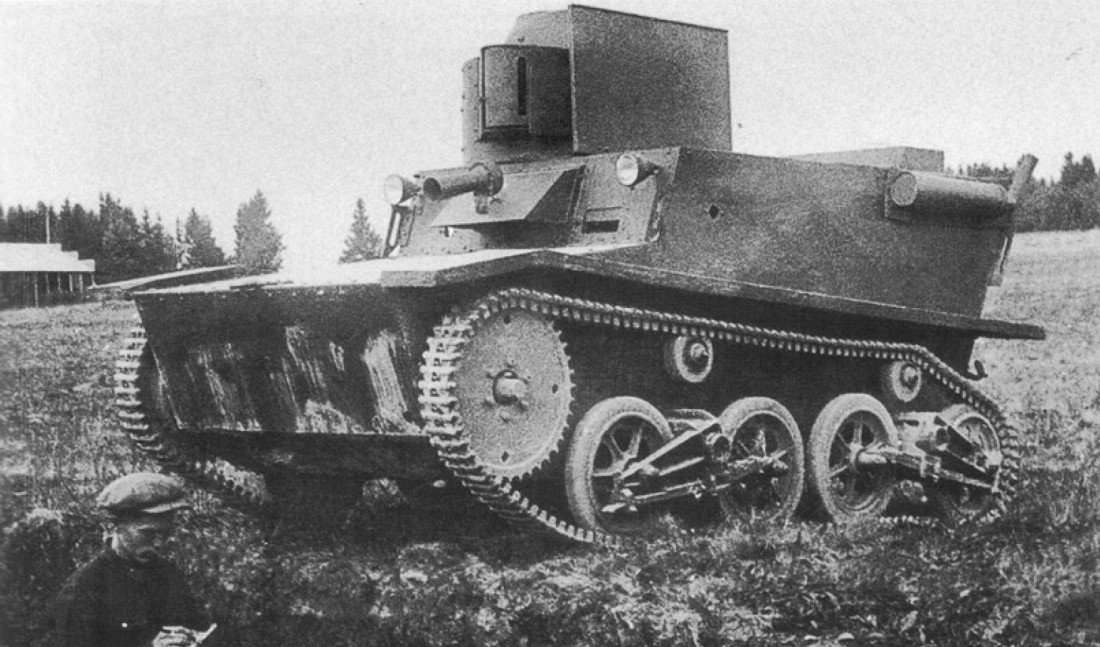
Full Specifications
| Combat Weight | 3.2 t |
| Crew | 2 |
| Armament | 1 × 7.62 mm DT machine gun |
| Engine | GAZ-AA gasoline engine, 40 hp |
| Fuel Capacity | 120 L |
| Maximum Speed | 40 km/h on land, 4.5 km/h in water |
| Range | 150 km |
| Length | 3.67 m |
| Width | 1.90 m |
| Height | 1.98 m |
| Armor | Up to 9 mm |
| Production | 2 prototypes |
T-41 Soviet Experimental Amphibious Tank
The T-41 was an experimental Soviet light amphibious tank developed in 1932 at Factory No. 37. It had a two-man crew and was armed with one 7.62 mm DT machine gun. Powered by a 40 hp GAZ-AA engine, it could reach 40 km/h on land and 4.5 km/h in water.
Two prototypes were built. The first had good buoyancy but a high silhouette and poor handling in water. These problems were partly corrected on the second prototype, but its buoyancy was reduced. The hull shape and weight distribution also caused the front of the tank to dip into the water while moving.
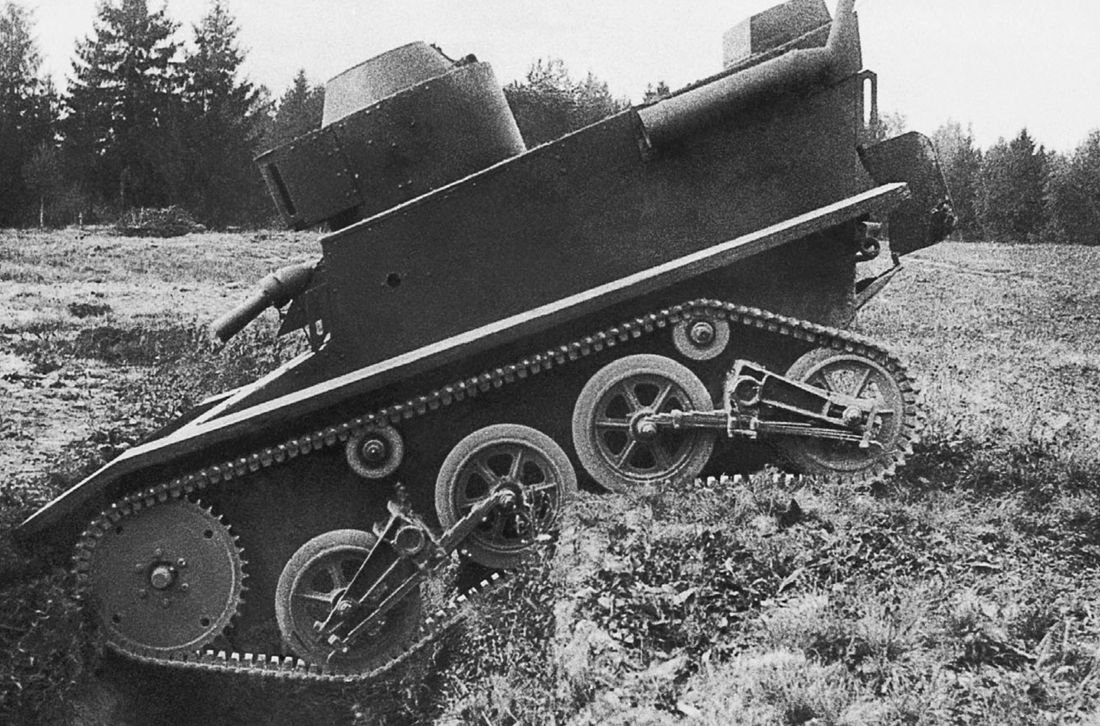
T-43, Light Tank
The T-43 was developed in parallel with the T-43 tank designed at Factory No. 37. It was not accepted for service
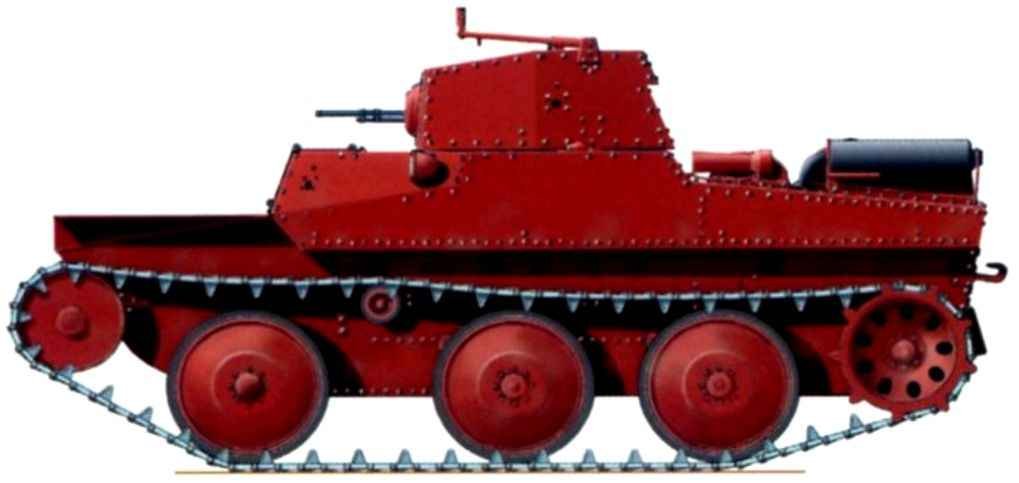
Full Specifications
| Combat Weight | 3.6 t |
| Crew | 2 |
| Armament | 1 × 7.62 mm DT machine gun |
| Ammunition | 2,500 rounds |
| Engine | GAZ-AA gasoline engine, 45–48 hp |
| Fuel Capacity | 120 L |
| Maximum Speed | 62 km/h on wheels, 46 km/h on tracks, 4.5 km/h in water |
| Length | Approx. 3.5 m |
| Width | Approx. 2.0 m |
| Height | Approx. 1.5 m |
| Armor | Up to 9 mm |
| Production | Prototype |
T-43 Soviet Experimental Amphibious Light Tank
The T-43 was an experimental Soviet light amphibious tank developed in 1934 at Factory No. 185. It had a two-man crew and was armed with one 7.62 mm DT machine gun. The tank used a 45–48 hp GAZ-AA gasoline engine.
The T-43 had a riveted armored hull and a rotating machine-gun turret. It could travel on wheels or tracks and was also capable of moving through water using wheels fitted with paddles. The tank was developed in parallel with another T-43 project from Factory No. 37, but it was not accepted for service.
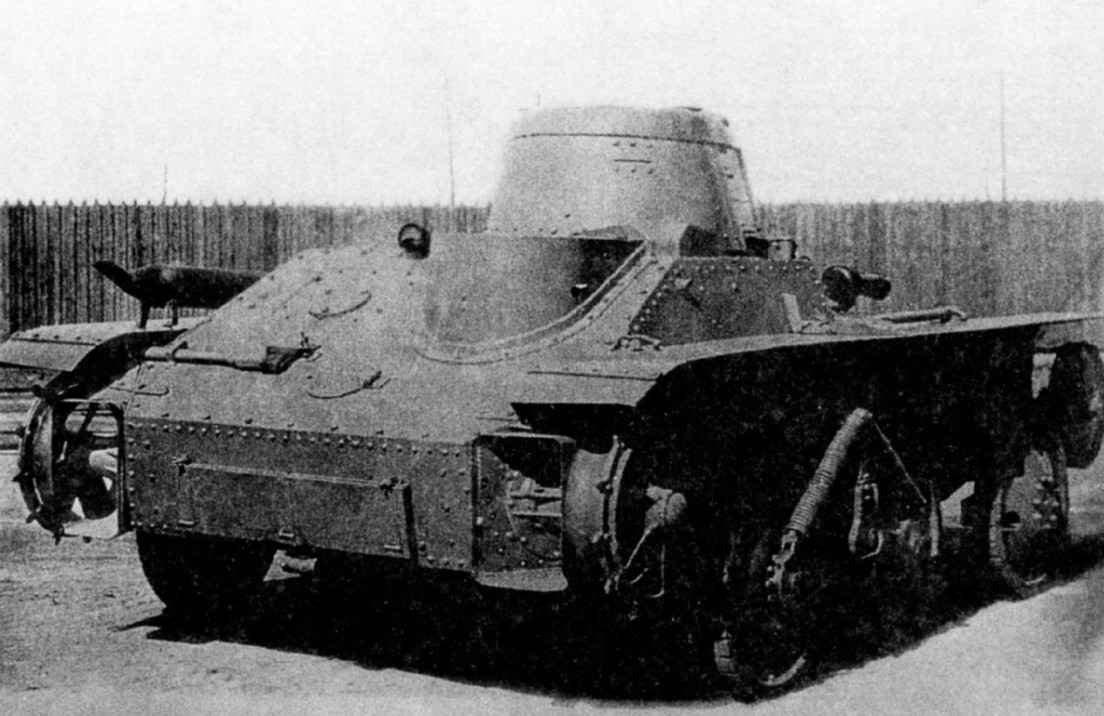
T-43, Medium Tank
After failing to bring the A-43 (T-34M) project to the prototype stage, the Soviet design bureau at Factory No. 183 spent the rest of 1941 mainly adapting the existing tank design to wartime needs and available production capabilities
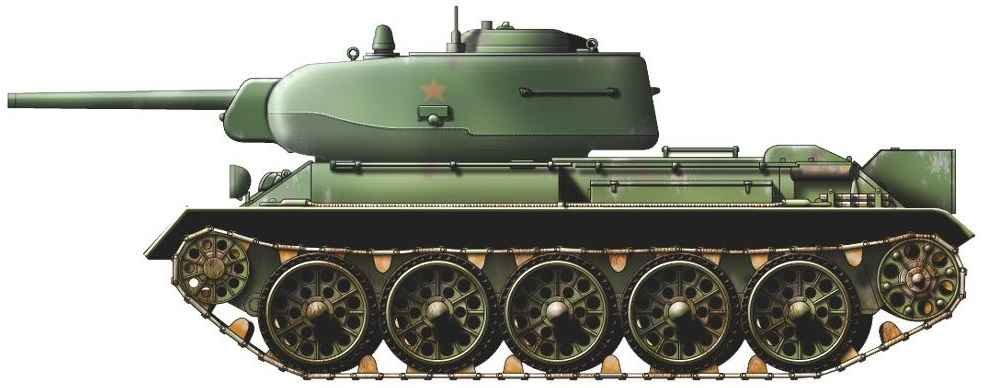
Full Specifications
| Combat Weight | 34.1 t |
| Crew | 4 |
| Armament | 1 × 76 mm F-34M gun, 1 × 7.62 mm DT machine gun |
| Gun Ammunition | 82 rounds |
| Engine | V-2-34 diesel engine, 500 hp |
| Maximum Speed | 51 km/h |
| Range | 280 km on road, 240 km cross-country |
| Length | 6.9 m (8.1 m with gun forward) |
| Width | 3.0 m |
| Height | 2.58 m |
| Armor | Up to 90 mm |
| Production | 3 prototypes |
T-43 Soviet Experimental Medium Tank
The T-43 was an experimental Soviet medium tank developed in 1942–1943 as a major improvement of the T-34. It featured stronger armor, a new torsion-bar suspension and a three-man turret with a commander’s cupola. The tank had a four-man crew and was armed with a 76 mm F-34M gun and a 7.62 mm DT machine gun.
Armor protection was significantly improved, reaching 75 mm on the front hull and 90 mm on the turret. Powered by a 500 hp V-2-34 diesel engine, the T-43 could reach 51 km/h. Only three prototypes were built. The project was eventually abandoned as development shifted toward mounting a more powerful 85 mm gun on the T-34, leading to the T-34-85.
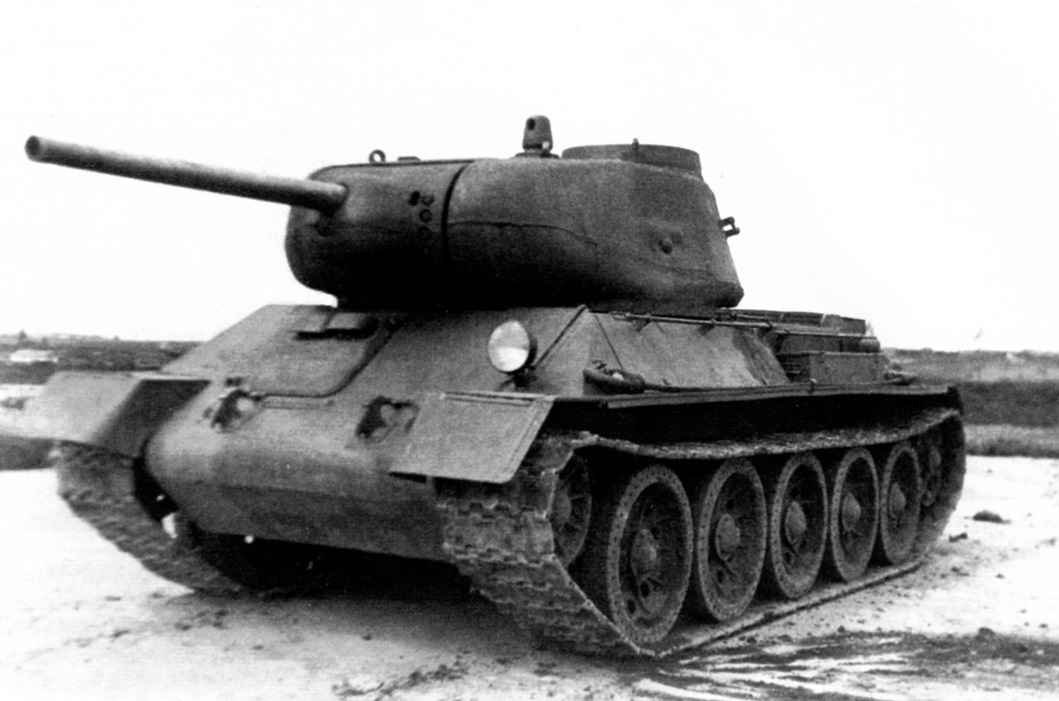
T-45, Light Tank
The hull design of the T-45 light tank remained largely unchanged from the T-60. The main changes included increasing the thickness of the upper front armor plate from 15 mm to 25 mm and modifying the driver’s hatch
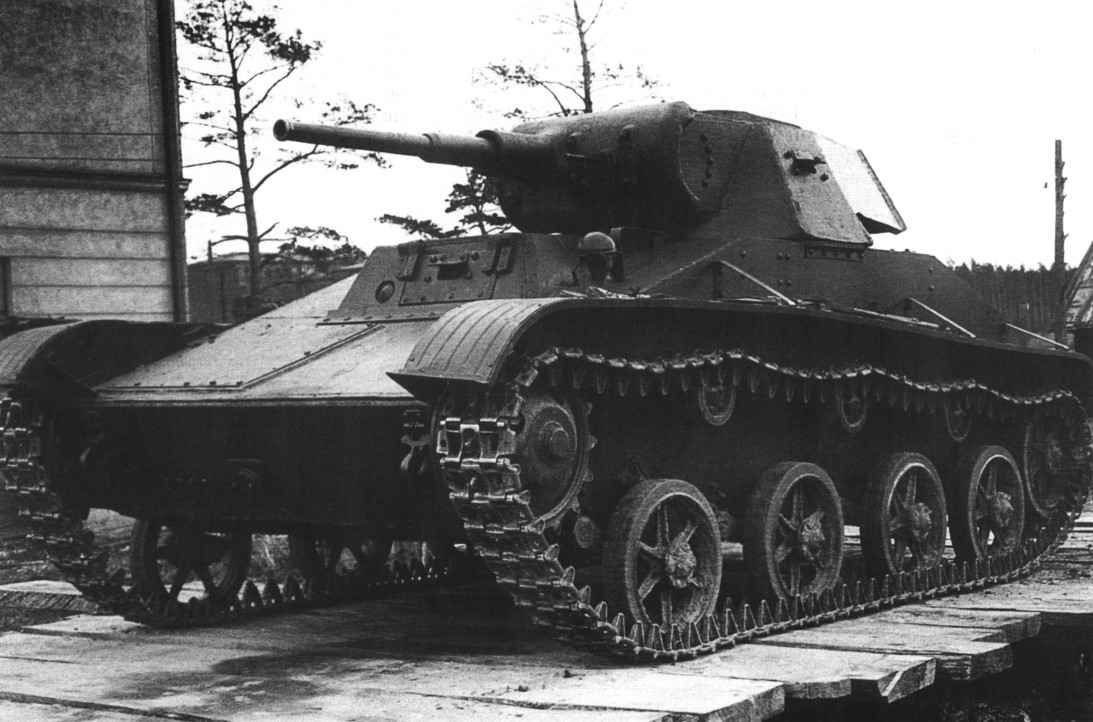
Full Specifications
| Combat Weight | 6.8–7.0 t |
| Crew | 2 |
| Armament | 1 × 45 mm gun, 1 × 7.62 mm DT machine gun |
| Gun Ammunition | 90 rounds |
| Engine | ZIS-16 gasoline engine, 85 hp |
| Maximum Speed | 45 km/h |
| Range | 300 km |
| Length | 4.1 m |
| Width | 2.39 m |
| Front Hull Armor | 25 mm |
| Turret Front Armor | 35 mm |
T-45 Soviet Experimental Light Tank
The T-45 was an experimental Soviet light tank developed in 1942 at Factory No. 37 as an improved version of the T-60 and an alternative to the T-70. It retained much of the T-60 design but received stronger armor, a larger turret and significantly improved armament.
The T-45 was armed with a 45 mm gun and a coaxial 7.62 mm DT machine gun. Its frontal hull armor was increased to 25 mm, while the turret front reached 35 mm. The planned ZIS-16 engine produced 85 hp and was expected to give the tank a maximum road speed of about 45 km/h. Despite promising performance, the T-45 never entered mass production, mainly because the ZIS-16 engine was unavailable and the T-70 was already in production.
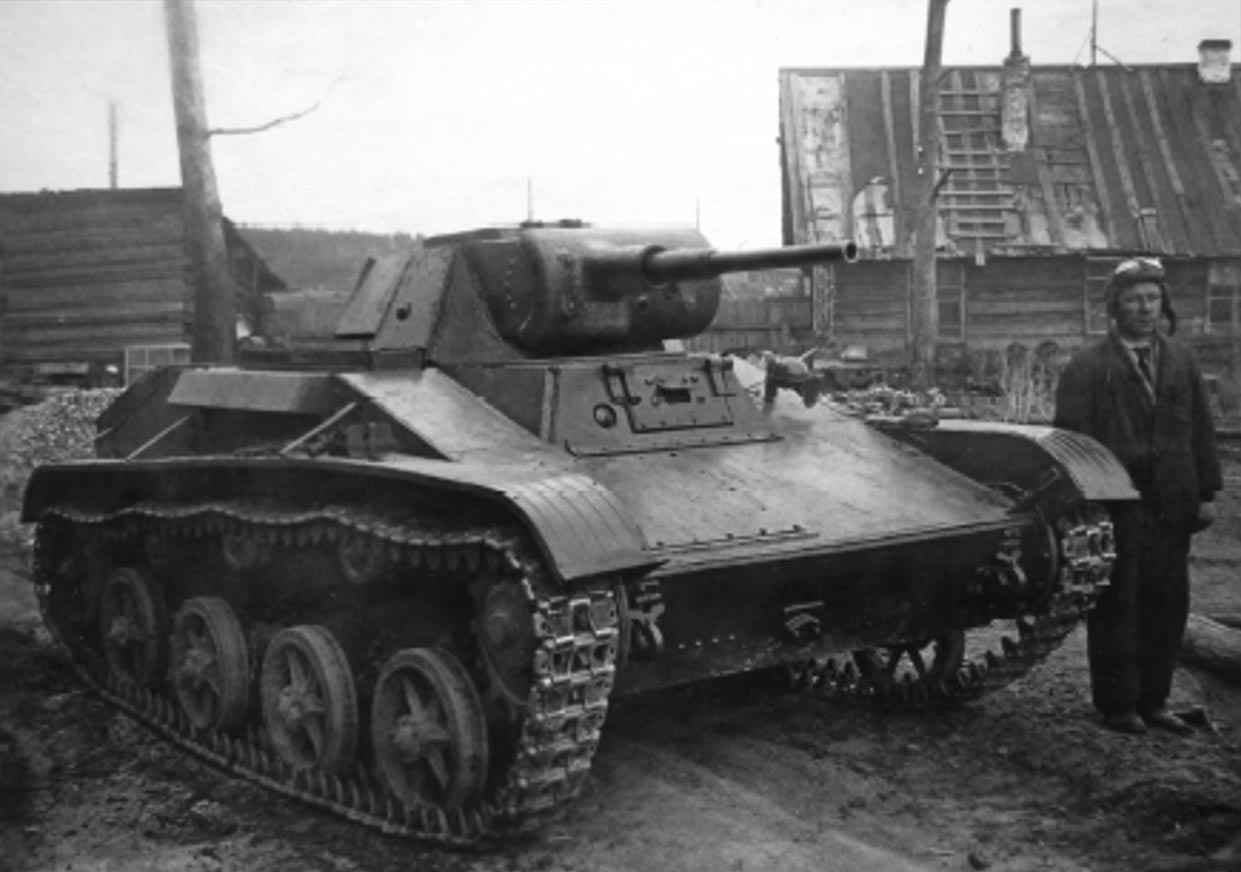
T-46-1, Medium Tank
The T-46-1 was an experimental Soviet wheeled-tracked flamethrower tank designed in 1935–1936 by the Design Bureau of the Kirov Experimental Plant of Spetsmashtrest (Factory No. 185), under the direction of O. M. Ivanov. It was developed from the experimental T-46 tank.
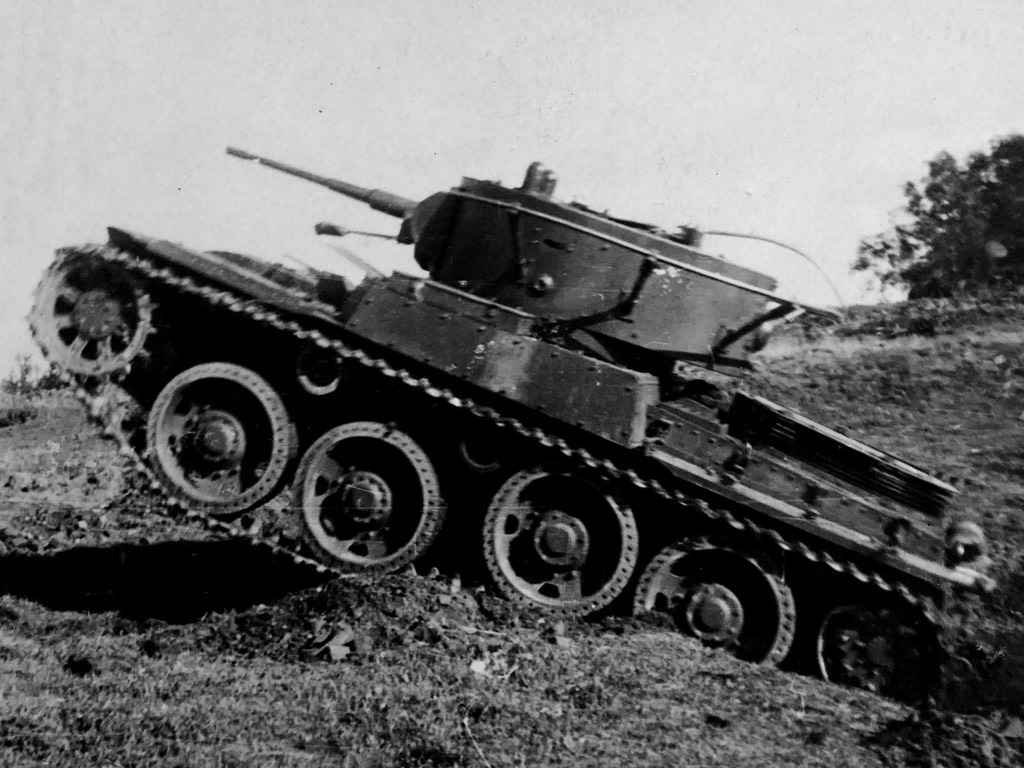
Full Specifications
| Combat Weight | 17.2 t |
| Crew | 3 |
| Armament | 1 × 45 mm Model 1934 gun, 3 × 7.62 mm DT machine guns |
| Ammunition | 101 gun rounds, 2,709 machine-gun rounds |
| Engine | MT-5-1 gasoline engine, 330 hp |
| Maximum Speed | 51 km/h on tracks, 73 km/h on wheels |
| Range | 200 km on tracks, 400 km on wheels |
| Length | 5.4 m |
| Width | 2.65 m |
| Height | 2.27 m |
| Armor | 15 mm front hull and turret |
| Radio | 71-TK-1 |
T-46-1 Soviet Wheeled-Tracked Tank
The T-46-1 was a Soviet light wheeled-tracked tank developed in 1935–1936 at Factory No. 185 as a further development of the experimental T-46. It had a three-man crew and combined tracked mobility with the ability to travel on its road wheels.
The tank was armed with a 45 mm gun and three 7.62 mm DT machine guns. An experimental version also carried a KS-45 flamethrower with 50 liters of flame mixture. Powered by a 330 hp MT-5-1 engine, the T-46-1 could reach 51 km/h on tracks and 73 km/h on wheels. Only four production tanks were built before production was stopped because its cost had become comparable to the much larger T-28 medium tank.
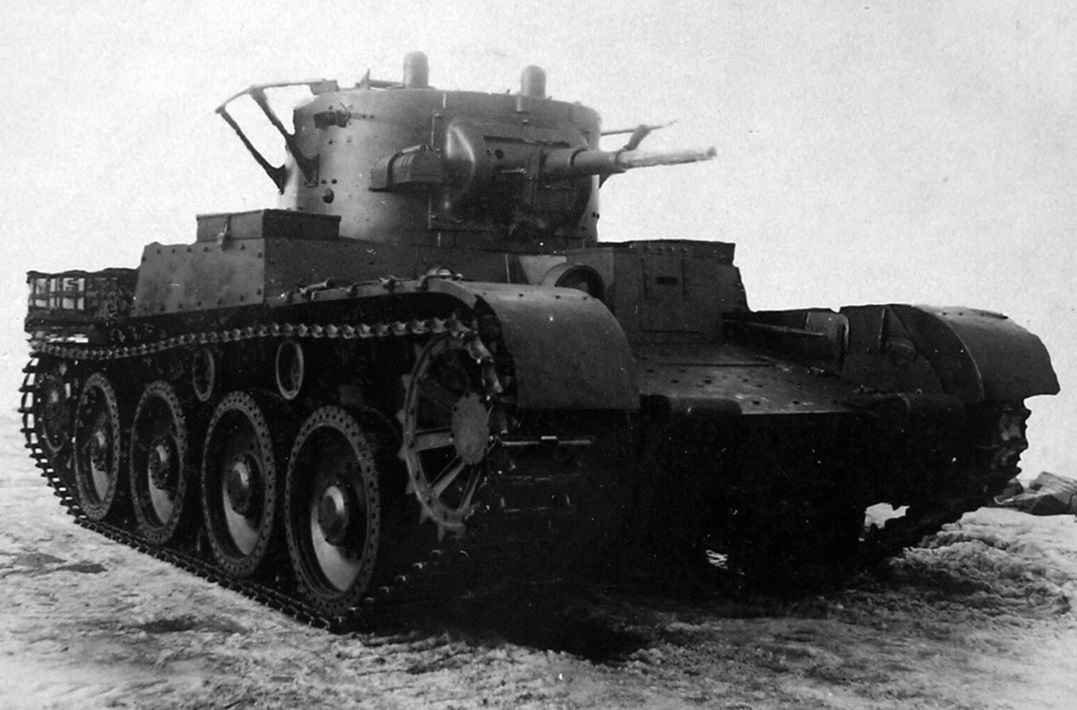
T-46-5 / T-111, Medium Tank
During trials conducted in the spring and summer of 1938, the experimental T-111 produced mixed results. Tests showed that the tank could withstand fire from 37 mm and 45 mm anti-tank guns.
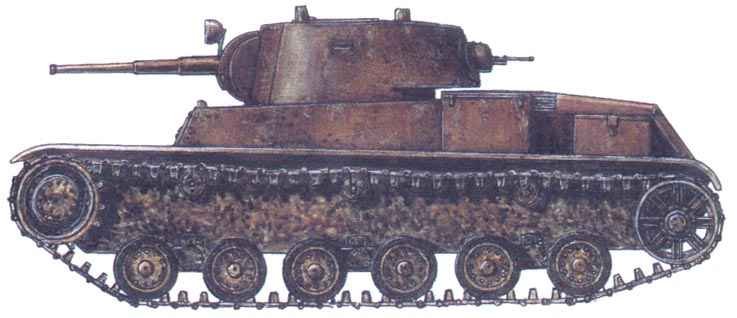
Full Specifications
| Combat Weight | 28–32 t |
| Crew | 3 |
| Armament | 1 × 45 mm Model 1938 gun, 3 × 7.62 mm DT machine guns |
| Ammunition | 121 gun rounds, 3,000 machine-gun rounds |
| Engine | MT-5-1 gasoline engine, 300–330 hp |
| Maximum Speed | 30 km/h |
| Range | 150 km |
| Length | 5.26 m |
| Width | 3.11 m |
| Height | 2.42 m |
| Armor | 60 mm front hull and turret |
| Radio | 71-TK-1 |
T-46-5 / T-111 Soviet Experimental Medium Tank
The T-46-5, also known as Object 111 or T-111, was an experimental Soviet tank developed in the late 1930s with unusually heavy armor for its time. Its frontal hull and turret armor reached 60 mm, allowing the tank to withstand fire from 37 mm and 45 mm anti-tank guns during trials.
The T-111 was armed with a 45 mm gun and three 7.62 mm DT machine guns. However, its weight increased to around 32 tons, while the 300–330 hp MT-5-1 engine was not powerful enough for the heavy vehicle. The 45 mm gun was also considered too weak against newer tanks. Further development was abandoned in favor of more advanced projects.
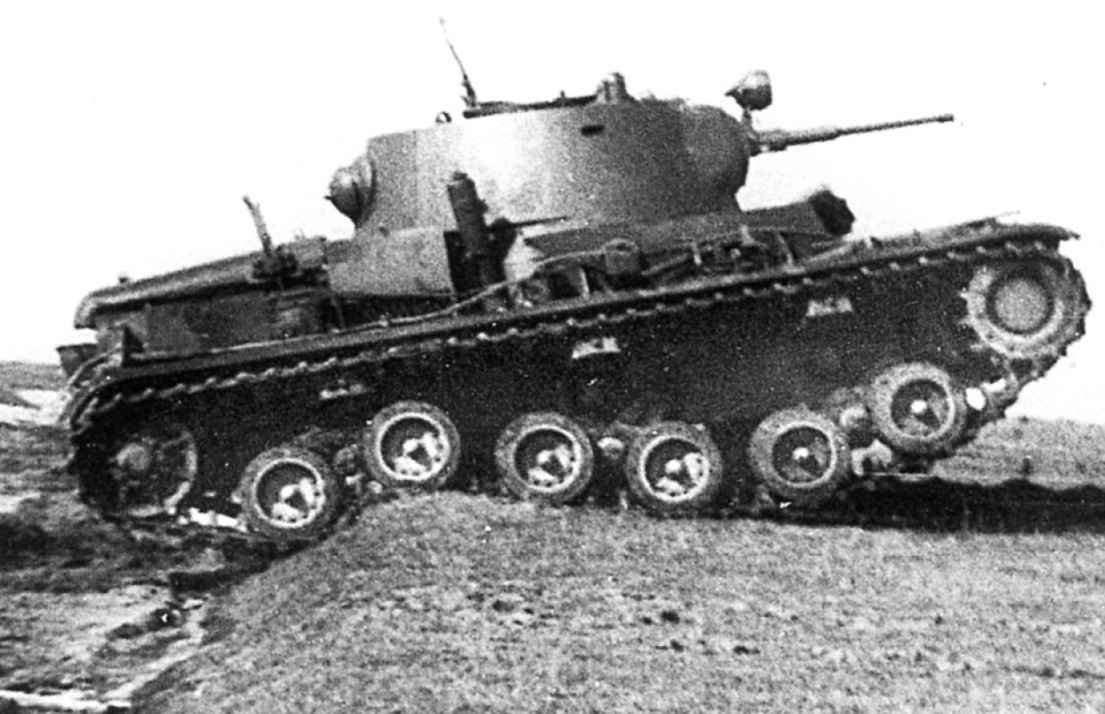
T-50, Light Tank
In terms of armor protection, the T-50 was comparable to the T-34 medium tank. Its hull was welded from rolled armor plates up to 45 mm thick, while the roof and floor were 20 mm thick.
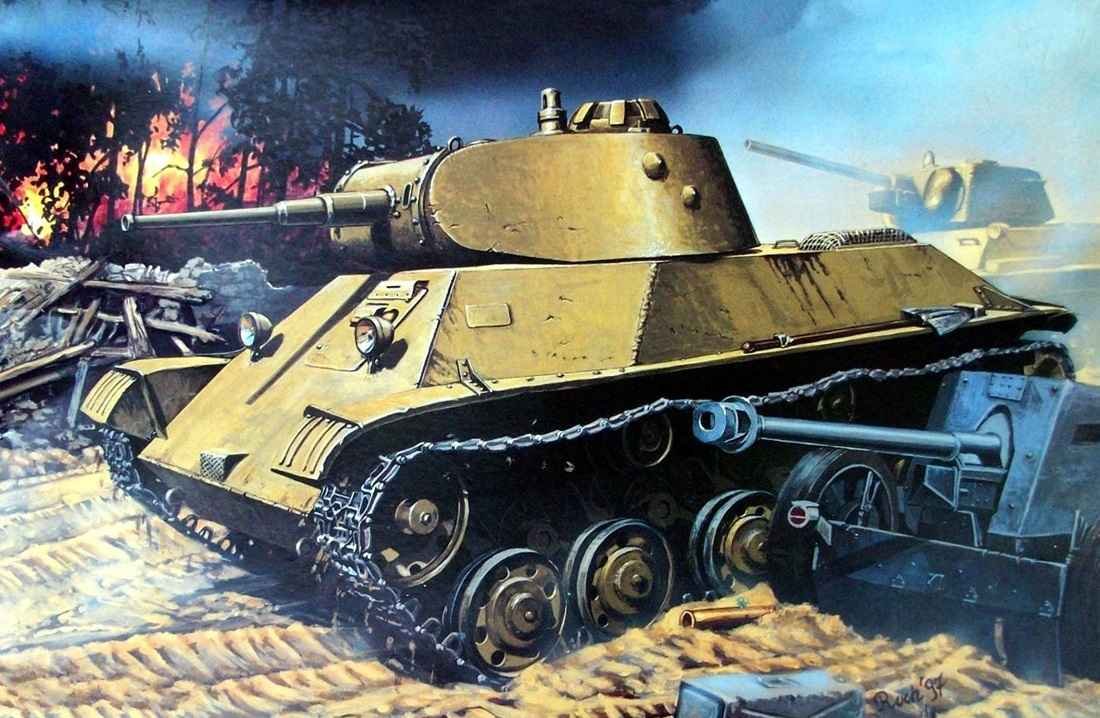
Full Specifications
| Combat Weight | 13.8 t |
| Crew | 4 |
| Armament | 1 × 45 mm 20K Model 1934 gun, 2 × 7.62 mm DT machine guns |
| Ammunition | 150 gun rounds, 4,095 machine-gun rounds |
| Engine | V-4 diesel engine, 300 hp |
| Maximum Speed | 52 km/h |
| Range | 344 km |
| Length | 5.20 m |
| Width | 2.47 m |
| Height | 2.17 m |
| Armor | Up to 37 mm |
| Radio | 9-R |
T-50 Soviet Light Tank
The T-50 was a Soviet light infantry tank developed as a replacement for the T-26 and adopted by the Red Army in 1941. Despite its light-tank classification, it featured strong sloped armor, a four-man crew and a commander’s cupola.
The T-50 was armed with a 45 mm 20K gun and two 7.62 mm DT machine guns. Its 300 hp V-4 diesel engine gave it a maximum speed of 52 km/h and a range of about 344 km. Production remained limited because of wartime evacuation and difficulties producing the V-4 diesel engine, while Factory No. 174 eventually switched to T-34 production.
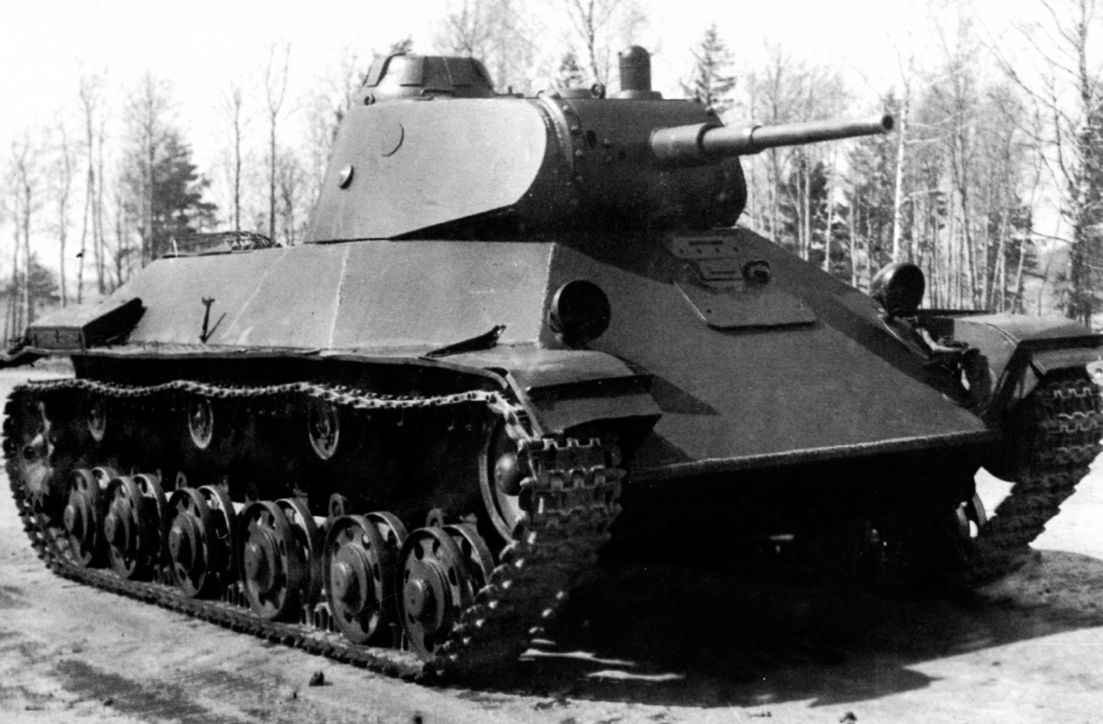
T-60, Light Tank
The T-60 light tank was developed during the first months of the Great Patriotic War by a design team led by N. A. Astrov. It was based on the proven T-40 amphibious light tank.
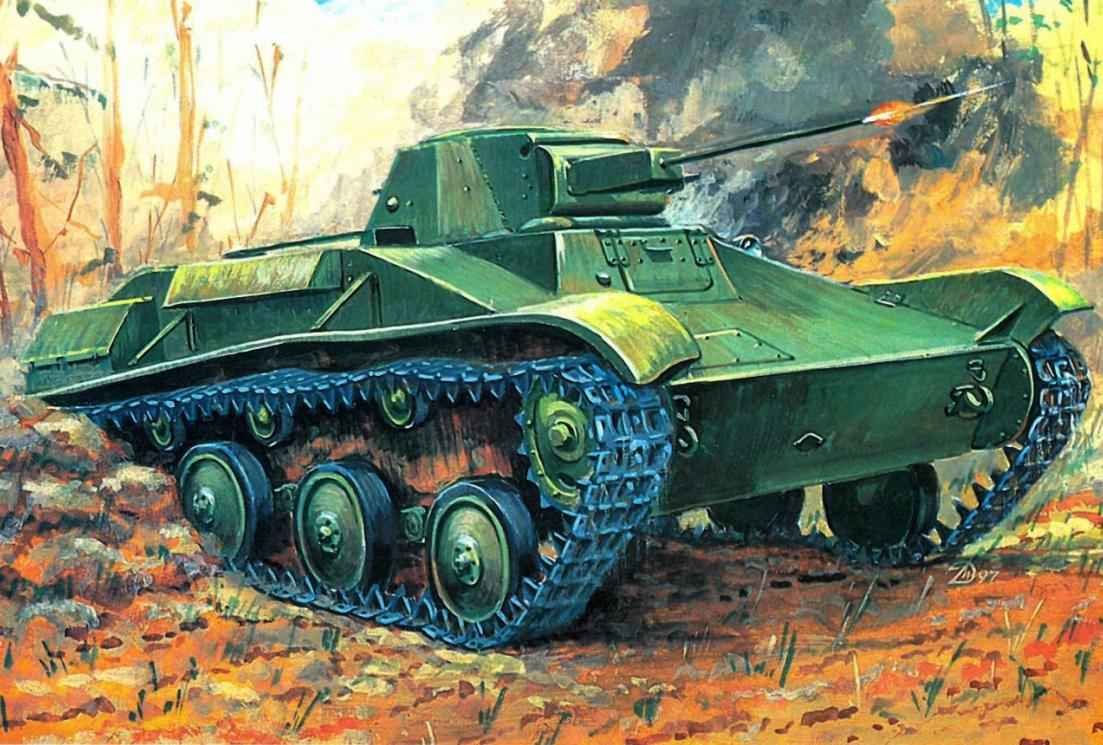
Full Specifications
| Combat Weight | 5.8 t |
| Crew | 2 |
| Armament | 1 × 20 mm TNSh-20 (ShVAK) cannon, 1 × 7.62 mm DT machine gun |
| Ammunition | 780 cannon rounds, 945 machine-gun rounds |
| Engine | GAZ-202 gasoline engine, 70 hp |
| Maximum Speed | 35 km/h |
| Range | 420–450 km |
| Length | 4.1 m |
| Width | 2.3 m |
| Height | 1.75 m |
| Armor | Up to 35 mm |
| Production | About 6,000 tanks |
T-60 Soviet Light Tank
The T-60 was a Soviet light tank developed during the first months of World War II by a design team led by N. A. Astrov. Based on the T-40 amphibious tank, it received improved armor and stronger armament but lost the ability to operate in water.
The T-60 was armed with a 20 mm TNSh-20 automatic cannon and a 7.62 mm DT machine gun. It had a two-man crew and used the 70 hp GAZ-202 gasoline engine. Simple construction and extensive use of automotive components allowed the Soviet Union to quickly organize mass production. About 6,000 T-60 tanks were built from 1941 to 1942 and used for reconnaissance, support and other combat roles.
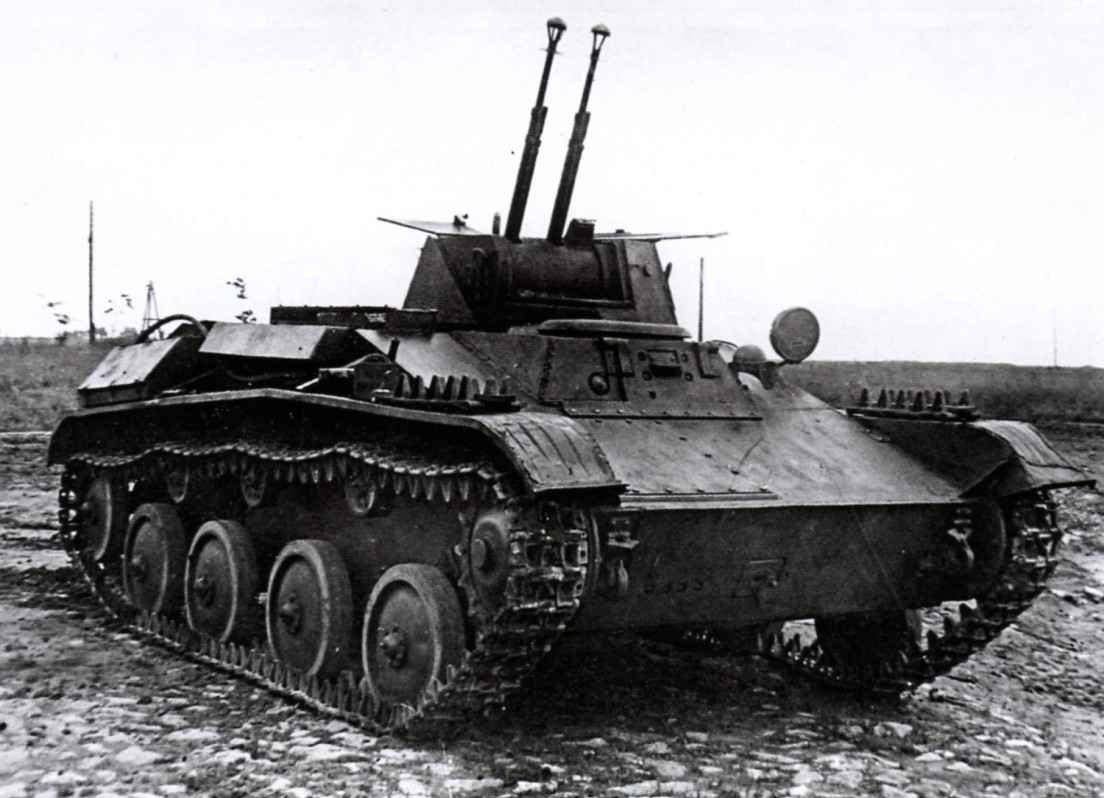
T-70, Light Tank
The T-70 light tank was developed on the initiative of the Gorky Automobile Plant design bureau in the autumn of 1941 under the direction of N. A. Astrov.
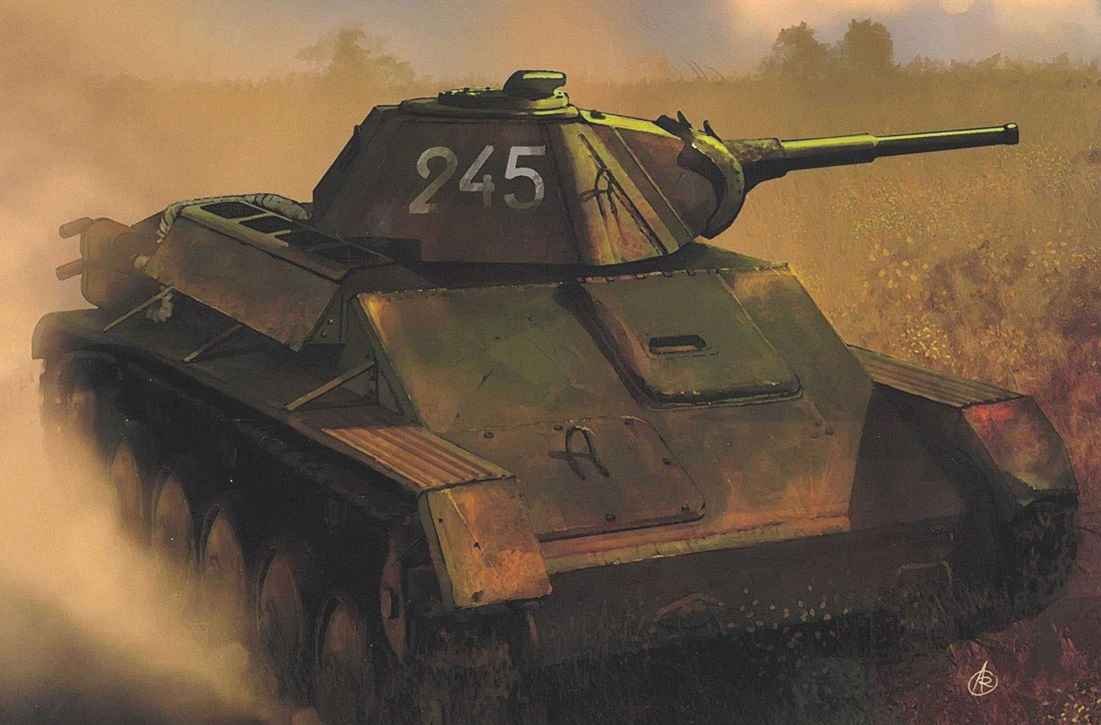
Full Specifications
| Combat Weight | 9.2 t (9.8 t for T-70M) |
| Crew | 2 |
| Number Produced | 8,231 |
| Armament | 1 × 45 mm 20-K cannon, 1 × 7.62 mm DT machine gun |
| Cannon Ammunition | 90 rounds (70 rounds for T-70M) |
| Engine | 2 × 70 hp gasoline engines |
| Maximum Speed | 42 km/h |
| Range | 410–450 km on road |
| Length | 4,285 mm |
| Width | 2,348 mm (2,420 mm for T-70M) |
| Height | 2,035 mm |
| Ground Clearance | 300 mm |
| Armor | Up to 50 mm around the gun mantlet |
| Suspension | Individual torsion bar |
T-70 Soviet Light Tank
The T-70 was a Soviet light tank developed in the autumn of 1941 by the Gorky Automobile Plant design bureau under N. A. Astrov. It was created to replace the earlier T-60 light tank and entered service with the Red Army in 1942.
The tank was armed with a 45 mm 20-K cannon and a 7.62 mm DT machine gun. Its armor protection was significantly stronger than that of earlier Soviet light tanks, while two 70 hp gasoline engines gave it a maximum road speed of about 42 km/h.
From September 1942, the improved T-70M entered production with a reinforced suspension and transmission. T-70 and T-70M tanks served alongside T-34 medium tanks and were later widely used as command vehicles in SU-76 self-propelled artillery units.
Why the T-70 Was Important
The T-70 became one of the most widely produced Soviet light tanks of World War II. More than 8,000 T-70 and T-70M tanks were manufactured. Its chassis also became the basis for the successful SU-76 series of self-propelled guns.
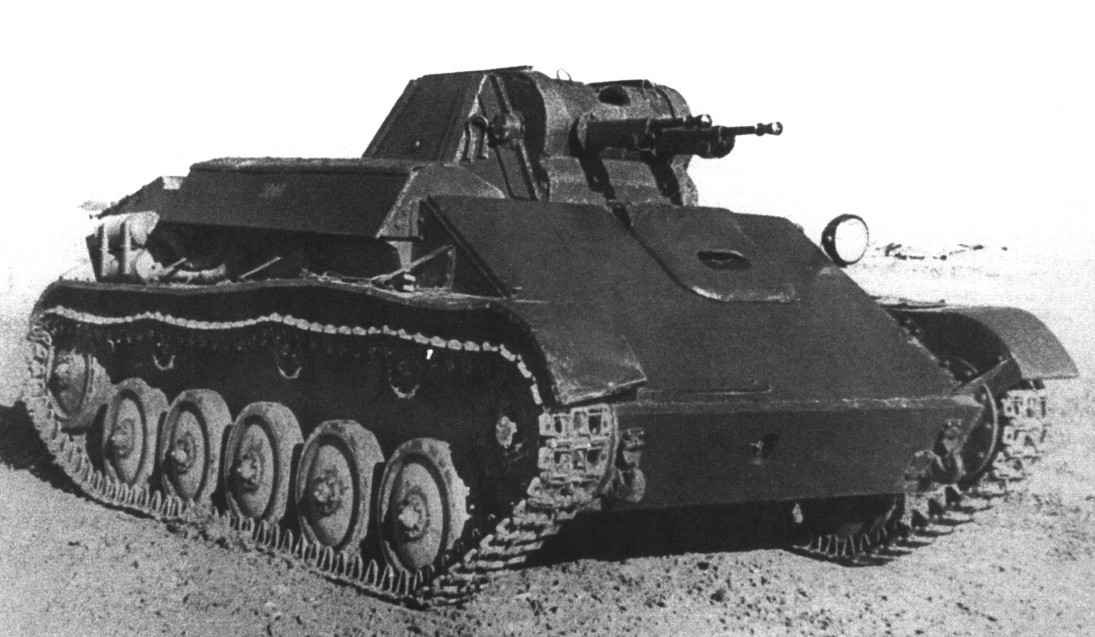
T-80, Light Tank
The T-80 was a Soviet light tank distinguished by the unusually high elevation angle of its 45 mm gun, which could be raised up to 65 degrees
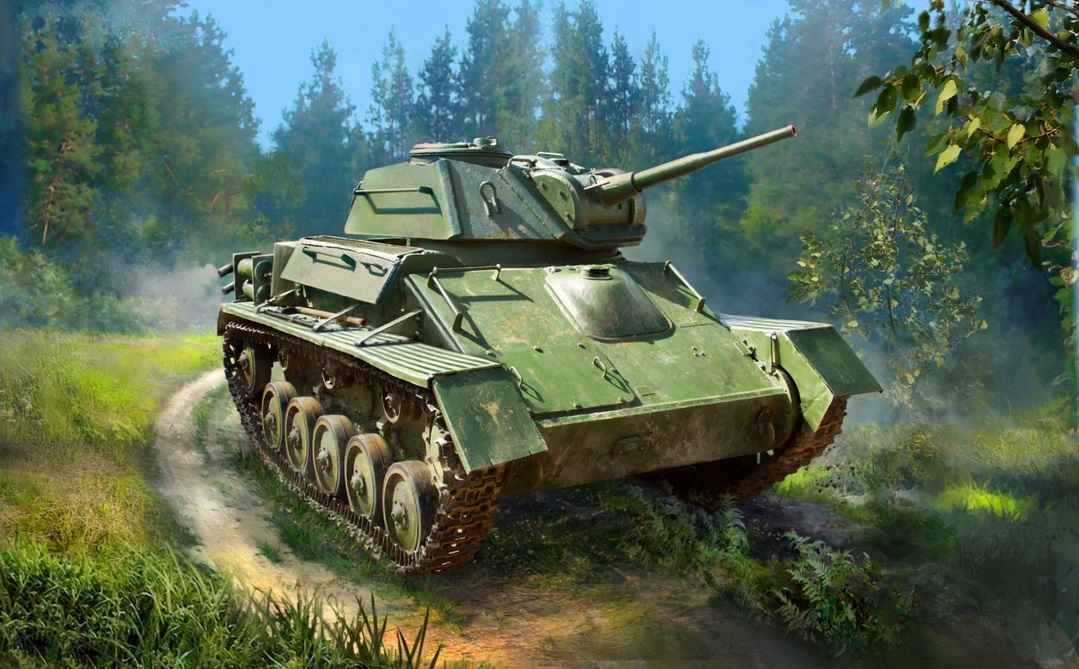
Full Specifications
| Combat Weight | 11.6 t |
| Crew | 3 |
| Number Produced | 81 |
| Armament | 1 × 45 mm tank gun Model 1938, 1 × 7.62 mm DT machine gun |
| Ammunition | 94 cannon rounds, 1,008 machine-gun rounds |
| Engine | GAZ-80 gasoline engine, 2 × 85 hp |
| Maximum Speed | 45 km/h |
| Range | 350 km |
| Length | 4,285 mm |
| Width | 2,500 mm |
| Height | 2,170 mm |
| Front Hull Armor | 45 mm |
| Front Turret Armor | 35 mm |
T-80 Soviet Light Tank
The T-80 was a Soviet light tank developed in 1943 as an improved version of the T-70. One of the main improvements was a three-man crew, which reduced the workload of the tank commander and improved combat efficiency.
The T-80 was armed with a 45 mm tank gun and a 7.62 mm DT machine gun. Its 45 mm gun could be elevated up to 65 degrees, allowing the tank to fire at targets on the upper floors of buildings during urban combat. The tank was also equipped with a K-8T anti-aircraft sight that allowed it to engage air targets.
The T-80 had improved armor protection and was powered by the GAZ-80 engine system producing 2 × 85 hp. It could reach a maximum speed of about 45 km/h and had a range of approximately 350 km.
Why the T-80 Was Important
The T-80 represented one of the final developments of the Soviet light tank concept during World War II. Only 81 tanks were produced before production ended, partly because of difficulties with manufacturing the new GAZ-80 engine.
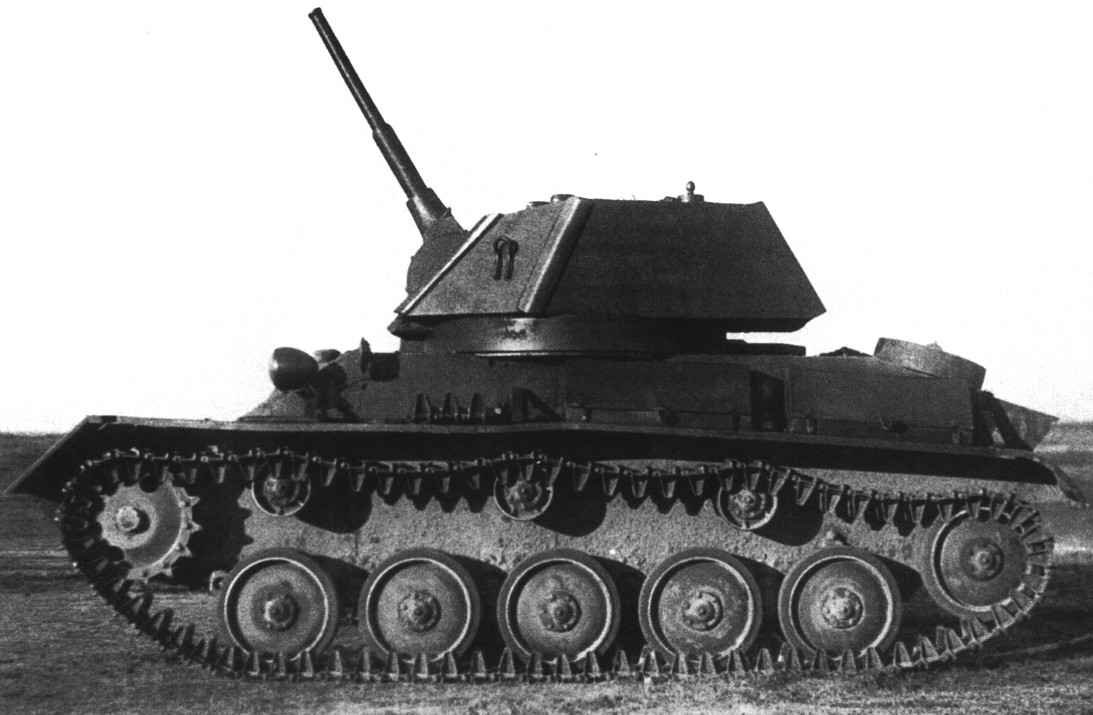
TG (Grotte Tank), Medium Tank
Serial production of the TG tank was planned to begin at the Kharkov Locomotive Factory (KhPZ) after the production of 80 T-24 tanks was completed and the T-24 was discontinued.
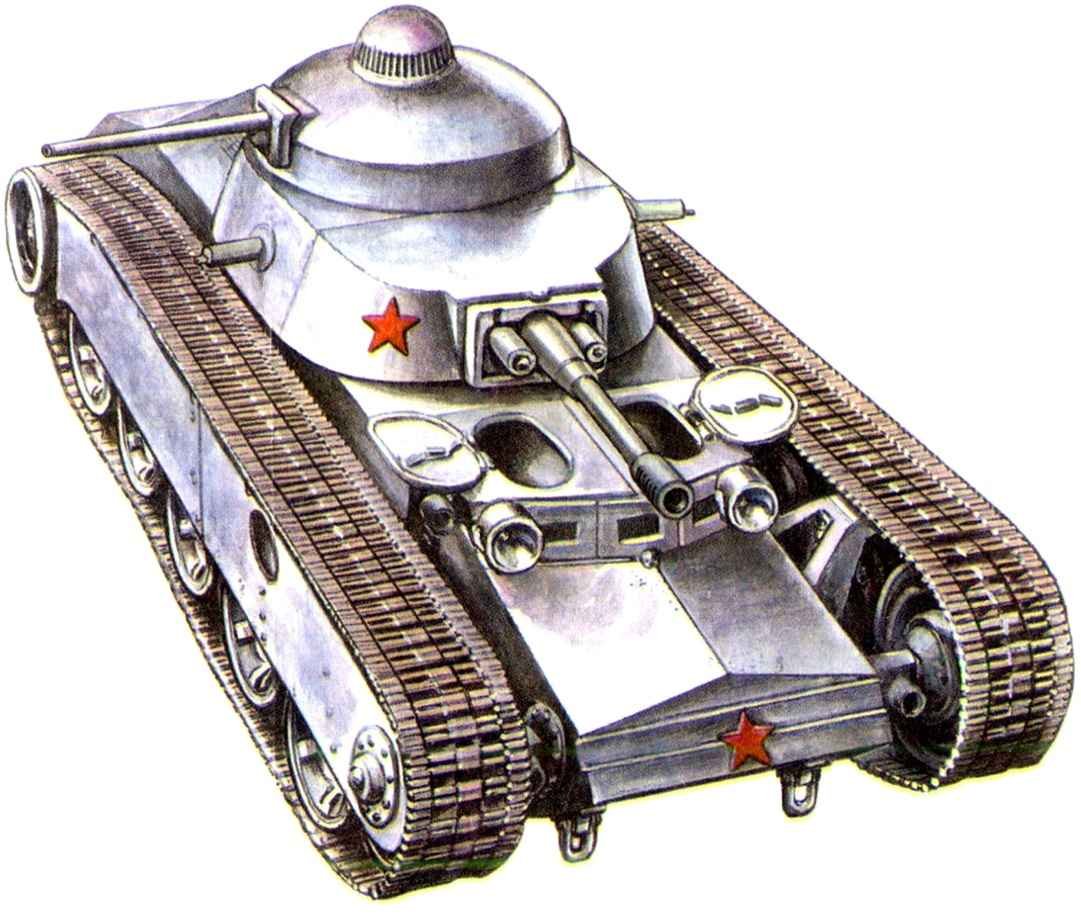
Full Specifications
| Combat Weight | 25 t |
| Crew | 6 |
| Maximum Speed | 35 km/h |
| Range | 350 km |
| Engine | M-6 gasoline engine |
| Engine Power | 300 hp |
| Length | 5,882 mm |
| Width | 2,200 mm |
| Height | 2,210 mm |
| Ground Clearance | 340 mm |
| Front Hull Armor | 50 mm |
| Front Turret Armor | 50 mm |
| Armament | 1 × 76.2 mm gun, 1 × 37 mm gun, 3 × 7.62 mm Maxim machine guns, 2 × 7.62 mm DT machine guns |
| Production | Experimental prototype |
TG Grotte Soviet Medium Tank
The TG, also known as the Grotte Tank, was an experimental Soviet medium tank developed in 1931 by the AVO-5 design bureau at the Bolshevik Factory. The project was led by German engineer Edward Grote, who had been invited to the Soviet Union to help develop new tanks for the Red Army.
The TG was technically advanced for its time. It featured a fully welded hull, multi-level armament, pneumatic controls and a powerful combination of a 76.2 mm main gun, a 37 mm gun and several machine guns. During testing, the tank reached approximately 34–35 km/h and demonstrated good mobility and maneuverability.
Despite its innovative design, the TG was extremely expensive and suffered from several technical problems. Its estimated cost reached 1.5 million rubles, making mass production impractical. The project remained experimental, but many of its ideas and the experience gained during its development influenced later Soviet tank projects, including the T-35.
Why the TG Grotte Tank Was Important
The TG was one of the most ambitious Soviet experimental tank projects of the early 1930s. Although it never entered mass production, its welded construction, advanced transmission, pneumatic controls and powerful multi-level armament made it an important step in the development of Soviet armored vehicles.
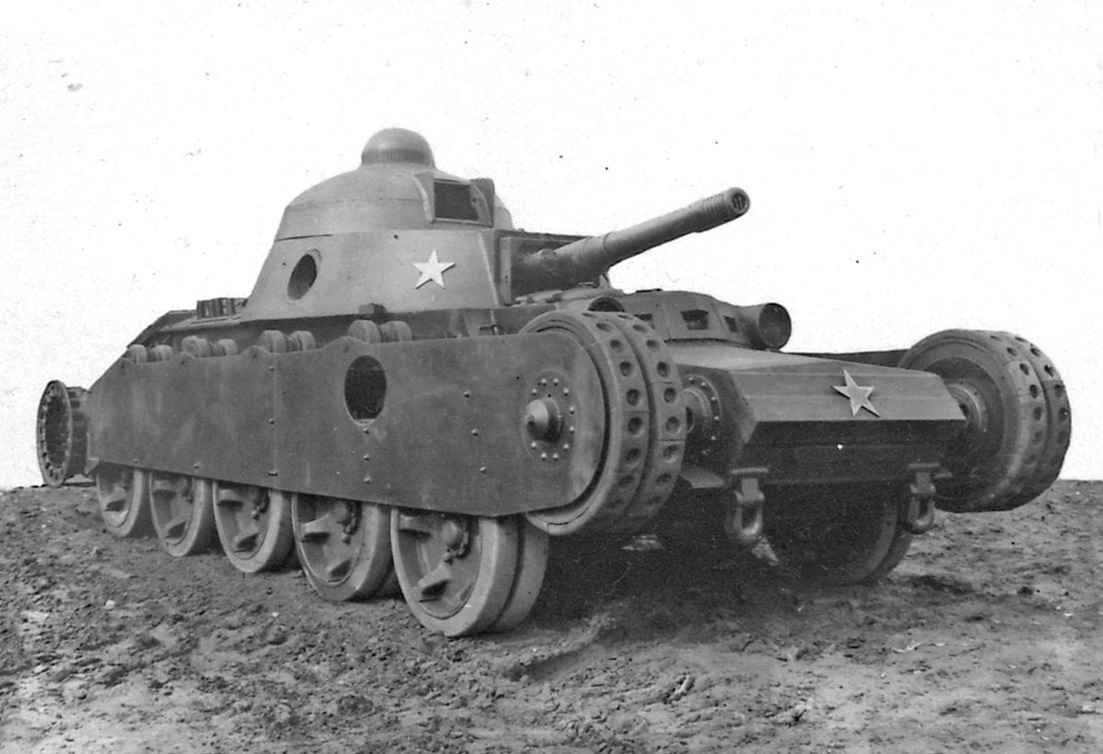
TM (“Molotov Tank”), Light Tank
Since the TM tank offered no significant advantages over the T-38 light tank, it was not accepted for mass production
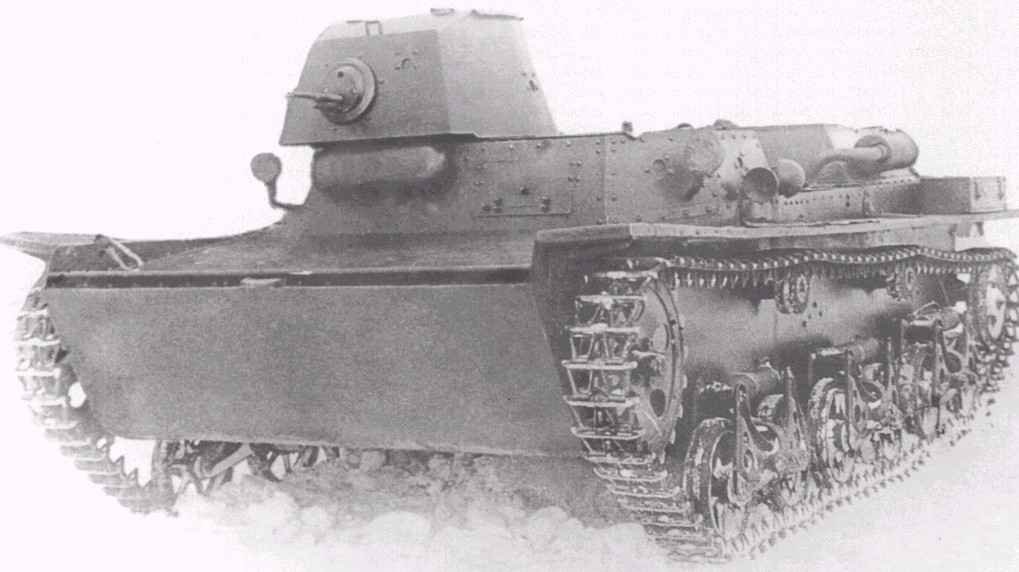
Full Specifications
| Combat Weight | 4.5 t |
| Crew | 2 |
| Armament | 1 × 7.62 mm DT machine gun |
| Ammunition | 2,331 rounds |
| Engine | GAZ-M1 gasoline engine, 50 hp |
| Maximum Speed on Land | 49 km/h |
| Maximum Speed in Water | 3 km/h |
| Range | 230 km |
| Fuel Capacity | 185 L |
| Length | 4,400 mm |
| Width | 2,240 mm |
| Height | 1,750 mm |
| Ground Clearance | 280 mm |
| Front Hull Armor | 9 mm |
| Front Turret Armor | 9 mm |
| Production | Experimental prototype, 1936 |
TM “Molotov Tank” Soviet Amphibious Light Tank
The TM, also known as the “Molotov Tank,” was an experimental Soviet amphibious light tank built by GAZ in 1936. It was developed from the T-37 and featured a longer hull with the engine installed in the rear left section.
The tank had a two-man crew and was armed with a single 7.62 mm DT machine gun carrying 2,331 rounds. Its 50 hp GAZ-M1 gasoline engine allowed it to reach up to 49 km/h on land, while a propeller provided a maximum speed of about 3 km/h in water.
During testing, the TM suffered from problems with its tracks, which frequently came off. Since the tank offered no significant advantages over the T-38 amphibious light tank, it was never accepted for mass production.
Why the TM Molotov Tank Was Important
The TM was one of several Soviet experimental amphibious tanks developed during the 1930s. Although it remained a prototype, the project represented another attempt to improve the mobility and amphibious capabilities of Soviet reconnaissance tanks.
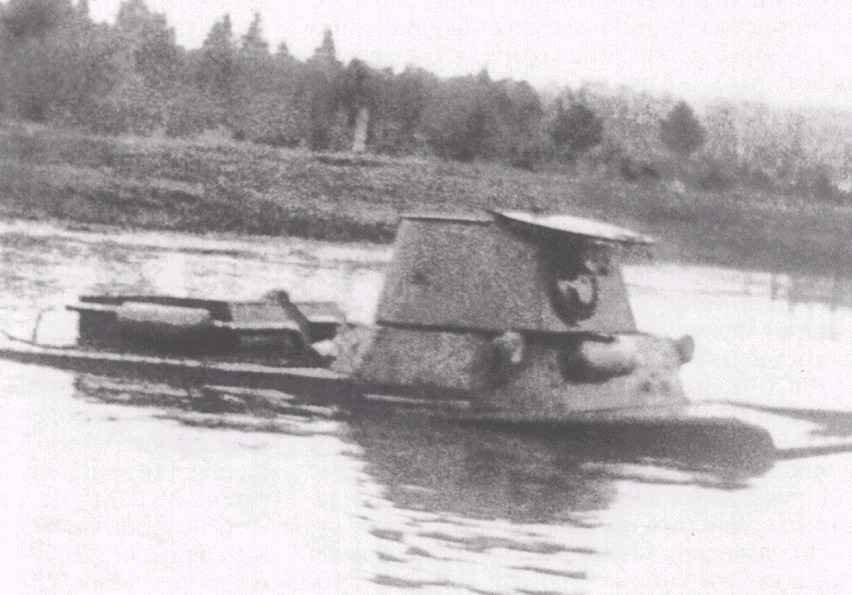
Captured Armored Vehicles in Red Army Service
Captured armored vehicles seized by Soviet forces and put into service with the Red Army.
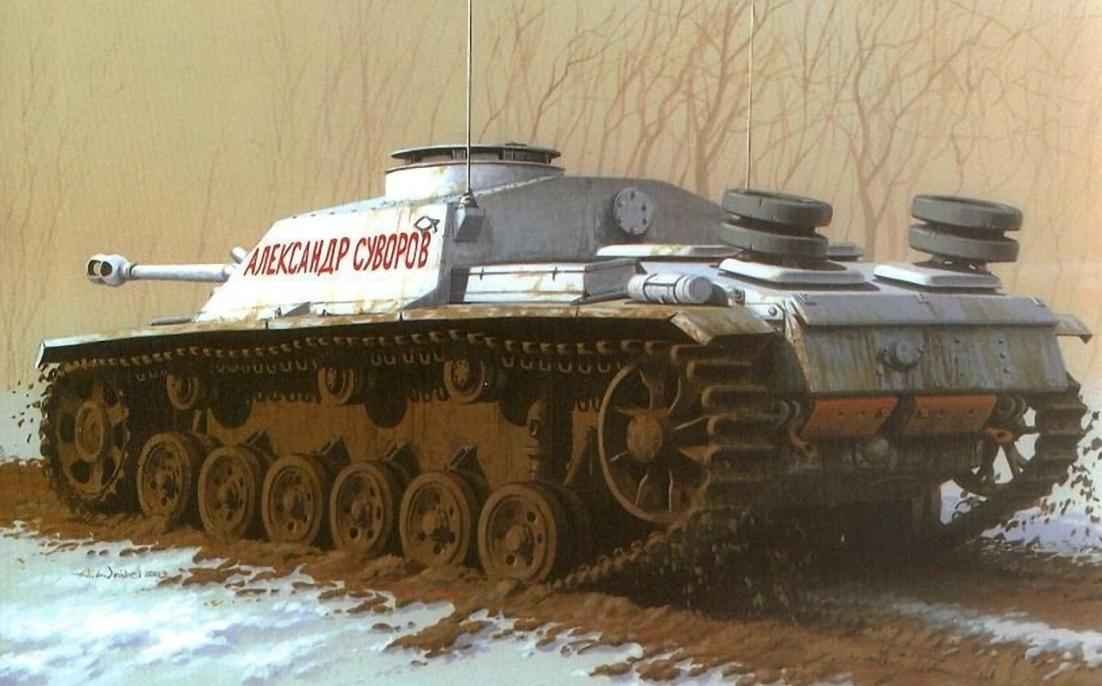
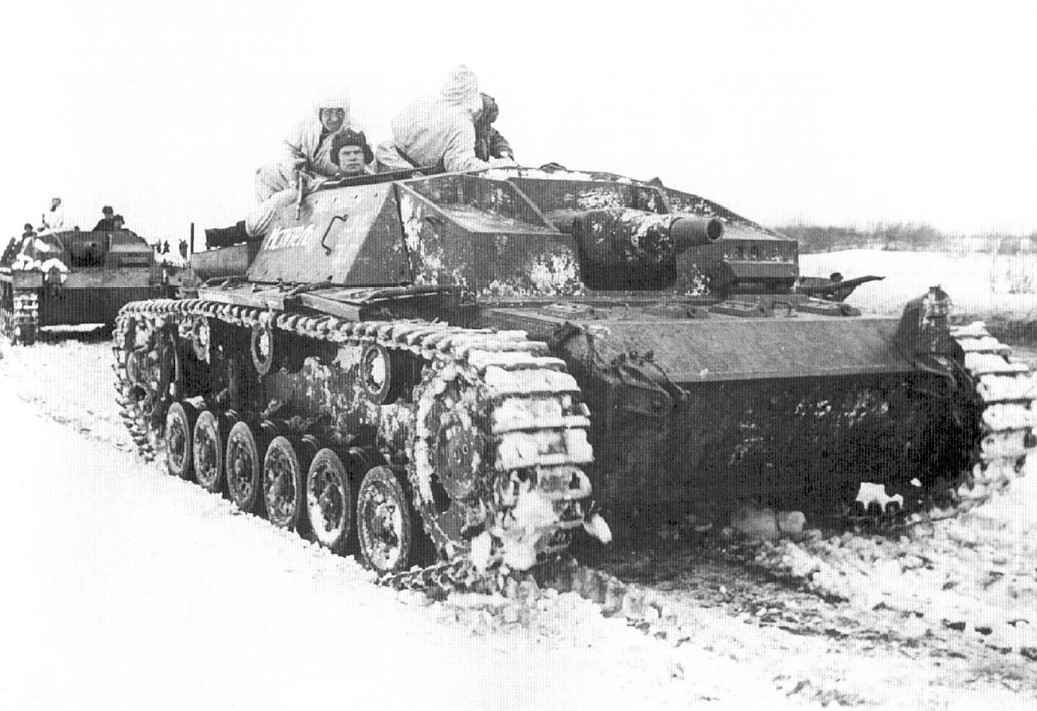
Voroshilovets Heavy Artillery Tractor
The Voroshilovets heavy artillery tractor was powered by the experimental BD-2 high-speed tank diesel engine producing 400 hp. It was a twelve-cylinder, V-shaped, four-stroke direct-injection engine with major components made from aluminum alloys.
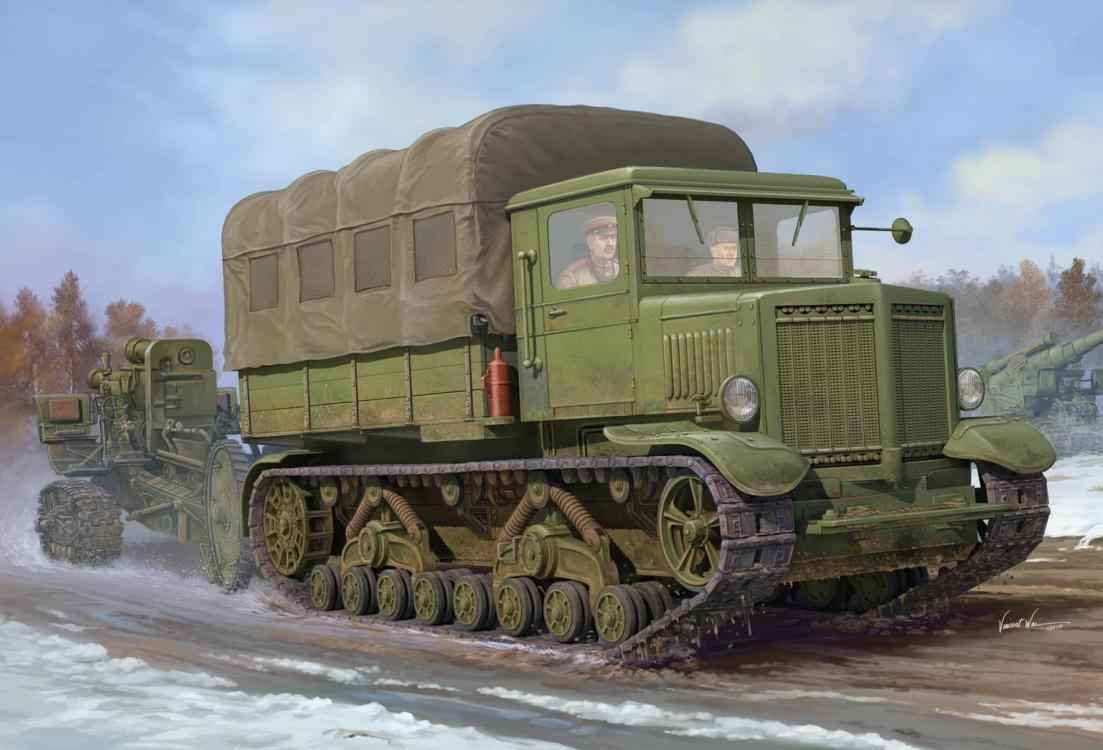
| Combat weight: | 15,500 kg |
| Maximum speed: | 36.2 km/h |
| Range: | 270 km |
| Towed trailer weight: | 18,000 kg |
| Crew: | 3 |
The Voroshilovets weighed 15,500 kg, could tow an 18,000 kg trailer, reached 36.2 km/h, and had a highway range of 270 km with a trailer
Voroshilovets Soviet Heavy Artillery Tractor
The Voroshilovets was a Soviet heavy tracked artillery tractor developed in the late 1930s for towing large-caliber artillery and recovering heavy tanks.
Powered by a powerful V-2V diesel engine, it could tow trailers weighing up to 18 tons and was widely used by the Red Army during World War II. Production began in 1939, and a total of 1,123 Voroshilovets tractors were built before the factory was evacuated in 1941.
During the war, Voroshilovets tractors served on multiple fronts, especially with heavy artillery units, towing large guns and other military equipment.
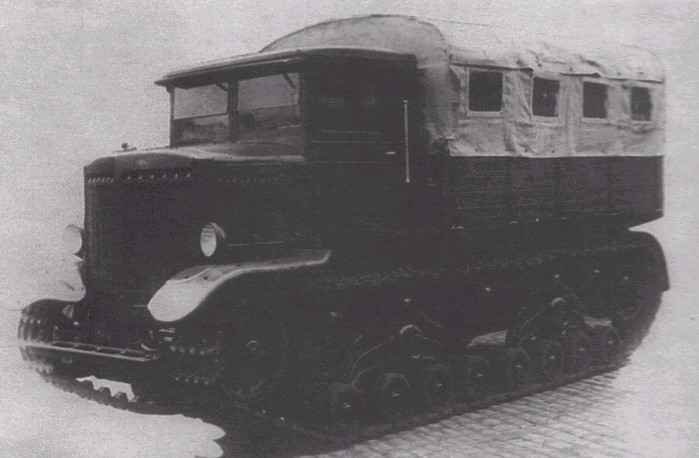
ZIS-42 Half-Track Tractor
The ZIS-42 featured a fundamentally new track propulsion system. Unlike earlier designs, which used a rubber track wrapped around the driving wheels and relied on friction to transmit power, the ZIS-42 used an improved system designed to provide more reliable movement and better off-road performance.
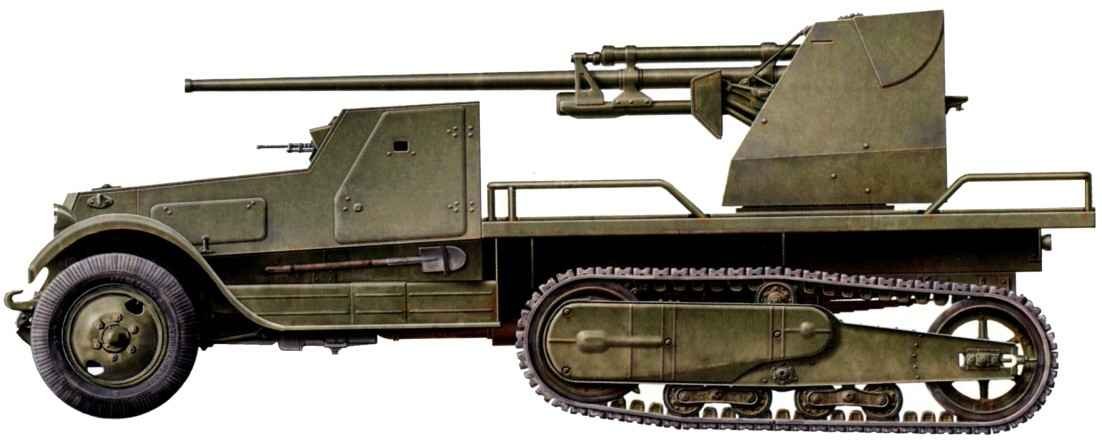
Full Specifications
| Weight | 5,250 kg |
| Crew | 2 |
| Passengers in Cargo Bed | 14 |
| Payload | 2,250 kg without trailer; 1,500 kg with trailer; 1,750 kg on deep snow |
| Towed Trailer Weight | 2,750 kg / up to 4,750 kg overloaded |
| Engine | ZIS-5 / ZIS-42 gasoline engine |
| Engine Power | 73 / 84 hp |
| Maximum Speed | 39.8 km/h |
| Range | 390 km on highway |
| Fuel Capacity | 180 L |
| Length | 6,097 mm |
| Width | 2,360 mm |
| Height | 2,175 mm |
| Height with Canvas Top | 2,950 mm |
| Ground Clearance | 318 mm |
| Production Year | 1942 |
| Number Produced | 5,931 |
ZIS-42 Soviet Half-Track Truck
The ZIS-42 was a Soviet half-track military truck developed to provide better mobility on snow, mud and difficult terrain. Its design was based on the ZIS-5 truck, but the rear wheels were replaced by tracked propulsion units.
A major improvement was the new track drive system. Instead of relying on friction between the wheels and rubber tracks, the ZIS-42 used a sprocket-driven track system. This reduced track slipping and improved reliability in difficult off-road conditions.
The ZIS-42 could carry soldiers and military supplies, tow trailers and artillery, and operate in deep snow. It reached a maximum speed of about 39.8 km/h and had a highway range of approximately 390 km.
Why the ZIS-42 Was Important
The ZIS-42 gave the Red Army a practical half-track transport vehicle capable of operating where conventional wheeled trucks struggled. A total of 5,931 vehicles were produced, making it an important Soviet military transport vehicle of World War II.
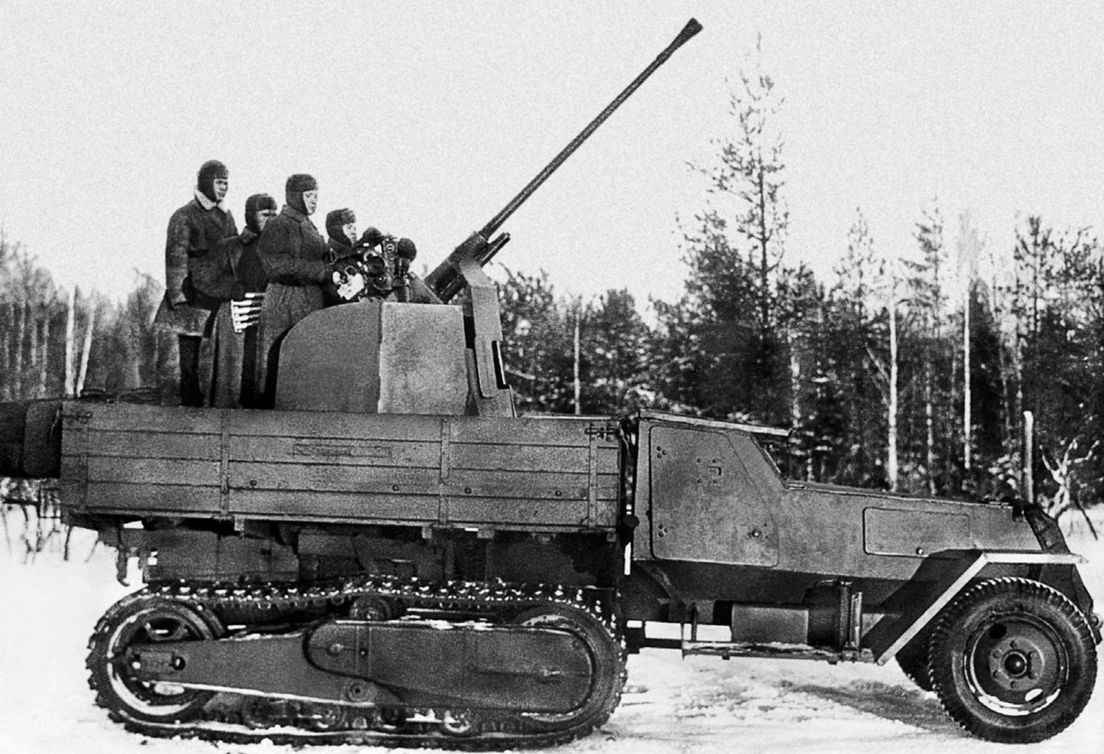
Komintern Heavy Artillery Tractor
From April to the end of 1934, the first production batch of 50 Komintern tractors was built. Full-scale serial production began in 1935
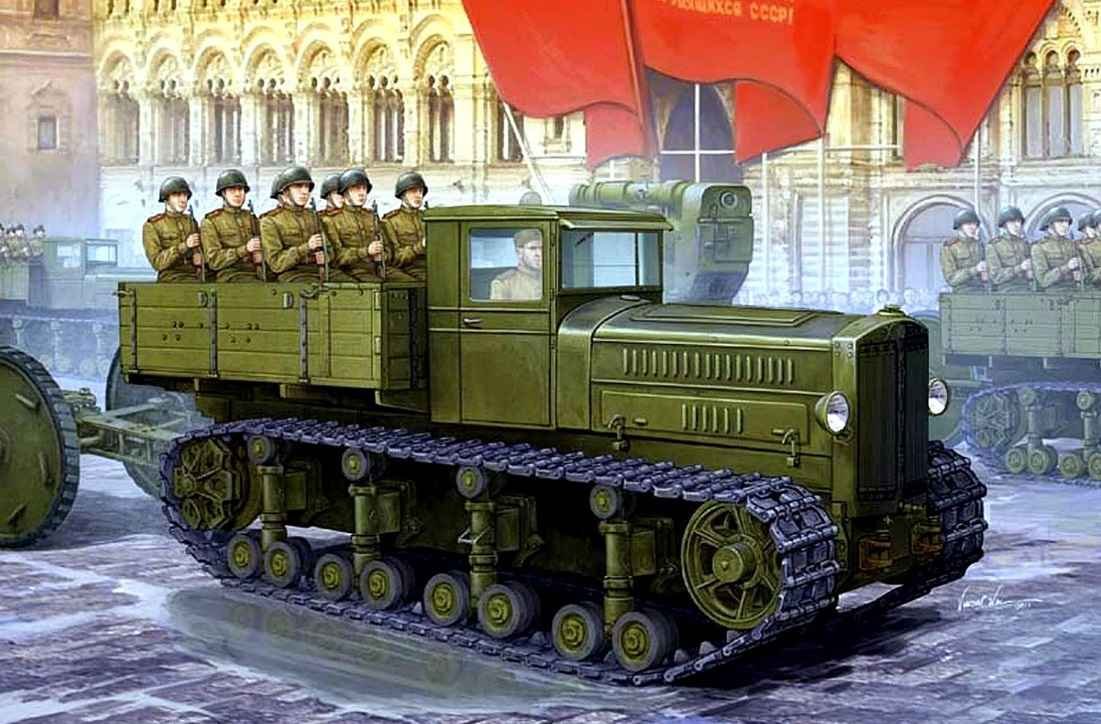
Full Specifications
| Weight | 10,640 kg |
| Crew | 2 + 12 passengers |
| Platform Payload | 2,000 kg |
| Towed Trailer Weight | 12,000 kg / up to 14,000 kg overloaded |
| Engine Power | 131 hp |
| Maximum Speed | 30.5 km/h |
| Highway Range with Trailer | Up to 170 km |
| Off-Road Range with Trailer | 80 km |
| Length | 5,765 mm |
| Width | 2,208 mm |
| Height | 2,538 mm |
| Height with Canvas Top | 2,980 mm |
| Ground Clearance | 400 mm |
| Track Width | 360 mm |
| Maximum Climb | 33.5° |
| Number Produced | 1,798 |
Komintern Soviet Artillery Tractor
The Komintern was a Soviet tracked artillery tractor developed for towing heavy artillery and transporting gun crews, ammunition and military equipment.
Serial production began in 1935. The tractor could tow artillery weighing up to 12 tons, carry 12 soldiers in the rear platform and reach a maximum speed of 30.5 km/h.
The Komintern was widely used by the Red Army and could tow heavy artillery systems including the 122 mm A-19 gun, 152 mm ML-20 gun-howitzer and 203 mm B-4 howitzer. A total of 1,798 Komintern tractors were produced.
Why the Komintern Was Important
The Komintern significantly improved the mobility of Soviet heavy artillery. Its powerful tracked chassis, towing capacity and reliability made it one of the most important Soviet artillery tractors of the 1930s and World War II.
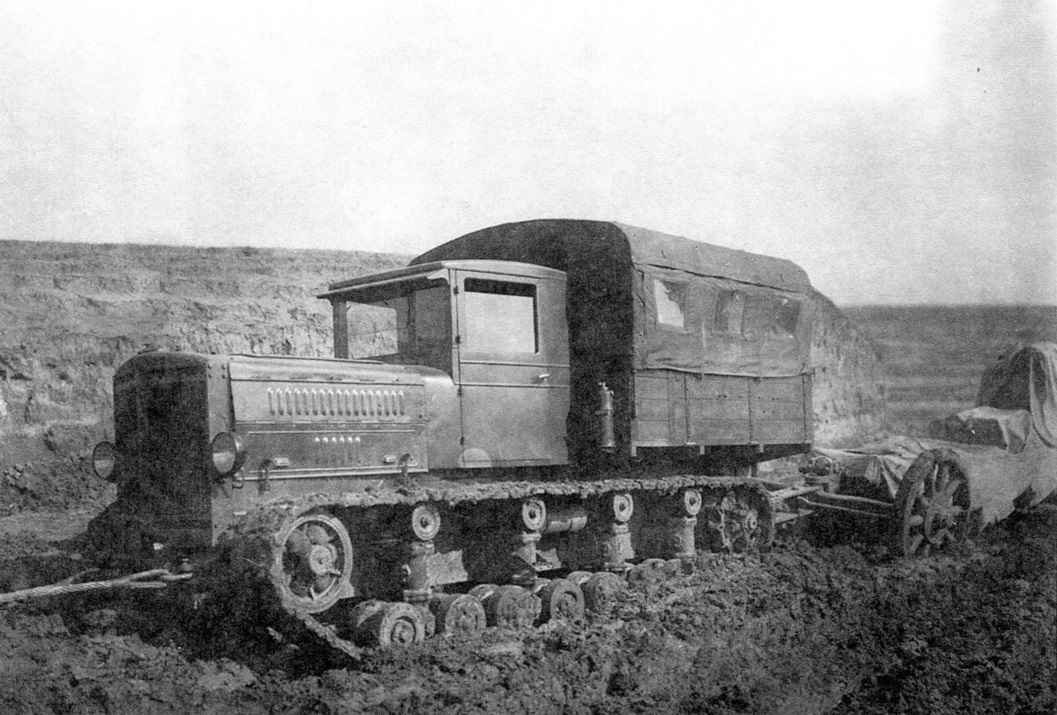
Stalinets-2 Artillery Tractor
The new transport tractor, powered by a diesel engine modified to produce the required higher output, had to be designed almost from scratch. At the same time, its suspension and running gear required major improvements.
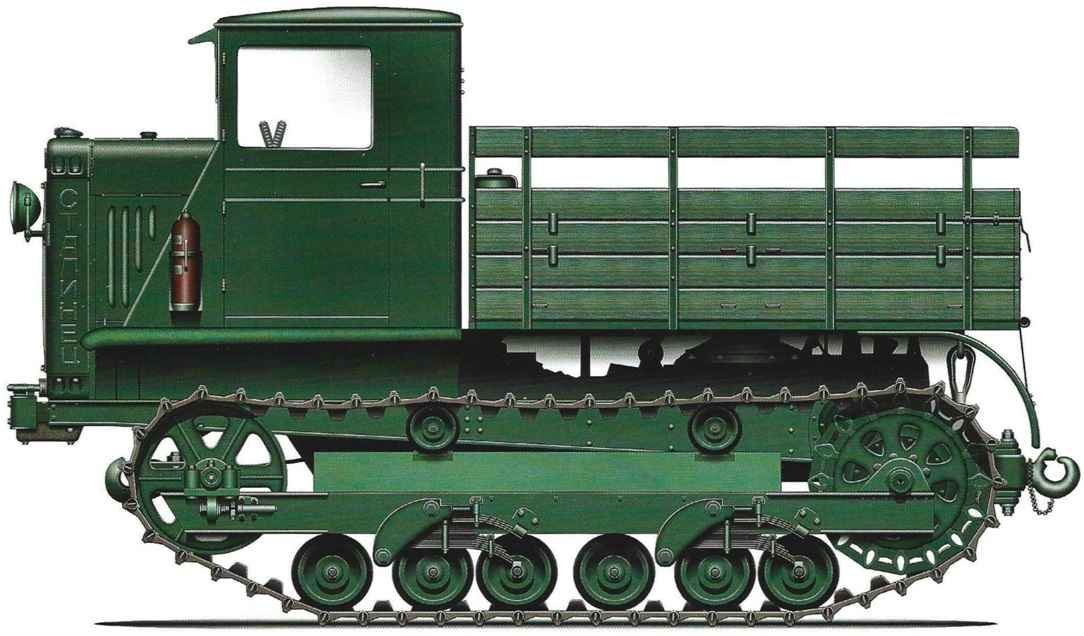
Full Specifications
| Weight | 11,940 kg |
| Platform Payload | 1,500 kg |
| Towed Trailer Weight | 10,000 kg / up to 19,000 kg overloaded |
| Crew | 2 |
| Passengers in Cargo Bed | 8 |
| Engine | MT-17 diesel |
| Engine Power | 105 hp nominal / 115 hp maximum |
| Maximum Speed | 26.5 km/h |
| Highway Range with Trailer | Up to 183 km |
| Length | 4,674 mm |
| Width | 2,440 mm |
| Height | 2,756 mm |
| Height with Canvas Top | 3,065 mm |
| Ground Clearance | 462.5 mm |
| Track Width | 420 mm |
| Maximum Climb | 24–25° |
Stalinets-2 Soviet Artillery Tractor
The Stalinets-2 (S-2) was a Soviet heavy tracked artillery tractor developed before World War II for towing heavy artillery and transporting gun crews and equipment.
Powered by the MT-17 diesel engine, the Stalinets-2 could tow a 10-ton trailer and reach a maximum speed of 26.5 km/h. Its cargo platform could carry up to 1,500 kg and accommodate eight soldiers.
During World War II, the S-2 served on multiple fronts and was used to tow artillery ranging from 85 mm anti-aircraft guns to heavy 203 mm howitzers and 280 mm mortars. It was also used to recover light and medium tanks.
Why the Stalinets-2 Was Important
The Stalinets-2 provided the Red Army with a powerful diesel artillery tractor capable of moving heavy guns across difficult terrain. Despite reliability and design problems, it remained in military service throughout World War II.
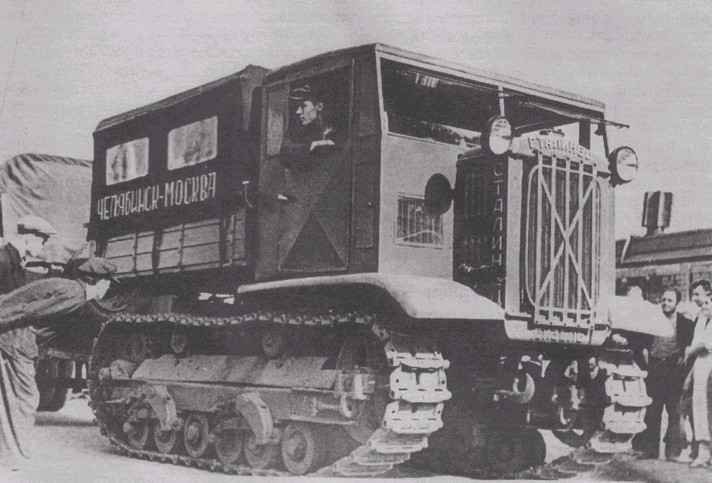
STZ-5 Artillery Tractor
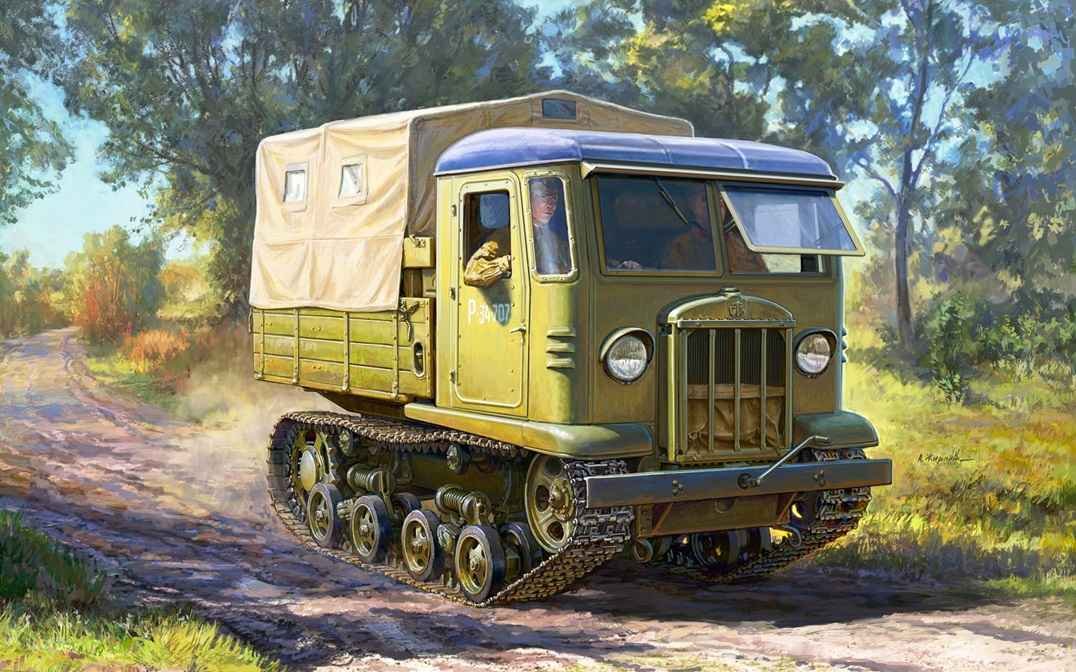
Full Specifications
| Weight | 5,840 kg |
| Platform Payload | 1,500 kg |
| Towed Trailer Weight | 4,500 kg / up to 7,250 kg overloaded |
| Crew | 2 |
| Passengers in Cargo Bed | 8–10 |
| Engine Power | 52–56 hp |
| Maximum Speed | 22 km/h |
| Highway Range with Trailer | Up to 145 km |
| Length | 4,150 mm |
| Width | 1,855 mm |
| Height | 2,360 mm |
| Ground Clearance | 288 mm |
| Track Width | 310 mm |
| Maximum Climb | 40° without trailer |
| Number Produced | 9,944 |
STZ-5 Soviet Artillery Tractor
The STZ-5 was one of the most widely used Soviet tracked artillery tractors of World War II. It was designed to tow artillery, transport gun crews, ammunition and other military equipment.
The tractor could tow a standard trailer weighing up to 4.5 tons and carry up to 1.5 tons of cargo. Its rear platform could accommodate 8–10 soldiers, while the enclosed front cab provided seating for two crew members.
The STZ-5 was widely used by Red Army artillery units to tow 76 mm guns, 122 mm and 152 mm howitzers, as well as anti-aircraft guns. Some vehicles were also converted to carry BM-13 Katyusha rocket launchers.
Why the STZ-5 Was Important
The STZ-5 became one of the Red Army’s most common artillery tractors. Its simple construction, reliability and ability to operate in different climates made it an important military transport vehicle during World War II. A total of 9,944 STZ-5 tractors were produced.
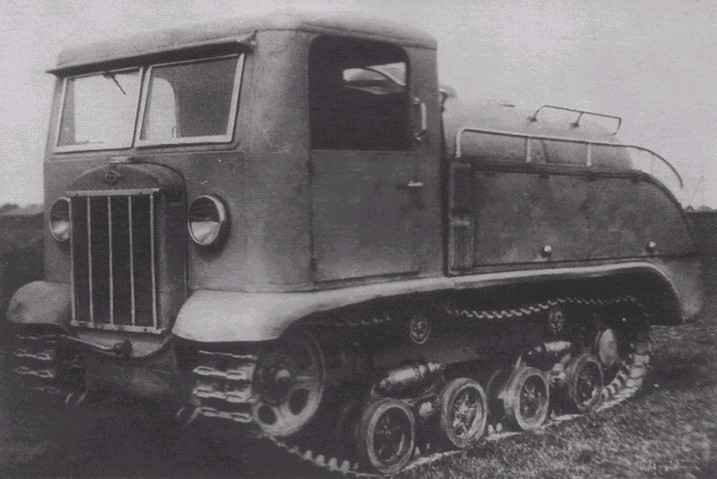
Ya-12 / Ya-13 / M-12 Artillery Tractors
In early 1942, NATI engineer E. G. Popov developed the preliminary design of the high-speed artillery tractor “D” (twin-engine), intended for towing artillery systems weighing up to 8 tons.
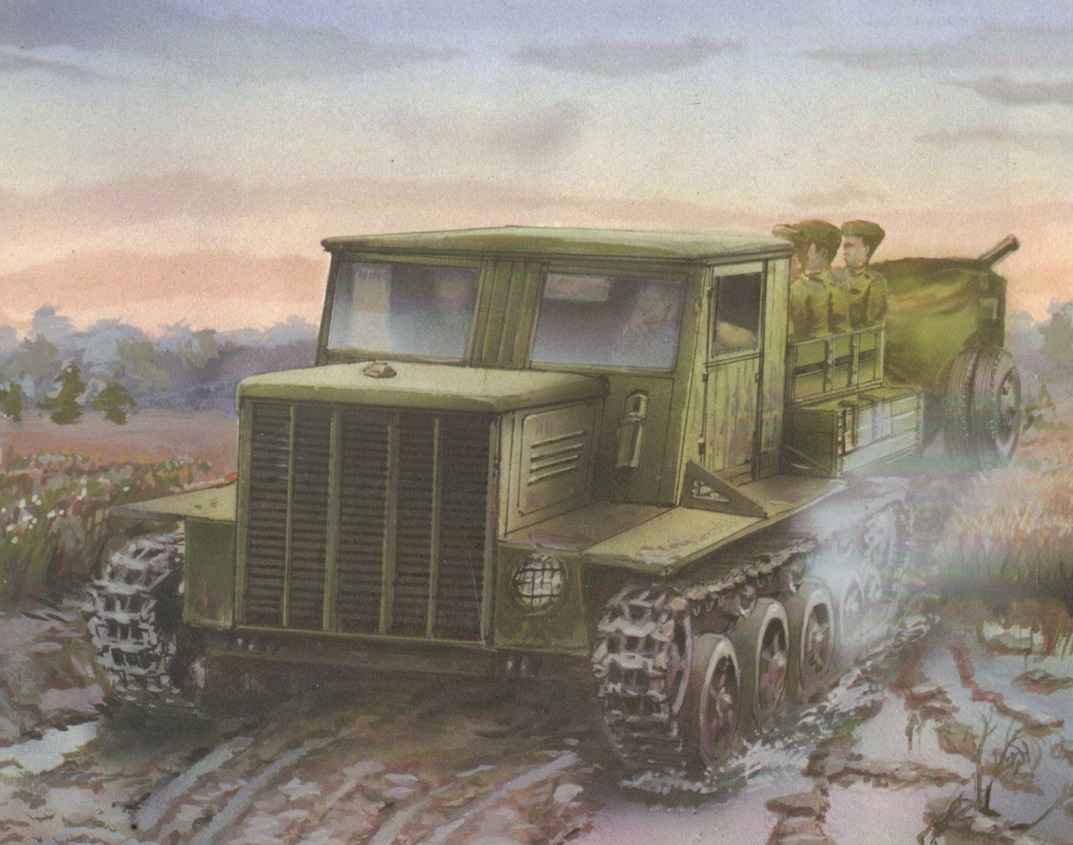
Full Specifications
| Weight | 6,550 kg |
| Platform Payload | 2,000 kg |
| Towed Trailer Weight | 8,000 kg |
| Crew | 3 |
| Passengers in Cargo Bed | 8 |
| Engine Power | 110–112 hp |
| Maximum Speed | 38.3 km/h |
| Highway Range with Trailer | 290 km |
| Length | 4,890–5,030 mm |
| Width | 2,440 mm |
| Height | 2,213 mm |
| Ground Clearance | 305 mm |
| Track Width | 300 mm |
| Number Produced by May 1945 | 1,666 |
Ya-12 Soviet Artillery Tractor
The Ya-12 was a Soviet high-speed tracked artillery tractor developed during World War II to tow heavy artillery systems. It entered serial production in 1943 and became an important vehicle for improving the mobility of Soviet heavy artillery units.
The Ya-12 was powered by the American GMC 4-71 diesel engine producing about 110–112 hp. It could reach a maximum speed of 38.3 km/h and tow artillery weighing up to 8 tons. Its rear platform could carry up to 2,000 kg of cargo and accommodate eight soldiers.
During World War II, the Ya-12 was used to tow 122 mm corps guns, 152 mm gun-howitzers and even heavy 203 mm howitzers. The tractor combined relatively high speed with strong towing performance and good cross-country mobility.
Ya-13 and M-12 Variants
Due to shortages of GMC diesel engines, simplified Ya-13 and Ya-13F tractors with Soviet gasoline engines were also produced. After the war, production was transferred to Factory No. 40 in Mytishchi, where modified versions were manufactured as the M-12A and M-13A.
The Ya-12 family remained in Soviet military service after World War II and was eventually replaced by newer artillery tractors in the 1950s.
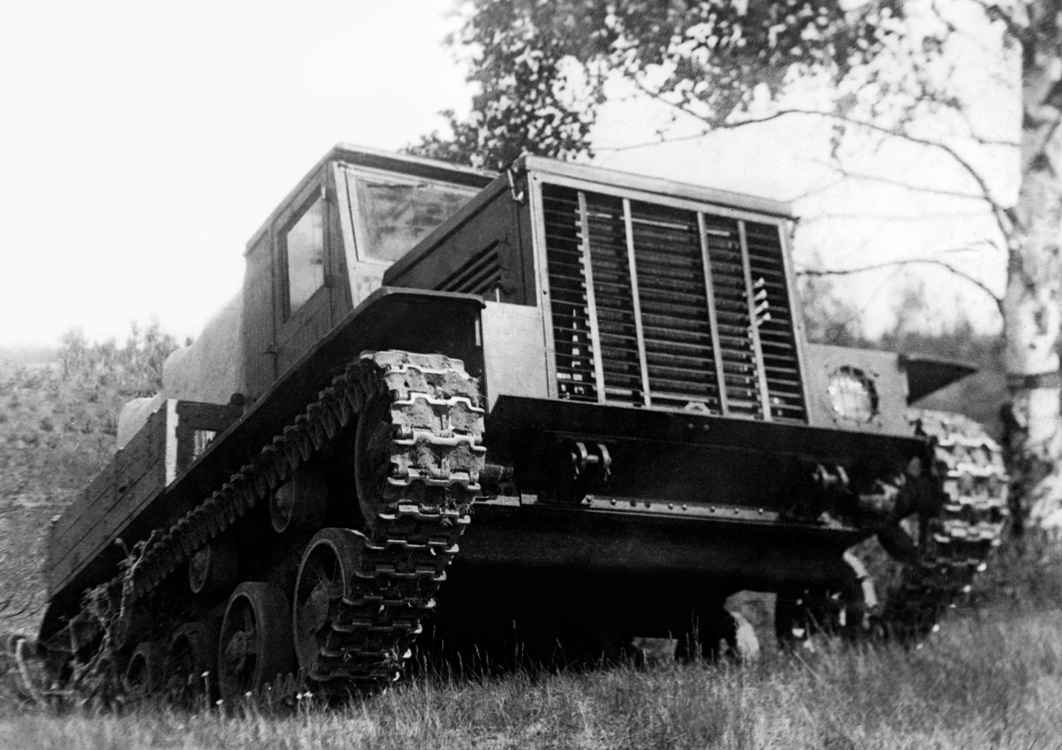
FAI Armored Car
The development of the FAI, one of the most widely produced early Soviet armored cars, was connected to the Soviet government’s agreement with Henry Ford, the pioneer of mass automobile production.
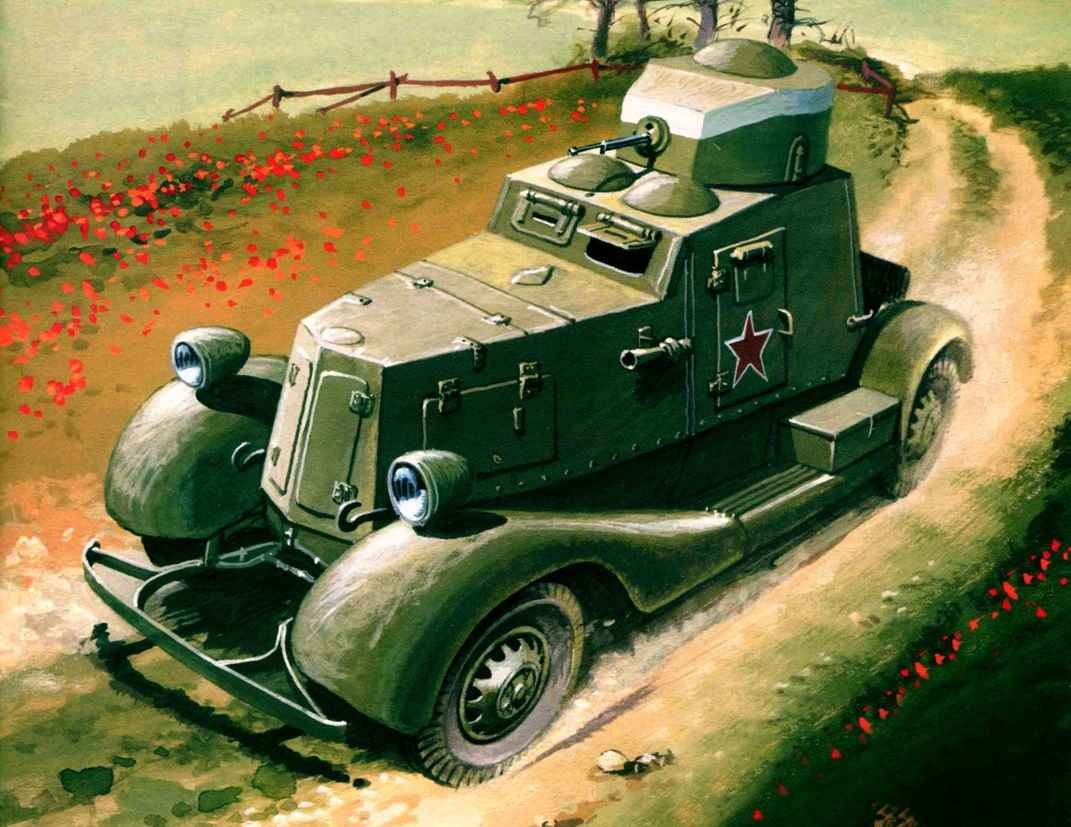
Full Specifications
| Crew | 2 |
| Armament | 1 × 7.62 mm DT machine gun |
| Ammunition | 1,323 rounds |
| Armor | 4–6 mm |
| Engine | GAZ-A, 4-cylinder |
| Engine Power | 42 hp |
| Fuel Capacity | 40 L |
| Maximum Speed | 80 km/h |
| Range | 200 km |
FAI Soviet Light Armored Car
The FAI was a Soviet light armored car developed by the Izhora Plant in 1931–1932 on the chassis of the Ford-A. It entered production in 1933 and became one of the most common Soviet armored cars of the pre-war period.
The vehicle was armed with a 7.62 mm DT machine gun mounted in a rotating turret and carried 1,323 rounds of ammunition. It was powered by a 42 hp GAZ-A four-cylinder engine and could reach a maximum speed of 80 km/h with a range of about 200 km.
In 1935, some FAI armored cars were equipped with interchangeable wheel bands that allowed them to operate on railway tracks. These vehicles were used as light reconnaissance armored railcars.
The later FAI-M combined the FAI armored body with the longer M-1 automobile chassis. FAI and FAI-M armored cars were used by the Red Army during conflicts of the 1930s and remained in combat service during World War II until 1943.
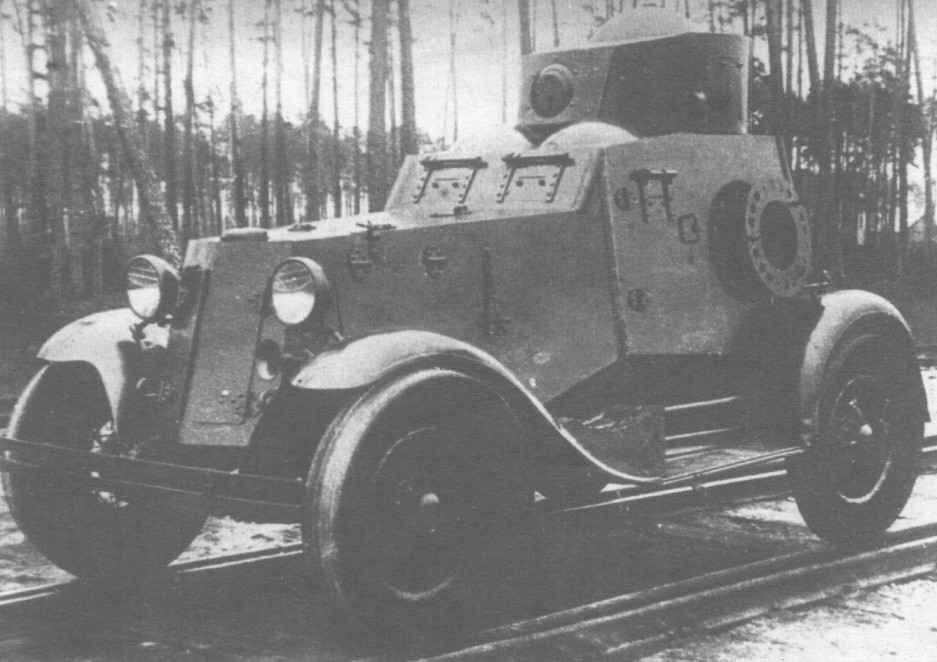
More interesting articles:
How to Prepare RKKA Uniform and Equipment for WW2 Reenactment
WWII Reenacting for Beginners: How to Look Like a Real Soldier
Red Army Uniforms Before WWII: Complete Guide to Pre-War Equipment
Looking original Soviet boots and accessories? Please visit here: Soviet Boots Store