WWII Soldier Uniforms for Reenactment from Different Countries
WWII soldier uniforms for reenactment can be built step by step with real gear and simple combinations.
In Part 1, we showed detailed Soviet uniforms examples, you can see it here (Part 1).
In this Part 2, we look at uniforms from other countries that fought in World War II.
Each set shows how to put together a complete and realistic reenactment uniform.
Check Soviet WW2 uniforms guides:
How to Put Together a WWII Soviet Soldier and Officer Uniform for Reenactment (Part 1)
Equipment Set of a Red Army Soldier: 1941 Vs. 1945
Soviet RKKA Uniforms of the Red Army Soldiers, 1941-1942
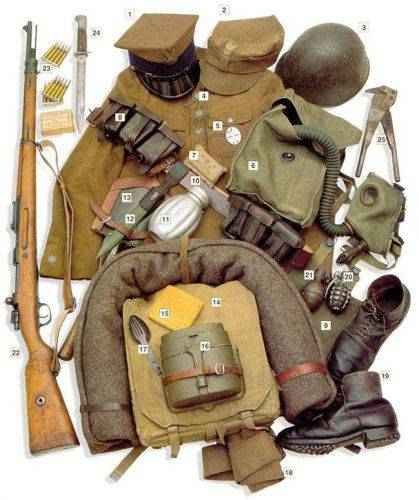
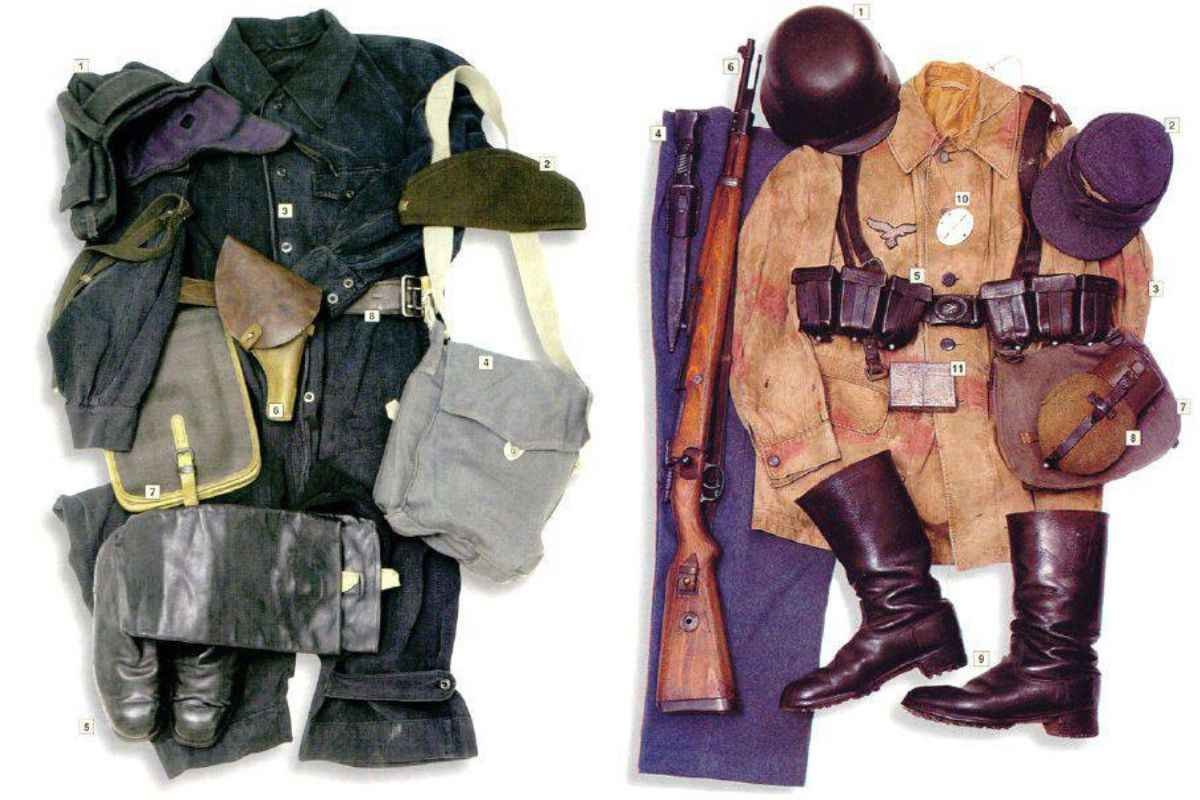
German Army Soldier (Wehrmacht Infantry), 1939–1940
This is a typical German Wehrmacht infantry soldier at the start of WWII.
His gear was well-organized and designed for mobility and long marches.
The Kar98k rifle and basic field equipment made up the standard combat kit.
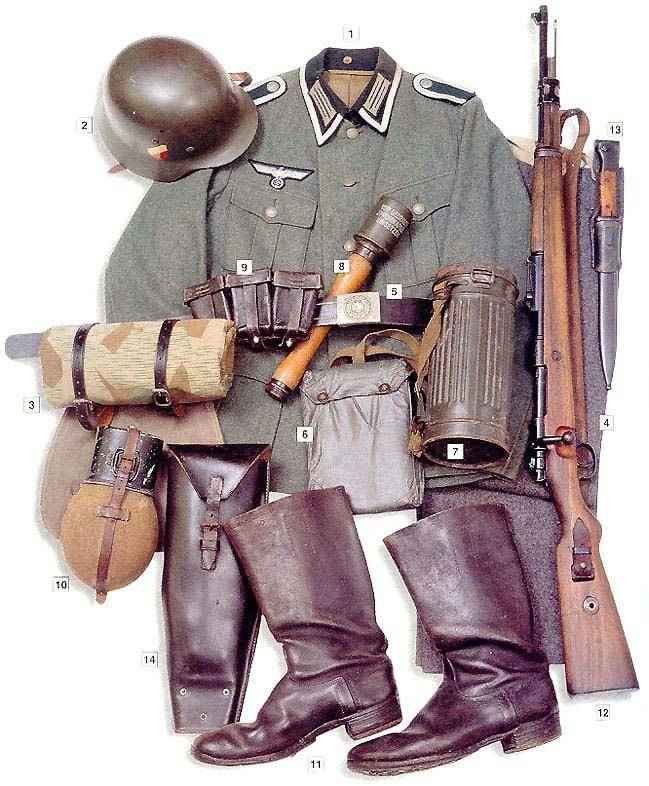
German corporal (NCO) uniform, 1939–1940:
01 — M35 field tunic with NCO insignia
02 — M35 steel helmet with Heeres markings
03 — Zeltbahn M31 camouflage shelter (Splittermuster pattern)
04 — Gray trousers (Steingrau)
05 — Leather belt
06 — Gas mask filter bag
07 — M38 gas mask
08 — M24 stick grenade
09 — Black leather ammo pouches
10 — M31 aluminum mess kit
11 — Jackboots
12 — 7.92 mm Mauser Kar98k rifle
13 — Seitengewehr 84/98 bayonet
14 — Entrenching tool (shovel)
Soviet Tank Commander (Red Army Armored Troops), 1939
This is a typical Soviet tank commander uniform before WWII.
It was designed for work inside tanks, with simple and practical gear.
The coveralls and helmet helped protect the crew during combat operations.
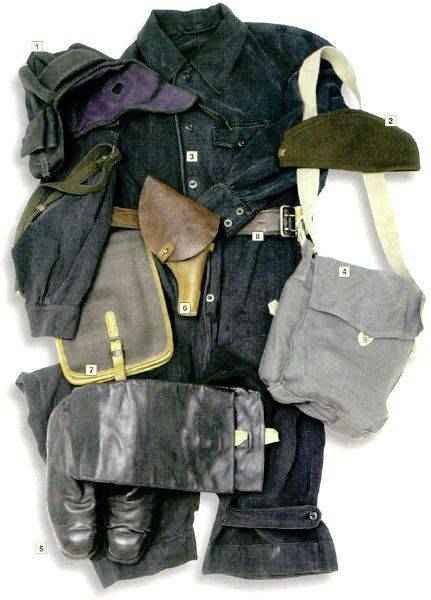
01 — Canvas tanker helmet with ear flaps
02 — Model 1935 pilotka with red star
03 — Linen coveralls
04 — Canvas gas mask bag
05 — Officer boots
06 — Holster for 7.62 mm Nagant revolver
07 — Leatherette map case
08 — Officer belt
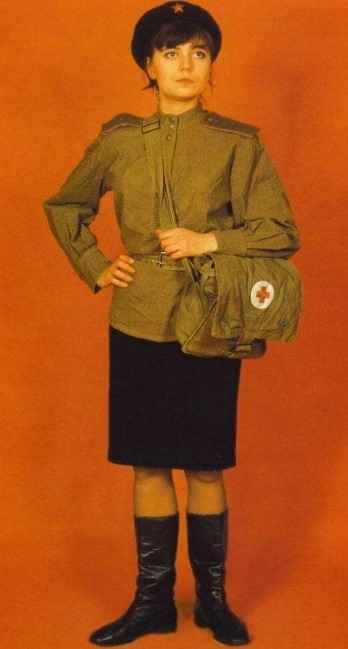
Red Army medical personnel uniform, 1943
Most medical personnel were women. Dark blue berets and skirts were part of the parade uniform in the Red Army since the pre-war period. In May and August 1942, khaki uniforms were introduced, but most women used standard male uniforms or wore mixed clothing that was more practical.
US Airborne Lieutenant (82nd Airborne Division, Sicily Campaign), 1943
This is a US Airborne lieutenant from the Sicily campaign in 1943.
His gear was designed for parachute operations and fast movement.
Light uniform, carbine, and compact equipment made him effective in combat.
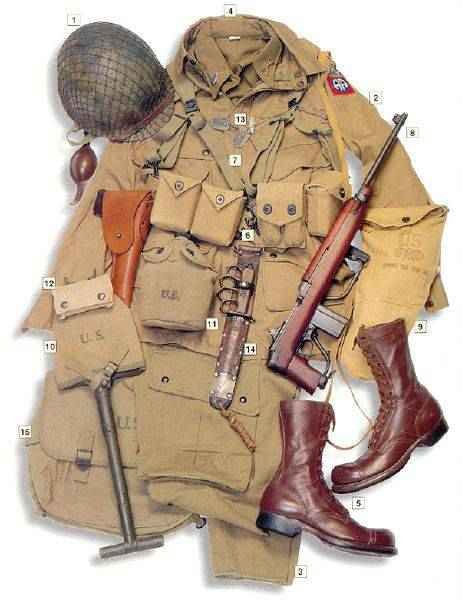
01 — M2 helmet with camouflage net
02 — M1942 jump jacket
03 — M1942 trousers
04 — M1934 wool shirt
05 — Jump boots
06 — M1936 pistol belt with M1916 holster and Colt M1911 pistol
07 — M1936 suspenders
08 — M1A1 carbine
09 — M2A1 gas mask
10 — M1910 entrenching tool
11 — M1942 mess kit
12 — M1910 field pack
13 — Dog tags
14 — M1918 Mk I trench knife
15 — M1936 backpack
Luftwaffe Fighter Pilot (FW-190 A8, Jagdgeschwader 300 “Wilde Sau”), Germany 1944
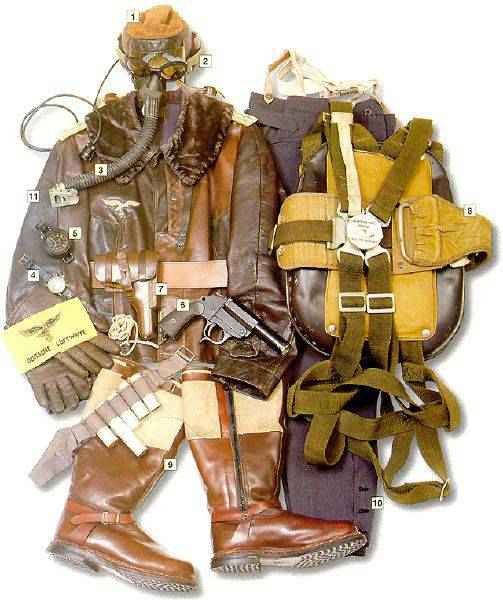
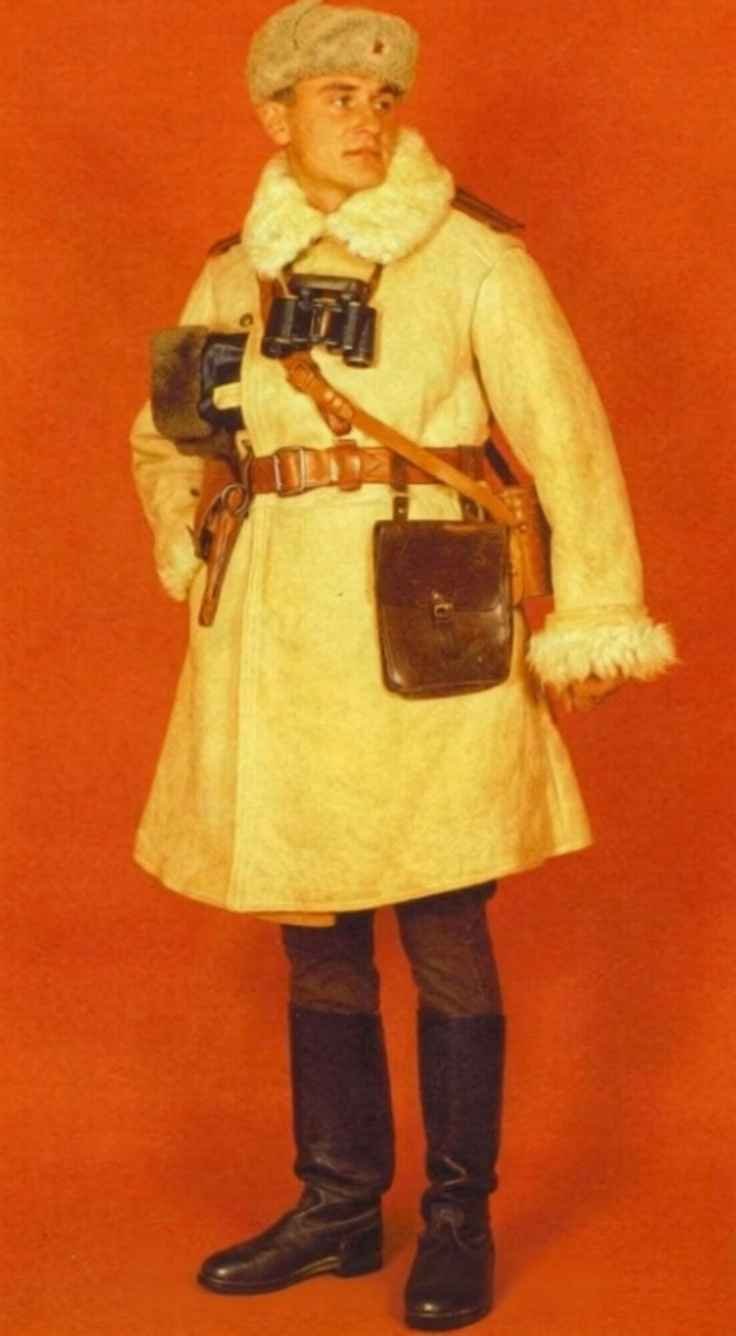
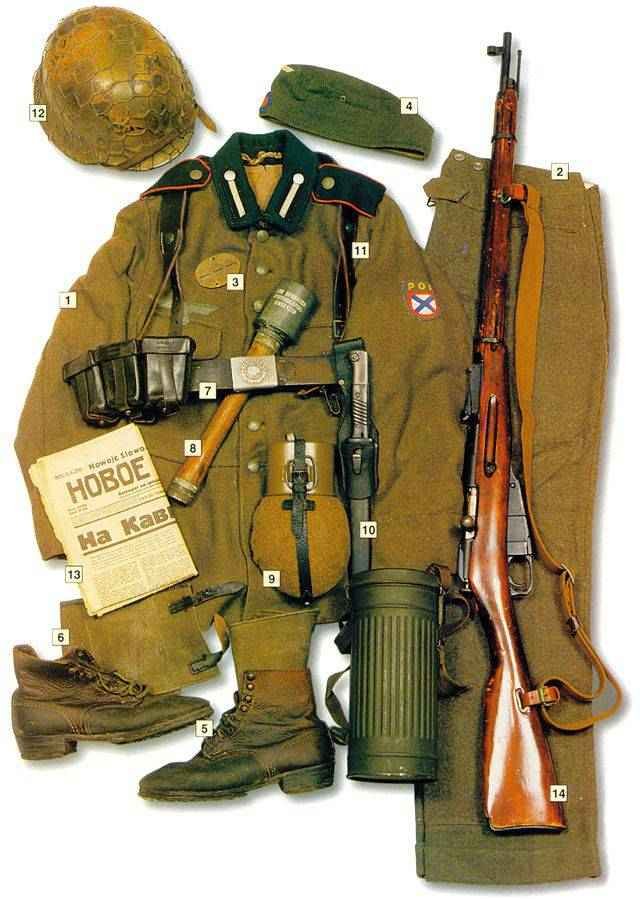
01 — Dutch field jacket with ROA insignia and German eagle on chest
02 — M40 trousers
03 — ID tag (medallion)
04 — M34 cap with ROA insignia
05 — Boots
06 — M42 gaiters
07 — German belt with ammo pouches
08 — M24 stick grenade
09 — M31 mess kit
10 — Bayonet
11 — M39 suspenders
12 — M35 helmet with camouflage net
13 — “New Life” magazine for Eastern volunteers
14 — 7.62 mm Mosin-Nagant 1891/30 rifle
US Army Infantry Soldier, 1942–1945
US Army infantry soldier during World War II.
His equipment was designed for long marches and sustained combat.
The BAR rifle gave strong firepower to support infantry units.
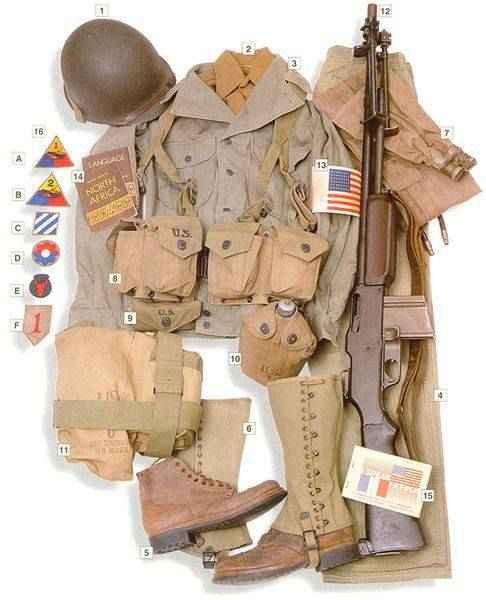
01 — M1 helmet
02 — M1934 shirt
03 — M1934 undershirt
04 — M1941 trousers
05 — Boots
06 — M1938 leggings
07 — M1926 life belt
08 — M1937 ammo belt
09 — M1924 personal hygiene kit
10 — M1910 mess kit
11 — Gas mask
12 — M1918A2 Browning Automatic Rifle with M1907 sling
13 — Unit patches
14, 15 — Manuals
16 — Shoulder sleeve insignia:
A — 1st Armored Division
B — 2nd Division
C — 3rd Infantry Division
E — 34th Division
F — 1st Infantry Division
Kriegsmarine Sailor (Matrosengefreiter), Germany 1943
German Kriegsmarine sailor from 1943.
His uniform was simple and practical for life at sea.
Personal items like tobacco and magazines were common for everyday use.
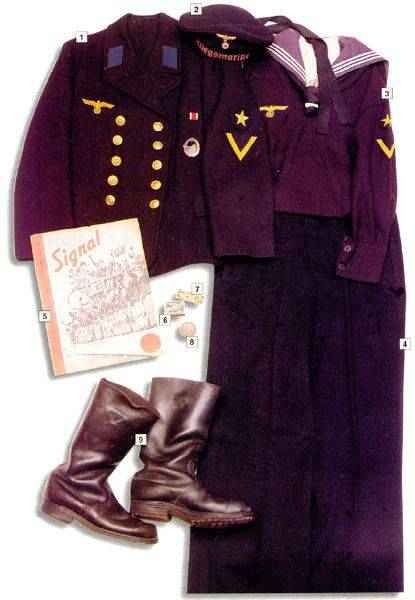
01 — Naval jacket with Iron Cross 2nd Class, crew badge, and rank insignia
02 — Kriegsmarine cap
03 — Naval pea coat
04 — Deck trousers
05 — “Signal” magazine, July 1943
06 — Tobacco
07 — Cigarette paper
08 — “Hygienischer Gummischutz-Dublosan”
09 — Boots
Polish Armored Division Officer (1st Armored Division, Germany 1945)
Polish armored division officer from 1945.
His gear combines standard uniform with vehicle crew equipment.
Helmets and protective clothing were important for armored service.
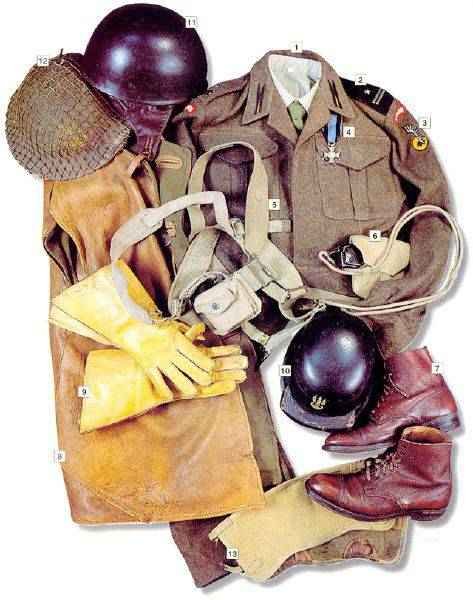
01 — M37/40 service uniform
02 — Black shoulder board of 1st Armored Division
03 — 1st Division insignia
04 — Silver Virtuti Militari cross
05 — M37 suspenders
06 — .45 Colt M1911 pistol
07 — Officer boots
08 — Leather vest
09 — Driver gloves
10 — Armored crew helmet
11 — AT Mk II motorcycle helmet
12 — Mk II helmet
13 — Leggings
Luftwaffe Field Soldier (Germany, France 1944)
Luftwaffe ground soldier in France, 1944.
He wears practical field gear with camouflage clothing.
His equipment is similar to regular infantry units of the German army.
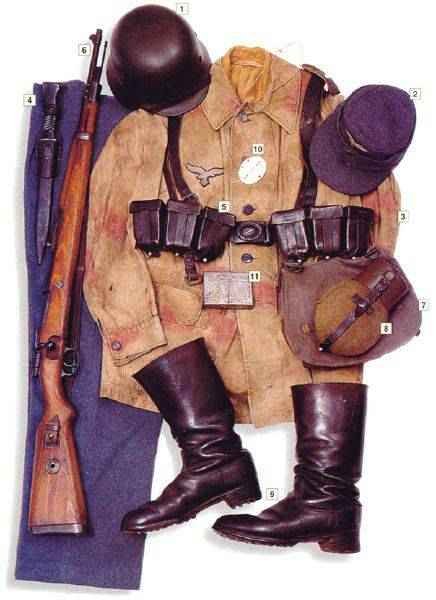
01 — M40 helmet
02 — M43 field cap (Einheitsfeldmütze)
03 — M43 camouflage smock (Sumpftarnmuster)
04 — Trousers
05 — Suspenders
06 — 7.92 mm Mauser Kar98k rifle
07 — M31 bread bag
08 — M31 mess kit
09 — M39 boots
10 — ID tag
11 — “Esbit” pocket stove
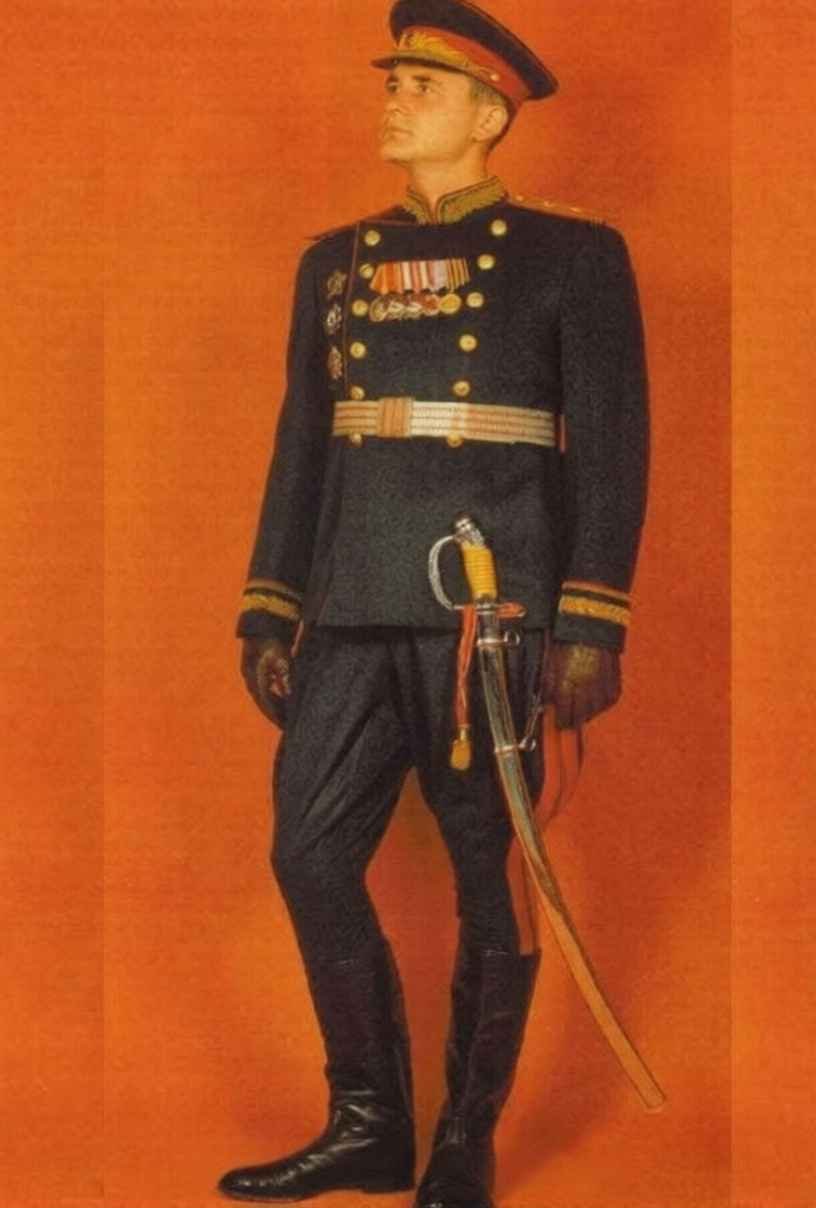
Lieutenant General, parade uniform, 1945
The tunic had a stand-up collar with collar tabs, rear skirt flaps, and red piping on the collar, cuffs, and pocket flaps. Each uniform was tailored individually. More than 250 new parade uniforms were made for generals, and in just three weeks over 10,000 sets of different uniforms were produced in factories and workshops in the capital for the parade.
On the right side of the chest were the Orders of the Red Star and the Patriotic War, above the Guards badge. On the left side was the Gold Star of the Hero of the Soviet Union and a row of medals.
All fronts and fleets were represented at the parade, and participants had to be decorated with orders and medals. This means that real, selected front-line soldiers took part.
After the parade, the captured German banners and standards were thrown down and burned together with the platform. The gloves of the soldiers who carried them were also burned.
RSI Lieutenant (Decima MAS, Italy 1943–1944)
This is an Italian RSI officer from the Decima MAS unit.
His gear combines Italian and German equipment.
He is equipped for close combat with a submachine gun and light gear.
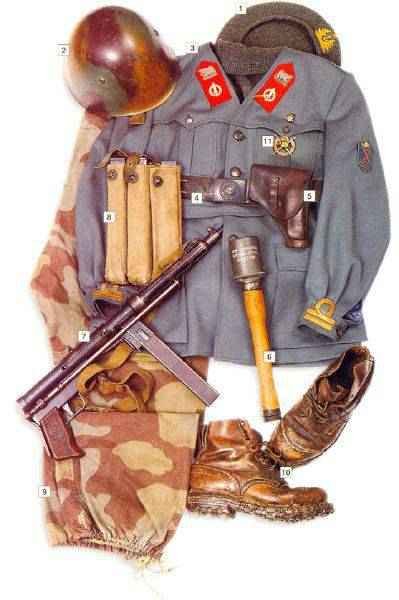
01 — “Basco” beret
02 — Model 1933 helmet
03 — Model 1941 flight jacket with lieutenant insignia on cuffs and collar
04 — German belt
05 — Holster with Beretta 1933 pistol
06 — German M24 stick grenade
07 — 9 mm TZ-45 submachine gun
08 — Ammo pouches
09 — Trousers
10 — German mountain boots
11 — “Folgore” campaign badge
Waffen-SS Cavalry Soldier (8th SS Cavalry Division “Florian Geyer”), Summer 1944
Waffen-SS cavalry soldier from 1944.
He is equipped with modern weapons like the StG44 and Panzerfaust.
His gear reflects late-war German infantry and cavalry equipment.
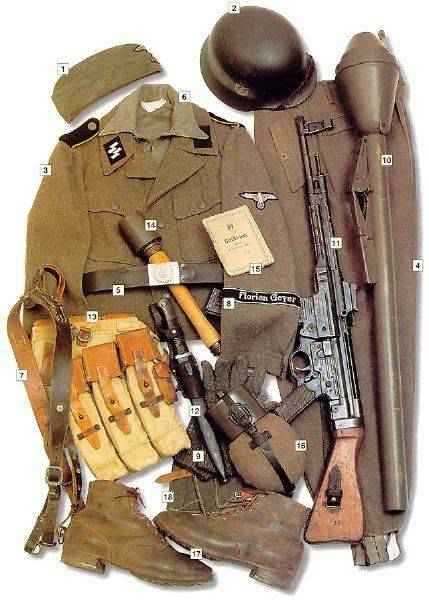
8th SS Cavalry Division “Florian Geyer”, summer 1944:
01 — M40 field cap (Feldmütze)
02 — M40 helmet with SS decals
03 — M44 field jacket with cavalry insignia
04 — Trousers
05 — M35 belt
06 — Wool shirt
07 — M39 suspenders
08 — “Florian Geyer” armband
09 — Wool gloves
10 — Panzerfaust 60
11 — 7.92 mm Sturmgewehr 44
12 — M84/98 bayonet
13 — Canvas ammo pouches
14 — M24 stick grenade
15 — Waffen-SS paybook
16 — M31 mess kit
17 — M43 leather boots
18 — Leggings
Kriegsmarine U-Boat Commander (Kapitänleutnant), Germany 1941
German U-boat commander from 1941.
His uniform shows high rank and combat experience.
Items like binoculars and leather coat were essential for naval operations.
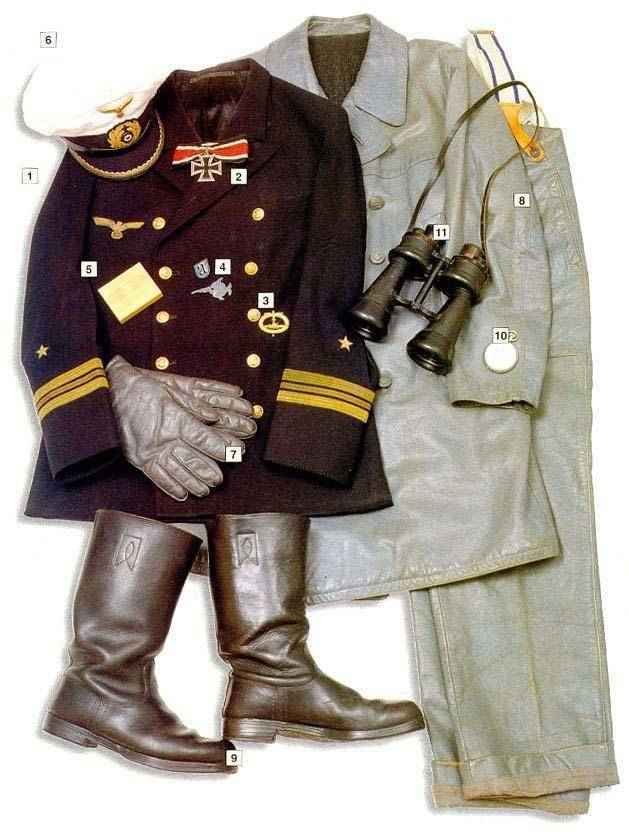
Kriegsmarine Kapitänleutnant (U-boat commander), 1941:
01 — Officer tunic with Kapitänleutnant insignia
02 — Knight’s Cross of the Iron Cross
03 — U-boat badge
04 — Unofficial badges of 1st and 9th U-boat flotillas
05 — Cigarettes
06 — Kriegsmarine officer cap
07 — Leather gloves
08 — Leather coat (“U-Boot-Päckchen”)
09 — Boots
10 — “Junghans” watch
11 — Naval binoculars
Polish Partisan Fighter (Bataliony Chłopskie), 1942
Polish partisan fighter from 1942.
His gear is simple and often improvised.
Weapons like the MP-40 were usually captured from the enemy.
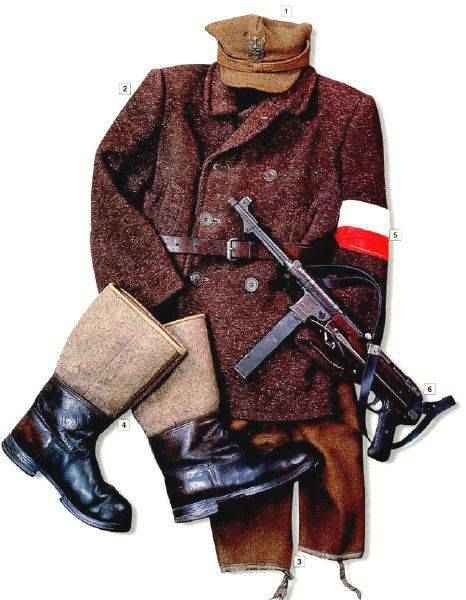
01 — wz.1937 “rogatywka” cap
02 — Jacket
03 — Trousers
04 — Boots
05 — Improvised armband
06 — 9 mm MP-40 submachine gun