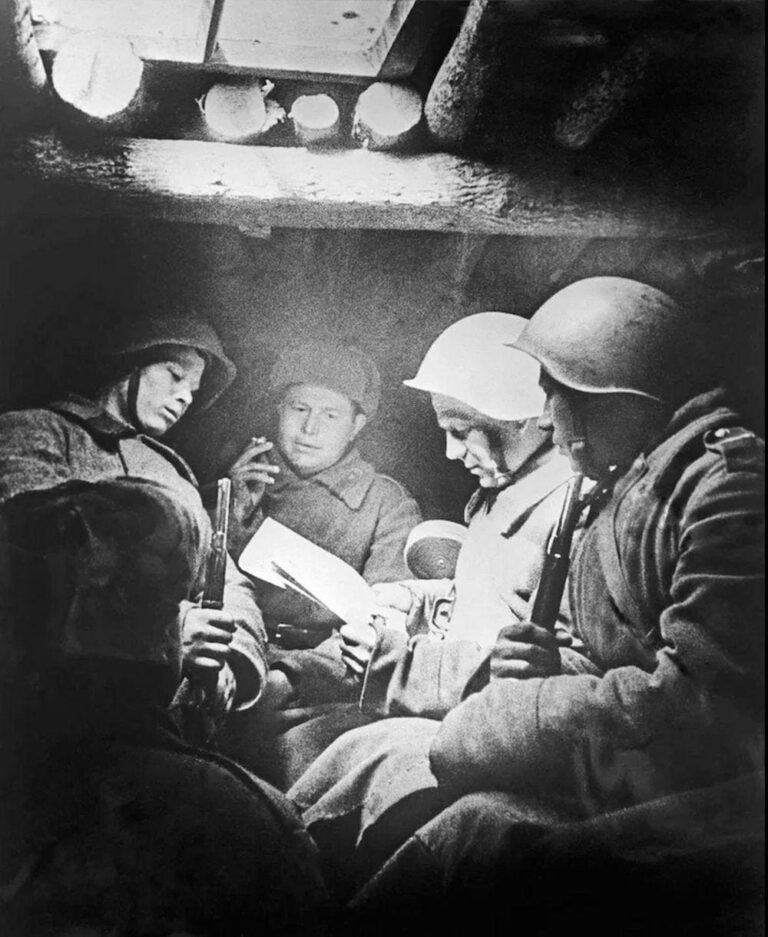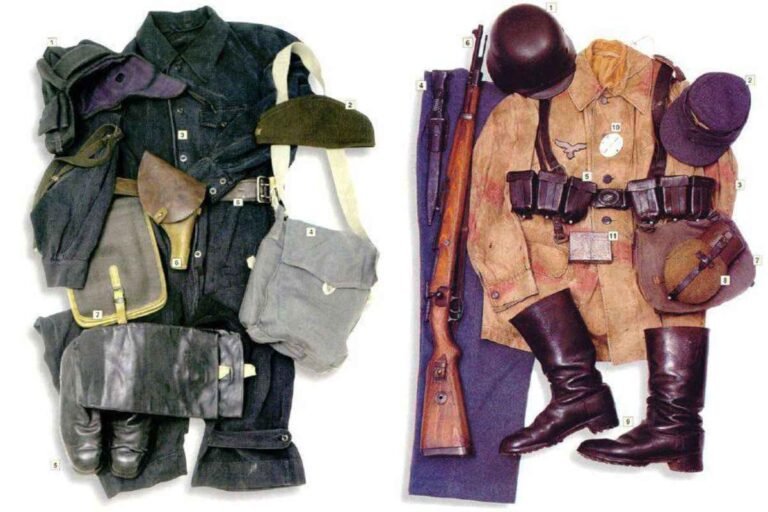
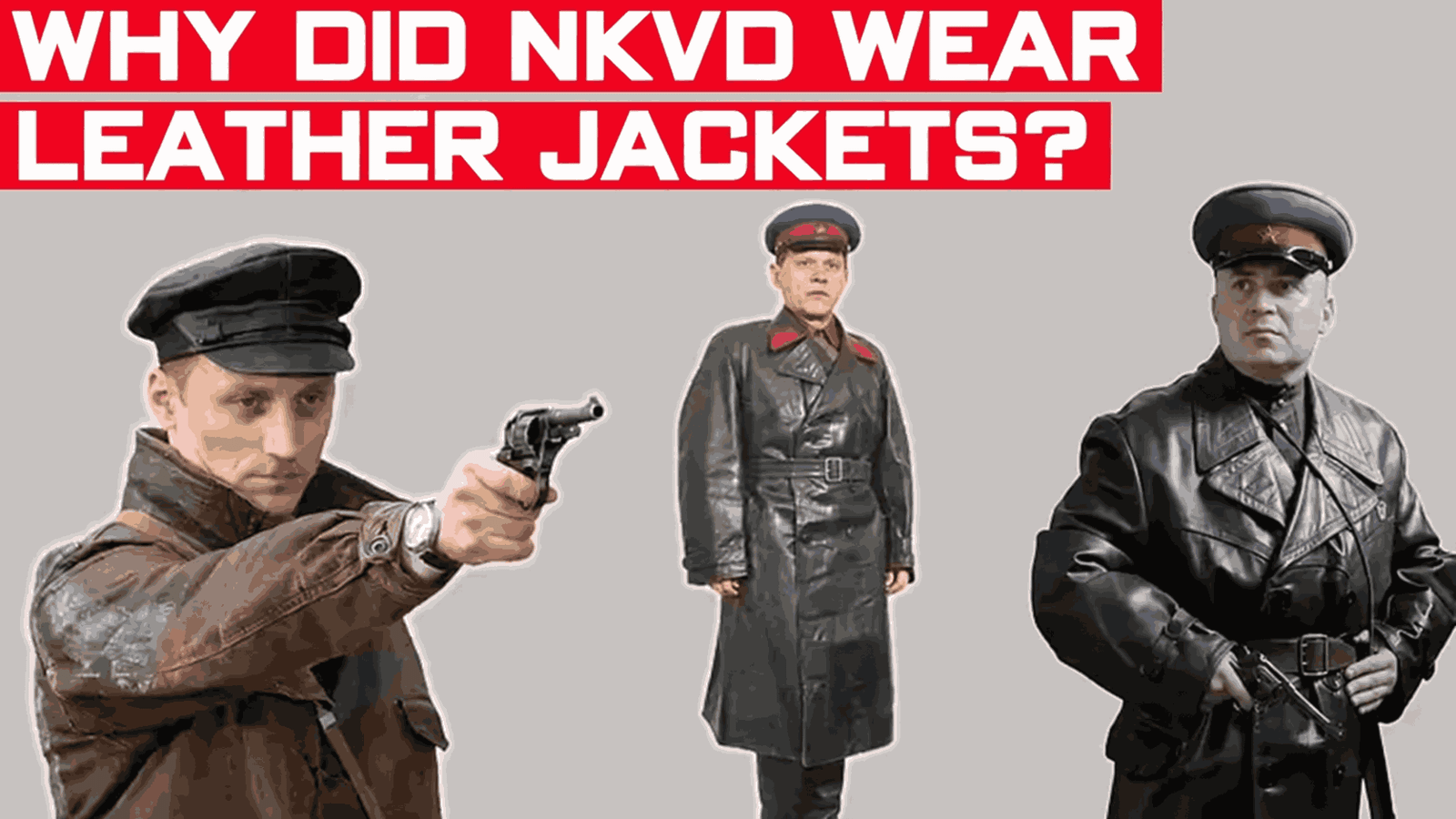
A leather jacket, a peaked cap, and a Nagant revolver. This is how many people imagine an officer of the Cheka or NKVD. We know this image from Soviet films, books, posters, and modern TV series. But was the leather jacket an official uniform? And why did Soviet security officers wear it?
Soviet Panamanka Hat History – From NKVD to Afghanistan War (Part 1)
Soviet Panama Hat History – 1930s, Afghanistan & Modern Russia (Part 2)
Why Mujahideen Feared Soviet GRU Spetsnaz in the Afghan War
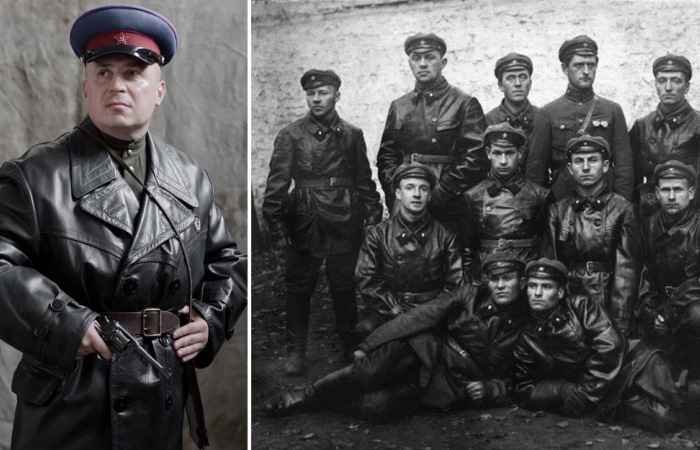
The short answer is simple: the leather jacket was practical, rare, and easy to recognize. It was never the official uniform of every Cheka or NKVD officer. Still, it became a powerful symbol of the new Soviet state.
Leather Jackets Before the Revolution
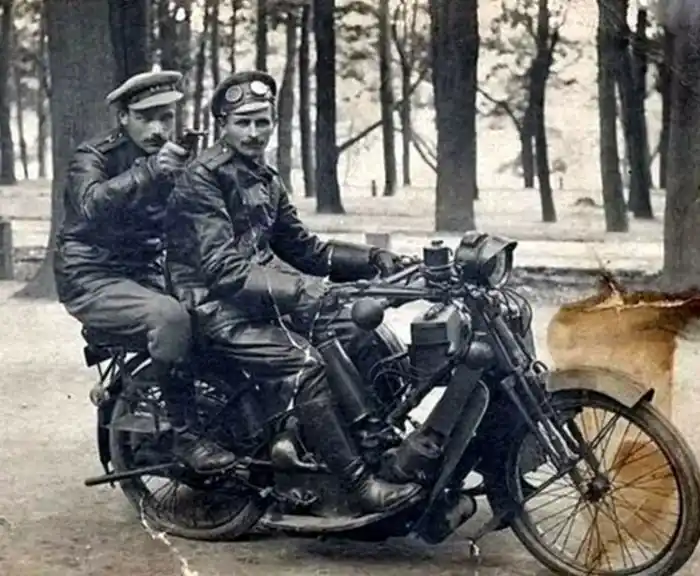
Leather clothing did not appear with the Bolsheviks. Before the Russian Revolution, drivers, mechanics, pilots, and soldiers of armored units already wore leather jackets.
There was a good reason for this. A leather jacket protected a man from wind, rain, oil, and dirt. It was strong, did not tear easily, and was much easier to clean than a wool coat. This made it perfect for people who worked with cars, aircraft, motorcycles, and other machines.
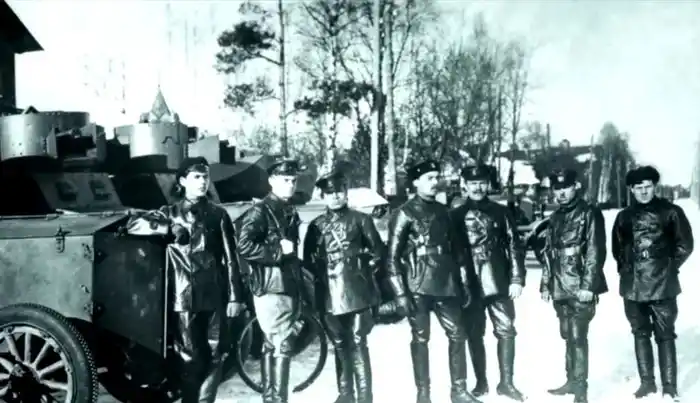
During World War I, Russian pilots, drivers, artillerymen, and armored-car crews used this clothing. Leather was expensive, so such jackets were not common among ordinary soldiers. They often showed that the owner had a technical job or an important position.
What Did Cheka Officers Wear?
After the Revolution of 1917, the new state did not have enough uniforms. The Red Army continued to use large amounts of old Imperial Russian clothing. The old insignia were removed, but the tunics, greatcoats, caps, breeches, and boots remained in service.
Work on a new Red Army uniform formally began only on May 7, 1918, with Order No. 326. Even then, supplies were too limited to replace everything at once. Order No. 929 of September 30, 1918, allowed soldiers to keep wearing Imperial Russian Army clothing as long as the old insignia were removed.
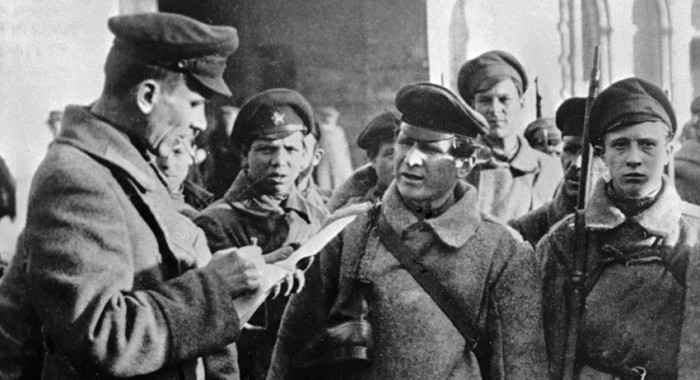
The Cheka had the same problem. During the Russian Civil War, its officers wore almost anything they could find. Some came from Red Army units and kept their army clothes. Others used civilian coats or old military items.
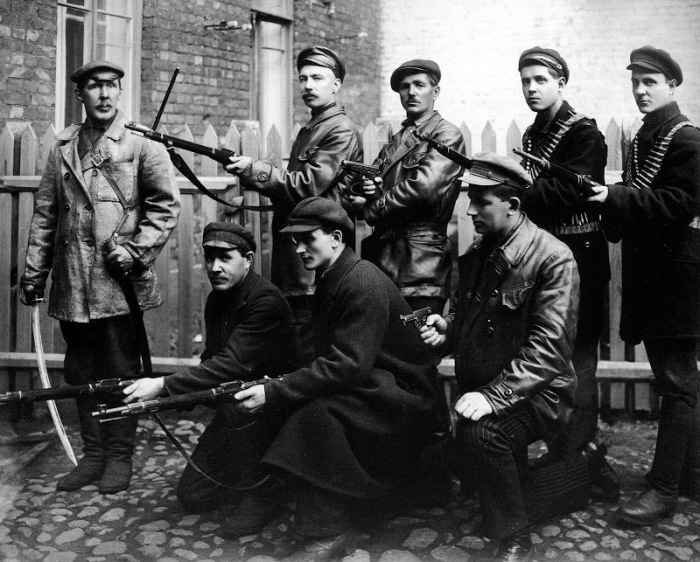
Leather jackets from pre-revolutionary stocks were also used. They were especially common among commanders, political workers, drivers, and members of technical units. From 1919, leather clothing became more visible in photographs of the new Soviet elite.
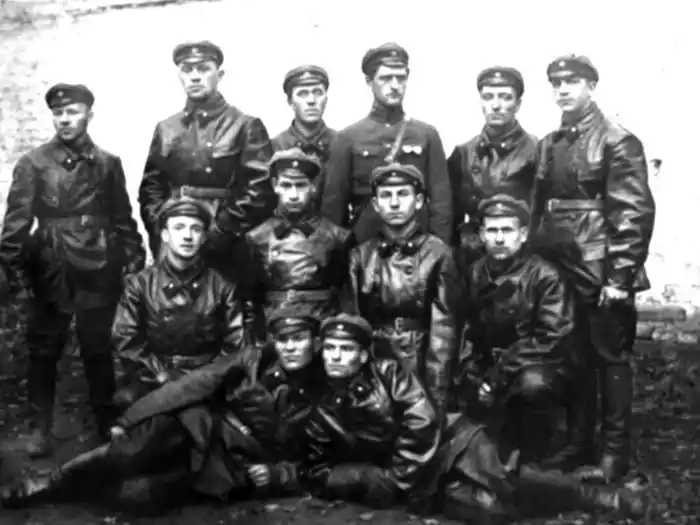
But there is an important point: the leather jacket was not an official Cheka uniform. In fact, the Cheka had no single special uniform during most of the Civil War.
If you want to see more clothing from this period, read our guide to Russian Civil War uniforms of 1918–1922.
Why Was Leather So Useful?
The popularity of leather clothing was not only about style. It had several real advantages.
Protection From Dirt and Bad Weather
Leather stopped wind and light rain. Oil, dust, and mud could be wiped away. This was very useful for men who traveled by car or motorcycle on poor roads.
Protection From Lice
Typhus was a terrible problem during the Civil War. Lice carried the disease. They could live and hide in wool and cloth, but smooth leather gave them fewer places to stay. A leather jacket was also easier to clean and disinfect.
Long Service Life
A good leather jacket could serve for years. In a country with damaged factories, broken supply lines, and a shortage of uniforms, this mattered a lot.
From Practical Clothing to a Sign of Power
The Cheka was created in December 1917 to fight counterrevolution and sabotage. Felix Dzerzhinsky became its first chairman. During the Civil War and the Red Terror, the organization received very wide powers.
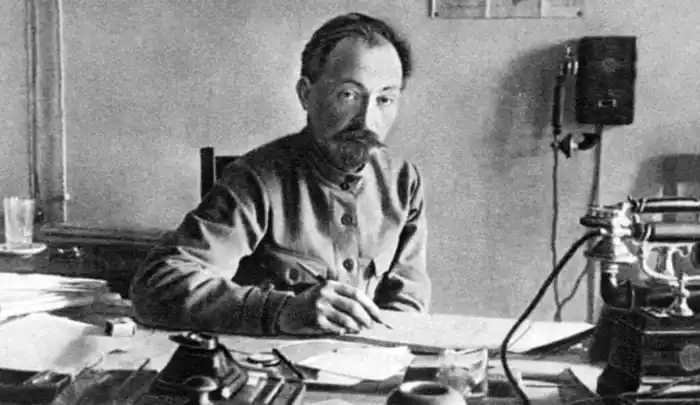
People soon connected the black leather jacket with arrests, searches, requisitions, and executions. A man in leather could look like someone who had a car, a weapon, authority, and the right to give orders.
There was also a fashion element. In the United States, a good overcoat and a felt hat once marked a successful city man. In early Soviet Russia, a rare leather jacket could send a similar message. It looked modern, expensive, and connected with cars, aircraft, weapons, and official power.
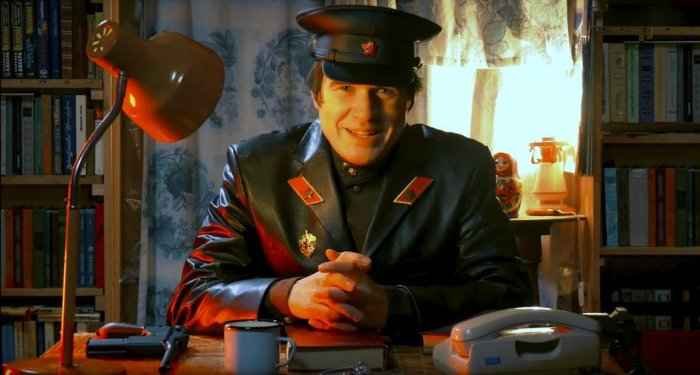
Still, clothing alone did not officially identify a security officer. Rank and service insignia mattered more. The leather coat worked as a social signal, not as a complete legal uniform.
This did not mean that every Cheka officer wore leather. It also did not mean that every person in a leather jacket worked for the Cheka. Red Army commanders, commissars, drivers, pilots, and party officials wore similar clothes. But the image was already stronger than the facts.
You can get them here – Soviet boots store.
Was It Really an NKVD Uniform?
Strictly speaking, no. The Cheka became the GPU in 1922, and official clothing slowly became more organized. GPU Order No. 280 of November 3, 1922, introduced a modest dark-blue tunic and a peaked cap.
The NKVD received a more complete official uniform system only in 1935. Orders No. 396 and No. 399, dated December 27, 1935, described uniforms for state security and border and internal troops. Leather jackets and coats were not the main official uniform in these orders.
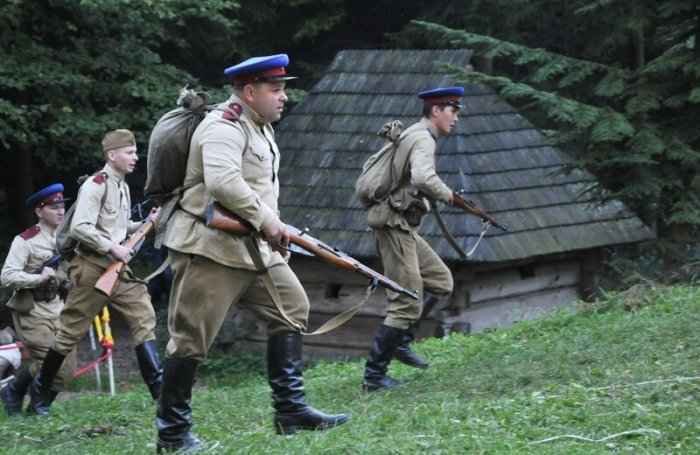
Leather clothing was not completely forbidden. Officers could still wear some non-standard items. It remained useful for drivers, motorcyclists, tank crews, and work in cold or dirty conditions.
How Cinema Created the Classic Chekist
By the late 1930s, security officers had proper uniforms, and the old Civil War leather jacket was becoming less common. But it never disappeared from popular culture.
Films needed a quick way to show the audience who was who. A black leather jacket, cap, belt, and revolver gave an immediate answer: this man was a Chekist, a commissar, or a hard revolutionary commander.
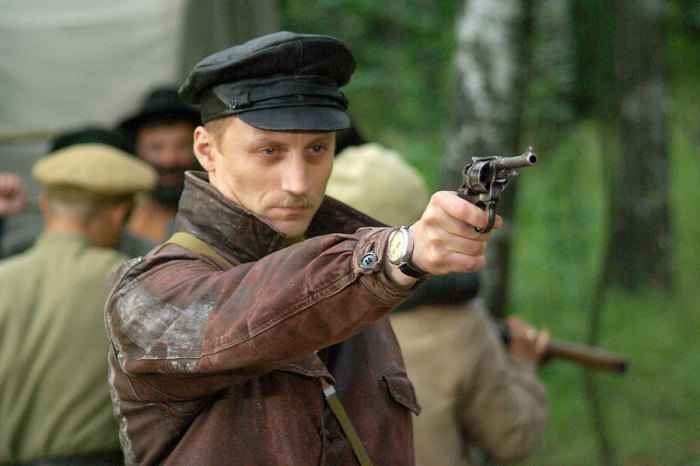
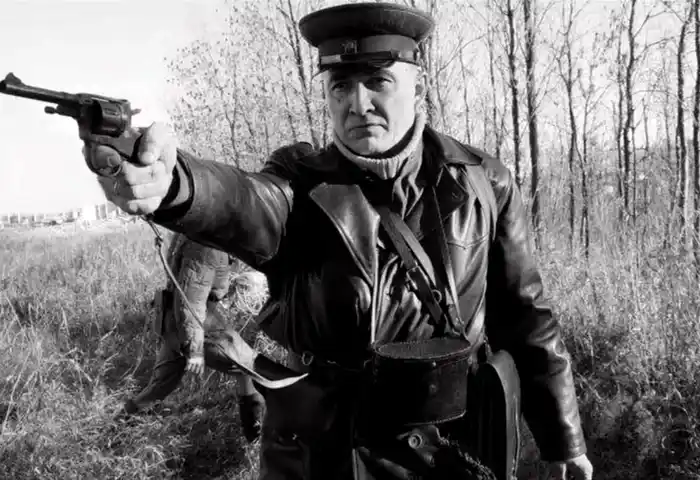
This image was repeated so often that many people began to see it as an official uniform. In reality, the story is more interesting. The famous jacket began as practical clothing for technical workers. Revolution, war, shortages, and politics then turned it into a symbol of power and fear.
So, Symbol or Necessity?
At first, it was mostly a necessity. Leather was strong, weather-resistant, easy to clean, and useful in the fight against lice. Old stocks were available when the new government had no time or money to create enough new uniforms.
Later, it became a symbol. The jacket showed authority, modern technology, and a break with the old world. The Cheka and early Soviet commanders made it famous, while cinema made the image almost permanent.
So the answer is both. The leather jacket was practical clothing that history turned into one of the strongest visual symbols of the early Soviet period.
Why Mujahideen Feared Soviet GRU Spetsnaz in the Afghan War
Soviet Spetsnaz Uniform in Afghanistan (1979–1989)
What Soviet Soldiers Really Ate in the Afghan War
Soviet Afghanka Uniform. History, Features, and Use in Afghanistan
Looking for original Soviet boots and accessories? Please visit here: Soviet Boots Store