Soviet Soldiers Food WW2
Soviet soldiers food WW2 was strictly regulated and played a key role in keeping the Red Army strong during the war.
A ration is a word that brings strong feelings to every frontline soldier. To get strength back, to warm up with a cup of tea or a bowl of hot soup in the cold winter – this is what every soldier dreamed about.
What did Soviet soldiers eat during World War II? How was food supply organized? Who ate better: Soviet soldiers or Germans? Today we will try to explain all the details of what was, without exaggeration, one of the most important parts of war – frontline food.
More interesting articles:
How Soviet Soldiers Slept During WW2 (Rare Archival Photos)
What Soviet Soldiers Really Ate in the Afghan War
Soviet Red Army Uniform and Equipment in World War II (1939-1945)
Frontline standards
We will not talk about food in the Red Army before the war. War changed everything. By the decree of the State Defense Committee of the USSR No. 662 from September 12, 1941, official food standards were introduced in the Red Army, and they remained in place during the whole war.
In the difficult year of 1941, changes to soldiers’ rations were often chaotic because of the situation on the front. But the Red Army command paid close attention to feeding the soldiers.
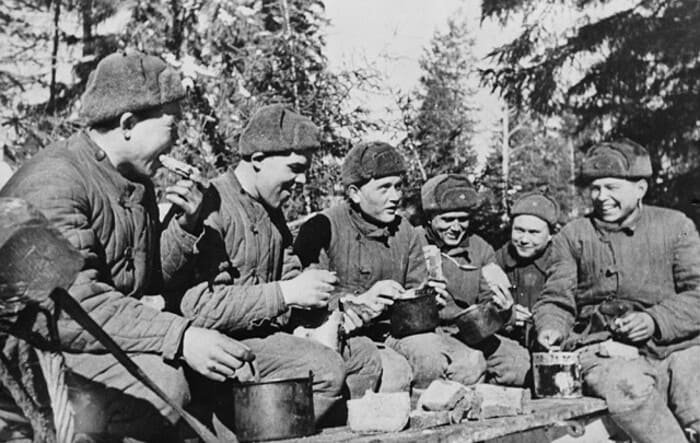
Unified food standards were introduced for Soviet soldiers, and they did not change during the entire war, no matter what was happening on the front. Even in difficult conditions, army command and the government required strict adherence to these norms.
It is estimated that an adult man in combat conditions, with constant movement and stress, needs about 2600–4000 calories per day. Soldiers in frontline units were given no less than 3450 calories, and this standard was strictly followed.
In guard, rear, and non-combat units, the ration standards were lower by about 600–800 calories. In specialized units, such as aviation or submarine crews, the ration standards were higher – up to 4712 calories per day.
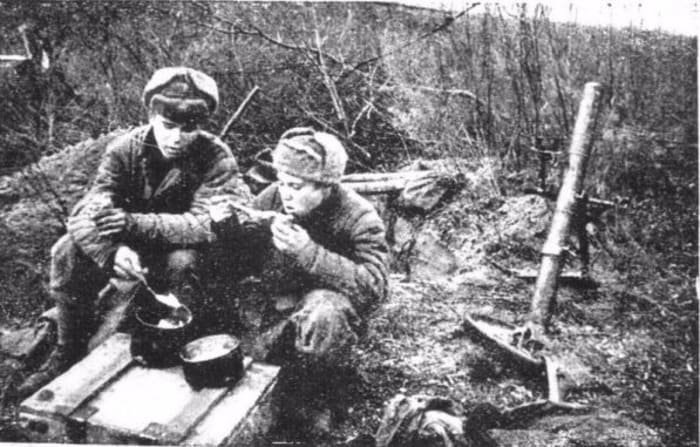
The famous “People’s Commissar 100 grams” became a well-known phrase in the Soviet Union. Many myths and stories surround the issue of alcohol in the army, although this practice existed even since the time of Peter the Great.
In general, alcohol was issued in many armies around the world during wartime.
What did they eat?
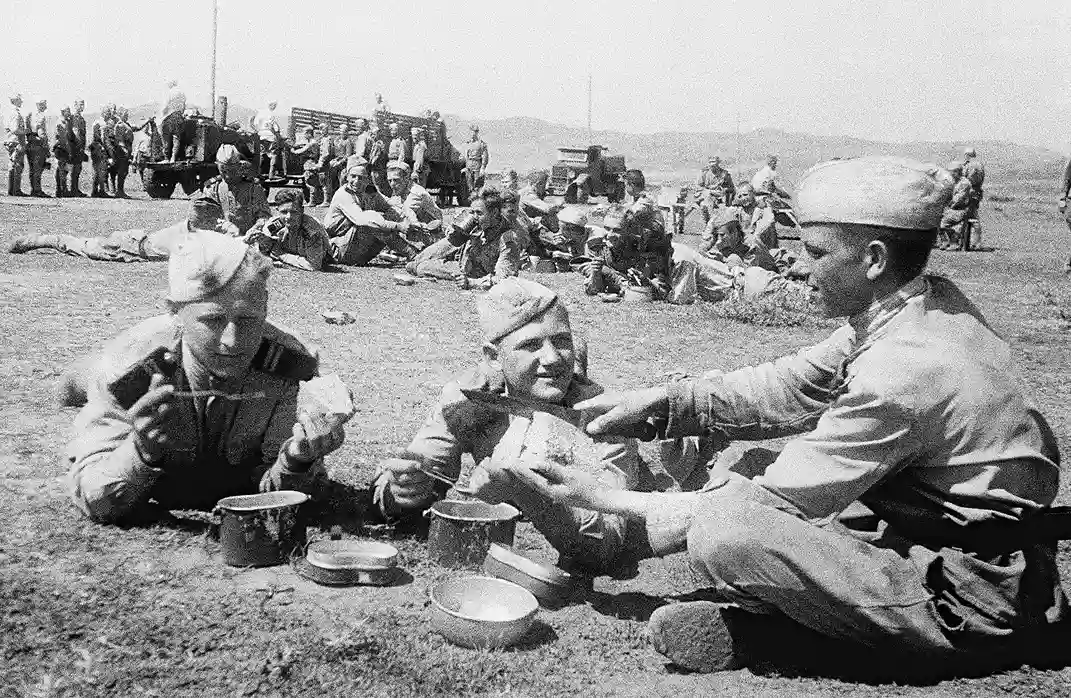
Looking for classic Soviet Mess Tin? You can find them here: Soviet Mess Tin
The daily ration of a Red Army soldier included: 800 grams of bread in summer and 900 grams in winter, about 500 grams of potatoes, 320 grams of other vegetables, 170 grams of grains or pasta, 150 grams of meat, 100 grams of fish, 50 grams of fats, and 35 grams of sugar.
Officers received additional food: 40 grams of butter or lard, 20 grams of biscuits, and 50 grams of canned fish per day.
It is also worth mentioning soldiers from specialized units. For example, submariners were necessarily given onions, pickles, and sauerkraut to help with limited oxygen conditions. In aviation and tank units, emergency rations were prepared in case of forced landing or separation from their unit. These included crackers, chocolate, and canned meat, allowing soldiers to survive independently for several days.
Interestingly, there were also official standards for tobacco and matches. Soldiers received 20 grams of tobacco per day and 3 boxes of matches per month.
Non-smoking women were given extra food instead – butter, biscuits, and chocolate.
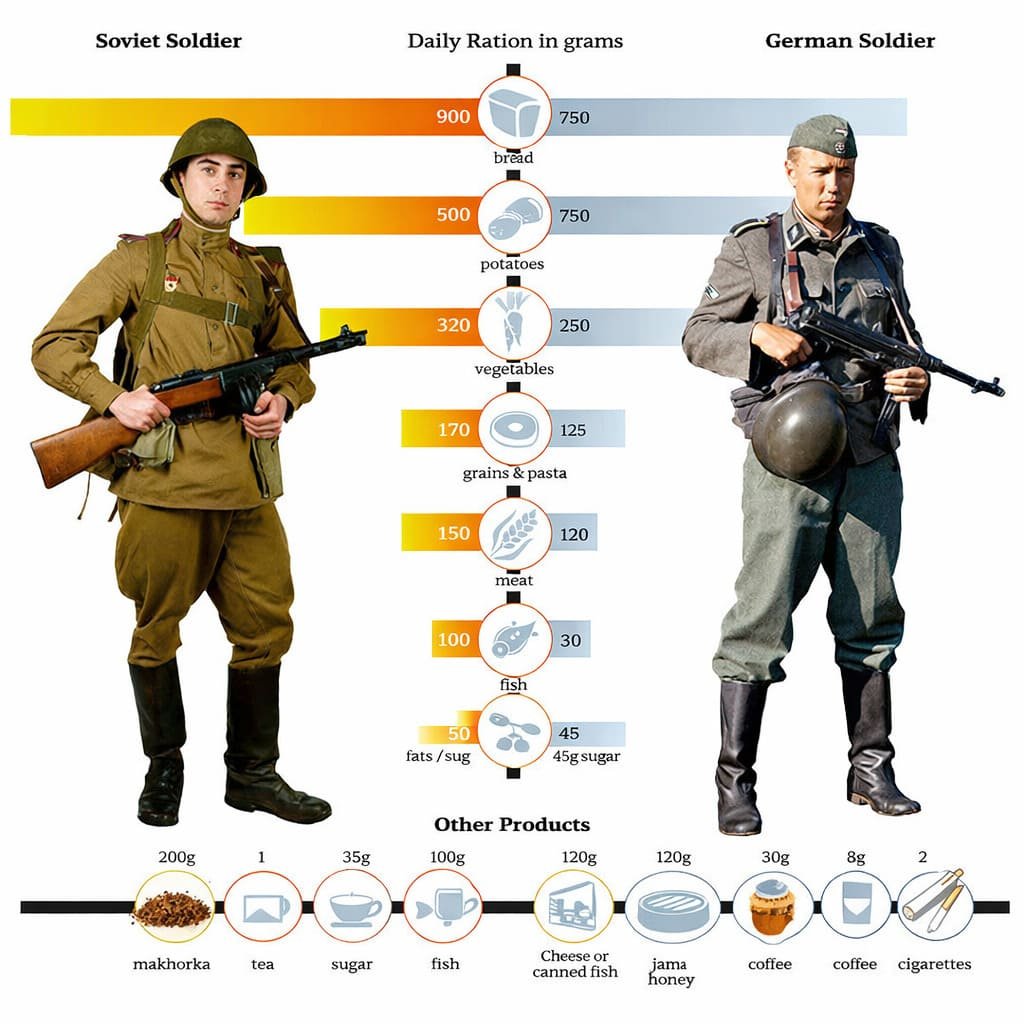
Captured enemy food was also widely used. Soviet soldiers appreciated the “German quality” and often used enemy supplies. Sausages, canned food, soup concentrates, chocolate, and Dutch cheese were especially valued. However, German jams and fruit pastes were disliked – soldiers found them tasteless and often threw them away.
Lend-Lease food became an important part of Soviet soldiers’ diet. This included canned meat (which soldiers jokingly called the “second front”), canned sausages, canned ham SPAM, corn flour (often disliked because of its taste and the hard bread made from it), lard, powdered eggs, and soup concentrates (called “food tablets”).
Boxed dry rations, known as D-rations, were also supplied, but they were mostly used as emergency reserves, especially in aviation units. In general, up to one-third of food supplies in the Red Army came from Lend-Lease.
Carrot tea and corn flatbread
Cooks tried to make soldiers’ food more varied whenever possible. For example, they made carrot tea. To prepare it, cleaned carrots were grated, then fried over a fire with chaga (a type of mushroom), and after that poured with boiling water. The carrot gave the tea a slightly sweet taste, while chaga added a dark color.
There was also a recipe known as “Rzhev bread.” Potatoes were boiled, peeled, and ground through a meat grinder. The mass was placed on a board sprinkled with bran and left to cool. Then more bran and salt were added, and the dough was quickly mixed. After that, it was placed into greased forms and baked.
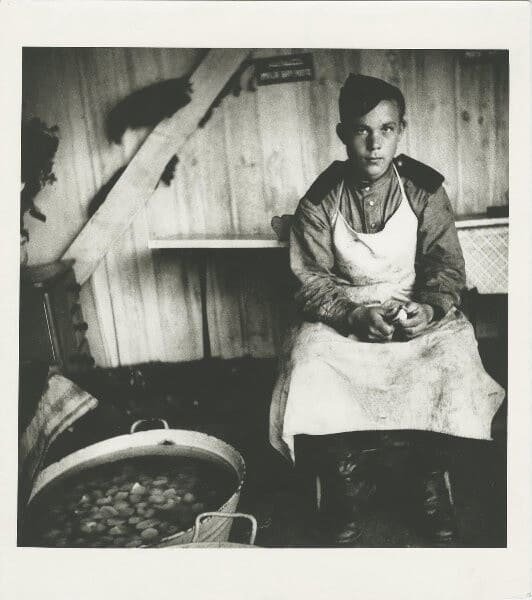
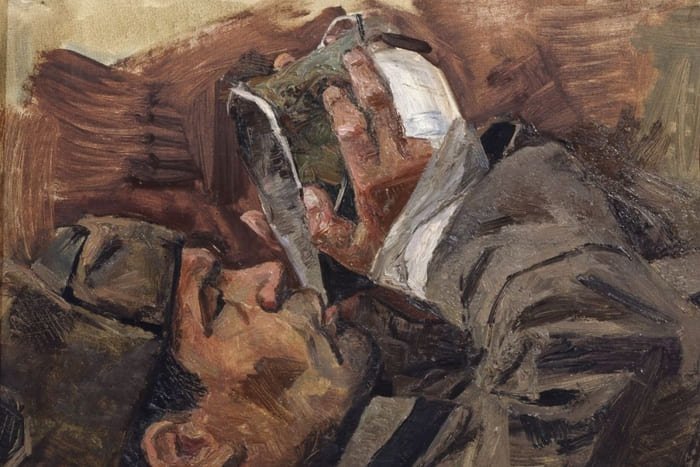
Another important source of food for Soviet soldiers was the land itself. Nature and close contact with it helped soldiers survive in harsh frontline conditions. Mushrooms, berries, wild honey, fishing, and abandoned fields with grain or potatoes often added to their meals.
There was also what soldiers called the “grandmother’s ration.” Civilians, even though they had very little themselves, tried to support the army. Soldiers, in return, helped local people when they could – digging gardens, fixing fences, or sharing food from field kitchens with the elderly and orphans. In exchange, they could receive fresh eggs, milk, or hot boiled potatoes.
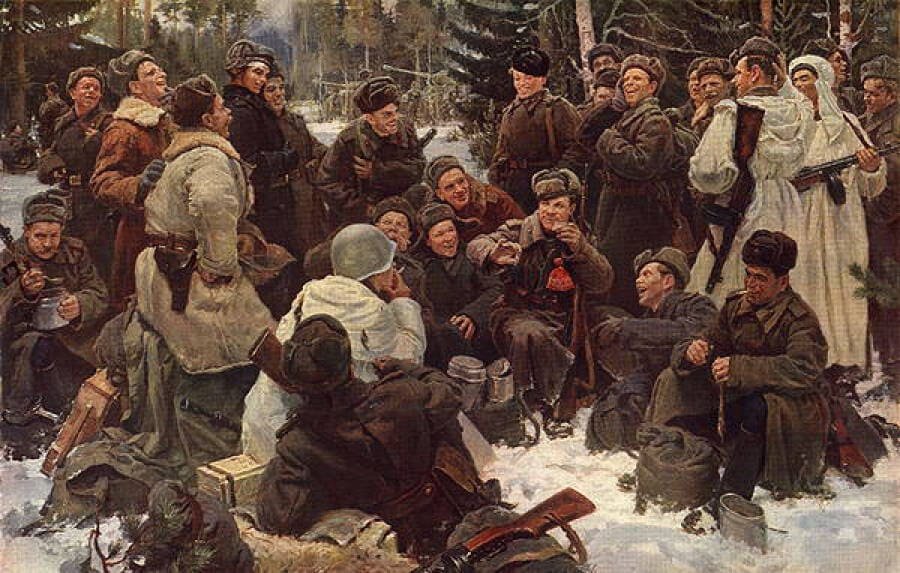
The natural resourcefulness of Soviet soldiers led to many small tricks that are still remembered today. During long marches, they would keep a small smooth stone or a piece of dry bread in their mouth to reduce thirst. To fight scurvy, especially near Leningrad where vitamins were lacking, they would chew pine needles. Some soldiers even went into battle on an empty stomach to reduce the risk of severe injury if wounded in the abdomen. Many carried a spoon with their name scratched on it, hidden in a boot or behind a belt, so their body could be identified. All these small ideas helped make harsh frontline life a bit easier.
The field kitchen
During the war, cooks showed great creativity to feed soldiers with enough calories and some variety. They used many tricks to make meals better.
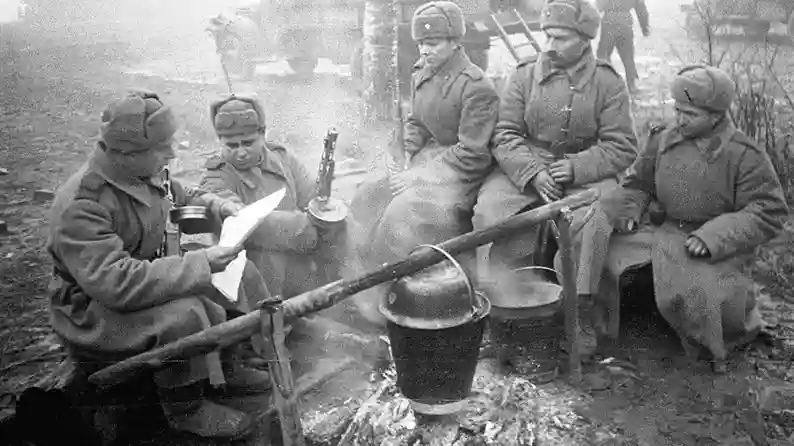
Food for soldiers was prepared in so-called “field kitchens.” These, along with field bakeries used for baking bread, appeared back in the late 19th century. A field kitchen looked like a trailer on wheels or mounted on a truck platform. It had several boilers (from one to four), as well as compartments for storing food and kitchen equipment.
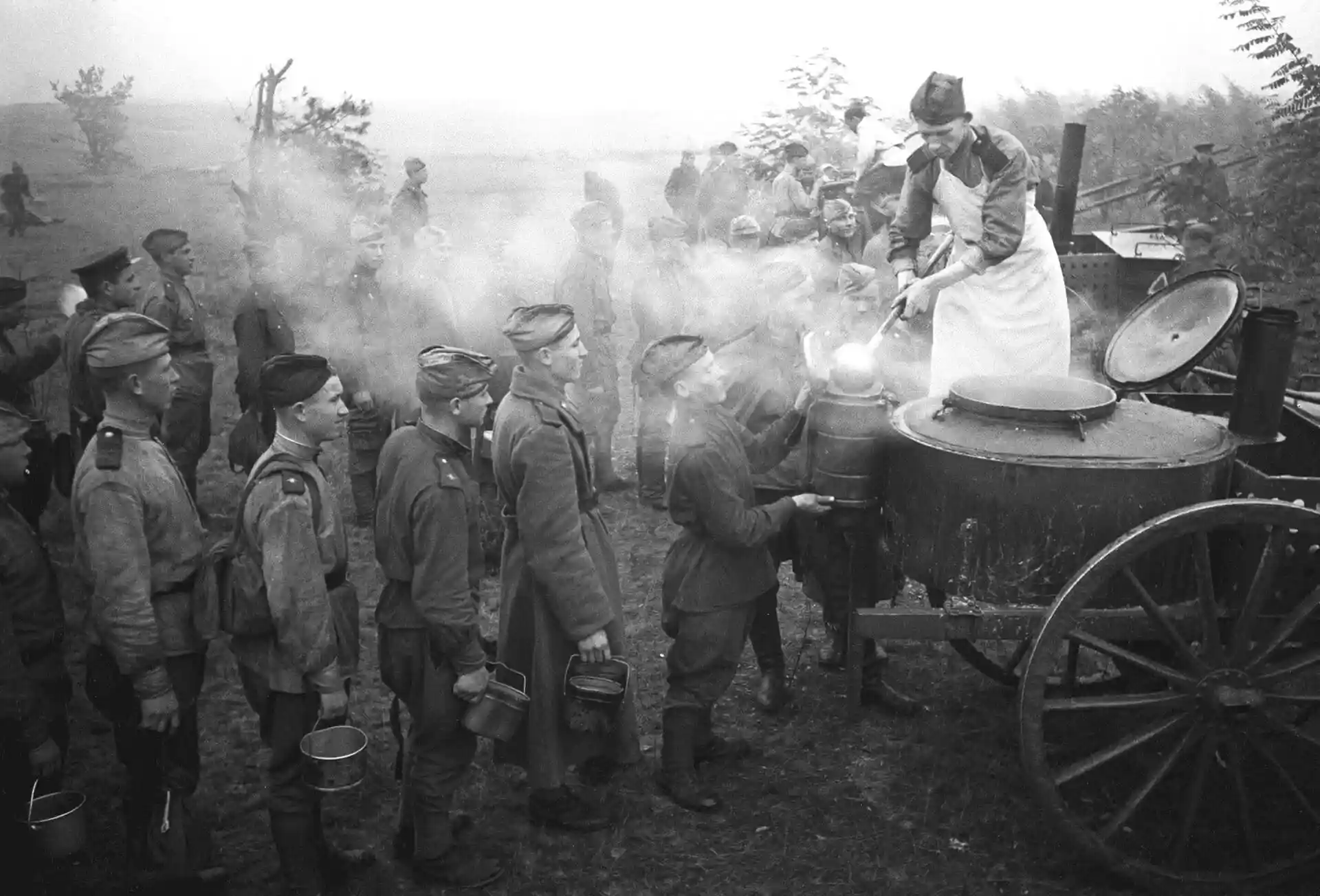
Field kitchens were heated with wood, and to avoid being seen by the enemy, food was usually cooked early in the morning before sunrise and in the evening after dark. Water in the boilers would boil in about 40 minutes. A full meal with two dishes took around 3 hours to prepare, while dinner could be ready in about an hour and a half.
At night, the kitchen was still busy. Cooks prepared ingredients, peeled potatoes, and cleaned the boilers. At the beginning of the war, many of the cooks were women.
Delivering food was also a real challenge. Soldiers had to carry heavy containers with hot meals from the field kitchen to the front lines, often through trenches and under danger.
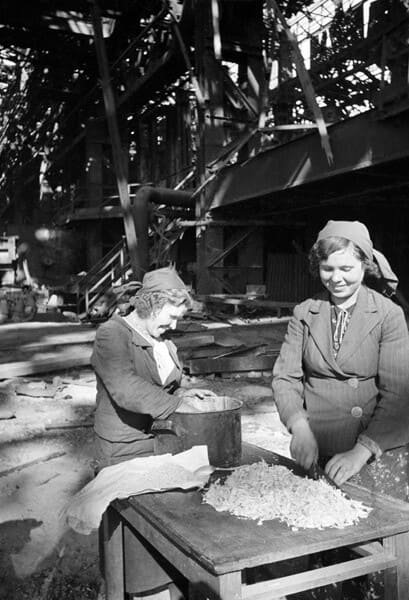
The main dish of the military kitchen was kulesh – a simple millet soup that could include other ingredients like lard and vegetables.
Field kitchens also prepared traditional Russian soups such as borscht and cabbage soup (shchi), stewed potatoes, and buckwheat with boiled or stewed beef, or canned meat.
The image of the Soviet field kitchen is well known. As early as 1898, the Russian army introduced two-wheeled mobile kitchens with chimneys and large pots, where soldiers’ porridge or soup was cooked. During World War II, the simple principle “cabbage soup and porridge – our food” remained true.
The field kitchen became the “heart” of the unit. The cook was usually one of the most respected and trusted soldiers. He was responsible for how food was distributed, how quickly it was prepared, and even how it tasted — which mattered more than one might think.
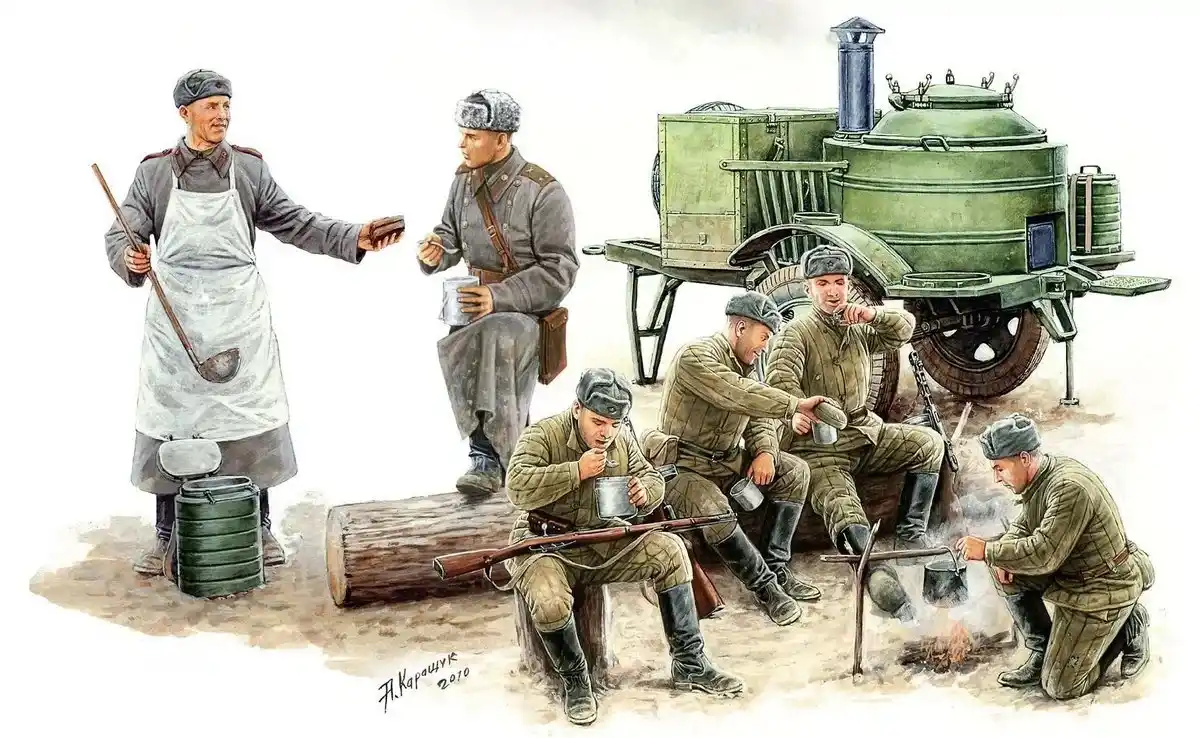
War placed many limits on how field kitchens worked, but cooks did everything they could to improve the menu and feed hungry soldiers on time. During an advance, the kitchen had to keep up with the troops. In defensive positions, it had to stay hidden so that enemy artillery would not spot it by smoke. During retreats, it had to move quickly.
Hot meals were usually delivered twice a day – before sunrise and after sunset, when it was safer. It took three to four hours to light the stove and cook food, so cooks often had an even harder schedule than frontline soldiers.
There were also problems. Sometimes the kitchen fell behind or could not find its unit. During river crossings, the kitchen stayed on one side, and food had to be delivered across in thermoses or by any available means. That is why the image of the experienced, mustached field cook became an iconic part of war stories, films, and paintings.
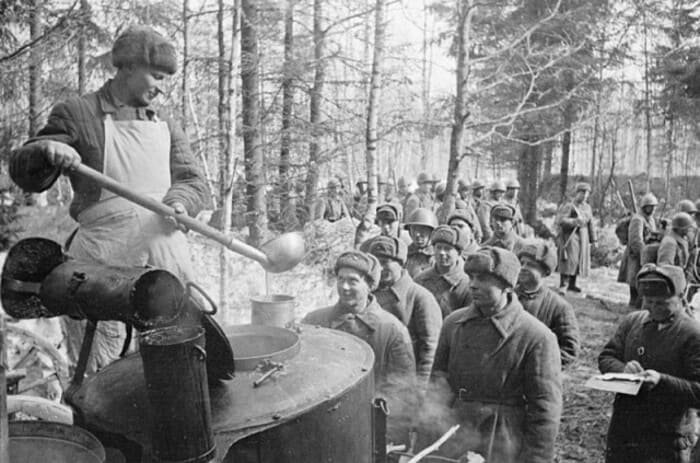
Soldiers could also cook for themselves. Often, comrades who had become close during the war would form small groups and create a “common pot” – a phrase that still has a similar meaning today. Everyone added what they had, and they started their own cooking experiments. There were no limits to creativity – everything depended on the ingredients available.
Who ate better, won
The war continued, and the quality, timing, and variety of food became just as important for victory as weapons and strategy. At the beginning, it was difficult to organize everything properly because of the situation on the front. But from 1943, the system improved. Cooperation between frontline and supply units became more efficient, and food standards were stabilized.
The Red Army moved forward, pushing the enemy back on all fronts. The liberation of Ukraine and the ability of units to partially supply themselves with basic food also helped. By the end of the war, Soviet field kitchens were already working in liberated European cities and even in defeated German towns and villages, feeding not only soldiers but also civilians – children, elderly people, and women. This became part of the image of the Soviet soldier as both a fighter and a liberator.
More interesting articles:
What Soviet Soldiers Really Ate in the Afghan War
Soviet SSh-36 Helmet: History, Combat Use, and the Scandal That Shook the Red Army
Soviet Red Army Uniform and Equipment in World War II (1939-1945)
Looking for original Soviet boots and accessories? Please visit here: Soviet Boots Store