How Soviet Soldiers Slept on the Frontline in Extreme Cold
War is not only about fighting – it is also about survival. One of the hardest things for Soviet soldiers during WW2 was simply getting some sleep. How did they rest in freezing cold, in trenches, forests, or right on the snow? These rare archival photos show the reality of how Red Army soldiers slept at the front.
From books and movies, we can imagine in general how battles of World War II looked. Of course, only to a certain extent – modern people cannot fully understand those horrors.
But films rarely show everyday life, so we know even less about how soldiers actually lived. Field kitchens, mobile or improvised baths, medical tents – this is more or less clear. But how did soldiers sleep? Especially when they were on the move or right on the front line?
I tried to look into this question and also collected rare archival photos on this topic. Read, watch, and add your thoughts if I missed something.
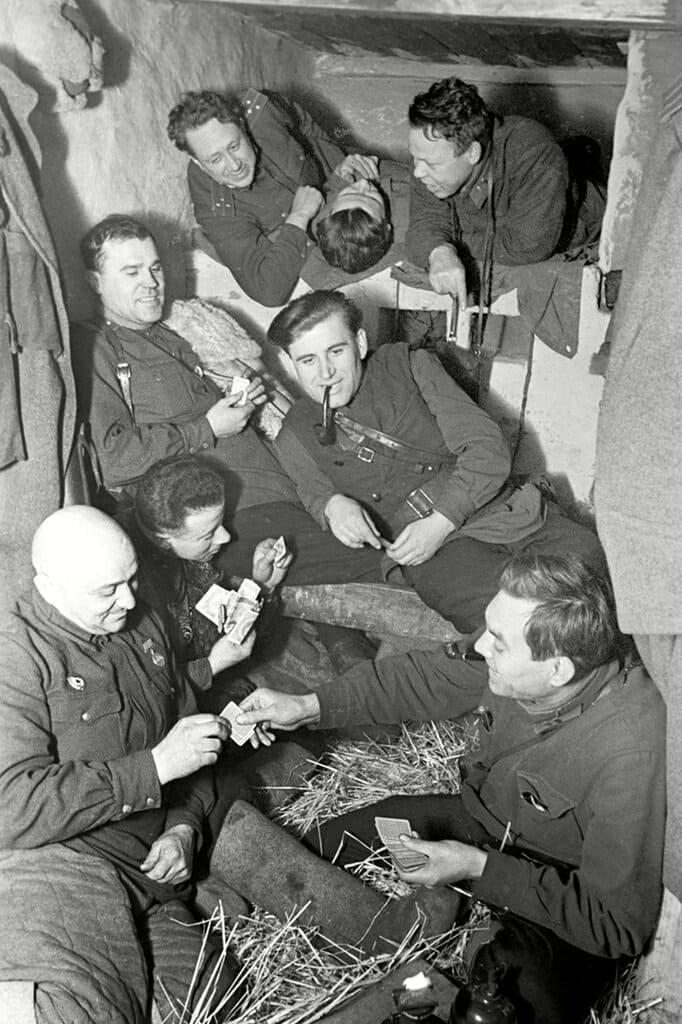
“Let the soldiers get some sleep” – Red Army soldiers resting on the front line, 1942 (Photo: Georgy Zelma)
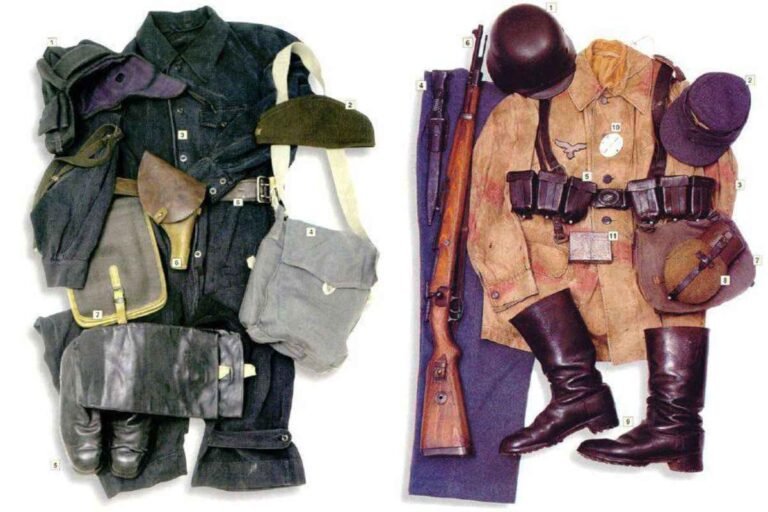
Soldiers wore simple kirza boots like these
Soviet Kirza Boots
Classic Soviet military kirza boots inspired by the simple footwear worn by Red Army soldiers.
So, if it was summer or a southern part of the front, the problem was not really a problem. When it was dry and warm, soldiers could sleep almost anywhere, as long as guards were posted.
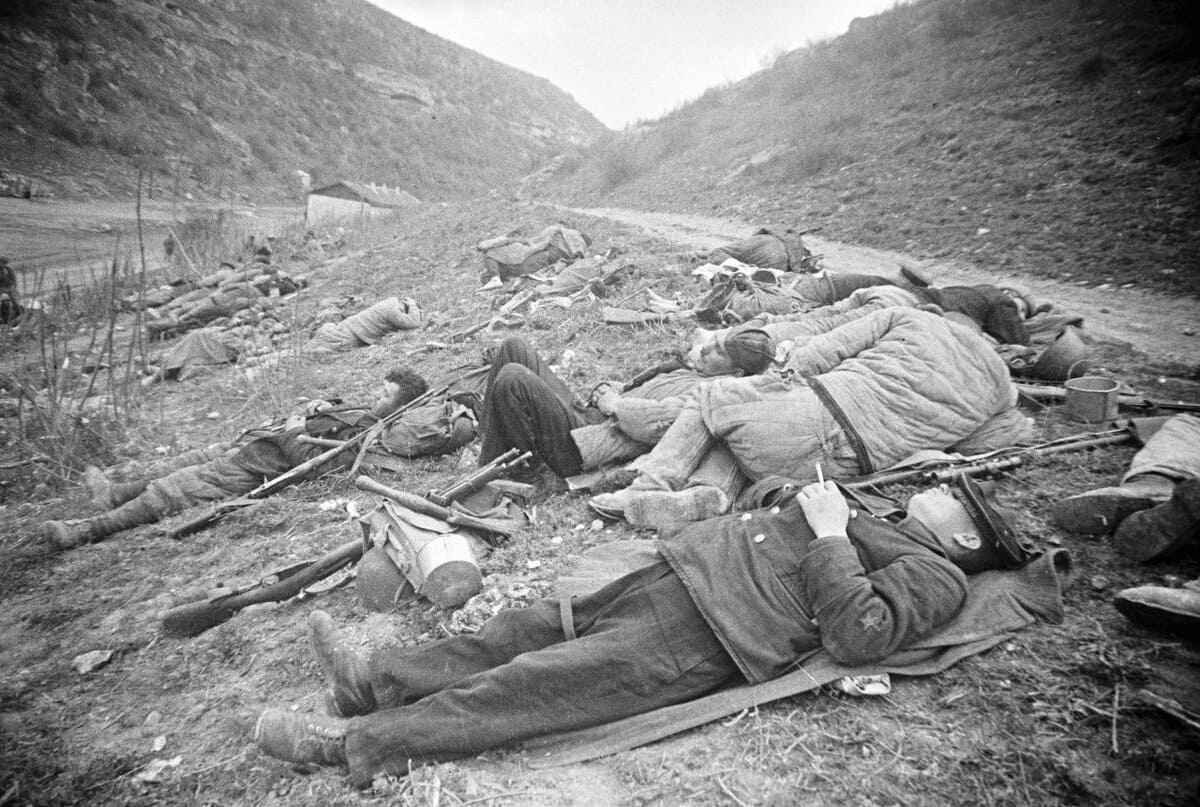
Soviet soldiers resting after a battle in Sevastopol, 1942
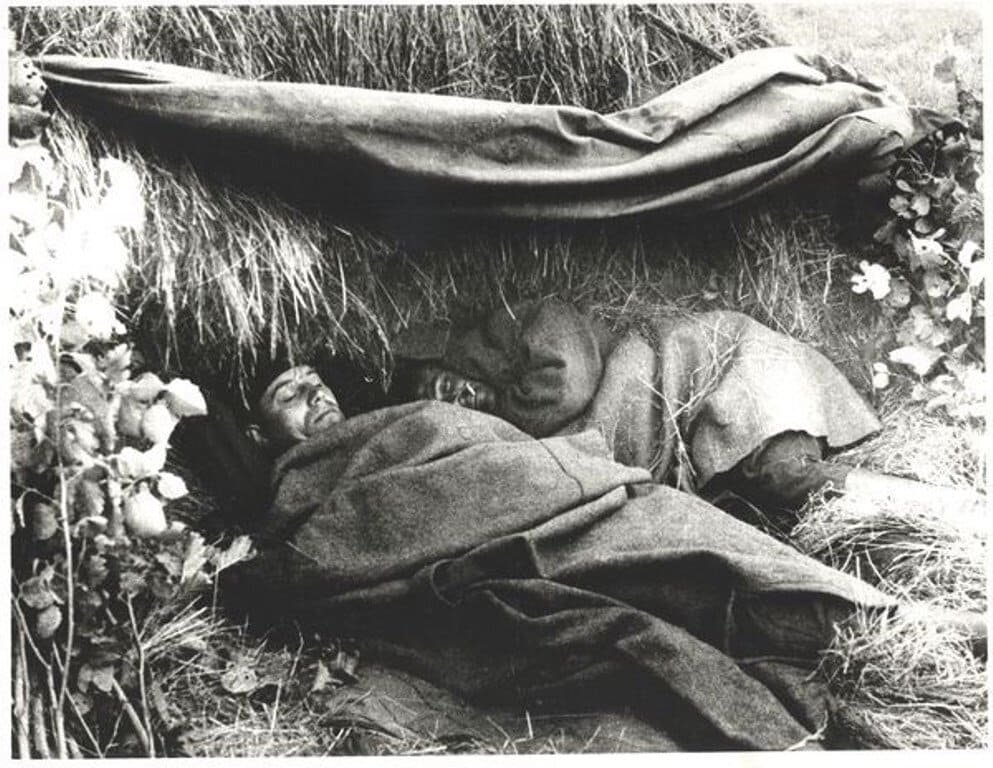
They actually made themselves quite comfortable. Even protected from the rain if needed.
Soviet soldiers sleeping under a simple field shelter made from natural materials during WWII
But on the front line, in the trenches, you could no longer sleep so freely or comfortably.
Soviet soldiers sleeping in a trench on the Central Front, 1943
It got even worse when the cold started to set in.
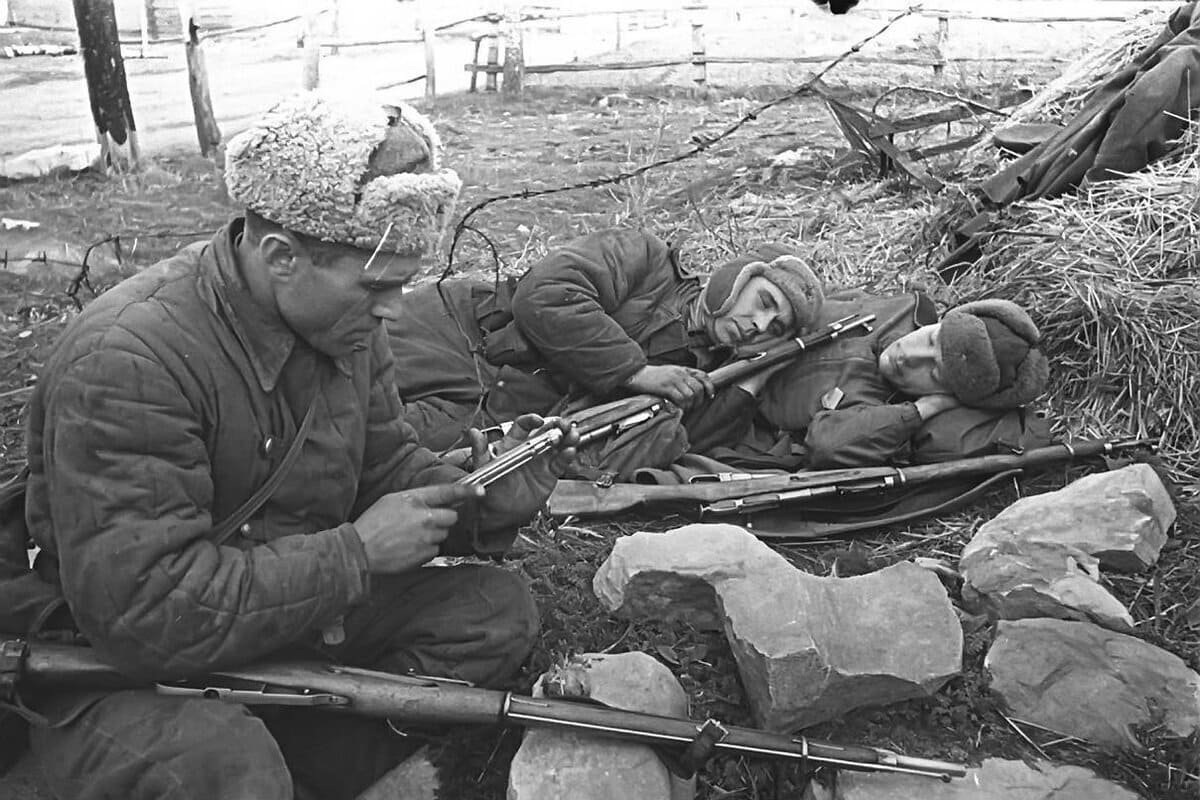
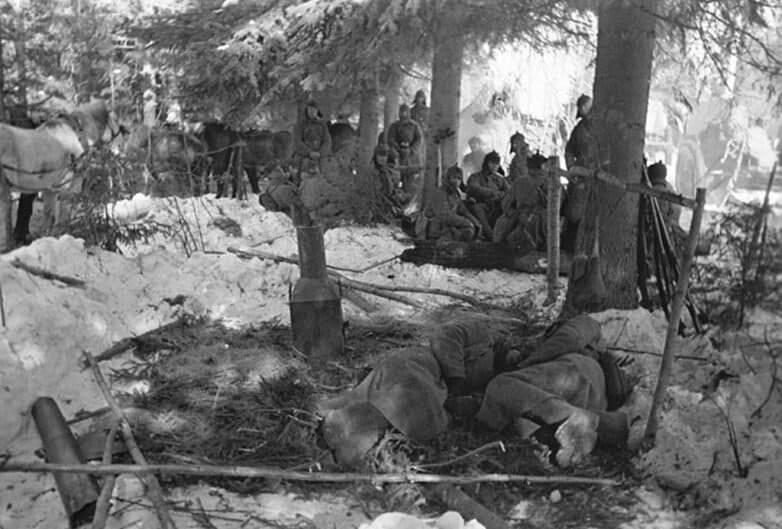
Soviet soldiers resting on the frontline while one soldier stays awake and maintains his weapon
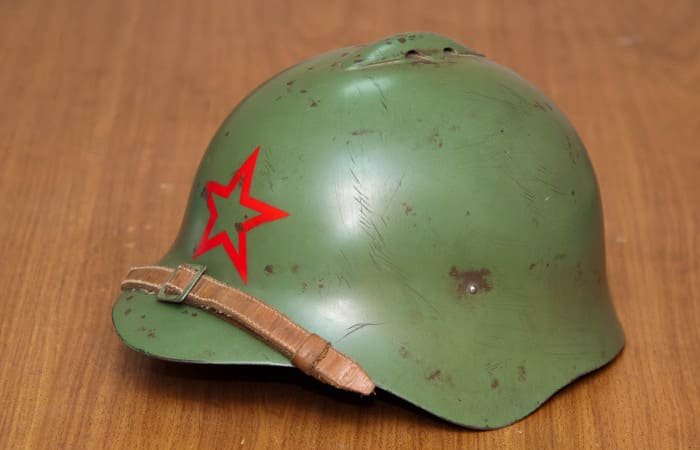
Soldiers protected themselves from the cold with hats like these
Soviet Ushanka Hat
Original Soviet ushanka hat designed to keep soldiers warm during harsh winter conditions.
If there was heavy mud from rains – or swampy terrain, organizing a place to sleep became much harder.
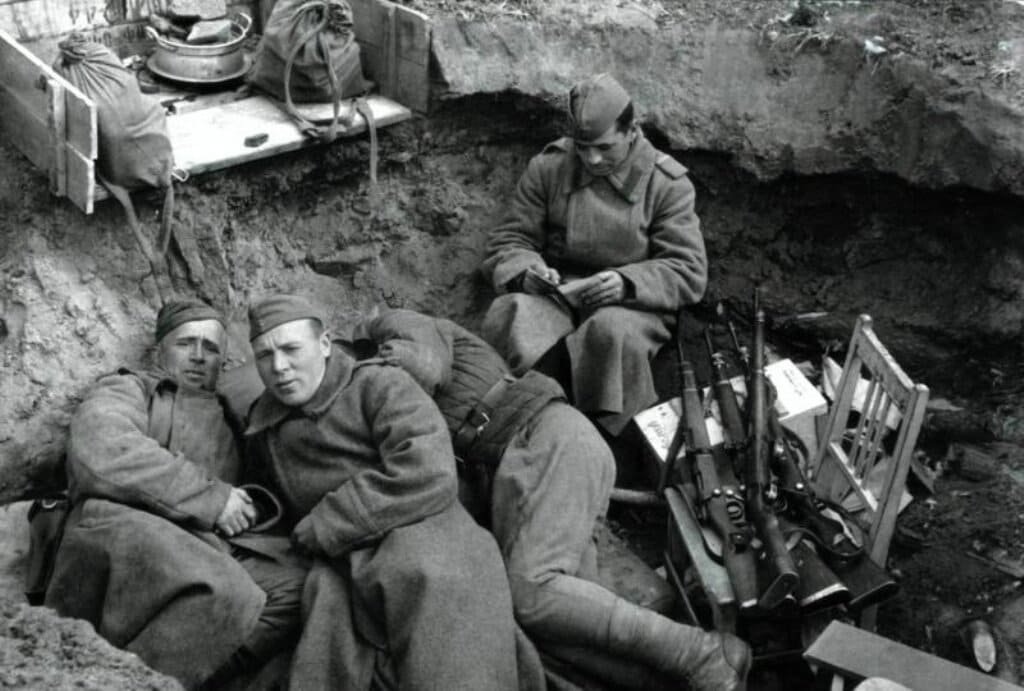
Soviet soldiers resting in a trench during harsh conditions, surrounded by rifles and equipment
A shovel in war is life. You dig yourself a small trench and lie there. Bullets whistle, shells explode, fragments fly – but you are protected. A thick layer of earth saves you.
But a trench can also be dangerous. During rains, water filled the bottom, sometimes up to the waist or even higher. During shelling, soldiers had to stay there for hours. To get out meant death. So they stayed. If you want to live, you endure. – From the memories of V. I. Belyaev
I should say right away: in this photo collection there are no images of soldiers who froze to death. I do have such photos, but they cannot be published due to platform rules. So in all the images you see here, the soldiers are simply sleeping.
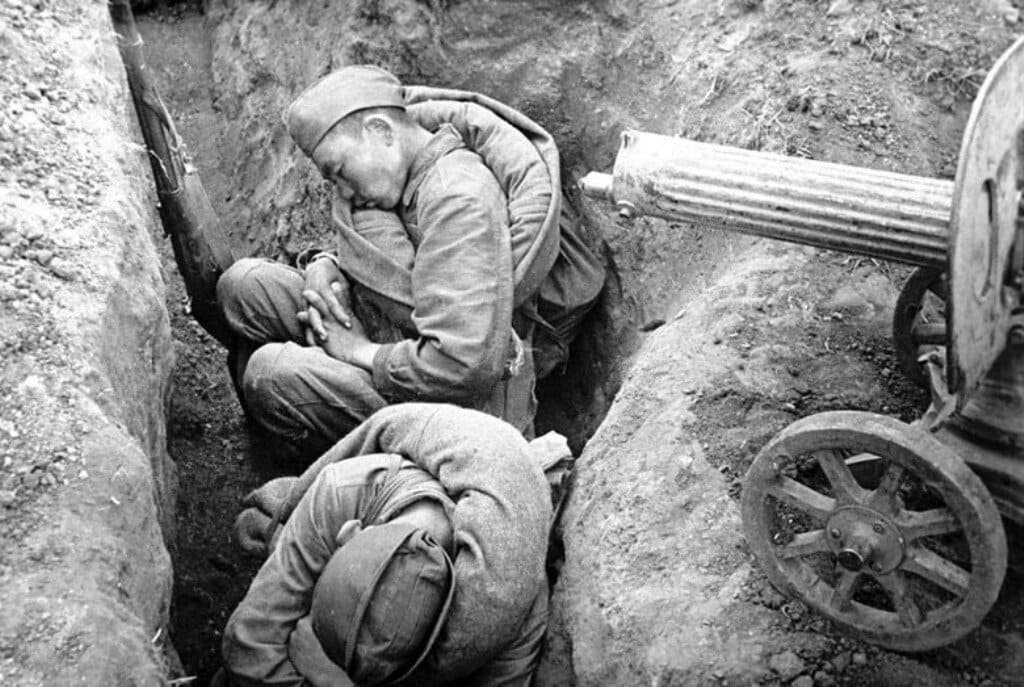
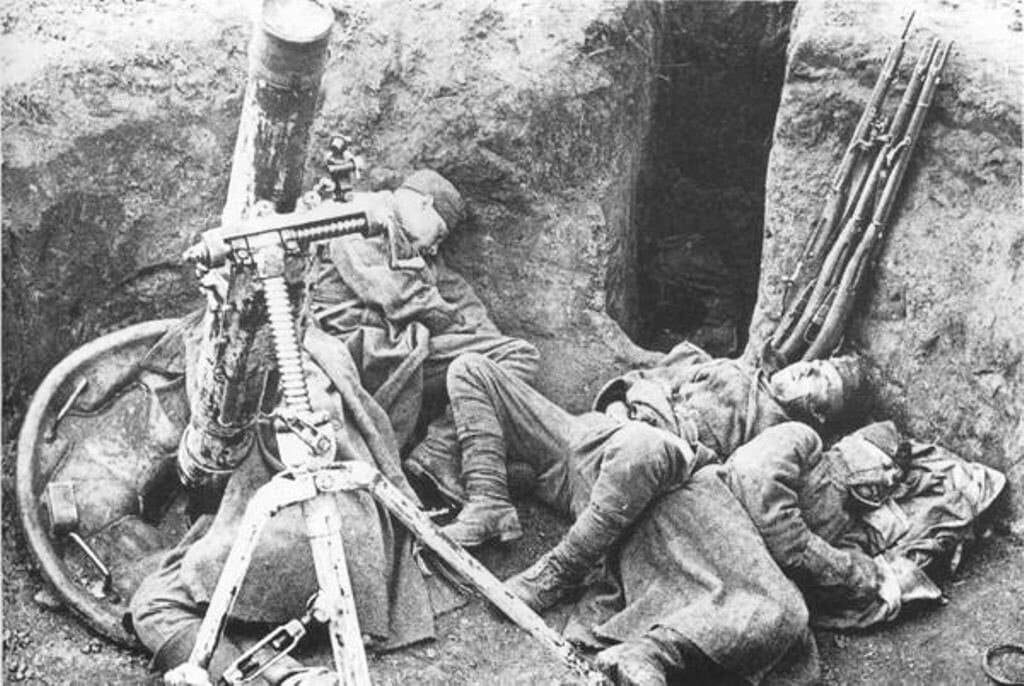
Soviet soldiers sleeping in a trench beside a machine gun position during a break in combat
But the most difficult part was, of course, the freezing cold and the snow.
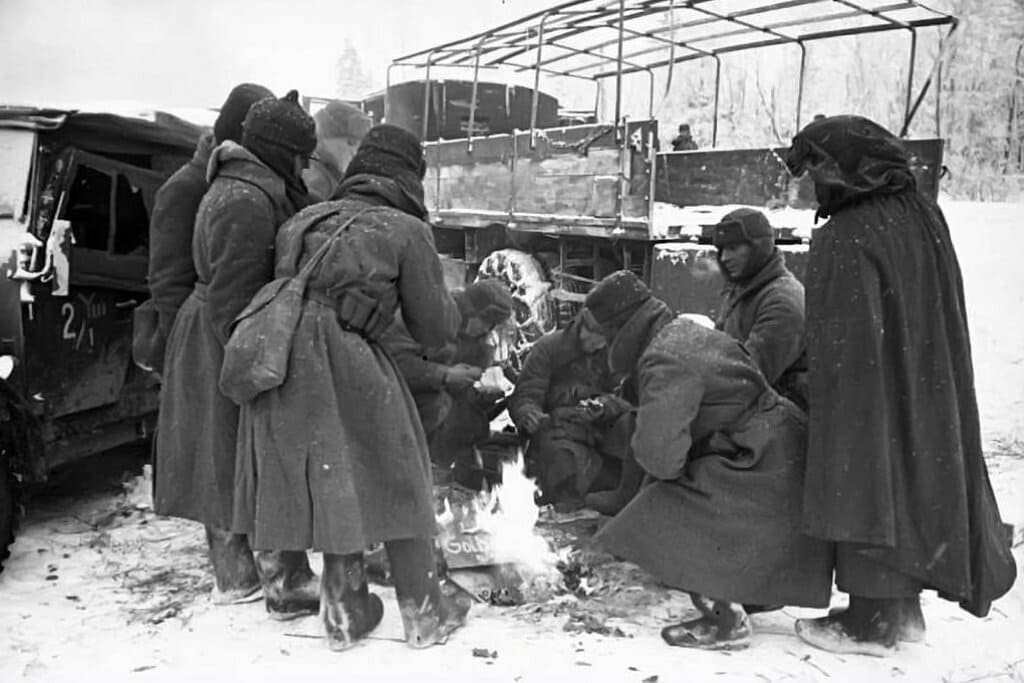
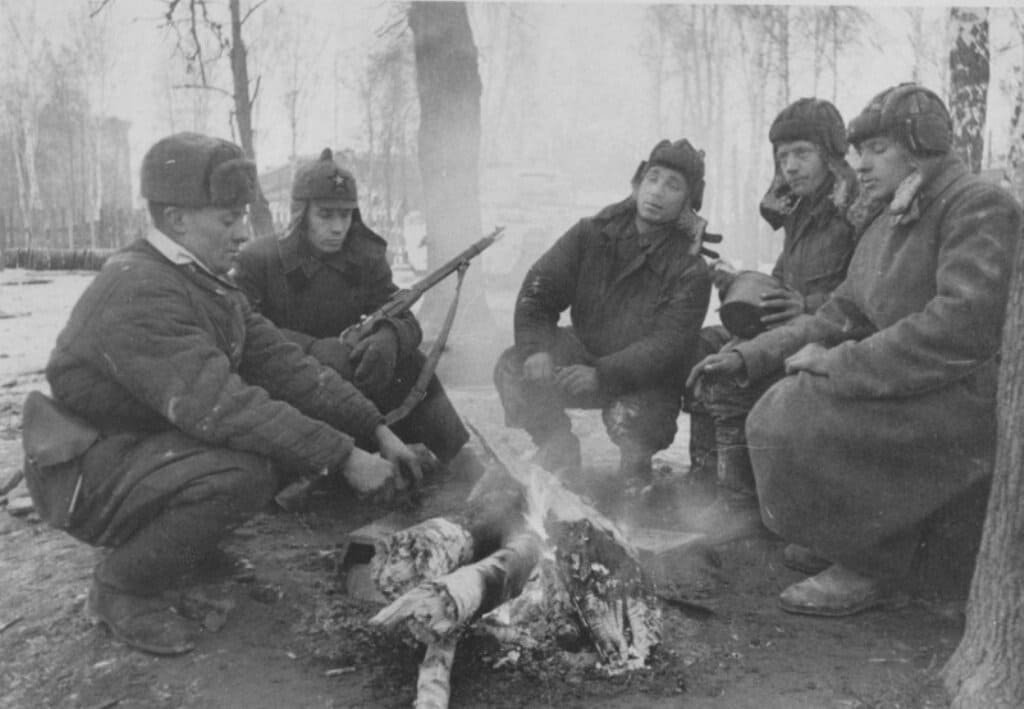
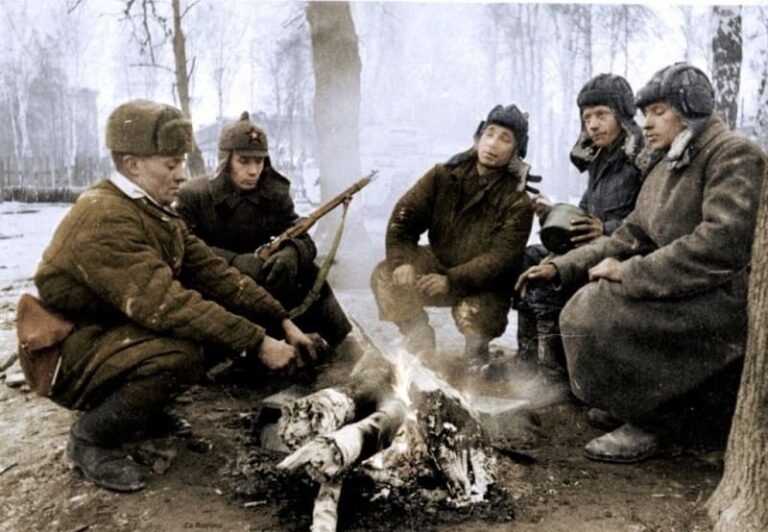
Volokolamsk area. Soldiers warming themselves by a fire near destroyed equipment
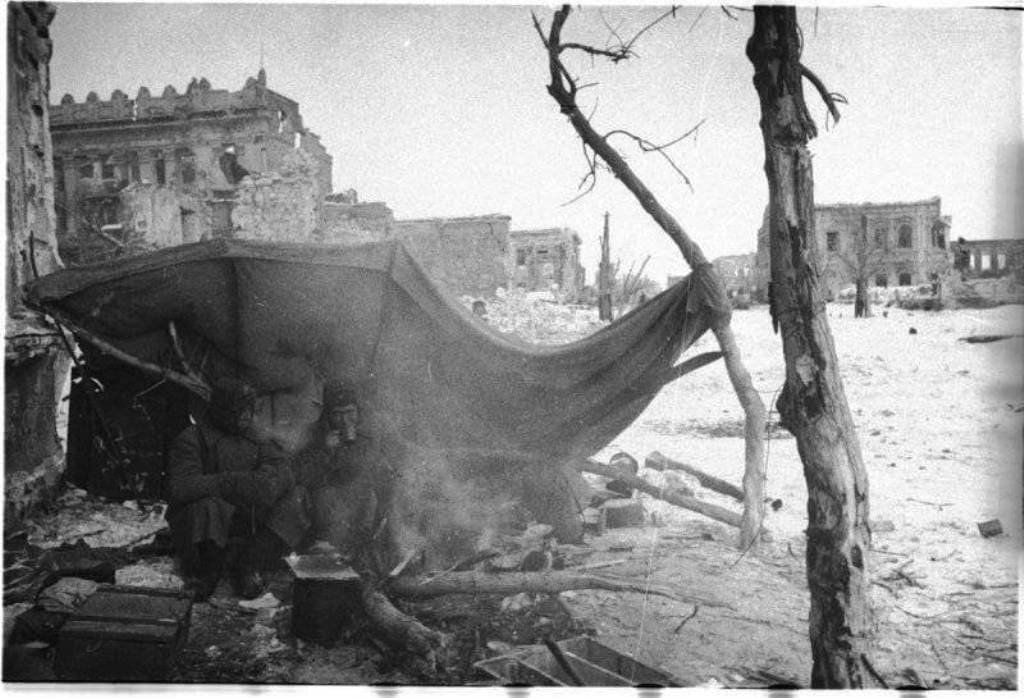
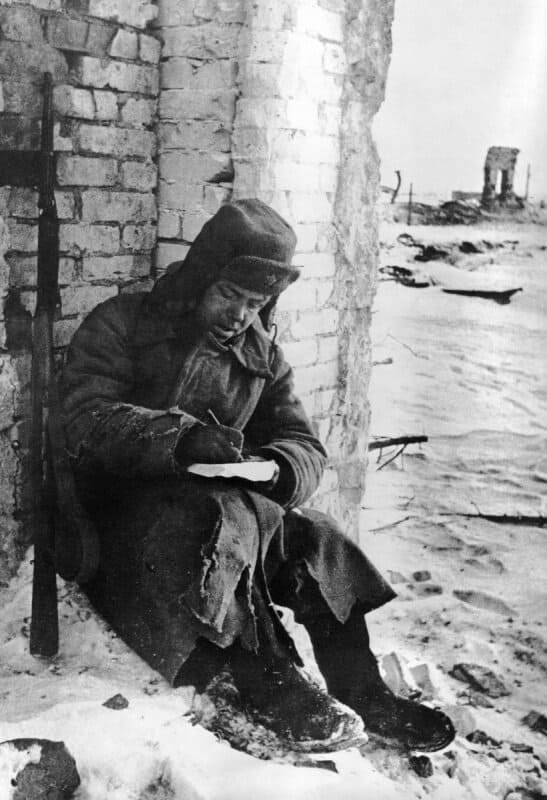
This photo was taken in Stalingrad. Historians say that in November–December 1942, the temperature often dropped to -20 to -30°C. In late January and February 1943, it sometimes went down to -40 to -45°C.
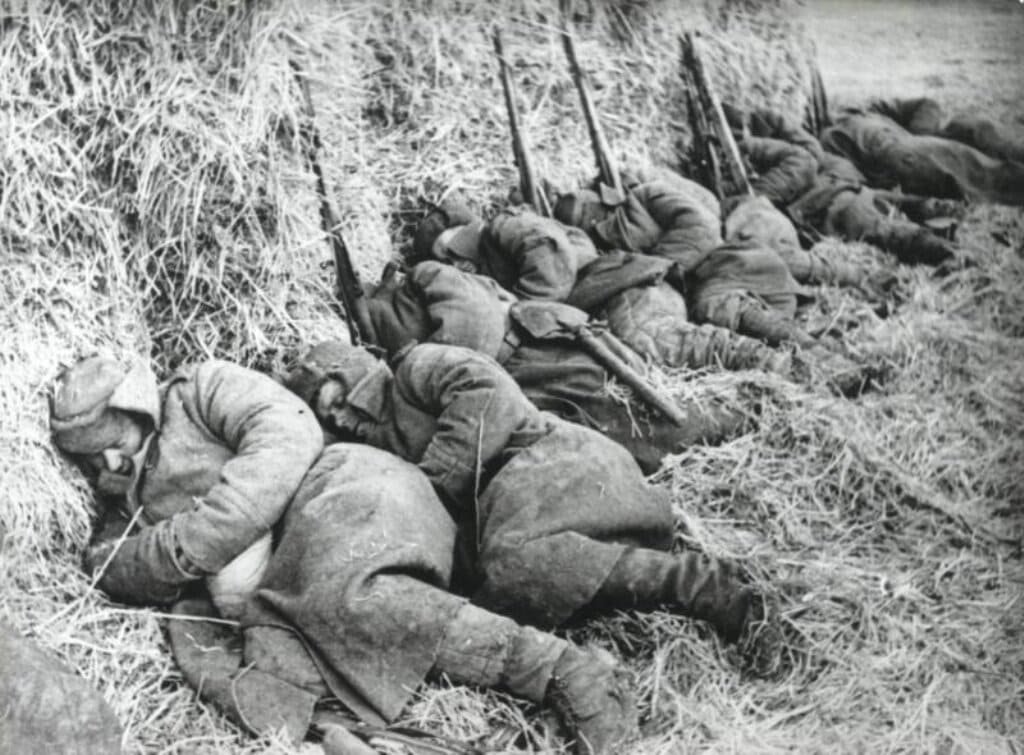
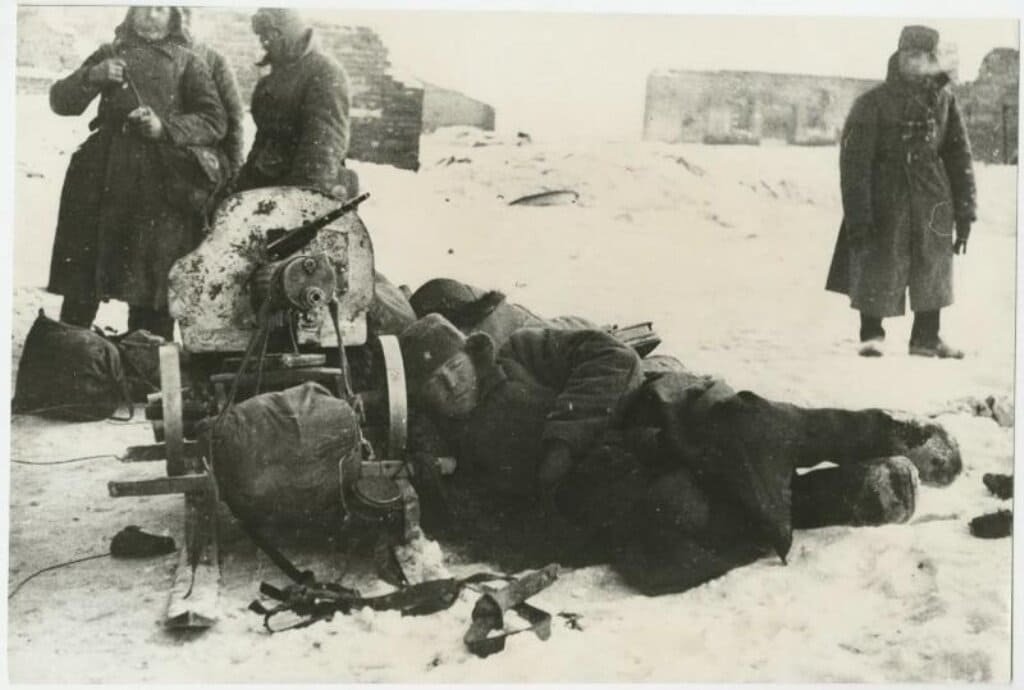
Red Army soldiers sleeping on the snow near a machine gun position
Stories from people:
My grandfather told me he went through two wars – the Civil War and WWII. In all those years, he never once slept indoors. Always outside, even in the cold. He said frost was easier to endure than rain, especially long rain. Still, he lived to 90.
First of all, fires were the main way to stay warm
But as is well known, war is war, and a fire and its smoke make an easy target for aircraft, so they could not be used everywhere or all the time.
Soldiers warming their hands by a fire on the frontline
Small stoves also helped. The simplest ones were made from a metal bucket.
Stories from people:
My grandfather had many medals. He drank heavily almost until his death and never talked about the war. Once, when drunk, I asked him, and he said: “Do you really want to hear this?” Then he started talking about mud, blood, swamps, and dying friends in his arms… I couldn’t handle it and ran away. I was just a kid.
A simple field stove helped soldiers stay warm in winter conditions
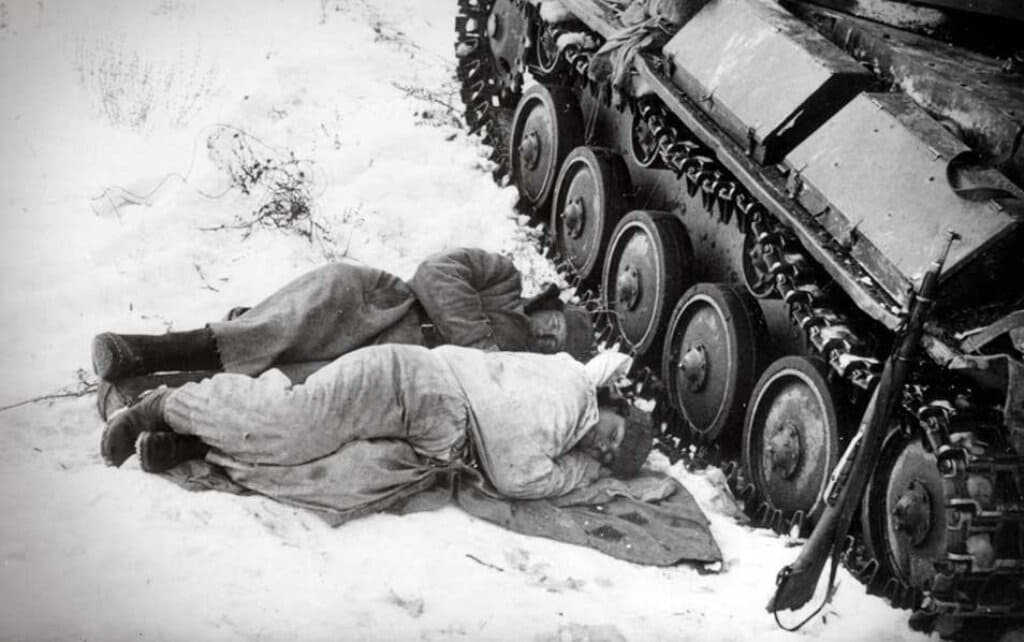
...We cleared the snow around the Panther tank, hoping to use its steel side as cover from possible fire. We could not dig into the ground, because the field was swampy. The shelter was low, with snow walls and a canvas tent sheet on top instead of a roof. It only protected us from the wind.
We put wooden lids from ammo boxes under us. Then we all lay down very close to each other on one side. We slept like that, turning over all at once on command.
In the center was our “treasure” – a small stove made from a bucket, glowing red. It did not really warm us, but it helped our morale. We could press our feet in wet felt boots against it, and then the shelter would fill with a strong smell of burning.
It is hard to imagine anything more “comfortable”!
From the memoirs of N. N. Nikulin
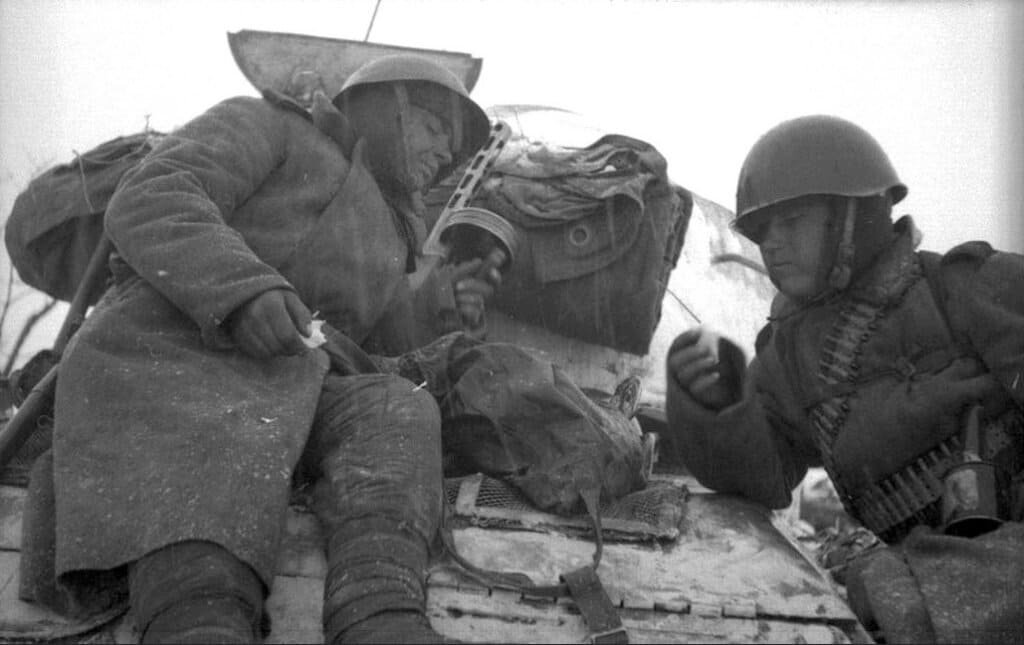
Soldiers sleeping on the snow next to a tank
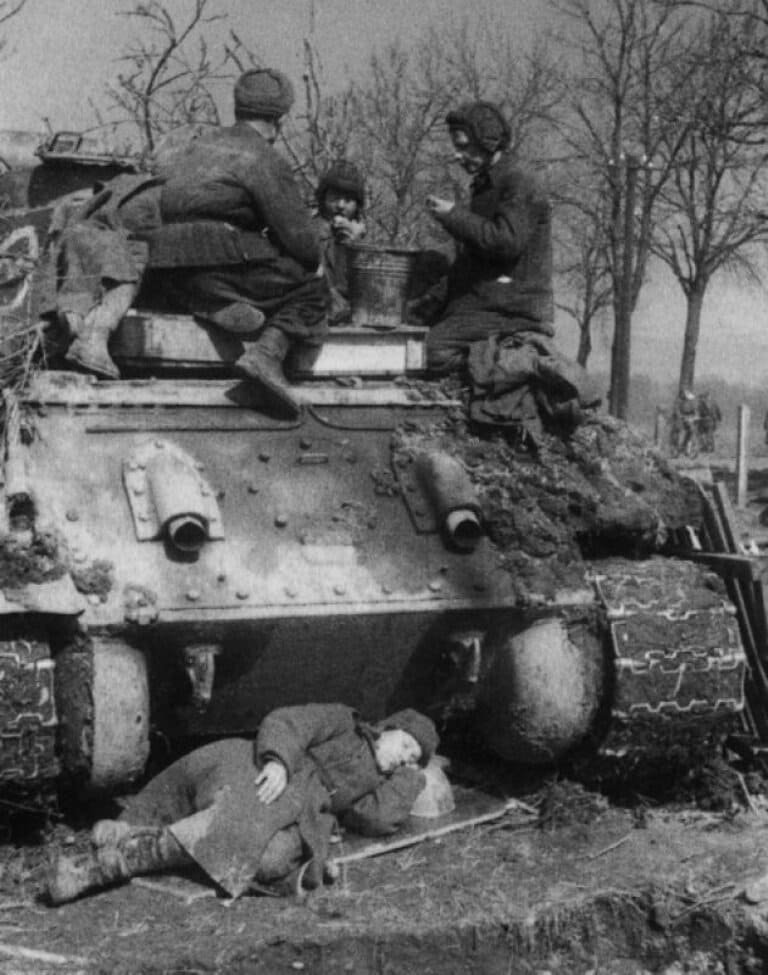
And this is how tank crew slept:
The driver slept in his seat. The radio operator also stayed in his seat. The loader and the gunner slept on the ammunition racks.
As for me, I was not tall, so I raised the gun, placed ammo box covers on the breech, lay down, put something under my head, and stretched my legs into the turret space.
From the memoirs of K. N. Shipov
Tank crew resting by their vehicle, one soldier sleeping under the tank
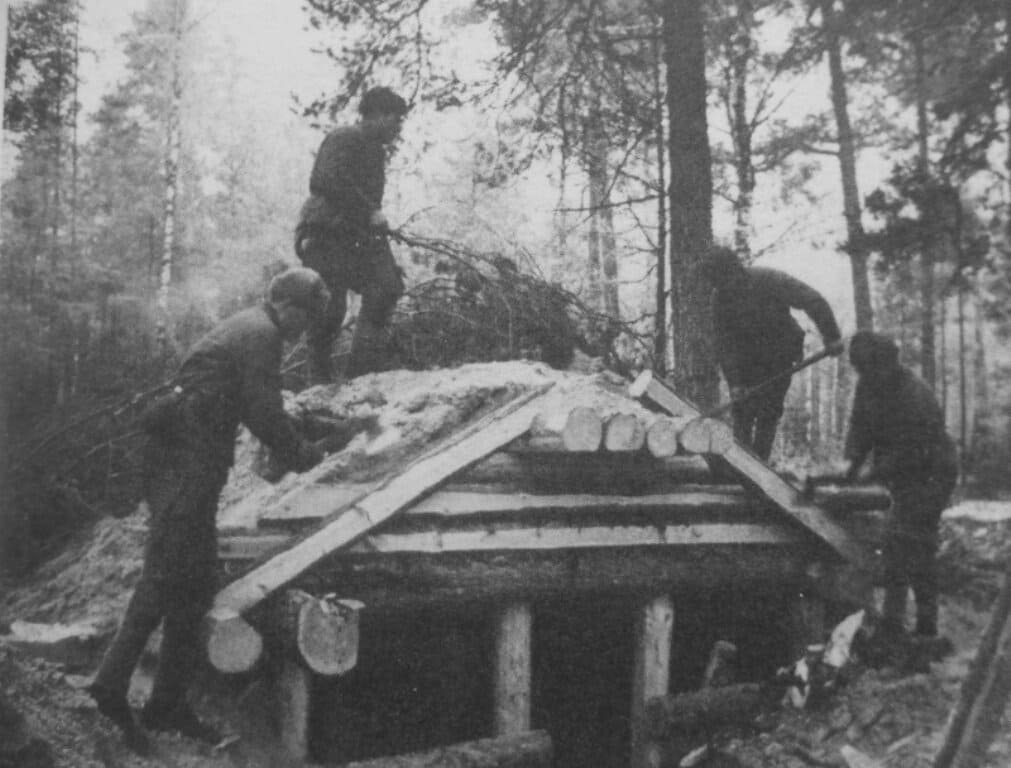
Soldiers often built dugouts and reinforced shelters. It was very hard physical work, with logs sometimes laid in three layers, but the shelter was warm and relatively safe.
Sappers building a dugout on the Central Front
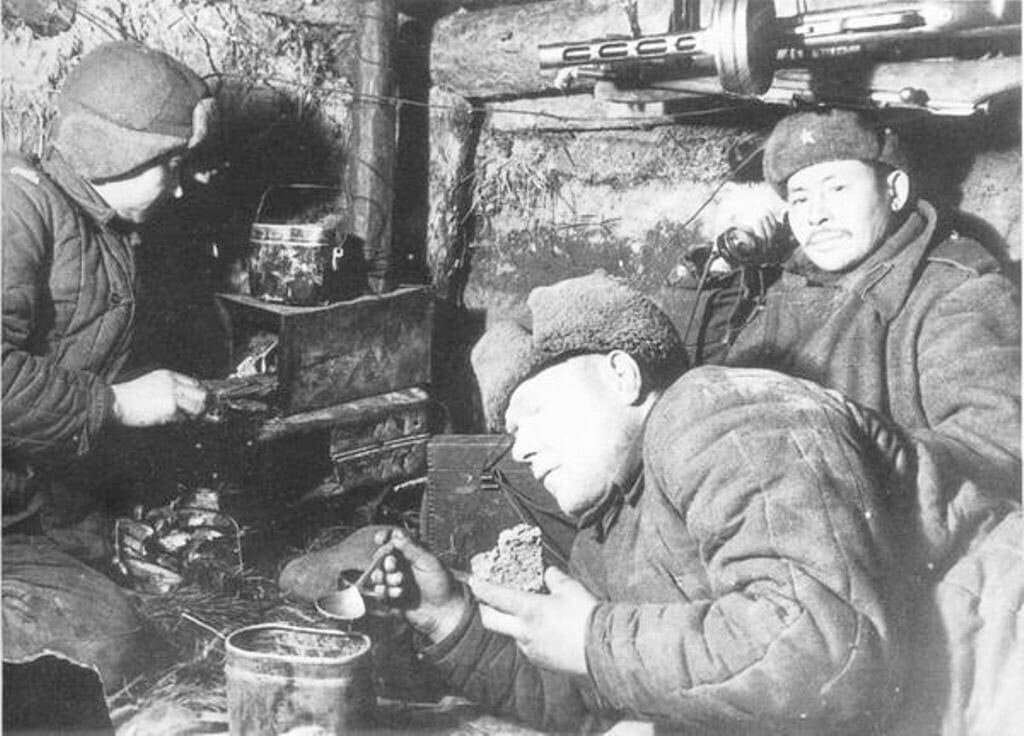
As soon as they arrived, they dug into the ground and built a solid dugout. There was an entrance leading underground, then dirt steps. A canvas sheet was used as a door. Inside, there was a passage, with bunk beds on both sides covered with straw.
According to Order No. 267, small portable stoves were produced to heat dugouts and underground shelters
However, as you can imagine, the first and strongest dugouts were built for the commanders. Officers usually took the best and warmest houses if the unit was staying in a village.
Supply troops of Major T. Bystrov resting during a halt
Ordinary soldiers rarely had such comfort, especially in the early years of the war.
Frontline breakfast
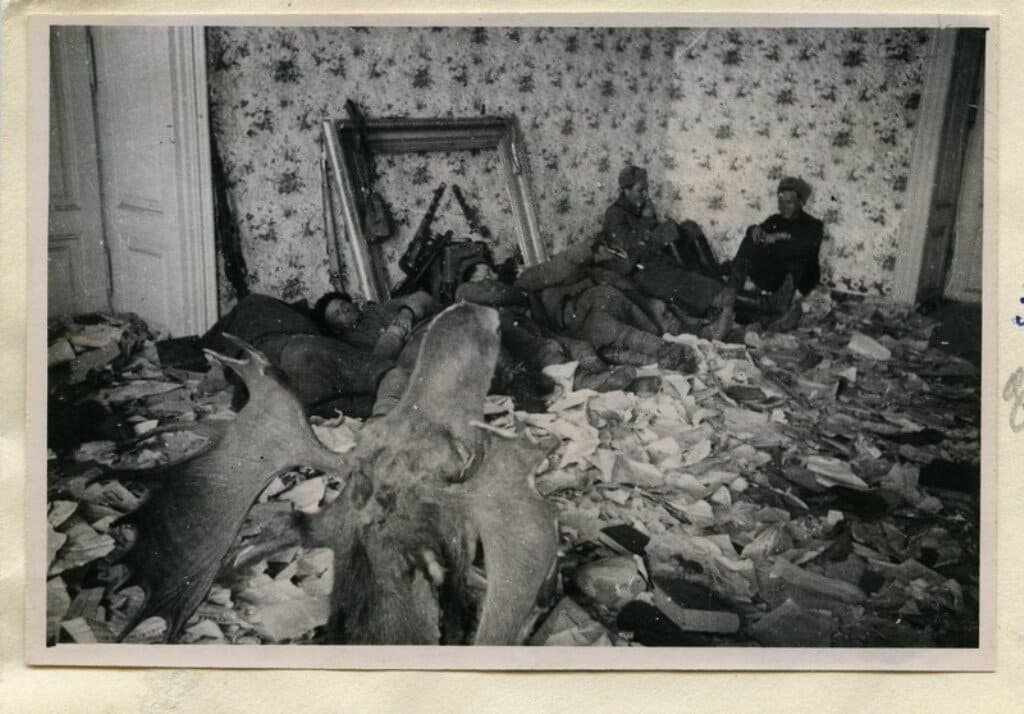
However, when Soviet troops were already liberating Europe, sleeping conditions could sometimes look like this:
Since the houses were not heated, soldiers slept close together to keep warm
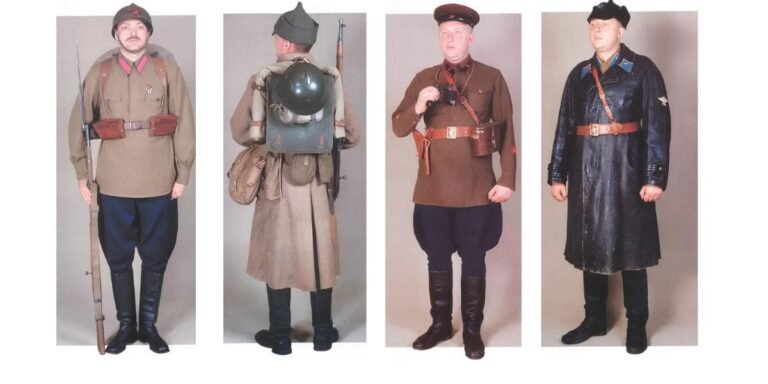
What else helped Red Army soldiers survive such extreme cold? Of course, winter clothing.
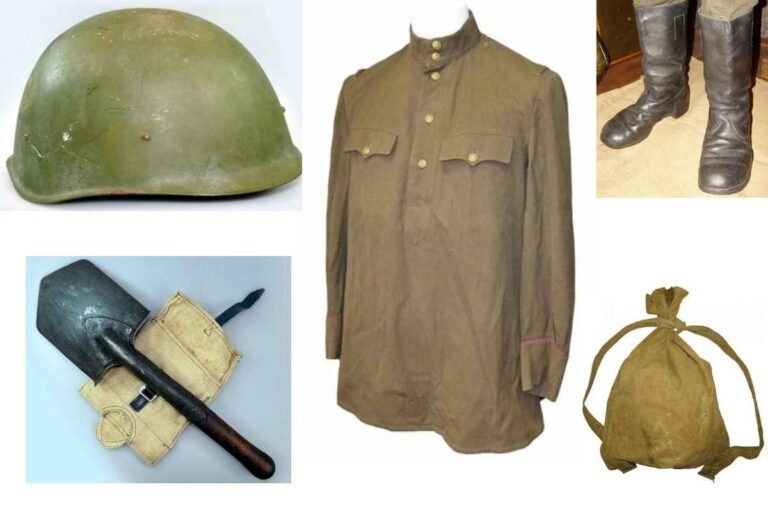
We were given long underwear, a shirt, a wool tunic, a padded jacket and pants, felt boots, an ushanka hat, and mittens.
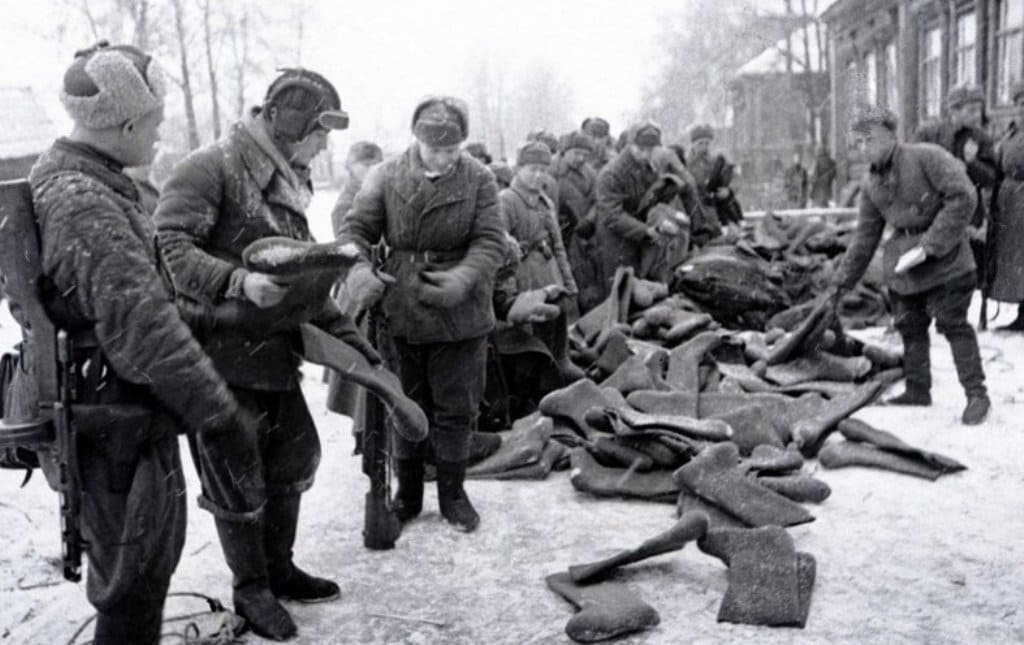
Receiving valenki. 1941
…We were given new greatcoats. They did not feel like just coats, they felt like real luxury to us. A soldier’s greatcoat was very thick and important. It served as a bed, a blanket, and even a pillow.
In cold weather, you lay on the coat, pulled your legs up to your chest, and covered yourself with the other half, tucking it around your body. At first, it was very cold, you lay there shaking, but after some time your breath made it warmer. Or almost warm.
When you got up, the coat was frozen to the ground. You had to use a shovel to cut it free, lifting it together with a layer of frozen earth. Later, the dirt would fall off by itself.
And still, looking at these photos, it is hard to imagine how people could endure such conditions!
And of course, in this context, we must also mention the importance of hot food.
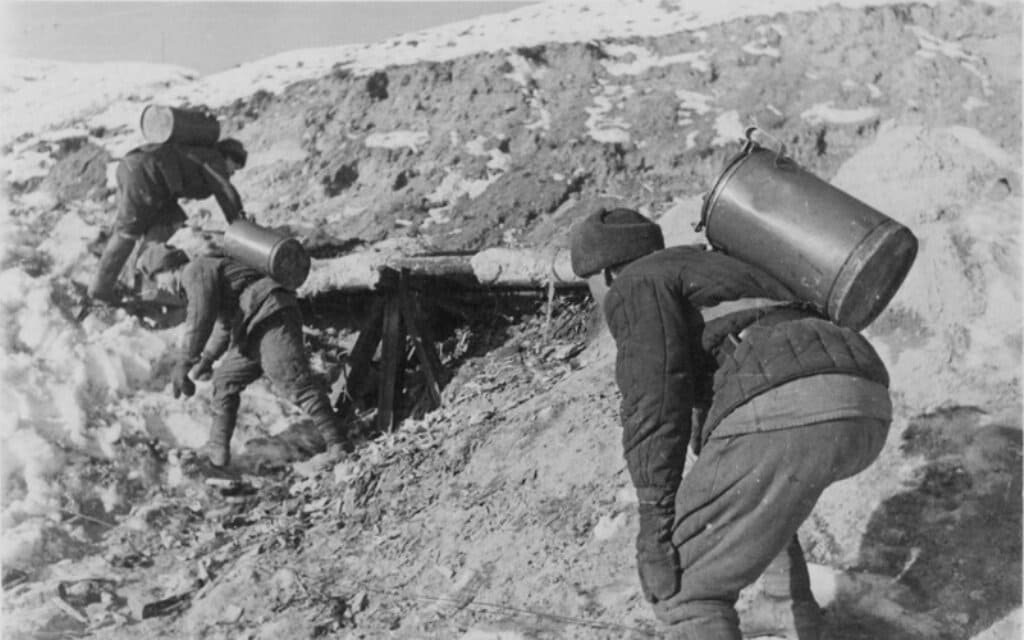
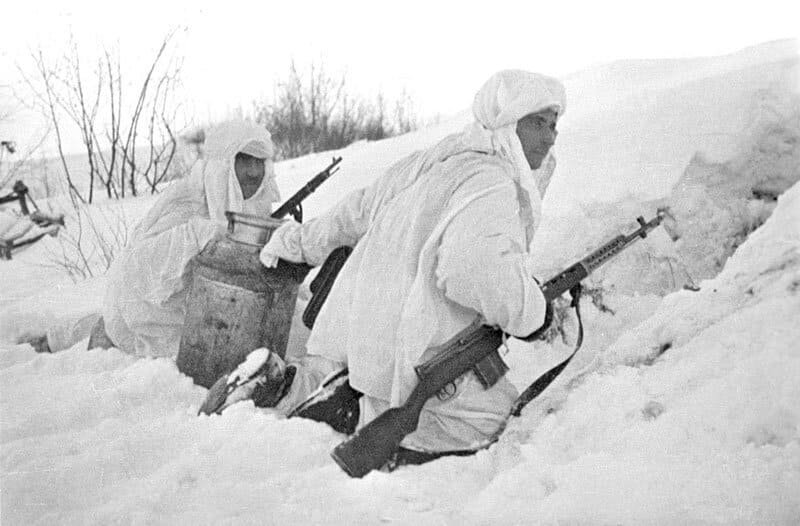
Delivery of hot food to the frontline in Stalingrad
Of course, it was not always possible to use field kitchens. Sometimes Red Army soldiers had to go hungry, especially in the early years of the war.
The situation was very different near Moscow in the winter of 1941–1942, when temperatures dropped to -40°C. There was no real chance to have a proper meal. Units were constantly moving – attacking, retreating, regrouping – so there was no stable position and no way to organize daily life.
Usually, once a day, a sergeant brought a thermos with thin soup, simply called “food.” It was cooked nearby, wherever possible, so the enemy would not see the smoke. Bread had to be cut with a two-man saw because it froze solid. Soldiers kept their ration under their coats to warm it a little.
From the memoirs of M. F. Zavorotny
And yet, over time, food supply to the front improved. Judging by these photos, even on the front line, food was delivered regularly, often at great risk.
Stories from people:
My grandfather went through everything. Medals for Leningrad, Stalingrad, Berlin, Prague. He said the hardest thing was sleeping in a trench with water up to your waist. He ruined his kidneys in the war, had several severe wounds, but lived to 70. They were made of iron.
My grandfather also said that during the winters of 1942 and 1943, they never slept indoors even once.
My father went through three wars: Poland, then the Finnish War, and WWII. He fought in Leningrad, on the Pulkovo Heights. He lived to 77. After the war, he never lowered the ear flaps of his hat — once on the фронт he almost got killed by a train because of it.
My grandfather told how one night he froze to the ground. He was concussed near Leningrad, and that actually saved his life. He lived until 1984.
My grandfather went through the whole war but never talked about it. He never watched war movies either.
My grandfather had frostbite on one foot – some toes were amputated. He kept fighting, reached Poland, then got seriously wounded and was discharged. That’s all he ever told. He didn’t like to talk about it.
I served in the army in 1984–86 (in the mountains). If we stayed for 1–3 months, we dug dugouts. Otherwise, one sleeping bag for two people. The worst was rain. Water inside the sleeping bag, turning all night trying to stay warm. And if you were on an ambush overnight in the rain – that was hell. You slept in mud, soaked, with your rifle under you. It wasn’t really sleep – you just waited for morning.
My grandfather also never told me anything. He went through two wars – Finland and WWII. All 900 days of the Leningrad siege. He only said: “You don’t need to know this.”
My grandfather finished the war in Berlin. He burned in a tank up to his waist. Instead of skin — scars. My childhood memories are bandages, gauze, medicine. Every day he wrapped himself from chest to feet. Never complained, never asked for anything. He died at 60. But every May 9, he took a bottle and some dumplings and went to the cemetery to his comrades. Before he died, he told my father:
“Don’t cry. Don’t go to the cemetery. Just make dumplings on May 9, come to me, and raise a glass. I’ll be with you.”