The Legend of the “Bulgarian Ushanka”: How a Bulgarian Hat Became Part of Red Army Reenactment
“History became a legend, the legend became a joke, and then people started making up even more stories.”
It sells like hot cakes. Every year its price goes up. Elon Musk probably wants people to trade Bitcoin for it. And it feeds the moths in the closet of almost every Red Army reenactor.
But many people still do not know its real history.
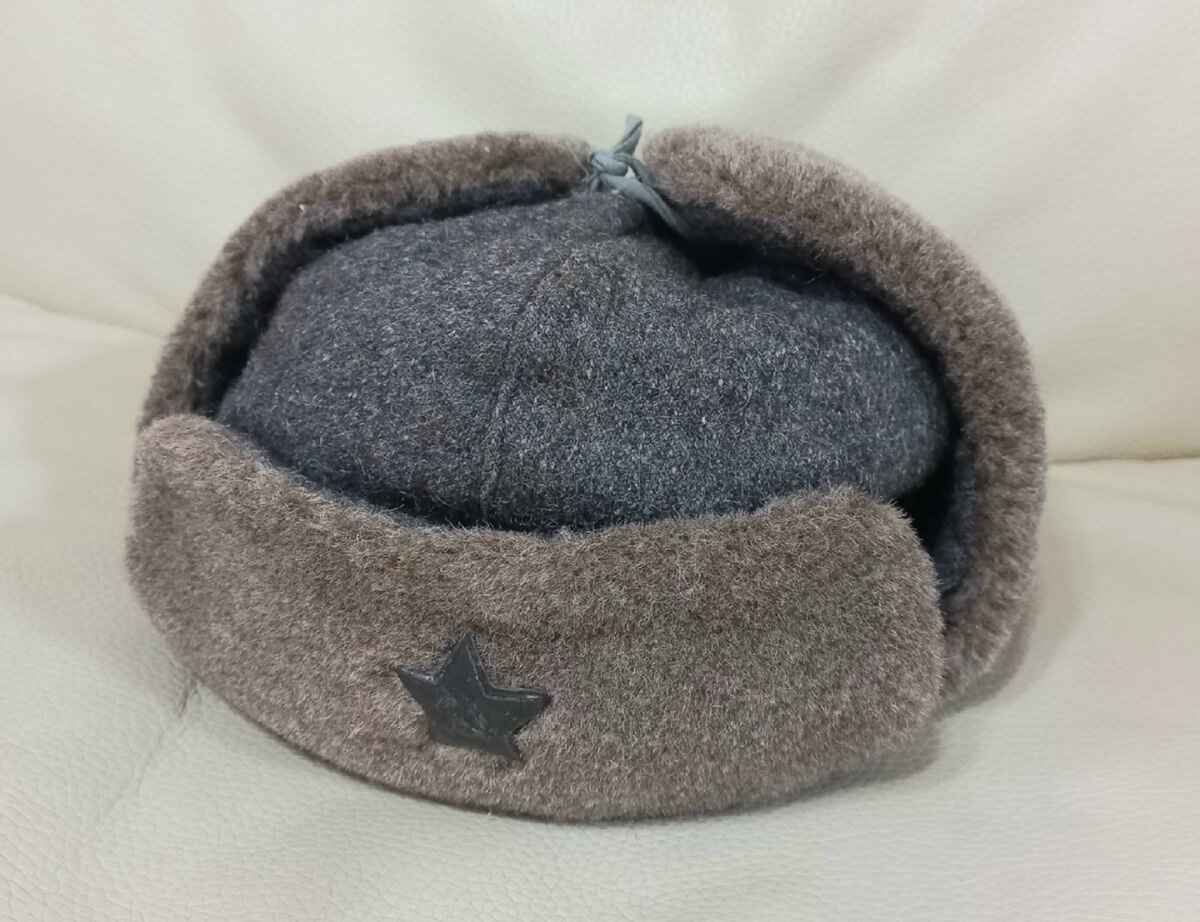
Meet the hero of our story – the legendary Bulgarian ushanka!
More interesting articles:
Ushanka History: Meaning, Origin and When It Was Invented
Soviet Ushanka History. From the Budyonovka to the War in Ukraine
Soviet Military Berets: Complete History of Berets in the USSR
Soviet Panama Hat History – 1930s, Afghanistan & Modern Russia (Part 2)
How the Legend Started
In the 2000s, Red Army World War II reenactment became more popular. Reenactors needed more and more Soviet military uniforms and equipment.
At first, some people even used original wartime items. But original uniforms became more expensive and harder to find every year. Soon, reenactors understood that they needed other options.
They generally divided into three groups:
- Budget reenactors. They mostly take part in large events where historical accuracy is not very important. They try to save money on everything.
- Middle group. They have money and serious interest in the hobby, but cannot afford original items or expensive replicas of everything.
- Elite reenactors. They own original items and high-quality replicas. Some even make replicas themselves.
The second group became the largest in Russia.
And they had a problem: what should they wear during winter events?
Greatcoats could be modified from later Soviet models. Padded jackets and camouflage suits could also be taken from postwar stocks.
But finding the right ushanka was much harder.
Good replicas were difficult to find, and almost nobody made them.
Some reenactors started using civilian ushankas from the 1940s. But these were also rare.
Others started looking at military hats from postwar socialist countries.
And they found something interesting – ushankas of the Bulgarian People’s Army from the 1940s–1960s.
They looked similar enough.
So people decided: why not use them?
Soon, boxes of Bulgarian ushankas began arriving from Bulgarian military warehouses.
They sold very quickly. Reenactors, military surplus stores, and private sellers all started selling them.
But give a story a few years, and soon it becomes an “undeniable historical fact.”
Sellers began adding new details to the story.
They claimed these hats were made as war reparations for the Soviet Army and were almost exact copies of real wartime Red Army ushankas.
Many people believed this story.
Today, Bulgarian ushankas are used by many reenactors in USA, UK, Czech Republic, Poland and other countries.
But the real story is more complicated.
So let us do a small historical investigation.
The full legend usually sounds something like this:
Bulgarian Army ushankas were made as reparations for the Soviet Army and are suitable for Red Army reenactment.
Let us divide this legend into three questions:
- Are these hats really connected with Bulgaria and the Bulgarian Army?
- Were they really made as reparations for the USSR?
- Are they really suitable for Red Army reenactment?
Let us look at each question.

Original Soviet Ushanka Hat
Authentic Soviet military Ushanka from original USSR old stock.
Choose a red star, green star, or officer cockade. Flat worldwide shipping $14.98.
Are These Hats Really Bulgarian?
Yes.
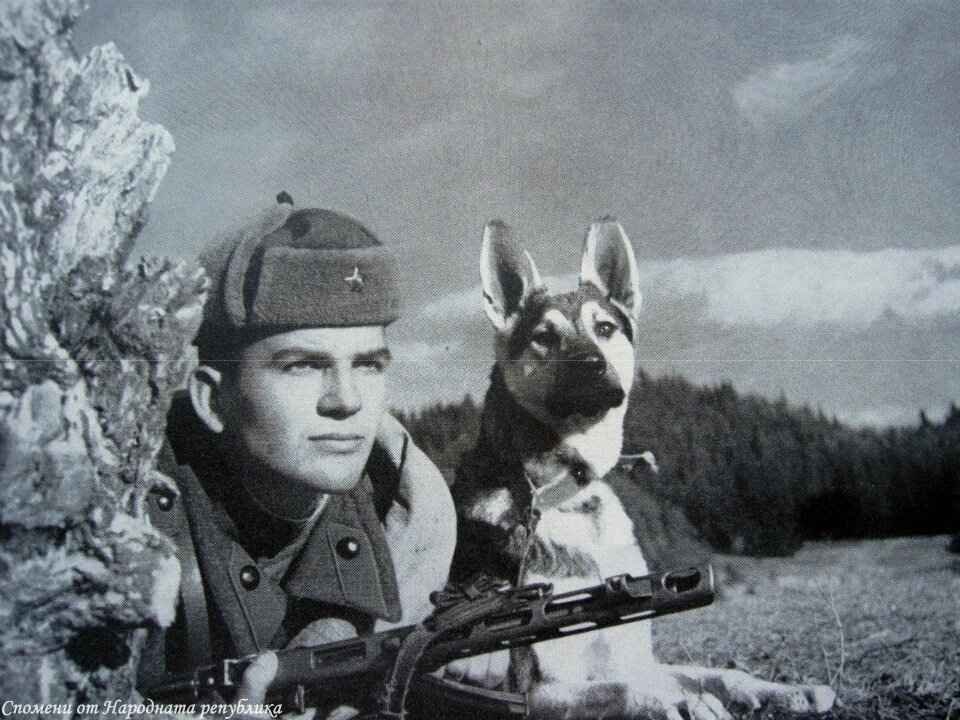
These hats really were used by the Bulgarian Army during the 1940s–1960s.
A small number of historical photographs of the Bulgarian People’s Army show soldiers wearing these hats.
Some later hats also have factory labels inside them.
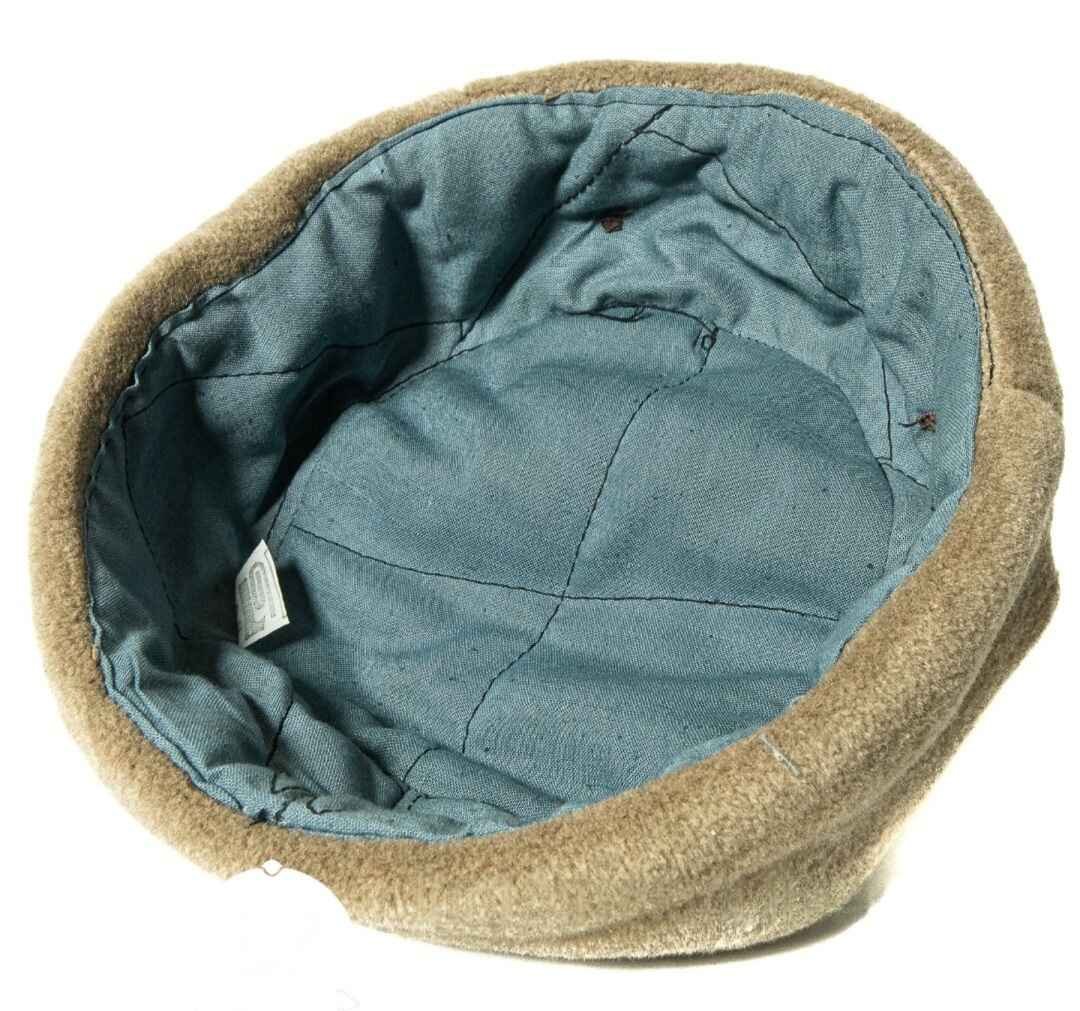
Later version with a factory label.
Bulgarian sellers also describe these hats as Bulgarian Army ushankas.
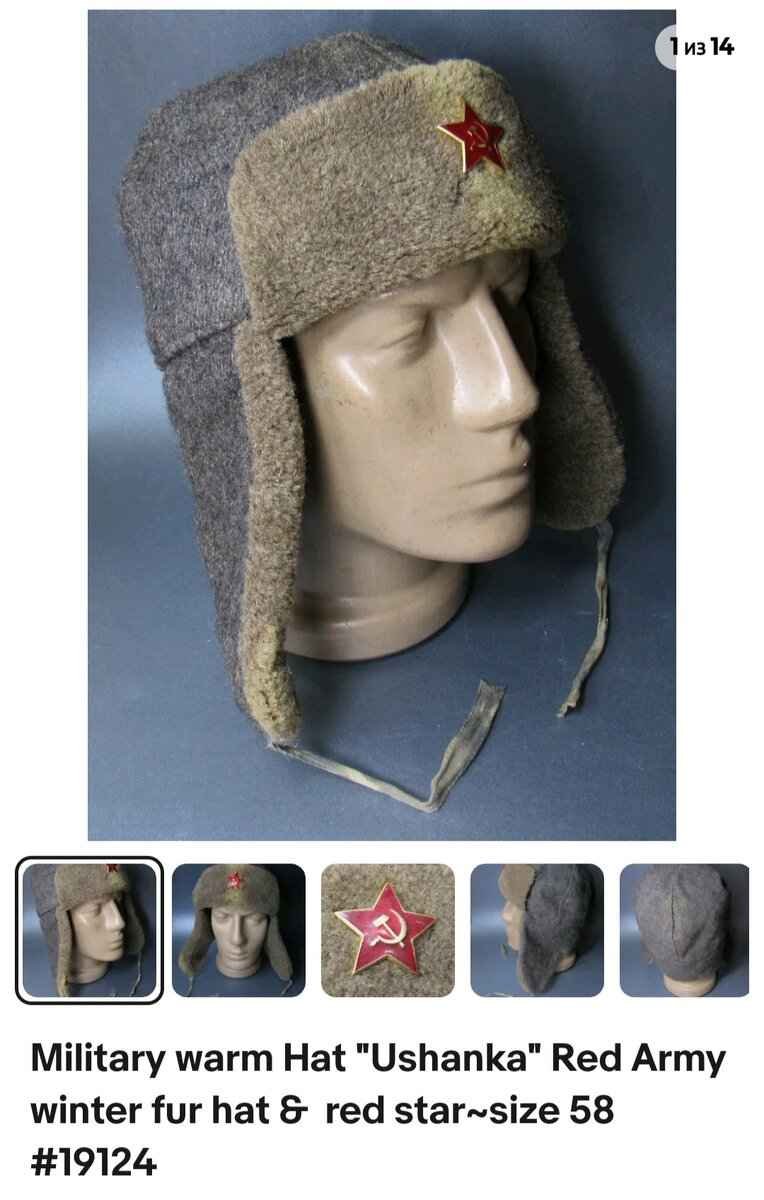
Funny enough, some sellers also say they are perfect for Red Army reenactment.
During the 1960s, the Bulgarian Army slowly stopped using these ushankas. They were replaced by wool side caps with folding ear protection.
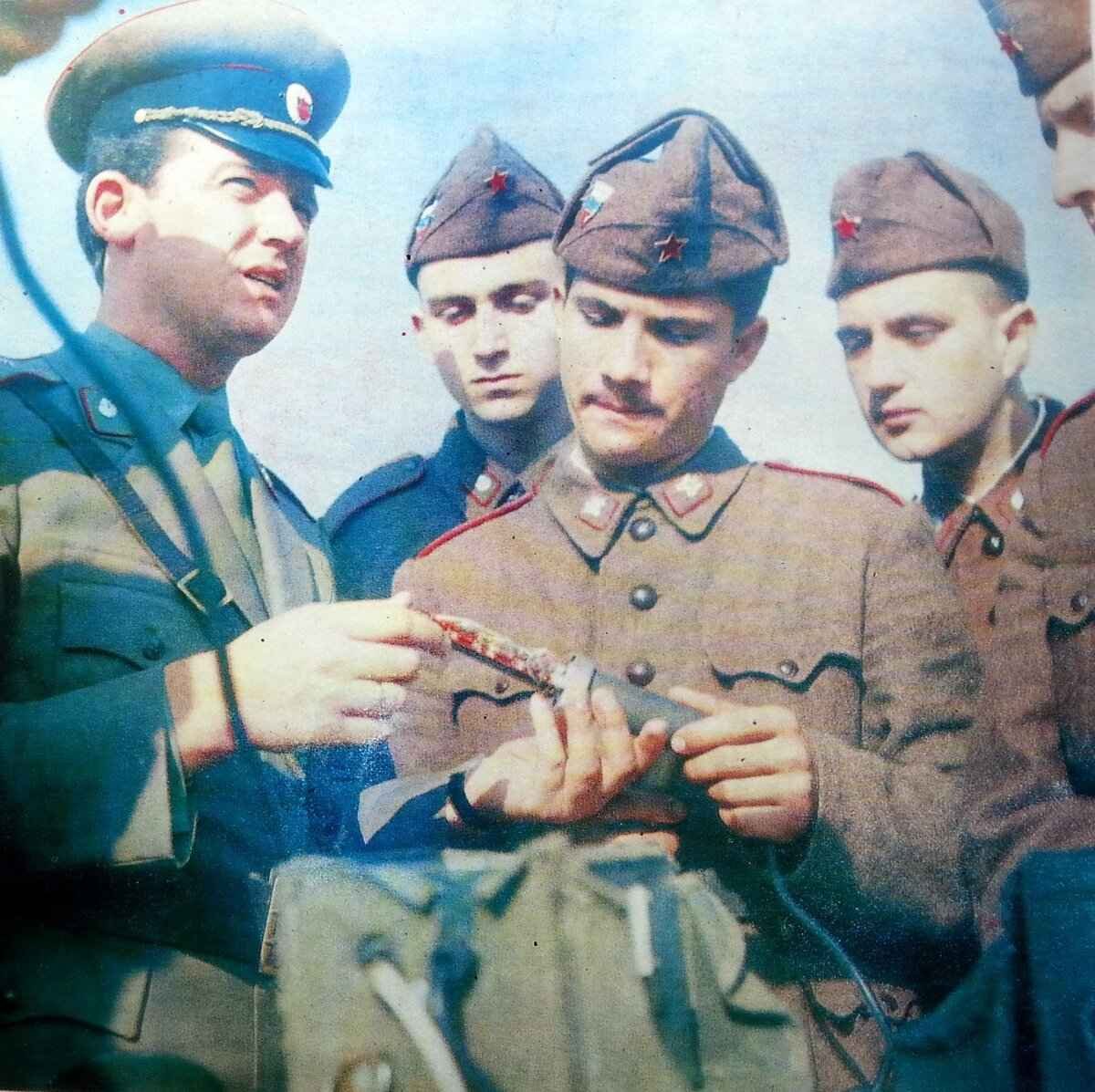
Bulgarian soldiers wearing wool side caps instead of ushankas.
Were They Made as Reparations?
First, we need to understand what reparations are.
Reparations are payments made by one country to another country for damage caused during a war or another international conflict.
They can be paid with money, products, services, equipment, or other goods.
After World War II, Germany paid reparations to the Soviet Union and other countries.
For example, reparations from East Germany to the USSR and Poland officially ended on January 1, 1954.
At the Potsdam Conference in 1945, several forms of reparations were agreed upon.
They included:
- taking German machines and industrial equipment;
- regular deliveries of German products;
- use of German labor.
Some products supplied as reparations were military items.
We know about German-made military equipment, accessories, ammunition pouches, camouflage clothing, dishes, uniforms, and underwear made for Soviet Army units stationed in Germany during the late 1940s and 1950s.
But there is an important detail.
These products were mainly made for Soviet troops stationed inside the country where they were produced.
This made logistics easier.
For example, if Soviet soldiers were stationed in Berlin, it was easier to make some equipment in Germany than to transport everything from the USSR.
Soviet units stationed inside the USSR probably did not receive much European-made equipment. Soviet factories were already producing military clothing and equipment, and large amounts were also stored in military warehouses.
The author also knows of no German-made reparation greatcoats or ushankas.
So even if Bulgaria had produced ushankas for Soviet troops as reparations, it would probably have produced only enough for Soviet troops stationed in Bulgaria.
It would make little sense to produce thousands of extra hats, send them to the USSR, and then keep them in warehouses until the 2000s.
But were Soviet troops actually stationed in Bulgaria?
Yes.
Red Army units entered Bulgaria on September 9, 1944. Soviet military units remained there until December 1947.
Under the Paris Peace Treaties of 1947, Soviet soldiers left Bulgaria by December 1947.
So Soviet troops were in Bulgaria for almost three years.
But there is one major problem with the reparation story.
Bulgaria did not have to pay war reparations to the Soviet Union.
Bulgaria had not formally fought directly against the USSR.
Under the Paris Peace Treaty, Bulgaria had to pay reparations to Greece and Yugoslavia: $45 million to Greece and $25 million to Yugoslavia.
But not to the Soviet Union.
This means that the story about Bulgarian ushankas being made as reparations for the Soviet Army is most likely just a marketing story.
It made the hats sound more authentic to reenactors.
There are real examples of German reparation equipment that can be used for Red Army reenactment. For example, some German-made Mosin rifle ammunition pouches were produced according to Soviet 1937 specifications.
But the Bulgarian ushanka is a different story.
The Bulgarian military simply copied the general Soviet ushanka design, just as many other Eastern European socialist countries copied Soviet military equipment.
Can Bulgarian Ushankas Be Used for Red Army Reenactment?
This is a more difficult question.
If we look at the materials, shape, and construction, the answer is clearly no.
Most wartime Red Army ushankas can be divided into two main groups.
The first type used dark gray fur. The outside was made from gray cotton moleskin or similar cotton material.
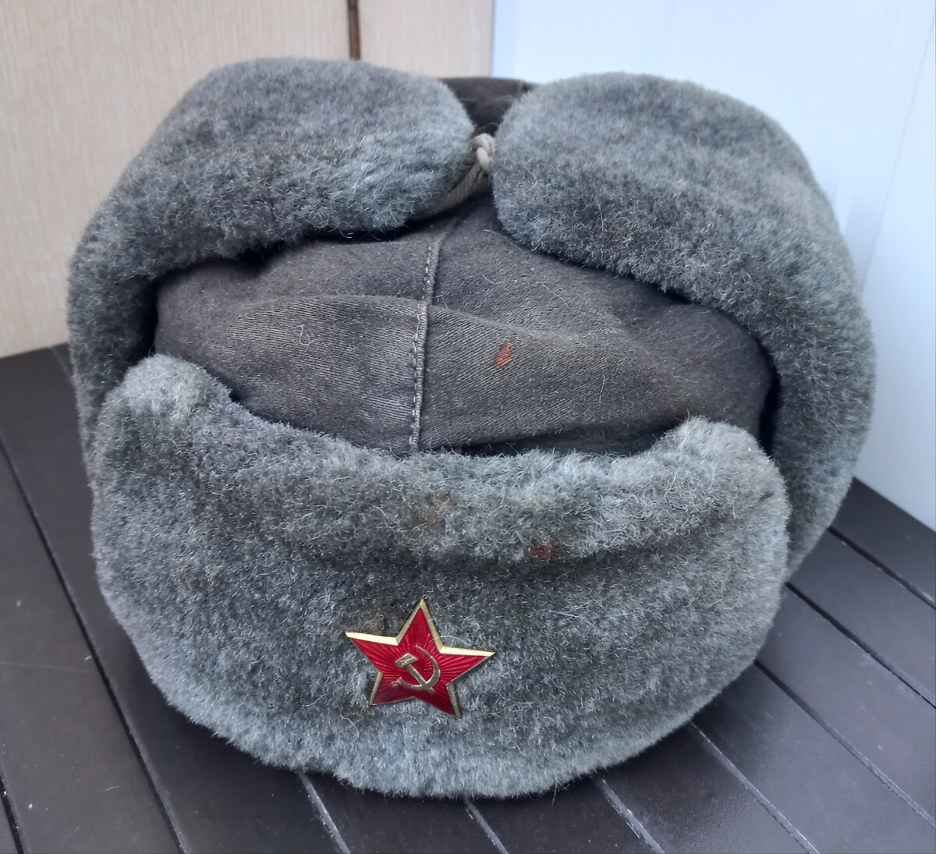
Ushanka made according to the 1941 standard, with a 1947-style star.
The second type used fur of different colors – gray, white, or reddish – with a wool cloth outer shell.
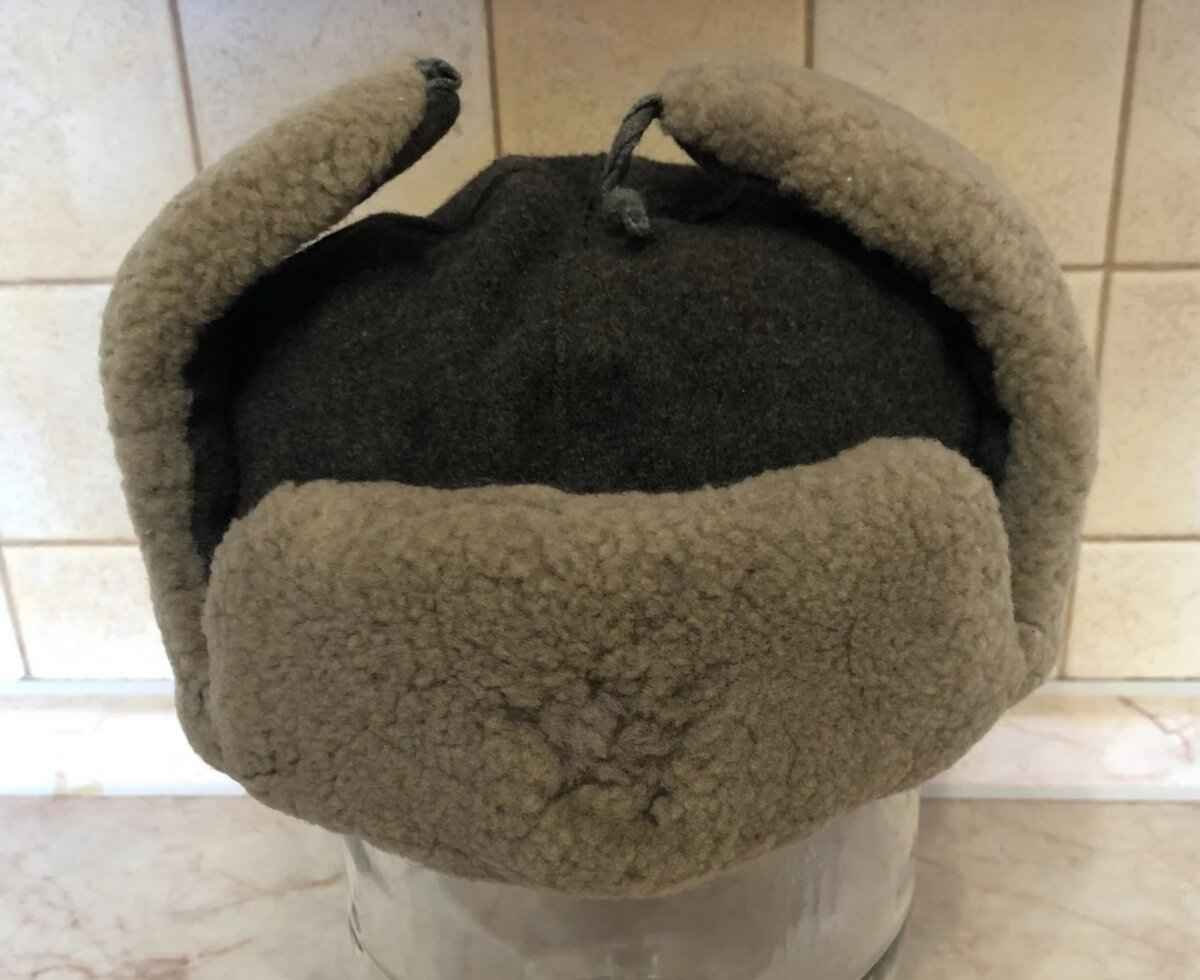
The Bulgarian ushanka looks more like the second type.
But there are two important differences.
The Fur
The color and quality of the Bulgarian artificial fur are very different from Soviet wartime fur.
Original Soviet ushankas existed in several fur colors, but this light brown color has not been found among known wartime examples.
The Construction
Soviet ushankas had a fairly strong internal structure. This helped the hat keep its shape.
The sides had vertical stitching around the hat. This created a strong cylinder-like structure that was difficult to crush.
The top of the Soviet ushanka also had a special stitching pattern.
Four diagonal stitched sections formed a large diamond in the center and four smaller diamonds around it. There was also circular stitching inside the top.
Because of this, the top stayed fairly flat. It did not stick up or fall inward.
Bulgarian hats were made differently.
Their top often had diamond stitching similar to a Soviet padded jacket. The sides were also much softer.
Because of this, the Bulgarian ushanka does not hold its shape as well.
It is also lower and smaller than most Soviet wartime ushankas.
In simple words, it is more of a hat inspired by the Soviet design than a real copy.
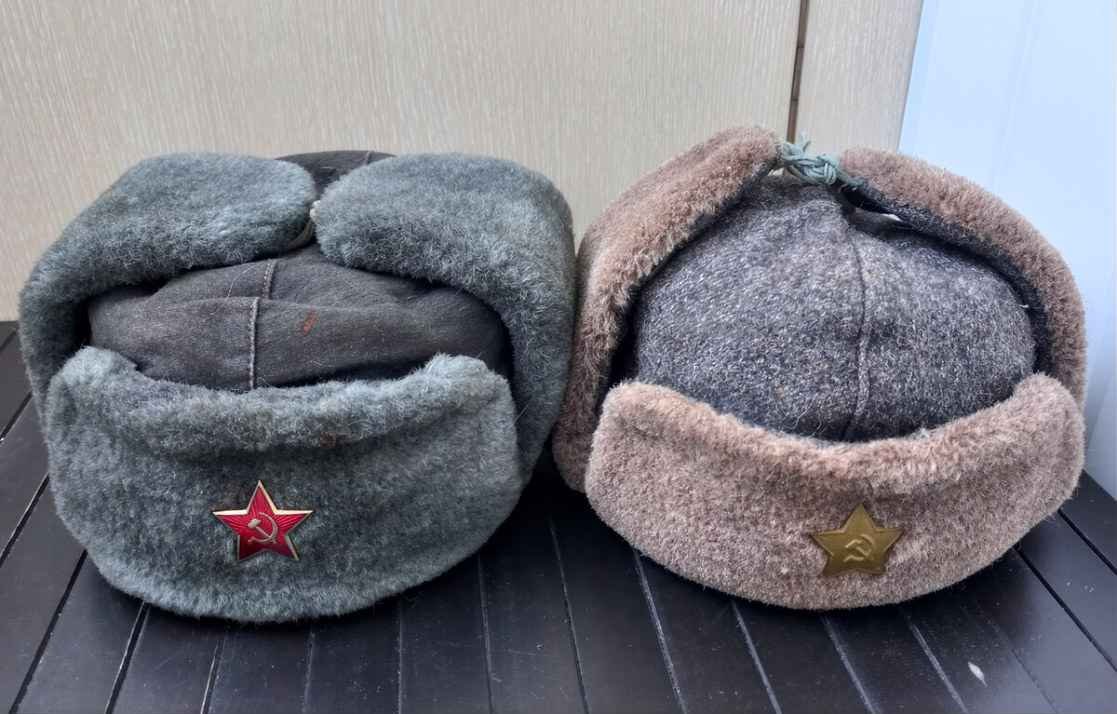
Comparison of a 1940s Soviet ushanka and a Bulgarian ushanka.
But if we talk about price and availability, the situation is different.
For many reenactors, Bulgarian hats are acceptable simply because good and cheap replicas of Soviet wartime ushankas are difficult to find.
Of course, these hats were often worn together with later Soviet greatcoats or padded jackets from the 1960s.
The final result could look very different from a real World War II Red Army soldier.
There have also been attempts to make cheap replica ushankas, but their quality and appearance are often poor.
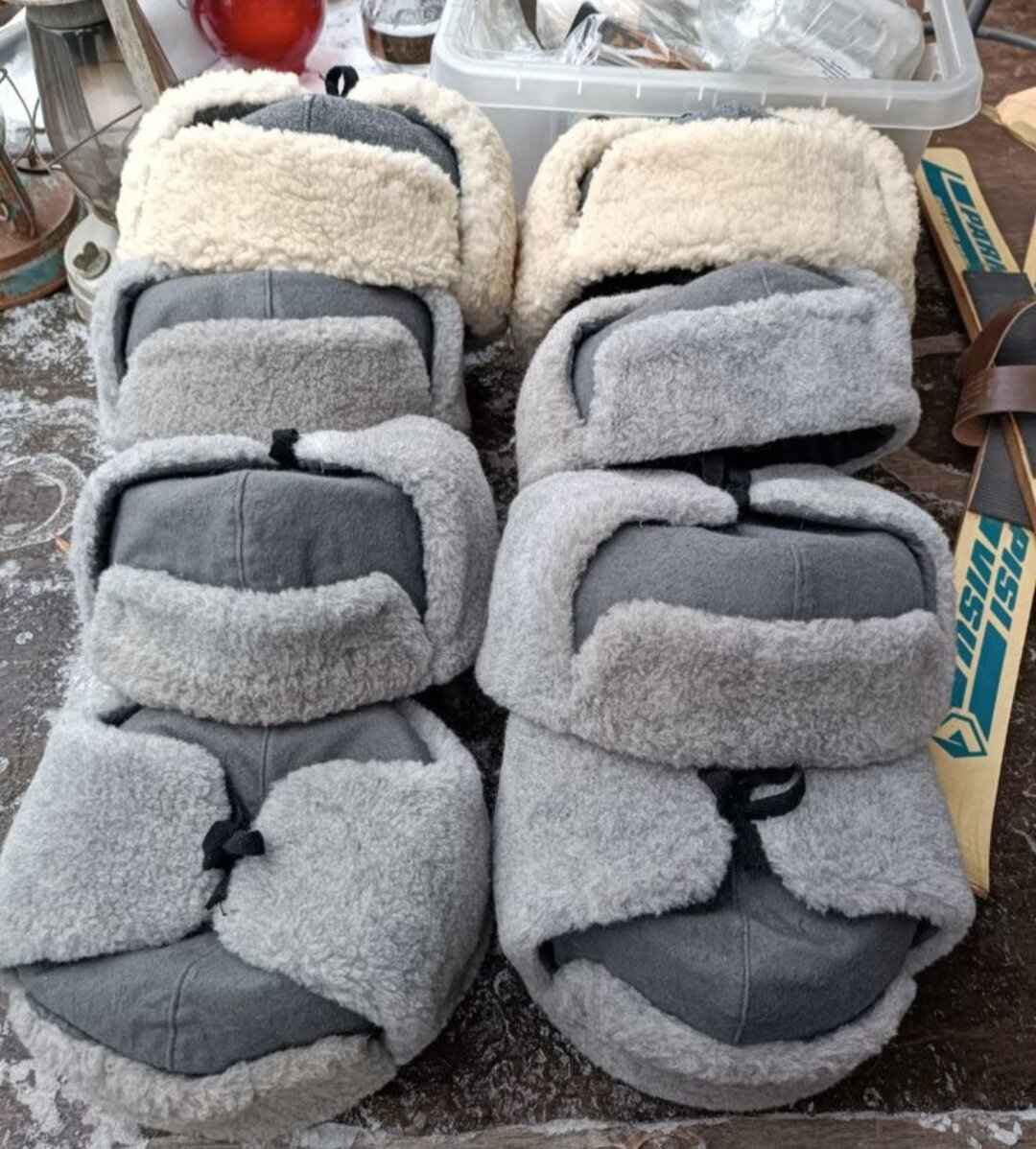
More like a copy of a Bulgarian ushanka.
So the choice of hat for reenactment is often a question of money and personal standards.
If you want a very accurate historical impression, you need to spend money on every detail, including the ushanka.
If your budget is limited, you have to make compromises.
Some sellers even claim that Soviet ushankas from the 1970s and 1980s are suitable for World War II reenactment.
In fact, these later Soviet hats can sometimes be closer in materials and construction to the 1940 model than Bulgarian hats.
But stories about special “low” wartime ushankas are often just another marketing idea based on poor knowledge of production details.
And here is an interesting fact:
The basic military ushanka introduced in 1940 continued to be produced in almost the same basic construction for decades.
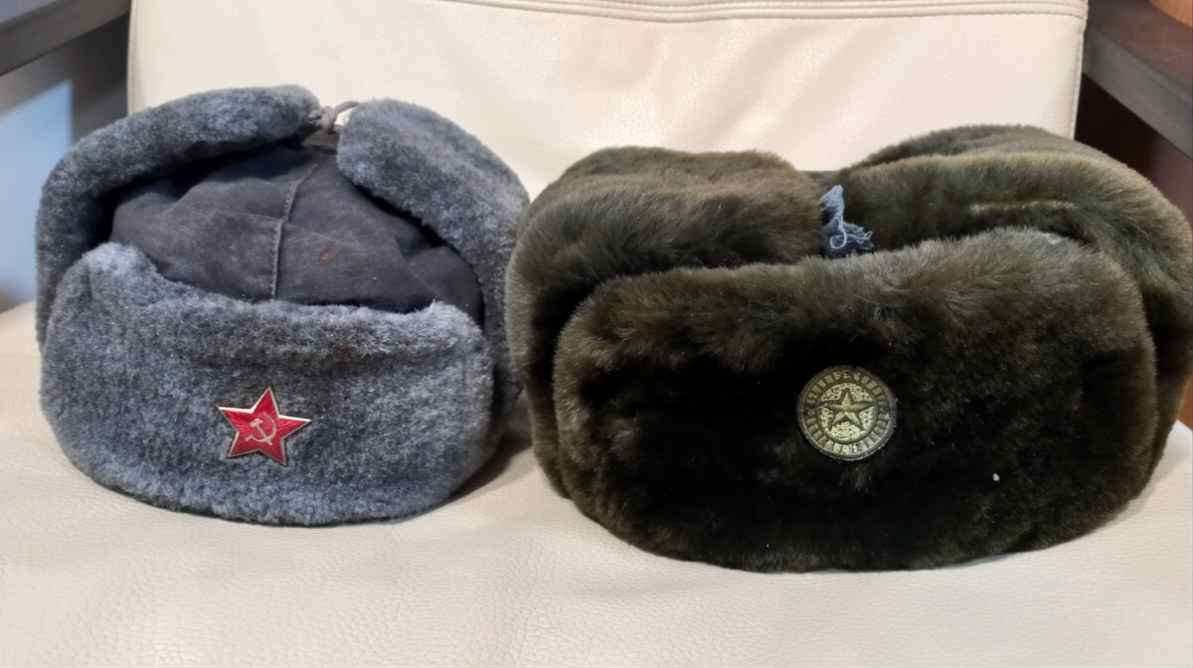
Comparison of a 1940s ushanka and a 2022 military ushanka with a camouflage outer shell.
The materials changed, but the basic construction stayed very similar.
Military wartime-style ushankas stopped being produced in 1951 after the introduction of the 1950 GOST standard.
From this period, light gray or blue-gray fur became common, while the outside was made from wool cloth.
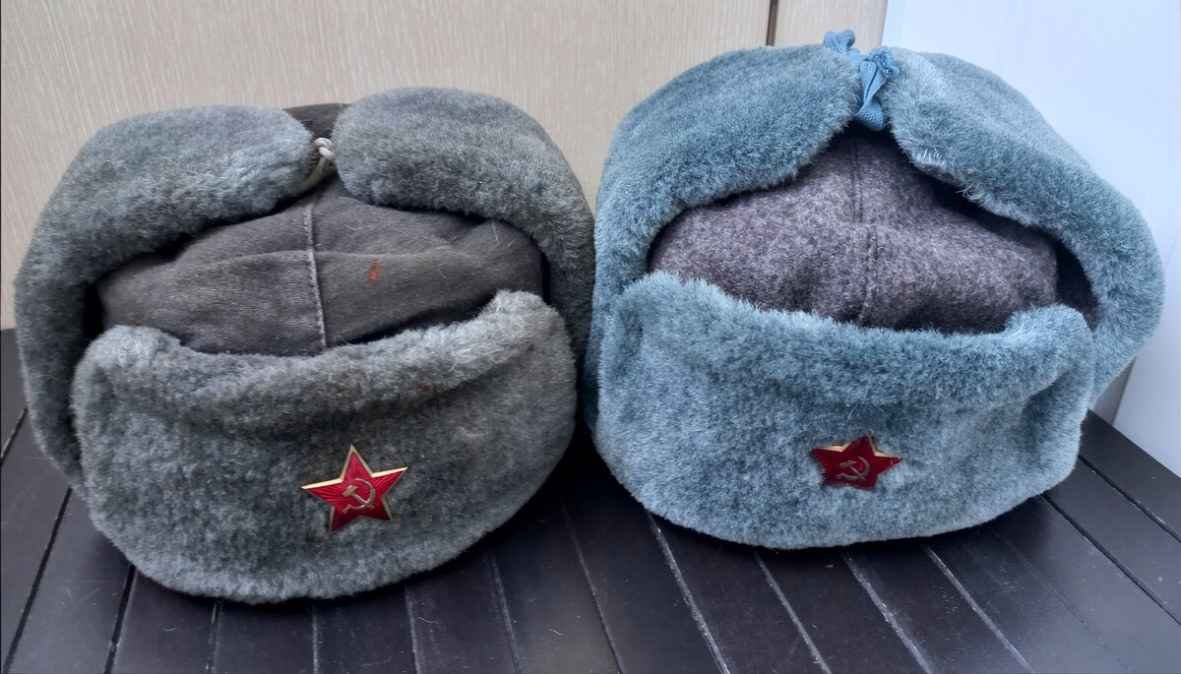
Comparison of a 1940s ushanka and a 1969 ushanka. The difference in the height of the front and rear parts is about 1 cm.
Around 1970, a fourth stitching line was added to the top of the hat. This increased the number of small diamond shapes to nine.
However, some factories continued using only three stitching lines.
During the 1990s, factories often used their own methods.
From around 1972, the height of the hat increased by about 1 cm.
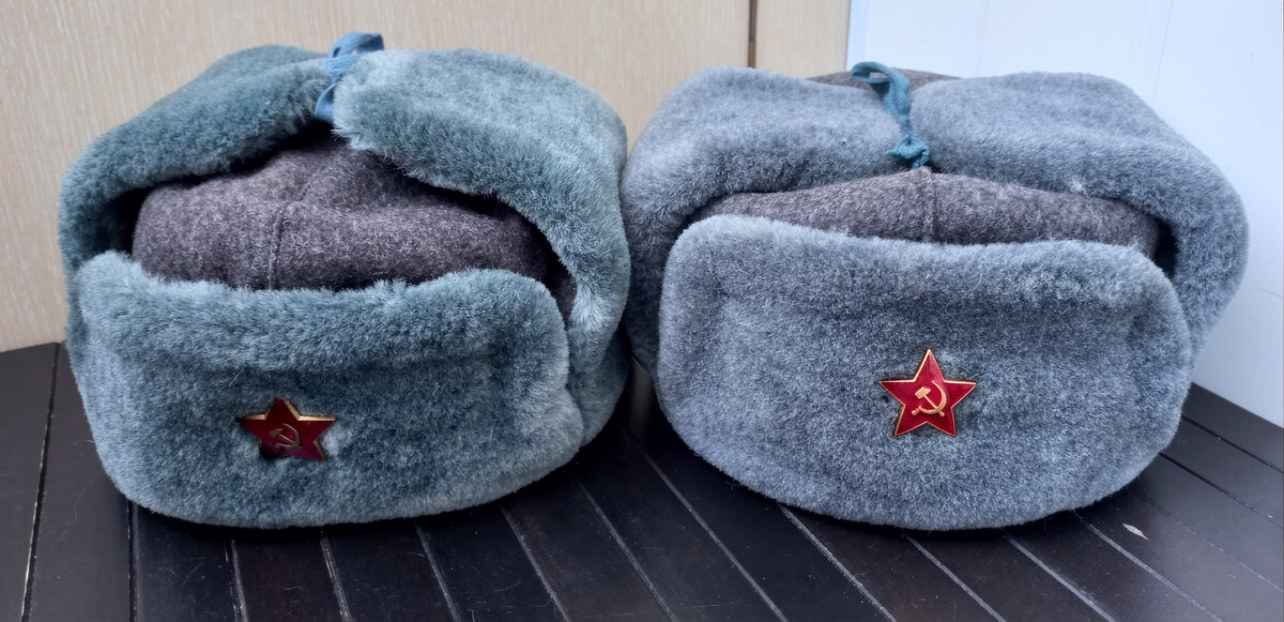
1969 and 1973 ushankas. The difference in the height of the front parts is about 1 cm.
Around 1977, buttons began to appear on the outside of the ear flaps. They were used for protective covers from the OKZK set.
The exact height of Soviet ushankas depended more on the factory and hat size than on the year of production.
Larger sizes were naturally larger. During production, about 1 cm was also allowed for material shrinkage.
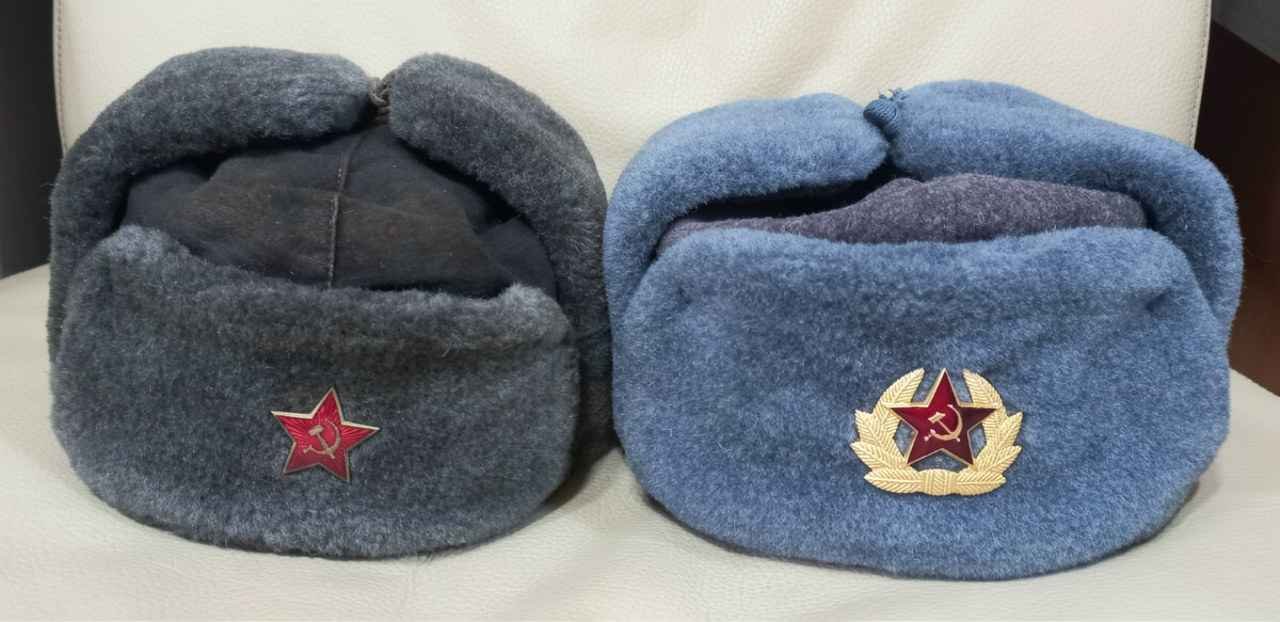
Ushankas from the 1940s and 1980s.
The hat on the left is from the 1940s and the one on the right is from the 1980s. Both are size 56.
The front part of the later hat is about 1 cm higher. The rear part is also about 1 cm higher.
But the basic construction and overall appearance remained almost the same.
So the color of the fur, the height of the hat, and the number of stitching lines often depended more on the factory than on the exact year.
And finally, here is an interesting historical photograph.
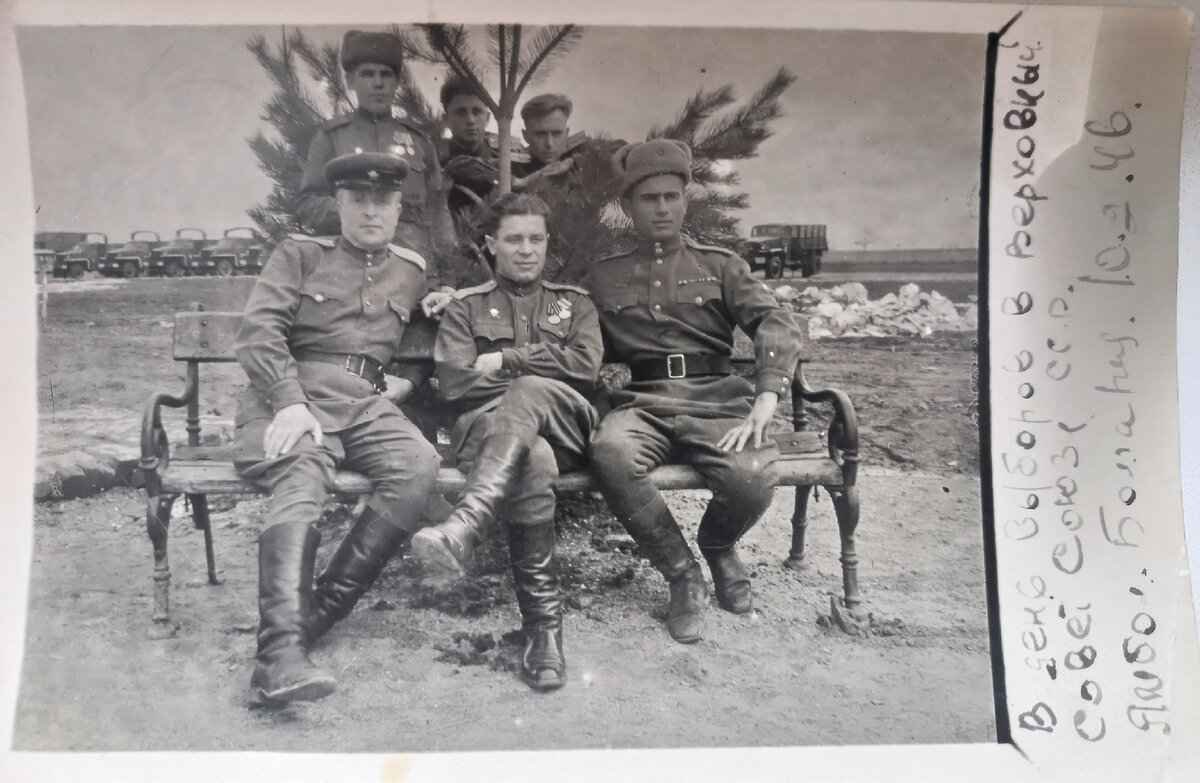
Soviet soldiers in Yambol, Bulgaria, February 10, 1946, on the day of elections to the Supreme Soviet of the USSR.
All of them are wearing Soviet-made ushankas.
Apparently, they did not receive those legendary Bulgarian “reparation” hats in time.
And in general, there are no known historical photographs showing Soviet soldiers wearing these Bulgarian ushankas.

+
Buying Soviet Boots? Add an Ushanka!
Add an original Soviet Ushanka to your boots order.
No extra shipping cost — the shipping price stays the same.
More interesting articles:
Ushanka History: Meaning, Origin and When It Was Invented
Soviet Ushanka History. From the Budyonovka to the War in Ukraine
Soviet Military Berets: Complete History of Berets in the USSR
Soviet Panama Hat History – 1930s, Afghanistan & Modern Russia (Part 2)
Looking for original Soviet boots and accessories? Please visit here: Soviet Boots Store