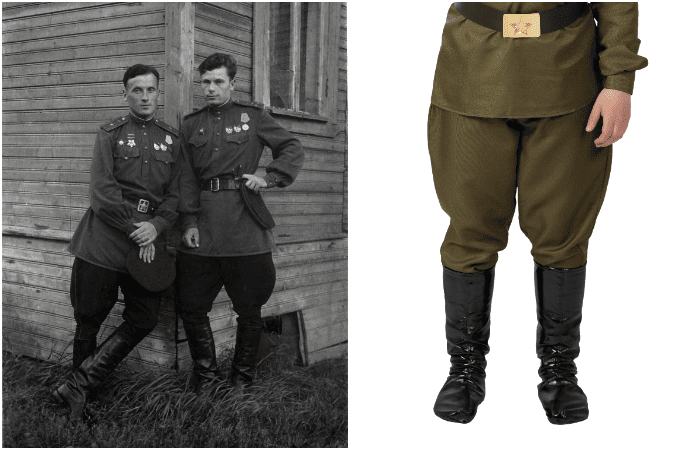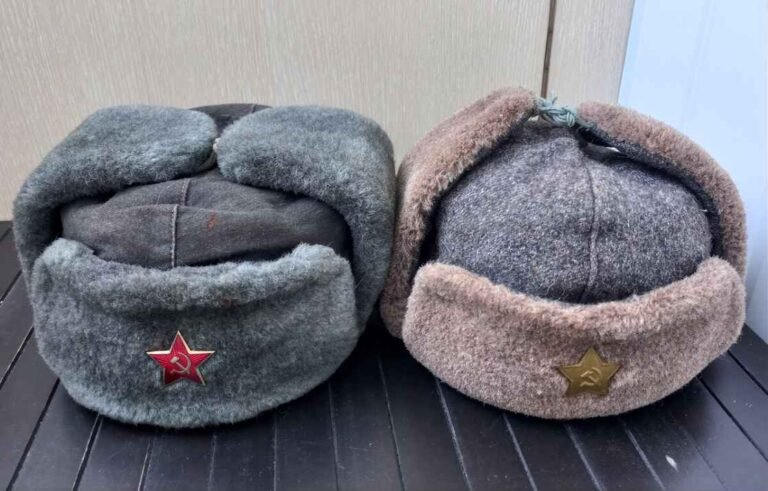
“One! Two! Little doll!” says the scout while teaching a 12-year-old boy how to wrap portyanki foot wraps in the Soviet movie Son of the Regiment. “This will be your first soldier lesson.”
A foot carefully wrapped in portyanki really looks like a small doll. This “first soldier lesson” was passed from generation to generation in the army. Years later, portyanki would officially be called “morally outdated.”
Read more interesting articles
Why German Soldiers Started Copying Soviet Portyanki During World War II
Telnyashka: History of the Russian Navy and VDV Striped Shirt
Before Socks, There Were Foot Wraps
Portyanki are believed to come from old peasant foot cloths worn with bast shoes. The idea of using them in the army instead of socks came from Field Marshal Prince Grigory Potemkin. In 1783, he wrote to Empress Catherine the Great:
“Portyanki have the advantage over socks because if feet become wet or sweaty, they can quickly be removed, the feet wiped dry, and then wrapped again using the dry end of the cloth.”
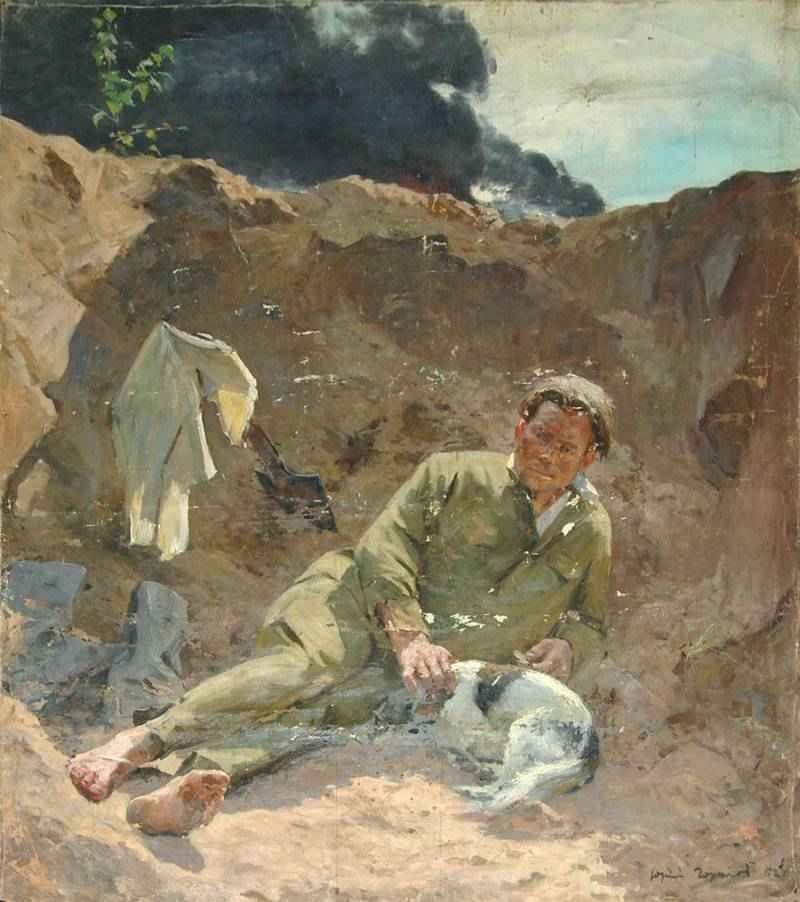
Potemkin also explained that socks were much harder to dry, so soldiers often became sick from constantly wet feet.
Since then, the Soviet Army received tanks, rifles, and rockets, but portyanki never disappeared. Every soldier had his own memories about them. For some, the beginning was painful – after the first marches, soldiers often suffered from blisters and sores. But after enough practice, wrapping portyanki became automatic.
Army boots were also sized together with portyanki. Soldiers usually wrapped two layers around the foot before checking if the boot fit correctly.
Summer and Winter Portyanki
There were summer and winter versions. Thick wool winter portyanki kept feet warm even in extreme cold.
Besides protecting from moisture and cold, portyanki also protected feet from sand and small stones. When wrapped correctly, they almost sealed the foot inside the boot.

Because they were made from natural cotton fabric, feet could breathe better than in synthetic socks. Of course, portyanki also became famous for their strong smell, often joked about in Soviet books and army stories.
Why didn’t socks work well with jackboots?
Inside Soviet kirza boots there were rough seams, hard edges, and uneven surfaces. For thin socks, this worked like sandpaper. A normal cotton sock could wear through after just one or two days of heavy marching. Literally – it burned on the foot.
The second problem was that socks slipped down. Kirza boots had wide shafts without laces. The sock had nothing to hold onto. It slid downward and folded under the heel and toes. A fold of thin fabric under the weight of a fully equipped soldier started putting strong pressure on a very small area of skin. After five kilometers – a bloody blister. After ten – an open wound.
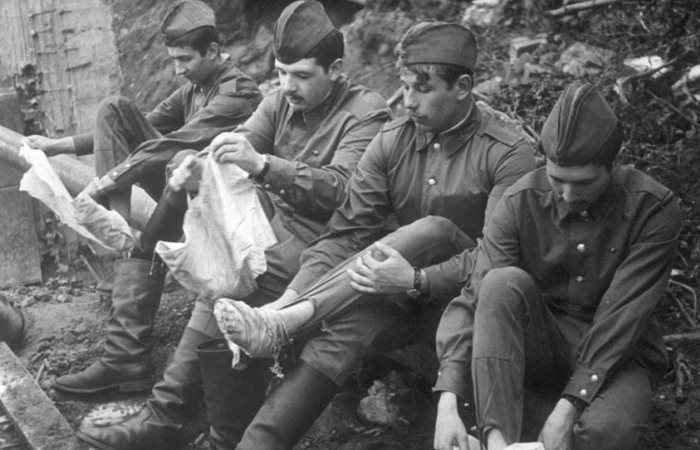
Portyanki solved both problems. A thick piece of cloth, when wrapped correctly, created a firm protective layer around the foot. It filled the empty space inside the loose boot, stopped the foot from moving around, and absorbed all the friction.
There were two more problems soldiers faced, and portyanki solved them very well.
During long marches, soldiers’ feet became swollen. In tightly laced boots, this caused pressure and pain. But portyanki could be rewrapped during a short rest stop, adjusting the tightness and thickness very precisely. No factory-made sock could do that.
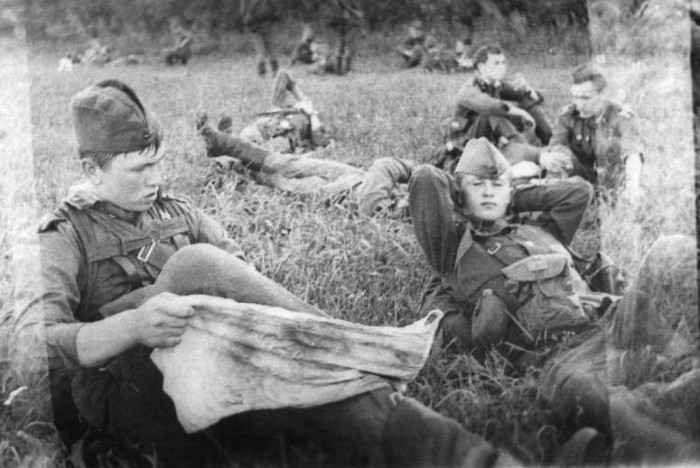
Wet skin also gets damaged much faster than dry skin. A wet sock becomes completely wet. The soldier walks for hours with a cold wet layer on his foot. The result could be “trench foot,” a serious tissue injury caused by moisture and cold.
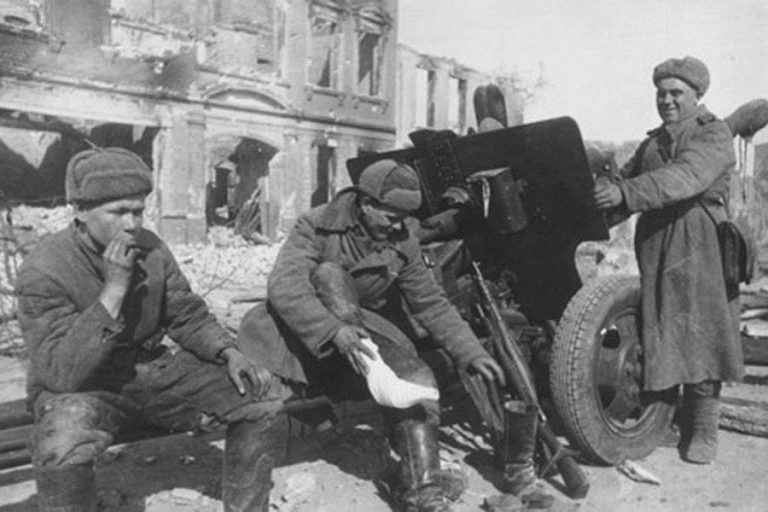
With portyanki, things worked differently. A standard Soviet foot wrap (35 × 90 cm according to the 1978 Soviet standard) was much larger than the foot itself. If the lower part became wet, the soldier could unwrap it during a break, dry his foot with a dry section of fabric, and then wrap the portyanki the other way around: the dry side on the foot, the wet side on the calf. The wet part then dried quickly from body heat and airflow through the boot shaft.
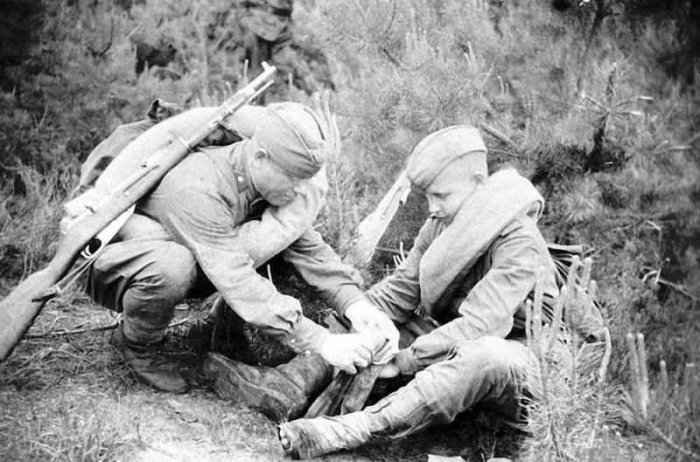
Simple and genius.
The situation with fungus was even more interesting.
Portyanki and Fungus: Boiling Wins
In trenches, soldiers’ feet became a perfect environment for fungus and bacteria – heat, moisture, dirt, and little chance to wash properly.
And once again, a simple piece of cloth worked better than regular socks.
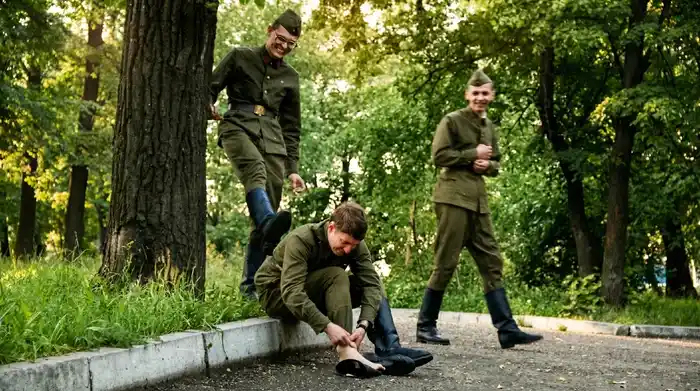
45 Seconds to Get Ready
In the Soviet Army, clean portyanki and underwear were issued once a week. The rest of the time soldiers had to wash and dry them themselves whenever possible.
In the early 1990s, some officers even used new winter portyanki as baby diapers because fabric products were difficult to find. A standard portyanki measured around 35 × 90 cm.
Portyanki were also used as emergency bandages or tourniquets when needed.
Durability was another huge advantage. Even if the fabric became damaged in one place, soldiers could simply wrap it differently. It was believed that one pair of portyanki could replace four pairs of socks.
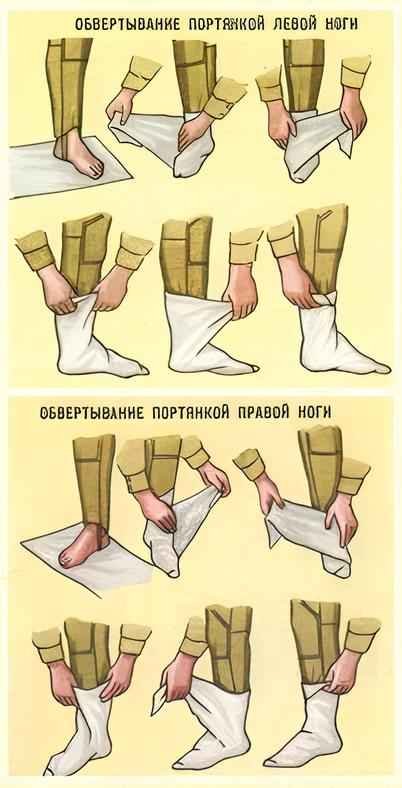
In Imperial Russia, there were 10 ways to wrap portyanki foot wraps:
The first method – wrapping from the toes.
The second – from the heel.
The third – the Imperial Guard style. Only silk portyanki were used. The loose end stuck out of the boot and had the words “God Save the Tsar” written on it.
The fourth – the women’s style, where the foot was wrapped like a baby in a blanket.
The fifth – the sapper style, with two layers under the heel to make walking softer.
The sixth – the scout style. A fellow soldier helped tighten the portyanki by pushing with his knee against the soldier’s chest so the wrap would not slip during crawling.
The seventh – the Cossack style, wrapped in two layers so the boot stayed firmly on the foot during horse riding tricks.
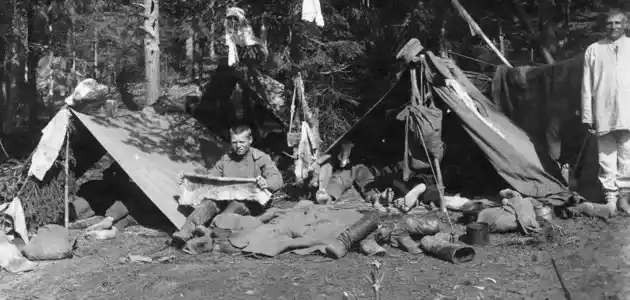
The eighth – the fisherman’s style, using newspaper inside to make it warmer and protect from moisture when the portyanki became wet.
The ninth – the merchant style, with a 100-ruble banknote inside to impress women.
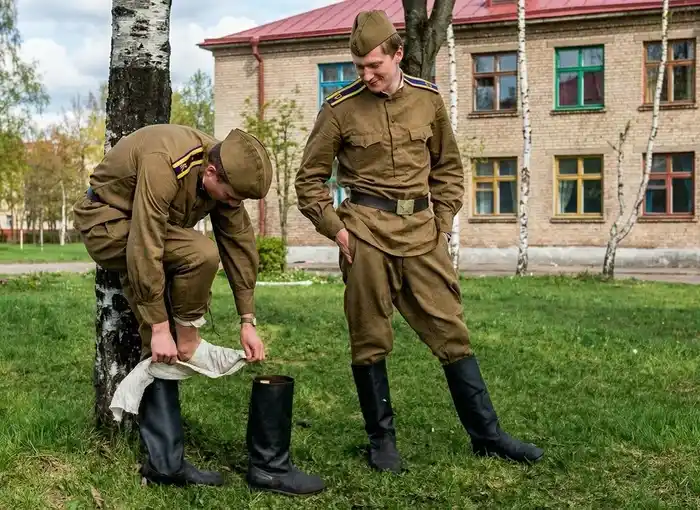
The tenth – the standard soldier method (shown in the picture). In the Soviet Union, only this method remained, while the others were forgotten.
The Secret of the Bull and the Cow
Portyanki are closely connected with famous Soviet kirza boots.
The story of kirza began with inventor Mikhail Pomortsev. In 1904, he treated canvas fabric with paraffin, resin, and egg yolk. His material, called “kirza,” was approved as a leather substitute because it was waterproof but still allowed air to pass through.
In 1906, Pomortsev’s material won a gold medal at the World Exhibition in Milan. During World War I, he offered his invention for military boots free of charge, but mass production never started because he died in 1916.
Almost 20 years later, chemists Boris Byzov and Sergey Lebedev improved the material using synthetic rubber. Large-scale production of kirza boots became possible thanks to chemist Ivan Plotnikov.
Kirza boots first saw major military use during the Soviet-Finnish War, where they cracked badly in freezing temperatures. When Plotnikov was asked why kirza was cold and did not breathe well, he joked:
“The bull and the cow have not yet shared all their secrets with us.”
After the beginning of World War II, improving kirza became extremely important for the Soviet Union. Within one year, Plotnikov solved the problem of cracking in cold weather and organized mass production in the city of Kirov. In 1942, he received the Stalin Prize. By the end of the war, around 10 million Soviet soldiers wore kirza boots.
After the War
After the victory in 1945, kirza boots became popular not only in the army, but also in farming and everyday work. More than 150 million pairs were produced in the USSR.
Nobody counted how many meters of portyanki fabric were made.
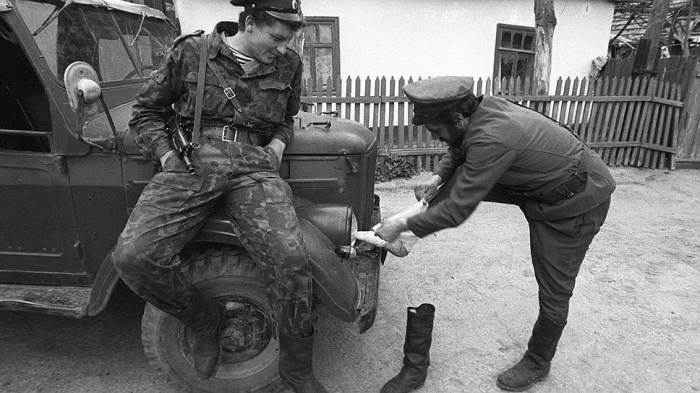
No matter how “outdated” portyanki may seem today, many believe reports about their “death” are exaggerated. In extreme conditions, they are still very effective – the main thing is knowing how to use them correctly.
As an old joke says:
“Grandpa, why were portyanki removed from the army?”
“Because for modern recruits, they are too complicated like a gadget.”
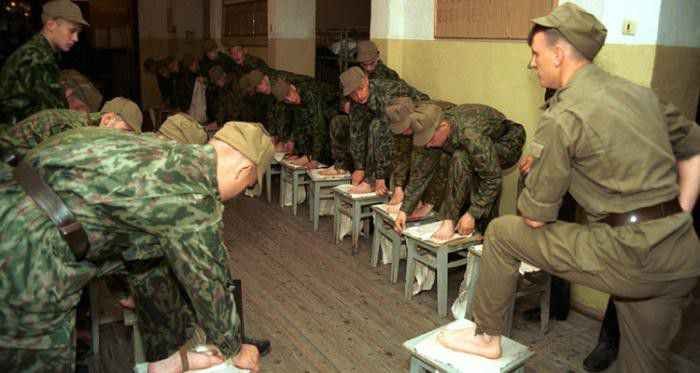
Today
The Russian Army stopped using portyanki around 20 years ago. Around 2004–2005, traditional boots were replaced with combat boots, and soldiers switched to summer and winter socks.
However, one exception still exists – ceremonial honor guard units. These soldiers still wear traditional boots, and portyanki help keep the boots tightly fixed on the feet better than socks.
Read more interesting articles
Telnyashka: History of the Russian Navy and VDV Striped Shirt
Looking for original Soviet boots and accessories? Please visit here: Soviet Boots Store