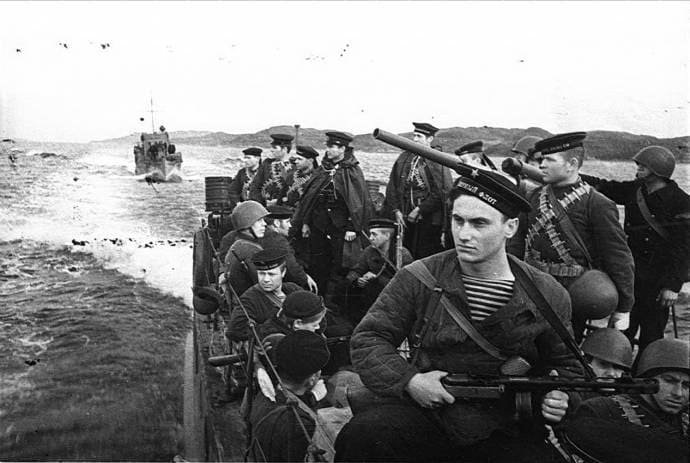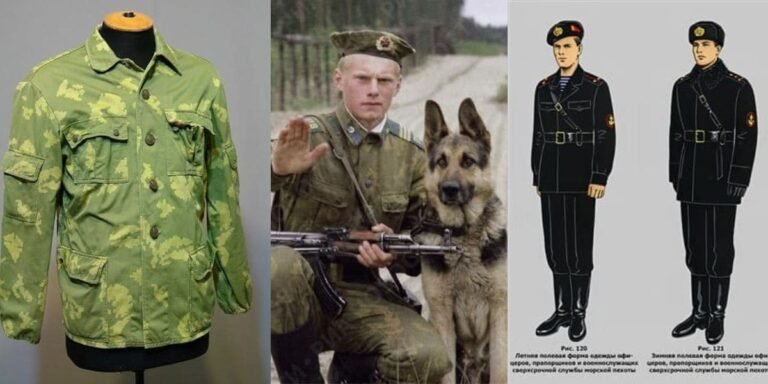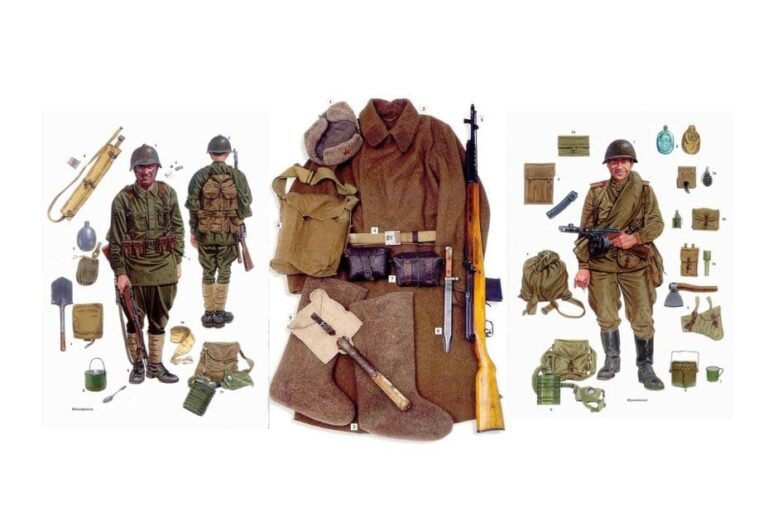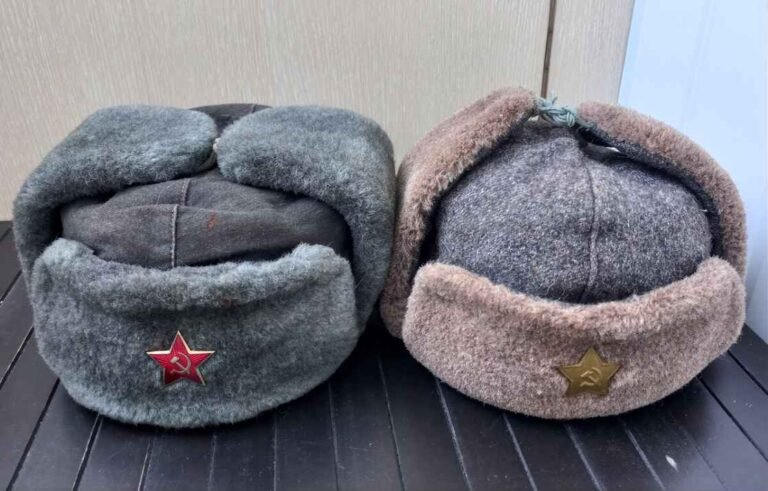
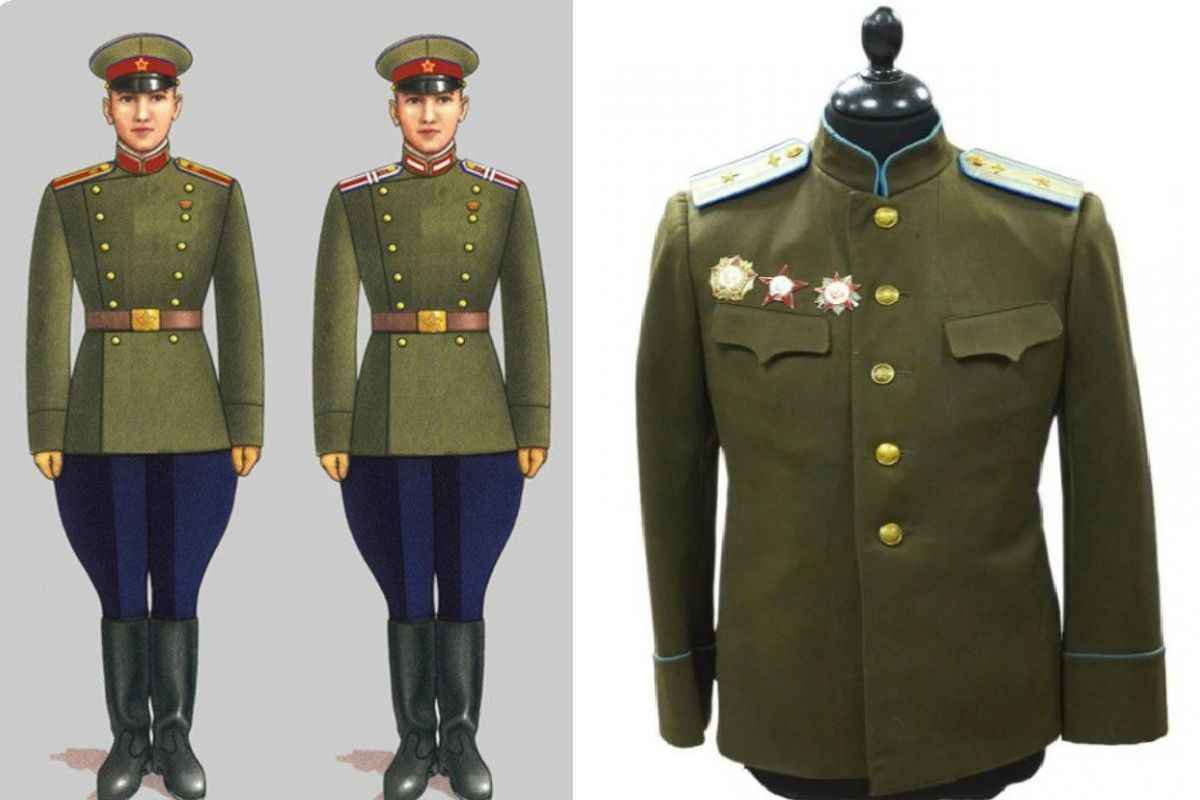
The uniform of the Soviet Army changed several times during its history. But the postwar period was the most interesting in terms of how different ideas were put into practice. During this time, there were attempts to make Red Army uniforms look more like civilian clothing.
More interesting articles:
How the Soviet Army Uniform Changed from 1955 to 1991
Soviet and Afghan Military Uniforms During the Soviet-Afghan War (1979–1989)
What Soviet Soldiers Really Ate in the Afghan War
Soviet Army Uniform Introduced in 1943
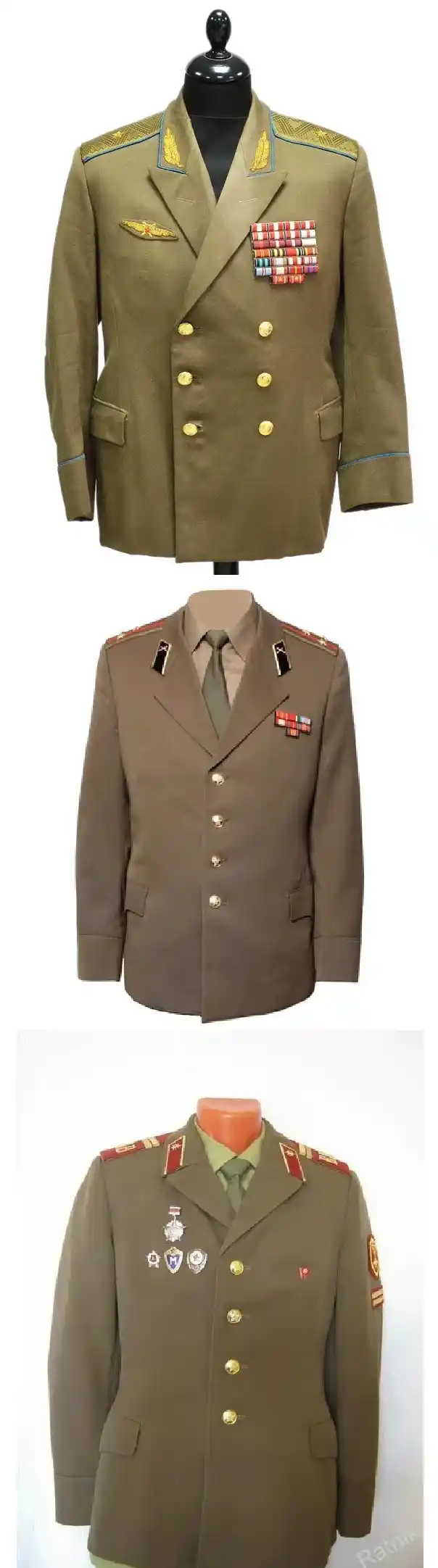
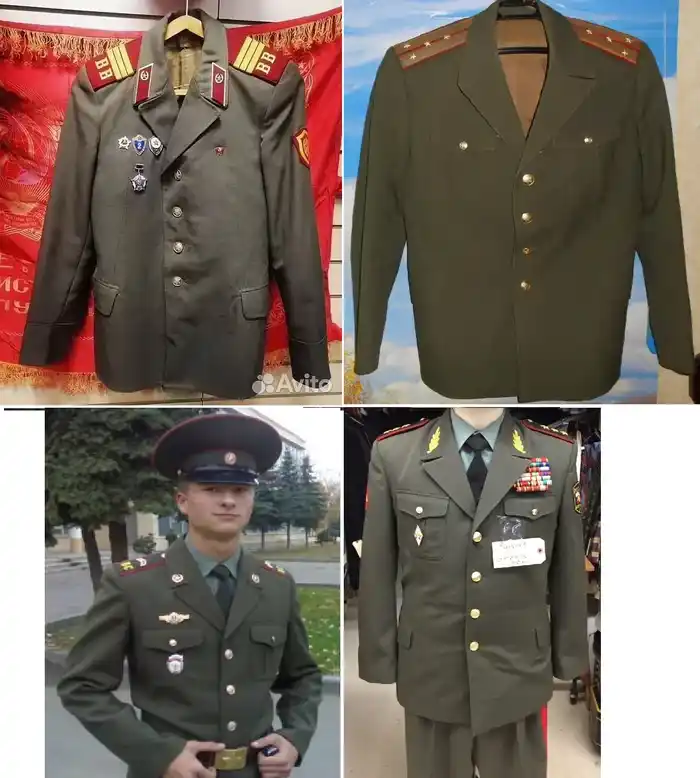
Anyone who has studied the military uniforms of the late Soviet period, even briefly, should remember that the 1969 tunics were different for generals, officers, and enlisted men.
Soviet M69 Uniform: General, Officer, and Sergeant Tunics
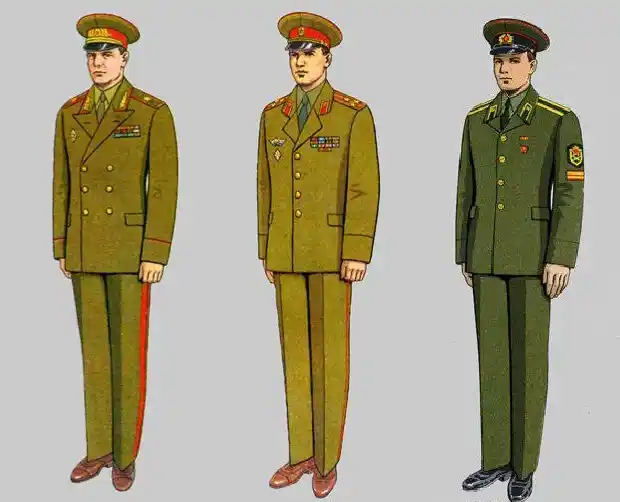
Most sources say that this division was needed to make generals, officers, and enlisted men easy to tell apart-not only by their shoulder boards. However, there was more than one real reason, and the story of how the 1969 uniform was created was even a little funny.
We should begin with the first postwar uniform reforms. The man behind these changes in military clothing was Defense Minister Marshal Georgy Zhukov.
In 1955, the Ministry of Defense issued Order No. 105. It marked the beginning of the so-called “Zhukov reform.” Its main goal was to create new and more comfortable tunics for peacetime service.
The new uniform had several special features. The tunic was double-breasted and gray for the Ground Forces. Its collar had the color of the service branch. The collar and cuffs were decorated with stamped wheat-ear designs.
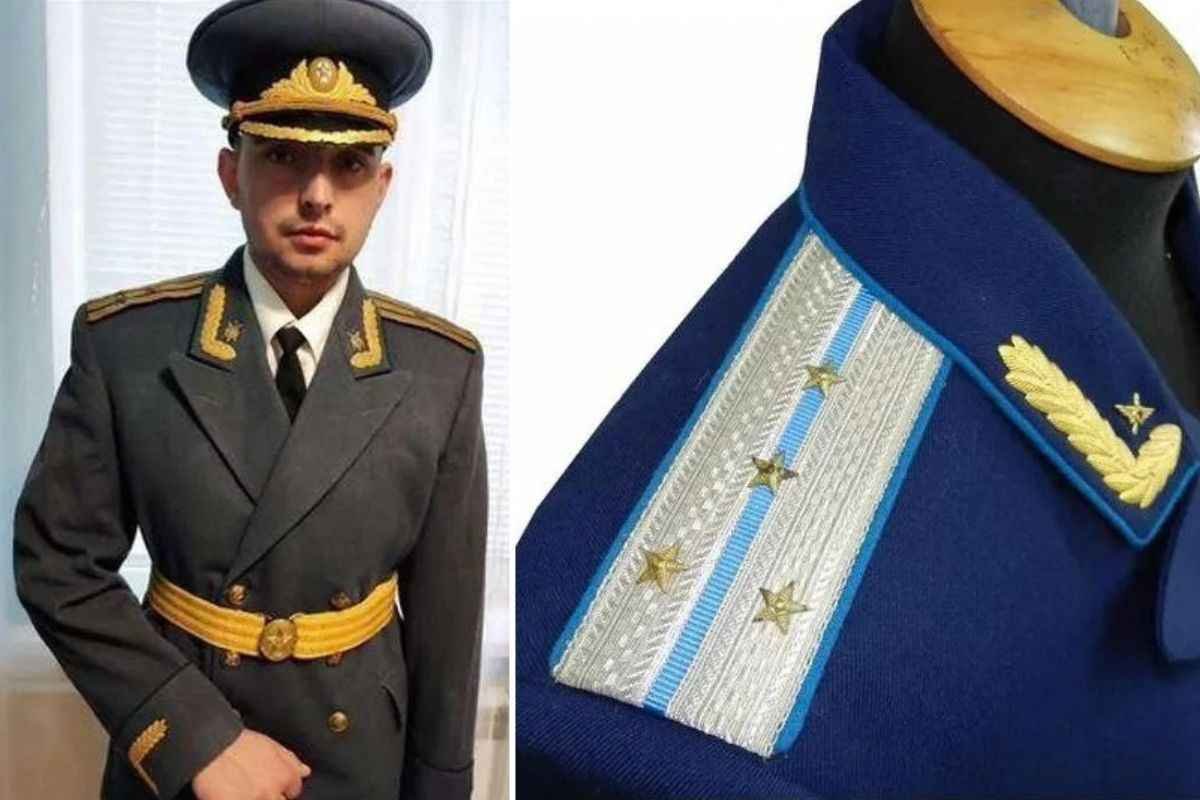
Officer’s tunic, model from Order No. 105
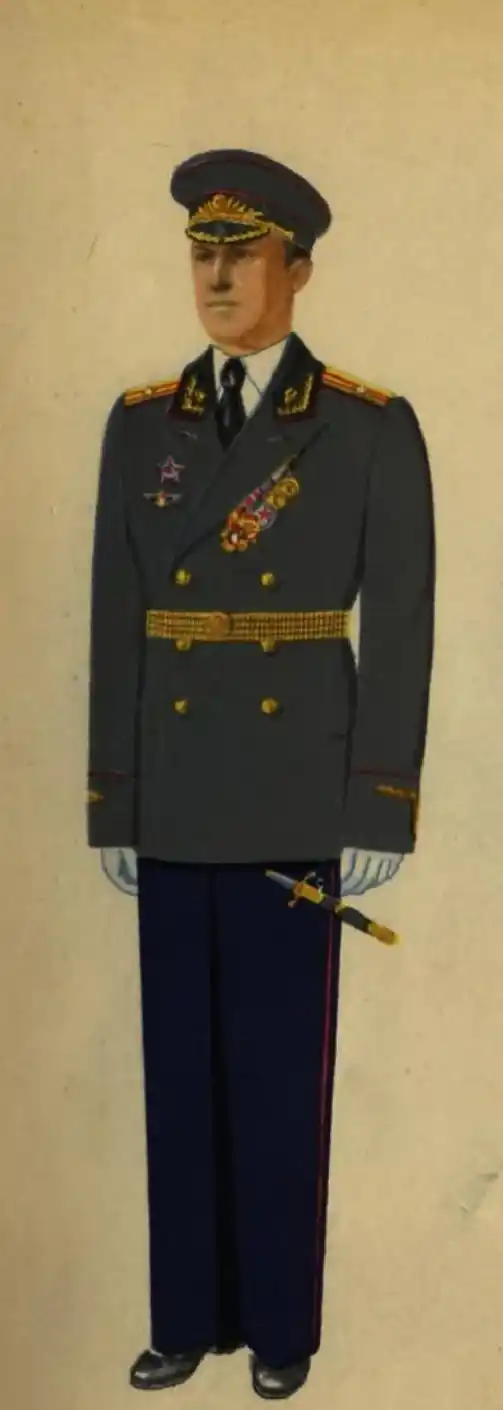
General’s tunic, model from Order No. 105
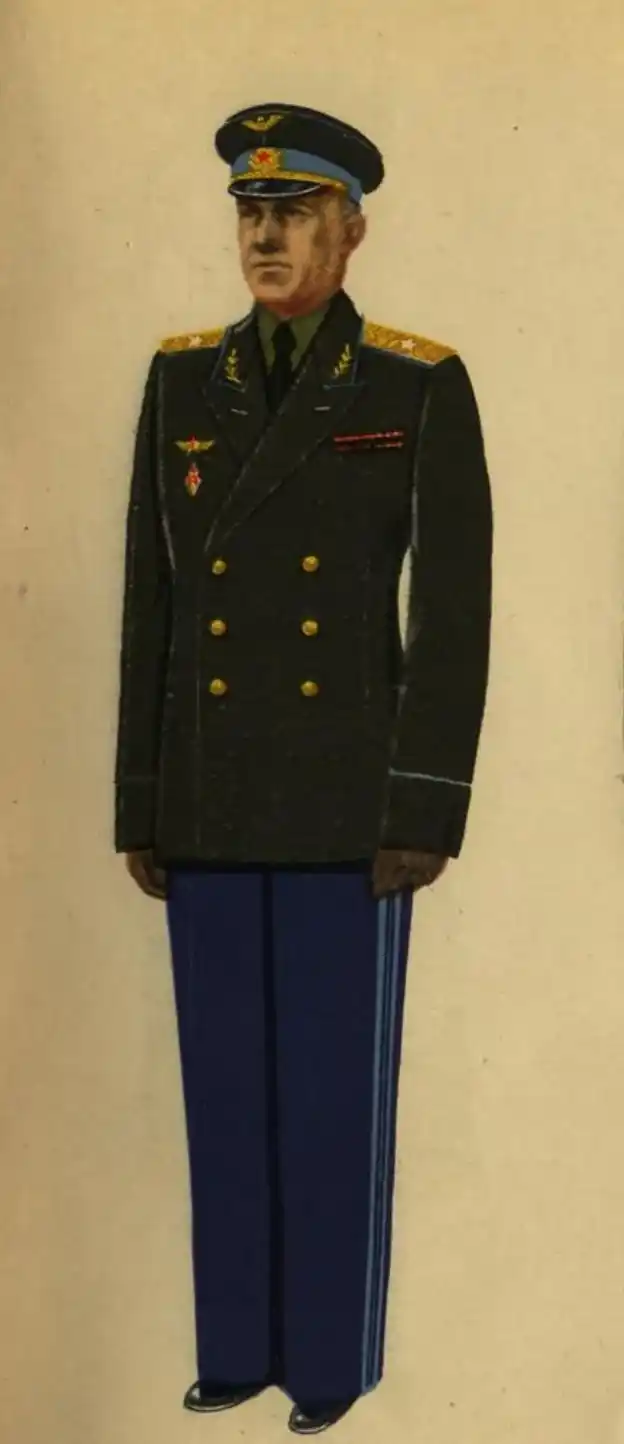
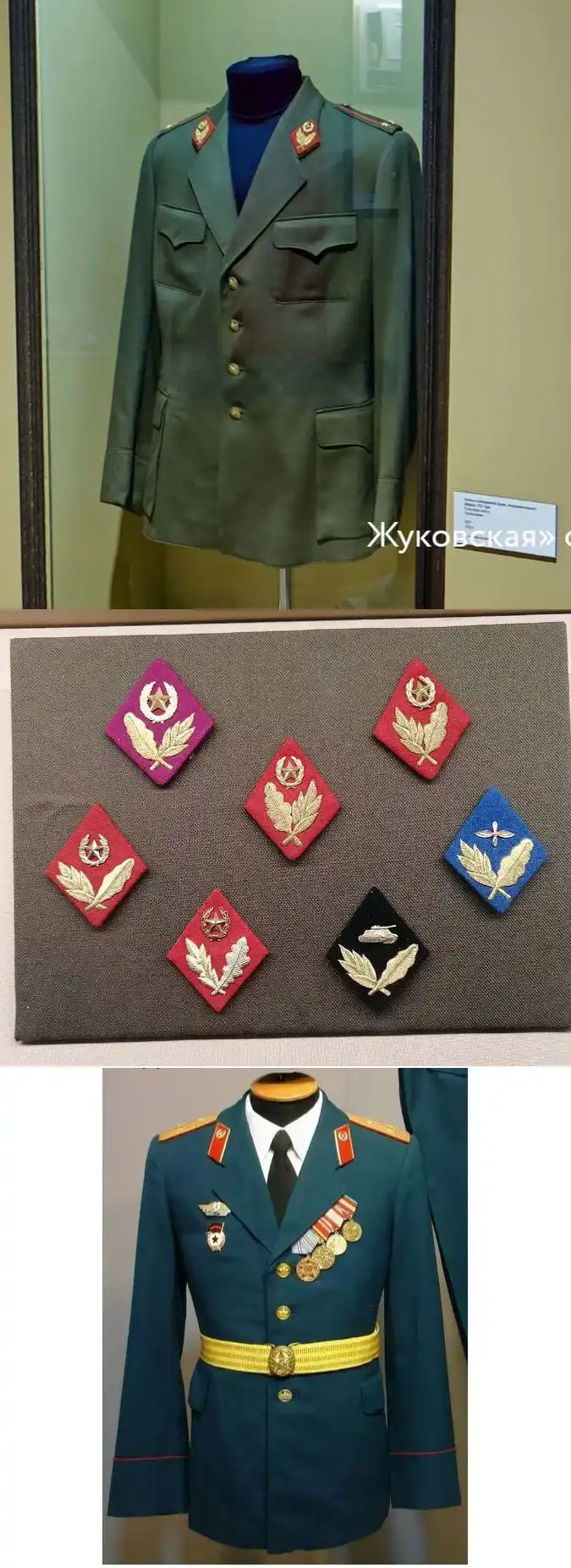
However, not everyone liked the changes. Zhukov was accused of following Western military fashion too much. Some people also said the new uniforms looked too German and too flashy. These ideas were not completely without reason. To create the new uniforms, Georgy Zhukov invited specialists and tailors from Czechoslovakia.
Draft versions of the uniforms made by Czech tailors.

Classic Soviet Officer Riding Boots
Original Soviet black leather officer boots from the 1970s–80s.
Classic tall military design made from 100% natural leather.
Maybe the reform would have been completed despite some objections from the military. But Zhukov had disagreements with Khrushchev and was removed from his position. The new Minister of Defense, Malinovsky, stopped Zhukov’s reform.
Later, the Ministry of Defense was ordered to create another uniform reform for all members of the Soviet Armed Forces. This time, the uniforms had to be simple, without unnecessary decoration.
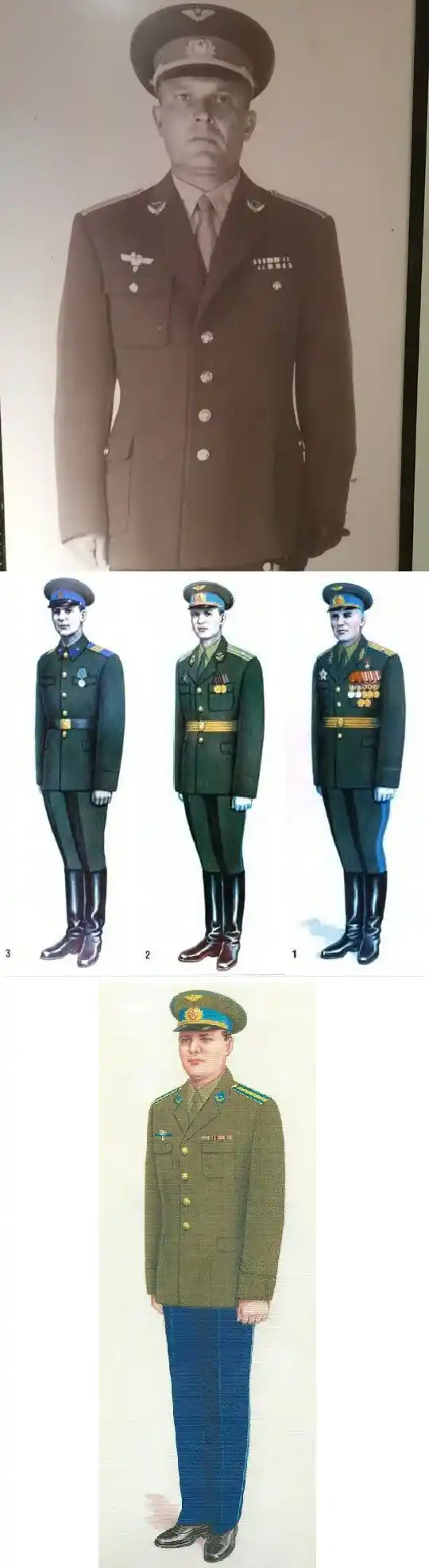
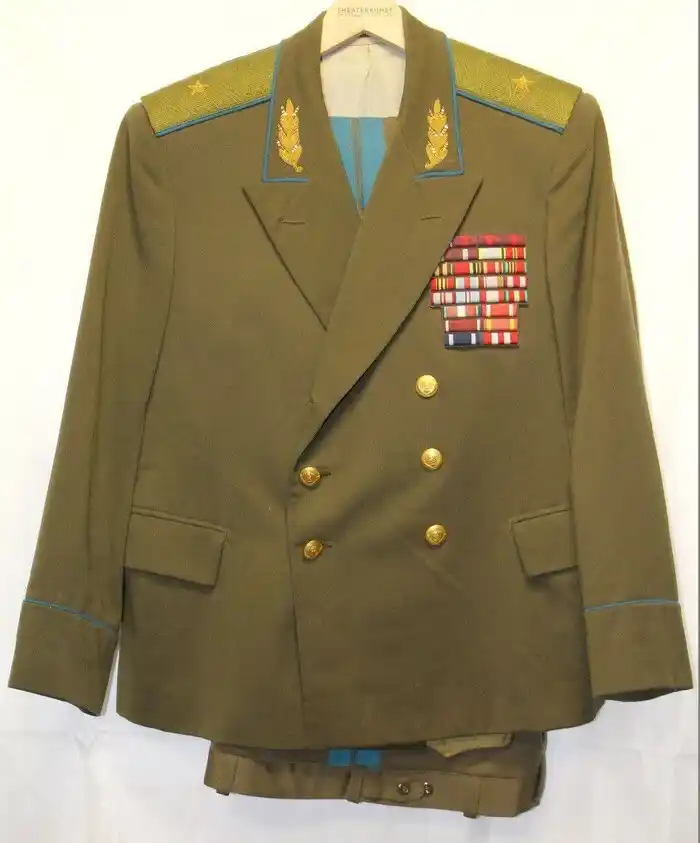
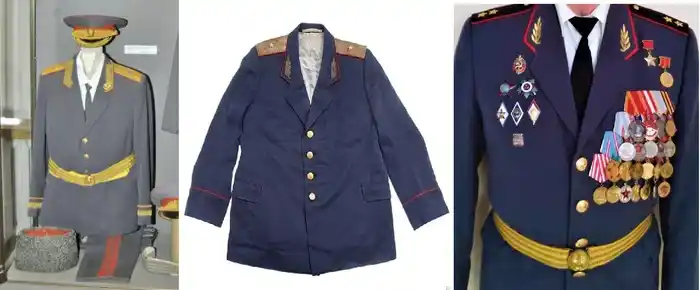
The work of the new commission resulted in the 1969 uniform. First, generals and marshals kept their 1955 tunics almost without changes. The main difference was that the blue trousers were replaced with khaki ones.
Second, officers’ tunics became single-breasted because they were based on one of the early versions of the “Zhukov uniform.” The chest pockets were removed, the patch pockets at the waist were replaced with inside pockets, and the diamond-shaped collar tabs were replaced with new trapezoid-shaped ones. This is how the new tunic for junior and middle-ranking army officers was created.
The tunics for soldiers and sergeants were similar to the officers’ tunics, but had a simpler collar.
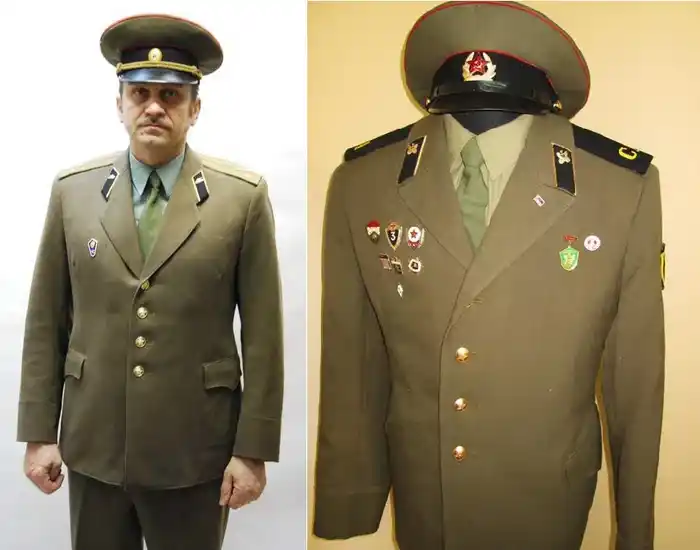
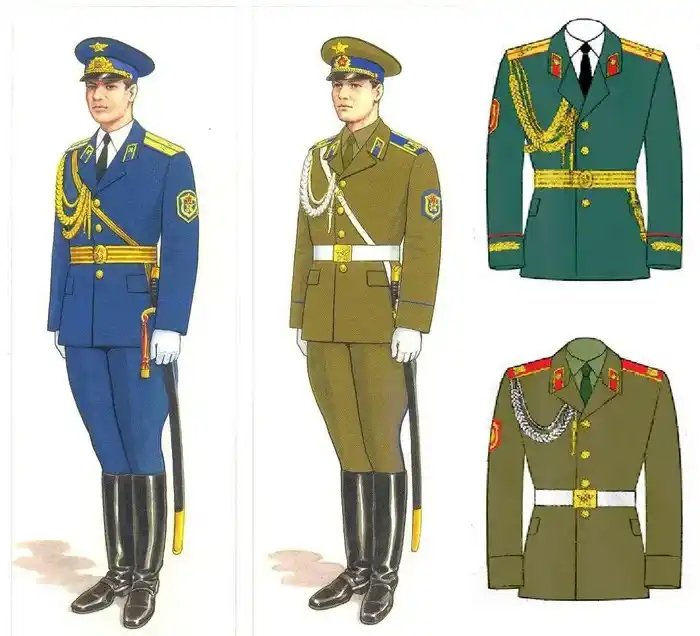
Also, soldiers and sergeants did not have the sea-green parade uniform worn by officers. Their parade uniform was different from the everyday uniform only in a few details: colored piping on the sleeve cuffs, a white shirt instead of a green one, and a star badge on the cap surrounded by laurel leaves. The simpler tunic for soldiers and sergeants also helped save material.
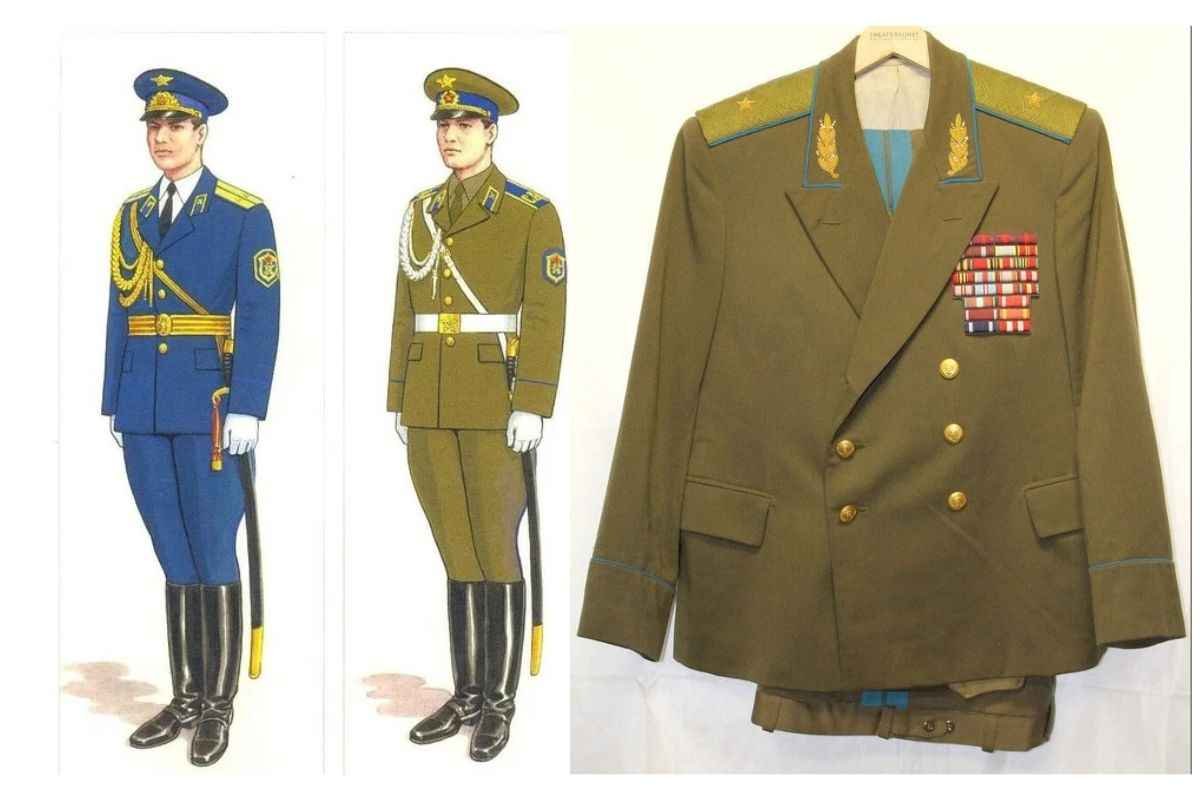
Comparison of parade uniforms for officers and soldiers of the cavalry regiment.
So, in the document “Order of the Minister of Defense No. 190,” these three types of tunics were combined into one uniform line.

Soviet General Yuft Leather Boots
Original Soviet general boots made from thick black yuft leather.
Classic tall military design with durable rubber soles.
This brings up a question: what stopped them from creating one type of tunic for all three groups? Would one standard design not have been better both in looks and in cost? This question is even more interesting because early versions of single-breasted tunics for generals did exist.
We can also look at the early Armed Forces of the Russian Federation. They used one standard tunic for all ranks. Of course, this was mainly done to save money, but it still worked. This tunic was made from the Soviet sergeant’s tunic. The colored collar tabs were removed and replaced with smaller, simpler collar badges. Chest pockets were also added.
Soviet M88 Officer Uniform: Parade and Dress Uniform of 1988
Parade and Dress Uniform for Officers, Warrant Officers, and Extended-Service Personnel
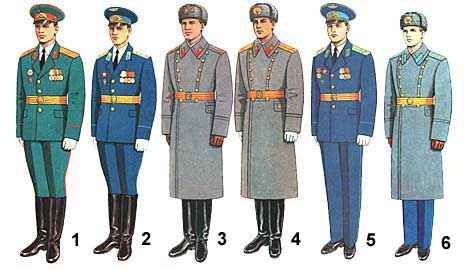
- Summer parade uniform for formation, Ground Forces. The colors of the cap band and collar tabs depended on the branch of service. Warrant officers and extended-service soldiers had a branch emblem and a service-years patch on the sleeve. White gloves.
- Summer parade uniform for formation, Airborne Forces (VDV).
- Winter parade uniform for formation, Ground Forces and VDV. The VDV had blue collar tabs. Their fur hat had a cockade with a wreath. Brown gloves.
- Winter parade uniform for formation in Moscow and Leningrad. The shoulder boards were gold instead of gray. The collar tabs had gold edging. White gloves. The Ground Forces fur hat had a cockade with a wreath, like the VDV.
- Summer parade uniform for formation and outside formation, Aviation. For the VDV, only outside formation.
- Winter parade uniform for formation and outside formation, Aviation. For the VDV, only outside formation.
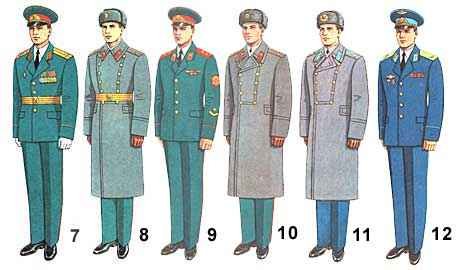
- Summer parade uniform outside formation, Ground Forces. It was different from the formation uniform because the trousers were worn over shoes instead of tucked into boots.
- Winter parade uniform outside formation, Ground Forces.
- Summer dress uniform, Ground Forces. Officers wore no sleeve insignia, and their shoulder boards were gold. This uniform was different from the parade uniform outside formation because it had no parade belt, and medal ribbons were worn instead of full medals.
- Winter dress uniform, Ground Forces.
- Winter dress uniform for Aviation and VDV.
- Summer dress uniform for Aviation and VDV.
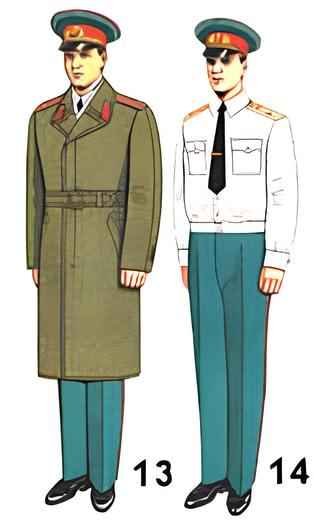
- Summer dress uniform with a summer overcoat.
- Summer dress uniform for temperatures above +20°C. White shoulder boards.
The sea-green parade uniform, or “Tsar’s color” as it was called before the Revolution, was introduced in 1970. Aviation and VDV had a blue version. In 1988, a version with a white shirt was added.
The uniform was so beautiful and formal that many officers felt almost uncomfortable wearing it. This was especially true for officers who usually wore field uniforms or tank coveralls. The parade uniform looked so special that it often felt like the day was not important enough to wear it.
My four-year-old son once saw me wearing my full parade uniform with all my medals and badges. We were going to watch a parade. He had probably never seen me dressed like this before. At first, he was even afraid to come closer and take my hand.
Because the parade uniform looked so special, officers often avoided wearing it unless they really had to. Perhaps it was the most beautiful Russian parade uniform, before or since.
More interesting articles:
How the Soviet Army Uniform Changed from 1955 to 1991
Soviet Spetsnaz Uniform in Afghanistan (1979–1989)
What Soviet Soldiers Really Ate in the Afghan War
Looking original Soviet boots and accessories? Please visit here: Soviet Boots Store