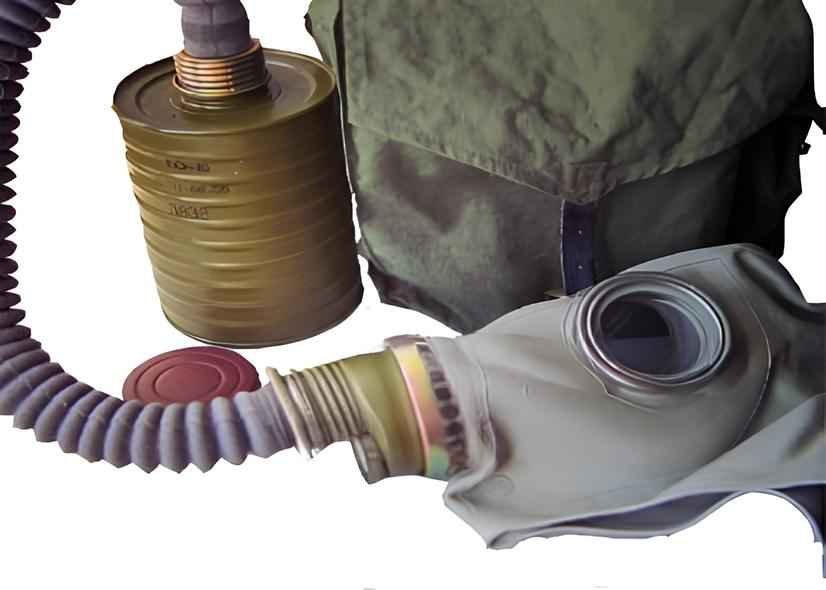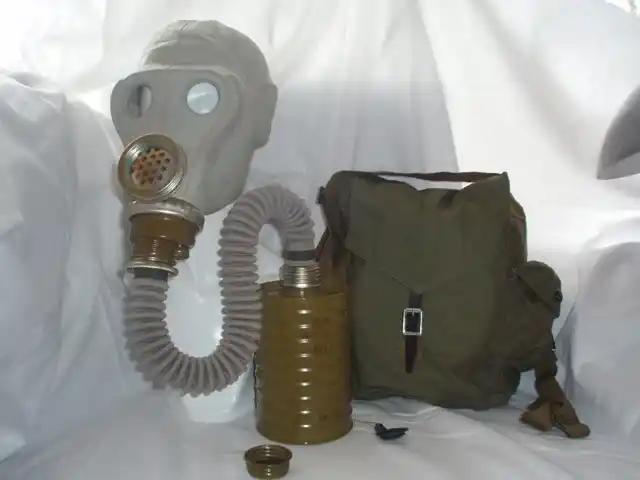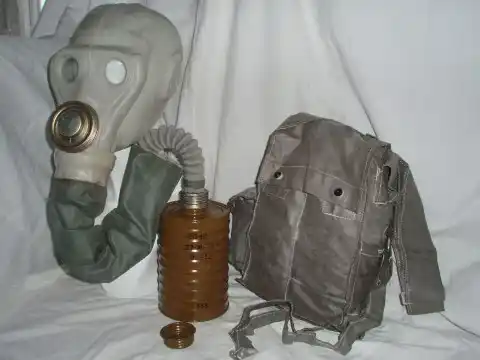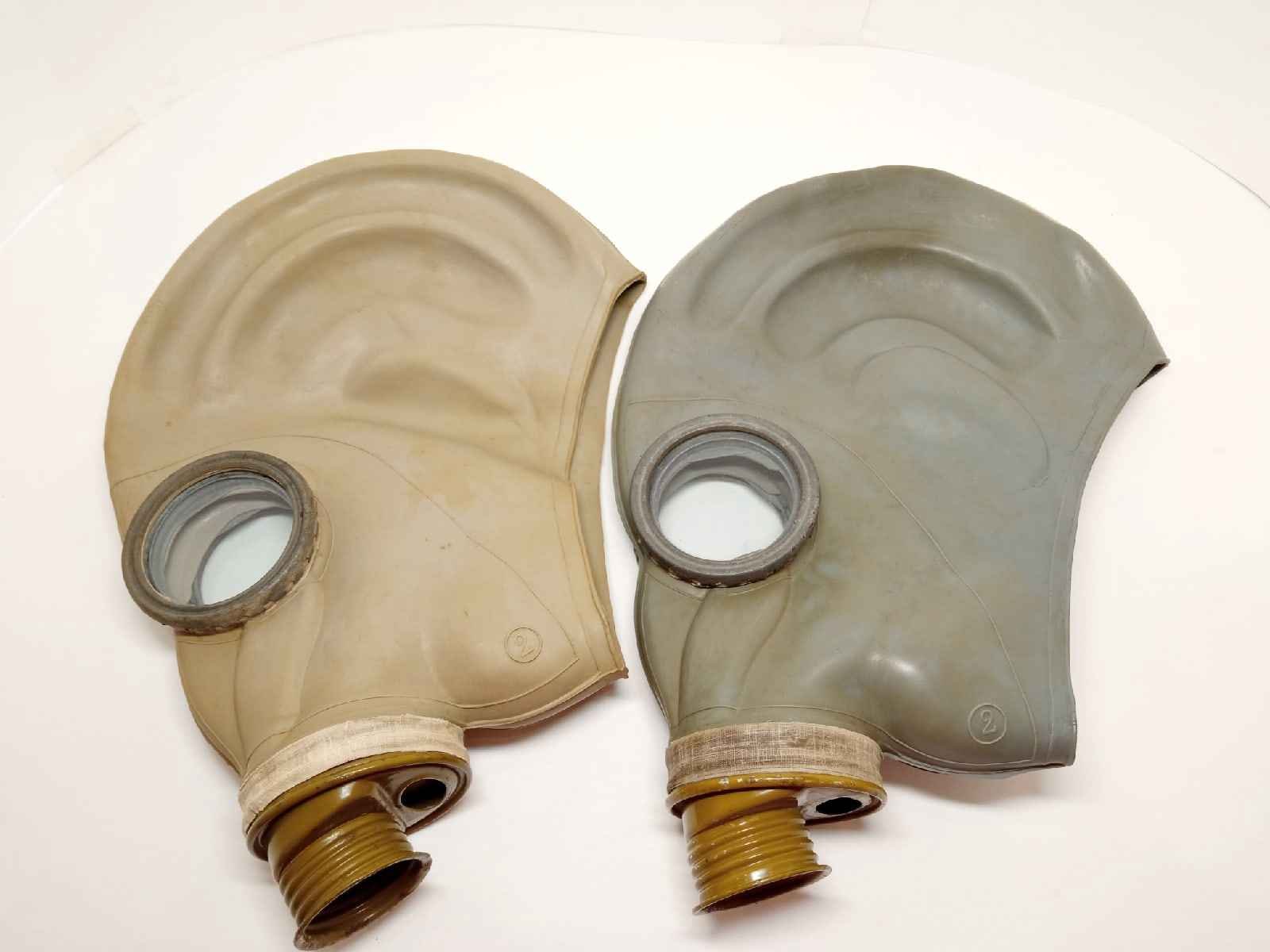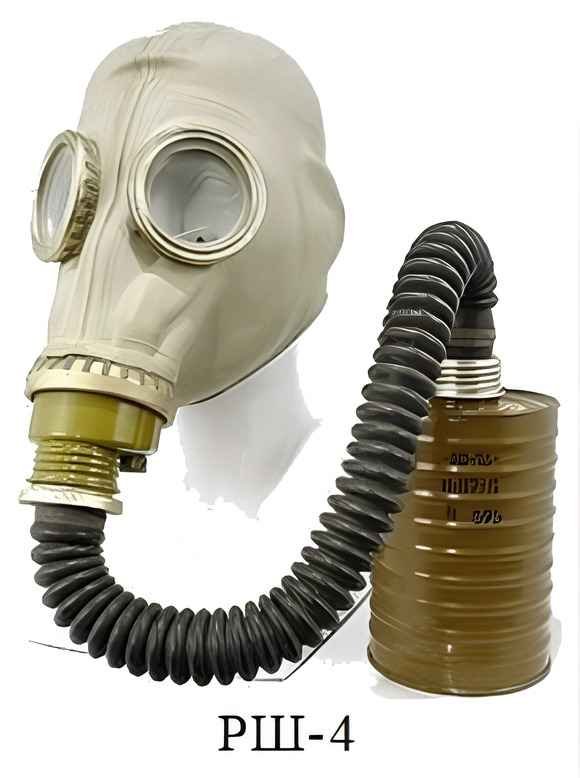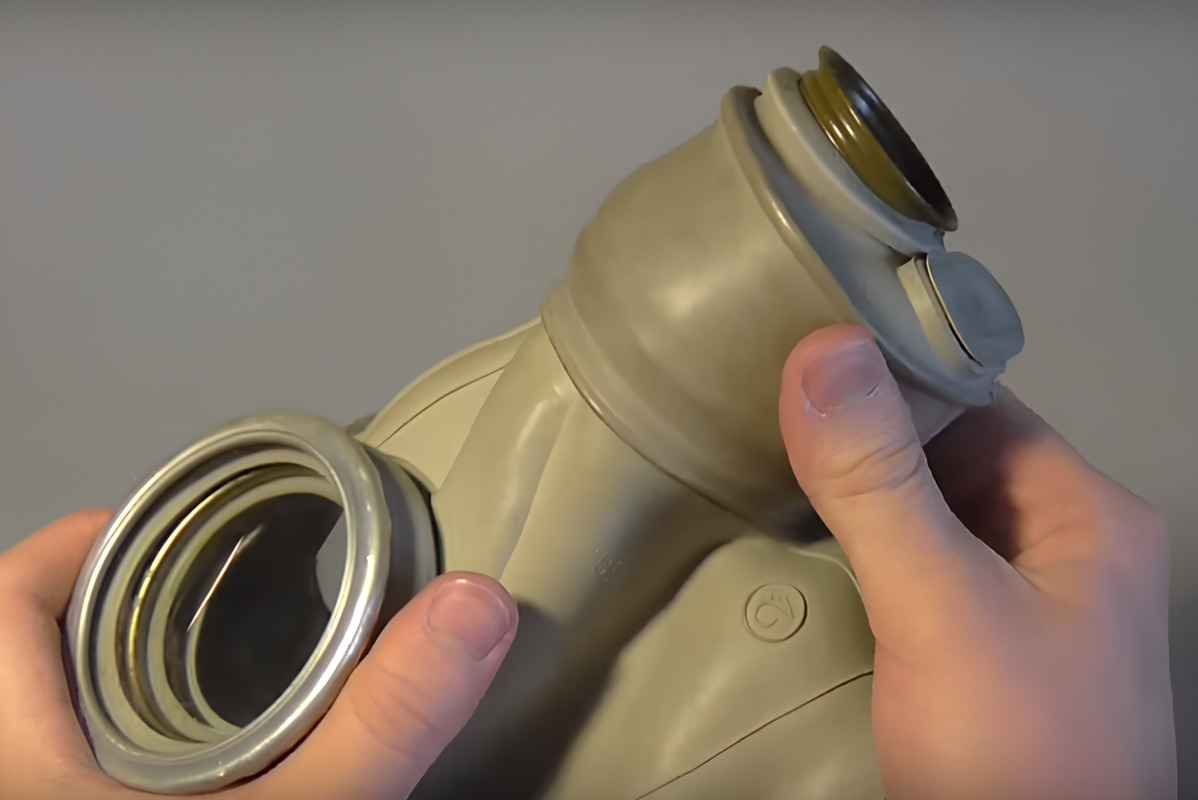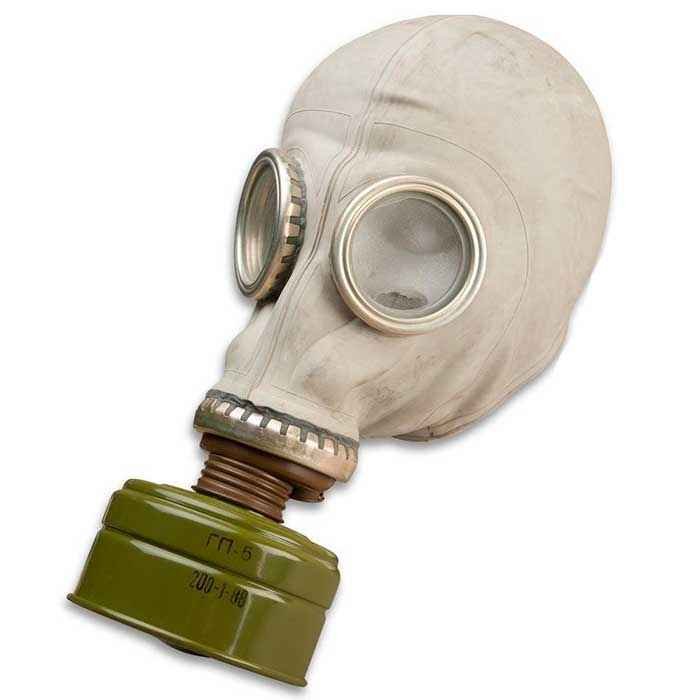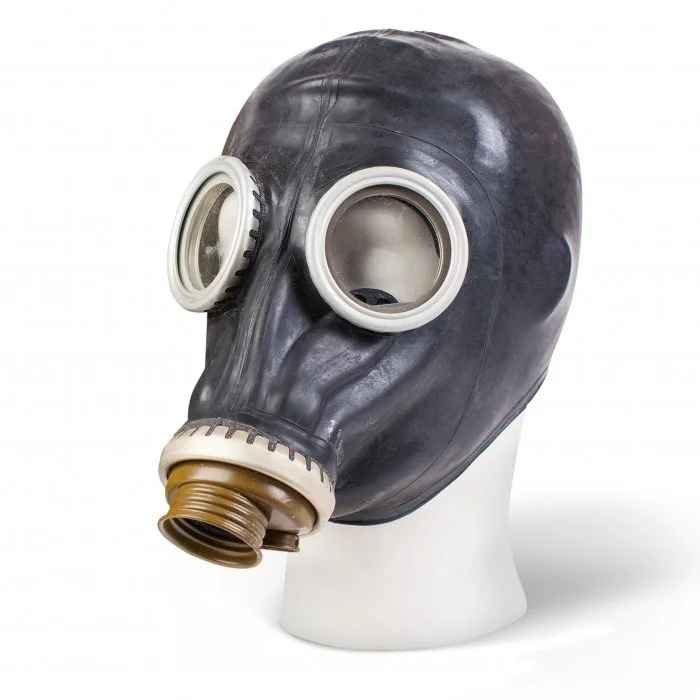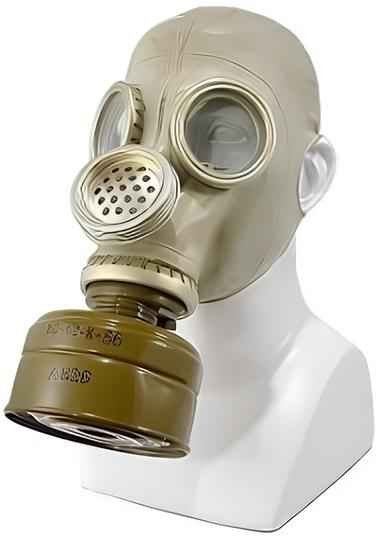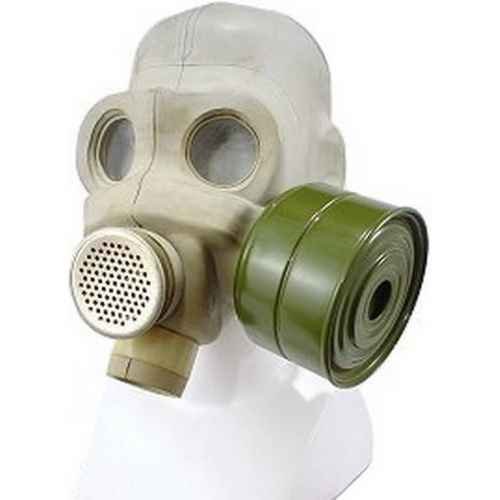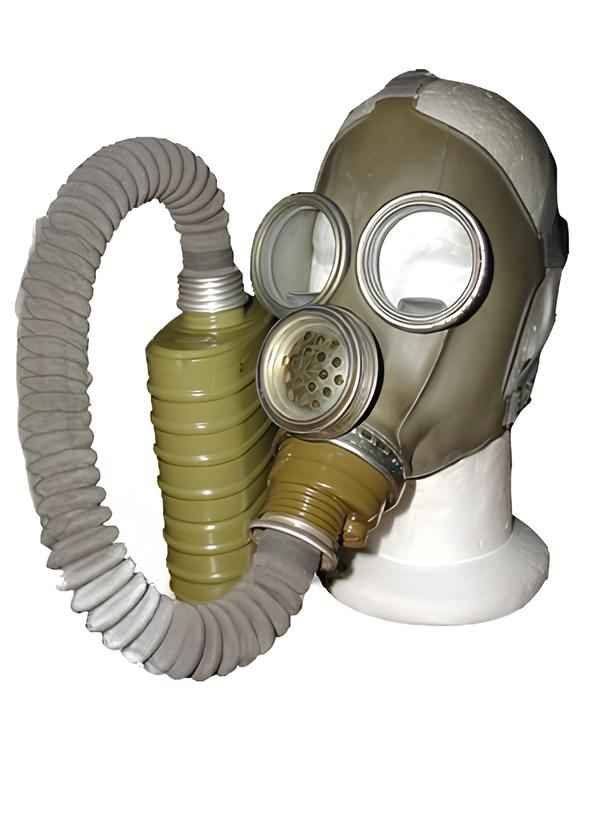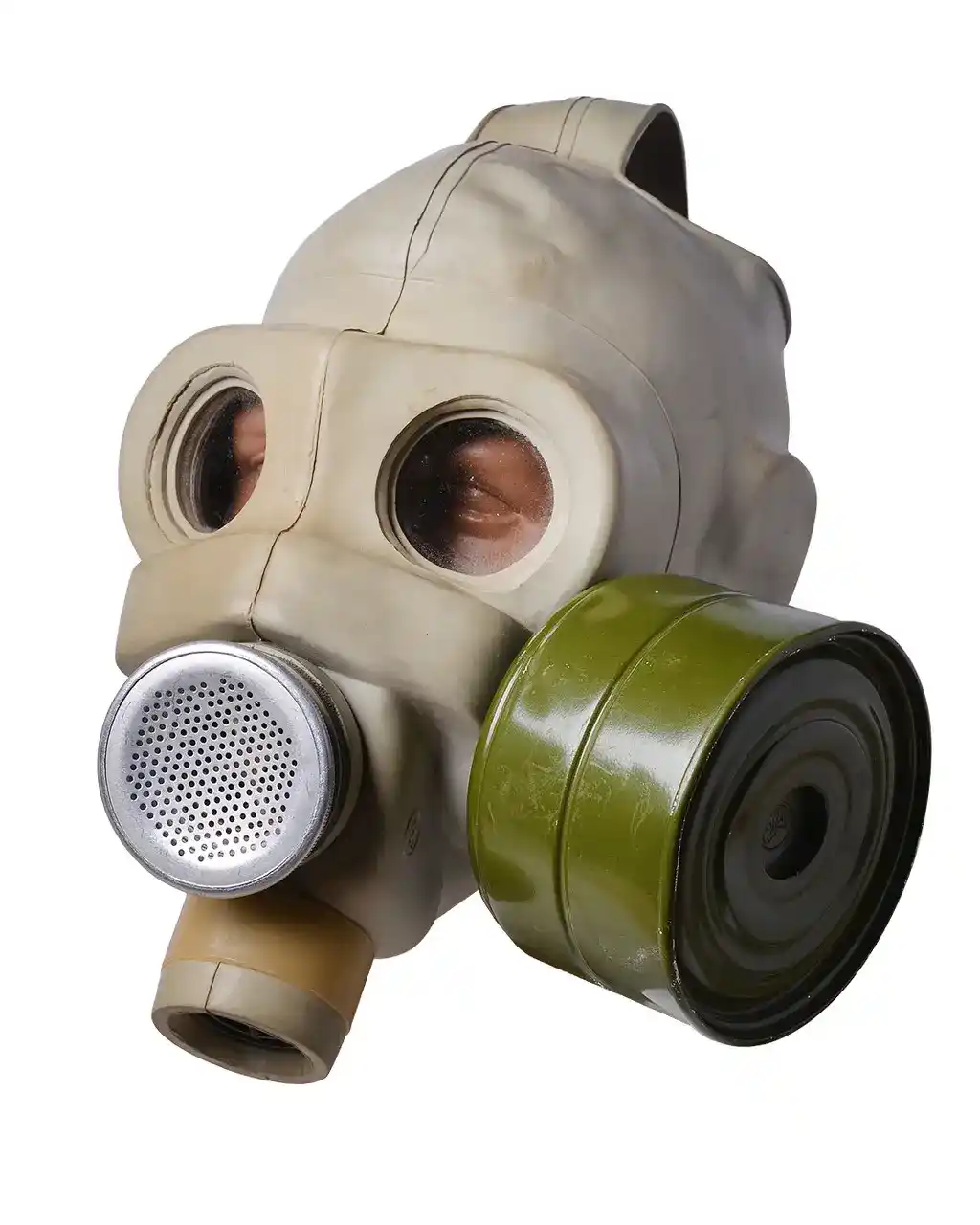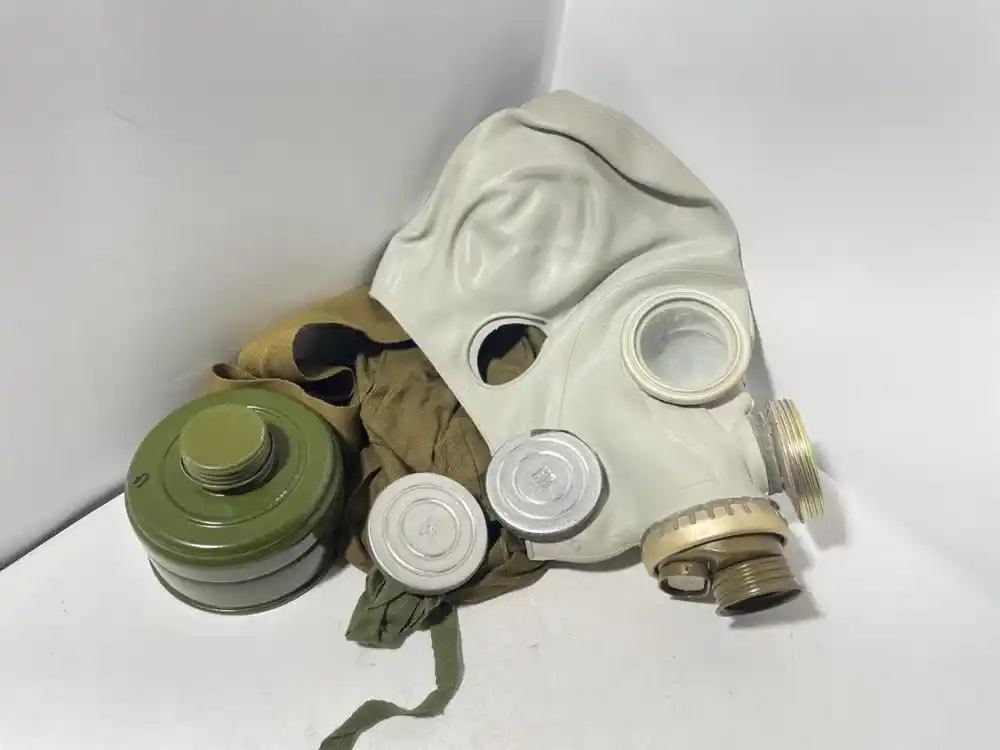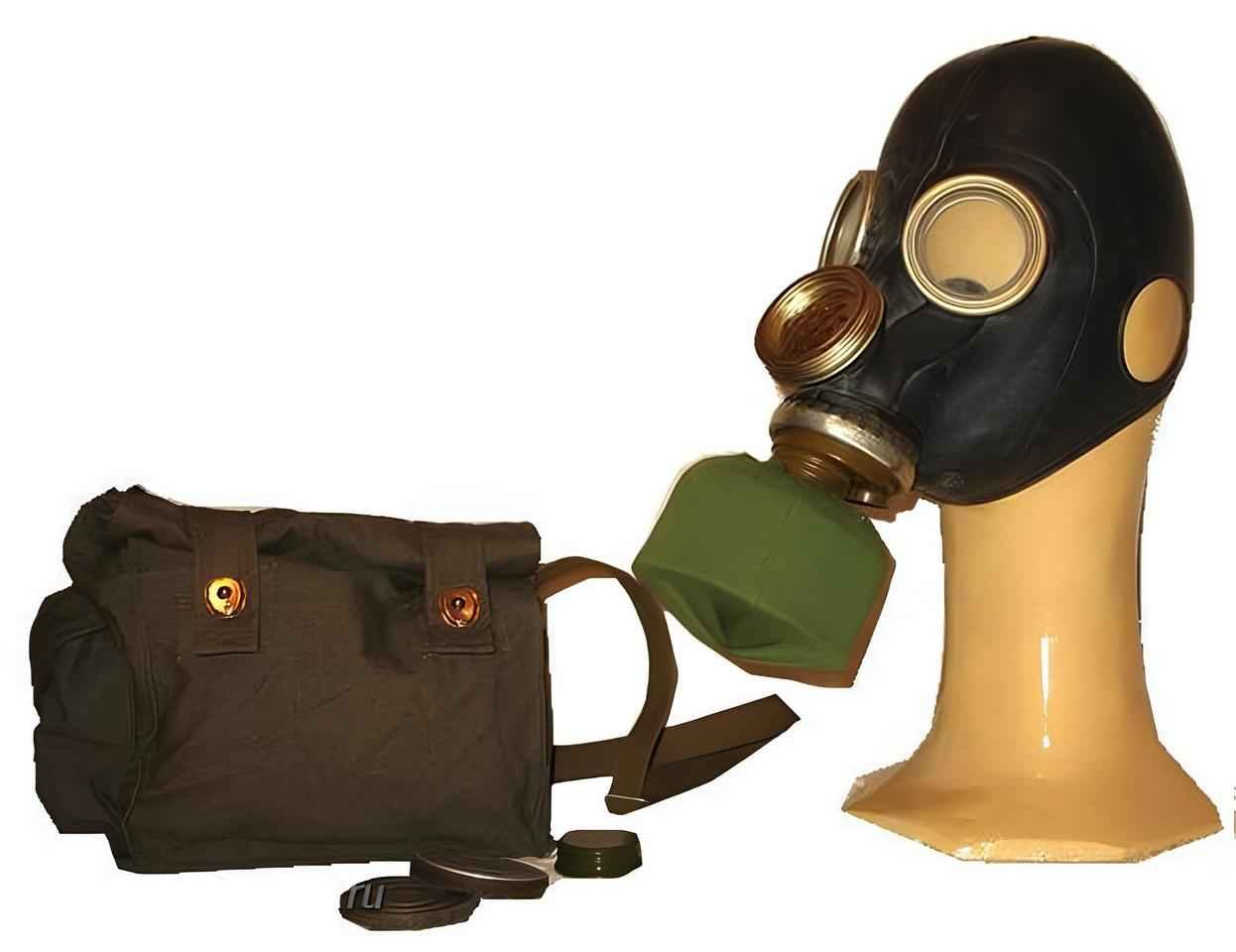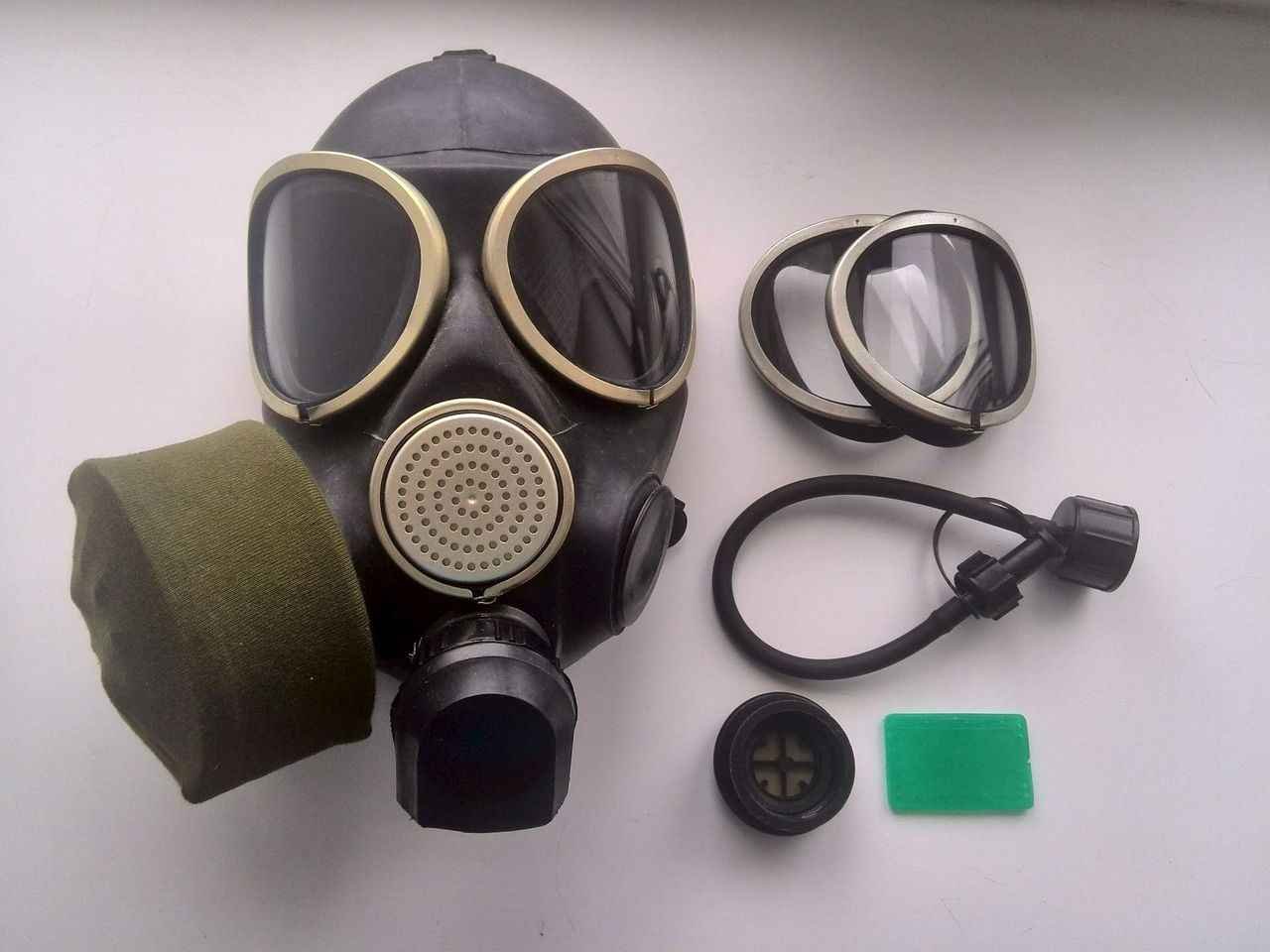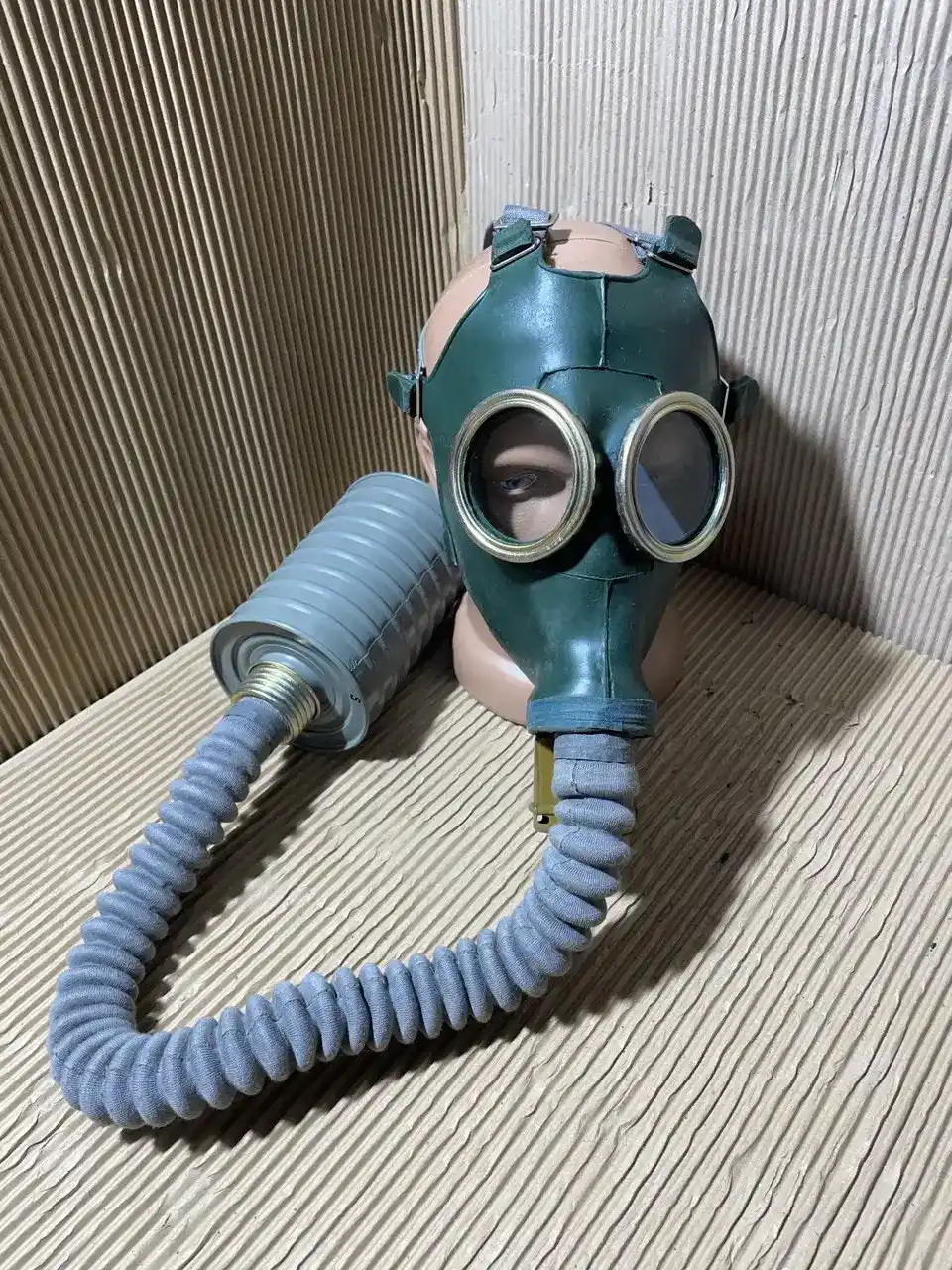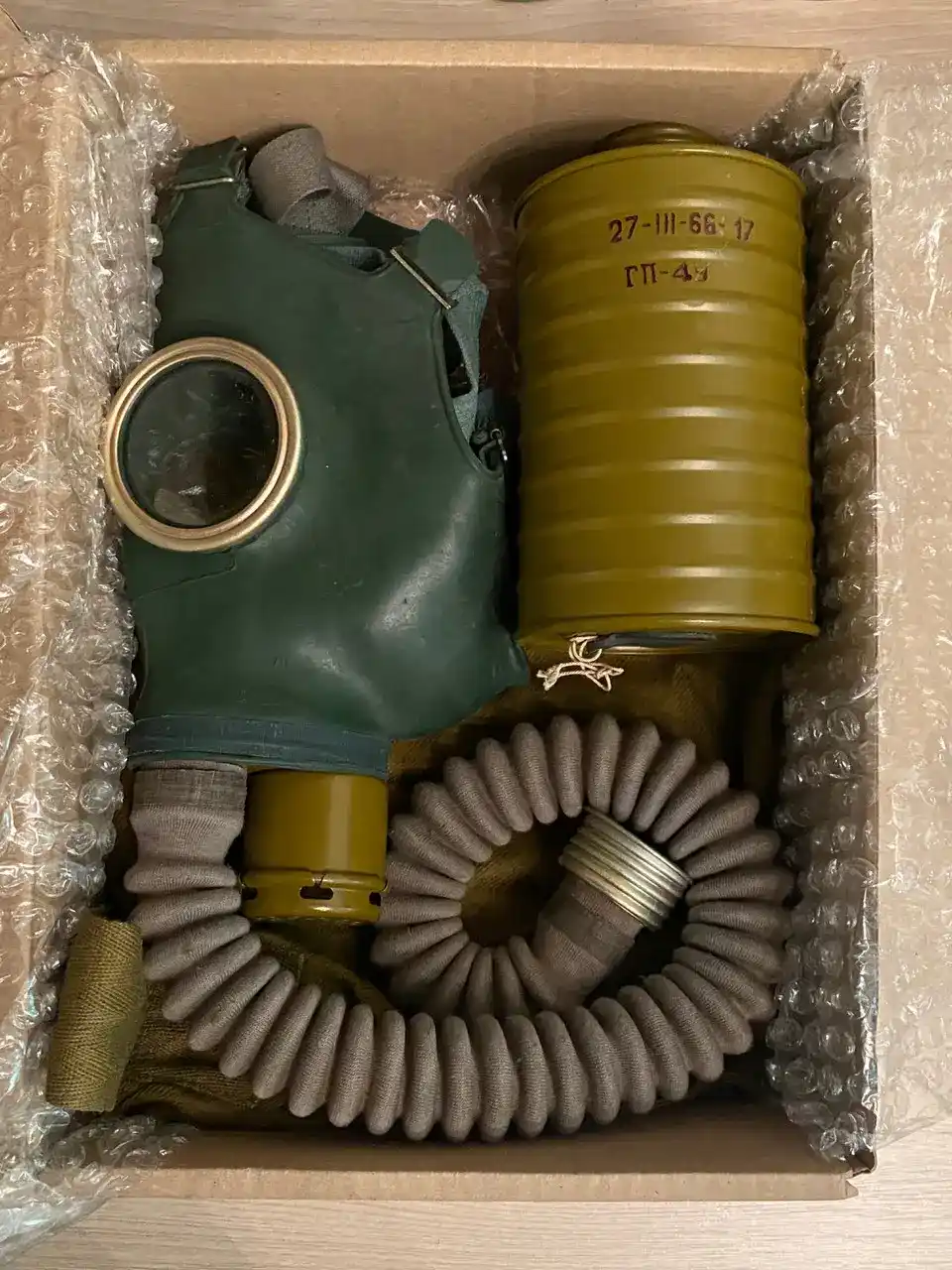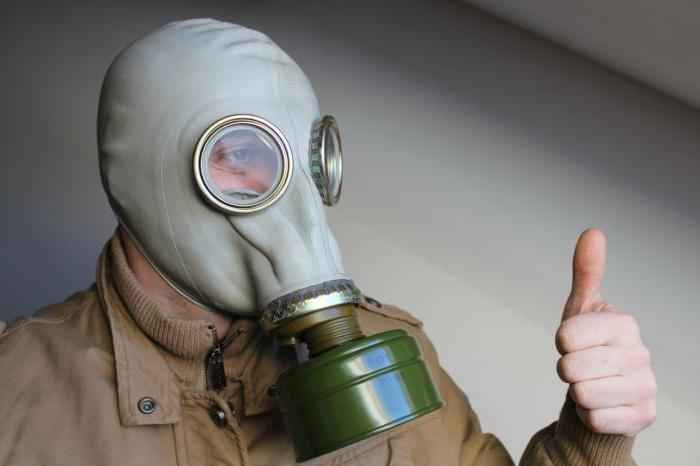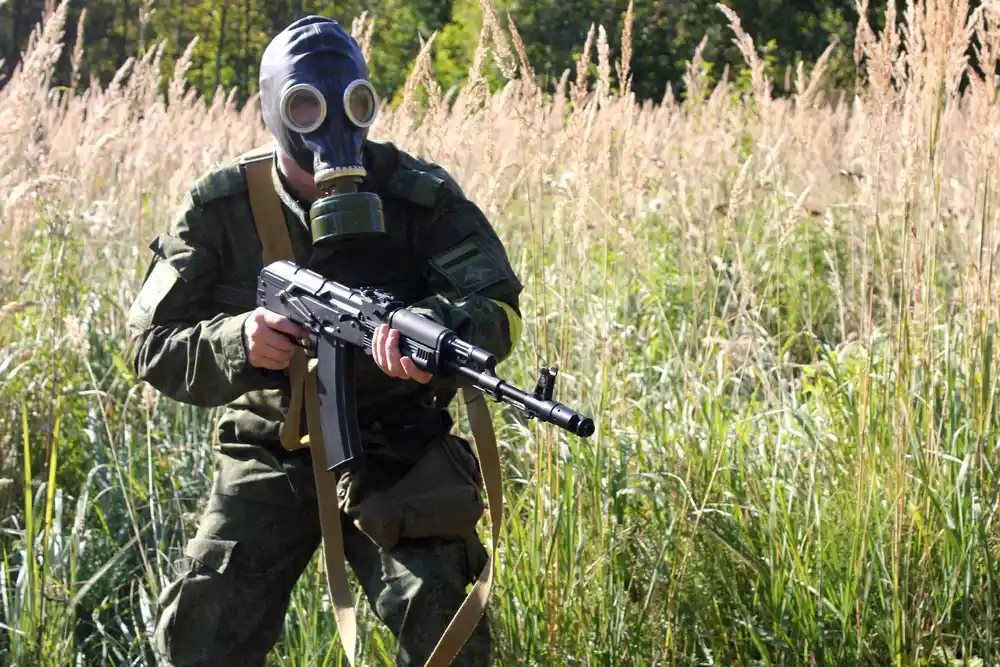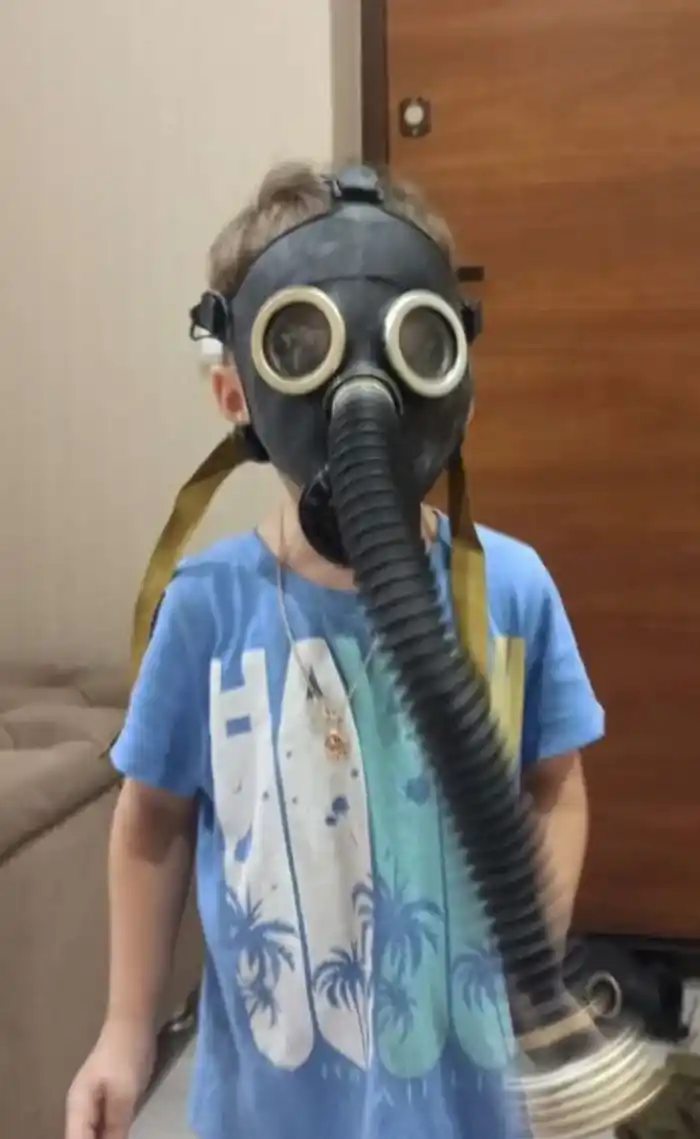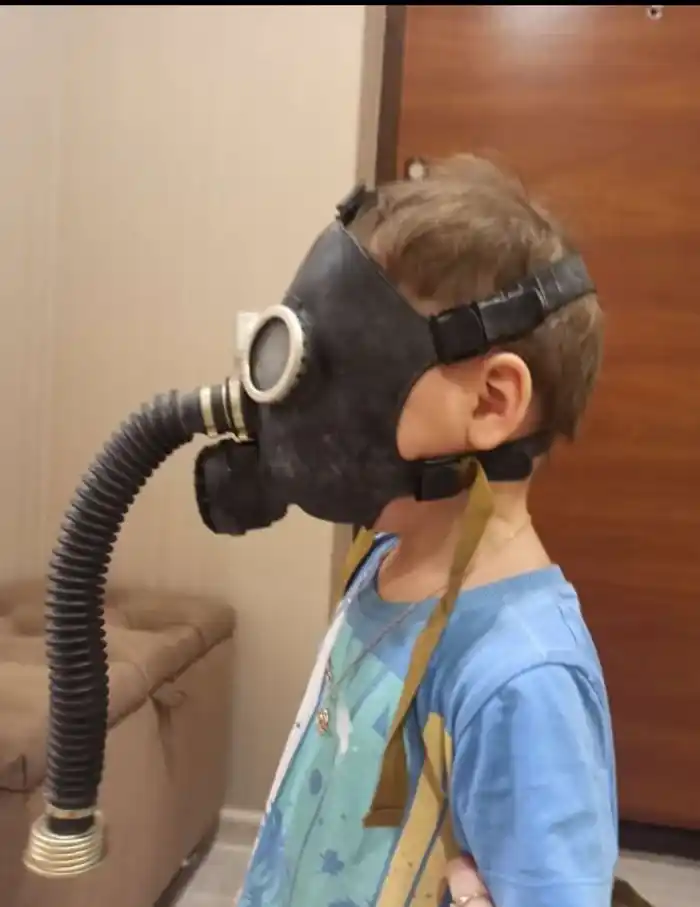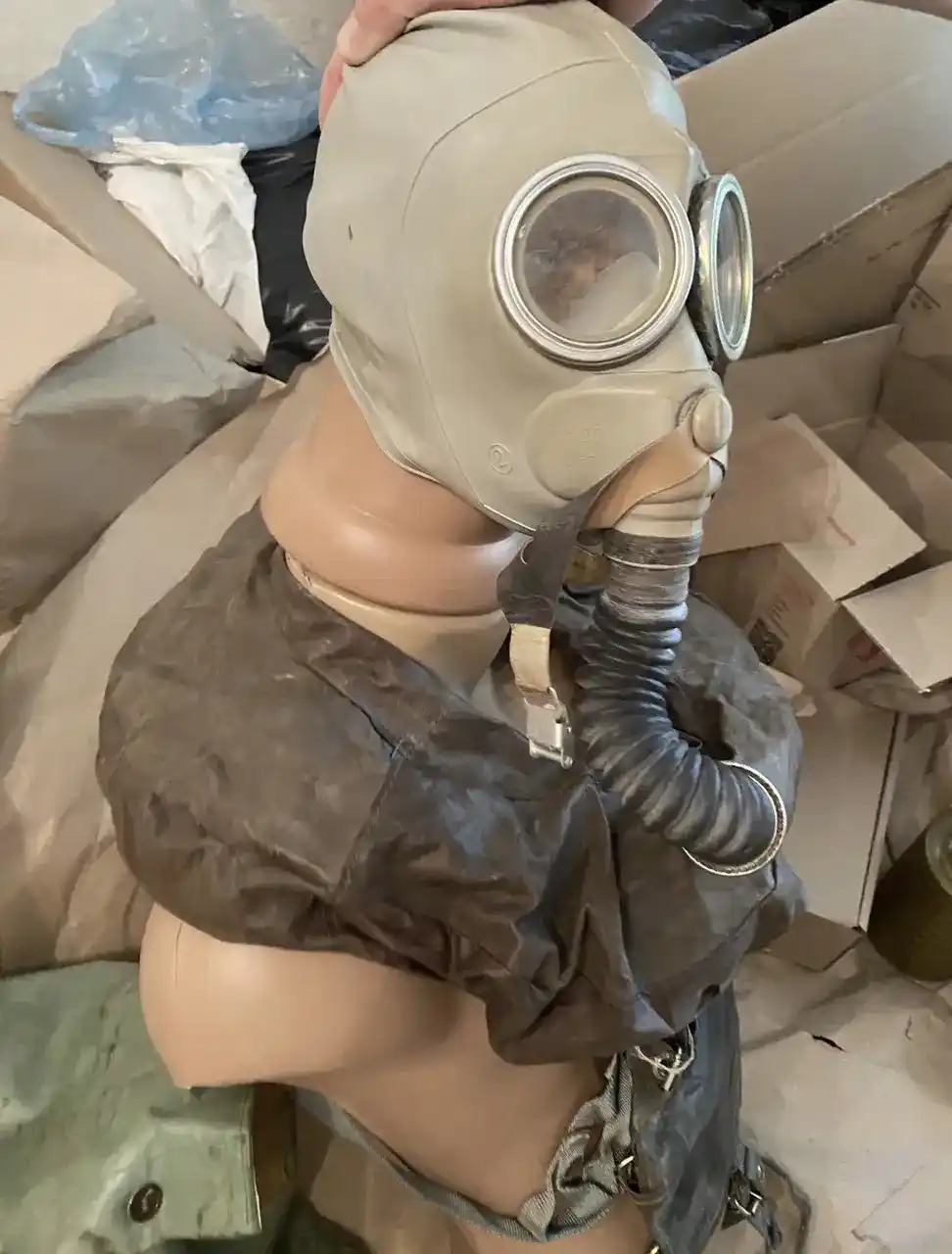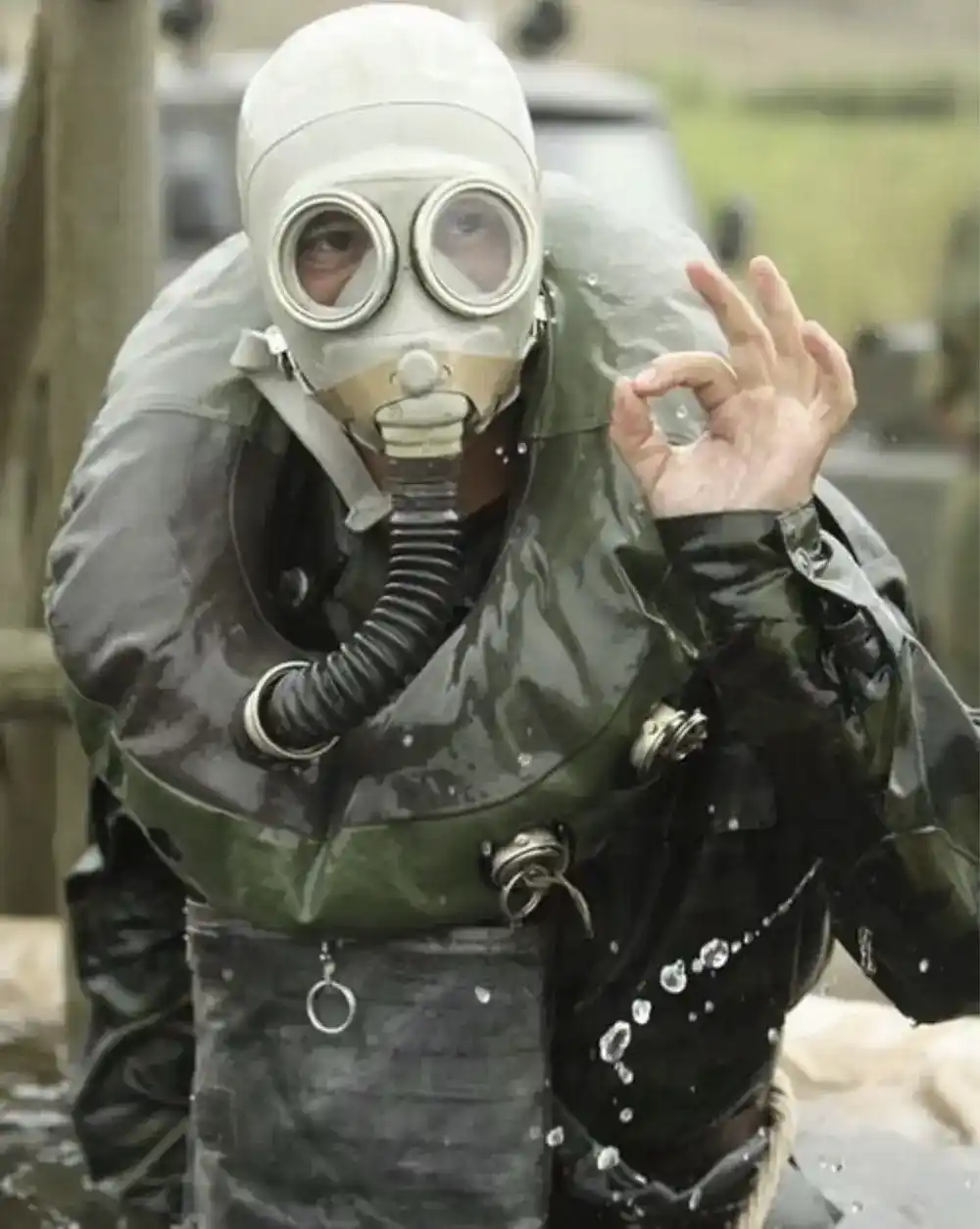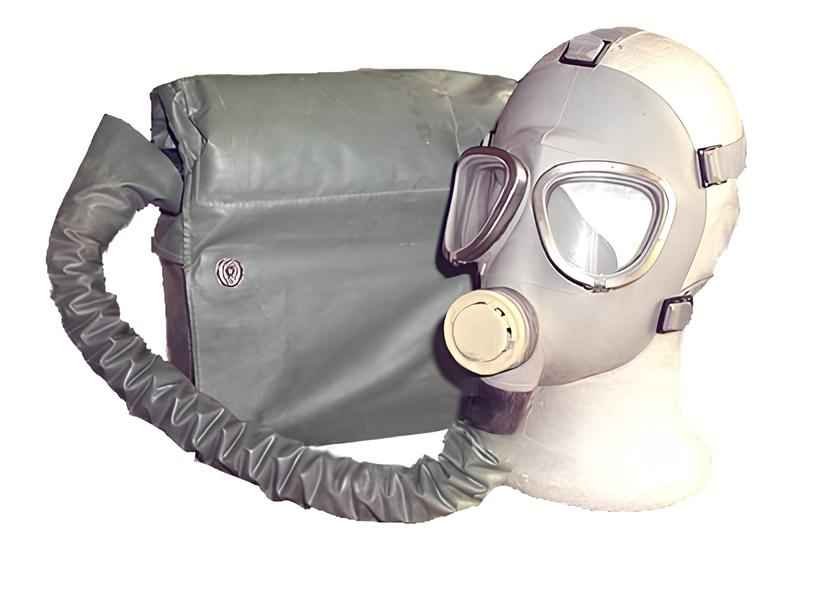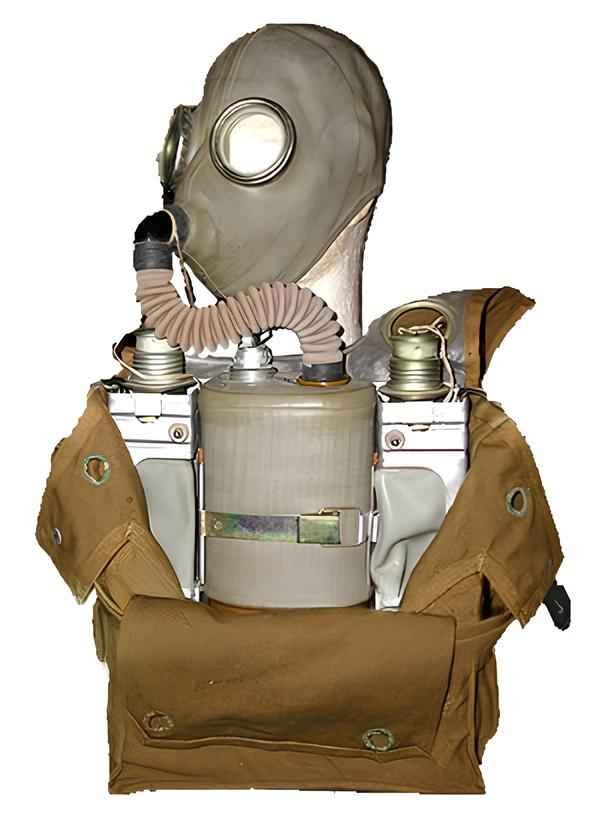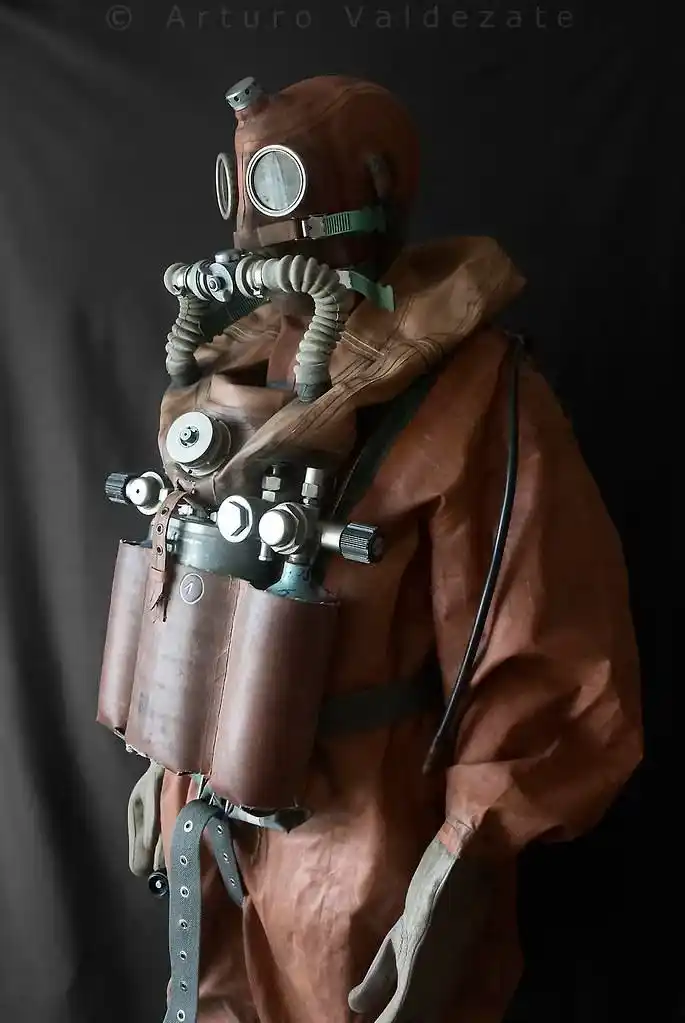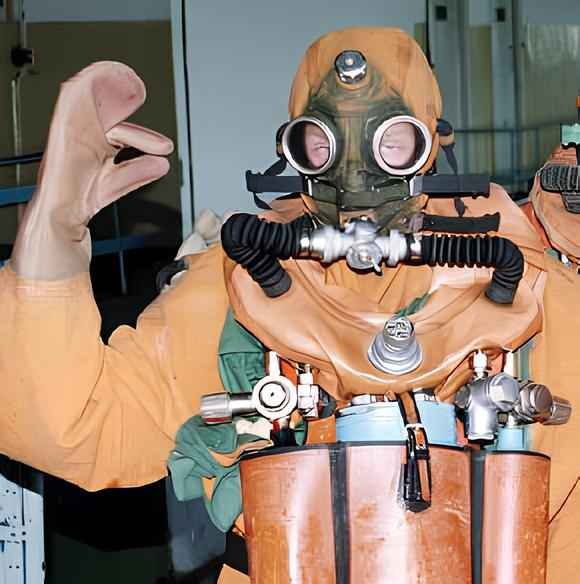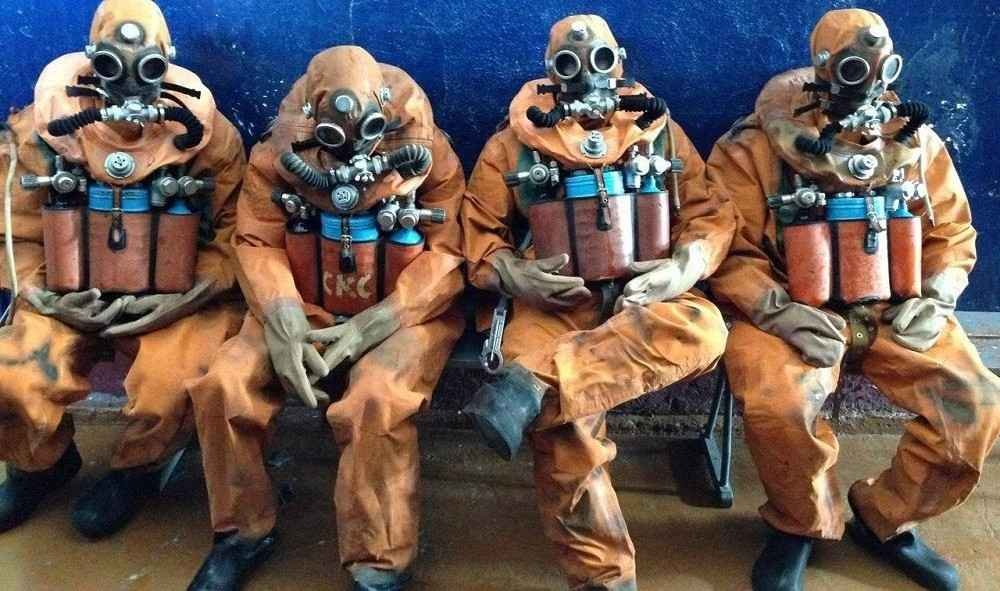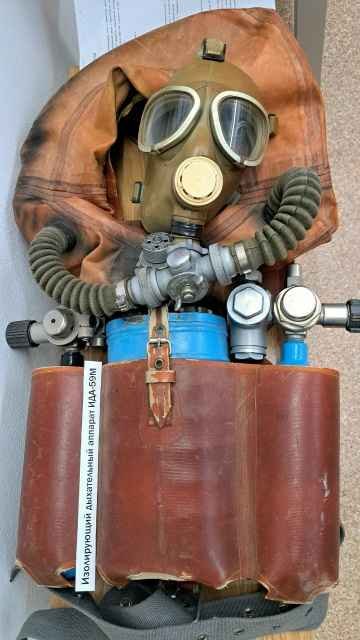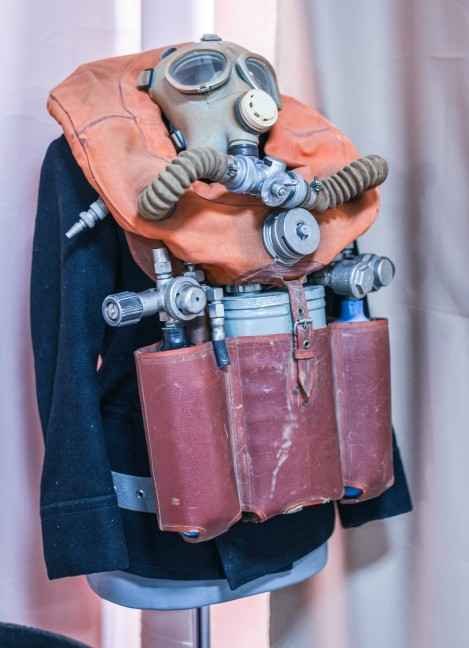
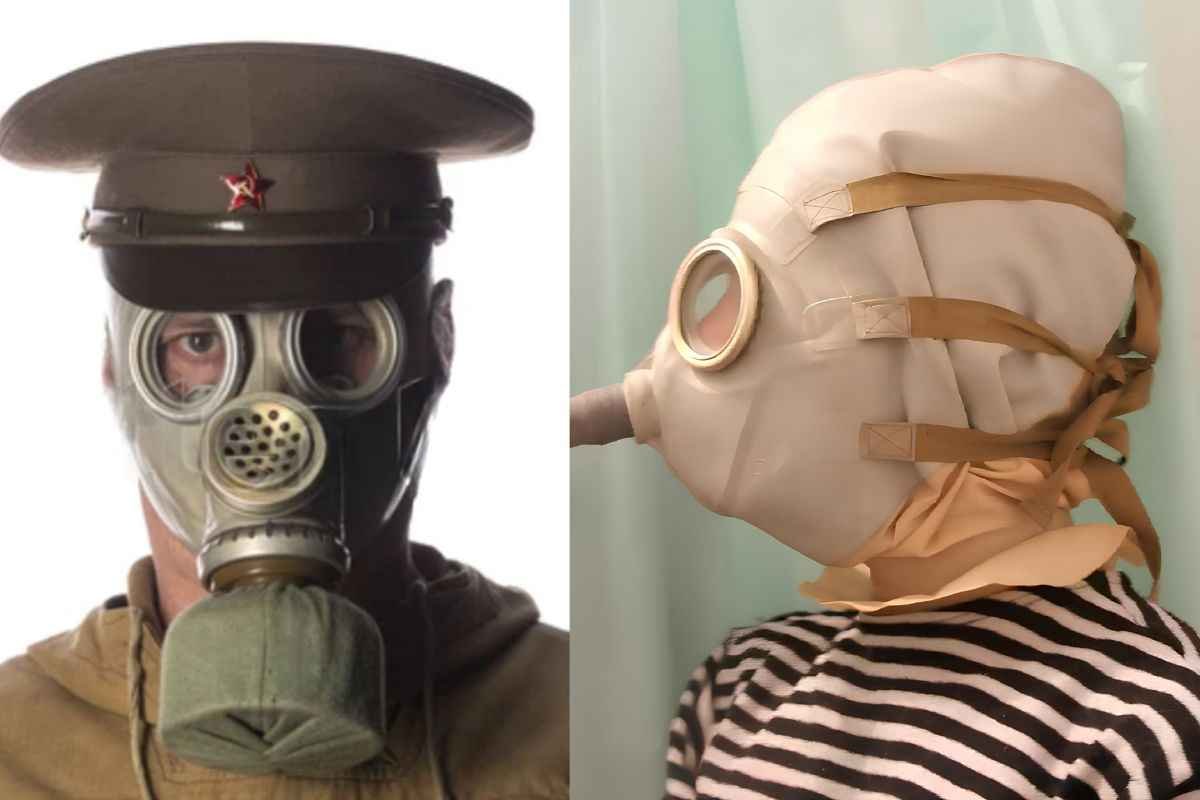
Soviet GP-5 gas mask front and side view with telnyashka shirt Cold War style

How Soviet Gas Masks Were Used

Soviet gas masks played an important role during the Cold War and earlier periods. In this article, we look at the history of Soviet gas masks, their main models, and how they were used. It’s a simple guide to help you understand how Soviet gas masks developed over time.

Read other useful articles:

Soviet SSh-36 Helmet: History, Combat Use, and the Scandal That Shook the Red Army

Cold War Soviet Uniform: Real Equipment and Army Changes

Telnyashka: History of the Russian Navy and VDV Striped Shirt

Kummant–Zelinsky Gas Mask

Breathe slowly and deeply, better through your nose. Do not be afraid – if it feels hard at first, it will pass soon.

The Zelinsky-Kummant gas mask was the first mask that could protect against many types of toxic gases. It was created in 1915 by Professor Zelinsky and engineer Kummant.

In 1915, chemical weapons were used for the first time in war. Thousands of soldiers died or were badly injured by gas. There was no protection at that time.
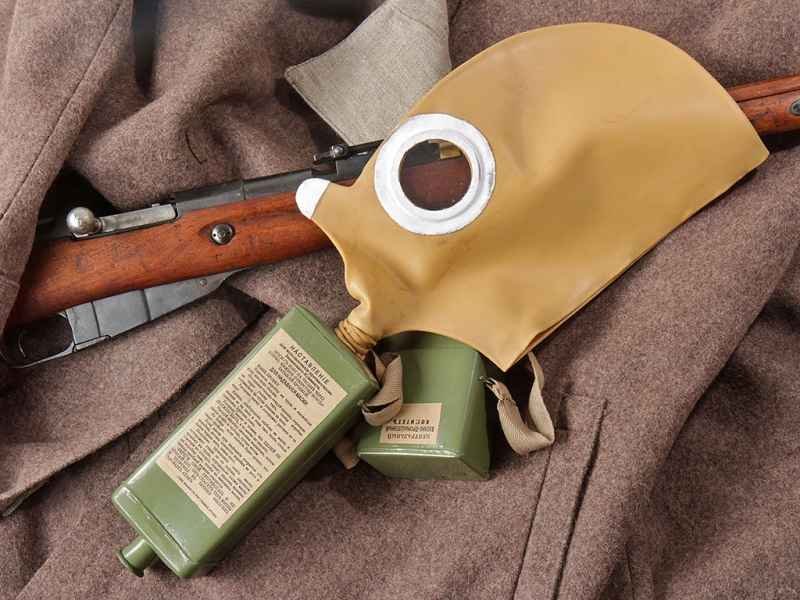
Zelinsky-Kummant gas mask 1915 model Russia full set replica with filter and bag
Zelinsky-Kummant gas mask model 1915 full set (replica)

Zelinsky solved this problem by using activated charcoal. It could clean the air from different toxic gases. This made the gas mask much more effective.

The mask was accepted by the Russian army in 1916. After that, losses from gas attacks became much lower.

More than 11 million gas masks were produced during World War I, saving many lives.
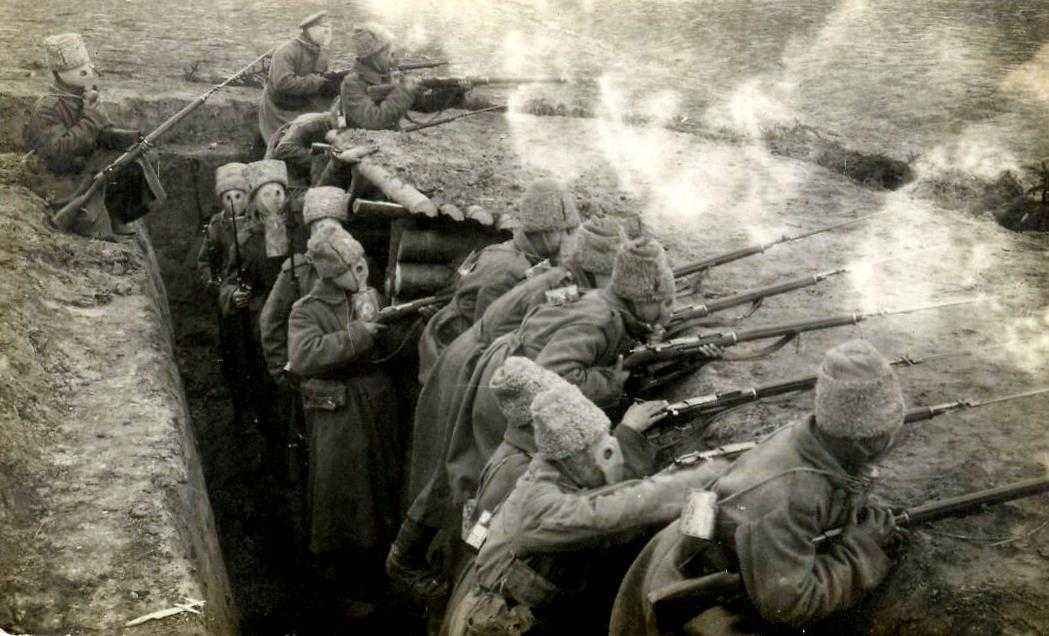
Russian soldiers using Zelinsky gas masks in trench warfare World War 1
Use of Zelinsky gas mask during World War 1

Zelinsky said: “I invented it not for attack, but to protect millions of young lives from suffering and death.”

In a modified form, this invention spread all over the world.

Only a few have survived to this day. It is very rare among collectors.

GP-2 gas mask 
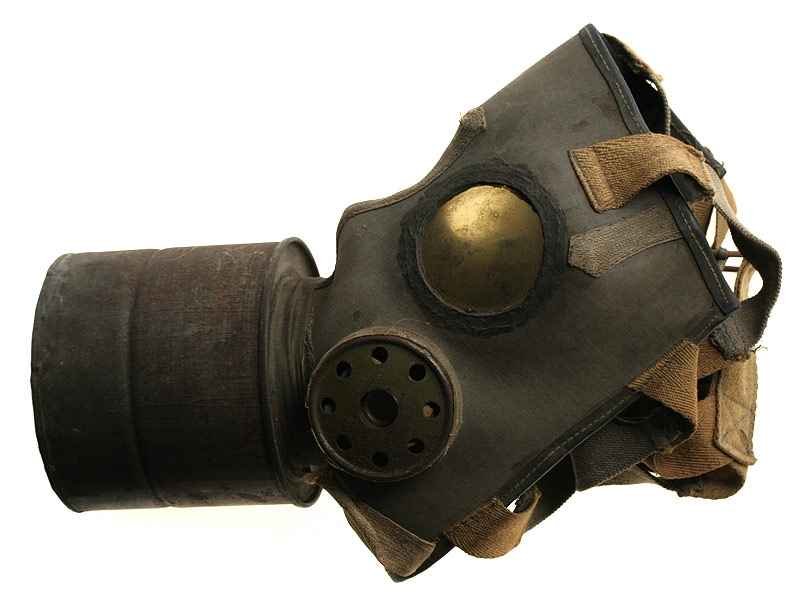
Soviet GP-2 civilian gas mask vintage Russian gas mask civil defense equipment
Soviet GP-2 gas mask used for civilian protection.

This gas mask was developed for civilians in 1936 as GT-6 (civilian type 6).
After simplification and cost reduction, it was adopted for use in the late 1930s.

Mass production started in the 1940s and ended in the late 1940s.

Based on this model, smaller gas masks were also produced for children.

BNT-4 and BNT-5 Gas Masks
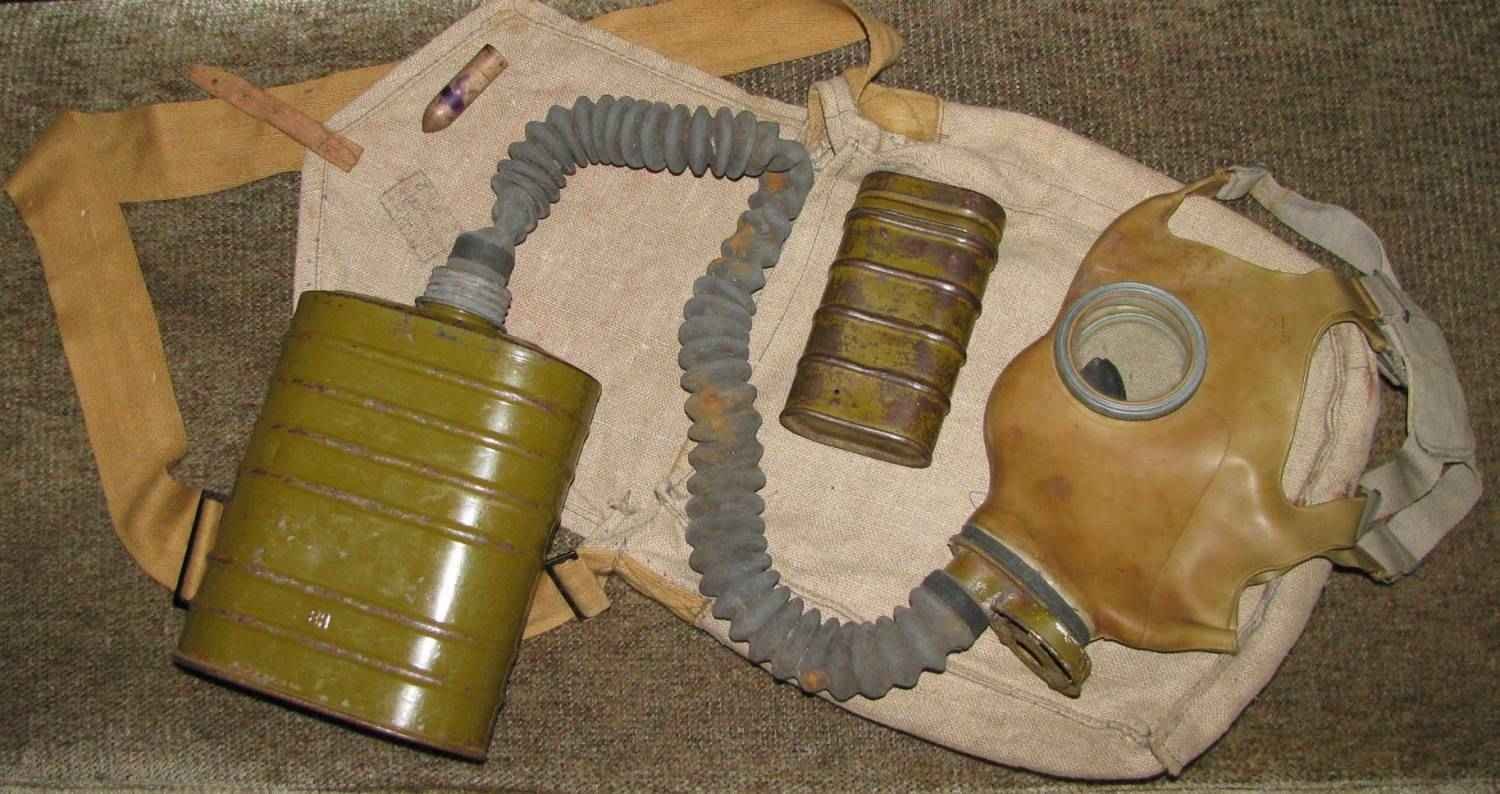
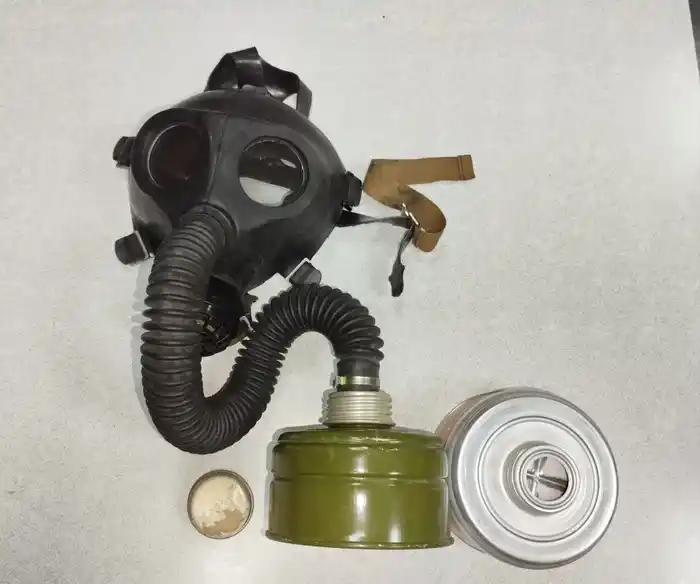
Soviet BNT-4 gas mask USSR filter hose mask chemical protection
Soviet BNT-4 gas mask with hose and filter system.

The BN gas mask was produced in the USSR in two versions: with a helmet and with a face mask.
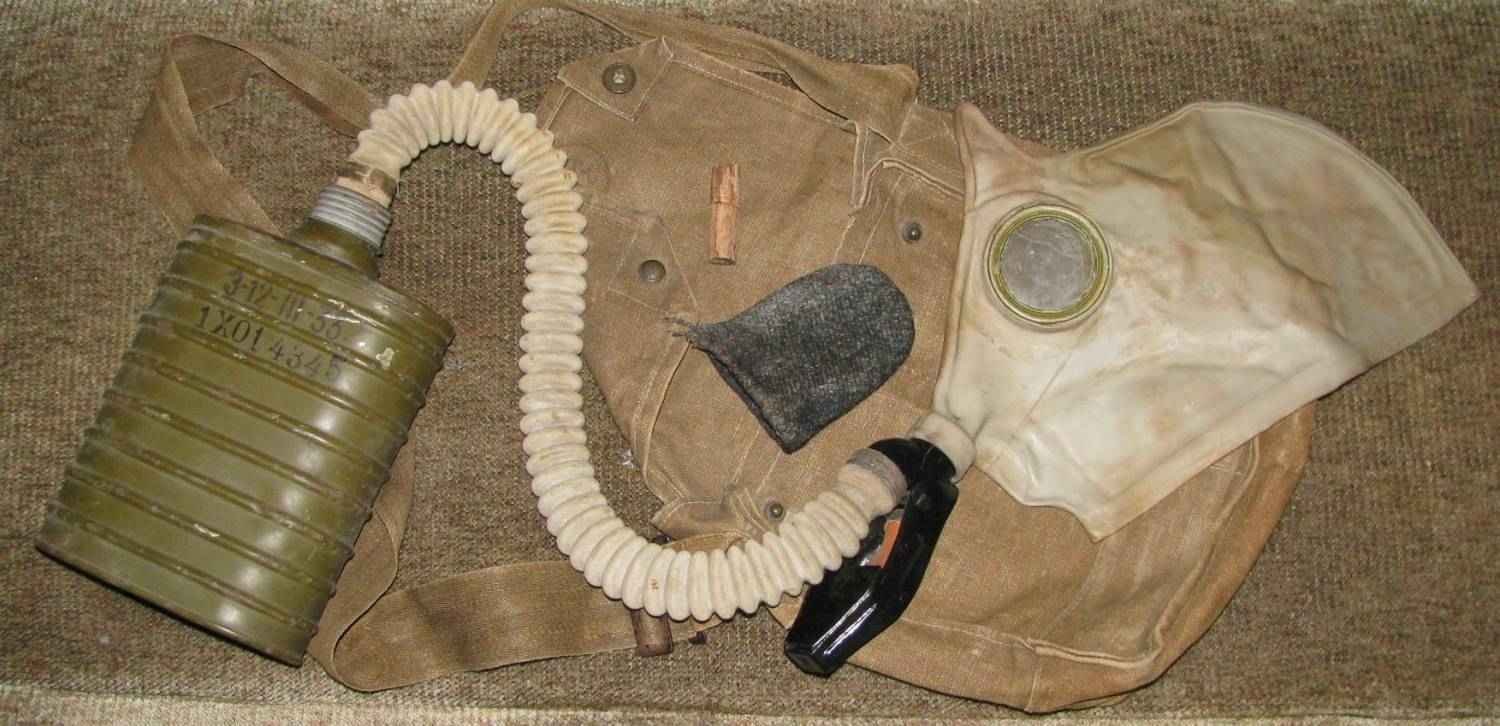
Soviet BNT-5 gas mask USSR filter hose mask chemical protection
Soviet BNT-5 gas mask with hose and filter system.

The BN gas mask consisted of a filter box with absorbent, a rubber connecting tube covered with fabric, a breathing valve unit, a rubber helmet, a face mask, and a bag for carrying and storage.

PBF Gas Mask 

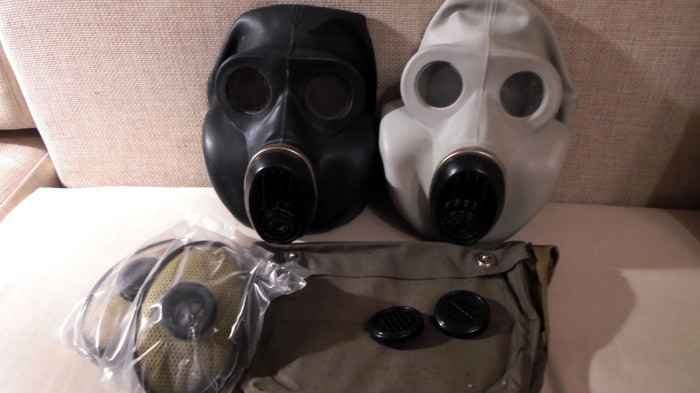
Soviet PBF gas mask black and white rubber boxless filter gas mask USSR
Soviet PBF gas masks in black and white versions with carrying bag.

This gas mask was widely used in the Soviet army. It did not provide full protection (effective for up to 20 minutes), but was popular in training because it was small and comfortable to wear.

It was often used by paratroopers, tank crews, reconnaissance units, and officers. Soldiers nicknamed it the “hamster.”

The lack of protruding parts and small size make the gas mask very удобным for running, parachute jumps, and shooting.

It was adopted by the Soviet Army in 1973. It was removed from service in 2000. There is information that the PBF was created after a Soviet official noticed that the US had a similar mask (M17), while the USSR did not.

From the order to mass production took less than four years. Today, it is popular among collectors.
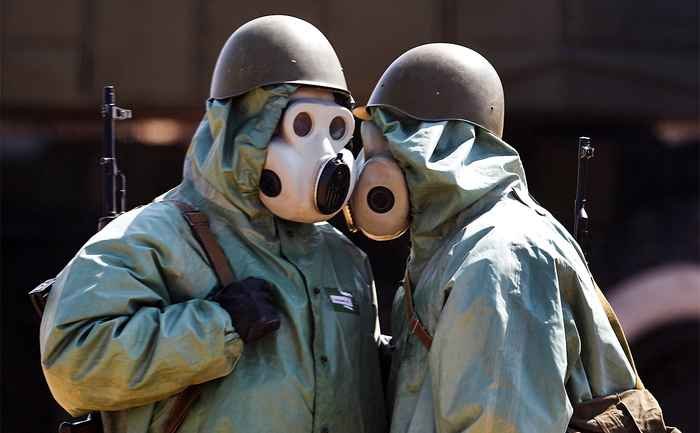
Soviet PBF gas mask military soldiers protective suits collectors gas mask USSR
Soviet PBF gas masks used by soldiers in protective gear, now popular among collectors.

Soviet soldiers chose gas mask with classic kirza boots like these
Soviet Kirza Boots
Classic Soviet military kirza boots inspired by the simple footwear worn by Red Army soldiers.


View Soviet Kirza Boots

Aviation Filtering Gas Mask

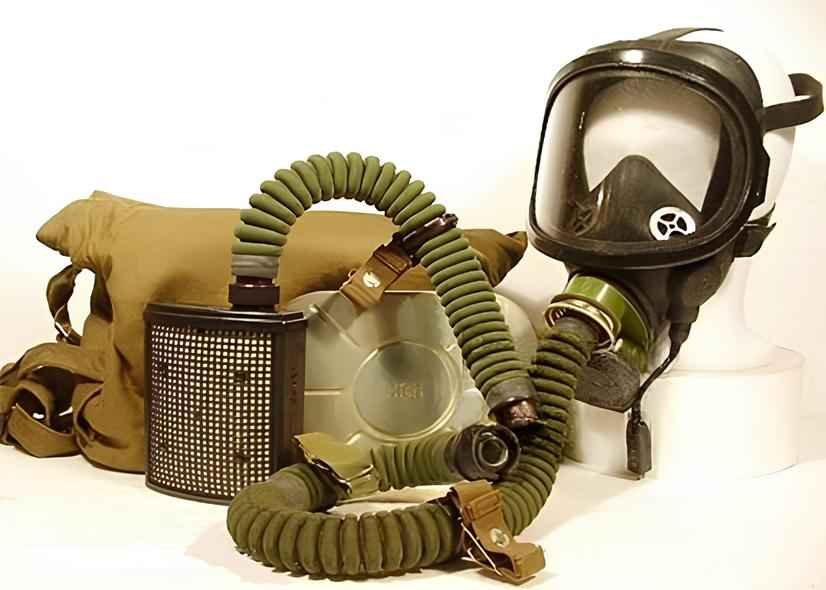
Soviet aviation filtering gas mask pilot panoramic visor hose oxygen system
Soviet aviation gas mask with panoramic lens and hose system for pilots.

Information about this gas mask is limited. The mask has an unusual panoramic lens, which is not typical for Soviet/Russian gas masks.

A standard filter can be connected directly to the mask, and either a filter or an oxygen tank can be connected to the hose.

The mask has a built-in microphone, which can be connected to Soviet/Russian radio equipment.

It is used by military pilots in aircraft and helicopters.

The mask is certified for emergency exit from an aircraft at altitudes up to 12,000 meters.

PRVU Gas Mask
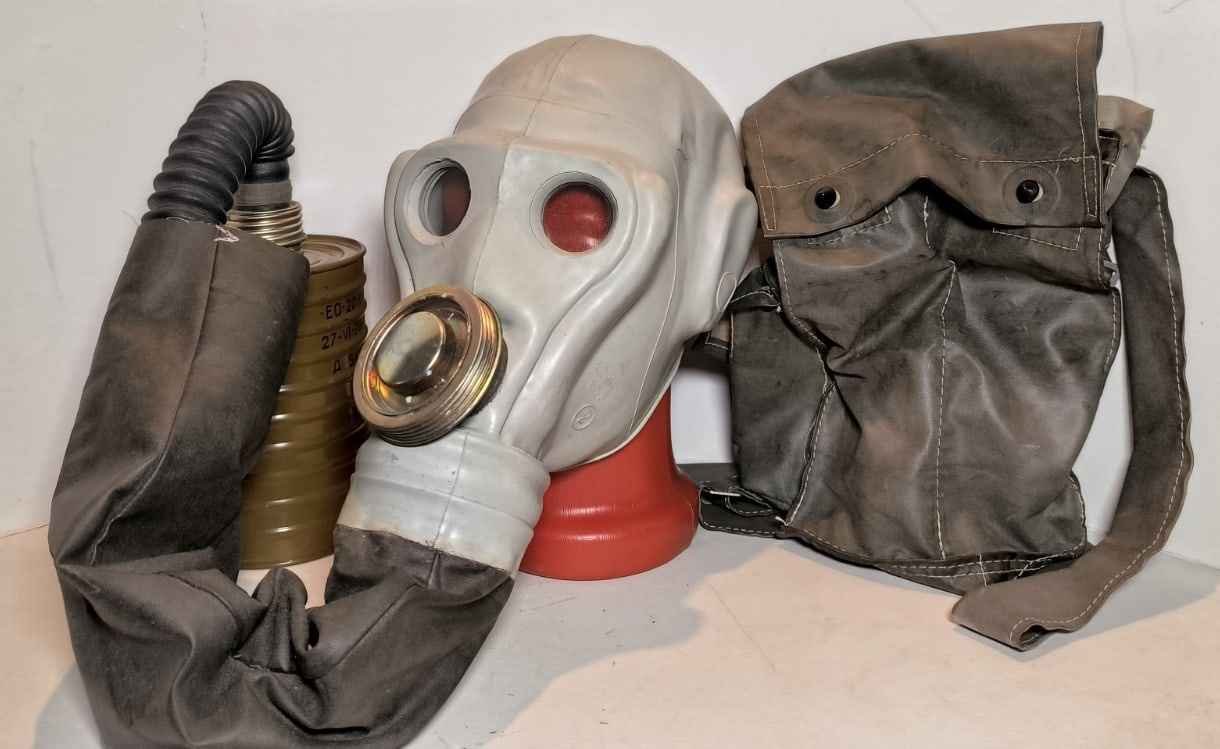
Soviet PRVU gas mask EO-65K filter hose chemical troops protective mask USSR
Soviet PRVU gas mask with filter, hose, and protective bag for chemical units.
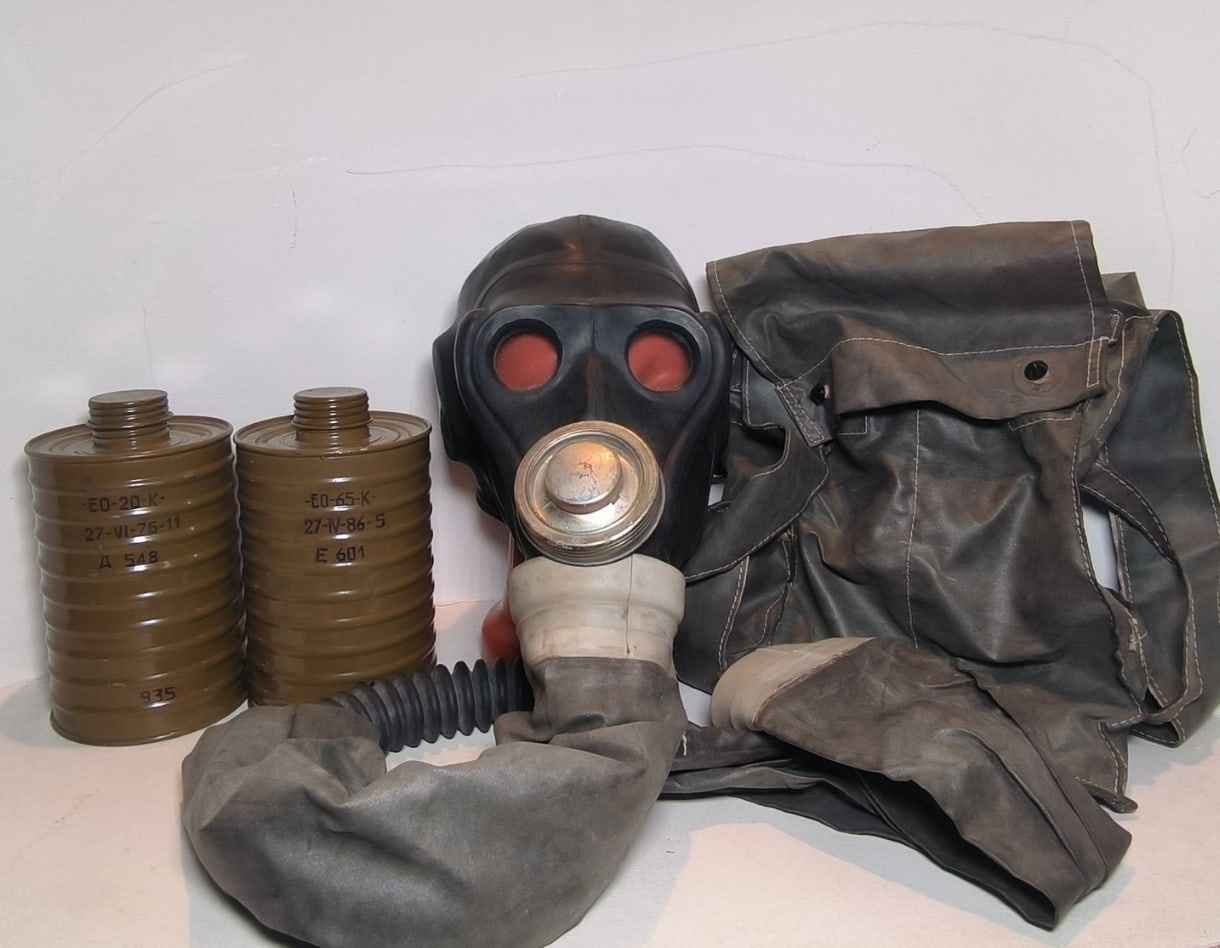
Soviet PRVU gas mask black rubber EO-65K filter chemical troops USSR
Black Soviet PRVU gas mask with filters, hose, and carrying bag.

This gas mask is similar in function and purpose to the PRV-M.

It uses the EO-65K filter and comes with a rubberized fabric bag with pin fasteners.

The voice unit has extra protection, and an additional sleeve protects the valve box and hose.

The mask was designed for chemical troops. It has a reinforced valve system and a durable rubberized bag.

The set includes anti-fog films, voice membranes, and a dust cover for the filter.

It is used when working with highly dangerous substances, such as rocket fuel.

PRVUM Gas Mask

Soviet PRVUM gas mask chemical troops protective mask USSR filter system
Soviet PRVUM gas mask with filter and carrying bag.

This gas mask was designed for chemical troops and has a reinforced valve system.

The set includes anti-fog films, voice membranes, and a dust cover for the filter.

It is used when working with dangerous substances, including rocket fuel (heptyl).

In this case, it is used only outdoors.

RSh-4ShM Gas Mask

Soviet RSh-4ShM gas mask EO-16 filter ShM-41Mu helmet mask USSR chemical protection
Soviet RSh-4ShM gas mask with EO-16 filter and helmet-mask system.

The EO-16 filter has a cylindrical shape (17.5 × 10.7 cm). It has an internal threaded opening at the bottom. Markings are applied on the filter body with waterproof paint.

This gas mask uses two main types of masks. One is the ShM-41Mu helmet-mask, which includes the body, eye lenses, air deflectors, valve system, and a detachable voice unit.

The front position and size of the lenses allow the use of optical devices.

The mask can also be equipped with extra protection for vulnerable parts when working with chemical substances.

ShMS Gas Mask (1960)

Soviet ShMS helmet gas mask RSh-4 set hose filter bag USSR
ShMS gas mask in RSh-4 set with hose, filter, and carrying bag.
Soviet ShMS-R gas mask PRV-U set rocket troops hose filter USSR
ShMS-R gas mask in PRV-U set with hose, filter, and protective bag.

ShMS is a helmet-mask used in the RSh-4 gas mask system. It was designed for officers, snipers, and vehicle crews.

The mask has a standard removable voice unit with replaceable membranes stored in a metal container marked “M.”

The eye lenses are placed in one plane, which makes it easier to use optical devices.

There is also a special version called ShMS-R (for rocket troops). It has extra protection for the voice membrane to protect it from rocket fuel.

This version was used with the PRV-U gas mask system.

Both masks can use anti-fog films (44 mm), which are usually included and stored in a metal container marked “NP.”

Early ShM-41 Gas Mask 1941

Soviet ShM-41 gas mask 1941 rare rubber helmet mask early USSR gas mask
Rare ShM-41 gas masks from 1941 in standard and gray-blue rubber versions.

The ShM-41 was produced in several batches in 1941, shortly before the war, and some were even used at the front.

Unlike the earlier ShM-1, this mask had built-in air deflectors molded as one piece with the rubber, which made production easier.

It is not exactly known why it did not replace the older model. Most likely, it was because the war had started and industry could not switch to new production molds.

Because of this, production stopped and was resumed only in 1949, with some design changes.

These masks were made only for a few months in 1941 and are now extremely rare.

Fewer than ten examples in good condition are known today.

The photo shows a standard black rubber mask and a rare gray-blue version.

How to Prepare RKKA Uniform and Equipment for WW2 Reenactment

ShM-41M / ShM-41MU Gas Mask (1950s)

Soviet ShM-41M gas mask RSh-4 EO-16 filter hose USSR military gas mask
ShM-41M gas mask as part of the RSh-4 gas mask system.

ShM-41M and ShM-41MU are facepieces used with RSh-4 military gas masks (EO-16), along with the ShMS mask.

The design is classic. The rubber part is the same as the earlier ShM-41 and similar to the later ShM-62.

The main difference is the extended valve box, which allows the use of a thermal (insulating) cuff.

Soviet ShM-41M gas mask winter cuffs lens valve box insulating cuffs USSR
ShM-41M gas mask with insulating cuffs on the lens unit and valve box.

ShM-62 / ShM-62U Gas Mask

Soviet ShM-62 gas mask GP-5 helmet mask gray rubber USSR civil defense
ShM-62 as part of the GP-5 gas mask

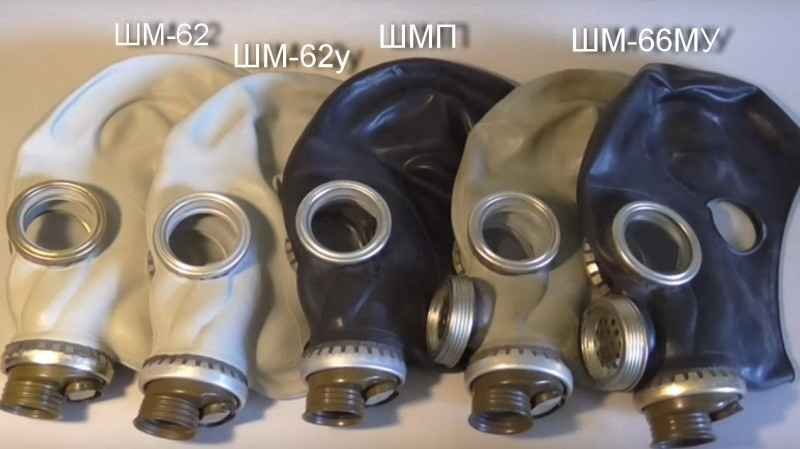
ShM-62 and ShM-62U are classic helmet-masks used in the GP-5 gas mask. They are made of gray rubber, without a voice unit and without ear openings.

The main difference is the rubber thickness. The ShM-62 has thicker rubber, while the ShM-62U is thinner.

The ShM-62U can be identified by the letter “U” marked near the size stamp on the mask.

The ShM-62U is also slightly lighter, but the difference is small.
For example, size 2 ShM-62 weighs about 405 grams, while ShM-62U is around 350 grams.

ShMP Gas Mask

Soviet ShMP gas mask black rubber GP-5 style helmet mask USSR
Black ShMP gas mask – variant of the classic Soviet GP-5 helmet-mask.

ShMP is basically the same as ShM-62 or ShM-62U, but produced in black rubber (and possibly still made today).

Like the 62 models, it exists in versions with and without the “U” marking, which means different rubber thickness.

Some people believe the black material is stronger and softer, but there is no clear proof.

This could only be confirmed by testing the materials in a laboratory.

ShM-66MU Gas Mask

Soviet ShM-66MU gas mask helmet mask with voice unit ear cutouts GP-5M PMG-2
ShM-66MU gas mask with voice unit and ear openings.

The ShM-66MU is a more advanced version of the classic ShM-62U helmet-mask. It has a removable voice unit (like the ShMS) and ear cutouts.

To keep the weight low, the rubber is thinner, which is why it has the “U” marking.

It was produced in both black and gray colors.

Sizes: 0, 1, 2, 3. Size 0 has no ear cutouts, and unlike other masks, there is no size 4.

This mask was used in both the civilian GP-5M gas mask and the military PMG-2 system.

Different Soviet gas mask models: ShM-62, ShM-62U, ShMP and ShM-66MU

Soviet gas mask variants ShM-62, ShM-62U, ShMP and ShM-66MU side by side
Gas mask facepieces that may be included in a GP-5 set

ShMG Gas Mask

Soviet ShMG gas mask with side-mounted filter PMG Nerekhta
Soviet ShMG gas mask from PMG Nerekhta set with side filter connection

The ShMG is a helmet-type facepiece used with the PMG (Small Size Gas Mask, EO-18 “Nerekhta”) military gas mask set. It became popular because it is universal and compact. The filter is placed on the side, which makes aiming easier. The eye lenses are similar to ShMS and PBF models, so you can use optical devices. Large cutouts from the ears to the back of the head and fewer metal parts make it light, flexible, and comfortable.

It has a speaking device and a system to clear the lenses. It is basically a transition model between older Soviet helmet masks and later mask-type designs -after it came PMK-1 and PMK-2.

The RSh-4 gas mask set could include different facepieces: ShM-41M / ShM-41MU, ShMS, MM-1, ShR-2.

MM-1 Gas Mask

Soviet MM-1 gas mask with long breathing hose and large cylindrical filter
Soviet MM-1 special-purpose gas mask with hose and large filter

The MM-1 gas mask is an early special-purpose mask used by radio operators, ship captains, tank commanders, and officials who needed extended mask capabilities.

It was produced with a long breathing hose and a large cylindrical filter. The mask also had an effective voice diaphragm installed in the center, which made speech clearer.

There is still debate about the meaning of the MM-1 abbreviation — it may stand for “marine mask” or “membrane mask.”

PMG Gas Mask (“Nerekhta”) (1970)

Soviet PMG Nerekhta gas mask with EO-18K filter and ShMG helmet mask
PMG Nerekhta gas mask with EO-18K filter and ShMG helmet mask

The PMG gas mask (“Nerekhta”), produced in 1970, uses the EO-18K filter canister. The filter has a cylindrical shape, 9 cm high and 10.8 cm in diameter. The markings on the EO-18K are similar to those on the filters of the RSh-4 gas mask.

The ShMG helmet-type facepiece consists of a rubber body, eye lenses, airflow deflectors, a valve box, a voice diaphragm, and a filter connection unit with an inhalation valve inside.

The helmet mask has cutouts in the helmet area and a neck strap to secure it on the head. The valve box is made as a rubber tube with two valves.

PMG-2 Gas Mask (1962)

Soviet PMG-2 gas mask gray version with ShM-62 helmet mask
PMG-2 gas mask with gray ShM-62 helmet mask
Soviet PMG-2 gas mask black version with ShM-62 helmet mask
PMG-2 gas mask with black ShM-62 helmet mask

The PMG-2 gas mask (1962) was issued with the ShM-62 helmet mask (white version).

The ShM-62 differs from the ShM-41MU mainly by the design of the valve box, which is similar to the valve box used in the ShM-66MU.

The size range and markings of the ShM-62 are the same as those of the ShM-41MU.

ShR-2 Gas Mask
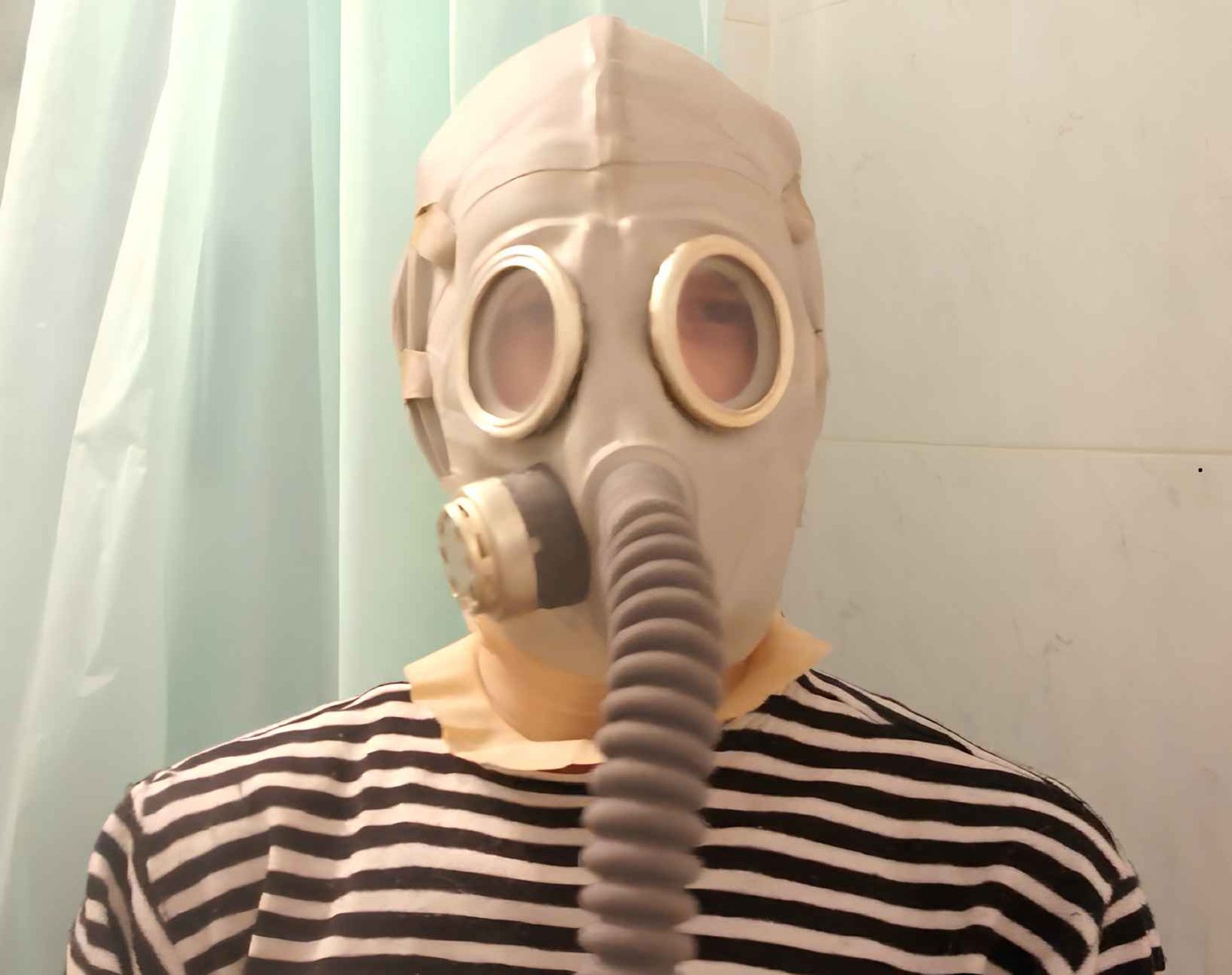
Soviet ShR-2 gas mask worn with striped telnyashka shirt USSR style
ShR-2 gas mask worn with traditional Soviet telnyashka shirt

Telnyashka: History of the Russian Navy and VDV Striped Shirt

The ShR-2 gas mask is designed for people with head injuries and can be worn over bandages.

A tight seal is achieved with an elastic neck cuff, and the fit is adjusted with fabric straps. This model is quite rare.

The ShR-2 is a very rare Soviet gas mask designed specifically for head wounds. It looks like a sealed rubber hood with a latex neck cape (cuff), which is fastened at the back with a metal hook. It is secured on the head with three pairs of fabric ties, which can be adjusted to make the mask fit comfortably.
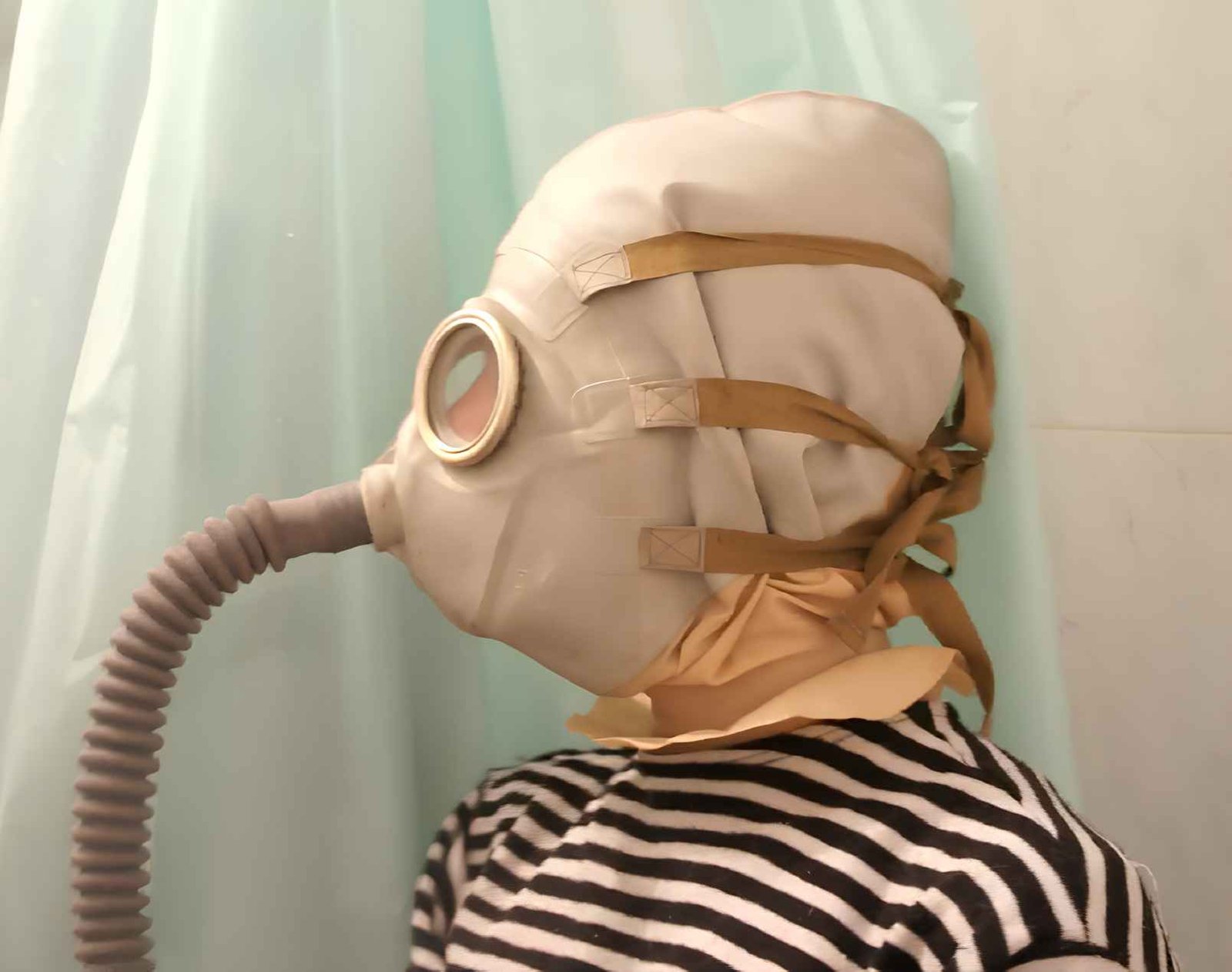
Soviet ShR-2 gas mask side view worn with striped telnyashka shirt
Side view of ShR-2 gas mask worn with Soviet telnyashka shirt

Soviet soldiers often wore telnyashka shirts like this
Russian Telnyashka Shirt
Classic striped Soviet telnyashka shirt worn by Spetsnaz, VDV, and naval infantry. Iconic military undershirt known for comfort and durability.


View Russian Telnyashka Shirt

The special non-traumatic design of the helmet mask does not put pressure on the head, allowing it to be worn for a long time without discomfort.

The ShR-2 is compatible with all Soviet and Russian gas mask filters from different years, as well as many foreign civilian and industrial filters. The hose uses a standard thread connection with a corrugated tube.

Inside the mask there is a compact inhalation valve that provides one-way airflow, while exhalation goes through a separate valve located on the side of the mask near the cheek.

PMK-3 Gas Mask

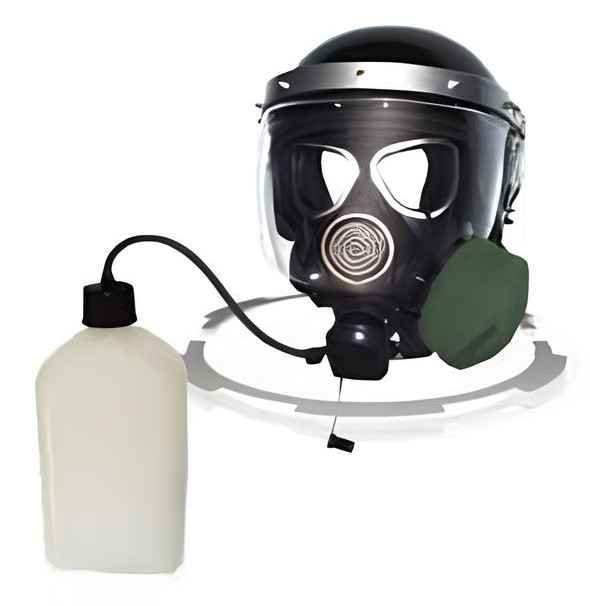
Russian PMK-3 gas mask modern military model with side filter and drinking system
PMK-3 modern Russian military gas mask

The PMK-3 gas mask comes as a complete set with thermal cuffs, a drinking tube, a dust cover, plugs, and a carrying bag made from “Flora” camouflage fabric.

At the moment, it is one of the most advanced Russian military gas masks. It meets modern standards: it puts low pressure on the head, has a built-in drinking system, and allows the filter to be attached on either the left or right side.

The lenses are comfortable for use with optical devices and make aiming easier. It also allows comfortable use with any radio equipment.

A civilian equivalent of this model is the GP-7VM gas mask.

GP-4U Gas Mask

Soviet GP-4U gas mask civilian model USSR with hose and filter
GP-4U civilian gas mask from the USSR

The GP-4U gas mask (Civilian Gas Mask, model 4, improved) is one of the most common civilian gas masks in the USSR.

Soviet GP-4U civilian gas mask in original box with hose and filter
GP-4U civilian gas mask in original Soviet box

It was produced in very large numbers, and huge stockpiles still exist today. It is sometimes jokingly called the “little elephant.”

It has almost no collector value.

GP-5 Gas Mask

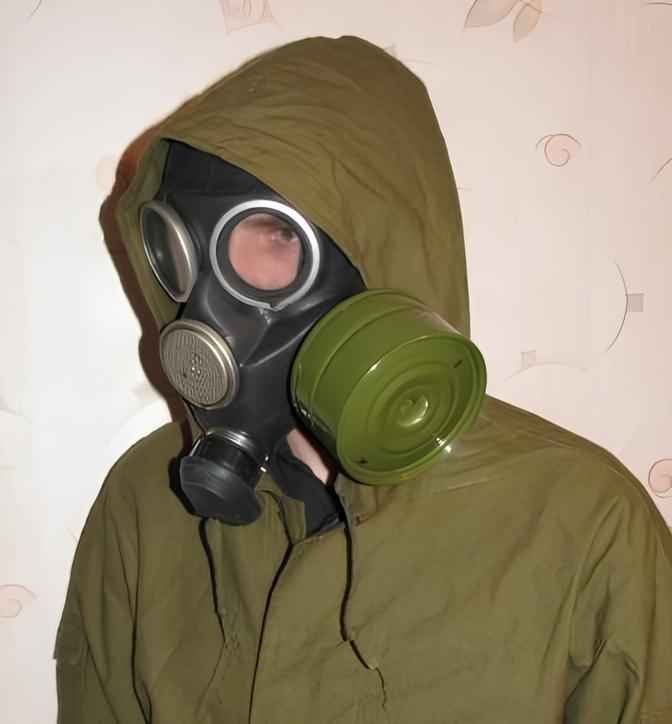
Soviet GP-5 gas mask worn by person with green filter canister
Soviet GP-5 gas mask worn with original filter

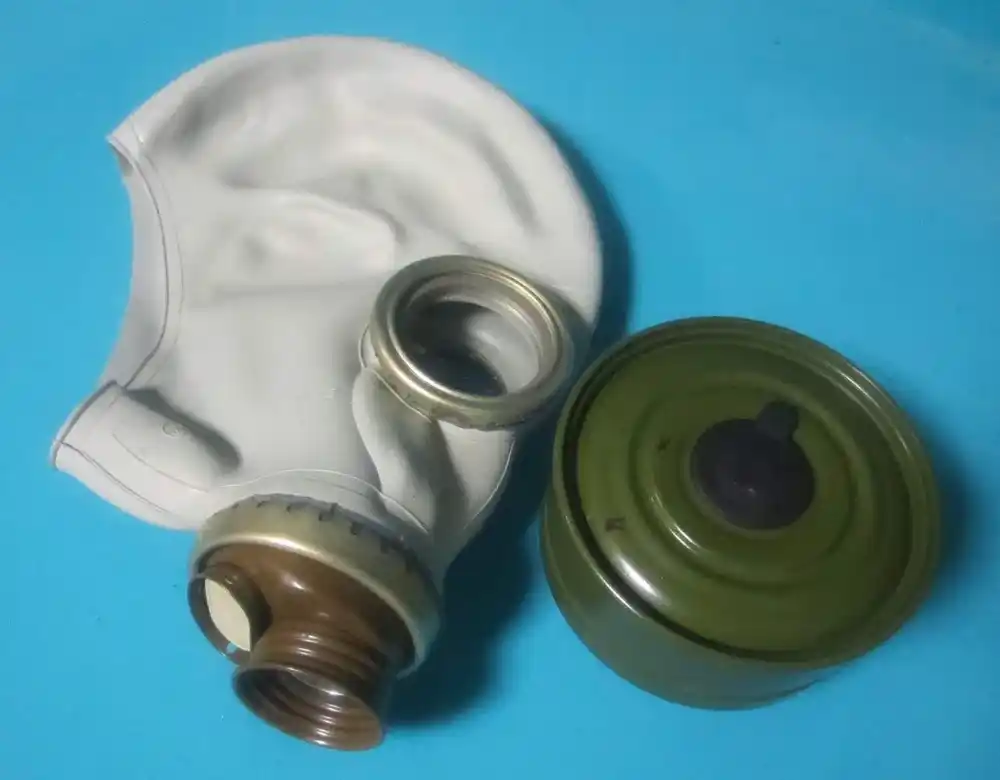
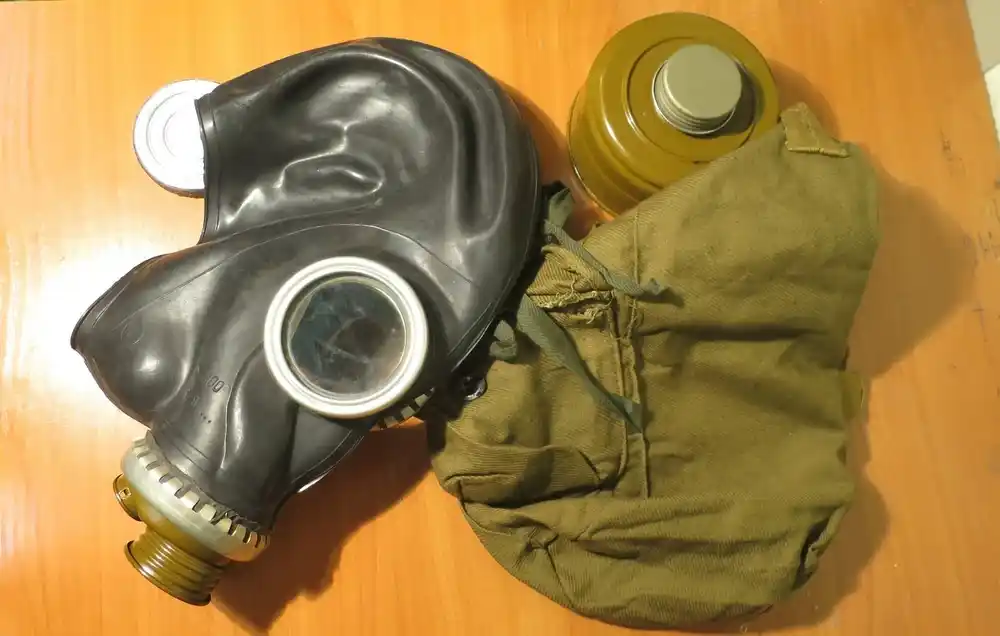
The GP-5 gas mask is probably the most common Soviet gas mask ever made. They produced so many of these that there were actually more masks than people in the USSR.

It came with a few different helmet styles – ShM-62, ShM-62U (a slightly improved version), and ShMP. The gray ones are ShM-62 and ShM-62U, while the black version is the industrial ShMP. All of them are simple, reliable, and easy to use, with a basic valve system that just works.

Soviet soldier wearing GP-5 gas mask during Cold War reenactment with rifle
Tactical reenactment with Soviet black GP-5 gas mask
One of the most iconic Cold War gas masks used across the USSR
Soviet Gas Mask GP-5 (Grey and Black) All sizes.
Classic Soviet GP-5 gas mask with original filter and bag. A true Cold War piece, popular among collectors, reenactors, and fans of Soviet gear.


View Soviet Gas Mask GP-5

This is usually a full original set – mask, filter, bag, and anti-fog inserts. The filter uses a standard 40mm thread, so it’s easy to find replacements if needed. It also comes with caps to keep the filter clean during storage.

These masks were made from 1961 to 1991 and were designed to protect against dust, smoke, chemicals, and radioactive particles. Classic Cold War gear.

Soviet GP-5 gas mask with ShM-62 facepiece and filter canister
GP-5 Gas Mask with ShM-62 Facepiece
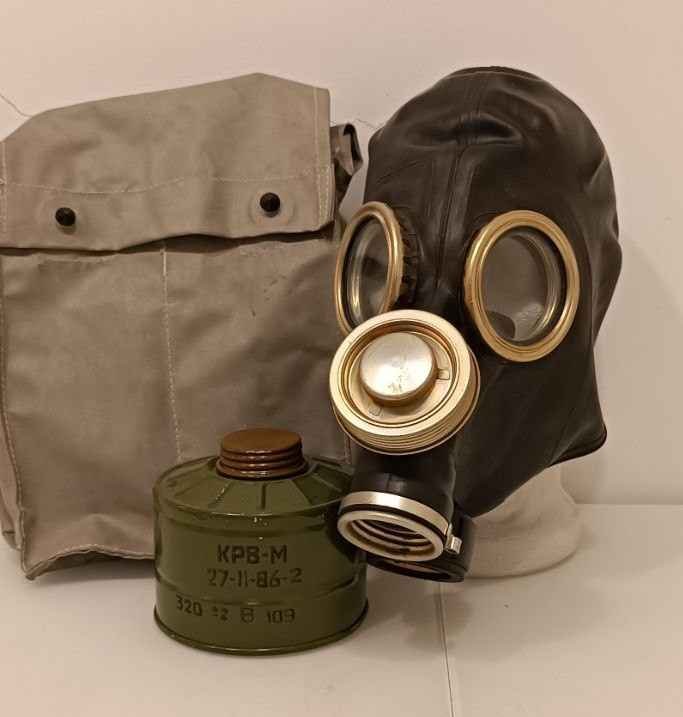
Soviet GP-5 gas mask with black ShMP facepiece, filter and carry bag
GP-5 gas mask with ShMP facepiece (black version)

They come in different sizes (0–4), so you can actually get a proper fit. There are also small extras like anti-fog lenses and winter cuffs that make it more comfortable to use.

One interesting thing – these masks can last decades if stored properly. Some are still in great condition after 50–60 years.

Overall, it’s a cool piece of history. Good for collecting, display, or just if you like that old Soviet aesthetic.

GP-7 Gas Mask

Russian GP-7 gas mask civilian model with filter and head straps
GP-7 civilian gas mask with improved design and filter

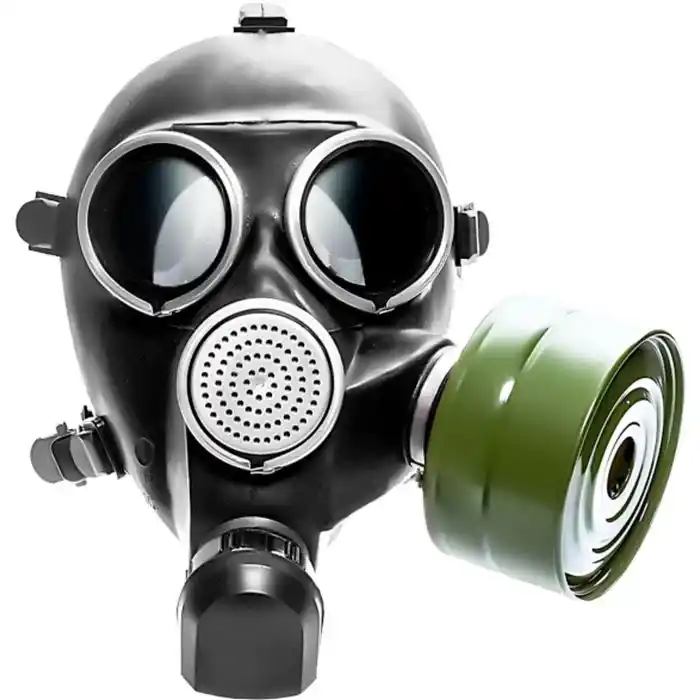
The GP-7 gas mask is a newer Soviet-era model that’s still being produced today. It was originally developed in 1983 for serious protection – not just breathing, but also your eyes and face.

What makes it interesting is that it’s not just old surplus – this is a design that’s still considered relevant and actually used.

Russian GP-7 gas mask worn in Cold War reenactment with hood and filter
GP-7 gas mask in Cold War reenactment setup

The mask itself feels more modern compared to earlier models like the GP-5. It has a better fit, a proper head harness with adjustable straps, and a built-in voice system so you can actually talk without sounding completely muffled. The lenses are flat and clear, which makes it easier to see and even use optics if needed.

Some versions come with a drinking tube (GP-7V), so you can drink water without taking the mask off – a small detail, but very practical. It can also include anti-fog inserts and even winter cuffs, so it works better in cold conditions.

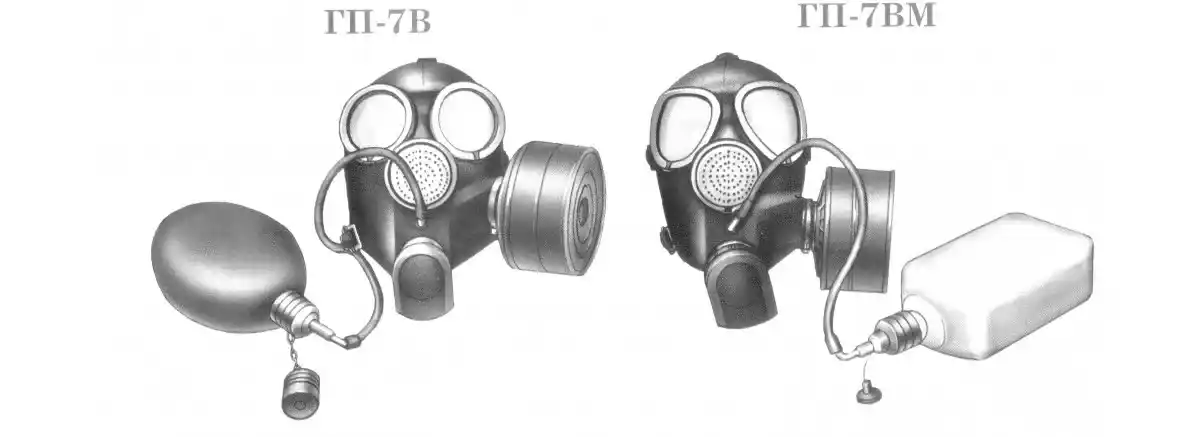
Comparison of GP-7V and GP-7VM gas masks with drinking systems and filters
GP-7V and GP-7VM gas mask comparison

GP-7V Gas Mask

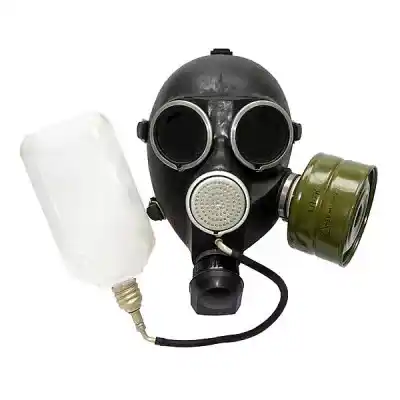
The GP-7V is a version of the GP-7 gas mask with a drinking system. Unlike the standard GP-7, it allows the user to drink water without removing the mask.

Russian GP-7V gas mask with drinking tube and water bottle system
GP-7V gas mask with drinking system and bottle

The GP-7V set includes the MGP facepiece, filter canister, carrying bag, and anti-fog film. The mask can be worn for up to 12 hours, with filters replaced when needed.

GP-7VM Gas Mask

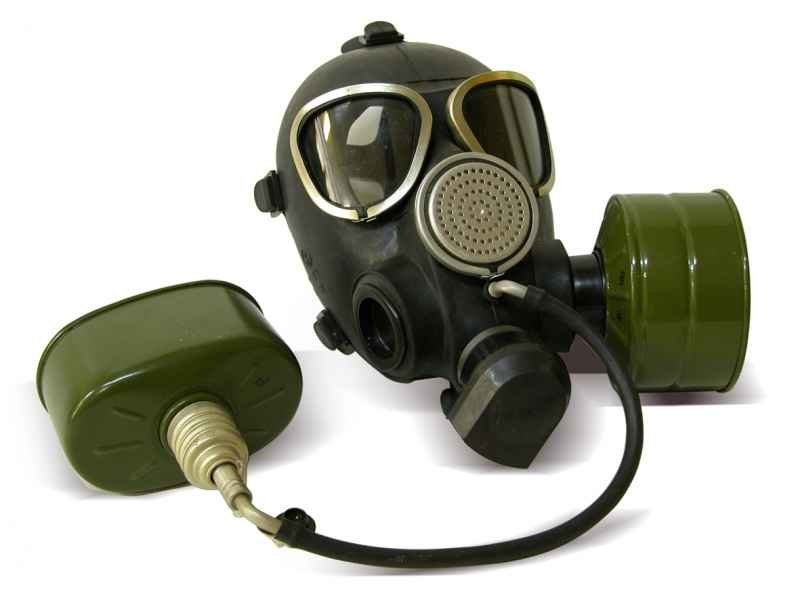
The GP-7VM is a more advanced version. It comes with the MGP-VM Super mask, which allows the filter canister to be attached on either the left or right side by moving the connector and plug.

Russian GP-7V gas mask with drinking system and filter canister
GP-7VM gas mask with drinking system

The GP-7VM also has a drinking system and can be worn for up to 12 hours, with filters replaced when they are used up.

The filter is a classic metal canister with a standard thread, easy to attach and replace. It’s solid, durable, and built to last.

Overall, the GP-7 feels like a more refined version of earlier Soviet masks – more comfortable, more practical, and just better thought out.

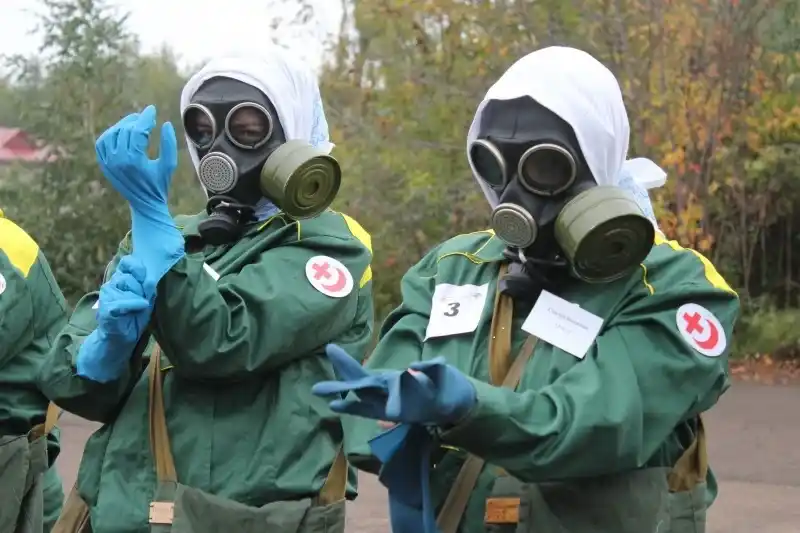
Cold War reenactment medics wearing GP-7 gas masks and protective suits
Cold War reenactment medics in GP-7 gas masks

If you want something that still has that Cold War look but is actually usable and comfortable, this is a really solid choice.

A more advanced Soviet gas mask with improved comfort and usability
Soviet Gas Mask GP-7 (All Sizes)
Classic Soviet GP-7 gas mask with better fit, adjustable straps, and clear lenses. A great Cold War piece that is still practical and popular among collectors and reenactors.


View Soviet Gas Mask GP-7

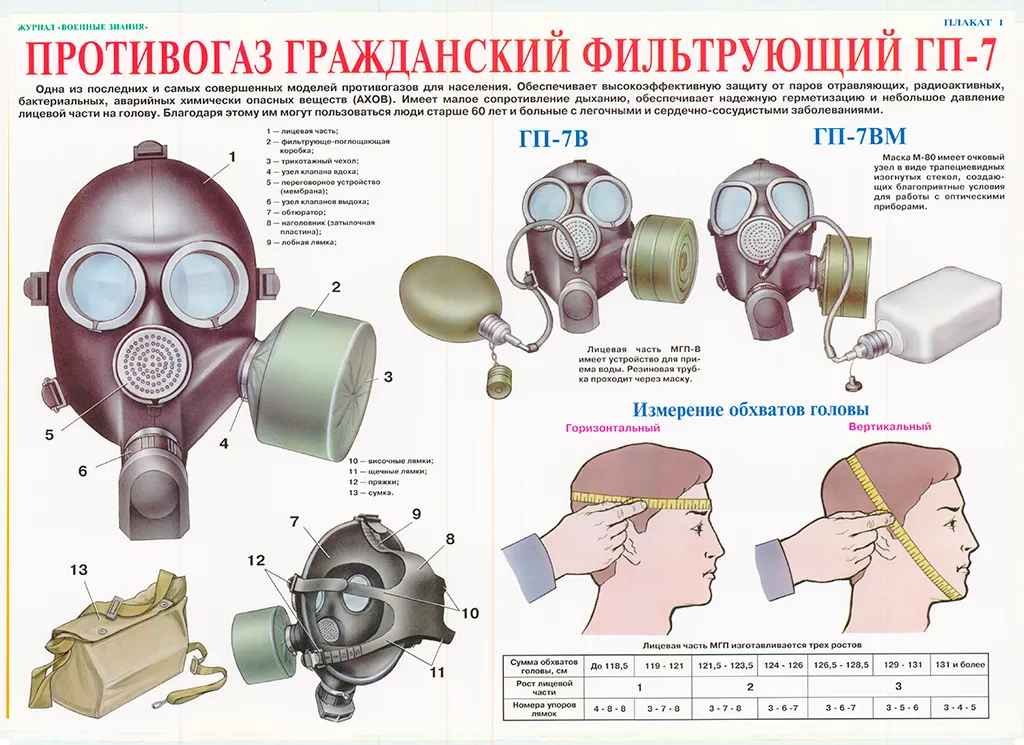
Soviet GP-7 gas mask instruction poster with size chart and head measurement method

Soviet GP-7 gas mask instruction poster with size chart and head measurement guide
Original Soviet GP-7 gas mask instruction poster with size chart and head measurement method

GP-7 Civilian Filtering Gas Mask

The GP-7 is one of the later and more advanced Soviet civilian gas masks.
It was designed to protect the user from toxic, radioactive, bacterial, and emergency chemical substances.
The mask has low breathing resistance, provides a reliable face seal, and puts only light pressure on the head.
Because of this, it could be used by adults over 60 years old and by people with heart or lung conditions.

Main Parts of the GP-7 Gas Mask

No. Part
1 Facepiece
2 Filtering-absorbing canister
3 Knitted cover
4 Exhalation valve unit
5 Speaking device
6 Inhalation valve unit
7 Face seal / obturator
8 Anti-fog lenses
9 Forehead strap
10 Temple straps
11 Cheek straps
12 Buckles
13 Carrying bag

GP-7V and GP-7VM Versions

Model Description
GP-7V The MGP-V facepiece has a drinking device. The rubber tube is connected to a military flask cap.
GP-7VM The M-80 facepiece has trapezoid-shaped lenses. This makes it easier to work with optical devices.

How to Measure Your Head for a GP-7 Gas Mask

To choose the correct GP-7 size, measure your head in two ways:

Measurement How to Measure
Horizontal Measure around the head, across the forehead and the back of the head.
Vertical Measure from the top of the head, under the chin, and back to the starting point.

GP-7 Gas Mask Size Chart

Total Head Measurement Up to 118.5 cm 119–121 cm 121.5–123.5 cm 124–126 cm 126.5–128.5 cm 129–131 cm 131 cm and more
Facepiece Size 1 1 2 2 3 3 3
Strap Stop Numbers 4-8-8 3-7-8 3-7-8 3-6-7 3-6-7 3-5-6 3-4-5

GP-8V Gas Mask

Russian GP-8V gas mask with trapezoid lenses and drinking system
GP-8V gas mask with trapezoid lenses and drinking system

The GP-8V gas mask is a civilian model with a more modern design.

It features trapezoid-shaped lenses, which give about 20% better field of view compared to older round lenses.

It also has a drinking system, so you can drink water without taking the mask off.

The filter is mounted on the left side, making it more удобный for aiming and general use.

You can wear the mask for up to 12 hours, replacing the filter when needed.

GP-9 Gas Mask

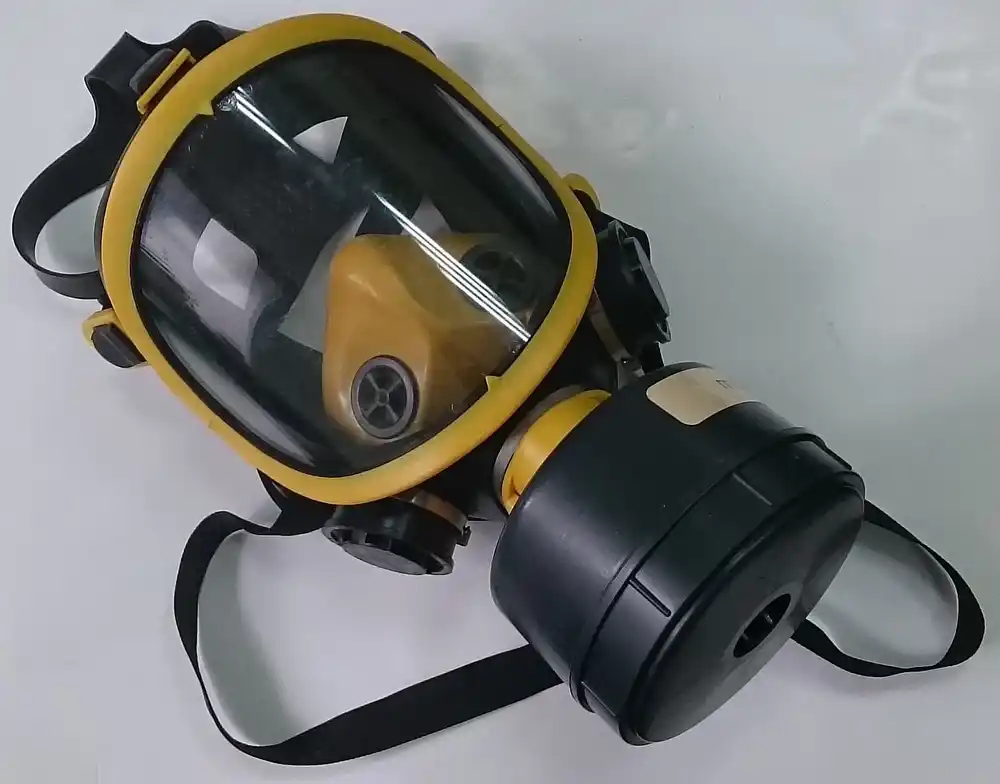
Russian GP-9 gas mask civilian model with filter for chemical and biological protection
GP-9 civilian gas mask for chemical and biological protection

Overall, it’s a more comfortable and practical upgrade compared to earlier models like the GP-5.

Leave a Reply

Your email address will not be published. Required fields are marked *

Similar Posts