How Soviet Cold War Uniform Changed After WWII
The Soviet Cold War uniform changed a lot after World War II. New weapons, new conditions, and new military goals forced the army to adapt. From simple WW2 gear, soldiers moved to more practical uniforms, better boots, and specialized equipment for different roles.
Articles this series:
How the Soviet Army Uniform Changed from 1955 to 1991
Cold War Soviet Army Uniform Insignia: Shoulder Boards (1969-1988)
Cold War Soviet Army Uniform: Why It Was Uncomfortable for Daily Service – Part 1
Guide of the Soviet Afghanka Uniform (M88)
The 1960s were marked by rising global tensions. The Cuban Missile Crisis, the arms race, and the Vietnam War all made the situation along the borders of the Soviet Union more serious. Border troops found themselves on the front line of the confrontation between the socialist and capitalist worlds.
During this period, not only combat readiness mattered, but also equipment and supply. A lot of attention was given to improving uniforms, gear, and overall military standards.
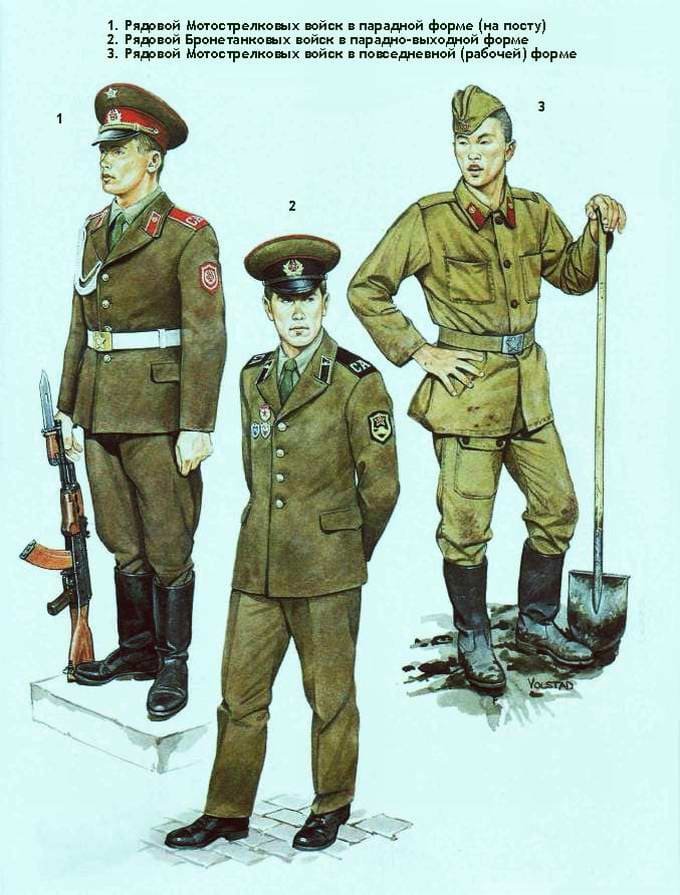
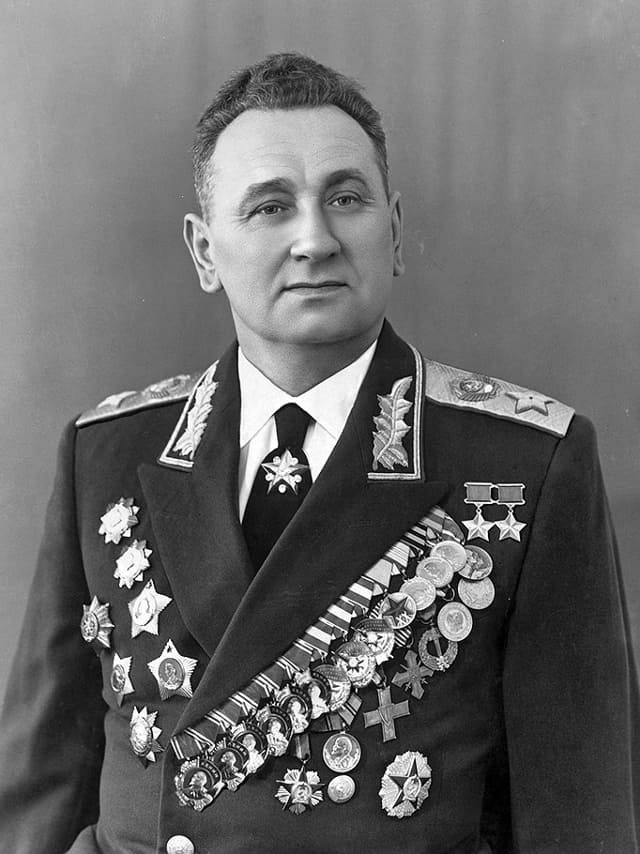
In April 1967, Marshal of the Soviet Union Andrei Grechko was appointed Minister of Defense. One of his first initiatives was to change the appearance of Soviet soldiers.
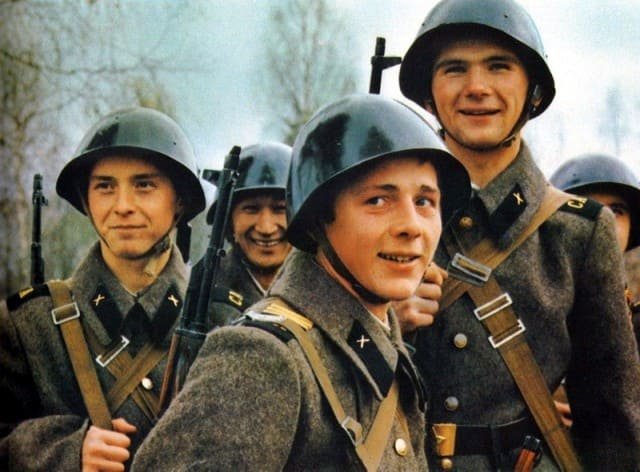
After reviewing new uniform designs, the Ministry decided to introduce a single olive color for all clothing. Parade uniforms were redesigned without chest pockets, a ceremonial belt was added for formal use, and soldiers, sergeants, and cadets received sleeve insignia showing their branch and years of service.
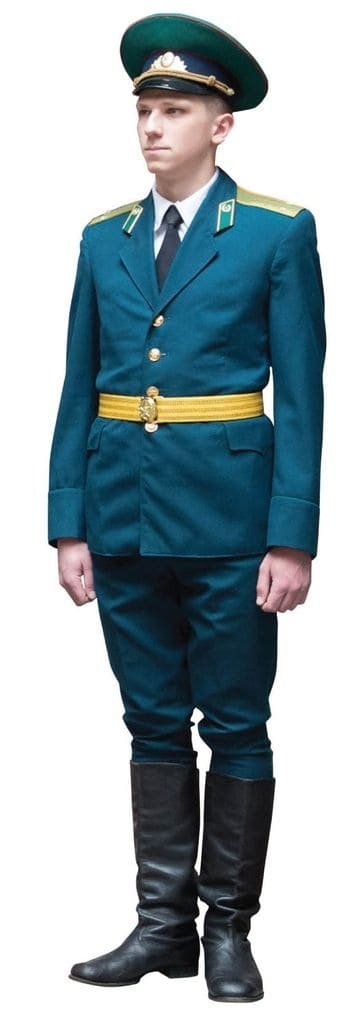
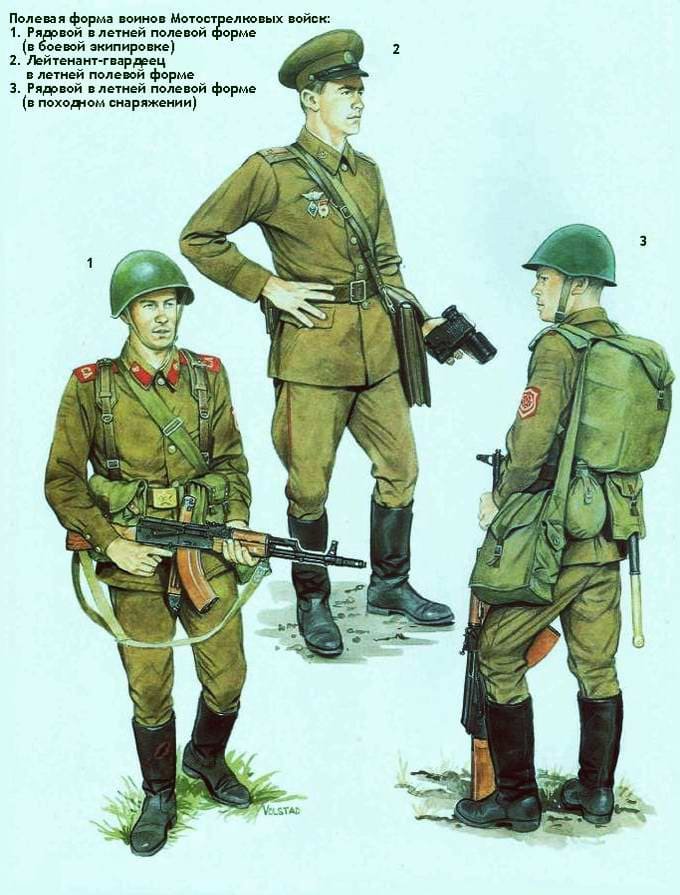
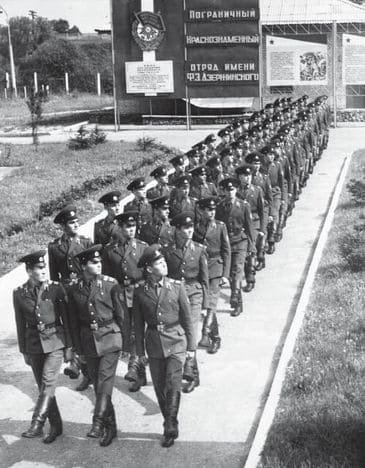
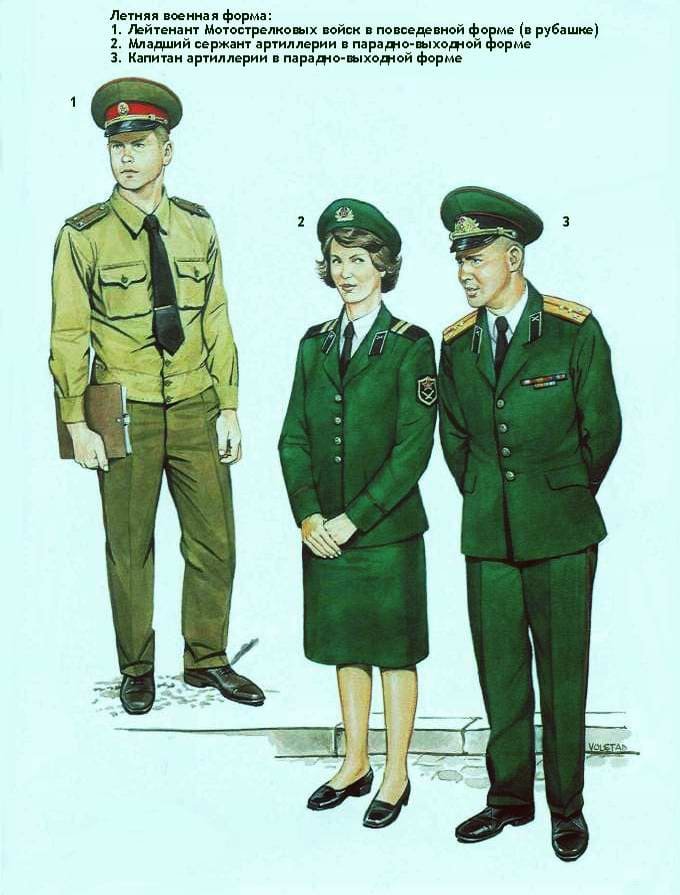
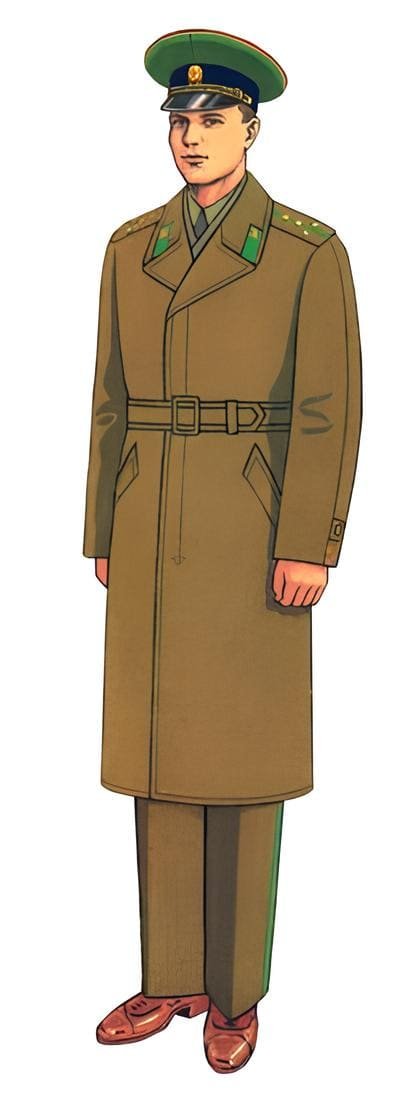
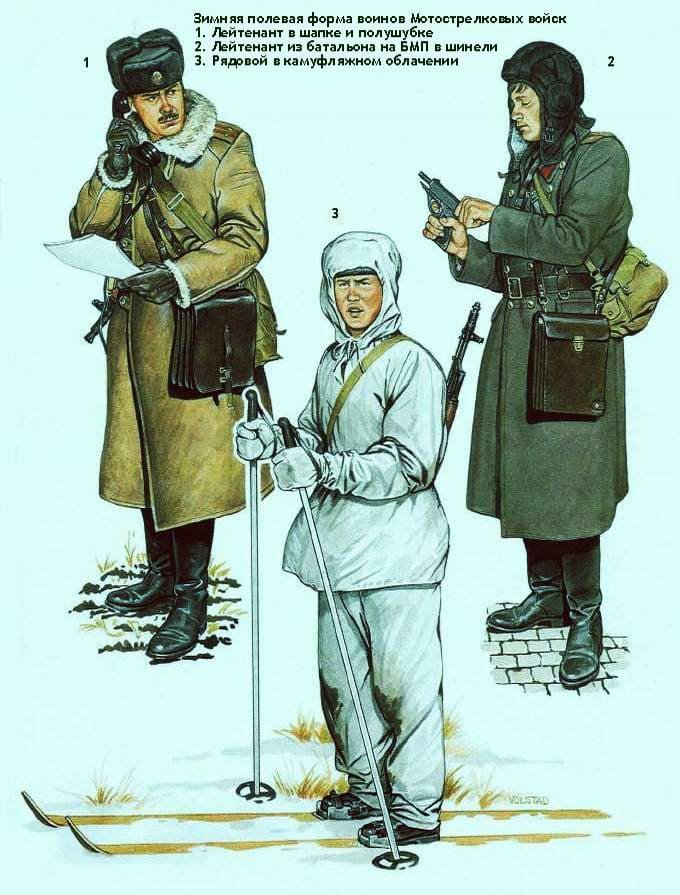
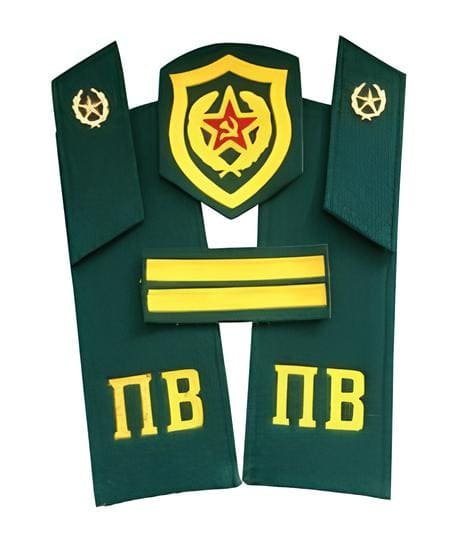
Many bright elements appeared, intended to make the uniform more visually appealing. In addition to shoulder boards and collar tabs, sleeve insignia (chevrons) with branch emblems were now sewn onto the tunic.
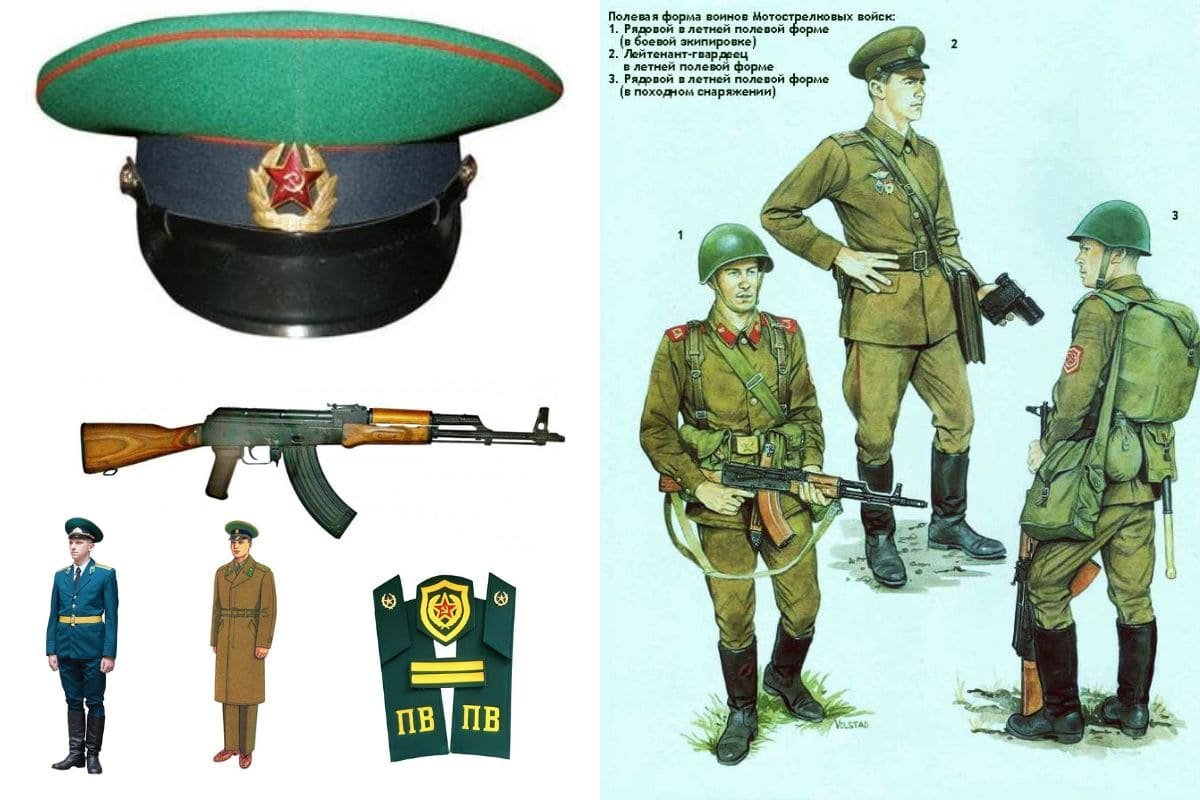
For the border troops, this took the form of a heraldic shield made of green cloth, featuring a red star with a hammer and sickle framed by a wreath of oak leaves. KGB servicemen wore blue chevrons and collar tabs, while border guards wore green ones.
Cadets of military schools were assigned stripes showing their years of study, known as “kursovki,” while long-service personnel wore angle chevrons indicating years of service. By the personal initiative of Marshal Grechko, shoulder boards of sergeants, cadets, and privates received letter markings:
SA – Soviet Army, PV – Border Troops, VV – Internal Troops, GB – State Security Committee.
For officers and long-service personnel, a single-breasted parade uniform was introduced with sea-green trousers of the previous design, featuring light green piping on the cuffs and trousers, and gold piping on the collar tabs. The uniform of aviation officers became blue.
The new uniform was first demonstrated during the parade on Red Square on November 7, 1969.
Standardization
The changes also affected everyday and field uniforms.
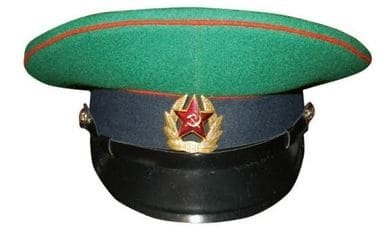
Piping on headgear and shoulder board stripes for all branches could now be only one color — red.
For example, the famous border guard cap was changed for the first time in many years: its traditional raspberry piping was replaced with red.
Light blue piping and stripes were kept only for the air force.
Work Uniform
To keep regular uniforms clean, conscript soldiers were issued a summer work uniform set.
It included a cotton jacket and trousers in protective color.
The work jacket was originally single-breasted, with a turn-down collar, no collar tabs, and a hidden button closure.
It had two chest pockets with flaps, straight sleeves without cuffs, and light green shoulder boards.
Later, the work jacket design became similar to the standard service tunic.
The trousers were straight-cut, semi-wool, in protective color.
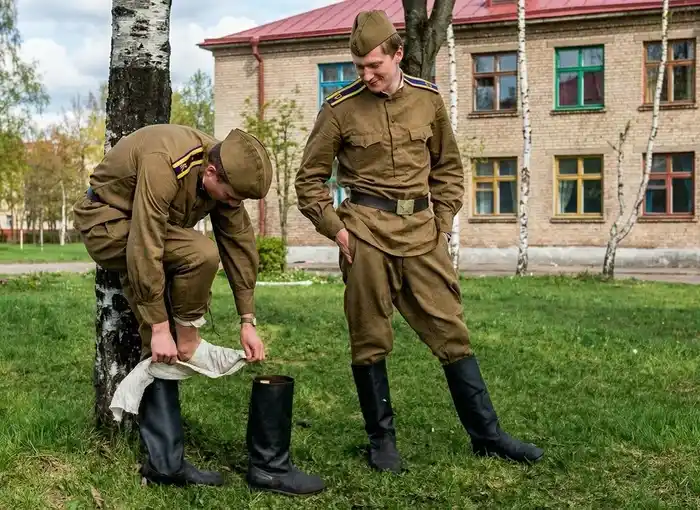
They could be worn with boots tucked in or with shoes untucked as part of dress uniform.
Black and Brown Footwear
The color of footwear also changed.
With everyday uniforms, generals, officers, and long-service personnel wore brown low shoes.
Parade uniforms remained paired with black footwear.
At the same time, a strict hierarchy of military footwear developed in Soviet structures, especially when it came to boots.
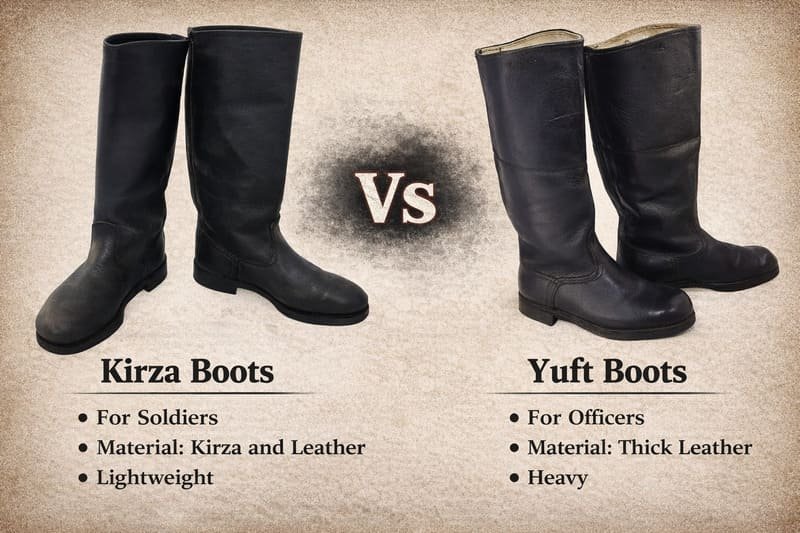
Conscripts (soldiers and sergeants) were issued kirza boots.
Cadets of higher military schools wore yuft leather boots.
For field use, officers were issued yalovye boots, while for everyday and parade wear they used chrome leather boots.
Warm and Practical
In winter, the uniform was supplemented with a jacket, commonly called a bushlat.
It had sewn-on shoulder boards, collar tabs, and a strap with gold buttons.
Notably, the gold buttons were not ideal for camouflage.
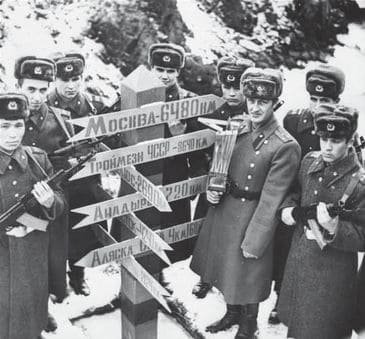
Border guards often chose the bushlat over the long overcoat.
The shorter jacket made it easier to run, chase intruders, and even fight hand-to-hand.
A long overcoat simply did not allow that level of mobility.
Modernized Kalashnikov
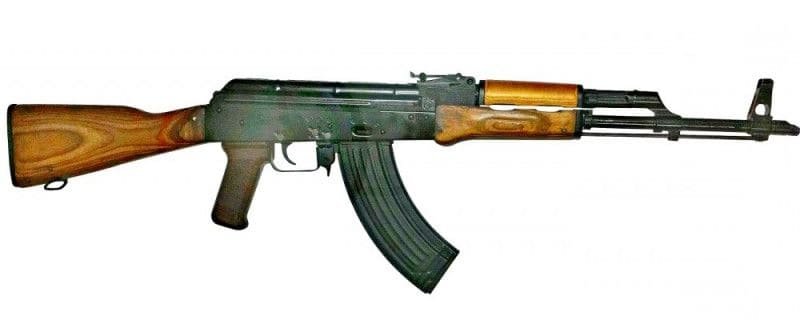
AKM Specifications
- Caliber: 7.62 mm
- Cartridge: 7.62×39 mm
- Combat rate of fire: up to 100 rounds per minute
- Muzzle velocity: 715 m/s
- Effective firing range: up to 1000 meters
- Feeding system: detachable box magazine (30 rounds)
- Weight (empty magazine): 3.1 kg
In 1959, the Kalashnikov rifle was upgraded with several improvements.
A hammer delay mechanism was added, the bolt carrier was slightly modified, and the receiver was changed to a lighter stamped design instead of a milled one.
The magazine was also made from a lighter alloy.
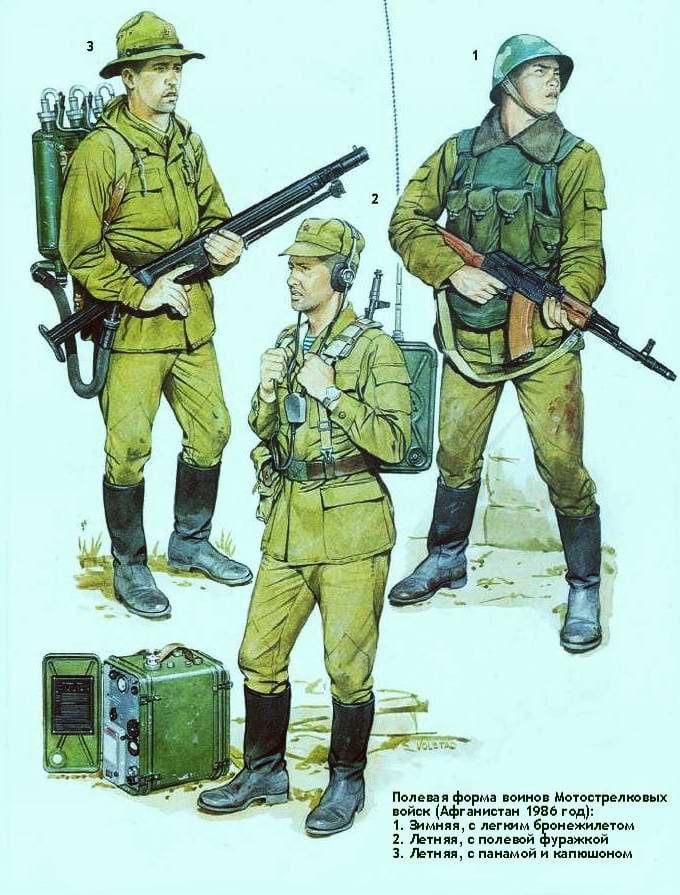
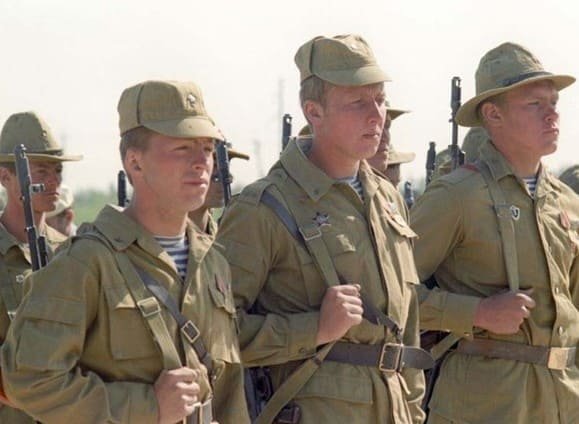
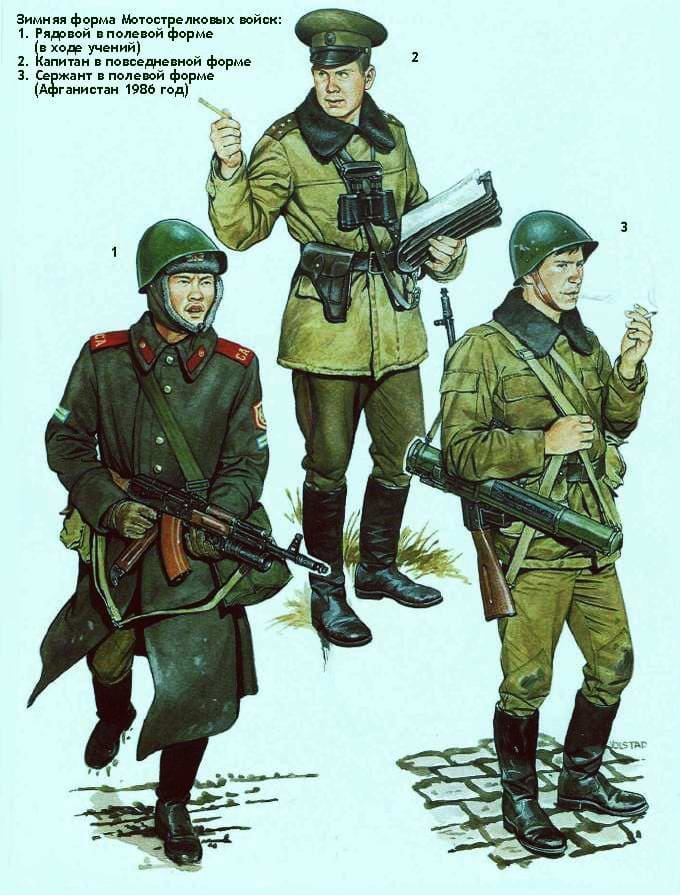
Field uniform of motor rifle troops (Afghanistan, 1986):
1. Winter, with light body armor
2. Summer, with field cap
3. Summer, with panama hat and hood
A muzzle compensator was added to the barrel, improving accuracy during automatic fire, especially from unstable positions.
This was supported by a new “straightened” stock, positioned slightly higher.
Later, night shooting attachments were introduced: a flip-up rear sight with a wide notch and a front sight with glowing points.
The rifle also received a new bayonet-knife, replacing the older blade type.
It included a saw edge and a tool for cutting wires and barbed wire.
At the same time, it remained compatible with suppressors for silent and flashless firing.
In addition to the standard AKM, several variants were developed:
– AKMS with a folding stock (down and forward)
– versions equipped with mounts for night vision sights
Degtyaryov Light Machine Gun
The extensive combat experience gained during World War II allowed Soviet designers to create a new and more powerful weapon chambered for the 1943 cartridge.
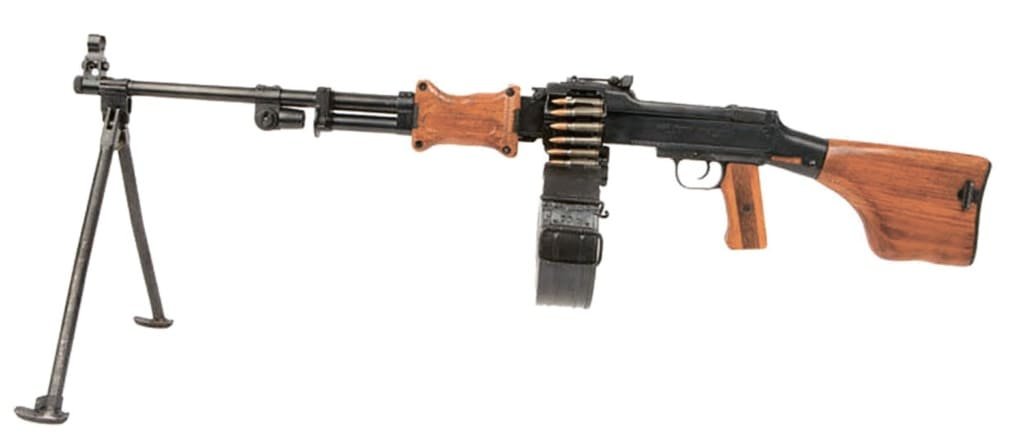
In 1944, during a competition organized by the Main Artillery Directorate of the Red Army, the light machine gun designed by Vasily Degtyaryov was selected as the best.
It was tested in real combat conditions at the front, and the identified issues were quickly fixed.
One of the key features of the weapon was its belt-fed system combined with relatively low weight.
Mobility was further improved by the option to attach a metal ammunition box under the receiver.
Shortly after the war, the weapon was officially adopted as the
“7.62 mm Degtyaryov Light Machine Gun” (RPD).
It remained in service until the late 1960s, was модернизирован, exported to more than 40 countries, and produced under license.
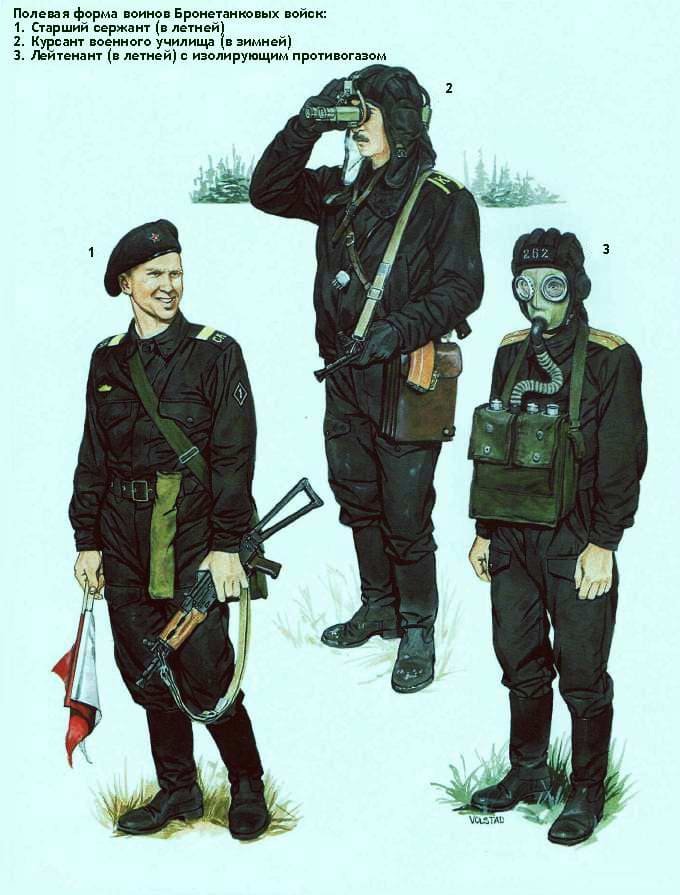
Field uniform of armored troops:
1. Senior sergeant (in summer uniform)
2. Military school cadet (in winter uniform)
3. Lieutenant (in summer uniform) with isolating gas mask
During the Cold War, Soviet pilot gear changed because of jet aircraft like the MiG-21. These planes flew faster and higher, so pilots needed better protection. Pressure suits were introduced to handle high altitude and G-forces. Helmets and oxygen systems also became more advanced. Instead of one uniform, pilots started using different flight suits for summer, winter, and high-altitude missions.
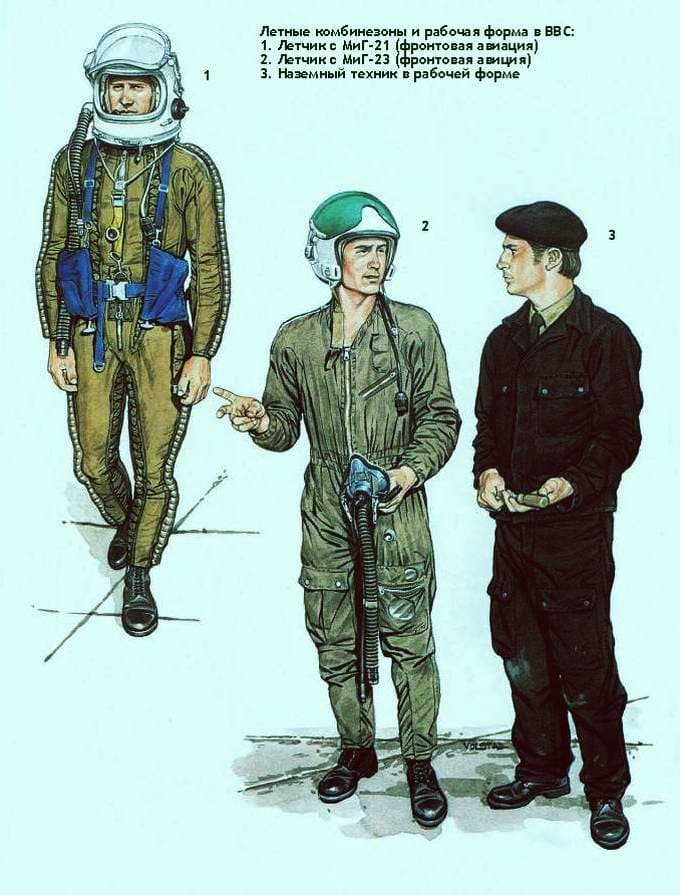
Flight suits and work uniform in the USSR Air Force:
1. MiG-21 pilot (front-line aviation)
2. MiG-23 pilot (front-line aviation)
3. Ground technician in work uniform
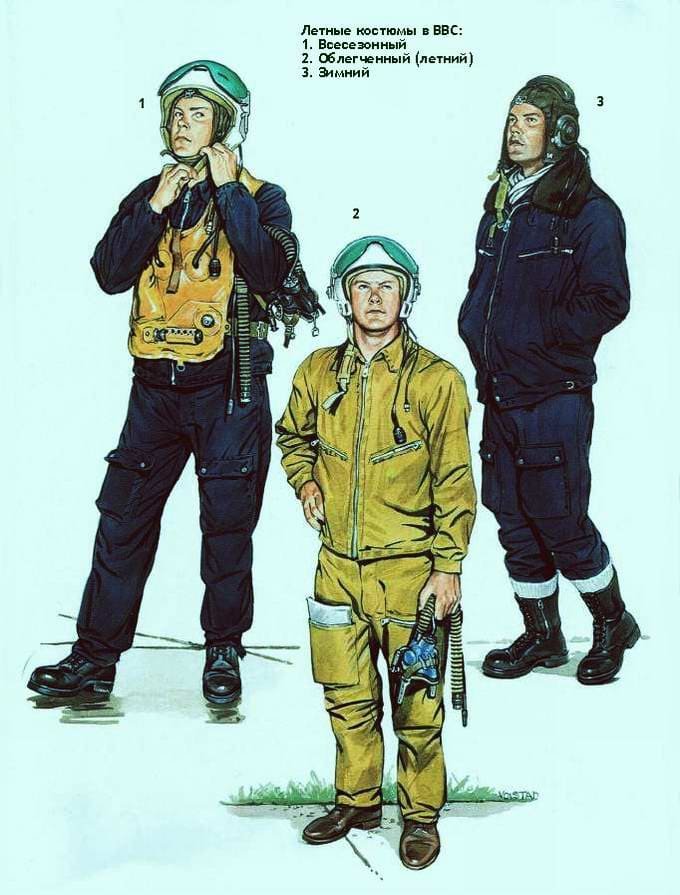
Flight suits in the USSR Air Force:
1. All-season
2. Lightweight (summer)
3. Winter
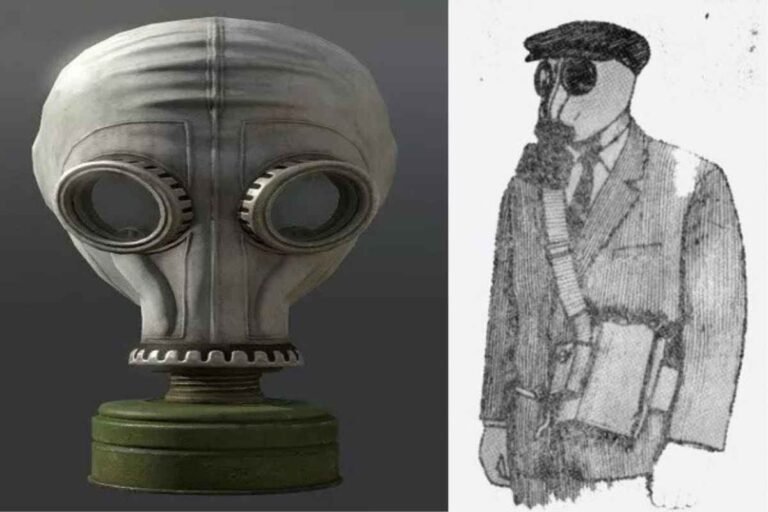
The Cold War perioud, the USSR prepared for a possible nuclear and chemical war, so huge numbers of gas masks and protective suits were produced and stored in warehouses. Almost every soldier – and even civilians – had access to this gear. After the collapse of the Soviet Union, many of these stockpiles were sold or spread around the world. Today, Soviet gas masks are popular for collections, reenactments, Halloween costumes, and even games like S.T.A.L.K.E.R.
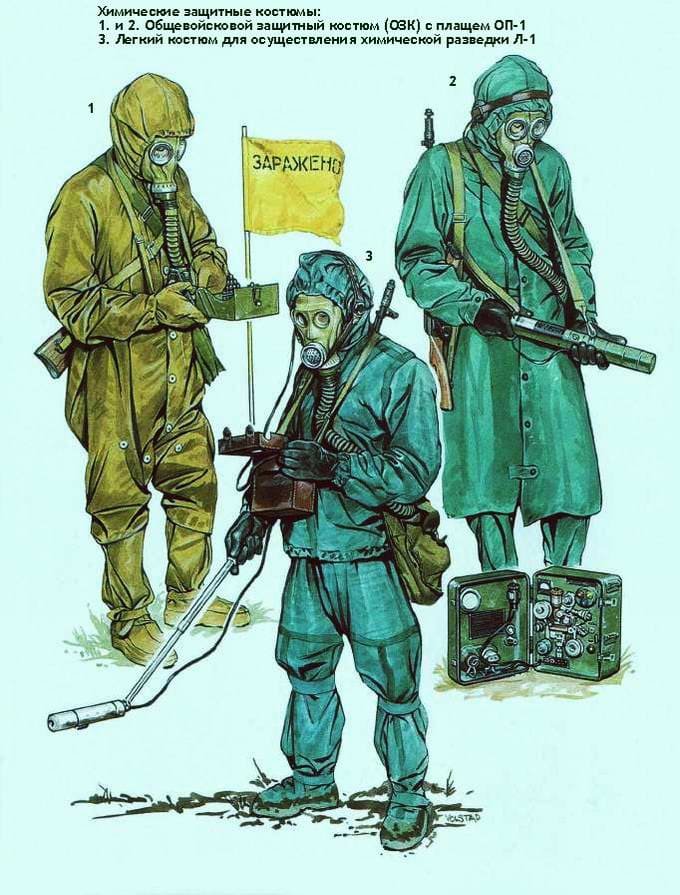
Chemical protection suits:
- and 2. General military protective suit (OZK) with OP-1 cloak
- Light suit for chemical reconnaissance L-1
Articles this series:
Telnyashka: History of the Russian Navy and VDV Striped Shirt
Guide of the Soviet Afghanka Uniform (M88)
Field Uniform and Equipment of the Soviet Army (1968–1991) – Part 1
Field Uniform and Equipment of the Soviet Army (1968–1991) – Part 2
Looking original Soviet boots and accessories? Please visit here: Soviet Boots Store
Looking for a Real Telnyashka?
Add extra Telnyashkas and accessories – shipping stays the same.
Flat Worldwide Shipping – $14.98
Shipping is charged only once per order.