Soviet Spetsnaz Uniform in Afghanistan (1979-1989): Field Clothing and Combat Gear
Soviet Spetsnaz uniform in Afghanistan (1979-1989) evolved under extreme heat, mountain operations, supply shortages, and the realities of deep reconnaissance missions behind enemy lines. This guide examines real field clothing, combat gear, and equipment used by GRU Spetsnaz units during the Afghan War.
This article uses fragments from the book GRU Spetsnaz in Afghanistan, 1979-1989 and archival materials from veterans.
“Uniform number eight – you wear whatever you have.”
This army joke became everyday reality in Afghanistan.
For Spetsnaz units, rare cases of strict uniformity were constantly criticized by higher command.
Related guides
- Guide of the Soviet Afghanka Uniform (M88)
- Telnyashka: History of the Russian Navy and VDV Striped Shirt
- How the Soviet Army Uniform Changed from 1955 to 1991
- Field Uniform and Equipment of the Soviet Army (1968-1991) – Part 1
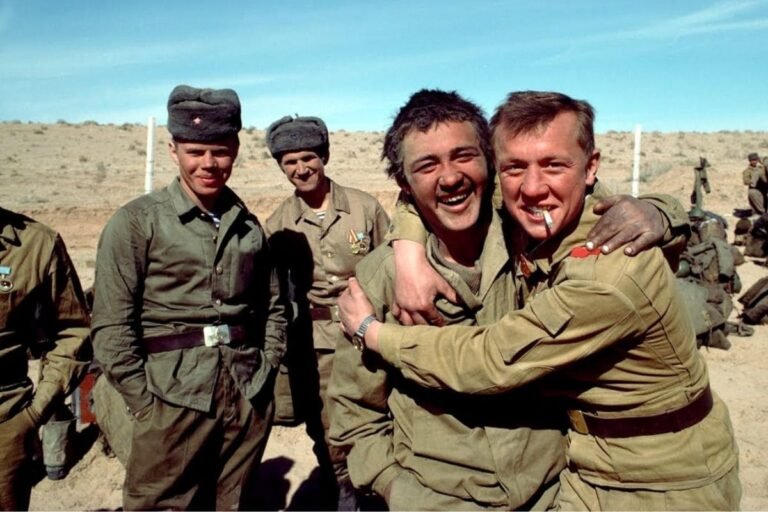
Combat clothing of reconnaissance soldiers was often supplemented with captured (trophy) uniforms, footwear, and equipment. According to intercepted radio communications of insurgent groups, even they struggled to identify these armed men, as they did not look like typical “shuravi.”
Only Spetsnaz units were officially allowed to conduct combat operations without mandatory body armor and steel helmets required for personnel of the 40th Army. These items were strongly associated by Afghans with regular Soviet troops. This privilege of the Spetsnaz even caused envy among other servicemen of the Soviet contingent.
Lightweight field uniform for hot climate
The so-called “lightweight uniform” was the main field clothing of Soviet troops throughout the Afghan War. Only in the second half of the 1980s was it partially replaced by a “new model” field uniform, which still did not fully meet the requirements of high-temperature combat operations.
The lightweight cotton uniform consisted of a jacket with an open collar and straight-cut trousers. The summer version was worn with a panama hat and leather boots.
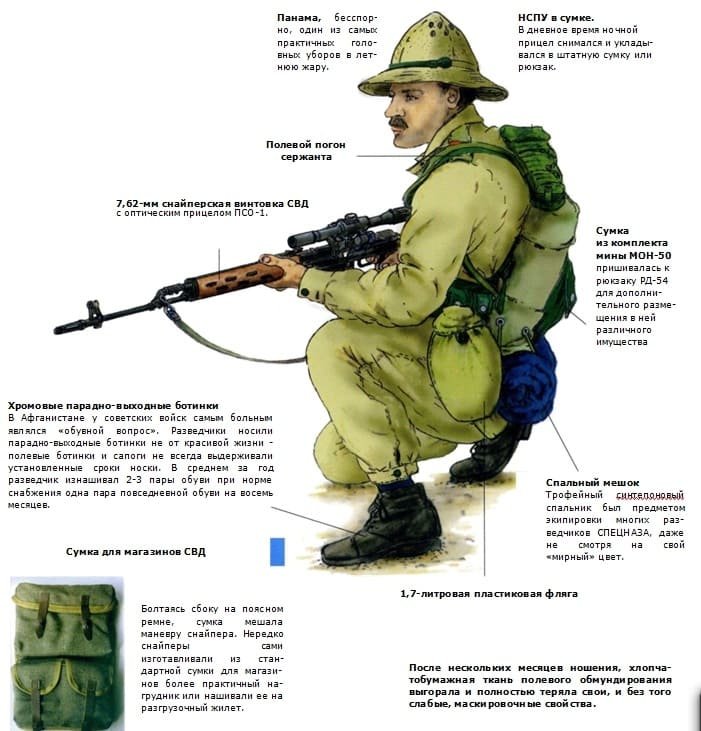
Reconnaissance Sniper Equipment (Afghanistan Period)
Item Description Panama Hat One of the most practical types of headgear in summer heat. Field Sergeant Shoulder Boards Field rank insignia of a sergeant. 7.62 mm SVD Sniper Rifle With PSO-1 optical sight. NSPU Night Sight (in Pouch) During daytime, the night sight was removed and placed in a standard pouch or backpack. Bag from MON-50 Mine Kit The bag from the MON-50 mine kit was used to carry additional equipment of small size. Chrome Parade Boots In Afghanistan, Soviet troops faced major problems with footwear. Reconnaissance soldiers wore parade boots not out of beauty. Field boots and sapogi did not always withstand the established wear period. On average, a scout wore out 2–3 pairs of boots per year, while the official supply standard was one pair of everyday boots for eight months. Pouch for SVD Magazines With a large pouch on a shoulder strap, the bag interfered with the sniper’s handling. Often, snipers independently made holders from standard SVD magazine pouches and attached them to a load-bearing vest. 1.7-Liter Plastic Flask Standard 1.7-liter plastic water flask. Captured Sleeping Bag Captured insulated sleeping bags were used by many reconnaissance soldiers, even though they were designed for colder climates. Field Uniform After Several Months After several months of wear, the cotton fabric of the field uniform faded and turned gray, losing its camouflage properties.
Special Spetsnaz field uniform: “pryzhkovka” / “pesochka”
Spetsnaz units conducting deep reconnaissance were equipped with uniforms similar in cut to NATO field uniforms. Within the units this special-purpose uniform was called “pryzhkovka” or “pesochka.”
The uniform was made from thin but dense cotton fabric in sand or olive tones. In Afghanistan, sand-colored versions were most common, though they faded rapidly under intense sunlight.
Looking for a Soviet Afghanka visor cap? Order here:
Soviet Afghanka hat
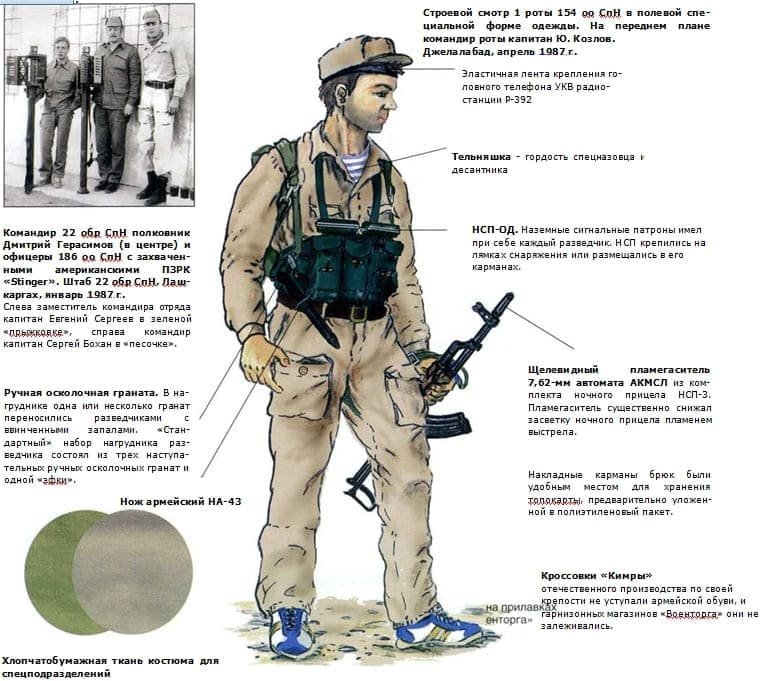
Reconnaissance Soldier Equipment (Afghanistan, 1987)
Item Description Company Formation Inspection Formation inspection of the 1st company of the 154th separate special purpose detachment (SpN) in field special uniform. In the foreground is company commander Captain Yu. Kozlov. Jalalabad, April 1987. Commander of 22nd Separate SpN Brigade Colonel Dmitry Gerasimov (in the center) and officers of the 180th Separate SpN Detachment with captured American FIM-92 “Stinger”. Headquarters of the 22nd Separate SpN Brigade, Lashkar Gah, January 1987. On the left is deputy detachment commander Captain Yevgeny Sergeev in a “jeans jacket”, on the right is commander Captain Sergey Bozan in a “sand uniform”. Elastic Tape for R-392 Radio Elastic strap for fastening the R-392 VHF radio station. Telnyashka The pride of special forces and paratroopers. NSP-3 Each reconnaissance soldier had a night sight. NSP-3 was attached to load-bearing straps or placed in pockets. 7.62 mm AKMSL Assault Rifle With NSP-3 night sight kit. The flash suppressor significantly reduced the flash of the night sight during firing. Fragmentation Hand Grenade One or several grenades were carried on the chest. The standard chest rig of reconnaissance soldiers consisted of three canvas pouches for hand grenades and one for flares. NA-43 Army Knife Standard army knife NA-43. Cotton Fabric of Special Uniform Cotton fabric of the special forces uniform. Cargo Pockets on Trousers The patch pockets of the trousers were convenient for storing small items, including a preliminary prepared polyethylene bag. “Kimry” Sneakers Domestic production sneakers that were not inferior in durability to army footwear. In garrison stores “Voentorg” they were not available.
KZS protective mesh suit
The protective mesh KZS suit was part of the individual protection kit against chemical or radioactive contamination. Despite being designed for single use, it became extremely popular in Afghanistan due to breathability in hot climate.
In summer it was often worn over underwear only. Spetsnaz units constantly experienced shortages of KZS equipment.
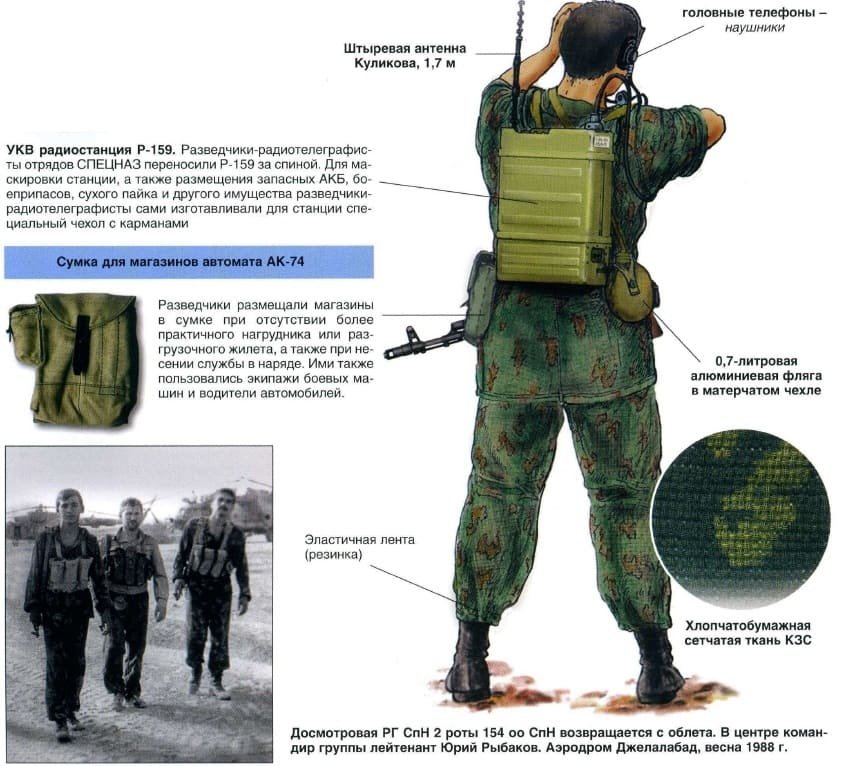
Reconnaissance Radio Operator Equipment (Afghanistan, 1988)
Item Description Whip Antenna “Kulikov”, 1.7 m Whip antenna “Kulikov”, 1.7 meters. Headphones Headphones. VHF Radio Station R-159 Reconnaissance radio-telegraph operators of SPETSNAZ units carried the R-159 behind their backs. To conceal it, as well as to place spare batteries, dry rations and other equipment, the radio operators themselves made a special cover with pockets for the station. Bag for AK-74 Magazines Reconnaissance soldiers placed magazines in the bag when there was no more practical chest rig or load-bearing vest available, as well as during guard duty. It was also used by crews of combat vehicles and vehicle drivers. 0.7-Liter Aluminum Flask 0.7-liter aluminum flask in a fabric cover. Elastic Tape (Rubber Band) Elastic tape (rubber band). KZS Cotton Mesh Fabric Cotton mesh fabric of the KZS suit. Inspection of RG SpN 2nd Company, 154th Separate SpN Inspection of the reconnaissance group of the 2nd company of the 154th separate special purpose detachment returning from a flight. In the center is group commander Lieutenant Yuri Rybakov. Jalalabad airfield, spring 1988.
Soviet Spetsnaz Uniform in Afghanistan (1979-1989): KZS Suit, Afghanka, Gorka, and Weapons
This section covers the most searched Afghan War topics around Soviet Spetsnaz uniform in Afghanistan: the KZS camouflage suit (maskhalat), the mid-1980s “experimental” field uniform later known as Afghanka, mountain kit “Gorka”, disguise tactics, and the most common Spetsnaz weapon setups – including AKMSL + PBS-1, night sights, and radio equipment.
Top related products and guides
- Original Soviet KZS camouflage suit
- Soviet M88 combat boots
- Guide of the Soviet Afghanka Uniform (M88)
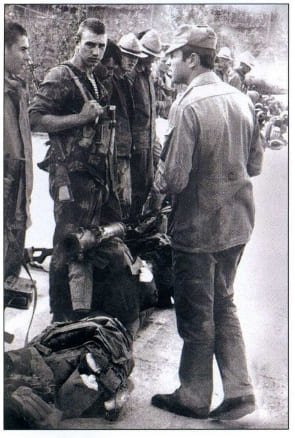
Commander of the 668th Separate Special Forces Detachment, Major V. Goratenkov (right), conducts a readiness inspection of the 2nd company before a combat mission. In the center – a reconnaissance flamethrower operator wearing a KZS protective mesh suit. Kabul, spring 1988.
KZS camouflage suit and reversible “maskhalat” coverall
The camouflage coverall, or maskhalat, used a reversible color scheme. One side (green) was ideal for vegetated areas (“green zone”), while the other side (gray) worked better for mountains and desert terrain. Company tailors could quickly remake the coverall into a two-piece uniform (trousers and jacket) in minutes.
Later, Soviet industry adopted Afghan lessons and shifted to producing two-piece camouflage suits instead of coveralls. The fragile maskhalat fabric could survive only a few combat missions before it wore out completely.
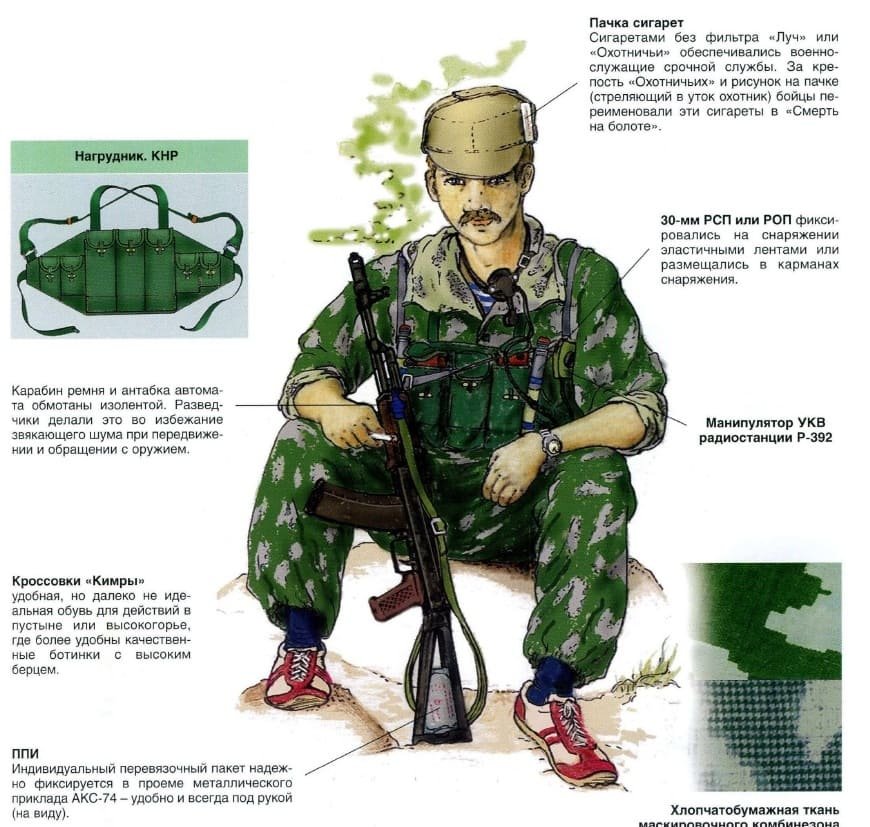
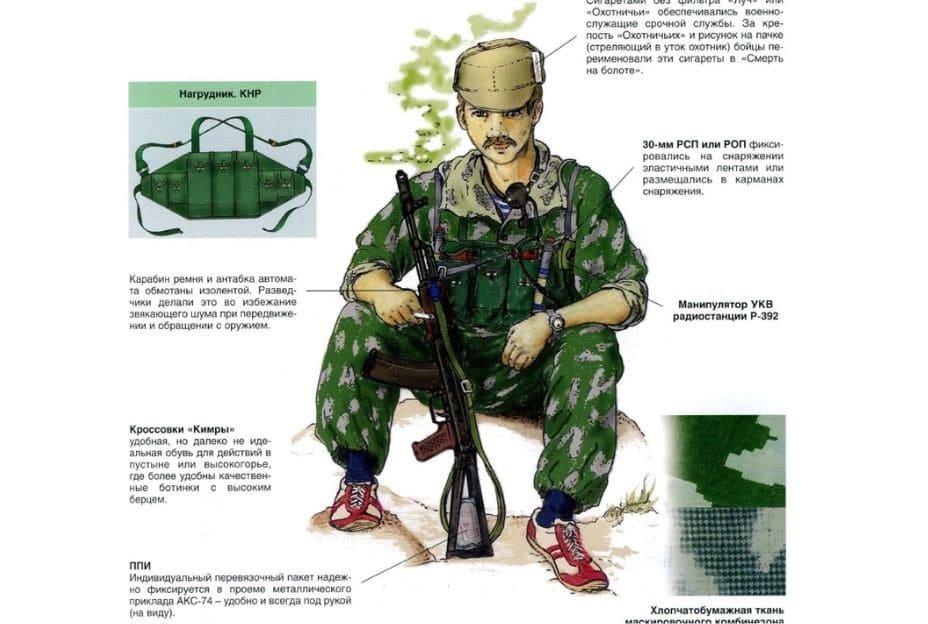
Spetsnaz Equipment and Field Details (Afghanistan)
Item Description Chest Rig, PRC Chest rig, PRC. Cigarette Pack Soldiers on urgent service were supplied with unfiltered cigarettes “Luch” or “Okhotnichyi”. For their strong taste and the drawing of a duck on the pack (a hunter shooting a duck), the soldiers renamed these cigarettes “Death in the Swamp”. 30-mm RSP or ROP 30-mm RSP or ROP were fixed to the equipment with elastic bands or placed in equipment pockets. VHF Radio Station R-392 Control Unit Control unit of the VHF radio station R-392. Carbine Sling and AK-74 Front Sight Wrapped with Insulation Tape The carbine sling and the AK-74 front sight were wrapped with insulation tape. Reconnaissance soldiers did this to avoid noise when moving and handling the weapon. “Kimir” Sneakers Comfortable, but far from ideal footwear for desert or high mountain areas, where high-top boots were more suitable. IPP Individual dressing package was reliably fixed in the slot of the metal clip of the AK-74 – convenient and always at hand. Cotton Fabric of the Camouflage Suit Cotton fabric of the camouflage suit.
Looking for original Soviet KZS camouflage suit? You can get them here – Soviet KZS camouflage suit
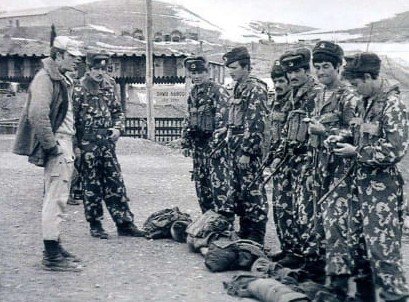
“Experimental uniform” that later became the Afghanka
The summer cotton field uniform of the “new model” (often called the “experimental uniform”) began to be issued in large quantities in the mid-1980s. It used the same protective-color cotton fabric as earlier Soviet field uniforms.
Because of the many overlays and pockets, the cut was too “warm” for Afghan summer. Reconnaissance soldiers preferred lighter clothing in summer and used the “experimental uniform” mainly in cooler seasons.
After the Soviet withdrawal, this “new model” field uniform became widely known under the name “Afghanka”.
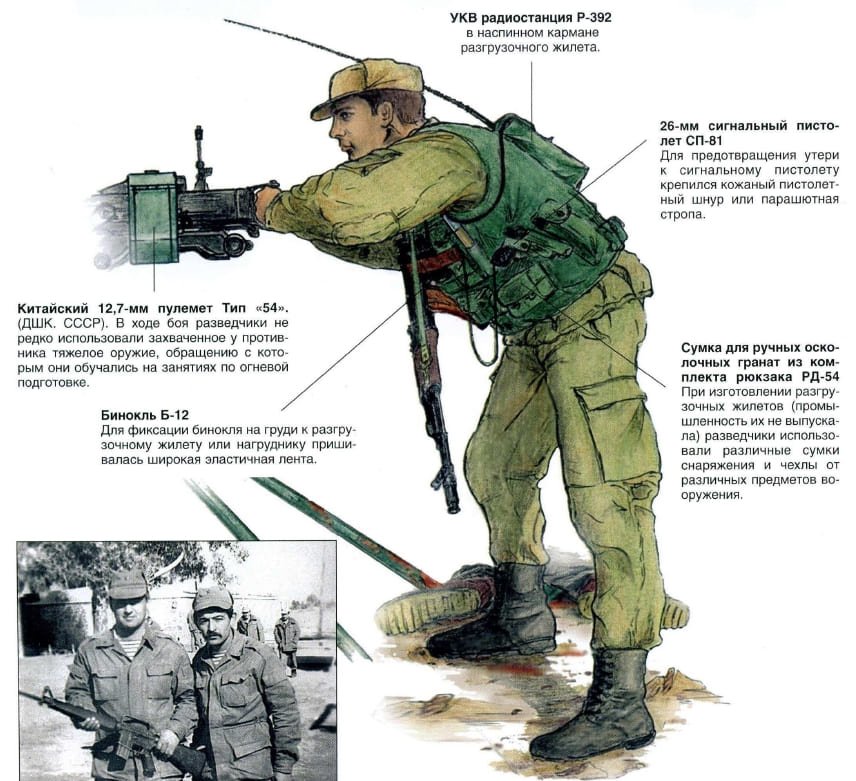
Spetsnaz loadout: RD-54, radios, signal pistol, captured weapons
Soviet Afghan combat boots? You can get them here – Soviet M88 combat boots
Spetsnaz Field Equipment (Afghanistan)
Item Description VHF Radio Station R-392 VHF radio station R-392 in the hip pocket of the load-bearing vest. 26-mm Signal Pistol SP-81 26-mm signal pistol SP-81. To prevent loss, a leather lanyard or parachute cord was attached to the signal pistol. Chinese 12.7-mm Machine Gun Type “54” (DShK) Chinese 12.7-mm machine gun Type “54” (DShK, USSR). In combat reconnaissance soldiers did not use the captured heavy weapon, but were trained to handle it during fire training classes. B-12 Binoculars B-12 binoculars. To fix the binoculars on the chest to the load-bearing vest or chest rig, a wide elastic band was sewn on. Bag for Hand Fragmentation Grenades (RD-54 Set) Bag for hand fragmentation grenades from the RD-54 backpack set. When making load-bearing vests (industrial production was not launched), reconnaissance soldiers sewed equipment pouches and covers for various weapons items themselves.
The winter cotton jacket and trousers of the “new model” included a detachable insulating liner. Sometimes reconnaissance soldiers wore only the liner due to its low weight and good thermal insulation.
The trouser liner, even in winter, was usually worn only during movement by armored vehicles or during daytime halts.
PKM machine gunner kit in Afghanistan
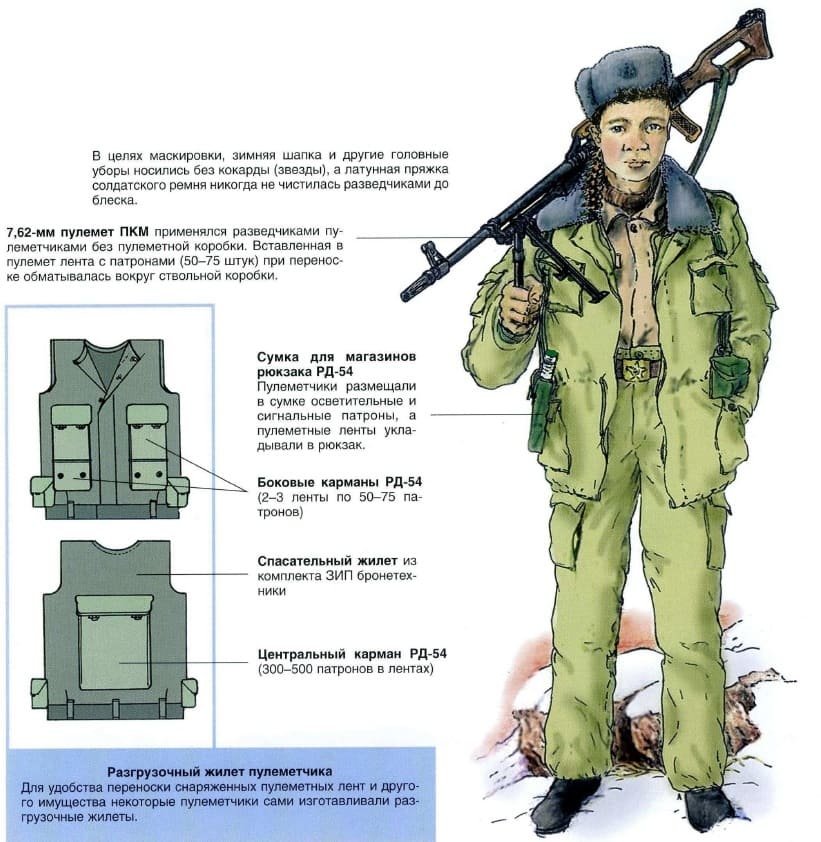
Spetsnaz Machine Gunner Equipment (Afghanistan)
Item Description Winter Hat and Headgear For camouflage purposes, the winter hat and other headgear were worn without a cockade (star), and the brass buckle of the soldier’s belt was never polished by reconnaissance soldiers to shine. 7.62-mm PKM Machine Gun The 7.62-mm PKM machine gun was used by reconnaissance soldiers with a machine gun box. The loaded belt with cartridges (50–75 rounds) when carried was wrapped around the receiver. RD-54 Backpack Magazine Pouch Machine gunners placed illumination and signal cartridges in the pouch, while machine gun belts were placed in the backpack. RD-54 Side Pockets Side pockets of the RD-54 (2–3 belts of 50–75 rounds each). Rescue Vest (ZIF Armor Kit) Rescue vest from the ZIF armor equipment set. RD-54 Central Pocket RD-54 central pocket (300–500 rounds in belts). Machine Gunner Load-Bearing Vest For convenience in carrying loaded machine gun belts and other equipment, some machine gunners made load-bearing vests themselves.
Gorka mountain uniform and RPG-18 loadout
Mountain clothing protected reconnaissance soldiers from wind and rain in autumn and winter. A typical mountain set included a wool sweater, balaclava, and mountain boots with high ankle support and tricouni spikes.
The alpine suit, commonly called “Gorka”, was worn over underwear or other uniforms. The jacket was often used at night even in summer, because Afghan mountain nights are cool despite daytime heat.
For Spetsnaz units, mixing clothing types was normal – for missions, soldiers wore whatever was practical or available.
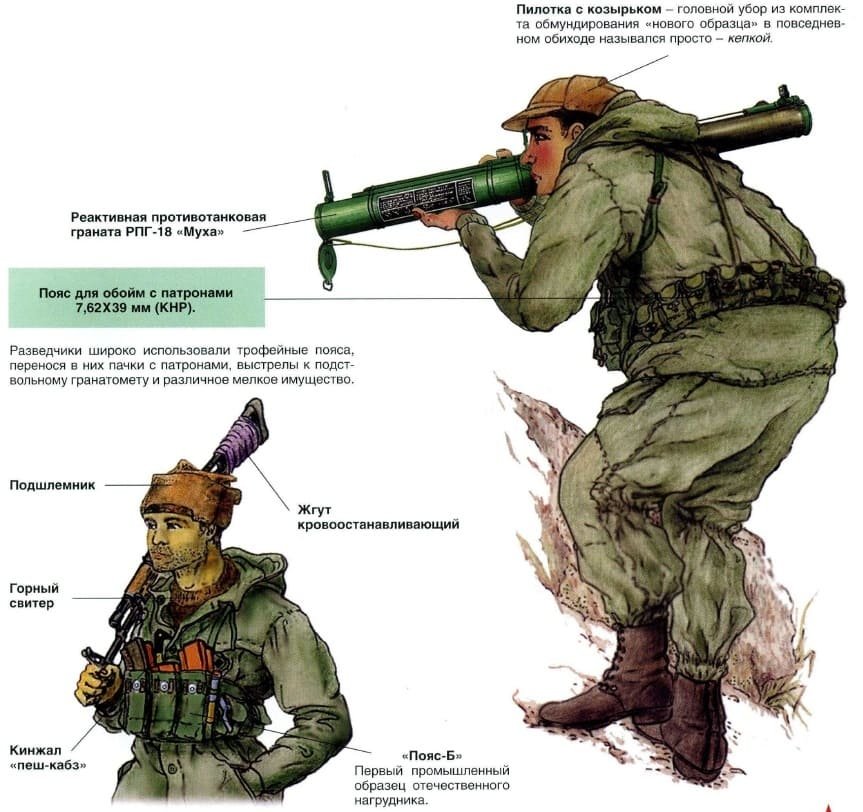
Spetsnaz Equipment with RPG-18 (Afghanistan)
Item Description Field Cap with Visor Field cap with visor – headgear from the “new model” uniform set. In everyday use it was simply called “kepka”. RPG-18 “Mukha” RPG-18 “Mukha” anti-tank rocket launcher. Belt for 7.62×39 mm Magazines (KNR) Belt for 7.62×39 mm magazines (KNR). Reconnaissance soldiers widely used captured belts, carrying in them packs of cartridges, shots for the under-barrel grenade launcher and various small equipment. Podshlemnik Helmet liner. Tourniquet Hemostatic tourniquet. Mountain Sweater Mountain sweater. “Pesh-Kabz” Dagger “Pesh-kabz” dagger. “Poyas-B” The first industrial model of a domestic chest rig.
Disguise in Afghan clothing (pakol and local dress)
For specific missions, Spetsnaz reconnaissance soldiers sometimes disguised themselves by wearing “dushman” clothing. Afghan national dress was widely used during foot reconnaissance, search operations, when operating captured vehicles, and other special activities.
In multinational units, dark-skinned soldiers from Central Asia and the Caucasus wearing local clothing did not visually stand out from Afghans. This sometimes gave reconnaissance groups extra seconds to take the initiative against mujahideen when visual contact occurred.
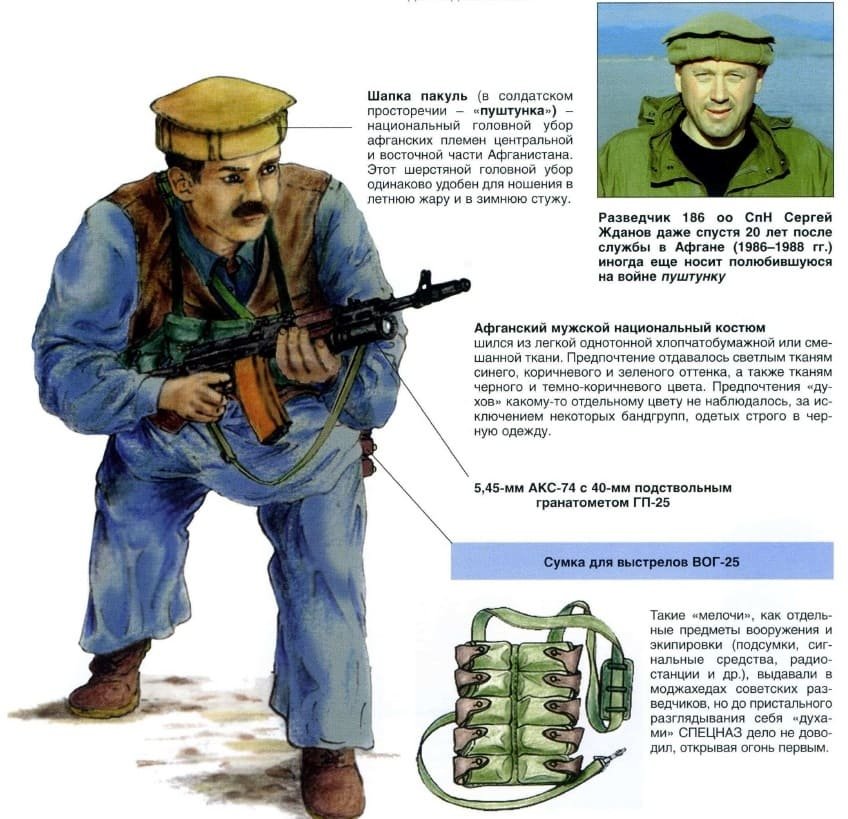
Spetsnaz Disguise and Afghan Clothing (Afghanistan)
Item Description Pakol Hat Pakol hat (in soldiers’ slang “pushtunka”) – national headgear of Afghan tribes of central and eastern Afghanistan. This woolen headgear was equally comfortable to wear in summer heat and in winter cold. Afghan National Men’s Costume The Afghan national men’s costume was sewn from lightweight plain cotton or blended fabric. Preference was given to light fabrics of blue, brown and green colors, as well as gray and dark brown shades. A strict “fashion” for any particular color was not observed, except for some groups dressed strictly in black clothing. 5.45-mm AKS-74 with GP-25 5.45-mm AKS-74 with 40-mm under-barrel grenade launcher GP-25. Bag for VOG-25 Grenades Bag for VOG-25 grenade launcher rounds. Reconnaissance Soldier of the 186th Separate Spetsnaz Detachment Reconnaissance soldier of the 186th separate special purpose detachment Sergey Zhdanov, even 20 years after service in Afghanistan (1986–1988), sometimes still wears the “pushtunka” he loved during the war. Additional Equipment Details Such “small things” as separate items of weapons and equipment (smoke grenades, signal devices, radio stations, etc.) were issued to Soviet reconnaissance soldiers, but when capturing “spirits,” SPETSNAZ did not allow the enemy to open fire first.
RD-54 backpack: the core Spetsnaz gear carrier
The airborne backpack RD-54 (model lineage goes back to 1954) remained the main piece of combat equipment for Spetsnaz. Inside and on the exterior using tying straps, reconnaissance soldiers carried most essentials for autonomous missions.
When RD-54 capacity was not enough, scouts used alpine, tourist, or captured backpacks. Many soldiers sewed extra pockets onto the “RD” and removed pouches they considered unnecessary.
Suppressed AKMSL and PBS-1: the classic Spetsnaz setup
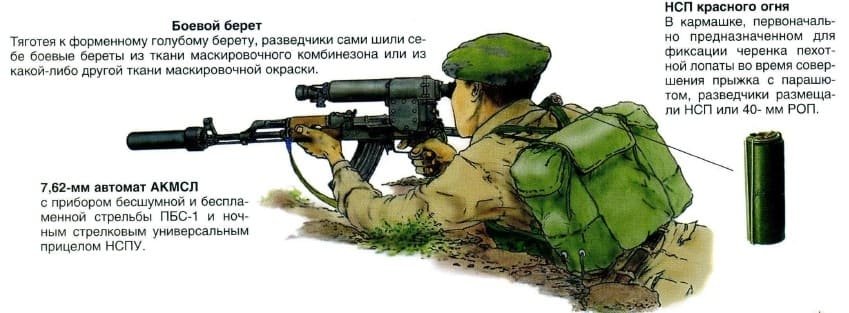
Spetsnaz Suppressed Fire Equipment (Afghanistan)
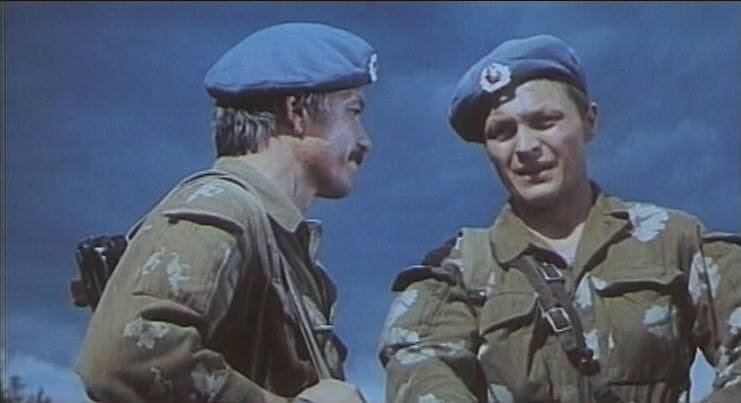
Item Description Combat Beret Drawn to the regulation blue beret, reconnaissance soldiers sewed combat berets themselves from camouflage coverall fabric or from some other camouflage-colored material. 7.62-mm AKMSL 7.62-mm AKMSL assault rifle with the PBS-1 silent and flameless firing device and the NSPU universal night sight. Red Signal Cartridge (NSP) Red signal cartridge (NSP). In the pocket, originally intended for fixing the lanyard during Soviet parachute jumps, reconnaissance soldiers placed the NSP or 40-mm ROP.
A shelter half (poncho-tent) was mandatory for reconnaissance soldiers, and a sleeping bag when available. Heavy standard army sleeping bags were rarely used by scouts due to weight and bulk.
In mountains and desert, reconnaissance soldiers preferred captured synthetic or foam sleeping bags – often civilian models that entered Pakistan for refugees and were later found in mujahideen depots.
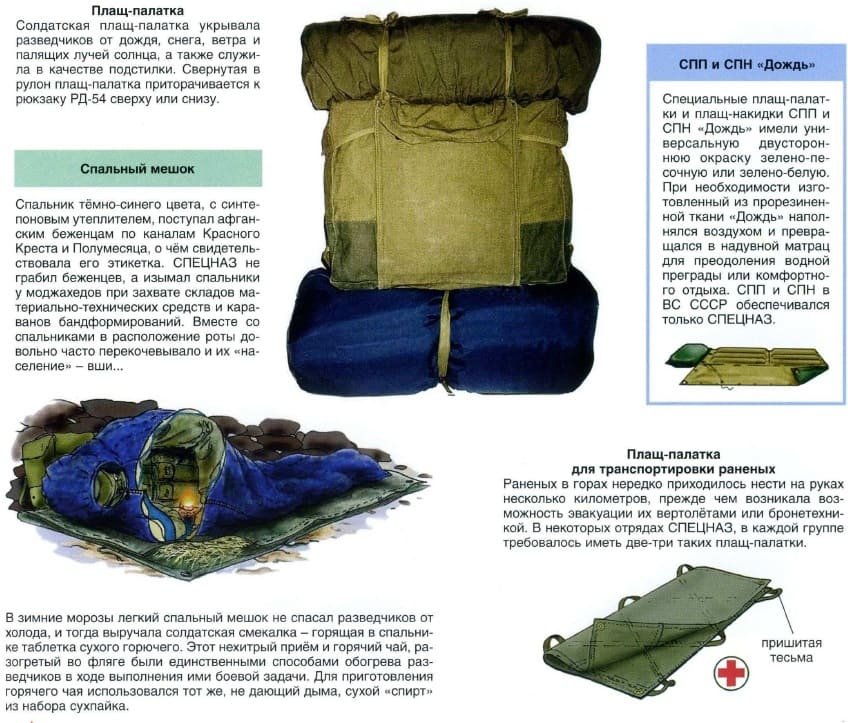
Spetsnaz Shelter and Sleeping Equipment (Afghanistan)
Item Description Shelter Half (Plashch-Palatka) The soldier’s shelter half protected reconnaissance soldiers from rain, snow, wind and scorching sunlight, and also served as a groundsheet. Rolled into a tube, the shelter half was attached to the RD-54 backpack from above or below. Sleeping Bag A dark-blue sleeping bag with synthetic insulation was supplied to Afghan refugees through Red Cross and Red Crescent channels, as evidenced by the label. SPETSNAZ did not rob refugees, but seized sleeping bags from mujahideen during the capture of warehouses of military-technical equipment and caravans of bandits. Instead of mattresses, the location of the company often turned into their “settlement”. Winter Use of Sleeping Bag In winter frosts, the lightweight sleeping bag did not save reconnaissance soldiers from the cold, and then soldiers’ ingenuity came to the rescue – a hot water bottle in the sleeping bag and a tablet of dry fuel. This simple method and hot tea heated over a fire were the only means of warming reconnaissance soldiers during combat missions. To prepare tea, the same smokeless dry “spirit” from the ration kit was used. SPP and SPN “Dozhd” Shelter Half Special shelter halves SPP and SPN “Dozhd” had a universal double-sided color scheme in green-sand or green-white. If necessary, the “Dozhd” made of rubberized fabric was inflated with air and turned into an inflatable mattress to overcome water obstacles. SPP and SPN in the Armed Forces of the USSR were issued only to SPETSNAZ. Shelter Half for Transporting the Wounded The wounded in the mountains often had to be carried by hand for several kilometers before it was possible to evacuate them by helicopter or armored vehicles. In some SPETSNAZ units, each group was required to have two or three such shelter halves. Sewn Tape Sewn tape.
Why Spetsnaz preferred 7.62 mm AKMS / AKMSL in Afghanistan
The 7.62 mm AKMS and AKMSL were often more popular than 5.45 mm rifles among Spetsnaz units. Key reasons included better stopping power and the fact that mujahideen widely used Chinese 7.62 mm Kalashnikov rifles – making captured ammo practical during autonomous missions.
Another major factor was the availability of the PBS-1 suppressor for silent and flashless firing on 7.62 platforms.
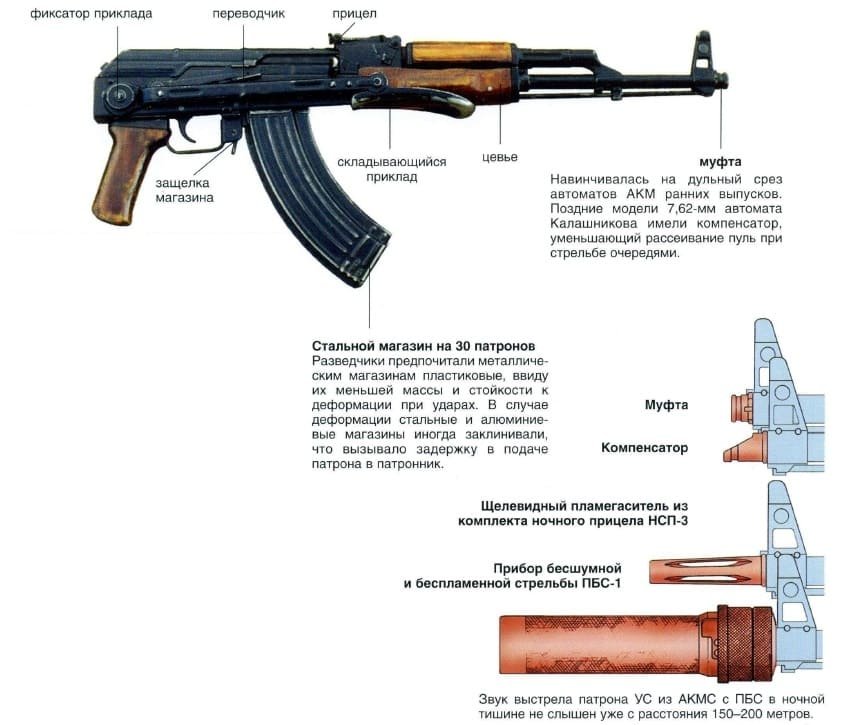
AKMS Technical Details and Accessories
Item Description Stock Lock Stock lock. Selector Lever Selector lever. Rear Sight Rear sight. Magazine Release Magazine release. Folding Stock Folding stock. Handguard Handguard. Muzzle Adapter Screwed onto the muzzle of AKM early production models. Later models of the 7.62-mm Kalashnikov assault rifle had a compensator reducing bullet dispersion during automatic fire. Steel 30-Round Magazine Reconnaissance soldiers preferred plastic magazines to metal ones due to their lower weight and resistance to deformation during impact. In case of deformation, steel and aluminum magazines sometimes jammed, causing a delay in feeding cartridges into the chamber. Compensator Compensator. Slotted Flash Suppressor (from NSP-3 kit) Slotted flash suppressor from the NSP-3 night sight kit. PBS-1 Silent and Flameless Firing Device Silent and flameless firing device PBS-1. Sound of Shot The sound of firing a US cartridge from an AKMS with PBS in the night silence is not audible already from a distance of 150–200 meters.
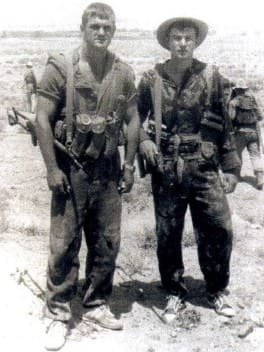
5.45 mm AKS-74 and why it still mattered
The 5.45 mm Kalashnikov rifle was the most widespread weapon of the Limited Contingent. Spetsnaz units used the AKS-74, AKS-74N (night sight rail), and AKS-74U (short version).
Compared to 7.62, the 5.45 platform allowed more rounds at the same total weight and offered better accuracy and ballistics. The trade-off was lower stopping power in close combat.
Rations and field food (Etalon No. 5 and mountain rations)
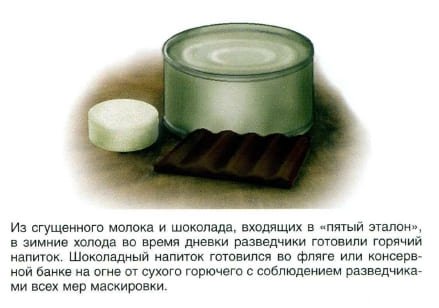
At permanent bases, soldiers received hot meals three times per day. During missions, Spetsnaz units relied on dry rations, most commonly the “Etalon No. 5” ration.
For high-mountain operations, special summer and winter mountain rations were produced. In summer heat, scouts often left part of the ration behind, while in winter they carried additional food obtained through unit supply, stores, or other unofficial sources.
Monotony was sometimes broken with local products: meat, fish, vegetables, fruits, sweets, and spices.
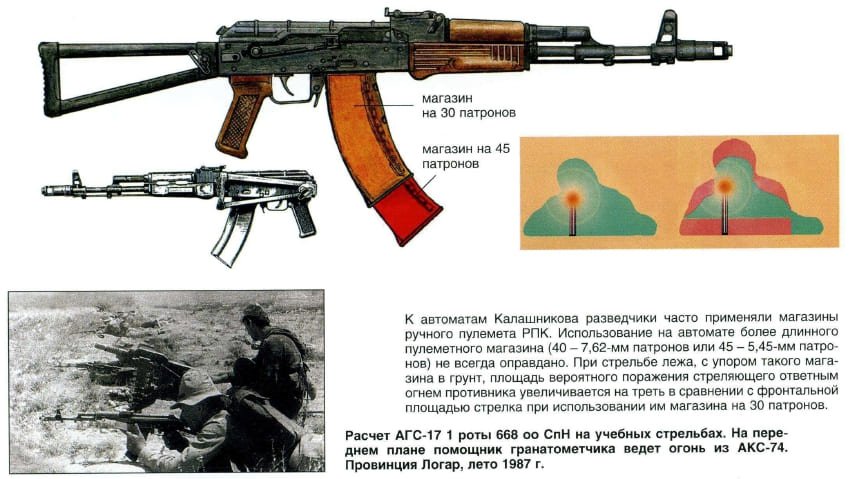
AK Magazines Used by Spetsnaz (Afghanistan)
| Item | Description |
|---|---|
| 30-Round Magazine | Magazine for 30 rounds. |
| 45-Round Magazine | Magazine for 45 rounds. |
| Use of RPK Magazines | For Kalashnikov assault rifles, reconnaissance soldiers often used magazines from the RPK light machine gun. The use on an assault rifle of a longer machine gun magazine (40–45 rounds or 45 rounds, 5.45-mm cartridges) was not always justified. When firing while lying down with the magazine resting on the ground, the probability area of hitting the target with automatic fire increases by one third compared to the frontal area of the shooter when using a 30-round magazine. |
| Crew of AGS-17, 1st Company, 668th Separate Spetsnaz | Crew of AGS-17 of the 1st company of the 668th separate special purpose detachment during training firing. In the foreground, the assistant grenade launcher operator fires from an AKS-74. Logar province, 1987. |
Knives in Spetsnaz daily field life
Knives were rarely used as primary combat weapons. Exceptions included silent elimination and a few close-quarters fights. However, knives were essential in daily routine: repairs, opening cans, cutting food, butchering animals, and processing captured cargo from caravans.
Scouts used bayonet knives, NR scout knives, army knives (NA-43), Afghan daggers, pocket knives, and tourist folding knives.
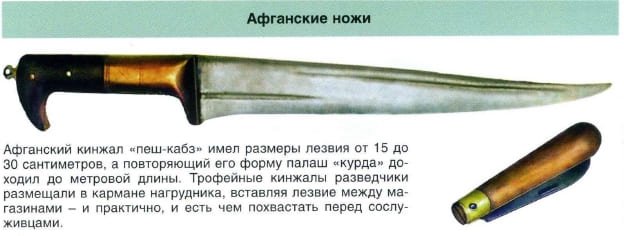
Afghan knives
The Afghan dagger known as the “pesh-kabz” had blade lengths from 15 to 30 cm and a distinctive blade shape. Captured daggers were carried in a chest rig pocket with the blade inserted between magazines – practical and a trophy item.
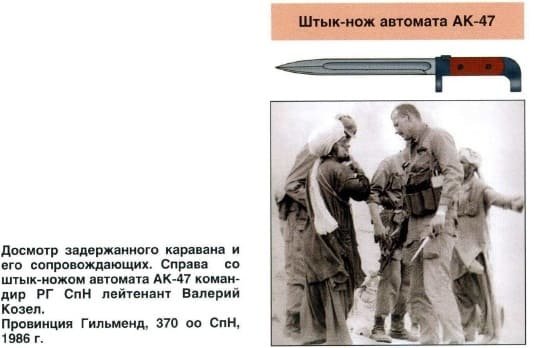
Inspection of a detained caravan and its escorts. On the right, with an AK-47 bayonet, is the commander of a Spetsnaz reconnaissance group, Lieutenant Valeriy Kozel.
Helmand Province, 370th Independent Spetsnaz Detachment, 1986.
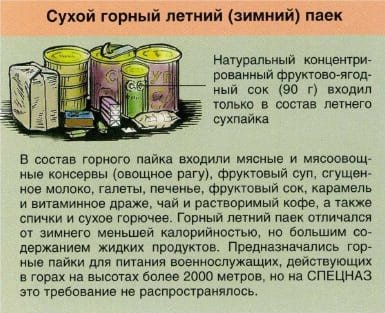
Mountain Summer (Winter) Dry Ration
| Item | Description |
|---|---|
| Mountain Summer (Winter) Dry Ration | Natural concentrated fruit and berry juice (90 g) was included only in the summer dry ration. |
| Contents of the Dry Ration | The dry ration included meat and meat-and-vegetable canned food (vegetable stew), fruit soup, condensed milk, galettes, cookies, fruit juice, caramel, and vitamin dragee, tea and instant coffee, as well as matches and dry fuel. |
| Difference Between Summer and Winter Versions | The mountain summer ration differed from the winter one by lower caloric value, but higher content of liquid products. |
| Purpose of the Mountain Ration | It was intended for feeding servicemen operating in the mountains at altitudes above 2000 meters, but this requirement did not apply to SPETSNAZ. |
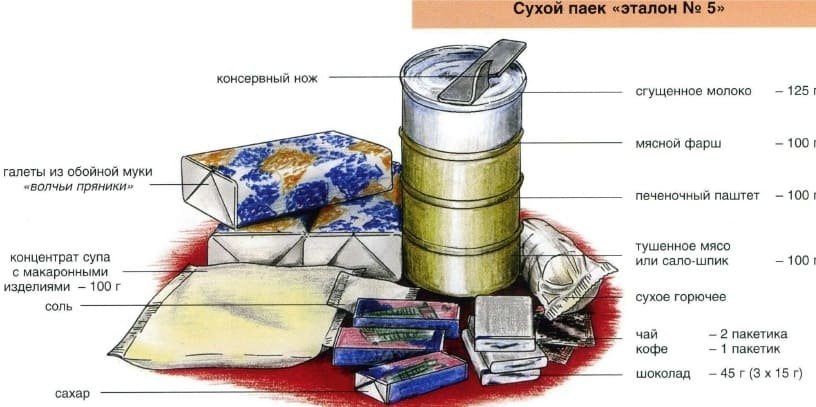
Dry Ration “Etalon No. 5”
| Item | Description / Weight |
|---|---|
| Can Opener | Can opener. |
| Condensed Milk | 125 g |
| Minced Meat | 100 g |
| Liver Pâté | 100 g |
| Stewed Meat or Lard | 100 g |
| Dry Fuel | Dry fuel. |
| Tea | 2 packets |
| Coffee | 1 packet |
| Chocolate | 45 g (3 × 15 g) |
| Galettes from Wholemeal Flour “Volnye Pryaniki” | Galettes from wholemeal flour “Volnye Pryaniki”. |
| Pasta Concentrate | Pasta concentrate with macaroni products – 100 g |
| Salt | Salt. |
| Sugar | Sugar. |
More Soviet uniform articles
- Best WW2 Uniform: Soviet, German, USA. Who Had the Best Army Gear?
- Red Army Uniforms of the Russian Civil War (1918-1922)
- Field Uniform and Equipment of the Soviet Army in 1968-1991 Part 1
- Field Uniform and Equipment of the Soviet Army (1968-1991) – Part 2
- Field Uniform and Equipment of the Soviet Army (1968-1991) – Part 3
- Field Uniform and Equipment of the Soviet Army (1968-1991) – Part 4
- How the Soviet Army Uniform Changed from 1955 to 1991
Looking for original Soviet boots and accessories? Please visit here: Soviet Boots Store