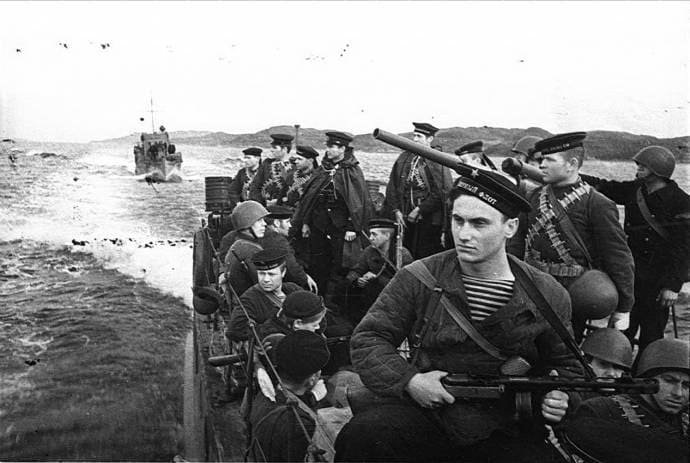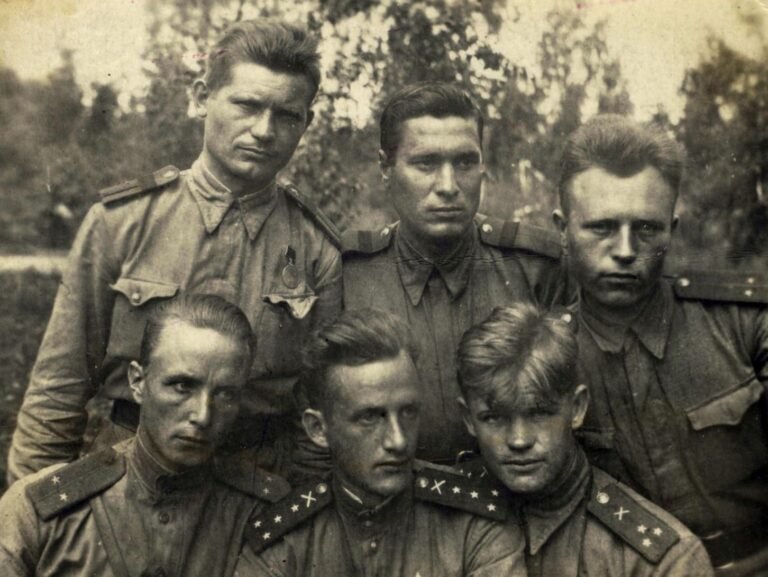
Red Army uniform and equipment 1941-1945: visual comparison
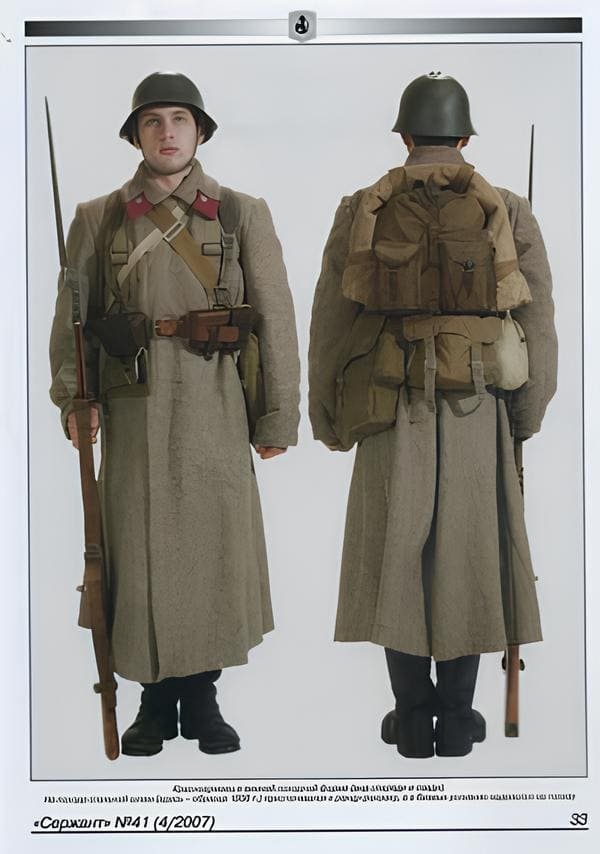
Red Army uniform and equipment 1941-1945 changed dramatically during the Great Patriotic War. This page shows a clear, visual comparison of what a Soviet infantryman typically carried in June 1941 versus May 1945, with item-by-item notes and photos.
Quick answer: the 1941 kit often looks more “regulation-rich”, while the 1945 kit is simpler, more practical, and heavily shaped by mass production, shortages, repairs, and real frontline habits.
Check Soviet WW2 uniforms guides:
- How to Put Together a WWII Soviet Soldier and Officer Uniform for Reenactment
- Soviet uniform (1936-1941)
- Soviet uniform (1941-1943)
- Soviet uniform (1943-1945)
Table of contents
- 1941 vs 1945 – main comparison photo
- 1941 vs 1945 – quick table
- Equipment set – 1941
- Equipment set – 1945
- In addition – what changed overall
- FAQ
- Check more articles
Equipment set of a Red Army soldier in 1941 vs 1945
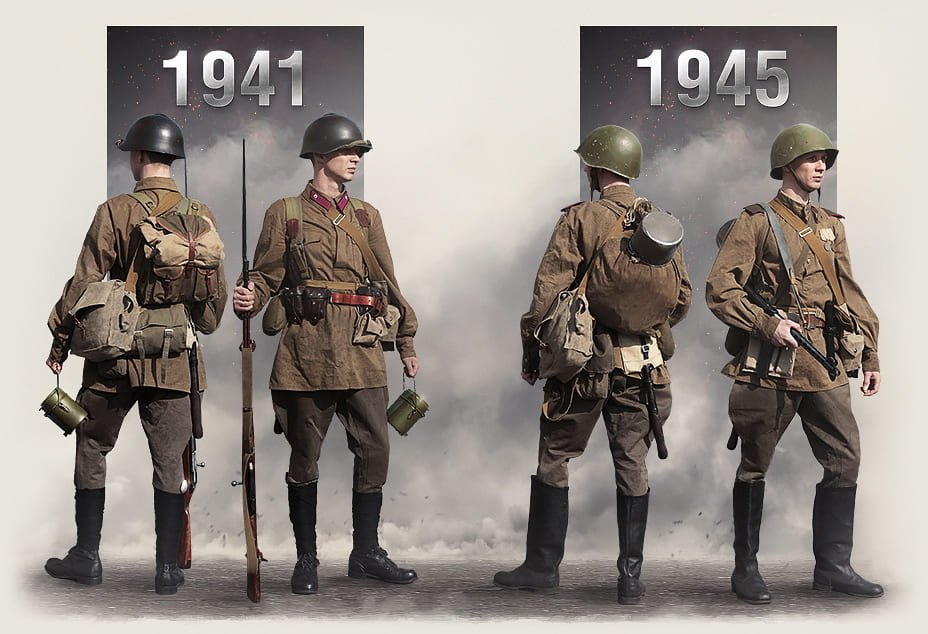
The image shows two Red Army infantrymen: a regular army soldier as of June 22, 1941, and a victorious sergeant on May 9, 1945. Even from the photo alone, it is clear how uniforms and equipment became simpler over time: some items turned out to be too expensive to produce during wartime, some did not prove practical, some were disliked by soldiers and were removed from supply. At the same time, certain elements of equipment were borrowed from the enemy or taken as trophies.
Not everything in the placement of the equipment shown in the photo strictly follows regulations and instructions. For example, the 1941 soldier is wearing an M1939 backpack, and his shelter-half is not packed inside the backpack. The 1945 soldier is carrying only one magazine pouch for his submachine gun, although he was supposed to have two. Nevertheless, in real life soldiers of the periods described often looked exactly like this.
Looking for original Soviet boots? You can get them here – Soviet boots store
Key takeaways from this photo:
- 1941 kit often uses more leather and more complex fittings.
- 1945 kit shifts toward simplified canvas and webbing, plus trophies and Lend-Lease items.
- Real photos often show missing or mixed items, not perfect regulation sets.
1941 vs 1945 – quick comparison table
| Item | Typical in 1941 | Typical in 1945 | Main reason |
|---|---|---|---|
| Helmet | SSh-36 / SSh-39 common (mixed) | SSh-40 dominates | Comfort, liner redesign, mass output |
| Canteen | Aluminum 1932 models still seen | Glass canteens widespread | Aluminum shortage and disrupted production |
| Belts and pouches | More leather and prewar models | More webbing, simplified types, trophies | Material shortage and simplification |
| Carrying system | Backpacks, shoulder straps used early | Haversack (sidor) very common | Cheaper and easier to replace |
| Footwear | Boots plus puttees common in infantry | Kirza boots widespread, leather valued | Mass army supply and substitutes |
Equipment set – 1941
Waist Belt
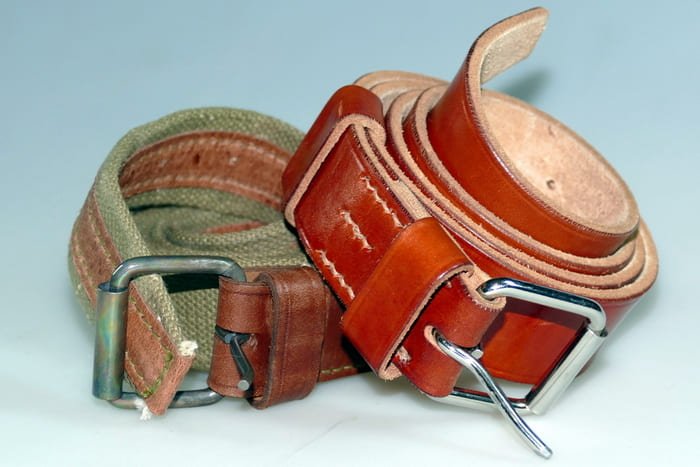
The soldier’s waist belt was the foundation for carrying equipment and field gear. By 1941, several types of soldier belts were in use in the Red Army, with widths of either 35 or 45 mm. In addition to the width, the materials also differed: belts were made either of leather or of webbing with leather reinforcements (both types are shown in the photo).
What all soldier belts had in common was the design of the buckle. It was a framed, single-prong metal buckle. When fastening the waist belt, the buckle was supposed to be held in the left hand.
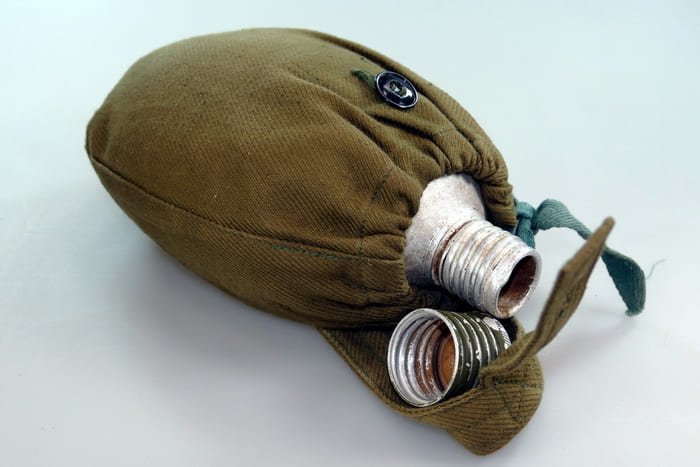
Aluminum Canteen (Flask), Model 1932
Looking for Soviet Flask? You can get them here – Soviet Flask
Aluminum soldier canteens had been produced in Russia since the early 20th century. At first, the neck was closed with a rubber or cork stopper that was simply pressed into the opening. On March 2, 1932, a new standard for metal canteens with capacities of 0.75 and 1.0 liters was approved and became mandatory on May 2, 1932. These canteens could be made of aluminum, tin, or brass.
The main distinguishing feature of the new canteens was the screw cap with a fine thread consisting of five turns. After the war, when the production of aluminum canteens resumed, the thread became coarser, with three turns.
In practice, aluminum canteens with screw caps began to be produced in 1937. The main production was located in Leningrad at the Krasny Vyborzhets plant. In the autumn of 1941, with the beginning of the siege, production was halted, and aluminum canteens for the Red Army were not produced again until 1948.
The canteen was carried in a special cover designed to be worn on the belt. Several types of covers existed: the 1937 model with a side drawstring, a simplified 1937 version without lacing, and the 1941 model – this is the type of canteen shown in the photo.
Ammunition Pouch
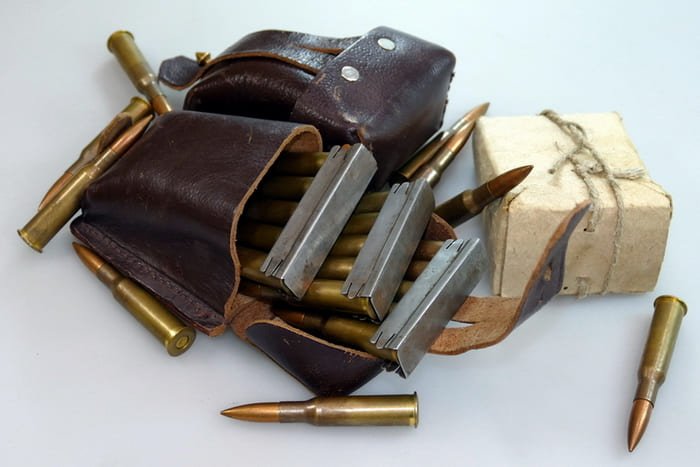
The double-compartment waist ammunition pouch is sometimes referred to as the 1937 pattern pouch. Unlike earlier models with a box-type construction, this pouch had two separate pockets, each closed with a strap fastened over a stud. In terms of design, it resembled the version used by the Wehrmacht, differing mainly in the number of compartments: the German pouch had three sections.
On the back of the pouch, in addition to the loops for threading the waist belt, there was a rectangular ring sewn on for attaching the front hooks of the backpack straps. Every infantryman armed with a 7.62 mm Mosin rifle was issued two waist ammunition pouches.
Originally, each compartment of the pouch was designed to hold 15 cartridges, three stripper clips or one cardboard packet. Later, the carried ammunition load was increased: an additional stripper clip was placed bullets-up, although it was inconvenient to remove. If ammunition was issued in paper packets, each compartment held one packet plus ten loose cartridges. The pouch was made of leather, but from February 1941 the use of kirza (artificial leather) for the main compartments was permitted. Production continued throughout the war and for some time afterward.
Steel Helmet Model 1936 (SSh-36)
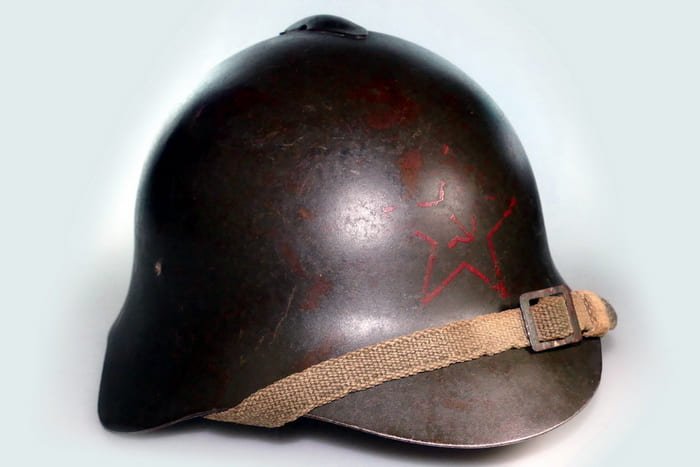
The first Soviet steel helmet, designated SSh-36, was developed in late 1935. It was produced from 1936 to 1939 and underwent several changes over its production period, mainly to the liner system and the methods used to attach it. Production faced numerous difficulties and fell far behind planned targets. In addition, a number of shortcomings were identified in the SSh-36, which prompted further work to improve the helmet’s shape and to search for a new steel alloy.
In total, around two million SSh-36 helmets were produced. These helmets were used by Red Army soldiers during the fighting at Lake Khasan and Khalkhin Gol, with a number also sent to Republican Spain. They were worn by all infantrymen during the Polish campaign and were used extensively in the Soviet-Finnish War. By the start of the Great Patriotic War, the SSh-36 was present in the troops in large numbers and was one of the main helmet types in service. Individual examples can also be seen in photographs from 1945: many SSh-36 helmets remained in use in the Far East at the beginning of the war with Japan.
Backpack Model 1939
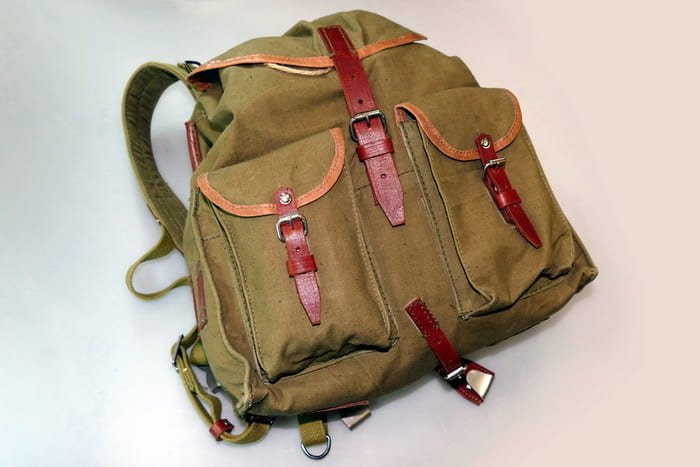
In 1936, a backpack was adopted for supply by the Red Army to replace the duffel bag. Its design was structurally similar to the German one. However, field use revealed certain inconveniences, and by the end of 1939 a new backpack design appeared. On the front, it had hooks for attaching to ammunition pouches, which is why a rectangular metal ring was sewn onto the pouches themselves. To secure the backpack to the waist belt when worn on the soldier’s back, a strap with a hook was fitted at the lower part of the pack.
In addition, there were two straps running from the shoulder straps to the lower part of the backpack, one of which could be quickly released. These straps were used to adjust the backpack to the soldier’s height. The backpack carried underwear, a towel, spare footwraps, hygiene and clothing repair items, a mess tin with cup and spoon, rifle cleaning equipment, and a ration of food. A shelter-half and its accessories were attached to the bottom, while a rolled greatcoat was fastened around the perimeter of the backpack. In marching order, a helmet was also secured to the backpack.
On January 31, 1941, by order of the People’s Commissariat of Defense of the USSR, a lightweight backpack model 1941 was introduced for infantrymen together with a food bag. This was a revised version of the 1939 backpack. By June 22, 1941, troops could be seen carrying backpacks of all the models mentioned above, as well as the 1930 pattern duffel bag.
Mess Tin Model 1936
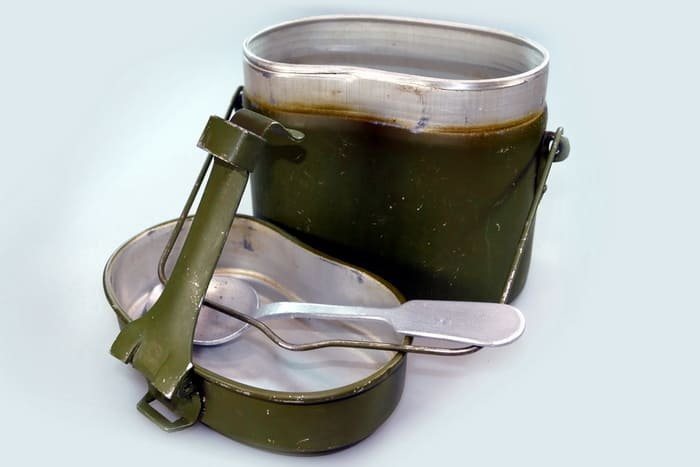
Looking for Soviet Mess Tin? You can get them here – Soviet Mess Tin
This designation is unofficial and comes from the year when a new infantry equipment set was adopted by the Red Army in 1936. There are several other common names as well, such as “oval,” “flat,” and similar terms. The mess tin was manufactured by stamping from a sheet of aluminum, with a handle made of steel wire, at the Krasny Vyborzhets plant in Leningrad. Its design was almost entirely borrowed from a similar German mess tin, but the Soviet version had a slightly taller lid and a different number of rivets securing the lid handle.
The mess tin itself was intended for the first course, while the second course was issued in the lid. When assembled, the lid was held onto the mess tin by a folding metal catch with a hook, which also served as a handle during meals. This type of mess tin was used in the Red Army alongside earlier models and gradually replaced them by the beginning of the war. At the end of 1941, production was halted due to the onset of the siege of Leningrad and a shortage of aluminum, resuming with minor differences only after the war.
Boots with Puttees
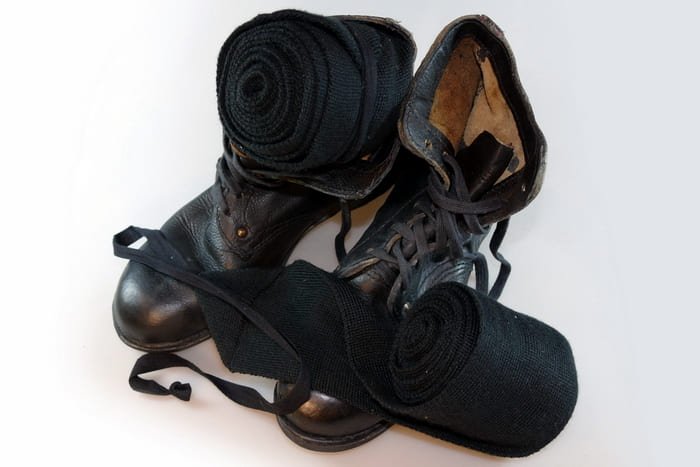
Looking for original Soviet low RKKA boots? You can get them here – Soviet low boots
Boots with puttees first appeared in the Russian Imperial Army during the footwear crisis at the beginning of 1915, when a severe shortage of boots became evident. Boots worn with cloth puttees were best suited for a mass army, as they required less leather to produce and were cheaper. After passing through the Civil War, boots with puttees entered service in the Red Army, where they were used in infantry units alongside traditional boots. Technical troops, cavalrymen, and tank crews, however, were issued boots only.
Puttees, usually black, gray, or protective green in color, were cloth strips typically about 10 centimeters wide and approximately 2.5 meters long. One end of the puttee was folded and sewn into a triangular shape, with a cord or tape stitched into its tip. Wrapping puttees required a certain amount of skill, much like properly wrapping footwraps. Puttees were stored rolled up, with the cord tucked inside.
A soldier wrapped the puttee from bottom to top: the first turns were the tightest and covered the upper part of the boot, while the final turns stopped just short of the knee. The cord was tied at the top, tucked under the upper wrap, and prevented the puttee from coming loose. Boots with puttees remained on the feet of Red Army infantrymen all the way to the victorious year of 1945.
7.62 mm Rifle Model 1891/30, Mosin System
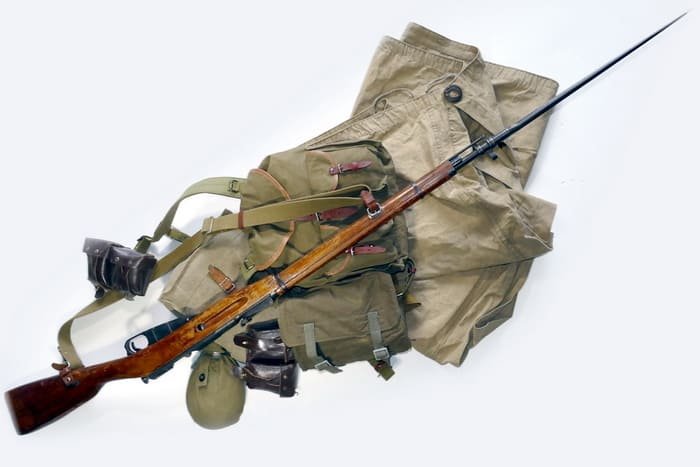
This five-round bolt-action rifle chambered for the 7.62×54 mm cartridge was adopted by the Russian Imperial Army on April 16, 1891. The design was based on the work of Captain S. I. Mosin, with modifications and additions borrowed from the Belgian Nagant rifle, as well as further refinements proposed by members of the commission responsible for selecting a rifle for the army and by other officers. The rifle proved to be very successful and saw service in the Russo-Japanese War, World War I, and the Civil War.
In 1930, a number of design changes were introduced. The receiver, sights, and bayonet mounting were modified. These changes were not implemented all at once, and the final form of the Model 1891/30 rifle was only fully established in 1935-1936. Other modifications were also tested, such as a new blade bayonet to replace the spike bayonet, or the substitution of the wood used for the stock and fore-end with alternative materials.
Despite the adoption of the Simonov AVS-36 automatic rifle by the Red Army in 1936, followed by the Tokarev semi-automatic rifles SVT-38 and SVT-40, the simpler and cheaper Mosin rifle remained the main infantry small arm of the Red Army in 1941 and later. After the outbreak of the war, its production remained at a high level through 1945, with various simplifications continuously introduced into the design.
Soldier’s Gymnastyorka, Model 1935
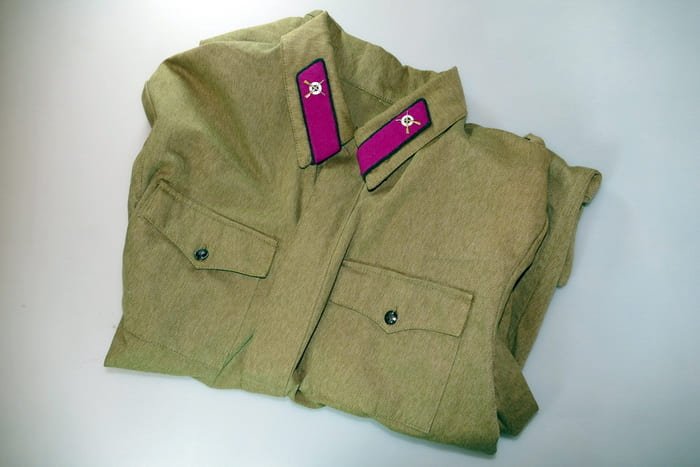
The soldier’s gymnastyorka of the 1935 model was adopted for supply in the Red Army to replace the earlier 1931 pattern gymnastyorka. It was made of cotton melange fabric and fastened with buttons hidden under a front placket. The tunic had two chest pockets and reinforced elbow patches made from an additional layer of fabric. It featured a turn-down collar, onto which collar tabs with branch-of-service piping were sewn.
For Red Army infantrymen, the collar tabs had a crimson field with black piping. At the upper part of the collar tab, a branch insignia introduced in July 1940 was attached, a target with crossed rifles.
By a decree of the Council of People’s Commissars dated January 18, 1941, protective (field-colored) collar tabs were introduced for Red Army personnel for wartime use. On August 1, 1941, an order of the People’s Commissariat of Defense introduced protective insignia and rank markings.
The same order abolished the wearing of colored collar tabs in frontline and marching units. Nevertheless, for a long time afterward, regular infantry units at the front could still be seen wearing colored collar tabs and insignia, which made Red Army soldiers more visible to the enemy.
Soldier’s Breeches, Model 1935
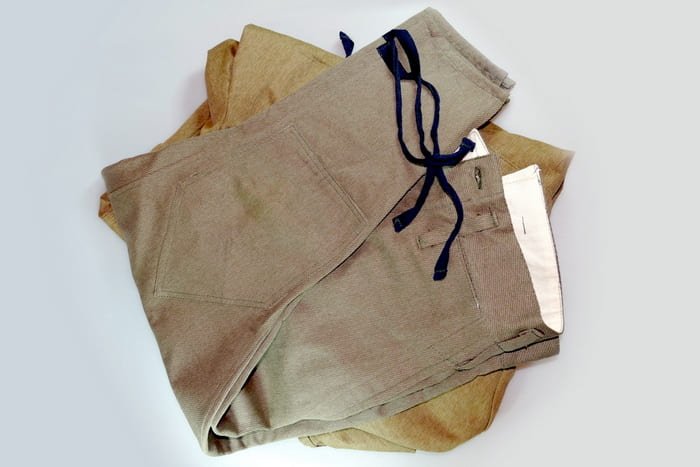
Adopted for supply in the Red Army by the same order as the 1935 gymnastyorka, these breeches remained essentially unchanged throughout the entire Great Patriotic War. They were high-waisted riding breeches that fitted snugly at the waist, were loose in the upper part, and tightly wrapped around the calves.
Ties were sewn to the lower edges of the trouser legs. The breeches had two deep side pockets, as well as an additional pocket with a flap fastened by a button at the rear. Near the waistband, next to the fly, there was a small pocket intended for the personal identification capsule. Pentagonal reinforcement patches were sewn onto the knees. The waistband featured belt loops for a trouser belt, although size adjustment was also possible by means of a strap with a buckle at the back.
The breeches were made from a special double-weave “breeches” twill fabric and were sufficiently durable for long-term field use.
Small Infantry Shovel
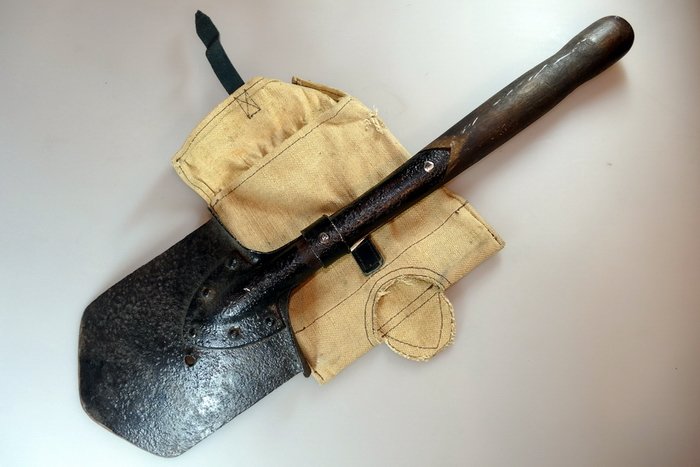
For digging in, a soldier was issued the small infantry shovel MPL-50 (the overall length of the shovel was 50 cm; during engineer work and construction it was also used as a measuring tool). By 1941, the Red Army used both pre-revolutionary shovels with a straight cutting edge and Soviet-made versions, in which the front part had a pointed tip to make digging easier, while the blade itself had a pentagonal shape.
Structurally, the shovel consisted of the blade (with the upper edges bent to form foot rests), a front tang (an extension of the blade), a reinforcing plate with a rear tang, a clamping ring, and a wooden handle. The reinforcing plate with the rear tang was riveted to the blade with five rivets. After that, the handle was inserted between the tangs, tightened with the clamping ring, and then the tangs were riveted together with the handle using countersunk rivets, one of which passed through the clamping ring.
The shovel was carried in a cover worn on the waist belt, for which belt loops were sewn onto the cover. Either leather covers from pre-revolutionary stocks or fabric covers made of canvas or sailcloth were used.
Spare Ammunition Bag
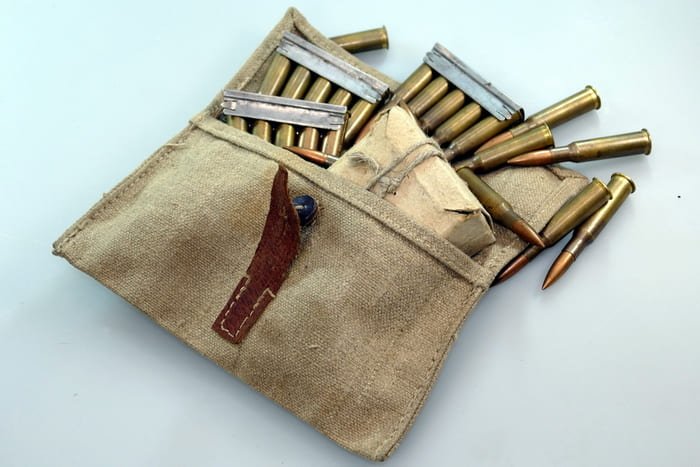
A soldier’s carried ammunition load was not stored only in the waist ammunition pouches – there was also a spare ammunition bag for this purpose. Structurally, it was a rectangular bag made of coarse canvas with a flap cover and long loops for suspension on the waist belt. It was closed with a button or a wooden toggle, and to prevent accidental opening an additional securing loop made of leather or cord was sewn on.
The spare ammunition bag was worn on the belt together with the left waist ammunition pouch. Visually, it hung lower than the main pouch, which is where the name originated. In modern usage, this term has come to be applied broadly to all items designed for carrying equipment and gear on a belt or tactical vest – commonly referred to as a “pouch.”
Ammunition was carried in the spare bag either in packets or on stripper clips. It could hold two cardboard packets (30 cartridges), three paper packets (60 cartridges), or eight stripper clips arranged in two rows (40 cartridges), with two of the clips placed bullets-up. In combat conditions, cartridges were often carried loose inside the spare bag.
Grenade Bag
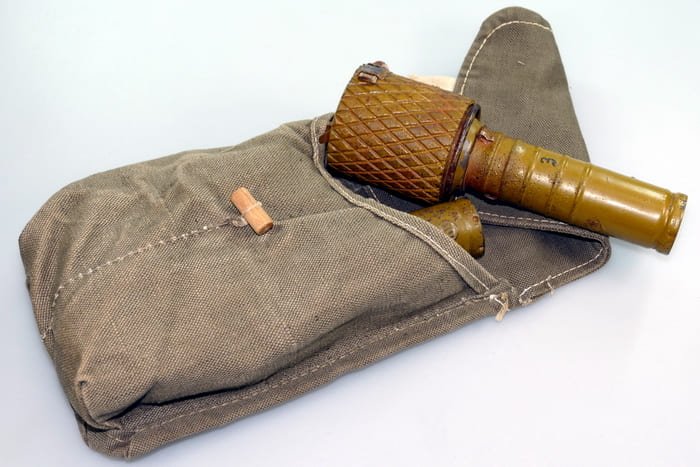
Every infantryman carried hand grenades, which were normally transported in a special grenade bag worn on the waist belt. The bag was positioned on the left rear side, after the ammunition pouch and before the food bag. It was a rectangular fabric bag with three compartments. Two larger compartments were used to carry grenades, while the third, smaller one was intended for detonators. Grenades were brought into combat-ready condition immediately before use.
The bag could be made of canvas, sailcloth, or tent fabric. It was closed with a button or a wooden toggle. The bag could hold two older Model 1914/30 grenades or two RGD-33 grenades (shown in the photo), which were placed with their handles facing upward. Detonators were carried wrapped in paper or cloth.
Alternatively, four F-1 “lemon” grenades could be carried in pairs. In this case, the grenades were arranged in a specific way: each grenade’s fuze socket was closed with a special screw-in plug made of wood or bakelite, with one grenade placed plug-down and the other plug-up. As new grenade types were adopted by the Red Army during the war, they were carried in the bag in a manner similar to the F-1 grenades. With no significant changes, the grenade bag remained in service from 1941 to 1945.
Food Bag
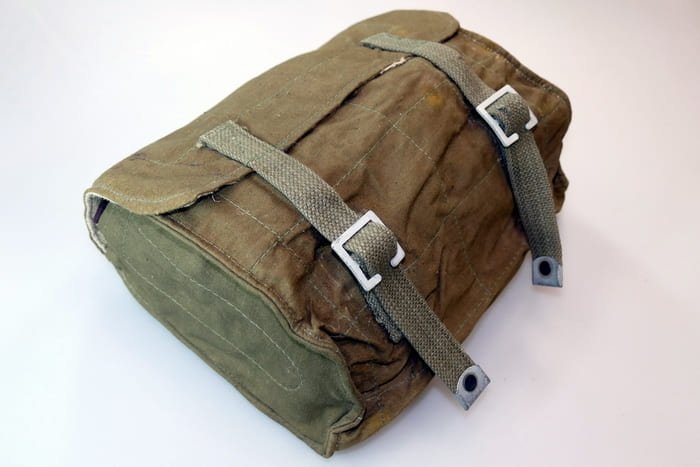
The food bag was adopted for supply by the Red Army by an order of the People’s Commissariat of Defense of the USSR on January 31, 1941, and was included in both the full and the lightweight marching equipment sets for infantrymen. The bag was intended for storing and carrying a mess tin with bread or hardtack placed inside it, an emergency food ration (concentrates or dry rations), as well as a cup and a spoon. If necessary, it could also be used to carry an additional supply of ammunition.
The bag was an elongated pouch with a flap cover. The outer corners of the side panels were rounded, and tie strings made of webbing were sewn onto their upper parts. It was worn on the waist belt at the center of the back. For belt carry, loops were sewn onto the reverse side. The bag was closed with two straps passing through special buckles. It was made of tent fabric with a water-resistant treatment and lined with coarse canvas.
Relatively few food bags reached the troops. This item of equipment is characteristic mainly of Red Army infantrymen in 1941 and can still be seen in photographs from 1942.
Gas Mask Bag, Model 1936
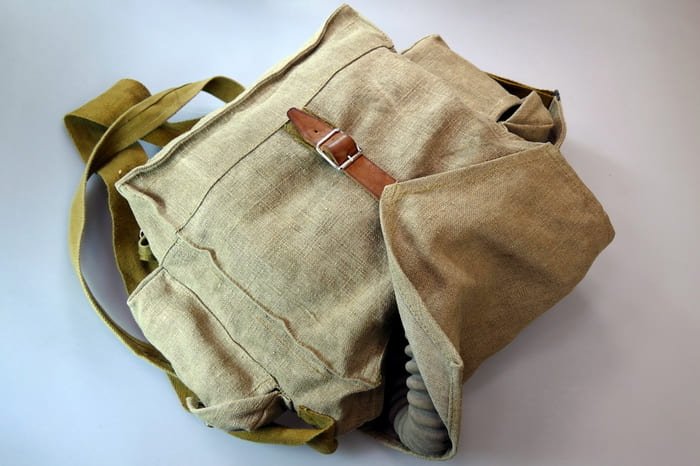
A gas mask was a mandatory item of equipment for every soldier and was carried in a special bag. By 1941, several types of gas masks and filters were in service with the Red Army. The photograph shows a gas mask bag of the 1936 model, which held the mask, filter, hose, an anti-mustard cape, and equipment for decontaminating clothing, weapons, and skin after a chemical attack.
The bag was made of sailcloth or canvas and had three internal compartments and two external pockets. On the back, the bag was fitted with a webbing cord with a carabiner and a ring, allowing it to be secured around the body in the “ready” position. In marching order, the cord was rolled up and carried inside the bag, in accordance with the instruction: “chemical protection equipment must be kept ready at all times during reconnaissance and in combat, and during marches or rest periods, by order.”
The gas mask bag was worn over the right shoulder on the left side, over the greatcoat and other uniform items. When a camouflage suit was worn, the bag was concealed underneath it. The upper edge of the bag was supposed to be at waist level, with the height adjusted by the length of the strap. According to a number of sources, gas mask bags of the 1936 model were produced until 1944.
Shoulder Strap
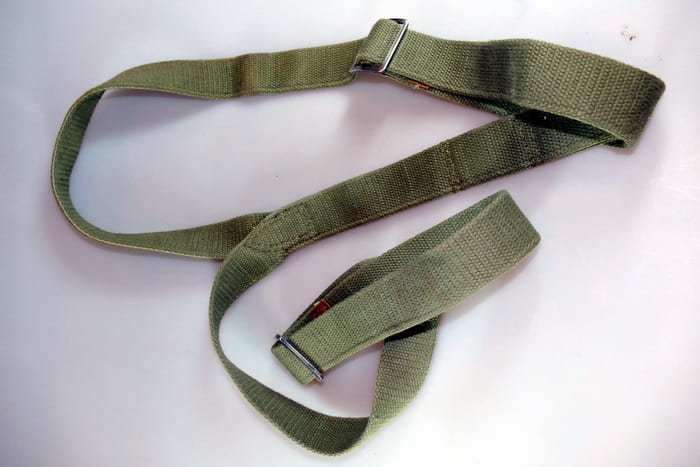
The shoulder strap was part of the lightweight marching equipment but was worn constantly together with the full marching kit. Its main purpose was to distribute the weight of the equipment carried on the waist belt onto the soldier’s shoulders and to prevent the belt from slipping down or becoming uneven. This problem was partly addressed by wearing backpacks of the 1936, 1939, or 1941 models, which had attachment points for the belt and ammunition pouches, but soldiers did not always march with a backpack.
Structurally, the shoulder strap was a Y-shaped webbing construction through which the waist belt was threaded via loops. Despite its obvious usefulness, the shoulder strap was used only during the initial stage of the Great Patriotic War. Moreover, some photographs show that captured shoulder straps were also used by German soldiers. Soviet soldiers, however, increasingly abandoned the shoulder strap and instead tightened the waist belt more firmly, which only partially prevented the equipment from shifting or slipping.
To a large extent, this is why soldiers often went into attack lightly equipped, stuffing grenades and ammunition into their pockets and duffel bags rather than carrying the full belt load.
Equipment set – 1945
Steel Helmet SSh-40
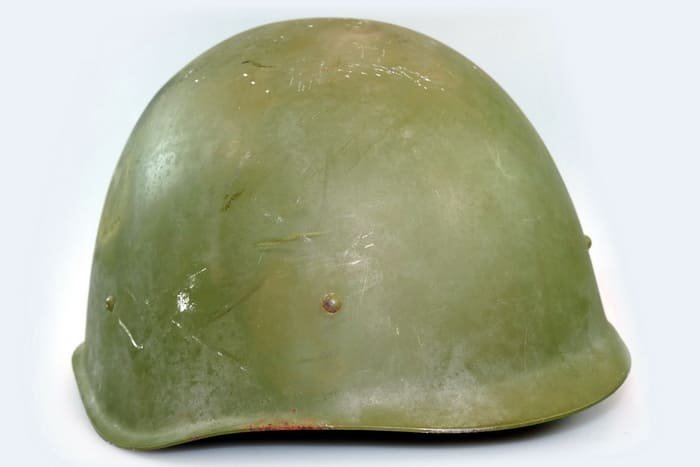
The SSh-40 was a modernization of the SSh-39 helmet, which had been adopted for service with the Red Army in June 1939. The design of the SSh-39 eliminated the shortcomings of the earlier SSh-36, but its use during the Soviet-Finnish War of 1939-1940 revealed a serious flaw: it was impossible to wear a winter hat underneath it, and the standard wool liner did not provide sufficient protection against severe cold. As a result, soldiers often broke out the liner of the SSh-39 and wore the helmet over a winter cap without it.
In the new SSh-40 helmet, the liner system was significantly redesigned, although the shape of the helmet shell itself remained unchanged. Visually, the SSh-40 can be identified by six rivets around the lower edge of the helmet dome, whereas the SSh-39 has three rivets positioned higher up. The SSh-40 used a three-petal liner system, with shock-absorbing pads sewn to the reverse side and filled with technical cotton wool. The petals were tightened with a cord, allowing the depth of the helmet’s fit on the head to be adjusted.
Production of the SSh-40 began in early 1941 in Lysva in the Urals, and somewhat later in Stalingrad at the “Krasny Oktyabr” plant. However, by June 22, only small numbers of these helmets had reached the troops. By the autumn of 1942, production of this helmet type was carried out exclusively in Lysva. Gradually, the SSh-40 became the main helmet of the Red Army. It was produced in large quantities after the war as well and remained in service until relatively recently.
Waist Belt
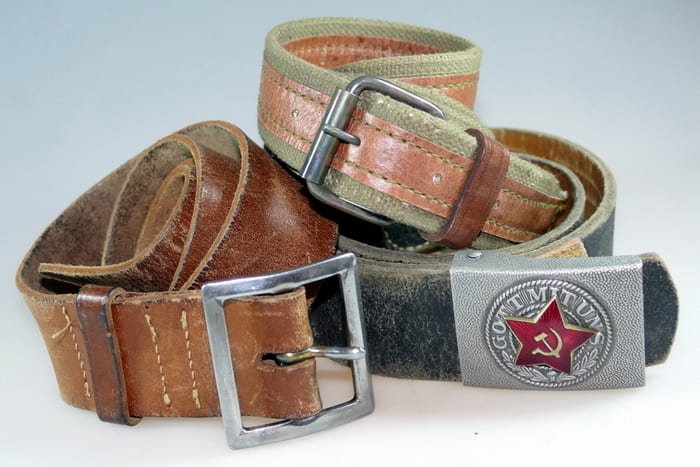
Because leather was expensive to process and was often needed for the manufacture of more durable and critical items of equipment, by the end of the war the webbing waist belt reinforced with leather or split-leather elements became more widespread. This type of belt had appeared even before 1941 and remained in use until the end of the war.
Many leather waist belts with various design details were supplied by Allied countries under Lend-Lease. The American belt shown in the photo, 45 mm wide, had a single-prong buckle like Soviet belts, but unlike them the buckle was not made from round-section wire. Instead, it was cast or stamped, with clearly defined angular edges.
Captured German belts were also used by Red Army soldiers. Because of the eagle-and-swastika design, the buckles had to be modified. Most often, these symbols were simply ground off, but when time allowed, the silhouette of a five-pointed star was cut into the buckle. The photo shows another modification variant: a hole was punched in the center of the buckle, into which a star taken from a Red Army side cap or peaked cap was inserted.
Glass Canteen
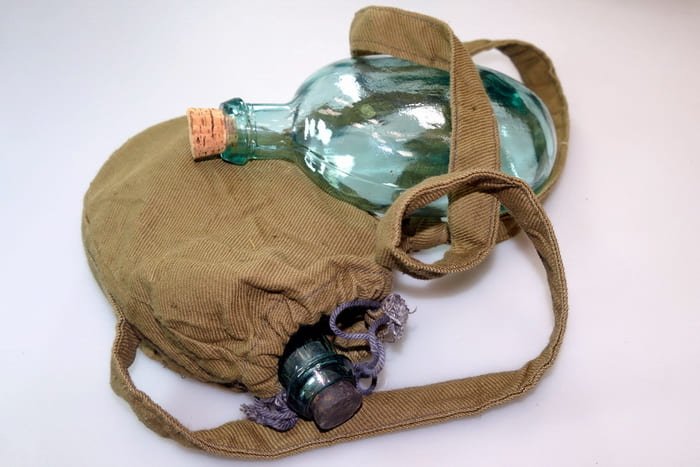
Glass canteens were widely used in many armies around the world. The Russian Imperial Army was no exception, and this type of canteen was inherited by the Red Army. Although tin or aluminum canteens produced at the same time were more practical, inexpensive glass containers were well suited for a mass conscript army.
In the Red Army, efforts were made to replace glass canteens with aluminum ones, but glass was not forgotten. On December 26, 1931, another standard was approved for the manufacture of such canteens with nominal capacities of 0.75 and 1.0 liters. With the outbreak of the war, glass canteens became the main type in use, due to aluminum shortages and the blockade of Leningrad, where most aluminum canteens had been produced.
The canteen was closed with a rubber or wooden stopper, with a cord tied around the neck. Several types of covers were used for carrying it, and almost all of them were designed to allow the canteen to be worn on a shoulder strap. Structurally, such a cover was a simple fabric bag with drawstrings at the neck. Some versions included padded inserts to protect the canteen from impact, these were used by airborne troops. A glass canteen could also be carried in the waist cover adopted for aluminum canteens.
Box Magazine Pouch
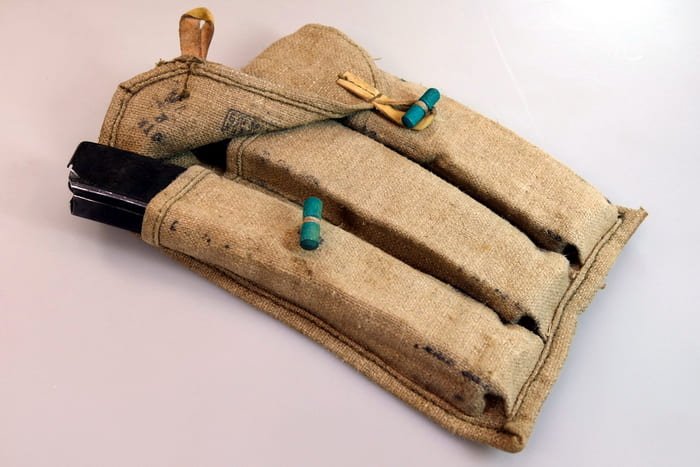
With the introduction of box magazines for the PPSh submachine gun and the development of the Sudayev submachine gun using similar magazines, a dedicated pouch for carrying them became necessary. The design was based on a pouch used for magazines of a German submachine gun. The pouch could hold three magazines, each designed for 35 rounds. Each PPS-43 was officially issued with two such pouches, but wartime photographs show that submachine gunners often carried only one. This was largely due to a shortage of magazines: in combat conditions they were considered expendable items and were easily lost.
The pouch was made of canvas or tarpaulin and, unlike its German counterpart, was heavily simplified. The flap was fastened with metal studs or wooden toggle fasteners; some variants used buttons. On the back, belt loops were sewn on for threading onto the waist belt. The pouches were worn on the front of the belt, allowing quick access to loaded magazines and easy stowage of empty ones. The orientation of the magazines, feed lips up or down, was not regulated.
Haversack (Duffel Bag)
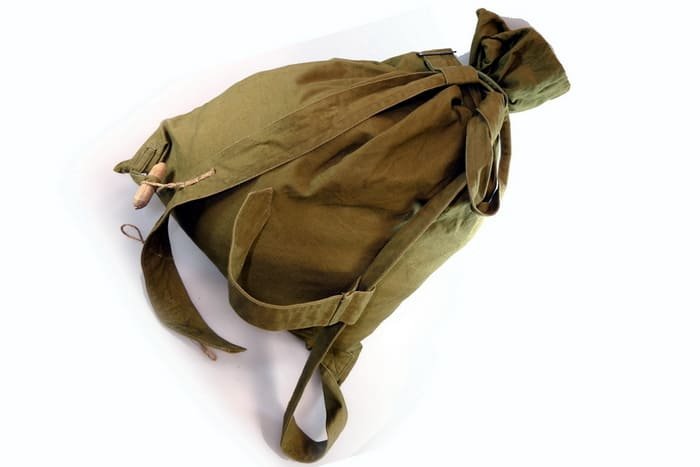
This piece of equipment, known among soldiers by the nickname “sidor,” was a simple bag with a shoulder strap and a drawstring closure at the neck. It first appeared in the Imperial Russian Army in 1869 and, with no major changes, was carried over into the Red Army. In 1930, a new standard was adopted that defined the appearance of the bag; under this standard it became known as the “Turkestan-type haversack,” or the Model 1930 haversack.
The bag had only one main compartment, the top of which could be tightened with a drawstring. A shoulder strap was sewn to the bottom of the bag; two sliding loops on the strap were used to fasten it across the chest. On the other side of the shoulder strap, three rope loops were sewn on to adjust its length. A wooden toggle was attached to one corner of the bag, to which the loop of the shoulder strap was fastened. The shoulder strap was tied into a so-called “cow knot,” with the neck of the bag passed through the center and then tightened. In this configuration, the bag was worn and carried on the soldier’s back.
In 1941, the appearance of the Model 1930 haversack was modified: it became slightly smaller, and the shoulder strap was made narrower and fitted with internal padding at the shoulders, which required stitching. In 1942, a further simplification followed: the padding inside the shoulder strap was abandoned, but the strap itself was made wider. In this form, the haversack continued to be produced until the late 1940s. Thanks to its simplicity of manufacture, the haversack became the primary means for Red Army soldiers to carry their personal belongings during the Great Patriotic War.
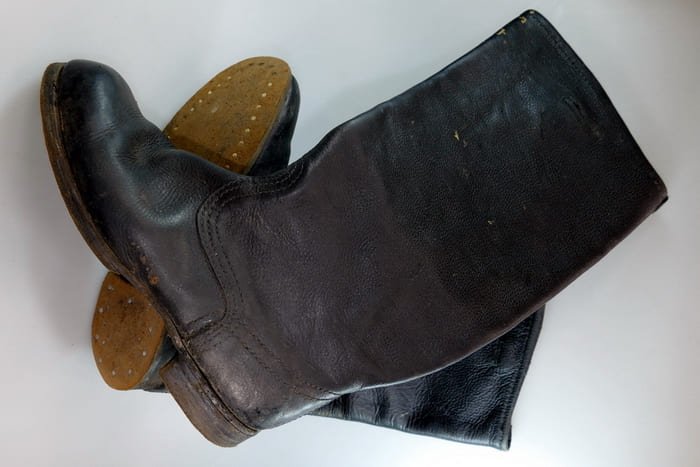
Yuft leather boots
Looking for original Soviet boots? You can get them here – Soviet boots store
Originally, boots were the only footwear worn by Russian soldiers: boots with puttees were introduced into service only in early 1915, when the army rapidly expanded and there were no longer enough boots. Soldiers’ boots were made of yuft leather, and in the Red Army they were issued to all branches of service.
In the mid-1930s, kirza was developed in the USSR, a material with a fabric base coated with artificial butadiene-sodium rubber that imitated the texture of leather. With the outbreak of the war, the problem of supplying the mobilized army with footwear became acute, and this “devil’s leather” proved extremely useful: Red Army boots became kirza boots. By 1945, the typical Soviet infantryman was wearing kirza boots or boots with puttees, although experienced soldiers tried to obtain leather boots for themselves. In the photo, the infantryman is wearing yuften leather boots with a leather sole and a leather heel.
Round mess tin
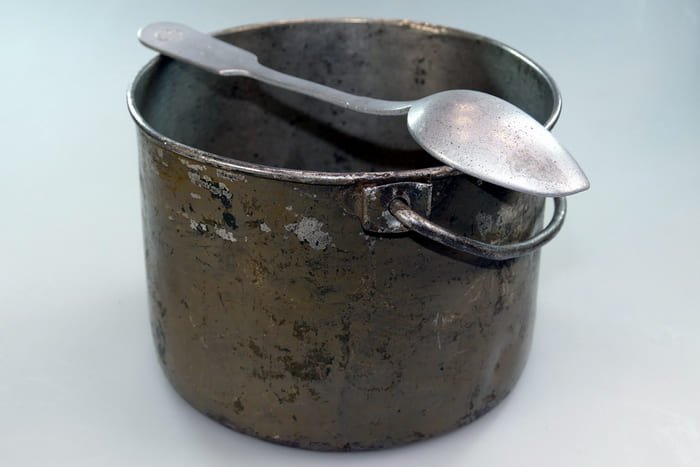
Mess tins of this round shape had been used as early as the Imperial Russian Army, made from copper, brass, tinned steel, and later aluminum. In 1927, mass production of stamped aluminum round mess tins for the Red Army was launched in Leningrad at the Krasny Vyborzhets factory, but in 1936 they were replaced by a new flat-pattern mess tin.
With the outbreak of the Great Patriotic War, in the autumn of 1941, production of round mess tins was resumed in Lysva in the Urals, this time using steel instead of scarce aluminum. The return to the round shape was also practical: this type of mess tin was simpler to manufacture. The Lysva plant carried out extensive work to significantly reduce production costs. By 1945, total output of round army mess tins exceeded 20 million units, making them the most widespread mess tin in the Red Army. Production continued after the war as well.
Sudayev submachine gun, Model 1943 (PPS-43)
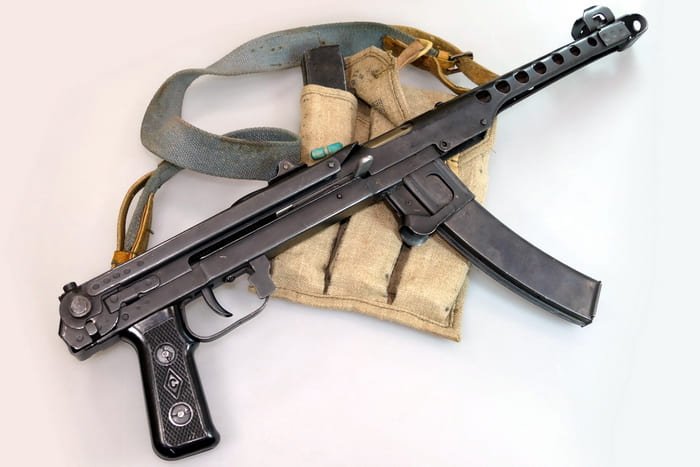
Many specialists consider it the best submachine gun of the Great Patriotic War. The PPS successfully combined ease of manufacture and maintenance with exceptional reliability in combat, outperforming many other designs. During its development, it was taken into account that a mass-issue weapon had to be producible even at non-specialized factories with relatively basic machine tools. The only PPS components requiring complex machining were the bolt and the barrel; all other parts were made by stamping, bending, riveting, and welding.
The PPS was fed from a 35-round box magazine chambered for the 7.62×25 mm cartridge. With its folding stock and a loaded weight of just over 3.5 kg, it became very popular among soldiers, especially tank crews, paratroopers, and reconnaissance units.
Production of the first PPS-42 batches began in 1942 in Moscow and later in besieged Leningrad. In 1943, following field trials and expanded production, a number of design changes were introduced. The resulting version was officially adopted as the Sudayev submachine gun, Model 1943, or PPS-43. After the end of World War II, it was produced in many countries, including those of the Warsaw Pact, as well as in Finland, West Germany, and Spain.
Soldier’s gymnastyorka, Model 1943
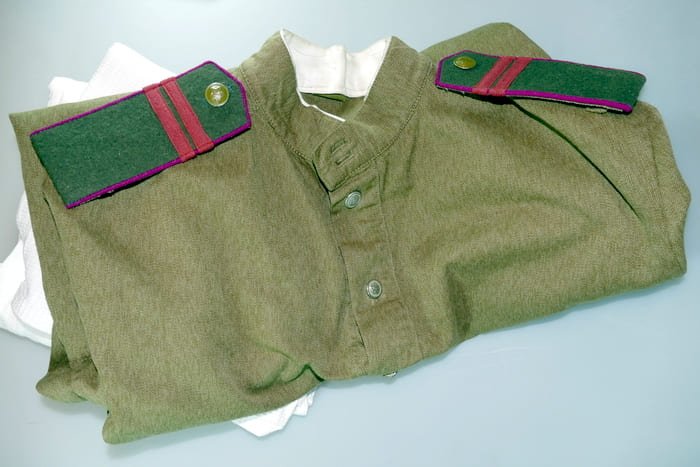
It was introduced by order of the People’s Commissar of Defense of the USSR on January 15, 1943, replacing the Model 1935 gymnastyorka. The main differences were a soft standing collar instead of a turn-down collar. The collar was fastened with two small uniform buttons. The front placket was open and fastened with three buttons through buttonholes. Removable shoulder boards were worn on the shoulders, for which special loops were sewn on.
During wartime, the soldier’s gymnastyorka had no chest pockets; these were introduced later. In combat conditions, five-pointed field shoulder boards were worn. For infantry troops, the shoulder board field was green, with a crimson piping along the edge. Chevrons indicating junior command ranks were sewn onto the upper part of the shoulder boards.
Grenade bag
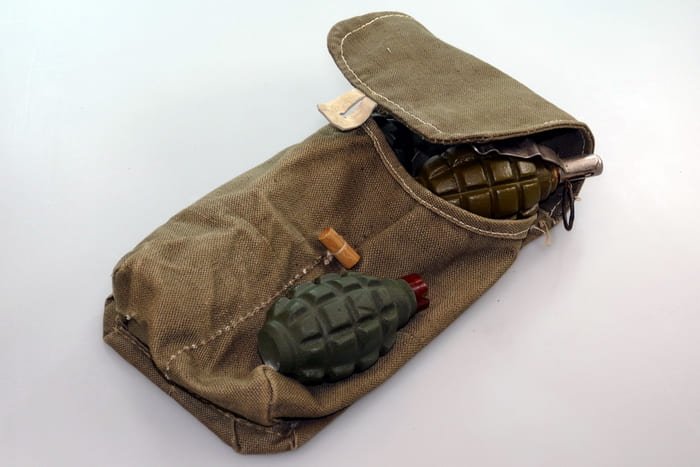
Every infantryman carried hand grenades, which were normally transported in a special bag worn on the belt. The bag was positioned on the left rear side, behind the ammunition pouch and in front of the ration bag. It was a rectangular fabric bag with three compartments: two larger ones for grenades and a smaller one for detonators. Grenades were brought into the combat-ready state immediately before use. The bag could be made of canvas, sailcloth, or tent fabric and was closed with a button or a wooden toggle.
The bag could hold two older Model 1914/30 grenades or two RGD-33 grenades, which were placed with their handles facing upward. Detonators were kept wrapped in paper or cloth. The bag could also hold four F-1 “lemon” grenades arranged in pairs.
Their placement was distinctive: each grenade had its fuze well closed with a special screw plug made of wood or bakelite, with one grenade placed plug-down and the other plug-up (grenades with the fuze screwed in, as shown in the photo, were of course not carried in the bag). As new grenade types were adopted by the Red Army during the war, their arrangement in the bag followed the same principle as that used for the F-1 grenades. With no significant changes, the grenade bag remained in service from 1941 to 1945.
Entrenching tool (MPL-50)
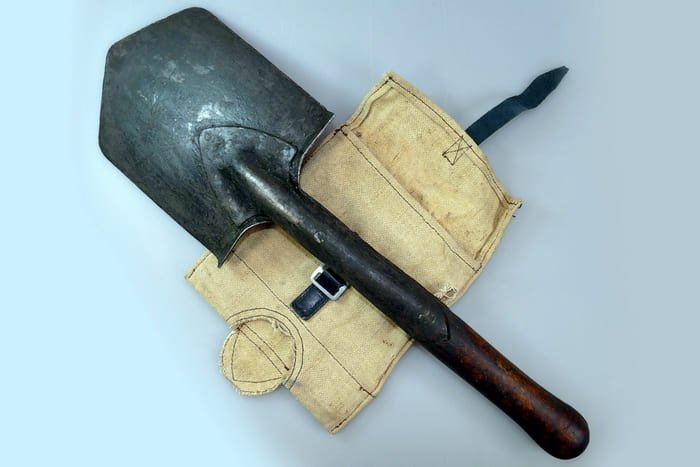
During the war, the MPL-50 entrenching tool underwent a number of changes aimed at simplifying production. At first, the shape of the blade and the shovel as a whole remained unchanged, but the rear reinforcing plate began to be attached by spot electric welding instead of rivets. Slightly later, the clamping ring was abandoned, while the wooden handle continued to be fixed between the tangs with rivets.
In 1943, an even more simplified version of the MPL-50 appeared: the shovel became a one-piece stamped design. The rear reinforcing plate was eliminated, and the upper part of the front tang became straight (previously it had a triangular shape). Moreover, the front tang was now twisted to form a tube, secured with a rivet or welding. The handle was inserted into this tube, tightly driven in until wedged by the blade itself, and then fixed with a screw.
The photo shows an intermediate wartime version of the MPL-50: with tangs, without a clamping ring, and with the rear plate attached by spot welding.
Gas mask bag, Model 1939
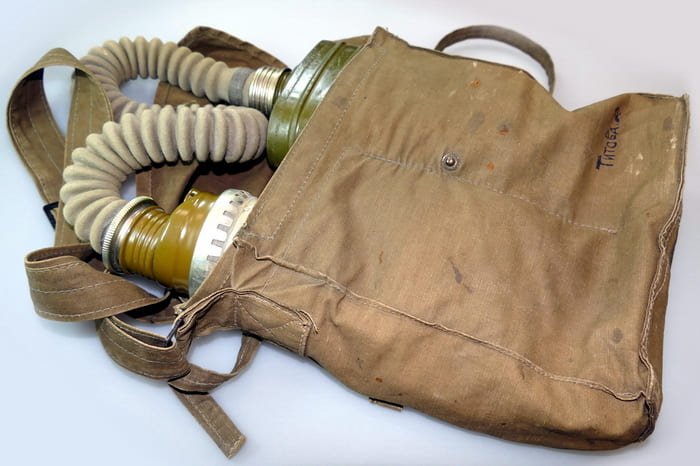
By 1945, the gas mask had not been removed from the standard equipment of Red Army soldiers. However, four years of war passed without chemical attacks, and soldiers often tried to get rid of this “unnecessary” piece of equipment by turning it in to the supply train. Frequently, despite constant supervision by commanders, gas masks were simply thrown away, and the gas mask bags were used to carry personal belongings.
During the war, soldiers even within the same unit could be seen carrying different types of gas mask bags and gas masks. The photograph shows a gas mask bag of the 1939 pattern, produced in December 1941. Made from tent fabric, the bag was closed with a snap button and was significantly simpler to manufacture than the Model 1936 bag.
NR-40 Scout Knife
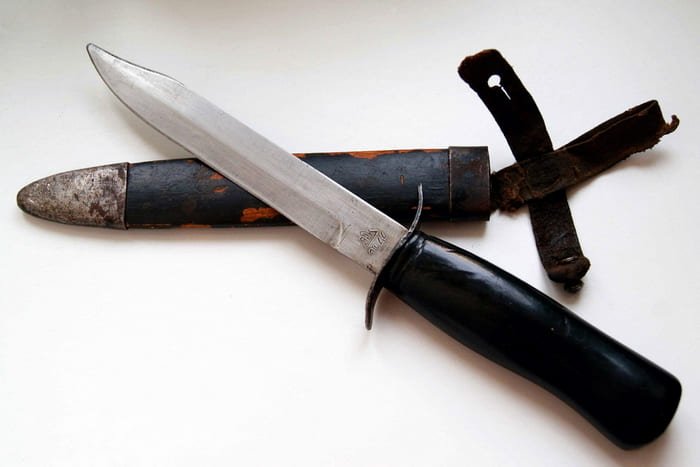
The Model 1940 scout knife (NR-40) was adopted by the Red Army following the Soviet-Finnish War, when the need arose for a simple and practical military combat knife. Soon after, production was organized by the Trud artel in the settlement of Vacha (Gorky Region) and at the Zlatoust Tool Factory in the Urals. Later, NR-40 knives were also manufactured at other enterprises, including those in besieged Leningrad. Despite a unified design, NR-40 knives from different manufacturers vary in details.
At the initial stage of the Great Patriotic War, NR-40 knives were issued only to reconnaissance troops. They were not a standard weapon for infantry, but the closer the war came to 1945, the more frequently these knives can be seen in photographs of ordinary submachine gunners. Production of the NR-40 continued after the war, both in the USSR and in the countries of the Warsaw Pact.
In addition
The four years of the WW2 dramatically transformed the Red Army. After the devastating defeats of 1941, by the spring of 1945 it managed to turn the tide of the war and achieve victory. However, the Soviet soldier not only gained combat experience but also underwent a visible external transformation.
On the occasion of another Victory anniversary, we help to understand how exactly the uniform and equipment of the Red Army soldier changed over the course of the WW2. The interactive image presents two Red Army infantrymen: a regular army soldier as of June 22, 1941, and a victorious sergeant on May 9, 1945.
Even from the photographs, it is clear how the uniform and equipment were gradually simplified over time: some items proved too expensive to manufacture during wartime, others failed to take root, and some were disliked by soldiers and removed from service. At the same time, certain elements of equipment were adopted from the enemy or taken as trophies.
FAQ
Was the 1941 Red Army equipment set always worn strictly by regulation?
No. Even in 1941, wartime photos show mixed models, missing parts, personal repairs, and local substitutions.
Why does 1945 equipment look simpler than 1941?
Mass production, material shortages, and combat experience pushed continuous simplification. Canvas and webbing replace many leather parts.
Did Red Army soldiers use trophy German items?
Yes. Belts and small gear items appear in photos. Symbols were often removed or modified.
Why are glass canteens common during the war?
Aluminum shortages and disrupted production made glass a practical mass solution despite being less durable.
Where should reenactors start if they want a correct impression?
Start with this guide: WWII Soviet uniform for reenactment, then use this page to double-check equipment choices by year.
Check more articles
- Best WW2 Uniform: Soviet, German, USA. Who Had the Best Army Gear?
- Red Army Uniforms of the Russian Civil War (1918-1922)
- Field Uniform and Equipment of the Soviet Army in 1968-1991 Part 1
- Field Uniform and Equipment of the Soviet Army (1968-1991) – Part 2
- Field Uniform and Equipment of the Soviet Army (1968-1991) – Part 3
Looking for original Soviet boots and accessories? Please visit here: Soviet Boots Store