Soviet Red Army uniform and equipment
At the beginning of the Great Patriotic War, the cut of the uniform and the way it was worn were defined by Order No.176 from December 3, 1935. For generals there were three types of uniform: everyday, service dress, and parade. For officers and soldiers there were also three types of uniform: everyday, guard, and service dress. Each type of uniform had two versions: summer and winter.
Check Soviet WW2 uniforms guides:
- How to Put Together a WWII Soviet Soldier and Officer Uniform for Reenactment
- Soviet uniform (1936-1941)
- Soviet uniform (1941-1943)
- Soviet uniform (1943-1945)
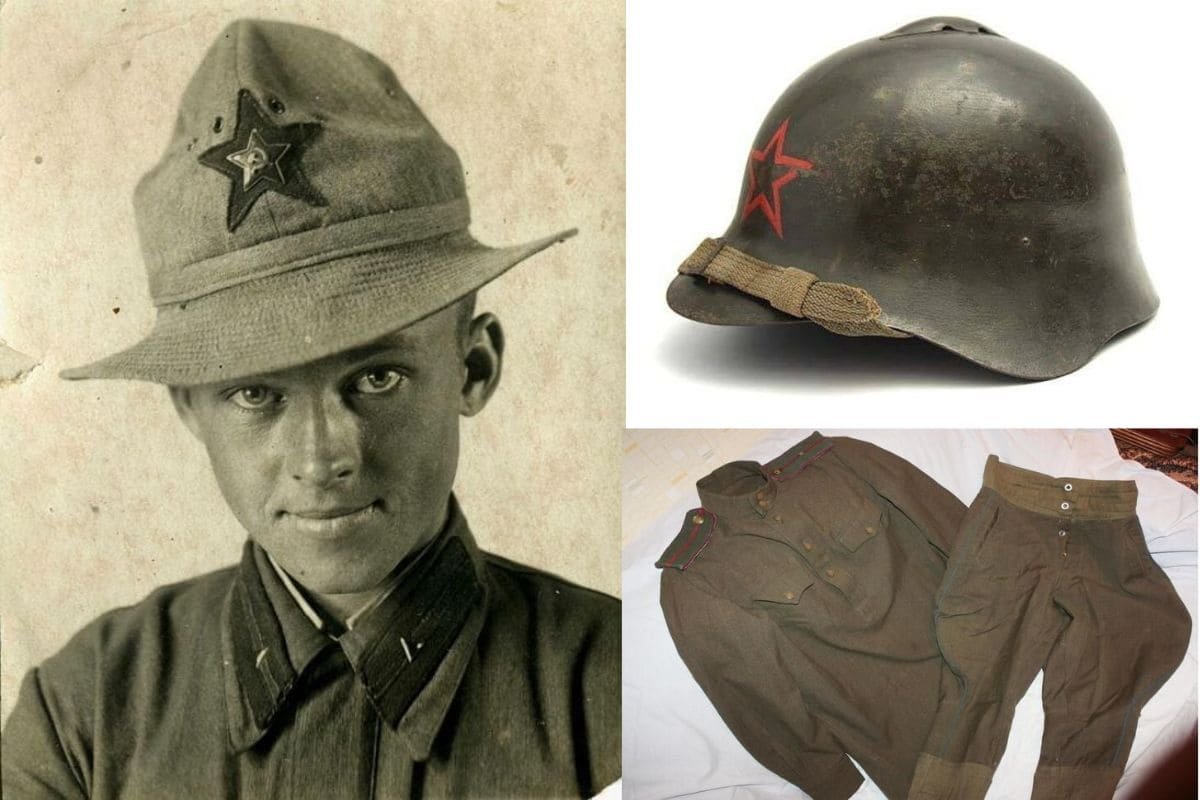
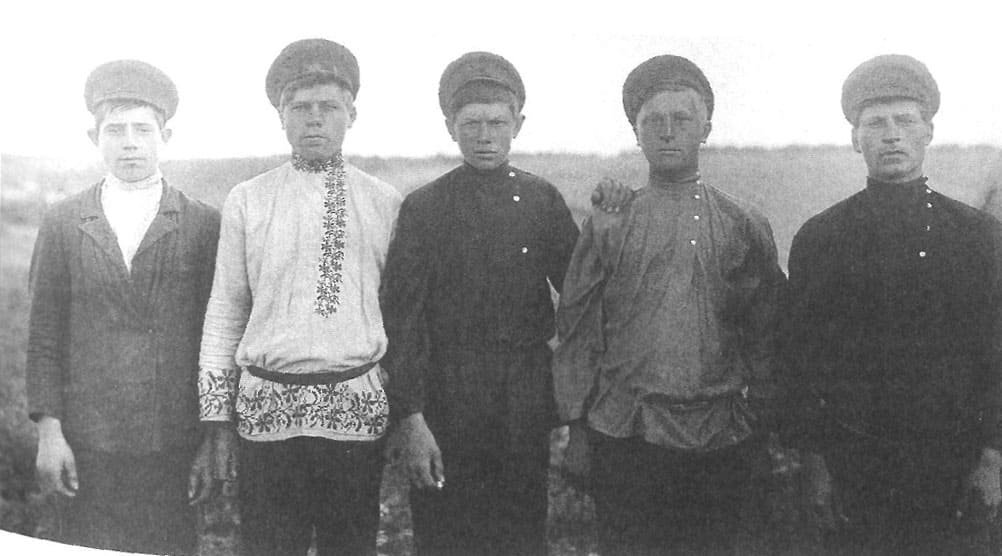
Between 1935 and 1941 many small changes were made to the uniform. The field uniform of the 1935 model was made from cloth in different shades of protective color. The main element of the uniform was the gymnastyorka tunic, which in its cut looked similar to a Russian peasant shirt.
The cut of the gymnastyorka for soldiers and officers was the same. The flap of the chest pocket on the officer gymnastyorka had a complex shape with a point in the form of the Latin letter “V”. On soldier tunics the flap often had a rectangular shape. The lower part of the collar on officer tunics had a triangular reinforcing patch, while on soldier tunics this patch was rectangular. In addition, soldier gymnastyorkas had diamond-shaped reinforcing patches on the elbows and on the back side of the forearm. The officer gymnastyorka, unlike the soldier one, had colored piping. After the beginning of combat operations the colored piping was removed.
Looking for original Soviet low RKKA boots? You can get them here → [Soviet low boots]
There were two types of gymnastyorka tunics: summer and winter. The summer uniform was made from cotton fabric, which was lighter in color. The winter uniform was made from wool fabric, which had a deeper and darker color. Officers wore a wide leather belt with a brass buckle decorated with a five-pointed star. Soldiers wore a simpler belt with a regular open buckle. In field conditions, soldiers and officers could wear two types of gymnastyorka: everyday and service dress. The service dress tunic was often called a french. Some soldiers who served in elite units wore gymnastyorkas of a special cut that had a colored stripe running along the collar. However, such tunics were not common.
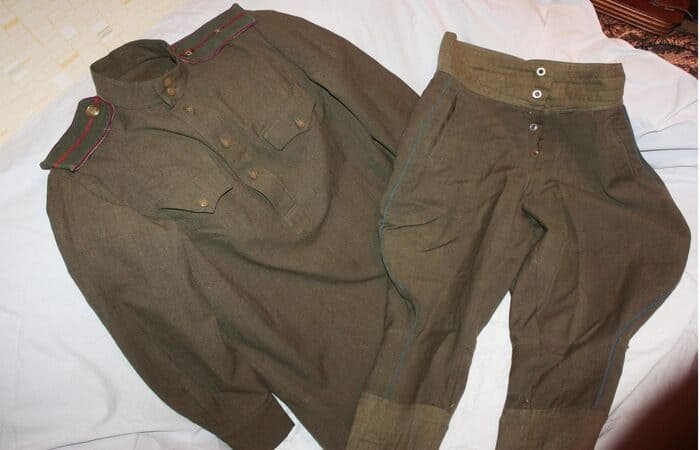
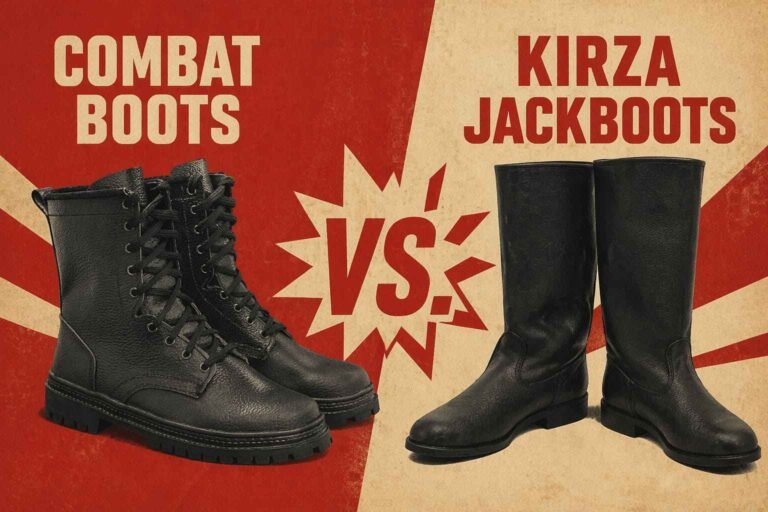
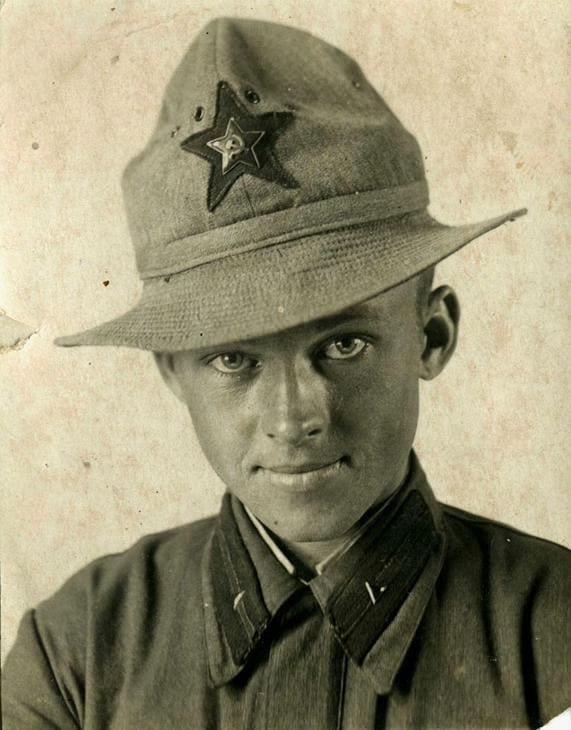
The second main element of the uniform for both soldiers and officers were the trousers, also called breeches. Soldier trousers had diamond-shaped reinforcing patches on the knees. As footwear, officers wore high leather boots, while soldiers wore boots with leg wraps or kirza boots. In winter, officers and soldiers wore an overcoat made from brownish-gray wool cloth. Officer overcoats were of better quality than those of soldiers, but had the same cut. Several types of headgear were used in the Red Army. Most units wore the budenovka, which had winter and summer versions. However, the summer budenovka was gradually replaced by the pilotka cap introduced in the late 1930s. In summer, officers often preferred to wear pilotka caps instead of the budenovka. In units stationed in Central Asia and the Far East, wide-brimmed panama hats were worn instead of the pilotka.
In 1936 a new helmet began to be issued to the Red Army. It was created based on the French Adrian helmet.
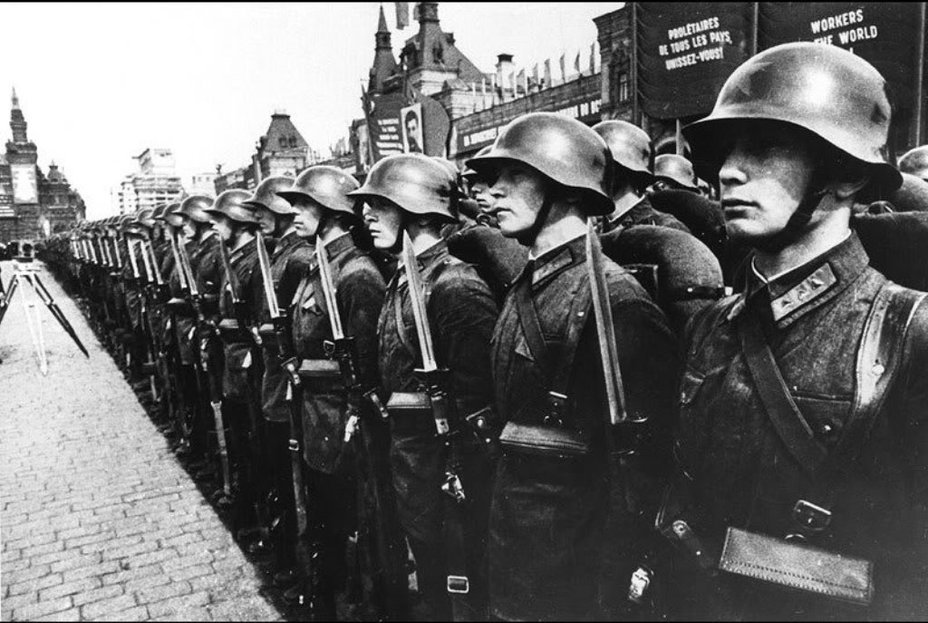
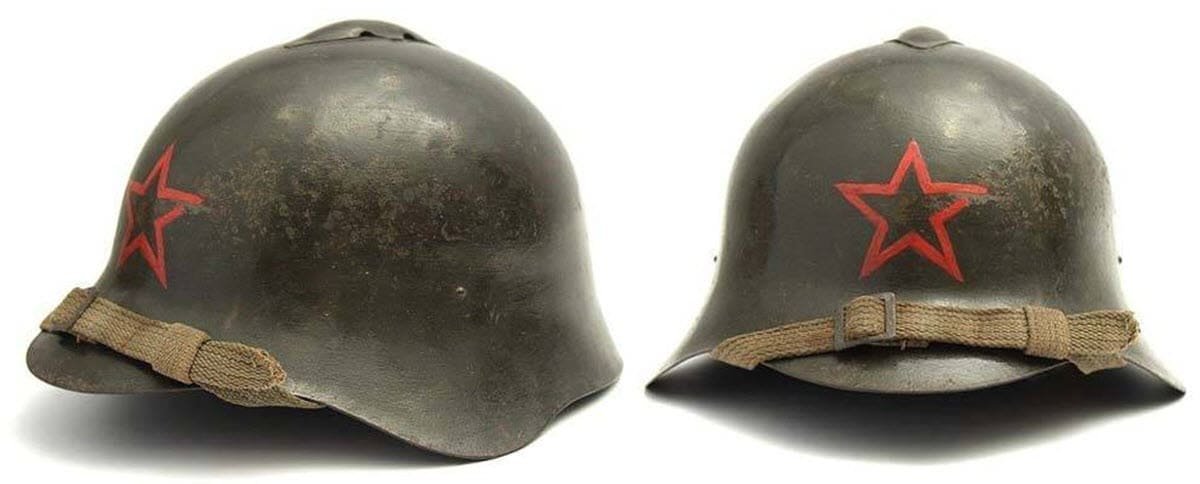
In 1940 noticeable changes were made to the helmet design. The new helmet of the 1940 model gradually replaced the helmet of the 1936 model, but the old helmet was still widely used during the first year of the war. Many Soviet officers later remembered that Red Army soldiers did not like to wear helmets, believing that only cowards wore helmets.
Red Army soldiers wearing Soviet SSH-40 steel helmets during World War II.
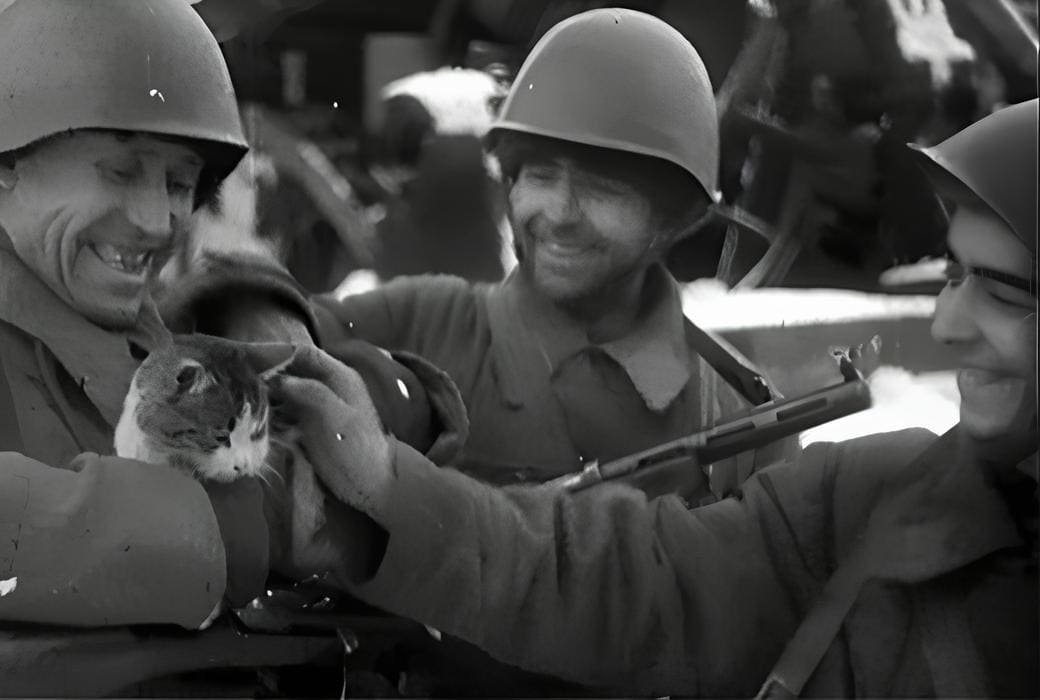
Together with the similar SSH-39 helmet, it was the main helmet of the Red Army during the Great Patriotic War.
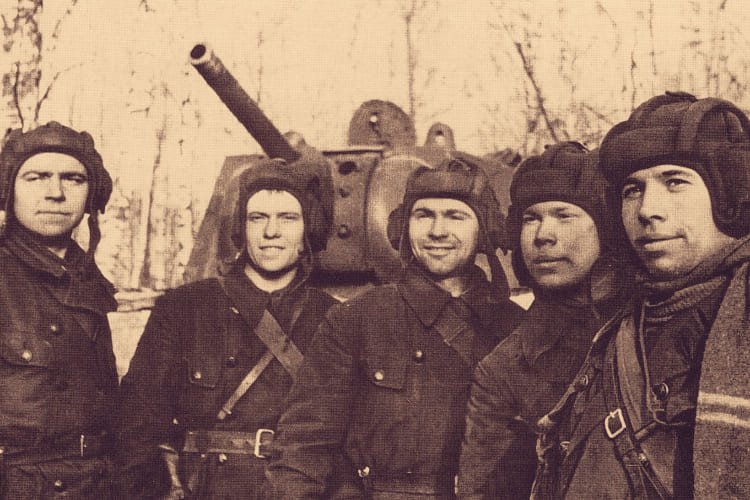
Officers widely wore pilotka caps, and the cap was considered a symbol of officer authority. Tank crews wore a special helmet made of leather or canvas. In summer they used a lighter version of the helmet, and in winter they wore a helmet with a fur lining.
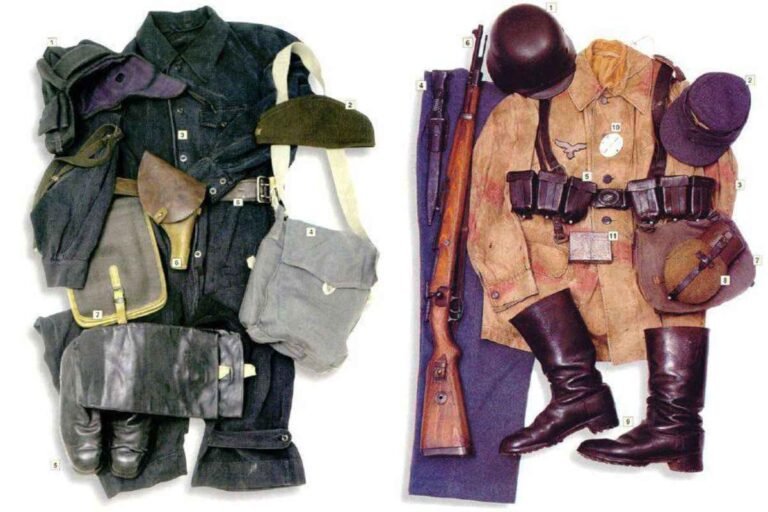
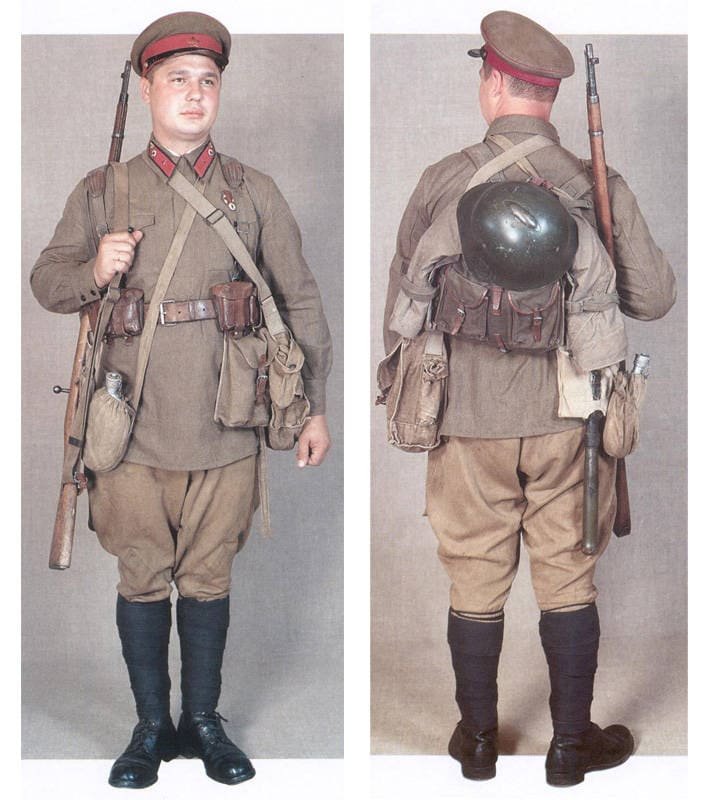
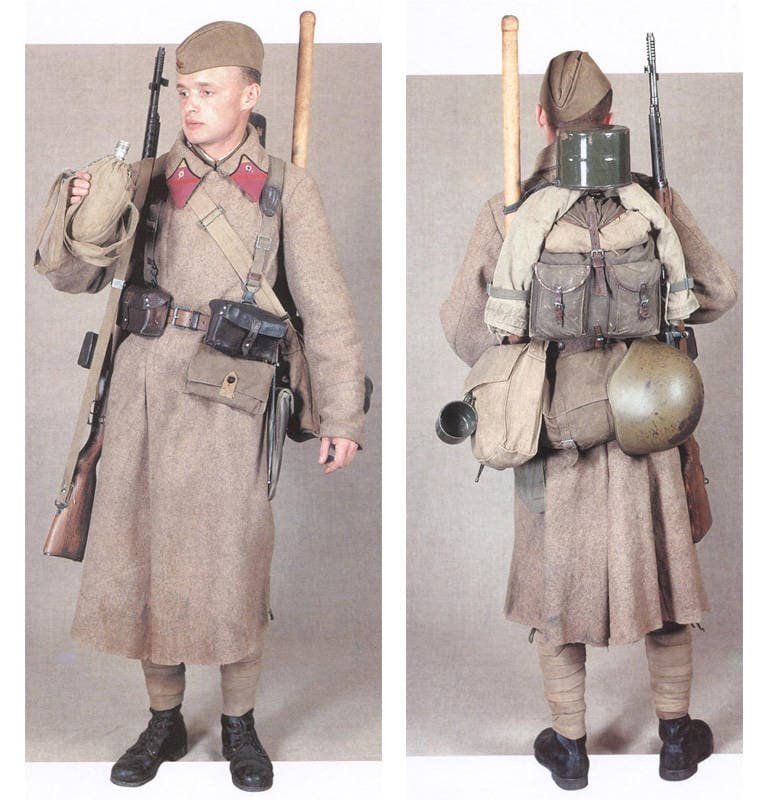
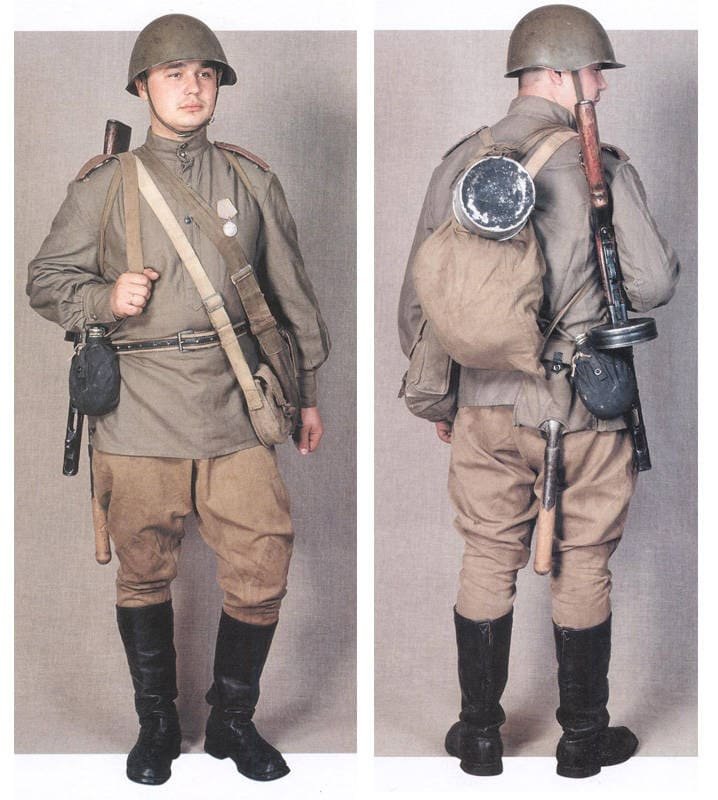
The equipment of Soviet soldiers was strict and simple. In some units the brown leather backpack of the 1930 model was still used, but such backpacks were rarely seen in 1941. Much more common was the canvas knapsack of the 1938 model.
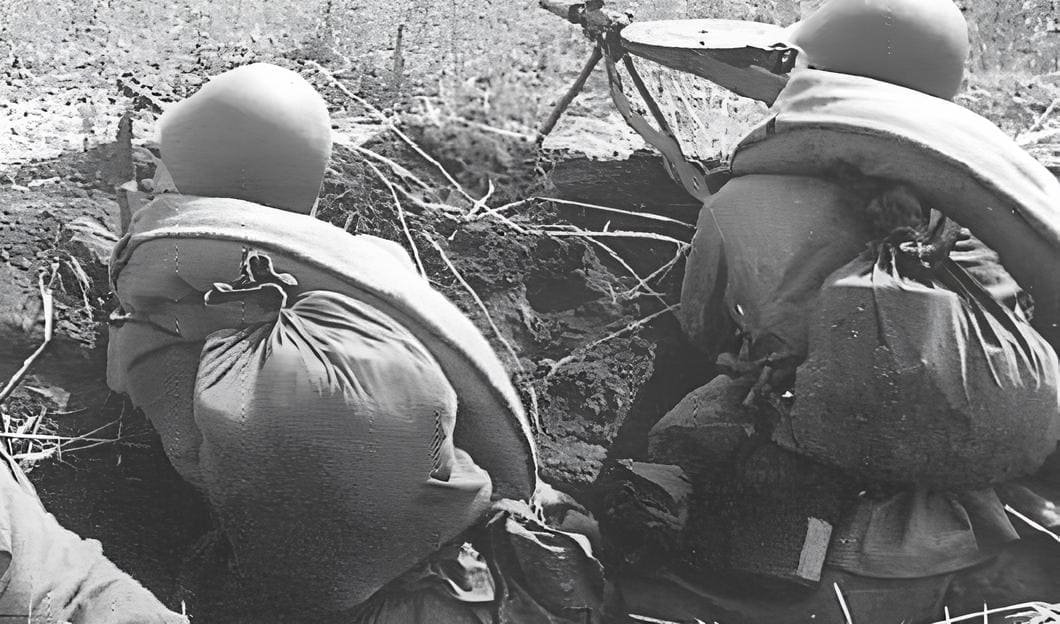
The base of the knapsack was a rectangle measuring 30 by 10 cm. The height of the knapsack was 30 cm. The knapsack had two pockets. Inside the knapsack soldiers carried foot wraps and a shelter half, while the pockets contained rifle accessories and personal hygiene items. At the bottom of the knapsack soldiers tied poles, pegs, and other tools used for setting up tents. On the top and sides of the knapsack there were loops used to attach a rolled greatcoat or blanket.
The food bag was worn on the belt under the knapsack. The size of the food bag was 18 by 24 by 10 cm. In the food bag soldiers carried dry rations, a mess tin, and eating utensils. The aluminum mess tin had a tightly closing lid that was pressed down by the handle of the mess tin. In some units soldiers still used the old round mess tin with a diameter of 15 cm and a depth of 10 cm. However, the food bag and the knapsack of the 1938 model were rather expensive to produce, so their production was stopped at the end of 1941.
Looking for original Soviet low RKKA boots? You can get them here – Soviet low boots
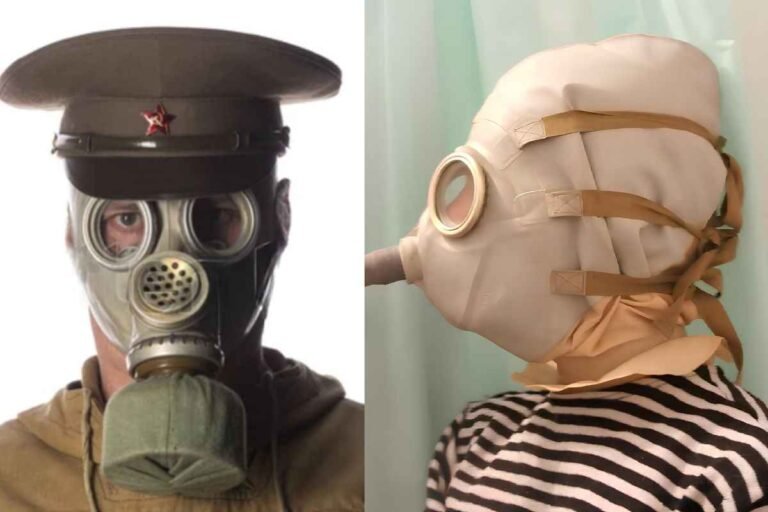
Every Red Army soldier had a gas mask and a gas mask bag. After the war began, many soldiers threw away their gas masks and used the gas mask bags as small packs, because not everyone had a real knapsack. According to regulations, every soldier armed with a rifle had to carry two leather ammunition pouches. Each pouch could hold four clips for the Mosin rifle – 20 cartridges. The pouches were worn on the belt, one on each side. Regulations also allowed a large cloth ammunition pouch that could hold six clips – 30 cartridges. In addition, Red Army soldiers could use a cloth bandolier worn over the shoulder. The bandolier could hold 14 rifle clips. The grenade bag held two grenades with handles. However, very few soldiers were equipped according to the regulations. Most Red Army soldiers had only one leather ammunition pouch, usually worn on the right side. Some soldiers were issued small entrenching tools in a cloth cover. The shovel was worn on the right thigh. If a soldier had a flask, it was worn on the belt above the shovel.
Looking for Soviet Flask? You can get them here – Soviet Flask
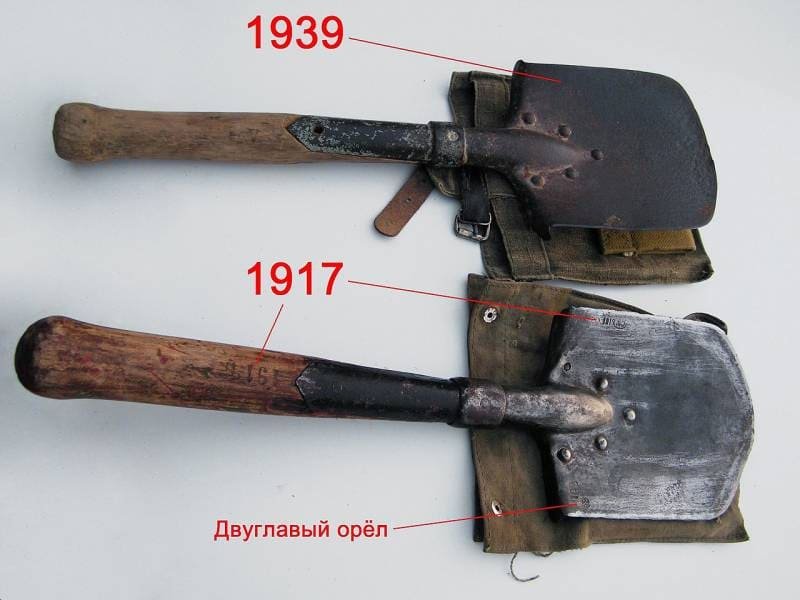
The small infantry shovel, also known as the MPL-50 or Linnemann shovel, was a portable entrenching tool used by the lower ranks of the Imperial Russian Army, and later by soldiers and sergeants of the Red Army and the Armed Forces of the USSR. The length of the small infantry shovel was 50 cm, which is reflected in its name. The small infantry shovel was designed for soldiers to dig their own cover, to dig a single foxhole, or a firing position under enemy fire. The entrenching shovel was the basic engineering tool of a soldier. According to regulations, each infantry company of the Imperial Russian Army had 80 small infantry shovels and 20 axes.
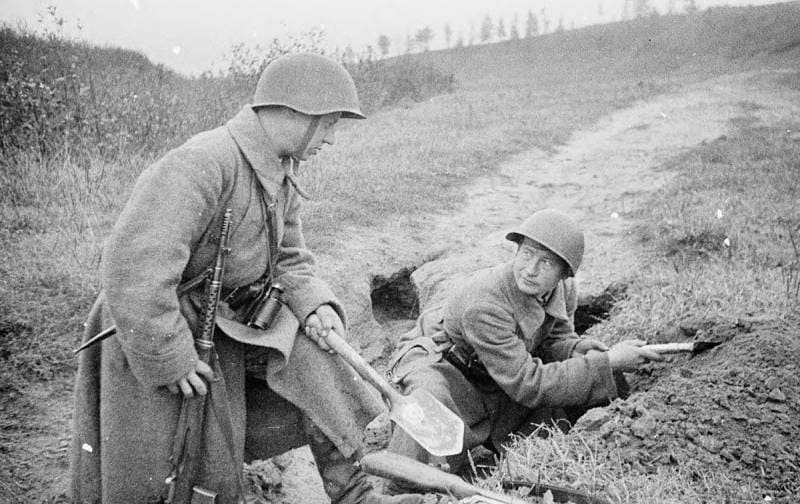
Besides engineering tasks, the shovel could also be used as a weapon in hand-to-hand combat. It could also be used to cut branches and bushes, as a knife, or even as a paddle. The standard size also allowed the shovel to be used for measuring: two shovel lengths equal one meter. The shovel could also be used as a throwing weapon.
During bad weather soldiers used shelter halves. The shelter half was made from protective color canvas and had cords that allowed it to be tied over the shoulders. Two, four, or six shelter halves could be joined together to form a tent where several soldiers could take shelter. If a soldier had the knapsack model 1938, the roll made from the shelter half and the greatcoat was attached to the sides and top of the knapsack in the shape of a horseshoe. If there was no knapsack, the roll was carried over the shoulder.
Officers used a small bag made of leather or canvas. There were several types of these bags. Some were worn over the shoulder, others were attached to the belt. On top of the bag there was a small map case. Some officers carried large leather map cases that were attached to the belt under the left arm.
There were also several types of specialized uniforms. In winter, tank crews wore black coveralls and black leather jackets, sometimes with black leather trousers. Mountain troops wore black coveralls of a special cut and special mountain boots. Cavalrymen, especially Cossacks, often wore traditional clothing instead of standard uniform. The cavalry was the most colorful branch of the Red Army because many Cossacks and people from Central Asia served there. Many cavalry units used standard uniforms, but even in those units items of Cossack clothing were often seen.
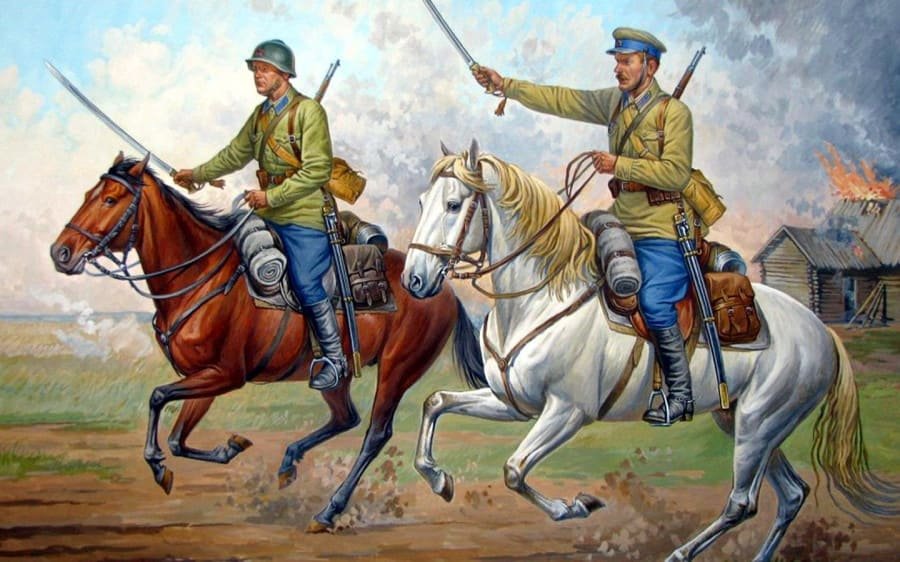
Before the war, Cossack troops were not very popular because many Cossacks had fought against the Bolsheviks during the Civil War and served in the White Army. However, in the 1930s regiments of Don, Kuban, and Terek Cossacks were formed. The personnel of these regiments wore uniforms that included many elements of traditional Cossack clothing. During the Great Patriotic War the field uniform of Cossacks was a combination of 1930s Red Army uniform, pre-revolutionary Cossack uniform, and the uniform models of 1941 and 1943.
Traditionally Cossacks were divided into two groups: steppe Cossacks and Caucasian Cossacks. The uniforms of these two groups were quite different. Steppe Cossacks, mainly Don Cossacks, preferred a more traditional military uniform, while Caucasian Cossacks wore more colorful clothing. All Cossacks wore high papakha hats or lower kubanka hats. In the field Caucasian Cossacks wore dark blue or black beshmet shirts. Parade beshmets were red for Kuban Cossacks and light blue for Terek Cossacks. Over the beshmet Cossacks wore a black or dark blue cherkeska coat. On the chest of the cherkeska there were cartridge holders called gazyrs. In winter Cossacks wore a black fur burka cloak. Many Cossacks also wore bashlyk hoods of different colors. The top of the kubanka hat was covered with cloth: light blue for Terek Cossacks and red for Kuban Cossacks. Two crossed stripes were placed on this cloth – gold for officers and black for enlisted men. It should be noted that many soldiers from the southern regions of Russia continued to wear the kubanka instead of the standard ushanka even if they were not serving in cavalry. Another typical feature of Cossacks was dark blue breeches.
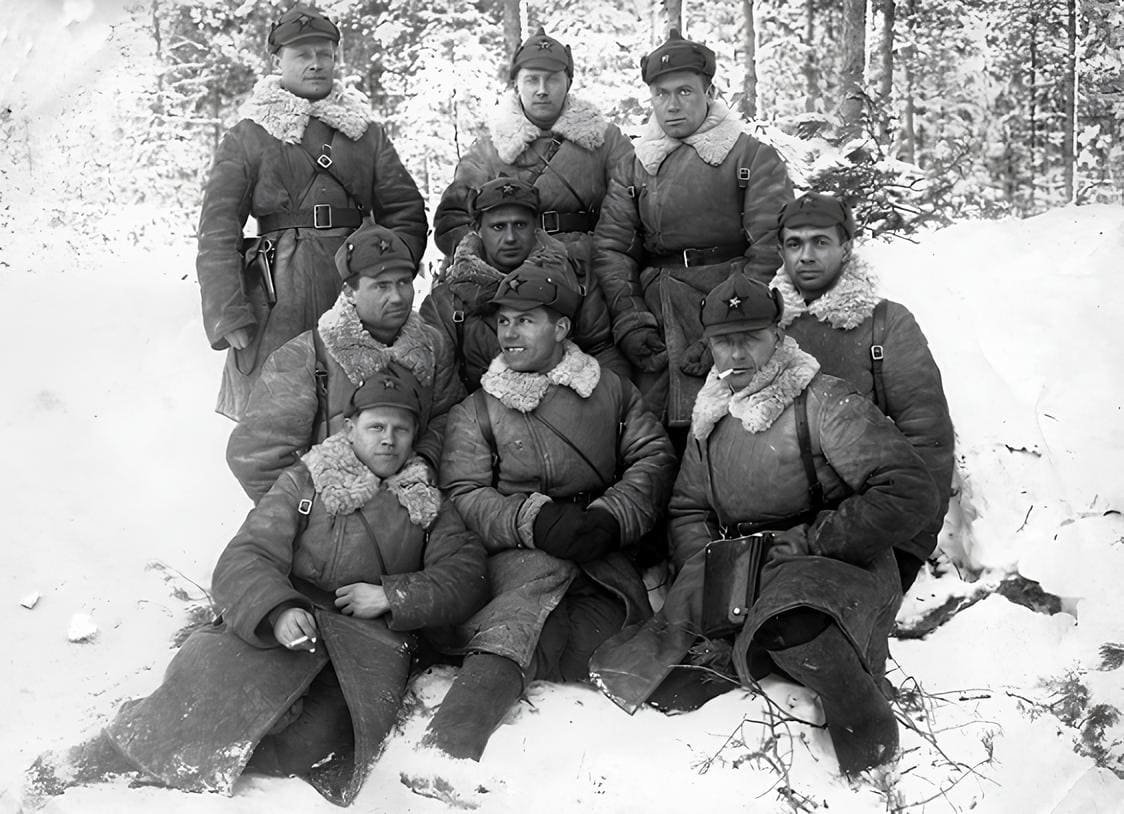
In the first years of the war Soviet industry lost many factories that were located in territories occupied by Germany. However, most of the equipment was evacuated to the east and new factories were organized in the Ural region. This drop in production forced the Soviet command to simplify soldiers’ uniforms and equipment. In the winter of 1941-42 a more practical winter uniform was introduced. When creating this uniform the bitter experience of the Finnish campaign was taken into account. Red Army soldiers received padded jackets, padded trousers, and ushanka hats made with synthetic fur. Officers were issued sheepskin coats or fur coats. Senior officers wore papakha hats instead of ushankas. Troops fighting in the northern sector of the front, north of Leningrad, received special northern uniforms. Instead of sheepskin coats some units used sealskin coats. As footwear soldiers wore special boots with dog fur or wool lining. Ushanka hats for soldiers fighting in the north were made from real fur such as dog or fox.
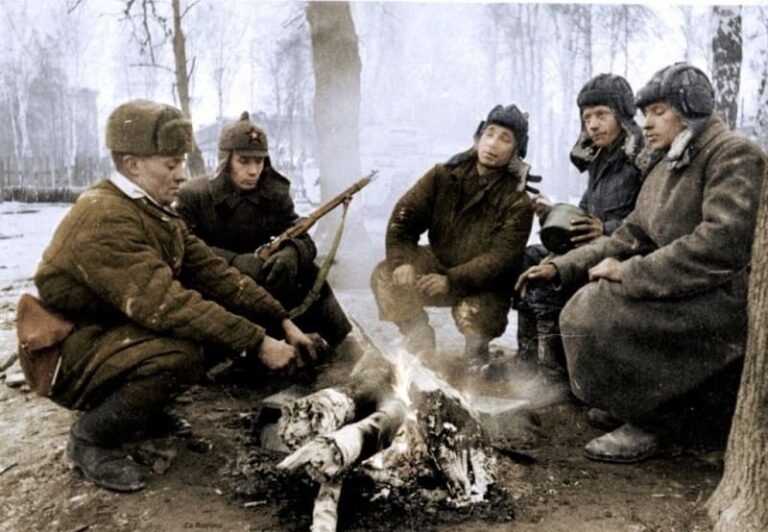
However, many units never received specialized winter uniforms, and Red Army soldiers had to endure the cold in standard greatcoats, often insulated with clothing requisitioned from the civilian population. In general, the widespread use of civilian clothing was typical for the Red Army, and this was especially noticeable during winter.
Looking for original Soviet winter valenki? You can find them here – Soviet valenki
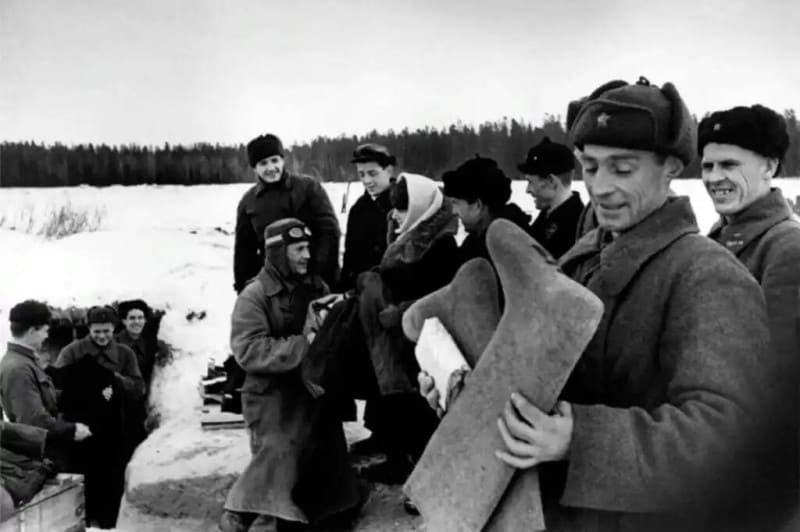
During the winter months, many Red Army soldiers wore felt boots known as valenki. However, not everyone was able to obtain them, so even in winter a large part of the Red Army personnel continued to wear kirza boots. The main advantage of kirza boots was that they were loose enough to be insulated with additional portyanki (foot wraps) and even newspapers, effectively turning them into winter footwear.
Soviet soldiers did not wear socks – only portyanki. Socks were considered too much of a luxury to be used inside loose military boots. Officers, however, if they managed to obtain a pair of socks, did not deny themselves the comfort of wearing them.
Some units were luckier than others. Personnel in these units received valenki with rubber galoshes, which were especially useful during the muddy seasons of autumn and spring.
By 1942 Red Army uniforms looked quite mixed. Tank crews wore coveralls in black, gray, blue, or protective colors. Synthetic leather and rubber were widely used in uniform production. Ammunition pouches were made from canvas or waterproof canvas. Leather belts were widely replaced with canvas belts.
Instead of blankets, Red Army soldiers used their greatcoats and shelter halves. The roll made from a greatcoat or shelter half could also replace a knapsack, with personal items rolled inside. To improve the situation a new knapsack was introduced, similar to the one used by the Imperial Russian Army during World War I. This knapsack was a canvas bag with a drawstring neck and two shoulder straps. In 1942 uniforms from the United States and Canada began arriving in the Soviet Union through Lend-Lease. Although most of the uniforms supplied by America were made according to Soviet designs, some American uniforms also appeared. For example, the United States supplied 13,000 pairs of leather boots and one million pairs of soldier boots, while Canada produced coveralls for Soviet tank crews.
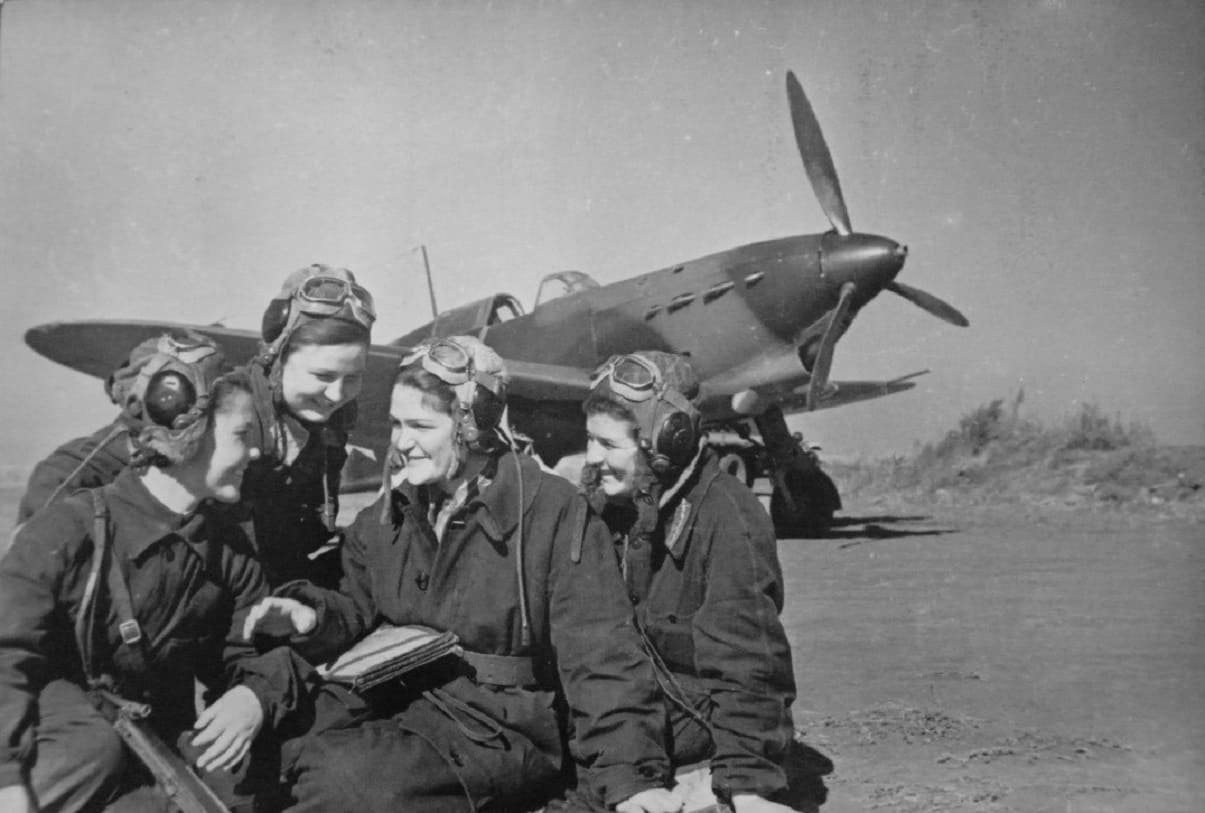
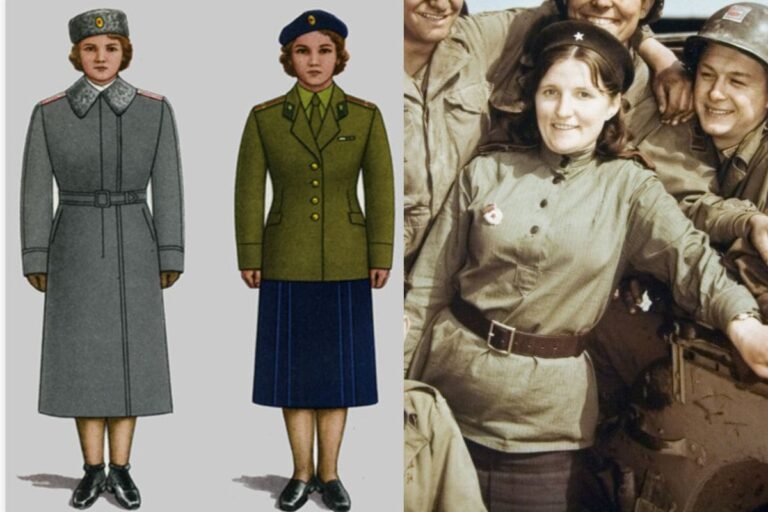
Uniforms for women serving in the Red Army were defined by several official documents. Before the war the distinctive elements of women’s service and parade uniforms were a dark blue skirt and a beret. During the war the clothing regulations for women were defined by orders issued in May and August 1942. These orders kept the use of the skirt and beret. In field conditions these items were made from protective color fabric, while service dress included a blue skirt and beret. These same orders also made women’s uniforms much closer to men’s uniforms. In practice many women soldiers, especially those at the front, wore men’s uniforms. Women also often altered uniform items themselves using worn-out clothing.
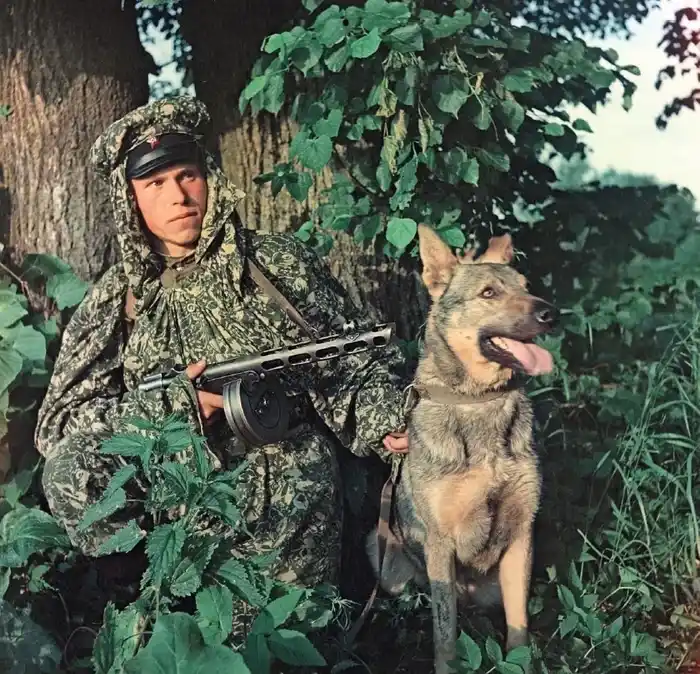
Combat experience from the war with Finland showed the need for white winter camouflage uniforms. Such uniforms appeared in 1941. There were several types of winter camouflage suits, usually consisting of trousers and a jacket with a hood. The Red Army also used many summer camouflage suits. These were usually issued to scouts, engineers, mountain troops, and snipers. The suits had a loose cut and were made from protective color fabric with round black spots. Photographs also show reversible camouflage suits that were green on the outside and white on the inside. It is not clear how widely these were used. A special camouflage suit was also designed for snipers. On a protective color uniform many narrow strips of fabric were sewn to imitate grass. However, these suits were not widely used.
In 1943 the Red Army introduced a new uniform that was very different from the previous one. The system of insignia was also completely changed. The new uniform and insignia were largely based on those of the Imperial Russian Army. The new regulations removed the division of uniforms into everyday, service dress, and parade, because in wartime there was no need for parade uniforms. Elements of parade uniforms were used in the clothing of special units that performed guard duties and in officer uniforms. Officers also kept their service dress uniform.
Looking for classic Soviet kirza boots? You can find them here: Soviet Kirza Boots
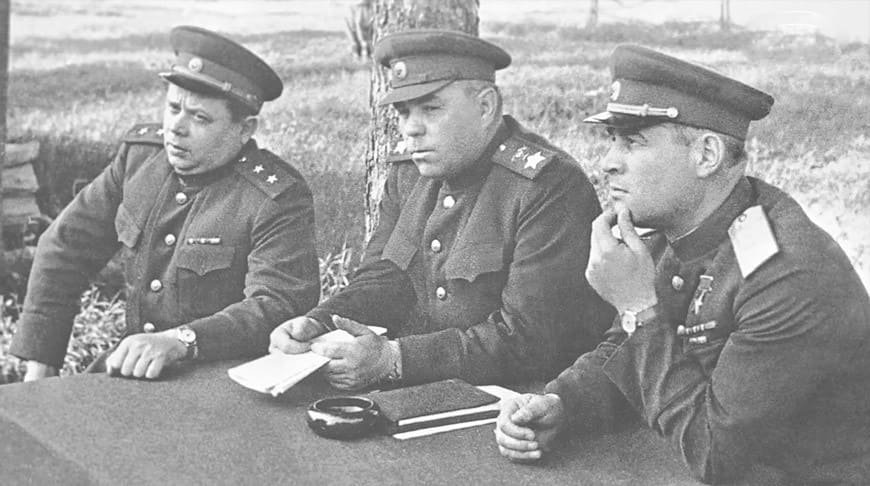
By Order No.25 of January 15, 1943, a new type of gymnastyorka was introduced for soldiers and officers. The new tunic was very similar to the one used in the Imperial Russian Army and had a standing collar fastened with two buttons. Soldier tunics had no pockets, while officer tunics had two chest pockets. The cut of the breeches did not change. The main distinctive feature of the new uniform became the shoulder boards. Two types of shoulder boards were introduced: field and everyday. Field shoulder boards were made from protective color cloth. On three sides they had piping in the color of the branch of service. Officer shoulder boards had no piping, and the branch of service could be identified by the color of the stripes. Senior officers, from major to colonel, had two stripes on their shoulder boards, while junior officers, from junior lieutenant to captain, had one stripe. For medical personnel, veterinarians, and non-combat officers the stripes were red with a brownish shade. In addition, a small gold or silver emblem indicating the branch of service was worn near the button on the shoulder board. The color of the emblem depended on the branch of service. The shoulder boards of marshals and generals were wider than those of officers, while those of military doctors, lawyers, and similar specialists were narrower.
Officers wore a peaked cap with a black leather chin strap. The color of the band on the cap depended on the branch of service. The top of the cap was usually protective color, but in NKVD troops caps with a light blue top were often used, tank crews wore gray caps, and Don Cossacks wore gray-blue caps. The same Order No.25 also defined the winter headgear for officers. Generals and colonels had to wear papakha hats, introduced earlier in 1940, while other officers received standard ushanka hats.
The ranks of sergeants and senior sergeants were determined by the number and width of the stripes on the shoulder boards. Usually the stripes were red, but for medical personnel and veterinarians the stripes had a brownish shade. Senior sergeants wore a stripe shaped like the letter “T”. Staff sergeants had one wide stripe. Sergeants, junior sergeants, and corporals had three, two, or one narrow stripe on the shoulder boards. The piping on the shoulder boards showed the branch of service. According to regulations the branch emblem had to be worn on the inner side of the shoulder boards, but in practice soldiers rarely wore these emblems.
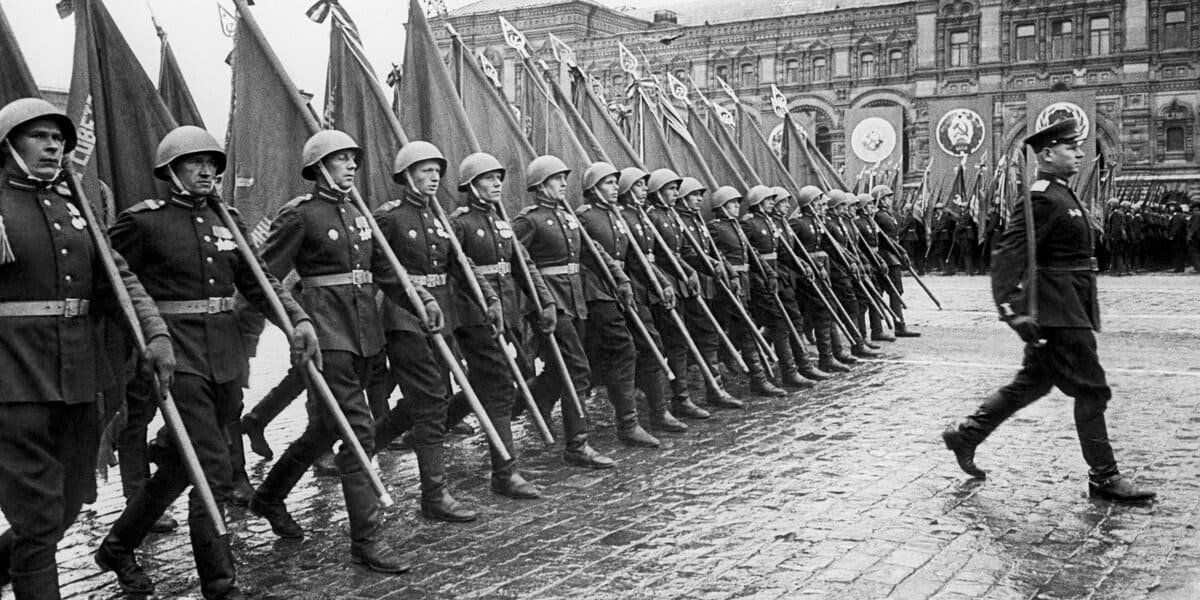
In March 1944 a new uniform for naval infantry was introduced, which was more suitable for fighting on land. Since the Soviet Navy spent much of the war in ports, many sailors fought on land. Naval infantry units were widely used during the defense of Leningrad and in Crimea. However, throughout the war naval infantry often wore the standard naval uniform with some elements of land field uniform added. The last order concerning uniforms was issued in April 1945. This order introduced a parade uniform. Soldiers first wore it during the Victory Parade on Red Square on June 24, 1945.
It is also important to look at the branch colors used in the Red Army. Branches of service were identified by the color of piping and insignia. The color of the collar tabs showed the branch of service, and a small emblem on the collar tab also indicated the branch. Officers wore embroidered or enamel branch insignia, while soldiers used colored piping. Sergeants had collar tabs with piping in the color of the branch, and they were distinguished from soldiers by a narrow red stripe across the tab. Officers wore peaked caps with piping, while soldiers usually wore pilotka side caps. The piping on the uniform was also in branch colors. The branch of service was identified not by one single color, but by a combination of colors on different parts of the uniform.
Commissars held a special position in the army. Commissars existed in every unit from battalion level and higher. In 1937 the position of political instructor, a junior political officer, was introduced in each subunit such as a company or platoon. The insignia of commissars were generally similar to officer insignia but had some differences. Instead of sleeve chevrons, commissars wore a red star. The piping on commissar collar tabs was black regardless of the branch of service, while political instructors had colored piping according to the branch.
Where should reenactors start if they want a correct impression?
Start with this guide: WWII Soviet uniform for reenactment, then use this page to double-check equipment choices by year.
Check more articles
- Best WW2 Uniform: Soviet, German, USA. Who Had the Best Army Gear?
- Red Army Uniforms of the Russian Civil War (1918-1922)
- Field Uniform and Equipment of the Soviet Army in 1968-1991 Part 1
- Field Uniform and Equipment of the Soviet Army (1968-1991) – Part 2
- Field Uniform and Equipment of the Soviet Army (1968-1991) – Part 3
Looking for original Soviet boots and accessories? Please visit here: Soviet Boots Store