Telnyashka Explained: From Russian Navy Tradition to VDV Elite Symbol
The telnyashka is more than just a striped shirt. Worn by the Russian Navy and later adopted by the VDV airborne troops, it became a powerful military symbol of courage, discipline and elite status.
An unusual holiday is celebrated in Russia on August 19 – Telnyashka Day.
How did the telnyashka appear in Russia? What superstitions were connected to it?
Read more interesting articles:
What is telnyashka? Short history about Russian striped shirt
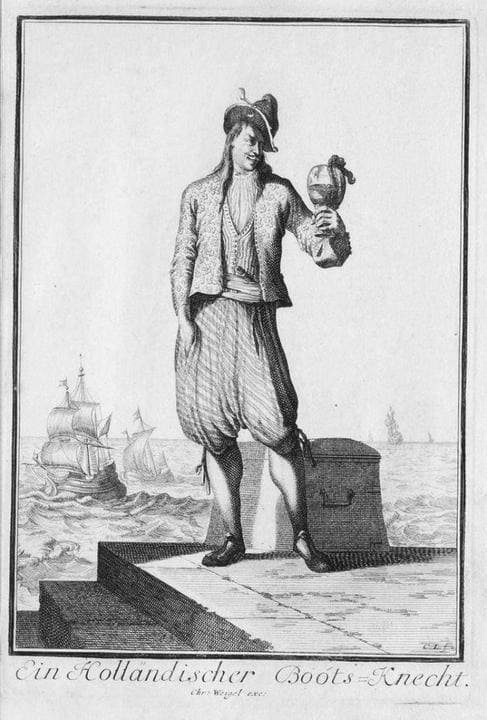
In 1684, construction was completed on the Gostiny Dvor at Cape Pur-Navolok in Arkhangelsk. It was a commercial and defensive complex built to receive foreign trade delegations, which at that time were increasingly visiting the White Sea.
Along with merchant goods, Western European maritime culture also entered the city. The port taverns of Pur-Navolok often welcomed reckless sailors from England and Holland. It was here that Russian sailors first noticed something unusual on these foreigners – knitted undershirts with white and black horizontal stripes. Sailors from the “foggy Albion” proudly wore them in the Russian port.
Foreign sailors explained that the stripes were meant to deceive evil sea spirits. When the spirits saw a striped sailor, they were supposed to think he was already dead – that only his “ribs” remained – and leave the “corpse” alone, sparing his life.
Whether this was really the case is hard to say today. But considering how deeply superstition has always been rooted among both military and civilian sailors, this version sounds quite believable.
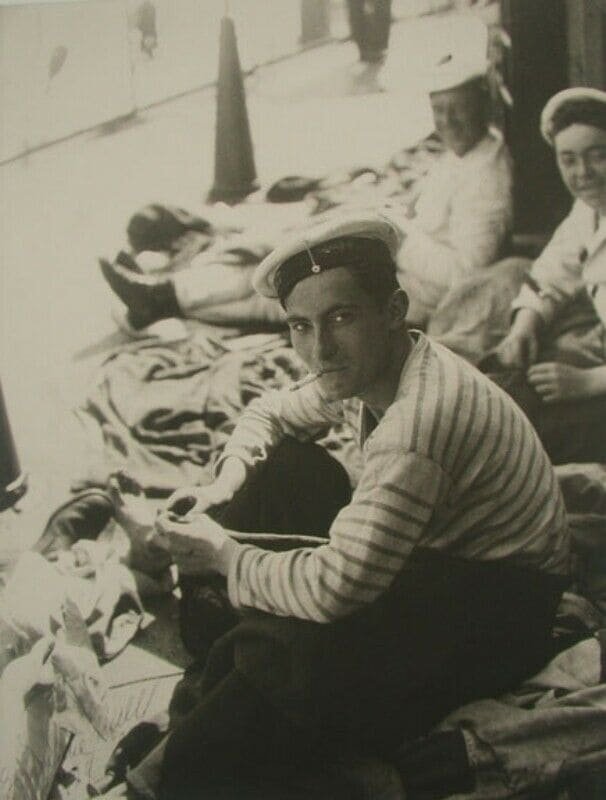
One thing was certain: if a sailor fell overboard, his striped shirt could be seen from a distance, making it easier to rescue him. Foreign sailors appreciated this practical advantage, and the striped shirt spread widely across Europe.
Since sailors usually knitted these striped undershirts themselves, there was no single standard. Colors, stripe widths, and the number of stripes all varied. There was no agreement at all.
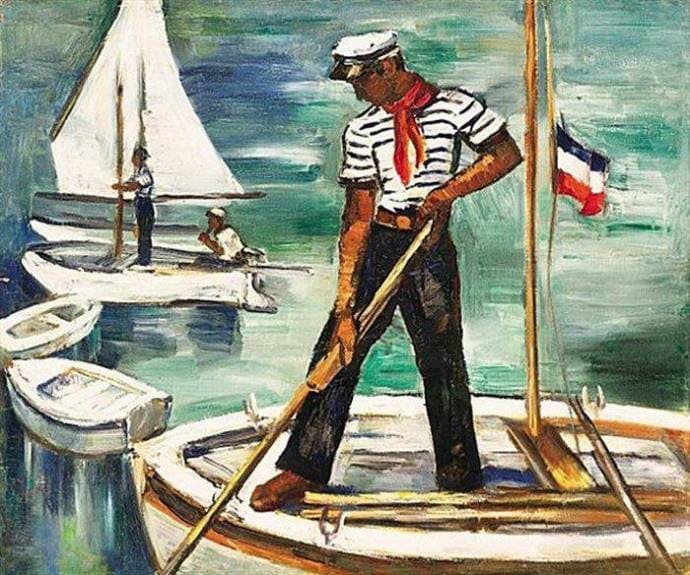
But in the early 18th century, many European navies began introducing strict uniform regulations. And the striped shirt did not fit into the new image of a naval officer dressed in narrow trousers with stockings, wide-brimmed hats, and fashionable fitted coats. Naval command believed that striped shirts ruined the clean and disciplined look of the uniform.
As a result, the telnyashka was seen as something that undermined discipline. Sailors who secretly continued wearing striped shirts were punished for violating uniform regulations. Eventually, striped undershirts disappeared from official use and were forgotten for a time.
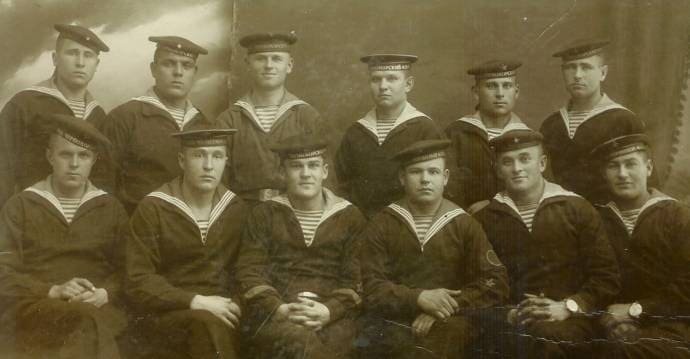
Back to the Stripes
It was the Dutch who brought the striped shirt back.
In the mid-19th century, they reformed their naval uniforms. Instead of strict coats, sailors were given short, loose jackets, flared trousers, and flannel tops with a wide open collar. And in that open neckline, the striped undershirt was clearly visible again.
The comfort and practicality of the new uniform were quickly appreciated by other navies. Soon, the “Dutch naval style” became a model for many countries when designing their own naval uniforms and maritime clothing.
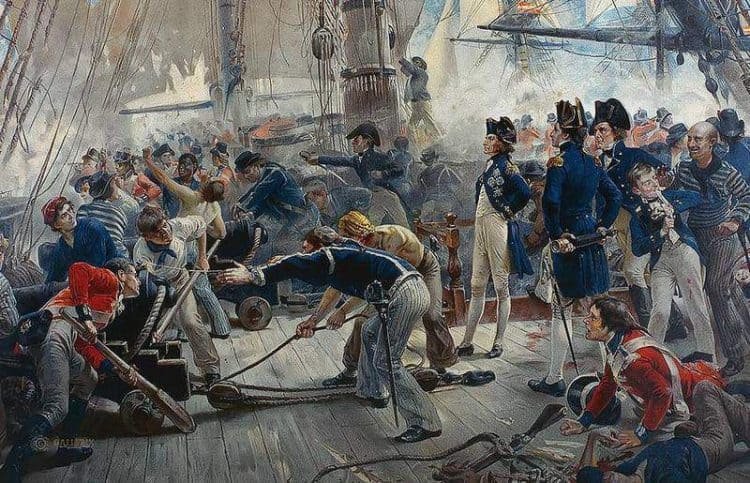
Around the same time, another meaning of “striped” clothing appeared.
When a boatswain directed sailors from the deck while they worked high up on the yards, the striped shirts made them clearly visible. He could easily see everyone – especially those trying to avoid work. And, following old naval tradition, lazy sailors were rewarded with some very colorful sea language.
Today, during mooring operations or small boat maneuvers, crews wear bright orange life vests that are impossible to miss in gray water. But in the 19th century, such safety equipment did not exist. Sailors had to rely on their striped shirts to remain visible.
As soon as the telnyashka – from the word meaning “worn on the body” – returned to naval use, designers began standardizing the number and color of the stripes.
In 1852, the French Navy issued a decree fixing the number of stripes at 21 – the number of Napoleon Bonaparte’s major victories. It served as a constant patriotic reminder for French sailors.
The Dutch and the British took a different approach. They limited the number of stripes to twelve. This was linked to an old belief, which Dutch sailors had once discussed in Arkhangelsk taverns – that the stripes symbolized the twelve ribs of the human body.
The Telnyashka in Russia
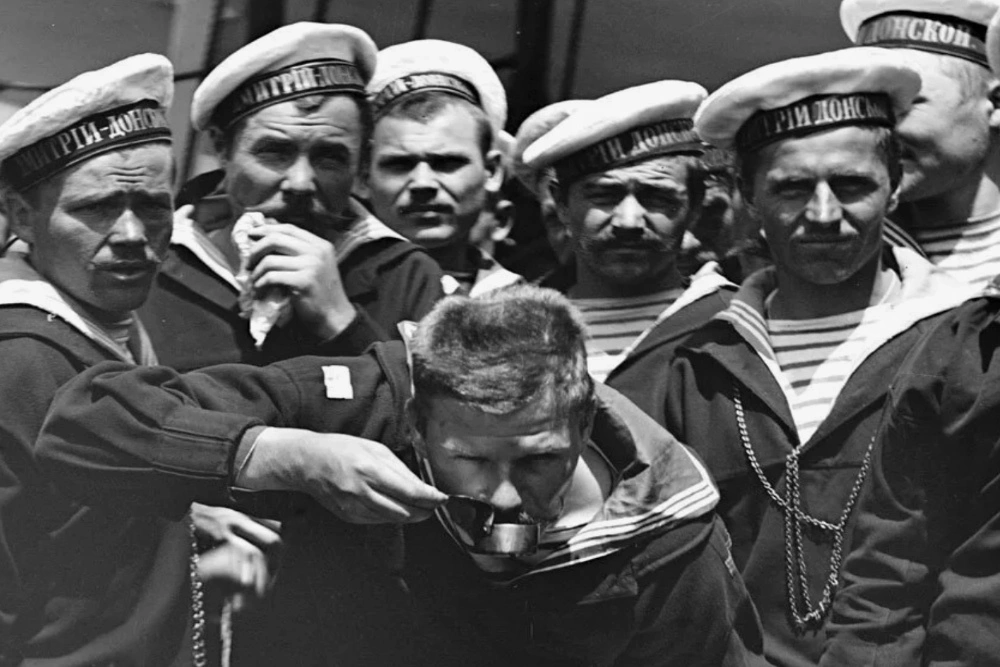
Looking for Russian Telnyashka? You can get them here → [Russian Telnyashka]
The so-called “Dutch naval style” reached the Russian fleet in 1868. Grand Duke Admiral Konstantin Nikolayevich Romanov was formally receiving the heroic crew of the frigate General-Admiral, which had just returned from the Mediterranean after evacuating participants of the Cretan uprising.
For the occasion, the sailors wore their best clothing – striped shirts they had purchased in Copenhagen. During the meeting, they praised the comfort and practicality of the garment so enthusiastically that they inspired the Grand Duke with the idea of introducing the telnyashka into official naval supply.
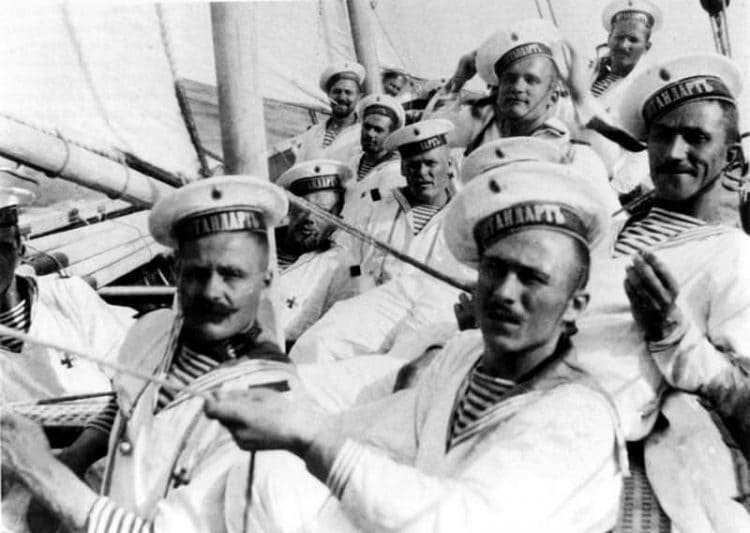
This opinion was supported by the success of the “Dutch naval style” in many fleets around the world. Under the loose Dutch flannel shirt with a wide open collar, sailors were supposed to wear a striped telnyashka. Its white and blue stripes matched the colors of the St. Andrew’s flag – the symbol of the Russian Navy.
Grand Duke Romanov eventually initiated the development of a new naval uniform. The striped shirt received official recognition on August 19, 1874, when Emperor Alexander II approved the order introducing the new form of dress.
The telnyashka was described in detail in the official naval regulations:
“A shirt knitted from wool mixed half with cotton. The shirt shall be white with blue horizontal stripes spaced one vershok apart. The width of the blue stripes shall be one quarter of a vershok. The weight of the shirt shall be no less than 80 zolotniks.”
To understand this in modern measurements: one vershok equals 44.45 mm, so a quarter vershok is about 11.11 mm. And 80 zolotniks equal roughly 344 grams.
This means the blue stripes were noticeably narrower than the white ones. In archival footage from the defense of Port Arthur, the telnyashka is clearly visible – wide white stripes with thinner dark blue lines.
Only in 1912 were the stripes made equal in width, each measuring a quarter of a vershok.
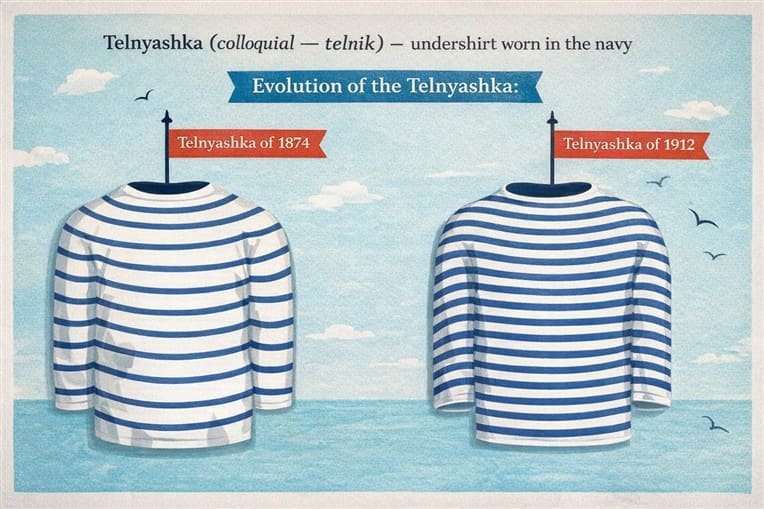
In 1912, a reform was introduced in the Russian Navy that changed the design of the telnyashka. The stripes were made equal in width, replacing the earlier version where dark stripes were noticeably thinner. This reform gave the russian telnyashka the balanced look that became its classic and modern form.
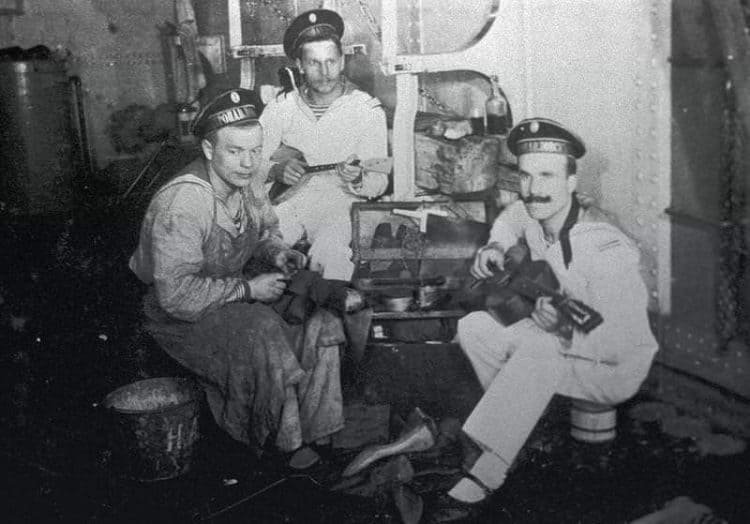
It was in these new telnyashkas that Russian sailors went into battle just one day before Germany officially declared war on Russia on August 1, 1914. They fought to prevent a German naval landing.
A detachment of Baltic Fleet minelayers placed a central mine barrier of more than two thousand sea mines in the Gulf of Finland, along the Narva–Porkkala line. During naval operations in World War I, Russian sailors won many victories. From that time on, the telnyashka took on the final form that is still used today.
The mix of wool and cotton allowed sailors to feel comfortable in both heat and cold. However, fully cotton telnyashkas were also produced – these were worn in summer or in southern regions.
A Sign of Prestige
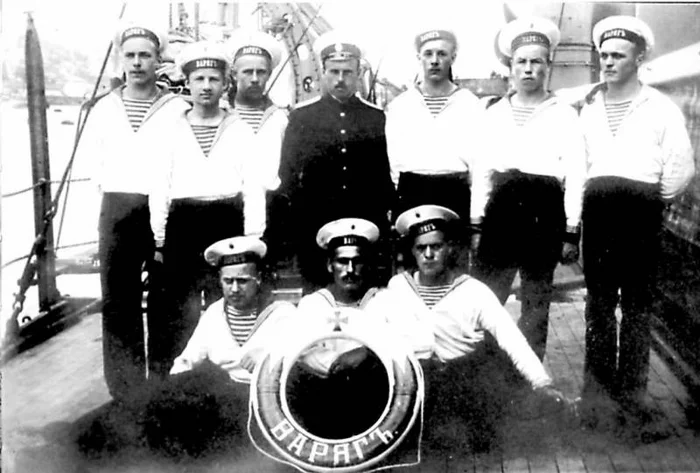
By the late 19th century, naval command understood how much sailors valued the telnyashka. They used this attachment in their own way: striped shirts were issued only to those who had taken part in long voyages. This greatly increased the prestige of wearing one.
A sailor had every reason to be proud of his telnyashka, received after months at sea, often involving extreme physical labor and serious danger. One supply report from that period described the attitude clearly: “Lower ranks… mostly wore them on Sundays and holidays when going ashore… and in all cases when it was necessary to be well dressed.”
In 1893, border guard sailors also received telnyashkas. At first, they wore the traditional white and blue stripes. But five years later, in 1898, by official decree, the stripe color was changed to green for sailors of the Separate Border Guard Corps serving in the Baltic, White, Black, and Caspian Seas. This green stripe tradition continues among border troops today.
A Symbol of Revolution
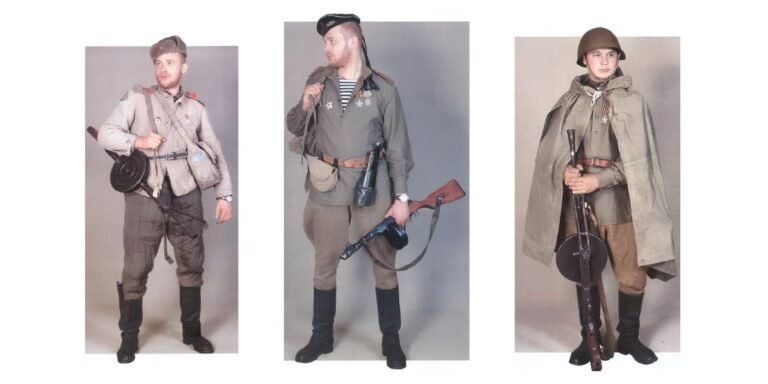
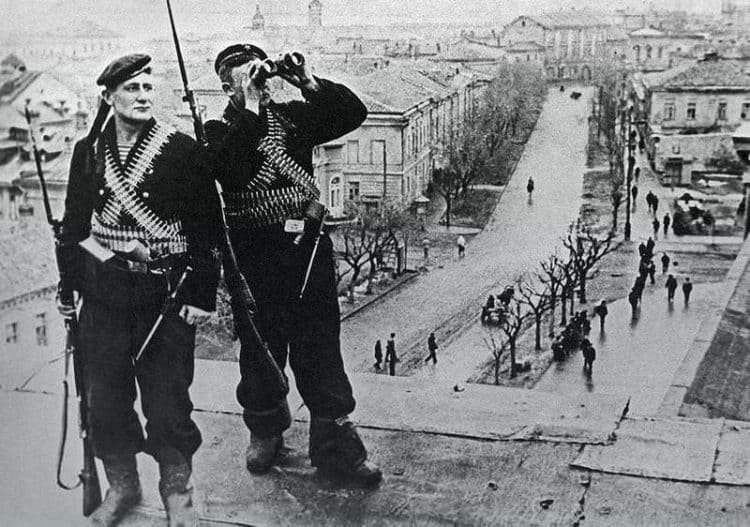
After the 1917 Revolution, the image of a sailor in a telnyashka – wrapped in machine gun belts, armed with a Mosin rifle and a Nagant revolver – became a powerful symbol of political change and of the revolutionary fighter.
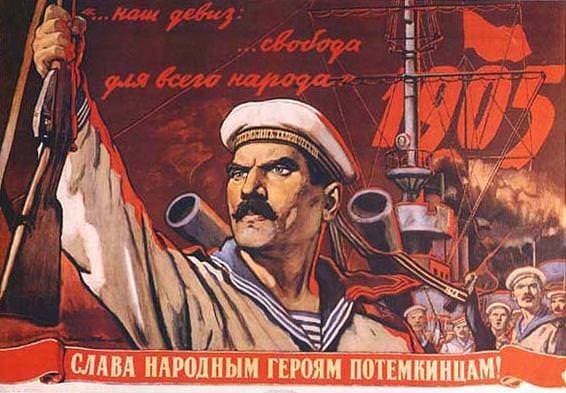
The slogan “Those who were nothing will become everything” clearly reflected the spirit of the time. The telnyashka came to symbolize the ordinary sailor – a man standing at the very bottom of the naval hierarchy. And now he was meant to rise up and take his place, which, as it was claimed, belonged to him as a representative of the proletariat.
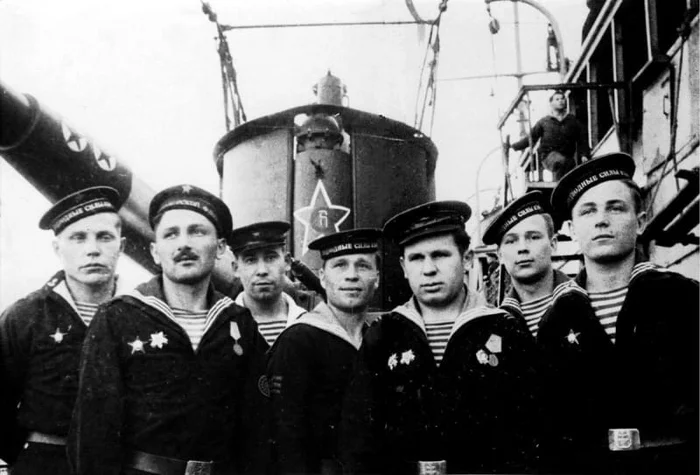
Soon, the restless Baltic sailors, considered the vanguard of the revolution, were sent to almost every front of the Civil War. Their boldness and determination strengthened the prestige of the telnyashka, which they never parted with.
Years later, the telnyashka remained in public memory as a symbol of revolution. And it might have stayed only that, if not for the outbreak of the Great Patriotic War.
A Symbol of Courage and Heroism
Looking for Soviet Telnyashka? You can get them here → [Soviet Telnyashka]
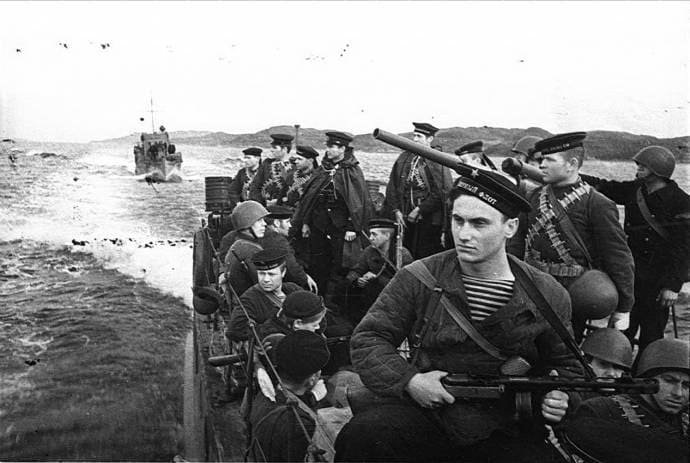
When the war began, the land front desperately needed manpower. Heavy losses in the first days of fighting left the army short of soldiers. The navy stepped in to help.
Marine infantry brigades were quickly formed from sailors, and naval rifle brigades were created with sailors as their core.
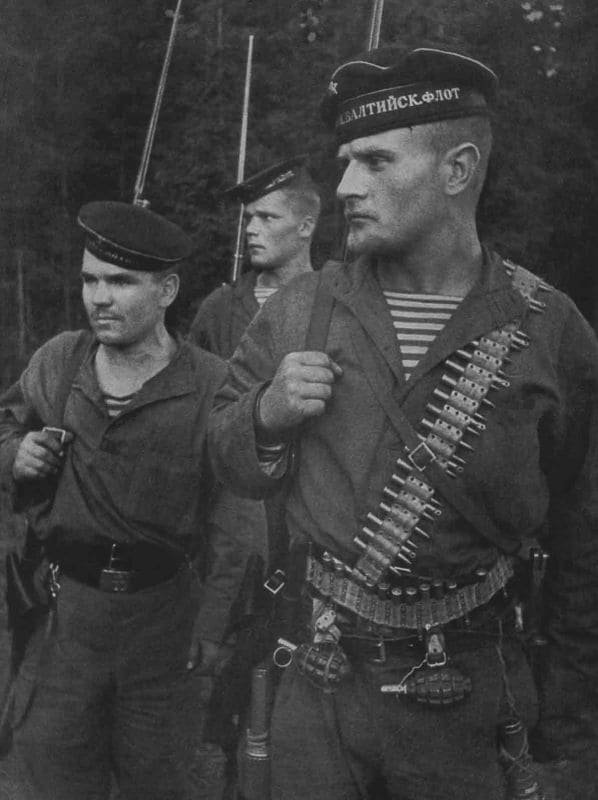
They fought fiercely and fearlessly. Among their own troops, they earned a reputation as brave warriors. Among the Germans, they gained a grim nickname – Schwarze Tod, “Black Death.”
When Russian sailors went on the attack, German soldiers knew they were hard to stop. Seeing the striped telnyashkas, many preferred to retreat rather than face what felt like a suicidal battle.
The sailors knew the psychological effect they had. Before an attack, they often removed their jackets and tunics, advancing in their striped telnyashkas. The shirt became a true symbol of fearlessness and courage. Sometimes, the sight alone was enough to break the enemy’s will before the fight even began.
Looking for classic Soviet kirza boots? You can find them here: Soviet Kirza Boots
After the war, the authority of the telnyashka grew even stronger. Many veterans who had fought in the so-called “Dutch style” uniform returned to civilian life. They rebuilt the country, worked in factories and construction sites, and often continued wearing their telnik in peaceful times, now as a symbol of labor and resilience.
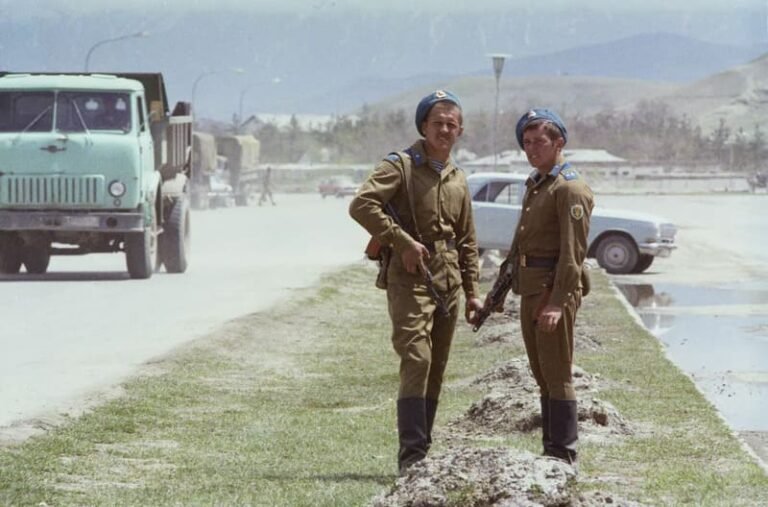
On July 6, 1969, the telnyashka officially became part of the standard supply for the Airborne Troops (VDV). There was one change: the VDV received light blue stripes, while naval telnyashkas became fully black instead of dark blue. From that moment on, paratroopers also added prestige to the telnik, proving themselves in some of the most difficult military operations.
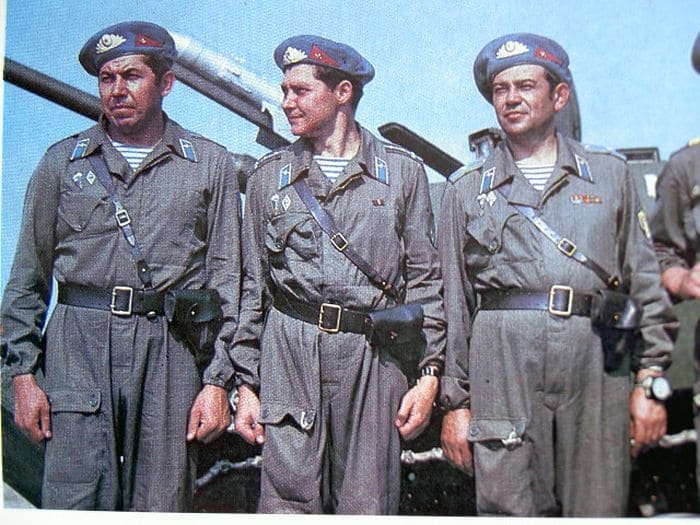
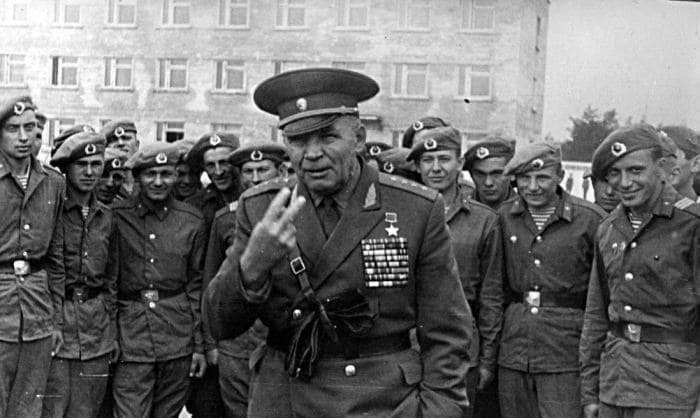
Modern paratroopers should thank “Paratrooper No. 1,” Vasily Filippovich Margelov, for introducing such an iconic piece of clothing into the Airborne Forces. As often happens with innovations like this, the path to adopting the telnyashka in the VDV was not simple.

Margelov began promoting the idea that paratroopers should wear the telnyashka back in the mid-1960s. The proposal immediately faced strong opposition.
The main opponent was Admiral Sergey Georgievich Gorshkov, the creator of the Soviet missile and nuclear navy. He believed that the telnyashka was a symbol of naval heroism, something that belonged exclusively to sailors and naval officers. Many other high-ranking officials shared his view.
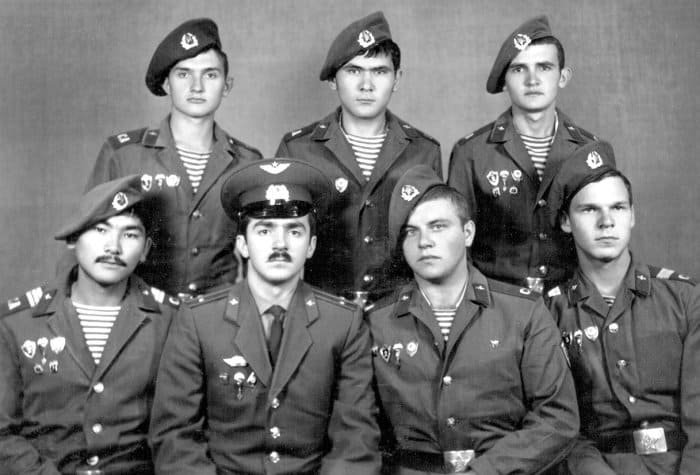
Note: There is a “legend” that Vasily Filippovich wanted to give airborne units a piece of clothing that was instantly recognizable and symbolic – something everyone would know and fear.
You can also read our detailed guide on Margelov’s VDV airborne boots:
Soviet Combat Boots of the Afghan War: Testing 3 Designs
However, despite the initial refusal, Margelov did not abandon his idea. In fact, giving paratroopers the telnyashka was not only symbolic, but also practical. The troops needed comfortable and warm underwear suitable for field conditions.
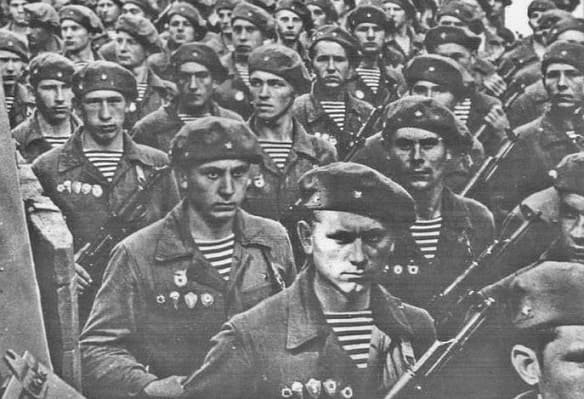
Vasily Filippovich fought for the new telnyashka until 1969, when the navy leadership and high command finally agreed. On July 6, 1969, Order No. 191 of the USSR Minister of Defense officially introduced the telnyashka into the standard supply of the Airborne Forces.
Interesting fact: it took time to fully supply all paratroopers with telnyashkas. In the first year, only those lucky soldiers who took part in the military parade had the chance to wear them.
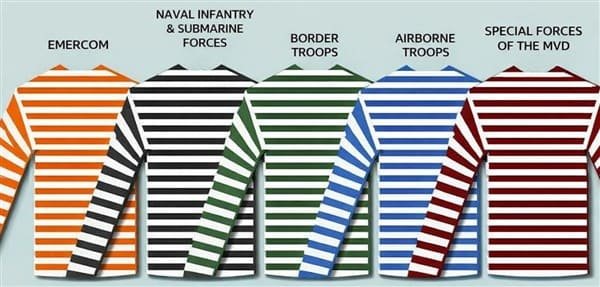
Black – Naval Infantry and Submarine Forces
Blue – Airborne Troops (VDV)
Green – Border Troops
Orange – EMERCOM
Maroon – Special Forces of the MVD
By the mid-1990s, other military and security units received their own stripe colors. Cornflower blue telnyashkas were worn by the Presidential Regiment and special units of the FSB. Maroon stripes appeared in the Internal Troops, now the National Guard. Orange stripes were given to EMERCOM. Green remained with the Border Troops. And black stayed with the Navy.
Over time, the telnyashka became more than just a striped shirt. It turned into a symbol of service, pride, and belonging to a specific branch of duty.
Today you can buy an authentic telnyashka worn by Russian NAVY sailors and VDV airborne troops. Find original Russian telnyashka for sale, including classic navy and VDV striped shirts in both summer and winter versions. Buy Telnyashka
More our articles:
Guide of the Soviet Afghanka Uniform
Top 5 Soviet Boots Bestsellers
The history of military footwear
Soviet Army in Afghanistan (1979-1989): War and Afghanka Uniforms
How Women Were Dressed During the War 1941–1945
Looking original Soviet boots and accessories? Please visit here: Soviet Boots Store