Soviet military uniform history of the RKKA during the WW2
The Soviet military uniform history of the RKKA during the Great Patriotic War went through major changes. At first, it continued the traditions of the 1920s and 1930s, but by the middle of the war it became clear that the overall approach to the appearance of soldiers needed to be seriously reconsidered. Uniforms and insignia in the RKKA were updated every few years, adapting to the demands and realities of the time. Although many of these changes were relatively small, there were clear turning points in RKKA uniform history.
Russian Civil War uniforms and the Red Army uniform in 1918
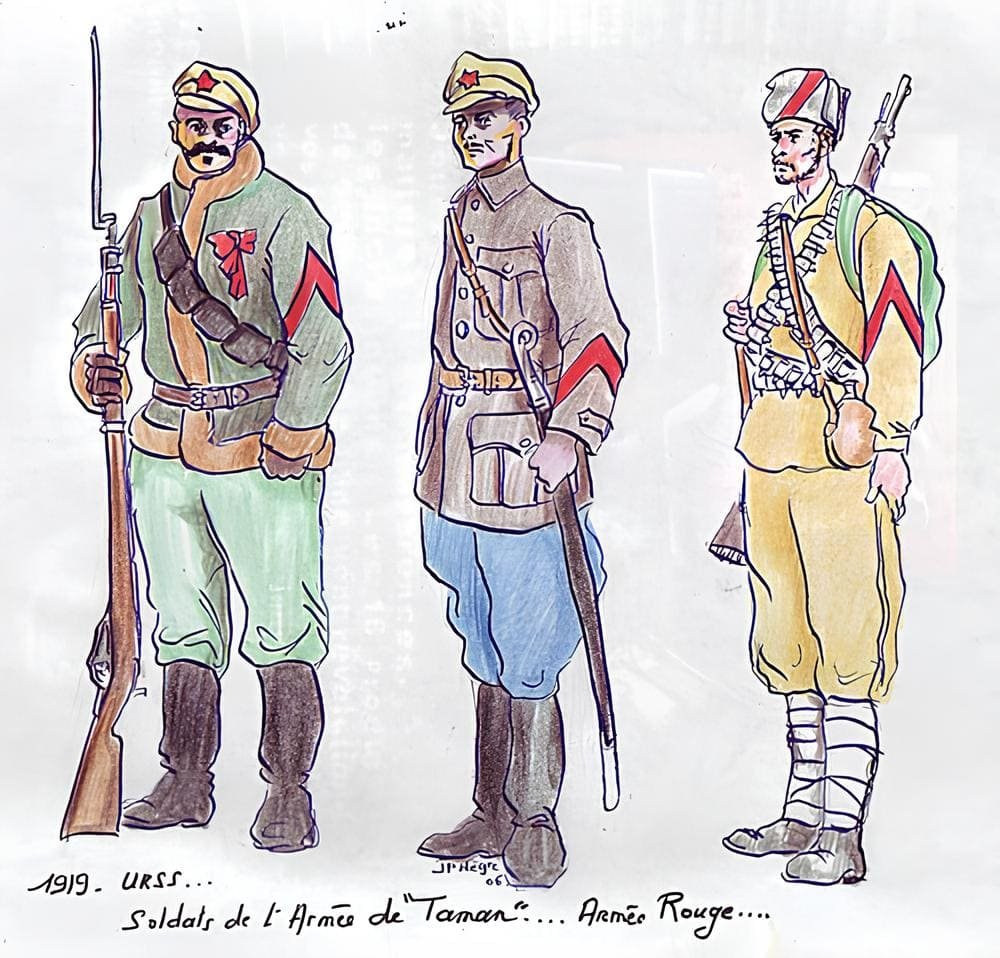
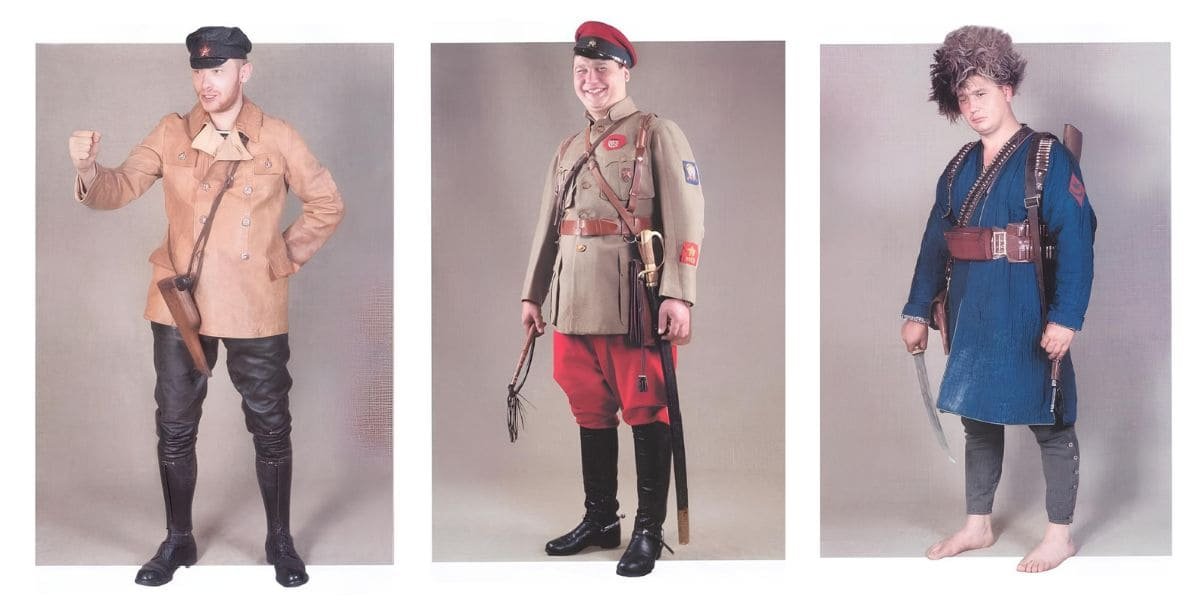
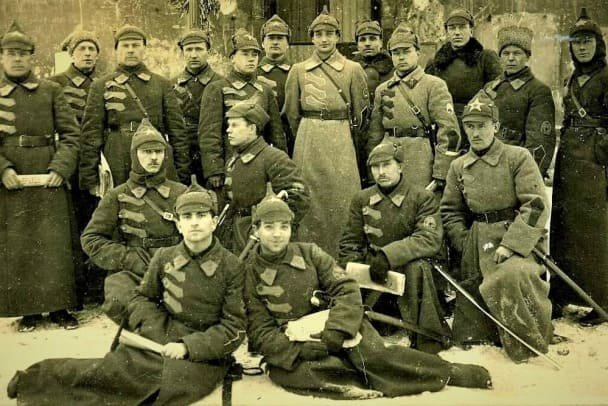
In 1918, the main task was to clearly distinguish Red Army soldiers from all other armed groups. For this purpose, red ribbons, armbands, and any other red elements were widely used. One of the first identifying symbols of Red Army soldiers was a chest badge: a wreath with a red star featuring a hammer and a plow. This symbol was meant to reflect the “workers’ and peasants’” nature of the RKKA. Later, the red star moved to headgear and became a cockade.
However, it was still impossible to speak of a unified uniform. Soldiers wore whatever remained from the Imperial period. In 1919, an order was issued to introduce a standard uniform, but industry was not yet capable of producing enough complete sets. Even so, it was in this year that winter helmets began to be produced. These headpieces became known as bogatyrkas, frunzevkas, and budyonovkas, named after the units of Mikhail Frunze and Semyon Budyonny, whose troops received them first.
If you want more detail on this early period, see: RKKA and Russian Civil War uniforms.
Early Soviet military uniform in the 1920s
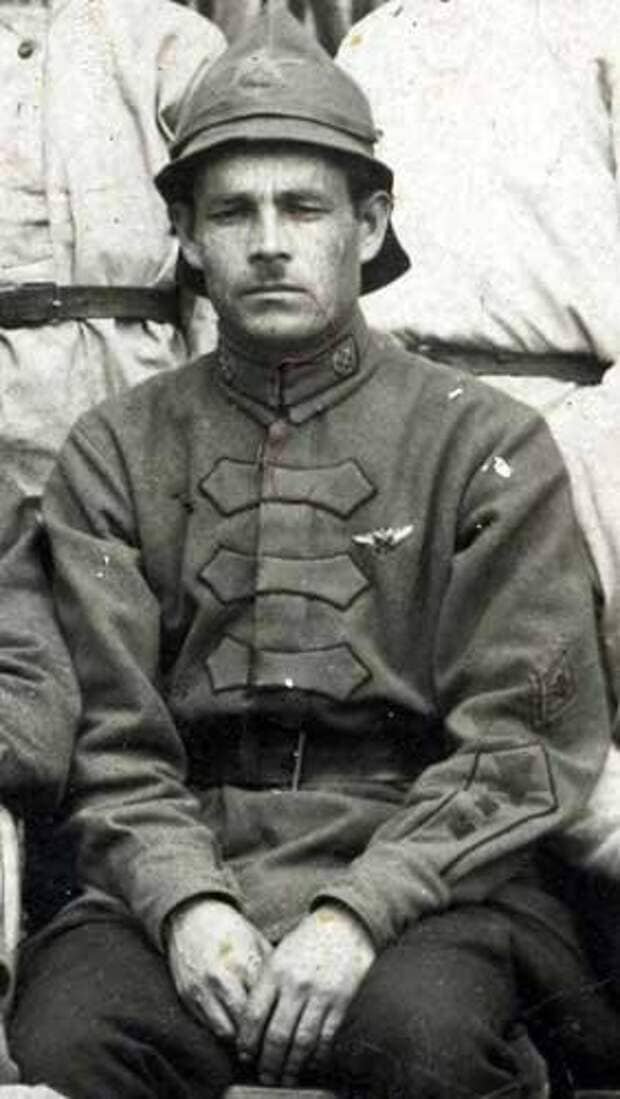
A true uniform, in the full sense of the word, appeared in the RKKA during the 1920s. One of the key reasons for this was the introduction of mandatory military service in peacetime, which required clothing a huge number of people who had never served in the army before. From 1922 onward, the 1919 order began to be fully enforced: a unified cut of clothing was introduced along with collar tabs, and tunics and greatcoats were required to feature three distinctive fastening tabs known as “conversations.” The plow on the red star was replaced by a sickle, bringing the symbol closer to the classic version that would later carry over into the Soviet Army.
From this point on, wearing unapproved clothing or unofficial insignia was strictly forbidden. Before that, irregular or “incorrect” uniforms were treated more leniently, and soldiers were allowed to wear privately purchased clothing.
More on the interwar era: Early Soviet Army uniform (1930s).
RKKA uniforms in the 1930s and early 1940s
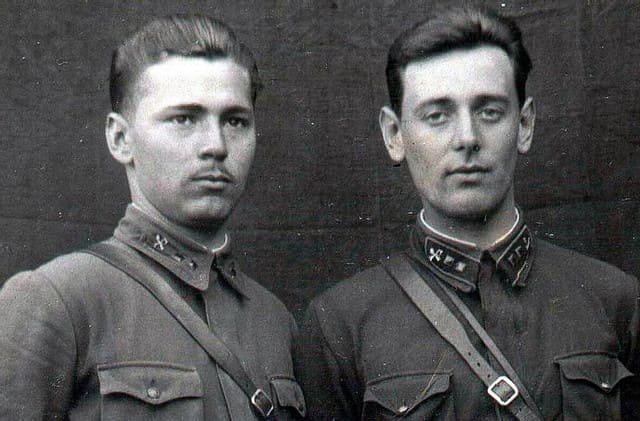
The next important stage in the development of the RKKA uniform came in the 1930s. Personal military ranks were introduced, such as lieutenant and brigade commander. The uniform was divided into everyday, field, and guard versions. Gymnastyorkas, tunics, and waist belts were officially introduced. In 1935, side caps were added to the uniform.
Red Army WW2 uniform guide: 1940-1942
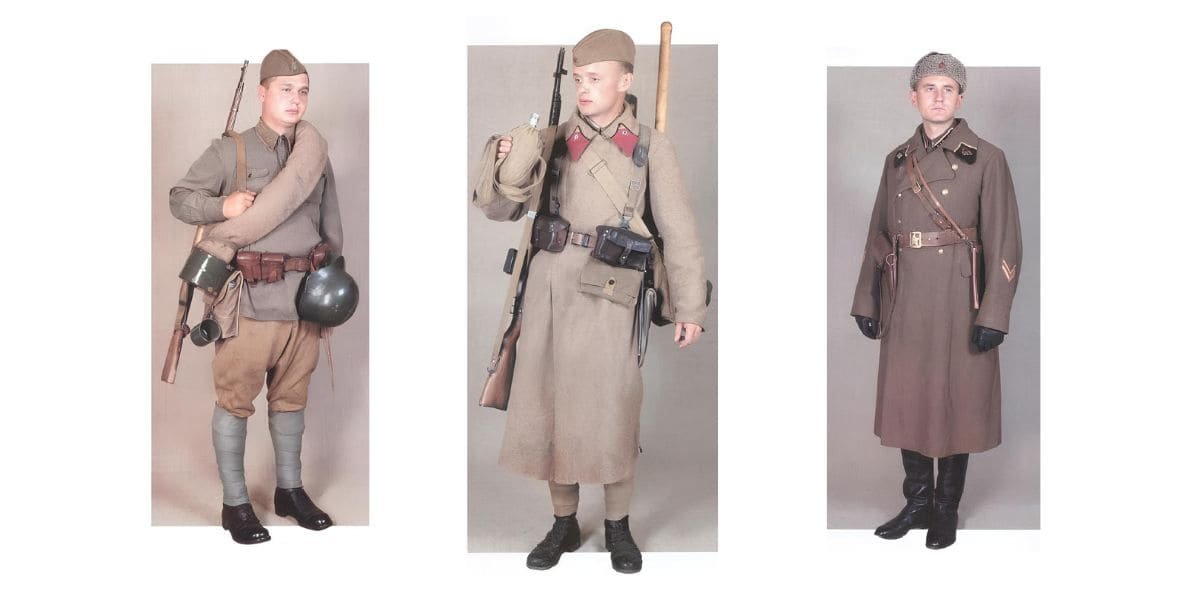
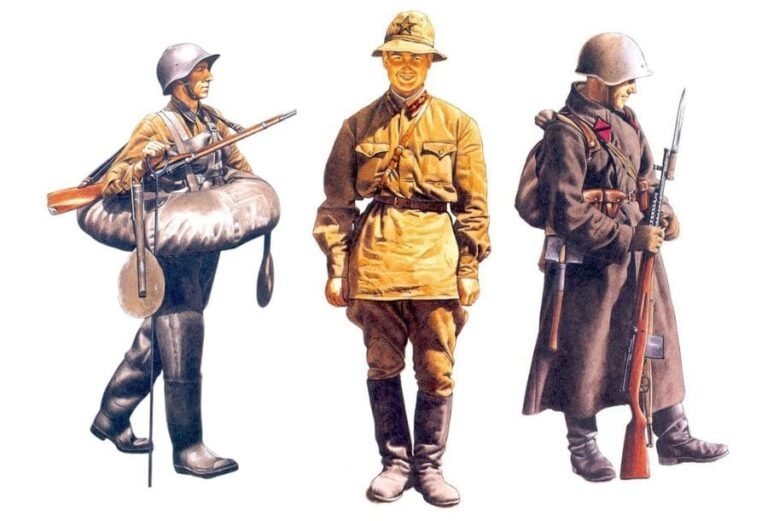
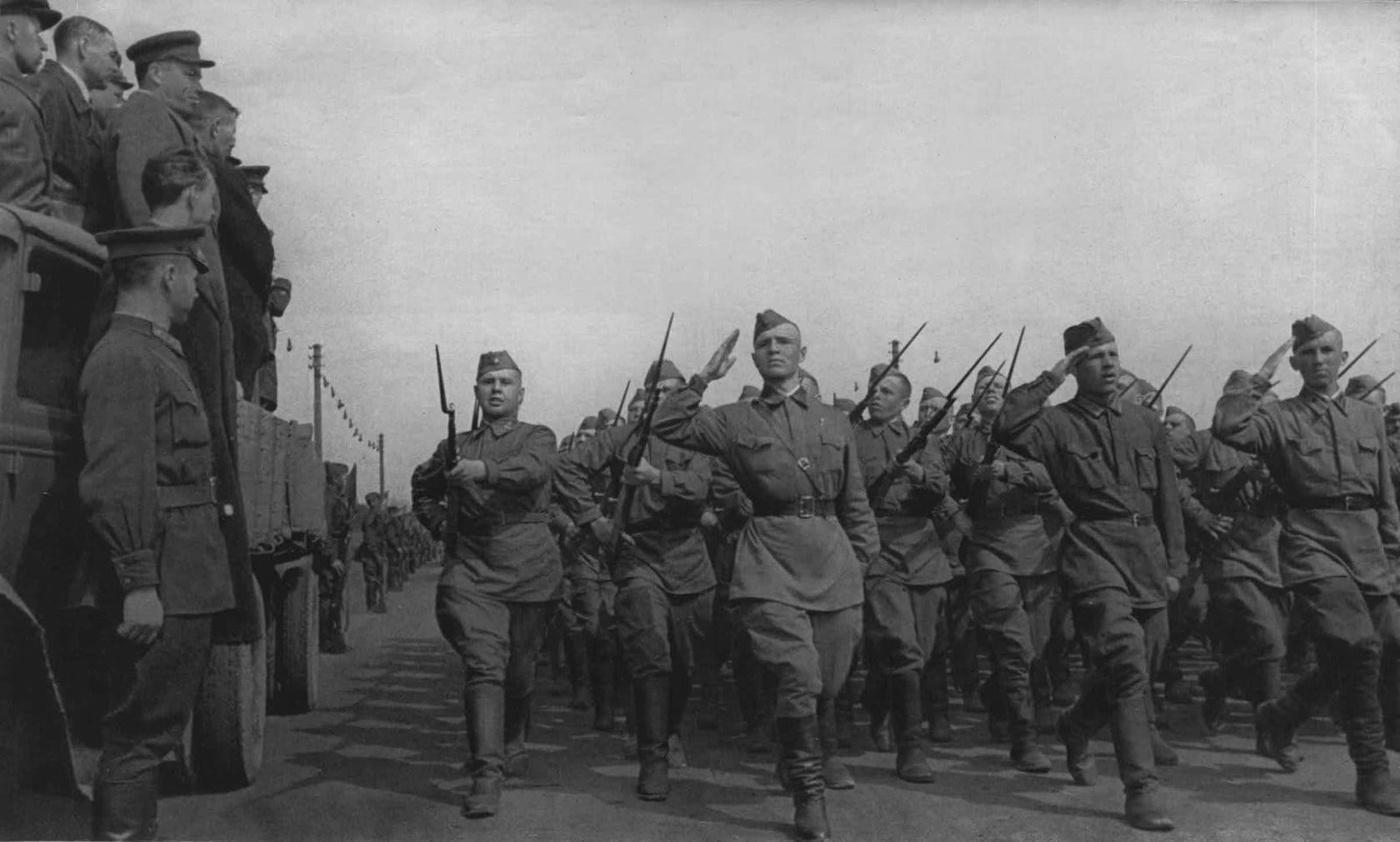
By 1940, a Red Army soldier in formation typically wore a gymnastyorka with two chest pockets and a covered button placket, a pilotka cap with a red star, riding breeches (also known as sharovary or galife), and high leather boots. All clothing was khaki in color, while blue breeches were issued only to officers.
Soviet Military Uniform History – From the Red Army (RKKA) to the Soviet Army
Looking for classic Soviet kirza boots? You can find them here: Soviet Kirza Boots.
Soviet WW2 winter uniform and Red Army winter gear
Peaked caps with colored bands were issued to officers and command staff. The color of the band indicated the branch of service. Bright insignia were worn on the stand-and-fall collar of the gymnastyorka and were also sewn onto the sleeves.
For winter wear, soldiers were issued single-breasted greatcoats with turn-down collars. These collars carried branch-colored collar tabs and rank insignia. Quilted cotton jackets and padded trousers were also produced. In winter, soldiers protected their heads with ushanka fur hats. Budyonovka helmets were phased out after the Winter War, although in some units they continued to be worn for several more years.
If you want more winter details, see: Soviet WWII winter uniform.
Soviet uniform reforms explained by Andrey Khrulev
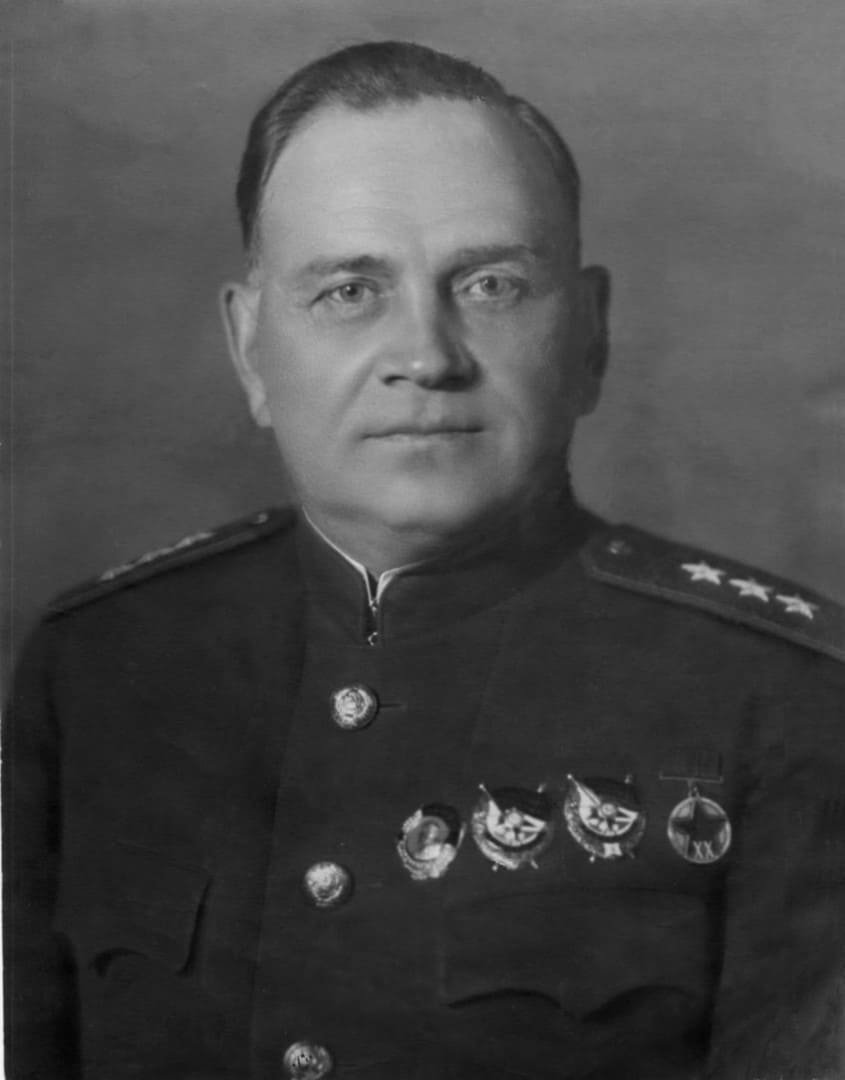
The real supply situation at the beginning of the war was described in the memoirs of Andrey Vasilyevich Khrulev, General of the Intendance Service, head of the Main Rear Directorate of the Red Army, and People’s Commissar of Railways in 1942-43. He wrote that in 1941, during the first months of the war, an order was issued requiring all branches of troops in the field to wear uniforms and insignia in protective, subdued colors. According to Khrulev, this was done to avoid repeating the situation of 1914, when the Imperial Army had too much colorful parade clothing that proved unsuitable for real field conditions.
Another important development in the first months of the war was the introduction of uniforms for female service members. As early as August 3, 1941, an official order defined women’s military clothing. It included a beret with a metal star, a grey wool overcoat, and a field-colored dress made of wool or broadcloth.
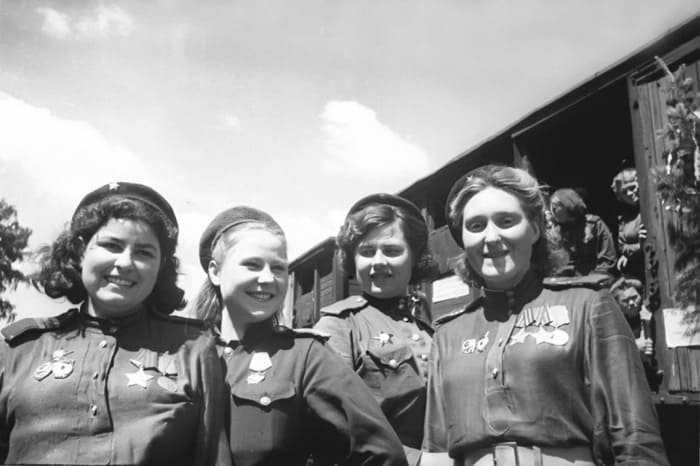
How Women Were Dressed During the War | 1941–1945
That same year, sleeve insignia were abolished, and generals began wearing trousers without colored stripes in their everyday uniforms.
Despite the massive scale of state orders, Khrulev wrote that the textile and light industries were “very poorly” prepared for war. This was not due to a lack of equipment or production capacity, but because factories had been removed from the list of enterprises where workers were reserved from conscription. As a result, most skilled workers were simply sent to the front.
Soviet military uniform 1943: shoulder boards return
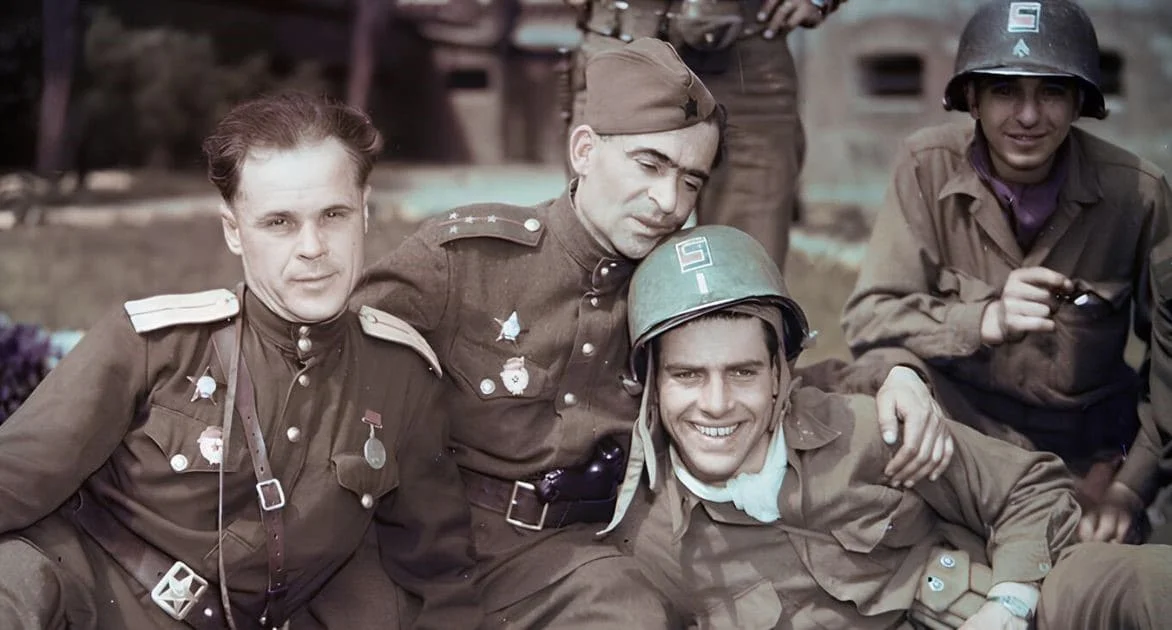
By 1943, the entire army was dressed exclusively in field-colored uniforms, with matching collar tabs. The year 1943 is considered a turning point of the Great Patriotic War, and it became a turning point for military uniforms as well. On January 6, shoulder boards were officially reintroduced.
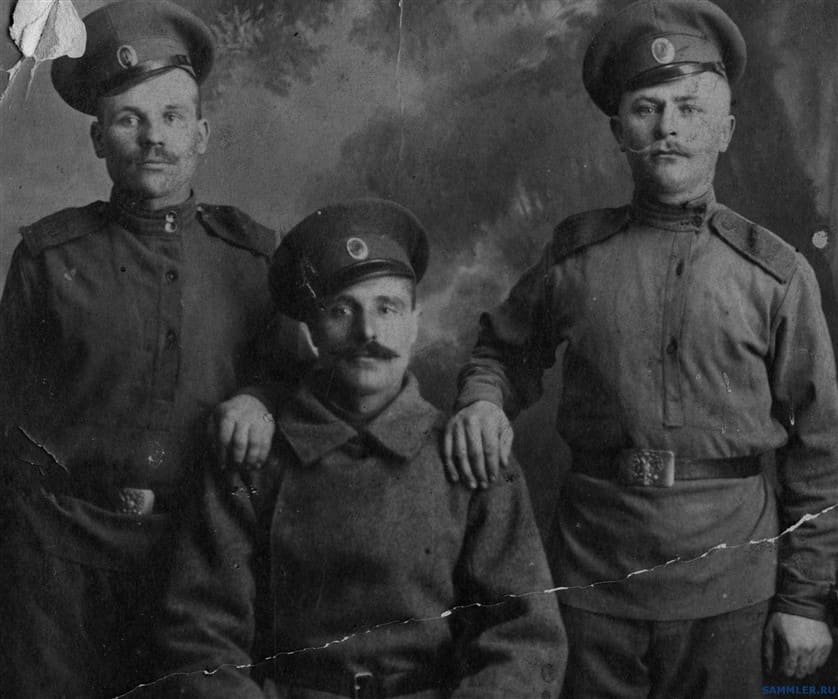
General Khrulev described how this decision came about. In 1942, Stalin personally summoned him and ordered proposals for new uniforms for Guards units. These projects emphasized the return of imperial-style shoulder boards and the use of higher-quality fabrics. At first, Guards status was granted to mortar units, then rifle units, and later many others. There was a real risk that half the army would wear shoulder boards while the other half kept collar tabs. To avoid confusion, it was decided to introduce shoulder boards for all Red Army units.
Khrulev was personally instructed to prepare designs for field, everyday, and parade shoulder boards. While field and everyday boards for junior and senior officers could partly be recreated based on imperial models, producing general officers’ shoulder boards proved to be a much more complex task.
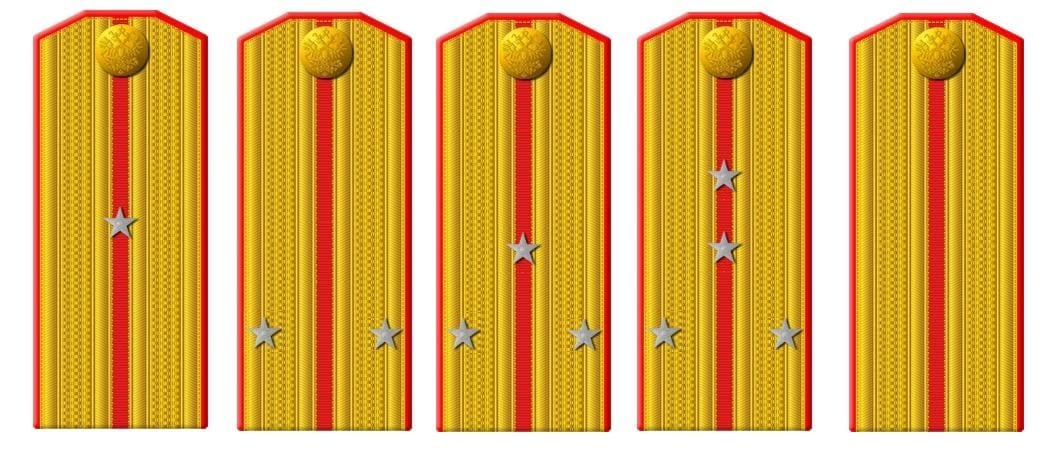
Imperial Russian Army Company Officers
In the Imperial Russian Army, company-grade officers wore epaulettes with one central stripe. Rank distinctions were indicated by the number of stars placed on the shoulder boards.
- Captain (Rotmistr, Esaul) – no stars
- Staff Captain (Stabs-Captain, Staff Rotmistr, Podyesaul) – four stars
- Lieutenant (Poruchik, Sotnik) – three stars
- Second Lieutenant (Podporuchik, Kornet, Khorunzhy) – two stars
- Ensign (Praporshchik) – one star
This rank system existed until the Russian Revolution of 1917 and later influenced Soviet military reforms, especially during the reintroduction of shoulder boards in 1943.
The problem was that this element of uniform had not been produced for 25 years, and the manufacturing technology had been lost. There were also no specialists left who knew how to restore it. Khrulev’s assistant, engineer-colonel Puchkov, turned to the Bolshoi Theatre, where he was advised to find a consultant in Moscow, a man named Dmitriev.
Later, the technology was adopted by major sewing factories, and by early 1943 enough shoulder boards had been produced, according to Khrulev.
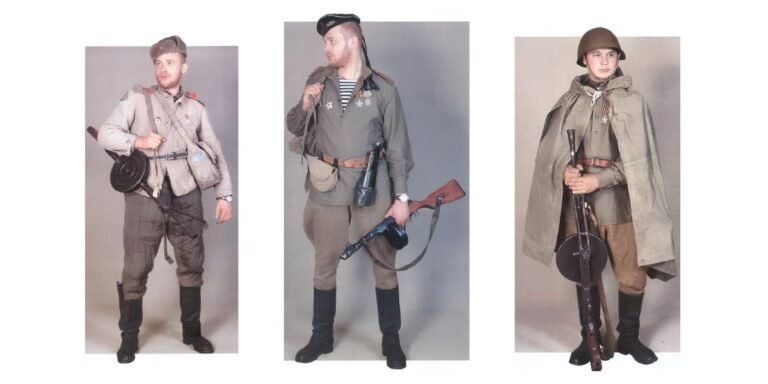
However, supplying the army with shoulder boards was only half the task. New insignia required new uniforms. On January 15, 1943, single-breasted tunics and jackets were introduced, along with new peaked caps and new gymnastyorkas. These were made of wool, had standing collars fastened with buttons, and an open front placket. Chest pockets were retained only for middle and senior command personnel. The gymnastyorka was worn with a belt, a side cap with a star, and field-colored trousers, blue for officers.
Telnyashka: History of the Russian Navy and VDV Striped Shirt
Looking for Soviet Telnyashka? You can get them here → [Soviet Telnyashka]
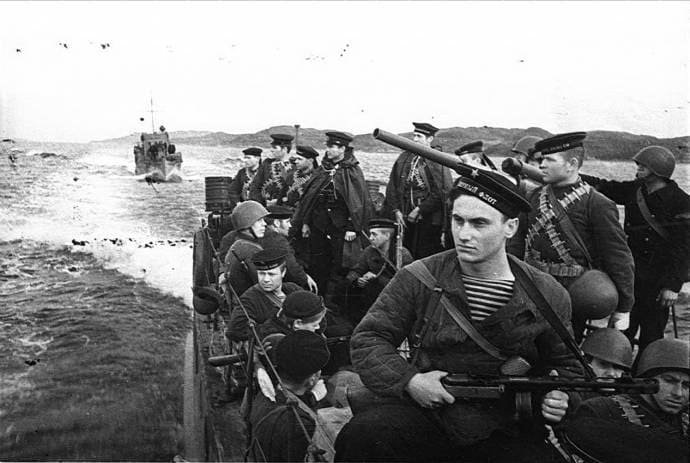
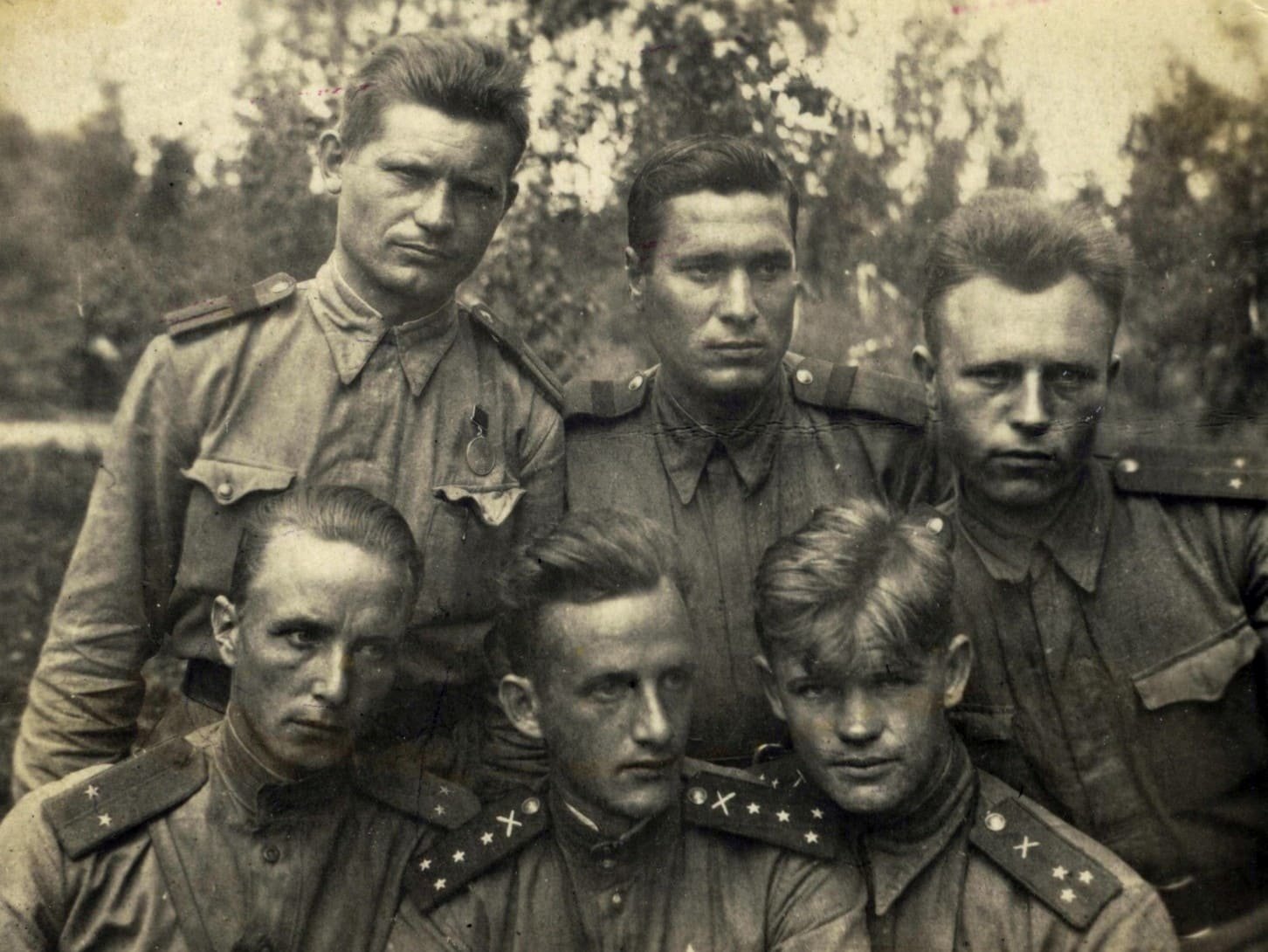
The transition to shoulder boards did not happen overnight. Photographs from 1943 show that soldiers often attached the newly introduced shoulder boards to older gymnastyorka tunics with fold-down collars that were originally designed for collar tabs.
There were several reasons for this: shortages of new uniforms within units, the practicality of chest pockets, and simple habit. Many servicemen were used to wearing the older gymnastyorka and saw no reason to replace it immediately.
Late-war changes: 1945
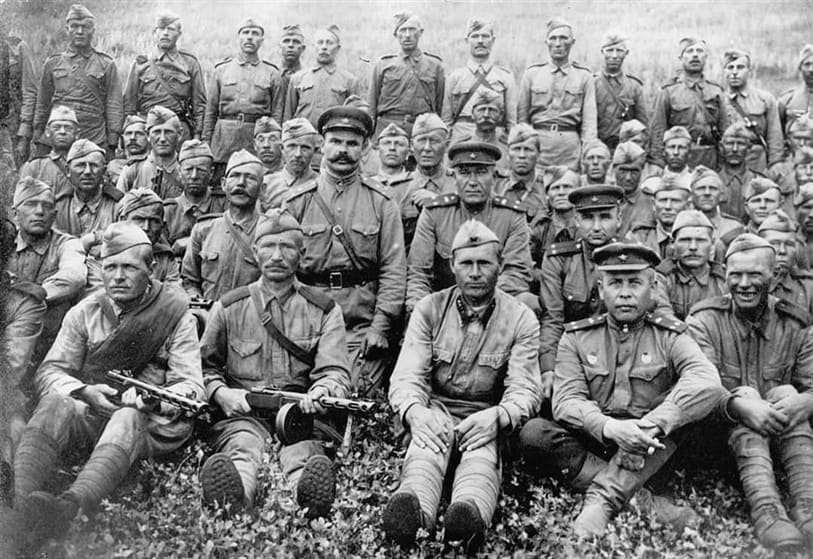
By 1943, a major reform had already taken place. Officers began receiving the new M43 (Obr43) tunics with chest pockets, while many enlisted men (EMs) were still wearing the older M35 (Obr35) pattern.
Looking for Soviet kirza ‘Dot soles’ jackboots for WW2 reenacting? You can find them here: Soviet Dot Soles Boots.
Double-breasted tunics were not something entirely new in 1945. They had long been available for officers. However, in April 1945, further refinements appeared in the uniform system.
One of the important late-war changes was that enlisted men also began receiving the M43 (Obr43) tunic with chest pockets. In 1943, most enlisted soldiers were still wearing the M35 (Obr35), while officers had already transitioned to the M43 (Obr43) with chest pockets.
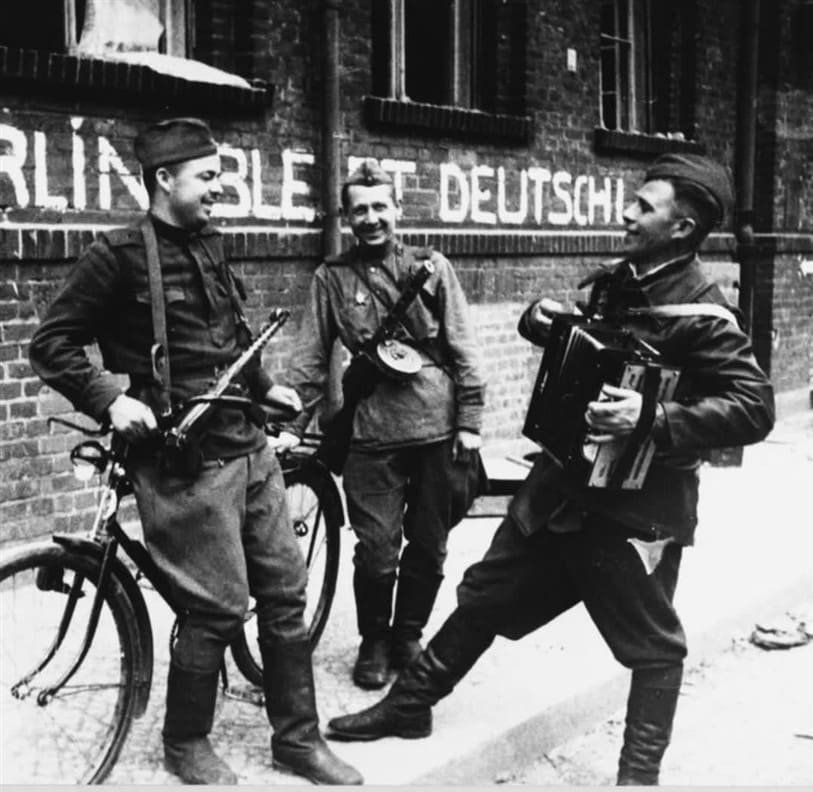
By 1945, enlisted men gained limited access to the officer-style M43 (Obr43) with chest pockets. The designation remained “Obr43” – the official name was never changed after the pockets were added. This detail is mainly visible in photographs from the final weeks of the war.
For marshals and generals, a double-breasted tunic with two rows of buttons was formally adopted. After 1945, the Soviet uniform continued to evolve, but it never again underwent a transformation as radical as the 1943 reform.
Note: Historical clarification for the “Late-war changes: 1945” section was kindly provided by reenactor Sjors P (@sjors-ww2), whose expertise helped refine the late-war details.