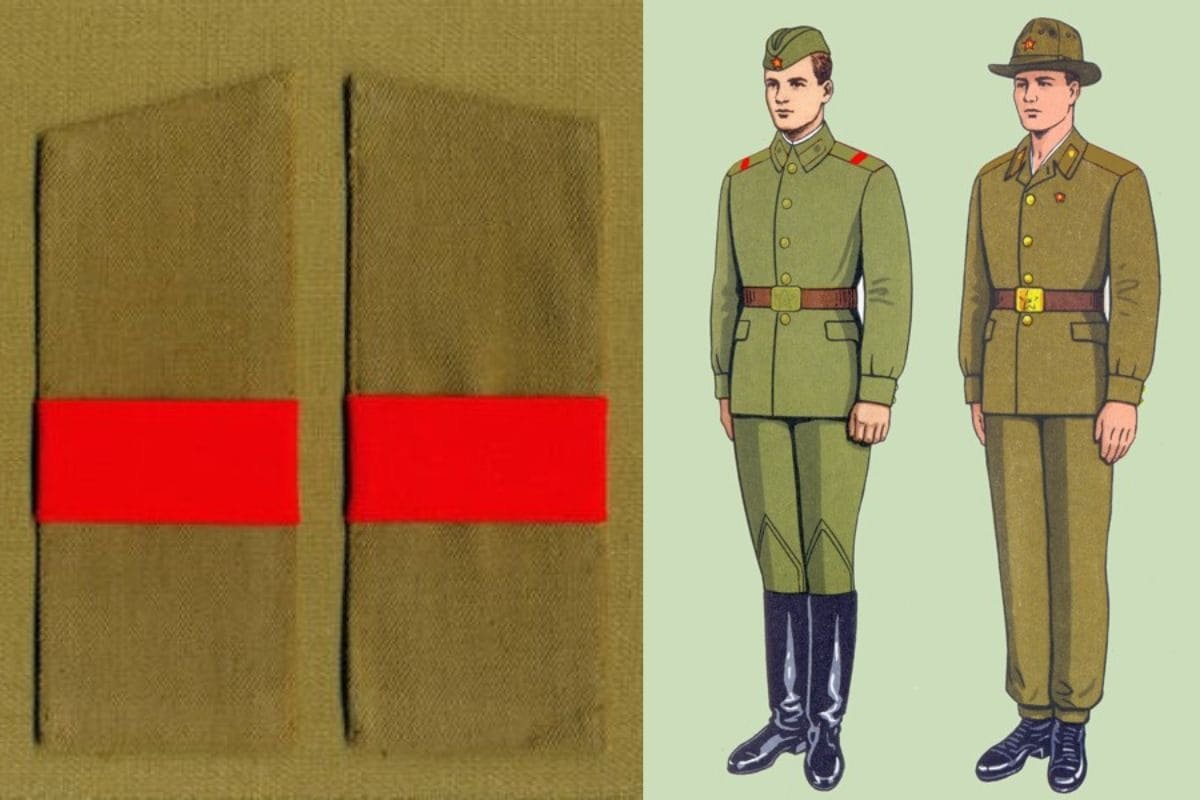
Soviet Army shoulder boards, collar tabs and sleeve insignia were an important part of the uniform system of the USSR Armed Forces during the Cold War. This guide shows the main types of Soviet Army shoulder boards and other insignia used between 1969 and 1988. The article includes real examples of ranks, branches of service and uniform details used by soldiers, officers and generals of the Soviet Army.

More interesting articles:
Soviet Combat Boots of the Afghan War: Testing 3 Designs
Soviet Spetsnaz Uniform in Afghanistan (1979–1989)
How the Soviet Army Uniform Changed from 1955 to 1991
Field Uniform and Equipment of the Soviet Army (1968–1991) – Part 1
This section presents shoulder boards, collar tabs and sleeve insignia of soldiers and sailors, sergeants and petty officers, warrant officers and midshipmen, officers, generals and admirals of the USSR Armed Forces, as well as cadets and students of Soviet military schools and paramilitary organizations during the period 1969-1988.
Quick Navigation
- 1. Shoulder Boards, Collar Tabs, and Sleeve Insignia for the Everyday and Parade-Dress Uniform of Soviet Army Conscripts: Soldiers, Sergeants, and Senior Sergeants (Except Aviation, Airborne Troops, and Cavalry).
- 3. Shoulder Boards, Collar Tabs and Sleeve Insignia for the Special Parade Uniform of Soldiers of Honor Guard Companies (except Aviation and Navy).
- 4. Shoulder Boards, Collar Tabs and Sleeve Insignia of Cadets of Military Schools and Faculties (except Aviation and Airborne Troops).
- 5. Shoulder Boards, Collar Tabs and Sleeve Insignia for the Everyday Uniform of Warrant Officers and Long-Service Enlisted Personnel of the Soviet Army.
- 6. Shoulder Boards and Sleeve Insignia for the Parade Uniform of Warrant Officers and Long-Service Enlisted Personnel of the Soviet Army (Except Aviation, Airborne Forces and Cavalry).
- 8. Shoulder Boards for the Everyday Uniform of Officers of the Soviet Army (Except Aviation, Airborne Forces and Cavalry).
- 9. Shoulder Boards for the Parade Uniform of Officers of the Soviet Army (Except Aviation, Airborne Forces and Cavalry).
- 10. Shoulder Boards for the Field Uniform of Officers of the Soviet Army (Except Aviation, Airborne Forces and Cavalry).
- 11. Shoulder Boards, Collar Tabs and Sleeve Insignia for the Special Parade Uniform of Officers of Honor Guard Companies (Except Aviation and Navy).
- 12. Shoulder Boards and Collar Tabs for the Everyday Uniform of Generals of the Soviet Army (Except Aviation).
- 14. Shoulder Boards for the Field Uniform of Generals of the Soviet Army (Except Aviation).
PART I. SOVIET ARMY
SECTION I. Motor Rifle Troops, Tank Troops, Engineering Troops, Chemical Troops, Railway Troops, Road Construction Troops, Automobile Troops, Radio-Technical Troops, Artillery, Signal Troops, Medical Service, Veterinary Service, Military Band Service, Military Topographic Service, Supply and Financial Services, Military Transport Service, Military Construction Units, Pipeline Troops and Military Justice.



1. Shoulder Boards, Collar Tabs, and Sleeve Insignia for the Everyday and Parade-Dress Uniform of Soviet Army Conscripts: Soldiers, Sergeants, and Senior Sergeants (Except Aviation, Airborne Troops, and Cavalry).
Looking for classic Soviet kirza boots? You can find them here: Soviet Kirza Boots
1.1 Motor Rifle Troops Sleeve Patch (General Army) Model 1969, Parade and Everyday Collar Tabs with Motor Rifle Emblems and Private Shoulder Boards Model 1988
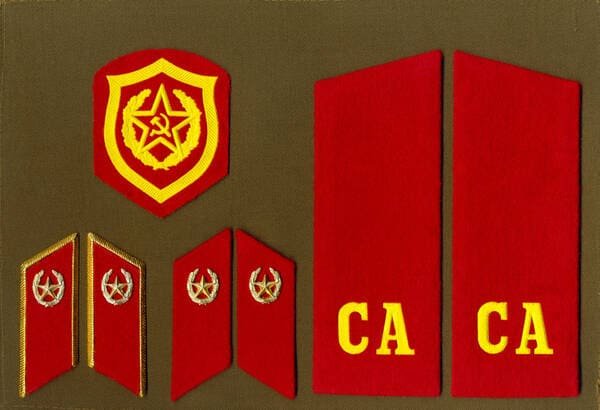
This image shows insignia used by soldiers of the Soviet Motor Rifle troops. It includes the sleeve patch introduced in 1969, collar tabs with the general army emblem, and shoulder boards of a private soldier introduced in 1988. These insignia were worn on everyday and parade uniforms of the Soviet Army during the Cold War period.
1.2 Sleeve Patch of Soviet Military Conductors and Musicians Model 1969, Parade and Everyday Collar Tabs with Military Band Emblems and Starshina Shoulder Boards Model 1969
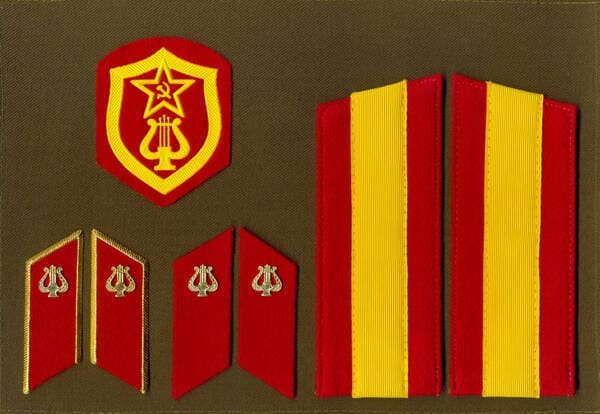
Soviet military band insignia used on uniforms of the USSR Armed Forces during the Cold War period. The image includes a sleeve patch introduced in 1969, collar tabs with the lyre emblem of Soviet military musicians, and shoulder boards of a starshina rank. These uniform insignia were worn by conductors and musicians of Soviet Army military bands on everyday and parade uniforms between 1969 and the late Soviet period.
1.3 Sleeve Insignia of Soviet Commandant Units Model 1969 for Artificial Leather Jacket and Junior Sergeant Shoulder Boards Model 1988
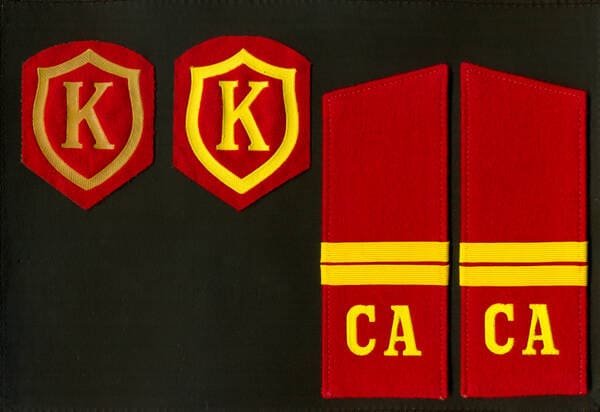
Soviet commandant units used in the USSR Armed Forces during the Cold War period. The set includes sleeve patches with the letter K introduced in 1969 for the artificial leather service jacket, along with shoulder boards of a junior sergeant model 1988. These Soviet Army uniform insignia were worn by personnel responsible for military commandant duties, security and discipline in garrisons and military facilities.
1.4 Sleeve Patch of Soviet Railway Troops and Military Transport Service Model 1969, Parade and Everyday Collar Tabs with Railway Troops Emblems and Private Parade Shoulder Boards Model 1973 (with Metal Letters “CA”)
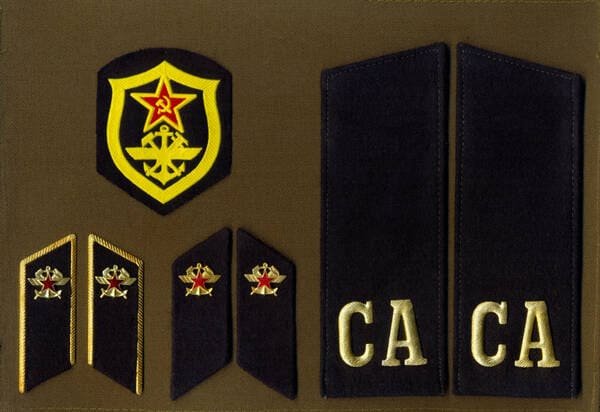
This image shows insignia of the Soviet Railway Troops and the Military Transport Service of the USSR Armed Forces. The set includes a sleeve patch introduced in 1969, parade and everyday collar tabs with the railway troops emblem, and parade shoulder boards of a private model 1973 with metal letters “CA”. These Soviet Army uniform insignia were worn by soldiers responsible for railway construction, transport logistics and military communications during the Cold War period.
1.5 Sleeve Patch of Soviet Automobile and Road Troops Model 1969 (from 1988 Automobile Troops only), Parade and Everyday Collar Tabs with Branch Emblems and Private Shoulder Boards Model 1988
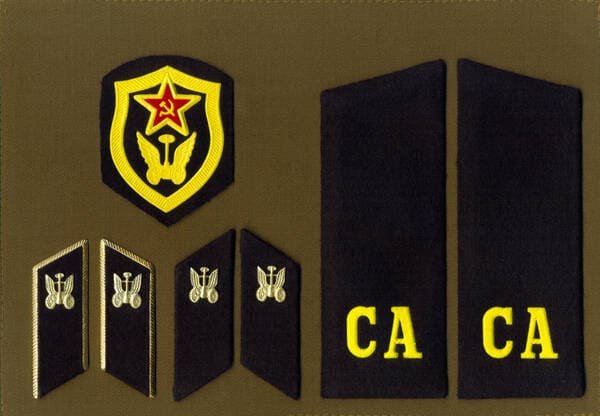
Soviet automobile and road troops of the USSR Armed Forces. The set includes a sleeve patch introduced in 1969, parade and everyday collar tabs with the emblem of the transport troops, and shoulder boards of a private model 1988 with the letters CA. These Soviet Army uniform insignia were worn by soldiers responsible for military transport, vehicle units and road construction during the Cold War period.
1.6 Sleeve Patches of the Soviet Military Topographic Service Model 1973 (different stamps), Parade and Everyday Collar Tabs with Military Topographic Emblems and Corporal Shoulder Boards Model 1988
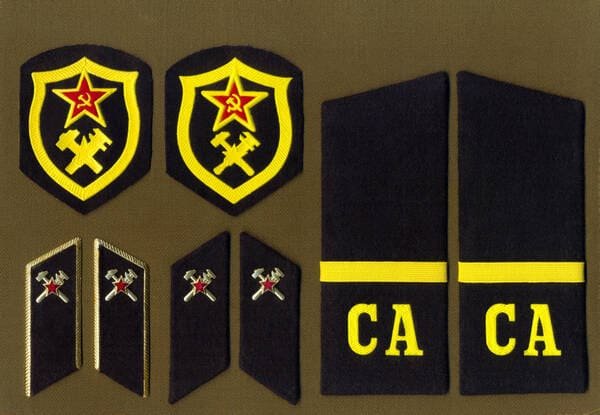
Soviet Military Topographic Service of the USSR Armed Forces. The set includes sleeve patches introduced in 1973 with different production stamps, parade and everyday collar tabs with the crossed tools emblem, and shoulder boards of a corporal model 1988 with the letters CA. These Soviet Army uniform insignia were worn by specialists responsible for military maps, terrain analysis and navigation support during the Cold War period.
1.7 Sleeve Patch of Soviet Road Troops Model 1988, Parade and Everyday Collar Tabs with Road Troops Emblems and Junior Sergeant Shoulder Boards Model 1988
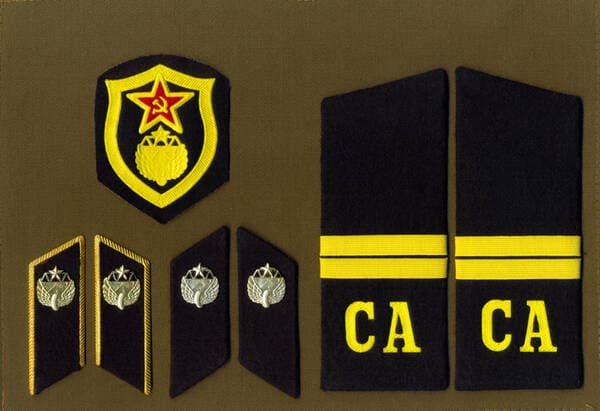
Soviet Road Troops of the USSR Armed Forces. The set includes a sleeve patch introduced in 1988, parade and everyday collar tabs with the road troops emblem, and shoulder boards of a junior sergeant model 1988 with the letters CA. These Soviet Army uniform insignia were worn by soldiers responsible for road construction, engineering support and military transport routes during the late Cold War period.
1.8 Sleeve Patches of Soviet Tank Troops Model 1969 (different stamps), Tank Crew Overall Patch, Parade and Everyday Collar Tabs with Tank Troops Emblems and Sergeant Shoulder Boards Model 1988
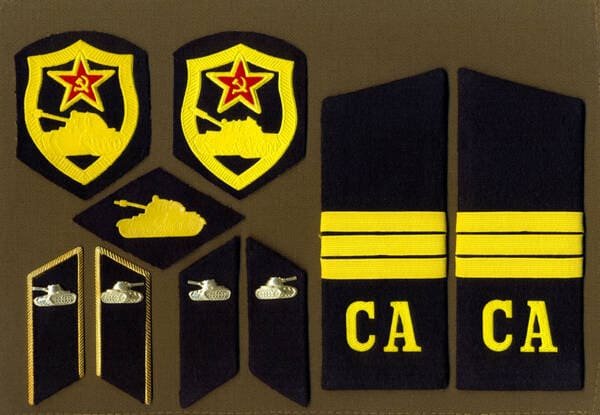
Soviet Tank Troops of the USSR Armed Forces. The set includes sleeve patches introduced in 1969 with different production stamps, a patch worn on the tank crew overall, parade and everyday collar tabs with the tank emblem, and sergeant shoulder boards model 1988 with the letters CA. These Soviet Army uniform insignia were worn by tank crew soldiers and armored unit personnel during the Cold War period.
1.9 Sleeve Patch of Soviet Chemical Troops Model 1971, Parade and Everyday Collar Tabs with Chemical Troops Emblems and Senior Sergeant Shoulder Boards Model 1988
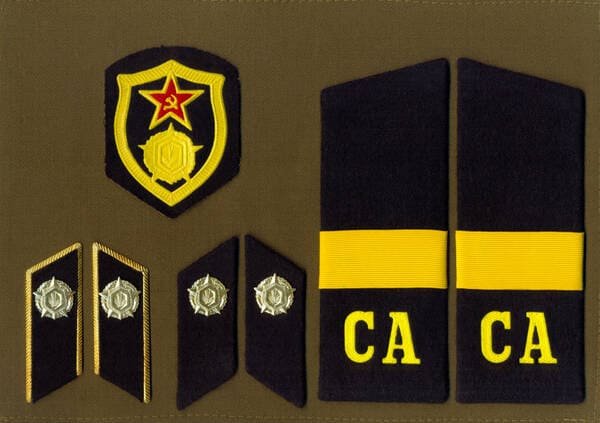
Soviet Chemical Troops of the USSR Armed Forces. The set includes a sleeve patch introduced in 1971, parade and everyday collar tabs with the chemical troops emblem, and shoulder boards of a senior sergeant model 1988 with the letters CA. These Soviet Army uniform insignia were worn by soldiers responsible for chemical defense, radiation protection and specialized military support during the Cold War period.
1.10 Sleeve Patch of Soviet Chemical Troops and Military Topographic Service Model 1969 (discontinued after 1971), Parade and Everyday Collar Tabs with Branch Emblems and Starshina Shoulder Boards Model 1969
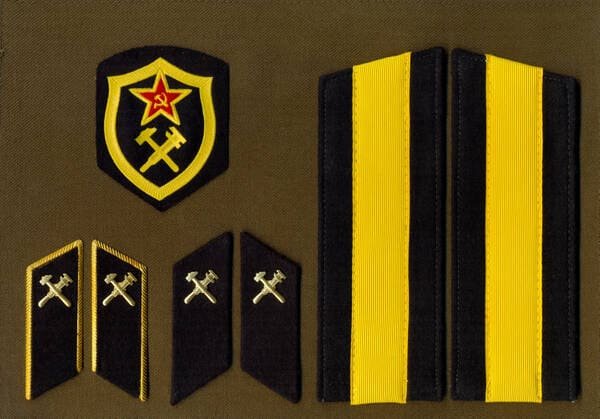
Soviet Chemical Troops and Military Topographic Service of the USSR Armed Forces. The set includes a sleeve patch introduced in 1969 that was later discontinued after 1971, parade and everyday collar tabs with the crossed tools emblem, and shoulder boards of a starshina model 1969. These Soviet Army uniform insignia were worn by specialists responsible for chemical defense, mapping and terrain analysis during the early Cold War period.
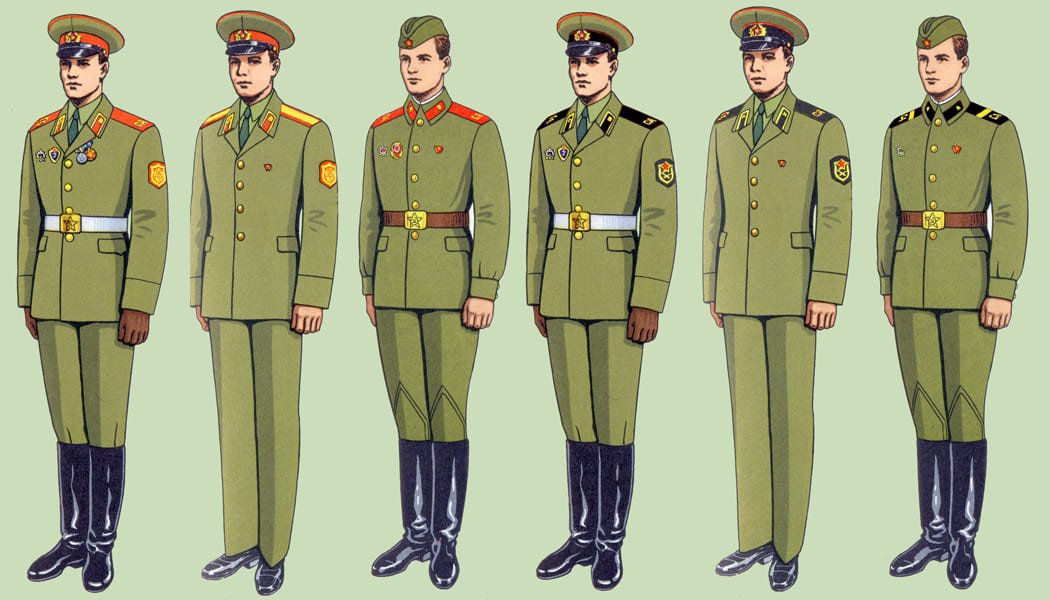
Looking for original Soviet officer boots? You can find them here: Soviet Officer Boots
1.11 Removable Shoulder Boards for Shirt of a Private of the Road Troops and a Sergeant of Pipeline Troops Model 1988
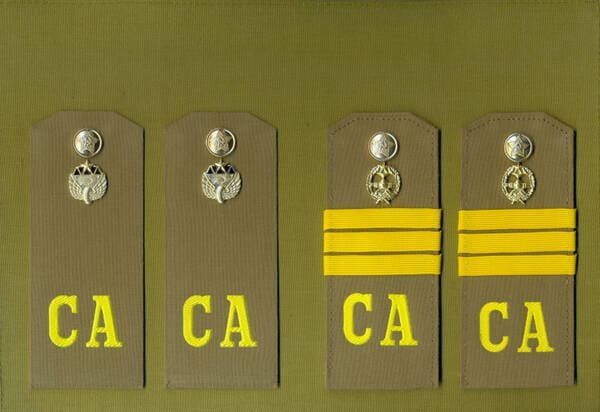
Removable shoulder boards used on Soviet Army uniform shirts introduced in 1988. The set includes shoulder boards of a private of the road troops and shoulder boards of a sergeant of pipeline troops with rank stripes and the letters CA. These Soviet military shoulder boards were worn on summer shirts and lightweight service uniforms of the USSR Armed Forces during the late Cold War period.
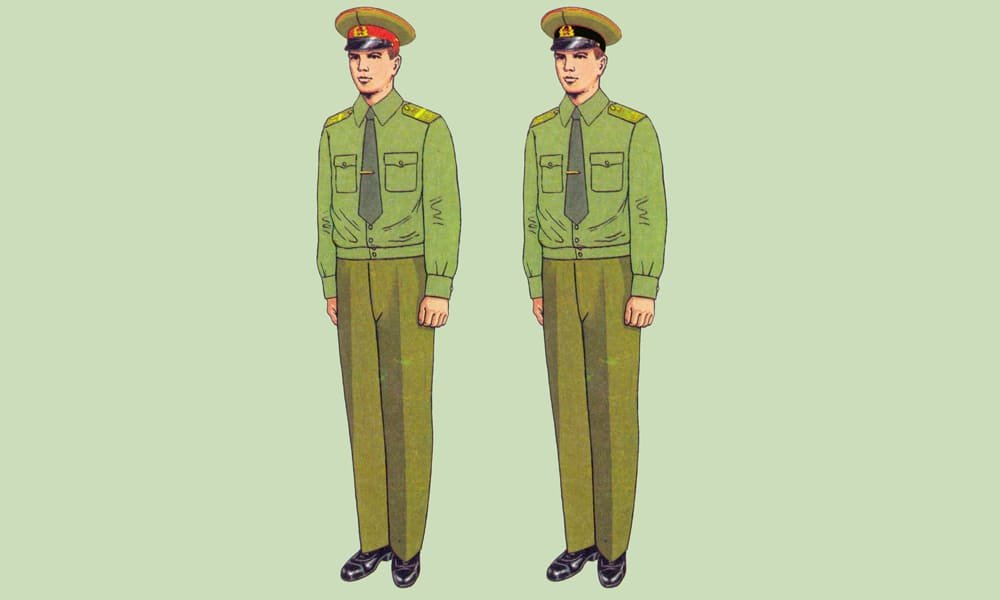
Soviet Army soldiers wearing the lightweight shirt uniform introduced in the late Cold War period. The uniform features removable shoulder boards model 1988 that were attached to the service shirt and displayed rank and branch of service. Such Soviet military uniforms were commonly worn by soldiers and NCOs of the USSR Armed Forces during everyday duties and warm weather conditions.
1.12 Removable and Sewn Shoulder Boards Model 1955 with Factory Letters “CA” for a Private of Military Construction Units and a Senior Sergeant of Artillery
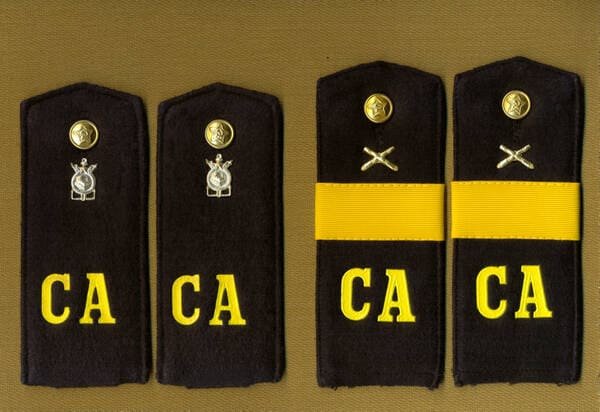
Soviet Army shoulder boards model 1955 with factory applied letters “CA”. The set includes shoulder boards of a private of military construction units and shoulder boards of a senior sergeant of artillery with rank stripe. These Soviet military shoulder boards continued to be worn after 1969 on older gymnasterka uniforms that were officially discontinued but still used in some Soviet Army units during the Cold War period.
2.1 Collar Tabs and Shoulder Boards for the Field Jacket of a Senior Sergeant of Motor Rifle Troops Model 1988
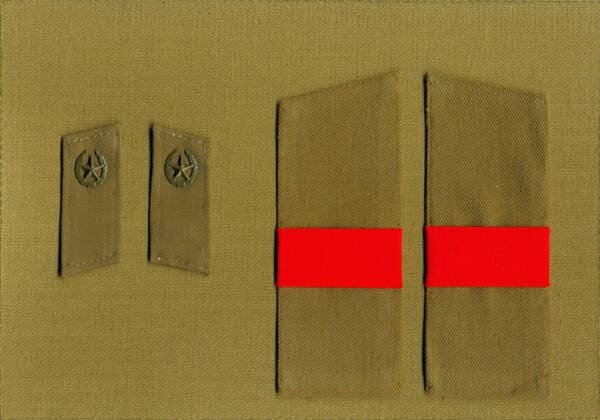
Presented here are collar tabs and shoulder boards used on the field jacket of a senior sergeant of the Soviet Motor Rifle Troops. The insignia belong to the 1988 field uniform system of the USSR Armed Forces and feature subdued colors designed for combat conditions. Such Soviet Army field uniform insignia were worn by NCOs of motor rifle units during training exercises and operational service in the late Cold War period.
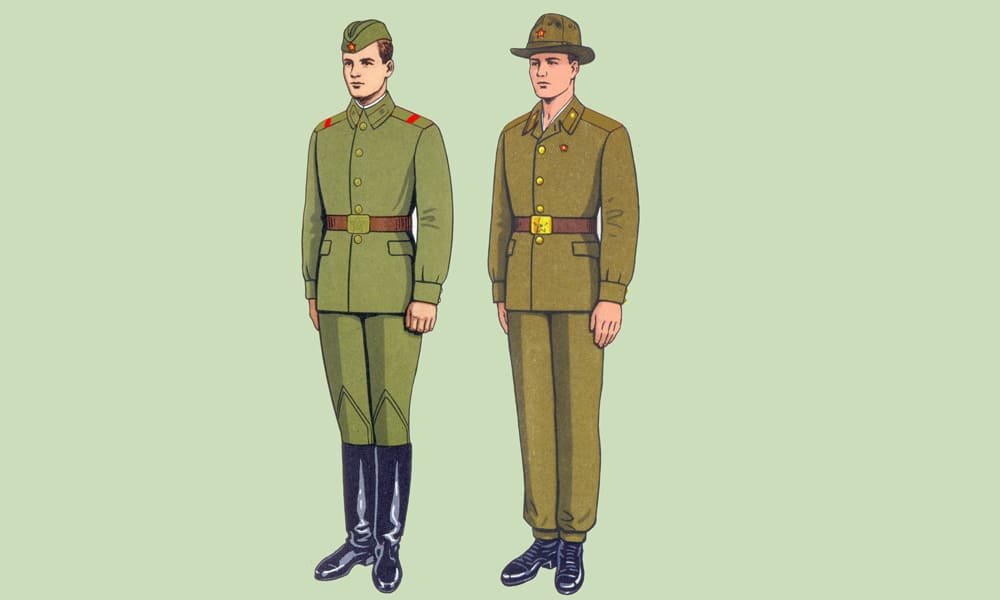
Soviet Army soldiers wearing field uniforms used by the USSR Armed Forces during the late Cold War period. The uniforms display collar tabs and shoulder boards of the 1988 field uniform system designed for practical use in training and combat conditions. Such Soviet military field uniforms were worn by soldiers of motor rifle and other ground forces units during everyday service and field exercises.
2.2 Field Jacket Collar Tabs with Field Emblems of Pipeline Troops, Railway Troops and Military Transport Service, Road Troops (Model 1988), Military Construction Units and Corporal Shoulder Boards Model 1988
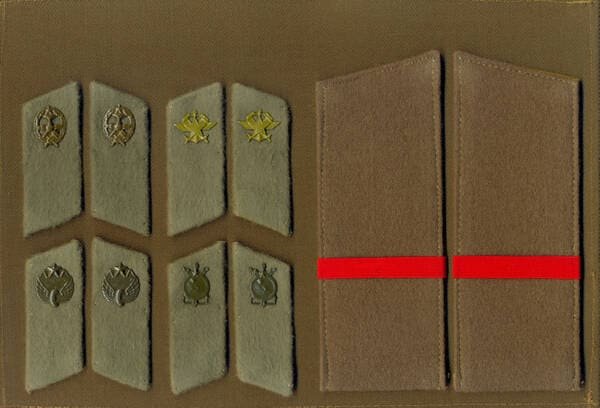
Presented here are collar tabs used on the field jacket of the Soviet Army with branch emblems for several support and engineering units of the USSR Armed Forces. The set includes field insignia of pipeline troops, railway troops and the Military Transport Service (VOSO), road troops, and military construction units introduced in the 1988 uniform system. Also shown are shoulder boards of a corporal worn on Soviet Army field uniforms during the late Cold War period.
2.3 Field Jacket Collar Tabs with Field Emblems of Chemical Troops and Military Topographic Service (Model 1969), Military Topographic Service (Model 1973), Chemical Troops (Model 1971), Automobile Troops and Junior Sergeant Shoulder Boards Model 1988
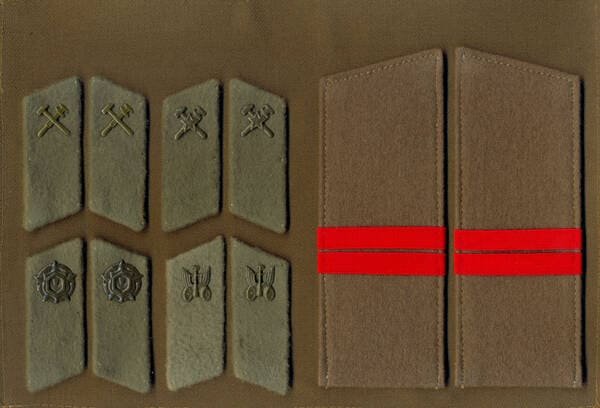
Field uniform collar tabs used on Soviet Army field jackets with several branch emblems of the USSR Armed Forces. The set includes insignia of chemical troops, military topographic service in different versions (1969 and 1973), and automobile troops. Also shown are shoulder boards of a junior sergeant worn on Soviet field uniforms introduced in the 1988 uniform system during the late Cold War period.
2.4 Field Jacket Collar Tabs with Field Emblems of Medical Service, Military Musicians and Conductors, Signal Troops and Radio-Technical Troops, Engineering Troops and Sergeant Shoulder Boards Model 1988
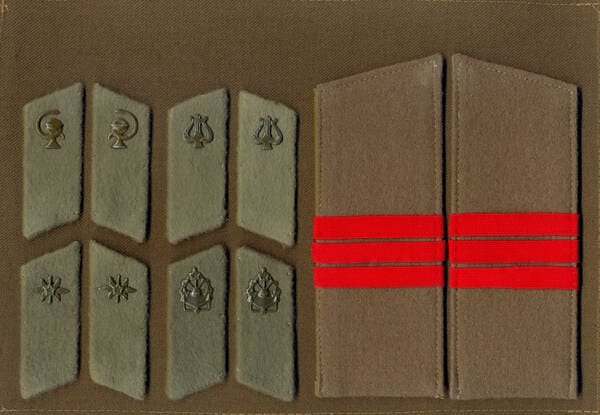
Field uniform collar tabs used on Soviet Army field jackets with branch emblems of several support and technical services of the USSR Armed Forces. The set includes insignia of the medical service, military musicians and conductors, signal troops and radio-technical troops, as well as engineering troops. Also shown are shoulder boards of a sergeant worn on Soviet field uniforms introduced in the 1988 uniform system during the late Cold War period.
2.5 Field Jacket Collar Tabs with Field Emblems of Aviation, Engineering Aviation Service, Airborne Troops, Cavalry and Senior Sergeant Shoulder Boards Model 1988
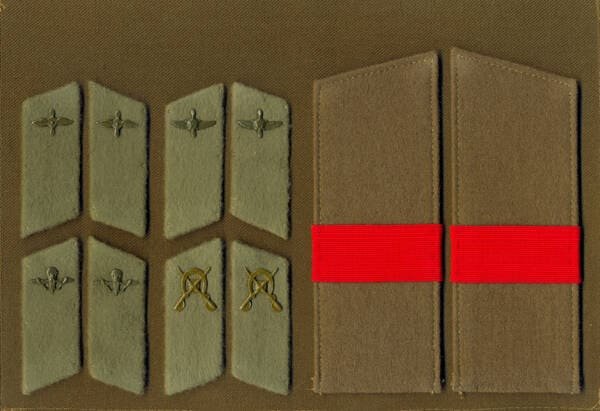
Field uniform collar tabs used on Soviet Army field jackets with branch emblems of several combat arms of the USSR Armed Forces. The set includes insignia of aviation, engineering aviation service, airborne troops and cavalry. Also shown are shoulder boards of a senior sergeant worn on Soviet Army field uniforms introduced in the 1988 uniform system during the late Cold War period.
2.6 Field Jacket Collar Tabs with Field Emblems of Motor Rifle Troops, Administrative and Intendance Service, Military Justice, Tank Troops, Artillery and Starshina Shoulder Boards Model 1969
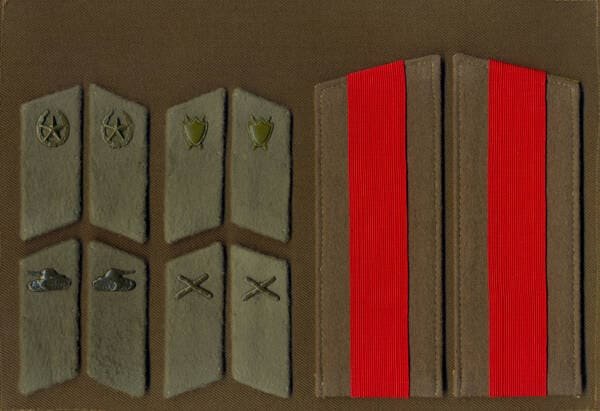
Collar tabs used on Soviet Army field jackets with several branch emblems of the USSR Armed Forces. The set includes insignia of motor rifle troops, administrative and intendance service, military justice, tank troops and artillery. Also shown are shoulder boards of a starshina worn on Soviet field uniforms introduced in the 1969 uniform system and used during the Cold War period.
3. Shoulder Boards, Collar Tabs and Sleeve Insignia for the Special Parade Uniform of Soldiers of Honor Guard Companies (except Aviation and Navy).
3.1 Sleeve Patch of Ground Forces Soldiers of the Honor Guard Company Model 1971, Greatcoat Collar Tabs with General Army Emblems and Shoulder Boards with Red Field and Gold Braid Edging with Metal Letters “CA” Model 1971
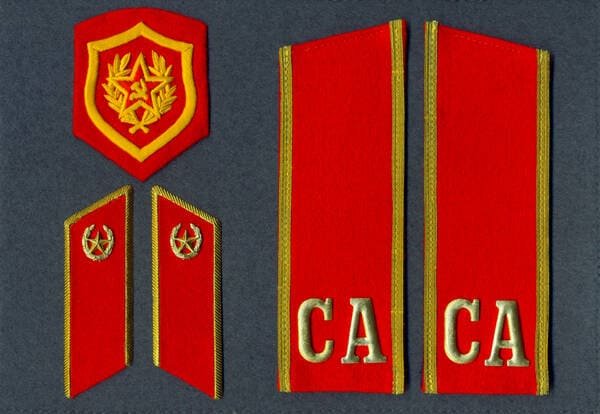
Insignia worn by soldiers of the Soviet Ground Forces Honor Guard Company. The set includes an embroidered sleeve patch introduced in 1971, greatcoat collar tabs with general army emblems, and ceremonial shoulder boards with a red field, gold braid edging and metal letters CA. Such Soviet Army ceremonial insignia were worn by honor guard units during official ceremonies and state events of the USSR Armed Forces in the Cold War period.
4. Shoulder Boards, Collar Tabs and Sleeve Insignia of Cadets of Military Schools and Faculties (except Aviation and Airborne Troops).
4.1 Sleeve Patch of Medical and Veterinary Service Model 1980, Everyday and Parade Collar Tabs with Medical and Veterinary Emblems, 5th Year Cadet Sleeve Patch and Cadet Shoulder Boards Model 1988
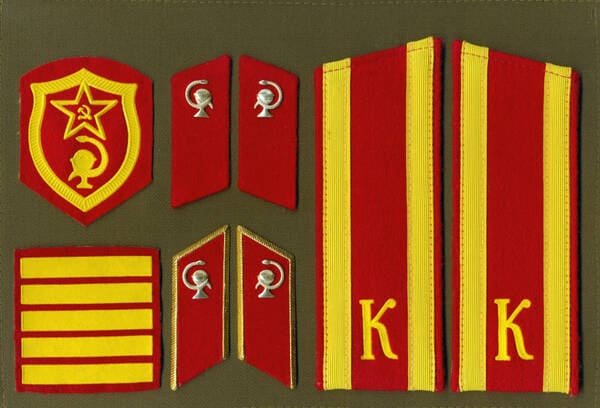
Insignia worn by cadets of Soviet military medical and veterinary schools. The set includes a sleeve patch introduced in 1980, everyday and parade collar tabs with medical and veterinary service emblems, a sleeve badge indicating the 5th year of study and cadet shoulder boards model 1988. Such Soviet military academy insignia were worn by students of medical and veterinary faculties of the USSR Armed Forces during the late Cold War period.
4.2 Sleeve Patch of Motor Rifle Troops (General Army) Model 1969, Everyday and Parade Collar Tabs with Military Justice Emblems Model 1969, 2nd Year Cadet Sleeve Patch and Cadet Senior Sergeant Shoulder Boards Model 1973 (Military Law Faculty Cadet)
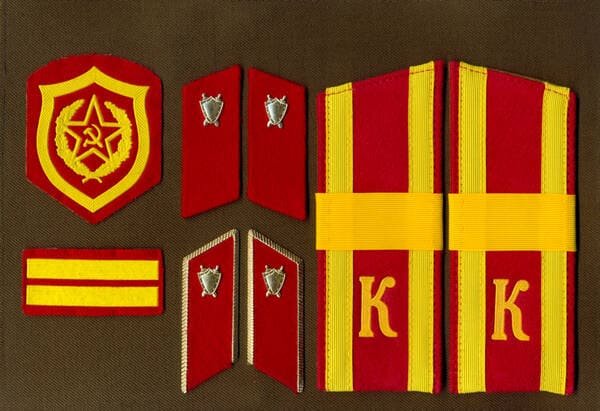
Presented here are insignia worn by a cadet of the Soviet military law faculty. The set includes a sleeve patch of the motor rifle troops introduced in 1969, everyday and parade collar tabs with the emblem of the military justice service, a sleeve badge indicating the second year of study and cadet senior sergeant shoulder boards model 1973. Such insignia were worn by cadets studying military law in Soviet higher military educational institutions of the USSR Armed Forces during the Cold War period.
4.3 Sleeve Patch of Motor Rifle Troops (General Army) Model 1969, Everyday and Parade Collar Tabs with Technical Service Emblems, 2nd Year Cadet Sleeve Patch and Cadet Shoulder Boards of a Technical Combined Arms School Model 1969
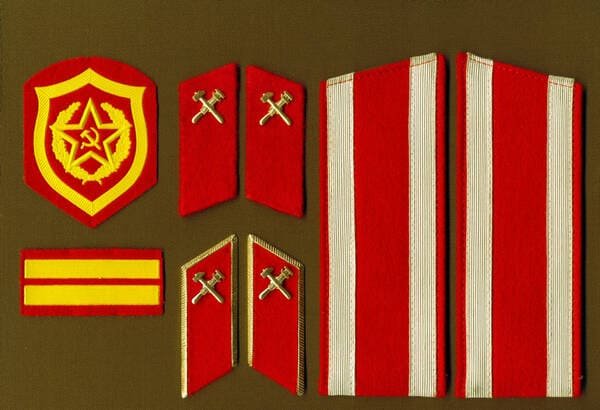
Soviet cadet insignia prepared for a technical combined arms military school. The set includes a sleeve patch of the motor rifle troops introduced in 1969, everyday and parade collar tabs with technical service emblems, a sleeve badge indicating the second year of study and cadet shoulder boards model 1969. This type of shoulder boards was produced at factories but was never actually worn because no military schools of this specific technical combined arms profile were established in the USSR Armed Forces.
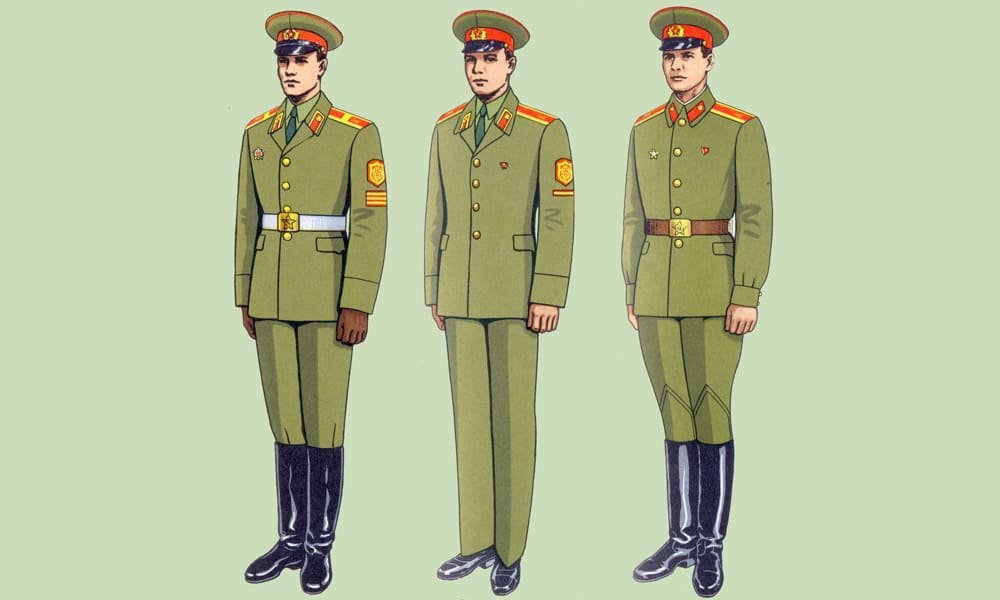
Cadets of Soviet military schools wearing everyday and parade uniforms of the USSR Armed Forces. The uniforms display cadet shoulder boards, collar tabs with branch emblems and sleeve patches indicating the year of study. Such Soviet military academy uniforms were worn by students of combined arms and specialized military schools during the Cold War period.
4.4 Sleeve Patch of Medical and Veterinary Service Model 1969, Everyday and Parade Collar Tabs with Veterinary Service Emblems Model 1969, 3rd Year Cadet Sleeve Patch and Cadet Shoulder Boards of a Military Medical School Model 1973
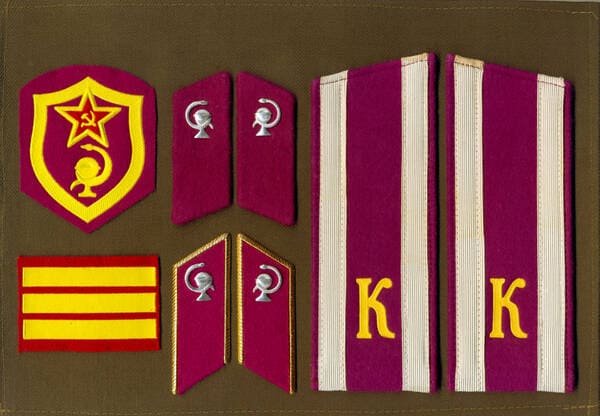
Insignia worn by cadets of Soviet military medical educational institutions. The set includes a sleeve patch of the medical and veterinary service introduced in 1969, everyday and parade collar tabs with veterinary service emblems, a sleeve badge indicating the third year of study and cadet shoulder boards model 1973. Such insignia were worn by students of Soviet military medical academies and medical faculties of the USSR Armed Forces during the Cold War period.
4.5 Sleeve Patch of Medical and Veterinary Service Model 1969, Everyday and Parade Collar Tabs with Medical Service Emblems Model 1969, 6th Year Cadet Sleeve Patch and Cadet-Starshina Shoulder Boards of a Military Medical School Model 1969
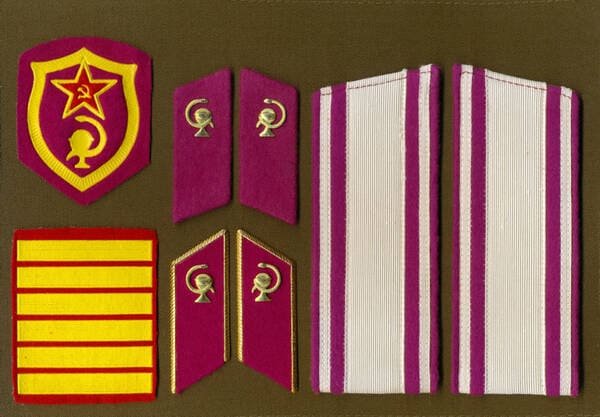
Presented here are insignia worn by a senior cadet (starshina) of a Soviet military medical educational institution. The set includes a sleeve patch of the medical and veterinary service introduced in 1969, everyday and parade collar tabs with medical service emblems, a sleeve badge indicating the sixth year of study and cadet-starshina shoulder boards model 1969. Such insignia were worn by senior students of Soviet military medical academies and medical faculties of the USSR Armed Forces during the Cold War period.
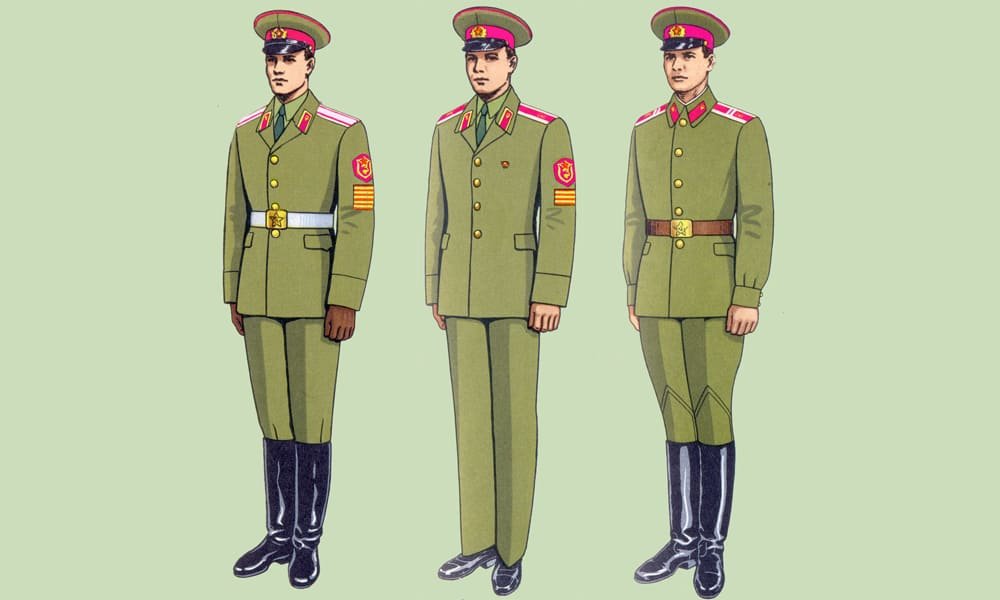
Presented here are cadets of Soviet military medical educational institutions wearing everyday and parade uniforms of the USSR Armed Forces. The uniforms include cadet shoulder boards, collar tabs with medical service emblems and sleeve patches showing the year of study. Such uniforms were worn by students of Soviet military medical academies and medical faculties during the Cold War period while undergoing professional training for service in the USSR Armed Forces.
4.6 Sleeve Patch of Engineering Troops Model 1969, Everyday and Parade Collar Tabs with Engineering Troops Emblems, 4th Year Cadet Sleeve Patch and Cadet Shoulder Boards Model 1988
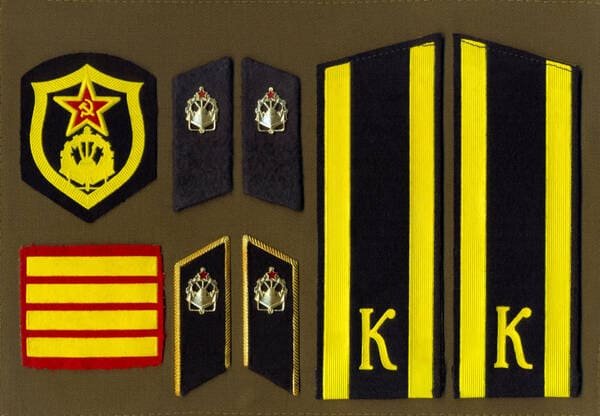
Insignia worn by cadets of Soviet engineering military schools. The set includes a sleeve patch of the engineering troops introduced in 1969, everyday and parade collar tabs with engineering branch emblems, a sleeve badge indicating the fourth year of study and cadet shoulder boards model 1988. Such insignia were worn by students of Soviet military engineering academies and engineering faculties of the USSR Armed Forces during the Cold War period.
4.7 Sleeve Patch of Military Construction Units and Military Builders Model 1969, Everyday and Parade Collar Tabs with Military Construction Emblems, 3rd Year Cadet Sleeve Patch and Cadet Junior Sergeant Shoulder Boards Model 1973
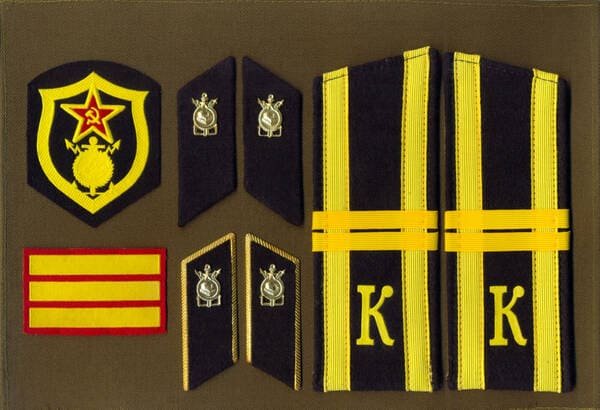
Insignia worn by cadets of Soviet command military schools connected with military construction units. The set includes a sleeve patch of the military construction troops introduced in 1969, everyday and parade collar tabs with construction service emblems, a sleeve badge indicating the third year of study and cadet junior sergeant shoulder boards model 1973. Such insignia were worn by cadets preparing for command positions in military construction units of the USSR Armed Forces during the Cold War period.
4.8 Sleeve Patch of Artillery Model 1969, Everyday and Parade Collar Tabs with Artillery Emblems, 2nd Year Cadet Sleeve Patch and Cadet-Starshina Shoulder Boards Model 1973 (with Metal Letter “K”)
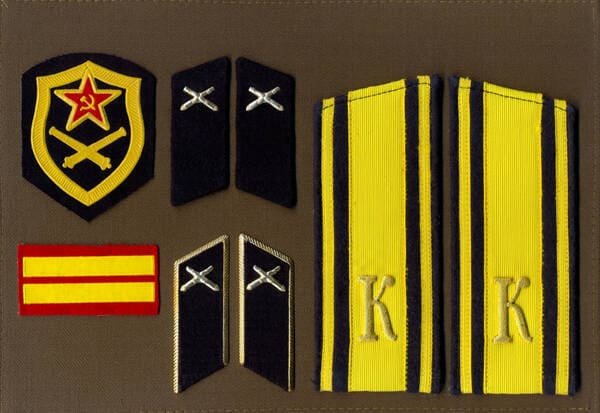
Insignia worn by cadets of Soviet artillery command military schools. The set includes a sleeve patch of the artillery branch introduced in 1969, everyday and parade collar tabs with artillery emblems, a sleeve badge indicating the second year of study and cadet-starshina shoulder boards model 1973 with metal letter K. Such insignia were worn by cadets preparing for command positions in Soviet artillery units of the USSR Armed Forces during the Cold War period.
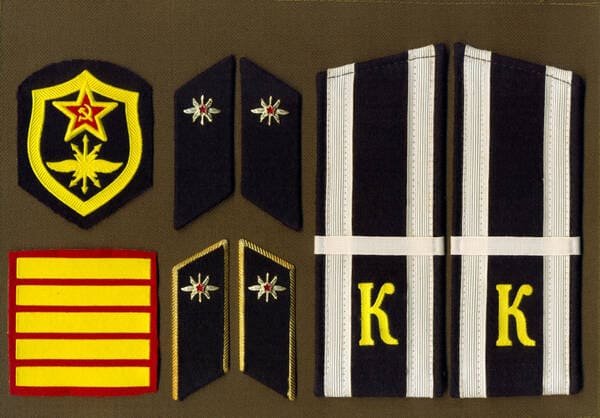
Insignia worn by cadets of Soviet engineering military schools specializing in signal and radio-technical troops. The set includes a sleeve patch introduced in 1969, everyday and parade collar tabs with signal and radio-technical branch emblems, a sleeve badge indicating the fifth year of study and cadet-corporal shoulder boards model 1973. Such insignia were worn by cadets preparing for technical and engineering positions in communication units of the USSR Armed Forces during the Cold War period.
4.10 Sleeve Patch of Pipeline Troops Model 1969, Everyday and Parade Collar Tabs with Pipeline Troops Emblems, 1st Year Cadet Sleeve Patch and Cadet-Starshina Shoulder Boards of an Engineering Military School Model 1969
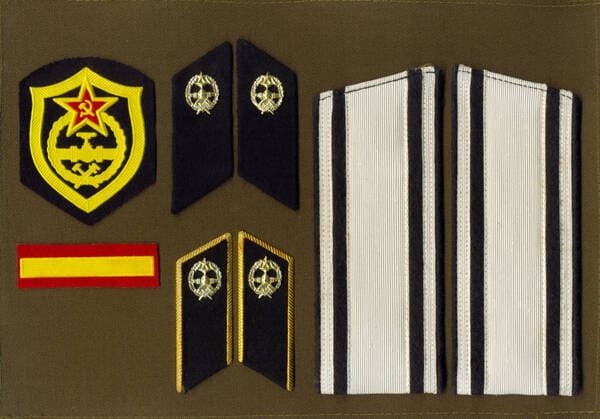
Insignia worn by cadets of Soviet engineering military schools connected with pipeline troops of the USSR Armed Forces. The set includes a sleeve patch of the pipeline troops introduced in 1969, everyday and parade collar tabs with pipeline service emblems, a sleeve badge indicating the first year of study and cadet-starshina shoulder boards model 1969. Such insignia were worn by cadets preparing for engineering and technical positions in Soviet pipeline troops during the Cold War period.
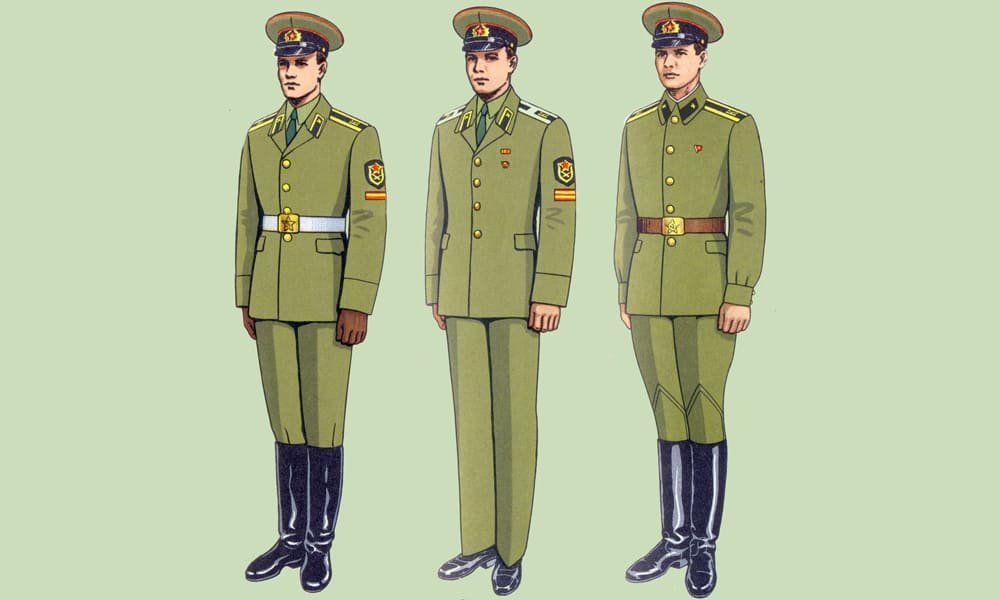
Cadets of Soviet engineering military schools wearing everyday and parade uniforms of the USSR Armed Forces. The uniforms include cadet shoulder boards, collar tabs with engineering service emblems and sleeve patches showing the year of study. Such uniforms were worn by students of Soviet engineering academies and technical military schools during the Cold War period while training for service in engineering and support units of the Soviet Army.
4.11 Removable Shoulder Boards for the Shirt of a Cadet of a Combined Arms School and a Cadet Senior Sergeant of an Engineering School (Model 1985)
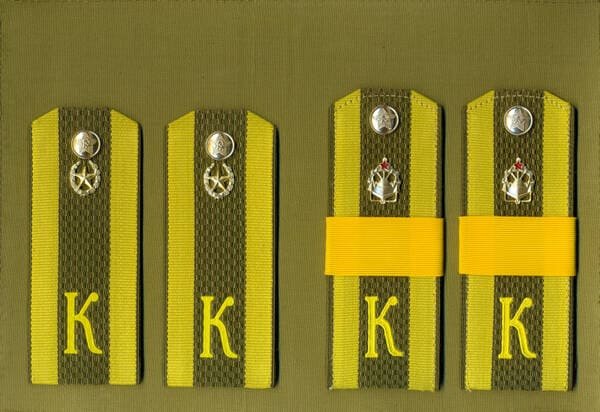
These removable shoulder boards were used on shirts by cadets of Soviet military schools. The example shows shoulder boards of a cadet of a combined arms military school and a cadet senior sergeant of an engineering military school, model 1985. They feature the letter “K” indicating cadet status and branch emblems corresponding to the service specialization. Such shoulder boards were worn on everyday shirts during training and service in Soviet military educational institutions.
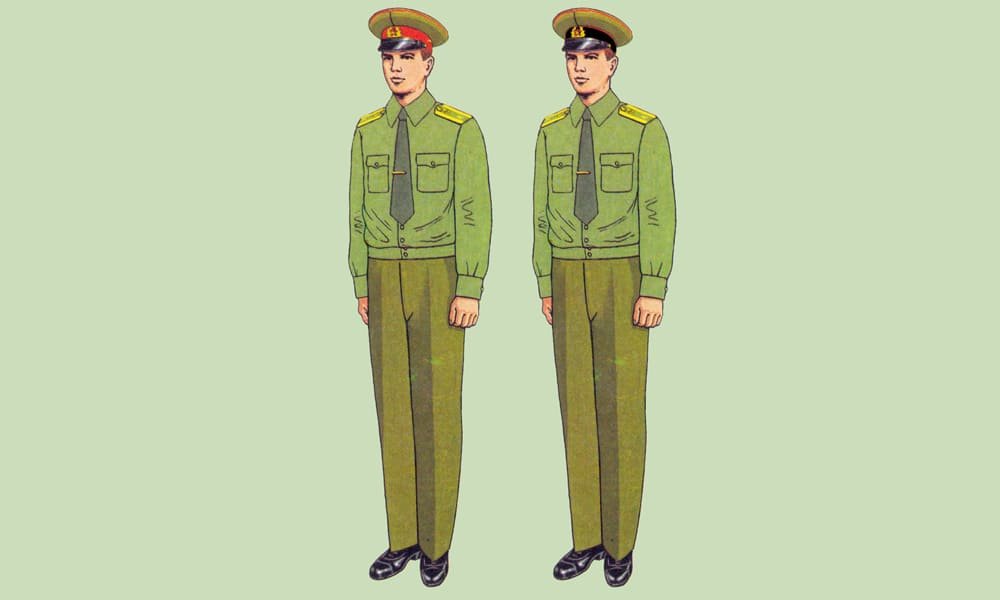
This illustration shows Soviet military school cadets wearing everyday service shirts with removable shoulder boards introduced in 1985. Such shoulder boards were attached to the shirt and indicated cadet status and branch of service. This type of uniform was commonly worn by cadets during training, classroom activities and routine duties in Soviet military educational institutions during the late Cold War period.
5. Shoulder Boards, Collar Tabs and Sleeve Insignia for the Everyday Uniform of Warrant Officers and Long-Service Enlisted Personnel of the Soviet Army.
5.1 Everyday Collar Tabs, Service Sleeve Patch and Sewn Shoulder Boards of a Soviet Warrant Officer (Order of 1988)
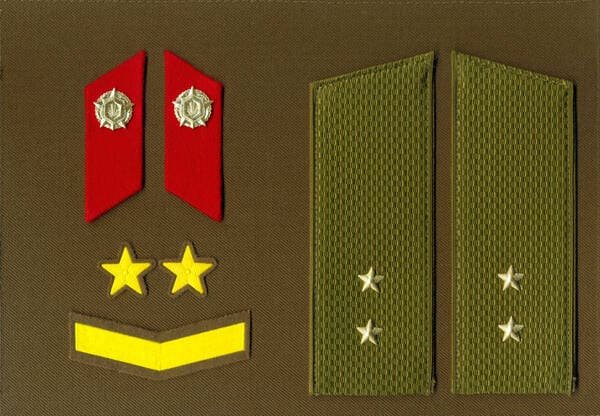
The image shows everyday collar tabs of a chemical defense company of a Soviet motor rifle division, a sleeve patch indicating long service of warrant officers (10 years or more), and sewn shoulder boards of a Soviet Army warrant officer. The arrangement of the stars follows the regulation introduced by the Soviet Ministry of Defense in 1988. These insignia were worn on the everyday uniform by warrant officers and long service personnel of the Soviet Army during the late Cold War period.
5.2 Everyday Collar Tabs of Road Troops, Service Sleeve Patch and Sewn Shoulder Boards of a Long-Service Senior Sergeant (Order of 1988)
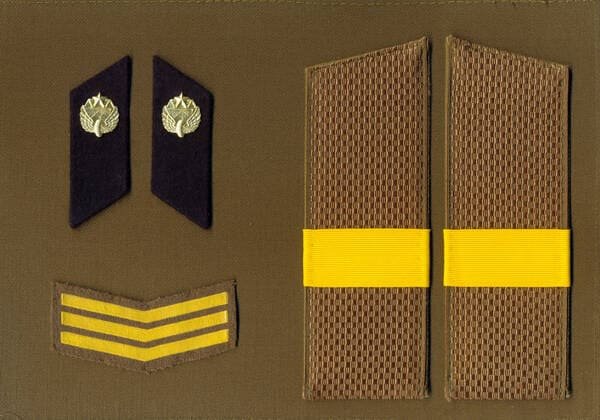
Everyday collar tabs of Soviet road troops, a sleeve patch indicating years of service for long-service personnel and warrant officers (three years), and sewn shoulder boards of a senior sergeant of extended service. The placement of the chevrons follows the regulation introduced by the Soviet Ministry of Defense in 1988. These insignia were worn on the everyday uniform by long-service enlisted personnel and warrant officers of the Soviet Army.
5.3 Removable Shoulder Boards for the Shirt of a Sergeant Major of the Military Band Service and a Warrant Officer of the Military Topographic Service (Order of 1988)
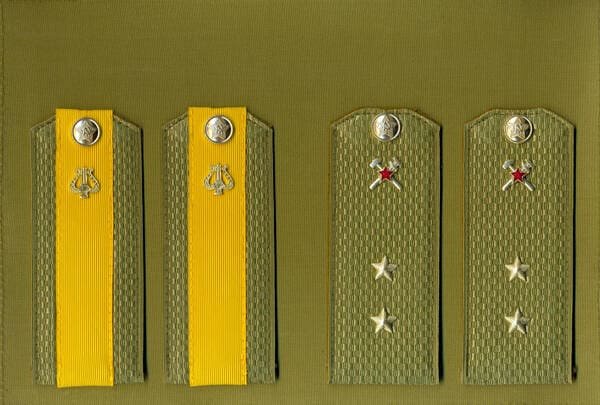
Removable shoulder boards worn on the service shirt by a sergeant major of the Soviet military band service and a warrant officer of the military topographic service. The shoulder boards display branch emblems and star insignia indicating rank. The placement of the stars follows the regulation introduced by the Soviet Ministry of Defense in 1988. These removable shoulder boards were part of the everyday uniform of warrant officers and long service personnel of the Soviet Army during the late Cold War period.
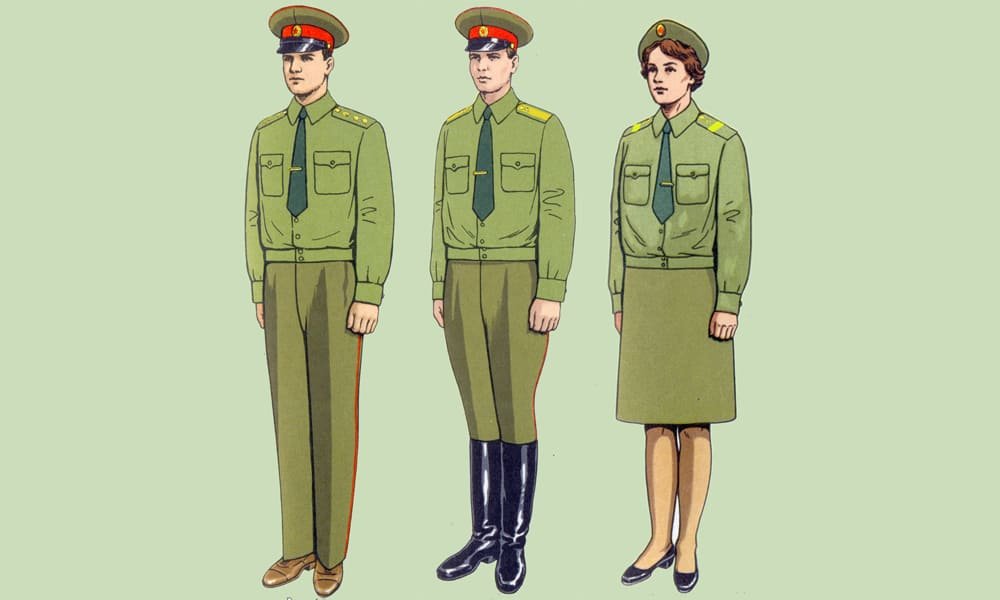
Soviet Army warrant officers and long service enlisted personnel wearing everyday service shirts with removable shoulder boards. The shoulder boards display rank insignia and branch colors according to Soviet uniform regulations. Such shirts were commonly worn during routine duties and non ceremonial activities by warrant officers and long service personnel of the Soviet Army during the late Cold War period.
6. Shoulder Boards and Sleeve Insignia for the Parade Uniform of Warrant Officers and Long-Service Enlisted Personnel of the Soviet Army (Except Aviation, Airborne Forces and Cavalry).
6.1 Parade Shoulder Boards and Sleeve Insignia of a Soviet Warrant Officer (Model 1988)
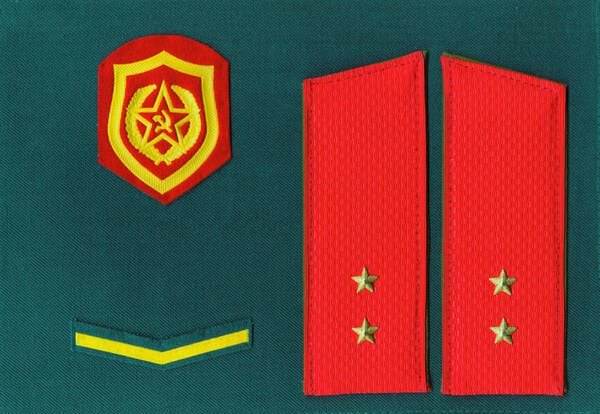
Parade shoulder boards of a Soviet Army warrant officer together with sleeve insignia of the motor rifle troops and a one-year service chevron for warrant officers. The shoulder boards with two stars represent the rank of warrant officer according to the Soviet uniform regulation introduced in 1988. These insignia were worn on the parade uniform by warrant officers and long-service personnel of the Soviet Army during the late Cold War period.
6.2 Parade Shoulder Boards of a Senior Warrant Officer with Railway Troops Sleeve Insignia (Model 1988)
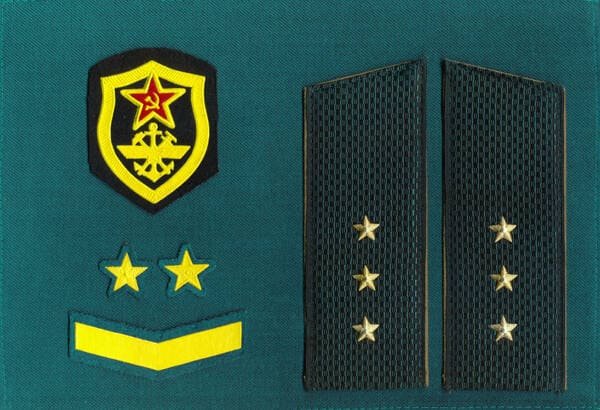
Parade shoulder boards of a Soviet Army senior warrant officer together with sleeve insignia of the railway troops and the military transport service. Also shown is a long service chevron indicating ten or more years of service for warrant officers. The three stars on the shoulder boards indicate the rank of senior warrant officer according to the Soviet uniform regulation introduced in 1988. These insignia were worn on the parade uniform of warrant officers and long service personnel of the Soviet Army during the late Cold War period.
6.4 Collar Tabs for the Overcoat of Motor Rifle Troops and Sewn Shoulder Boards for the Parade Overcoat of a Soviet Warrant Officer (Order of 1971)
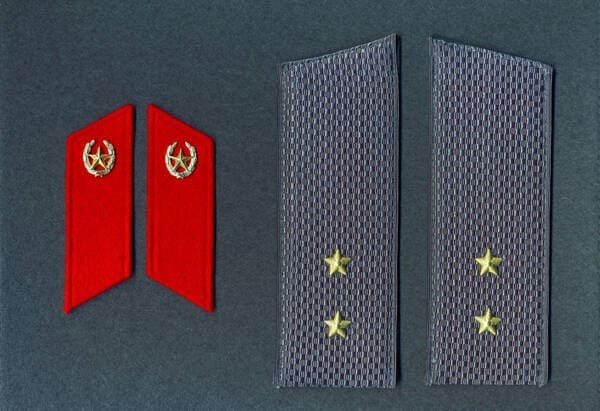
Collar tabs for the overcoat of Soviet motor rifle troops and sewn steel colored shoulder boards worn on the parade overcoat of a Soviet Army warrant officer. The stars on the shoulder boards indicate the rank of warrant officer, with their arrangement following the regulation introduced by the Soviet Ministry of Defense in 1971. These insignia were worn on the parade overcoat by warrant officers and other long service personnel of the Soviet Army during the Cold War period.
6.5 Collar Tabs for the Overcoat of Automobile and Road Troops and Sewn Shoulder Boards for the Parade Overcoat of a Soviet Warrant Officer (Order of 1971)
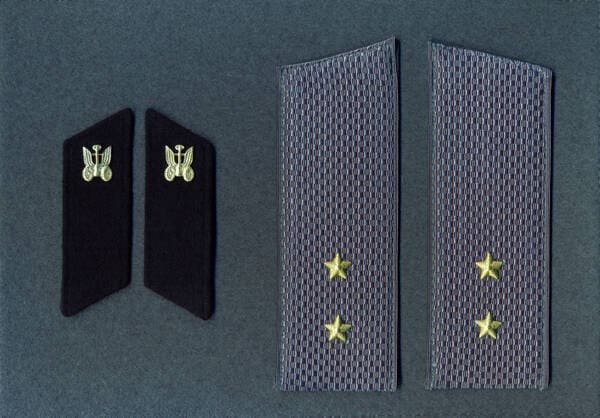
Collar tabs used on the overcoat of Soviet automobile and road troops (after 1988 only automobile troops) together with sewn steel colored shoulder boards for the parade overcoat of a Soviet Army warrant officer. The stars on the shoulder boards indicate the rank of warrant officer, with their arrangement following the regulation introduced by the Soviet Ministry of Defense in 1971. These insignia were worn on the parade overcoat by warrant officers and long service personnel of the Soviet Army during the Cold War period.
6.6 Removable Shoulder Boards for the Parade White Shirt of a Senior Sergeant of Automobile Troops and a Warrant Officer of Motor Rifle Troops (Order of 1988)
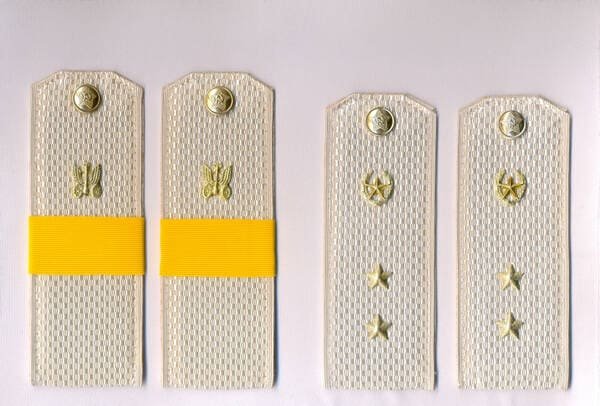
Removable shoulder boards worn on the parade white shirt of a Soviet senior sergeant of the automobile troops and a warrant officer of the motor rifle troops. The shoulder boards include branch emblems, chevrons and stars indicating rank. The placement of the chevrons and stars follows the regulation introduced by the Soviet Ministry of Defense in 1988. These shoulder boards were used with the white parade shirt of the Soviet Army uniform during ceremonial occasions in the late Cold War period.
8. Shoulder Boards for the Everyday Uniform of Officers of the Soviet Army (Except Aviation, Airborne Forces and Cavalry).
8.1 Sewn Shoulder Boards of Junior and Senior Officers of the Soviet Army (Order of 1988)
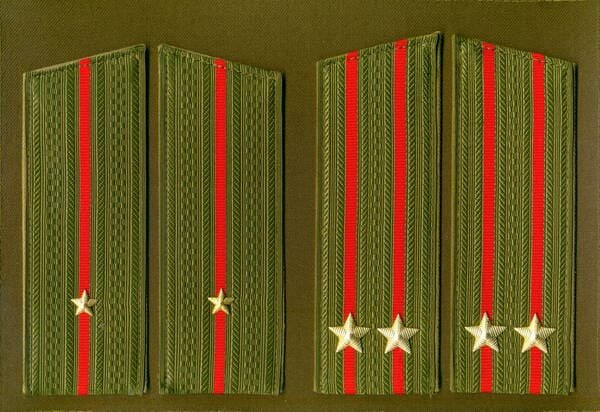
Sewn shoulder boards used on the everyday uniform of Soviet Army officers. The examples represent the ranks of junior lieutenant and lieutenant colonel. The shoulder boards feature branch colored piping and stars indicating officer rank, with their arrangement following the regulation introduced by the Soviet Ministry of Defense in 1988. These shoulder boards were worn by officers of the Soviet Army during the late Cold War period.
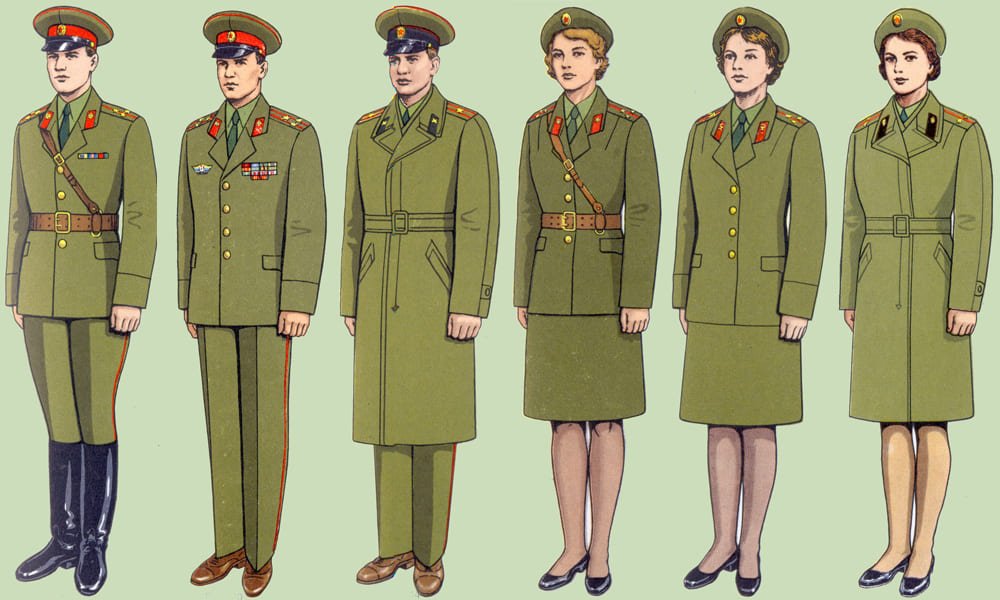
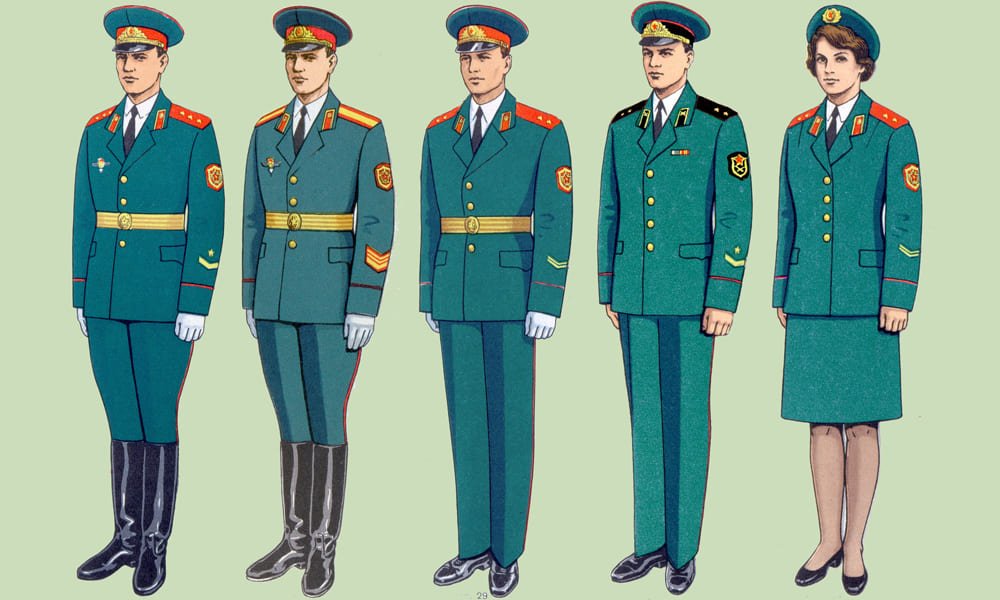
The illustration shows officers of the Soviet Army wearing everyday service uniforms with shoulder boards indicating their ranks. The uniforms include service tunics, belts, overcoats and branch insignia according to Soviet military regulations. Both male and female officers are represented, reflecting the structure of the Soviet Armed Forces during the Cold War period. These everyday uniforms were worn during routine duties and official service activities.
8.3 Removable Shoulder Boards for the Shirt of Junior and Senior Officers of the Soviet Army (Order of 1988)
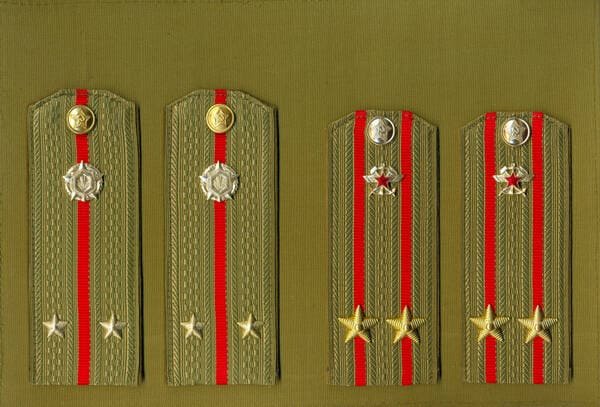
Removable shoulder boards worn on the service shirt of Soviet Army officers. The examples represent the ranks of lieutenant of chemical troops and lieutenant colonel of railway troops. The shoulder boards display branch insignia and stars indicating officer rank, with their arrangement following the regulation introduced by the Soviet Ministry of Defense in 1988. These shoulder boards were used with the everyday service shirt by officers of the Soviet Army during the late Cold War period.
Shoulder boards with crimson stripes for officers of the medical, quartermaster, veterinary and administrative services and justice service until 1980.
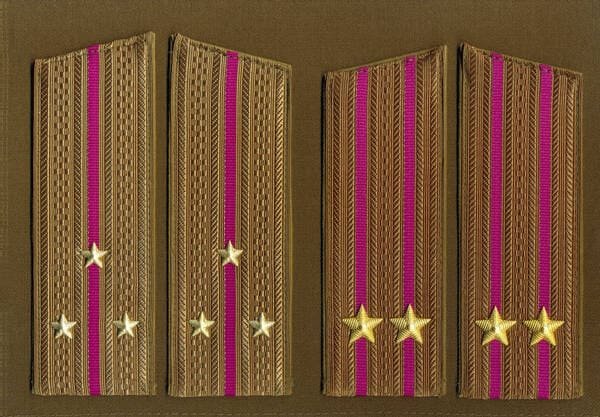
Sewn shoulder boards used on the everyday uniform of Soviet Army officers. The examples represent the ranks of senior lieutenant and lieutenant colonel. These shoulder boards feature crimson stripes used by officers of the medical, administrative, veterinary, quartermaster and justice services before 1980. The arrangement of the stars follows the regulation introduced by the Soviet Ministry of Defense in 1969. These insignia were worn by officers of the Soviet Army during the Cold War period.
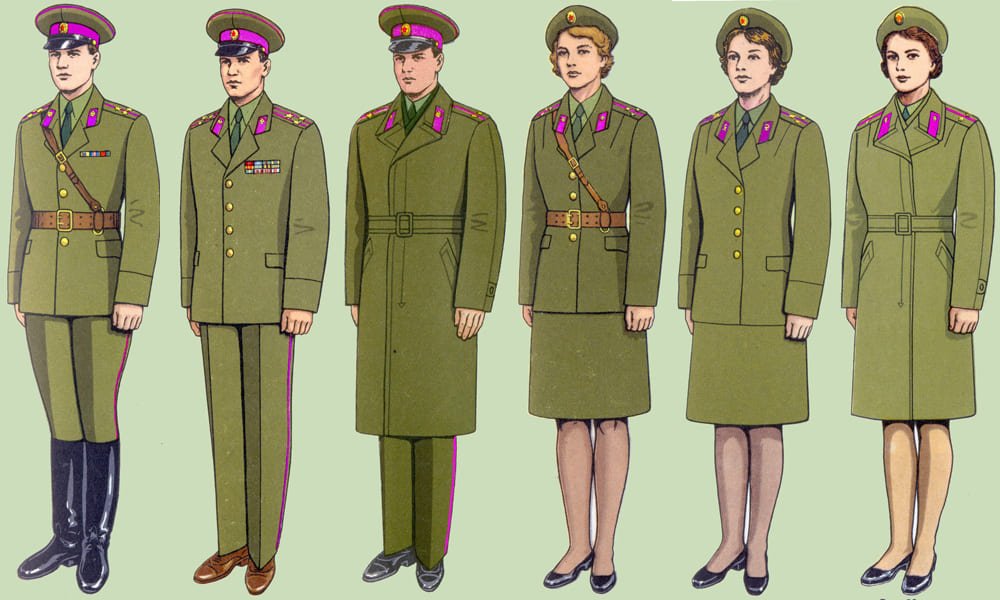
The illustration shows officers of Soviet support services wearing everyday uniforms with crimson colored insignia. The crimson piping and collar tabs were traditionally used for the medical, veterinary, administrative, quartermaster and justice services of the Soviet Army. Both male and female officers are represented, illustrating the everyday service uniform worn during routine duties in the Soviet Armed Forces during the Cold War period.
8.6 Removable Shoulder Boards for the Shirt of Junior and Senior Officers of Support Services of the Soviet Army (Order of 1969)
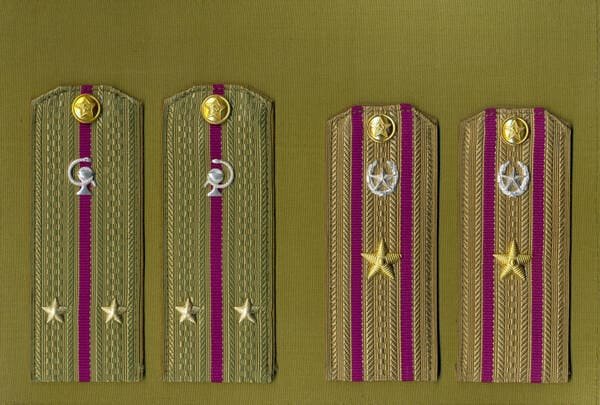
Removable shoulder boards worn on the service shirt of Soviet Army officers. The examples represent the ranks of lieutenant of the veterinary service and major of the quartermaster or administrative service. The shoulder boards feature crimson stripes traditionally used by medical, veterinary, administrative and quartermaster services. The arrangement of the stars follows the regulation introduced by the Soviet Ministry of Defense in 1969. These shoulder boards were used with the everyday service shirt of Soviet Army officers during the Cold War period.
9. Shoulder Boards for the Parade Uniform of Officers of the Soviet Army (Except Aviation, Airborne Forces and Cavalry).
9.1 Sewn Shoulder Boards for the Parade Tunic of Junior and Senior Officers of the Soviet Army (Order of 1988)
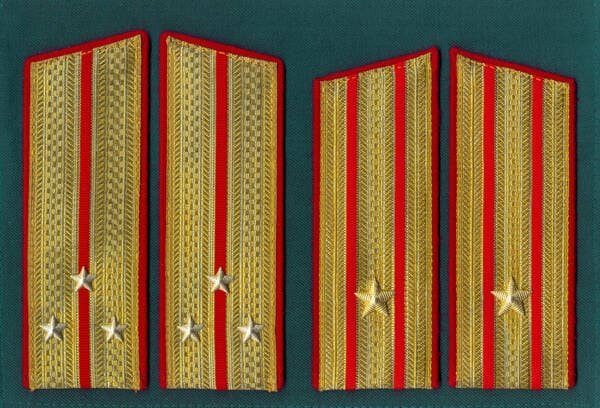
Sewn shoulder boards used on the parade tunic of Soviet Army officers. The examples represent the ranks of senior lieutenant and major. These shoulder boards feature gold braid with branch colored stripes and stars indicating officer rank. The arrangement of the stars follows the regulation introduced by the Soviet Ministry of Defense in 1988. Such shoulder boards were worn on the parade uniform of Soviet Army officers during ceremonial events and official occasions in the late Cold War period.
9.2 Sewn Shoulder Boards for the Parade Tunic of Engineering Rank and Technical Service Officers of the Soviet Army (Order of 1969)
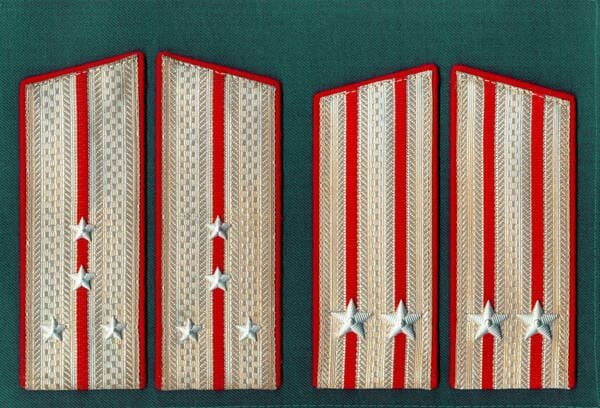
The image shows sewn shoulder boards worn on the parade tunic by Soviet Army officers with engineering ranks and officers of the technical services. The examples represent the ranks of captain engineer and lieutenant colonel engineer. These shoulder boards were used by officers of engineering and technical branches of the Soviet Army, except aviation, airborne forces, cavalry, quartermaster, medical, veterinary, administrative services and justice. The arrangement of the stars follows the regulation introduced by the Soviet Ministry of Defense in 1969. Such shoulder boards were worn on parade uniforms during official ceremonies in the Cold War period.
9.3 Collar Tabs for the Overcoat of Missile and Artillery Units of Motor Rifle Troops and Sewn Shoulder Boards for the Steel Colored Parade Overcoat of a Soviet Lieutenant (Order of 1969)
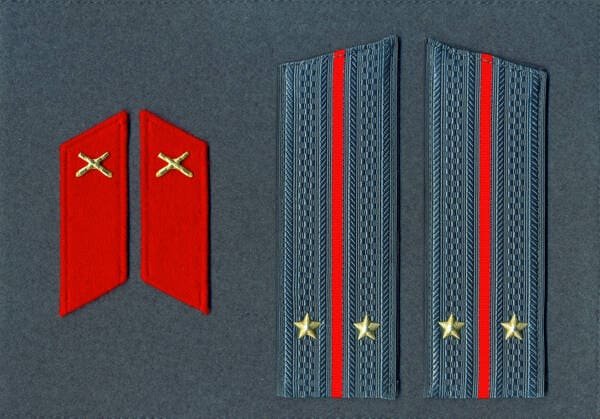
Collar tabs used on the overcoat of missile and artillery units of the motor rifle troops together with sewn steel colored shoulder boards for the parade overcoat of a Soviet Army lieutenant. The shoulder boards feature a single star indicating the rank of lieutenant. The arrangement of the stars follows the regulation introduced by the Soviet Ministry of Defense in 1969. These insignia were worn on the parade overcoat by officers of the Soviet Army during ceremonial and official occasions in the Cold War period.
9.4 Velvet Collar Tabs for the Overcoat of Tank Troops and Sewn Shoulder Boards for the Steel Colored Parade Overcoat of a Soviet Lieutenant Colonel (Order of 1969)
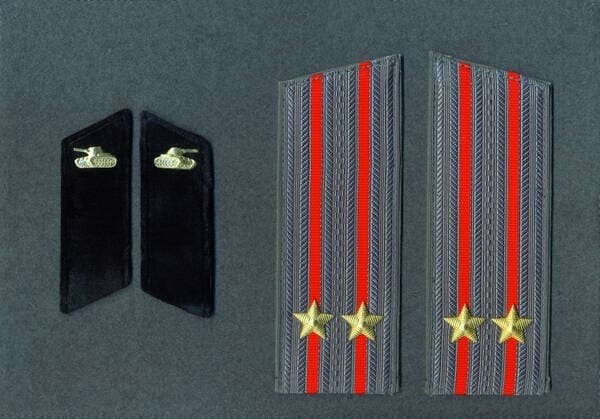
Velvet collar tabs used on the overcoat of Soviet tank troops together with sewn steel colored shoulder boards for the parade overcoat of a Soviet Army lieutenant colonel. The shoulder boards display three stars indicating the rank of lieutenant colonel. The arrangement of the stars follows the regulation introduced by the Soviet Ministry of Defense in 1969. These insignia were worn on the parade overcoat by senior officers of the Soviet Army during ceremonial events in the Cold War period.
9.5 Removable Shoulder Boards for the Parade White Shirt of Junior and Senior Officers of the Soviet Army (Order of 1988)
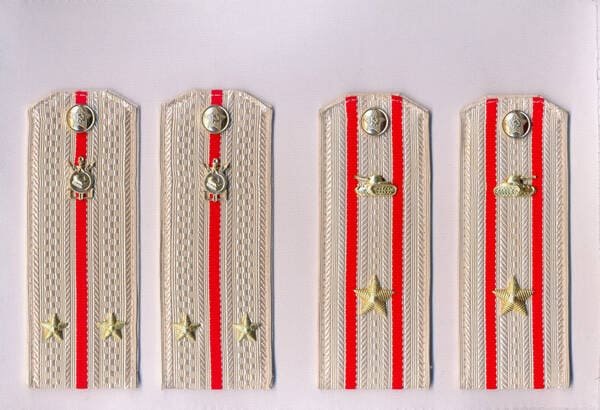
Removable shoulder boards worn on the parade white shirt of Soviet Army officers. The examples represent the ranks of lieutenant of military construction units and major of tank troops. The shoulder boards include branch emblems and stars indicating officer rank. The arrangement of the stars follows the regulation introduced by the Soviet Ministry of Defense in 1988. These shoulder boards were worn with the white parade shirt of Soviet Army officers during ceremonial occasions in the late Cold War period.
Shoulder boards with crimson stripes for officers of the medical, quartermaster, veterinary and administrative services and the justice service until 1980.
9.6 Sewn Shoulder Boards for the Parade Tunic of Officers of Medical, Quartermaster, Veterinary and Administrative Services and Justice (Until 1980)
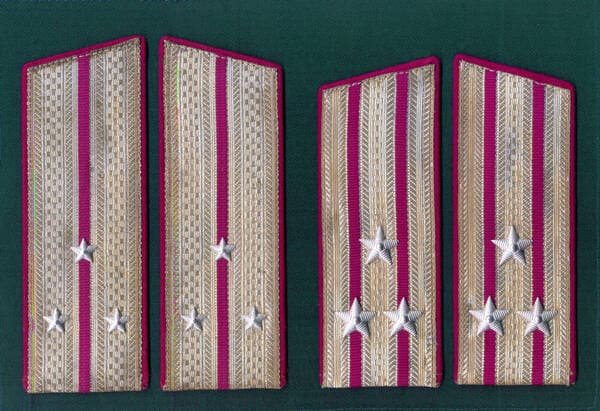
Sewn shoulder boards worn on the parade tunic by Soviet Army officers of the medical, quartermaster, veterinary and administrative services and the justice service. These shoulder boards feature crimson stripes traditionally used by these support branches of the Soviet Army. The examples represent the ranks of senior lieutenant and colonel. Such insignia were worn on parade uniforms until 1980 according to Soviet military regulations.
9.7 Collar Tabs for the Overcoat of the Medical Service and Sewn Shoulder Boards for the Steel Colored Parade Overcoat of a Soviet Major of Support Services (Order of 1969, Until 1980)
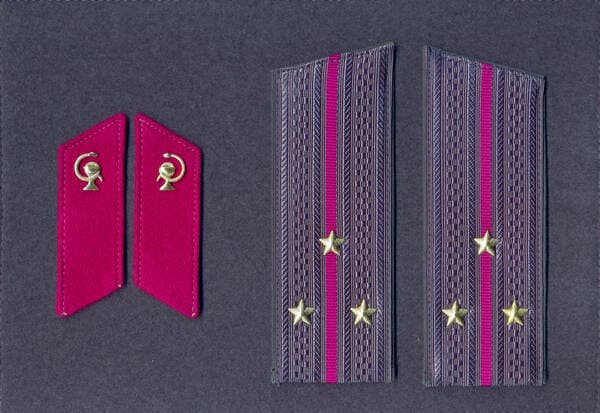
Collar tabs used on the overcoat of the Soviet medical service together with sewn steel colored shoulder boards worn on the parade overcoat by a major of support services. The crimson stripes indicate the medical, administrative, quartermaster and veterinary services of the Soviet Army. The arrangement of the stars follows the regulation introduced by the Soviet Ministry of Defense in 1969. These insignia were used on parade overcoats of Soviet Army officers until 1980.
9.7 Collar Tabs for the Overcoat of the Medical Service and Sewn Shoulder Boards for the Steel Colored Parade Overcoat of a Soviet Major of Support Services (Order of 1969, Until 1980)
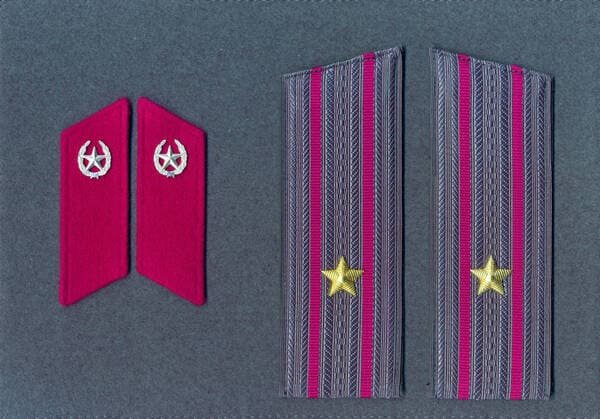
Collar tabs used on the overcoat of the Soviet medical service together with sewn steel colored shoulder boards worn on the parade overcoat by a major of support services. The crimson stripes indicate the medical, administrative, quartermaster and veterinary services of the Soviet Army. The arrangement of the stars follows the regulation introduced by the Soviet Ministry of Defense in 1969. These insignia were used on parade overcoats of Soviet Army officers until 1980.