Soviet Army in Afghanistan 1979-1989
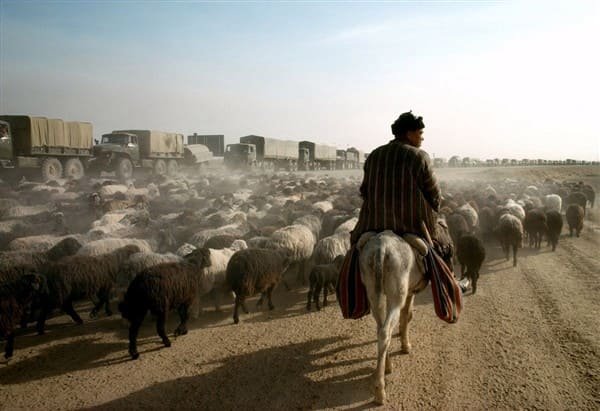
The Soviet war in Afghanistan was not spontaneous. Many years before the invasion, the Soviet Union built a road through the Salang Pass. It was later called the “Shuravi road.” This road created a direct route for Soviet military vehicles from the USSR straight to Kabul, which is exactly what happened in the winter of 1980.
Read new article:
Telnyashka: History of the Russian Navy and VDV Striped Shirt
In this article, I will show a rather rare collection of color photographs from the Afghan War period.
More interesting articles:
Soviet Combat Boots of the Afghan War: Testing 3 Designs
Soviet Spetsnaz Uniform in Afghanistan (1979–1989)
How the Soviet Army Uniform Changed from 1955 to 1991
Field Uniform and Equipment of the Soviet Army (1968–1991) – Part 1
Mainly motorized rifle units, tank divisions, artillery, and airborne troops (VDV) were sent into Afghanistan. The airborne forces later became some of the most active units in combat, as they were among the most combat-ready troops in the Soviet Army. Aviation units were also deployed and later assigned to the 40th Army as its air force component.
At first, it was believed that there would be no large-scale fighting. The 40th Army was expected to guard important strategic and industrial facilities in the country and support the Afghan government. However, Soviet troops were quickly drawn into active combat operations, supporting the government forces of the Democratic Republic of Afghanistan. This led to an escalation of the conflict, as the opposing side also strengthened its forces in response.
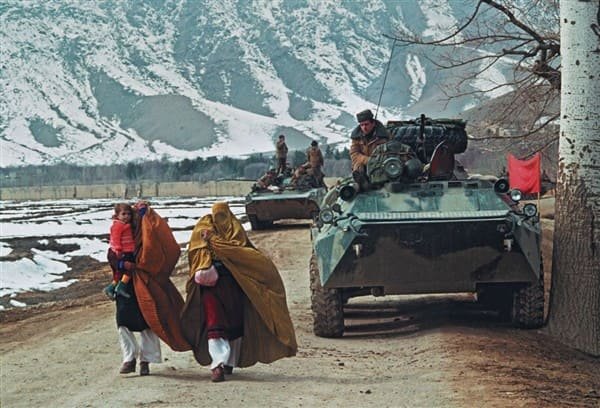
Very soon it became clear that the Soviet Army’s training for a “classic” large-scale war did not work well in Afghanistan. The country’s mountainous terrain and the guerrilla tactics used by the mujahideen changed everything.
The fighters would appear almost out of nowhere, launch quick and painful attacks, and then disappear into the mountains and narrow valleys.
In these conditions, heavy Soviet tanks and infantry fighting vehicles were often of little use. They could not climb steep mountain slopes, and their guns often could not hit targets positioned high above them. The angle of elevation simply did not allow them to fire effectively at enemies on mountain ridges.
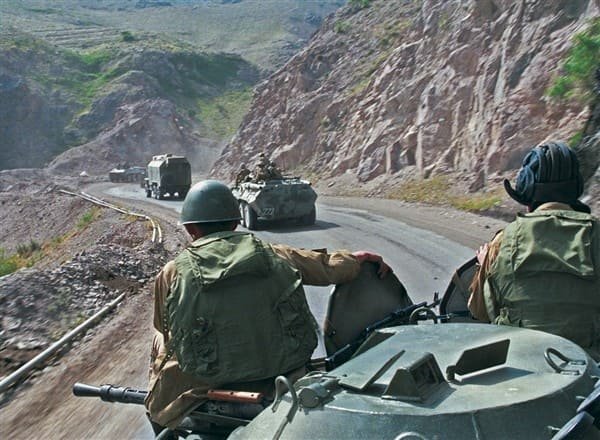
The Soviet command soon began to adopt some of the tactics used by the mujahideen. They started operating in small assault groups, setting up ambushes on supply caravans, carefully scouting the terrain to find the best mountain paths, and trying to work with the local population.
By 1980–1981, the typical style of the Afghan war had taken shape: road checkpoints, small high-altitude operations carried out by helicopter units and airborne troops, blocking and clearing so-called “rebel” villages, and frequent ambushes.
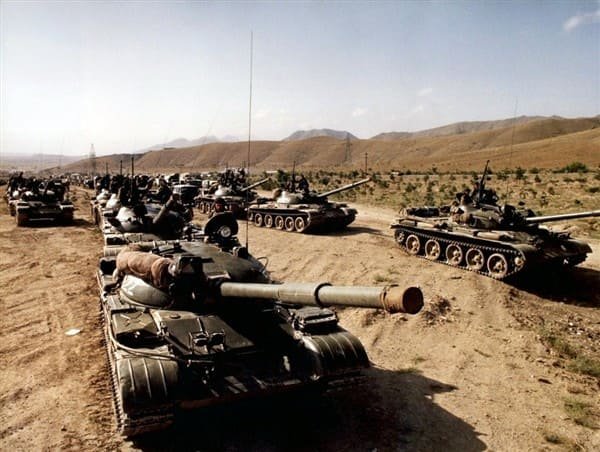
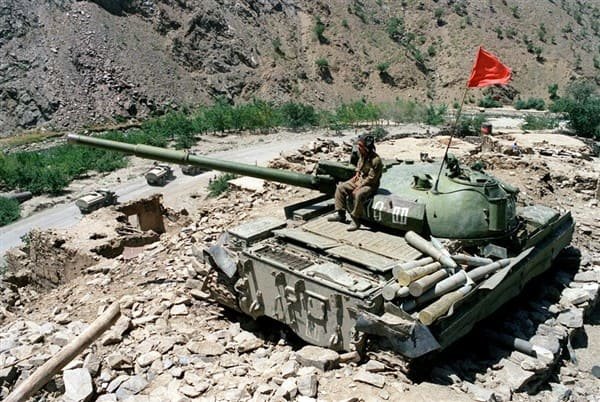
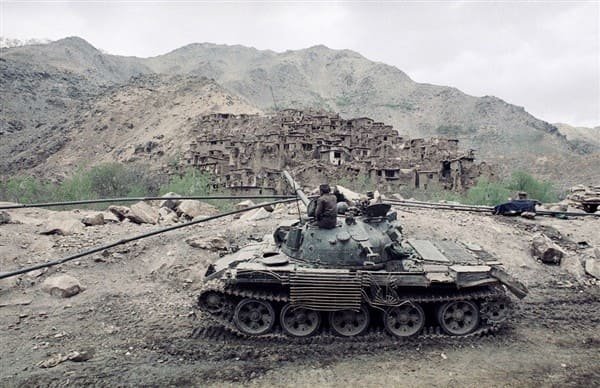
This photo from the early 1980s shows a T-62 tank positioned on high ground, covering the movement of a fuel convoy. In Afghanistan, fuel trucks were often called “tankers” or “fuel carriers.”
The tank looks worn and battle-used, suggesting it had already spent significant time in combat. Its gun is aimed toward the mountains and the “green zone” – a strip of vegetation where mujahideen ambushes could be hidden.
Afghan people called the Soviet troops shuravi, which in Dari simply means “Soviet.”
In return, Soviet soldiers called their opponents dushmans – from the same Dari language, meaning “enemies.” They also used a shortened nickname, dukhi.
Almost every movement of the shuravi along the country’s roads quickly became known to the dushmans. The reason was simple: they received information directly from local residents. This made it much easier to organize ambushes and plant mines on the roads.
Even today, Afghanistan still has many mined areas. Mines were laid by both the mujahideen and Soviet forces during the war.
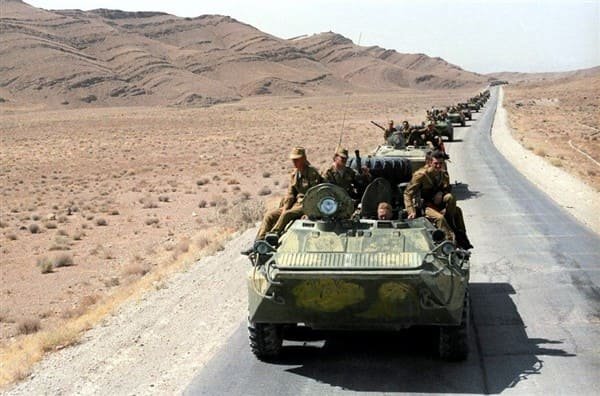
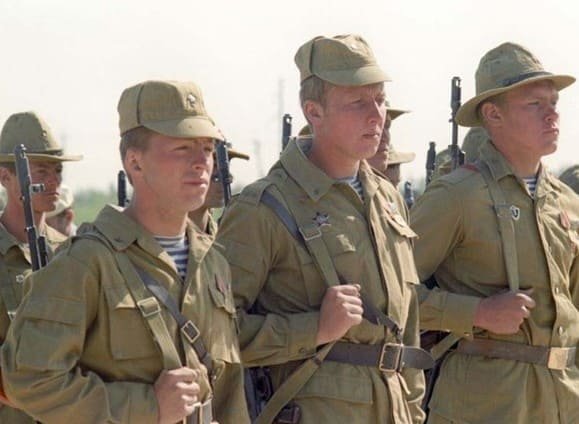
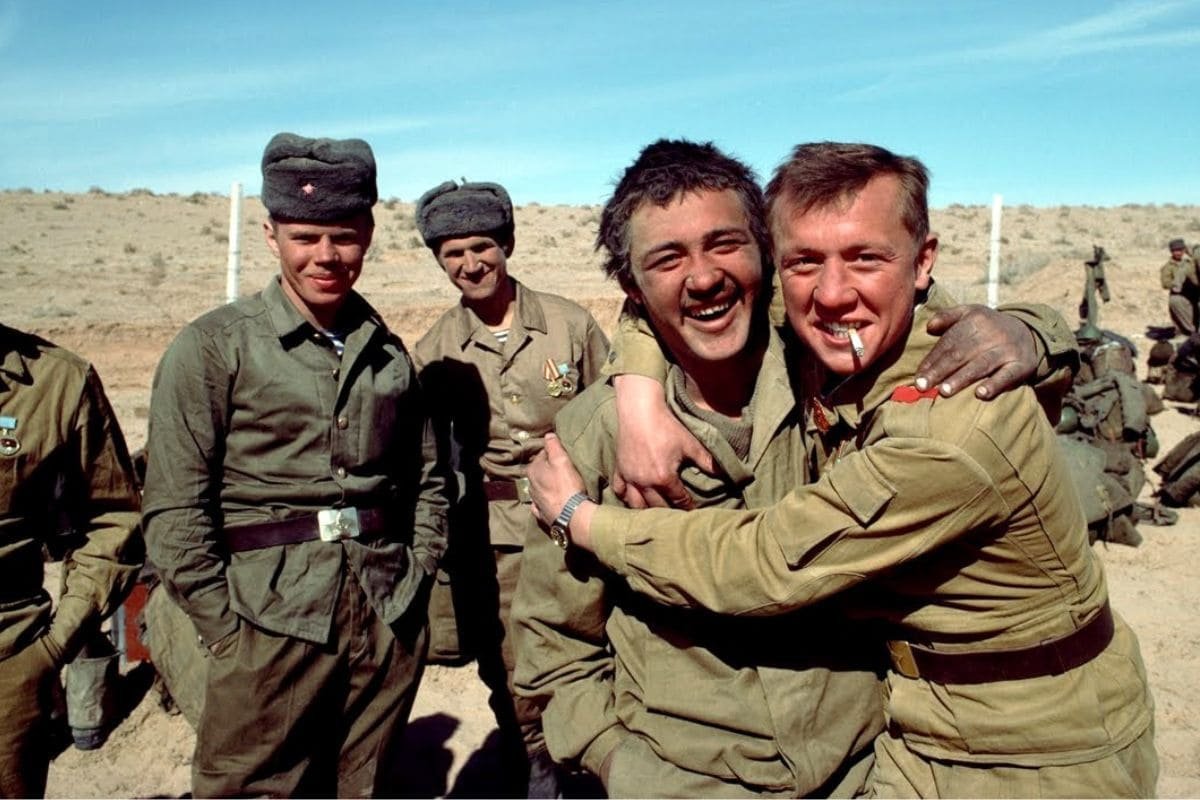
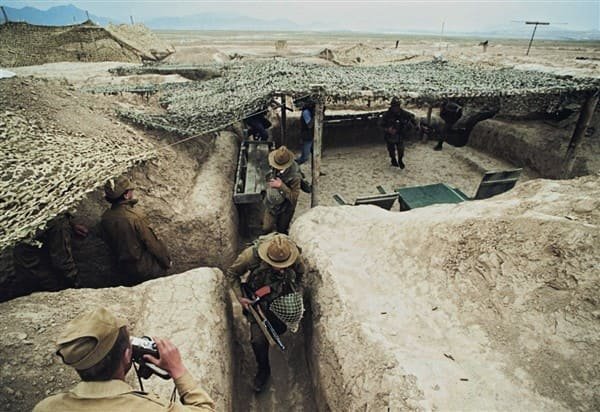
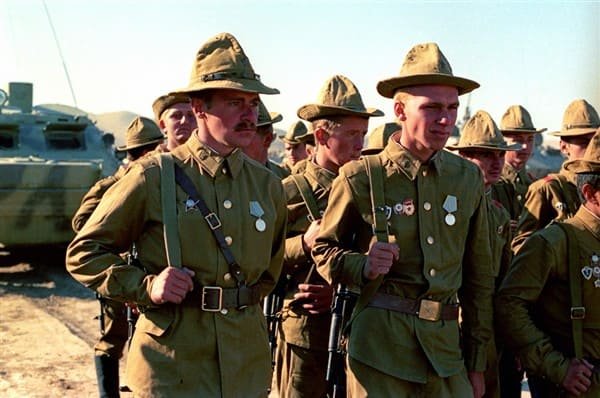
The classic Afghan uniform is easy to recognize because of the panama hat. It protected soldiers from the sun much better than the standard side cap that was used in the Soviet Army at that time. A sand-colored field cap was also common. Interestingly, this type of panama was not something completely new. Very similar hats were worn by Soviet troops during the battles of Khalkhin Gol in 1939.
In the photo below, the soldiers are wearing the early version M69 of the uniform, with exposed buttons. Later, the Afghanka uniform was updated with many additional pockets and a flap that covered the buttons, so they would not tear off during activities like climbing in the mountains.
Soviet leather belt with buckle you can find here: Soviet Belt
Soldiers wore classic Soviet kirza boots and lace-up Afghan combat boots with nailed soles. Some also wore sneakers, which were much more comfortable in the hot Afghan climate. Sneakers were often bought in Afghan city bazaars, known as “dukans”, and sometimes taken from captured mujahideen supply caravans.
A detailed Afghan combat boots guide can be found here:
Soviet Combat Boots of the Afghan War: Testing 3 Designs
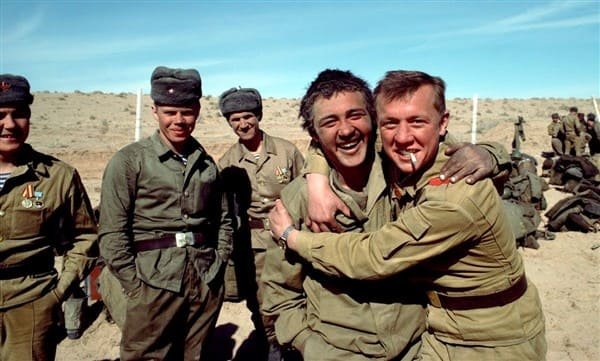
Looking for Soviet Telnyashka? You can get them here → [Soviet Telnyashka]
The classic “Afghanka” uniform with many large patch pockets appeared in the second half of the 1980s. It came in several versions. There were special sets for tank crews, motor rifle units, airborne troops, and the well-known airborne jump suit called the “mabuta,” along with a few other variations.
A detailed uniform guide can be found here: Guide of the Soviet Afghanka Uniform (M88)
By the color of the uniform, it was often easy to guess how long a soldier had served in Afghanistan. Over time, the yellow cotton fabric faded under the strong sun and could turn almost white.
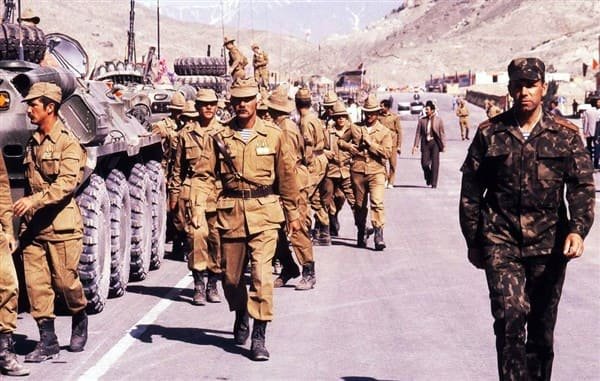
Looking Soviet Afghan combat boots? You can get them here →[Soviet M88 combat Boots]
There were also winter versions of the Afghanka uniform. They were used during the colder months, because Afghanistan was not always hot, and also in high mountain areas where the climate could be very cold. The winter set included an insulated jacket with four large patch pockets.
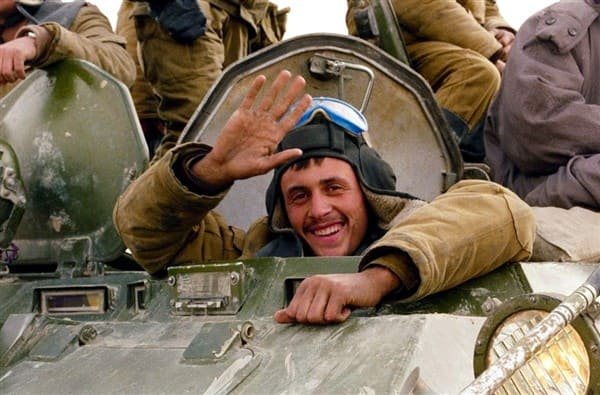
There were no proper tactical goggles in the Soviet Army at that time. In the photo, you can see a driver wearing what looks like a simple Soviet blue swimming mask to protect his eyes from dust and wind.
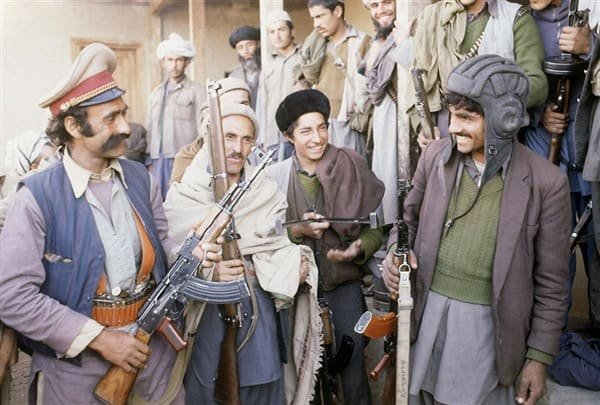
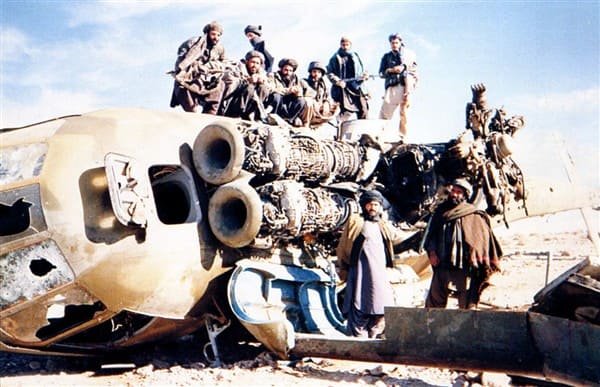
This is how the mujahideen often looked. Their clothing was usually very mixed and informal. They combined traditional Afghan garments with captured military uniforms and regular civilian clothes from that time, such as Adidas tracksuits and Puma sneakers.
Open footwear, similar to modern sandals or flip-flops, was also quite common, especially in warmer areas.
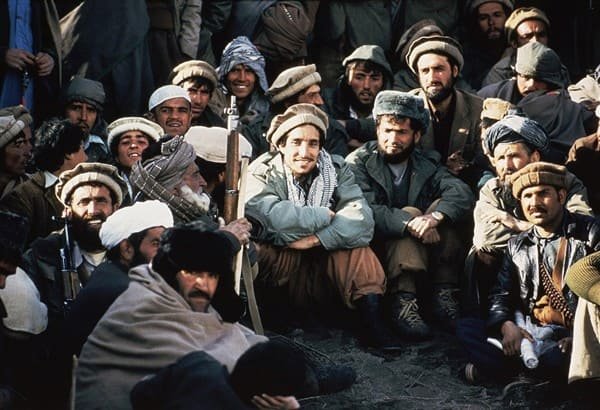
Ahmad Shah Massoud was a field commander and one of the main opponents of the Soviet forces in Afghanistan. In this photo, he is surrounded by his mujahideen fighters. You can clearly see that their clothing is very mixed. The man standing to the right of Massoud is wearing what looks like a captured Soviet military hat.
Besides the traditional turban, many Afghans also wore a hat called a pakol. It is a soft, round cap made from thin wool, similar in shape to a loose beret.
In the photo, Ahmad Shah Massoud is wearing a pakol, and some of his fighters are wearing it as well.
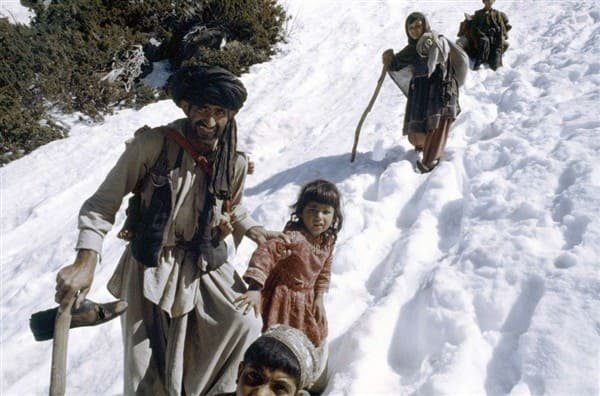
These are Afghan refugees. Visually, they often did not differ much from the mujahideen.
Aviation played a very important role in the Afghan War, especially helicopters. Most supplies were delivered by air, and helicopters were also used for combat missions and to protect military convoys.
In the photo, a helicopter of the Afghan government army is providing cover for a Soviet convoy.
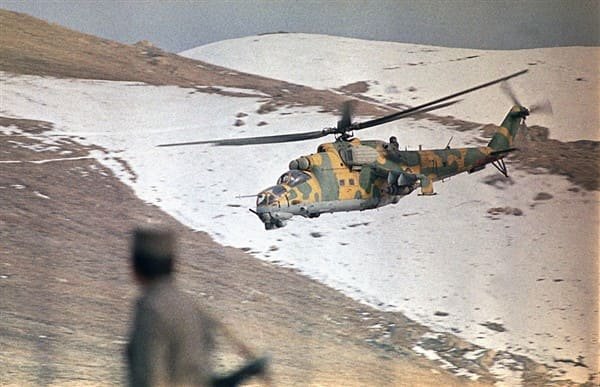
A helicopter of the Afghan government army flies low over mountainous terrain during the 1980s, providing air support and protection for a Soviet convoy. Helicopters played a key role in the war, delivering supplies and supporting ground operations in difficult terrain.
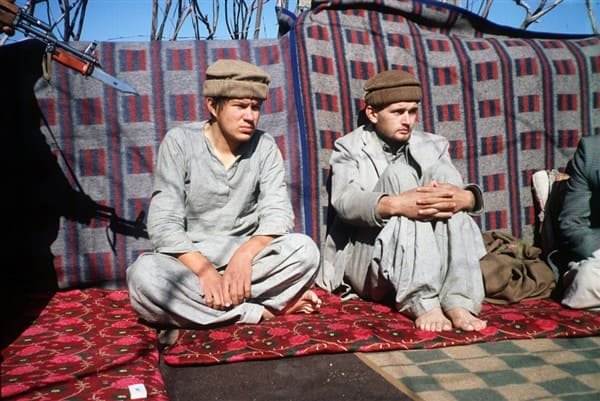
Soviet soldiers who were captured had their military uniforms taken away and were dressed in traditional Afghan clothing.
It is also known that some of the prisoners converted to Islam and chose to stay in Afghanistan.
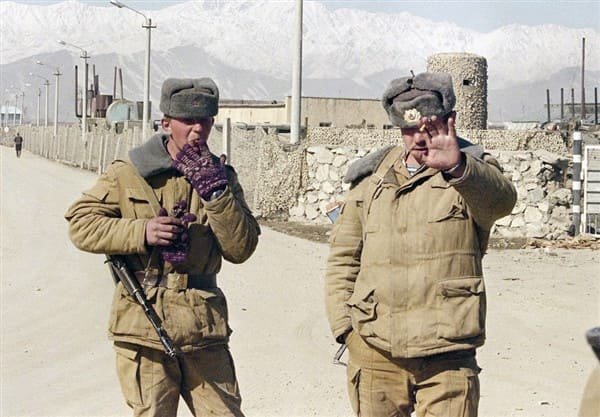
A checkpoint in Kabul, winter 1989, shortly before the withdrawal of Soviet troops. In the photo you can see a typical Kabul landscape with snow-covered mountains on the horizon.
More articles about Afghan period:
Guide of the Soviet Afghanka Uniform (M88)
Soviet Spetsnaz Uniform in Afghanistan (1979–1989)
How the Soviet Army Uniform Changed from 1955 to 1991
Field Uniform and Equipment of the Soviet Army (1968–1991) – Part 1
Looking original Soviet boots and accessories? Please visit here: Soviet Boots Store