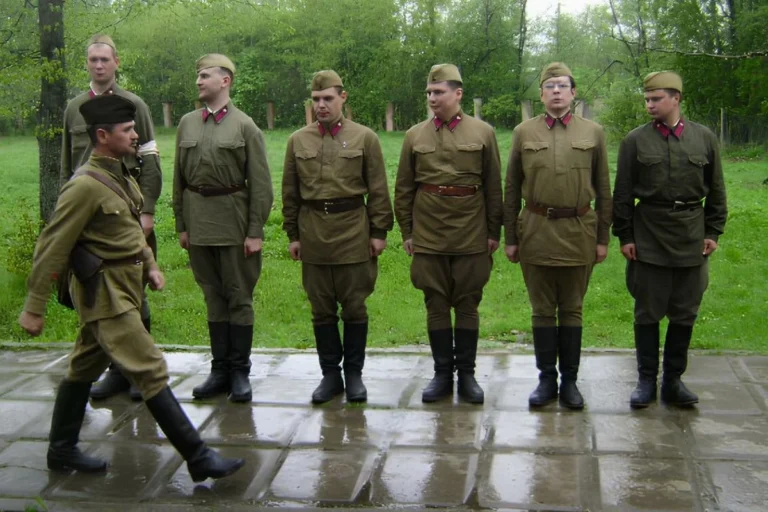
Breeches surprise some people with their unusual look, and for others they are наоборот fascinating. This piece of clothing has always been a subject of discussion among everyone. Why exactly in the Soviet army were pants of this type so widespread?
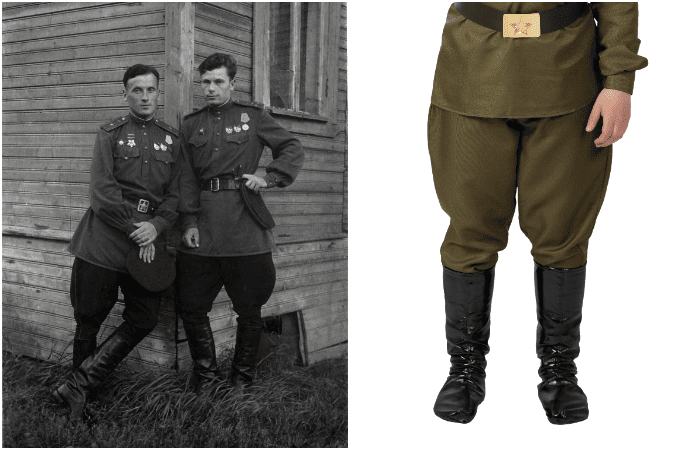
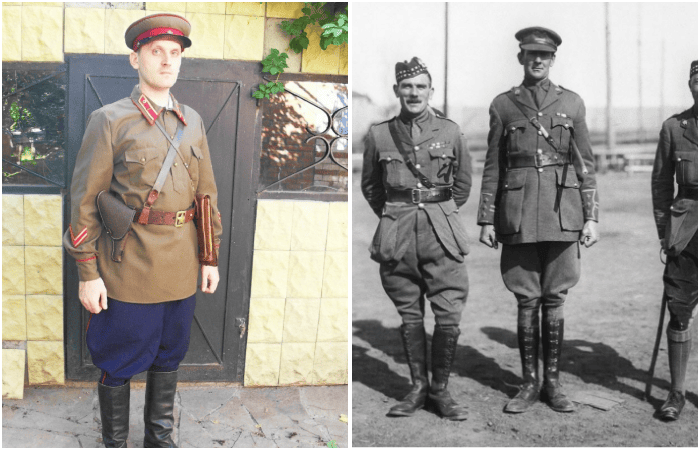
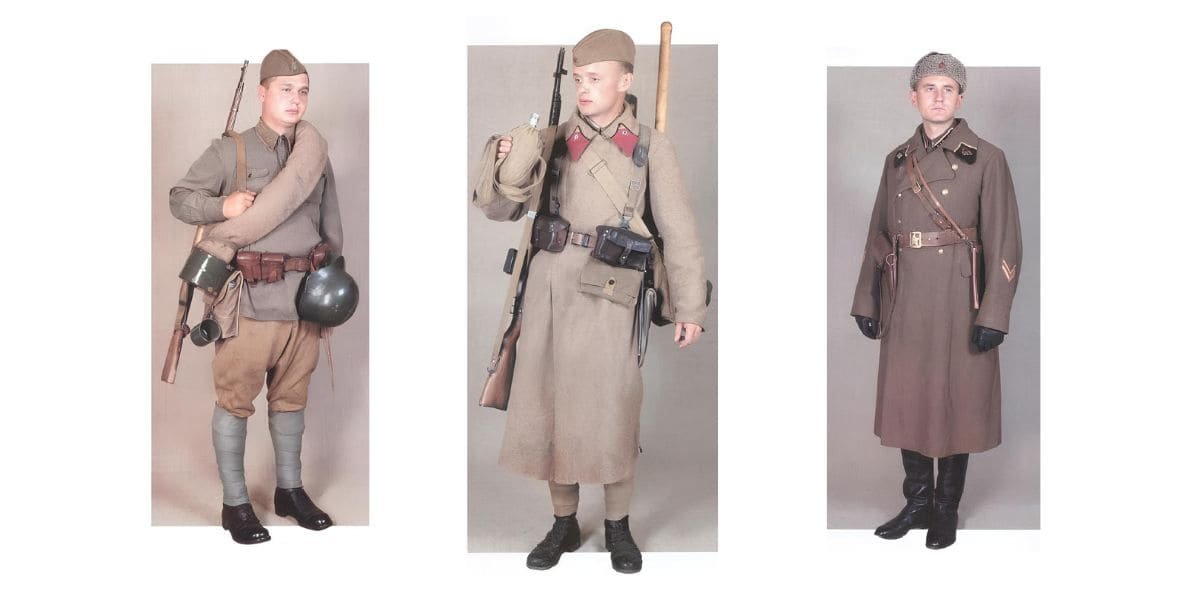
Soviet Red Army officers wearing breeches galife pants, along with an example of original military trousers
Breeches could be seen in many armies around the world. Soviet soldiers used them until about the late 1980s, and in some cases such pants could still be seen even in the 1990s.
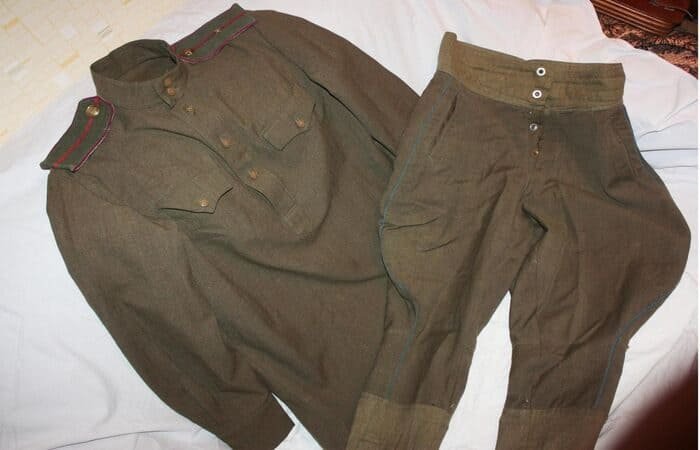
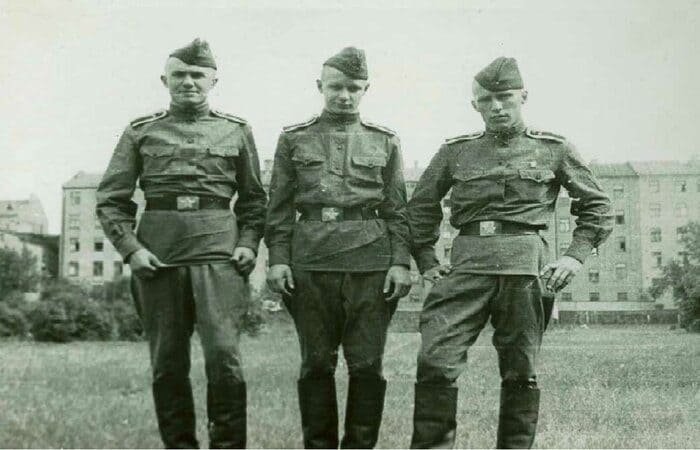
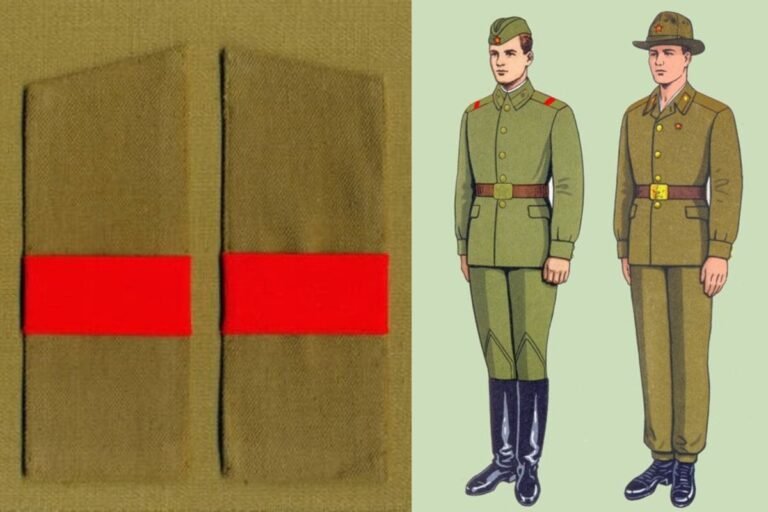
Soviet WW2 uniform set with breeches galife pants and military jacket used by Red Army soldiers
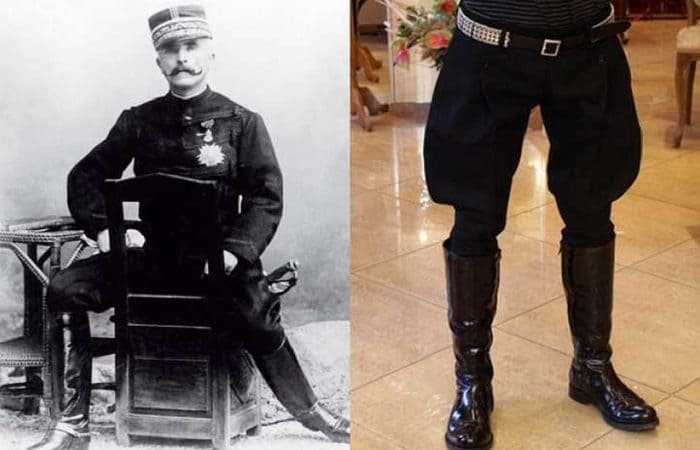
The creation of this type of trousers is attributed to Gaston Galliffet. This man spent a lot of time in real combat battles. He was in Europe, America, and Africa. It was in the African country of Algeria that Gaston Galliffet got an interesting idea. At that time, he was on another mission and saw mercenary fighters wearing unusual trousers. They were quite wide on the sides and narrowed down toward the bottom. Fashion experts say that именно this moment inspired Galliffet to create these unusual pants.
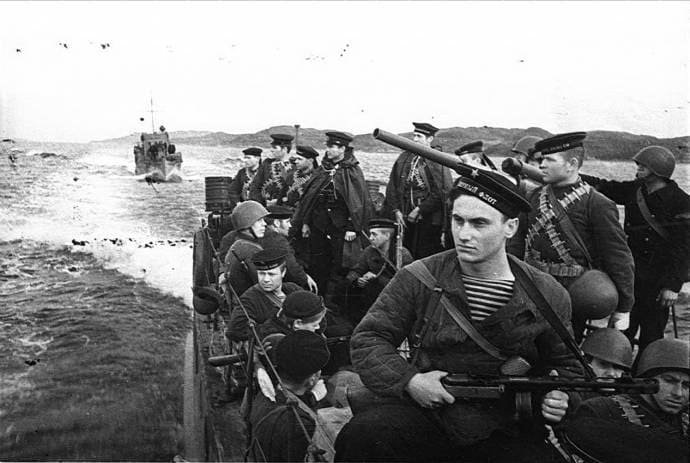
Red Army soldiers in breeches galife pants, typical Soviet military uniform during WW2
Looking for classic Soviet kirza boots? You can find them here: Soviet Kirza Boots
Gaston not only managed to come up with this useful piece of clothing, but also was able to adapt it well to the needs of soldiers. This became a key factor in the wide spread of breeches in many countries around the world, including the USSR. Such trousers were much more comfortable than regular ones. Everyday life for soldiers became much easier.
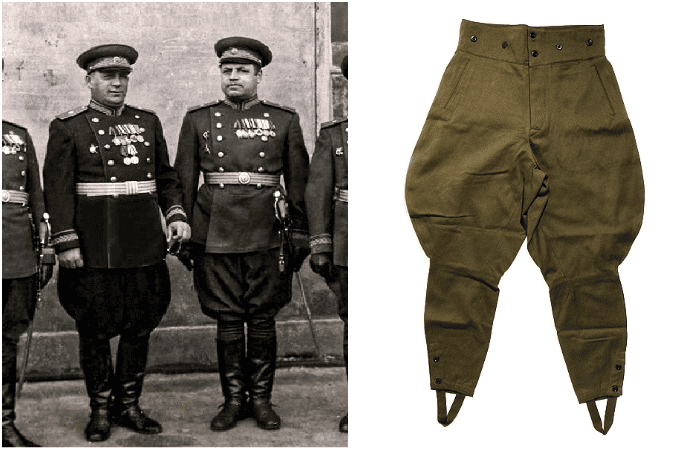
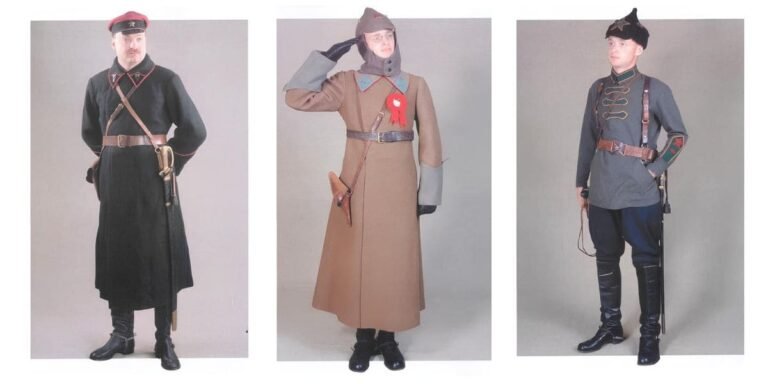
Soviet officers in breeches galife pants paired with high boots, a classic Red Army uniform style
Looking for classic Soviet officer boots? You can find them here: Soviet officer Boots
The unusual widening on the trousers allowed soldiers to feel more stable and confident while riding a horse. Cavalry soldiers got less tired on the road and did not complain about discomfort. The wide shape also made it easier to tuck the trousers into boots quickly. While wearing this type of pants, soldiers sweated less, which helped them perform combat tasks better.
One more important advantage was that breeches had quite large pockets. They could be used even while sitting. Also, in case of need, it was possible to quickly take out ammunition from the pockets. Soldiers actively used this feature. Bags often tore, and it was not very reliable to carry ammunition in them. Pockets were more dependable and always with the soldier.
Red Army soldiers in breeches galife pants and high boots, a practical and iconic Soviet uniform combination
Unusual breeches, after appearing in European countries, later spread actively across the Soviet Union. Many soldiers liked these trousers, and they gradually began to be supplied to the army. Breeches allowed free movement and did not restrict the groin area. Previous models were tight and did not provide much comfort for soldiers.
Original breeches could be quickly tucked into boots. They were supplied both to regular soldiers and to officers. However, for higher ranks, the trousers were made with better tailoring.
Gaston Galliffet and his creation, breeches galife pants
Officers praised this type of trousers the most. Commanders did not always have a perfect figure or nice-looking legs, and breeches hid these flaws, unlike the previous tight leggings.
The Soviet army regulated the use of breeches with special orders. The trousers kept their original shape only until the 1960s. Later, efforts were made to reduce their characteristic “baggy” look and change the cut. By the 1980s, the Soviet leadership gradually began to phase out breeches. In the 1990s, such trousers could be seen only on new recruits, and even then very rarely.