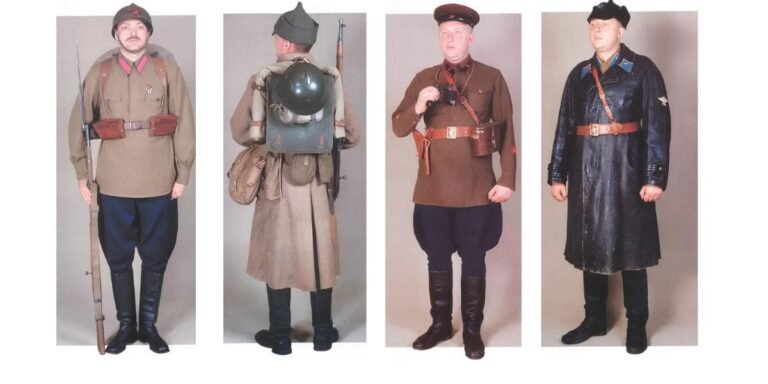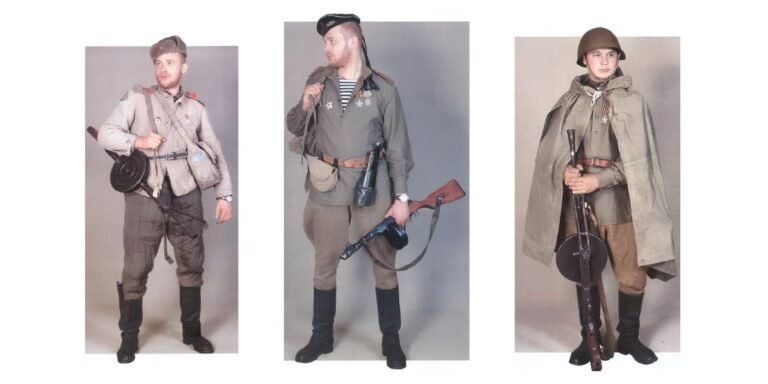
What Is the Soviet Afghanka Uniform and Why It Was Used
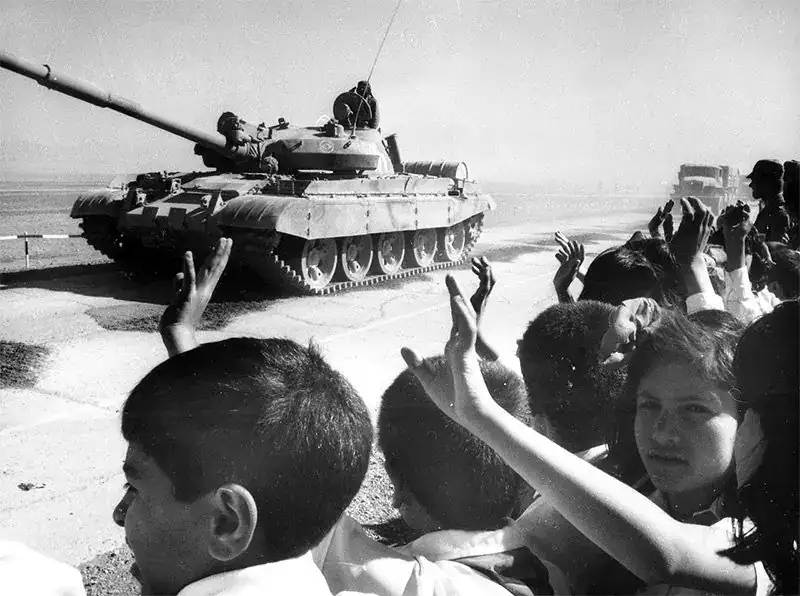
The Afghan war began to be widely covered in the press only by the late 1980s, when the words “glasnost” and “perestroika” were heard everywhere. Before that, for Soviet society, it felt distant, as if it did not exist at all. As if it was limited to separate clashes. As if Soviet troops were sent only for some short period to help the brotherly Afghan people, and that it would end soon.
New article:
Soviet Camouflage Uniform. From WW2 to 1991 (Red Army to USSR)
More interesting articles about Afghan uniforms:
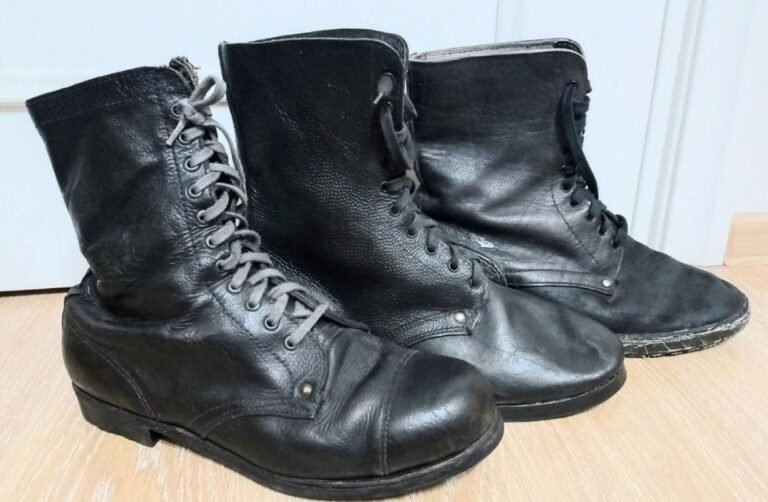
Soviet Combat Boots of the Afghan War: Testing 3 Designs
Soviet Spetsnaz Uniform in Afghanistan (1979–1989)
Soviet Army in Afghanistan (1979-1989): War and Afghanka Uniforms
Field Uniform and Equipment of the Soviet Army (1968–1991) – Part 1
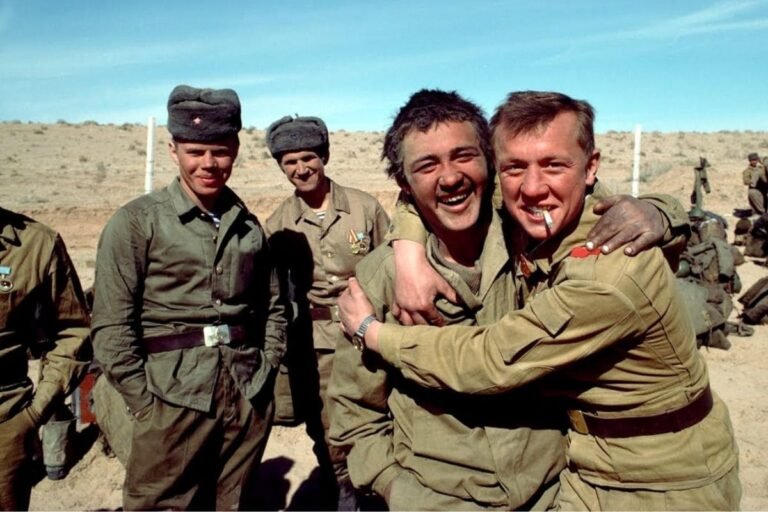
But what was hidden from civilians was clearly seen by the military. Officers began to arrive at units wearing a new, unfamiliar uniform. Other servicemen, who had not been “beyond the river,” quickly gave it a name – “Afghanka.”
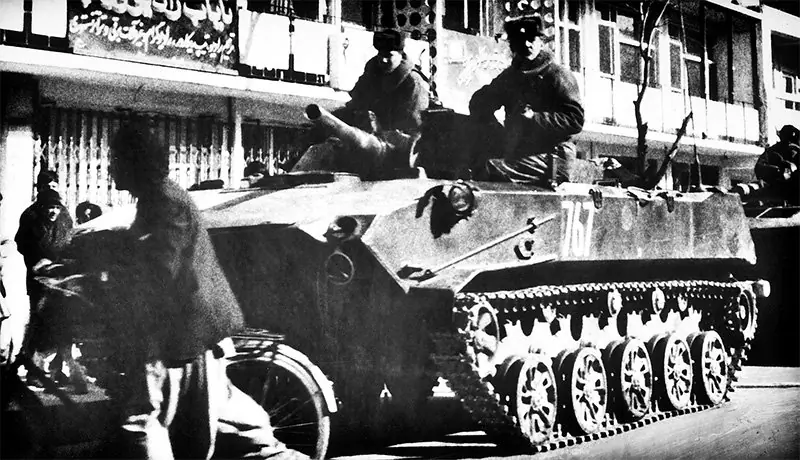
The field uniform of the previous model, introduced by the order of the USSR Minister of Defense on July 26, 1969, and designed for combat against NATO countries, turned out to be not very convenient for those who were sent to the Limited Contingent of Soviet Forces in Afghanistan (OKSVA). A new design was urgently needed, and it turned out that the USSR Ministry of Defense already had a uniform in mind that could be used for these soldiers.
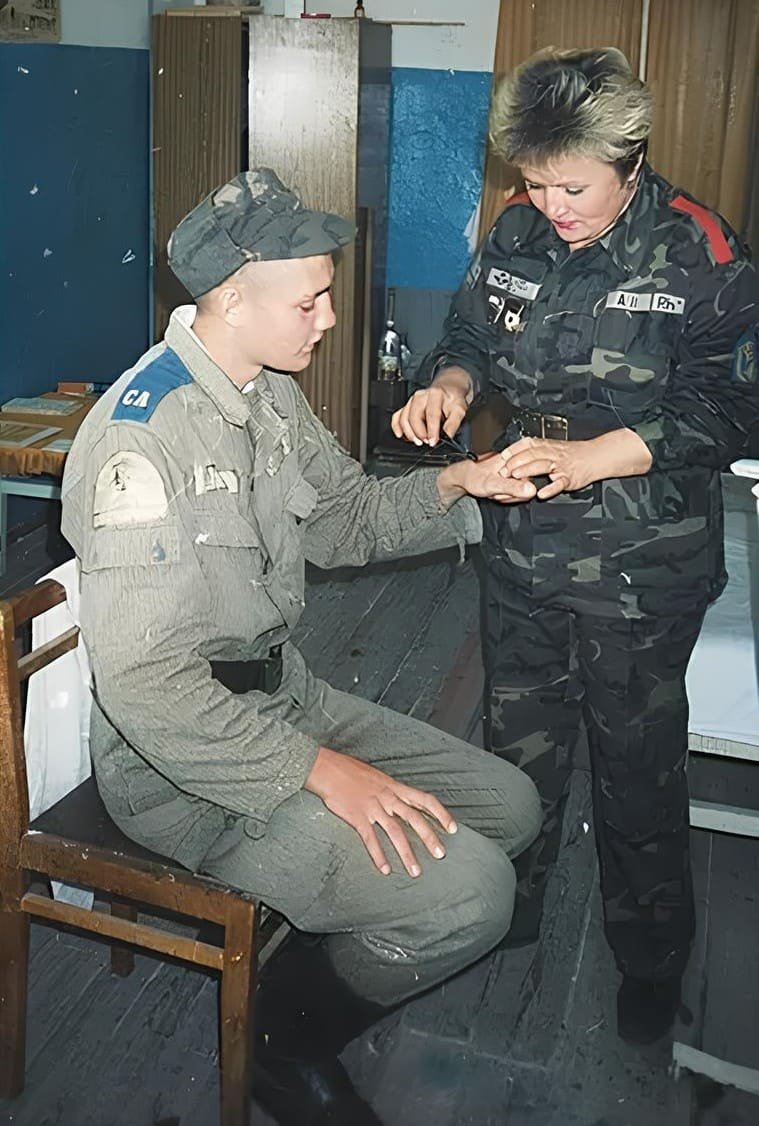
The origins of the “Afghanka” are debated. Some believe that it was based on the uniform of the National People’s Army of the German Democratic Republic. According to this version, during joint exercises of the armies of the Warsaw Pact countries, the people responsible for modernizing the uniform took note of the cut and the placement of pockets on the trousers and jackets of the German units. The goal was to make the appearance of the Soviet soldier closer to that of other socialist armies, which wore more comfortable and better-looking uniforms.
Others believe that the “Afghanka” was created based on the uniform of the Czechoslovak People’s Army. There are even claims that some units of the OKSVA were dressed in this uniform for field testing in real combat conditions.
Looking for classic Soviet kirza boots? You can find them here: Soviet Kirza Boots
According to some sources, the Central Clothing Directorate began working on both winter and summer versions of the new uniform as early as 1975. Testing of the developed versions was carried out the following year, choosing the best fabric, the optimal number of pockets, as well as their size and placement on the uniform.
It can be said that the future uniform took a lot from the combined protective suit used by paratroopers. The camouflage-painted OKZK-D can be seen in the film “In the Zone of Special Attention.” A similar version, the OKZK-M, was developed for other branches of the military. However, it was not widely issued.
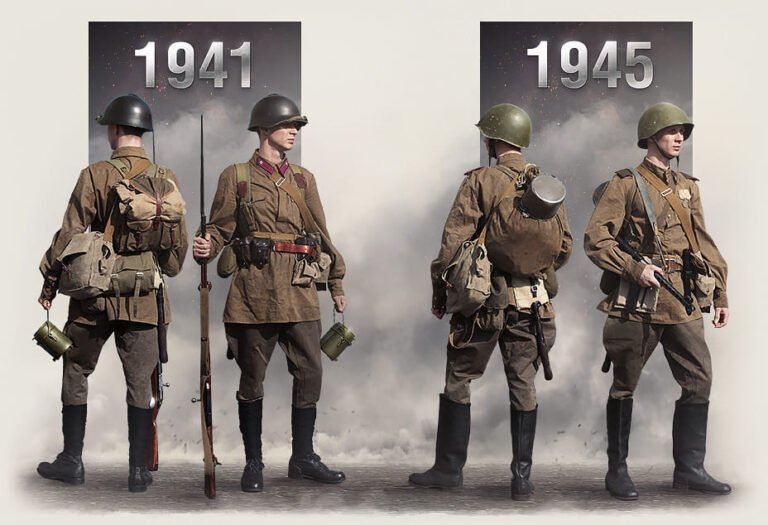
Servicemen continued to wear the old cotton uniform in summer (“kh/b” in military slang) and changed it in winter to a semi-wool uniform (“p/sh” in military slang).
Read Soviet ‘Afghanka’ unifrom guide
In 1978, production began based on the approved design. However, the finished uniforms were not sent to active units, but were stored in reserve warehouses. So it can be said that the introduction of troops into Afghanistan only sped up the work on creating the new uniform.
The final version was ready for mass production in 1982. The summer field uniform set of a single standard (TU-17-08-172-82), besides OKSVA, was sometimes also supplied to units of the Central Asian Military District, which served in a climate similar to Afghanistan.
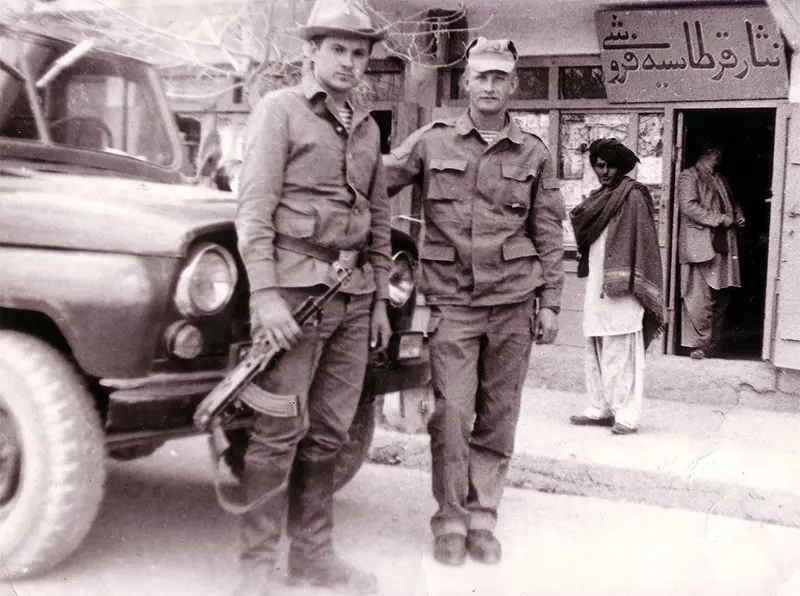
Within two years, a winter version of the field uniform set of a single standard (TU-17-08-194-84) was also developed. In Afghanistan itself, the new uniform was quickly nicknamed “experimental” (also known as “pesochka,” “field uniform,” and “varshavka”). But in the Soviet Union, the name “afghanka” became firmly established.
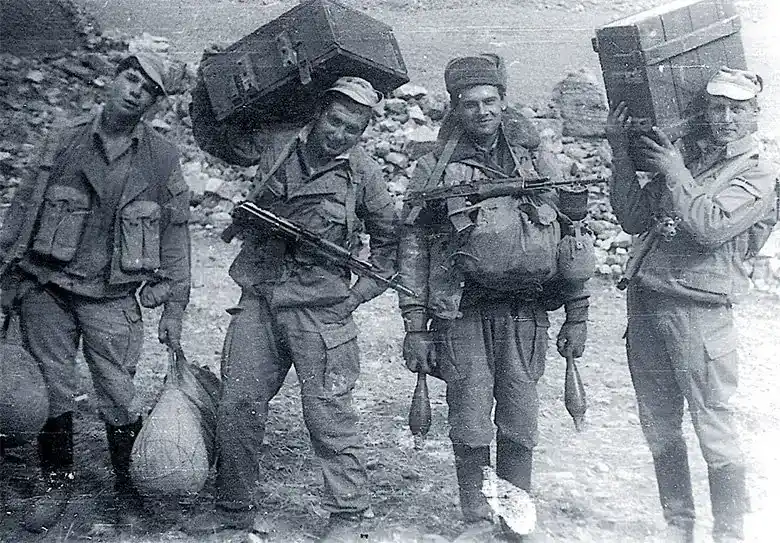
Although it was originally intended only as a field uniform, the “afghanka” began to be widely used for everyday wear as well.
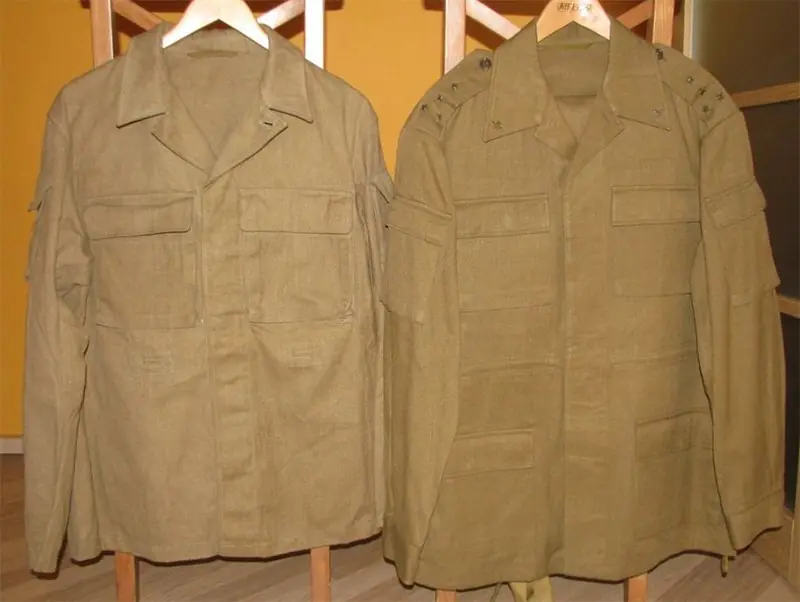
Afghanka uniform set
Looking Soviet Afghanka visor cap? You can get them here →[Afghanka visor cap]
Twice a year, an order is issued that regulates the change of uniform by season: from winter to summer (in spring) and from summer to winter (in autumn). That is why the “afghanka” also had two versions.
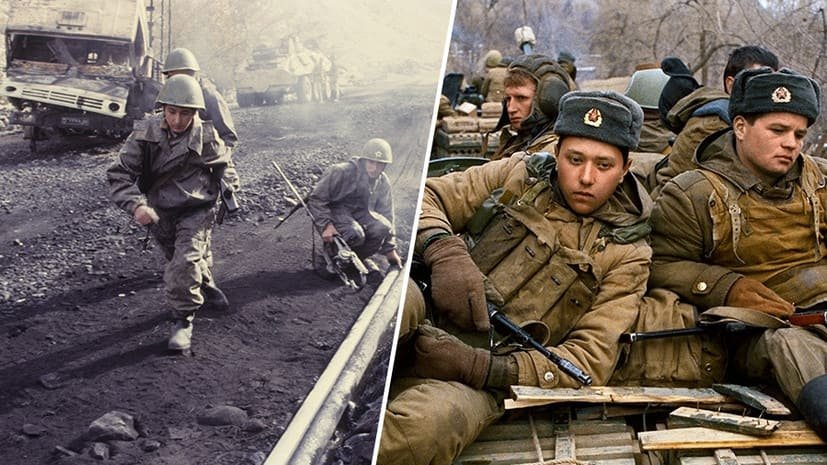
In cold weather, servicemen received insulated field trousers and a jacket (for airborne troops they were called “winter airborne trousers and jacket”). As for headgear, for those wearing the “afghanka” it did not differ from standard army issue. Conscripts wore a standard hat made of artificial fur, while others (long-term servicemen, warrant officers, and officers) received a hat made of sheepskin, dyed in a grey-blue color.
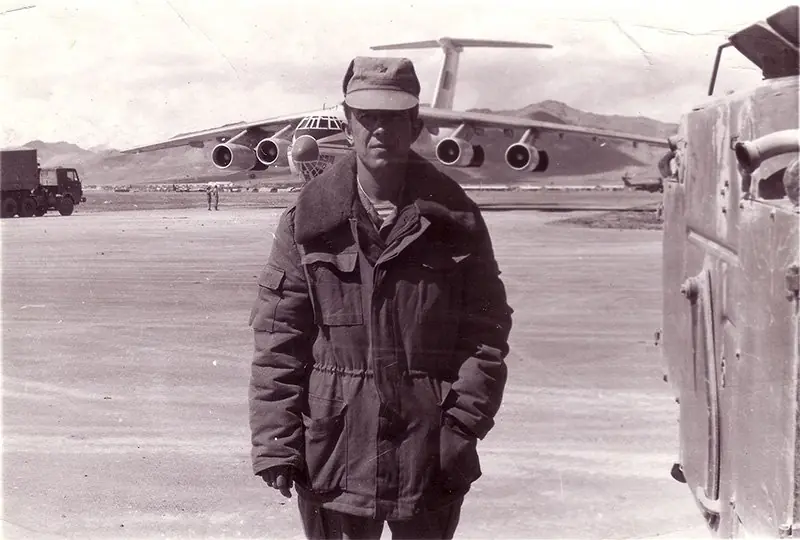
At the same time, as can be seen in photos, even the winter version of the “afghanka” could be worn with a cap.
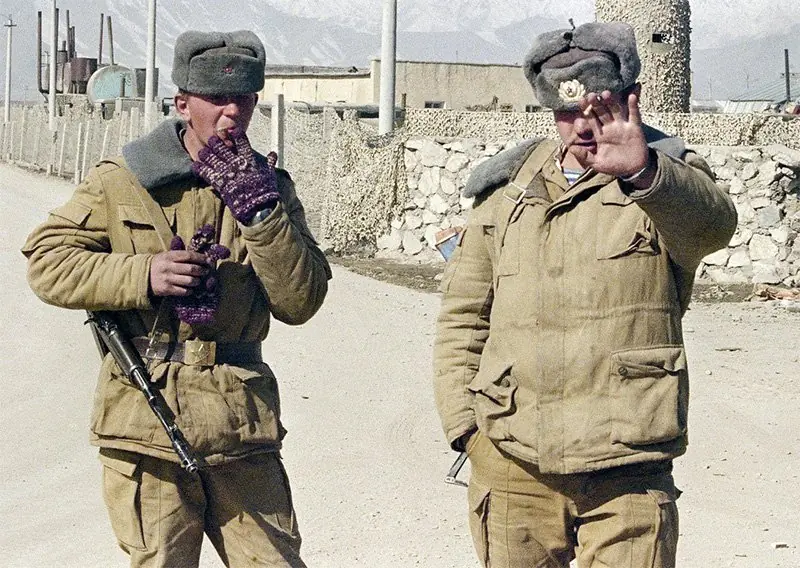
Additional liners were issued for the trousers and for the jacket. The jacket liner differed from the standard army padded liner not only in appearance (it could be worn without the jacket over it), but also by having a collar. Usually it was made of artificial fur, but in some cases natural fur was also used.
According to servicemen’s memories, the airborne jacket liner had natural fur and was made of brushed wool fabric. The liner of the standard “afghanka” had artificial fur and was made of padded cotton. At first, the officer version differed from the soldier version, having two side slit pockets with flaps and an inner pocket for a pistol, but later the officer version was removed. Servicemen, regardless of rank, received the same sets.
In early versions, the liner was attached with snap buttons, but they were soon replaced with regular buttons. A standard afghanka has two patch pockets on the sleeves, two patch pockets on the chest, and two patch pockets on the sides below the waist. In addition, both the liner and the jacket had an inner pocket, and the jacket also had a special inner pocket for a pistol. It was made of artificial leather, with a nylon cord and a clip to secure the weapon.
The trousers had two side inner pockets and two patch pockets placed slightly lower.
Looking Soviet Afghan combat boots? You can get them here →[Soviet M88 combat Boots]
After the warm season began, the winter uniform was replaced with the summer one. Soldiers were issued straight-cut field trousers and a field jacket (in the Airborne Forces both the trousers and the jacket of this type were called “airborne”).
It is more complicated with headgear, because it could be either a panama hat, which was previously issued to those serving in hot regions, or a field cap (often called the “afghanka cap”). The summer jacket had buttoned cuffs on the sleeves.
A big advantage over the previous uniform was that the buttons were not metal but plastic, and they were covered by a fabric flap. When moving while crawling, this often saved the buttons from being lost, because they did not catch on obstacles.
As with the standard uniform, the areas that wore out the most had extra protection: oval elbow patches on the jacket and rectangular knee patches on the trousers. The patch pockets of the summer uniform were the same as on the winter version.
At the waist and at the bottom of the jacket, under the fabric lining, there were drawstrings. These helped tighten the uniform so it fit closer to the body and kept the heat inside.
And also the legendary ‘Telnyashka’ striped shirt with a blue stripe, the great symbol of the Airborne Forces
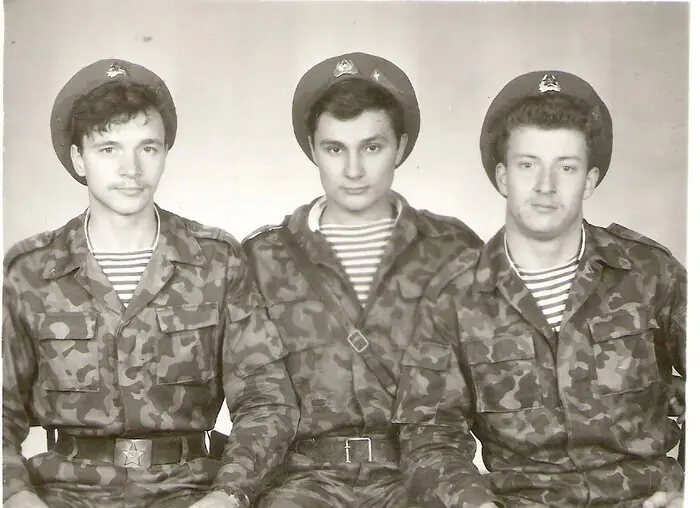
Looking for Soviet Telnyashka? You can get them here → [Soviet Telnyashka]
History of the Soviet striped shirt ‘telnyashka’
Why is the airborne version of the “afghanka” always highlighted? Because paratroopers were required to wear the jacket tucked into the trousers, and this affected its design. The airborne jacket did not need a drawstring for tightening, and the lower pockets became useless, so these elements were removed.
However, this version of the uniform soon showed a serious problem. In the standard “afghanka,” the trousers were held by a trouser belt, while pouches and other necessary items were attached to a separate waist belt. For paratroopers, this did not work. The trouser belt also had to serve as the waist belt. Under the weight of equipment attached to it, the belt began to slide down together with the trousers.
The field cap, also known as the afghanka cap, is made from a top panel, two side panels, two ear flaps fastened with two buttons, and a visor. The top of the cap is made from camouflage fabric, while calico is used for the lining.
The afghanka cap also went through several stages of development. The first batches had buttons visible on the outside. Later, the buttons were hidden inside. The buttons were sewn onto the right ear flap, and the buttonholes were made on the left.
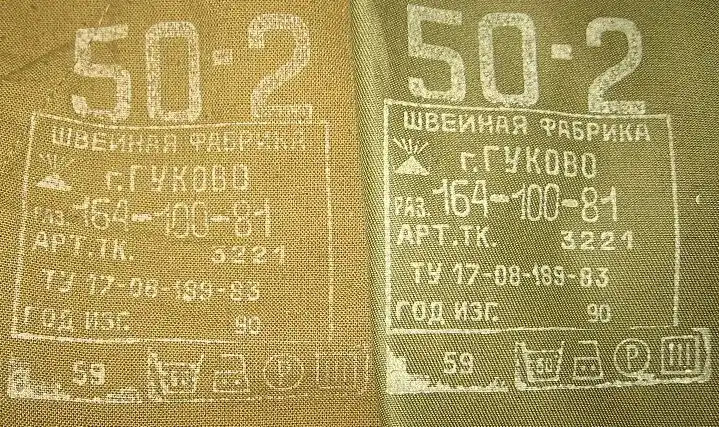
The production period can be identified not only by the internal stamp, but also by the position of the ventilation holes (often called “eyelets”). At first, they were hidden under the ear flaps, but around 1983 they were moved forward from under the flaps. Later versions are known with slit-type ventilation, where the side opening looks like a stitched buttonhole.
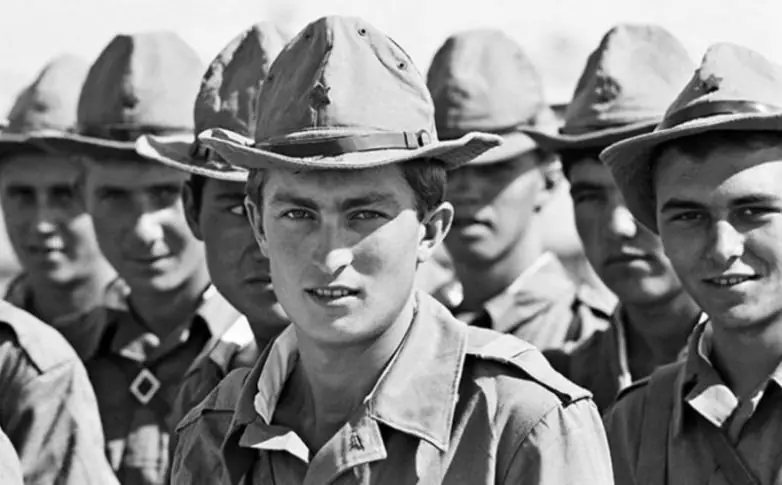
The panama hat is made from a four-panel crown and a brim (there are also quilted versions where the panels are sewn to a flattened top). Each panel of the crown has ventilation holes (either stitched or with metal eyelets). The dark strip of coated fabric at the base of the crown is a detachable adjustable chin strap. It is attached to the panama with two small buttons (they can be metal, but more often are plastic).
For shooting convenience, designers added a button that allows the brim to be fastened to the side of the hat. There are versions with one or two buttons, and some without buttons at all. If you turn the hat inside out, you can see a lining in protective color and a dark leatherette band for a better fit, as well as a flap that covers the attachment of the star or field cockade.
Collectors can tell by small details whether a panama is original or a reproduction. For example, in the late 1980s and early 1990s, Tashkent-made panamas had internal stamps in yellow, white, or red.
The widespread introduction of the new uniform in units of the 40th Army began in 1984. However, its official approval as both everyday and field uniform for airborne troops, and as a field uniform for other branches, took place only in spring 1988. Order of the USSR Ministry of Defense No. 250 from March 4, 1988 explained various details. For example, officers were allowed to wear the panama instead of a field cap with summer everyday and field uniforms in hot climate areas, by order of a senior commander.
“AFGHANKA” MODEL 1984
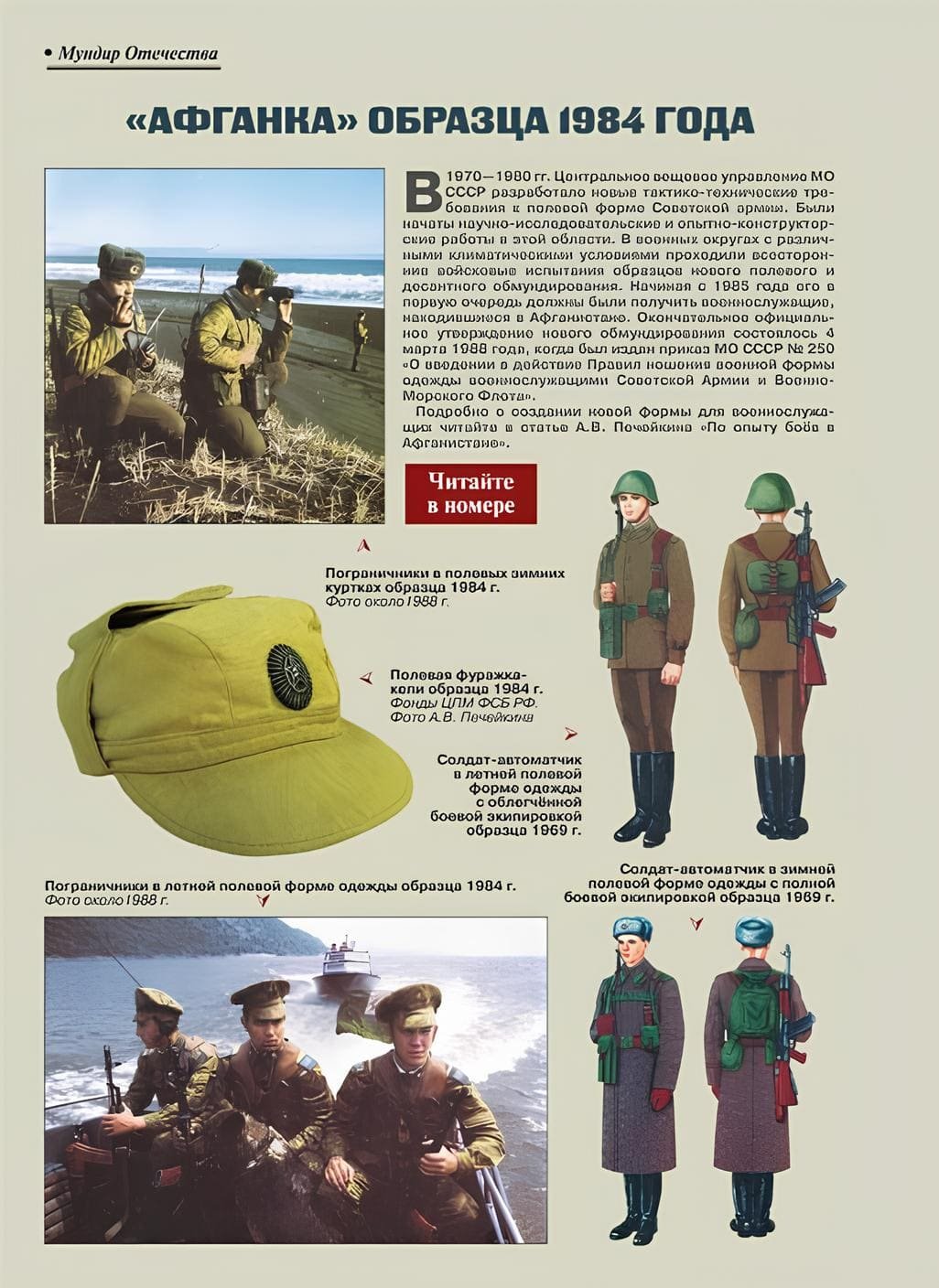
In 1979–1980, the Central Clothing Directorate of the Ministry of Defense of the USSR developed new tactical and technical requirements for military clothing and field uniforms of the Soviet Army. Scientific research and experimental design work were carried out in this area.
In military districts with different climate conditions, full-scale testing of new field and everyday uniforms was conducted. Starting from 1985, the first batches were planned to be issued to servicemen stationed in Afghanistan.
The final approval of the new uniform took place on March 4, 1988, when Order No. 250 of the USSR Ministry of Defense was issued, introducing new rules for wearing military uniforms for servicemen of the Soviet Army and Navy.
More details about the creation of the new uniform for servicemen can be found in the article by A.V. Pochivalov “On the Experience of Combat in Afghanistan.”
| Type | Description |
|---|---|
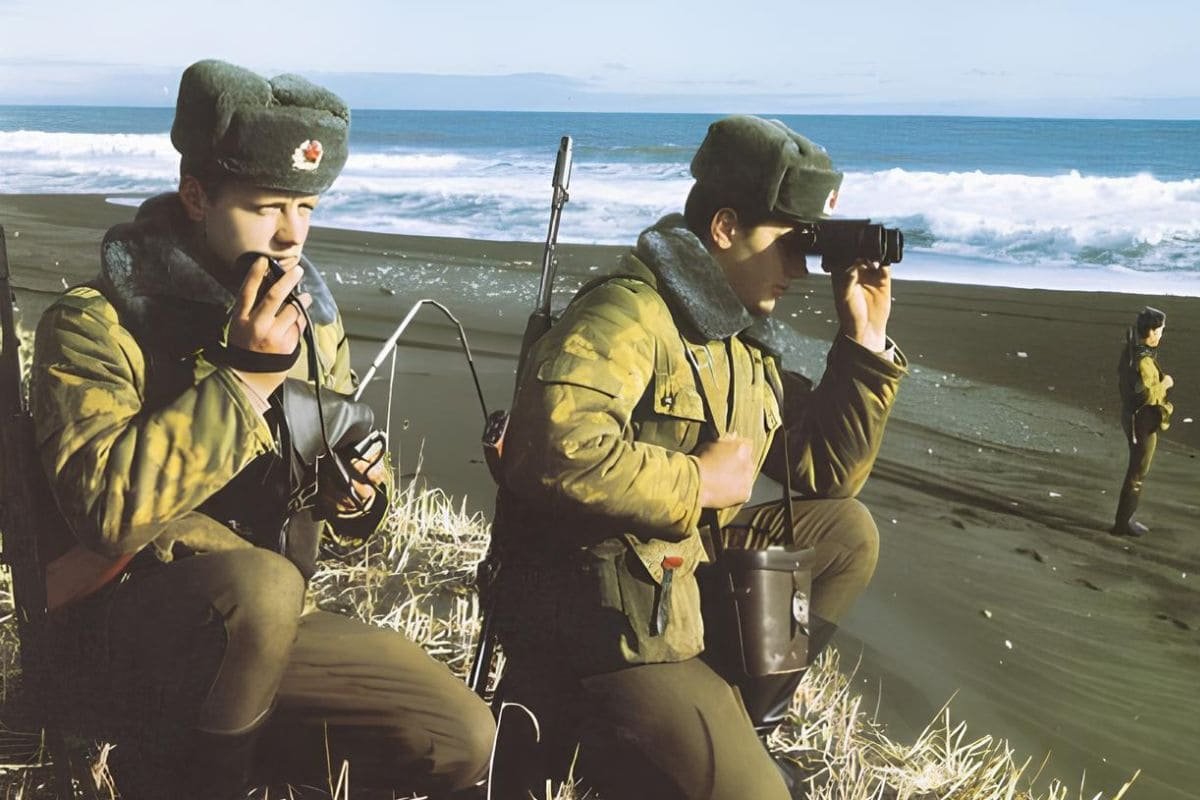
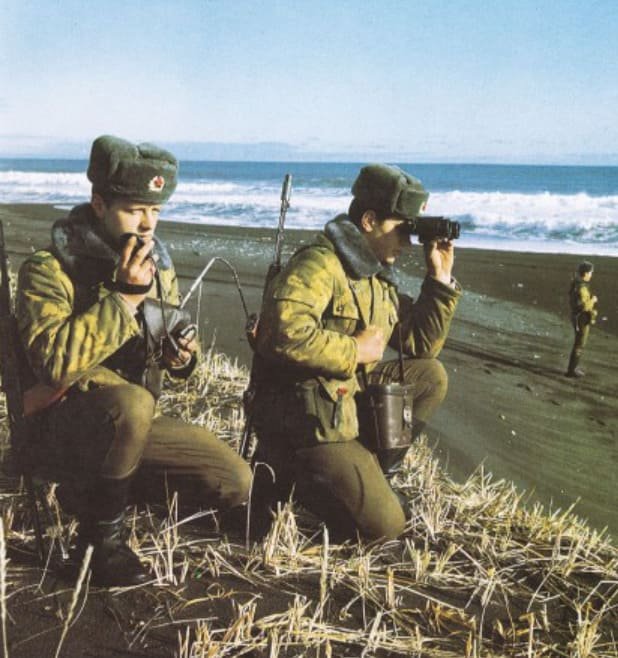
| A | Border guards in winter field jackets, model 1984 |
| Cap | Field cap (kepi), model 1984. From the Central Museum of the Armed Forces of the Russian Federation |
| Summer | Soldier (rifleman) in summer field uniform, model 1984, with combat gear model 1969 |
| Winter | Soldier (rifleman) in winter field uniform, model 1984, with combat gear model 1969 |
| Border guards | Border guards in summer field uniform, model 1984 (photo around 1988) |
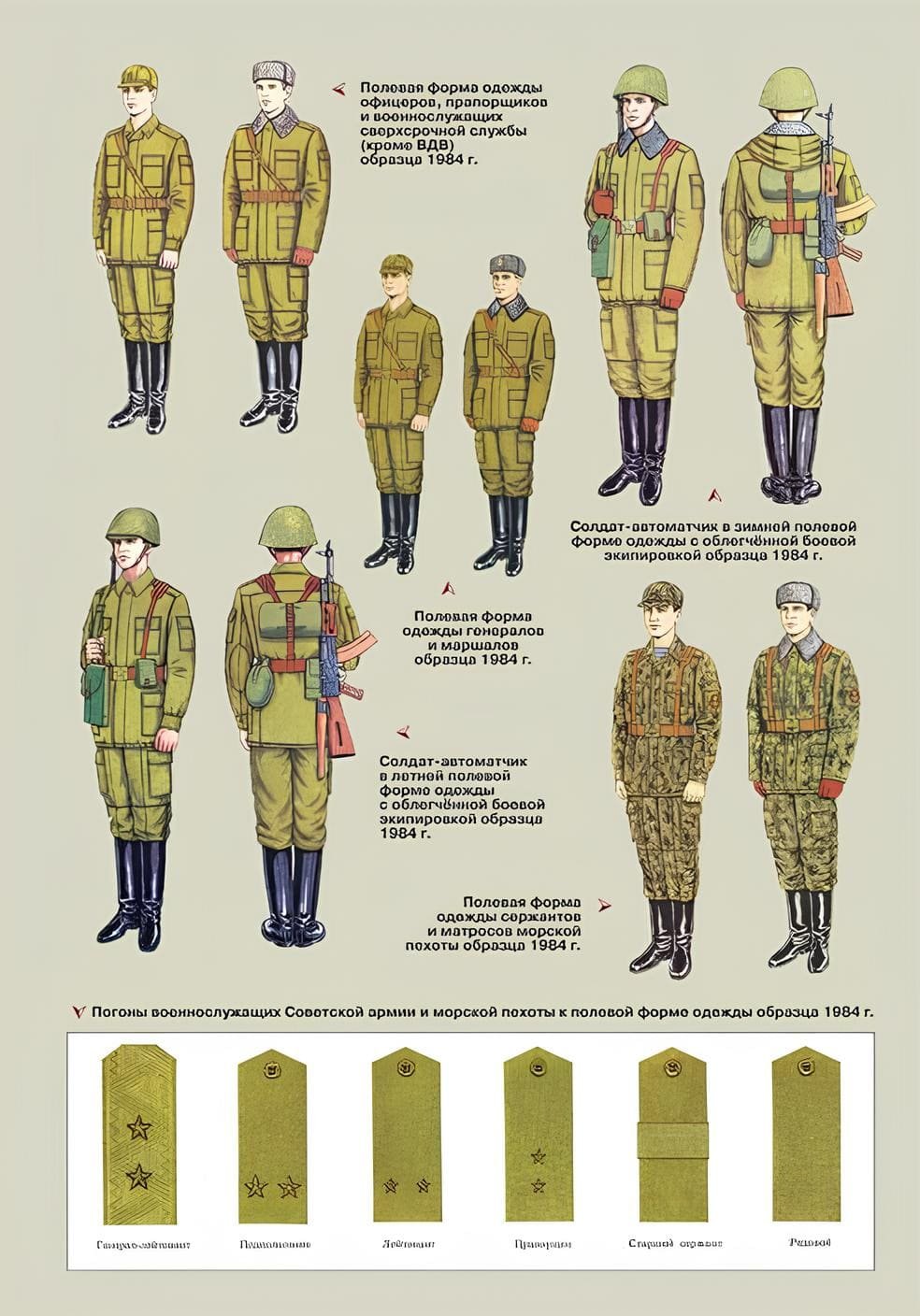
| Type | Description |
|---|---|
| Officers | Field uniform for officers, warrant officers, and long-service personnel (except Airborne Forces), model 1984 |
| Airborne | Field uniform for airborne troops, model 1984 |
| Winter soldier | Soldier (rifleman) in winter field uniform with combat equipment, model 1984 |
| Summer soldier | Soldier (rifleman) in summer field uniform with combat equipment, model 1984 |
| Marines | Field uniform for sergeants and sailors of the Marine Corps, model 1984 |
| Shoulder boards | Shoulder boards of Soviet Army and Marine Corps personnel for field uniform, model 1984: senior lieutenant, captain, lieutenant, junior lieutenant, senior warrant officer, private |
Fabric and colors of the “afghanka”
In Soviet army films, it is pleasant to see soldiers standing in formation, all wearing not only new uniforms but also uniforms of the same shade. In real units, such uniformity was not possible. Soldiers came from different training centers and transfer points, where they were issued uniforms made by different factories across the USSR.
In addition, uniforms were constantly washed, so they not only lost the fresh look of a new set, but also their original color. As a result, the color of the 1969 uniform changed from dark brown through different shades of olive and green to almost white after many washes (sometimes soldiers even washed them with bleach on purpose to give the uniform a worn look).
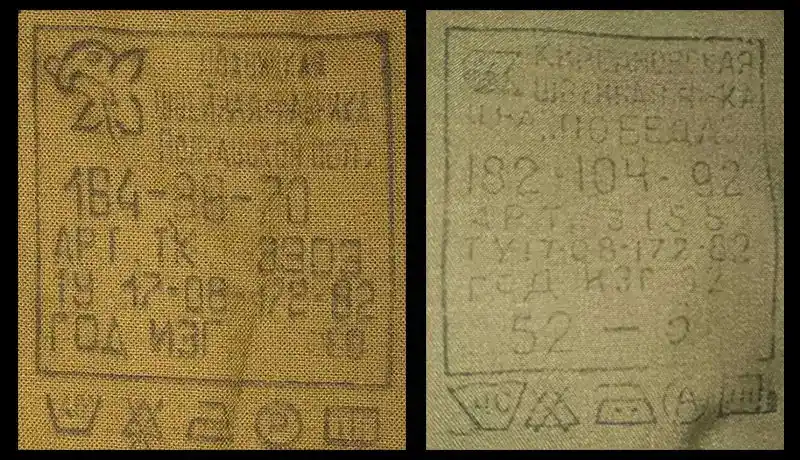
Two types of fabric were used to make the “afghanka”: article 3303 (“kh/b” or cotton) and article 3155 (“steklyashka”). Both fabrics had their own advantages and disadvantages.
“Steklyashka,” thanks to the addition of synthetic fibers to cotton, had higher wear resistance. A new uniform set made from this fabric had a noticeable shine and slight gloss (after several washes this effect usually disappeared). Like any fabric with synthetics, “steklyashka” reacted faster to temperature changes: it heated up in the heat and lost warmth in the cold. At the same time, it wrinkled less, helping the soldier keep a neat look during exercises.
“Kh/b” (cotton) kept warmth better and dried faster, which was useful in cold and wet conditions. However, it wore out and rubbed through faster. After washing, the protective color gradually faded, which could make a soldier more visible in combat. The fabric also faded in the sun, especially in hot climates.
The fabric used for uniforms could be in universal khaki color, greenish tones, or light sandy shades, almost yellow (this version of the “afghanka” was also called “pesochka”) ‘sand’.