Soviet Army field equipment (1968–1991) – Part 2
Soviet Army field equipment (1968–1991)
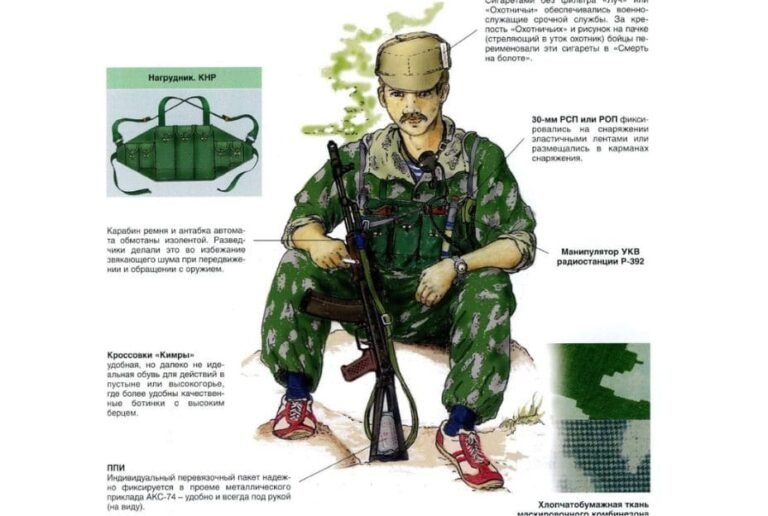
Soviet Army field equipment (1968–1991) in the late Cold War era (1968–1991) included a simple but effective load-bearing system: waist belt, Y-shaped shoulder straps, pouches for AK magazines and grenades, a flask, an entrenching tool, and other essential items. Below is a detailed overview of standard Soviet field gear, airborne equipment, camouflage suits (Berezka, KZS), special forces “Mabuta,” and the OKZK-D protective uniform.
Articles of this series:
How the Soviet Army Uniform Changed from 1955 to 1991
Field Uniform and Equipment of the Soviet Army (1968–1991) – Part 1
Field Uniform and Equipment of the Soviet Army (1968–1991) – Part 3
Telnyashka: History of the Russian Navy and VDV Striped Shirt
Soviet Spetsnaz Uniform in Afghanistan (1979–1989)
Field equipment
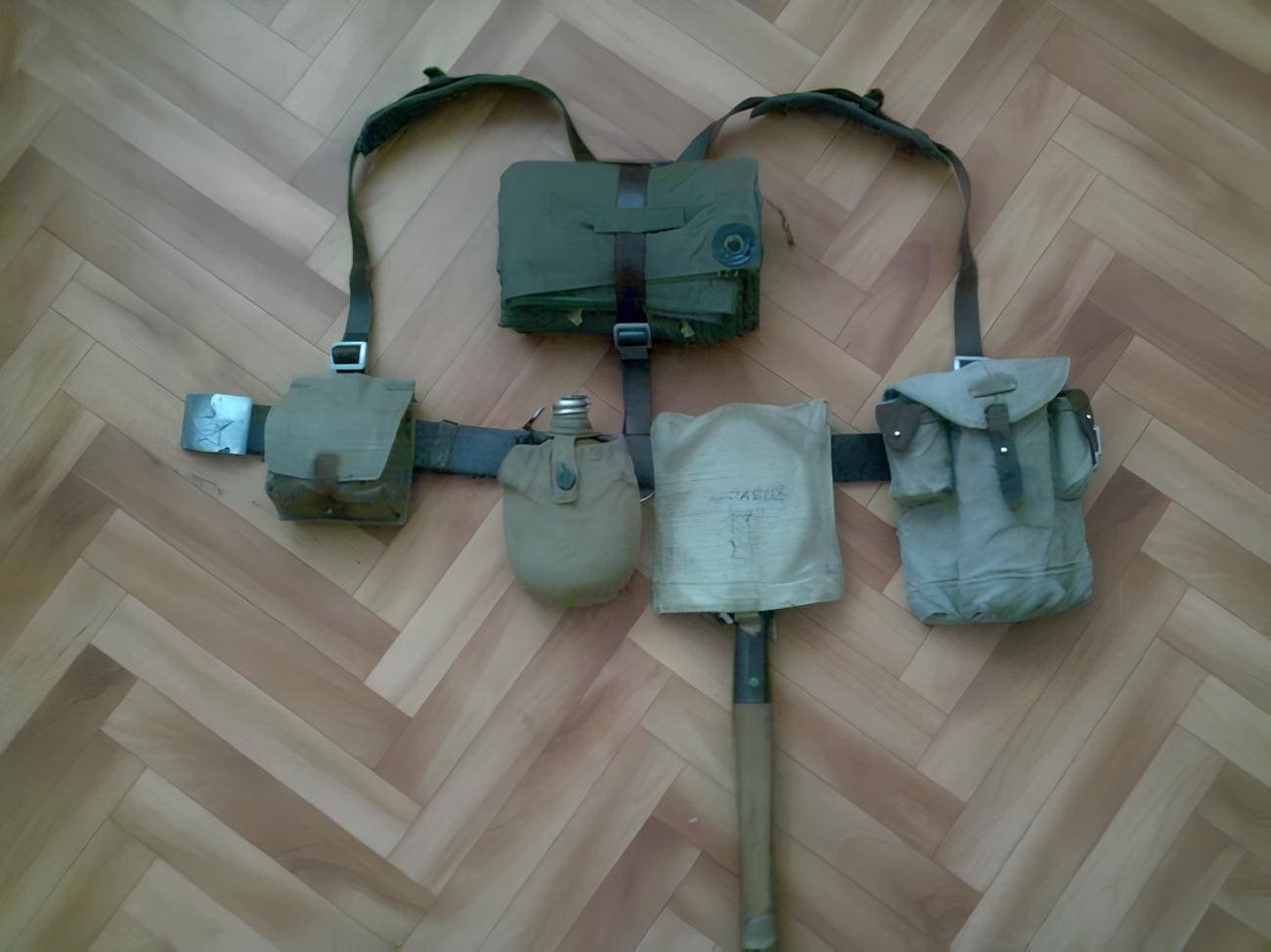
Base webbing system
- waist belt made of leather or leather substitute,
- Y-shaped shoulder straps (like suspenders) made of faux leather.
Attached to the waist belt were:
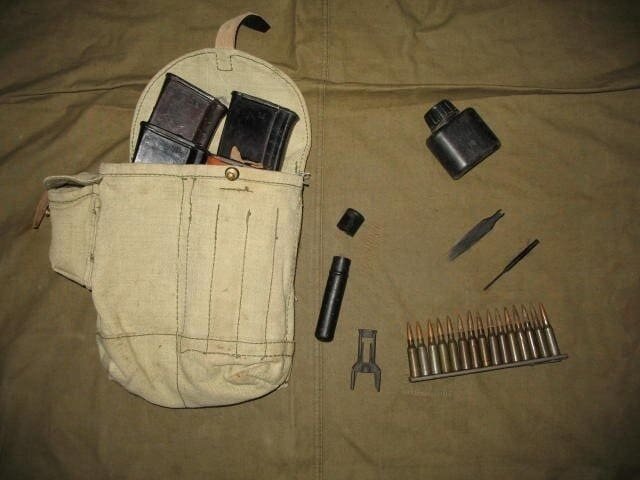
- a pouch for 3 AK magazines,
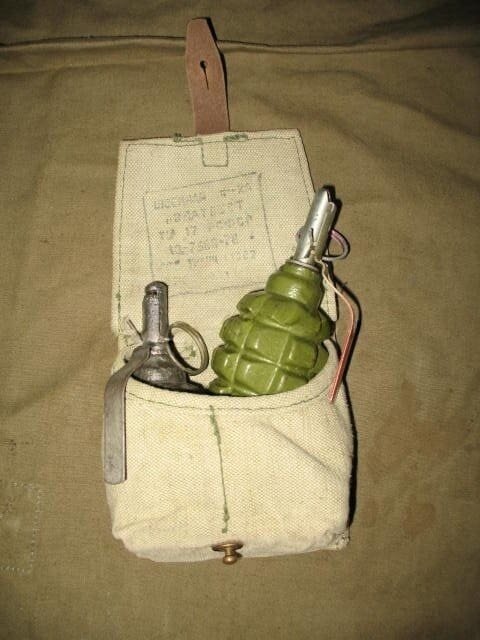
- a pouch for 2 grenades,
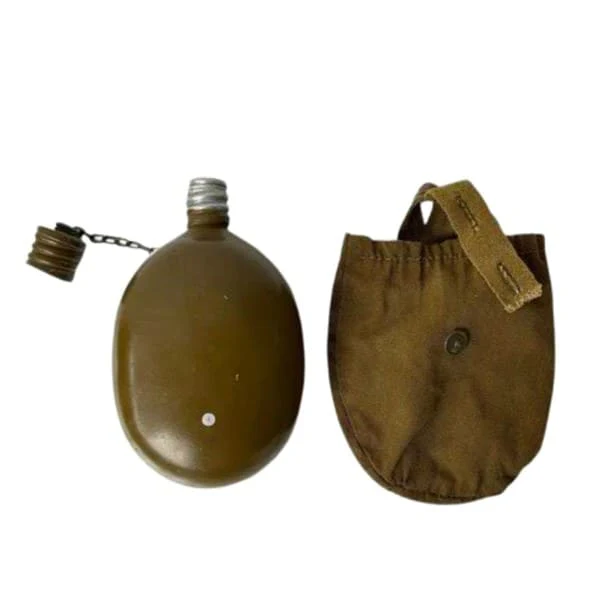
- a flask,
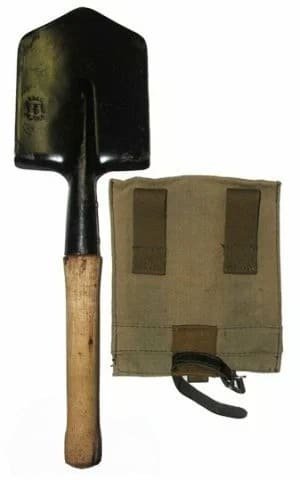
- an entrenching tool (shovel),
- a bayonet-knife.
A shelter half (plasch-palatka) was attached to the shoulder straps at the lower back. However, shoulder straps were not issued everywhere and not always, and very often soldiers had to make do with just the waist belt alone.
Field equipment assembled (load-bearing system)
AK magazine pouch
Grenade pouch
Soviet Army flask
Looking for Soviet Flask? You can get them here → [Soviet Flask]
Entrenching tool
Duffel bag (Sidor)
To carry dry rations, a change of underwear, a mess tin, and similar items, a duffel bag was used, sometimes commonly called a “sidor.” According to regulations, a rolled greatcoat was also attached to it.
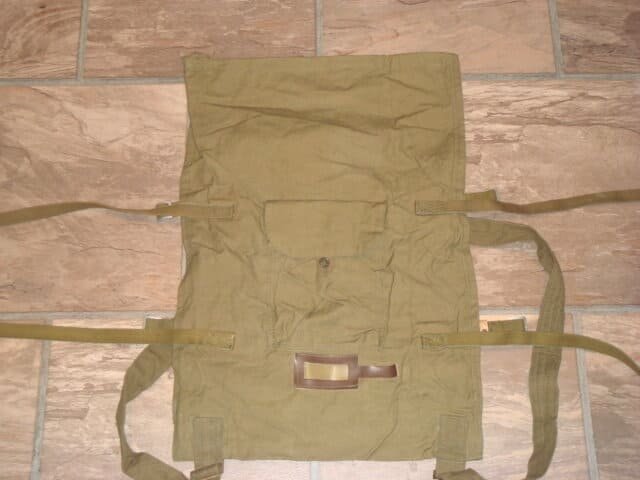
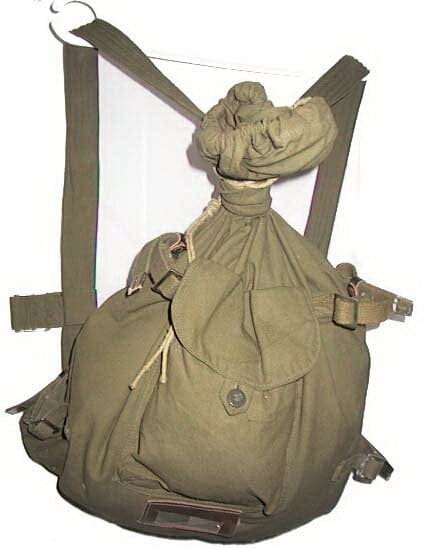
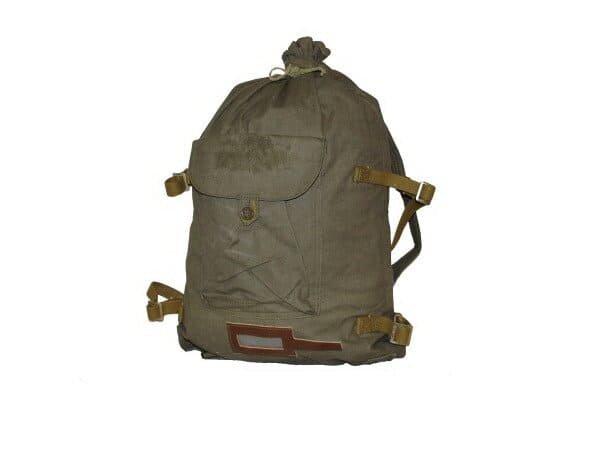
Here I will make a small digression. The duffel bag became one of the symbols of backwardness and inconvenience of our equipment. But it is important to understand that it was intended to carry a very small amount of personal gear. How much do a change of underwear, soap, and a couple of cans of food really weigh? It was never designed for more than that. The fact that in Afghanistan and Chechnya it was used instead of hiking backpacks was not a good life choice. The lack of proper backpacks was the fault of supply officers, not the “sidor.” For its task, carrying the most essential items, it coped quite decently.
Soviet gas mask
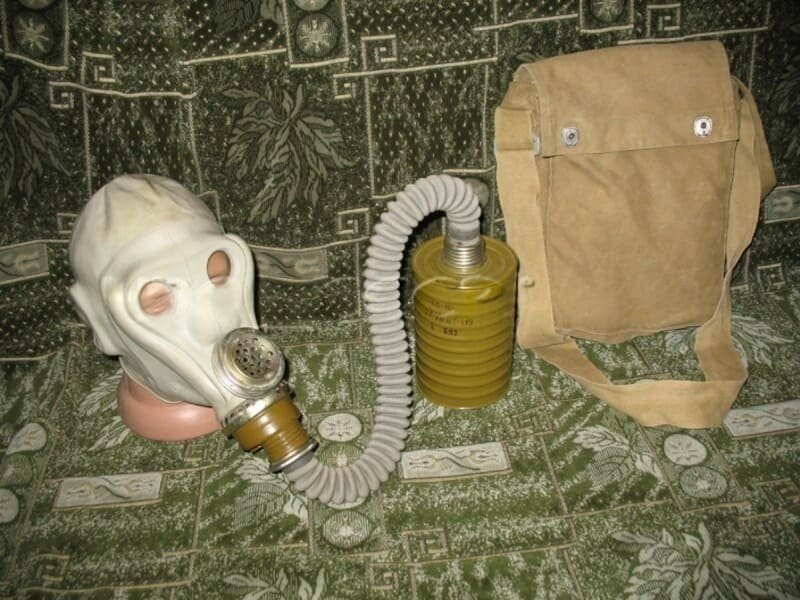
Looking for Soviet Gas Mask? You can get them here:
A mandatory item in a soldier’s combat load was the gas mask. It was carried on the left side in a special bag, which hung on one strap over the shoulder, while another strap wrapped around the waist so it would not swing while running.
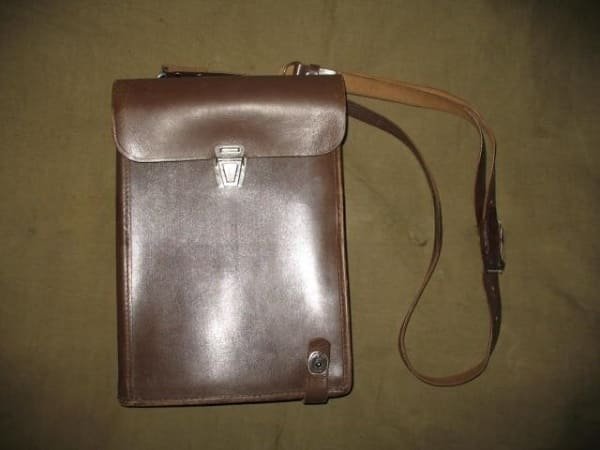
Officer field bag (map case)
Officers and sergeants carried field bags for maps and documents.
They were worn on a thin strap over the shoulder.
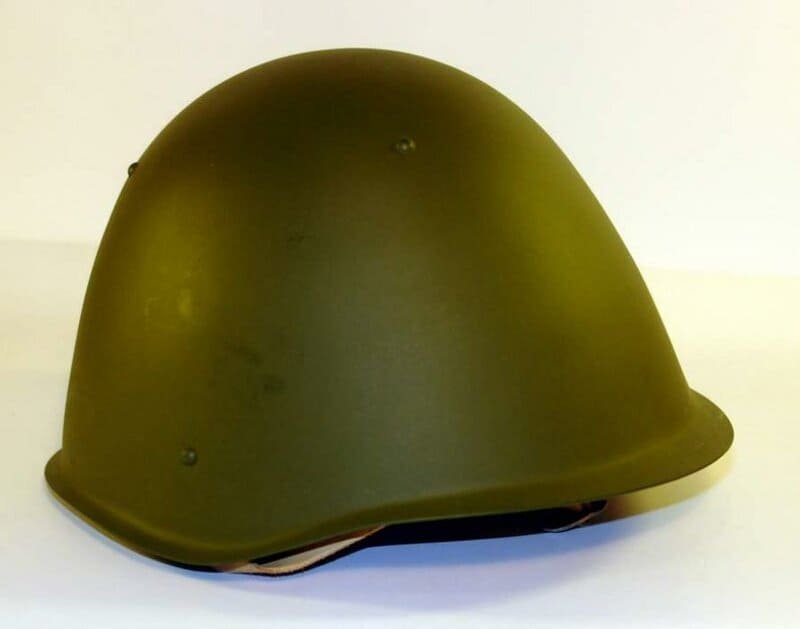
Soviet helmets (SSh-68, SSh-40) and comparison with the US M1
To protect the head from fragments, the SSh-68 helmet was used (steel helmet model 1968).
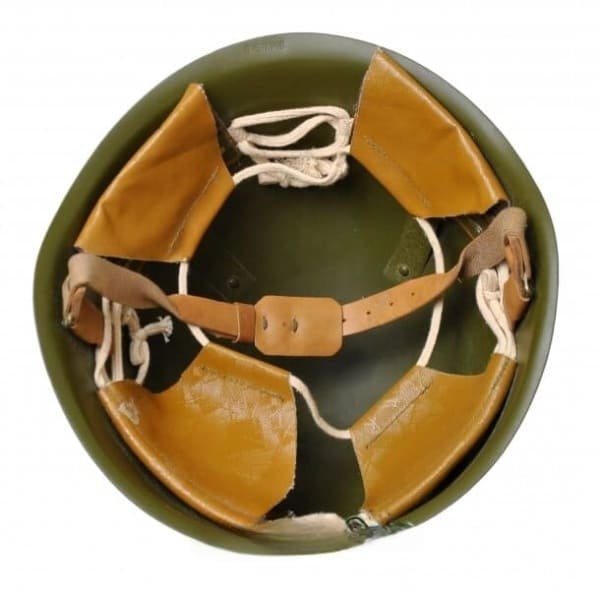
SSh-68 helmet interior
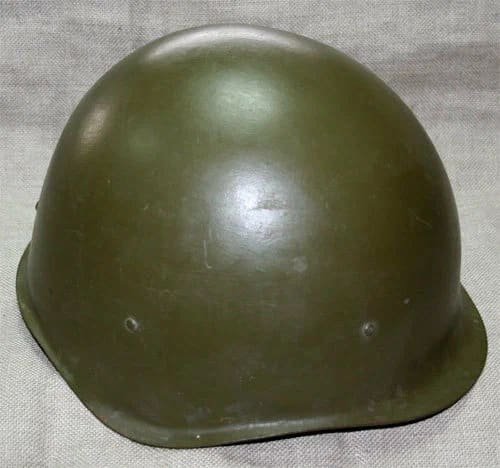
SSh-40 helmet (WW2 model)
US M1 helmet suspension (comparison)
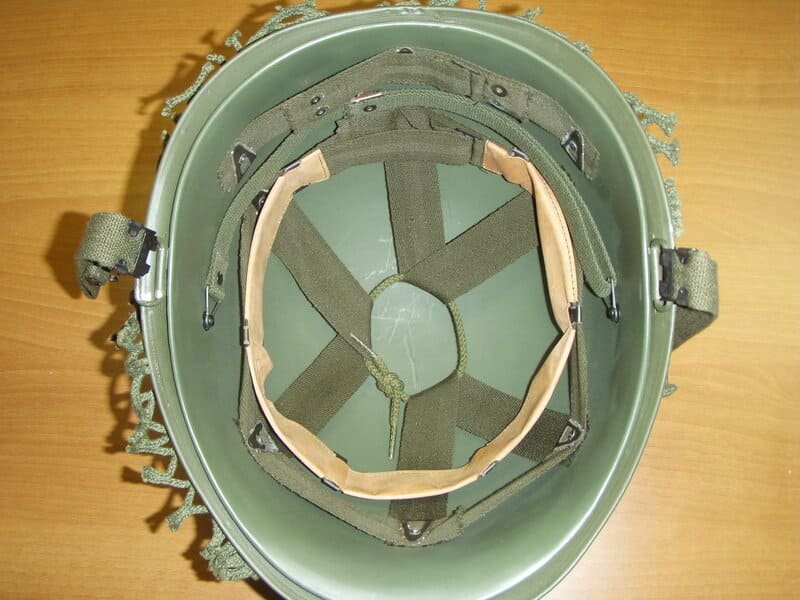
Compared to the wartime SSh-40 helmet, it differed slightly in having a more conical shape, while the SSh-40 was more rounded. Its suspension system was uncomfortable compared to Western helmets. Western helmets had leather suspension straps that fit around the head and could be worn on bare head or over a thin knitted cap. The Soviet helmet could only be worn over a head covering (a side cap), otherwise it was simply painful. On the other hand, it could be worn in winter over an ushanka.
VDV paratrooper equipment: kirza boots, komber mess tin, RD-54
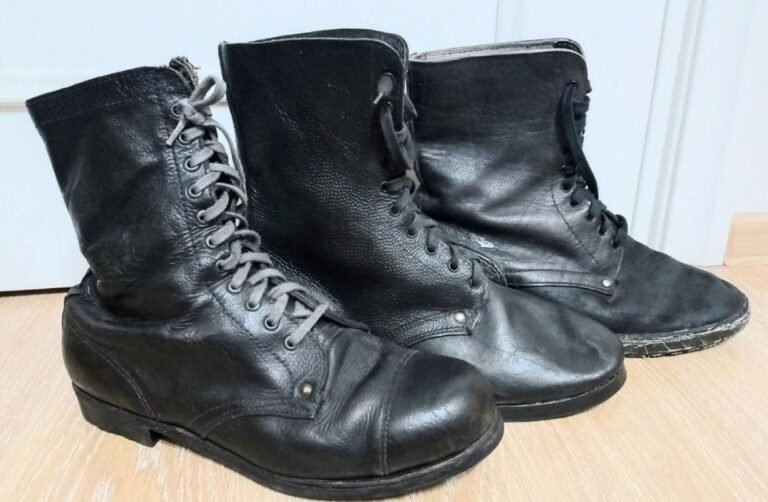
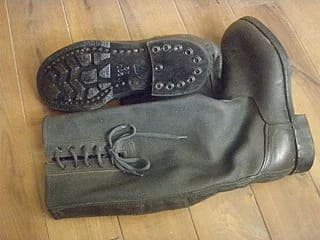
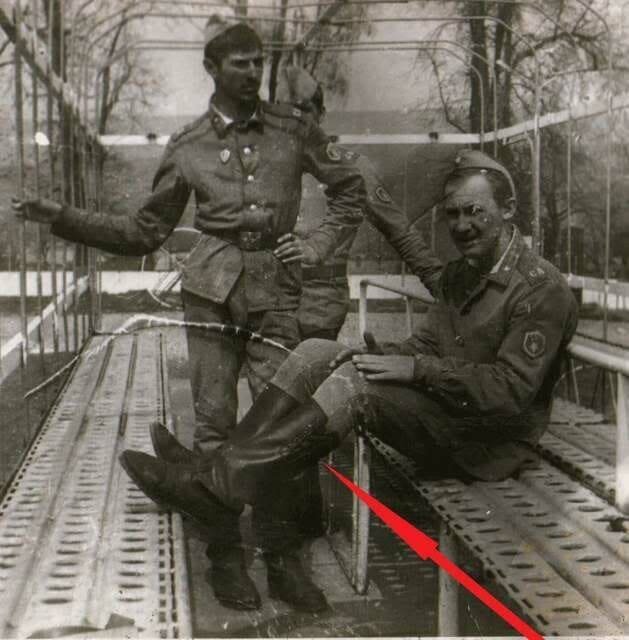
Paratrooper VDV kirza boots with laces
Looking for real Soviet boots? You can get them here → [Soviet Boots]
Paratrooper equipment stood somewhat apart. They had special airborne boots with side lacing so they would not slip off during parachute jumps, a combined mess tin–canteen (“komber”), and the RD-54 airborne backpack (nicknamed “erdeshka” or “er-de”).
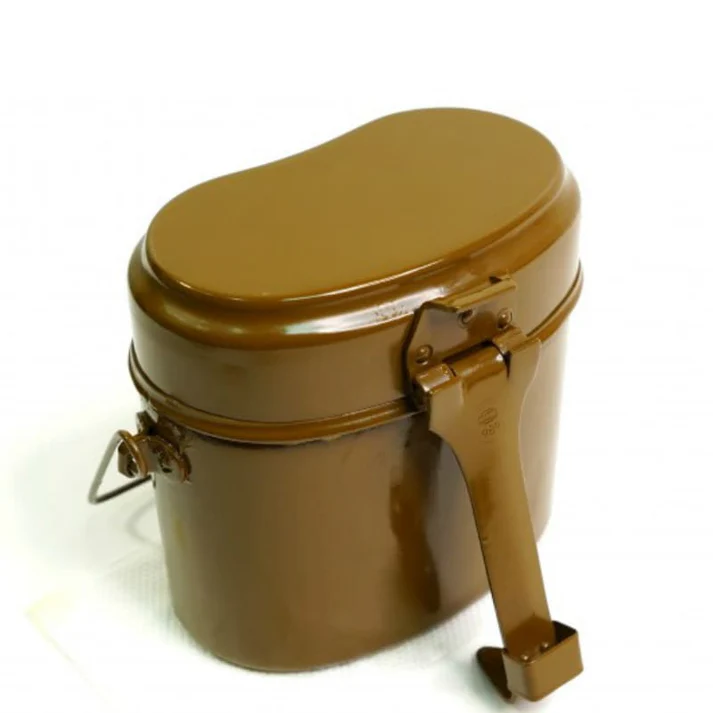
Soviet soldier mess tin (Komber)
Looking for original Soviet soldier mess tin? You can get them here → [Soviet Mess Tin]
Combined mess tin, commonly called a “komber.” The flask fits into the mess tin, the mess tin goes into a pouch, and everything is placed into a cover. A real nesting doll. The flask fits tightly into the mess tin, so if sand gets between them, it can be difficult to pull the flask out.
RD-54 airborne backpack
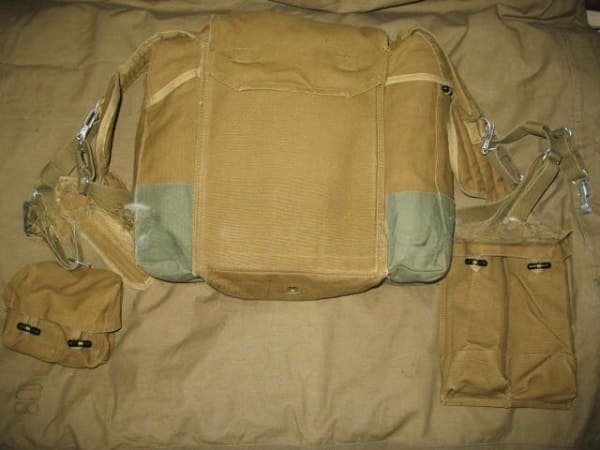
The RD-54 is a small flat backpack. Pouches for two AK magazines and two grenades are sewn directly onto the shoulder straps. It was specifically designed for parachute jumps. During a jump, the backpack is lowered onto the buttocks, leaving the back free for the parachute. After landing, the soldier discards the parachute and is immediately ready to fight, without wasting time unpacking or putting on equipment. Sometimes you hear people attributing some kind of fantastic comfort to the RD-54 that modern backpacks supposedly lack, but that is nonsense. Yes, it became a legend of Afghanistan, but only because there were no other backpacks. Its only real advantage is its suitability for parachute jumps. All other mythical qualities come from people who have never tried anything better than carrots.
Soviet Army field equipment
RD-54 lowered onto the buttocks. The back is now free for the parachute.
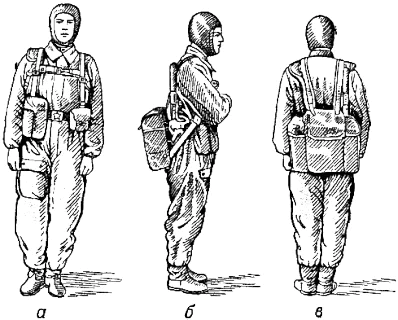
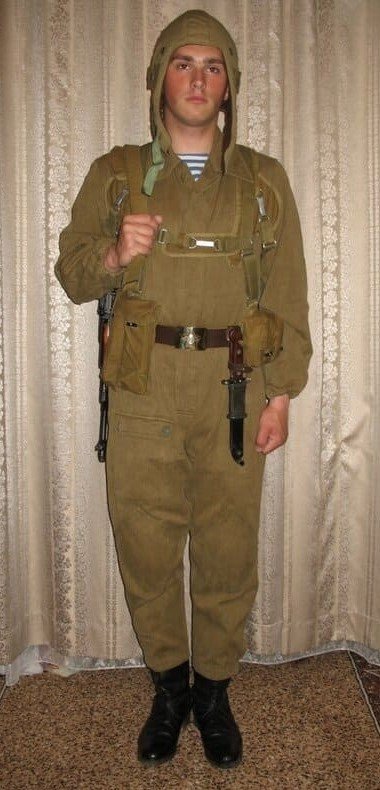
Paratrooper in a jump suit and airborne equipment (front)
Looking for a Real Telnyashka?
Add extra Telnyashkas and accessories – shipping stays the same.
Flat Worldwide Shipping – $14.98
Shipping is charged only once per order.
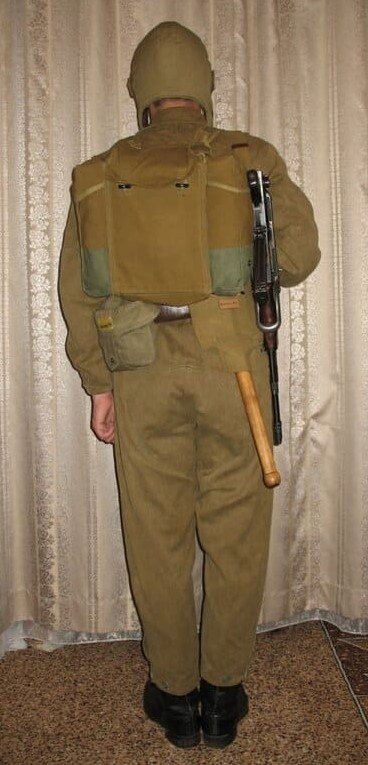
Paratrooper in a jump suit and airborne equipment (rear)
Camouflage suits: Berezka and KZS
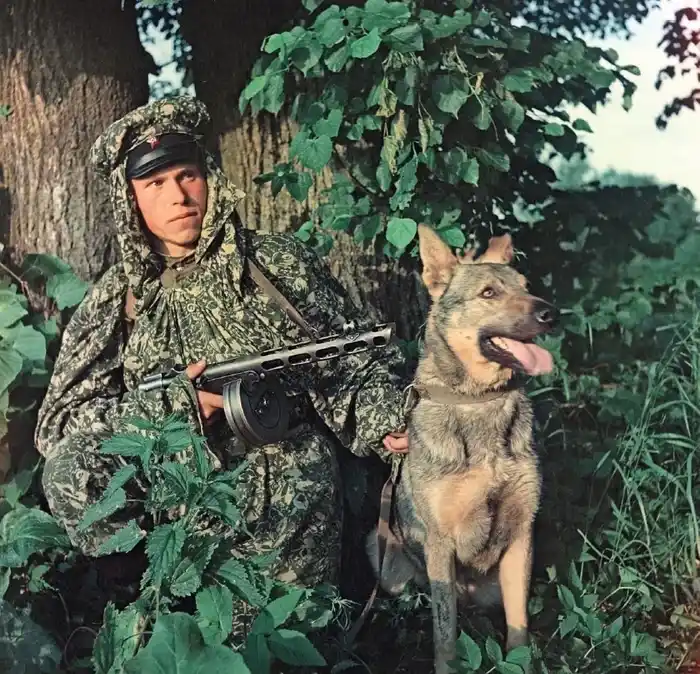
For camouflage, camouflage suits were used, either two-piece or one-piece coveralls. They were made from thin cotton fabric and worn over the standard uniform. In hot weather, soldiers often wore them directly over their underwear. This is still commonly done today.
Soviet camouflage suit Berezka (Silver Leaf)
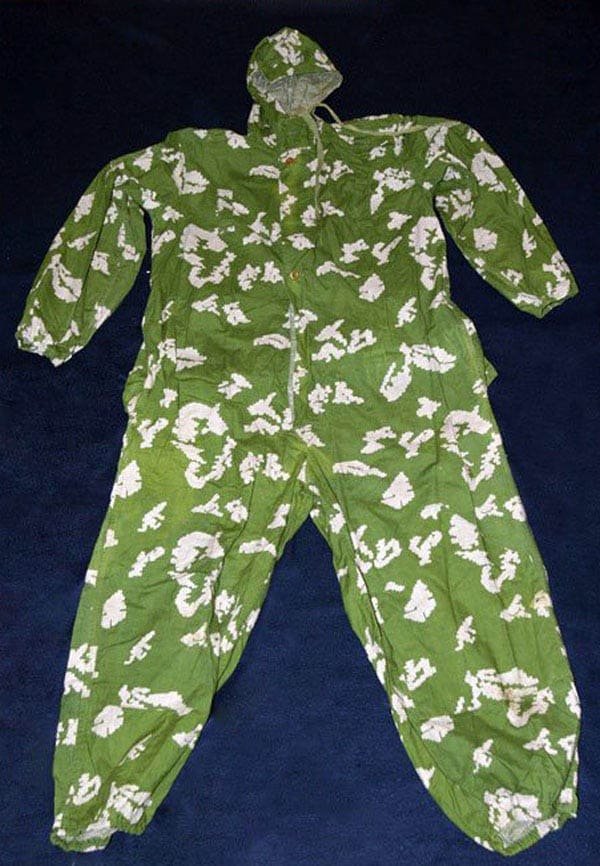
This was the main camouflage pattern of the Soviet Army. Official names for camouflage patterns did not exist in the USSR, or at least were not widely known, but over time slang names became established online. This pattern is called “berezka – silver leaf.” Other color variants may have existed, usually leftovers from World War II, but “berezka” was the only one produced on a large scale.
For camouflage, the KZS – mesh protective suit – was also used.
Soviet Army KZS camouflage suit (mesh protective suit)
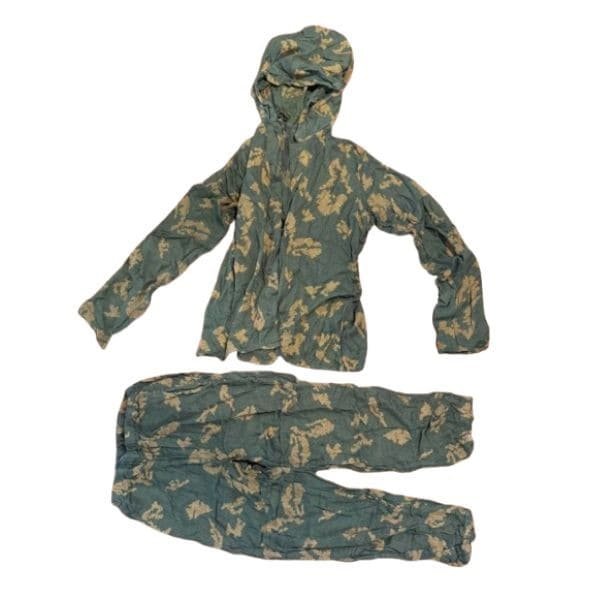
Looking for original Soviet KZS camouflage suit? You can get them here → [Soviet KZS camouflage suit]
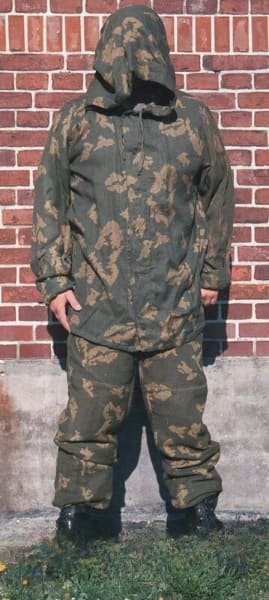
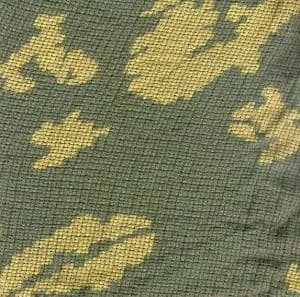
Originally, it belonged to protective equipment against weapons of mass destruction and was supposed to be worn over the OZK (general-purpose chemical protection suit) to protect against thermal radiation from a nuclear explosion. In simple terms, the bomb goes off, the KZS smolders and burns, while the rubber OZK underneath remains intact. The cheap KZS was not a pity—it was a disposable item. But it was also worn for camouflage. It was made of fabric with a texture resembling burlap—just as loose, but unlike burlap, soft and pleasant to the touch. Thanks to its loose texture and well-chosen camouflage colors, it provided excellent concealment. However, the fabric was thin and fragile and did not last long.
Texture of KZS fabric
Mabuta (GRU / Spetsnaz jump suit)
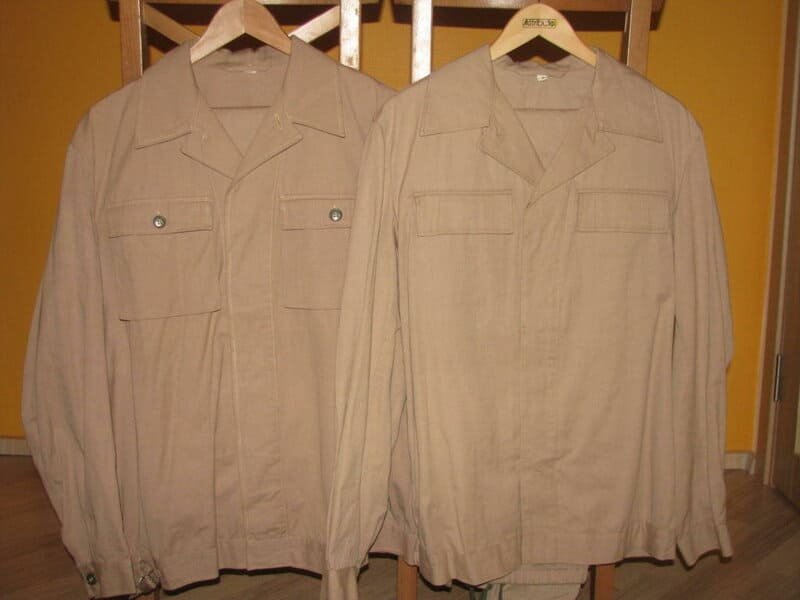
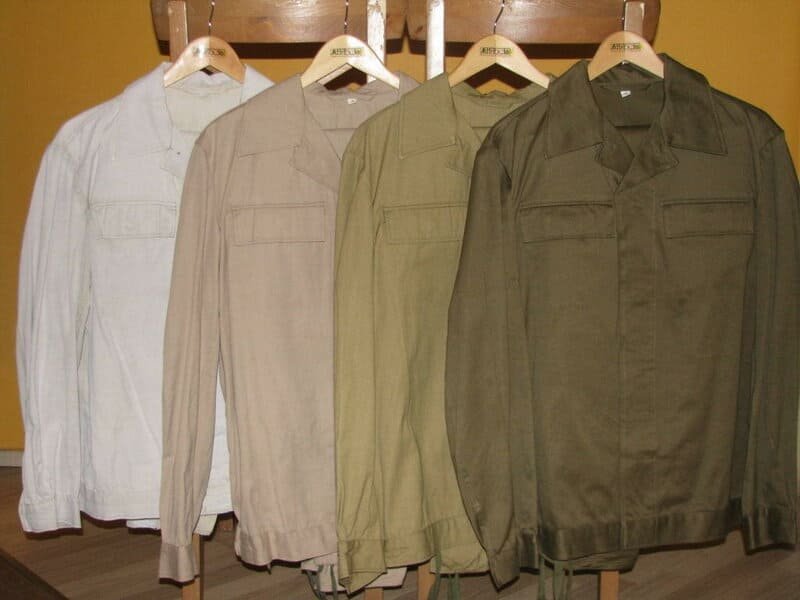
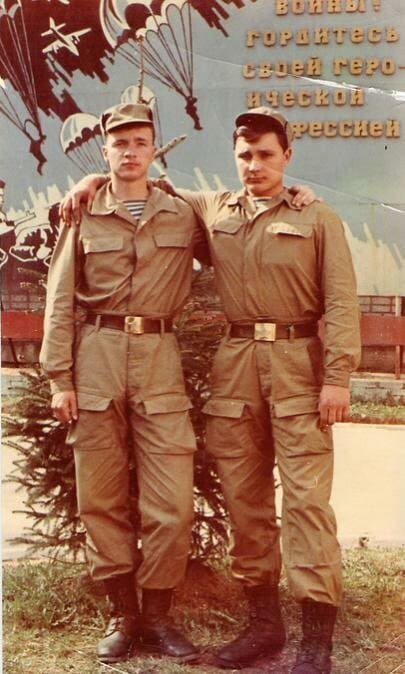
GRU special forces had a “jump suit for special units,” known in slang as “mabuta.”
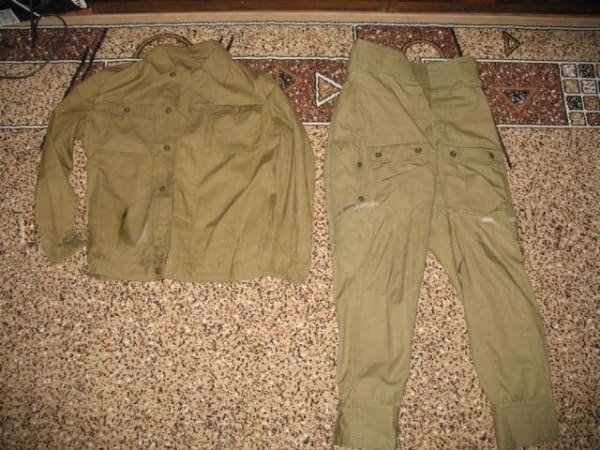
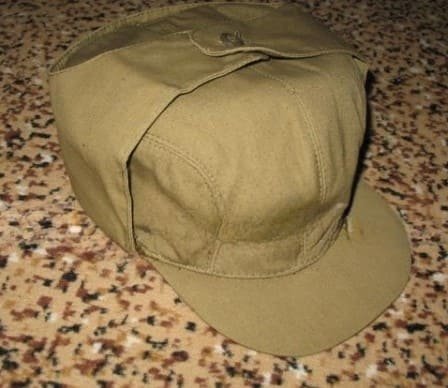
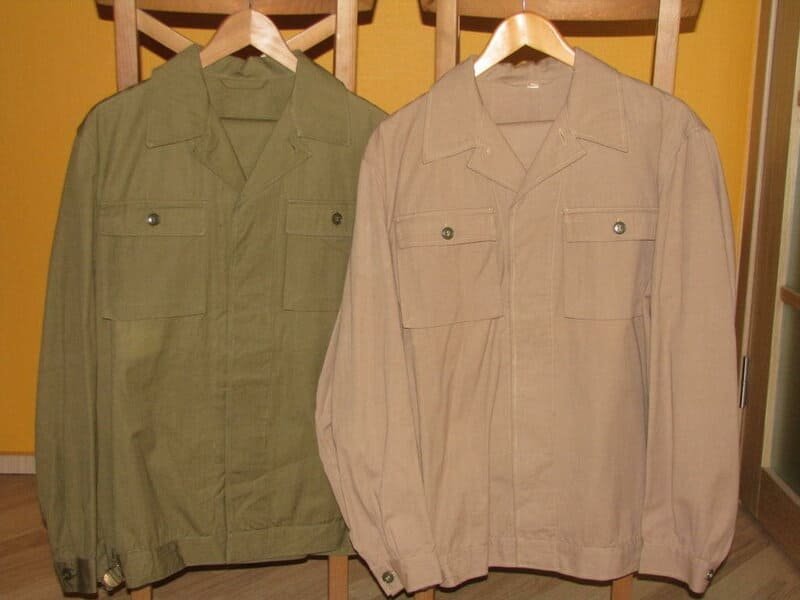
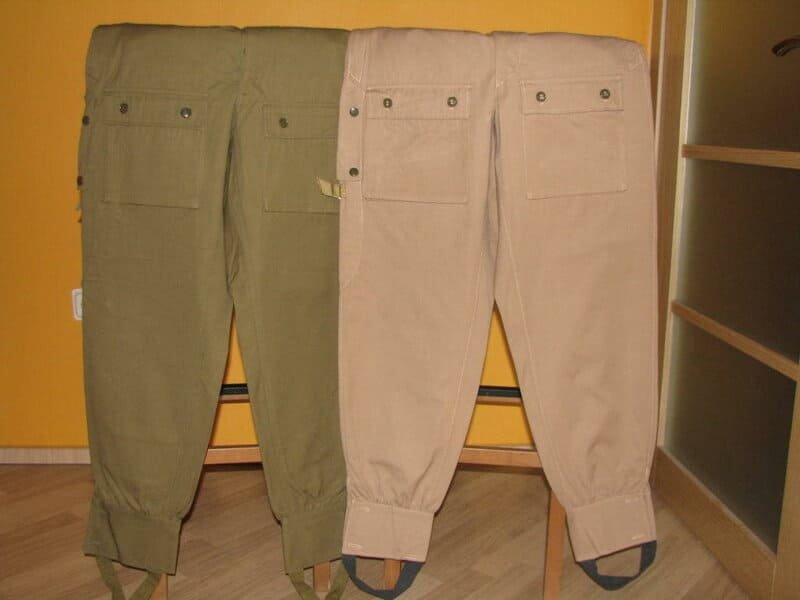
This uniform deserves a separate article. I will only mention that according to one version, it was named after the African dictator Mobutu, against whom Soviet special forces allegedly fought. Whether this is true or not, I do not know. The uniform consisted of baggy trousers somewhat resembling riding breeches and considered very comfortable, a short waist-length jacket with two chest pockets, and a cap with fold-down “ears.” The trousers had two standard side pockets, two front thigh pockets (unlike Western uniforms, where thigh pockets were on the sides), and a long knife pocket on the right rear thigh. There were several versions of the mabuta, differing slightly in color and cut. There was also a winter version. It is the “mabuta” worn by Warrant Officer Dygalo in the film 9th Company.
Note. In the army, the word “mabuta” also has another meaning. Paratroopers, marines, and special forces contemptuously call all other troops by this name: “anyone who hasn’t jumped with a parachute is called a mabuta.”
Below are photos of different versions of the “mabuta.”
Looking for Soviet Afghan combat boots for afghanka? You can get them here → [Soviet Afghan M88 Combat Boots]
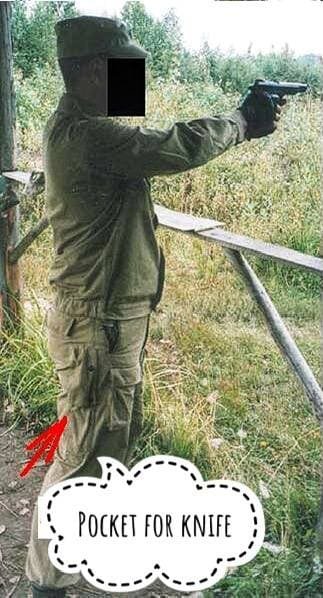
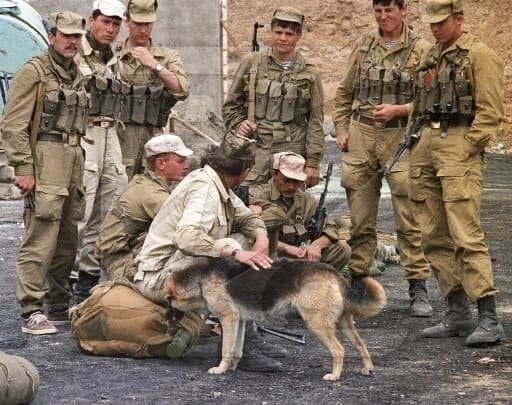
There were no camouflage versions of the mabuta, at least none known to the general public. The “mabuta” became one of the most recognizable items of Soviet and later Russian special forces (1990s to mid-2000s). Original Soviet mabutas are now rare, but the mabuta-style cut (front thigh pockets and a “bulky” jacket) is still popular among various manufacturers, producing models of varying quality, from outright junk to quite decent gear.
OKZK-D protective uniform and the “Afghan” uniform
There were many discussions online about what camouflage uniform was shown in the film In the Zone of Special Attention. But none of the people who served at that time could say they had seen such a uniform in real life.
Film still
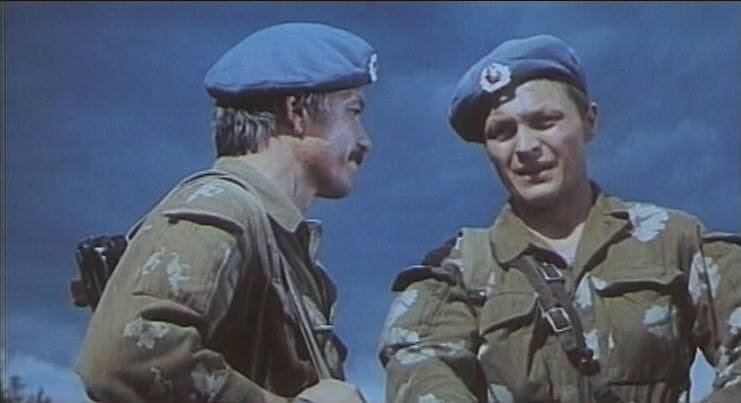
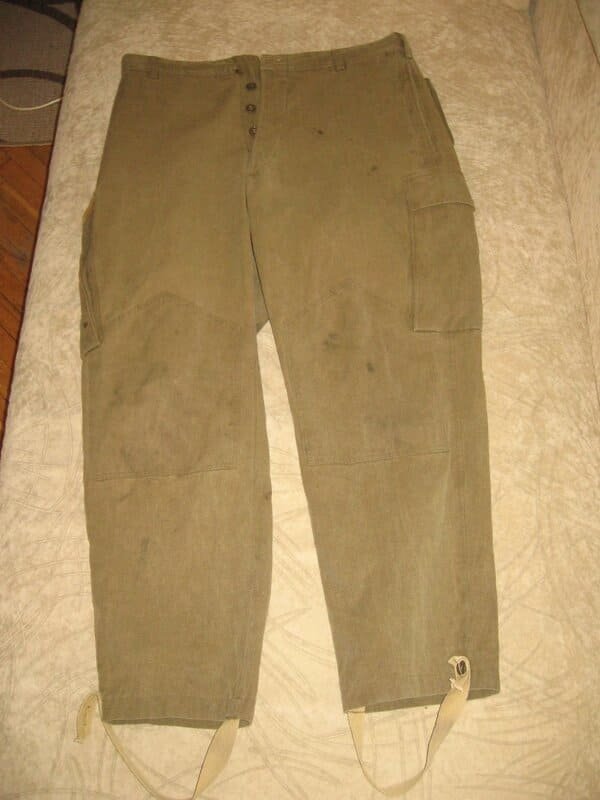
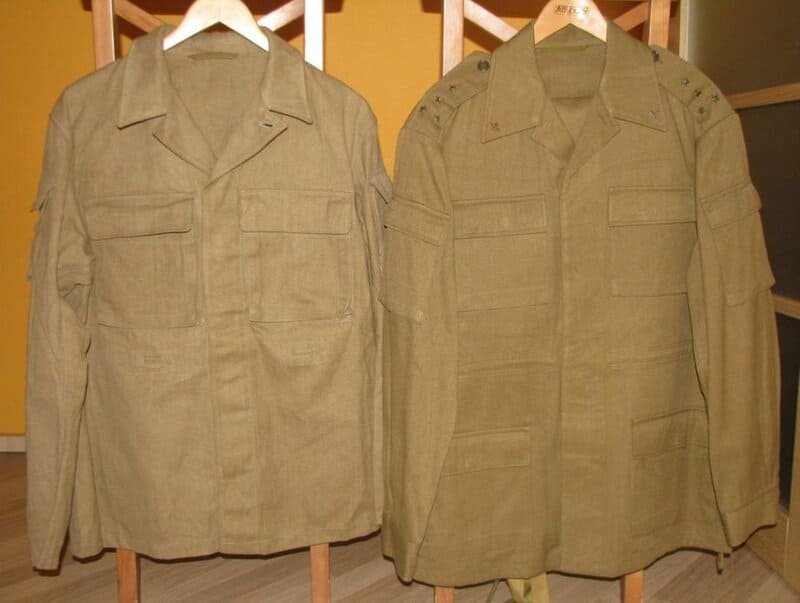
Most likely, it was a hand-repainted OKZK-D – a general-purpose integrated protective suit for airborne troops. OKZK-D was made of cotton fabric with special impregnation protecting against radiation and toxic substances. Later, the cut of OKZK-D was used as the basis for the “Afghanka” uniform, but more on that below. OKZK-D and the similar general-purpose OKZK-M were apparently not widely worn, but were stored in warehouses in case of war. I have encountered mentions that they were used by liquidators during the Chernobyl disaster, but I did not study this topic. Those interested can look it up themselves.
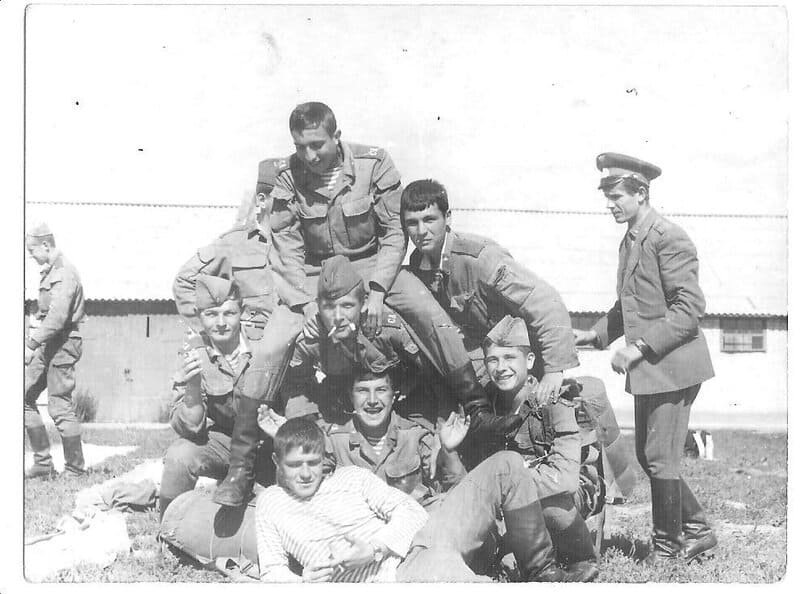
OKZK-D jacket and trousers
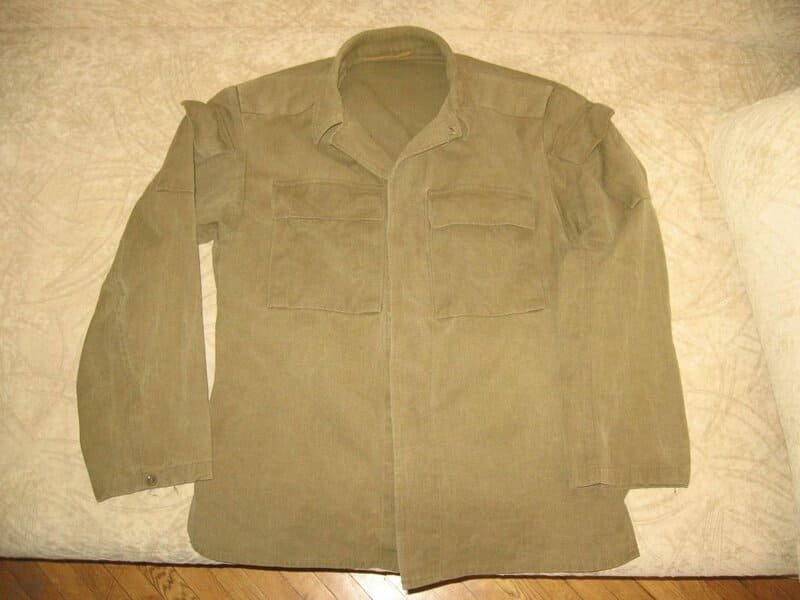
OKZK-D (left) and the “Afghan” uniform
Soviet Army field equipment
FAQ
What was the standard Soviet Army field gear set in 1968–1991?
The basic set included a waist belt, Y-shaped shoulder straps, pouches for AK magazines and grenades, a flask, an entrenching tool, and a bayonet-knife. A shelter half (plasch-palatka) could be attached to the straps.
What is the difference between Berezka and KZS camouflage?
Berezka (Silver Leaf) is a printed cotton camouflage suit worn over the uniform, while KZS is a mesh protective suit originally designed for NBC and thermal radiation protection, later widely used for camouflage.
What is the Mabuta uniform?
Mabuta is a slang name for a special forces jump suit with distinctive pockets and a comfortable cut, associated with GRU and airborne units during and after the late Soviet period.
Check more articles:
How the Soviet Army Uniform Changed from 1955 to 1991
Field Uniform and Equipment of the Soviet Army in 1968 -1991 Part 1
Field Uniform and Equipment of the Soviet Army (1968–1991) – Part 3
Field Uniform and Equipment of the Soviet Army (1968–1991) – Part 4
Soviet Spetsnaz Uniform in Afghanistan (1979–1989)
Looking original Soviet boots and accessories? Please visit here: Soviet Boots Store