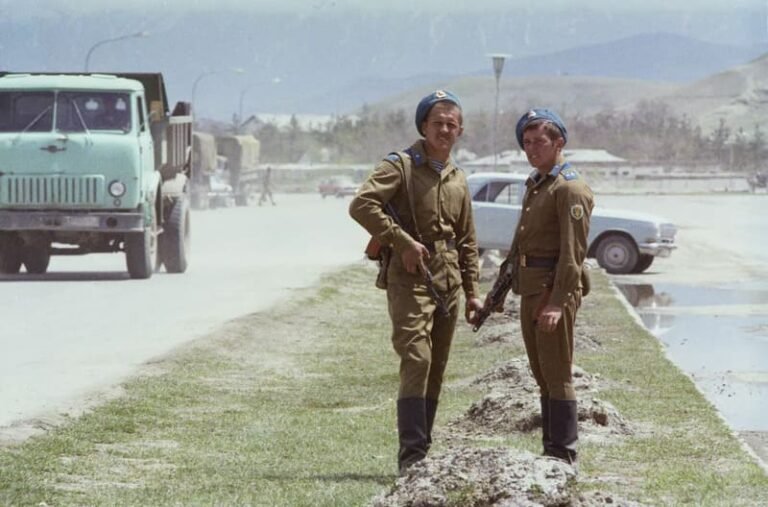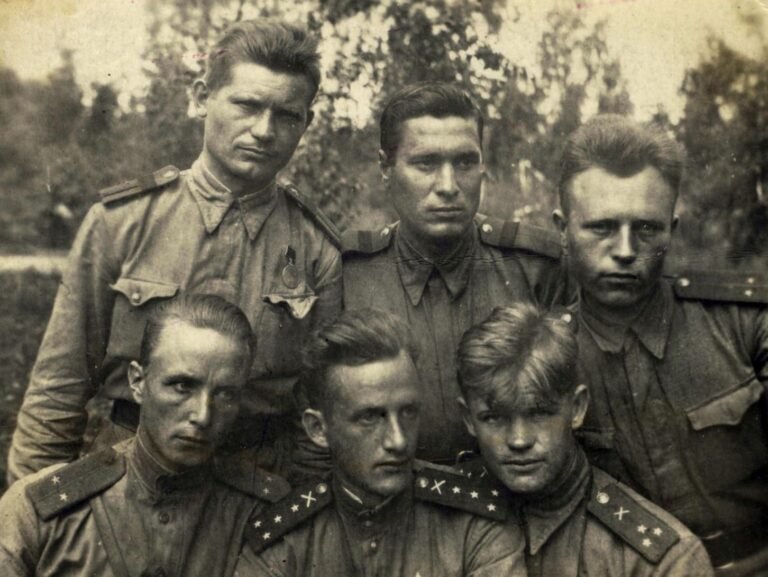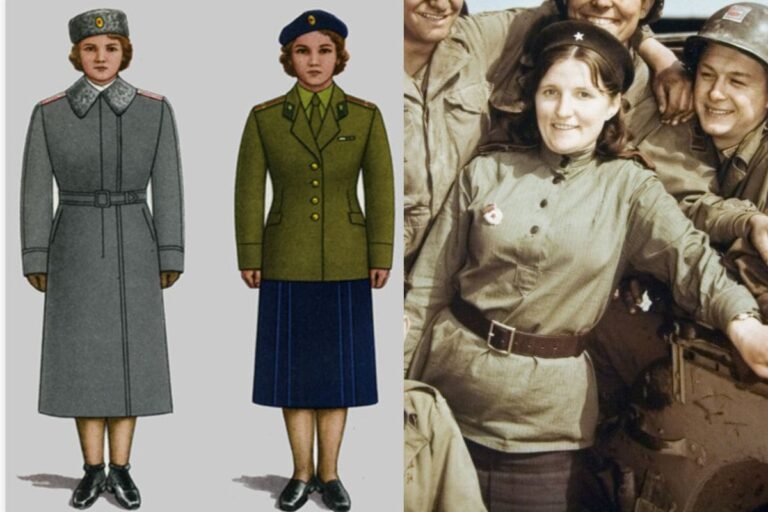
The popularity of the Soviet military ushanka hat was pushed by Western movies.
A Soviet soldier, or anyone from the USSR or Russia, is shown wearing an ushanka in any situation, in any weather.
This kind of exaggerated movie stereotype shaped the image of Russians.
More interesting articles:
Soviet Combat Boots of the Afghan War: Testing 3 Designs
Soviet Spetsnaz Uniform in Afghanistan (1979–1989)
How the Soviet Army Uniform Changed from 1955 to 1991
Field Uniform and Equipment of the Soviet Army (1968–1991) – Part 1

If you want a real ushanka for reenactment, NOT replica, you can find here: ( Soviet Ushanka )
The concept of the ushanka (foldable protection for the ears, neck, and chin) appeared in our army before the revolution and was used much more widely than the Nansen hats.
Some readers may wonder why, alongside hats, I will also talk about helmet liners. The reason is simple: they complement each other and have existed almost inseparably.
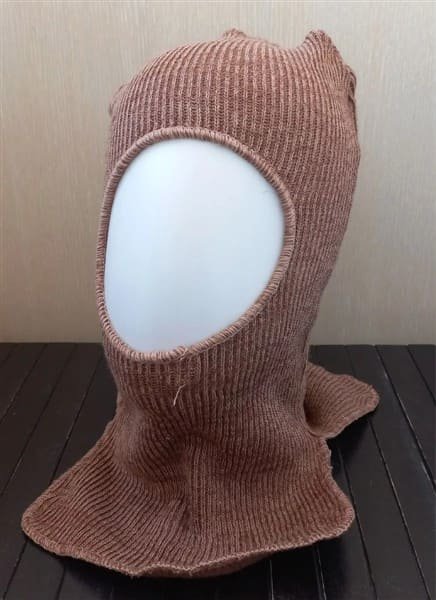
But here it is important to clarify something. Many people mix up the terms “helmet liner” and “balaclava” because they look very similar. However, there is still a difference between them. A balaclava is a mask that fully covers the head, face, and neck, with only an opening for the eyes, more rarely two separate openings for the eyes, and even more rarely an additional small opening for the mouth. It can be worn on its own or as insulation under a hat.
A helmet liner, on the other hand, generally resembles a balaclava but has one large opening for the face. Its main purpose is to serve as additional insulation under a helmet (originally a cloth one, also known as a papakha, and later under a steel helmet). According to regulations, it is not worn on its own, but in practice it was often used instead of balaclavas, especially by internal troops and special units.
In the Russian army, a helmet liner has almost always existed (first noted during the Russo-Japanese War of 1904–1905). The balaclava officially became part of standard equipment much later, in 2009, as part of the CSTO Collective Rapid Reaction Forces kit.
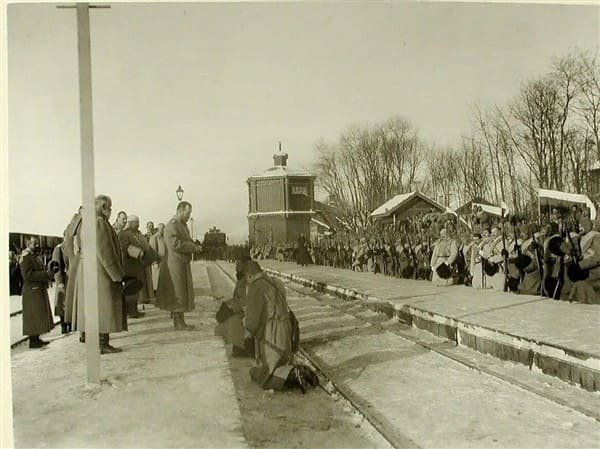
Ancestors of the Ushanka
Pre-Revolutionary Period: the Papakha and the Scout Hat
By an order of the Military Department dated November 10, 1910, No. 626, a new model of the papakha was adopted for troops stationed in the Amur, Irkutsk, and Omsk military districts.
From March 15, 1911, the papakha was issued to ranks of the Separate Corps of Gendarmes stationed in the same districts, as well as to personnel of the Training Automobile Company (Military Department Order No. 131 of March 19).
For the gendarmes, the 1910 model papakha was made with a dark blue cloth top, matching the color of their uniform. From December 13, 1912, the right to wear this papakha was granted to military units stationed in Finland, as well as in the Arkhangelsk and Vologda provinces. In 1913, the papakha was introduced for all personnel of the ground forces of the Russian army. At the same time, the band of soldiers’ papakhas was made from artificial fur.
The papakha consists of a cloth top in a protective color with a rounded crown, and a fur band attached to it. The top is insulated with a quilted cotton padding and has a lining made of dense natural calico.
The band, made as a strip sewn along the outer edge of the top, is split. Its front part is sewn on the top and sides, while the remaining part is left unsewn so it can be folded down to cover the ears, the back of the head, and the neck. A fur trim is sewn over this strip.
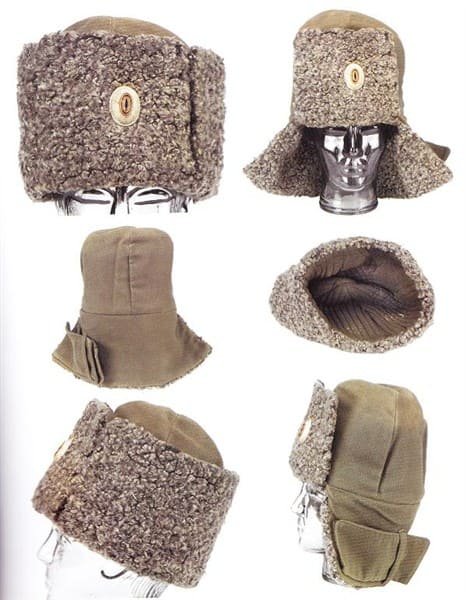
In addition to the papakha, in 1913 an experimental winter hat was tested by reconnaissance units of the Guards infantry.
It was something between a papakha and an ushanka.
From the papakha it inherited a tall body with long ear flaps, and from the future ushanka it took a low visor.
The cockade was attached to the upper part of the hat, not to the visor.
The body of the hat itself had a conical shape.
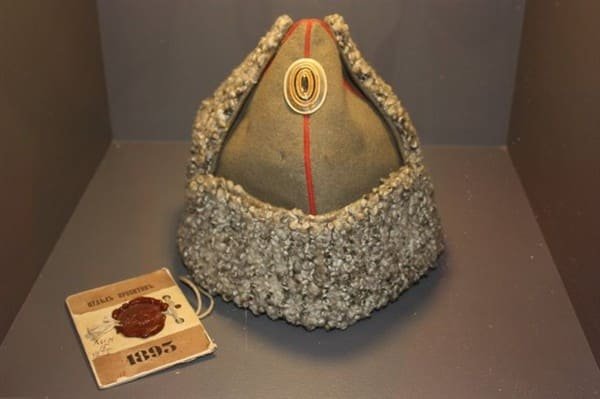
However, the papakha, the scout hat, and the “Nansen hat” were all still very distant ancestors of the ushanka, much like vendobionts are to humans.
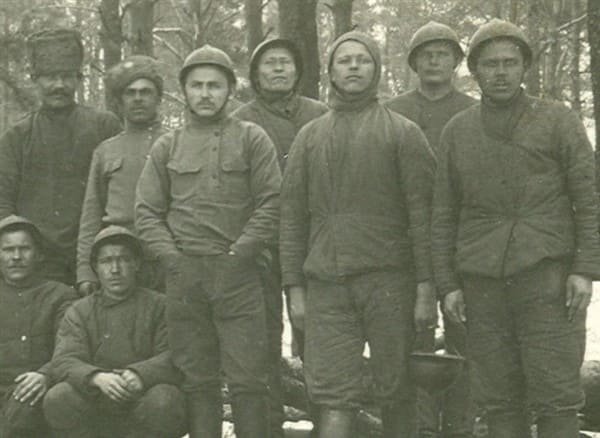
During the First World War, there were no standard-issue helmet liners, and civilian ones were used instead.
Looking for original Soviet foot wraps ‘Portyanki’? You can get them here → [Soviet Portyanki]
Pre-War Period: the Budyonovka
Back in my carefree youth (2014–2016), a myth had already been floating around for many years. The myth claimed that the Bolsheviks had supposedly “stolen” the Budyonovka from the Tsarist government.
According to this story, during the First World War, the most peace-loving martyr supposedly ordered the design of a new uniform for a future victory parade in Berlin. The sketches were made by the artist Viktor Vasnetsov, the hat was called the “Bogatyrka,” sewn, and stored in warehouses. Later, the communists allegedly took them from the warehouses and handed them over to the Red Army.
What is important is that even the authors themselves admit that there are no real documents proving this story. And there should have been a lot of them.
Rules of the competition, payments, reports, supply contracts, payment receipts, warehouse lists.
Anyone who, like me, works with state institutions understands how bureaucratic and long such a process would be.
In our case, even a simple internal photo contest took several months to approve and required several documents. And it was free.
But here we are talking about supplying the army with thousands of items, and there is nothing. No documents at all.

+

Buying Soviet Boots? Add an Ushanka!
Add an original Soviet Ushanka to your boots order.
No extra shipping cost — the shipping price stays the same.
Some especially eager “bun lovers” wrote in the comments that the cursed Jewish Bolsheviks burned all the documents (“and then on the ruins of the chapel…”).
At the same time, nobody is surprised that one of the richest countries in the world was buying weapons and ammunition abroad.
American-made Mosin rifle copies, Japanese Arisaka rifles, American Winchesters with cartridges, and even steel helmets like the French Adrian helmet.
There was simply not enough domestic production.
But somehow they supposedly managed to sew so many parade uniforms that poor Red Army soldiers had to wear them for many years.
Not Versace, of course, but what can you do.
Also, the German front, unfortunately, from autumn 1914 moved only eastward, making the road to a victory parade in Berlin longer and longer for the Tsar’s army.
But that is different, you have to understand.
It is also worth remembering that in 1913 the army introduced a new, pompous parade uniform.
What was the point of creating another very modest parade uniform just a couple of years later, if the previous one had barely been worn?
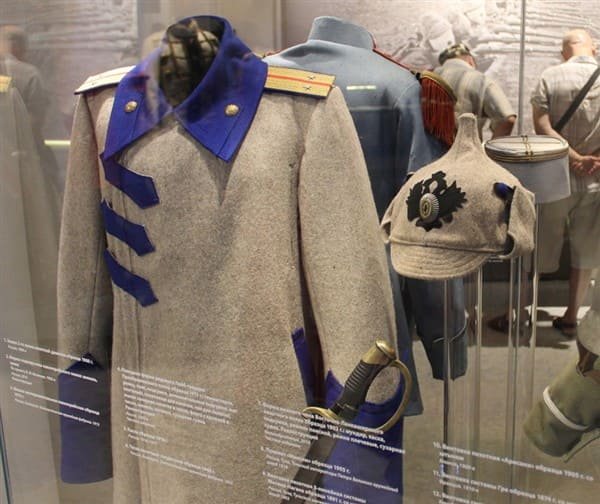
Only after many years of public scandals was this item finally removed from the display case.
Thanks to the research of Alexey Borisovich Stepanov and his colleagues, it became possible to establish the real origin of the Budyonovka and even to more or less popularize it.
Unfortunately, it will take many more decades and several cultural special operations to wash these myths out of people’s minds. But at least a chance has appeared.
Again, within this article, I will outline the main points:
By the order of the People’s Commissar for Military Affairs dated May 7, 1918, No. 326, a competition was announced for the best design of a uniform for the Red Army. Artists B. M. Kustodiev, M. D. Ezhuchevsky, S. G. Arkadyevsky, and others took part in the competition;
The final version of the design was completed by the artist V. D. Baranov-Rossine, who also participated in the competition;
On December 18, 1918, the Revolutionary Military Council of the Republic approved a new type of winter military headgear;
The official name of this headgear, according to the order of January 16, 1919, No. 116, was “winter helmet”;
Anyone interested can see the competition sketches in the hall dedicated to the Civil War at the Central Armed Forces Museum in Moscow.
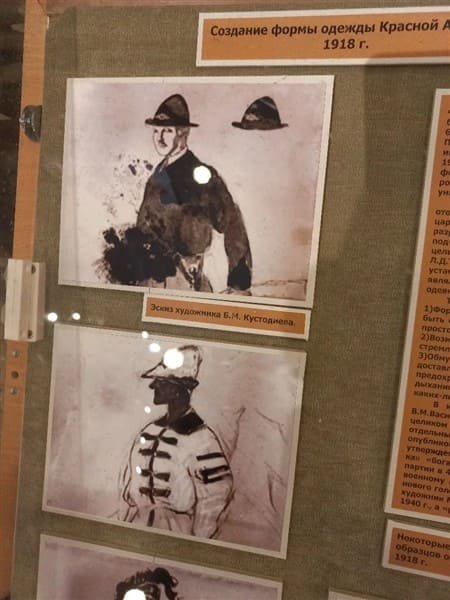
The name “Budyonovka” came from the people.
The cut of the Budyonovka was changed many times.
If you want, this headgear could easily be the subject of a separate article.
So I will not go into detail here.
Below is a short timeline of its changes:
-
RKKA winter cloth helmet, 1919 (Order No. 116 of 1919);
-
RKKA winter cloth helmet and summer cotton helmet, 1922 (technical specifications);
-
RKKA winter cloth helmet, 1931 (OST 4115);
-
Red Army winter cloth and cotton helmet (CU-1441-38).
However, overall, the design of the Budyonovka hardly changed during its 22 years of production.
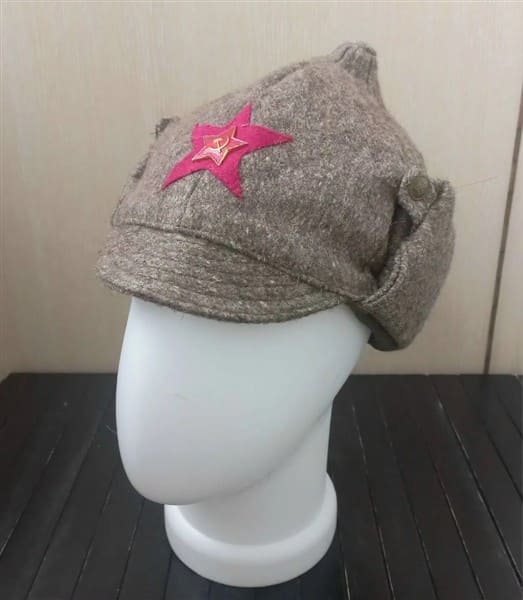
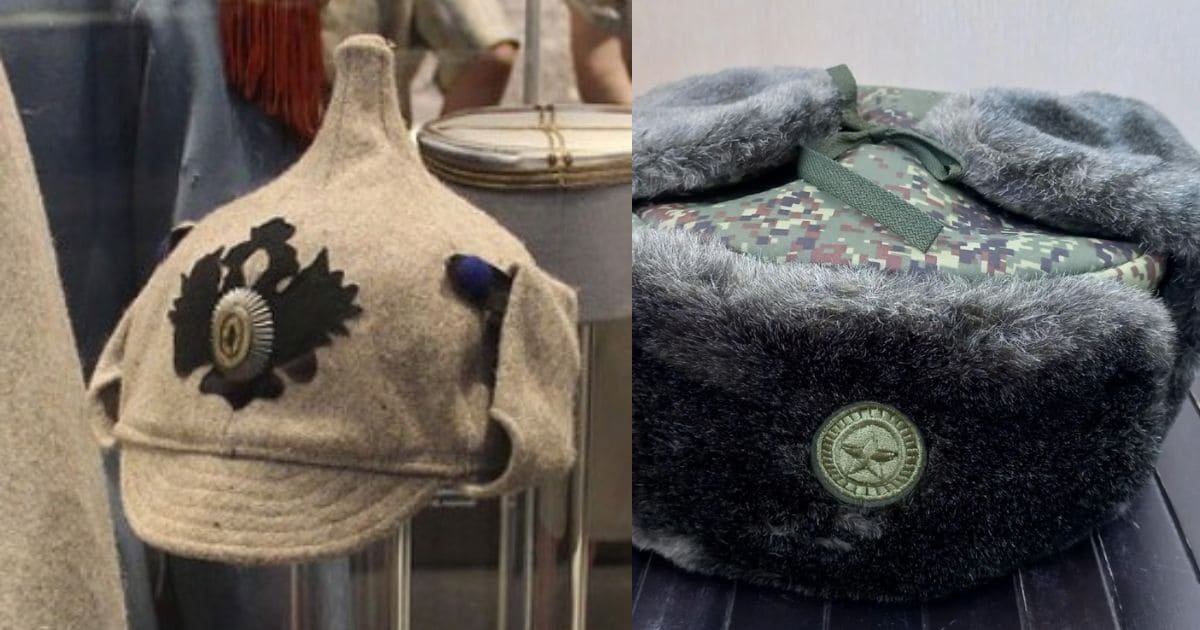
However, the Budyonovka is not the main ancestor of the ushanka.
It is more like an Ichthyostega, the first creature that crawled out of the water onto land.
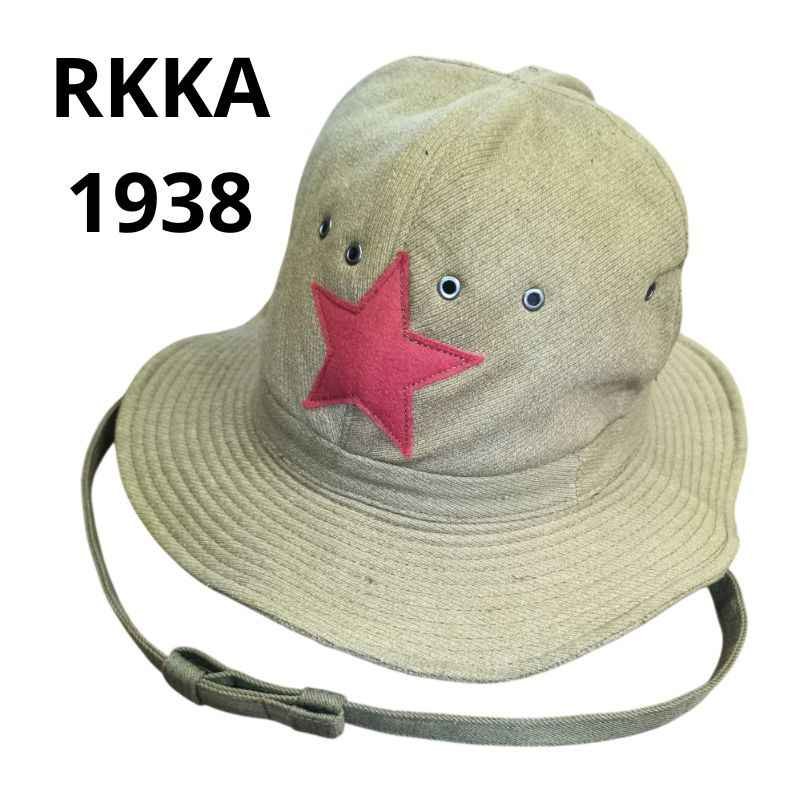
Soviet RKKA M1938 Panama Hat
Looking for an authentic Soviet summer hat? This high-quality RKKA M1938 Panama Hat is made to the original 1938 Soviet GOST standard. It features the classic khaki canvas, large red star, ventilation eyelets and adjustable chin strap, making it perfect for WWII reenactment, collectors and military history enthusiasts.
Ushanka of the Red Navy
The first more or less real “ushanka” appeared in the Workers’ and Peasants’ Red Fleet (RKKF) in 1924, following Order No. 561 of the Revolutionary Military Council of the USSR.
Unfortunately, I was not able to find any images of it.
At the next stage, in 1934, the ushanka became even closer to the form we know today.
However, the visor was still small, and the cockade was worn above the visor, attached to the body of the hat.
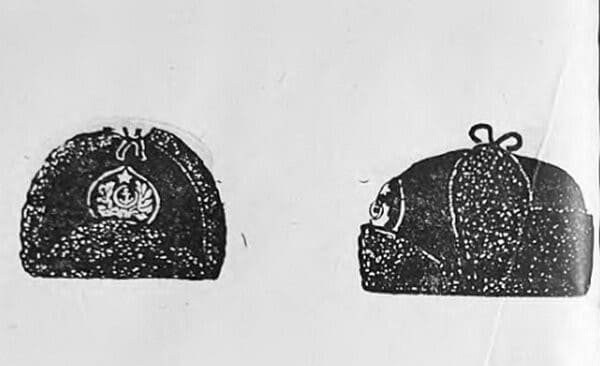
So, the navy started using the ushanka earlier than the ground forces.
Finnish Hat (Shapka-Finka)
It was introduced by an order of the Revolutionary Military Council of the USSR dated January 31, 1931, No. 14.
I think the name already makes it clear that the idea was borrowed from the Finns.
In fact, it can be considered a relative of the ushanka, something like a half-sister (hussars, stay quiet!).
However, in practice the finka was mostly worn by commanders (officers), and its fold-down part was not fixed under the chin in any way.
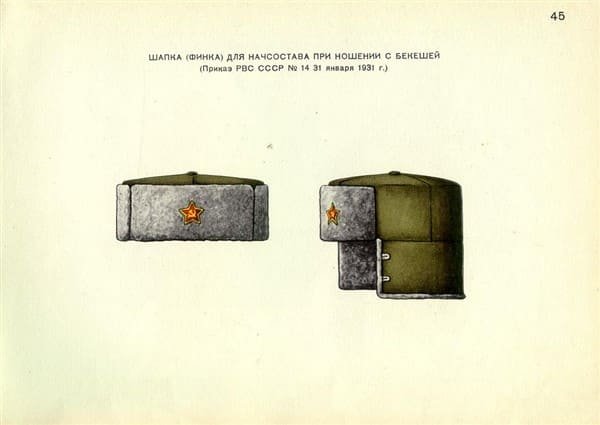
Regarding helmet liners, I found the following information:
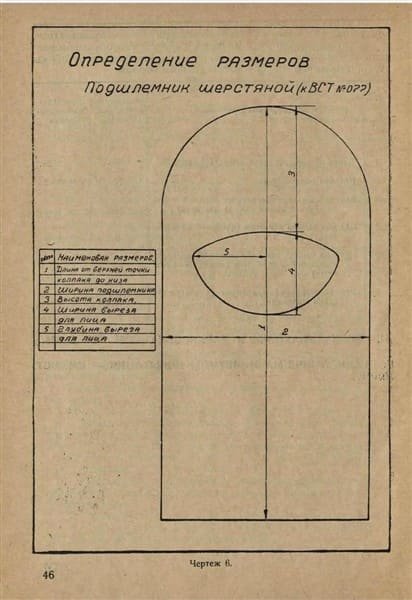
VST No. 077 (1930).
There are also some unclear ones:
-
Semi-wool helmet liners without fleece, article 915 (OST 5388-33)
-
Semi-wool helmet liners with fleece, article 912 (OST 5387-33)
Winter War
As often happens, war becomes a driver of progress.
In many ways, it was the Soviet-Finnish War that led to the appearance of the ushanka in our army.
Many populists write that the Budyonovka did not provide enough warmth and that this was supposedly the main reason it was replaced by the ushanka.
They claim soldiers suffered frostbite.
Yet for 22 years soldiers calmly served in Karelia and Yakutia wearing Budyonovkas and did not get frostbite, and then suddenly they did.
I do not agree with this argument.
The main body of the hat, the cap itself, in both the Budyonovka and the ushanka, consists of several layers of cotton and gauze.
On the inside there is a lining of calico, and on the outside wool cloth or, at worst, moleskin.
In terms of basic insulation, these two headgear types are almost identical.
The main difference lies in the design of the fold-down protection for the back of the head, ears, and chin.
In the ushanka, these parts have artificial fur on the inner side, cloth or moleskin on the outer side, and a small amount of cotton and gauze inside as additional insulation.
In the Budyonovka, this is essentially just two identical layers of the same material sewn together, wool cloth or moleskin, both inside and outside.
There may be something between them, but in very small quantities.
In this sense, the fold-down protection of the ushanka is indeed warmer than that of the Budyonovka.
However, the ushanka loses to the Budyonovka in terms of total coverage area.
The fold-down part of the Budyonovka is almost like a hood: it fully covers the back of the head, ears, neck, and throat.
Only the chin remains open.
In the ushanka, the fold-down protection covers only the back of the head, ears, and the lower part of the chin.
The neck and throat are completely open.
And scarves are not worn in the army.
All hope is placed on the helmet liner and the unofficial raising of the collar of the greatcoat or padded jacket.
This is also why artificial fur is often jokingly called “fish fur”.
Fish have no fur, they stay warm with fat.
In cold weather, the Budyonovka could be worn together with a bashlyk and a helmet liner.
The main problem of the Budyonovka by 1939–1940 was its obsolescence.
Without a doubt, it was very beautiful and symbolic, reflecting both the ideas of the revolution and continuity with the heroes of old Rus’.
But it should have remained a ceremonial headgear rather than a field one.
Perhaps then it might have survived until 1991.
However, in 1936 the Red Army began actively introducing steel helmets.
And the Budyonovka was simply not compatible with them.
It was possible to put a steel helmet over a Budyonovka, but it was uncomfortable, especially because of the pointed top of the cap.
As a result, helmet liners had to be worn under the helmets.
But helmet liners do not provide sufficient insulation, especially at temperatures below −15°C.
In addition, the Budyonovka was extremely unmasking.
Large enamel stars, 34 mm in size, placed on top of sewn cloth stars.
And the pointed top of the cap as well.
Very noticeable details for snipers.
Anyone can read online about the effectiveness of Finnish “cuckoos”.
For similar unmasking reasons, the German army during the First World War first began covering their famous pickelhaube helmets (which, by the way, were borrowed from the Russian army of the Nicholas I period), and in 1916 switched to a new type of helmet with a characteristic sloped shape.
In a way, we followed the same path.
Thus, I would highlight three reasons for abandoning the Budyonovka:
-
inability to use it with a steel helmet;
-
unmasking features;
-
insulation.
Comparison of the dimensions of the Budyonovka, the ushanka, and the steel helmet:
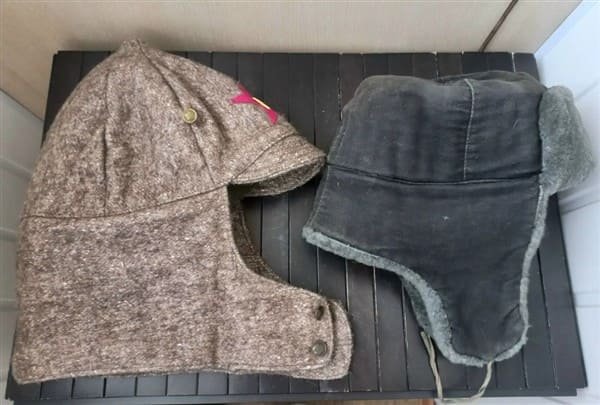
By the way, the enemy of the Soviet Union, the Finns, used ushanka-type hats in their army.
During the Soviet–Finnish War, the army began issuing civilian-style ushankas that were collected by the population for the Red Army, along with other warm clothing and felt boots.
It is also possible that captured Finnish hats were used.
Therefore, the introduction of the standard army ushanka in the spring of 1940 was more an official legalization of a practice that had already taken shape in the active army.
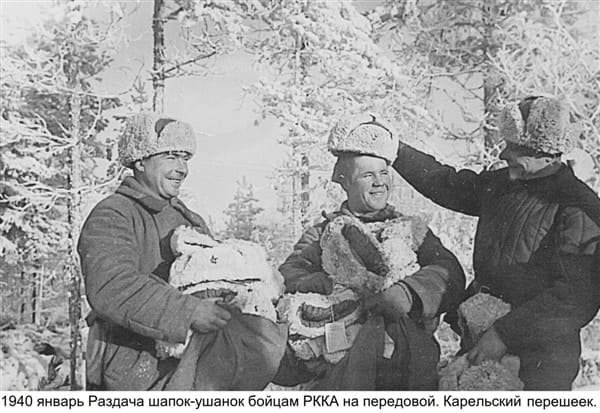
It is possible that some experimental ushanka hats also made it to the front.

Original Soviet Ushanka Hat
Authentic Soviet military Ushanka from original USSR old stock.
Choose a red star, green star, or officer cockade. Flat worldwide shipping $14.98.
Experimental Ushanka Hat
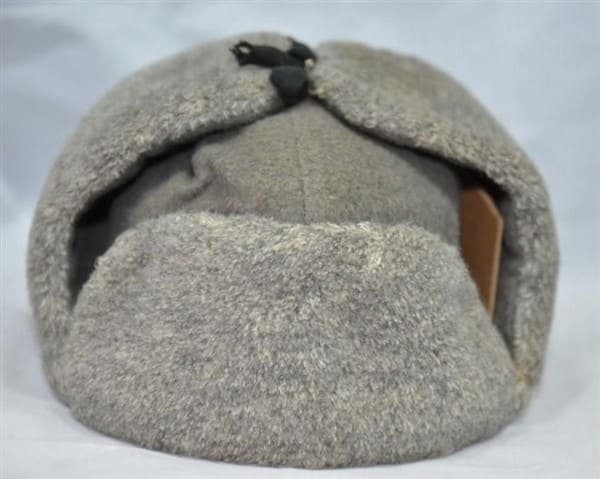
As we can see, the internal construction of the experimental ushanka is very similar to the Budyonovka.
Ushanka Hat in the Red Army
Technical Specifications, 1940
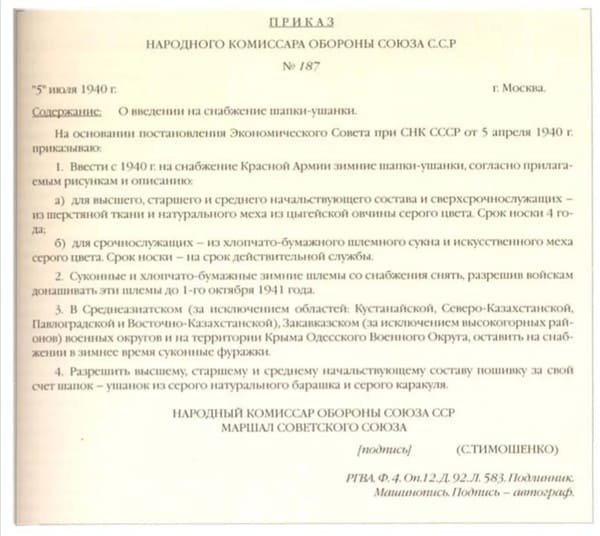
Order of the People’s Commissar of Defense of the USSR, July 5, 1940.
-
The ushanka is officially introduced as winter headgear for the Red Army.
-
Different versions are approved for officers and soldiers.
-
Hats are made with natural or artificial fur.
-
Wearing period is defined by service conditions.
-
Old winter hats are to be gradually removed from service.
Signed by Marshal of the Soviet Union S. Timoshenko.
The ushanka for enlisted personnel of the Red Army was established on April 5, 1940, by a resolution of the Economic Council under the Council of People’s Commissars of the USSR No. 491-209.
So, April 5, 1940 is the official birthday of the ushanka in service with the Red Army.
It appears that the technical requirements for production were given in the description of the Clothing Supply Directorate of the Red Army dated April 28, 1940.
The hat itself was finally approved by the order of the People’s Commissar of Defense of the USSR dated July 5, 1940, No. 187.
Description of the Clothing Supply Directorate of the Red Army, approved April 28, 1940
-
Outer material: melange cotton cloth, gray color, articles 465 and 142 (with wool).
-
Front part: artificial fur, gray color.
Standard sizes and head measurements (in centimeters):
-
Size 1 – 55
-
Size 2 – 57
-
Size 3 – 59
-
Size 4 – 61
Examples of ushanka hats produced in 1940:
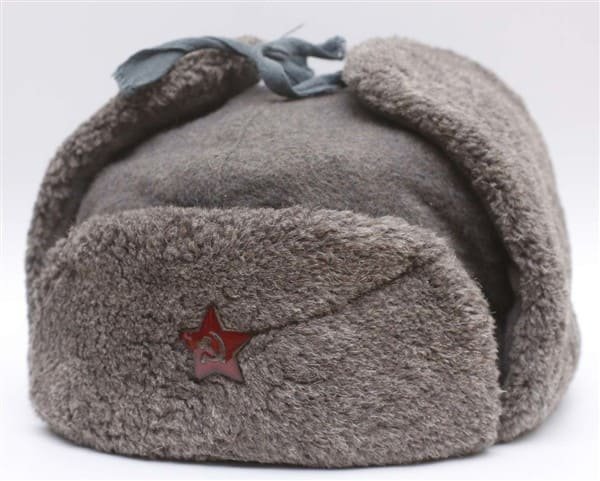
The ushanka for senior, middle, and junior commanding and administrative personnel of the Red Army was also introduced by the order of the People’s Commissar of Defense of the USSR dated July 5, 1940, No. 187.
These hats were made from wool cloth and natural gray fur.
Senior and middle-ranking officers of the Red Army were allowed to have ushankas made at their own expense from natural lamb fur or gray karakul.
It is worth noting that in 1940, a total of four types of ushankas were introduced:
-
Gray ushanka with artificial fur and wool top for soldiers;
-
Gray ushanka with natural fur and wool top for officers;
-
Black ushanka with natural fur and wool top for sailors;
-
Black ushanka with natural fur and leather top for naval officers.
Shapka-Finka hats should be mentioned separately.
Notably, sailors were better off than soldiers.
Sailors were issued ushankas only with natural fur and a cloth top.
Wartime simplifications did not apply to them.
Even here, the navy was ahead of the ground forces.
The Great Patriotic War
With the start of combat operations, the rapid advance of the enemy deep into Soviet territory, and the mobilization of a large part of the population, it became necessary to reduce costs and simplify the production of ushankas.
First of all, the range of materials used for making the hats was expanded.
All of this was officially fixed in the 1941 state standard.
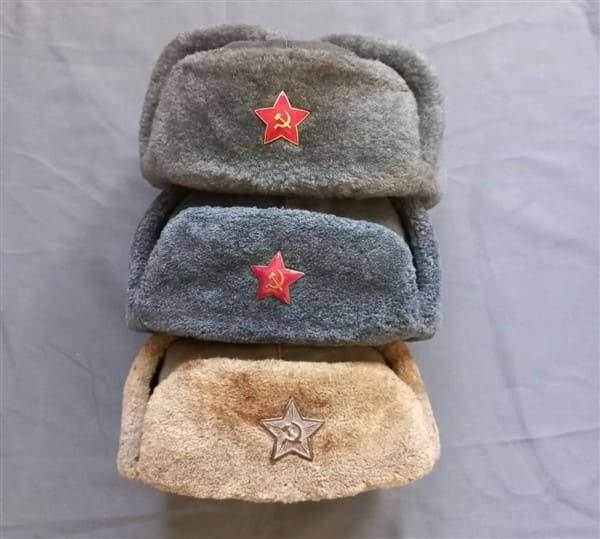
GOST 1076-41. Artificial fur ushanka hat for the Red Army
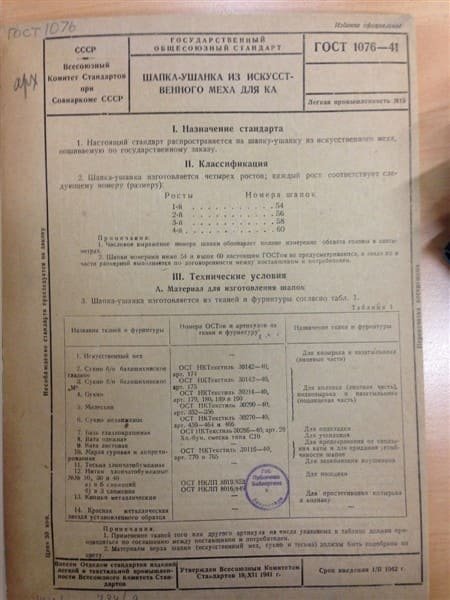
It was approved on December 18, 1941, with an introduction date set for the 1st–2nd quarter of 1942.
Because of this, such hats are sometimes called the “1942 model”.
The hats could have either a double stamp (height–size) or only one marking (either height or size).
According to the GOST, a height-based sizing system was introduced for hats, just like for uniforms at that time: the taller the height, the larger the size.
“2. The ushanka hat is produced in four heights; each height corresponds to the following hat size:
Height ……… Hat size
1st ………………… 54
2nd ………………… 56
3rd ………………… 58
4th ………………… 60”
The main simplification was the expansion of materials used for the outer shell.
Instead of two types of cloth used in 1940, by 1942 there were already four:
Balashikha smooth cloth, Balashikha “M” cloth (possibly mercerized), standard cloth, and melange cloth.
In addition, the use of moleskin was allowed (a material similar to flannel, a cotton suede-like fabric).
As a result, the vast majority of wartime ushankas were made with moleskin tops.
There were also hats produced without fur at all, where moleskin was used instead.
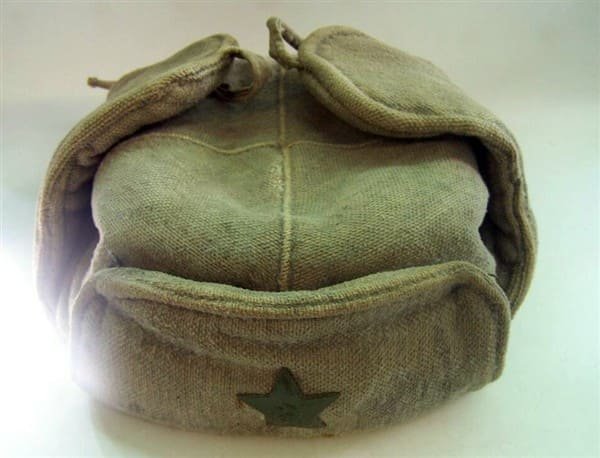
For officer ushankas and finka hats, a separate updated standard was issued: GOST 486-41,
“Fur ushanka and finka hats with leather or textile tops. Styles, technical sewing requirements, and classification by type and quality of materials.”
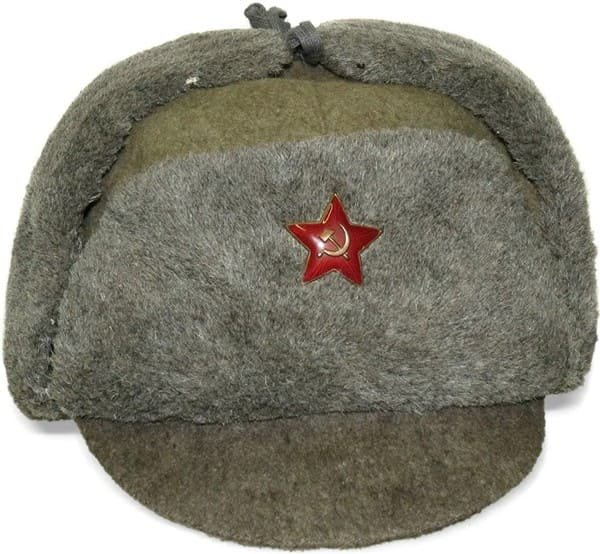
When Guards units were formed in 1941, there was an idea to introduce a distinctive uniform for them, including ushanka hats with a visor.
However, this idea never went beyond experimental samples.
+
Buying Soviet Boots? Add an Ushanka!
Add an original Soviet Ushanka to your boots order.
No extra shipping cost — the shipping price stays the same.
In addition, in 1943, Nakhimov and Suvorov military schools were created for teenagers.
As winter headgear, Suvorov cadets were issued black ushanka hats made of merlushka fur (Order No. 287 dated September 21, 1943, signed by Deputy People’s Commissar of Defense, Marshal of the USSR A. M. Vasilevsky).
For Nakhimov cadets, navy-style ushankas for sailors were used, while Suvorov cadets wore ushankas made of merlushka with a red cross on the crown.
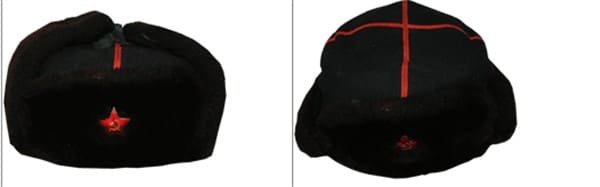
By 1949, five types of ushanka hats were produced for the army and navy:
-
Hat for soldiers;
-
Hat for officers;
-
Hat for sailors and Nakhimov cadets;
-
Hat for naval officers;
-
Hat for students of Suvorov military schools.
Shapka-finka hats and karakul papakhas should be mentioned separately.
Post-war history
After the end of the Great Patriotic War, the 1941 GOST standard for sewing soldier ushankas remained in use.
The variety of colors and materials continued.
In addition to Soviet-made ushankas, hats produced in Germany as war reparations also appeared.
However, I want to disappoint fans of Bulgarian-made ushankas.
They have nothing to do with war reparations or with the Red/Soviet Army.
As the post-war economic recovery progressed, active reform of military uniforms began for what was now the Soviet Army (from 1946).
In 1950–1951, new GOST standards for headgear were issued.
The main changes, using soldiers’ hats as an example, were:
-
The height-based sizing system was abandoned in favor of standard sizes;
-
Color unification for both fur and cloth – dark gray;
-
From that point on, the top of soldiers’ hats was made only of cloth, other materials were not allowed.
In a sense, the 1950 GOST became the foundation for the post-war development of the ushanka and its appearance, right up to the present day.
GOST 1076-50 “Artificial Fur Ushanka Hat for Soldiers of the Soviet Army”
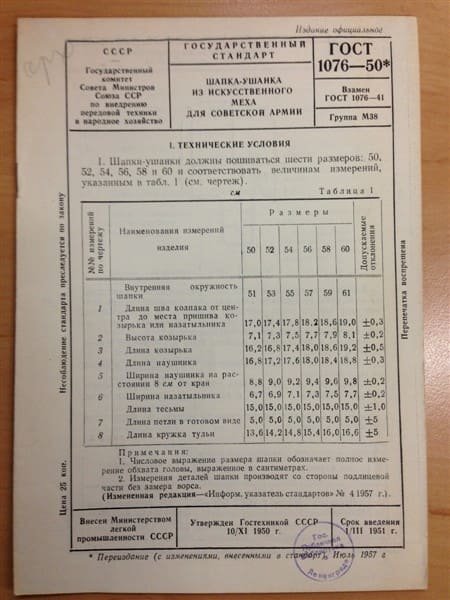
In 1950, a new GOST standard for hats for soldiers of the Soviet Army was approved.
The date of introduction was set for the 1st to 3rd quarters of 1951.
The number of sizes was increased to six: 50, 52, 54, 56, 58, 60.
The top material was melange wool cloth, articles 757 and 758, GOST 7139-54* (July 1957 revision).
The front part was made of wool plush – artificial fur, GOST 1876-46.
An interesting detail: the hat was required to have a metal Red Star with ruby-red enamel, 34 mm in diameter.
This is a small curiosity, because in 1947 the army officially switched to 32 mm stars, and in units soldiers also wore smaller 24 mm pilotka-type stars.
For officer ushanka hats, I was able to find only the 1951 standard – GOST 486-51, titled:
Combined fur hats – “ushanka” and “finka”. Mass production.
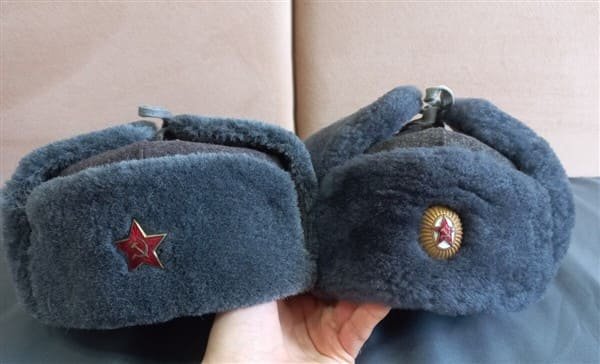
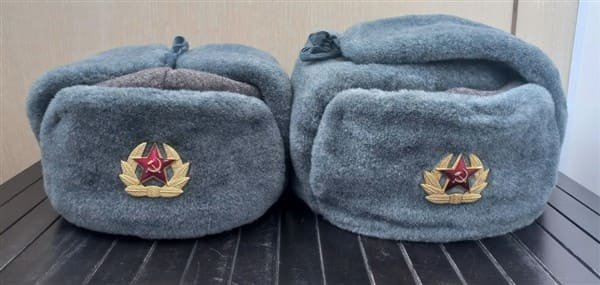
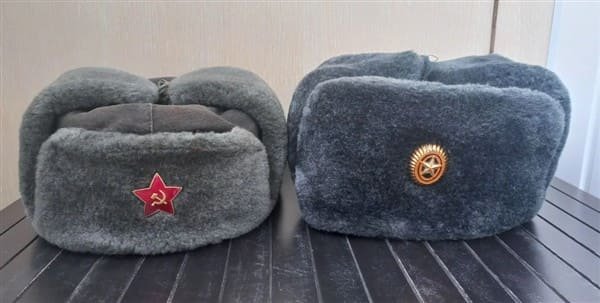
Comparison of two ushanka hats made under 1950s GOST standards.
Both hats were produced in 1959.
If you want a real ushanka for reenactment, not replica, you can find here: ( Soviet Ushanka )
The one on the left is a soldier’s hat, the one on the right is an officer’s hat.
The soldier’s hat is made of artificial fur and lined inside with calico.
The officer’s hat is made of sheepskin and lined inside with satin.
The soldier’s hat was produced at Fur Factory No. 3 of the Moscow City Economic Council (Moscow).
The officer’s hat was produced at Fur Factory No. 4 of the Tatar Economic Council (Kazan).
In July 1957, changes were introduced to the GOST standard. They were mainly related to the appearance of a new ushanka for extremely cold regions, introduced in 1952.
New points 10 and 11 were added, describing galalith buttons and a loop used to fold and secure the large ear flaps.
The ushankas themselves were officially adopted by Order of the Minister of Defense on February 25, 1955, No. 24:
“An officer’s ushanka made of tsigeyka fur, with a gray woolen cloth top, with extended ear flaps, a widened neck flap, and an insulated crown;
A soldier’s ushanka made of artificial fur, with a top made of water-resistant cotton fabric in protective (field) color, with extended ear flaps, a widened neck flap, and an insulated crown.”
It is worth noting that so far the author has not encountered OHR (special cold climate) ushankas produced earlier than the 1970s. Because of this, there is some doubt that soldier ushankas actually had tops made of water-resistant cotton fabric in protective color, rather than woolen cloth.
Also, around the 1950s, the red cross on the crown of Suvorov school ushankas was removed.
GOST 1076-62 “Ushanka Hat for Soldiers of the Soviet Army”
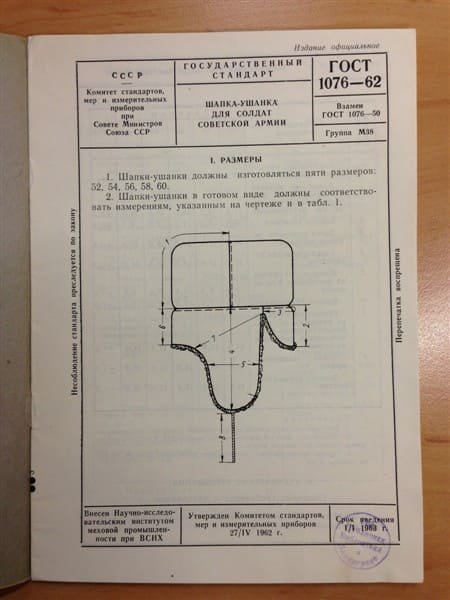
In 1962, a new GOST standard for soldier ushankas of the Soviet Army was approved.
The standard came into force in the 1st quarter of 1963.
The number of sizes was reduced to five: 52, 54, 56, 58, and 60.
The top material was dark gray hat cloth with a water-resistant treatment, article 1352/4408, GOST 6695-53.
The front (fur) part was made of gray artificial wool plush, article 4710.
An important change that helps to date ushankas was the abolition of the Sovnarkhoz system in December 1965.
Because of this, from 1966 onward, most ushankas have factory stamps with animal symbols (ram, squirrel, and similar).
In 1967, inter-republic technical specifications for ushanka production were also introduced: MRTU 17-462-67.
In addition, during the 1960s, another type of ushanka appeared – made of karakul fur for the highest command staff (generals, branch marshals, and Marshals of the USSR), hereafter referred to as HCS.
It was first mentioned in the Order of the Minister of Defense of the USSR dated July 26, 1969, No. 191,
“On the introduction of the Rules for wearing military uniforms by servicemen of the Soviet Army and the Navy.”
“Article 34. It is permitted to wear:
In winter, a peaked cap instead of a papakha when off duty;
a gray karakul ushanka at low temperatures with field uniform.”
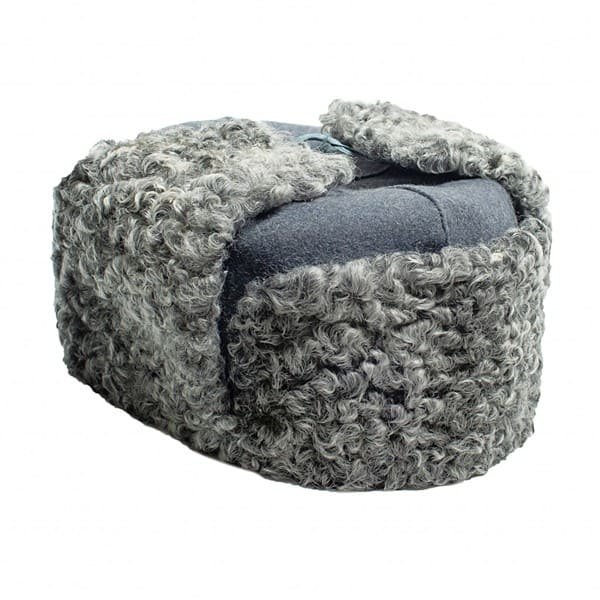
By 1969, eight types of ushanka hats were produced for the Army and Navy:
-
Ushanka for soldiers;
-
Ushanka for soldiers in extremely cold regions (OHR);
-
Ushanka for officers;
-
Ushanka for officers in extremely cold regions (OHR);
-
Ushanka for sailors and Nakhimov cadets;
-
Ushanka for Naval officers;
-
Ushanka for Suvorov military school cadets and military music school students;
-
Karakul ushanka for the highest command staff (HCS).
It was not possible to find information on when the production of finka hats was discontinued.
Ushanka of the “Developed Socialism” Era (1973–1991)
In the 1970s, the design of the ushanka went through several changes.
Starting in 1970, soldier and sailor ushankas began to use four stitching lines on the crown instead of three. This increased the number of visible diamond-shaped segments. Most factories switched to this standard by 1973.
One exception was the Alma-Ata factory. They did not hold back on stitching lines.
Officer ushankas, in most cases, continued to be made with three stitching lines.
Around 1973, the visor height on soldier and sailor ushankas was increased by 1 cm. At the same time, the height of the back neck flap was also increased and became almost level with the visor. This made the hat look slightly larger overall.
Most likely, the reason for increasing the visor height was the introduction of a new cockade – the star with a wreath, commonly known as “cabbage.” This change was introduced by Order of the Minister of Defense of the USSR dated November 1, 1973, No. 250,
“On the introduction of the Rules for wearing military uniforms by servicemen of the Soviet Army and the Navy.”
A standard 32 mm star could be easily placed in the center of an 8 cm visor. However, when the same star was combined with a wreath – which adds about 1 cm of width at the bottom – placement became more difficult. Most likely, this “lost” centimeter was compensated by increasing the visor height by 1 cm.
GOST 1076-77 “Ushanka Hat for Soldiers of the Soviet Army”
Unfortunately, no official documents could be found.
Most likely, under the 1977 GOST, the soldier’s ushanka received one of its most interesting features – buttons on the ear flaps.
A good question is: does anyone who served or still serves in the army actually know what they are for?
It’s time to drop the masks and reveal the secret.
These buttons were made to attach special curtains from the OKZK protective kit.
And specifically these were special curtains, not the ones used with a summer cap.
Curtains for a cap and for an ushanka are different in cut and shape.
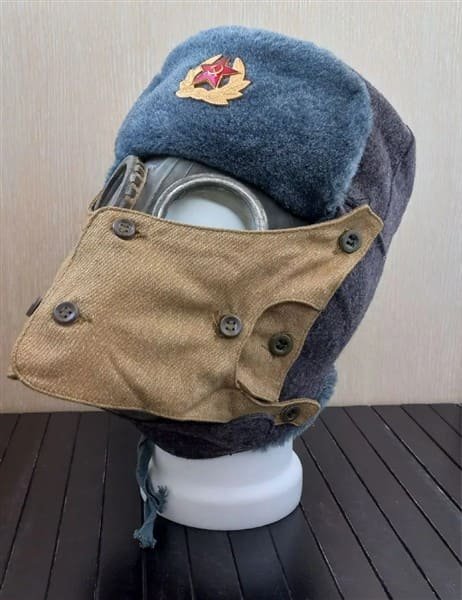
What is characteristic is that these buttons exist only on soldier ushankas, and they are still sewn on today.
Apparently, officers and the navy were not expected to operate in contaminated areas, so buttons on the ear flaps were considered unnecessary for them.
However, there is an interesting detail here.
The curtains for winter hats were officially included in the OKZK-D kit (winter protective suit for airborne troops).
But how widely they were issued as a separate item for other branches of the military remains an open question.
This is very important, because these curtains are extremely hard to find today.
Most likely, their production or use was limited and was meant to be massively deployed only in case of a nuclear war, or they were quickly abandoned at the first opportunity (not a very profitable item for mass production and sales).
The fur color of soldier ushankas continued to vary, but the most common color became gray-blue.
I also found TU 17-20-21-77 on tags for officer ushankas, and TU 17 RSFSR 0299876-O2-89 for ushankas made for Suvorov military school cadets.
In 1981, TU 17 RSFSR 50-3132-81 for under-helmet liners was updated.
They were mainly produced in beige, but white and gray versions were also made.
GOST 1076-86 “Ushanka Hats Made of Artificial Fur for Military Personnel”
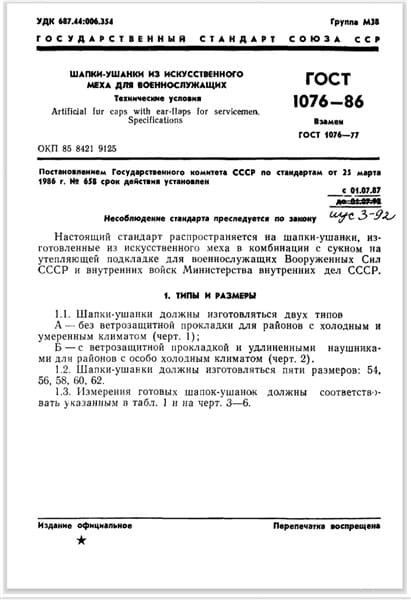
The standard came into force on July 1, 1987.
The number of sizes remained five: 52, 54, 56, 58, and 60.
The top material was hat cloth with a water-repellent finish, article 4408, dark gray color, GOST 6695-73.
The front (fur) part was made of woven fur with wool pile, article 9274, gray color.
An interesting point is that the document officially introduced a division of ushankas into two types:
“1.1. Ushanka hats must be produced in two types:
A – without a windproof lining, for regions with cold and moderate climate (drawing 1);
B – with a windproof lining and extended ear flaps, for regions with extremely cold climate (drawing 2).”
Unfortunately, it is not possible to determine the exact differences compared to the 1977 GOST.
By 1991, eight types of ushanka hats were produced for the Army and Navy:
-
Ushanka for soldiers;
-
Ushanka for soldiers in extremely cold regions (OHR);
-
Ushanka for officers;
-
Ushanka for officers in extremely cold regions (OHR);
-
Ushanka for sailors and Nakhimov cadets;
-
Ushanka for Naval officers;
-
Ushanka for Suvorov military school cadets, military music school students, and students of special boarding schools;
-
Karakul ushanka for the highest command staff (HCS)
Russian Period (1992–2025)
TU 17 R-03-57-93
TU 858-5243-93
These are the technical specifications for producing ushanka hats for the Russian Army and Navy that are known to me. They were approved in 1993.
Most likely, these were simply updated Soviet technical standards, since the cut and design of the hats did not change.
The main fur color of soldier ushankas in the 1990s was gray.
However, the quality clearly dropped.
I own a sailor’s ushanka produced in 1993. The crown is made from unusually thin cloth, with a texture that feels almost knitted.
There is also a soldier’s ushanka from 1994, factory-fitted with the new field cockade of the 1993 pattern with an applied star. The fur is extremely short-cut and of very poor quality. The internal structure is weak, the hat barely keeps its shape – apparently, they saved money on padding.
An interesting detail: ushankas for extremely cold regions (OHR) produced after 1994 have not been encountered so far. Most likely, their production was stopped around that time.
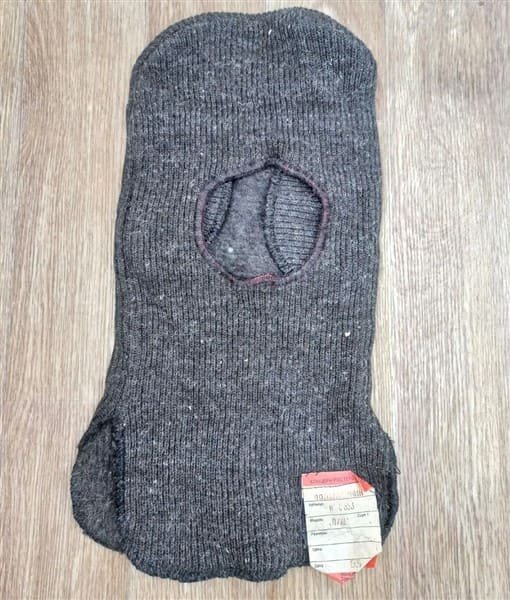
The quality of under-helmet liners also declined. They came in various “dirty” shades and were made of rougher, more itchy wool.
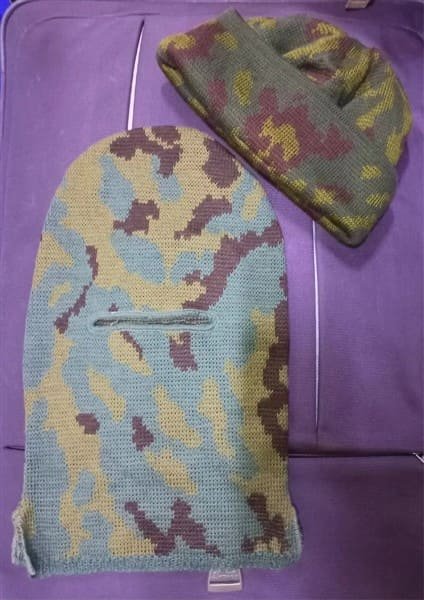
Starting from 1999, together with the new composite helmets 6B7, supplied under the “Barmitsa” R&D program and others, knitted wool items were issued: a reversible cap and an under-helmet liner.
They were made in camouflage versions. At first with the “Butan” pattern, and later with the “Flora” pattern.
The quality of these items is noticeably higher than that of standard under-helmet liners. They feel softer and more comfortable to the touch.
The cap has a white inner side, apparently intended for winter camouflage
In the 2000s, the quality of ushankas improved.
Compared to Soviet ones, they mostly differed only in fur colors and materials.
In almost unchanged form, these hats are still used by the army today as part of the everyday “office” uniform.
For example, I own an ushanka produced in 2018, made of gray-blue fur.
According to the label, it is:
“Ushanka hat made of artificial fur for military personnel, type A, with a gold-colored Armed Forces of the Russian Federation cockade with a star.”
Catalog number: 017.009505.
The main fur color of soldier ushankas once again became gray-blue.
In 2005, TU-858-5813-2005 was approved for a semi-wool under-helmet liner, type A.
At first, they continued to produce them in beige, but from 2010 onward only in protective (field) color.
These were produced roughly until July 2013.
And the most interesting thing is that soldier ushankas still have buttons for protective curtains from the OKZK kit.
It seems that no one in the army today knows what they are for, or where to get those curtains at all, but the buttons are still there.
Stability at its finest.
Field Ushanka of the VKPO System (2013–2022)
The army reforms that began in 2007 continued almost until 2015.
In 2010, a new field camouflage uniform with the “Digital” pattern was introduced.
In winter, it was still worn with the regular ushanka.
In 2011, a multi-layer system called VKBO – the All-Season Basic Equipment Set – was developed.
However, it is more correct to call it VKPO (Field Equipment Set), and this name will be used further in the text.
In 2012, it was sent for field trials to various army units.
Apparently in the same year, part of the technical specifications for some uniform elements was approved.
One of these elements was the ushanka from the VKPO system – the first truly field ushanka in domestic military history.
From June 2013, VKPO began to be supplied to the troops, at first in very small quantities and mainly to “privileged units.”
From 2015 onward, its use was extended to the entire army.
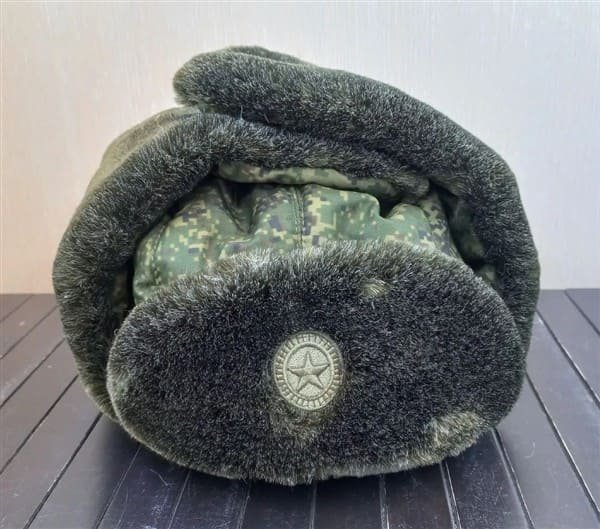
The name on the label is “Insulated Ushanka Hat.”
TU 858-6250-2012, amendment 1
By the way, the first VKPO set also included a “balaclava mask hat.”
So why should this ushanka be called the first field ushanka?
Before this, the ushanka was a universal hat.
It was worn with any uniform: field, everyday, or dress.
Only the cockade changed.
Now the situation changed.
There are two different ushankas.
The familiar artificial-fur ushanka moved into the category of a hat for everyday and dress uniforms, commonly called the “office” uniform.
The ushanka from the VKPO set is worn only with the field camouflage uniform.
The rounded design of the hat theoretically allows it to be worn under helmets, both steel and composite.
However, for better comfort, a separate under-helmet liner was included in the VKPO set.
In general, the concept of this hat was interesting.
But visually, it was extremely unfortunate.
The attempt to combine field functionality with the familiar simplicity of the ushanka resulted in a kind of “Frankenstein” – a very questionable design, something like a “pie-shaped” hat.
This led to a flood of jokes about how to wear it properly without looking awkward or cringe.
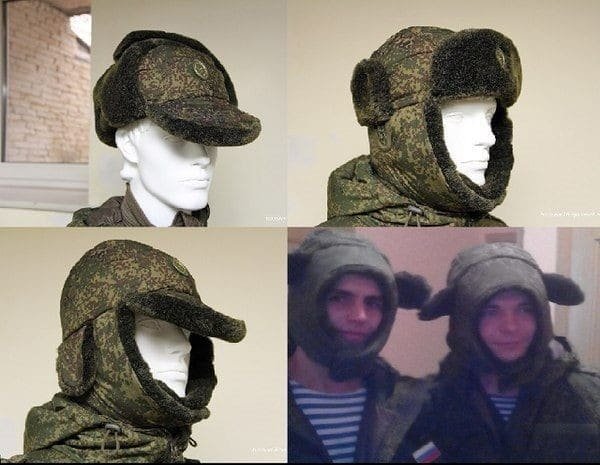
Why does the VKPO ushanka have small auxiliary ear flaps, and what are they for?
The reason is quite practical. They were designed to make it easier to use the ushanka with radio headsets.
When wearing headphones over standard ear flaps, sound quality is poor. Folding the ear flaps up improves hearing but increases the risk of frostbite. The small auxiliary ear flaps solved this problem: better audibility while keeping the ears protected.
They also helped during drill training, commands were easier to hear, and the risk of disciplinary punishment was lower.
These ear flaps followed the concept used on Soviet OHR ushankas, the so-called “one-and-a-half ear” design, which provided better chin protection. The flaps were secured with a long Velcro strap.
However, practice showed that conservatism, rigidity, laziness, and misunderstanding are the real enemies of innovation. The small ear flaps were rarely used, the Velcro wore out quickly, repairs were inconvenient, and the long ear flaps made the hat look awkward and heavily criticized.
As a result, in 2018 the Ministry of Defense simplified the design. The ear flaps were made standard length, fixed with traditional ties, and the small auxiliary flaps were removed. The visor became non-folding. Overall, the field ushanka was visually brought closer to the everyday version.
This updated VKPO ushanka remained in production until 2022.
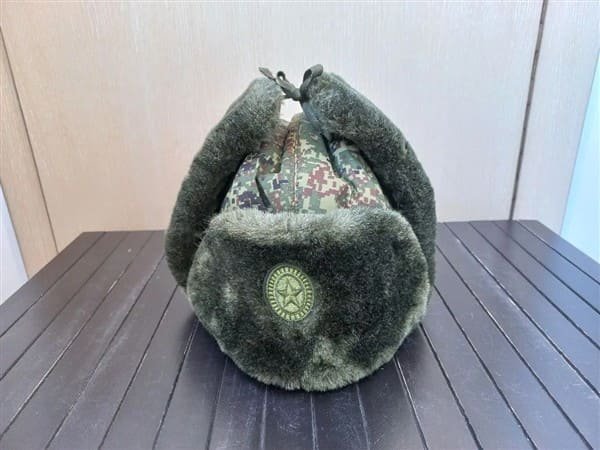
Catalog number: 01.011111
Around the same period, the balaclava was removed from the VKPO set and replaced with a fleece cap (commonly referred to as a “fleece hat”).
At the same time, the under-helmet liner was also revised. With the adoption of the new standard-issue combined arms helmet 6B47 in 2014, three types of liners were supplied as part of the helmet set: a white liner, a protective insulated liner, and a lightweight protective liner.
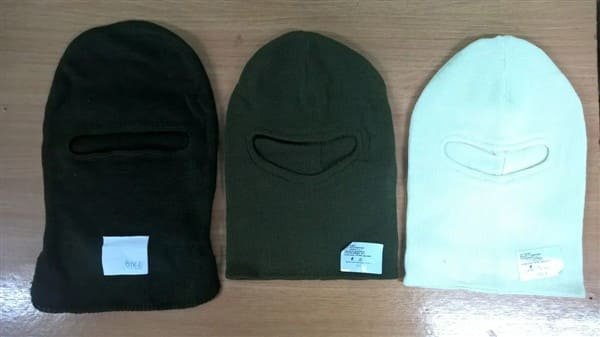
The only technical specification I was able to find is TU 5813-001-33030068-2014.
In 2015, a version for mountain and desert regions was introduced (commonly referred to as the “Syrian” or “piglet” version). The set included three helmet liners: a white liner, a gray insulated liner, and a lightweight gray liner.
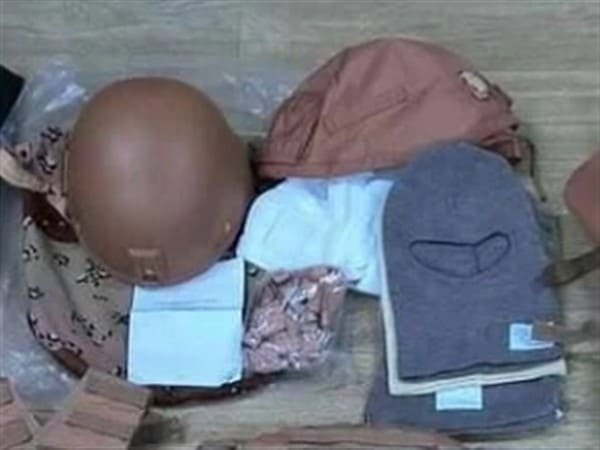
Since 2017, the helmet liners in the mountain-desert kit were switched to beige. The set was reduced to two pieces: a thick (warm) liner and a lightweight liner. The white liner was removed from the kit.
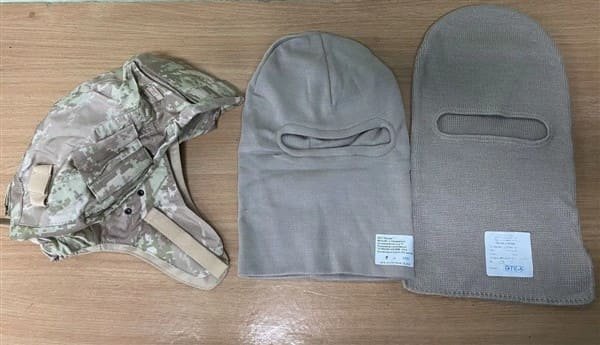
Lightweight knitted helmet liner – TU 5813-001-33030068-2014
Helmet liner (insulated) – TU 858-001-18195547-2017
In 2019, helmet liners were discontinued. Instead, a knitted cap and a tubular scarf (buff) were introduced into the standard kit.
The knitted cap is officially designated as “Helmet liner, model 1” and is regulated by Technical Specifications approved in 2018, which indicates that its development began at least a year earlier.
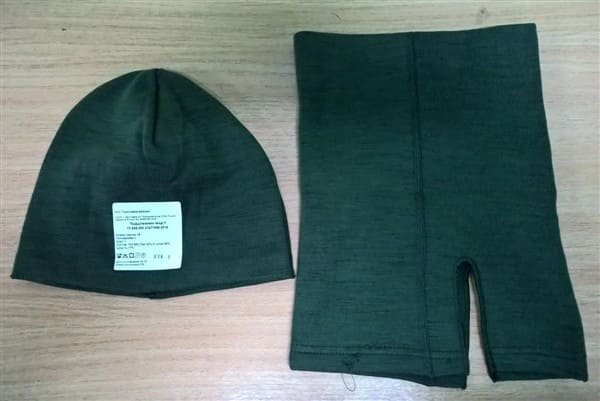
TU 858-090-23477458-2018
A similar set in a beige color scheme is supplied with the mountain-desert version of the helmet.
Arctic Ushanka
In 2016, a uniform for extremely cold climates was introduced into service supply, commonly referred to as VKPO Arctic / EMR Arctic / Arctic Digital.
As the standard winter headgear, an ushanka was adopted that is very similar in design to the VKPO field ushanka.
Its official designation is:
“Winter hat for servicemen of the Armed Forces of the Russian Federation serving in extremely cold climate conditions (Arctic).”
Catalog number: 01.200309
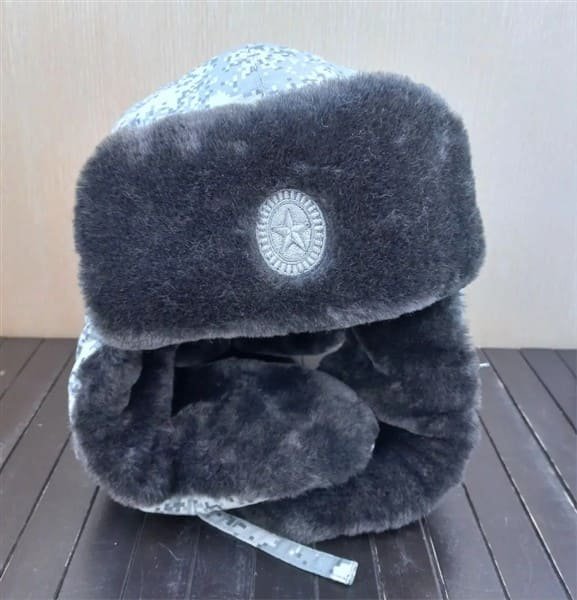
It has noticeably more insulation than a standard army ushanka, at least by feel. The hat is fastened with a fastex buckle. On the right ear flap there is a small pocket; it is likely intended for mounting a radio laryngophone or for storing a cloth to wipe moisture or wet snow from goggles or a mask. However, this remains only my assumption.
The rear neck flap is separated from the ear flaps. There is an external adjustment strap to fine-tune the fit on the head. The visor is attached with snap buttons. The ear flaps are of the so-called “one-and-a-half length” type; when folded, they are secured together rather than overlapping each other.
Overall, this is a solid and well-made ushanka. In addition to it, the Arctic uniform set includes a grey-blue fleece cap and a matching balaclava. All these elements can be combined and worn together with the ushanka for additional insulation.
The War in Ukraine and the “Mobilization” Ushanka
On February 24, 2022, the Special Military Operation began. It quickly became clear that the pre-war cut of field uniforms did not adequately meet the realities of modern combat. Work on new uniform designs was initiated.
In September 2022, partial mobilization was announced. Within one month, 300,000 people were mobilized (according to official figures).
These two events led to the emergence of two parallel paths in the development of military uniforms and headgear. For frontline units, efforts were made to create more functional “combat” equipment. For mobilized personnel and units stationed in the so-called “old” territories, simpler ersatz versions of existing designs were issued, often made from cheaper and more basic materials.
There is a popular anecdote in military-adjacent circles claiming that since the majority of mobilized personnel were men aged 40+, the layered clothing system was considered too complex for them. As a result, simpler solutions were allegedly chosen: ripstop fabrics instead of more advanced materials, basic cotton underwear instead of moisture-wicking layers. According to this logic, a new version of the VKPO ushanka appeared in autumn 2022, deliberately shaped to resemble the Soviet-era design, evoking “warm nostalgic flashbacks” of youth in kirza boots.
Whether one believes these stories is a personal matter. However, it is a fact that the materials used in pre-war VKPO designs changed during this period, often for the worse.
In any case, the 2022-model ushanka was issued as part of the updated VKPO set based on the pre-war pattern. Compared to the 2018 version, it features a rigid internal frame and a form factor closer to that of the everyday (service) ushanka. Such a hat can realistically be worn only with Soviet-era steel helmets.
The most likely reason for its appearance is simple: ushankas are rarely worn at the front. Fleece caps are used almost universally instead. As a result, the ushanka has effectively shifted into the category of parade-ground and inspection headgear rather than combat equipment. Naturally, a standard everyday (“office”) ushanka looks far better than a shapeless field version.
Since mobilized personnel and volunteers are not issued everyday service uniforms, the new ushanka effectively replaced both the office and field versions, combining elements of each into a single compromise solution.
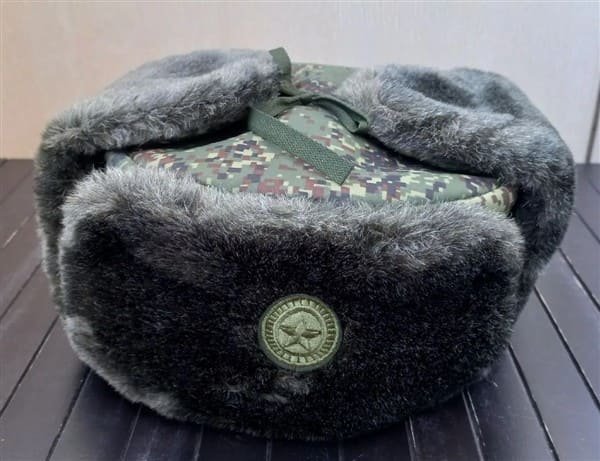
VKPO after 2022 and current situation
In spring 2023, a new VKPO uniform of the 2022 pattern began to enter service, with versions indexed 2.0, 3.0, and 4.0 from different manufacturers.
Among headgear for the mid-season and winter periods, only fleece caps were retained. Even helmet liners were removed. Instead, a combination of a knit cap and a tube scarf (buff) was introduced.
The same system remains in use today with the appearance of VKPO versions 2.1 and 3.1, and with an upcoming transition to version 3.2.
As a result, we effectively have two parallel VKPO systems with different headgear:
-
one with two versions of the ushanka,
-
and one using only a knit cap.
In addition, professional contract personnel still have a separate everyday (service) ushanka. How long this parallel system will continue remains unclear.
Ushanka types in service as of 2025
As of 2025, the army and navy officially issue eight types of ushankas:
-
Ushanka for soldiers
-
Ushanka for officers
-
Ushanka for sailors, Nakhimov cadets, Suvorov school students, and cadet classes
-
Ushanka for naval officers
-
VKPO ushanka, 2018 model
-
VKPO ushanka, 2022 model
-
Arctic ushanka
-
Karakul ushanka for senior command staff (generals and marshals)
Prospects
This article comes to an end, but the history of the ushanka does not.
No matter how advanced modern materials become, a simple knit cap will never surpass the ushanka in terms of protection against cold. In addition, the ushanka has a clear advantage in appearance for ceremonial and parade use.
It is possible that the ushanka will eventually disappear completely from field uniforms, replaced by caps, remaining only as part of Arctic equipment sets. However, it is highly unlikely to disappear from everyday service uniforms.
Over 85 years, the military ushanka has changed remarkably little.
A hundred years will pass, and somewhere at a lunar spaceport two space paratroopers will be standing in gray ushankas (with a sewing kit tucked behind the visor and buttons for OKZK protective flaps on the ear flaps), waiting for their flight. And as the shuttle approaches, they will reluctantly put their space suit helmets on over the ushankas…
If you want a real ushanka for reenactment, not replica, you can find here: ( Soviet Ushanka )

More interesting articles:
Soviet Combat Boots of the Afghan War: Testing 3 Designs
Soviet Spetsnaz Uniform in Afghanistan (1979–1989)
How the Soviet Army Uniform Changed from 1955 to 1991
Field Uniform and Equipment of the Soviet Army (1968–1991) – Part 1