Field Uniform and Equipment of the Soviet Army (1968–1991) – Part 3
Focus topic: Soviet Army field uniform and equipment during the Cold War period (Part 3).
Articles this series:
Field Uniform and Equipment of the Soviet Army (1968–1991) – Part 1
Field Uniform and Equipment of the Soviet Army (1968–1991) – Part 2
Field Uniform and Equipment of the Soviet Army (1968–1991) – Part 4
Soviet Spetsnaz Uniform in Afghanistan (1979–1989)
How the Soviet Army Uniform Changed from 1955 to 1991
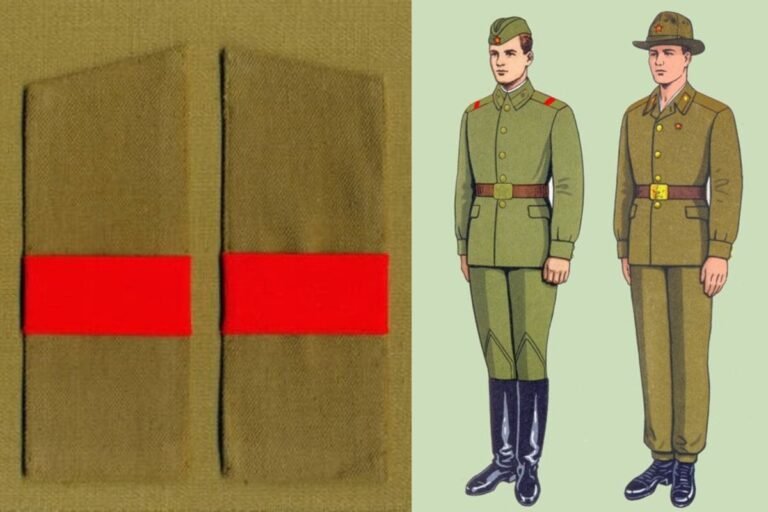
There was no camouflage uniform in the Soviet Army until the late 1980s. But “in the army” does not mean “in the USSR as a whole.”
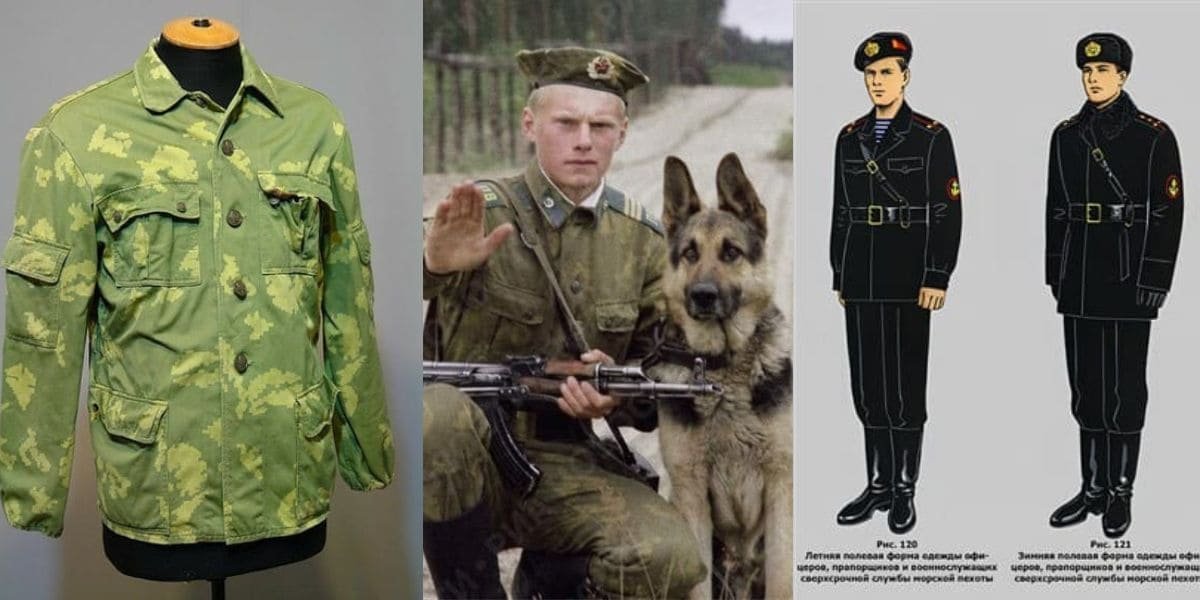
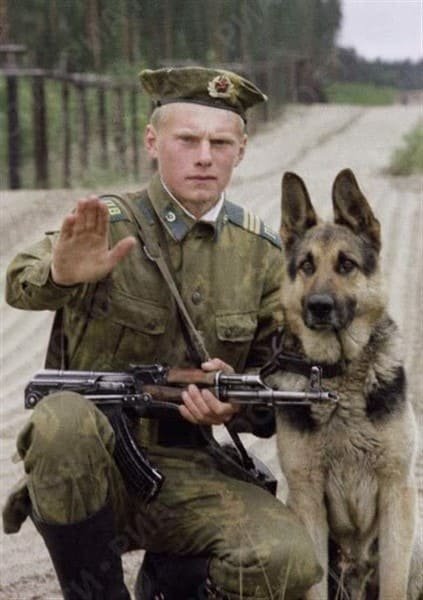
There were also the border troops, which belonged to the KGB. They had (not all of them, though) a camouflage uniform in a pattern that is now called “berezka – yellow leaf” on the Internet.
Soviet Army field equipment
Quick navigation
- Border troops “Berezka” camouflage
- Berezka winter version
- Border camouflage cap
- Improvised chest rig
- Pre-war Soviet uniforms and equipment
- German boots with canvas gaiters
- Bundeswehr field uniform (1970s)
- The “modern US soldier” image
- French F2 field jacket (1980)
- Soviet parade uniform
- Naval infantry black field uniform
Border troops “Berezka” camouflage (Yellow Leaf pattern)
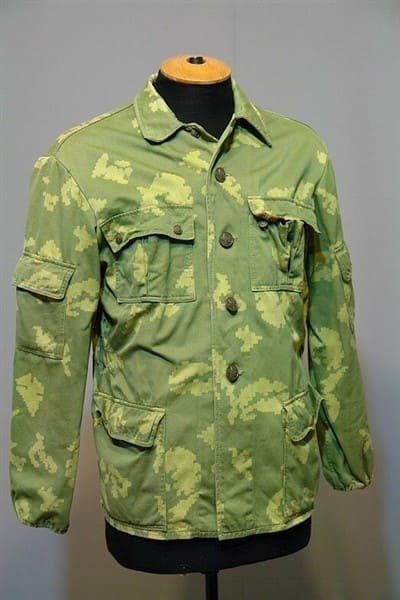
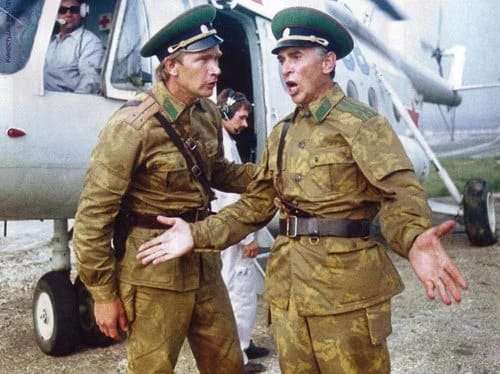
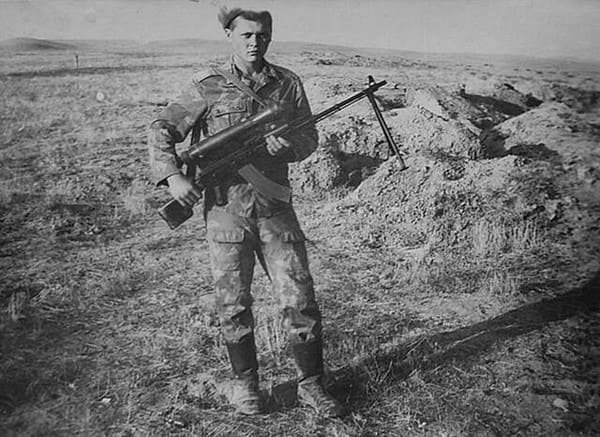
As can be seen in the photos, the jacket resembles a standard combined-arms tunic, but it has patch pockets on the chest and sleeves, as well as patch pockets instead of slit pockets on the lower part. The trousers are also similar to the standard ones, but they have front thigh pockets, like on the “mabuta.”
Berezka winter version
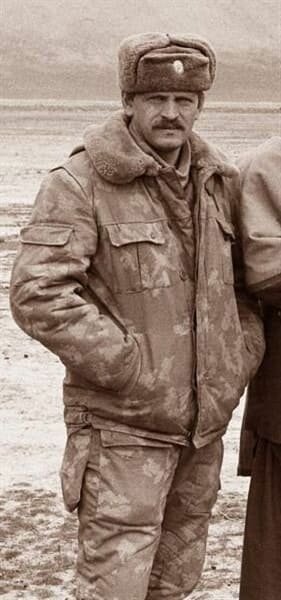
Looking for original Soviet Ushanka? You can get them here → [Soviet Ushanka]
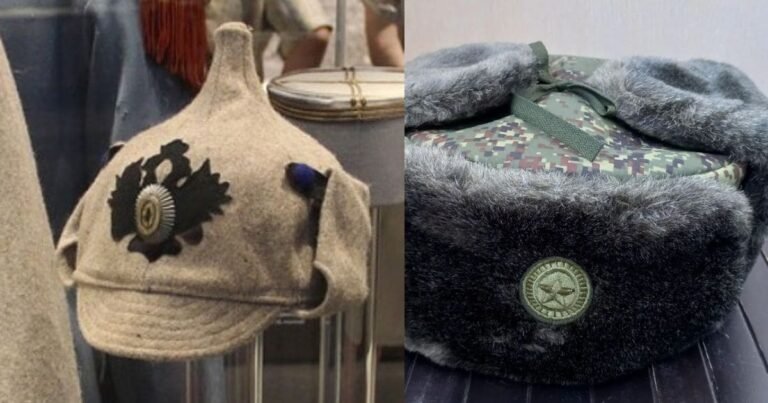
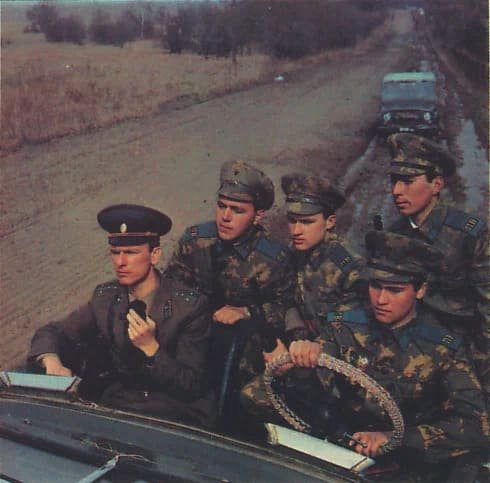
Border camouflage cap
The border camouflage uniform came with a rather strange cap. The visor could be tucked inside and worn like a beret.
Improvisation in the field
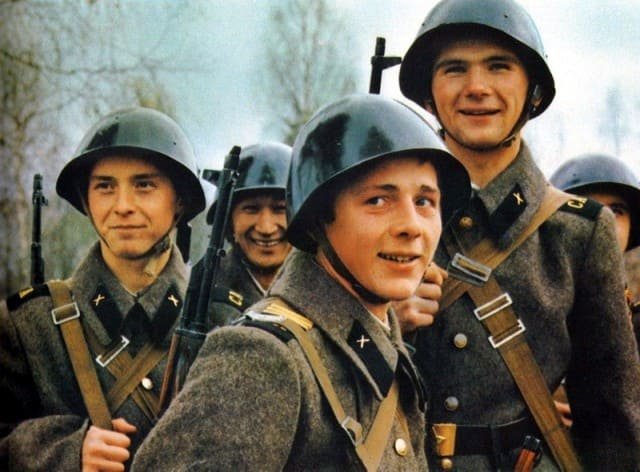
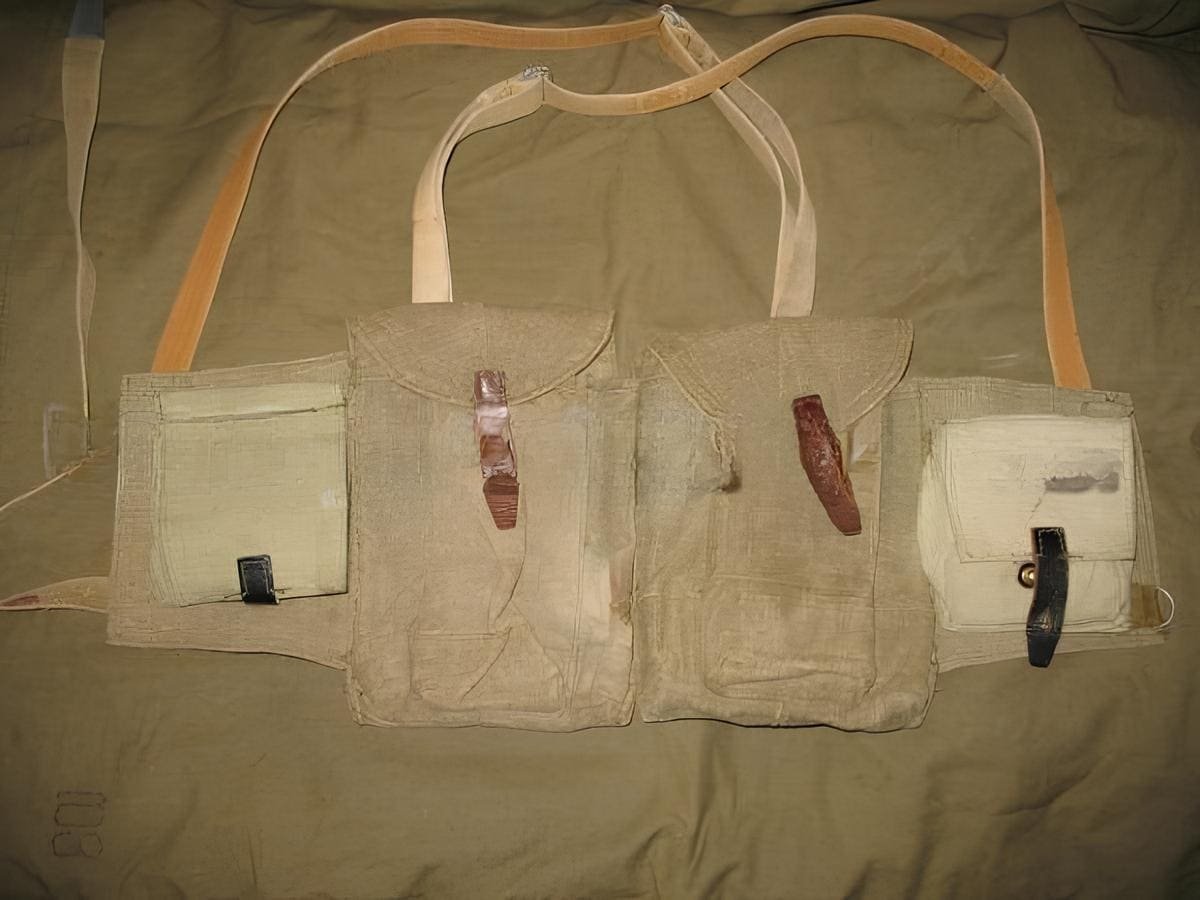
Many unflattering things have been said about Soviet uniforms and equipment. That it was uncomfortable, outdated, poorly thought out. Of course, those who criticize it are largely right. This is confirmed at least by the fact that in Afghanistan soldiers were much more willing to wear the “mabuta” and the “Afghanka” uniform (we will talk about it later), and also showed real miracles of ingenuity trying to improve their equipment. For example, here is a homemade chest rig sewn from ordinary infantry pouches.
Pre-war Soviet uniforms and equipment
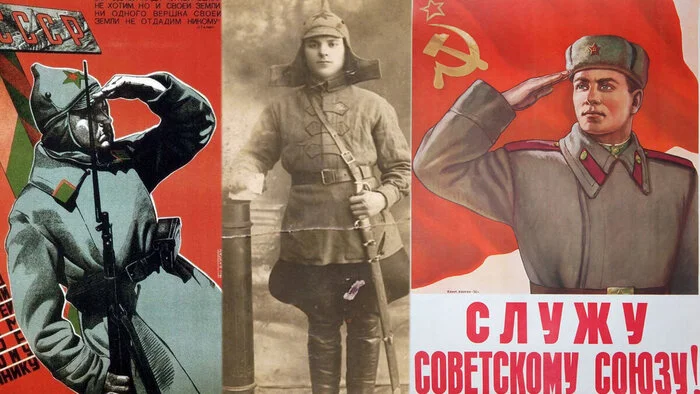
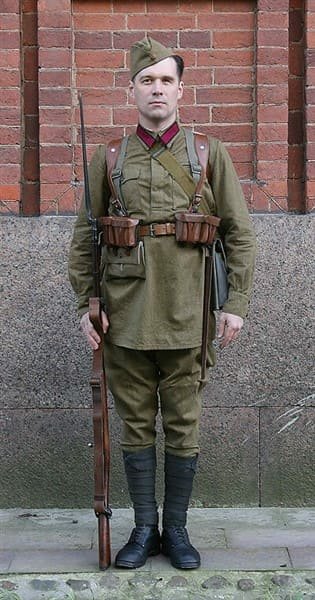
However, one must not forget the conditions in which Soviet equipment was created. Before the Great Patriotic War, the equipment of the Soviet soldier did not differ much from the global average level.
Uniform and equipment of the Soviet soldier in the late 1930s – early 1940s
Looking Soviet Low Combat Boots? You can order here: (Soviet Combat Boots)
Pre-war Soviet equipment
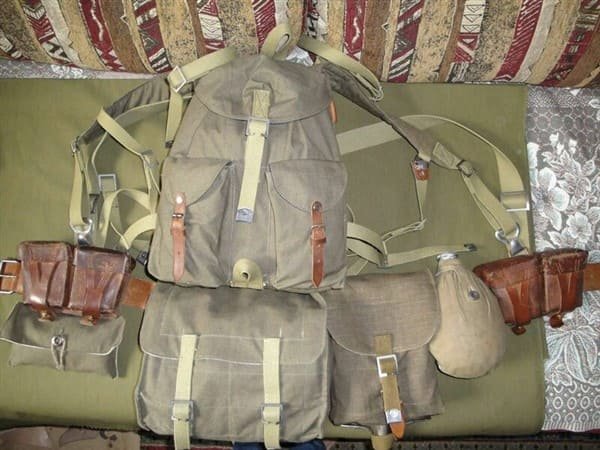
But during the war, the designers of equipment faced the task of simplifying and cheapening it as much as possible in order to equip millions of soldiers during total devastation and shortage of literally everything. And they coped with this task brilliantly. Take, for example, kirza boots. Yes, they were not as attractive as full leather boots. But kirza (rubberized canvas) made it possible to save a huge amount of leather and fully supply the army with boots. And we did not have to, like the Germans, put soldiers in boots with canvas gaiters.
German boots with canvas gaiters
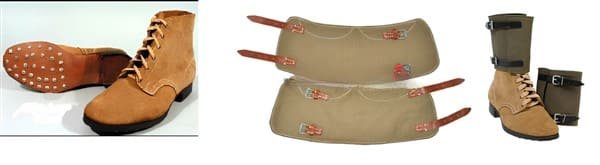
Or the duffel bag – just a strip of canvas folded in half and sewn together. It is hard to imagine a simpler and cheaper backpack. Of course, such simplicity was achieved largely at the expense of comfort. After the war, the economic situation was not much better. A country lying in ruins had to maintain a huge army; there was no time for advanced uniforms and equipment.
Primitive equipment was justified in the 1940s–1950s. But by the 1970s, the USSR could have afforded something more advanced. Especially since Soviet technology was quite decent. But equipment remained purely nominal. Compared to Western equipment, an analogy can be drawn: a Mercedes and a Zaporozhets are similar – both have four wheels and a steering wheel – but the difference is obvious.
I think the reason here is more psychological. I once heard a story about how elephants are tamed. They take a baby elephant and put it on a chain. Then it grows up, becomes big and strong, and could easily break the chain. But over the years of “childhood,” the idea of the chain becomes so deeply ingrained in its mind that it never even occurs to it to break it.
But despite all this, I cannot bring myself to justify the Soviet approach to equipment.
By the way, about cost. It is still a question whether proper equipment for soldiers is really so ruinous for the state. The USSR and the USA spent simply monstrous amounts of money on military needs. Armadas of tanks, clouds of aircraft, aircraft carriers, nuclear submarines, intercontinental missiles, gigantic over-the-horizon radars, space…
Here are some prices for comparison. The American ALICE load-bearing system costs $100. An Abrams tank costs $6 million. Thirty rounds for an assault rifle (one magazine) cost $10. A hand grenade costs $20. An artillery shell costs $200. A night sight (not the most modern one) costs $2,000.
Soviet uniforms had another weak point – aesthetics. In one book I read a great analogy: in the past, people made beautiful carriages; now they make beautiful cars. But no one would ever think of giving a modern car the design of a carriage. Because beauty must be modern. That is exactly what Soviet uniforms and equipment lacked – MODERN beauty. Soviet parade uniforms were simply magnificent. They organically combined the traditions of Russian military dress with contemporary fashion trends. But the design of the field uniform had hardly changed since the beginning of the century. And by the 1970s, this uniform already looked hopelessly outdated. For example, here is the uniform and equipment of the Bundeswehr in the 1970s.
Bundeswehr field uniform (1970s)
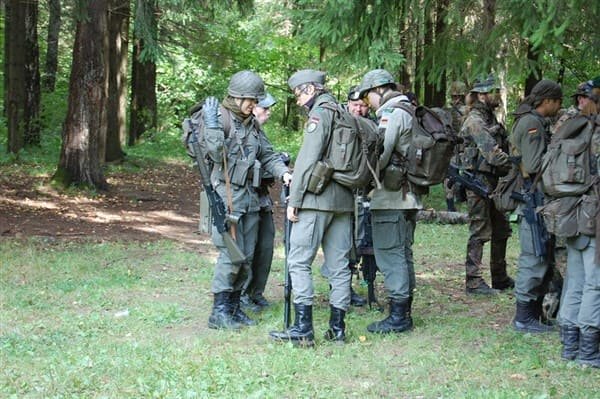
As we can see, there is nothing special about their uniform. But it still looks like something from the 1970s, not the 1940s, like the Soviet one.
Many readers will probably smirk now, call me a clothes freak or an armchair ranger, recall the famous phrase “you don’t fight in double-breasted coats anymore,” and say that I care about fashion like a woman. Yes, of course, a soldier in war does not care how he looks. But other people who see soldiers on TV (in peacetime) do care, even if they don’t realize it. A cool-looking uniform and equipment is a powerful propaganda weapon. It shapes a positive image of the army both for its own people and for the enemy. Recall the uniforms of the Wehrmacht and the SS. How eerie they look in films. They have long and firmly become associated with power – terrifying, cold, and merciless. But, for example, Japanese uniforms of the same period do not have this effect. Even though the Japanese were also “bad guys” in that war, their uniform does not scare anyone. Now recall what image appears in your mind when you hear the words “American soldier.” I am 99% sure it is a fighter in ultra-modern, futuristic, almost alien-looking gear, like a warrior from the future, equipped with fantastic technology, highly computerized and almost invincible. This image is formed by films and video games. And design plays a very important role in this. For example, this:
The “modern US soldier” image
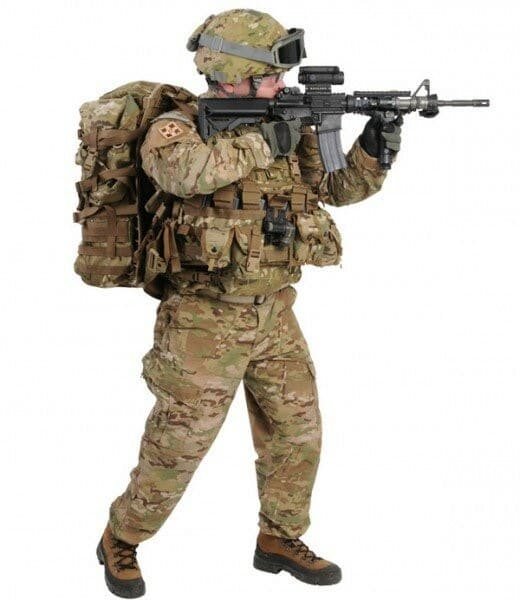
Here is another indicator. Young people often dress in a “military” style. Military or semi-military trousers with thigh pockets, camouflage, combat boots. Most of this clothing is inspired by the American BDU field uniform. The American M-65 jacket is also often worn (even by people far from fashion). And, for example, this young woman is wearing a French jacket from the F1 set of 1980.
French F2 field jacket (1980)
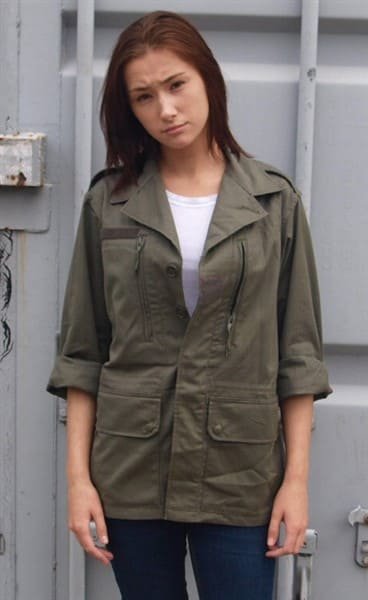
And this jacket looks quite natural. But no one wears Soviet uniforms. The very idea of it seems ridiculous. Going further – how many airsoft teams wear the 1969 uniform? Almost none. Americans in Vietnam – plenty. Germans of the 1970s–80s also exist (both West and East). I have even seen Swedes from the 1980s. The Soviet Army in “Afghanka” uniforms exists too, and in large numbers. But Soviet uniforms of 1969 – none.
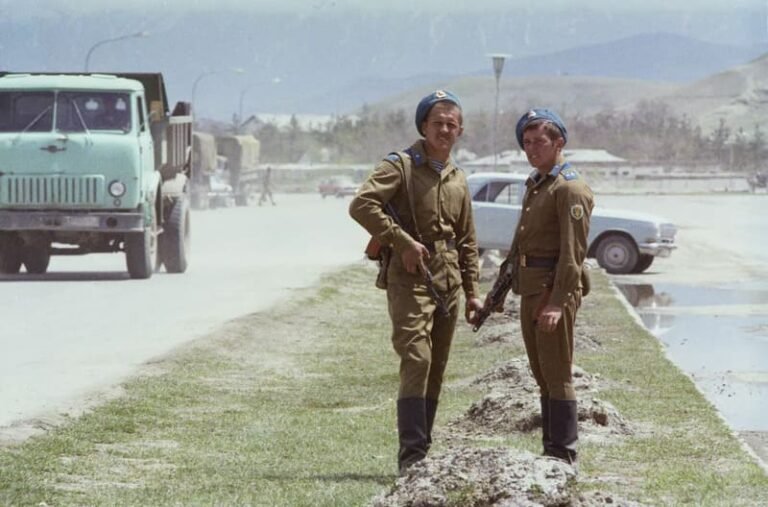
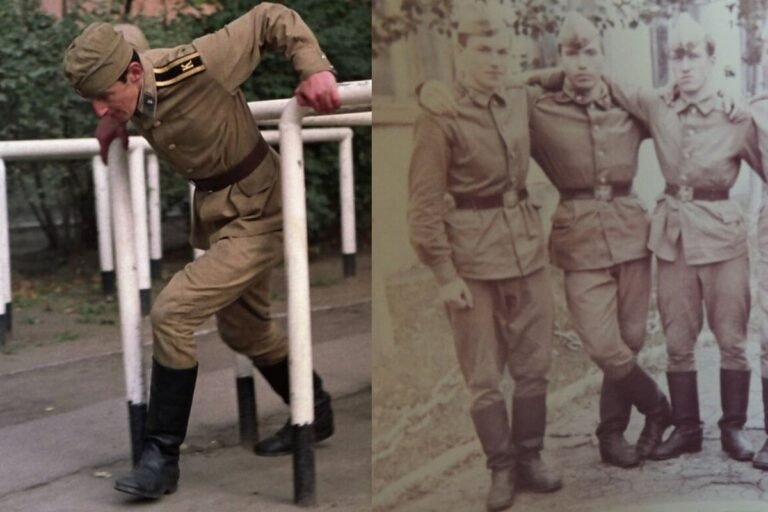
However, Soviet military leaders were actually quite concerned with fashion and appearance. They just did it completely wrong. The point is that they tried to make field uniforms look like parade uniforms. Soviet field uniforms had many traditional elements at the expense of functionality. For example, shiny buttons and cockades, colored shoulder boards and collar tabs. Why are they needed on a field uniform? In wartime, they were supposed to be replaced with green ones. But the question arises: Soviet soldiers were trained to rise on alarm in 45 seconds, after which they were ready to receive weapons and go into battle. Where was the time to change buttons and shoulder boards? And why create this whole hassle with re-sewing at all? Wouldn’t it be better to introduce green buttons and insignia right away? Or the tight collar, fastened not only with a button but also with a special wire hook. According to regulations, a soldier had to be buttoned up almost all the time. Everyone has probably seen scenes in films where soldiers are sitting and resting, an officer enters, and everyone jumps up and frantically buttons up. The question is: why make such a tight collar? Why on the American BDU uniform even a buttoned collar does not interfere at all? Sleeves could not be rolled up either, even in the heat. But the most incomprehensible element of the uniform was the waist belt. It had to be worn over the tunic at all times. When asked “why?”, people who served usually answered “to carry a bayonet or a canteen.” But a canteen or bayonet is far from always worn. So why constantly wear an empty belt? We don’t constantly carry empty bags with us, for example. For comparison, the Americans also had a waist belt, but not leather – canvas, later nylon. But it belongs not to the uniform, but to the equipment. You need a canteen – you put on the belt with the canteen. You don’t need a canteen – you take off both the canteen and the belt.
All this reminds me of a parable. Three monkeys are placed in a large cage. A bunch of bananas is hung from the ceiling, and several boxes are brought into the cage. Soon the monkeys realize that if they stack the boxes, they can reach the bananas. But as soon as they try to do this, the scientists spray them with a powerful stream of icy water from a fire hose. Soon the monkeys understand that they will be punished for trying to get the bananas. One monkey is removed and replaced with another. She also tries to climb the boxes for the bananas, but the other two beat her and do not let her. Soon she too understands that you must not go for the bananas. Then the second monkey is replaced, then the third. In the end, there are three monkeys in the cage who have never been sprayed with water, but who do not try to get the bananas. That’s how traditions appear.
This is exactly how our military found themselves trapped in such monkey traditions when it came to uniforms. No, understand me correctly. I am not against traditions in uniforms, quite the opposite. But one cannot forget common sense and continue to wear an idiotic belt in the atomic and electronic age simply because “that’s how it’s done.” Traditions are good in parade uniforms, and in this the USSR was perfect. Soviet parade dress was the best in the world. But field uniforms should be as comfortable as possible. And sacrificing comfort for the sake of traditions is simply mind-boggling stupidity.
Soviet parade uniform
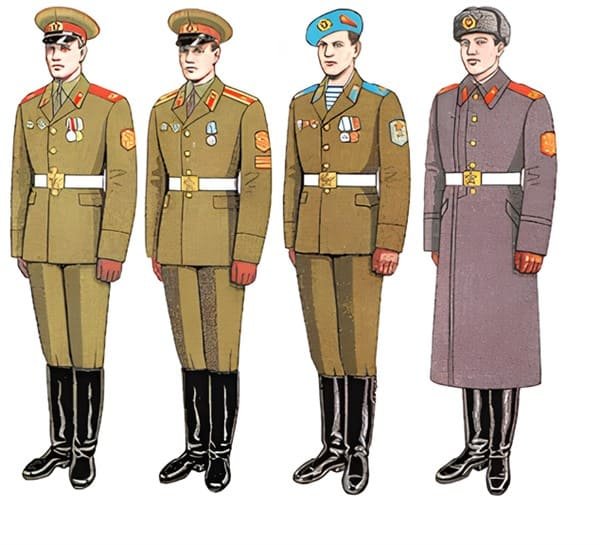
Looking Soviet officer Boots? You can order here: (Soviet Officer Boots)
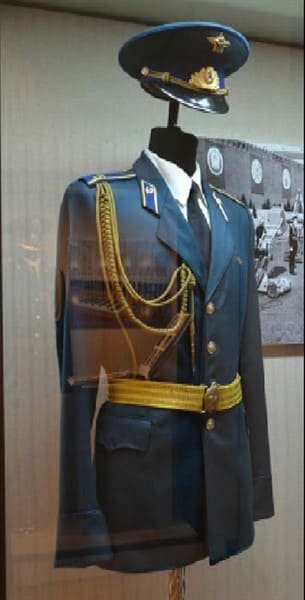
Unfortunately, I could not find better photos, so take my word for it – Soviet parade dress was simply gorgeous.
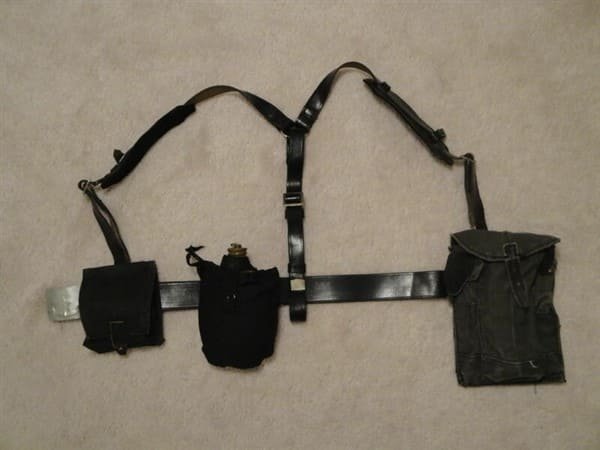
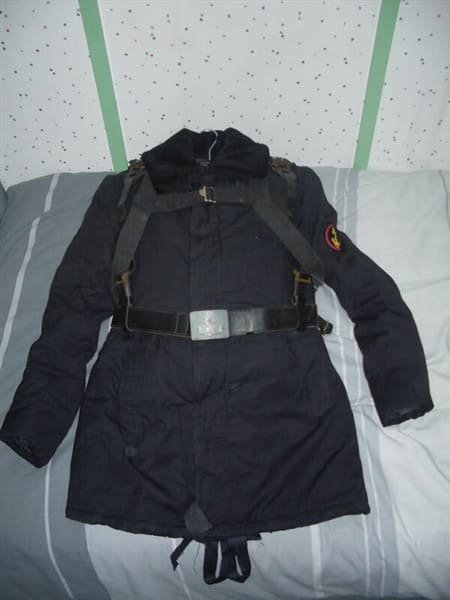
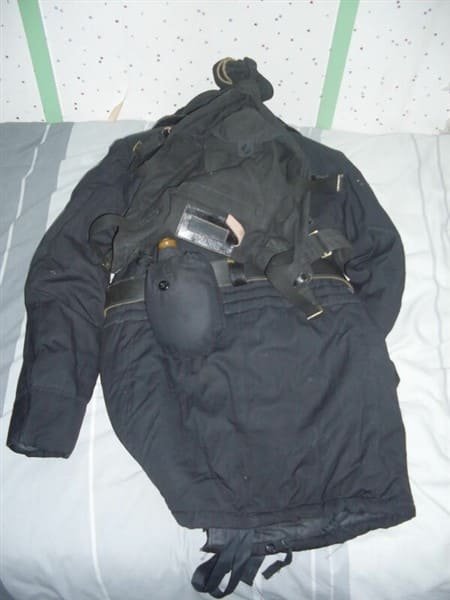
Finally, I saved the field uniform of the naval infantry as the most illustrative example of blind adherence to monkey traditions.
Naval infantry black field uniform
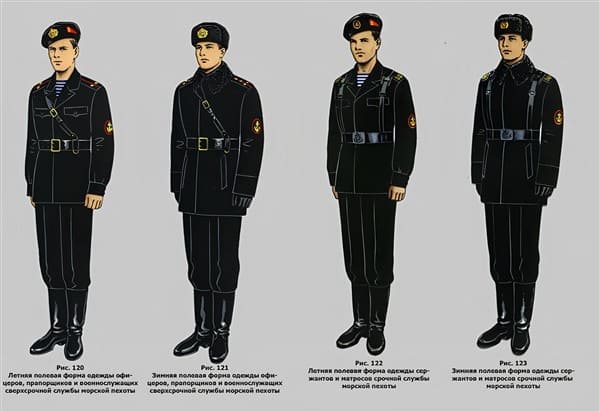
Fig. 120: Summer field uniform (gray-black), adapted to the specifics of extended-service Marine Infantry.
Fig. 121: Winter field uniform (gray-black), adapted to the specifics of extended-service Marine Infantry.
Fig. 122: Summer field uniform of sergeants and conscript sailors of the Marine Infantry.
Fig. 123: Winter field uniform of sergeants and conscript sailors of the Marine Infantry.
It was black. Yes, black! A field uniform – black! Right up until the late 1980s, when the “Dubok” camouflage (also known as “Butan,” which will be discussed below) appeared, marines had to fight in black uniforms. Even a black cap gives you away in the forest. And here – completely dressed in black. I won’t even mention how it felt to wear a black uniform in the heat somewhere in Crimea. Their equipment did not differ from infantry equipment, except that everything (belts, pouches, duffel bag) was black.
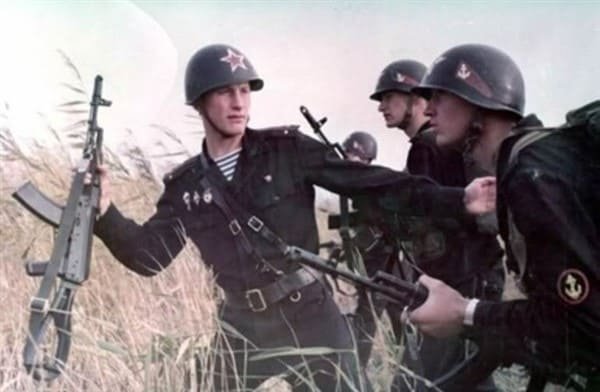
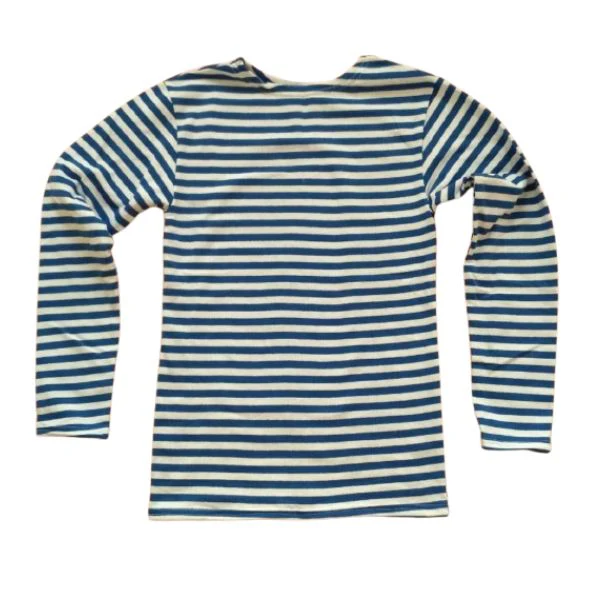
Soviet telnyashka
Looking for Soviet Telnyashka? You can get them here → [Soviet Telnyashka]
Telnyashka, the striped undershirt, was more than just clothing in the Soviet Army.
Originally a naval garment, it became a paratroopers, naval infantry, and later other units adopted it not for camouflage, but for identity.
In the field, it offered warmth, comfort, and a sense of belonging.
Over time, the telnyashka turned into one of the most recognizable symbols of the Soviet soldier.
Check more articles:
How the Soviet Army Uniform Changed from 1955 to 1991
Red Army Uniforms of the Russian Civil War (1918–1922)
Field Uniform and Equipment of the Soviet Army in 1968 -1991 Part 1
Field Uniform and Equipment of the Soviet Army (1968–1991) – Part 2
Field Uniform and Equipment of the Soviet Army (1968–1991) – Part 4
Soviet Spetsnaz Uniform in Afghanistan (1979–1989)
Looking original Soviet boots and accessories? Please visit here: Soviet Boots Store