Soviet Camouflage Uniform. How It Developed from WW2 to USSR
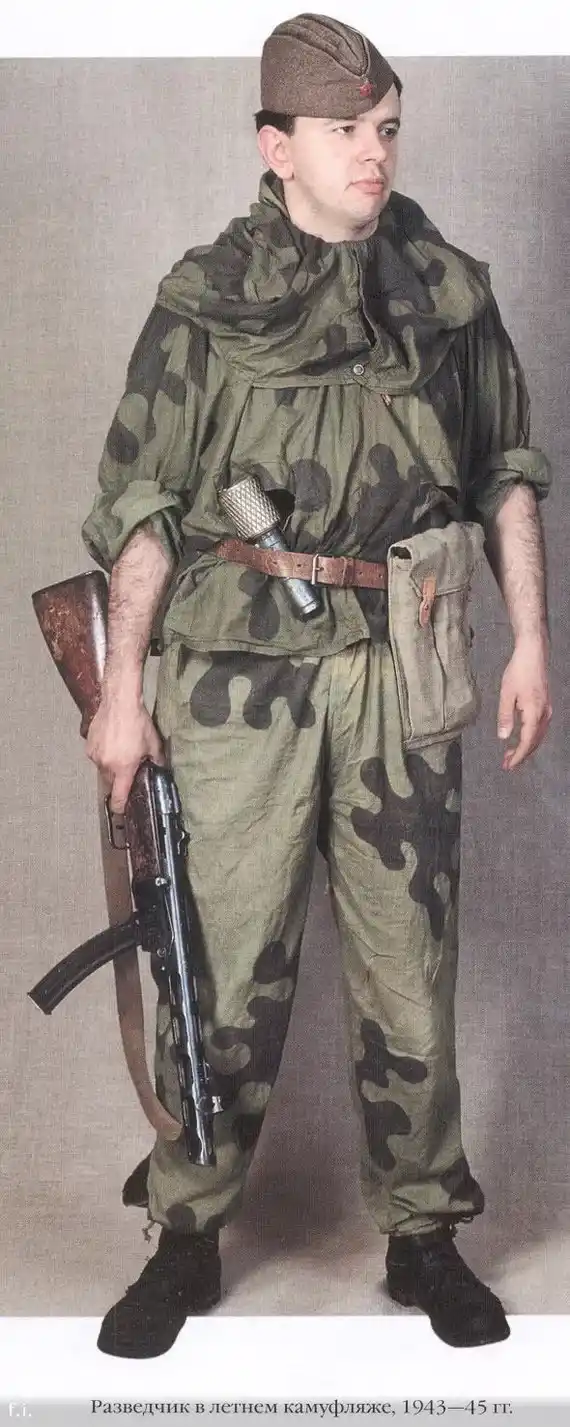
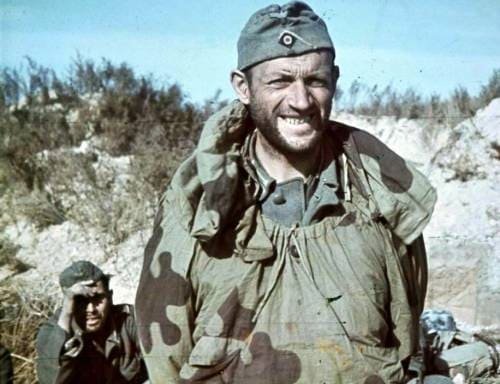
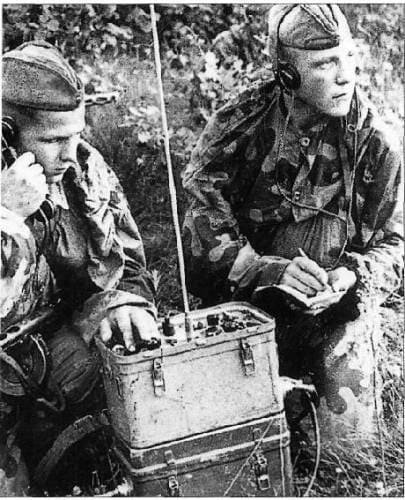
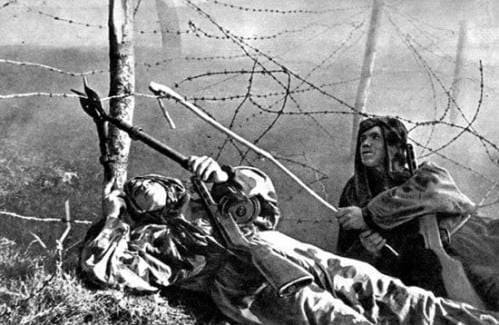
Camouflage clothing officially appeared in the Red Army as early as 1938, but it became widely used only during the war. At first, these were simple camouflage suits made of rough fiber material and spotted camouflage cloaks. Attempts to create standard camouflage for infantry in summer started right after the civil war. In the early 1920s, a light gauze cloak was tested, which could be easily folded and fit into a tunic pocket.
More interesting articles about Soviet uniforms:
Soviet Afghanka Uniform. History, Features, and Use in Afghanistan
Soviet SSh-36 Helmet: History, Combat Use, and the Scandal That Shook the Red Army
Soviet Red Army Uniform and Equipment in World War II (1939-1945)
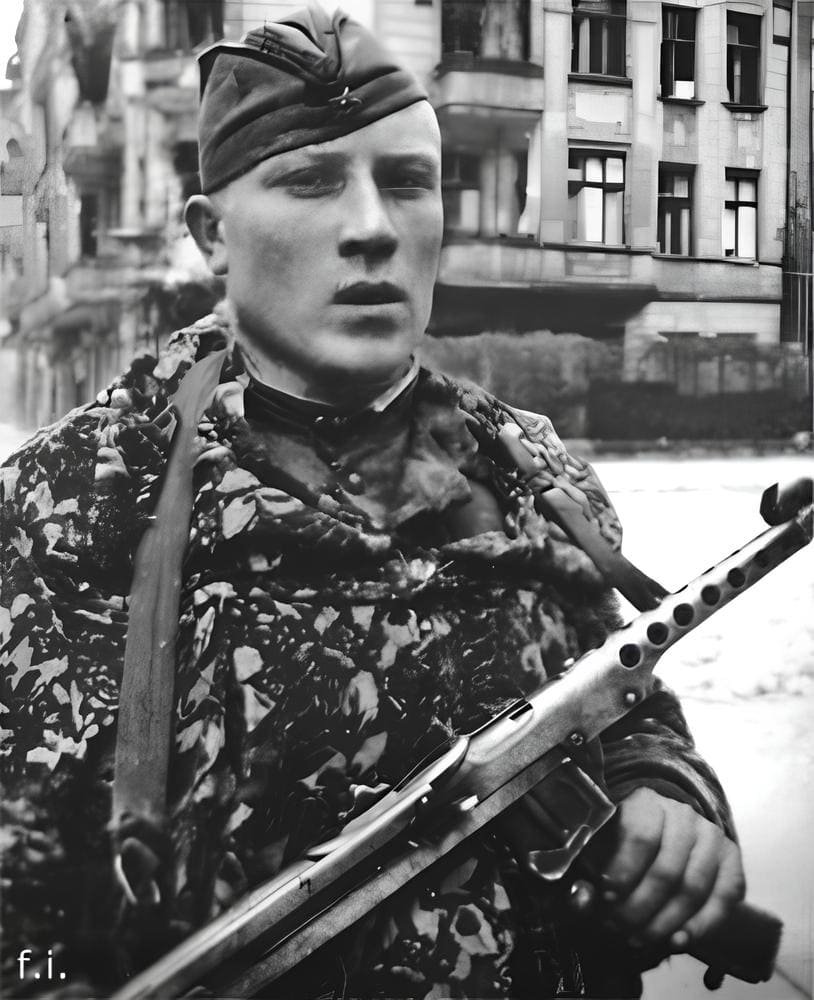
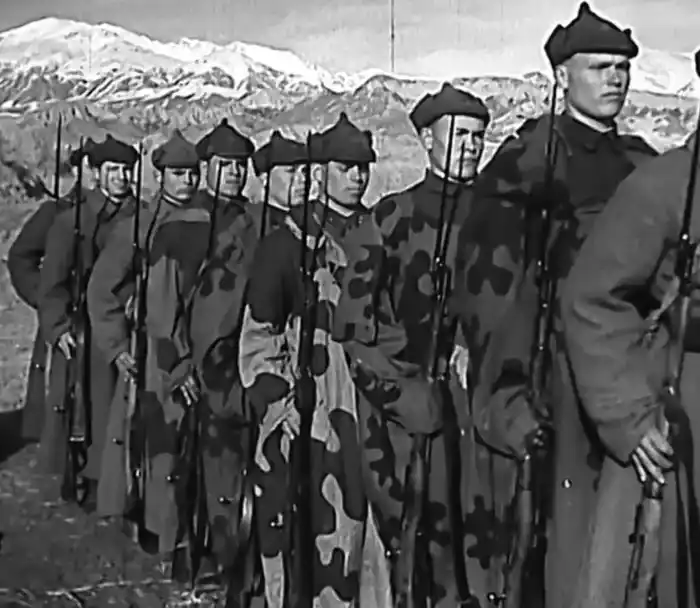
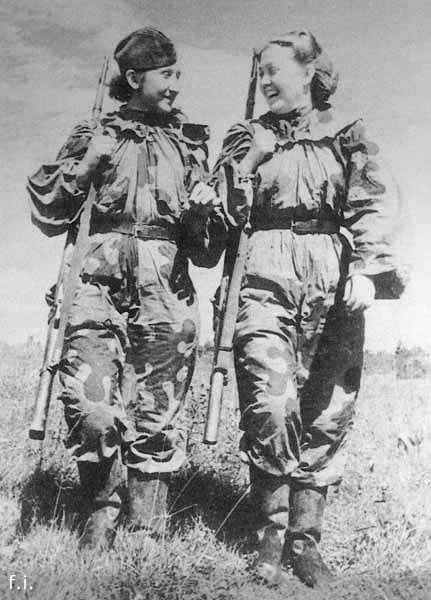
The first camouflage suits in the form of cloaks were created in 1927. In 1935, a special camouflage fabric (called mitkal) was developed in four color variants: brown “amoeba” shapes on a green background, brown amoebas on a yellow-green background, earth-gray amoebas on a sand background, and earth-gray amoebas on a green background. In 1937, suits and cloaks in all four variants began to be produced.
To develop a scientific base for camouflage, in the 1930s the GOI institute and academician Vavilov were involved. During the Winter War, white overalls and cloaks were replaced with full camouflage suits (which, by the way, with minimal changes are still used today). After the Winter War, there were complaints about the uncomfortable gauze face cover in winter suits, and just before the war with Germany, special camouflage face paint sticks were introduced into service.
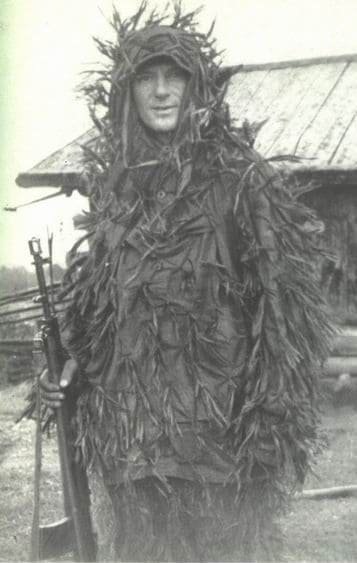
It is worth mentioning that the first Soviet camouflage suits used bast fibers as a masking material.
The suits were made by hand at the Savo-Otyanovskaya and Mozharo-Moydan artels. Bast fibers were tied by hand in a special way and fixed into holes in the fabric. About 200 bundles of bast were needed for one suit.
The suit weighed around one kilogram. Because of its hygroscopic nature, the bast absorbed a lot of moisture. Because of this, long-term storage was not possible.
“Bast” camouflage suits were mostly lost during the first year of the war.
To reduce the cost of such suits, a camouflage pattern called “amoeba” was developed in the late 1920s and early 1930s. It cost the army three times less than the “bast” suit. After a series of improvements, it was officially adopted in 1938.
The “amoeba” camouflage was produced in four color schemes: summer, spring-autumn, desert, and mountain. Separate white camouflage suits were made for winter. The amoeba pattern became a symbol of Red Army camouflage.
Looking for classic Soviet kirza boots? You can find them here: Soviet Kirza Boots
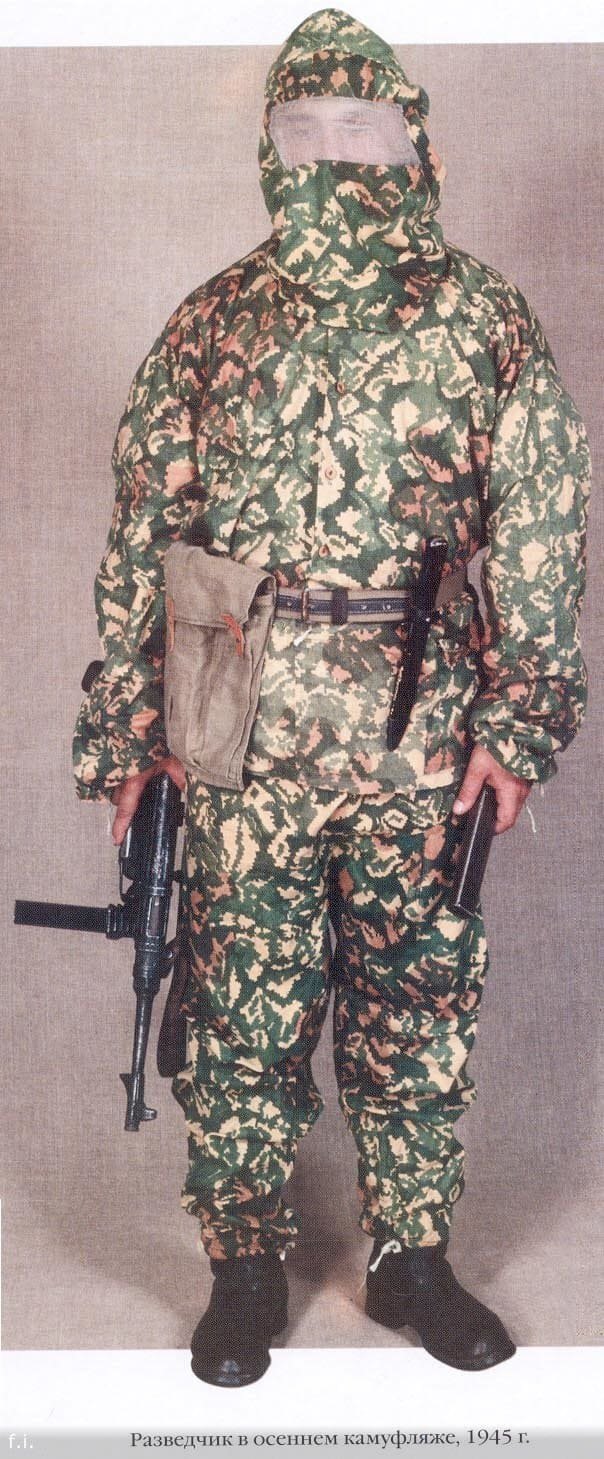
During the Great Patriotic War, the range of camouflage clothing was expanded with camouflage suits that consisted of a separate shirt and trousers. New camouflage patterns also appeared (known by the pattern type as “berezka” and “wide leaf”). Sometimes new camouflage patterns were applied over already existing “amoeba” suits, which created an even more complex camouflage pattern.
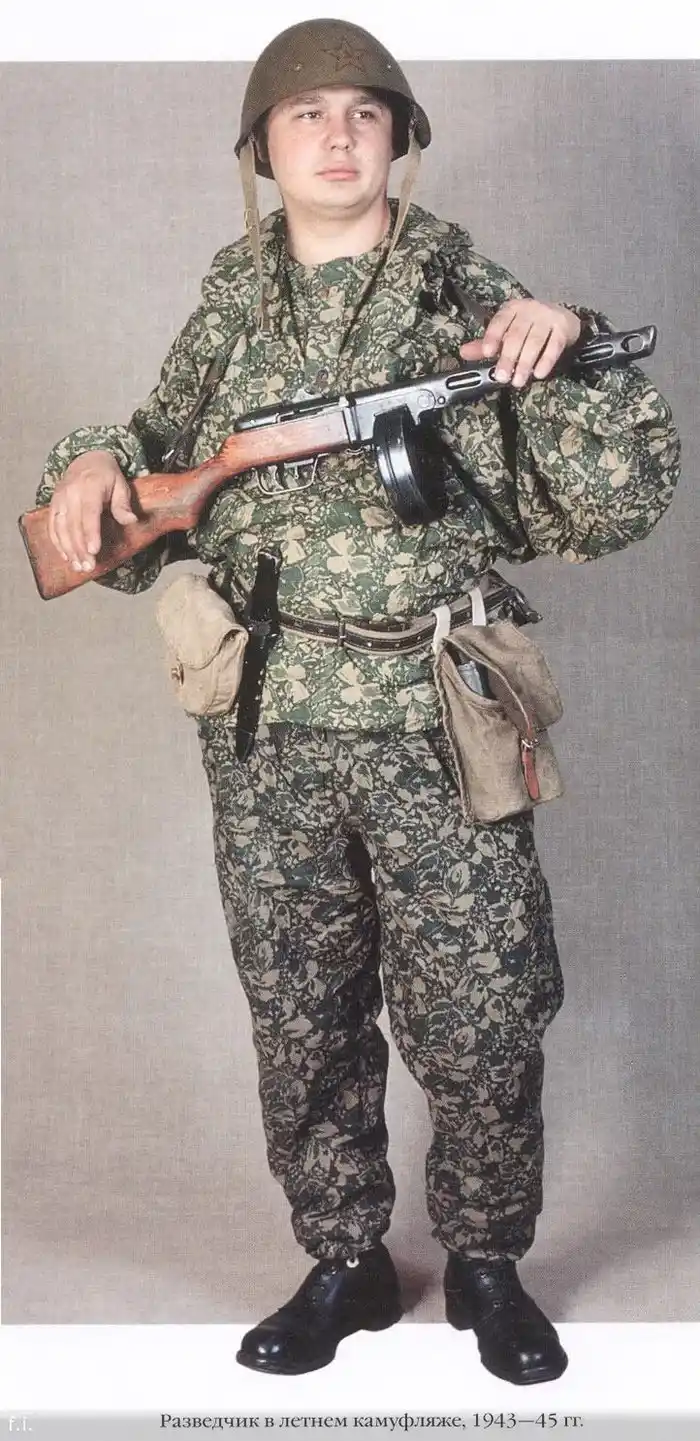
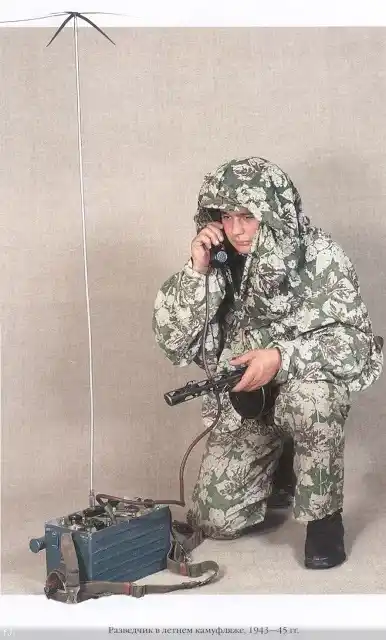
Because of a shortage of dyes and fabrics in production, combined with the creativity of soldiers on the front line, the number of camouflage patterns became much greater than officially prescribed. According to different estimates, there were about two to three dozen types of camouflage in the Red Army.
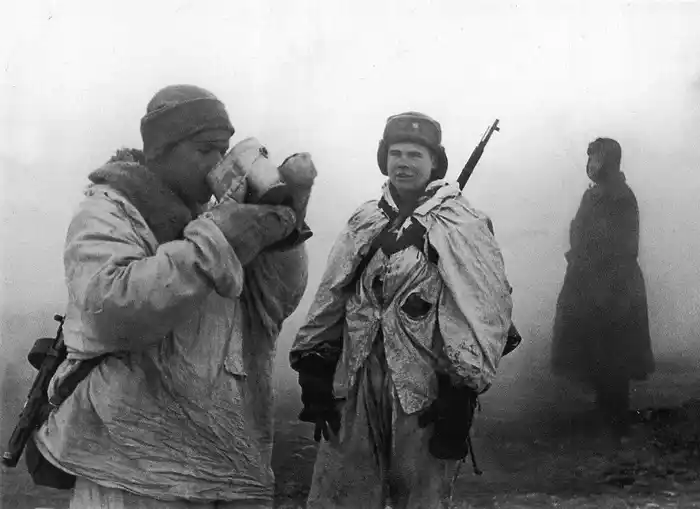
In 1942, a camouflage coverall with a leaf pattern was developed (sometimes it was additionally printed with “amoeba” shapes), as well as a reversible tent fabric (“leaf” – “amoeba”) from which cloaks and shelter halves were made. In 1943–44, a three-color pattern called “palm” was developed.
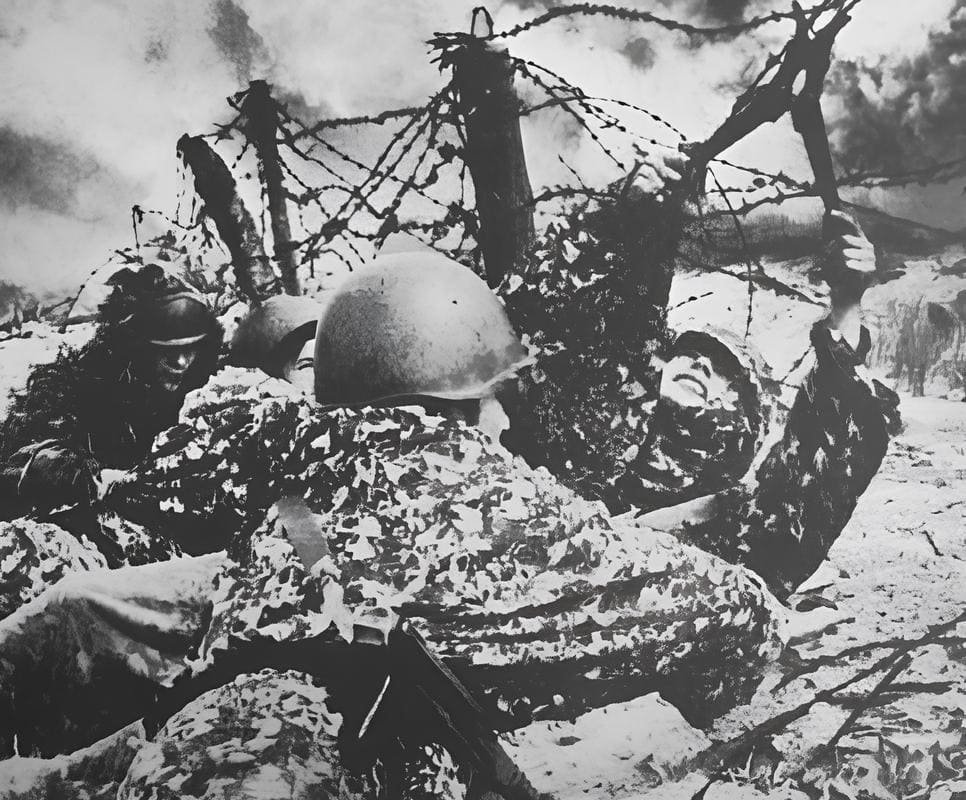
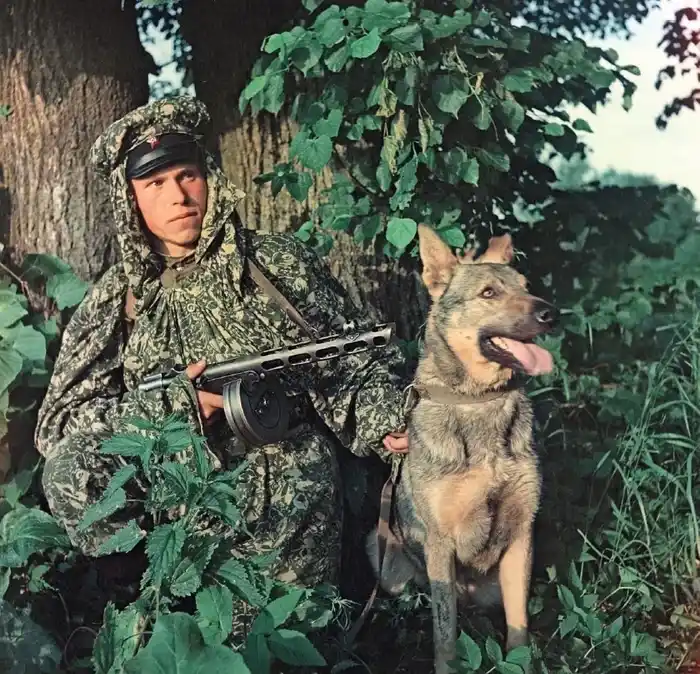
“Amoeba” camouflage was used quite widely, as camouflage suits were supplied through the engineering department. From 1943, “amoeba” was also produced in the form of a poncho cloak. In movies, filmmakers often make a mistake by showing elite scouts deep behind enemy lines in 1941 wearing this poncho.
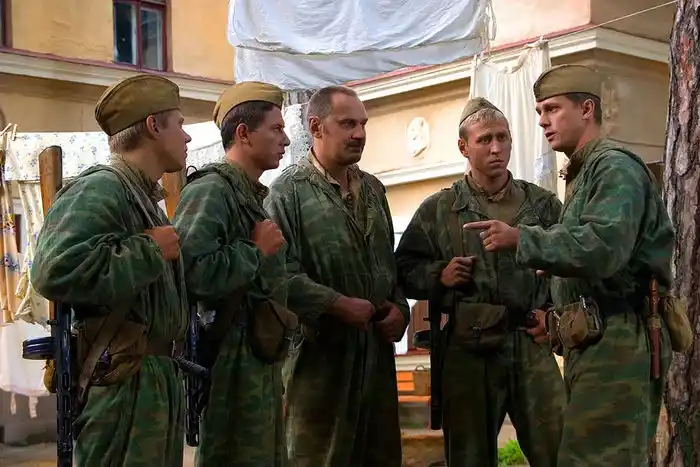
At the same time, some textile factories started producing camouflage fabrics with plant patterns, using civilian designs but changing the color scheme. About three variants of this pattern are known. The camouflage suits themselves were very simple. For example, the suit was fixed over regular clothing using gauze strips.
All camouflage patterns, materials, dyes, suits, masks, mockups, and painting schemes for equipment were developed in one place – in the camouflage department of the engineering institute of the Red Army, now known as the 15th Central Research Institute named after Karbyshev, located since 1919 in the village of Nakhabino near Moscow.
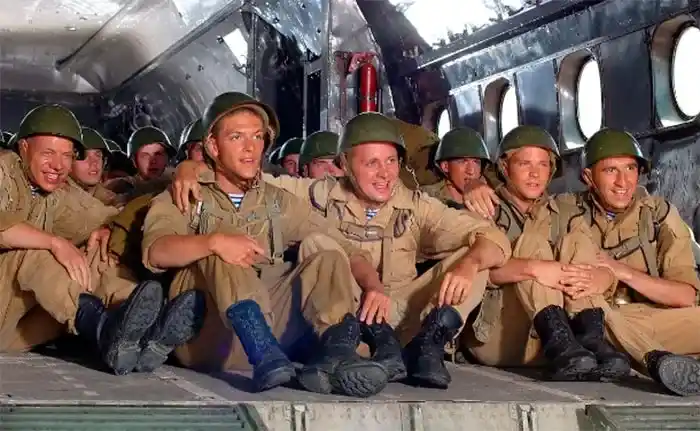
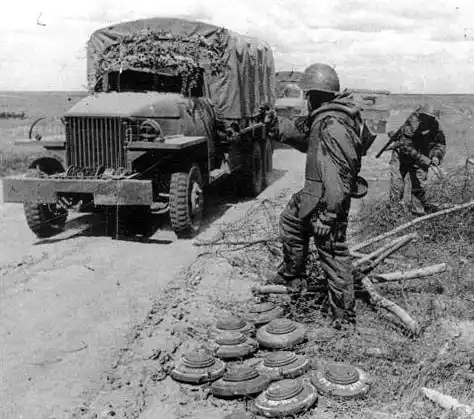
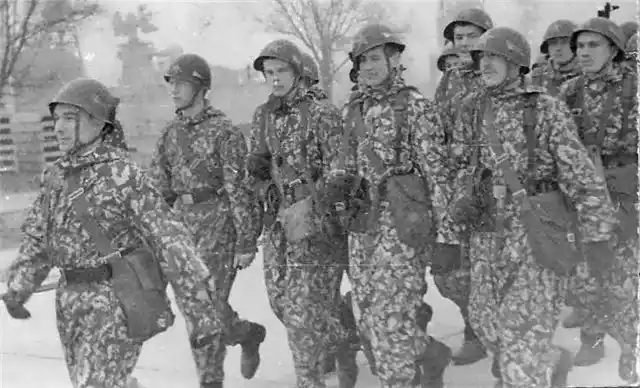
Camouflage in the Red Army was used by specific units for specific tasks. This included snipers, engineers, scouts, OSNAZ units, and assault troops. Unlike the SS troops, where camouflage was widely used, and the Wehrmacht, where camouflage cloaks were common, in the Red Army camouflage remained clothing for special missions only.
Looking for original Soviet low RKKA boots? You can get them here ->
[Soviet low boots]
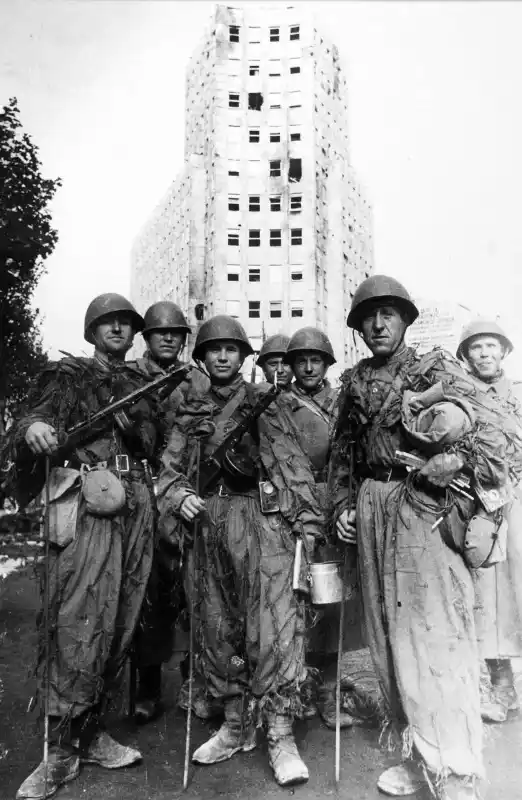
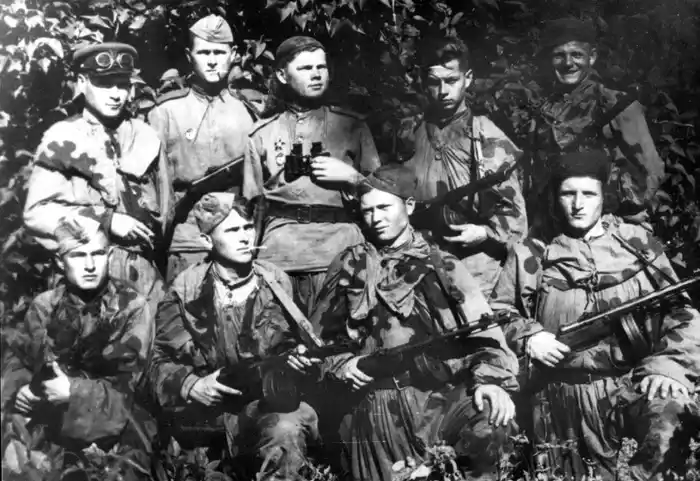
Was there a need to equip the whole army with camouflage? The answer is yes. But Soviet light industry could not handle this. No army in the world at that time was able to fully switch all its forces to camouflage. This happened much later. Only closer to the end of the 20th century did camouflage become the standard uniform for all armed forces.
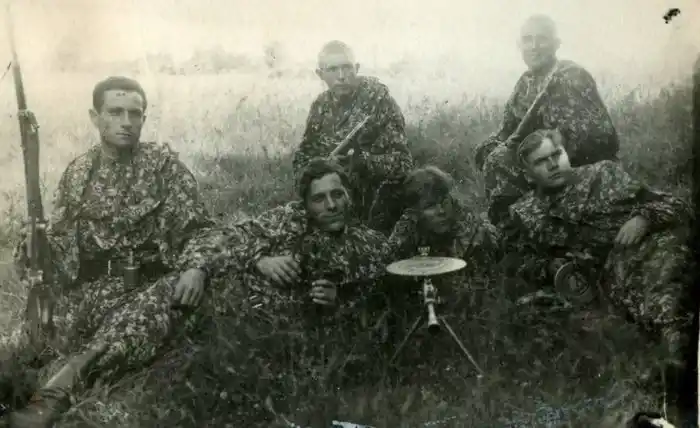
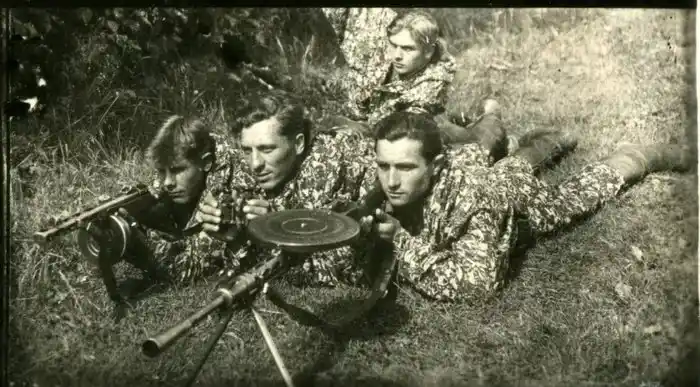
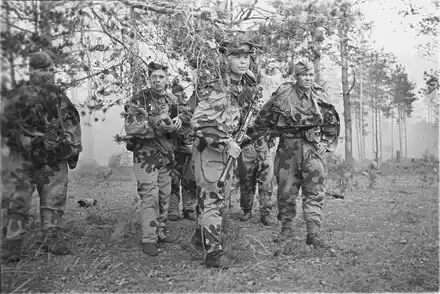
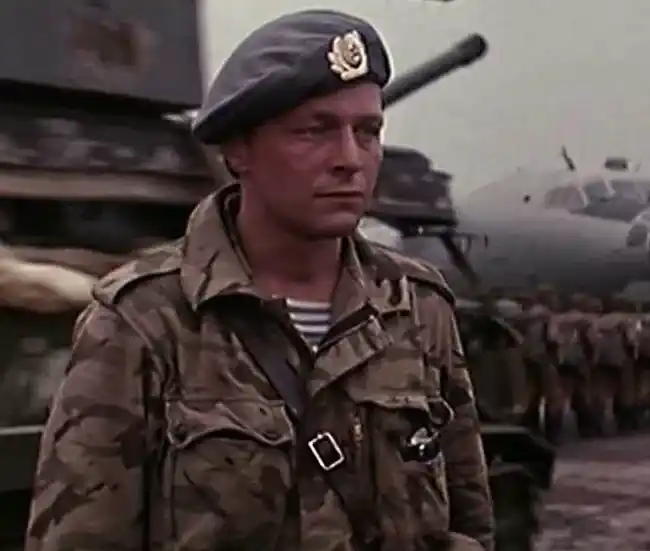
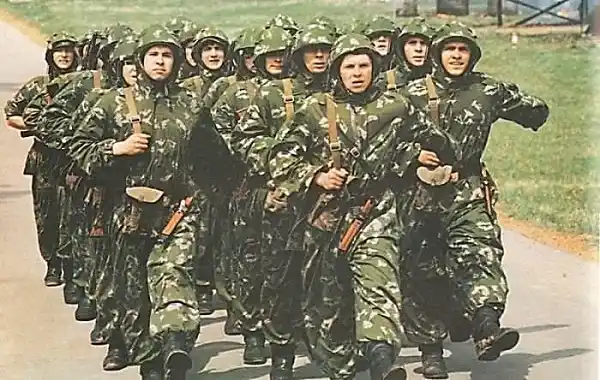
Soviet camouflage Berezka
Looking Soviet Afghan combat boots? You can get them here →[Soviet M88 combat Boots]
Afghanka
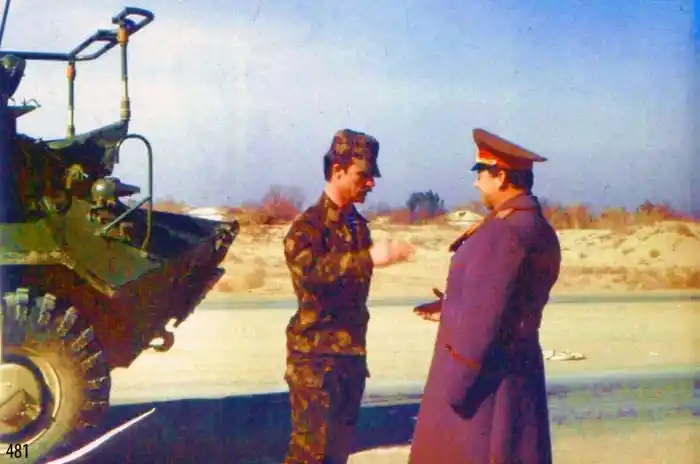
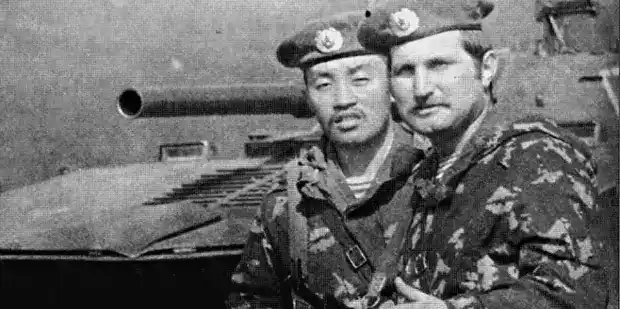
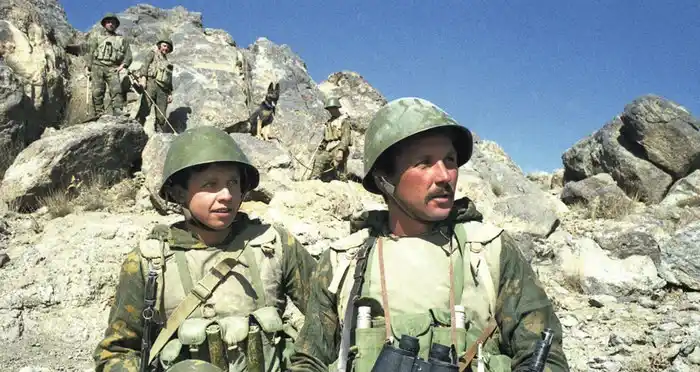
This uniform was probably seen by everyone in one way or another. It became a symbol of the Afghanistan war. But few people know that in the field there was a practice of applying spots and patterns of different shapes to this uniform to give it a camouflage effect.
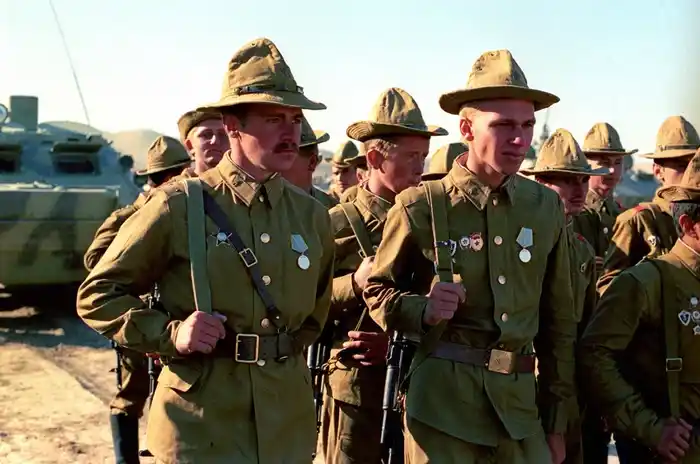
This was done because at that time the USSR did not really have a desert camouflage, except for one variant of the amoeba camouflage suit used during the battles of Khalkhin Gol.
Mountain storm suit – also known as Gorka
Looking Soviet Afghanka visor cap? You can get them here →[Afghanka visor cap]
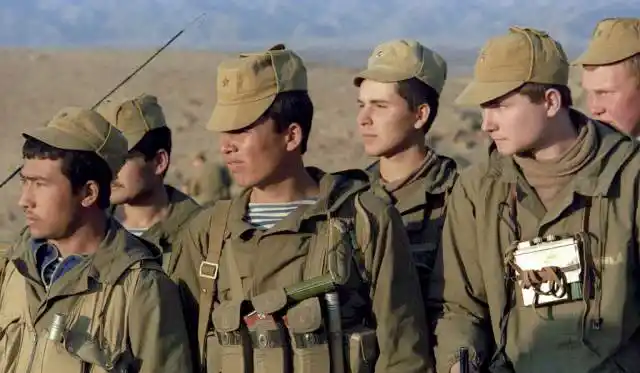
This uniform was originally developed for the 40th Army, which was deployed in the Democratic Republic of Afghanistan. One of the reasons for its appearance was the windy and cold conditions in that region. I will break the myth that the Gorka suit comes from the German mountain uniform of the “Edelweiss” division. No. It is possible that Soviet designers looked at that uniform, but they created their own version fully adapted to their needs.
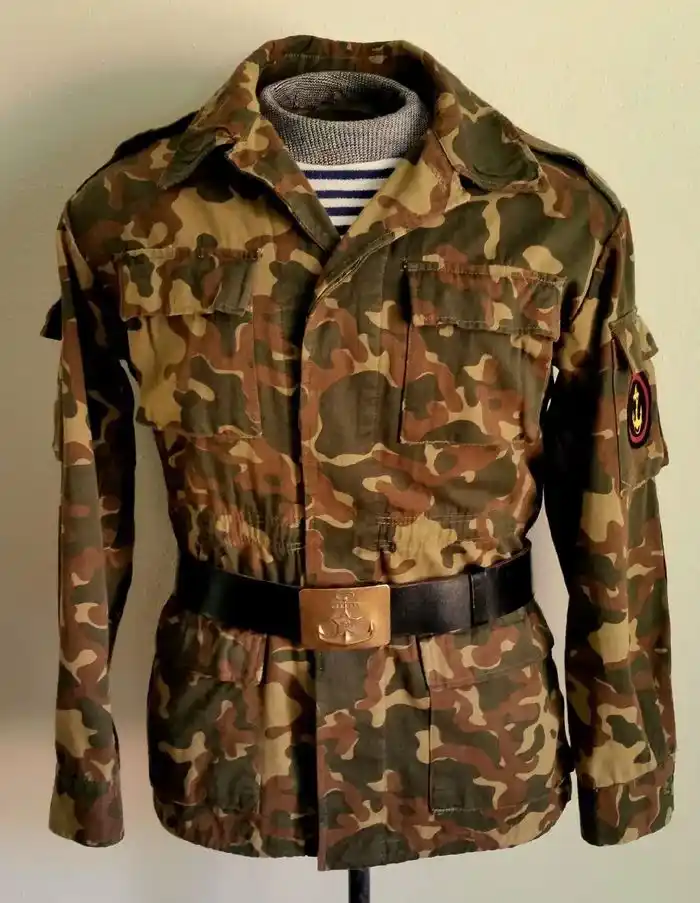
VSR-84 “Dubok”
Looking for a Real Telnyashka?
Add extra Telnyashkas and accessories – shipping stays the same.
Flat Worldwide Shipping – $14.98
Shipping is charged only once per order.
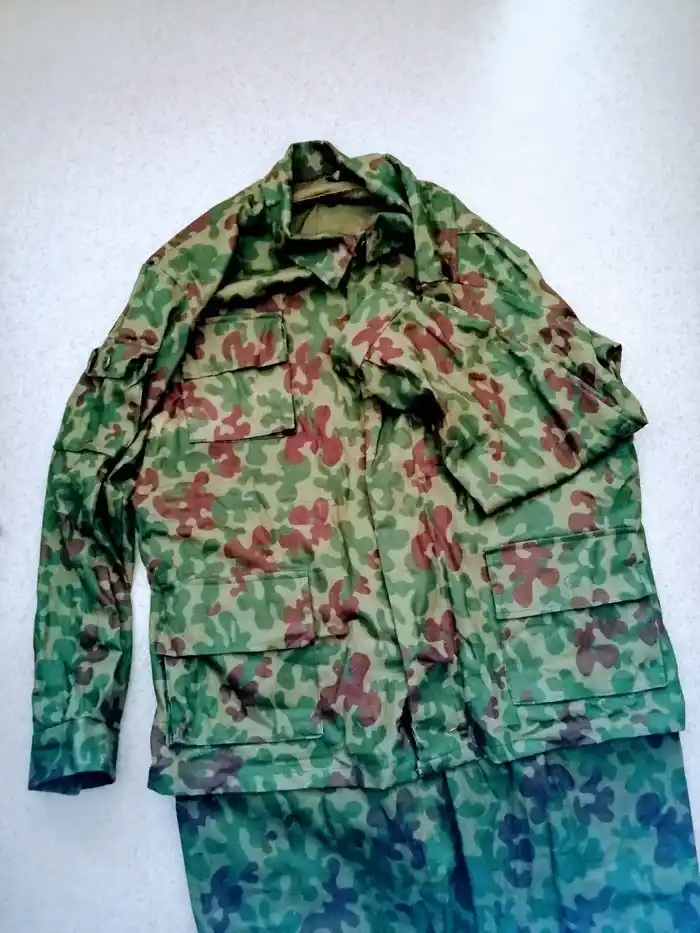
By the late 1970s, the use of camouflage uniforms in NATO countries became widespread. Camouflage was no longer limited to special units and became a standard part of a soldier’s uniform. Based on the experience of a potential enemy and in order to avoid falling behind militarily, research began in the USSR to develop new camouflage patterns and select suitable fabrics for them. It took quite a long time to choose the most effective pattern and background.