Soviet Army Uniform 1955–1991: Evolution, Orders and Insignia Changes
The Soviet Army uniform between 1955 and 1991 went through several major reforms. This guide explains how the uniform evolved from the post-war model to the final years of the USSR, including Orders No. 120 (1956), No. 191 (1969), and No. 250 (1988).
Contents
- 1955–1956 Reform (Order No. 120)
- Branch Insignia and Service Emblems
- 1969 Reform (Order No. 191)
- 1988 Reform and “Afghanka”
- FAQ
1955–1956 Reform: Transition to a Peacetime Uniform
1955 became a turning point in many ways in the development and introduction of military uniforms. The main point was not even the differences from the 1943-pattern uniform, but the very attempt to create a “peacetime” uniform.
New article:
How the Soviet Army Uniform Changed: From M69 to Afghanka & M88
Articles this series:
Cold War Soviet Uniform: Real Equipment and Army Changes
Guide of the Soviet Afghanka Uniform (M88)
Field Uniform and Equipment of the Soviet Army (1968–1991) – Part 1
Field Uniform and Equipment of the Soviet Army (1968–1991) – Part 2
Soviet Spetsnaz Uniform in Afghanistan (1979–1989)
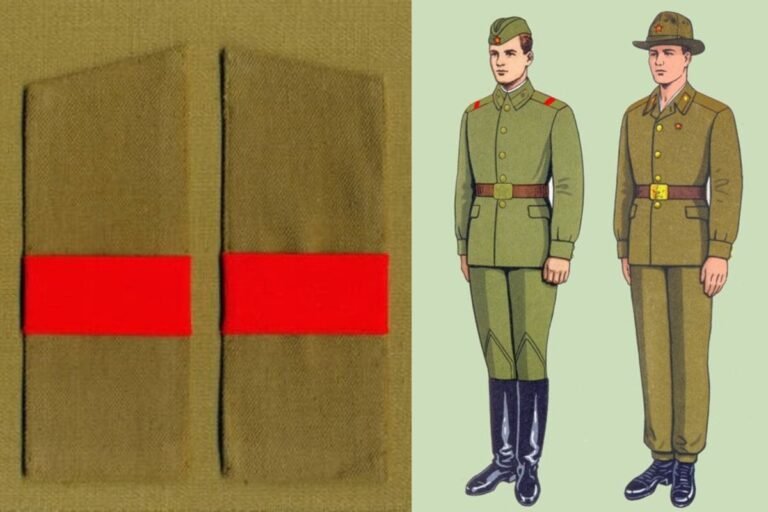
A number of Ministry of Defense orders in 1955–56 introduced changes to uniforms and then canceled those same changes. For example, double-sided shoulder boards were introduced for a very short time — colored on one side and protective on the other. The same order canceled the colored piping on shoulder boards (Order No. 225 of December 30, 1955). The double-sided shoulder boards were canceled in 1956, almost as soon as production had begun.
Buttons on collar tabs were abolished by Order No. 70 of April 29, 1955, and branch-of-service insignia appeared instead.
A number of changes were introduced by Order No. 104 of June 23, 1955, and Order No. 105 of June 30, 1955.
By Order of the USSR Ministry of Defense No. 120 of August 4, 1956, new rules for wearing uniforms and branch-of-service insignia were introduced for soldiers, sergeants, and military school cadets for peacetime. Double-sided shoulder boards were no longer mentioned in this order.
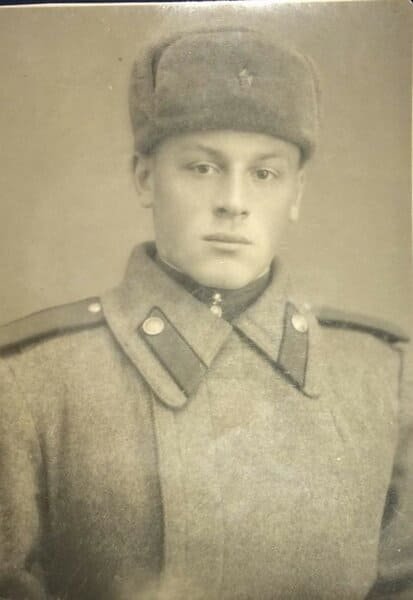
1951.
My father’s brother, after serving 9 months in the revived “Uncle Vasya’s Troops” (Airborne Forces). The uniform is still the old type: collar tabs with buttons, no differences from standard army uniform. The only distinction should be a sleeve patch with the unit emblem.
Looking for original Soviet kirza boots? You can get them here →
[Soviet kirza boots]
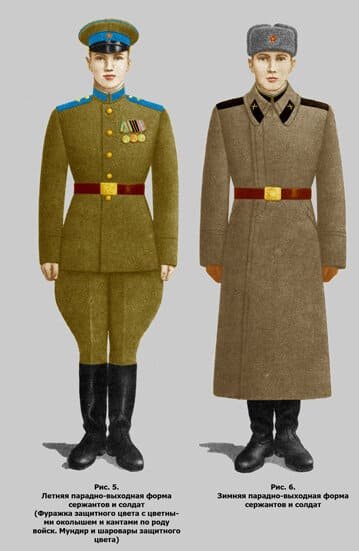
Summer parade-service uniform of a sergeant of the Guards airborne units with medals and a blue beret according to branch of service. Tunic and trousers of protective color.
Fig. 6.
Winter parade-service uniform of a sergeant. Greatcoat.
As can be seen from the illustration, the most consistent element of the uniform was the greatcoat. It practically did not change. Dress uniform according to Order No. 120.
The text of USSR Ministry of Defense Order No. 120 dated August 4, 1956, which defined the rules for wearing uniforms by personnel of the Soviet Army and Navy, can be found here.
Everyday uniform of soldiers and sergeants according to Order No. 120, 1956.
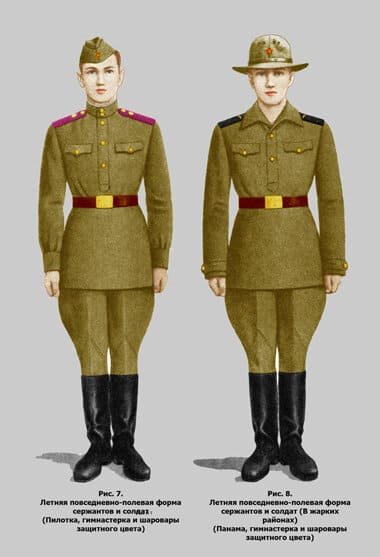
Summer parade-service uniform of a sergeant major.
(Pilotka cap, gymnastyorka tunic and trousers of protective color)
Fig. 8.
Summer parade-service uniform of a sergeant major.
(Panama hat, gymnastyorka tunic and trousers of protective color)
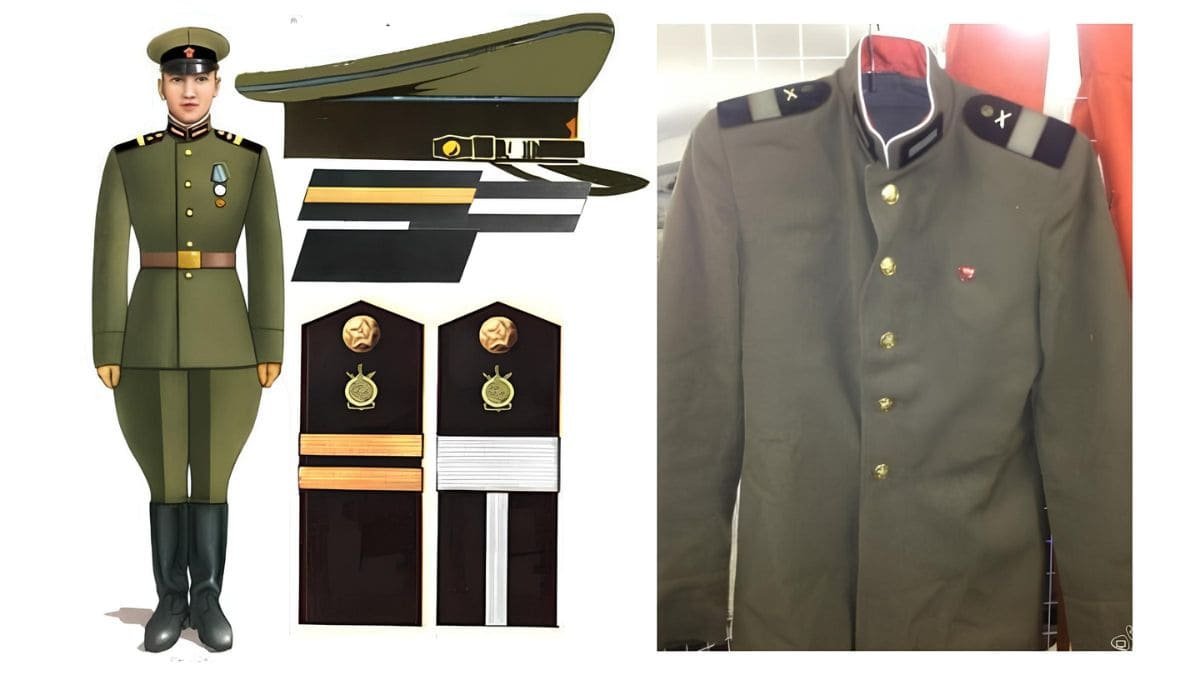
Elements of the parade uniform according to Ministry of Defense orders of 1955–1956.
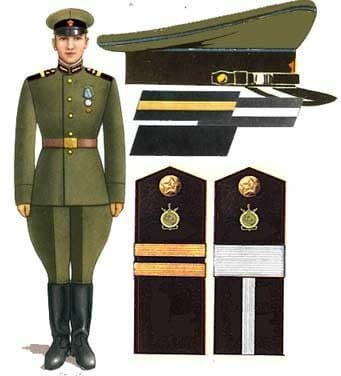
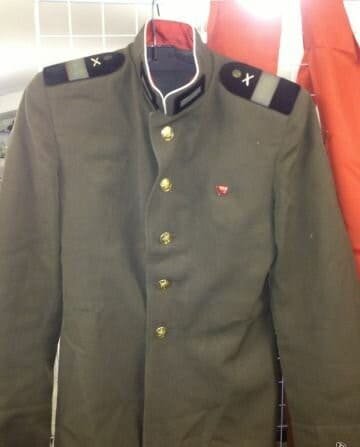
Soviet Army parade tunic, 1955 pattern. Classic example with standing collar, brass buttons, and shoulder boards.
Parade tunic, 1955 pattern
Branch Insignia and Service Emblems: What Changed After Order No. 120
In 1957, extended-service soldiers were finally allowed to wear elements of officer uniforms and a chest badge instead of the sleeve insignia they disliked.
The uniform of extended-service personnel, 1957 pattern.
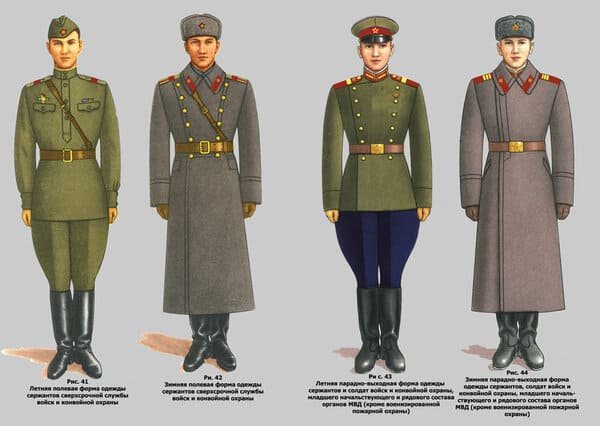
Fig. 42. Winter parade-duty uniform of extended service sergeants of the border troops.
Fig. 43. Summer parade-duty uniform of extended service sergeants and enlisted personnel of the internal troops and regular personnel of the Ministry of Internal Affairs (except convoy units).
Fig. 44. Winter parade-duty uniform of extended service sergeants and enlisted personnel of convoy units and regular personnel of the Ministry of Internal Affairs (except border troops).
Looking for original Soviet soldier belt with buckle? You can get them here → [Soviet Belt]
The officer-style greatcoat, shoulder belt, and other elements emphasized the serviceman’s status (on the left). On the right are convoy troops and Ministry of Internal Affairs (MVD) personnel.
Of particular interest is the description of branch insignia given in Order No. 120. I finally learned what the engineer troops insignia means. It turns out to be a circular saw. With only minor changes, these insignia survived until the collapse of the USSR. In the 1980s, the separate insignia of the aviation technical service was abolished, although in 1987 some officers were still wearing it, and enlisted men of Air Force units passionately wanted to get it before demobilization. The insignia of the engineer troops and chemical troops were also changed.
Soviet Army Branch Insignia (Order of 1956)
| Branch / Service | Insignia Description |
|---|---|
| Rifle Troops | A five-pointed star framed by two oak branches |
| Aviation | A propeller with wings |
| Aviation Technical Service | A red star, engine, propeller, and wings |
| Airborne Troops | An open parachute against the background of two aircraft |
| Artillery | Gun barrels |
| Armored Troops | A tank |
| Signal and Radio-Technical Troops | A red star with wings and lightning bolts |
| Engineer Troops and Related Units | A bulldozer against the background of a circular saw, an anchor, and lightning bolts |
| Motor Transport and Military Road Units | Automobile wheels with wings and a steering wheel |
| Railway Troops and Military Communications Service | A red star with an anchor, wings, a hammer, and an adjustable wrench |
| Chemical Troops and Military Technical Schools | An adjustable wrench and a hammer |
| Military Topographic Service | A red star with an adjustable wrench and a hammer |
| Quartermaster and Administrative Services | A five-pointed star framed by two oak branches |
| Medical and Veterinary Services | A bowl with a snake |
| Military Bands | A lyre |
(Quoted from a Ministry of Defense order of 1956. I added nothing of my own, dear commentators.)
Below are two tables based on the orders of 1973 and 1988, both numbered 250. They clearly illustrate the differences compared to the description given above from the 1956 order.
1973. Separate insignia were already introduced for the Chemical Troops and construction units (Stroybat).
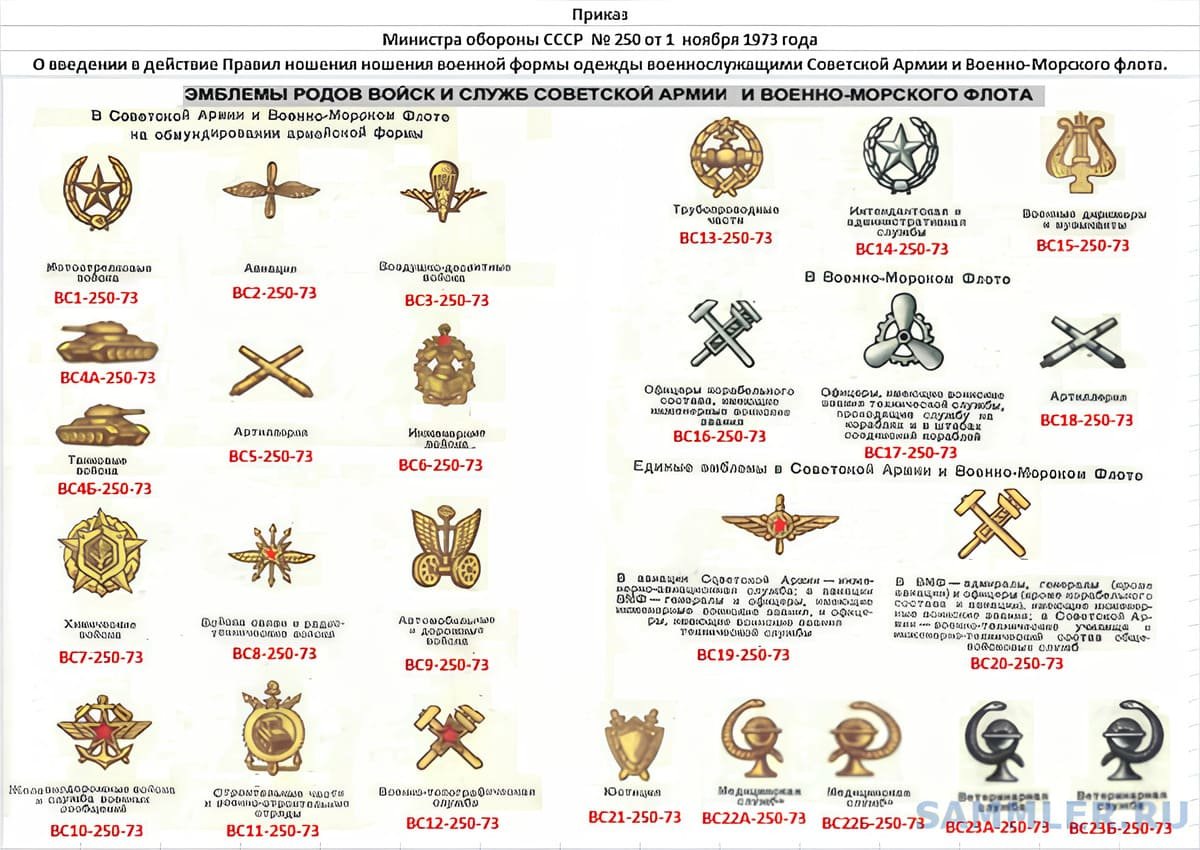
Order of the Minister of Defense of the USSR No. 250 (November 1, 1973)
On the implementation of the Rules for wearing military uniforms by servicemen of the Soviet Army and the Navy
| Branch / Service | Code (Order No. 250 – 1973) |
|---|---|
| Soviet Army | |
| Motor Rifle Troops | BC1-250-73 |
| Aviation | BC2-250-73 |
| Airborne Troops | BC3-250-73 |
| Tank Troops | BC4-250-73 |
| Artillery | BC5-250-73 |
| Engineer Troops | BC6-250-73 |
| Chemical Troops | BC7-250-73 |
| Signal and Radio-Technical Troops | BC8-250-73 |
| Automobile Troops | BC9-250-73 |
| Railway Troops | BC10-250-73 |
| Construction Units | BC11-250-73 |
| Military Topographic Service | BC12-250-73 |
| Navy | |
| Pipeline Troops | BC13-250-73 |
| Quartermaster Service | BC14-250-73 |
| Military Bands Service | BC15-250-73 |
| Ship Officers of the Navy | BC16-250-73 |
| Engineering and Technical Officers of the Navy Ship Personnel | BC17-250-73 |
| Naval Artillery | BC18-250-73 |
| Unified Insignia (Soviet Army and Navy) | |
| Justice Service | BC19-250-73 |
| Medical Service | BC21-250-73 |
| Veterinary Service | BC22A-250-73 / BC22B-250-73 |
| Administrative Service | BC23A-250-73 / BC23B-250-73 |
There is no longer a separate insignia for the “Air Force technical service” or for naval aviation. 1988.
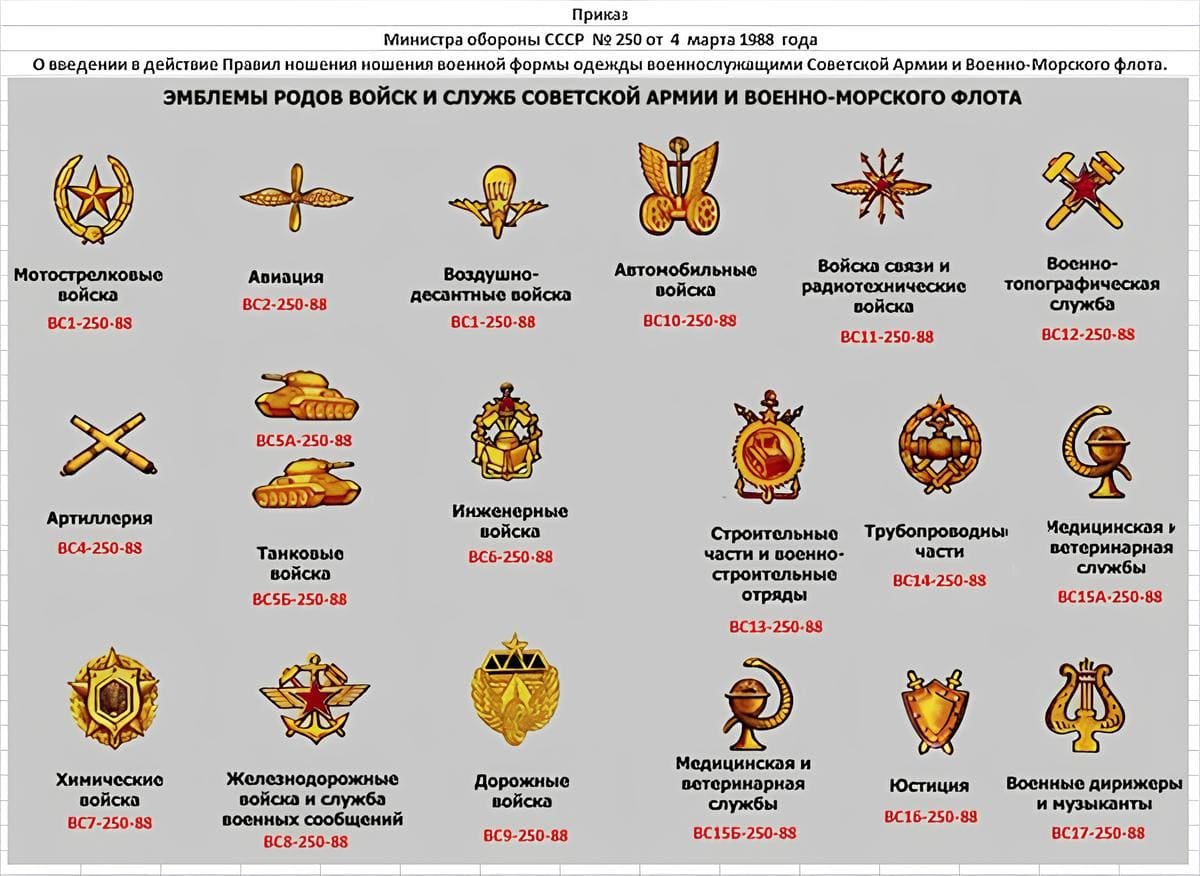
Order of the Minister of Defense of the USSR No. 250 (March 4, 1988)
On the introduction of the Rules for wearing military uniforms by servicemen of the Soviet Army and Navy
Insignia of Branches of Troops and Services of the Soviet Army and Navy
| Branch / Service | Code (Order No. 250 – 1988) |
|---|---|
| Motor Rifle Troops | BC1-250-88 |
| Aviation | BC2-250-88 |
| Airborne Troops | BC3-250-88 |
| Automobile Troops | BC10-250-88 |
| Signal Troops and Radio-Technical Troops | BC11-250-88 |
| Military Topographic Service | BC12-250-88 |
| Artillery | BC4-250-88 |
| Tank Troops | BC5-250-88 |
| Engineering Troops | BC6-250-88 |
| Construction Units and Military Construction Detachments | BC13-250-88 |
| Pipeline Troops | BC14-250-88 |
| Medical and Veterinary Services | BC15-250-88 |
| Chemical Troops | BC7-250-88 |
| Railway Troops and Military Communications Service | BC8-250-88 |
| Road Troops | BC9-250-88 |
| Justice (Military Legal Service) | BC16-250-88 |
| Military Conductors and Musicians | BC17-250-88 |
It should be noted that during this period, soldiers’ and sergeants’ headgear (side cap, winter hat, peaked cap, panama hat) still carried a plain five-pointed star, without the familiar yellow-metal wreaths typical of the 1970s–1980s.
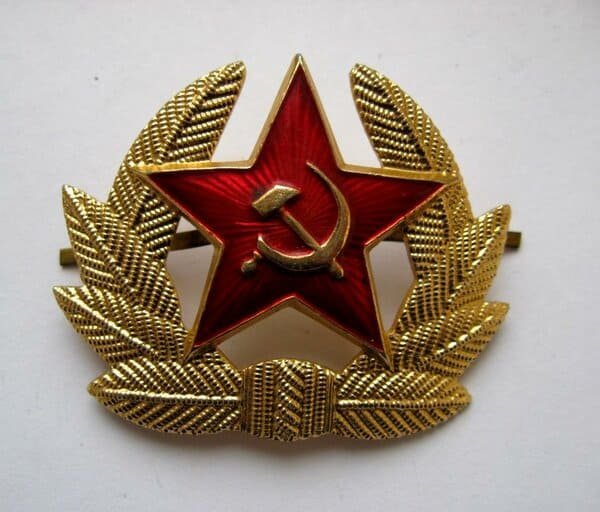
These cockades were introduced together with the new uniform of 1969, but they did not reach the troops immediately. There are accounts from those who served at the time that, instead of a full cockade, a regular star was issued for the hat, and the wreath backing was issued separately.
In general, Order No. 191 states the following:
“Sergeants, senior sergeants, soldiers and conscripts, cadets of military and naval schools, Suvorov and Nakhimov cadets, during parades in Moscow, the capitals of the Union republics, and Hero Cities, must wear on the ushanka the emblem to the star that is prescribed for the peaked cap of these servicemen.”
From 1972, this rule became standard for wearing the winter hat: the cockade with wreath finally replaced the plain star. The variant with a star and a separate wreath backing could still be encountered up until 1975.
1969 Reform: Order No. 191 and the New Everyday Uniform
The cockade for the peaked cap of soldiers and sergeants of the Soviet Army according to the 1969 pattern. On the side cap, the star was still used. From 1972, the same cockade replaced the star on the winter hat.
The new uniform and the rules for wearing it were introduced by Order of the Minister of Defense No. 191 dated July 26, 1969. The introduction was gradual. In practice, the uniform began to reach the troops in 1970.
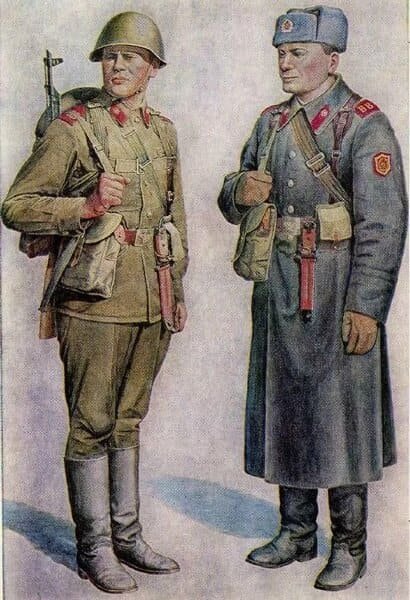
New uniform introduced by Order No. 191 of 1969, with minor changes.
In the order itself, the letters CA “SA” were intended to be worn only on the parade tunic and greatcoat. Later, similar insignia also appeared on the shoulder boards of the cotton field uniform.
The cockade on the cap indicates a date after 1972.
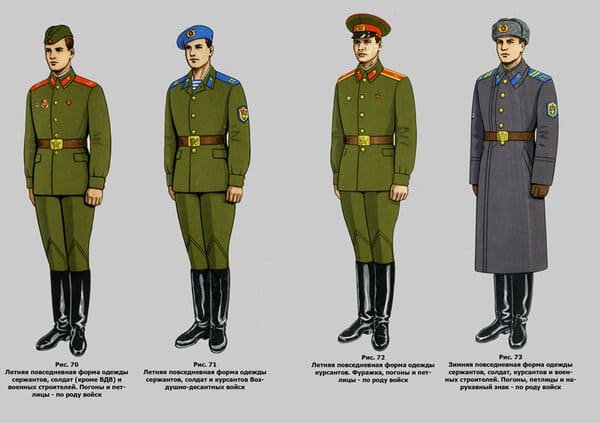
New everyday uniform of the 1969 pattern in the version familiar to most people. The CA “SA” letters are already present on the field uniform as well.
• Fig. 70 Summer everyday uniform of sergeants, soldiers and cadets of the Military Construction Troops. Shoulder boards with branch-colored piping
• Fig. 71 Summer everyday uniform of sergeants, soldiers and cadets of the Airborne Troops
• Fig. 72 Summer everyday uniform of sergeants, soldiers and cadets of border and internal troops. Shoulder boards with branch-colored piping
• Fig. 73 Winter everyday uniform of sergeants, soldiers and cadets of border and internal troops. Greatcoat with branch-colored collar tabs
The same illustration according to the text of Order No. 191 dated July 26, 1969.
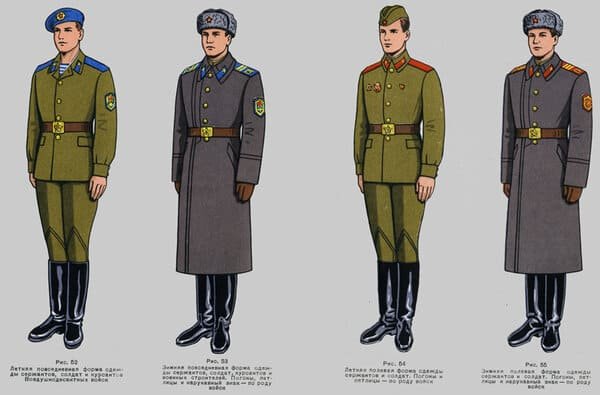
• Fig. 62 Summer everyday uniform of sergeants, soldiers and cadets of the Airborne Troops
• Fig. 63 Winter everyday uniform of sergeants, soldiers and cadets of the Airborne Troops. Greatcoat
• Fig. 64 Summer everyday uniform of sergeants, soldiers and cadets of motor rifle troops. Shoulder boards with branch-colored piping
• Fig. 65 Winter everyday uniform of sergeants, soldiers and cadets of motor rifle troops. Greatcoat
The main change is that the gymnastyorka with a placket and standing collar was replaced by a jacket with a regular collar. The jacket could be fully unbuttoned, had side pockets at the bottom and two internal pockets.
It is worth recalling once again that the 1955 uniform was designed for peacetime. In 1955, little was known about combat operations under conditions of weapons of mass destruction. Removing a gymnastyorka over the head from a soldier suffering burns, exposure to chemical agents or radiation was much more difficult than removing a buttoned jacket.
In addition, the leadership of the Soviet Armed Forces sought to get rid of archaic elements of military dress in order to maintain the prestige of service, keeping pace with the times, so to speak.
All uniform sets of the 1969 pattern matched each other stylistically, while preserving overall continuity of traditional elements of military dress.
This cannot be said about the uniform of the modern Russian army. Here we have T-shirts worn outside, Latin American-style peaked caps, striped shirts and berets in all colors of the rainbow, and “imperial” parade uniforms with standing collars. A complete mishmash.
Looking for original Soviet Ushanka? You can get them here → [Soviet Ushanka]
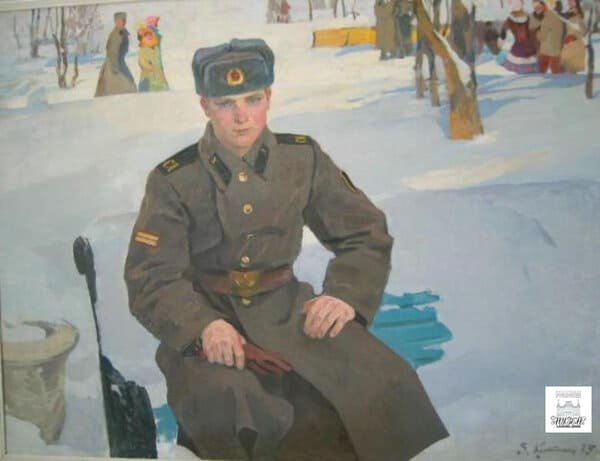
A soldier on leave. On his sleeve are “service year stripes,” which were abolished in 1982. The guy apparently didn’t know about prostatitis 🙂 And neither did the artist.
1988 Reform: Updates and the Start of “Afghanka”
Parade uniform of conscript servicemen and cadets, 1988 pattern.
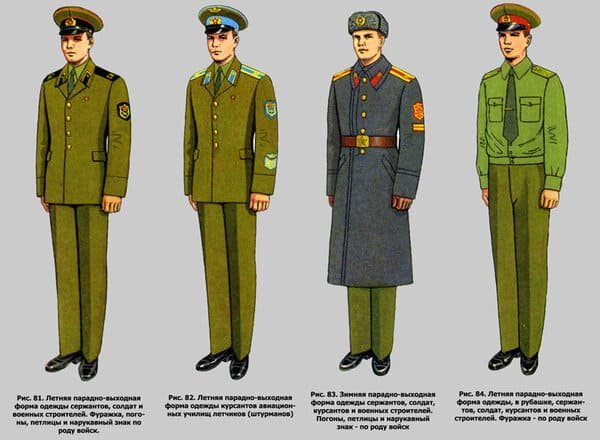
• Fig. 81 Summer parade uniform of conscript sergeants and soldiers of construction troops, border troops, internal troops, and military school cadets (without sleeve insignia)
• Fig. 82 Summer parade uniform of aviation school cadets with light-blue trousers (chino style)
• Fig. 83 Winter parade uniform of conscript sergeants and soldiers of internal troops, border troops, and military school cadets
• Fig. 84 Summer parade uniform in shirt sleeves of conscript sergeants and soldiers, military school cadets, and construction troops (shirt worn outside the trousers)
It differs only slightly from the basic 1969 version: shoulder boards were added to the shirt, and the so-called “service year stripes” were abolished.
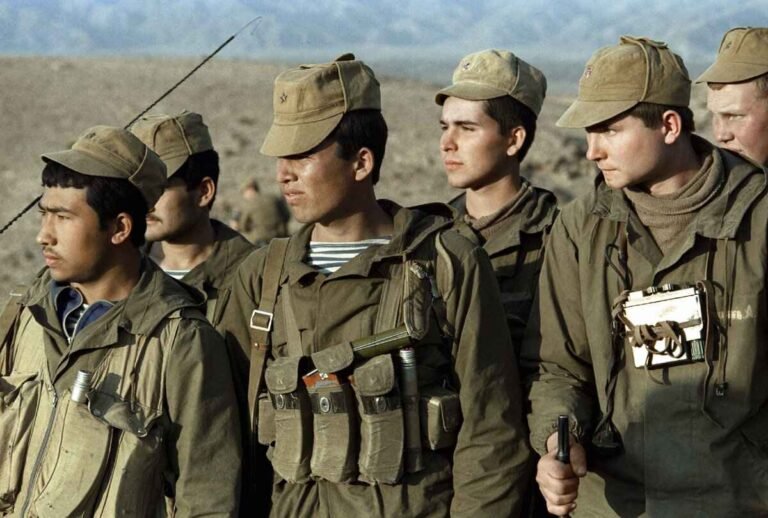
In 1988, colored shoulder boards on the field (cotton) uniform were abolished. They had originally been planned as a peacetime option. At the same time, the gradual introduction of a new everyday and field uniform began, popularly known as the “Afghanka.” In practice, this uniform had appeared much earlier in Soviet units in the Democratic Republic of Afghanistan and in some units on the territory of the USSR.
Development of this uniform set and its experimental use began in 1975. From 1978, the new uniform started arriving at warehouses. However, the large stock of 1969-pattern uniforms meant that this version of the field and everyday uniform continued to be used right up until the collapse of the USSR.
Officially, the “Afghanka” was approved by USSR Ministry of Defense Order No. 250 of March 4, 1988, as an everyday and field uniform for Airborne Forces personnel, and as a field uniform for servicemen of other branches and arms of the Soviet Army.
Looking Soviet Afghanka visor cap? You can order here: (Soviet Afghanka hat)
Looking for a Real Telnyashka?
Add extra Telnyashkas and accessories – shipping stays the same.
Flat Worldwide Shipping – $14.98
Shipping is charged only once per order.
Telnyashka: History of the Russian Navy and VDV Striped Shirt
Appearance of the uniform set. The new set was clearly more functional and comfortable (especially the winter version) and better matched the realities of modern warfare, while maintaining a reasonable cost and acceptable manufacturing complexity.
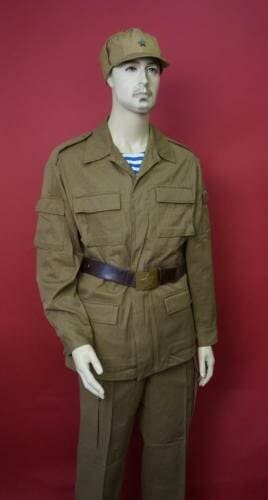
Afghanka uniform with boots
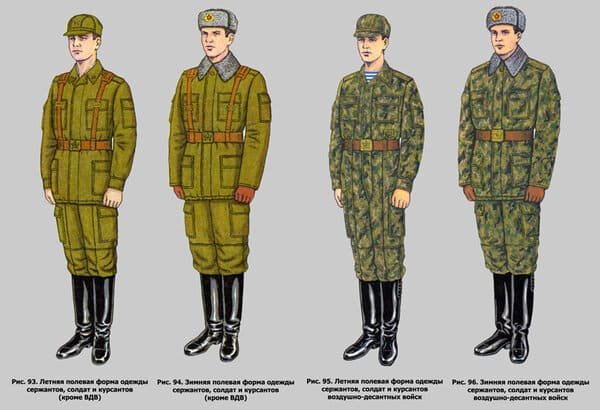
- Fig. 93. Summer field uniform of sergeants, soldiers, and cadets
- Fig. 94. Winter field uniform of sergeants, soldiers, and cadets
- Fig. 95. Summer field uniform of sergeants, soldiers, and cadets
- Fig. 96. Winter field uniform of sergeants, soldiers, and cadets
Soviet Afghan combat boots? You can get them here → [Soviet M88 combat Boots]
Check more articles:
History from the Red Army (RKKA) to the Soviet Army
More Cold War Soviet Army Uniform Articles
Field Uniform and Equipment of the Soviet Army in 1968 -1991 Part 1
Field Uniform and Equipment of the Soviet Army (1968–1991) – Part 2
Field Uniform and Equipment of the Soviet Army (1968–1991) – Part 3
Field Uniform and Equipment of the Soviet Army (1968–1991) – Part 4
Looking original Soviet boots and accessories? Please visit here: Soviet Boots Store
FAQ: Soviet Army Uniform 1955–1991
What was the main goal of the 1955 uniform reform?
The 1955 changes aimed to create a peacetime uniform and modernize details that were inherited from earlier wartime patterns.
Which order introduced the peacetime rules and insignia changes in 1956?
USSR Ministry of Defense Order No. 120 dated August 4, 1956 introduced new rules for wearing uniforms and branch insignia for peacetime.
When did the 1969 uniform reform begin in practice?
Order No. 191 is dated July 26, 1969, and in practice the uniform began reaching troops around 1970.
Why did the cockade with wreath become common after 1972?
The cockade with wreath gradually replaced the plain star as a standard for winter headgear, and variations could still be seen until around 1975.
When was “Afghanka” approved officially?
“Afghanka” was approved by USSR Ministry of Defense Order No. 250 of March 4, 1988 as an everyday and field uniform for specific branches and as a field uniform for others.